S T U D Y P R O T O C O L
Open Access
Protocol for regional implementation of
collaborative self-management services to
promote physical activity
Anael Barberan-Garcia
1,2*, Elena Gimeno-Santos
1,2, Isabel Blanco
1,2, Isaac Cano
2, Graciela Martínez-Pallí
2,3,
Felip Burgos
1,2, Felip Miralles
4, Miquel Coca
3, Serafín Murillo
5, María Sanz
2,6, Alexander Steblin
4, Marta Ubré
3,
Jaume Benavent
7, Josep Vidal
5, Marta Sitges
2,6and Josep Roca
1,2*Abstract
Background:Chronic diseases are generating a major health and societal burden worldwide. Healthy lifestyles, including physical activity (PA), have proven efficacy in the prevention and treatment of many chronic conditions. But, so far, national PA surveillance systems, as well as strategies for promotion of PA, have shown low impact. We hypothesize that personalized modular PA services, aligned with healthcare, addressing the needs of a broad spectrum of individual profiles may show cost-effectiveness and sustainability.
Methods:The current manuscript describes the protocol for regional implementation of collaborative self-management services to promote PA in Catalonia (7.5 M habitants) during the period 2017–2019. The protocols of three implementation studies encompassing a broad spectrum of individual needs are reported. They have a quasi-experimental design. That is, a non-randomized intervention group is compared to a control group (usual care) using propensity score methods wherein age, gender and population-based health risk assessment are main matching variables. The principal innovations of the PA program are: i) Implementation of well-structured modular interventions promoting PA; ii) Information and communication technologies (ICT) to facilitate patient accessibility, support collaborative management of individual care plans and reduce costs; and iii) Assessment strategies based on the Triple Aim approach during and beyond the program deployment.
Discussion:The manuscript reports a precise roadmap for large scale deployment of community-based ICT-supported integrated care services to promote healthy lifestyles with high potential for comparability and transferability to other sites. Trial registration:This study protocol has been registered at ClinicalTrials.org (NCT02976064). Registered November 24th, 2016.
Keywords: Chronic disorders, eHealth, Integrated care, Physical activity, Cardiopulmonary rehabilitation, Service adoption
Background
Physical inactivity is acknowledged as a significant public health problem worldwide with kernel implications on major chronic conditions [1, 2]. On the other hand, the positive effects of physical activity (PA) on health outcomes have been extensively demonstrated both in chronic
patients [3,4] and in subjects at risk for developing chronic diseases [5–10].
The growing awareness on the health burden generated by insufficient levels of PA has prompted the interest for deploying community-based initiatives aiming at fostering active healthy living [11]. However, none of the interven-tions evaluated so far have reached large scale adoption. Moreover, traditional cardiopulmonary rehabilitation inter-ventions temporary enhance aerobic capacity [12–14]; but, they show transient effects, rather low accessibility and no impact on behavioral changes resulting in enhanced PA. In
* Correspondence:[email protected];[email protected]
1Respiratory Medicine Department, Hospital Clínic de Barcelona, CIBERES, Barcelona, Catalonia, Spain
Full list of author information is available at the end of the article
contrast, different small trials seem to suggest efficacy of flexible modular service approaches (i.e. walking, urban training, pedometer-based program, tele-coaching) aiming at promoting active lifestyles [15–19]. Likewise, the analyses of the impact of information and communication technologies (ICT) on healthcare point out their role as enabling tools to support innovative integrated care services through: i) Empowerment of patients for self-management involving adoption of healthy life styles; and, ii) Promotion of efficient interactions among patients, caregivers, community services and healthcare profes-sionals. Thus, ICT-supported services facilitate: i) Patient accessibility; ii) Health coaching; and, iii) Remote follow-up and incentives for patient’s behavioral change [20].
The current protocol relies on the hypothesis that prop-erly tailored self-management services, fully integrated in patient’s health action plan with remote off-line profes-sional support, may induce sustained behavioral changes resulting in active lifestyle behavior. A recent study [21] assessing barriers to deployment of such a collaborative self-management services was useful to identify the requirements for large scale deployment of the novel approach. Accordingly, the current study protocol aims to address those unmet requirements, namely: i) Workflow design of the PA services engaging both patients and healthcare professionals; ii) Enhanced ICT-support; iii) Evaluation strategies including structured indicators during and beyond deployment of the novel services; and, iv) Implementation of innovative business models.
The ultimate aim of the novel PA services for chronic patients and citizens at risk is to generate sustained en-hancement of PA with health value generation. Hence, is expected a positive impact on multi-morbidities in terms of: i) Preventing occurrence, ii) Reducing exacerbations, and, iii) Modulating disease progress. The main outcome of the current protocol will be a roadmap for large-scale
deployment and assessment of novel collaborative
self-management PA services in the region of Catalonia (7.5 million citizens). The approach taken for promotion of PA shall have potential for generalization to other inter-ventions aiming at promoting healthy lifestyles, as part of regional integrated care strategies for chronic patients.
Methods/design
Setting
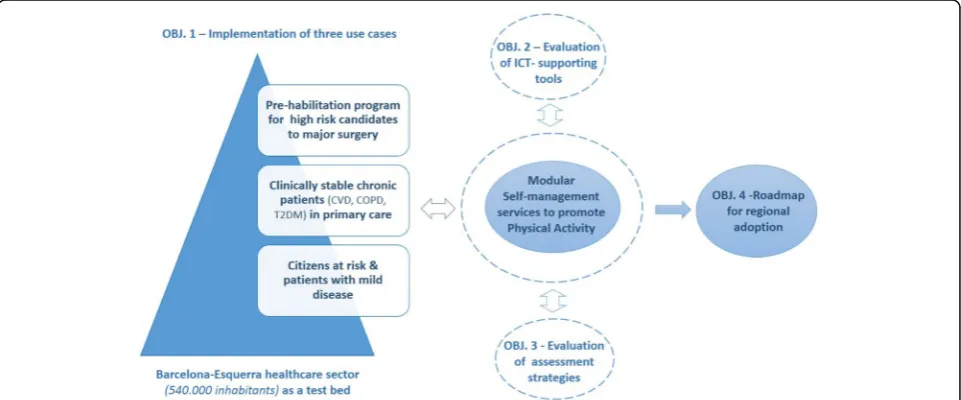
The protocol has been designed as part of the 2016–2020 Health Plan in Catalonia [22] that involves regional deployment of integrated care services. It has been conceived as a 24 months test bed period plus a third year wherein the initiative will be deployed at regional level. At the end of the second year (2018), three main achieve-ments will be in place. Firstly, the three implementation studies depicted in Fig. 1 will be adopted as mainstream services in one of the four healthcare sectors of the city of
Barcelona, Barcelona-Esquerra (AISBE) (540.000 inhabi-tants). A second milestone will be the elaboration of a plan for generalization of the PA services approach to other non-pharmacological interventions. Thirdly, a roadmap for regional deployment of the PA services in Catalonia (7.5 million habitants) will be launched.
The technological support used in the studies facilitates collaborative work among different healthcare professionals as well as patient empowerment for self-management. This scenario involves deployment of a Digital Health Frame-work [23, 24] bridging formal and informal care through adoption of a modified version of the current regional per-sonal health folder (PHF) (La Meva Salut® LMS) (https:// lamevasalut.gencat.cat/web/guest/pre-login-cps) (Catalonia) as a self-management tool adopted to facilitate patient em-powerment for self-care and enhanced monitoring. More-over, the PHF is linked to the regional shared electronic health record (HC3) [25], and provides citizens with an access point to their health information (i.e. discharge reports, imaging, electronic prescription, etc.), medical appointments and potentially for informal health data sources (e.g. mobile health applications, community-based social support services, etc.) as displayed in Fig.1.
Another key ICT-supporting tool for the current PA protocol is an adaptive case management (ACM) system [26] to support collaborative work among case managers and to facilitate adaptive changes to the continuously evolving needs of the patients within well-structured service workflows. The ACM system will provide support to selection and scheduling of specific tasks throughout the clinical process, as well as facilitation of ad-hoc collab-orations with other professionals across healthcare and social support tiers. The ACM platform will be open source and built-up on top of the current health informa-tion systems of the different healthcare providers and it will use existing regional interoperability infrastructures alluded to above, such as the shared HC3and the PHF.
Large scale deployment of the current protocol is supported by convergence of different types of resources from: i) Institutional bodies (Department of Health, Gen-eralitat de Catalunya); ii) Healthcare providers (Hospital Clinic de Barcelona); and, iii) EU Grants (see funding sec-tion of the manuscript). TheEthical Committee for Clin-ical Research at Hospital Clínic de Barcelona approved the study (HCB/2016/0883) which has been registered at ClinicalTrials.org (NCT02976064). Patients’ acceptance and signature of the informed consent will be required to participate in all the studies.
Aims of the implementation studies
the population-based risk stratification pyramid [27, 28], namely: i) Prehabilitation for high risk candidates to major surgery (Prehabilitation study); ii) Community-based rehabilitation and promotion of PA for clinical stable chronic patients with moderate to severe disease (Re-habilitation study); and, iii) Promotion of PA and healthy
lifestyles for citizens at risk and patients with mild disease (Lifestyle study). The second aim is refinement and assess-ment of the innovative ICT-supporting tools alluded to above. Thirdly, the program adopts the Triple Aim approach [29,30] for assessment of the three implementa-tion studies and to select key performance indicators Fig. 1Settings of the implementation studies. The figure shows two interoperable domains with technological elements providing support to the services promoting active lifestyles integrated within the action plan of the patient. On the left, Informal Care area with the patient having access to the Personal Health Folder (PHF) wherein she/he can answer questionnaires, perform monitoring through mHealth apps, and have access to a follow-up reports and tailored educational information, as defined in the work plan (center of the figure). On the right, the Formal Care domain wherein the case manager (physiotherapist) and/or general practitioner has access to an adaptive case management system for work plan prescription, follow-up and coaching. The adaptive case management system supports execution of the patient work plan and provides a bridge of interoperability and collaborative tools among the patient (through the PHF), the case manager and the electronic medical record (EMR)
[image:3.595.58.540.87.287.2] [image:3.595.58.539.482.682.2](KPI) to be used for follow-up of the services beyond the implementation phase. Finally, the implementation studies will serve to generate a roadmap for regional adoption of the PA services. The sample size will grow according to the capacity of the service. The figures indicated below are realistic estimations.
Specific aims of each of the three implementation studies A recent randomized controlled trial (RCT) carried out in high-risk candidates to major abdominal surgery has demonstrated high efficacy of prehabilitation reducing postoperative complications in these patients [31]. The main aim of the Prehabilitation study (n= 1000) in the current protocol is to assess cost-effectiveness of the de-ployment of the intervention as mainstream service at
Hospital Clinic de Barcelona.
A previous non-randomized pilot study carried out by the research team [21] identified determinants of adop-tion of a community-based rehabilitaadop-tion service for chronic patients, as well as its potential for health-value generation. The main objective of the Rehabilitation study (n= 800) is to assess both cost-effectiveness and sustainability of a community-based program combining exercise training and promotion of PA in clinically stable chronic patients showing one or more of the following target disorders: i) Chronic obstructive pulmonary dis-ease (COPD) or other chronic respiratory conditions; ii) Cardiovascular disorders (CVD); and/or iii) Type II dia-betes mellitus (T2DM).
Finally, the Lifestyle study (n= 1800) will assess large-scale deployment and sustainability of a portfolio of services promoting PA and healthy lifestyles for citi-zens at risk for the targeted chronic conditions and pa-tients showing mild target disease(s). The study will also assess the impact of the intervention on health-related quality of life.
Studies design and population
The three implementation studies alluded to above aim at assessing cost-effectiveness and sustainability (busi-ness model) of the corresponding intervention as well as to identify factors modulating the success of large scale deployment. To this end, for each implementation study, an intervention group will be compared to a control group (usual care). Briefly, the Prehabilitation study will be deployed at Hospital Clínic de Barcelonafollowing a
quasi-experimental design using propensity score
methods [32] wherein age, gender and population-based health-risk assessment are main matching variables between intervention and control groups. Adjusted
Morbidity Groups (GMA) [33, 34] will be used for
health risk scoring purposes. The Rehabilitation study will be deployed in the community selecting primary care centers of the healthcare sector as intervention or
control units following an open cluster randomized con-trol trial design with a 1:1 ratio. Finally, the Lifestyle study will be a community-based protocol following a quasi-experimental design, as described above.
Inclusion criteria for the Prehabilitation study are: i) Candidates to major elective abdominal, gynecological, cardiovascular, urological and thoracic surgical proce-dures; ii) Patients presenting high surgical risk defined by: age above 70 years and/or American Society of Anes-thesiologists (ASA) score III/IV [35]; and, iii) A tentative surgical schedule allowing for at least 4 weeks for the prehabilitation intervention.
The Rehabilitation study has the following inclusion criteria: i) Patients suffering one or more targeted chronic conditions with moderate-to-severe disease of the main disorder; and, ii) Patients showing history of frequent exacerbations.
Finally, the inclusion criteria for the Lifestyle study are as follows: i) Citizens at risk for chronic conditions; and, ii) Patients showing mild target disease(s). All of them recruited through advertisements and through primary care centers.
Exclusion criteria for the three implementation studies are as follows: i) Emergency surgery (applicable only for the Prehabilitation study); ii) Unstable cardiac of respira-tory disease; iii) Locomotor limitation precluding the practice of exercise; and, iv) Cognitive deterioration im-peding the adherence to the program.
Interventions
The entry point to each program, as well as the core management and coordination functions, will be as-cribed to the primary care team composed by general practitioner and case manager (physiotherapist). They will be directly in charge of the six common steps of the
service workflow, namely: i) inclusion; ii)
characterization and re-assessment of patient’s work plan; iii) integration of the intervention into the patient’s action plan; iv) execution of the specific program; v) follow-up/event handling; and, (vi) discharge from the program, as explained in detail in Section 1S.
Prehabilitation study
The current protocol aims to rollout the recently re-ported prehabilitation service [31] to all high-risk candi-dates to any major surgical procedure.
Candidates for the prehabilitation study fulfilling the
inclusion criteria will be identified by the
may modulate practicalities of the intervention. Personalization of the prehabilitation plan involves the following main actions: i) Calendar and planning of face to face visits and remote (virtual) contacts with health-care professionals; ii) Intensity/volume of the supervised endurance training program; iii) Threshold of minimum steps per day to promote physical activity; iv) Specific nutritional counseling and intervention (if malnutrition screening universal tool≥2 [36]); v) Group-oriented psy-chological interventions (mindfulness); and, vi) Integra-tion of the prehabilitaIntegra-tion intervenIntegra-tion into the overall work-plan of the patient (see Additional file 1: section
“Methods/design”).
Rehabilitation study
[image:5.595.57.533.269.714.2]Health value generation by personalized services includ-ing endurance traininclud-ing and promotion of PA will be assessed in chronic patients with target diseases. Briefly, the planned six-month period intervention will have two phases including, as a first step, reassessment of the pa-tient work-plan aiming at optimization of both pharma-cological and non-pharmapharma-cological therapies. The first phase of the program will start with a motivational inter-view wherein the intervention will be explained and co-designed with the patient. It will be followed by: i) Supervised endurance training sessions with a flexible duration of 2 to 6 weeks; ii) Promotion of active lifestyle;
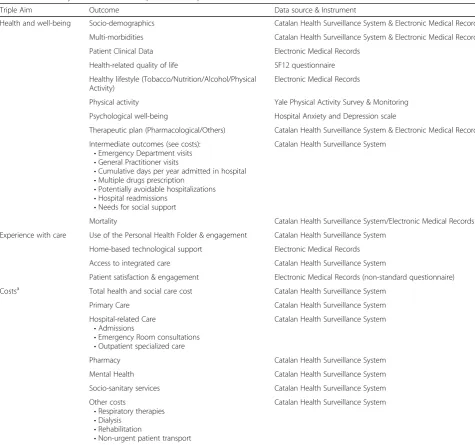
Table 1Main study outcomes of the implementation protocols
Triple Aim Outcome Data source & Instrument
Health and well-being Socio-demographics Catalan Health Surveillance System & Electronic Medical Records
Multi-morbidities Catalan Health Surveillance System & Electronic Medical Records
Patient Clinical Data Electronic Medical Records
Health-related quality of life SF12 questionnaire
Healthy lifestyle (Tobacco/Nutrition/Alcohol/Physical Activity)
Electronic Medical Records
Physical activity Yale Physical Activity Survey & Monitoring
Psychological well-being Hospital Anxiety and Depression scale
Therapeutic plan (Pharmacological/Others) Catalan Health Surveillance System & Electronic Medical Records
Intermediate outcomes (see costs): •Emergency Department visits •General Practitioner visits
•Cumulative days per year admitted in hospital •Multiple drugs prescription
•Potentially avoidable hospitalizations •Hospital readmissions
•Needs for social support
Catalan Health Surveillance System
Mortality Catalan Health Surveillance System/Electronic Medical Records
Experience with care Use of the Personal Health Folder & engagement Catalan Health Surveillance System
Home-based technological support Electronic Medical Records
Access to integrated care Catalan Health Surveillance System
Patient satisfaction & engagement Electronic Medical Records (non-standard questionnaire)
Costsa Total health and social care cost Catalan Health Surveillance System
Primary Care Catalan Health Surveillance System
Hospital-related Care •Admissions
•Emergency Room consultations •Outpatient specialized care
Catalan Health Surveillance System
Pharmacy Catalan Health Surveillance System
Mental Health Catalan Health Surveillance System
Socio-sanitary services Catalan Health Surveillance System
Other costs
•Respiratory therapies •Dialysis
•Rehabilitation
•Non-urgent patient transport
Catalan Health Surveillance System
a
and, iii) Patient empowerment for self-management of his/her condition aiming at increasing program adher-ence. The second phase of the intervention will include promotion of PA and self-management using the PHF [37] with remote off-line supervision by a case manager (see Additional file1: Section 3).
Lifestyle study
The main objective is to assess the impact of a program promoting PA and healthy lifestyles in citizens at risk and patients with mild chronic disease. Briefly, key as-pects of the intervention are: i) A motivational interview to personalize the intervention; ii) Familiarization of the candidate with the use of the PHF as a self-management tool; and, iii) Assignment of one case manager for off-line remote surveillance of the service. Moreover, the subject will receive information on a portfolio of op-tional services offered by the service (see Addiop-tional file 1: Section“Conclusions”).
Assessments
The protocol evaluation will follow a Triple Aim approach [29, 30] considering pre-defined outcome variables for: i) Health and well-being; ii) Experience with care; and, iii) Costs (Table1). Assessment will be carried out combining empirical questionnaire data collection, information from electronic medical records and registry data. The main study outcome will be twofold: i) Demonstration of cost-effectiveness of the interventions; and, ii) Identification of factors that modulate success of large-scale deployment. Moreover, an ancillary purpose of the implementation stud-ies is to identify and evaluate key performance indicators (KPI) that could be used for long-term follow-up of the
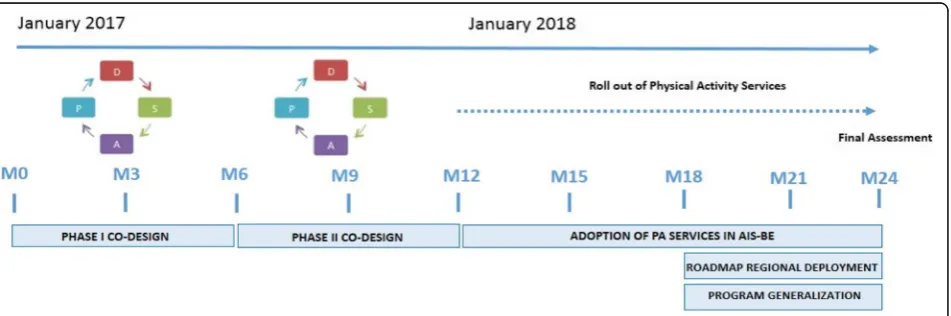
service at health system level. To this end, implementation research tools organized within the frame of the Model for ASsesment of Telemedicine applications (MAST) [38] will be considered. During the co-design phases, KPI will be identified and consolidated to be used for long-term assess-ment of the adoption process (Fig.3). Most of the variables will be obtained from the automated Catalan Surveillance System [28].
Regional deployment
The fact that we are building-up on top of a rather mature setting for integrated care adoption reinforces the chances of successful regional deployment of the services. The use of a Plan-Do-Study-Act (PDSA) [34] methodology with iterative cycles shall consolidate refined services at the end of the first year and it will subsequently facilitate regional deployment in Catalonia (Fig. 3). As mentioned, assess-ment of KPI useful for long-term follow-up of the deploy-ment beyond the impledeploy-mentation studies constitutes a key goal. A roadmap for regional deployment of the three interventions will be produced at the end of the imple-mentation studies.
Discussion
The present protocol aims to evaluate the determi-nants of large-scale deployment and adoption of three novel collaborative self-management services promot-ing healthy lifestyles. We believe that the protocol represents a highly relevant step to foster synergies between non-pharmacological and pharmacological care paving the way for enhanced preventive care for chronic patients.
[image:6.595.64.540.497.655.2]The study protocol adopts a population-health ap-proach aiming at articulating a test bed that shall facili-tate a successful rollout of the three implementation studies at regional level. Synergies across healthcare tiers will be fostered throughout the program deployment. For example, the current hospital-based prehabilitation study will be expanded and enriched with appropriate health-risk assessment tools aiming at enhancing peri-operative risk prediction and care at community level. Thus, it should facilitate productive collaborative work between specialized and primary care professionals. Moreover, the program is expected to be highly transfer-able to other geographical areas.
Conclusions
The current manuscript reports on the protocol for regional deployment of collaborative self-management services pro-moting healthy lifestyles that will be carried out in Catalonia during the period 2017–2019.
Additional file
Additional file 1:Protocol for regional implementation of collaborative self-management services to promote physical activity. This file includes the specific details of each of the three protocols described in the main manuscript. (DOC 531 kb)
Abbrevations
ACM:Adaptive Case Management; AISBE: Area de Salut Barcelona-Esquerra; ASA: American Society of Anesthesiologists; COPD: Chronic Obstructive Pulmonary Disease; GMA: Adjusted Matching Groups; HC3: Historia Clínica
Compartida de Catalunya; ICT: Information and Communication Technologies; KPI: Key Performance Indicators; LMS: La Meva Salut; MAST: Model for ASsessment of Telemedicine; PA: Physical Activity; PDSA: Plan-Do-Study-Act; PHF: Personal Health Folder; RCT: Randomized Controlled Trial
Acknowledgements
We would like acknowledge the following projects: CONNECARE H2020– 689802, NEXTCARE COMRDI15–1-0016, ACT@Scale (HP-PJ-2015, 3HP, 709770) and Generalitat de Catalunya (2014SGR661).
Funding
This manuscript was supported by FIS-PITES (PI15/00576).
Availability of data and materials
The datasets used and/or analyzed during the current study are available from the corresponding author on reasonable request.
Authors’contributions
ABG and JR contributed to the conception and design of this work, wrote the first draft of the paper and participated revising the manuscript; and are in agreement as to the integrity of the work and the contributions of all the authors. EGS, IB, IC, GMP, FB, FM, MC, SM, MS, AS, MU, JB, JV and MS, contributed to the conception and design of this work; participated in the writing and revising the manuscript; and are in agreement as to the integrity of the work and the contributions of all the authors. All authors have read and approved the final manuscript.
Ethics approval and consent to participate
TheEthics Committee for Clinical ResearchofHospital Clínic de Barcelona
approved the study protocol and the informed consent for the subjects (HCB/2016/0883).
Consent for publication
Not applicable.
Competing interests
The authors declare that they have no competing interests.
Publisher’s Note
Springer Nature remains neutral with regard to jurisdictional claims in published maps and institutional affiliations.
Author details 1
Respiratory Medicine Department, Hospital Clínic de Barcelona, CIBERES, Barcelona, Catalonia, Spain.2Institut d’Investigacions Biomèdiques August Pi i Sunyer (IDIBAPS), Universitat de Barcelona, Barcelona, Catalonia, Spain. 3Anesthesiology Department, Hospital Clínic de Barcelona, Barcelona, Catalonia, Spain.4EURECAT–Technological Center of Catalonia, Barcelona, Catalonia, Spain.5Endocrinology and Nutrition Department, Hospital Clínic de Barcelona, IDIBAPS, University of Barcelona, Barcelona, Catalonia, Spain. 6Cardiology Department, Hospital Clínic de Barcelona, IDIBAPS, University of Barcelona, Barcelona, Catalonia, Spain.7Consorci d’Atenció Primària de Salut Barcelona Esquerra (CAPSBE), Barcelona, Catalonia, Spain.
Received: 12 May 2017 Accepted: 5 July 2018
References
1. Kohl HW 3rd, Craig CL, Lambert EV, Inoue S, Alkandari JR, Leetongin G, et al. The pandemic of physical inactivity: global action for public health. Lancet. 2012;380(9838):294–305.
2. Lee IM, Shiroma EJ, Lobelo F, Puska P, Blair SN, Katzmarzyk PT. Effect of physical inactivity on major non-communicable diseases worldwide: an analysis of burden of disease and life expectancy. Lancet. 2012; 380(9838):219–29.
3. Watz H, Pitta F, Rochester CL, Garcia-Aymerich J, ZuWallack R, Troosters T, et al. An official European Respiratory Society statement on physical activity in COPD. Eur Resp J. 2014;44(6):1521–37.
4. Physical Activity Guidelines Advisory Committee report, 2008. To the Secretary of Health and Human Services. Part A: executive summary. Nutr Rev. 2009;67(2):114–20.
5. Sieverdes JC, Sui X, Lee DC, Church TS, McClain A, Hand GA, et al. Physical activity, cardiorespiratory fitness and the incidence of type 2 diabetes in a prospective study of men. Br J Sports Med. 2010;44(4):238–44.
6. Li S, Zhao JH, Luan J, Ekelund U, Luben RN, Khaw KT, et al. Physical activity attenuates the genetic predisposition to obesity in 20,000 men and women from EPIC-Norfolk prospective population study. PLoS Med. 2010;7(8). https://doi.org/10.1371/journal.pmed.1000332.
7. Friedenreich CM, Neilson HK, Lynch BM. State of the epidemiological evidence on physical activity and cancer prevention. Eur J Cancer. 2010;46(14):2593–604.
8. Mora S, Cook N, Buring JE, Ridker PM, Lee IM. Physical activity and reduced risk of cardiovascular events: potential mediating mechanisms. Circ. 2007;116(19):2110–8.
9. Manini TM, Everhart JE, Patel KV, Schoeller DA, Colbert LH, Visser M, et al. Daily activity energy expenditure and mortality among older adults. JAMA. 2006;296(2):171–9.
10. Rovio S, Kareholt I, Helkala EL, Viitanen M, Winblad B, Tuomilehto J, et al. Leisure-time physical activity at midlife and the risk of dementia and Alzheimer's disease. Lancet Neurol. 2005;4(11):705–11.
11. Heath GW, Parra DC, Sarmiento OL, Andersen LB, Owen N, Goenka S, et al. Evidence-based intervention in physical activity: lessons from around the world. Lancet. 2012;380(9838):272–81.
12. Spruit MA, Singh SJ, Garvey C, ZuWallack R, Nici L, Rochester C, et al. An official American Thoracic Society/European Respiratory Society statement: key concepts and advances in pulmonary rehabilitation. Am J Respir Crit Care Med. 2013;188(8):e13–64.
13. Ventura-Clapier R, Mettauer B, Bigard X. Beneficial effects of endurance training on cardiac and skeletal muscle energy metabolism in heart failure. Cardiovasc Res. 2007;73(1):10–8.
15. Pleguezuelos E, Perez ME, Guirao L, Samitier B, Ortega P, Vila X, et al. Improving physical activity in patients with COPD with urban walking circuits. Respir Med. 2013;107(12):1948–56.
16. Heppner PS, Morgan C, Kaplan RM, Ries AL. Regular walking and long-term maintenance of outcomes after pulmonary rehabilitation. J Cardiopul Rehabil. 2006;26(1):44–53.
17. Donesky-Cuenco D, Janson S, Neuhaus J, Neilands TB, Carrieri-Kohlman V. Adherence to a home-walking prescription in patients with chronic obstructive pulmonary disease. Heart Lung. 2007;36(5):348–63. 18. Moy ML, Weston NA, Wilson EJ, Hess ML, Richardson CR. A pilot
study of an internet walking program and pedometer in COPD. Respir Med. 2012;106(9):1342–50.
19. Demeyer H, Louvaris Z, Frei A, Rabinovich RA, de Jong C, Gimeno-Santos E, Loeckx M, Buttery SC, Rubio N, Van der Molen T, Hopkinson NS, Vogiatzis I, Puhan MA, Garcia-Aymerich J, Polkey MI, Troosters T, Mr Papp PROactive study group and the PROactive consortium. Physical activity is increased by a 12-week semiautomated telecoaching programme in patients with COPD: a multicentre randomised controlled trial. Thorax. 2017; [Epub ahead of print]. 20. Whitehead L, Seaton P. The effectiveness of self-management mobile
phone and tablet apps in long-term condition management: a systematic review. J Med Internet Res. 2016;18(5):e97.
21. Barberan-Garcia A, Vogiatzis I, Solberg HS, Vilaro J, Rodriguez DA, Garasen HM, et al. Effects and barriers to deployment of telehealth wellness programs for chronic patients across 3 European countries. Respir Med. 2014;108(4):628–37.
22. Department of Health, C. Catalonia Health Plan for 2016–2020 (in Catalan). (2016). Available at:http://salutweb.gencat.cat/web/.content/ home/el_departament/Pla_salut/pla_salut_2016_2020/Documents/Pla_ salut_Catalunya_2016_2020.pdf.
23. Cano I, Lluch-Ariet M, Gomez-Cabrero D, Maier D, Kalko S, Cascante M, Tegnér J, et al. Biomedical Research in a Digital Health Framework. BMC J Transl Med. 2014;12(Suppl 2):S10.
24. Regional health interoperability program in Catalonia (iS3).http://salutweb.gencat. cat/ca/ambits_tematics/linies_dactuacio/tecnologies_informacio_i_comunicacio/ is3/andhttps://ticsalutsocial.cat/en/projects/observatory/is3-project/. 25. Marimon-Sunol S, Rovira-Barberà M, Acedo-Anta M, Nozal-Baldasjos MA,
Guanyabens-Calvet J. Shared electronic health record in Catalonia. Med Clin (Barc). 2010;134(Suppl 1):45–8.
26. Cano I, Alonso A, Hernandez C, Burgos F, Barberan-Garcia A, Roldan J, Roca J. An adaptive case management system to support integrated care services: lessons learned from the NEXES project. J Biomed Inform. 2015;55:11–22. 27. Kindig D, Stoddart G. What is population health? Am J Public Health. 2003;
93:380–3.
28. Dueñas-Espín I, Vela E, Paus S, et al. Proposals for enhanced health risk assessment and stratification in an integrated care scenario. BMJ Open. 2016;6(4):e010301. 29. Berwick DM, Nolan TW, Whittington J. The triple aim: care, health, and cost.
Health Aff. 2008;27:759–69.
30. Whittington JW, Nolan K, Lewis N, Torres T. Pursuing the triple aim: the first 7 years. Milbank Q. 2015;93:263–300.
31. Barberan-Garcia A, Ubré M, Roca J, Lacy AM, Burgos F, Risco R, et al. Personalised prehabilitation in high-risk patients undergoing elective major abdominal surgery: a randomized double-blind controlled trial. Ann Surg. 2017;https://doi.org/10.1097/SLA.0000000000002293.
32. Austin PC. An introduction to propensity score methods for reducing the effects of confounding in observational studies. Multivariate Behav Res. 2011;46:399–424. 33. SELFIE. Sustainable intEgrated care modeLs for multi-morbidity:
delivery, FInancing and performancE. Project no 634288 Available at: http://www.selfie2020.eu/.
34. Taylor MJ, McNicholas C, Nicolay C, Darzi A, Bell D, et al. Systematic review of the application of the plan-do-study-act method to improve quality in healthcare. BMJ Qual Saf. 2014;23:290–8.
35. 2016 Relative value guide book: A guide for anesthesia values. Washington D.C: American Society of Anesthesiologists; 2015.
36. Malnutrition Advisory Group, a Standing Committee of BAPEN. Malnutrition Universal Screening Tool. May 2003 (review August 2011). Available at: http://www.bapen.org.uk/pdfs/must/must_full.pdf. Accessed 16 Nov 2016. 37. Generalitat de Catalunya. Cat@Salut La Meva Salut. Canal personal de
salut. athttp://catsalut.gencat.cat/ca/serveis-sanitaris/la-meva-salut/. 38. Kidholm K, Ekeland AG, Jensen LK, Rasmussen J, Pedersen CD, Bowes A, et