
S T U D Y P R O T O C O L
Open Access
The impact of web-based and face-to-face
simulation on patient deterioration and
patient safety: protocol for a multi-site
multi-method design
Simon J. Cooper
1*, Leigh Kinsman
2, Catherine Chung
1, Robyn Cant
1, Jayne Boyle
3, Loretta Bull
4,
Amanda Cameron
5, Cliff Connell
6, Jeong-Ah Kim
1, Denise McInnes
7, Angela McKay
2, Katrina Nankervis
4,
Erika Penz
8and Thomas Rotter
9Abstract
Background:There are international concerns in relation to the management of patient deterioration which has led to a body of evidence known as the ‘failure to rescue’ literature. Nursing staff are known to miss cues of deterioration and often fail to call for assistance. Medical Emergency Teams (Rapid Response Teams) do improve the management of acutely deteriorating patients, but first responders need the requisite skills to impact on patient safety.
Methods/design:In this study we aim to address these issues in a mixed methods interventional trial with the objective of measuring and comparing the cost and clinical impact of face-to-face and web-based simulation programs on the management of patient deterioration and related patient outcomes. The education programs, known as ‘FIRST2ACT’, have been found to have an impact on education and will be tested in four hospitals in the State of Victoria, Australia. Nursing staff will be trained in primary (the first 8 min) responses to emergencies in two medical wards using a face-to-face approach and in two medical wards using a web-based version FIRST2ACTWeb. The impact of these interventions will be determined through quantitative and qualitative approaches, cost analyses and patient notes review (time series analyses) to measure quality of care and patient outcomes.
Discussion: In this 18 month study it is hypothesised that both simulation programs will improve the detection and management of deteriorating patients but that the web-based program will have lower total costs. The study will also add to our overall understanding of the utility of simulation approaches in the preparation of nurses working in hospital wards. (ACTRN12616000468426, retrospectively registered 8.4.2016).
Keywords: Clinical audit, Education, Nursing, E-simulation, Patient safety, Simulation-based learning
* Correspondence:[email protected] 1
School of Nursing Midwifery and Healthcare, Federation University Australia, Churchill, Victoria 3842 and Mt. Helen, Victoria 3350, Australia
Full list of author information is available at the end of the article
Background
The quality of patient care and patient safety are organisational, individual, and international responsibil-ities that require an appreciation of adverse events and medical errors [1–3]. In Australia, the Australian Commission on Safety and Quality in Healthcare has prescribed national standards with the objective of improving the quality of clinical care [4]. Health service providers are required to report compliance with these
standards, including recognition and response to
patients’ ‘severe clinical deterioration’ which is listed as Standard 9 – ‘Clinical Deterioration in Acute Health Care’[5]. Thus, a key responsibility of providers of acute hospital care, and elsewhere, is to ensure that systems are in place to enable patients with severe clinical deteri-oration to receive immediate and appropriate assistance [6]. This includes the empowerment of clinicians to acti-vate a‘Medical Emergency Team’(MET) (also known as a‘Rapid Response Team’) whose members are skilled in the management of medical emergencies [7, 8].
Definitions of what constitutes a deteriorating patient or clinical deterioration are lacking, [9, 10] however there is a considerable body of evidence from the‘failure to rescue’ literature indicating that the management of deterioration can be improved. This includes disturbed physiological variables in the general ward population [11], poorer patient outcomes for mismanaged patient deterioration [12–15], delays in team activation [16], missed indicators of deterioration in rural hospitals [14], a lack of knowledge as to when to call for assistance [17], and a failure to appreciate clinical urgency [18].
Efforts to improve recognition and response to clinical deterioration in Australia include the introduction of a National Patient Observation and Response Chart for recording of patient vital signs and observations [19]. Such standardised reports enable recording of core physiological observations as specified in the National Consensus Statement 1.6 (i.e. respiratory rate, oxygen saturation, heart rate, blood pressure, temperature and level of consciousness). Similarly, in the United Kingdom, physiological track and trigger systems are recommended to monitor all adult patients in acute hospital settings [20]. These charts utilise colour-coded graphed observa-tion and vital sign documentaobserva-tion to designate the level of factors that should trigger an escalation of care. In Australia, the use of one of five available charts is mandatory except for the state of New South Wales where an alternative ‘Between the Flags’ - Standard Adult General Observation Chart is required in most public facilities [19, 21].
In relation to the management of emergencies it is known that the management of deteriorating patients can be enhanced through educative approaches [4, 5, 22–24] and through clinical and simulated experience [25, 26].
Education approaches emphasize the need for active learning in simulated environments that offer authen-tic learning experiences without risk to real patients [27, 28]. Clinical staff do benefit from simulation-based education in settings which have high fidelity (believability) [26, 29] with consequential reductions in medical errors [30].
This paper describes the protocol for a study that aims to address patient safety in relation to first responders’
‘failure to rescue’deteriorating patients, with a focus on enhancing the nursing assessment and management of clinical deterioration. Hospital registered nurse partici-pants will be trained in the requisite primary responses to patient emergencies using two simulation approaches. Participants will participate in either in-situ face-to-face simulation or a web based simulation version of a valid clinical training package: FIRST2ACT (Feedback Incorporating Review and Simulation Techniques to Act on Clinical Trends) [31]. A cost benefit analyses will be performed and the clinical impact of training will be determined through a multi-method evaluation that will include quality of care evaluations, primarily achieved through pre-post intervention patient notes review with time series analyses.
Methods/design
This multi-method study will utilize both qualitative and quantitative research techniques to evaluate the impact of FIRST2ACT on the quality of nursing care and patient outcomes. The design is a mixed methods interventional cohort trial comparing the impact of a web-based (Group 1) and face-to-face (Group 2) education program within and between groups.
Aim and hypothesis
This research aims to measure the impact of two forms of simulation education on nurses’ ability to detect and manage patient deterioration, to assess patient outcomes and to compare the total costs be-tween the two interventions. The research hypotheses to be tested are:
(i).Both the face-to-face and web-based models of simulation education will improve the detection and management of patient deterioration and patient outcomes.
(ii).The web-based program will have lower total costs in improving the detection and management of patient deterioration and patient outcomes.
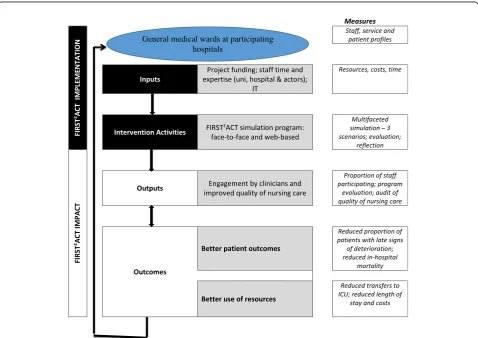
face-to-face versus web-based training, together with stakeholders’ views and attitudes regarding the forms of program delivery, and change to in-hospital mortality and the rate of admission to ICU (see Fig. 1).
Description of the intervention resource: FIRST2ACT
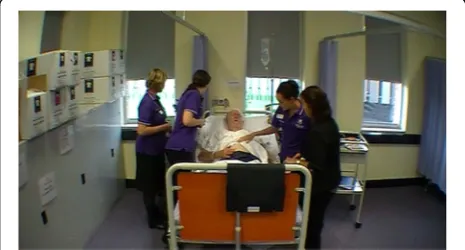
Face-to-face and web based versions of the FIRST2ACT program have been developed over the last eight years by some of the authors of this study (SC, RC, LK). The program has been widely reported with notable im-pacts on learning outcomes and a pilot study that measured the impact on clinical care [29, 32–36]. The web-hosted ‘e-simulation’ version FIRST2 ACT-Web (see http://first2actweb.com/) (see Fig. 2) incorpo-rates three interactive scenarios (myocardial infarction, shock and respiratory cases) where patient actors deteriorate (over eight minutes) with participants required to‘click’on various potential actions–such as measuring blood pressure or inserting an intravenous line - resulting in further pop-up videos of each action. Detailed perform-ance feedback is then provided to a participant on completion [35]. The face-to-face version of the program (Fig. 3) mirrors the web based program (taking between
1.5–2 h to complete) and both include five key compo-nents: developing core knowledge; assessment (learning stimulus); simulation; reflective review; and performance feedback [31]. The initial development was funded by the Australian Office of Learning and Teaching from which a full project report is readily accessible [37].
Study status
This study commenced data collection in February 2016, to be completed by November 2016.
Sample selection and recruitment
Participants
Registered nurses will be recruited from a medical ward in one of four Victorian acute care hospitals. Both Div-ision 1 Registered nurses and Enrolled nurses will be in-cluded. Two medical wards will be assigned as Group 1 (web-based intervention), while another two will be assigned as Group 2 (face-to-face intervention). This ap-proach ensures that there is no contamination between homogeneous groups. There are approximately 160 nurses employed at the larger hospitals and 85 at the remaining two sites. In pilot hospital-based studies we
[image:3.595.59.538.373.711.2]have achieved a participation rate of 82 % and anticipate similar participation for this study (n= >200). Maximis-ing staff attendance is important in order to have the greatest effect on clinical outcomes.
Nurses in each group will be recruited by a member of the research team who will provide a brief explanation of the study and invite nurses to participate in the study. Participant information sheets and consent forms will be made available and written consent obtained.
Clinical impact measures
The impact of the interventions will be assessed on the proportion of patients that progress from early to late signs of deterioration and the quality of nursing care (primary measures). As per our previous studies we will use validated data extraction tools to mine data from pa-tient observation charts. Appropriate frequency of vital signs and evidence-based responses to deterioration will be proxies for the quality of nursing care. Secondary measures include in-hospital mortality and admissions to ICU, and cost of provision of face-to-face versus web based education. We will also investigate stakeholder
views and attitudes through semi-structured interviews with three key stakeholder groups at each site.
Patient sample size: Pilot data from an earlier rural study indicated that early signs of deterioration were present in 28 % of patients while late signs were present in 10 %, and that the total sample size required to detect a 5 % reduction in late signs of deterioration with a level of significance of 5 % and a power of 0.8 is 434 patients (217 before and 217 after the intervention) at each site [29].
Training procedure: participants’journey
Participating nurses will be released from their working shift for two hours in order to attend the assigned simula-tion program at their place of work. The procedures for Group 1 web-based intervention and Group 2 face-to-face simulation journey are summarised in Table 1. For Group 2, participants will work in teams of three with a patient actor and research‘support’staff; thus over an 8-h shift 12 nurses will complete the training. This release will be en-abled by the rostering of additional senior nursing staff as backfill on training days. For Group 1, web-based training will be completed individually on a personal computer or in a ward training room.
Described in full below, quantitative data will be captured from the following sources:
1. Patient medical records.
2. A multiple choice knowledge questionnaire (MCQ). 3. Standardized performance measurement forms. 4. Participant evaluations.
5. Costs derived from patient records and inventory of resources.
Qualitative data will be captured in six stakeholder focus groups (three at each site) at the end of the study. Participants will include those who attended training and their line managers in order to elicit the impact of the two programs of education.
Data collection tools
Patient medical records review
Using patients’demography, diagnoses and vital signs data, outcomes will be measured in relation to deterioration in-cluding ICU admissions and mortality rates, etc. Further, based on our sample size calculations and the guidance produced by Harrison et al. [38], McQuillan [39] and NICE [40] we aim to identify a change in patient management by measuring the applicability of physiological observations, actions in relation to deterioration, and early and late signs of deterioration to identify improvements in performance (Table 2). We have developed and tested a chart audit tool based on a rationale for item inclusion, definitions, and clinical expert ratings of relevance and clarity with a high Content Validity Index of 0.83 [41]. We will therefore Fig. 3Group 2 - Face-to-face simulation with patient actor during
First2Act interactive patient deterioration education program
[image:4.595.56.291.88.242.2] [image:4.595.57.290.578.703.2]extract data from patient records from 80 randomly se-lected cases from each month, three months before the simulation intervention, and from each month for three months after the intervention (totaln= 480 at each site). A post-hoc sensitivity analysis will be conducted to assess the representative nature of the sample.
Intervention measures
Knowledge
A validated Multiple Choice Questionnaire (pre-post) [42–44] will be completed by participants before and after the program in order to measure patient deterioration knowledge. This measure will enable identification of knowledge in relation to skill performance and changes in knowledge based on program participation.
Skill performance measurements
All participants will complete three contrasting simulation exercises that are either recorded as interactive web-based versions or completed face-to-face with a patient actor. Each scenario will be based on common presenting conditions (e.g. acute myocardial infarction, shock and a respiratory case). Standardized patients (actors) will simulate the clinical scenarios. During the simulation exercises, information will be presented in a manner that most clearly reflects the real world requiring participants to be an active searcher [45]. This approach will enhance the ecological validity of the simulation [46] allowing the participant to experience clin-ical thinking in a more dynamic manner. Levels of relevant information and levels of uncertainty will be taken into ac-count [47] and incorporated into the scenarios.
Debriefing and feedback
The web-based version collects performance data for feedback at the end of each scenario, producing a score and written feedback. In the face-to-face version a video recording of the participants’ performance during the simulation exercise enables comprehensive verbal feed-back. Written participant evaluations will be sought by survey after the training activities as an evaluation of the educational impact of each program.
Economic analysis
[image:5.595.56.543.109.374.2]We will conduct a cost analysis [48, 49] to assess total costs of training. The primary outcome of the cost analysis Table 1Flow chart of participants’journey in web-based simulation and face-to-face high fidelity clinical learning environment scenarios
Group 1 Group 2
FIRST2ACT Web FIRST2ACT In-situ face-to-face
Introductory preamble Short written introduction with explanation. Short verbal introduction with explanation. Demographics and
Pre-course MCQ
A demographics form and an 12-item multiple choice questionnaire (MCQ).
As in web-based.
Background material An animated slide show–with voice over from an educator.
As in web-based.
Scenarios Scenario (i)–Cardiac scenario Scenario (ii)–Shock scenario Scenario (iii)–Respiratory scenario Total score and feedback provided. Each scenario runs for 8 min with acute deterioration at the mid-point.
As in web–based. Video recorded scenarios are rated by attending researchers.
Feedback The software gathers all performance data for automated feedback at the end of each scenario.
Face-to-face feedback will be conducted with an educator using video and performance records.
Post-course MCQ Repeat of the MCQ. As in web-based.
Course evaluation A course evaluation and reflective review of educational impact
As in web-based.
Certification Download a course participation certificate Issued with a course participation certificate. Course Manual Download the course manual for reflection
and review
Issued with the course manual for reflection and review
Time commitment 1.5 h 2 h
Table 2Early and late signs of patient deterioration [Adapted from Harrison et al. [38]
Parameter Early signs Late signs
Oxygen saturation 90–95 % <90 % Systolic blood pressure
(mmHg)
80–100 or 181–240 <80 or >240
[image:5.595.57.290.638.731.2]will be comparison of total costs between web-based versus face-to-face simulation education interventions. Secondary outcomes will include comparison of the costs associated with each intervention (e.g. software develop-ment, educator staffing costs, staff release costs, patient actors, etc.). In addition, hospitalization costs will be estimated using the Australian Refined Diagnosis Related Groups (AR-DRGs, Version 7) [50, 51] model, adjusting for ICU admissions and mortality.
Data analysis
Patient notes review: a pre-post intervention analysis through time series analyses. The appropriateness of observations, incidence of late signs of deterioration, in-hospital mortality and admissions to ICU will be used as the primary measures of patient management. Successful intervention will be identified by a statisti-cally significant increase in applicable actions and a reduction in the proportion of late signs, in-hospital mortality and admissions to ICU.
Knowledge and skill performance ratings
Participant demographics, questionnaire, and simulation performance will be described with the use of descriptive and inferential statistics. Measures of dispersion (means, medians, etc.) will be reported. There will be a range of nominal, ordinal and interval data (paired and unpaired) requiring tests such as Chi-square; McNemar; Mann Whit-ney U; and t-tests. Multivariate analysis (linear and logistic regression) will be used to identify predictors of perfor-mance. Simulation exercises will be rated by two researchers for inter-rater reliability. A significance level of p< .05 will be applied throughout.
Based upon a Generic Qualitative Design eight stakeholder focus groups will be completed (two at each site) in order to identify the perceived impact of the program(s) [52]. Core themes and outcomes will be identified using Miles and Huberman’s stages of data analysis [53]. Analysts will attri-bute nominal codes to narrative segments and group narra-tive segments to identify key themes. Emergent themes will be shared and collaboratively refined to achieve a consensus for reporting. The reporting of findings will by guided by the COREQ guidelines for reporting qualitative research.
The program is designed to run for 18 months with a seven month lead-in, to enable literature reviews, ethical approval, access arrangements and refinement of data collection tools. The training intervention will be com-pressed into a four month period and subsequent patient notes review, data analyses and report writing will take a further seven months.
Discussion
This project will add to the body of knowledge in relation to the ‘failure to rescue’ literature with a
concern for measuring and improving the management of deteriorating patients. This is a contemporary international issue and one that the project funder – The Victorian Government – is keen to address.
In this mixed methods interventional trial we will investigate the clinical and financial impact of two forms of simulation education. Whilst many studies have identified the educational impact of simulation ap-proaches few have identified how such apap-proaches impact on clinical care and patient outcomes in combin-ation with a cost benefit analyses. Importantly, the reader should note here that it is our intention to
compare program impact rather than draw direct
comparisons between the web-based and face-to-face versions of the program, as they are quite different forms of delivery.
In testing educational interventions Sullivan [54] suggests that there is a need to understand practice and patient safety issues in the real world through
‘pragmatic trials’. These may be cross sectional studies (data from a specified time), longitudinal approaches (exposures over time), cluster randomised trials, quasi (non-randomised) experimental approaches or a range
of mixed methods approaches [55]. Individual
randomisation of subjects in education trials is prob-lematic as cross-contamination is likely, the dynamics within existing groups will be changed and ethical concerns are raised when individuals are given no choice relating to learning methods [56]. Further, con-trol of such trials is difficult as educational delivery style will differ, participants will attend at different times, and comparison groups are often dissimilar (e.g. compar-ing lectures with simulation). Randomisation is therefore not the gold standard in education [54, 55].
In large and complex trials of this sort there are a number of issues with a need for effective leadership and management. In this study we have allowed seven months or more to gain ethical approval, access to clinical sites and to develop collaborative networks. The delivery of the simulation interven-tions will also take time and require careful roll-out in relation to the potentially stressful nature of the training which is designed to elicit the true nature of patient deterioration. Time series analyses and patient notes review is also complex commencing with the challenge of producing a valid and reliable audit tool [41].
Acknowledgements
The Patient Deterioration and Patient Safety Simulation Project was supported by the Victorian Government, Australia. The authors wish to acknowledge the research team that developed the foundation education program FIRST2Act, enabled by grants from the Australian Government
Office of Learning and Teaching.
Funding
The trial is supported by the Victorian Government (Australia). The funding body did not influence the study design or the collection, analysis, and interpretation of data, nor writing of the manuscript.
Availability of data and materials
The datasets generated or analysed during the current study are not available due to confidentiality arrangements. A summary results report will be available on request from the primary author. The e-simulation training intervention including background information is available on the website: FIRST2ACTWeb (http://first2actweb.com/). The face-to-face
simulation intervention and evaluation technique is publicly available: Cooper S, Porter J, Bogossian F, Cant R and the First2Act team:Development
and Evaluation of a web-based Patient Deterioration Management Program.
(2014) [Final report] Australian Government Office of Learning and Teaching, Sydney, Australia. ISBN: 978-1-74361-581-2. Available at: http://www.olt.gov.au/ project-managing-patient-deterioration-enhancing-student-nursesapos-compe-tence-through-web-based-sim Other related publications from this research group are cited in the reference list.
Authors’contributions
The study was designed by SC and LK. RC and SC drafted the paper with critical input from LK, TR, and CC. All authors (SJC, LK, CC, RC, JB, LB, AC, CLC, JAK, AMK, KN, EP, TR) reviewed and approved the draft paper for publication.
Authors’information
Professor Cooper of Federation University Australia, is Professor of Acute Care and Research Development. As a registered nurse, he is a leading researcher in the development of evidence-based simulation education projects, and has published widely in the emergency nursing and education fields. Professor Kinsman of University of Tasmania, Australia, is Professor of Healthcare Improvement, and has a strong record of research that aims to reduce the gap between evidence and clinical practice.
Professor Rotter of University of Saskatchewan, Canada, Chair in Health Quality Improvement Science, is involved research that aims to improve the quality of patient care.
Competing interests
The authors declare that they have no competing interests.
Consent for publication
All participants in the web-based simulation (video) provided informed consent during development and the program is already published, openly available, and used as a simulation training program on a dedicated website.
Ethics approval and consent to participate
Approval was given by Monash Health Human Research Ethics Committee (approval No. 15414 L), the St John of God Health Care Human Ethics Committee (approval No.874) and Federation University Australia Human Ethics Committee (approval No. 15–10195). Nurses will provide informed consent to participate in the study.
Author details
1School of Nursing Midwifery and Healthcare, Federation University Australia,
Churchill, Victoria 3842 and Mt. Helen, Victoria 3350, Australia.2School of
Nursing, The University of Tasmania, PO Box 1322, Launceston, Tasmania 7250, Australia.3St John of God Health Care Berwick, Gibb St, Berwick,
Victoria 3806, Australia.4Department of Nursing and Midwifery Education
and Strategy, Monash Health, Clayton Rd, Clayton, Victoria 3168, Australia.
5
Latrobe Regional Hospital, 10 Village Ave, Traralgon, VIC 3844, Australia.
6Nursing and Midwifery, Monash University, McMahons Rd, Frankston,
Victoria 3199, Australia.7Central Gippsland Health Service, 155 Guthridge
Parade, Sale, VIC 3850, Australia.8College of Medicine, University of
Saskatchewan, Saskatoon, SK S7N 5E5, Canada.9College of Pharmacy and
Nutrition, University of Saskatchewan, Saskatoon, SK S7N 5E5, Canada.
Received: 1 March 2016 Accepted: 17 August 2016
References
1. Weaver S, Lubomksi LH, Wilson RF, Pfoh ER, Martinez KA, Dy SM. Promoting a culture of safety as a patient safety strategy: a systematic review. Ann Int Med. 2013;158:369–74.
2. National Institute for Health and Clinical Excellence: What we do, about our programs - https://www.nice.org.uk/about/what-we-do. London; 2014. Accessed 22 Jan 2016.
3. Agency for Healthcare Research and Quality: National patient safety efforts save 87,000 lives and nearly $20 billion in costs Agency for Healthcare Research and Quality, 2015. http://www.ahrq.gov/news/newsroom/press-releases/2015/saving-lives.html. Accessed 10 Dec 2015.
4. Australian Commission on Safety and Quality in Healthcare: National Safety and Quality Health Service (NSQHS) Standards: Resources to Implement the NSQHS Standards. 2012. http://www.safetyandquality.gov.au/our-work/ accreditation-and-the-nsqhs-standards/resources-to-implement-the-nsqhs-standards/#NSQHS-Standards Accessed 10 Dec 2015.
5. Australian Commission on Safety and Quality in Health Care. Quick-start guide to implementing National Safety and Quality Health Service Standard 9: Recognising and Responding to Clinical Deterioration in Acute Health Care. Sydney: ACSQHC; 2012.
6. Australian Commission on Safety and Quality in Healthcare: Consensus statement: Essential elements for recognising and responding to clinical deterioration. Canberra: ACSQH:2010. http://www.safetyandquality.gov.au/ wp-content/uploads/2012/01/national_consensus_statement.pdf. Accessed 6 June 2015.
7. Boniatti MM, Azzolini N, Viana MV, Ribeiro BSP, Coelho RS, Castilho RK, et al. Delayed Medical Emergency Team calls and associated outcomes. Crit Care Med. 2014;42:26–30.
8. Benin AL, Borgstrom CP, Jenq GY, Roumanis SA, Horwitz LI. Defining impact of a rapid response team: qualitative study with nurses, physicians and hospital administrators. Postgrad Med J. 2012;88:575–82. doi:10.1136/ postgradmedj-2012-000390rep.
9. Jones D, Mitchell I, Hillmane K, Story D. Defining clinical deterioration. Resuscitation. 2013;84:1029–34.
10. DeVita MA, Smith GB, Adam SK, Adams-Pizarro I, Buist M, Bellomo R, et al. Identifying the hospitalised patient in crisis; A consensus conference on the afferent limb of Rapid Response Systems. Resuscitation. 2010;81:375–82. 11. Considine J, Trotter C, Currey J. Nurses’documentation of physiological observations in three acute care settings. J Clin Nurs 2015;25:134–143. doi:10.1111/jocn.13010.
12. Ahern J, Philpot P. Assessing acutely ill patients on general wards. Nurs Stand. 2002;16:47.
13. Baudouin S, Evans T. Improving outcomes for severely ill medical patients. Clin Med. 2002;2:92–4.
14. Endacott R, Kidd T, Chaboyer W, Edington J. Recognition and communication of patient deterioration in a regional hospital: a multi-methods study. Aust Crit Care. 2007;20:100–5.
15. Intensive Care Society. Guidelines to the Introduction of Outreach Services. London: Intensive Care Society; 2002. p. 9.
16. Tirkkonen J, Ylä-Mattila J, Olkkola KT, Huhtala H, Tenhunen J, Hoppu S. Factors associated with delayed activation of medical emergency team and excess mortality: An Utstein-style analysis. Resuscitation. 2014;84:173–8. 17. Cioffi J. Nurses’experiences of making decisions to call emergency
assistance to their patients. J Adv Nurs. 2000;32:108–14.
18. Aiken L, Clarke S, Cheung R, Sloane D, Silber J. Educational levels of hospital nurses and surgical patient mortality. JAMA. 2003;290:1617–20.
19. Australian Commission on Safety and Quality in Healthcare: Observation and Response Charts. 2015. http://www.safetyandquality.gov.au/our-work/ recognising-and-responding-to-clinical-deterioration/observation-and-response-charts/ Accessed 12 Sep 2015.
21. Elliott D, McKinley S, Perry L, Duffield C, Iedema R, Gallagher R, et al. Clinical utility of an observation and response chart with Human Factors design characteristics and a Track and Trigger System: Study protocol for a two-phase multi-site multiple-methods design. JMIR Res Prot. 2014;3:e40. doi:10.2196/resprot.2330.
22. United Kingdom Central Council for Nursing. United Kingdom Central Council for Nursing. Fitness for Practice: the Report of the Commission for Nursing and Midwifery Education. London: United Kingdom Central Council; 1999.
23. Denig IP, Wahlströml R, Chaput de Saintongel M, Haaijer-Ruskampl F. The value of clinical judgement analysis for improving the quality of doctors’ prescribing decisions. Med Educ. 2002;36:770–80.
24. Resuscitation Council United Kingdom. Advanced life support manual. 4th ed. London: Resuscitation Council United Kingdom; 2000.
25. Cioffi J. A Study Of The Use Of Past Experiences In Clinical Decision Making In Emergency Situations. Int J Nurs Stud. 2001;38:591–9.
26. Fritz P, Flanagan B. Review of mannequin-based high fidelity simulation in emergency medicine. Emerg Med Aust. 2008;20:1–9.
27. Endacott R, Scholes J, Freeman M, Cooper S. The Reality Of Clinical Learning In Critical Care Settings: A Practitioner: Student Gap? J Clin Nurs. 2003;12:778–85.
28. Harvey EM, Echols SR, Clark R, Lee E. Comparison of Two TeamSTEPPS® Training Methods on Nurse Failure-to-Rescue Performance. Clin Sim Nurs. 2014;10(2):e57–64.
29. Kinsman L, Buykx P, Champion R, Cant R, Cooper S, Endacott R, McConnell-Henry T, Porter J, Missen K, Scholes J. The First2Act simulation program improves nursing practice in a rural Australian hospital. Aust J Rural Health. 2012;20(5):270–4.
30. Ziv A, Ben-David S, Ziv M, Ziv A, Ben-David S, Ziv M. Simulation based medical education: an opportunity to learn from errors. Med Teach. 2005;27(3):193–9.
31. Buykx P, Kinsman L, Cooper S, McConnell-Henry T, Cant R, Endacott R, Scholes J. FIRST2 ACT: educating nurses to identify patient deterioration–a theory-based model for best practice simulation education. Nurse Educ Today. 2011;31(7): 687–93. doi:10.1016/j.nedt.2011.1003.1006.
32. Cooper S, Cant, R, Bogossian, F, Kinsman, L, Bucknall, T and the FIRST2ACT research team,: Patient deterioration education: Evaluation of face-to-face simulation and e-simulation approaches. Clinical Simulation in Nursing 2015, x http://dx.doi.org/10.1016/j.ecns.2014.10.010.
33. Cooper S, Cant R, Beauchamp A, Porter J, Kain V, Bucknall T, Phillips NM, Bogossian F. Undergraduate nursing students’performance in recognising and responding to sudden patient deterioration in high psychological fidelity simulated environments: an Australian multi-centre study. Nurse Educ Today. 2013;34(5):691–6.
34. Bogossian F, Cooper S, Cant R, Beauchamp A, Porter J, Kain V, Bucknall T, Phillips NM, the First2Act Research Team. Undergraduate nursing students’ performance in recognising and responding to sudden patient deterioration in high fidelity simulated environments: Quantitative results from an Australian multi-centre study. Nurse Educ Today. 2013;34(5):691–6. doi:10.1016/j.nedt.2013.1009.1015.
35. Bogossian F, Cooper SJ, Cant R, Joanne P, Helen F, the FIRST2ACT™ Research Team. A trial of e-simulation of sudden patient deterioration (FIRST2ACT WEB™) on student learning. Nurse Educ Today. 2015;35(10): e36–42. doi:10.1016/jnedt201309015.
36. Cooper S, Cant R, Bogossian F, Bucknall T, Hopmans R. Doing the right thing at the right time: Assessing responses to patient deterioration in electronic simulation scenarios using Course-of-Action analysis. Comp, Inform, Nurs. 2015;33(5):199–207. doi:10.1097/CIN.0000000000000141. 37. Cooper S, Porter J, Bogossian F, Cant R, the First2Act team.
Development and Evaluation of a web-based Patient Deterioration Management Program. [Final report]. Sydney, Australia: Australian Government Office of Learning and Teaching; 2014.
38. Harrison G, Jacques TC, Kilborn G, McLaws M. The prevalence of recordings of the signs of critical conditions and emergency response in hospital wards–the SOCCER study. Resuscitation. 2005;65:149–67.
39. McQuillan P, Pilkington S, Allan A, et al. Confidential inquiry into quality of care before admission to intensive care. BMJ. 1998;316(7148):1853–8.
40. National Institute for Health and Clinical Excellence (NICE): Short Clinical Guidelines Technical Team. Acutely ill patients in hospital: recognition of and response to acute illness in adults in hospital London; 2006.
41. McConnell-Henry T, Cooper S, Endacott R, Porter J, Missen K, Sparks L. Designing a medical records review tool: an instructional guide. Contemp Nurse. 2015;50(1):72–9.
42. Cooper S, Kinsman L, Buykx P, McConnell-Henry T, Endacott R, Scholes J. Managing the deteriorating patient in a simulated environment: nursing students’knowledge, skill and situation awareness. J Clin Nurs. 2010;19:2309–18.
43. Endacott R, Scholes, SJ, Kinsman, L, McConnell-Henry, T. When do patient signs become cues? Detecting clinical cues of deterioration in a simulated environment. J Adv Nurs; in press 2010.
44. Scholes J, Endacott R, Biro M, Bulle B, Cooper S, Miles M, Gilmour C, Buykx P, Kinsman L, Boland R, Jones J, Zaidi F. Clinical decision-making: midwifery students’recognition of, and response to, post partum haemorrhage in the simulation environment. BMC Pregnancy Childbirth. 2012;12:19.
45. Patel V, Groen G. Knowledge based solution strategies in medical reasoning. Cog Sci. 1986;10:91–116.
46. Cioffi J. Clinical Simulations: Development And Validation. Nurse Educ Today. 2001;21:477–86.
47. Cosier R, Dalton D. Presenting information under conditions of uncertainty and availability: some recommendations. Behav Sci. 1988;33:272–81. 48. Ramsey S, Willke R, Briggs A, et al. Good research practices for
cost-effectiveness analysis alongside clinical trials: the ISPOR RCT-CEA Task Force report. Value Health. 2005;8:521–33.
49. Glick H, Doshi JA, Sonnad SS, Polsky D. Economic evaluation in clinical trials. Oxford. Oxford: University Press; 2007.
50. Australian Government Department of Health. Australian Casemix Glossary At: http://www.health.gov.au/internet/main/publishing.nsf/Content/health-casemix-glossary1.htm. Canberra: Department of Health; 2009.
51. Australian Health Services Research Institute and University of Wollongong. AR-DRG: Australian refined diagnosis related groups, version 7.0, definitions manual. Wollongong: University of Wollongong; 2013.
52. Cooper S, Endacott R. Generic qualitative research: a design for qualitative research in emergency care? Emerg Med J. 2007;24(12):816–9.
53. Miles M, Huberman AM. Qualitative data analysis: an expanded sourcebook. 2nd ed. Thousand Oaks, California: Sage; 1994.
54. Sullivan G. Getting Off the“Gold Standard”: Randomized Controlled Trials and Education Research. J Grad Med Educ. 2011;3(3):285–9.
55. Cooper S. Simulation versus lecture? Measuring clinical impact: Considerations for best practice. Evid Based Nurs 2015, 2015 (Oct 22): doi: 102210.101136/eb-102015-102221. [Epub]
56. Prideaux D. Researching the outcomes of medical education: a matter of design. BMJ. 2002;324:126–7.
• We accept pre-submission inquiries
• Our selector tool helps you to find the most relevant journal • We provide round the clock customer support
• Convenient online submission • Thorough peer review
• Inclusion in PubMed and all major indexing services • Maximum visibility for your research
Submit your manuscript at www.biomedcentral.com/submit
![Table 2 Early and late signs of patient deterioration [Adaptedfrom Harrison et al. [38]](https://thumb-us.123doks.com/thumbv2/123dok_us/8297875.288484/5.595.56.543.109.374/table-early-late-signs-patient-deterioration-adaptedfrom-harrison.webp)
