0022-538X/85/050561-08$02.00/0
Copyright © 1985, American Society for Microbiology
Purification of Epstein-Barr Virus DNA
Polymerase from
P3HR-1 Cells
BENGT KALLIN,* LARS STERNAS, ARIK. SAEMUNDSSEN,t JANOSLUKA,t HANS JORNVALL, BERTIL ERIKSSON, PEI-ZHEN TAO,§ MATS T. NILSSON, AND GEORGE KLEIN
Departments of Tumor Biology and Chemistry I, Karolinska Institutet, S-104 05 Stockholm, and Research and
Development
Laboratories,
AstraLakemedel,
Sodertalje,
SwedenReceived 24September 1984/Accepted 30 November 1984
TheEpstein-Barrvirus DNApolymerasewaspurifiedfrom extracts of P3HR-1 cells treated withn-butyrate for induction of the viral cycle. Sequential chromatography on DNA cellulose, phosphocellulose, and blue
Sepharose yieldedanenzymepreparation purifiedmorethan1,300-fold.Thepurifiedenzymewasdistinct from cellularenzymesbut resembled the viral DNApolymeraseincells infected withherpes simplexvirustype 1or
2.The activeenzymehadanapparentmolecularweightof185,000asestimatedby gel filtrationonSephacryl
S-300. Sodiumdodecyl sulfate-polyacrylamide gel electrophoresisrevealedamajor polypeptide corresponding
toa molecular weightofca. 110,000. Thispolypeptide correlated with thecatalytic function of the purified
enzyme, whereas theother, less abundant polypeptides didnot. Byimmunoblotting, the 110,000-molecular-weight polypeptide could be identified as aviral polypeptide. Itcouldnot be determinedwhether the native enzymewascomposed ofmore thanonepolypeptide.
Large DNA viruses of both procaryotic and eucaryotic cells express several enzymes associated with nucleic acid and DNA synthesis (18). Cells infected by herpes simplex virus (HSV) type 1 or 2 contain two well-studied enzymes that bind to DNA invitro, the HSVDNA polymerase (17,
23, 26, 28) and the alkaline nuclease (12, 24). These are
distinct fromcellular counterpartsandappeartobe essential for thereplication ofthevirus.
Epstein-Barr virus (EBV) is a transforming herpesvirus
associatedwith Burkittlymphomaand nasopharyngeal car-cinoma. No invitro systemfor thereplication ofEBV has beendescribed,butanabortivelytic cyclecanbeinduced in
certainEBV-carrying cell lines(21).
Recent reports indicate that EBV-producing cells contain aviral nuclease(5, 6)andaDNApolymerase (1,2, 7, 10, 11,
25). Both enzymes havebeenpartially purified. Dataonthe
viral DNA polymerase are conflicting with respect to both functional andchromatographic properties. Most
investiga-tors have described one HSV-like DNA polymerase in EBV-producing cells(1,2, 7, 10, 25), butotherdata suggest that two viral enzymes can bedemonstrated(11). Neitherof
thelattertwoenzymesconformstoproperties typicalfor the
HSV-type DNA polymerase, e.g., stimulation by salts and
inhibition by
PP,
analogs (phosphonoacetic acid [PAA] andphosphonoformic acid [PFA]). The activity of the EBV DNA polymerase has not been correlated with a specific
viralpolypeptide.
We have previously studied viral protein synthesis in
P3HR-1 cells in which the viral cycle was induced by treatmentwith n-butyrate. Over20viralpolypeptides could
be demonstrated by immunoprecipitation (15, 16). Four of
the early polypeptideshavebeen shown to bind toDNA in vitro (29). They were designated 152K, 134K, and 55 to 51K,
*Correspondingauthor.
tPresent address: Department ofMicrobiology, University of Iceland, Reykjavik, Iceland.
t Present address: Department of Microbiology, Georgetown University, Washington, DC 20007.
§Presentaddress: Institute ofAntibiotics, ChineseAcademy of Science, Tiantan, Bejing, People's RepublicofChina.
butareheredesignated 135K, 110K, and 56to48K,
respec-tively, toconformto molecularweight designations inother recentstudies (14, 27).
The objective of this investigation was to determine the
properties of the purified EBV DNA polymerase and to correlatethe activity ofthepurified enzyme with a specific
viral polypeptide. The EBV DNApolymerase was isolated
byathree-step purification procedureandwasnotdetected
inuninduced cells. Afterinduction,itwasinducedinparallel
with a nuclease and themajority ofthe earlyviral polypep-tides (15, 29). Thepurified viral enzymewas clearly distin-guishable from cellular alpha and betaDNApolymerases but
sharedpropertieswith the DNApolymerases of HSVtypes 1 and 2, such assensitivitytoinhibition by
PPi
analogs andstimulationby salt.Incontrast totheHSVenzyme,the EBV DNA polymerase did notbindtoDEAE-Sephacel and was
relatively unstable.
MATERIALS AND METHODS
Chemicals.Allchemicals wereof
analytical
grade. Nucle-osidetriphosphates, Pepstatin A, phenylmethylsulfonylflu-oride, bovine serum albumin (BSA) fraction V, and calf thymusDNAwere obtained from SigmaChemical Co. Cel-luloseCF 11 andphosphocelluloseP11werefromWhatman, Inc.;Sephacryl S-300,BlueSepharose,andDEAE-Sephacel
werefrom Pharmacia Fine Chemicals, Inc. Synthetic
poly-nucleotides were purchased from P-L Biochemicals, Inc.,
and radiochemicals were from the Radiochemical Centre(Amersham,
England).
Tissue culture.P3HR-1 cells weremaintainedasstationary
cultures in 2-liter Roux bottles at 37°C in a humidified
atmosphere containing5%CO2.The cultureswereroutinely passaged twice weekly and fed with RPMI 1640 medium
fortified with 2% fetal calf serum, penicillin, and
strep-tomycin. Induction of the viral cycle was performed as describedpreviously (21).Allinduced cultureswerescreened formycoplasma contaminationbythe method of Schneider et al. (30). At the time ofharvest, the proportions of cells
positiveforearly antigen and for virus capsid antigen were determined. Ingeneral, the numberofearlyantigen-positive
561
on November 10, 2019 by guest
http://jvi.asm.org/
T
0
0.
\
A~~~~0~~~~~~~~~~
4~~~~
31
_-;~-l^
_1
t-
1-3
|
5 ,
0
E-AN~~~~~
10 20 30 48
HOURS POST INDUCTION
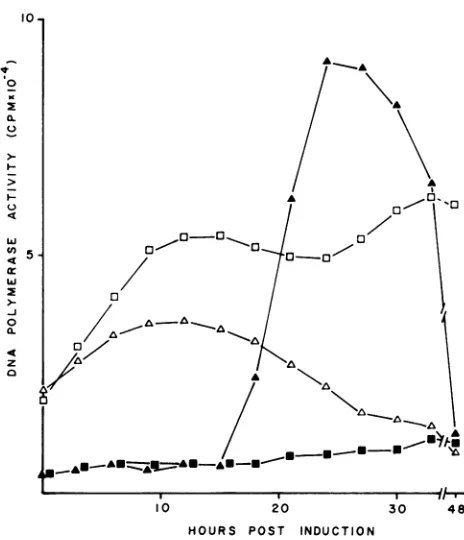
FIG. 1. Induction of salt-stimulated DNApolymerasein
n-buty-rate-treatedand untreated P3HR-1 cells. At each time point, 5 x 10⁶
cellswereharvested and extracted with 200,ulof bufferasdescribed
in the text. Enzyme activity was assayed on 10-,ul aliquots ofthe
extracts. Assays were performed in the presence (A, U) and absence (A, El) of 100 mM ammonium sulfate, with extracts of butyrate-treated(A, A) and untreated (U,O) cells.
cells was ca. 25%. Cultures containing less than 15%
posi-tive cells were discarded as they were less suitable for enzyme purification.
Purification of the EBV DNA polymerase. All steps in the EBV DNA polymerase purification were carried out at4°C unless otherwise indicated. Frozen cellswerethawedinfour
volumes of PET buffer (150 mM KCl, 1 mM EDTA, 20 mM Tris-hydrochloride [pH 7.2][25°C],10 mMmercaptoethanol, 0.5 mM phenylmethylsulfonylfluoride, 0.1,ugofPepstatinA
perml). The pHofthe extract wascheckedand adjusted to 7.2 (on ice). The extract was clarified by centrifugation at 20,000rpmfor1h inaSorvall SS34rotor. Thesupernatant
was carefully aspirated, avoiding lipids and loosely packed
material above the pellet.
The extract was loaded onto a 50-ml column of
double-stranded DNA-cellulose at a flow rate of 25 ml/h. The column had previously been equilibrated with KPE buffer (150 mM KCI, 1 mM EDTA, 20 mM potassium phosphate buffer [pH 7.2], 0.5 mM phenylmethylsulfonyl fluoride, 0.1
,ug of Pepstatin A per ml, and 20% glycerol). After the
column was washed with KPE buffer, bound material was
eluted witha300-mllineargradientfrom 150to600mMKCI
inKPEbuffer. Fractions of5mlwere collected andassayed
for enzyme activity. Those containing the viral DNA poly-merase were pooled and extensively dialyzed against KPE
buffer containing 100 mM KCI.
Thedialyzed viral DNA polymerase from DNAcellulose
wasloadedontoa5-mlcolumnofphosphocelluloseataflow
rate of 10 ml/h. Bound proteins were eluted with a 40-ml
lineargradient, 100to600mMKCl inKPE buffer. Theviral
DNA polymerase eluted as a sharp peak at 280 mM KCI.
The fractions containing the enzyme were immediately pooled, made400 mMinKCl, and appliedtoa1-mlcolumn ofBlue Sepharose. TheviralDNApolymerase didnotbind tothe column, whereas most of the proteins did. The DNA
polymerase recovered from the column flow-through
frac-tions was pooled, concentrated to ca. 1 ml, and made 50%in
glycerol. When stored at -20°C, the enzyme activity was stable for several months.
Gelfiltration onSephacryl S-300. Cells(1 g) weresonicated in PET buffer containing 500 mM KCl, centrifuged, and appliedto a45-ml column of packed Sephacryl S-300 equil-ibrated withKPEbuffer containing400 mMKCl. Then 1ml of theextract wasapplied at a flow rate of 6ml/h. Fractions
of 0.3 ml were collected. Catalase (232,000), aldolase
(158,000), BSA (69,000), and ovalbumin (45,000) were used asmolecularweight markers.
Assays for DNA polymerase and nuclease activity. The standard DNA polymerase assay systemcontained, in a final volumeof 200,ul, 50 mMTris-hydrochloride (pH 8.0), 6 mM
MgCl2, 0.1 mM EDTA, 10 mM mercaptoethanol, 50 ,ug of
activated calf thymus DNA, 80,ugofheat-inactivated BSA, 0.1 mM each of dCTP, dGTP, and dATP, and 0.01 mM [3H]TTP. The specific activity of the [3H]TTP was 330
cpm/pmol. To permit differentiation between viral and cel-lular DNApolymerase activities, allfractions were assayed in both the presence and absence of 100 mM ammonium
sulfate (7, 9, 26). The incorporation of [3H]TMP in the presence of salts was regarded as viral. Incubations were performed at 37°C for 30 min. To terminate incorporation,
thetubes wereplaced onice and made 10% intrichloroacetic
acid. The precipitates were collected on Whatman GF/C fiber glass filters and dried. The filters were counted in an LKBRackbetascintillationcounter(LKBInstrumentsInc.). All assays were done in duplicate. Calf thymus DNA polymerase alpha, used as a control in the experiments described in Tables 2 and 3, was assayed as described previously (9).
Assays for DNase were done with DNAof P3HR-1 cells
labeled with [3H]thymidine to a specific activity of 24,000
cpm/,ug. Each assay of 200 ,ul contained 2 ,ug of labeled DNA. Concentrations ofTris-hydrochloride, MgCl2, EDTA, mercaptoethanol, and BSAwere as in the DNA polymerase
assay. Incubations were carried out for 30 min at 37°C.
Digestion was terminated by the addition oftrichloroacetic acid, and the remaining radioactivity was determined as describedabove. DNaseactivity isexpressedasthe percent-age of added [3H]DNA solubilized.
Immunoblotting. Proteins were transferred
electrophoreti-cally to nitrocellulose filters (22), After transfer, additional binding sites were blocked by immersion in 2% BSAfor30 min at 37°C. The filters wereincubated inserum (15)diluted 1to20 inphosphate-buffered salinecontaining 0.05%Tween 20. The filters werewashedtwice and incubated withprotein A conjugated with alkaline phosphatase (30 min at room temperature). After threewashes, the filter was immersed in the developer containing 100 mM Tris-hydrochloride (pH
8.6), 5 mMMgCl2, 1 mg ofcx-naphthylphosphate perml,and 2.5 mg of Fast Red per ml. The enzyme reaction was
terminated by washing the filter in distilled water, and the filter was air dried.
Determinationofamino acid compositions. Themajor110K
polypeptide obtained after Blue Sepharose was identified after electrophoresis in 7% sodium dodecyl
sulfate-poly-acrylamide gelelectrophoresis (SDS-PAGE). The band was excised from the stained gel, cut into small
pieces,
and immersed in 20 volumes of 100 mM Tris-hydrochloride (pHon November 10, 2019 by guest
http://jvi.asm.org/
[image:2.612.68.300.69.339.2]100
0
I-~~~~~~~~V
\ ~~~~~C)
X _" -
50-_._0
0
z
a
x
\,x---x
CLI C
c
0
c 0
-0.6
-0.3
.0.1
[image:3.612.66.550.83.329.2]100 300 400 500 ml
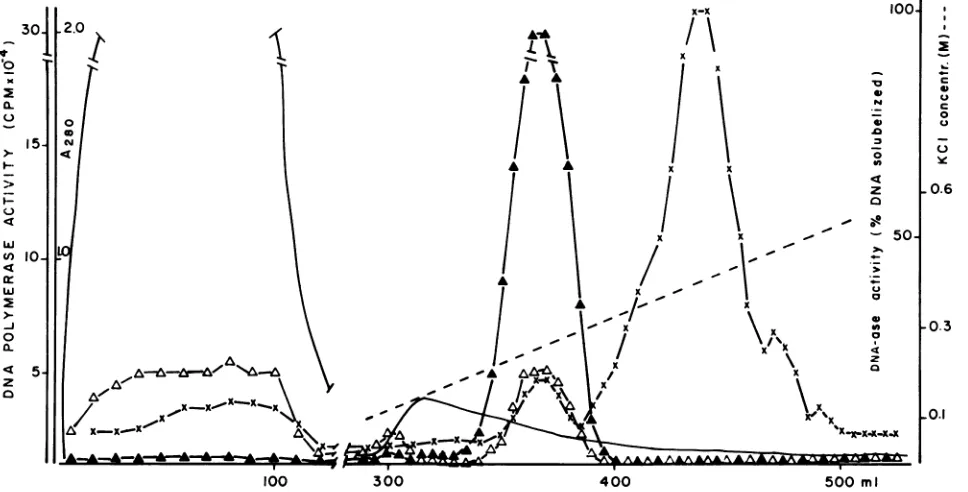
FIG. 2. DNA-cellulosechromatography ofextractsfrom induced P3HR-1 cells. Fractionswereassayedfor nuclease activity(X)andDNA
polymerase activityin thepresence(A) andabsence(A)of ammonium sulfate. 7.5) and 1% SDS. The proteinwaseluted by stirring for 72 h
atroomtemperature. Acrylamidewasremovedby filtration, and the protein was precipitated by the addition of 10% trichloroacetic acid in the cold. After centrifugation, the protein pellet was washed with ether, dissolved in formic acid, and transferred to a hydrolysis tube. Hydrolysis was for 24 hat110°C with 6 M HCI and 0.5% phenol in evacuated tubes.Amino acids obtainedweredetermined inaBeckman
121 M analyzer.
Miscellaneous methods. Preparation of activated calf thy-mus DNA and UV-irradiated DNA cellulose has been de-scribed previously (20, 25). Determinations of protein
con-centrations were made with BSA as standard (4). Cellular
alpha and beta DNA polymeraseswere extractedfrom Raji cellsandseparated bychromatographyonDEAE-Sephacel.
Thebetapolymerase was found in the unbound fraction. It wasresistant toinactivation by NEM and hadapreference
forsynthetic templates, asexpected (18). Polymerase alpha
waseluted withalinear gradient from 40to400 mM KCI in Tris-hydrochloride (pH 8.0). SDS gel electrophoresis (19)
was carried out with molecular weight markers 200,000 (myosin), 116,500 (beta-galactosidase), 92,500 (phospho-rylaseB), 66,200 (BSA), and 45,000 (ovalbumin). Electropho-retic transfer of proteins to nitrocellulose, conditions for immunoblotting, and theserumusedfor immunoblotting and
immunoprecipitation have been described previously (15, 22).
RESULTS
Induction of the EBV DNA polymerase in n-butyrate-treated cells. For a determination of the optimal time of
harvest forpurification, the induction of the salt-stimulated DNA polymerase was monitored in crude extracts of cells harvestedatvarious timesafteraddition of the inducer (Fig. 1). Significant quantities of the salt-stimulated DNA
polymer-ase were detected 18 hafter addition of the inducer.
Maxi-malactivitywas obtained 24to30hpostinduction. After 30
h, the enzyme activity declined rapidly. The decrease of polymerase activity was
paralleled
by a rapid increase of dead cells. Little or no salt-stimulated DNA polymeraseactivity wasdetected in uninduced cells. The level in unin-ducedP3HR-1 cellswasnearly identicaltothat in
virus-neg-ative cell lines such as Bjab and Ramos (data not shown).
The time course of nuclease induction followed a pattern
similar to that of the viral DNA polymerase (data not
shown).
Extraction and purification of the viral DNA polymerase. Induced cells were harvested between 24 and 28 h after induction. Several extraction procedures were explored, including the high salt extraction described by Powell and Purifoy (28). Extraction by sonication followed by addition of 500 mM KCI resulted in solubilization ofmore than90% of theenzymeactivity.However,thisprocedure resulted in extensive solubilization of DNA which could not be re-moved by precipitation with streptomycin sulfate or
poly-etyleneimine without substantial loss of enzyme activity. Exposure of the enzyme to salt concentrations higher than 700 mM KCI led to rapid loss ofenzyme activity, as did
exposuretopH above 7.6. Thawing of cells in isotonic saltat
apH close to neutral appearedto be mostcompatible with the preservation of active enzyme, and ca. 80% of the salt-stimulated DNA polymerase wassolubilized.
Figure 2 shows the purification of the viral DNA
polymer-ase from induced P3HR-1 cells by chromatography on double-strandedDNA-cellulose. The viral DNApolymerase eluted as a sharp peak at 280 mM KCI. Some nuclease activity wasassociated with the polymerase, butmostof it eluted between300 and 450 mM KCl. Neither the viral DNA polymerase nor the major nuclease was detected upon
chromatography of extracts from uninduced cells. Small quantities ofDNApolymerase inhibited by saltwereeluted in the firstfractions of the salt gradient. This activity was
also observeduponchromatography of uninduced cells and
was therefore not regarded as associated with the viral
.2.0
10
a.
I-CL
I-w
C,) .4 w
-J 0
a-z
a
on November 10, 2019 by guest
http://jvi.asm.org/
4
0-3
<q)
a:
O
0.3
0.2
°
100-z
a -A
o
50-Iz
10 20 30 40 mi
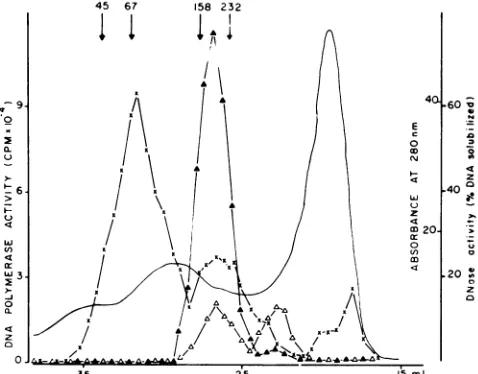
FIG. 3. Phosphocellulosechromatography of the DNA-cellul(
purified
DNApolymerase.
Symbols
arethesame asthoseinFig
cycle. As our results indicated thatboth the salt-stimula
DNA polymerase and the major nuclease observed
chromatographyon DNAcellulosewere associated with
viral cycle in P3HR-1 cells, these activities will be de nated the viral DNA polymerase and the viral nuclea
respectively.
Further purification of the viral DNA polymerase N obtained by chromatography on phosphocellulose (Fig. Analysis ofthe separation by phosphocellulose reveale
single peak ofDNA polymerase activity eluting at ca. mMKCI. AssayforDNApolymerase in theabsence of didnotreveal additionalpeaks. Mostofthenuclease actiN
remainedassociated withthe viralDNApolymerase. Sc
nuclease activity elutedatlowerionic strength.
The DNApolymerase fromthephosphocellulosestepN obtainedinlowprotein concentrationand wasunstable
ul
storage or dialysis to low ionic strength. Thus, additic purificationwasdifficultwith most conventional
procedul
such as ion-exchange chromatography. Pilot-scale exp ments with labeled viral DNA-binding proteins (29) ir cated that most ofthese polypeptides were bound to B
Sepharosein the presenceof400 mMKCl.Oneprotein (h designated 110K) failed to bind this ionic strength. Ot
pilot experiments with DNA cellulose-purified EBV D
polymerase indicated that this enzyme had no affinity Blue Sepharose at 400 mM KCl. For these reasons,
pooled fractions from phosphocellulose wereadjustedto mM KCl. All of the enzyme activity was present in
flow-through fractions. Since this experiment could be I
formedin less than 30min, thefinal purification stepcc
be performed with high yield and usually with
three-fourfoldpurification. The proteins bound to the column,
eluted with
increasing
salt concentration did not conidetectable DNApolymerase activity.
TABLE 1. Purificationof EBV DNA polymerasefrom induc P3HR-1 cells
By a three-stepprocedure (Table 1), an apparent
purifica-tionof
1,370-fold
was obtained witharecovery ofca. 42%.- The mostcritical stepwasthe DNA cellulose purificationin
whichthe recovery varied between 10and60%. This varia-bility of yield might be associated with the presence of variable amountsof DNA in the extract and DNA cellulose -05 eluate. Itis likely that this DNA caused aggregation in the subsequent dialysis step. The low protein concentration
might also contribute to the destabilization of the DNA
_03
polymerase
activity.
Low recovery in the firststep
made the EBV DNApolymerase refractoryto furtherpurification.Determination of the molecular size of the EBV DNA polymerase. Efforts to determine the size of the purified
enzyme by gel filtration and by sedimentation in sucrose wereinconclusivedue to thepoor stability of the enzyme in dilute form. In contrast, gel filtration of crude enzyme in the ose- presence of 400 mM
KCI
could beperformed
withgood
g.
2. recovery (Fig. 4). The gel filtration on Sephacryl S-300 indicated an apparent molecular weight of 185,000 for the ted viral DNA polymerase and 70,000 for the viral nuclease. by Attempts to perform the gel filtration in low salt (150 mM the KCl) did not produce reliable data, probably due toaggre-sig- gation oftheenzyme.Sedimentation ofthe enzyme in crude tse, form or after DNA cellulose purification was inconclusive since recoveries of the enzyme activity were less than 1%. was The sedimentation coefficient thus could not bedetermined.
3). Polypeptides from the threepurificationstepsof the EBV d a DNA polymerase were separated by SDS-PAGE (Fig. 5).
280 The samples wereanalyzed in parallel with an immunopre-salt cipitate from
[35S]methionine-labeled
induced P3HR-1 cells vity (15) to permit comparison of theelectrophoretic mobilitiesof)me the purified proteins and the viral polypeptides detectedby
anti-EBV serum. Each of the three fractions and the im-was munoprecipitatewerealso transferred tonitrocellulose (Fig. pon 5, lanes D to G) for detection of viral polypeptides by )nal immunoblotting. In the Coomassie-stainedgel (Fig.5, lanes res, A to C), three major proteins remained after the third eri- purificationstep. The most abundantpolypeptideof theviral ndi- DNA polymerase preparation comigrated with the viral Blue 110K polypeptide detected by immunoprecipitation. We iere have shownpreviously that this polypeptide binds to DNA
ther
NA for the 400 the
per-)uld to
and tain
ed
Total Total Sp act Recovery Purification
Source protein activity (U/mg) (%) (fold)
(mg) (U)' UM) () (od
Cellextract 558 12,240 21.9 100 1
DNA-cellulose 3.27 6,529 1,997 53.3 91 Phosphocellulose 0.65 5,459 8,398 44.6 383 Blue Sepharose 0.17 5,104 30,024 41.7 1,371
"One unit is definedastheamountof enzymeresultingin theincorporation of 1 nmol of[3H]TMPunder standardassayconditions.
40
E
0
OD
z
m 20.
r
0
(n
m
-60n
:-n
-40
z .40 a
.20 4.
V
35 25 5mI
FIG. 4. Gel filtration on Sephacryl S-300 ofextract ofinduced P3HR-1cells.SymbolsarethesameasinFig.2 and 3.Markersare
listedin the text.
on November 10, 2019 by guest
http://jvi.asm.org/
[image:4.612.67.300.66.236.2] [image:4.612.323.562.507.694.2](29). A less abundant polypeptide of the final purification step had an apparent molecular weight of 50,000. This polypeptide also comigrated with an immunoprecipitated
viralpolypeptide.Theimmunoblottingexperimentidentified
the110K polypeptideasviral,and it wasreadily detectedin all three purification steps. The other polypeptides ofthe
DNApolymerase preparationwere
notreactiveinimmunoblot-ting.
In the first twopurification steps, the major immunoreac-tive polypeptide had an apparent molecular weight ofca. 80,000. This polypeptide probably represents the nuclear antigenEBNA (33) asitwasalsodetected inuninducedcells andhad high affinity for Blue Sepharose (33). This antigen
was readily detected by immunoblotting, and the
polypep-tide also transferred well to the nitrocellulose. In contrast, the 110K and 135K polypeptides transferred poorly, and
their detection by immunoblotting was difficult. We
there-fore cannot exclude that someoftheminor
high-molecular-weight polypeptides of the enzyme preparation areviralbut evadeddetection by immunoblotting.
The purified EBV DNA polymerase was analyzed by electrophoresison12%polyacrylamide. Proteins eluted from
Blue Sepharose (400 to 1,000 mM KCI) were analyzed in
parallel(Fig. 6). Thelatterpreparation hadnoDNA
polymer-aseactivity and didnotcontainthe 110K viralprotein which
wasthe predominant component ofthepurified DNA poly-merase(Table 1).Theremainingtwoproteins ofthe
polymer-ase preparation (66K and 51K) were detected in the Blue
Sepharose fractions lacking enzyme activity. Thus, ofthe
proteins of the purified enzyme, only the 110K protein correlated with the viralDNA polymerase activity.
Attemptstoidentifythecatalyticsubunit oftheviralDNA
polymerasewere madeby the insitu detectionmethod(32).
IP A B C D E F
135-1 10Q
G
-135 -1 10
. 56
56
-4-8
[image:5.612.360.508.69.334.2]48 ^1 s7* ~ 4
FIG. 5. SDS-polyacrylamide gel electrophoresis in 7%
poly-acrylamide of polypeptides from the three purificationsteps: DNA-cellulose (lanes A and D), phosphocellulose (B and E), and Blue Sepharose (C and F). Lanes A through C were stained with
Coomassie brilliant blue. IP, Immunoprecipitate of viral proteins from induced cells labeled with [35S]methionine. The same serum was used for immunoblotting (lanes D through F). Lane G is an
immunoprecipitate transferredtonitrocellulose.
A
B200-116.5- _
92.5-_
66-45-
0"
_Sb -110
-66
-51
FIG. 6. SDS-polyacrylamide gel electrophoresis in 12% poly-acrylamide of (A) BlueSepharose bindingproteins elutedstepwise with0.4 to 1.0 MKCI (thesefractionswerenotassociated withany DNApolymeraseactivity) and (B) EBVDNApolymerase from the BlueSepharoseflow-through fraction.
Although this method readily detected different cellular enzymes in uninducedcells, no novelspecieswere detected in the cells after induction of the viral cycle. EBV DNA
polymerasefromany of the threepurificationsteps failed to produce specific bands(datanotshown).
Properties of the purified DNA polymerase. The purified EBV DNA polymerase was strongly stimulated by the addition of ammonium sulfate to theassay system, whereas the cellularalphaand beta DNApolymerases purifiedfrom
Rajicells werestronglyinhibited underidentical conditions (Fig.7).Thepurifiedenzyme failed to utilizeunnickedDNA as a template, whereas nicked (activated) DNA was an efficienttemplate (Table 2). Amongthe synthetic templates tested,thepurifiedenzyme had a strongpreferencefor
(dC)n
(dG)12
18. This template was six times more efficient thanactivated DNA, but both (dA)n (dT)12 18 and
(dT)n
(rA)1218were as efficiently copied as activated DNA. The RNA template
(rA)n (dT)12
18 could not beutilized at all. Controlexperiments with DNApolymerase alpha from calf thymus
showed a distinctly different pattern. The cellular enzyme had a strong preference for RNA-primed template
(dT)n
(rA)12 18bututilizedthetemplate
(dC)Q
(dG)12
18 significantlyless effectively than did the EBV DNA polymerase. Simi-larly,thealpha polymerase failedtocopy the RNAtemplate.
InTable 3, the EBVDNApolymeraseand the calfthymus
DNApolymerase alphawere comparedfurther withrespect tofouragents withknowneffects on certain DNA
polymer-ases. The cellularenzyme was over 30 times more sensitive to inactivation by N-ethylmaleimide. For the two PP,
an-alogs PFA and PAA, the sensitivity pattern was reversed,
and the DNApolymerasealpharequiredan8.0,uM
concen-trationfor 50% inhibition. The EBV DNA polymerase was inhibited to 50% already at 10-fold-lower concentrations.
4m Am-lo..
,f:-.;i.,-MO tw
-,.
-It-** w
on November 10, 2019 by guest
http://jvi.asm.org/
[image:5.612.78.272.418.641.2]1000.
>800.
600-cn
w
400.
0
0
w
wJr
CA
l1
wI
II II
II
.6
0
10
50 0o0 mM (NH4)2,S04
150
FIG. 7. Effect of the addition of ammonium sulfate on the activity of the EBV DNA polymerase and cellular alpha and beta DNApolymerases.
Thetwoenzymeshad similar sensitivities to treatmentwith aphidicholin, atetracyclic diterpenoid.
DISCUSSION
The viral DNA polymerases in cells infected by HSVtype
1 or 2 are characterized by their sensitivity to
PPi
analogs and to stimulation by salts. In addition, the HSV DNA polymerases bind tightly to DNA in vitro. These three properties clearly distinguish the HSV enzymes from the DNA polymerases of uninfected cells (17, 23, 26, 28).The salt-stimulated DNA polymerase isolated from virus-producing P3HR-1 cells constitutes more than 50% of the DNA polymerase in these cells and correlates with the productive cycle of the virus. Chromatography of the salt-stimulated DNA polymerase onDNA-cellulosereadily sep-aratesitfrom its cellularcounterparts,and in thesubsequent purification steps the enzyme appears to be homogeneous withrespect tocontaminating DNA polymerases. The EBV DNApolymerase has asensitivityto PAA and PFA similar
[image:6.612.91.272.63.312.2]tothat of the HSV DNApolymerase (17, 26). With respect
TABLE 2. Template primer preference of cellular alpha andEBV DNApolymerase
DNApolymerase Template primera Substrate activitya
EBV
Native DNA [3H]dNTP 0 0
Activated DNA [3H]dNTP 100 100
(dA)n(dT)12-18 [3H]dTTP 162 106
(dC)n(dG)12-18 [3H]dGTP 189 643
(dT)n(rA)12-18 [3H]dATP 1,138 102
(rA)n(dT)12-18 [3H]dTTP 0 0
aEachtemplate primerwasusedataconcentration of 50,ug/ml. bFor DNA polymerase alpha and the EBV DNA polymerase, 100% of
[image:6.612.320.561.91.174.2]activityrepresents124 and 46pmol of [3H]NTP incorporated, respectively.
TABLE 3. Effect of various inhibitors on the activity of cellular DNA polymerase alpha and the EBV DNA polymerase
ID50(,uM)"
Inhibitor DNA EBV DNA
polymerase polymerase
PFA 8.0 0.5
PAA 8.0 0.8
Aphidicolin 26 11
NEMb 50 1,700
aID50, Concentrationgiving 50% inhibition of enzyme activity.
NEM, N-Ethylmaleimide, tested in the absence of,B-mercaptoethanol.
to the preference for synthetic template primers, the EBV DNA polymerase also has the characteristics of the HSV DNA polymerase. These findings clearly suggest that the EBV DNA polymerase is an HSV-type DNA polymerase.
This conclusion is in agreement with several previous re-ports(2, 5, 7,10, 25) andis in line with theobservation that
PAAinhibitsEBVreplication(34).TheEBV DNA
polymer-asealso hasrecently been showntobegenetically relatedto theHSV DNA polymerase (G.F. Hatfull, B. G. Barrell, J.
Quinn, andD. McGeoch,manuscript in preparation). These
authors have identified aregionof the EBV genome
consist-ing of a 3-kilobase open reading frame (in the EcoRI C fragment) which reveals striking homology with the HSV type 1 DNApolymerase gene. Themolecular weightof the
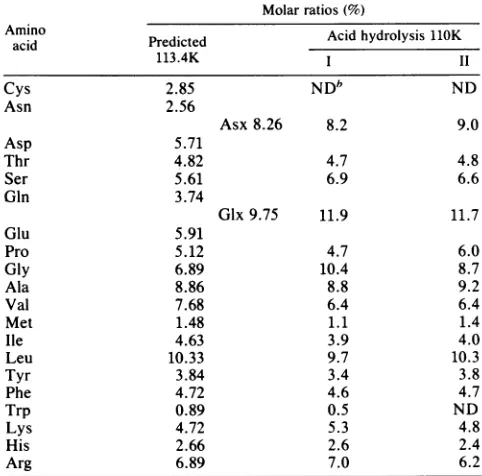
predicted protein (113,400) and itsamino acid composition
were in good agreementwiththatofthe 110Kproteinshown
TABLE 4. Amino acidcomposition of the predicted 113.4K protein of theDNApolymerasegeneand comparison withthe 110Kpolypeptide associated withthe EBV DNApolymerase'
Molar ratios(%)
amcidno
Predicted Acid hydrolysis 110K113.4K III
Cys 2.85 NDb ND
Asn 2.56
Asx8.26 8.2 9.0
Asp 5.71
Thr 4.82 4.7 4.8
Ser 5.61 6.9 6.6
Gln 3.74
Glx 9.75 11.9 11.7
Glu 5.91
Pro 5.12 4.7 6.0
Gly 6.89 10.4 8.7
Ala 8.86 8.8 9.2
Val 7.68 6.4 6.4
Met 1.48 1.1 1.4
Ile 4.63 3.9 4.0
Leu 10.33 9.7 10.3
Tyr 3.84 3.4 3.8
Phe 4.72 4.6 4.7
Trp 0.89 0.5 ND
Lys 4.72 5.3 4.8
His 2.66 2.6 2.4
Arg 6.89 7.0 6.2
aTheanalysisof the 110Kproteinwasmadeon twoseparatepreparations and with asingle time of hydrolysis (24 h).The aminoacidcompositionof the
predicted protein (101.5 amino acids)wasdetermined by theuseofaDNA sequence analysis program (M. Nilsson and G. 0. Klein, submitted for
publication). The complete nucleotide sequence of the EBV genome was
madeavailablebyB.Barrelland P.Farrell,Cambridge,UnitedKingdom.
bND,Not detected.
- -- A- A __b .rzR=A=-_z --ft7 _
I,
I
I1
11 II
II 0I
.0,I*I
I
9
0
_-O--O--O
OIL
:0--O:-O::O::O--
,& '.. ,-RZZR:on November 10, 2019 by guest
http://jvi.asm.org/
[image:6.612.318.559.424.662.2] [image:6.612.63.301.604.695.2]heretobe associated with the purified EBV DNA polymer-ase (Table 4).
Although our data clearly show that the EBV DNA polymerase is similar to the HSV enzyme, the chromato-graphic properties appear to be distinctly different. Nor-mally, the first step in the purification of the HSV DNA polymerase is chromatography onDEAE-cellulose (23, 24, 26, 28). Under similar conditions (Tris-hydrochloride [pH 8.0], 40 mM KCl), the EBVenzymefailsto bindto DEAE-Sephacel. At lower pH (phosphate buffer [pH 6.5], 100 mM KCI), the EBV DNA polymerase binds to the cationic exchanger Mono S(Pharmacia).Thismight indicate that the EBV DNApolymerase hasahigher positive charge than the
HSV enzyme. We have previously shown that the EBV DNApolymerase iseluted fromachromatofocusing column at pH 8 (32).
It was not possible to obtain further purification of the enzyme since suchattempts invariably resulted in excessive loss ofenzymeactivity. Thepredominant protein of the third purificationstep(110K)wasnotfound in the Blue Sepharose-bound fraction, which did not have any DNA polymerase activity. The 66K and 51Kproteins werebothpresentin the enzyme-inactive fractions, and the lattertwoproteins there-forewereprobably unrelated tothecatalytic function of the EBV DNA polymerase. The unexpected discrepancy
be-tween the size determinations by gel filtration (185K) and SDS-PAGE(110K) might be explained if the nativeenzyme is very asymmetrical or if the enzyme contains additional subunits.Replicative DNA polymerases have been shownto
consist of a single, catalytically active subunit (13). The HSV DNA polymerase and the equine herpesvirus DNA polymerases donotseemtobeexceptions in thisrespect(3, 28).
Theavailability of the primarystructureof the EBV DNA polymerase (Hatfull et al., in preparation) will make it possible to identify the protein associated with the enzy-matic activity by using antibodies of predetermined spe-cificity,ashasbeen donefor the identification of EBNA(8).
This approach also will clearly be of help in determining whether the nuclease activity which copurifies with the polymerase is an integral part of the DNA polymerase or whether the nuclease activity is associated with aseparate
protein.
ACKNOWLEDGMENTS
Thisinvestigationwassupported by Public Health Servicegrant5 RO1 CA28380-03 awarded by the National Cancer Institute, and by the Swedish Cancer Research Council. B.K. is a recipient ofa
fellowship from the Cancer Research Institute andafellowship from
the Concern Foundation.
WearegratefultoP.Farrell and B. Barrell for making their data available before publication andto Ingrid Tornberg for excellent tissue cultures.
LITERATURECITED
1. Allaudeen, H. S., and J. R. Bertino. 1978. Isolation of a
herpesvirus-specific DNA polymerase from tissue ofan
Amer-ican patient with Burkitt lymphoma. Proc. Natl. Acad. Sci.
U.S.A.75:4504 4508.
2. Allaudeen,H.S., and G. Rani. 1982. Cellular andEpstein-Barr virus specific DNA polymerase in virus-producing Burkitt's lymphoma cell lines. NucleicAcids Res. 10:2453-2465. 3. Allen, P. A., D. J. O'Caliaghan, and C. C. Randal. 1977.
Purificationandcharacterization ofequineherpesvirus-induced
DNApolymerase. Virology 76:395-408.
4. Bradford, M. M. 1976. A rapid and sensitive method for quantitation of microgram quantities of protein utilizing the
principleof protein dye binding. Anal. Biochem. 72:248-254. 5. Cheng,Y.C., J.Y.Chen,P.J.Hoffmann, and R. Glaser. 1980.
Studies on theactivity of DNase associated with thereplication of the Epstein-Barr virus. Virology 100:334-338.
6. Clough,W.1979. Deoxyribonuclease activity foundin Epstein-Barr virus producing lymphoblastoid cells. Biochemistry 18:4517-4521.
7. Datta,A.K., R. Y.Feighny, andJ. S.Pagano. 1980. Induction of Epstein-Barr virus-associated DNA polymerase by 12-0-tetradecanoyl-phorbol-13-acetate. Purification and characteriza-tion. J. Biol. Chem. 255:5120-5125.
8. Dillner, J., L.Sternas, B.Kallin, H. Alexander,B. Ehlin-Hen-riksson, H.Jornvall, G. Klein, andR. Lerner. 1984.Antibodies against asyntheticpeptide identify the Epstein-Barr virus-de-termined nuclear antigen (EBNA). Proc. Natl. Acad. Sci. U.S.A. 81:4652-4656.
9. Eriksson, B.,A. Larson,E.Helgestrand,N.G. Johansson,and B.Oberg.1980.Pyrophosphate analoguesasinhibitorsof herpes simplex virus type1DNApolymerase. Biochim.Biophys.Acta 607:53-64.
10. Feighny, R.J., B. E. Henry II,A. K.Datta,andJ. S. Pagano. 1980. Induction ofDNApolymerase activity after superinfec-tion ofRaji cells withEpstein-Barr virus.Virology 107:415-423. 11. Goodman, S. R., C. Prezyna, and W. C. Benz. 1978. Two Epstein-Barr virus associated DNA polymerase activities. J. Biol. Chem. 253:8617-8628.
12. Hoffmann,P.J.,and Y.C.Cheng. 1978. Thedeoxyribonuclease induced after infectionofKBcells byherpessimplex virus type 1ortype 2. J. Biol. Chem. 253:3557-3562.
13. Hubscher, U., A. Spanos, W. Albert, F. Grummt, and G. R. Banks. 1981. Evidencethatahigh molecular weightreplicative DNA polymerase is conserved during evolution. Proc. Natl. Acad. Sci. U.S.A.78:6771-6775.
14. Hummel, M., and E. Kieff. 1982. Mapping of polypeptides encodedby theEpstein-Barr virus genome inproductive infec-tion. Proc. Natl. Acad. Sci. U.S.A. 79:5698-5702.
15. Kallin, B., and G. Klein. 1983. Epstein-Barr virus carried by Raji cells: a mutantinearly functions?Intervirology19:47-51. 16. Kallin, B., J. Luka, and G. Klein. 1979. Immunochemical characterization ofEpstein-Barr virus-associated early and late antigens inn-butyrate-treatedP3HR-1cells.J.Virol.32:710-716.
17. Knopf, K. W. 1979. Properties of herpes simplex virus DNA polymerase andcharacterization of its associated exonuclease activity. Eur. J.Biochem. 98:231-244.
18. Kornberg,A.1980. DNAreplication. W. E.Freeman andCo., San Francisco.
19. Laemmli,U. K. 1970.Cleavage of structural proteins during the assembly of the head of bacteriophage T4. Nature (London) 227:680-685.
20. Litman,R. M.1968.Adeoxyribonucleic acid polymerase from Micrococcus luteus (Micrococcus lysodekticus) isolated on deoxyribonucleic acid-cellulose.J. Biol. Chem.243:6222-6233. 21. Luka, J.,B. Kallin,and G. Klein. 1979. Inductionof Epstein-Barr virus (EBV) cycle in latently infected cells by n-buty-rate. Virology 94:228-231.
22. Luka, J.,E.Sternas,H.Jornvall,G. Klein,and R. Lerner. 1983. Antibodies ofpredeterminedspecificity fortheNH2 terminus of acellularproteinp53reactwith thenative molecule.Proc.Natl. Acad. Sci. U.S.A. 80:1199-1203.
23. Mar, E.-C., and E.-S. Huang. 1979. Comparative study of herpes group virus-induced DNA polymerases. Intervirology 12:73-83.
24. Morrison, J. M., and H. M. Keir. 1968. A new DNA-exonu-clease in cells infected withherpes virus: partialpurification and propertiesof the enzyme.J.Gen. Virol. 3:337-347.
25. Ooka, T.,G.Lenoir,andJ.Dailie.1979.Characterizationofan Epstein-Barr virus-inducedDNApolymerase.J.Virol.29:1-10. 26. Ostrander, M., and Y. C. Cheng. 1980. Properties of herpes simplex virus type 1 and type 2 DNA polymerase. Biochim. Biophys.Acta609:232-245.
27. Pearson,G.R.,B.Vroman,B.Chase,T. Sculley,M.Hummel, and E.Kieff. 1983.Identificationofpolypeptide components of theEpstein-Barr virusearlyantigen complex withmonoclonal
on November 10, 2019 by guest
http://jvi.asm.org/
antibodies. J. Virol. 47:193-201.
28. Powell, K. L., and D. J. M. Purifoy. 1977. Nonstructural proteins of herpes simplexvirus. I. Purification oftheinduced
DNA polymerase.J. Virol.24:618-626.
29. Roubal, J., B. Kallin, J. Luka, and G. Klein. 1981. Early DNA-binding polypeptides of Epstein-Barr virus. Virology 113:285-292.
30. Schneider, E. L., E. J. Stanbridge, and C. J. Epstein. 1974. Incorporation of3H uridineand 3H uracil into RNA. Asimple technique for the detection of mycoplasma contamination of culturedcells. Exp. Cell Res.84:311-318.
31. Spanos,A., S. G. Sedgwick, G. T. Yarraton, U. Hubscher, and G. E. Banks. 1981.Detectionof thecatalyticactivities of DNA
polymerases and their associated exonucleases following SDS polyacrylamide gel electrophoresos. Nucleic Acids Res. 8:1825-1839.
32. Sternas, L., J. Luka, B. Kallin, B. F. Vestergaard, and G. Klein. 1982. Detection andcharacterizationof EBVantigens by micro-ELISA andchromatofocusing. J. Virol. Methods 4:229-240. 33. Strnad,B.C., B. C.Schuster, R. F.Hopkins,R. H. Neubauer,
and H. Rabin. 1981. Identification of an Epstein-Barr virus
nuclear antigenby fluoroimmunoelectrophoresis and radioim-munoelectrophoresis. J. Virol. 38:996-1004.
34. Summers,W.C.,andG.Klein. 1976. InhibitionofEpstein-Barr virusDNAsynthesis and lategeneexpressionby
phosphonoace-tic acid. J. Virol. 18:151-155.