RIT Scholar Works
Theses Thesis/Dissertation Collections
10-1-1985
A Study of mutispectral temporal scene
normalization using pseudo-invariant features,
applied to Landsat TM imagery
William Volchok
Follow this and additional works at:http://scholarworks.rit.edu/theses
This Thesis is brought to you for free and open access by the Thesis/Dissertation Collections at RIT Scholar Works. It has been accepted for inclusion in Theses by an authorized administrator of RIT Scholar Works. For more information, please [email protected].
Recommended Citation
APPLIED TO LANDSAT TM IMAGERY
by
William J. VolchoK
A thesis submitted in partial fulfillment of the requirements for the degree
of Master of Science in the Center for Imaging Science in the College of Graphic Arts and Photography of the Rochester Institute of Technology
October, 1985
Signature of the Author
Center for Imaging Science
Accepted by
Rochester, New York
CERTIFICATE OF APPROVAL
M.S. DEGREE THESIS
The M.S. Degree Thesis of William J. Volchok has been examined and approved
by the thesis committee as satisfactory for the thesis requirement for the
Master of Science degree
Dr. John R Schott, Thesis Advisor
Dr. Willem Brouwer
Mr. Peter Engeldrum
Date
I
ROCHESTER INSTITUTE OF TECHNOLOGY COLLEGE OF GRAPHIC ARTS AND PHOTOGRAPHY
Title of Thesis: A STUDY OF MULTISPECTRAL TEMPORAL SCENE NORMALIZATION USING PSEUDO-INVARIANT FEATURES. APPLIED TO LANDSAT TM IMAGERY
I.
William J. Volchok. hereby grant permission to the Wallace Memorial Library of R.I.T. to reproduce my thesis in whole Ot in part. Any reproduction will notbe of commercial use or for profit.
Signature
USING LANDSAT TM IMAGERY
by
William J. Volchok
Submitted to the
Center for Imaging Science
in partial fulfillment of the requirements for the Master of Science degree
at the Rochester Institute of Technology
ABSTRACT
A new technique for performing temporal image' normalization using pseudo-invariant features was investigated. The technique was applied to the six reflected spectral band images of the Landsat TM sensors. The temporal normalization of pseudo-invariant features yielded linear normalizing functions for all bands. The errors in the normalization of pseudo-invariant features was determined to be on the order of three digital counts, which was estimated to be equivalent to reflectance errors on the order of one percent reflectance. Temporal normalization of all features in the Landsat scene shows great potential for both quantitative and qualitative temporal change detection.
The author wishes to extend the greatest appreciation to Dr. John R. Schott for his support and guidance, during and prior to the developement of this thesis. Dr. Schott's efforts within the image science programs, especially the developement of the Digital Imaging and Remote Sensing (DIRS) Lab, have made him a valuable asset to the students and RIT.
In addition, the author would like to thank the following people for their advice and assistance:
Joe Biegel of the DIRS lab for his continuous critiques concerning scientific and statistical methods;
Peter Engeldrum and Willem Brouwer, members of the Center for Image Science faculty, for their contributions as thesis advisers;
All members of the DIRS lab for their help and cooperation throughout the experimental portions of this study.
This thesis is dedicated to my parents,
Ethel and Herbert, whose unquestioning support,
both moral and financial, lead to
the completion of this MS degree.
LIST OF TABLES . . . .
LIs'r OF FIGURES . . . .
1. INTRODUCTION . . . .
1.1 Objectives . . . . 1.2 Historical Background . . . . 1.2.1 Classification and Segmentation ... . 1.2.2 Atmospheric Models and Correction ... . 1.2.3 Image Normalization . . . .
1.3 Theoretical Background . . . . 1.3.1 Pseudo-Invariant Features (PIF's) ... . 1.3.2 Variance in Landsat Data . . . . 1.3.3 Normalization Using PIF's . . . . 1.3.4 Transformation Derivation Tecr~iques ... .
2 • ~.ER. I MENTAL ••••••••••••••••••••••••••••••••••••...•
2.1 Image Selection . . . .
2.2 PIF Classification and Segmentation ... . 2.2.1 Classification Procedures . . . . 2.2.2 Segmentation Procedures . . . .
2.3 Normalizing Transformation Determination ... . 2.3.1 Transform Determination via Histogram
Specif ication . . . . 2.3.2 Transform Determination via Linear
Histogram Analysis . . . .
2.4 Transformation Analysis . . . . 2.4.1 Comparison of Transform Derivation
Techniques . . . . 2.4.2 Empirical Transformation Error Analysis .... . 2.4.3 Error Propagation of Transform Errors ... . 2.4.4 Estimation of Reflectance Errors ... . 2.4.5 Full Scene Transformation and
Temporal Changes . . . . 2.4.6 Secondary Scene Comparison . . . .
3.. RESULTS ... ..
3.1 Images Selected and PIF Segmentation ... . 3.2 Spectral Normalization Transforms ... .
3.3 Transformation Method Comparison ... .
3.4 Transformation Error Analysis ... .
3.5 Relative Reflectance Errors . . . .
3.6 Full Scene Normalization and Temporal Changes .. .
3.7 Normalization of Secondary Images ... . 4. CONCLUSIONS . . . .
5. RECOMMENDATIONS FOR FUTURE WORK ... .
REF'ER.ENCES ... ..
APPENDIX A Spectral Response Characteristics of the Landsat TM-4 and TM-5 Reflected Energy Sensors ...
APPENDIX B Derivation of Histogram Specification Techniques ... ..
APPENDIX C Derivation of Linear Histogram Analysis Operation (LHAO) . . . . APPENDIX D Summary of Image Storage and Computer
Program Algori thms . . . . APPENDIX E Error Propagation for Independent and
Correlated Errors ... ..
APPENDIX F Multiple Transform and Control
Po i n t Da ta ... ..
VITA ... ..
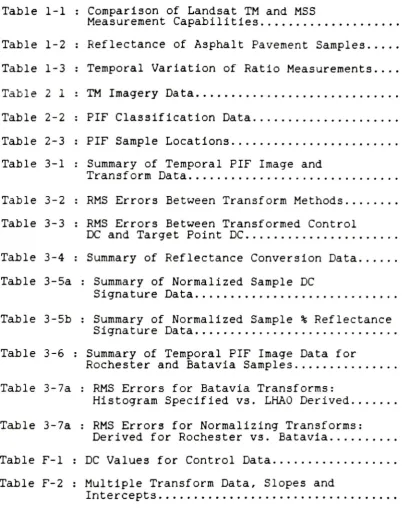
Table 1-1 Comparison of Landsat TM and MSS
Measurement Capabilities . . . . Table 1-2 Reflectance of Asphalt Pavement Samples ...
Table 1-3 Temporal Variation of Ratio Measurements ....
Table 2 1 TM Imagery Da ta . . . .
Table 2-2 PIF Classification Data . . . .
Table 2-3 PIF Sample Locations . . . . Table 3-1 Summary of Temporal PIF Image and
Transform Data . . . .
Table 3-2 RMS Errors Between Transform Methods ... . Table 3-3 RMS Errors Between Transformed Control
DC and Target Point DC . . . . Table 3-4 : Summary of Reflectance Conversion Data ... .
Table 3-5a : Summary of Normalized Sample DC
Signa ture Data . . . .
Table 3-5b Summary of Normalized Sample % Reflectance Signature Data . . . . Table 3-6 : Summary of Temporal PIF Image Data for
Rochester and Batavia Samples ... .
Table 3-7a : RMS Errors for Batavia Transforms:
Histogram Specified vs. LHAO Derived ... .
Table 3-7a RMS Errors for Normalizing Transforms:
Derived for Rochester vs. Batavia ... . Table F-l DC Values for Control Data . . . .
Table F-2 Multiple Transform Data, Slopes and
Intercepts . . . .
[image:10.491.47.449.84.615.2]Figure 1-1
Figure 2-1
Figure 2-2 :
Figure 2-3a
Figure 2-3b
Figure 2-3c
Figure 2-3d
Figure 2-3e
Figure 2-4
Figure 2-5
Figure 2-6
Figure 3-1
Figure 3-2
Figure 3-3
Figure 3-4
Figure 3-5
Figure 3-6
Figure 3-7
Figure 3-8
Spectral reflectance signatures for
vegetation and water . . . .
Band 4, Rochester subscene images
9-13-82 and 6-22-84 . . . .
PIF classification logic flow chart ... .
Band ratio 4/3 image, 9-13-82 . . . .
Thresholded band ratio 4/3 image, 9-13-82.
Band 7 image, 9-13-82 . . . .
Thresholded band 7 image, 9-13-82 ... . Final PIF classification mask . . . .
PIF segmentation logic flow chart ... .
Plot of an intensity transformation table ..
Band 4, 9-13-82 PIF histograms: original llnd with 90% t.hreshold . . . .
Graphical representation of band 1
normali za t i on . . . .
Graphical representation of band 2
normali zat1on . . . .
Graphical representation of band 3
normalization . . . .
Graphical representation of band 4
normalization . . . .
Graphical representation of band 5
normalization . . . .
Graphical representation of band 7
normalization . . . .
Plot of normalized ITT functions derived
by histogram specification and LHAO
techniques . . . .
Band 4, 6-22-84 image of Rochester with green "x"s at control point locations ... .
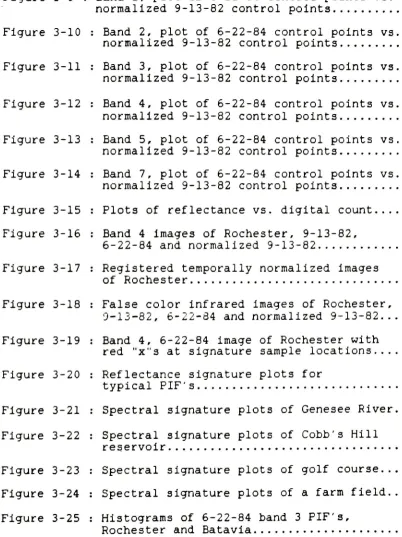
[image:11.492.45.453.100.685.2]Figure 3-9 : Band 1, plot of 6-22-84 control points vs.
Figure 3-10
Figure 3-11
Figure 3-12
Figure 3-13
Figure 3-14
Figure 3-15
Figure 3-16
Figure 3-17
Figure 3-18
Figure 3-19
Figure 3-20
Figure 3-21
Figure 3-22
Figure 3-23 Figure 3-24
Figure 3-25
normalized 9-13-82 control points ... .
Band 2, plot of 6-22-84 control points vs. normalized 9-13-82 control pOints ... .
Band 3, plot of 6-22-84 control pOints vs. normalized 9-13-82 control points ... .
Band 4, plot of 6-22-84 control points vs. normalized 9-13-82 control pOints ... . Band 5, plot of 6-22-84 control pOints vs. normalized 9-13-82 control pOints ... . Band 7, plot of 6-22-84 control points vs. normalized 9-13-82 control pOints ... .
Plots of reflectance vs. digital count ....
Band 4 images of Rochester, 9-13-82,
6-22-84 and normalized 9-13-82 ... . Registered temporally normalized images of Rochester . . . .
False color infrared images of Rochester, 9-13-82, 6-22-84 and normalized 9-13-82 ...
Band 4, 6-22-84 image of Rochester with red "x"s at signature sample locations ....
Reflectance signature plots for
typical PIF' s . . . .
Spectral signature plots of Genesee River.
Spectral signature plots of Cobb's Hill
["e~ervoir . . . . Spectral signature plots of golf course ...
Spectral signature plots of a farm field ..
Histograms of 6-22-84 band 3 PIF's,
Rochester and Batavia . . . .
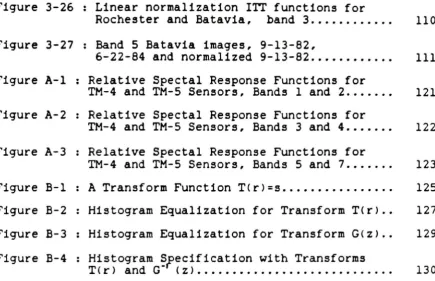
[image:12.490.45.447.116.653.2]Rochester and Batavia, band 3 ...•... 110
Figure 3-27 Band 5 Batavia images, 9-13-82,
6-22-84 and normalized 9-13-82 . . . 111
Figure A-l Relative Spectal Response Functions for
TM-4 and TM-S Sensors, Bands land 2 ... 121
Figure A-2 Relative Specta1 Response Functions for
TM-4 and TM-5 Sensors, Bands 3 and 4 ••••••• 122
Figure A-3 Relative Specta1 Response Functions for
TM-4 and TM-S Sensors, Bands 5 and 7 ... 123
Figure B-1 A Transform Function T(r)=s ...•..•... 125
Figure B-2 Histogram Equalization for Transform T ( r ) .. 127
Figure B-3 Histogram Equalization for Transform G ( z) .. 129
Figure B-4 Histogram Sfecification with Transforms
T ( r) and G - (z ) • . . . . 130
[image:13.491.30.465.52.332.2]The developement of remote sensing research in the past
20 years has produced highly improved techniques for data
aquisition and information extraction. State-of-the-art sensors have widened the spectral ranges and increased the spectral and spatial resolution of remotely sensed data. Coupled with increasingly accurate classification
algorithms, remote sensors can now be used to measure
degrees of vegetation stress, assess water quality and
define heat losses. Thus, characterization of the physical
status of earth features, using remotely sensed data, can
now be performed.
A major step in extracting absolute feature
characteristics from aerial and satellite remotely sensed imagery is to correct for atmospheric degradation of the detected signals. Extensive research has been performed and
has been moderately successful in defining and correcting
for atmospheric effects. Tedious algorithms have been
developed which model the atmosphere and define the
parameters needed to approximately correct a specific image
A primary use of these techniques is for studying
absolute changes of earth features over time. Temporal
change detection is of special interest to farmers studying
crop yields and environmentalists monitoring the effects of
pollutants. Classically, given two remotely sensed images of the same area, acquired at different times, temporal
change detection can be studied by performing temporal image
normalization. This process Involves correcting each image
independently for the varying atmospheric and illumination
conditions. Hence, after accounting for the degrading
variables in each image, the only difference between the two images will be due to inherent changes in the physical
status of the features.
1.1 Objective
The objective of this study is to present a new, easy
to Implement method of temporal image normalization which is
based on the pseudo-invariant reflectance characteristics of
certain earth features. This new technique has the
potential advantage of performing temporal image
normalization without requiring independent image
corrections for atmospheric effects. The technique is
presented with a theoretical background, followed by an empirical analysis applied to Landsat Thematic Mapper (TM)
1.2 Historical Background
Man's interest in viewing the earth from the sky dates
back to the mid-nineteenth century. The advent of the
airplane in the early 1900 's Increased the potential
coverage and control of data aquisition via aerial
photography (13). The escalation of the technology and
applications of remote sensing via aerial photography began
in World War I and accelerated quickly during World War II
(14). During World War II, great advancements in the
technology and its applications were developed, including
the developement of infrared films for camouflage detection
and initial applications of thermal infrared and radar
systems ( 33) . The systems developed for the war efforts
soon became tools for the environmental science and mapping
communities. In the 1930's, a nationwide aerial survey of
soils was initiated by the U.S. Department of Agriculture
(12). Colwell (1956) used aerial photography to classify
vegetation types and detect stressed and diseased vegetation
(33).
Towards the end of World War II, multispectral imaging
became significant spurring the developement of
multispectral scanners (MSS). The advent of the MSS has
greatly increased the scope of remotely sensed data by
bands simultaneously (15). A second event which broadened
the capabilities of remote sensing was the placement of
remote sensors in space. NASA began sending remote sensing
satellites into space in the early 1960's. The progress that NASA made in a scant 20 years is startling and is
clearly summarized by Slmonett (1983) (34). The
developement of orbiting remote sensors, from photographic
images to MSS, has illustrated the great potential that
satellite sensing can afford to terrestrial and aquatic
research.
Landsat-1 (previously called Earth Resources Technology
Satellite, ERTS-1) was launched in 1972, with a four band
MSS. This satellite was the first orbiting sensor designed
specifically for observation of earth surfaces and resources (35). Twelve years (and four satellites) later, we have
both Landsat-4 and Landsat-5 orbiting, both with a 4 band
MSS and a seven (7) band Thematic Mapper on board. See
Table 1-1 for the specific sensor specifications.
The Thematic Mapper (TM) is a state-of-the-art
multispectral scanning system. The spatial, spectral, and
m 0) S tf*. Eiv BC UJ st2 Z Z <
OIA* 55*
8
oCO 5.-2 rJ Q Z < . CC -u UJ a. CO
5
K z 2 if o C5-5 5F<3 t. oS5
Bit
5
S cc UJ a. a.< o62 O uj 2 f|s
5
o * 2 UJ K si3 u ZT
a
en z < jOr* *p s
e eb6
k m -666~
*
m mr* m 6666 CO O CO K
E
2 o cc o fc o UJ CO v. CO t CD < o UJ 2ao*
OOSOrO
(A a
x- - ia JJ r
^n ^ a
6 6 6 6*-*-ri "" ... Co
* f* O OC UJ OOOO'ON JJJlj] '
i;
O K O $ fc CO CO fc CD < au
UJ<0 tvui coc CO ujuj 5* <5-i a fcsSimonett (1983) discusses how the TM was specifically
designed for earth resource research, with spectral bands
chosen for optimal data efficiency (36). The green and red
bands are narrower to gain increased sensitivity to the
spectral characteristics of agricultural phenomena. The
reflected infrared band is now centered in a region of
maximum sensitivity to plant vigor. The mid-infrared bands
have been adjusted to Increase sensitivity to rock types and
water stress in plants. Hence, developements in remote
sensing technology have created both increasing efficiency
in data collection and a wider data base, resulting in
increased potential for earth resource studies.
1.2.1 Classification and Segmentation
In order to utilize the potential of multispectral
satellite imagery for earth resource studies, various
methods of image interpretation and image analysis are
needed to discriminate earth features for further analysis.
The resolution limits inherent in an airborne remote sensing
system will initially define the resolvable earth features
in the final images.
A conventional Landsat scene contains 37 million
pixels, covering approximately 13,000 square miles.
Generally, a fraction of this large data base (i.e. pixels
analysis. Hence, algorithms are required to classify each
pixel to represent a specific earth feature. The entire
scene can then be segmented, such that all pixels
representing a specific earth feature can be readily
identified for further analysis. The techniques developed
to date use the radiation interaction properties of the
earth features (ie: spectral reflectance or radiance
signatures) to perform scene classification and
segmentation.
The correct use of spectral signatures as the
foundation for feature classification algorithms requires
accurate characterization of target/system properties.
Slater (1980) defines spectral signature measurements as the
reflectance or radiance values of a feature averaged over a well-defined wavelength interval, dependent on the
irradiance and viewing geometries exhibited during
measurement. In the analysis of spectral signatures,
attenuation of the signal due to the optical effects of the
atmosphere along with the spectral response of the sensor must be considered (38).
Several assumptions can be made to reduce the
variability of spectral signatures. First, the Landsat sensors are in a
sun-synchronous orbit, keeping the angular
elevation will remain relatively constant within scenes
taken during the same month from year to year. Third, the
high altitude (705 km) of the satellite causes all elements
within a scene to be viewed near-nadir, reducing any
within-scene variations in viewing geometry (39). Fourth,
to a first approximation, the atmospheric degradation within
a 512 x 512 pixel (90 square miles) Landsat subscene can be
assumed constant. Clearly, this assumption is only a first
approximation and care must be taken in determining the
presence of non-homogeneous areas caused by cloud cover,
regional haze, smoke stack plumes, etc.
Hoffer (1978) presents large quantities of data on the
spectral characteristics of a wide variety of earth features
(8). Many measurments have been made illustrating the
variability of spectral signatures due to temporal effects,
spatial effects, environmental effects and inherent
differences due to specific feature type (1,9,11,21). The
fact that a spectral signature changes has been used to
extract information about the changing status of a feature.
Fortunately, signature variability is subtle so that the
general shape of a spectral signature curve remains
relatively constant (cf. Figure 1-1). Hence, we find that
different types of foliage have the same general spectral
pattern while turbid and clear waters will exhibit similar
1-Ot
o-s
t m
o
s
healthy vegetation
/
^-/ jS STRESSED
/
J / VEGETATION
t
10
05
e -7 -s
WAVELENGTH ()Am)
(a)
to
0.7 0.8
Wavclenfih(jim) (b)
[image:22.490.108.360.111.340.2]patterns. These phenomena enable classification and
segmentation of Images with respect to earth features.
Because spectral reflectances are an inherent physical
characteristic of surface features, temporal changes in the
physical status of a feature, ie. water turbidity or vegetation vigor, can be detected as changes in the
feature's spectral signature. These temporal changes can
only be accurately detected given that all other temporal
variations between multi-date Images have properly accounted
for.
The potential for using spectral signatures for feature
classification can be extended with the use of spectral band
ratioing. Band ratioing involves calculating the ratio of
one spectral band image to a different, registered spectral band image, producing a ratio image. Slater (1980) states the advantages to spectral ratioing include the reduction of
radiometric errors and changes in scene radiance due to
atmospheric and topographic changes in the scene (40).
Maxwell (1976) illustrates how the band ratioing technique
often gives a higher signal to noise ratio in the ratioed
image with respect to the two original images, resulting in higher potential classification accuracy (20). Tucker
(1973) found the ratio of MSS band 7 (0.8
-l.lum) to MSS
band 5 (0.6 - 0.7um) correlates well with the amount of
the ratio of TM band 5 (1.57
-1.78jum) to TM band 3 (0.62
-0.69um) worked well for a first order classification for
water, vegetation, and urban features (buildings, asphalt,
etc) (2).
In these and other cases, a first order classification
is achieved via thresholding techniques. Pixel
classification thresholds are
empirically developed for each
feature to be classified. This iterative, and interactive,
process is a simple technique, capable of accurate
classification for only a few features. An advantage of
this technique is the relatively small amount of computer
memory needed to perform the classification. More
sophisticated techniques of multispectral classification,
involving training sets and multivariate statistical
techniques, are reviewed by Lillesand (1979) and
Schowengerdt (1983) (16,31). These techniques are generally
more sensitive with potentially higher accuracy for
classification of large numbers of features (27). Piech et
ai. (1977), for example, used a multivariate classification
technique to classify metal, soil, pavement, cultivated
fields and vegetation elements in color aerial imagery with
an accuracy of 97% (22). Two major drawbacks to this type
of technique are the need for large quantities of image
refresh memory within the computing system and slow
Hence, developments in remote image interpretation have
produced many techniques for accurately classifying images.
Documentalon of spectral signatures and the variations of
such signatures have established a wide foundation for
feature discrimination and classification algorithms.
Spectral band ratioing techniques can reduce potential
errors due to system noise, increasing the potential feature
resolution for multispectral imagery. Finally, the
development of a wide variety of classification algorithms
has given the user more flexibility to classify a given
number of features, with a required accuracy, given specific
time and computing limitations.
A major factor affecting the classification accuracy
for aerial imagery is that spectral signatures are defined
by feature reflectivity, and the remote sensor is detecting
radiance, which is defined by illumination factors, the
features reflectivity, and the degrading effects of the
atmosphere. Illumination factors are a function of the
solar elevation and the atmospheric degradation of the
incident radiation. Hence, in order to accurately define
the reflectivity of a surface from an aerial remote sensor,
the atmospheric effects must be accounted for. This problem
1.2.2 Atmospheric Models and Correction
A primary concern within the remote imaging field is the effects of atmospheric degradation on the aquisition of
remotely sensed data. Atmospheric degradation in the form of scattering and absorption results in significant
degradation of a feature's radiance as it propagates to the sensor. Hence, a calibrated sensor can only measure the
apparent radiance of a scene. Spectral signatures can be defined by a target's radiance; therefore, corrections are needed to reduce the apparent radiance values measured by a sensor to actual radiance values emitted from the target. These corrections are highly beneficial in increasing the classification accuracy, change detection potential, and general information content of an imaging system. Clearly, the attenuating factors of the atmosphere must be defined
prior to attempting to correct for such factors.
Piech and Walker (1971,1974) have performed extensive studies on the definition and correction of degrading
factors affecting the aerial appearence of surfaces. They derive the linear relationship!
E = a*R + B ( 1
where: E is the radiant energy reaching the sensor, R
is the reflectance of the target, a is a factor Including
the solar irradiance, sky irradiance, and atmospheric
transmittance, and B is the radiation contributed by the air
column. Both a and B, are dependent on the solar angle, sensor angle, bandpass of interest, and altitude. R is dependent on the solar angle and bandpass of interest.
(23,24).
Many studies to date have attempted to find accurate
algorithms to solve for a and B, and to use these values to
correctly calibrate aerial imagery. Llllesand g a_l. (1973) defines a method of using ground reflectance
measurements to set up a regression analysis to determine a and B (17). This method is highly feasible but cumbersome due to the need for ground truth. Piech and Walker (1971)
developed a method of estimating a and B using
microdensitometry of aerial images (24). They used a
comparitive analysis of uniform areas lying in both direct sunlight and in shadow. They found sufficient accuracy
resulted in determining a and B using low altitude aerial images, but concluded that limitations existed for lower
resolution satellite imagery. Piech and Walker (1971) also discuss the scene color standard (SCS) technique, which incorporates the previous shadow technique with the
reflectance, resulting in accurate determination of ground
target reflectances (24). Although all these techniques
have proven feasible and relatively successful, there is a
disadvantage in that high resolution data is needed, making
these techniques inadequate for calibration of satellite
imagery.
In an effort to model all the system parameters
affecting the remote sensing of earth surfaces, Schott
(1984) derives an analogus linear equation:
L(s) = L(o)*t + L(u) (1
-2)
where: L(s) is the radiance measured at the sensor, L(o) is the radiance of the target, t is the atmospheric
transmittance between the target and the sensor, and L(u) is
the upwelled path radiance (28). The radiance terms can be
expressed in watts per square centimeter per steradian.
Again, each of these quantities is specific with respect to
the following parameters: date, altitude, optical depth of
the atmosphere, solar zenith angle, view angle, relative
angle between the solar plane and the view plane, target
reflectance, background albedo, wavelength, and various
Equation 1-2 has been adopted to model the system
parameters, in efforts to calibrate satellite sensors.
Several atmospheric modeling computer programs have been
developed which use various atmospheric characteristics to
compute t and L(u) for a specific day at a specific
altitude.
Turner (1974) helped to develop a radiative-transfer
model which has proven to be quite versatile for
determination of atmospheric transmittance and path radiance
for reflected energy. This modeling technique can represent
a wide variety of atmospheric conditions, and will compute t
and L(u) in terms of view angles, sun angles, wavelength,
altitude and time of year. Turner showed that the
radiative-transfer model has proven to give approximately a
10% increase in classification accuracy for ERTS satellite
data (43).
The U.S. Air Force has developed an atmospheric
modeling computer program called LOWTRAN 5, which is an
extremely versatile algorithm outputtlng atmospheric
transmittance and radiance over a specific path. LOWTRAN 5
can accept input in the form of internal atmospheric models,
user derived combinations of internal atmospheric models, or
user specified atmospheric conditions in the form of
many parameters including aerosol models, atmospheric
layering effects and fog models for better refinement of
calculations. Calculations can also be made over any slant
path geometry desired by the user.
Byrnes (1983) did a comparative study of several
atmospheric calibration techniques using thermal infrared
aerial imagery (4). The study showed that image calibration
using LOWTRAN data yielded similar results compared to
empirical aerial calibration techniques. Biegel and Schott
(1984) found that thermal images from the Landsat-4 TM
sensor can be processed to give improved signatures when
corrected for atmospheric degradation using the results from
LOWTRAN 5 (2).
Many other techniques of correcting remotely sensed
data for atmospheric effects have been evaluated (5,26,44).
The choice of a method is clearly a function of the degree
of accuracy needed along with the time and magnitude of the data base available. However, each technique has limited
accuracy and is only useful for specific applications
Clearly, the understanding and quantification of
atmospheric effects has grown considerably due to the need
to account for atmospheric degradation in remotely sensed
imagery. High resolution imagery can be corrected for
mlcrodensitometry. The need to correct lower resolution
imagery has prompted the developement of complex computer
algorithms designed to define atmospheric degradation by
combining meteorological data and radiation propagation theory. The problem with the latter method is the need for
accurate meteorological data taken at the time and location
of the imagery. This fact limits the scope and potential of
accurately correcting lower resolution satellite imagery. A possible solution to this problem is the goal of this
thesis.
1.2.3 Image Normalization
The study of temporal changes of earth features has
promoted sporadic research in temporal image normalization.
Temporally separated images of a given location will vary
due to the following time-varying factors: source
illumination, atmospheric path and degradation, sensor type
and location, and inherent feature changes (37). Temporal
image normalization involves the processing of two or more
temporally separate images in an effort to remove some or
all time-varying factors (6). For ideal temporal feature
analysis, image normalization will remove all factors except
for feature changes. The result will be two images that
"look"
similar, as if acquired through identical
have been normalized in such a fashion, differences between
the two images can be attributed to changes in the imaged
feature over time. The normalization process is generally
simplified by holding one or more of the time-varying
factors constant.
The approaches to temporal image normalization to date
involve the independent normalization of individual images
for time-varying effects. The techniques developed attempt
to correct each image for atmospheric degradation and
angular variations , thus reducing each image to a surface
information base (assuming images acquired with a constant
sensor). For example, each temporal image is independently
corrected for each time varying effect, in an effort to
convert each image into an image representing feature
surface reflectance or feature radiance. Gerson (1983) did
an extensive study of five techniques for temporal image
normalization (6). The techniques included normalization of
individual images using emperical aerial calibration data
with ground truth, atmospheric characteristics, and a
combination of the two, followed by subjective comparison of
the normalized temporal images. Gerson concluded that the
success of each technique was dependent on the type of
imagery used and the type of features imaged.
Black-and-white aerial photographs of terrestrial features
at the imaging sites. Normalization of color Imagery of
shallow water bodies was less successful due to the effects
of the water-air interface and the variability in color film
processing. His results showed that the normalizing
techniques were generally only successful under optimal
conditions and that successful results were not easily
obtained.
In 1983, Schott proposed a new method of temporal image
normalization (29). The technique is dependent on the use
of pseudo-invariant features
as a common factor, which can
be used to transform one image to appear as if detected
through the same atmospheric and illumination conditions as
a second image. Schott'
s hypothesis is the topic of this
study, the theory of which follows.
1.3 Theoretical Background
The intent of this study is to illustrate the technique
of temporal image normalization using pseudo-invariant
features, as applied to multispectral Landsat TM data. The
following section presents the theoretical background
defining this technique, and the limitations which are
1.3.1 Pseudo-Invariant Features (PIF's)
A pseudo-invariant feature
is an earth feature which
has spectral properties that exhibit little change over
time. Piech e_fc al- (1977) used an aerial calibration
technique, employing black-and-white imagery,to determine
reflectance values of various asphalt and pavement samples
(25). Table 1-2 contains their results and illustrates the
relative temporal invar iance of these features. The
spectral shape of these features was also shown to be
invariant over time. Table 1-3 illustrates the variance of
spectral reflectance ratios of several pseudo-invar lent
features over a one year period. These measurement were
determined from aerial calibration studies using color
imagery. The spectral ratios of the features remain uniform
to within about 12%, including substantial measurement
errors which would indicate an even higher degree of
invariance (21). Hence, as a first approximation, the
reflectance characteristics of asphalts and pavements have
been shown to be relatively invariant, or pseudo-invariant
over time. Although measurements of these invariant
characteristics were only made for visible radiation, the
pseudo-invariant characteristics are assumed to extend into
TABU 1-2
Reflectance of asphalt pevaaent eanplea for each of ten frau. Each value 1* la percent. The average reflectance and atandard deviation of average
reflectance for all the pasaea are presented.
SAMPLE
PASS
1 2 3 4 5 6 7 8 9 10
AVERAGE OF ALL PASSES
17 17 16 17 16 15 18 18 16 17 17 + 1
le 17 17 18 17 17 18 20 19 18 181 1
12 12 12 13 11 12 13 14 12 14 13+ 1
16 18 16 19 16 17 21 20 19 21 18+2
16 16 16 18 16 15 16 IB 16 18 17+ 1
TABLE 1-3
Taaporal Variation Of Ratio Mcasureienta
Red to Green
1.52 ? 0.14
1.49 + 0.20
1.29 + 0.16
2.71 +0.37
1.15+0.17
1.42 +0.19
1.09 ? 0.15
1.18+0.17
1.28+0.18
132 Target
1. llht Roof
2. Aephalt
3. Crevel
4. Red Roof
5. Dark Roof
6. Cray Roof
7. Dark Roof
8. Black Roof
9. Light Cray Roof
Average Standard Deviation (Z)
Flight Datae: 30 Auguet 1972, 19 October 1972 A May 1973. 19 June 1973, 10 September 1973
Tllght Altitude about 10,000 feet
Scale about 1:40,000
Blue to Creen
1.06 + 0.08
0.92 + 0.07
1.02 + 0.09
0.79 + 0.14
0.78 ? 0.14
0.95 + 0.06
1.17 ? 0.0B
1.10+ 0.09
1.17 + 0.11
10Z
1.3.2 Variance in Landsat Data
Given two Landsat images from different dates, Schott
(1983) states that the primary temporal imaging variations
will be due to atmospheric effects and solar elevation
variations (29). The time varying effects of sensor
location are negligable due to the sun synchronous orbit of
the satellite. The time varying effects of sensor type will
also be negligable, given that the images are detected using
the same sensor.
In the case of Landsat TM sensors, images detected
using the TM-4 and TM-5 sensors can be assumed to have been
acquired by sensors with the same spectral characteristic.
This assumption is based on the fact that the spectral
response of the spectral channels of each sensor package are
essentially the same. Appendix A illustrates the spectral
response curves of the reflected energy sensors for each TM
package.
Thus, if the temporal separation is of the magnitude of
weeks or whole years, solar elevation effects will be
reduced and temporal atmospheric effects will dominate. If
the temporal separation is such that the solar elevation has
changed significantly, then the variations in illuminating
conditions must be addressed. It has been shown that the
not have significant reflectance variations due to changes
in view angle (48). However, variations in illumination
angle may cause the reflectance characteristics of certain
earth features to change due to shadow effects. The shadow
effects can be shown to only be significant when dealing
with low illumination angles and features with large surface
variations. Slater (1980) states that most earth features
show little change in radiance as a function of illumination
angle, with the exception of highly irregular surfaces like
fields of row crops or plowed fields (47). Egbert and Ulaby
(1972) tested the angular dependency of asphalt reflectivity
with respect to solar elevation and azimuth angles and found
significant differences occuring only at extremely high (>
60) and low (<30) illumination angles. Their study
included reflectance measurements over the wavelength range
of 380 to 900 nanometers (49). Grogan (1983) performed a
similar study using concrete and limited the spectral range
to the red wavelengths. His results also showed no
significant reflectance variations (<1%) at average
illumination angles (30- 60e)(48). Therefore, although
solar elevation variations may change the size of large
shadows, little or no variation is expected to exist in the
refectance characteristics of rooftops, parking lots or
1.3.3 Normalization Using PIF's
The spectral radiance of a PIF in the Landsat scenes
will exhibit variations dependent on the variation in the
atmospheric and illuminating conditions on the two dates.
Using the linear atmospheric model defined in equation 1-2,
the measured spectral radiance of the PIF's can be modeled
as:
L(PIF1) = al*R(PIFl) + Bl (1 -3)
L(PIF2) = a2*R(PIF2) + B2
(1-4)
where, L(PIF) is the measured radiance of the PIF, a
consists of the atmospheric degradation and illumination
factors, R(PIF) is the surface reflectance of the PIF, and B
is the air column radiance contribution. The numbers, 1 and
2, refer to the specific dates for each image. Note that
each factor above is spectrally dependent. In this case
L(PIF) and R(PIF) represent the respective radiance and
reflectance of a specific target. In terms of temporal TM
imagery, L(PIF) may be considered as the statistical
radiance distribution of PIF's within a scene corresponding
to the statistical reflectance distribution of the PIF's
within the scene. This approach will reduce errors that may
The invariant reflectance characteristics of the PIF's
enables equalization of the two equations as shown below.
R(PIF1) R(PIF2)
L(PIF1) = al/a2
*L(PIF2)
-al/a2 *b2 + bl
or, L(PIF1) - a*L(PIF2) + b
(1-5)
where, a = al/a2
(1-6)
b = (bl
-al/a2 *b2) (1-7)
Hence, a first approximation shows a linear
relationship between the spectral radiance distribution of
the PIF in one scene to the spectral radiance distribution
of the PIF in the second. This relationship can be
interpreted as a transformation, which acts to change the
brightness distribution of features from the second scene
into the atmosphere of the first.
Once derived, the normalizing transformation can be
applied to the entire Landsat scene, including both variant
and pseudo-invariant features which are to be normalized.
The result will be a normalized image set made up of a
transformed test image and a target image. The transformed
test image now appears as if imaged through the same
atmospheric and illumination conditions as those under which
feature brightnesses between the two normalized scenes can
be attributed to actual temporal changes in the physical
status of the features.
1.3.4 Transform Derivation Techniques
Clearly, one can determine the transform function by
determining the value of the atmospheric factors (a and B)
for each day and solving equations 1-6 and 1-7. This is the
classical method of temporal image normalization. This new
technique approaches the problem by determining the
transform equation using the brightness distributions of the
individual PIF's. By segmenting the PIF's from the Landsat
scenes, the transform equation can be computed
mathematically. Each PIF can be represented as a discrete
probability distribution, or histogram, illustrating the
frequency of occurance of each digital count. In that each
digital count (DC) corresponds linearly with apparent
radiance (L(s)): L(s) - m * DC + b, digital count can be
directly associated with apparent radiance, and the PIF
histogram can be considered as illustrating the frequency of
occurence of apparent radiance values (19).
The previous discussion of the relationship of temporal
PIF's shows that temporal atmospheric effects will, to a
first approximation, introduce a linear shift in temporal
Lai m'
* La2 + b' (1
-8)
where Lai and La2 are the spectral radiance values of the
PIF's on day 1 and day 2 respectively.
In terms of temporal digital counts (DC1 and DC2), the
apparent radiance measured in each temporal scene is:
Lai = ml * DC1 + bl
(1-9)
La2 = m2 * DC2 + b2 (1-10)
hence,
DC1 = (m' * (m2 * DC2 + b2) + bl + b' ) /ml
or
DC1 = m"
A DC2 + b"
(1 -11)
where the m's and b's are the linear coefficients.
Therefore, a linear relationship exists between the
digital counts of temporal PIF's. This linear relationship
will also hold for the histogram representation of the
PIF's, such that a linear transform, (T), can be derived to
satisfy:
PIFKDC) - T ( PIF2(DC) ) (1
-12)
where PIFn(DC) is the histogram of each PIF, n representing
day 1 or day 2. The PIFn's are discrete histograms ranging
The derivation of the transform equation can be
performed in several ways. Gonzalez (1977) discusses a
technique of direct histogram specification, where one
histogram is force fit to the second (7). Appendix B
discusses the mechanics of the histogram specification
algorithms. Generally, given a test histogram and a target
histogram, a transformation can be derived which will modify
the test histogram into the form of the target histogram.
This method can be used to find a transformation converting
PIFKDC) into the form of PIF2(DC). This technique assumes
no functional relationship between the target and test
histograms.
A second method of determining the normalizing
transform is to perform a linear histogram analysis
operation. This method is valid for correction of linear
shifts in normal distributions (see Appendix C for
derivation). Given the means, xl and x2, and the variances,
01 and d2, of two normal distributions, Nl(x) and N2(x), if
the two distributions are different due to a linear
operation, the linear transform is defined
as:
transform T * m * x + b
where: Slope m = 02/dl
(1 ~ 13)
intercept b = x2
-xl * (02/01) d
- 14)
Hence, a linear transform can be derived, as predicted
by theory, given the PIF histograms approximate normal
distributions. Sefl (1983) did a study of the mathematical
relationship of temporal PIF's, using MSS data, and found
significant evidence that this linear relationship exists
(32).
Hence, these transformation derivation techniques can
be used to derive normalization transforms for temporal
imagery. The following study is designed to investigate the
theory of temporal image normalization using
pseudo-invariant features by applying the techniques
2. EXPERIMENTS
The experimental work for this study included image
selection, PIF classification and segmentation,
normalizing
transform determination, and the final analysis of the
transformation accuracy and precision. The derived
transform was then applied to the entire test scene and
observations were made as to the temporal changes evident in
the scene features. A secondary image was also temporally
normalized to study consistency of the derived normalization
technique.
2.1 Image Selection
Due to limited choices of experimental imagery, the two
temporal Landsat scenes used for this analysis were a
Landsat-4 TM image acquired on 9-13-82 and a Landsat-5 image
acquired on 6-22-84. The images are stored in the Digital
Imaging and Remote Sensing (DIRS) Lab at R.I.T. on 1600 bpi
computer compatable magnetic tapes (originally acquired from
the EROS Data Center, at Sioux Falls, SD) . For each date,
six registered (512 x 512) spectral subimages, corresponding
to TM spectral bands 1, 2, 3, 4, 5, and 7, were read from
magnetic tape and stored on 8 inch floppy diskettes. The
computer program LTREAD (Appendix D) was used to read the
images from tape. This program runs on the DIRS PDP 11/23
windows of the Rochester, NY area, including the downtown
area, and areas directly west, south, and east of downtown.
A second set of subimages, including the city of Batavia,
NY, were also sampled from the magnetic data tapes for each
date. Pertinent data about the temporal Rochester and
Batavia images are summarized in Table 2-1. The band 4
(near infrared) images, of Rochester for each date are
Illustrated in Figure 2-1.
The Rochester images were used as the primary images
for this study. These images were chosen because
pseudo-invariant features (asphalts and
concretes) are
significant in the downtown Rochester area.
Variability in temporal PIF reflectance can occur due
to surface moisture caused by rain or frost (30). The
National Weather Service at the Monroe County Airport
reported zero rainfall during the two days prior to these
chosen dates. Hence, initial errors were reduced by
limiting the chance of any variability existing in the
reflectance of the PIFs due to moisture. Unfortunately,
neither identical sensors or constant solar elevation angles
were present on the chosen dates, but as indicated earlier,
these variations should have minimal effect on the results
Figure 2-1 Band 4, Rochester subscene images: (a) 9-13-82,
[image:46.490.107.380.68.292.2]TABLE 2-1 TM IMAGERY DATA
SCENE ID #
SENSOR DATE APPPROX. TIME LANDSAT SCENE COORDINATES SEGMENTED SUBSCENE COORDINATES* (ROCHESTER) SEGMENTED SUBSCENE COORDINATES* (BATAVIA) SUN ELEVATION ANGLE (DEGREES) SUN AZIMUTH ANGLE (DEGREES) E-40059-15244 TM-4 9-13-82 10:30am PATH D-17 ROW 30 ROW 2401 COLUMN 5925 ROW 3245 COLUMN 4525 44 141 E-50113-15260 TM-5 6-22-84 10:30am PATH D-17 ROW 30 ROW 2350 COLUMN 3200 QUADRENT 3 ROW 250 COLUMN 1800 QUADRENT 2 59 122
2.2 PIF Classification and Segmentation
Having acquired the temporal imagery of Rochester, the
next step was to classify the
pseudo-invariant features in
each scene and segment the digital count data corresponding
to these features from each scene.
The classification and segmentation algorithms were
developed and implemented on a DEC PDP 11/73, operating in a
Fortran environment, interfaced to a DeAnza IP6400 image
array processor. The algorithms used are summarized and
references provided in Appendix D.
2.2.1 Classification Procedures
Classification algorithms were developed based on
simplicity, accuracy and data storage limitations. The need
to classify only one scene feature, (ie. PIF's), obviated
the need for complex multivariate classification techniques.
Hence, simpler interactive thresholding techniques were
used, similar to the techniques used by Biegel and Schott
(1984) (2). Since, PIF's are readily identifiable within
the imagery as airport runways, expressways, parking lots,
roofs of large buildings, etc., the resulting algorithms
The classification process was performed in three
steps. The first step was to produce a band ratio image
comprised of the ratio of the digital counts of an infrared
spectral band image to the digital counts of a visible
spectral band. The resulting ratio image has high digital
count values representing vegetation and low digital count
values representing PIF's and aquatic features. This image
is then thresholded, assigning a digital count of 0 to the
PIF's and aquatic features and a digital count of 255 to the
vegetation areas.
The second step was to use the band 7 image
(mid-infrared spectral band) to classify the aquatic
features. The low reflectivity of water in this band
results in the aquatic regions appearing as low digital
counts. The band 7 image is thresholded, assigning a DC
value of 255 to the aquatic regions and a DC value of 0 to
all other regions.
The third step was to perform a logical OR to the two
thresholded images previously produced. This process
essentially produces a third image which has DC values of
255 at locations where either of the input images have DC
values of 255, and has DC values of 0 at locations where
both of the input images have DC values of 0. The
values of 0 at locations were PIF's exist and DC values of
255 at all other locations. Figure 2-2 illustrates this
logical algorithm graphically. Figure 2-3 (a
-e) shows the
classification process as performed for the 9-13-82 image.
The actual classification processes for the Rochester
images were performed interactively, such that a "best" PIF
classification mask was produced for each image. This was
performed by interactively changing the threshold values
until the author was satisfied with the classifier accuracy.
The ratio image thresholds were chosen such that the
classified pixels were known to be PIF's or water areas.
The classifier was chosen recognizing that some questionable
pixels, representing boundries or mixed pixels were included
in the classified pixels. This method was chosen to give a
large resulting PIF sample with a wide dynamic brightness
range. The thresholds on the band 7 image were chosen such
that the classified pixels were known to be water bodies or
highly water-saturated lands.
This classification process was also performed
independently on the Batavia images. Table 2-2 summarizes
the ratio Images produced and the threshold values used for
THRESHOLDED RATIO IMAGE THRESHOLDED BAND 7 IMAGE
255 255 255 255
0 0 0 0
255 255 255 255
0 0 0 0
?or-*
255 255 255 255
255 255 255 255
0 0 0 0
0 0 0 0
255 255 255 255
255 255 255 255
255 255 255 255
0 0 0 0
PIF CLASSIFICATION MASK
[image:51.490.47.445.136.647.2]9-13-82 BAND RATIO 4/
Figure 2-3a Band ratio 4/3 image, 9-13-62
[image:52.490.129.400.76.292.2] [image:52.490.125.394.385.623.2]Figure 2-3c Band 7 image, 9-13-82
[image:53.490.88.359.86.328.2] [image:53.490.87.356.395.634.2]'iafc-M.> j -4^fc
'
7/.
^
[image:54.490.97.368.172.409.2]TABLE 2-2 PIF CLASSIFICATION DATA DATE IMAGE LOCATION BANDS RATIOED RATIOED IMAGE DC THRESHOLDS BAND 7 DC THRESHOLDS 9-13-82
5 / 3
ROCHESTER
6-22-84
4/3
0-80 - 0
81 - 255 - 255
0-30 - 255
31 - 255 - 0
0-66 - 0
67 - 255 - 255
0 - 16 - 255 17 - 255 - 0
IMAGE LOCATION 4BATAVIA
BANDS RATIOED 5 / 3 5/3
RATIOED IMAGE DC THRESHOLDS
0-65 - 0
66 - 255 255
0 81
-80 - 0
- 255 - 255
BAND 7
DC THRESHOLDS
0-20 > 255 21 - 255 - 0
0 31
- 30 - 255
Image ratioing was performed using the program DIVPIX.
Image thresholding and coding were performed using the
computer programs JP5ITT and C0N3CH. Image logical
operations were performed using the program LOGICS. See
Appendix D for descriptions and references for these
programs.
2.2.2 Segmentation Procedures
The inter-band registration of a Landsat scene enables
the use of the resulting classification mask to segment the
PIF data from the desired bands. The technique used to
segment the PIF data from each spectral band image involves
performing a logical OR on the classification mask and the
respective spectral band image (using LOGICS). Due to the
inter-band registration, the resulting image leaves all the
PIF data unprocessed, and sets all other features to a DC
value of 255. Figure 2-4 illustrates this logical process
in a graphic form. This algorithm was applied to each of
the six spectral band images on each date, using the
respective classification mask derived for each date. The
result is six spectral band PIF images for each date. The
Rochester images were used to perform the analysis in
Sections 2.3, 2.4 amd 2.5. The Batavia images were used as
secondary images to illustrate the consistency of the
ORIGINAL BAND "n"
IMAGE PIF CLASSIFICATION MASK
12 3 5
10 11 12 13
24 25 26 27
101 102 103 104
?or-*
Y
255 255 255 255
0 0 0 0
0 0 0 255
0 0 255 255
255 255 255 255
10 11 12 13
24 25 26 255
101 102 255 255
SEGMENTED PIF IMAGE
[image:57.490.54.435.179.607.2]2.3 Normalizing Transform Determination
The PIF images previously developed were used to derive the desired normalizing transformation functions. The
normalizing functions were derived such that the 9-13-82 images are normalized to the 6-22-84 images. The
normalizing transformation functions were derived using the
respective image histograms. Hence, given PIFn82(DC) represents the histogram of a 9-13-82 PIF spectral image,
where Mn" represents the respective spectral band, and PIFn84(DC) represents the analogus 6-22-84 spectral PIF
image, the normalizing transform, T, was derived such that
PIFn84(DC) = TCPIFn82(DC)D. In that the digital images used
for this study have an 8 bit brightness range, i.e. DC
range = 0 to 255, the resulting transform will also have an 8 bit transformation range. Within a digital computer, the
transform is represented by an intensity transformation
table (ITT) which essentially maps input digital counts to
the respective output digital counts. Figure 2-5
graphically illustrates this relationship.
Two independent methods of deriving the transformation
function were implemented. The first method was to
histogram specify each 9-13-82 spectral PIF image to the
E
O
E-'
O
i i i i I
CDC 053 DOS
mo inhod nuiisia
es
*j
c o H
E
L4
o
n
c a
u
n
c
4)
U C
c
01
4-> o
in i
M
0) U
3
The second method was to perform a linear histogram analysis
operation on each spectral PIF image pair. A program called
HISPIF (see Appendix D) was developed to perform the
transformation derivation operations.
2.3.1 Transform Determination Via Histogram Specification
The histogram specification operation was employed by
obtaining the respective spectral PIF histograms for each
date, and performing the histogram specification algorithm
outlined in Appendix B. The resulting transformation
function was then stored as an ITT data file.
2.3.2 Transform Determination Via Linear Histogram Analysis
The linear histogram analysis operation (LHAO) was
employed by obtaining the respective spectral PIF histograms
for each date, and computing the mean and standard deviation
of each temporal PIF. The linear coefficiants of the
normalizing transform were computed using equations 1-13 and
1-14. Again, the resulting transformation function was
stored as an ITT data file.
2.4 Transformation Analysis
In order to show the effectiveness and validity of this
multispectral temporal image normalization technique,
an
precision was performed. Initially, a comparison of the
transformation derivation techniques (LHAO vs. histogram
specification) was implemented to illustrate the validity of
the first approximations in the linear transformation theory
discussed in Section 1.3.3. An empirical analysis was then
performed to investigate the accuracy of the linear
transformation technique. A theoretical analysis followed
in an effort to illustrate the expected precision of this
technique. The errors to be found in these analysis will be
in terms of digital count deviations. The physical
relevance of deviations in digital count is hard to define,
so estimations were also made to illustrate the effective
errors in reflectance. Finally, each respective normalizing
transformation was applied to the original 9-13-82 spectral
images. The resulting transformed spectral images were then
compared to the respective 6-22-84 spectral images, in
search of temporal changes.
2.4.1 Comparison of Transform Derivation Techniques
A comparison of the transformation functions derived
for each spectral band is made to illustrate the validity of
the linear relationship discussed earier. For each spectral
band, the transforms derived by the histogram specification and linear analysis operation methods were compared. The
root-mean-squared (RMS) error between the transforms. This
was calculated as:
[
_ (H(DC)- L(DC))2
RMS error =
_
DC=al b
-a
1/2
(2 -1)
where H(DC) and L(DC) are the respective output
transformation values for the histogram specified and linear
analysis transforms, and a and b define the range of digital
counts over which the computation is performed.
In order to define the functional RMS error, the
calculation was performed over an interval defined by the
range of digital counts including the central 90% of the
input distributions. In other words, given an input
distribution, the interval begins at the DC value (a) where
the first 5% of the distribution is located, and the
interval ends at the DC value (b) where the first 95% of the
distribution is located. Figure 2-6 illustrates a sample
histogram and the resulting histogram after the 90%
thresholding. This interval was chosen such that errors
introduced by noise, in the form of variant features or
mixed pixels, which would dominate the signal at the tails
HISTOGRAM OF SEGMENTED PIF
BAND 4 9-13-82
CD CC
QO UJ tNI
o
O^"^^^^p^w^tt^^w^wji
vy
0 20 40 60 80 100 120 140 160 180 200
DIGITAL COUNT
(a)
HISTOGRnM OF SEGMENTED PIF BAND 4 9-13-82
O- i i i i i i i i'i | i i i i f i i '
| I I i
| i i