EFFECTIVENESS OF PROGRESSIVE MUSCLE
RELAXATION THERAPY ON REDUCTION OF
STRESS AND ANXIETY AMONG PATIENTS
UNDERGOING ABDOMINAL SURGERY.
Dissertation Submitted To
THE TAMILNADU DR. M.G.R. MEDICAL UNIVERSITY
CHENNAI
N
PARTIAL
FULFILMENT
OF
REQUIREMENT
FOR
THE
AWARD
O
DEGREE
OF
A STUDY TO ASSESS THE EFFECTIVENESS OF PROGRESSIVE MUSCLE RELAXATION THERAPY ON REDUCTION OF STRESS AND ANXIETY
AMONG PATIENTS UNDERGOING ABDOMINAL SURGERY IN DR. KAMAKSHI MEMORIAL HOSPITAL AT PALLIKARANAI
CHENNAI 2011 – 2012.
Certified that this is the bonafide work of
MISS. BARVINISHA BEGUM .R MADHA COLLEGE OF NURSING, KUNDRATHUR, CHENNAI – 600 069. COLLEGE SEAL:
SIGNATURE :
Prof. TAMILARASI. B R.N., R.M., M.Sc.(N)., Ph.D., Principal,
Madha College of Nursing,
Kundrathur,
Chennai - 600 069, Tamil Nadu.
Dissertation Submitted To
THE TAMILNADU DR. M.G.R. MEDICAL UNIVERSITY
CHENNAI
IN PARTIAL FULFILMENT OF REQUIREMENT FOR THE AWARD OF
DEGREE OF
A STUDY TO ASSESS THE EFFECTIVENESS OF PROGRESSIVE MUSCLE RELAXATION THERAPY ON REDUCTION OF STRESS AND ANXIETY
AMONG PATIENTS UNDERGOING ABDOMINAL SURGERY IN DR. KAMAKSHI MEMORIAL HOSPITAL AT PALLIKARANAI
CHENNAI 2011-2012.
Approved by the dissertation committee on: 03.02.2011
Research Guide :
Prof. TAMILARASI. B R.N., R.M., M.Sc,(N)., Ph.D., Principal,
Madha College of Nursing, Kundrathur,
Chennai - 600 069, TamilNadu.
Clinical Guide :
Mrs. KANIMOZHI. M R.N., R.M., M.Sc,(N).,
Reader, Medical Surgical Nursing, Madha college of Nursing,
Kundrathur,
Chennai – 600 069, TamilNadu.
Medical Guide :
DR. RAJKUMAR. P.
M.S, DNB, M.Ch.,
Consultant surgeon,
Dr. kamatchi memorial hospital,
Pallikaranai,
Chennai-600 042, TamilNadu.
Dissertation Submitted To
THE TAMILNADU DR. M.G.R. MEDICAL UNIVERSITY CHENNAI
IN PARTIAL FULFILMENT OF REQUIREMENT FOR THE AWARD OF DEGREE OF
ACKNOWLEDGEMENT
The voyage from the ground level in the research of this project up to its fulfillment is never solitary. Me the investigator of this study, owe a deep sense of gratitude for the abundant guidance, encouragement and support from many under wings of the “Lord God Almighty”.
My heartful thanks to founder Dr. Peter. S, Chairman, Madha Group of Academic Institutions for giving me an opportunity to carry out this study successfully.
I express my gratitude to Prof.Mrs. Tamilarasi. B, R.N., R.M., M.SC(N)., Ph.D, Principal, Madha College of Nursing, who was a great inspiration for me throughout the study. Her attention to detail quest for perfection reflected by her vast experience was instrumental in making my study a fine success and for her good directions and valuable suggestions in completing the study.
I also express my sincere thanks to Prof. Mrs. Grace Samuel, R.N., R.M., M.Sc(N)., Vice Principal, Madha College of Nursing for her constant support.
A heartfelt and respectful thanks to Mrs. Kanimozhi. M, R.N., R.M., M.Sc(N)., Reader, Department of Medical Surgical Nursing, for her guidance, valuable suggestions and continuous support which made my study a fruitful one.
I express my sincere thanks to Mrs.Vathana. V, R.N., R.M., M.Sc(N)., Reader, Department of Medical Surgical Nursing, for her innovative, constructive and constant guidance.
I sincerely express my thanks to Dr. Rajkumar. P, M.S, DNB, M.Ch, Consultant Surgeon, Dr.kamakshi Memorial Hospital, for his help in validating the tool for my study.
My sincere thanks to Mrs. Hema suresh, R.N., R.M., M.SC (N)., Vice Principal, Meenakshi College of Nursing, for her help in validating the tool for
my study.
I would like to thank the medical officer for granting permission to conduct the study in Dr. kamakshi Memorial Hospital.
I am thankful to the entire faculty, administrative staffs and my classmates, Madha College of Nursing, for their support and encouragement.
I would like to thank especially the biostatistician Dr. Venkatesan M.SC, MBA, Ph. D., for his guidance in data analysis.
My deep sense of gratitude to Mr. Sattanathan M.A (Eng. Lit.), B.Ed., for her immense help in English and grammatical corrections for my study.
I would like to convey my thanks to Mr.Narayanan M.A (Tamil Lit.), B.Ed., for her great help in Tamil corrections for my study.
I express my heartfelt thanks to the Librarian Mr. S. Prabu, B.Sc., M. L. I. S, M.Phil., of Madha College of Nursing, Chennai for providing library facility.
I am deeply grateful to my parents Mr. A. S. Rajmohamed and Mrs. R. Faritha and my brother Mr. R. Arif, M.E for their moral support and
TABLE OF CONTENTS
CHAPTER No CONTENTS PAGE No
I INTRODUCTION 1-7
Need for the Study 4
Statement of the Problem 6
Objectives 6
Operational definitions 7
Hypothesis 7
Delimitations 7
II REVIEW OF LITERATURE 8-22
Review of related literature 9
Conceptual framework 20
III METHODOLOGY 23-30
Research Design 23
Setting of the study 23
Population 23
Sample 24
Sample size 24
Sampling Technique 24
Criteria for sample selection 24
Description of the instrument 25
Validity 26
Reliability 26
Ethical consideration 26
Pilot Study 27
Data collection procedure 27
Data analysis 29
IV DATA ANALYSIS AND INTERPRETATION 30-63
V DISCUSSION 64-67
VI
SUMMARY, CONCLUSION, NURSING IMPLICATIONS, RECOMMENDATIONS
AND LIMITATIONS 68-73
REFERENCES 74-79
LIST OF TABLES
TABLE No
TITLE PAGE
No
1
Frequency and percentage distribution of demographic variables of patients undergoing abdominal surgery. 31
2
Frequency and percentage distribution of pre intervention level of stress among patients undergoing abdominal surgery. 46
3
Frequency and percentage distribution of post intervention level of stress among patients undergoing abdominal surgery. 47
4
Frequency and percentage distribution of pre intervention level of anxiety among patients undergoing abdominal surgery. 48
5
Frequency and percentage distribution of post intervention level of anxiety among patients undergoing abdominal surgery. 49
6
Comparison of pre intervention and post intervention level of stress among patients undergoing abdominal surgery. 50
7
Comparison of pre intervention and post intervention level of anxiety among patients undergoing abdominal surgery. 52
8
Comparison of mean and standard deviation between pre intervention and post intervention level of stress among patients undergoing abdominal surgery.
54
9
Comparison of mean and standard deviation between pre intervention and post intervention level of anxiety among patients undergoing abdominal surgery.
55
10
Association of pre intervention level of stress with selected demographic variables among patients undergoing abdominal surgery.
56
11
Association of post intervention level of stress with selected demographic variables among patients undergoing abdominal surgery.
58
12
Association of pre intervention level of anxiety with selected demographic variables among patients undergoing abdominal surgery.
60
13
Association of post intervention level of anxiety with selected demographic variables among patients undergoing abdominal surgery.
LIST OF FIGURES
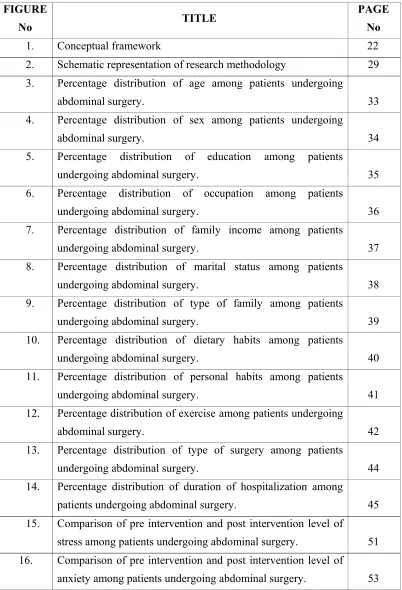
FIGURE
No TITLE
PAGE No
1. Conceptual framework 22
2. Schematic representation of research methodology 29 3. Percentage distribution of age among patients undergoing
abdominal surgery. 33
4. Percentage distribution of sex among patients undergoing
abdominal surgery. 34
5. Percentage distribution of education among patients
undergoing abdominal surgery. 35
6. Percentage distribution of occupation among patients
undergoing abdominal surgery. 36
7. Percentage distribution of family income among patients
undergoing abdominal surgery. 37
8. Percentage distribution of marital status among patients
undergoing abdominal surgery. 38
9. Percentage distribution of type of family among patients
undergoing abdominal surgery. 39
10. Percentage distribution of dietary habits among patients
undergoing abdominal surgery. 40
11. Percentage distribution of personal habits among patients
undergoing abdominal surgery. 41
12. Percentage distribution of exercise among patients undergoing
abdominal surgery. 42
13. Percentage distribution of type of surgery among patients
undergoing abdominal surgery. 44
14. Percentage distribution of duration of hospitalization among
patients undergoing abdominal surgery. 45
15. Comparison of pre intervention and post intervention level of
stress among patients undergoing abdominal surgery. 51 16. Comparison of pre intervention and post intervention level of
LIST OF APPENDICES
TITLE PAGE No
A Instrument i
B Consent letter ii
C Permission letter iii
D Certificate for content validity iv
E Certificate for Editing v
ABSTRACT
Health is the level of functional or metabolic efficiency of a living being. Modern life is full of hassles, deadlines, frustrations and demands. For many people, stress and anxiety is so common place that it has become a way of life. Stress is not always bad. In small doses, it can help the person perform under pressure and motivate to do best. So Jacobson developed over 200 exercises and techniques which taken together relax the entire body by releasing muscular tension.
A study was conducted to assess the effectiveness of progressive muscle relaxation therapy on reduction of stress and anxiety among patients undergoing abdominal surgery in Dr. Kamakshi Memorial Hospital at Pallikaranai, Chennai. The hypothesis formulated was that there is no significant relationship between progressive muscle relaxation therapy on reduction of stress and anxiety among patients undergoing abdominal surgery. The review of literature included the related studies which provide a strong foundation for the study including the basis for conceptual framework and formation of tool.
The research design used in this study was pre experimental one group pre intervention post intervention design. It was carried out with 30 samples who fulfilled the inclusive criteria. Purposive sampling technique was used to select the samples. An interview schedule was conducted to the patients to assess the pre intervention level of knowledge. A standardized tool was given to the patients for duration of 20 to 30 minutes. The post intervention was conducted after 5th post operative day by using the same tool.
CHAPTER I
INTRODUCTION
“Tension is who you think you should be. Relaxation is who you are. ”
-Chinese Proverb.
Health is defined by the world health organization, “A state of complete physical, mental and social well being and not merely the absence of disease or infirmity". When these conditions are not fulfilled then one can be considered to have an illness or to be ill. Health and illness underpin our everyday existence. Health allows us to live full lives and to function as social beings. Illness disrupts our lives sometimes seriously. But health affects individuals as well as society as a whole. Illness is cured by medications, surgeries and other modalities.
Surgery is a unique human experience that creates stress and anxiety which affects both physiological and psychological aspects of an individual. The term abdominal surgery broadly covers surgical procedures that involve opening of the abdomen. The three most common abdominal surgeries are Laparotomy, Appendectomy and Laparoscopy. Acute Appendicitis develops in about 0.25% of population or 1 in every 400 persons will most likely develop appendicitis. In India about 2.6 million people develop appendicitis annually.
In a challenging situation like surgeries the brain prepares the body for defensive action the fight or flight response by releasing stress hormones like cortisone and adrenaline. These hormones raise the blood pressure and the body prepares to react to the situation. With a concrete defensive action the stress hormones in the blood get used up entailing reduced stress effects and symptoms of anxiety.
any outside force or event that has an effect on our body or mind. Anxiety is a psychological and physiological state characterized by somatic, emotional, cognitive, and behavioral components. The presence or absence of psychological stress and anxiety can create feelings of fear, worry, uneasiness and dread.
Anxiety is considered to be a normal reaction to a stressor. It may help someone to deal with a difficult situation by prompting them to cope with it. When anxiety becomes excessive it may fall under the classification of an anxiety disorder. Stress and anxiety are the two major factors that disturb the normal life of a person. The capacity to fight stress is also within the person. Under stressful situations fight or flight response is activated in our body and mind.
When we fail to counter a stress situation the hormones and chemicals remain unreleased in the blood stream for a long period of time. It results in stress related physical symptoms such as tense muscles, unfocused anxiety, dizziness and rapid heartbeats. Subsequently, it compels the mind and body to be in an almost constant alarm state in preparation to fight or flee.
The state of accumulated stress can increase the risk of both acute and chronic psychosomatic illnesses and weaken the immune system. Stress can cause headache, irritable bowel syndrome, eating disorder, allergies, insomnia, backache, frequent cold and fatigue to diseases such as hypertension, asthma, diabetes, heart diseases and even cancer. Sanjay Chugh a leading Indian psychologist says that 70% to 90% of adults visit primary care physicians for stress related problems.
Everybody like men, women, children and even fetuses suffer from stress and anxiety. Relationship demands, chronic health problems, pressure at workplaces, traffic snarls, meeting deadlines, growing-up tensions and a sudden bearish trend can trigger these conditions. People react to it in their own ways. In some people, stress induced adverse feelings and anxiety tends to persist and intensify. If stress persists for longer periods, it is harmful for both the body and the mind.
personal growth techniques, visualization and massage are some of the most effective of the known non-invasive stress busters.
Progressive muscle relaxation is a technique for reducing stress and anxiety by alternately tensing and relaxing the muscles. In 1920 it was developed by American physician Edmund Jacobson.Progressive muscle relaxation is a technique for achieving a deep state of relaxation. Dr. Jacobson discovered that a muscle could be relaxed by first tensing it for a few seconds and then releasing it. Tensing and releasing various muscle groups throughout the body produces a deep state of relaxation, which Dr. Jacobson found capable of relieving a variety of conditions from high blood pressure to ulcerative colitis. Progressive muscle relaxation is especially helpful for people whose anxiety is strongly associated with muscle tension.
The body’s natural relaxation response is a powerful antidote to stress. Relaxation techniques such as deep breathing, visualization, progressive muscle relaxation, meditation and yoga can help the individual activate this relaxation response. Practicing relaxation techniques help a person to maintain mental, physical, and emotional health by evoking relaxation response which is deeply relaxing and energizing. Its effects are an antidote to stress response. When the person is deeply relaxed the body may feel breathing is slow and deep, blood pressure is lowered, need for oxygen is reduced, muscular tensions and pains are relieved, heart rate gets slowed down, improves immune system. The technique is used effectively in the treatment of Anxiety, Insomnia, Irritable bowel syndrome, Depression, Mild phobia and stuttering, etc.
NEED FOR THE STUDY
analysis by Wells (2003) in U.S reported that the rate of laparatomy has increased by 22.6% in the past 5 years.
Most of the patients undergoing major surgery enter the setting as outpatients for screening and testing and are admitted to the hospital after surgery. Surgical patients enter the health care settings in different stages of health. A client may enter the facility feeling relatively healthy while awaiting surgery or may be in great distress when facing emergency surgery. But every person facing a stress and anxiety with their life experiences.
According to National health care quality reported that 4 in every 10 Indians suffer from stress and anxiety after abdominal surgery. Walter cannon proposed the fight or flight response to stress which is arousal of the sympathetic nervous system. This reaction prepares a person for action by increasing heart rate, diverting blood from the intestines to the brain and striated muscles. While the stress response can be lifesaving in emergency situations where the person need to act quickly, it wears body down when constantly activated by the stress of everyday life.
When stress overwhelms a person’s existing coping mechanisms, a crisis results. Selye (1991) noted that a prolonged state of stress can cause disease. Anxiety is considered a problem when symptoms interfere with a person’s ability to sleep or otherwise function. Women are more likely than men to report anxiety disorders about 12% and affective disorders about 7.4%. Men are more than twice as likely as women to have substance use disorders about 11% with alcohol disorders being three times more common than drug use disorders.
Progressive muscle relaxation entails a physical and mental component. The physical component involves tensing and relaxing of muscle groups over the legs, abdomen, chest, arms and face.The mental component focuses on the difference between the feelings of the tension and relaxation. Because the eyes are closed one is forced to concentrate on the sensation of tension and relaxation. Doctors have used progressive muscle relaxation in combination with standard therapies for symptom relief in a number of conditions including headache, cancer pain, high blood pressure and digestive disturbances.
Relaxation techniques not only decrease stress and anxiety levels. It improves the quality of life by giving a mental clarity that helps a person in taking quick decisions and improving efficiency to deal with problems and giving more energy and reducing negative emotions like anger and frustration. The relaxation exercises are known to reduce symptoms and improve outcome in medical conditions such as Pain, irritable bowel syndrome, premenstrual syndrome, anxiety, sleeplessness, psoriasis, diabetes, fibromyalgia, high blood pressure, tension headache and also hyperactivity in children.
Practicing Progressive muscle relaxation strengthens a person psychologically and enhances self esteem by increasing efficiency. Progressive muscle relaxation reduces blood pressure and decreases perspiration and slows down the breathing.
STATEMENT OF THE PROBLEM
A study to assess the effectiveness of progressive muscle relaxation therapy on reduction of stress and anxiety among patients undergoing abdominal surgery in Dr. Kamakshi Memorial Hospital at Pallikaranai, Chennai.
OBJECTIVES
1. To assess the pre intervention and post intervention level of stress among patients undergoing abdominal surgery.
2. To assess the pre intervention and post intervention level of anxiety among patients undergoing abdominal surgery.
3. To assess the effectiveness of progressive muscle relaxation therapy on reduction of stress among patients undergoing abdominal surgery.
4. To assess the effectiveness of progressive muscle relaxation therapy on reduction of anxiety among patients undergoing abdominal surgery.
5. To associate the pre intervention and post intervention level of stress with their selected demographic variables among patients undergoing abdominal surgery. 6. To associate the pre intervention and post intervention level of anxiety with their
selected demographic variables among patients undergoing abdominal surgery. OPERATIONAL DEFINITIONS
Effectiveness: Refers to the reduction of stress and anxiety followed by Progressive muscle relaxation therapy among patients undergoing abdominal surgery.
Progressive muscle relaxation therapy: Refers to a technique which tenses and relaxes the successive muscle groups.
Stress: Refers to a worry or pressure that is caused by too much tension.
Anxiety: Refers to a generalized mood condition that can often occur without an identifiable triggering stimulus.
HYPOTHESIS
There is no significant relationship between progressive muscle relaxation therapy on reduction of stress and anxiety among patients undergoing abdominal surgery.
DELIMITATIONS
• Data collection period was delimited to 4 weeks.
• The sample size was delimited to 30.
REVIEW OF
LITERATURE
CHAPTER II
REVIEW OF LITERATURE
The review of literature is an essential aspect of the scientific research. It is a systematic identification, location, scrutiny and summary of written material. That contains information related to the problem under study. The investigator gained insight in selected problem from an extensive research review.
This chapter is designed to include the review of literature and the conceptual framework adopted for the study.
PART - I REVIEW OF RELATED LITERATURE
Progressive Muscle Relaxation is a technique for achieving a deep state of relaxation. The technique of progressive muscle relaxation was described by Edmund Jacobson in the 1920s and it is based upon his premise that mental calmness is a natural result of physical relaxation. Progressive muscle relaxation is a deep relaxation technique that has been effectively used to control stress and anxiety, relieve insomnia and reduce symptoms of certain types of chronic pain.
This chapter is organized systematically and classified in the following manner.
• Literature related to progressive muscle relaxation.
• Literature related to progressive muscle relaxation on stress.
• Literature related to progressive muscle relaxation on anxiety.
• Literature related to progressive muscle relaxation on abdominal surgery.
PART - II CONCEPTUAL FRAMEWORK
PART- I
REVIEW OF RELATED LITERATURE
Stress is necessary for life. Every person needs stress for creativity, learning and survival. When stress overwhelms nervous system in our body is flooded with chemicals that prepare for “fight or flight”. While the stress response can be lifesaving in emergency situations where the person need to act quickly, it wears body down when constantly activated by the stress of everyday life.
The normal reactions witnessed during stress the increase in blood pressure, perspiration, flow of blood away from the extremities and towards the large muscles, increase in adrenaline levels are all a part of this fight or flight reaction. Living under stress for prolonged periods weakens psychologically and physically.
Stress and anxiety is only harmful when it becomes overwhelming and interrupts the healthy state of equilibrium that nervous system needs to remain in balance. Unfortunately, overwhelming stress has become an increasingly common characteristic of contemporary life. When an internal or external stressor throws nervous system out of balance relaxation techniques can bring it back into a balanced state.
Literature related to progressive muscle relaxation
Demurrals. M, et al., (2010) conducted a study to assess the effects of relaxation training on sleep quality and fatigue among 27 breast cancer patients undergoing adjuvant chemotherapy. Among them, 14 individuals were undergone progressive muscle relaxation training and 13 individuals were in control group. Pittsburgh Sleep Quality Index and Piper Fatigue Scale were used to assess the sleep and fatigue at different stages of the treatment. The study results showed that there is a marked in sleep quality and decrease fatigue after progressive muscle relaxation training.
Ghafari. S, et al., (2009) conducted a study to assess the effectiveness of progressive muscle relaxation technique on quality of life of among 66 patients with multiple sclerosis. In which, 33 patients were in experimental group received progressive muscle relaxation training and 33 were in the control group. The training was assessed after 63 sessions with two month duration for experimental group. Quasi experimental research design was used The study was concluded that progressive muscle relaxation technique was practically feasible and increased quality of life among multiple sclerosis patients.
Singh. V. P, et al., (2009) done a comparative study to assess the effectiveness of music and progressive muscle relaxation among 72 chronic obstructive pulmonary disease patients with anxiety in Srinivas College of Physiotherapy, Mangalore. In which, 36 patients receive self selected music of 60-80 beats per minutes and progressive muscle relaxation technique were given by pre recorded audio of instructions. The study showed that Music and Progressive muscle relaxation are effective in reducing anxiety and dyspnea among chronic obstructive pulmonary disease patients.
with poor strength, so it is necessary to match the functional status of individual patients.
Kweeboom. K. L, et al., (2006) conducted a randomized controlled study to assess the systemic review of relaxation intervention among 15 arthritis patients with pain. Out of 15 participants 8 were in experimental group and 7 were in control group. Progressive muscle relaxation technique was given to the experimental groups. The study findings showed that progressive muscle relaxation reduces arthritis pain.
Nickel. C, et al., (2006) conducted a randomized controlled study to determine the efficacy of progressive muscle relaxation on change in blood pressure, heart rate and anger in 64 pregnant women with bronchial asthma. There were 32 pregnant women selected for progressive muscle relaxation and 32 received a placebo intervention. The systolic blood pressure and state trait anger expression inventory and health survey were assessed after progressive muscle relaxation training was given. The study revealed that progressive muscle relaxation appears to be an effective method to improve blood pressure, heart rate and to decrease anger levels. among pregnant women with bronchial asthma.
Carol. L, et al., (2004) conducted a study to assess the effectiveness of guided imagery with progressive muscle relaxation to reduce pain and mobility difficulties of osteoarthritis. Totally 28 older women with osteoarthritis were selected and randomly assigned to either the treatment or control group. A longtitudinal randomized controlled design was used. The treatment consists of listening twice a day to a 10 to 15 minutes audiotaped script with progressive muscle relaxation. The study results showed that the effective of guided imagery with progressive muscle relaxation as a self management intervention to reduce pain and mobility difficulties associated with osteoarthritis.
were improved the psychological effects and also progressive muscle relaxation was slightly better than the yoga exercises.
Huntley. A, (2002) conducted a randomized controlled trial to assess the effects of relaxation therapies among 15 patients with asthma. The patients were randomize into two groups such as 9 patients received progressive muscle relaxation technique and 6 patients were in control group. The study showed that muscular relaxation improves lung function of patients with asthma.
Molassiotis. A, et al., (2002) conducted a randomized controlled study to assess the effectiveness of progressive muscle relaxation training in managing chemotherapy induced nausea and vomiting among 71 breast cancer patients. The participants were divided into 38 in experimental groups and 33 in control groups. The study revealed that progressive muscle relaxation training is a useful adjuvant technique to complement antiemetic for chemotherapy induced nausea and vomiting.
Paula. A. A, et al., (2002) conducted a study to assess the progressive muscle relaxation technique for pain relief in gynecology and obstetrics in university of sluo Paulo at Brazil. The study participants 61 had been submitted to abdominal surgical interventions in which 52.5% had a gynecological and 47.5% obstetrical in nature. Progressive muscle relaxation therapy was given. The study was concluded that the use of the progressive muscle relaxation technique enabled the subjects to determine that their pain level was decreased.
Jablon. S. L, et al., (1997) conducted a study to assess the effects of progressive relaxation training and Electromylogram biofeedback on acute glucose disposal among 20 diabetic patients. The blood glucose level was measured by glucose tolerance test and diabetic metabolic control method. Stress reduction and relaxation scale was used among type II diabetes patients after progressive muscle relaxation training was given. The results revealed that mildly stressed type II diabetes patients sugar level were controlled after relaxation training..
muscle relaxation training was simple and useful methods which can be easily in the clinical practice of general hospital.
Blanchard. E. B, (1993) conducted a study to assess the effects of Relaxation training as a treatment for irritable bowel syndrome. A sample of 16 participants were selected among 8 irritable bowel syndrome patients received progressive muscle relaxation technique and 8 comparable patients merely monitored gastro intestinal symptoms. The study revealed that relaxation group was clinically improved at the end of treatment.
Nicholson. N. L, (1991) conducted a study to assess the role of regular home practice in the relaxation treatment among 27 tension headache patients in state university of Newyork. Among them, 14 tension headache participants were selected with progressive muscle relaxation technique in home practice and 13 tension headache patients received the same Progressive muscle relaxation training with no home practice. Both treated groups showed significant reduction in headache activity. This study showed that the progressive muscle relaxation technique in home practice patients had reduced headache activity than the patients received progressive muscle relaxation technique without home practice.
Literature related to progressive muscle relaxation on stress
Ulrich. S. D, et al., (2010) conducted a study to assess the static progressive stretch and stress relaxation principles to improve elbow range of motion in patients who had posttraumatic elbow contractures. Treatment in 37 elbow contractures consisted of a 30-minute stretching protocol performed in 1 to 3 sessions daily for a mean of 10 weeks. Gains of motion were noted in 35 of 37 elbow contractures. This study revealed that Consistent improvements in restoring range of motion can be achieved with short treatment times by using a device based on the principles of static progressive stretch and stress relaxation in patients with post traumatic elbow contractures.
Schneider. R. H, et al., (2005) conducted a study to assess the effects of progressive relaxation training in stress reduction in African Americans treated for hypertension for over one year in Maharishi University of Management, USA. Interventions included 20 min twice a day of progressive muscle relaxation classes. All subjects continued usual medical care. Outcomes assessed were systolic blood pressure and diastolic blood pressure at 3, 6, 9, and 12 months after treatment. This study showed that a selected stress reduction approach, the progressive muscle relaxation program, may be useful as an adjunct in the long term treatment of hypertension in African Americans.
Bradley. B. W, (1981) conducted a study to assess the effects of progressive relaxation and expectancy of relief of stress among 48 male subjects. They randomly divided into experimental and control group. Only experimental groups received progressive relaxation treatment not to control group. Heart rate and electrodermal responding were recorded continuously during practice of the techniques. The study indicated that the heart rate was lowered periodically only for experimental group.
group had received no treatment. The study showed that significant differences on all 5 measures between the experimental and control groups.
Literature related to progressive muscle relaxation on anxiety
Leite. J. R, et al., (2010) conducted a study to assess the effect of progressive self focus meditation on attention anxiety and depression scores. This study evaluated 42 volunteers allocated to two groups. One that had weekly one hour training sessions in the practice for 5 week and one had waiting list group. Participants were evaluated before and after 5 week. This study showed that after 5 week significant reduction in scoring on depression was found in the meditation group as well as an increase in attention in comparison with the waiting list control group.
Choi. Y. K, (2010) done a study to assess the effect of music and progressive muscle relaxation on anxiety, fatigue and quality of life among 32 family caregivers of hospice patients University of Kansas, USA.. A total of 32 patients were selected and divided randomly into 4 groups like control, music only, progressive muscle relaxation only and music combined with progressive muscle relaxation and were tested twice a week for duration of 2 weeks. A pre and post intervention measuring anxiety and fatigue was administered each session. Quality of life was measured only on the first and last session. The study Statistical results indicated a significant difference in quality of life and progressive muscle therapy and music therapy.
Lolak. S, et al., (2008) conducted a study to assess the effect of progressive muscle relaxation training on anxiety and depression in patients with chronic breathing disorders receiving pulmonary rehabilitation. Totally, 83 with chronic breathing disorder were selected by randomized sampling technique. The intervention group received additional sessions of progressive muscle training. The study revealed that progressive muscle relaxation is effective in reducing anxiety and depressive level in chronic lung patients.
practiced by the patients. A significant reduction in anxiety level was obtained on the post test. The findings of this study can be incorporated by holistic nurses to help reduce anxiety levels of general psychiatric inpatients by using relaxation interventions.
Holland. J. C, (1991) conducted a study to assess the effects of alprazolam versus progressive muscle relaxation in cancer patients with anxiety and depressive symptoms. A total sample of 147 patients was selected. The study Group I has included 70 patients and they have been given alprazolam drug were as the Group II has included 77 patients were given relaxation. The study results showed that both treatments resulted in significant decrease in anxious and depressed mood symptoms.
Pender. N. J, (1985) conducted a study to assess the effects of progressive muscle relaxation training on anxiety among 44 hypertensive adults. Out of them, 22 participants were assigned to experimental group and 22 participants were assigned to control group. In that 22 hypertensive clients received relaxation training followed by individual monitoring sessions over a 6-week period. The 22 hypertensive clients in the control group received blood pressure monitoring, weight checks and health counseling but were given no relaxation training during the study period. After training the relaxation group also scored significantly higher than the control group. The study findings supported the potential usefulness of relaxation training in modifying affective and cognitive characteristics of hypertensive clients.
Davy. et al., (1982) conducted a study to assess the effects of progressive muscle relaxation on stated anxiety among 64 patients with schizophrenia in psychiatric center. Patients were randomly assigned to either a single progressive muscle relaxation session during 25 minutes or a resting control condition with the opportunity to read for an equal amount of time. The study results showed that only within progressive muscle relaxation participants showed decreased state anxiety and psychological stress and fatigue and increased subjective well-being.
Lehrer. et al., (1978) conducted a study to assess the effects of progressive relaxation in anxiety neurotic patients. Totally, 20 anxiety neurotic patients were selected. In that 10 patients were in experimental group and 10 patients were in control group. Progressive relaxation training was given to the experimental patients only. The study results showed greater physiological response to experimental group than control group.
Canter. et al., (1975) conducted a study to compare the Electromylogram feedback and progressive muscle relaxation training in anxiety neurosis. Two similar groups of adult psychiatric patients were taken for this study. One group received Electromylogram feedback and the other a modification of the Jacobson progressive relaxation method. Both the therapy was given to the patients. The results of the study indicated that both Electromylogram feedback and the progressive training produced significant reduction in tension level.
Literature related to progressive muscle relaxation on abdominal surgery
Haase. O, et al., (2005) conducted a study to assess the Guided imagery and progressive muscle relaxation in conventional colorectal resections in Germany. There were 60 patients selected by randomized sampling technique and the interventions were given. This study reveals that brief psychological interventions such as guided imagery and relaxation yielded a very positive patient response but did not show a clinically relevant influence on the postoperative physiologic course of elderly patients undergoing conventional resections of colorectal cancer.
Roykulcharoen. V, (2004) conducted a study to assess the effects of systematic relaxation to relieve postoperative pain in large hospital in Thailand. Totally, 102 adults were selected by convenient sampling technique. The sample 51 patients were received Systematic relaxation was used for 15 minutes during recovery from the first ambulation after surgery. Pain and anxiety scale were measured before and after the intervention. The study revealed that systematic relaxation reduced their pain and anxiety and increased their sense of control.
Holen. A, et al., (2000) conducted a study to assess the effects of relaxation on stress reactivity among 31 patients. In that 21 patients were in experimental group and 10 were in control group. Progressive muscle relaxation training was given to the participants for 6 months. The study concluded that after the relaxation training blood lactate concentration was decreased. So the stress level was decreased to the participants.
Domar. A. D, et al., (1987) conducted a study to assess the preoperative use of the relaxation response with ambulatory surgery patients. A total of 49 patients were selected by randomized controlled sampling technique. They divided in to 42 patients were in experimental group and 7 patients were in control group. Relaxation training was given for 20 minutes per day until the day of surgery. The study showed that regular relaxation training can alter subjective reports of distress associated with surgery.
received relaxation training were as the Group II has included 6 patients and they have been received standard preoperative instruction. The study results showed that the distress caused by painful sensations was lower for patients who learned the relaxation technique.
All the above literature showed that, progressive muscle relaxation technique was more effective in reduction of fatigue, sleep disturbance, nausea and vomiting, stress, anxiety, pain and hypertension in selected medical condition like chronic obstructive pulmonary disease, arthritis, multiple sclerosis, irritable bowel syndrome, surgery patients, asthma and high blood pressure.
PART – II
CONCEPTUAL FRAMEWORK
The conceptual model is made up of concepts which are the mental images of phenomenon. These concepts are linked together to express their relationship between them. It provides the guidelines to attain the objectives of the study based on the theory.
It is a schematic representation of the steps, activities and outcomes of the study. Sister Callsita Roy began her nursing career in 1963 and she published introduction to nursing an adaptation model in 1976. The conceptual framework for this study was based on modification made on Roy’s Adaptation model. Roy’s model is characterized as a systems theory with a strong analysis of interaction. Roy considers the recipient of care to be an open, adaptive system. Its react to and interact with other systems in the environment.
The investigator applied the Roy’s adaptation theory aimed to assess the effectiveness of progressive muscle relaxation therapy on reduction of stress and anxiety among patients undergoing abdominal surgery. In this theory three major components are emphasized. It employs a feedback cycle of input, throughput and output.
Input
Input is identified as stimuli which can come from the environment or within a person. Stimuli are classified as
• Focal stimuli
• Contextual stimuli
Focal internal stimuli
Focal stimuli are those that immediately confront the individual in a particular situation. In this study, patients who are undergoing abdominal surgery had stress, emotional disturbances and anxiety towards surgery.
Focal external stimuli
Focal external stimuli are those stimuli which are present around the patient. Patients have lack of knowledge regarding IV canulation, investigations and surgery procedure.
Contextual stimuli
Contextual stimuli are those other stimuli that influence the situation which includes demographic variables of patients such as age, gender, occupation, personal habits, marital status and mental status.
Residual stimuli
It refers to non specific stimuli such as cultural beliefs and attitudes about illness.
Throughput
Throughput makes use of a person’s processes and effectors. Processes determine level of stress and anxiety experienced by the patients. Effectors determine pre assessment of the level of stress and anxiety by using Cohen’s perceived stress scale and Hamilton anxiety rating scale. Progressive muscle relaxation therapy was given to the patients 20 minutes in every day. It is useful to reduce stress and anxiety. Output
Output is the outcome of the system. When the system is a person, output refers to the person’s behaviors. It refers to reduce in stress and anxiety behavior by adapting relaxation techniques. This output or responses given feedback for this system. Process in continued.
24
INPUT THROUGHPUT OUTPUT
Effectors
Level of stress and anxiety experienced by patients
Pre assessment of level of stress and anxiety
experienced by patients
Cohen’s perceived stress scale Hamilton anxiety rating scale
Administration of progressive muscle relaxation therapy
Stress Anxiety Post assessment
of level of stress and anxiety experienced by patients Contextual stimuli -Age -Gender -Occupation - Personal Habits -Marital status Focal internal stimuli -Emotional disturbance -Stress and anxiety Focal external stimuli -IV canulation -Investigations - Surgery Processes Result No reduction of stress and anxiety Reduction of stress and anxiety
Reassessment
Fig1: MODIFIED ROY’S ADAPTATION MODEL (1976)
[image:35.612.43.736.80.534.2]CHAPTER- III
METHODOLOGY
This chapter deals with a brief description of the methodology adopted by the investigator. This chapter includes research design, setting of the study, population, sample, sample size, sampling technique, criteria for sample selection, description of the instrument, validity, reliability, ethical consideration, pilot study, data collection procedure and data analysis. This study was conducted to assess the effectiveness of progressive muscle relaxation therapy on reduction of stress and anxiety among patients undergoing abdominal surgery.
RESEARCH DESIGN
The research design selected for this study was pre experimental one group pre test post test design, this was used to assess the effectiveness of progressive muscle relaxation therapy on reduction of stress and anxiety among patients undergoing abdominal surgery.
SETTING OF THE STUDY
This study was conducted in Dr. Kamakshi Memorial Hospital at Pallikaranai, Chennai. This is a 150 bedded multispecialty hospital, which is well equipped with all facilities. It has three floors and consists of all the specialties including medicine, surgery, oncology, orthopedic, diabetology, obstetrics and gynecology. It has the services like outpatient department, inpatient department, emergency and intensive care units. Especially around 30 patients come to gastro intestinal unit for regular treatment and reviews. There were 4-5 patients got admitted per day. They had done all types of surgeries like laparotomy, appendectomy and laparoscopy.
POPULATION
SAMPLE
The sample consists of patients who are undergoing abdominal surgery with the age group of 20-60 years and who fulfills the inclusion criteria.
SAMPLE SIZE
The sample size consists of 30 patients who are undergoing abdominal surgery in Dr. Kamakshi Memorial Hospital at Pallikaranai, Chennai.
SAMPLING TECHNIQUE
Purposive sampling technique was used to select the samples those who were undergoing abdominal surgery in Dr. Kamakshi Memorial Hospital at Pallikaranai, Chennai.
CRITERIA FOR SAMPLE SELECTION Inclusion criteria
• Patients those who had undergone elective abdominal surgery.
• Patients within the age group of 20-60 years.
• Patients who were available during the period of study.
• Patients who were willing to participate in this study.
• Patients who knew Tamil and English.
Exclusion criteria
• Patients those who were undergoing other type of surgery except abdominal surgery.
• Patients those who were unconsciousness.
• Patients those who were paralyzed.
DESCRIPTION OF THE INSTRUMENT
The tool was prepared to assess the effectiveness of progressive muscle relaxation therapy on reduction of stress and anxiety among patients undergoing abdominal surgery. The tool consists of two parts.
The Personal variables consists of age, sex, occupation, education, family income, marital status, type of family, dietary habits, personal habits and exercise. The clinical variables such as type of surgery, duration of hospitalization.
Part II
It consists of Modified Cohen’s perceived stress scale and Modified Hamilton anxiety scale were used in this study. Modified Cohen’s perceived stress scale consists of 10 items which shows stress related behavior and Modified Hamilton anxiety scale consists of 14 items which shows anxiety related behavior.
• Modified Cohen’s Perceived stress scale Scoring 1-10 Almost Never 11-20 Sometimes 21-30 Fairly Often 31-40 Very Often
• Modified Hamilton anxiety scale Scoring 1-14 Mild
15-28 Moderate 29-42 Severe 43-56 Very Severe Part –III
Progressive muscle relaxation technique is a deep relaxation technique for
reducing overall body tension. This technique is tensing the muscles for up to 5 seconds to 10 seconds and relaxing the muscles up to 10-15 seconds. This technique
VALIDITY
The content validity of the tool was validated by experts from the field of Gastroenterology. The tool was modified based on the suggestions given by the experts.
RELIABILITY
Reliability of the tool was established by using cronbach’s α method. The reliability score obtained was r = 0.85 which showed that the tool was reliable for conducting the study.
ETHICAL CONSIDERATION
The study was conducted after the approval of dissertation committee and the medical officer. A formal permission was obtained from the medical officer of Dr. Kamakshi Memorial Hospital at Pallikaranai, Chennai.
Patients who are undergoing abdominal surgery were clearly explained about the study purpose and procedures. The formal written consent was taken from the samples. The usual assurance of anonymity and confidentiality was obtained.
PILOT STUDY
The refined tool was used for the pilot study to test the feasibility appropriateness and practicability. The pilot study was conducted in Dr.Kamakshi Memorial Hospital at Pallikaranai, Chennai from the duration of 18.04.2011 to 24.04.2011. A formal permission was obtained from the higher authorities and also obtained the written consent from the patients. It was carried out with 6 patients who fulfilled the inclusion criteria. The participants were selected by purposive sampling method.
minutes. Then the investigator has assessed the effectiveness of relaxation therapy on 5th post operative day by using the same tool.
The result of the study showed that progressive muscle relaxation techniques were effective to reduce the stress and anxiety among patients undergoing abdominal surgery. The study was feasible. The tool used in pilot study was used for main study.
DATA COLLECTION PROCEDURE
The investigator used the interview schedule to assess the effectiveness of progressive muscle relaxation therapy on reduction of stress and anxiety among patients undergoing abdominal surgery Dr. Kamakshi Memorial Hospital at Pallikarani, Chennai. A formal written permission was obtained from the medical officer of the institution. The data collection procedure was scheduled from 01.06.2011 to 30.06.2011.The study carried out with total of 30patients, who fulfilled the inclusion criteria. Purposive sampling technique was used to select the sample. The investigator introduced her to the patients and explained the purpose of the study to ensure better co-operation.
Everyday 2 to 3 patients undergoing abdominal surgery were assessed on stress and anxiety. A standardized tool like Modified Cohen’s perceived stress scale and Modified Hamilton anxiety scale was distributed to the sample to assess the pretest level of stress and anxiety among patients undergoing abdominal surgery. The progressive muscle relaxation was taught by the investigator from the 1st post operative day to 5th post operative day everyday 20 minutes. Then the investigator has assessed the effectiveness of relaxation technique on 5th post operative day by using the same interview schedule.
DATA ANALYSIS
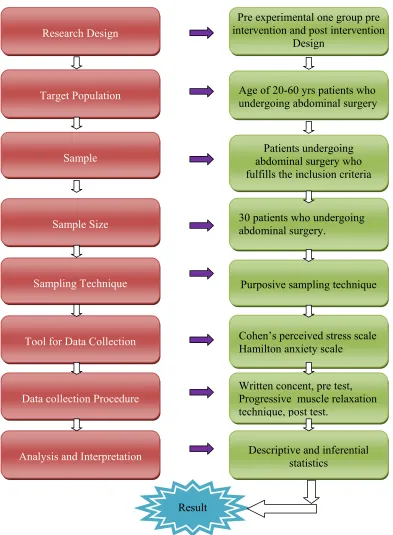
Pre experimental one group pre intervention and post intervention
Design
A STUDY TO ASSESS THE EFFECTIVENESS OF PROGRESSIVE MUSCLE RELAXATION THERAPY ON REDUCTION OF STRESS AND ANXIETY
AMONG PATIENTS UNDERGOING ABDOMINAL SURGERY.
Research Design
Target Population
Sample
Age of 20-60 yrs patients who undergoing abdominal surgery
Patients undergoing abdominal surgery who fulfills the inclusion criteria
Sample Size 30 patients who undergoing abdominal surgery.
Sampling Technique
Tool for Data Collection
Data collection Procedure
Analysis and Interpretation
Purposive sampling technique
Cohen’s perceived stress scale Hamilton anxiety scale
Written concent, pre test, Progressive muscle relaxation technique, post test.
[image:43.612.124.517.140.675.2]Descriptive and inferential statistics
CHAPTER IV
DATA ANALYSIS AND INTERPRETATION
This chapter deals with the description of study subjects, classification, analysis and interpretation of data collected to evaluate the effectiveness of progressive muscle relaxation therapy on reduction of stress and anxiety among patients undergoing abdominal surgery. The data findings have been analyzed and tabulated in accordance to the plan for data analysis and are interpreted under the following headings.
Section A: Frequency and percentage distribution of demographic variables of the Patients undergoing abdominal surgery.
Section B: Frequency and percentage distribution of pre intervention and post intervention level of stress among Patients undergoing abdominal surgery.
Section C: Frequency and percentage distribution of pre intervention and post intervention level of anxiety among patients undergoing abdominal surgery.
Section D: Comparison of pre intervention and post intervention level of stress among Patients undergoing abdominal surgery.
Section E: Comparison of pre intervention and post intervention level of anxiety among patients undergoing abdominal surgery.
Section F: Comparison of mean and standard deviation of pre intervention and Post intervention level of stress and anxiety among patients undergoing abdominal surgery.
Section G: Association of pre intervention and post intervention level of stress and anxiety with selected demographic variables among patients undergoing abdominal surgery.
SECTION - A
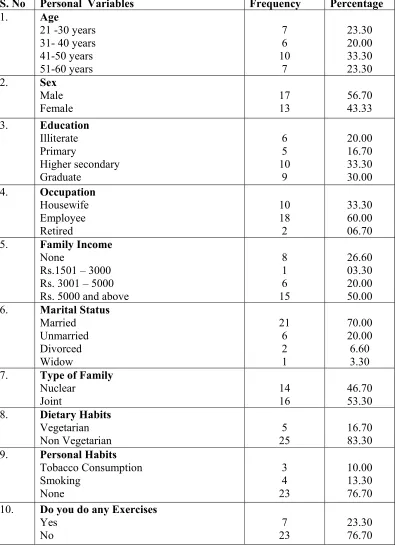
Table 1: Frequency and percentage distribution of personal variables of patients undergoing abdominal surgery.
N=30
S. No Personal Variables Frequency Percentage
1. Age
21 -30 years 31- 40 years 41-50 years 51-60 years 7 6 10 7 23.30 20.00 33.30 23.30 2. Sex
Male Female 17 13 56.70 43.33 3. Education
Illiterate Primary Higher secondary Graduate 6 5 10 9 20.00 16.70 33.30 30.00 4. Occupation
Housewife Employee Retired 10 18 2 33.30 60.00 06.70 5. Family Income
None
Rs.1501 – 3000 Rs. 3001 – 5000 Rs. 5000 and above
8 1 6 15 26.60 03.30 20.00 50.00 6. Marital Status
Married Unmarried Divorced Widow 21 6 2 1 70.00 20.00 6.60 3.30 7. Type of Family
Nuclear Joint 14 16 46.70 53.30 8. Dietary Habits
Vegetarian
Non Vegetarian 25 5 16.70 83.30
9. Personal Habits Tobacco Consumption Smoking None 3 4 23 10.00 13.30 76.70 10. Do you do any Exercises
Yes
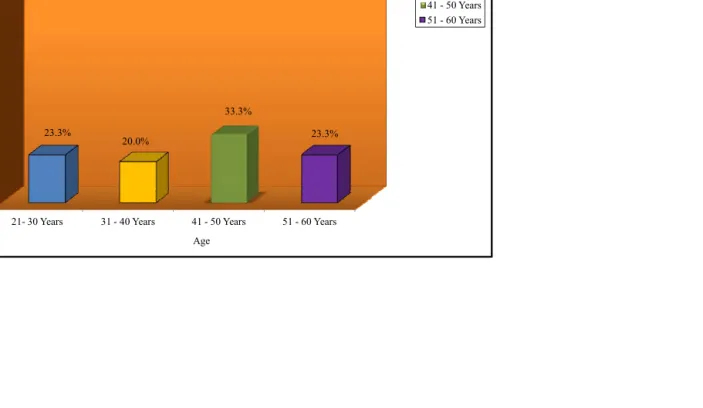
Table 1 shows the frequency and percentage distribution of personal variables of patients undergoing abdominal surgery. With respect to the age of patients undergoing abdominal surgery, the majority of the patients 10 (33.3%) were in the age group of 41-50 years, 7 (23.3%) patients were in the age group of 21-30 years and 51-60 years, 6 (20%) patients were in the age group of 31- 40 years. With respect to sex of patients undergoing abdominal surgery, the majority of the patients 17 (56.7%) were males and 13 (43.3%) patients were females.
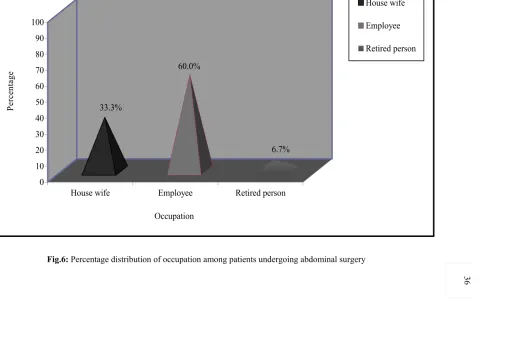
With regard to education of patients undergoing abdominal surgery, 10 (33.3%) patients have completed their secondary education, 9 (30%) patients were complete their graduation and 5 (16.7%) patients have completed their primary education and 6 (20%) patients were illiterates. In regard to occupation of patients undergoing abdominal surgery, the majority of the patients 18 (60%) were employed, 10 (33.3%) patients were unemployed and 2 (6.7%) patients were retired.
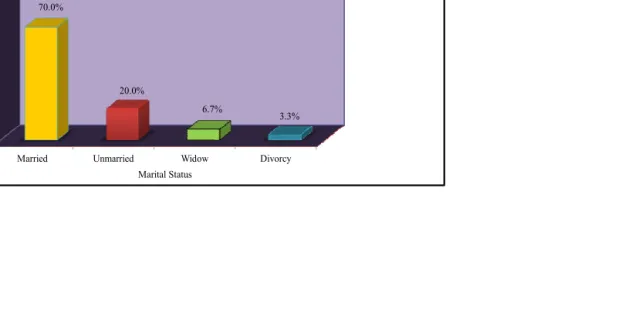
Related to family income of patients abdominal surgery, the majority of the patients 15 (50%) were getting Rs.5000 and above, 6 (20%) patients were getting Rs.3000 – 5000, 1 (33.3%) patients were getting Rs.1501 – Rs.3000 and 8 (26.7%) patients were not getting income. Considering marital status of patients undergoing abdominal surgery, the majority of the patients 21 (70%) were married, 6 (20%) patients were unmarried, 2 (6.7%) patients were widow and 1 (3.3%) patients were divorced.
Regarding type of family in patients undergoing abdominal surgery, the majority of the patients 16 (53.3%) were living in joint family and 14 (46.7%) patients were living in nuclear family. Considering the food habits of patients undergoing abdominal surgery, 25 (83.3%) patients were non – vegetarian and 5 (16.7%) patients were vegetarian.
0 10 20 30 40 50 60 70 80 90 100
21- 30 Years 31 - 40 Years 41 - 50 Years 51 - 60 Years 23.3%
20.0%
33.3%
23.3%
Per
cen
tage
Age
21- 30 Years 31 - 40 Years 41 - 50 Years 51 - 60 Years
[image:47.612.101.453.129.333.2]0 10 20 30 40 50 60 70 80 90 100
Male Female 56.7%
43.3%
Pe
rcen
tage
Sex
Male Female
Fig.4: percentage distribution of sex among patients undergoing abdominal surgery
[image:48.612.115.439.127.328.2]20.0%
16.7%
33.3%
30.0%
0 10 20 30 40 50 60 70 80 90 100
Per
cent
age
Illiterate Primary Higher Secondary Graduate
Education
Illiterate
Primary
Higher Secondary Graduate
[image:49.612.109.689.126.484.2]33.3%
60.0%
6.7% 0
10 20 30 40 50 60 70 80 90 100
P
ercen
tag
e
House wife Employee Retired person Occupation
House wife Employee Retired person
Fig.6: Percentage distribution of occupation among patients undergoing abdominal surgery
[image:50.612.100.695.124.463.2]27
26.7%
3.3%
20.0%
50.0%
0 10 20 30 40 50 60 70 80 90 100
Pe
rc
en
ta
ge
<1500 Rs.1501 - 3000 Rs.3001 - 5000 > Rs.5000 Family income
<1500
Rs.1501 - 3000 Rs.3001 - 5000 > Rs.5000
Fig.7: Percentage distribution of family income among patients undergoing abdominal surgery
[image:51.612.109.687.127.439.2]0 10 20 30 40 50 60 70 80 90 100
Married Unmarried Widow Divorcy 70.0%
20.0%
6.7%
3.3%
Pe
rce
nta
ge
Marital Status
Married Unmarried Widow Divorcy
Fig.8: percentage distribution of marital status among patients undergoing abdominal surgery
[image:52.612.104.424.155.321.2]Type of Family
47.0% 53.0%
Joint Family Nuclear Family
[image:53.612.108.699.131.445.2]Dietary Pattern
17.0%
83.0%
Vegetarian
Nonvegetarian
Fig.10: Percentage distribution of dietary pattern among patients undergoing abdominal surgery
[image:54.612.117.683.133.450.2]0 10 20 30 40 50 60 70 80 90 100
Tobacco Chewing Smoking None
Perce
ntag
e
Personal Habits
Tobacco Chewing Smoking None
76.7%
[image:55.612.112.428.128.361.2]13.3% 10%
Fig. 11: Percentage distribution of personal habits among patients undergoing abdominal surgery
0 10 20 30 40 50 60 70 80 90 100
Yes No
23.3%
76.7%
Per
cen
tage
Exercise
Fig.12: Percentage distribution of exercise among patients undergoing abdominal surgery
Yes No
[image:56.612.105.452.166.337.2]Table.2: Frequency and percentage distribution of clinical variables of patients undergoing abdominal surgery.
N= 30
S. No Clinical Variables Frequency Percentage
1. Type of Surgery Laparotomy Laparoscopy
20 10
66.7 33.3 2. Duration of Hospitalization
More than one week Less than one Week
17 13
[image:57.612.122.526.149.321.2]56.7 43.3
Type of Major Surgery
33.0%
67.0%
laparoscopy
[image:58.612.107.700.140.441.2]Laparotomy
Fig.13: Percentage distribution of type of major surgery among patients undergoing abdominal surgery
Duration of Hospitalization
57.0%
57.0%
[image:59.612.106.693.126.444.2]> 1 week < 1 week
Fig.14: Percentage distribution of duration of hospitalization among patients undergoing abdominal surgery
SECTION- B
Table.3: Frequency and percentage distribution of pre intervention level of stress among patients undergoing abdominal surgery.
N=30
Level of Stress
Pre intervention
Frequency Percentage
Almost Never 0 0
Sometimes 0 0
Fairly Often 22 73.3
[image:60.612.127.524.176.342.2]Very Often 8 26.7
Table 4: Frequency and percentage distribution of post intervention level of stress among patients undergoing abdominal surgery.
N=30
Level of Stress Post intervention
Frequency Percentage
Almost Never 0 0
Sometimes 13 43.3
Fairly Often 17 56.7
[image:61.612.122.525.146.306.2]Very Often 0 0
SECTION-C
Table 5: Frequency and percentage distribution of pre intervention level of anxiety among patients undergoing abdominal surgery.
N=30
Level of anxiety
Pre intervention
Frequency Percentage
Mild 0 0
Moderate 0 0
Severe 7 73.3
[image:62.612.124.523.173.346.2]Very Severe 23 26.7
Table 7: Frequency and percentage distribution of post intervention level of anxiety among patients undergoing abdominal surgery.
N=30
Level of anxiety
Post intervention
Frequency Percentage
Mild 0 0
Moderate 14 46.7
Severe 16 53.3
[image:63.612.121.527.147.317.2]Very Severe 0 0
SECTION -D
Table 8: Comparison of pre intervention and post intervention level of stress among patients undergoing abdominal surgery.
N=30
Level of stress Pre intervention Post intervention
Frequency Percentage Frequency Percentage
Almost Never 0 0 0 0
Sometimes 0 0 13 43.3
Fairly Often 22 73.3 17 56.7
[image:64.612.121.526.176.342.2]Very often 8 26.7 0 0
0 % 0 %
73.3%
26.7 %
0 %
43.3%
56.7 %
0%
0 10 20 30 40 50 60 70 80 90 100
Percent
ag
e
pre intervention post intervention level of stress
[image:65.612.98.694.140.463.2]almost never sometimes fairly often very often
Fig.15: Comparison of pre intervention and post intervention level of stress among patients undergoing abdominal surgery
SECTION-E
Table 9: Comparison of pre intervention and post intervention level of anxiety among patients undergoing abdominal surgery.
[image:66.612.121.527.180.341.2]N=30
Table 9 shows the comparison of pre intervention and post intervention level of anxiety among patients undergoing abdominal surgery. In pre intervention level of anxiety 7 (73.3%) patients had severe level of anxiety, 23 (26.7%) patients had very severe level of anxiety and none of them had mild and moderate level of anxiety. In post intervention level of anxiety 14 (46.7%) patients had moderate level of anxiety, 16 (53.3%) patients had severe level of anxiety and none of them had mild and very severe level of anxiety.
Level of anxiety Pre intervention Post intervention
Frequency Percentage Frequency Percentage
Mild 0 0 0 0
Moderate 0 0 14 46.7
Severe 7 73.3 16 53.3
0 10 20 30 40 50 60 70 80 90 100
0%
46.7% 73.3%
53.3%
26.7%
0%
Moderate Severe Very Severe
[image:67.612.124.674.122.448.2]53
Fig.14 : Percentage distribution of pre intervention and post intervention level of anxiety among patients undergoing abdominal surgery
Pre intervention Post intervention Level of Anxiety
Per
cent
SECTION- F
Table 10: Comparison of mean and standard deviation between pre intervention and post intervention level of stress among patients undergoing abdominal surgery.
N=30
Level of stress Mean Standard deviation Paired t’ value
Pre intervention 28.80 0.19
16.30 *
Post intervention 19.30 2.52
[image:68.612.121.531.201.292.2]*p<0.001
Table 11: Comparison of mean and standard deviation between pre intervention and post intervention level of anxiety among patients undergoing abdominal surgery.
N=30
Level of anxiety Mean Standard deviation paired t’ value
Pre intervention 30.90 2.52
14.34*
Post intervention 16.00 3.25
[image:69.612.122.532.151.237.2]*p<0.001
SECTION –G
Table 12: Association of the pre intervention level of stress with their selected demographic variables among patients undergoing abdominal
surgery.
N=30
S. No Demographic Variables
Pre intervention level of stress
Yates corrected chi square test
Fairly Often Very Often
n % n %
1. Age
≤40 years
>40 years 10 12 76.9 70.6 3 5 23.1 29.4
χ2 = 0.15
df=1 NS
2. Gender
Male
Female 13 9 76.5 69.2 4 4 23.5 30.8
χ2 = 0.19
df=1 NS
3. Education
Illiterate / primary
Hsc / Graduate 16 6 54.5 84.2 5 3 45.5 15.8
χ2 = 3.13
df=1 NS
4. Occupation
House wife Employee 7 15 70.0 75.0 3 5 30.0 25.0
χ2 = 0.09
df=1 NS
5. Family Income
≤Rs.1500
>Rs.1500 17 5 62.5 77.3 3 5 37.5 22.7
χ2 = 0.66
df=1 NS
6. Marital Status
Married Unmarried /Widow 15 7 71.4 77.8 6 2 28.6 22.2
χ2 = 0.13
df=1 NS
7. Type of family
Nuclear family Joint Family 9 13 64.3 81.3 5 3 35.7 18.8
χ2 = 1.10
df=1 NS
8. Dietary habits
Vegetarian
Non Vegetarian 20 2 40.0 80.0 3 5 60.0 20.0
χ2 = 3.41
df=1 NS
9. Personal Habits
Tobacco/ Smoking
None 17 5 71.4 73.9 2 6 28.6 26.1
χ2 = 0.02
df=1 NS
10. Do you do any Exercise
Yes
No 17 5 71.4 73.9 2 6 28.6 26.1
χ2 = 0.02
df=1 NS
11. Type of Major Surgery
Laparotomy
Laparoscopy 16 6 80.0 60.0 4 4 20.0 40.0
χ2 = 1.36
df=1 NS
12. Duration of
Hospitalization
Less than one week More than one week
11
1 64.7 84.6 6 2 35.3 15.4
χ2 = 1.49
df=1 NS
Table 13: Association of post intervention level of stress w