Rochester Institute of Technology
RIT Scholar Works
Theses
Thesis/Dissertation Collections
5-29-1990
The Non-representational language
Andrea Geer
Follow this and additional works at:
http://scholarworks.rit.edu/theses
This Thesis is brought to you for free and open access by the Thesis/Dissertation Collections at RIT Scholar Works. It has been accepted for inclusion
in Theses by an authorized administrator of RIT Scholar Works. For more information, please contact
.
Recommended Citation
Rochester
Institute
ofTechnology
A
Thesis
Submitted
to
the
Faculty
ofThe
College
ofFine
andApplied
Arts
in
Candidacy
for
the
Degree
ofMASTER
OF
FINE
ARTS
The
Non-Representational
Language
by
Andrea
Geer
Table
ofContents
Approvals
2
Introduction
3
Technical
Development
5
Perception-What
Role
it
Plays
9
Historical
Context
12
Conclusion
15
Illustrations
16
Approvals
Ed Miller
Advisor:
~~=~~.:;.;:;=---Date:
_ _ _ _-L"-6 .__~_.
L-?---
9 /
Associate Ad vis
0
r: ---'Po...h==i:..::l:..:l"'-"'i..cp---'B==-o::::...=-r-.o-n:..:a=r=--.:o:t-.o-h"--_ _
Da te :
---=~-'--+-!~5--f--<1tJf<-L(
_
7
I
Associate Advisor:_f_reg__ Lipp
Date :
-==~
__-
_~--=-~_L---Special Assistant to the Dean of Graduate Affairs:
Phillip Bornarth
Date:
tf;'
/rl
e and Applied Arts:
Peter Giopolous
Dean,
Da te :
Y : , , ? 1 f ' + + L
-1,
,
prefer to be contacted each time a
request for a production is made.
I
can be reached at the following
address:
Andrea Geer 114 St.
Paul Street Rochester,
New York
14604 Date:
_
Part
I
Introduction
The
formal
aspects ofpainting
arecolor,
value andtexture.
As
much as
these
elementshave
dominated
the
formalist
language,
there
can arise
from
the
combination ofthese
formal
elements, types ofexpression
that
cannotbe
achievedin
any
other way.With
the
many
conflicting
theories
that
attemptto
explain whatart
is,
whatits
function
is,
andhow
it
fits
in
to
our culture,it
is
a
difficult
task
to
siftthrough
allthe
information
in
an effortto
find
the
ideas
that
have
a personal relevance.In
this
society,
there
aremany
different
philosophies and waysof
thinking
that
makethis
avery
exciting
andconfusing
time
to
live
in.
There
aremany
different
philosophies and ways ofthinking
that
make
this
avery
diverse
world.There
is
roomin
this
societyfor
many
different
religions andbeliefs
that
seemto
be
in
conflict witheach other.
Pluralism
seemsto
be
the
essence of ourtimes.
In
the
history
ofart,
the
different
developments
seemto
have
been
built
upontradition
orthe
reaction against it.Starting
in1905,
fauvists
continued withthe
philosophy
that
Van
Gogh
andGauguin
practiced.
Out
ofthis
the
expressionisttradition
began.
Developing
from
the
post-Impressionists cameCubism
and constructivism.Since
these
developments
in
Europe
in
the
early
1900
's,
there
have
been
numerous styles
that
happened
as an outgrowth ofthese
early
these
philosophies.American
Modernism
grew
from
adesire
to
be
free
from
pastEuropean
art.All
previous opinions and preconceptionss werechallenged
by
the
New
York
artists.Barnett
Newman
in
aletter
defending
Abstract
Expressionism
wrote:"The
Americans
evoketheir
world of emotion and
fantasy by
akind
of personalwriting
withoutthe
props of
any
known
shape.This
is
a metaphysical act.With
the
European
abstract painters we areled
into
their
spiritual worldthrough
already
known
images.
To
putit
philosophically,the
European
is
concerned withthe
transcendence
of ob.iects whilethe
American
is
concerned with
the
reality
ofthe
transcendental
experience."1As
I
pointed outearlier,
pluralism seemsto
be
anecessary
concept and
in
light
ofthis,
there
will alwaysbe
an alternativeargument
to
whatI
have
to
present.I
considerthis
necessary
andgood
because
if
wefail
to
recognize other points of view asvalid,
webecome
closedto
new anddifferent
ideas.
************
i
1
Thomas
B.
Hess,
Barnett
Newman
(Walker
andCompany,
New
York,
Part
II-technical
development
The
paintings and monotypesthat
makeup
my
thesis
work arerepresentative of a
consistent
area of study.That
is
notto
imply
that
what camebefore
or afterthe
thesis
work was not consistentbut
that
this
particularbody
of workis
consistent with andexemplary
ofthe
ideas
I
have
aboutart,
artmaking
andpainting
in
particular.The
pasttwo
yearshave
been
avery
productivetime
for
me.There
has
been
the
support,
studio space andtime
to
explorein
depth
the
principles ofpainting
such as use ofcolor,
surface qualitiesand other
formal
aspects of painting.These
practical areas ofpainting
aretoo
often underplayedin
an attemptto
reach someimportant
message or meaning.Knowing
how
to
use coloris
crucialin
finding
just
the
correct nuance or shade of meaning.The
study
ofcolor and
form
willbe
anongoing
learning
experiencebecause
eachwork is
individual.
So
eachpainting
is
approachedfreshly
in
aneffort
to
create an objectthat
is
self-contained.In
additionto
the
formal
training
that
I
received,
The
otherarea of
study
that
I
have
embarked on wastrying
to
find
meaning
in
mywork.
My
thesis
workis
representative ofmy
continued effortto
develop
a visuallanguage
orvocabulary
using
personalizedforms.
It
was not adirect
goalto
develop
personal signature marksbut
to
somehow
translate
whatI
wantto
expressin
the
painting
mediumusing
colors and shape.
I
felt
painting
wasthe
most appropriate methodDuring
the
pasttwo
years,
I
have
completed a series ofmonotypes,
paintings anddrawings.
Since
these
three
areas of workare so
interdependent
andinterconnected,
it
does
not seem rightto
discuss
them
asif
they
happened
separately.Basically
everything
I
have
done
is
a product ofmy
interest
in
painting.While
I
wasPainting
on stretchedcanvas,
I
wasdrawing
withpaint on paper.
While
I
experimented withfound
objects,
I
wasfigure
drawing.
The
most recent combination andthe
most productivehas
been
the
experimentation with monotypes on paper simultaneous withpainting
on canvas.
Painting
on canvashas
allowed meto
exploredifferent,
aspects ofline,
shape and color.Monotypes
allowed meto
do
the
samething
but
on a smaller scale.
The
changein
scale was afaster
process soI
wasable
to
experiment more without ahuge
investment
oftime.
Also,
testing
ideas
on a smaller scale meantI
did
nottry
to
do
everything
in
every
painting.I
became
more selective.Another
advantage ofthe
monotype processis
that
it
is
possibleto
do
many
variations on oneformal
idea.
Once
the
ink
is
onthe
plate,
it
canbe
printed,
reworked and printed again.This
sequencecan
happen
a number oftimes.
This
is
a reliefbecause
the
testing
ofan
idea
is
so muchless
tedious
on a small scale.The
processThe
smaller works were notactually
studiesfor
the
larger
paintings.
Although
there
was an obvious effect onthe
otherwork,
they
are worksindividually.
Becoming
familiar
withthe
techniques
ofmonotyping
was a challenge andthe
effects ofthe
ink
onpaper
is
very
different
than
the
effect ofthe
paint on canvas.Also
the
brayers
make avery
different
type
of mark.The
surfaceusually
seems more
dense
andflat.
Using
brayers
to
createimages
instead
ofbrushes
made medevelop
a newvocabulary
of shapesthat
were moresuited
to
the
equipment and materialsI
was using.Scale
is
another important aspect ofthe
work.The
scale olthe
monotypes
is
very
different
than
the
scale ofthe
paintings .The
monotypes
occupy
a much more personalviewing
space,
as opposedto
the
paintings
that
occupy
adifferent
kind
of space.I
have
noticedthat
people react
very
differently
to
the
different
sized works eventhough
the
shapes are muchthe
same.When
viewing
the
smallerpieces,
peopletend
to
feel
very
possessive as
if
they
can possessthe
beauty
or controlit
in
someway.
When
people seethe
larger
canvases,
they
feel
more unsure oruncomfortable.
Also
the
larger
canvasesoccupy
a spacethat
issomewhat
human
in
proportion.Most
ofthe
canvases areslightly
taller
than
an average person and almost as wide asthe
span ofthe
arms when spread out.
It
is
interesting
to
notethat
many
the
Abstract
more of a
total
experience.
The
large
scaleis
intimate
in
that
itbecomes
part ofthe
environment.Certain
American
critics alsopromoted
these
large
paintingsbecause
they
felt
that
art onthis
scale
suggested
such "American" qualities such as expansiveness andfreedom
from
tradition.2The
subject matter ofmy
paintings anddrawings
are shapes andcolor.
The
combination ofthe
shapes and color canprobably
be
applied
to
avariety
of meanings.However,
if
I
wantedto
make aliteral
statement,
I
wouldbe
ableto
do
sodirectly,
by
using
images
that
convey
a messagethat
cannotbe
mistakenfor
anything
else.1
do
not want
to
do
this
orhave
my
workbe
misinterpretedby
using
acentral
image
as a vehicle.That
iswhy
I
continueto
do
workthat
is
free
of recognizable or symbolicimages;
because
this
way
1
amfree
to
attempt
to
directly
get atthe
emotions orideas
I
wantto
create.In
the
pasttwo
years, notonly
have
I
experimented with materialand processes
but
I
have
developed
an aestheticway
ofthinking
that
1
comfortable with.
My
working
attitude reflectsthe
ideas
that
I
think
are
important.
Each
time
I
begin
apainting,
I
concentrate not onwhat
I
know
but
on whatI
do
notknow.
This
way
eachpainting
is
built
on allmy
past experimentsbut
will reachbeyond
it
in
some way.************
2
Jeffry
Wechsler
andJenni
L.
Schlossman,
Abstract
Expressionism:
Other
Dimensions
,(Whitney
Museum
ofAmerican
Part
III:
Perception-What
Role
it
Plays
Painting
is
an actthat
rquiresmany
skillsto
be
produced.Painting
as a creative act relies onthe
strength ofthe
intuition
andsensitivity
ofthe
artist.The
creative process cannotbe
dominated
by
the
intellectual
thoughts
ofthe
artist.Rather,
the
creative processis
based
onthe
dualism
ofthe
technical
and expressiveaspects.
Both
the
technical
andthe
expressive qualities play a partin
creativity
but
the
artistfirst
andlastly
listens
to
his
orher
intuition.
This
is
my
particular approachto
painting.The
spontaneous act ofthe
artistis
partly
attributableto
sensitivity
andreceptivity
onthe
part ofthe
artist.It
alsois
due
to
the
formal
training
ofthe
artist.The
skillsthat
it
takes
to
be
a
good
painter areconstantly
being
practiced andfine-tuned.
There
are
many
perceptual skills an artist uses such as eyeto
hand
coordination,
the
laws
of colortheory,
andthe
many
spatial anddesign
aspects ofline,
shape,
and space.For
example,
colorhas
propertiesthat
make your perception ofit
varv indifferent
circumstances.When
you place one color nextto
another,
youmay
intellectually
have
anidea
of whatthe
result willbe,
but
there
are so many colors,hues,
values and chromasthat
youdon't
know
exactly
whatthe
result willbe.
and colors
independently
from
oneanother.
We
seethe
colors andshapes
in
relation
to
each other.Our
perception ofthe
workis
affected
by
our pastexperiences.
Nothing
we seeis
anisolated
element.
Our
subjective
feelings
and physiological reaction are partof
the
wholeexperience.
Our
bodies
and minds respondto
ail ofthese
things
Seeing
the
work ofthese
artists and other abstractexpressionists
was a visual and complete experiencethat
had
aprofound
impact
on me.There
were writers such asSuzi
Gablik
andE.H.
Gombrich
that
helped
me understandthe
reliance of art uponperception.
These
writersdispelled
alot
ofthe
myththat
that
the
design
of apainting
or adrawing
wasthe
result of some mysteriousgift.
In
reality, perceptual skills accountfor
the
ability
to
draw.
Placement
of shapes and colorsin
atwo
dimensional
format
and ourreaction
to
them
is
controlledby
our minds in an effortto
understandmore
clearly
the
order ofthe
composition.Perception
is
the
interaction
between
the
mind andthe
eye.Seeing
is
not an optical processbut
afunction
ofthe
brain.
A
painting's
accuracy
ofimpact
or successf ulness relys onhow
it
is
perceived.
In
light
ofthis,
perceptionis
very
much a part ofthe
arts.
The
artsrely
on perception.There
are relationshipsbetween
color,
shape andtexture
that
dominate
perception.The
artist asdesigner
tries
to
keep
ideas
from
being
cloudedby
putting
allthe
elements of apainting
in an orderthat
expressesthe
meaning
most clearly.So,
whilethe
artistis
concerned about
the
mechanics ofmaking
art,
he
or sheis
alsoenvisioning
afinal
outcome.Laws
of perception such asgestalt,
figure-ground
relationships,
grouping
subdivision andhierarchy
of shapes all explainclearly
how
people perceive
two
dimensional
paintings.What
these
laws
do
notexplain
is
why
the
artist creates orwhy
some artists are ableto
actually
achieve some spirituallevel
in
their
work.What
is
it aboutorganized shapes and colors
that
can speakto
us so personally andpowerfully
about concepts otherthan
line,
shape andtexture?
These
are questions
that
cannotbe
explainedby
perception.Part
IV:
Historical
Context
Modernism
was anextremely
important
part of arthistory
because
of
the
many
great
artists who worked underthe
aesthetic guidelines ofart
for
arts'sake.
The
paintingsthat
they
weredoing
atthat
time
will
have
an effect on peoplefor
along
time.
While
many
artiststoday
feel
the
needto
break
completelyfrom
tradition
that
modernismis
now a partof,
I
feel
that
my
work reliesa
great
deal
onthe
history
ofAmerican
andEuropean
art.i
feel
astong
relatednessto
the
modernistideals.
The
Expressionist
paintersVan
Gogh
andKandinsky
among
others created anddeveloped
a newaesthetic
that
led
to
later
American
Abstact
Expressionism.
Radical
artthat
offers cynicissm and pessimismhas
no relationto
my
work.I
feel
that
the
basic
ideals
ofModernism
canbe
preserved and extended.
The
"subversive" artthat
proliferates isthe
opposite of
my
work yetI
feel
that
accepting
tradition
canbe
aradical action.
To
me,placing
guidelines on what1
do
gives
structure
to
whatI
do.
There
is
the
ironical
feeling
that
complicity
itself
is
now passed off at subversion-and
being
hospitible
to
traditional
valuesis
the
most radical act.3There
were stagesin
the
development
ofmy
workthat
wereinfluenced
greatly
by
other artists and writers.There
werepaintings
************
3
3
Suzi
Gablik,
Changing
Paradigms
for
the
Artist.
Thames
andHudson,
1984)
26.
I
sawthat
had
a profoundimpact
on me visually and perceptually.Robert
Motherwell's
paintings and printshad
a greatimpact
on me.Also,
DeKoonmg
,Rothko
andHoffman
andNewman
along
with others.Reading
aboutthe
ideas
ofthese
artistshelped
form
my
workbut
the
greatest
experience wasseeing
the
works of artin
person.For
me,
the
workis
emotionally
charged.The
theory
interests
me muchless
than
the
workitself.
work
itself.
Suzi
Gablik,
in
a series of essays called"Has
Modernism
tailed"
attemps
to
discover
how
wegot
to
this
postmoderntime.
While
I
don't
agree with every point she
makes,
I
continueto
readher
essays andbooks
because
they
areinteresting
points she makes.Also,
while manyart writers
today
arecynical,
nasty,
andpessimistic,
Suzi
alwaysoffers
the
reader someray
ofhope
that
there
is
someunderlying
orderin
this
confusing
time.
"If
we open oureyes,
if
we open ourminds,
if
we open ourhearts,
we willfind
that
the
worldis
a magicalplace,
filled
withpower and wisdom which
any
of us canhave.
The
selfis
notlimited.
Any
artist who can seethis,
whois
capable ofknowing
that
he
or sheis
one ofthose
magicalfigures
who can commandspirits,
who can makecontact with
the
source ofmeaning
and power as our ancestorsdid,
has
already
taken
the
first
step
towards
transformation."4************
4
4
Suzi
Gablik,
Changing
Paradigms
for
the_Artist,
(Thames
andHudson,
1984)
29.
This
type
ofreading
materialhas
indirectly
affectedmy
way
ofthinking
about art andmay
in
someway
have
influencedmy
work.The
Abstract
Expressionist
paintersI
mentioned earlierhad
the
mostdirect
influence
onmy
work.Although
the
styles ofthe
artists whoworked at
this
time
were vervdifferent,
their
first
concern wasthe
actual process of
putting
the
paint onthe
canvas.This
is alsomy
first
concern.Conclusion
"Just
as aflower,
by
virtue ofits
existence as a completeorganism,
is
both
ornamental and self sufficient asto
color,form
andtexture,
soart,
because
ofits
singularexistence,
is
morethan
mereornament .
"5
"Aesthetic
enjoymentis
causedby
the
perception ofhidden
laws...
aesthetic enjoymentis
joy
itself,
releasedfrom
subordinationto
any
purpose;
therefore,
it
embracesthe
enjoyment of nature andthe
enjoyment of art
both."
(Walter
Rathenau:
Notes
onArt
Philosophy)
The
aim of artis
alwaysto
provide suchjoy
for
usin
every
form
ofexpression.
The
faculty
to
enjoy
rests withthe
observer.6These
quotes,
both
taken
from
the
samebook,
for
me,
representthe
joy
and purpose of art.It
is
this
type
of expressionthat
makesme continue
to
work as an artist.I
enjoy
making
things
and1
enjoy
seeing.
This
is
what motivates me.************
5
Hans
Hofmann,
Hanj3__jloj'_mannj_
Search
for
the
Real
andOther
Essays,
(MIT
Press,
1967)
69.
6
Hans
Hofmann,
Hj^is
Hj3fjnanni_
Search
for
the
Real
andother
Essays,
(MIT
Press,
1967)
59.
Bibliography
Gablik,
Suzi.
Changing
Paradigms
for
the
Artist.
Thames
andHudson.
1984.
Hess,
Thomas
B.
Barnett
Newman.
Walker
andCompany,
New
York.
1969
Hofmann,
Hans.
Hans
Hofmann:
Search
for
the
Real
andOther
Essays.
MIT
Press.
1967.
Wechsler,
Jeffrey,
andSchlossman,
Jenni
L.
Abstract
Expressionism:
Other
Dimensions.
Whitney
Museum
ofAmerican
Art.
1990.
Enable
O/A,
computersoftware,
The
Software
Group,
1984.
Grey
Patch"1991
crylic on
Canvas
46"
x
78"
And
Blue
II
1991
Acrylic
' onCanvas
35" x
^H^Hl
H|
.
":
^ :: i^
[
BMjflP
|mW
iMHs-*iwEsB
^SHbSI
- ;'
; *
1
"''
'
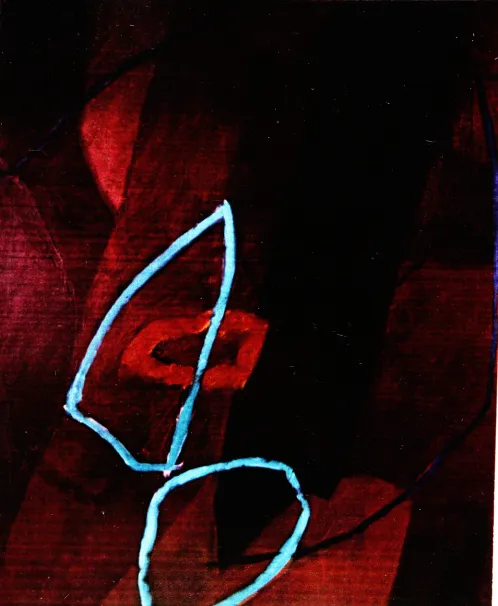
"Blue
un-.Mu-i1 99 L
A
i rvL
ii <mi i iiinysI i
"
v '
>'
iH
^^H
KmH
y&isttdp
I
MPf
W
tm^ss.
"Blue
Figures"1991
Acrylic
onCanvas
49"x
60"
[image:22.548.24.522.20.626.2]Urann'e
Ground"i a .
Ac
rvLie
onCanvas
i
'
v IH"