
Rochester Institute of Technology
RIT Scholar Works
Theses
Thesis/Dissertation Collections
12-1-2011
Probabilistic framework for image understanding
applications using Bayesian Networks
Mustafa Jaber
Follow this and additional works at:
http://scholarworks.rit.edu/theses
This Dissertation is brought to you for free and open access by the Thesis/Dissertation Collections at RIT Scholar Works. It has been accepted for inclusion in Theses by an authorized administrator of RIT Scholar Works. For more information, please [email protected].
Recommended Citation
Probabilistic Framework for Image Understanding
Applications Using Bayesian Networks
By
Mustafa I. Jaber
M.S. Electrical Engineering, Rochester Institute of Technology, USA, 2007
B.S. Electrical Engineering, Islamic University of Gaza, Palestine, 2003
A dissertation submitted in partial fulfillment of the
requirements for the degree of Doctor of Philosophy in the
Chester F. Carlson Center for Imaging Science,
College of Science
Rochester Institute of Technology
December 2011
Signature of the Author _______________________________
II
CHESTER F. CARLSON CENTER FOR IMAGING SCIENCE
COLLEGE OF SCIENCE
ROCHESTER INSTITUTE OF TECHNOLOGY
ROCHESTER, NEW YORK
CERTIFICATE OF APPROVAL
Ph.D. DEGREE DISSERTATION
The Ph.D. Degree Dissertation of Mustafa I. Jaber has
been examined and approved by the dissertation
committee as satisfactory for the dissertation required for
the Ph.D. degree in Imaging Science
___________________________________________________
Dr. Eli Saber,
Dissertation Advisor
___________________________________________________
Dr. Harvey Rhody
___________________________________________________
Dr. Sohail Dianat
___________________________________________________
Dr. Chance M. Glenn, Sr.
III
Dedication
IV
Acknowledgments
I would like to acknowledge and extend my heartfelt gratitude to the wonderful people who made this achievement possible. It is a pleasure to present my sincere thanks to my dissertation advisor, Dr. Eli Saber for his encouragement and guidance. I am also grateful to Dr. Harvey Rhody, Dr. Sohail Dianat, and Dr. Chance Glenn, Sr. for serving on the research committee.
Special thanks to Sue Chan, Patti Vicari, Florence Layton, and James Stefano for their help and support.
I am also very grateful to Mark Bailly and M. Sezer Erkilinc for their help and contributions in various topics of this dissertation.
Many thanks to Sreenath Rao Vantaram, Abdul Haleem Syed, and all other current and previous colleagues in the HP lab for their feedback and reviews.
Deepest gratitude to my friends especially Gregory Tsagkatakis, Prudhvi Gurram, Mohammed YousefHussien, and Yuqiong Wang. Thank you all for always being there.
Most especially, I would like to express my gratitude to my parents and family for their understanding and endless love, through the duration of my graduate study.
I am also grateful to the Center for Imaging Science and the Electronic & Microelectronic Engineering Department at the Rochester Institute of Technology for supporting this dissertation.
Finally, I am thankful to the Hewlett-Packard's Company for their generous support of this work.
Mustafa I. A. Jaber Rochester, NY
V
Probabilistic Framework for Image Understanding Applications Using
Bayesian Networks
by
Mustafa I. Jaber
Submitted to the Chester F. Carlson Center for Imaging Science in
partial fulfillment of the requirements for the Doctor of Philosophy
Degree at the Rochester Institute of Technology
Abstract
Machine learning algorithms have been successfully utilized in various systems/devices. They have the
ability to improve the usability/quality of such systems in terms of intelligent user interface, fast
performance, and more importantly, high accuracy. In this research, machine learning techniques are used
in the field of image understanding, which is a common research area between image analysis and
computer vision, to involve higher processing level of a target image to “make sense” of the scene
captured in it. A general probabilistic framework for image understanding where topics associated with (i)
collection of images to generate a comprehensive and valid database, (ii) generation of an unbiased
ground-truth for the aforesaid database, (iii) selection of classification features and elimination of the
redundant ones, and (iv) usage of such information to test a new sample set, are discussed. Two research
projects have been developed as examples of the general image understanding framework; identification
of region(s) of interest, and image segmentation evaluation. These techniques, in addition to others, are
combined in an object-oriented rendering system for printing applications. The discussion included in this
doctoral dissertation explores the means for developing such a system from an image understanding/
processing aspect.
It is worth noticing that this work does not aim to develop a printing system. It is only proposed to add
some essential features for current printing pipelines to achieve better visual quality while printing
images/photos. Hence, we assume that image regions have been successfully extracted from the printed
document. These images are used as input to the proposed object-oriented rendering algorithm where
methodologies for color image segmentation, region-of-interest identification and semantic features
extraction are employed. Probabilistic approaches based on Bayesian statistics have been utilized to
VI
Contents
1 Introduction …………..………... 1
1.1 Problem Statement and Motivations ……… 2
1.1.1 Region of Interest in Digital Images ……….……….…... 3
1.1.2 Image Segmentation Evaluation ………... 4
1.2 Research Goals ……….. 5
1.3 Intellectual Merit and Broader Impacts ………..………….. 5
1.4 Organization ………..… 6
2 Background – General Framework for Image Understanding Using Bayesian Networks .……… 8
2.1 Dataset ……….……. 9
2.1.1 Image-Set ……….…… 9
2.1.2 Ground-truth and Psychophysical Experiments ……….. 10
2.2 Image Processing Strategy and Feature Space ……… 11
2.2.1 Content- and Context-Driven Techniques in Image Understanding ………... 12
2.2.2 Feature Space and Dimensionality Reduction ……… 12
2.3 Discretization Methods ………... 14
2.4 Bayesian Networks ………. 16
2.4.1 Representation ………. 17
2.4.2 Inference ………. 18
2.4.3 Learning ……….. 19
2.5 Evaluation Tools ………. 21
2.6 Summary ………. 22
3 Bayesian Network-Based Approach for Identifying Regions of Interest in Digital Images……... 23
3.1 Background and Literature Review ……… 23
3.2 Proposed Algorithm ……… 26
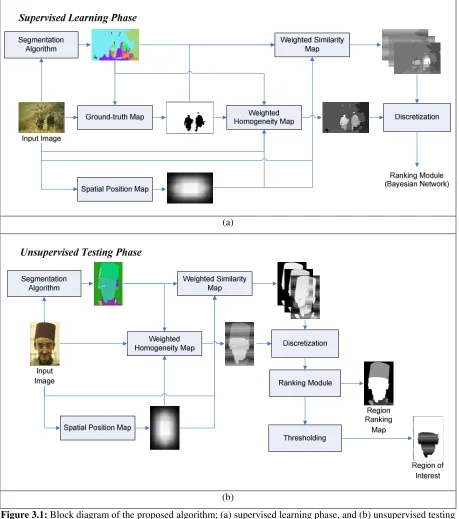
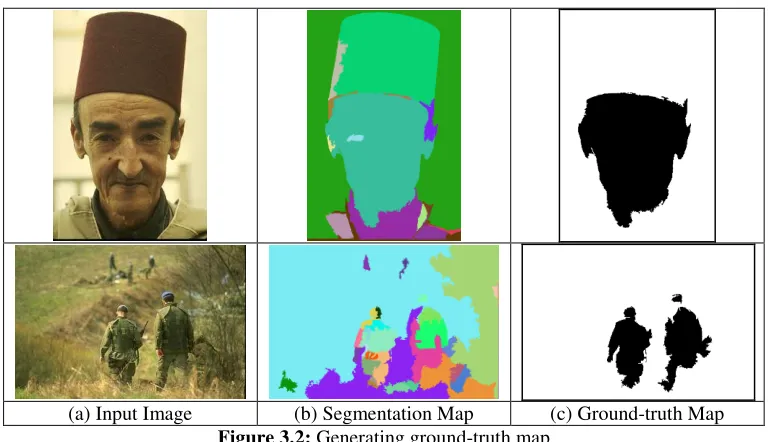
3.2.1 Supervised Learning Phase ………. 28
3.2.2 Unsupervised Testing Phase ………... 37
3.3 Results ………. 39
3.4 Performance Evaluation ……….. 43
3.4.1 Comparison with work done by Pinneli and Chandler ………... 43
3.4.2 Comparison with work done by Liu et al. ………... 44
VII
4 Image Segmentation Evaluation Using Bayesian Networks ……….……….…………... 50
4.1 Background and Literature Review ……… 50
4.2 Proposed Algorithm ……….... 53
4.2.1 General-Purpose ISE Technique ………. 54
4.2.2 ROI-Specific ISE Technique ……….. 62
4.3 Results and Performance Evaluation ……….. 66
4.3.1 Performance of the Image Segmentation Evaluation Modules ………... 66
4.3.2 Using the ISE Algorithms for generating ROI Maps ……….. 69
4.4 Summary ………. 71
5 Proposed Framework for Object–Oriented Rendering in Printing Systems ………...…... 72
5.1 System Overview ……… 72
5.2 Page Layout Classification ………. 74
5.3 Image Pre-processing (Image Stitching) ………. 79
5.3.1 System Setup for Image Stitching ………... 79
5.3.2 Image Stitching Proposed Algorithm ……….. 81
5.3.3 Results from the Proposed Image Stitching Algorithm ……….. 89
5.4 Region of Interest Detection ………... 91
5.5 Image Segmentation Evaluation ….……….…………... 91
5.6 Semantic Feature Analysis (Memory Color Extraction) ………. 91
5.6.1 Proposed Memory Color Classifier ……… 92
5.6.2 Results from the Memory Color Classifier ………. 95
5.7 Summary ………. 98
6 Summary and Conclusions ………..………..…... 99
Chapter 1
Introduction
Research in vision, the most advanced of our senses, that is applied to digital images can be categorized
into three areas as described in [1] (see Figure 1.1). The first research area, digital image processing,
employs low-level features or primitive operations for noise reduction, contrast enhancement, and image
sharpening in the generated image. Notice that the input and output of an image processing system are
images. The second area of research is image analysis. It employs mid-level features to address tasks such
as segmentation (partitioning an image into regions or objects). Image analysis systems usually provides
attributes (reduced form of the data presented in the input image) that are suitable for further computer
processing and classification. That is, edge map, contours, and the identity of individual regions (objects)
are examples of such systems. The third research field is computer vision which involves higher
processing level of the image to “make sense” of the scene captured in it. Computer vision includes
algorithms from machine learning and artificial intelligence to emulate human intelligence. We identify
our research interest as image understanding, which is a common area between image analysis and
computer vision as shown in Figure 1.1.
Algorithms for image understanding are categorized according to the learning methodology to supervised
and unsupervised. In the supervised learning, training data is used to infer a model and apply that model
to test data. Example techniques include Support Vector Machine, Bayesian Networks, and Neural
Networks. It is worth noticing that the goal of the learning algorithm is to minimize the error with respect
to the given inputs (training set). However, unless the training set is comprehensive and preventative of
the original model, learning training set that well is not necessarily the best thing to do. This is a common
problem in supervised learning methodologies which is known as “over-fitting” the data and essentially
memorizing the training set rather than learning a more general classification technique. On the other
hand, in the unsupervised learning, no training data is required. Model inference and application both rely
on test data exclusively. Examples include clustering techniques and Self-organizing map in Neural
Networks. Unsupervised methods require sufficient data and iterative computations to perform well.
Figure 1.1: Systems in computational vision
System
Digital Image Processing (Low-level Feature) Image Analysis
(Mid-level Feature)
Image Understanding Computer Vision
(High-level Feature)
Input
Digital Image
Output
2 In this work, a framework for image understanding based on Bayesian Networks is introduced. A
theoretical discussion is included as well as a practical example for identifying region of interest in digital
images. Another example that aims to identify an optimal segmentation map for a target image is
proposed. Furthermore, a system for object–oriented rendering is also discussed in this dissertation. This
chapter serves as an introduction to the dissertation document. It contains sections for problem statement
and motivation, research goals, contributions to the fields of computer vision and image processing, and
lastly, the organization for the following chapters.
1.1 Problem Statement and Motivations
The goal of this research is to develop image understanding algorithms that have wide usability in image
analysis and computer vision fields. Machine learning techniques have been adopted to solve the problem
of identifying region of perceptual interest in digital images. An algorithm that utilizes BN has been
developed and evaluated using multiple image sets. Yet, another algorithm is proposed to address the
problem of selecting the optimal segmentation map that fits a given image from a set of segmentations.
The following subsections illustrate these two problems and serve as the motivation behind this research
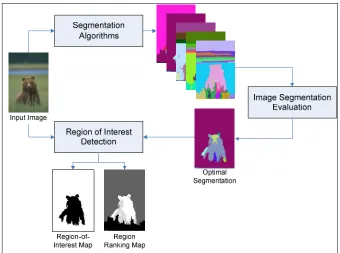
study. Figure 1.2 shows the overall system as it has modules for image segmentation, segmentation
[image:10.612.136.476.414.667.2]evaluation, and region of interest detection.
3 1.1.1 Region of Interest in Digital Images
Figure 1.3 shows an example of a portrait image from the Berkeley segmentation dataset [2]. The Region
Ranking Map (RRM) for this image is also included in the figure. It is a map that quantifies the visual
significance of a particular image region in relation to other regions. In the RRM, light shades mean high
priority regions while dark shades identify background. In the example image, the face region has the
highest importance level, followed by the lady’s hair, shirt, and finally the background. In this research,
we try to simulate such visual understanding for digital images. Developing a RRM is highly subjective
because one human observer would assign the same priority level for the lady’s face and hair (less
number of significance levels) while another would pick the eyes, nose and lips at the first level of visual
significance and the skin-tone of the face at the second level and so on which would result in more levels
of perceptual importance. Note that the proposed analysis does not classify the semantic meaning of the
gray-levels in the RRM. That is, the RRM does not convey any information about the image semantic
class (skin tone, sky, grass, water, among others) of a given region. It only determines a region’s
perceptual priority. Furthermore, the RRM has multiple levels of priority. The number of these levels
(gray-shades) depends on the image content. Simpler images (one main object and smooth background)
would have few levels of visual significance while complex images may contain several of them.
(a) Color Image (b) Lighter shades signify higher visual priority
Figure 1.3: Region Ranking Map
While generating a RRM as the one given in Figure 1.2 is suitable for use in some computer vision
applications, developing a binary region-of-interest (ROI) map would add more value to other computer
vision/ image processing applications. Hence, a methodology for quantizing the RRM into two levels
(main object and background) is also proposed. Figure 1.4(b) shows an example where the bear (and the
4
(a) Color Image (b) Black shows main object and white stands for background.
Figure 1.4: Region of Interest Binary Map
1.1.2 Image Segmentation Evaluation
In the psychophysical experiment in [2], several observers have been asked to manually segment each
image (in a set of images) to generate meaningful maps. Their study yielded several valid segmentations
for any target image given the image content is complex “detailed” enough to be grouped at different
level while keeping the segmentation semantically meaningful. This assumption is more suitable for
natural scene imagery such as the ones used in [2]. Figure 1.5 shows a “segmentation spectrum” of a
target image which describes a few of its possible segmentation maps. The extreme over-segmentation is
to categorize each pixel to be an independent segment and thus such a map would look like an image of
random noise. On the other extreme, the ultimate under-segmented map categorizes all image pixels to
one region. If one thinks of any meaningful segmentation as a valid realization that occurs on the
segmentation spectrum, they would take place when a local minimum in the feature space is found. The
goal of this research is to develop an image understanding algorithm for ranking segmentation maps of an
arbitrary image to different levels according to their usefulness and to identify the optimal “most useful”
one. What is useful depends on the specific “target” application.
5 1.2 Research Goals
The goal of this doctoral study is to develop image understanding algorithms for identifying regions of
visual interest and image segmentation evaluation. The goals are detailed as following:
1- Develop in-depth understanding of the machine learning field while focusing on BN and utilize
such knowledge to develop image understanding algorithms.
2- Develop an image understanding algorithm for identifying region of visual interest in digital
images. This includes collecting image sets, developing ground-truth maps, running
psychophysical experiments, testing the algorithm, and evaluating its performance against
state-of-the-art techniques.
3- Develop an image understanding algorithm for image segmentation evaluation. Similar to the
second objective, this includes collecting image sets, developing ground-truth maps, running
psychophysical experiments, testing the algorithm, and evaluating its performance against
State-of-the-art techniques.
4- Utilize the algorithms developed as a part of achieving the second and third objectives to propose
a framework for object–oriented rendering in printing systems. In addition to identifying ROI and
segmentation evaluation modules, this includes modules for document analysis and raster
classification, image stitching, and memory color detection.
1.3 Intellectual Merit and Broader Impacts
The main objective of developing algorithms for image understanding is to add visual intelligence to
systems around us. Two open-problems in computer vision field have been identified; namely: region of
interest detection and image segmentation evaluation. Novel solutions are proposed to address these
issues using machine learning techniques. Furthermore, an imaging system that combines these solutions
is also proposed for real-life application. This research gains its significance from its applicability to
several imaging systems where algorithms for identifying ROI and image segmentation evaluation could
be used at a pre-processing stage for performance enhancement. Developing solutions for computer vision
problems require knowledge from several areas such as psychophysical experiment, mathematical
modeling, and machine learning. Such tools, among others, have been utilized in this research.
Experiments, proposed solutions, and results are published in conference and peer-reviewed journal
papers which will lead to further research in related fields.
The proposed solutions have direct impact of enhancing the performance of imaging systems such as
6 intermediate modules in systems for content-based image retrieval, digital libraries, and mobile imagery.
In summary, applications include but not limited to:
• Image compression [3] where visual quality of salient regions is maintained while high
compression ratio is applied to image background regions.
• Image summarization [4] and retargeting [5] where a smaller but faithful representation of the
original visual content is generated. A good “visual summary” should contain as much as possible
visual information from the input image while introducing as few as possible new visual artifacts,
that it, preserve visual coherence [6].
• Image thumbnailing [7] and cropping [8] where the ROI is cropped and down-sampled to be used
an image thumbnail in digital libraries.
• Picture collage [9] where group of images are automatically arranged on a given canvas, allowing
overlay, while maximizing their visible visual information.
• Variable data printing [10] where saliency maps ensure high quality on-demand prints while
elements such as text, graphics and images may be changed from one printed piece to the next.
• Image watermarking [11] where the system embeds watermark information to the least salient
pixels of the image.
• Assisted content creation [12] where saliency maps are used to retrieve multiple images with
similar content to have them attached to a written document.
In addition, the proposed solutions have broader impacts when used in printing system where resources’
consumption like ink (toner) is reduced while maintaining high quality prints. The proposed solutions also
would save power energy and physical memory space in case they are used in image/video compression
systems while maintaining high quality image and video signals. Furthermore, developing image
understanding algorithms would open doors for new systems such as autonomous navigation which
would turn combat vehicles into autonomous mobile platforms.
1.4 Organization
The rest of this document is organized as follows: Chapter 2 introduces a probabilistic framework for
image understanding. It has subsections on dataset collection, ground-truth generation, and image
processing strategies, feature selection, dimensionality reduction, discretization methods, Bayesian
Networks, and evaluation tools. Chapter 3 describes the proposed algorithm for identifying region of
interest in digital images. It also contains a subsection on background material and literature review on
the topic. Chapter 4 introduces the problem of image segmentation evaluation. The proposed framework
7 page layout classifier, image stitching algorithm, and memory color classifier is also included. In Chapter
6, a summary of the accomplished work is presented and recommendations for future work are also
introduced. It is worth noticing that there is no specific chapter for background and literature review
material as the author found including them in respective chapters is less confusing and ensures the
Chapter 2
Background – General Framework for Image Understanding Using
Bayesian Networks
The field of image understanding using machine learning methods has been developed by scientists’
contributions from different fields such as statistics, mathematics, psychophysics, and computer vision.
The statistical aspect of the problem deals with the collected data and whether or not it is comprehensive
enough to draw sufficient statistics. The mathematical aspect, on the other hand, studies the space
dimensionality of the data and validates the assumptions for generality. Furthermore, psychophysical
researchers’ main objective is to discover the relation between the collected data and the human response
(behavior). Therefore, the computer vision field utilizes the tools (studies) from these various divisions,
among others, to develop algorithms that would behave relationally and make decisions as a human
would do based on visual data (images and video sequences). In this chapter, we introduce a general
framework for image understanding where each section includes a step that contributes to its structure.
Figure 2.1 shows a block diagram of the discussed framework. Two main modules (training and test) are
shown where the training module utilizes the ground-truth data to train a classifier (based on Bayesian
Networks in our case) and the test module uses that classifier to understand the image. Both modules
share steps of feature extraction and discretization as shown in the figure. Moreover, a pre-processing step
(segmentation algorithm) is included in Figure 2.1 to indicate the necessity for such processing in some
image understanding algorithms for generality purposes.
9 This chapter is organized as follows. Methods for collecting statistically sufficient and comprehensive
data set (set of images in our case) are discussed in the first section. Methodologies for generating
ground-truth data (by human observers) for the collected image-set are also discussed. In section two,
content- and context-driven techniques in image understanding have been introduced in addition to
discussions on feature selection, feature space, and dimensionality reduction. The third section introduces
the discretization problem which converts the continuous space that the proposed features lives in to a
low-computational discrete form. Furthermore, the Bayesian Network (BN) theory is introduced in the
fourth section where topics like optimum network structure, parameter learning, and inference have been
discussed. Next, the fifth section which is entitled “Evaluation Tools”, discusses several methodologies
for evaluating image-understanding algorithms. Finally, a summary of this chapter is presented in the last
section.
2.1 Dataset
The behavior of machine learning based algorithms is highly correlated to the datasets utilized in its
training and testing. Having a comprehensive and unbiased dataset is essential; furthermore, having a
valid ground-truth for that dataset is extremely critical. In this section, questions about the dataset itself
such as how to collect a dataset, and how to validate that it is comprehensive and statistically sufficient
have been addressed. Furthermore, issues related to ground-truth, in terms for building a ground-truth and
validating it, are also discussed.
2.1.1 Image-Set
In image understanding applications, the test target is usually an image, a set of images, or a video
sequence. However, additional metadata, usually stored in an exchangeable image file format, such as
aperture, exposure time, focal length, date and time taken, and location could be used to help in the
understanding process. Geocoded Photography is an example application that associates the image with
its geographical location at the time of capture. In this work, our main objective is to develop a
framework to process images (without any additional metadata) to gather a better understanding of their
content.
Having access to a numerous number of digital images has become relatively easy with the development
of web search engines and the wide spread use of digital cameras (among other resources). Collecting any
number of such images into a set would generate an image-set (issues related to intellectual property and
ownership are not discussed here but must be considered). However, using such an image-set to develop
10 and comprehensive image-set? Does is it have an unbiased ground-truth data (map) associated with each
image? An attempt to answer the first question is included in the following paragraphs. Furthermore, the
issues related to the ground-truth data are significant and thus have been addressed separately in the
following subsection.
Assume that we consider an image understanding system for identifying the main region of visual interest
in a target digital image as an example application. Ideally such system should identify the main
Region-of-Interest (ROI) in any digital image under any capturing and viewing circumstances. However, an ideal
system like this does not exist yet. To this effect, limiting the scope of the algorithm would enhance its
overall performance (maximizing the hits and minimizing the false alarms, for example). Limiting its
scope means defining some assumptions about the type of images used to build and test the algorithm
(vacation, real-life and natural images, medical images, hyperspectral and other remote sensing images, or
infrared images). This specific usage of ROI algorithm would increase its accuracy to acceptable levels.
In other words, one can compromise the completeness of the system (works only on one type of images)
for improved performance. On the other hand, an acceptable framework (an image-set used to train and
test the system) for identifying a ROI in specific type of images should be comprehensive, that is, it
should work fairly in any given image from that type. Comprehensive image-sets should include a large
number of images gathered from different imaging devices under different circumstances. This should
cover variations in images content and context. Finally, another important feature that one should
consider when using an image set is its ability to draw sufficient statistics, that is, no other statistic which
can be calculated from the same sample provides any additional information as to the value of the
estimated parameter.
2.1.2 Ground-truth and Psychophysical Experiments
Having a valid and unbiased human-generated data associated with the image-set is critical to develop
unbiased image understanding algorithms. The ground-truth is any data that could be measured or
generated by human in order to train and validate the performance of image understanding algorithms.
For example, estimating the physical dimension (width and height) of an object from its images could be
compared to the hand-labeled data which is the physical dimensions of the object measured (using a
measuring tape, for example) in the real word. The ground-truth data could be an objective quantity that
could be physically measured (such as height, weight, or distance) or it could be a subjective
understanding that needs to be estimated. Psychophysical experiments and observer studies are usually
used to generate the later type of ground-truth data as the case in identifying the region of visual interest
11 Psychophysical experiments in image understanding field investigate the relationship between physical
stimulus which is usually an image (printed or shown digitally on a monitor) and its effects on the human
observer. The experiment could include eye-tracking devices [13] or could be simply a set of questions
that the subject has to answer [14]. Several factors should be considered when developing a
psychophysical experiment for image understanding purposes [15]. First, the main goal of the experiment
should be clear and all the assumptions should be carefully studied. It is the responsibility of the
researchers who conduct the study to explain the instructions (would be limited to written instruction
without any personal contact) to the human subjects. A pilot study is always helpful to make sure that the
instructions are clear and the experiment is well designed to achieve its objectives. The second factor is
the stimuli or the set of images selected for the experiment. The behavior of the human observers could be
affected (distracted) by the number of the test images used in the experiment, the order of showing them,
or the illumination of the surrounding environment. The third factor essential for having a successful
psychophysical experiment, is the human observers (having enough number of observers is also critical).
Their experience and expectations could bias the experiment. The observers age, gender, education,
ethnic, and background could affect their judgment as well. Another thing should be considered is that the
observers should have normal vision (or corrected to normal) with respect to color and visual acuity in
image understanding experiments. The fourth factor is the environment for conducting the experiment. It
is preferable to have fixed setup that is clean of any distractions. Furthermore, items such as lighting
conditions, eye adaptation time, viewing distance, and angle of view should be controlled in the
environment setup. The overall time that any human observer has to run the experiment or to view any
particular stimuli should be considered while developing the study. The final step utilizes a scientific
method to study the collected data from the human observers and draw the experimental findings.
Additional step, which is recommended to be included while developing observer studies, is the
validation of the experimental design using different setups and observers to ensure consistency in the
results achieved.
2.2 Image Processing Strategy and Feature Space
An overview of the processing strategies that have been utilized for image understanding in the literature
is introduced in this subsection. These methods could be limited to the visual data found in the image as
in the case of content-driven techniques or could be extended to include more contextual information as in
context-driven methods. A further expansion on the content-driven techniques has been included to
12 2.2.1 Content- and Context-Driven Techniques in Image Understanding
Content-based image understanding uses visual information found in the image (or in other words, the
value of pixel count) to extract the features used in the system. These features could be purely
pixel-based, regional information (regions are developed using image segmentation algorithms) or they could
be semantic concepts (discussed later in this section). On the other hand, the context-driven algorithms
utilized information found in the image-file header to help in the understanding process [16]. Context
information is written to the photos by most consumer digital cameras and it varies from camera to
camera. However, most cameras at least provide information like timestamp, ISO, aperture, exposure, and
if a flash was used. Some cameras also provide the focal length, the orientation and even location
information such as a GPS position [17]. Furthermore, hyped combinations of both methods are also
found in the literature.
The focus of this work is to develop image-understanding algorithms based on the visual content of a
target the image. To this effect, features such as histogram generation, edge detection, similarity analysis,
and face detection are extracted from the image. The type of features used in the content-based image
analysis could further separate them into two different categories. The first one utilizes low-level vision
features to draw an understanding of the image content and to describe its content such as skin, sky,
people, and buildings, among others. This type of analysis is known as the bottom-up approach and it
uses spatial and spectral features. The features are used to process all image pixels and the result is then
used to describe the image content. On the other hand, the top-down approach is a more goal-oriented
process where a hypothesis about the image content is proposed and high-level (semantic concepts)
features are used to test that hypothesis. The top-down approach utilizes image classifiers (indoor versus
outdoor scene) and semantic detectors (such as skin detection) as features.
2.2.2 Feature Space and Dimensionality Reduction
Feature is synonymous of input variable or attribute. It represents the image content in a conceptual space
rather than its color and spatial coordinates. Finding a good data representation is very domain specific
and related to available measurements [18]. In image processing field, attribute can be low-level vision
features or high-level features that represent semantic objects in the scene. In digital video signals,
features can be extended to include the temporal dimension. Feature extraction is a challenging problem
because identifying relevant features leads to better, faster, and easier to understand algorithm.
In general, feature extraction includes two major steps, namely, feature construction and feature selection.
13 compatible in terms of scale and values range. On the other hand, feature selection is primarily performed
to select relevant and informative features. It may also include other objectives like data reduction,
performance improvement, and data understanding. A critical aspect of feature selection is to properly
assess the quality of the features selected. Methods from classical statistics and machine learning could be
used to achieve this goal, in particular, hypothesis testing and cross-validation [18].
The processing level in image understanding algorithm is determined by the objective (desired outcome)
of the system, be it pixel, segment, image, or a set of images. In a pixel-based methodology, a classifier is
employed to determine its semantic class. Secondly, a pre-processing module for image segmentation
could be utilized to classify image pixels to different homogeneous regions. Consequently the
understanding technique is carried out at the segment-level (based on the generated segmentation map).
Thirdly, the desired outcome could be to classify a scene captured in the image as either indoor or outdoor
scenery, for example, where the processing level considers the entire target image. Finally, an ultimate
image understanding process could aim to retrieve a set of images from an image library which are
similar to a given test image as the case of contain-based image retrieval [19] and image libraries. For any
level of processing, a set of features have to be selected to build a classifier tool that would help in
making decisions for understanding purposes. The obtained features represent the image content in a
conceptual space rather than its color and spatial coordinates. The feature space is an abstract space where
each pattern sample (be it pixel, segment, image, or a set of images) is represented as a point in
n-dimensional space. Its dimension is determined by the number of features used to describe the patterns
where similar samples are grouped together.
However, one should be careful when selecting image features to avoid data redundancy, otherwise, a
further analysis step of feature extraction, a process of reducing the number of random variables under
consideration, would be required. When a feature selection stage is followed by a feature extraction step,
the entire process is known as dimensionality reduction. Reducing the dimensionality of the feature space
helps improve the performance of learning models by: 1) alleviating the effect of the
curse-of-dimensionality, 2) enhancing generalization capability, 3) providing faster and more cost-effective
learning procedure, and 4) providing a better understanding of the underlying process that generates the
data [20]. The two most widely used linear dimensionality reduction methods are Principal Component
Analysis (PCA) and Factor Analysis, both of which are based on second-order statistics. For normal
variables (with zero mean), the covariance matrix contains all information about the data. Second-order
methods are relatively simple to implement, as they require classical matrix manipulations. However,
14 dimensionality reduction methods, using information not contained in the covariance matrix, are more
appropriate such as projection pursuit which is a linear higher-order method. Independent component
analysis is another higher-order linear method. Non-linear principal component analysis can be
considered as a special case of independent component analysis. It uses non-linear objective functions to
determine the optimal weights, but the resulting components are still linear combinations of the original
variables. Random projections method is another dimension reduction technique. More details about these
dimension reduction techniques could be found in the survey by Guyon and Elisseeff [20].
2.3 Discretization Methods
Given that an attribute is either categorical or numerical where values of a categorical attribute are
discrete and values of a numeric attribute are either discrete or continuous, one can define discretization
as the conversion of a numeric attribute to a categorical one [21]. Note that this is a valid definition
irrespective of whether that numeric attribute is discrete or continuous because a categorical attribute
often takes a small number of values. Even for discrete attributes that have a finite but large number of
values, as there will be very few training instances for any one value, it is often desirable to aggregate a
range of values into a single value utilizing a discretization module. The terms categorical or numeric are
usually used to address the type of the attribute in this research area.
Discretizing numeric attributes is recommended at a pre-processing stage prior to the learning process. It
helps fitting the data with better models and it decreases the computational complexity. Unfortunately, the
number of ways to discretize a numeric attribute is infinite. Discretization is a potentially time-consuming
bottleneck, since the number of possible discretizations is exponential in the number of interval in the
domain [22]. The objective of the ideal discretization process is to minimize the number of cut-points that
partition the range of numeric attribute into a small number of coherent classes. However, in reality, a
compromise must be found between information quality (homogeneous intervals) and statistical quality
(sufficient sample size in every interval to ensure generalization). A typical discretization process broadly
consists of four steps [22]: (1) sorting the continuous values of the feature to be discretized, (2) evaluating
a cut-point for splitting or adjacent intervals for merging, (3) according to some criterion, splitting or
merging intervals of continuous value, and (4) finally enforcing termination criteria at some point.
Table 2.1: Categorization of discretization methods
Discretization
Metric 1 Metric 2 Metric 3 Metric 4 Metric 5
15 Generally, discretization methods can be categorized using different metrics as shown in Table 2.1:
(1) Supervised versus Unsupervised: A distinction can be made dependent on whether the method takes
class information into account to find proper intervals or not. Discretization methods that do not make
use of class membership information are referred to as unsupervised methods (examples include
methods, such as equal width interval binning and equal frequency binning). In contrast,
discretization methods that use class labels for carrying out discretization are referred to as supervised
methods.
(2) Direct versus Incremental: Direct methods divide the range of k intervals simultaneously (i.e.,
equal-width), needing an additional input from the user to determine the number of intervals. Incremental
methods begin with a simple discretization methodology and pass through an improvement process,
needing an additional criterion to know when to stop discretizing.
(3) Global versus Local: Global discretization handles each numeric attribute as a pre-processing step,
that is, before induction of a classifier whereas local methods carry out discretization on-the-fly
(during induction). Empirical results have indicated that global discretization methods often produced
superior results compared to local methods since the former use the entire value domain of a numeric
attribute for discretization, whereas local methods produce intervals that are applied to sub-partitions
of the instance space.
(4) Static versus Dynamic: The distinction between static and dynamic depends on whether the method
takes feature interactions into account. Static methods, such as binning and entropy-based
partitioning, determine the number of partitions for each attribute independent of the other features. In
contrast, dynamic methods conduct a search through the space of possible k partitions for all features
simultaneously, thereby capturing interdependencies in feature discretization.
(5) Top-down versus Bottom-up: Top-down methods consider one big interval containing all known
values of a feature and then partition this interval into smaller and smaller subintervals until a certain
stopping criterion (for example Minimum Description Length) or optimal number of intervals is
achieved. In contrast, bottom-up methods initially consider a number of intervals, determined by the
set of boundary points, to combine these intervals during execution until a certain stopping criterion,
such as a Chi-square (χ2) threshold, or optimal number of intervals is achieved.
As an example, three discretization methods are discussed here, namely: equal width interval binning,
16 determines the minimum and maximum values of the discretized attribute and then divides the range into
a user-defined number of equal width discrete intervals. The equal-frequency algorithm determines the
minimum and maximum values of the discretized attribute, sorts all values in ascending order, and
divides the range into a user-defined number of intervals so that every interval contains the same number
of sorted values. The weakness of the equal-width method is that in cases where the outcome observations
are not distributed evenly, a large amount of important information can be lost after the discretization
process. For equal-frequency, many occurrences of a continuous value could cause the occurrences to be
assigned into different bins. One improvement that can be employed is that after continuous values are
assigned into bins, boundaries of every pair of neighboring bins are adjusted so that all duplicate values
are assigned to a single bin. These methods are dominated by sorting and hence, their complexities are of
order O(n log n).
Both equal-width and equal-frequency discretization algorithms potentially suffer much attribute
information loss since number of intervals is determined without reference to the properties of the training
data. Wrapper based methods overcome this drawback by refining the discretization of the continuous
explanatory attributes by taking feedback from an induction algorithm. Error-based methods evaluate
candidate cut points against an error function and explore a search space of boundary points to minimize
the sum of False Positive (FP) and False Negative (FN) errors on the training set. In other words, given a
fixed number of intervals, error-based discretization aims at finding the best discretization that minimizes
the total number of errors (FP and FN) made by grouping together particular continuous values into an
interval. This methodology is mainly used in the feature selection field. In our research, we used the
wrapper approach to find the optimum number of intervals in an equal-frequency discretization
framework.
2.4 Bayesian Networks
A Bayesian Network (BN) is a directed graphical model for probabilistic relationships among a set of
variables [23]. Graphical models represent the relation between probability theory and graph theory where
a complex system could be built by combining simpler components. Probability theory provides the glue
wherein the parts are combined, ensuring that the system as a whole is consistent, and providing ways to
interface models to data. Furthermore, graph theory provides both an intuitively appealing interface by
which humans can model highly-interacting sets of variables as well as a data structure that lends itself
naturally to the design of efficient general-purpose algorithms [24]. Graphical models have been used to
study classical multivariate probabilistic systems in the fields of statistics, systems engineering,
17 graphical models, belief networks, generative models, and causal models in artificial intelligence and
machine learning communities.
In this section, representation of a BN will be discussed. It aims to show how a graphical model can
compactly represent a joint probability distribution. Second, the inference process in a BN is introduced.
It discusses how to efficiently gather states of a hidden node (variable) in a system, given partial and
possibly noisy observations. Next, a subsection on learning a BN is included where the model’s
parameters and structure are estimated.
2.4.1 Representation
Bayesian networks are graphs in which nodes represent random variables (one node per variable), and
nodes are connected to other nodes using arcs (arrows). The lack of possible arc/connection represents a
conditional independence assumption. For example, if an arrow starts at X and ends into Y, X is parent of
Y and thus X has a direct influence on Y and can be informally interpreted as indicating that X “causes" Y
[24]. Note that any point can have no parent, one parent, or multiple parents; and the same syntax applies
to the child nodes (Y is a child node in the pervious analysis). Furthermore, any node Yi has a conditional
probability distribution given its parents, P(Yi|Parents(Yi)). In the simplest case, if all nodes in the BN are
discrete (categorical) random variables, and further, that the conditional distributions are multinomials,
the conditional probability distributions could be presented as Conditional Probability Tables (CPT)
which are simple to represent, learn and use for inference [24]. Finally, BNs are Directed Acyclic Graphs
(DAG) which means they do not have any directed cycles. Figure 2.2 shows a topology example of a
network that encodes conditional independence assertions where Weather is independent of the other
variables but Toothache and Catch are conditionally independent given Cavity [25]. Note that a DAG
model which includes decision and utility nodes, as well as chance nodes, is known as an influence
(decision) diagram, and can be used for optimal decision making [24].
Figure 2.2: Bayesian network topology.
In summary, a Bayesian network for a set of variables X = {X1, … , Xn} consists of (1) a network
structure S (or a DAG) that encodes a set of conditional independence assertions about variables in X, and
18 define the joint probability distribution for X. Note that the nodes in S are in a one-to-one correspondence
with the variables X. In particular, given structure S, the joint probability distribution for X is given by:
∏
= = n i ii Parents X
X p p 1 )) ( | ( ) X
( (2.1)
Local probability distributions P are the distributions corresponding to the terms in the product of
Equation 2.1. Consequently, the pair (S, P) encodes the joint distribution P(X) [23]. Note that the
probabilities encoded by a Bayesian network may be Bayesian or physical [23]. The probabilities are
Bayesian when the BN is built from prior knowledge; however, these probabilities are physical (and their
values may be uncertain) when the BN is learned from data as shown in the subsequent sections.
2.4.2 Inference
Inference implies estimating the values of hidden nodes, given the values of the observed nodes. It could
be in the form of a diagnosis, or bottom-up reasoning when we observe the “leaves” of a generative
model, and try to infer the values of the hidden causes. On the other hand, if we observe the “roots” of a
generative model, and try to predict the effects, this is called prediction, or top-down reasoning. BNs can
be used for both of these tasks [24]. The inference process is usually used to determine various
probabilities of interest from the model such as p(X|y). This is given that we have constructed a Bayesian
network from prior knowledge, data, or a combination,
∑
=
(
,
,
)
)
|
(
X
y
p
X
y
k
p
α
(2.2)where X represents a set of hidden nodes that we are interested in estimating, y is the observed evidence, k
is the set of irrelevant hidden variables, and α is a scaling factor. The posterior probability in Equation 2.2
can be computed using Bayes' rule. Bayes' rule states that:
) ( ) ( ) | ( ) | ( y p X p X y p y X
p = (2.3)
or in words, this formula becomes
evidence prior x likelihood l conditiona
posterior= (2.4)
There are two kinds of inference: exact and approximate. Exact inference can be found by variable
elimination or message passing methodologies while approximate inference can be estimated by
19 Exact Inference
Exact inference is only possible in a very limited set of cases, mostly when all hidden nodes are discrete,
or when all nodes (hidden and observed) have Gaussian distributions. Exact inference could be done by a
variable elimination method or by message passing. The chain-rule decomposition (Equation 2.5) of the
joint probability is utilized to carry out summations right-to-left, storing intermediate results to avoid
recompilation. This essentially would “push sums inside products” to marginalize out the irrelevant
hidden nodes efficiently [25],[24]. The chain rule of probability is given by:
)... , | ( ) | ( ) ( ) X
( p X1 p X2 X1 p X3 X1 X2
p = (2.5)
or in its general form [23]:
) ,..., , | ( ) X
( 1 2 1
1
− =
∏
= i i
n i X X X X p
p (2.6)
In message passing algorithm, the general inference process is defined in terms of message passing on a
tree (junction tree). The messages may be passed in parallel or sequentially. Message passing method is
efficient for computing all marginals simultaneously which is necessary for learning [24].
One drawback of exact inference algorithms is that their running time is exponential in the size of the
largest cluster (assuming all hidden nodes are discrete); this size is called the induced width of the graph,
and minimizing it is NP-hard (non-deterministic polynomial-time hard). Furthermore, exact inference is
hard to estimate if some of the nodes represent continuous random variables (even in graphs with low
induced width). That is, implementing the integrals associated with the Bayes' rule cannot be performed
in closed form. Therefore, it is necessary to use approximate inference [24].
Approximate Inference
The basic idea of approximate inference is to draw a number of samples from a sampling distribution and
compute an approximate posterior probability. We need to show that the approximate posterior
probability converges to the true probability. Sampling (Monte Carlo) method, Variational method, and
belief propagation technique are popular approximate inference examples. More information about these
algorithms is found in [24] and [25].
2.4.3 Learning
The term “Learning” in a BN context may refer to the process of estimating the optimal graph topology
(network structure) that represents the causal relationships between parameters in a given dataset, the
process of estimating the joint probability distribution over a set of random variables (network
20 relationships are usually used to help in solving the learning problem. Learning the BN structure is
considered a harder problem than learning the BN parameters. Moreover, another obstacle arises in
situations of partial observability when nodes are hidden or when data is missing. In general, four BN
learning cases are often considered, to which different learning methods are proposed, as seen in Table
2.2 [24].
Table 2.2: Learning categories in a BN
Case BN Model Structure Variable Observability Proposed Learning Method
1 Known Full Maximum-likelihood estimation 2 Known Partial Expectation Maximization, Markov chain Monte
Carlo (MCMC) 3 Unknown Full Search through model space 4 Unknown Partial Expectation Maximization + Search through
model space
The first case is the simplest case where the goal of learning is to find the values of the BN parameters (in
terms of CPT) that maximize the log-likelihood of the training dataset. For example, if we assume that
this dataset contains m cases (that are often assumed to be independent). Given training dataset Σ = {x1,
…, xm}, where xl = (xl1,…, xln) T
, and the parameter set θ = (θ1,…, θn) T
, where θi is the vector of
parameters for the conditional distribution of variable Xi (represented by one node in the graph), the
log-likelihood of the training dataset is a sum of terms, one for each node [26]:
) , | ( log )
| (
log li i i
m n
x P
L Θ ∑ =
∑∑
π
θ
(2.7)where the contribution of each node to the log-likelihood can be maximized independently. Note that π is
the set of parents of Xi.
Furthermore, cases 2, 3, and 4 in Table 2.2 are computationally intractable in general. In case 2 where the
BN structure is known and the parameters are partially observed, Expectation Maximization (EM)
algorithm could be used to find a locally optimal maximum-likelihood estimate of the parameters [23].
An alternative approach is to use Markov Chain Monte Carlo (MCMC) to estimate the parameters of the
BN model. In the third case where the parameters are fully available but the structure is unknown, the
goal is to learn the optimal DAG that best explains the data. Note that the number of DAGs on N
variables is super-exponential in N (NP-hard problem). Some assumptions could be utilized to simplify
the problem and thus to limit the search space. One approach is to assume that the variables are
conditionally independent given a class, which is represented by a single common parent node to all the
variable nodes. This structure corresponds to the naive BN, which surprisingly is found to provide
21 to determine the order of the nodes as in K2 algorithm [27]. The last case is the hardest where one has to
marginalize out the hidden nodes as well as the parameters. Since this is usually intractable, it is common
to use an asymptotic approximation to the posterior called the Minimum Description Length (MDL)
approach where a trade-off between the likelihood term and a penalty term associated with the model
complexity is utilized. An alternative approach based on EM algorithm could be used as well [23] [25].
Figure 2.3: Categorization of evaluation methods
2.5 Evaluation Tools
The outcome of an image-understanding framework can be well-defined as the case in object recognition
(e.g. car, house, animal, airplane, etc.) or ill-defined as the case of image segmentation and
region-of-interest identification. Evaluating algorithms from the former type is easier to perform using subjective
tools; however, assessing algorithms based on ill-defined problems is not an easy task. An interesting
hierarchy of image-segmentation-evaluation methods is found in [28]; however, the hierarchy can be
generalized to any image understanding algorithm. The evaluation methods are fundamentally very
different, and can be partitioned based on four distinct methodologies as shown in Figure 2.3:
(1) Subjective versus Objective: This category indicates the enrollment of a human observer in the
subjective evaluation by judging an outcome image or by any other means. A scientific subjective
evaluation process could utilize a number of observers in a psychophysical experiment framework
(discussed in Section 2.1.2). On the other hand, an objective methodology uses measured features and
calculated metric for evaluation. Subjective evaluation technique could be biased, very tedious and
time-consuming process. Furthermore, such methods cannot be used in a real-time system.
(2) System-level versus Direct Evaluation: Both techniques are objective evaluation methods. The
system-level process indicates that the image-segmentation module serves as one (or multiple)
component of a larger system, and the evaluation is carried on all parts of the system. This could be
when a segmentation algorithm is used at a pre-processing stage in an imaging system, and the
Subjective
Objective Evaluation
Methods System-level
Direct
Analytical
Empirical
Unsupervised
22 evaluation process aims to evaluate the segmentation maps generated. Unfortunately, this evaluation
method is indirect. On the other hand, the direct evaluation is performed when the
image-understanding system is independent.
(3) Analytical versus Empirical Methods: Both methods belong to the direct objective evaluation process.
Analytical evaluation means the method itself has been validated while the empirical method
indicates that the results generated by the understanding algorithm are being examined. In an
analytical process, the algorithms are evaluated based on certain properties such as processing
strategy (parallel, sequential, iterative, or mixed), processing complexity, and resource efficiency.
These properties are generally independent of the quality of an algorithm’s outcome, so analytical
methods are not considered effective at characterizing the image understanding performance.
(4) Unsupervised versus Supervised Methods: Both methods are empirical, direct, and objective
evaluation methods. They are divided on whether the method requires a ground-truth reference image
or not. Supervised evaluation methods, also known as relative evaluation methods or empirical
discrepancy methods [28], requires a ground-truth map (gold standard) to compare the algorithm’s
result against. The degree of similarity between the human and machine generated images determines
the quality of the image understanding technique. However, the process of generating a reference
image is a difficult, highly subjective, and time-consuming task. On the other hand, unsupervised
evaluation methods, also known as stand-alone evaluation methods or empirical goodness methods
[28] do not require a reference image, but instead evaluate an image understanding outcome based on
how well it matches a broad set of characteristics as desired by humans.
2.6 Summary
An approach of image understanding has been introduced in this chapter where essential concepts/steps
for building a computer vision system are discussed. The framework uses machine learning technique
where the system is trained and evaluated using collected data in the form of ground-truth maps. Methods
for feature selection, dimensionality reduction, and discretization methods are discussed. Furthermore,
Bayesian Networks has been introduced as a probabilistic framework that uses a dataset to learn its
structure and to further use that structure in evaluating a test target. Evaluation techniques are also
introduced. Understanding each section of this chapter is essential for building a framework for image
understanding. In the following chapters, two computer vision problems will be introduced and
corresponding solution will be proposed utilizing the general image understanding framework discussed
Chapter 3
Bayesian Network-Based Approach for Identifying Regions of
Interest in Digital Images
In this chapter, an image understanding algorithm for identifying and ranking regions of perceptually
relevant content in digital images is proposed. Global features that characterize relations between image
regions are fused in a probabilistic framework to generate a Region Ranking Map (RRM) of an arbitrary
image. Features are introduced as maps for spatial position, weighted similarity, and weighted
homogeneity for image regions. Further analysis of the RRM, based on the Receiver Operating
Characteristic (ROC) curve, has been utilized to generate a binary map that signifies Region-of-Interest
(ROI) in the test image. The algorithm includes modules for image segmentation, feature extraction, and
probabilistic reasoning. It differs from prior art by using machine learning techniques to discover the
optimum Bayesian Network structure and probabilistic inference. It also eliminates the necessity for
semantic understanding at intermediate stages. Experimental results indicate an accuracy rate of ~80% on
a set of ~20,000 color images which are publicly available and compare favorably with the state-of-the-art
techniques.
3.1 Background and Literature Review
The primary objective in developing algorithms for identifying regions of visual interest in digital images
is to improve the sophistication of subsequent image processing applications. Different terminologies for
Regions-of-Interest (ROI) such as Main Subject Detection (MSD), Object-of-Interest (OOI), Importance
Map (IM) and Region Ranking Map (RRM) are found to be used interchangeably in the literature. These
algorithms can be utilized by printing companies, for example, to develop smart document rendering
where different regions could be rendered according to their visual significance and content. Furthermore,
ROI algorithms can be employed at a pre-processing stage in adaptive compression and coding systems
where the compression quality of perceptually important regions should be higher than other regions
(background) of the image [29] [30]. Other applications include content-based image retrieval [19] [31]
[32], image indexing [33], automatic image annotation [34], region classification [35], medical imaging
[36], and digital photo cropping [37].
Several techniques have been proposed in the literature to identify ROI, including human Visual
Attention (VA) modeling and saliency maps generation. Algorithms for extracting main objects in low
Depth-of-Field (DOF) images were proposed in [38], [39], and [40]. Low DOF imaging primarily focuses
24 human VA to the object in focus [38], [39]. Methods for detecting ROI in low DOF images employ tools
such as frequency-band filters and wavelet analysis. However, their performance is affected when
background (blurred) regions have high-frequency texture such as grass in outdoor images in which case
background regions could be classified as parts of the OOI. Furthermore, such algorithms ignore the
significance of other low-level vision features such as color and spatial position. In [38], wavelet
transform and statistical analysis have been used to perform context-dependent classification of individual
blocks of the image to background and foreground. A set of 100 low DOF images has been used to
evaluate the algorithm’s performance. The algorithm has been developed with and 3D microscopic image
analysis and biomedical image segmentation in mind. In general, algorithms for automatic object
segmentation in images with low DOF apply thresholding methods in feature space to separate focused
objects and defocused background. T
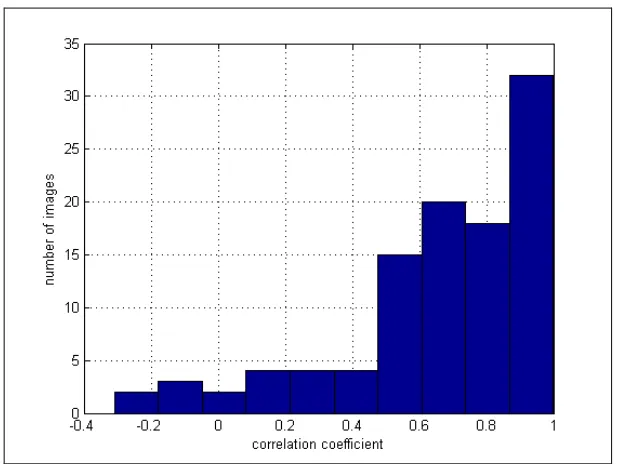
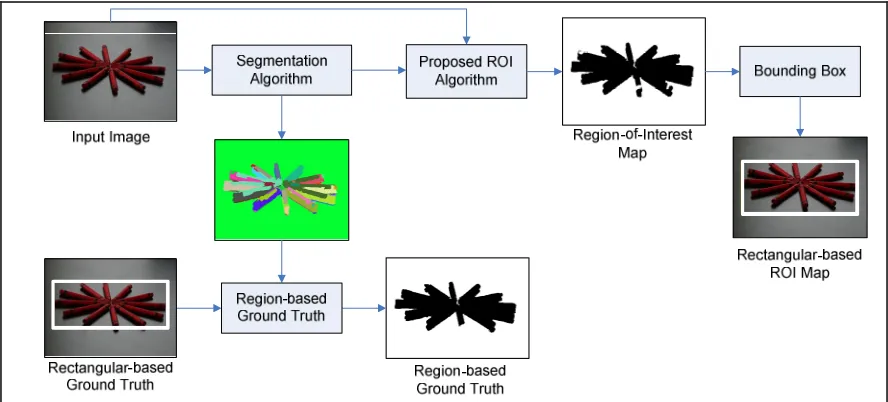
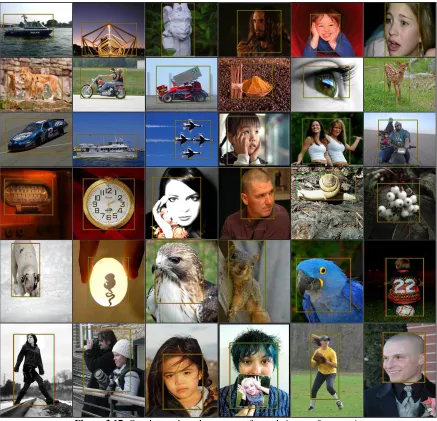
![Figure 3.10: Results obtained using the proposed algorithm; (a) Original image from Berkeley dataset [2], (b) segmentation map (pseudocolor), (c) ground-truth shown in black, (d) region ranking map from Jaber et al](https://thumb-us.123doks.com/thumbv2/123dok_us/111625.10542/46.612.79.536.87.634/results-obtained-proposed-algorithm-original-berkeley-segmentation-pseudocolor.webp)
![Figure 3.16: Comparison with Liu et al. [45] using image set truth, (b) segmentation map (pseudocolor), (c) region-based ground-truth shown in black, (d) rectangular-based ROI B; (a) Original image with rectangular-based ground-from the algorithm in [45],](https://thumb-us.123doks.com/thumbv2/123dok_us/111625.10542/56.612.82.534.68.658/figure-comparison-segmentation-pseudocolor-rectangular-original-rectangular-algorithm.webp)
![Figure 4.1: Categorization of evaluation methods [28]](https://thumb-us.123doks.com/thumbv2/123dok_us/111625.10542/59.612.211.400.416.582/figure-categorization-of-evaluation-methods.webp)
