
From genes to ecosystems: patterns, processes and consequences of declining biodiversity in coral reef fish communities
160
0
0
Full text
(2) FROM GENES TO ECOSYSTEMS: PATTERNS, PROCESSES AND CONSEQUENCES OF DECLINING BIODIVERSITY IN. CORAL REEF FISH COMMUNITIES. Thesis submitted by Vanessa Messmer, BSc (Hons) QLD In May 2010. for the degree of Doctor of Philosophy within the School of Marine and Tropical Biology James Cook University. and. within the École doctorale Systèmes Intégrés, Environnement et Biodiversité Specialty: Ecology / Population Genetics École Pratique des Hautes Études.
(3)
(4) DU GÈNE À L’ECOSYSTÈME: TENDANCES, PROCESSUS ET CONSÉQUENCES DU DÉCLIN DE LA BIODIVERSITÉ DANS LES COMMUNAUTÉS DE POISSONS DES RÉCIFS CORALLIENS. Thèse soumise par Vanessa Messmer, BSc (Hons) QLD en mai 2010. Thèse pour l’obtention du grade de docteur en Écologie de la School of Marine and Tropical Biology James Cook University. et. de l’École doctorale Systèmes Intégrés, Environnement et Biodiversité Spécialité: Écologie / Génétique des Populations École Pratique des Hautes Études.
(5)
(6) STATEMENT OF ACCESS. I, the undersigned, the author of this thesis, understand that James Cook University will make this thesis available for use within the University Library and, via the Australian Digital Theses network, for use elsewhere. I understand that, as an unpublished work, a thesis has significant protection under the Copyright Act and I do not wish to place any further restriction to access on this work.. ___________________________. _________________. Signature. Date. i.
(7) ii.
(8) STATEMENT ON SOURCES DECLARATION. I declare that this thesis is my own work and has been submitted in agreement with a signed cotutelle convention between James Cook University and the École Pratique des Hautes Études (Perpignan, France). Information derived from the published or unpublished work of others has been acknowledged in the text and a list of references is given.. ___________________________. _________________. Signature. Date. iii.
(9) iv.
(10) ELECTRONIC COPY. I, the undersigned, the author of this work, declare that the electronic copy of this thesis provided to the James Cook University Library, is an accurate copy of the print thesis submitted, within the limits of the technology available.. ___________________________. _________________. Signature. Date. v.
(11) vi.
(12) STATEMENT OF CONTRIBUTION OF OTHERS. This project was funded by an Ian Potter Fellowship to V Messmer to conduct field work at Lizard Island Research Station, an ARC Discovery grant to GP Jones, BIOCODE to S Planes and Graduate Research Scheme grants to V Messmer. I was supported by an Endeavour International Postgraduate Research Scholarship and a James Cook University Postgraduate Research Scholarship. The French Embassy of Australia and the Mobilité Internationale by the École Pratique des Hautes Études provided funding to travel to France as part of the Cotutelle.. vii.
(13) viii.
(14) Acknowledgements I am indebted to and would like to thank many people who have helped and supported me throughout my PhD. These include: First of all, my great supervisors Geoff Jones, Phil Munday and Serge Planes for their support, guidance and most helpful comments on manuscripts; My wonderful volunteers in the field, without whom all this work could not have happened: Karen Chong-Seng, Eric Clua, Claude Chauvet, Antoine Teitelbaum, Shawn Smith, Natalie Crawley, Kat Markey, Pablo Saenz, Mary Elisabeth Portwood, Veronique Mocellin, Marie Roman, Colin Wen, Kamal, Spencer Tang-Smith, Jacob Johanson, Harriet Salomonson, Tzo Zen Ang, Mahonia Na Dari and Walindi staff (Martin Giru, Gerard Vima, Joe “mismin” Loga, Blasius, Michael); Howard Choat, Lynne van Herwerden, Mark Vellend and Monica Gagliano for advice, useful comments on manuscripts and encouragements; Joachim Claudet and Marcus Sheaves for advice and assistance with statistical analyses; Lyle Vail, Anne Hoggett, Alex Vail, Marianne and Lance Pearce, Renie and Snowie, Bob and Tania for their friendship and help at Lizard Island; Mahonia Na Dari and Walindi staff for making work possible in Kimbe Bay, as well as the CRIOBE staff for their help in Moorea; Gordon Bailey, Vince Pullella and Blake Hudson for IT support and fixing frustrating problems; HPC computing services for the use of super-computers and support; My numerous housemates over the 4 years Alex Anderson, Hugo Harrison, Clement Fay, Shawn Smith, Rebecca Weeks, Nick Larsen, Loic Thibaut, Tom Holmes, Rene. ix.
(15) Abesamis, Marie Roman, Condo Costello, Manue Botte, Pablo Saenz and Suzie Mills for their friendship, support, distraction, great company and fantastic cooking! My PhD cohort colleagues both in Townsville and Perpignan, in particular Andy Hoey, Naomi Gardiner, Mary Bonin, Danielle Dixson, Jean-Paul Hobbs for many discussions, distractions, encouragements and sharing the ups and downs of a PhD; Fred Rosa, William Nonog for giving me the energy to go on; My parents, Martine and Elmar for always believing in me and supporting me throughout the years; My many wonderful friends scattered around the world, which I need to apologise to for not spending enough time with them or even just writing to over the last few years…. x.
(16) General Abstract _____________________________________________________________________ Halting the global decline in biodiversity is one of the greatest challenges of the 21st century. Biodiversity is being lost at every hierarchical level of biological organisation, from ecosystems to communities to species to populations and to genes. Declining diversity at any one of these levels may have serious implications for other levels of biodiversity, either above or below it in the hierarchy. However, the common factors determining local biodiversity and the functional relationships between the different levels of biodiversity are poorly understood. This thesis explores selected relationships between different levels of diversity and the potential consequences of diversity loss for fishes in coral reef ecosystems. Specifically, the four chapters of this thesis addressed the following questions: (1) How does coral habitat diversity and composition affect the diversity, abundance and structure of fish communities? (2) How does a decline in fish diversity affect the productivity of coral reef fish communities? (3) What effect does the loss of fish diversity have on the overall abundance of coral reef fish species? (4) What is the relationship between species diversity and genetic diversity in coral reef fish? Coral reef health is declining worldwide, with reductions in coral cover, habitat structural complexity and coral species richness commonly reported. While loss of coral cover and habitat structural complexity have been shown to have significant effects on the diversity and abundance of fish communities, the consequences of coral diversity loss on the diversity and composition of reef fish assemblages is largely unknown. Chapter 2 describes the outcomes of manipulative experiments designed to test how coral diversity and species composition affect local fish diversity, abundance and community structure. Parallel experiments were conducted at 2 geographic locations (Kimbe Bay, PNG and Lizard Is, Australia) differing in regional species composition to identify common local processes. Replicate patch reefs of the same size and coral cover were constructed to provide two comparisons: (1) Patch reefs with three different levels of coral diversity (one, three and six species) tested the effects of coral diversity on reef fish biodiversity. (2) Single-species patch reefs made from each of the six coral species were used to test the effects of coral identity on reef fish biodiversity. Fish were allowed to colonise the patch reefs over a 12-month period, with abundance and diversity recorded at regular intervals. Fish species richness increased with increasing coral. xi.
(17) species richness at both locations, although results were only significant for Kimbe Bay. Evenness in fish also tended to increase on patch reefs with higher coral diversity, but overall abundance was little affected by coral species richness. Some single coral treatments also had similar levels of fish diversity and abundance compared to the higher coral diversity treatments. At both geographic locations, the presence of particular coral species, rather than the diversity of coral species per se, appears to be critical in promoting high local fish diversity. Multivariate analyses illustrated that the six coral species used at each location supported very different fish communities, indicating that most coral reef fish species distinguish coral habitat at the level of coral species. Following from this, the medium and high coral diversity treatments were colonised by fish assemblages that represented a combination of the fish communities inhabiting the constituent coral species. These findings highlight the importance of coral species in explaining local reef fish biodiversity, and indicate that the loss of key coral species will have a significant negative impact on reef fish biodiversity. Biodiversity has been hypothesised to have a positive impact on the productivity of biological assemblages, because niche complementarity and facilitation among the constituent species can result in more efficient use of resources. However, these conclusions are based almost entirely on studies with plant communities, and the relationship between diversity and productivity at higher trophic levels is largely unknown, especially in the marine environment. In Chapter 3, a manipulative field experiment designed to test the effects of species richness and species identity on biomass accumulation in a reef fish assemblage at Lizard Island is described. Thirty juveniles belonging to three planktivorous damselfish species (Pomacentridae) were released onto each patch reef according to three different levels of fish species richness (1, 2 and 3 species) and seven combinations of fish species. Accumulation of biomass was recorded after 18 days. Species richness had no effect on the percent increase in biomass (weight) in this assemblage. However, the percent increase in biomass differed among fish species and among the different combinations of species. Patterns of biomass were best explained by species-specific differences in growth, and differences in the intensity of both intra- and interspecific competition. Niche complementarity and facilitation do not appear to be important drivers of productivity within this guild of planktivorous fishes. As a result, overall productivity may be resilient to declining reef fish biodiversity, except for the loss of fast growing fish species.. xii.
(18) The overall abundance of individuals in a community may be resilient to declining biodiversity if the loss of some species results in an increase in abundance of surviving species (so-called “density compensation”). However, total density may increase with increasing species richness in unsaturated communities, which can be explained by complementarity, facilitation and / or a sampling effect. Chapter 4 provides the first experimental test of how changes in fish species richness affect patterns of abundance in a coral reef fish community. Species diversity in recruiting damselfish was manipulated on experimental patch reefs to two, four, six and eight species over a period of 10 weeks. Under a density compensation model, different treatments were predicted to reach the same total densities, and densities of individual species should decline with increasing diversity. These hypotheses were not supported. Overall density increased significantly with increasing species richness and individual species densities exhibited little variation with changing species diversity. The absence of density compensation suggests that these communities do not reach saturation over 10 weeks, despite an upper limit in species richness and in some species, individual species abundances, appears to have been reached. Results suggest that the progressive loss of species in reef fish assemblages due to habitat loss and climate change will lead to an overall decline in the abundance of reef fishes, which in turn may disrupt their role in coral reef ecosystems. Understanding the relationship between genetic diversity and species diversity is critical for developing contemporary strategies for biodiversity conservation. While concordant large-scale clines in genetic and species diversity have been described for terrestrial organisms, whether or not these parameters co-vary in marine species is largely unknown. In Chapter 5, patterns of genetic diversity and composition were examined for 11 reef fish species (from 5 families) sampled at 3 locations across the Pacific Ocean species diversity gradient, from high diversity on the Great Barrier Reef, Australia (~1600 species), intermediate in New Caledonia (~1400 species), to low diversity in French Polynesia (~800 species). The combined genetic diversity for all 11 species paralleled the decline in species diversity from the West to East, with French Polynesia exhibiting lowest total haplotype and nucleotide diversity. Haplotype diversity consistently declined towards French Polynesia in all species and nucleotide diversity declined in the majority of species. Coinciding with reduced genetic diversity, the population of most species in French Polynesia also exhibited significant genetic. xiii.
(19) differentiation from the Great Barrier Reef and New Caledonia locations. The location and time of species origin, vicariance events, reduced gene flow and increasing isolation, as well as decreasing habitat area from the West to the East Pacific are all likely to have contributed to the positive correlation between genetic and species diversity across the Pacific Ocean, with isolation and habitat area likely to be most influential. The congruence between species and genetic diversity, and the large-scale patterns in species and genetic composition, suggest conservation strategies applied at one level may act as a surrogate for the other. This thesis is an important step in developing a more comprehensive understanding of the relationships between different levels of biodiversity on coral reefs. The results will be important in predicting the likely impacts that diversity loss at any one level will have on other levels within the ecosystem. The connections between different levels of diversity have been found to be strong in some cases, but not others, and to be causally related in some cases, but not others. The study has highlighted the strong causal link between coral and fish species biodiversity, and a complex relationship between fish species and genetic diversity. In the future, these links will be important components of integrated understanding of the consequences of declining biodiversity in coral reef ecosystems.. xiv.
(20) Résumé général _____________________________________________________________________ Freiner la baisse mondiale de la biodiversité est l'un des plus grands défis du 21ème siècle. La biodiversité décroit à tous les niveaux hiérarchiques de l'organisation biologique, des écosystèmes aux communautés aux espèces aux populations et aux gènes. Le déclin de la diversité pour l'un de ces niveaux peut avoir de graves conséquences pour les autres strates de la biodiversité, que ce soit au dessus ou en dessous dans la hiérarchie. Cependant, les facteurs communs qui déterminent la biodiversité locale et les relations fonctionnelles entre les différents niveaux de biodiversité sont mal comprises. Ce travail de thèse explore certaines relations entre différents niveaux de diversité et les conséquences potentielles de la perte de diversité chez les poissons dans les écosystèmes de récifs coralliens. Plus précisément, les quatre chapitres de cette thèse ont abordé les questions suivantes: (1) Comment la diversité et la composition des habitats coralliens influent sur la diversité, l'abondance et la structure des communautés de poissons ; (2) Comment un déclin de la diversité des poissons affecte la productivité des communautés de poissons récifaux coralliens ; (3) Quels sont les effets de la perte de diversité de poissons sur l'abondance globale des espèces de poissons récifaux coralliens ; (4) Quelle est la relation entre diversité spécifique et diversité génétique dans le contexte des poissons récifaux? La santé des récifs coralliens est menacée dans le monde entier, avec des réductions de la couverture corallienne, de la complexité structurale de l'habitat et de la richesse en espèces de coraux qui sont fréquemment rapportées. Bien qu’il ait été largement démontré que la perte de la couverture corallienne et de la complexité structurelle de l'habitat a des effets significatifs sur la diversité et l'abondance des communautés de poissons, les conséquences de l'appauvrissement de la diversité des coraux sur la diversité et la composition des peuplements de poissons des récifs demeurent largement inconnue. Le chapitre 2 décrit les résultats de manipulations expérimentales visant à tester comment la diversité et la composition corallienne affectent les assemblages locaux de poissons en termes de diversité, d'abondance et de structure des communautés. Des expériences parallèles ont été menées sur 2 sites géographiques (Kimbe Bay, PNG et Lizard Island, Australie) avec des compositions régionales des espèces différentes afin d'identifier des processus locaux en commun. Des réplicas de. xv.
(21) récifs expérimentaux de même taille et de même couverture corallienne ont été construits pour fournir deux comparaisons: (1) Des récifs de trois différents niveaux de diversité corallienne (un, trois et six espèces) ont testé l'influence de la diversité des coraux sur la biodiversité des poissons récifaux ; (2) Des récifs à espèce unique fabriqués à partir de chacune des six espèces de corail ont été utilisés pour tester la variabilité de la biodiversité des poissons récifaux dans un contexte d’habitat corallien unique. Les poissons ont colonisés les récifs sur une période de 12 mois et l'abondance et la diversité ont été reportées (par comptages visuels) à intervalles réguliers. La richesse spécifique des poissons augmentait avec la richesse spécifique des coraux aux deux endroits, mais les résultats n’étaient significatifs que pour Kimbe Bay. L’uniformité des espèces de poissons avait aussi tendance à augmenter sur les récifs de diversité corallienne plus élevée, mais l’abondance globale a été peu affectée par la richesse spécifique des coraux. Cependant, certains traitements avec une seule espèce de corail avaient des niveaux similaires de diversité de poisson. Dans les deux zones géographiques, la présence de certaines espèces de coraux, plutôt que la diversité de corail en soi, semble être particulièrement importante pour promouvoir une grande diversité locale de poissons. Les analyses multivariées ont montré que les six espèces de coraux utilisés à chaque endroit soutenaient des communautés de poissons très différentes, ce qui indique que les espèces de poissons de récifs coralliens sélectionnent l'habitat corallien principalement au niveau des espèces de coraux. Les traitements avec des diversités de coraux moyennes et hautes ont été colonisés par des assemblages de poissons qui représentent un mélange des communautés de poissons typique des espèces de corail. Ces résultats soulignent l'importance de l’espèce de corail dans l'explication de la biodiversité locale des poissons coralliens, et indiquent que la perte d'espèces de coraux aura un impact négatif significatif sur la biodiversité des poissons de récifs. La biodiversité a été présumée avoir un impact positif sur la productivité des peuplements biologiques, dans la mesure ou la complémentarité des niches et la facilitation entre espèces qui les composent peuvent conduire à une utilisation plus efficace des ressources. Cependant, ces conclusions sont presque entièrement basées sur des études sur les communautés végétales, et la relation entre la diversité et la productivité dans des niveaux trophiques supérieurs demeure largement inconnue, en particulier dans le milieu marin. Dans le chapitre 3, une expérience impliquant des. xvi.
(22) manipulations du terrain et visant à tester les effets de la richesse spécifique et de l'identité des espèces sur l'accumulation de la biomasse dans un assemblage de poissons de récif à Lizard Island est décrite. Trente juvéniles appartenant à trois espèces de poissons demoiselles planctophages (Pomacentridae) ont été libérés sur chaque récif avec trois niveaux différents de richesse d’espèces de poissons (1, 2 et 3 espèces) et sept combinaisons d'espèces de poissons. L'accumulation de la biomasse a été enregistrée après 18 jours. La richesse spécifique n'a eu aucun effet sur l'augmentation en pourcentage de biomasse (poids) dans cet assemblage. Toutefois, l'augmentation en pourcentage de biomasse différait entre les espèces de poissons et les différentes combinaisons d'espèces. Les tendances de la biomasse s’expliquent principalement par des différences spécifiques en termes de croissance, et des différences dans l'intensité de compétition intra- et interspécifique. La complémentarité de niches et la facilitation ne semblent pas être des moteurs importants de la productivité globale dans cette guilde des poissons planctophages. La productivité totale semble donc résiliente au déclin de la biodiversité des poissons de récif, à l'exception de la perte d’espèces de poissons de croissance rapide. L'abondance globale d’individus dans une communauté peut être résiliente à la baisse de biodiversité si la perte de certaines espèces se traduit par une augmentation de l'abondance des espèces survivantes (on parle alors de "compensation de densité"). Cependant, la densité totale peut augmenter en même temps qu’une augmentation de la richesse spécifique dans les communautés non saturés, ce qui peut s'expliquer par la complémentarité, la facilitation et / ou un effet d'échantillonnage. Le chapitre 4 présente le premier test expérimental pour évaluer la façon dont des changements de richesse spécifique de poissons affectent les tendances d'abondance dans une communauté de poissons des récifs coralliens. La diversité spécifique dans les recrues de poissons demoiselles (Pomacentridae) a été manipulé sur des récifs expérimentaux avec 2, 4, 6 et 8 espèces sur une période de 10 semaines. Sous un modèle de compensation de densité, différents traitements ont été simulés afin d’atteindre les mêmes densités totales, alors que la densité des espèces à proprement parler devraient diminuer avec l'accroissement de la diversité. Ces hypothèses n'ont pas été confirmées. La densité globale a augmenté de manière significative avec l’augmentation de la richesse spécifique alors que la densité des espèces affichait peu de variation avec le changement de la diversité spécifique. L'absence de compensation des densités suggère. xvii.
(23) que les modèles d'abondance dans cette communauté ne sont pas dirigés par de la compétition interspécifique. Les résultats suggèrent que la perte progressive des espèces dans les peuplements de poissons des récifs en raison de la perte d'habitat et le changement climatique entraînera une baisse globale de l'abondance des poissons de récif, ce qui peut perturber leur rôle dans les écosystèmes des récifs coralliens. Comprendre la relation entre la diversité génétique et la diversité des espèces est essentiel au développement de stratégies contemporaines de conservation de la biodiversité. Bien que des clines concordantes entre la diversité génétique et la diversité spécifique, à grande échelle, ont été décrits pour les organismes terrestres, on ne peut pas dire si ces paramètres co-varient ou non en milieu marin. Dans le chapitre 5, les variations de diversité et de composition génétique ont été étudiés pour 11 espèces de poissons coralliens (appartenant à 5 familles) échantillonnés à 3 sites dans l'océan Pacifique le long d’un gradient de diversité spécifique, caractérisé par une grande diversité sur la Grande Barrière de corail, en Australie (~ 1600 espèces), une diversité intermédiaire en Nouvelle-Calédonie (~ 1400 espèces), et une faible diversité en Polynésie française (~ 800 espèces). La diversité génétique combinée pour les 11 espèces suit le déclin de la diversité spécifique de l'Ouest vers l'Est, avec la Polynésie française présentant les plus faibles valeurs en termes de diversité nucléotidique et haplotypique. La diversité haplotypique diminue de façon constante de la Grande Barrière vers la Polynésie française pour toutes les espèces et la diversité nucléotidique a diminué dans la majorité des espèces. Coïncidant avec une diversité génétique réduite, la population en Polynésie française dans la plupart des espèces a également montré une différenciation génétique significative par rapport aux populations de la Grande Barrière de Corail et de la Nouvelle-Calédonie. Le lieu et le moment de l’origine des espèces, des événements de vicariance, de flux de gènes et d'un isolement croissant, ainsi que la diminution des zones d'habitat du Pacifique Ouest à Est sont tous susceptibles d'avoir contribué à la corrélation positive entre la diversité génétique et spécifique à travers l'océan Pacifique, avec l’isolation et la zone d’habitat susceptibles d’être les plus influents. La concordance entre les diversités génétique et spécifique, et les distributions, à grande échelle des compositions spécifique et génétique, suggèrent que des stratégies de conservation visant à maximiser la protection des espèces peut également se traduire par une préservation de la diversité génétique.. xviii.
(24) Cette thèse est une étape importante dans l'élaboration d'une compréhension plus complète des relations entre les différents niveaux de la biodiversité dans les récifs coralliens. Les résultats sont importants pour prédire l'impact probable que la perte de diversité, à n'importe quel niveau, aura sur d'autres niveaux au sein de l'écosystème. Les connexions entre les différents niveaux de la diversité sont significatives et fortes dans certains cas, mais pas dans d'autres, pour être parfois sous la perspective de relation causale dans certains cas, mais pas dans d'autres. L'étude a mis en évidence le lien solide de causalité entre la biodiversité d’espèces de corail et de poisson, et une relation complexe entre la diversité génétique et spécifique de poissons. À l'avenir, ces liens seront des éléments importants pour la compréhension intégrée des conséquences du déclin de la biodiversité dans les écosystèmes des récifs coralliens.. xix.
(25) xx.
(26) Table of contents. 1. CHAPTER 1 - GENERAL INTRODUCTION. 1. 2. CHAPTER 2. 9. HABITAT BIODIVERSITY AS A DETERMINANT OF LOCAL FISH COMMUNITY STRUCTURE ON CORAL REEFS. 9. 2.1 A BSTRACT. 9. 2.2 I NTRODUCTION. 10. 2.3 M ETHODS. 13. 2.3.1 Experimental design and protocols. 13. 2.3.2 Statistical analyses. 15. 2.4 R ESULTS. 17. 2.4.1 Regional difference in local species composition. 17. 2.4.2 Effects of coral species richness on fish species richness and abundance. 17. 2.4.3 Effects of coral species composition on fish species richness and abundance 20 2.4.4 Effects of coral species on composition of fish community. 24. 2.5 D ISCUSSION. 30. 3. 35. CHAPTER 3. EXPERIMENTAL EVALUATION OF DIVERSITY-PRODUCTIVITY RELATIONSHIPS IN CORAL REEF FISH ASSEMBLAGES. 35. 3.1 A BSTRACT. 35. 3.2 I NTRODUCTION. 36. 3.3 M ETHODS. 39. 3.3.1 Patch reef experiment. 39. 3.3.2 Interaction observations. 41. 3.4 R ESULTS. 41. xxi.
(27) 3.4.1 Patch reef experiment (Table 3.2). 41. 3.4.2 Interaction observations (Table 3.3). 45. 3.5 D ISCUSSION. 48. 4. 53. CHAPTER 4:. NO EVIDENCE FOR DENSITY COMPENSATION IN PATCH REEF ASSEMBLAGES OF CORAL REEF FISHES. 53. 4.1 A BSTRACT. 53. 4.2 I NTRODUCTION. 54. 4.3 M ETHODS. 57. 4.3.1 Study group. 57. 4.3.2 Experimental design. 57. 4.3.3 Analyses. 59. 4.4 R ESULTS. 60. 4.4.1 Diversity-abundance relationships. 60. 4.4.2 Colonization of reefs over time. 63. 4.5 D ISCUSSION. 66. 5. 71. CHAPTER 5:. CONCORDANCE BETWEEN GENETIC AND SPECIES DIVERSITY IN CORAL REEF FISHES ACROSS THE PACIFIC OCEAN BIODIVERSITY GRADIENT 71 5.1 A BSTRACT. 71. 5.2 I NTRODUCTION. 72. 5.3. 75. M ETHODS. 5.3.1 Study species and locations. 75. 5.3.2 Laboratory procedures. 78. 5.3.3 Estimates of genetic diversity. 78. 5.3.4 Population genetic analyses. 79. 5.3.5 Historical demography. 80. 5.4 R ESULTS. 81. xxii.
(28) 5.4.1 Species-genetic diversity correlation. 81. 5.4.2 Population genetic differentiation. 83. 5.4.3 Historical demography. 86. 5.5 D ISCUSSION. 88. 6. CHAPTER 6 - GENERAL CONCLUSIONS. 95. 7. REFERENCE LIST. 101. xxiii.
(29) xxiv.
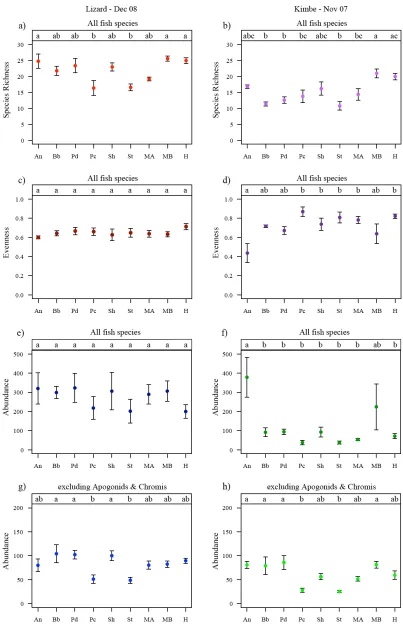
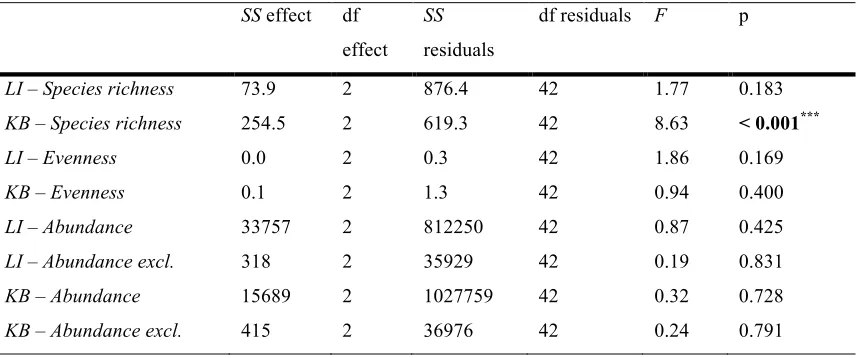
(30) List of Tables ______________________________________________________________________ Table 2.1: List of the coral species and number of corals used in each treatment. Abbreviations used in the text and figures are also specified……………………….... 15 Table 2.2: Summary of the one-way ANOVA results for means of species richness (Figure 2.3a, 2.3b), Shannon Evenness Index (Figure 2.3c, 2.3d) total abundance (Figure 2.3e, 2.3f) and total abundance excluding apogonids and Chromis viridis (Figure 2.3g, 2.3h), for Lizard Island and Kimbe Bay respectively by level of coral species richness (1, 3 and 6 species).………………………………………………..... 23 Table 2.3: Summary of one-way ANOVA results for means of species richness (Figure 2.4a, 2.4b), Shannon Evenness Index (Figure 2.4c, 2.4d) total abundance (Figure 2.4e, 2.4f) and total abundance excluding apogonids and Chromis viridis (Figure 2.4g, 2.4h), for Lizard Island and Kimbe Bay respectively by treatment………………………….. 23 Table 2.4: Species used in the canonical analysis of principal coordinates that had correlations with either ordination axis exceeding 0.2. Correlations over 0.5 are highlighted in bold…………………………………………………………………….. 26 Table 3.1: List of fish species and number of species used in each treatment. Abbreviations used in the text and figures are also specified……………………….... 40 Table 3.2: Summary of one-way ANOVA results for mean differences in percent increase in biomass for species combined by diversity level (Figure 3.2a) and treatment (Figure 3.2b), and for each individual species by diversity level (Figure 3.3a to 3.3c)…………………………………………………………………………...………. 45 Table 3.3: Summary of one-way ANOVA results for fish observations (Figure 3.4): (a) Mean number of intra-specific aggressions per fish for each species in the single-species treatments. (b-d) Mean number of intra- and inter-specific aggressions per fish for each species in the two-species treatments (in order: AM, AN and MN). (e) Mean number of. xxv.
(31) intra-specific aggressions, inter-specific aggressor and victim for each species in the high diversity treatment. (f) Mean number of overall attacks per fish per treatment…………………………………………………………………………...….. 47 Table 4.1: List of fish species and number of species used in each treatment. Abbreviations used in the text and figures are also specified……………….……...… 58 Table 4.2: Summary of the one-way ANOVA results of means for total density and average species density including all species and excluding Chromis viridis (Figure 4.2), as well as for densities of each individual species (Figure 4.3)…………………. 63 Table 5.1: Life history traits for each species, including reproductive mode (demersal or pelagic spawners) and habitat use……..…………………………………………...…. 76 Table 5.2: Number of individuals collected per species from the Great Barrier Reef, Australia (GBR), Noumea in New Caledonia and Moorea in French Polynesia. Sequence lengths are specified for each species. The best fitting evolutionary model and gamma corrections were estimated in jModeltest……………………………..…….... 77 Table 5.3: AMOVA ΦST values and pairwise ΦST values. C.atripectoralis all and C. viridis all include the deeply divergent lineages. C. atripectoralis w/out and C. viridis w/out do not include the deeply divergent lineages. * p<0.05; ** p<0.01; *** p<0.00…..... 84 Table 5.4: Estimated population size theta (Θ=Neµ; Ne: effective population size, µ: mutation rate per site per generation) and migration rates M (M=m/µ; m: immigration rate) between locations based on coalescent analyses in MIGRATE. Population size estimates not quite converging are highlighted in bold, whereas Θ > 1 are populations with non-converging results. Direction of migration rate estimates between any two populations is indicated by arrows between the 2 location abbreviations: LI = Lizard Island, NC = Noumea, New Caledonia, FP = Moorea, French Polynesia………….… 87. xxvi.
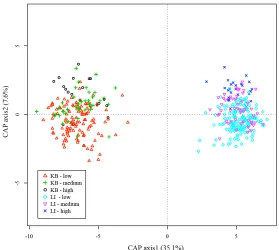
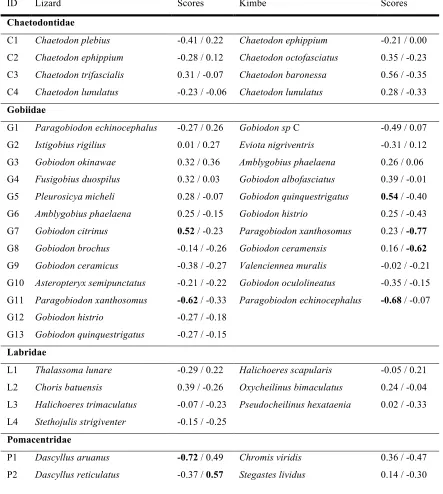
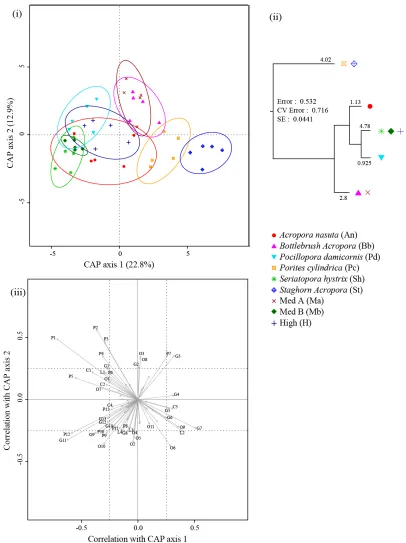
(32) List of Figures _____________________________________________________________________ Figure 2.1: Map of the South-West Pacific showing the location of the two experimental sites Schumann Island in Kimbe Bay (Papua New Guinea) and Lizard Island on the Great Barrier Reef (Australia)……………………………………...…... 13 Figure 2.2: Canonical analysis of principal coordinates ordination plot (based on BrayCurtis of log-transformed fish abundances) of fish assemblage data showing differences between sites. Each point represents a separate patch reef………………………..….. 18 Figure 2.3: Effects of coral species richness on fish species richness and abundance: mean (± SE) fish species richness (a,b), Shannon Evenness Index (c,d) total fish abundance (e,f) and total fish abundance excluding apogonids and Chromis viridis (g,h), for each level of coral diversity (low (1 species), medium (3 species), high (6 species)) for Lizard Island and Kimbe Bay respectively (Table 2.2). Letters indicate significantly different treatments identified by Tukey’s HSD post hoc-tests………………………. 19 Figure 2.4: Effects of coral species composition on fish species richness and abundance. Mean (± SE) fish species richness (a,b), Shannon Evenness Index (c,d) total fish abundance (e,f) and total fish abundance excluding apogonids and Chromis viridis (g,h), for each treatment for Lizard Island and Kimbe Bay respectively (Table 2.2). Letters above the graphs show the results of significantly different treatments identified by Tukey’s HSD post hoc-tests…………………………….…………………...…….. 22 Figure 2.5: Lizard Island – December 08, (i) Canonical analysis of principal coordinates (CAP) ordination plot (Bray-Curtis) of fish assemblage data showing overlap between treatments. Each point represents a separate patch reef; (ii) Multivariate Regression Tree (MRT) constructed on a Bray-Curtis dissimilarity matrix of log-transformed fish abundance data, using treatments as groupings; (iii) species scores for CAP plots………………………………………………………………...… 28. xxvii.
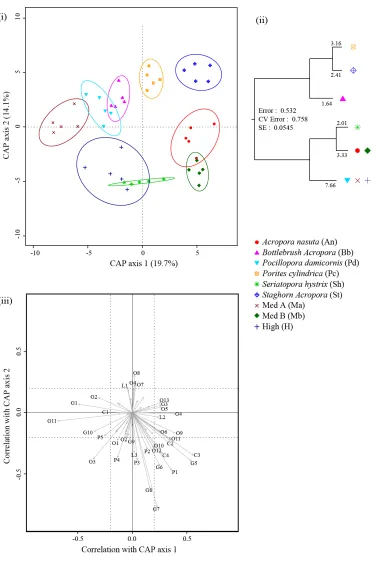
(33) Figure 2.6: Kimbe Bay – November 2007, (i) Canonical analysis of principal coordinates (CAP) ordination plot (Bray-Curtis) of fish assemblage data showing treatment effects. Each point represents a separate patch reef; (ii) Multivariate Regression Tree (MRT) constructed on a Bray-Curtis dissimilarity matrix of logtransformed fish abundance data, using treatments as groupings; (iii) species scores for CAP plots…………………………………………………………………………..….. 29 Figure 3.1: Mean percent increase in fish biomass (T2-T1)/T1 over 18 days per (a) diversity level and (b) treatment (Table 3.2). Error bars represent SE…………….….. 42 Figure 3.2: Scatterplot of the percent increase in biomass per patch reef against density with linear regression line…………………………………………………………….. 43 Figure 3.3: Mean percent increase in fish biomass (T2-T1)/T1 for each species over 18 days per diversity level: (a) Pomacentrus amboinensis (b) P. moluccensis and (c) P. nagasakiensis (Table 3.2). Error bars represent SE. Letters above the graphs show the results of significantly different treatments identified by Tukey’s HSD post hoctests……………………………………………………………………………...…..… 44 Figure 3.4: (a) Mean number of intra-specific aggressions per fish for each species in the single-species treatments. (b-d) Mean number of intra- and inter-specific aggressions per fish for each species in the two-species treatments (in order: AM, AN and MN). (e) Mean number of intra-specific aggressions, inter-specific aggressor and victim for each species in the high diversity treatment. (f) Mean number of overall attacks per fish per treatment (Table 3.3). All error bars represent SE. Letters above the graphs show the results of significantly different treatments identified by Tukey’s HSD post hoc-tests. Connecting lines specify which values were compared………………. 46 Figure 4.1: Predicted a) total density and b) average density for species, under three different scenarios: Blue: density compensation; green: no interaction between species; red: facilitation……………………..……………………………………………….…. 57. xxviii.
(34) Figure 4.2: (a) Overall mean number of individuals per patch reef, (b) overall mean number of individuals excluding Chromis viridis per patch reef, (c) overall mean number of individuals per species per patch reef and (d) overall mean number of individuals per species excluding Chromis viridis per patch reef characterised by two, four, six and eight damselfish (Table 4.2). Letters above the graph show the results of significantly different treatments identified by Tukey’s HSD post hoc-tests……….... 61 Figure 4.3: Mean population density for each species in the two, four, six and eight damselfish species treatments: (a) Pomacentrus amboinensis, (b) P. bankanensis, (c) P.moluccensis, (d) Dascyllus aruanus, (e) P. nagasakiensis, (f) D. reticulatus……… 62 Figure 4.4: (a) mean density per treatment over time. In “ALL b”, Chromis viridis is removed. (b) mean species richness per treatment over time. See Table 4.1 for treatment abbreviations………………………………………….….……………………………. 64 Figure 4.5: Cumulative number of individuals for each species in the “All” treatment……………………………………………………….……………………… 65 Figure 5.1: Map of the South Pacific Ocean. Sampling locations are indicated by stars: Lizard Island, Great Barrier Reef; Noumea, New Caledonia; Moorea, French Polynesia………………………………………………………………………………. 77 Figure 5.2: Sums of nucleotide (blue solid lines) and haplotype diversities (red dotted lines) for all species combined (divergent lineages in both Chromis species removed due to potentially different species)………………………………………………...… 81 Figure 5.3: Nucleotide and haplotype diversities for each species: a) C. atripectoralis, b) C. viridis, c) G. quinquestrigatus (note difference in scale for nucleotide diversity), d) P. arcatus, e) P.forsteri, f) C. citrinellus, g) C. lunulatus, h) C. trifascialis, i) C. vagabundus, j) Z. scopas, k) Z. veliferum. Blue solid lines stand for nucleotide diversities, red dotted lines for haplotype diversity…………………………………… 82. xxix.
(35) Figure 5.4: Proportions of species displaying highest, medium and lowest values of nucleotide diversity for each location…………………….…………………………… 83 Figure 5.5: Minimum spanning networks (MSN), haplotype diversity (h) and nuceotide diversity (p) for a) Chromis atripectoralis; b) Chromis viridis; c) Gobiodon quinquestrigatus; d) Paracirrhites forsteri; e) Paracirrhites arcatus; f) Chaetodon citrinellus; g) Chaetodon vagabundus; h) Chaetodon lunulatus; i) Chaetodon trifascialis; j) Zebrasoma scopas and k) Zebrasoma veliferum……………………..... 85 Figure 5.6: Mismatch distributions, observed distributions (green bars), simulated distributions (blue line). Mismatch distributions for C. atripectoralis and C. viridis are displayed including and excluding the highly divergent lineages……………...…...… 88. xxx.
(36) 1 Chapter 1 - General Introduction _____________________________________________________________________. Anthropogenic impacts and climate change are threatening all ecological systems of our planet, with consequences such as biodiversity loss and disruptions to ecosystem processes (Soule 1991; Thomas et al. 2004; Lovejoy & Hannah 2005; Munday et al. 2008; Rockstrom et al. 2009). Few areas remain unaffected by human influence and nearly half of our earth’s surface is strongly impacted by multiple drivers (Vitousek et al. 1997; Halpern et al. 2008). In particular human-induced habitat loss and degradation have already resulted in hundreds of extinctions in the terrestrial environment over the last century (Ehrlich 1995; Pimm et al. 1995; Vitousek et al. 1997; Sala et al. 2000; Fahrig 2001) and this trend is expected to accelerate with rapid climate change (Thomas et al 2004). Growing concern about the increasing threats to biodiversity has stimulated numerous studies, but the effects of biodiversity loss on ecosystem functioning still remain poorly understood and widely debated (Chapin et al. 2000; Loreau et al. 2001; Hooper et al. 2005; Bracken et al. 2008). Increasing evidence suggests that biodiversity loss is likely to extend to declining ecosystem functions, such as productivity, stability and recovery potential (Chapin et al. 2000; Fridley 2001; Loreau et al. 2001; Cameron 2002; Hooper et al. 2005; Balvanera et al. 2006; Duffy et al. 2007). A recent meta-analysis of experimental studies suggests that species loss often affects the functioning of a wide variety of organisms and ecosystems, but the extent of these effects is ultimately determined by which species are lost (Cardinale et al. 2006). Most studies considering the consequences of biodiversity loss address species diversity, although biodiversity can be defined and measured at many different levels, from genes and populations, to species, to communities and ultimately ecosystems (Soule 1991). Ecological studies and conservation actions usually target a particular level of biodiversity, despite the potential that the different levels of diversity are inextricably linked (Soule 1991). Genetic diversity ensures the viability and persistence of populations, different populations increase the chance of survival of a species;. 1.
(37) species influence the stability and productivity of a community, which in turn ensure ecosystem services. In the other direction, processes that primarily degrade ecosystems may have cascading effects on constituent species, populations and their genetic composition (Franklin 1993; Tracy & Brussard 1994). Although there has been an ongoing debate about the appropriate level to target conservation actions (Franklin 1993; Tracy & Brussard 1994; Possingham et al. 2002; Taylor et al. 2005; Laikre 2010), our understanding of the relationships between any two levels of diversity, as well as how diversity loss on one level affects another, is extremely limited. One of the primary examples of links between two levels of biodiversity is the relationship between communities of habitat-forming organisms and assemblages that are dependent upon these habitats (Bell & Galzin 1984; Jones & Andrew 1990; Chabanet et al. 1997; Tews et al. 2004; Baldi 2008; Qian et al. 2009). Habitat loss, degradation and fragmentation have been shown to have detrimental effects on inhabiting communities in terms of diversity and abundance (Ehrlich 1995; Vitousek et al. 1997; Fahrig 2001), but the effects of declining habitat biodiversity are less well known. A diverse habitat provides a wider range of resources, such as food and shelter, and is therefore assumed to offer more niches and diverse ways of exploiting environmental resources (Tews et al. 2004; Kadmon & Allouche 2007). As a result, species diversity is expected to increase through niche differentiation amongst inhabiting species. Positive effects of plant diversity on the faunal communities that inhabit them have been described for a number of faunal groups, particularly mammals (reviewed in (Tews et al. 2004)). It is therefore expected that declining habitat diversity will lead to a decline in the biodiversity of associated faunal communities, and specialised species associated with a narrow range of habitats will be vulnerable to extinction (McKinney 1997). Species diversity loss may also affect ecosystem functioning in terms of productivity, as it has been hypothesised that productivity increases as a function of species diversity (Naeem et al. 1994; Naeem et al. 1996; Tilman et al. 1996; Tilman et al. 1997a; Tilman et al. 1997b; Hector et al. 1999). The positive effects of diversity on productivity are mostly attributed to niche differentiation, facilitation and a “sampling effect” (Naeem et al. 1994; Hooper 1998; Fridley 2001; Loreau et al. 2001; Cardinale et. 2.
(38) al. 2007). A diverse community may exploit available resources more efficiently through niche specialisation and complementarity (MacArthur 1970; Tilman et al. 1997b; Chesson 2000; Finke & Snyder 2008). In communities characterised by positive interactions among species, the presence of certain species may also facilitate the establishment of others (Hector et al. 1999; Loreau & Hector 2001; Mulder et al. 2001; Callaway 2007). However, it has also been argued that the diversity-productivity relationship arises simply because diverse communities are more likely to include a highly productive species (the “sampling effect”) (Aarssen 1997; Huston 1997; Tilman et al. 1997b). Others argue that the cause-effect interpretation should be reversed, because it is highly productive environments that support greater biodiversity (Connell & Orias 1964; Leigh 1965; Waide et al. 1999; Huston & Wolverton 2009). There are also alternative theories that predict a negative effect of species diversity on productivity through trade-offs between competitive ability and productivity (Tilman 2000). In this case, a productive species that is competitively inferior may perform better in monocultures than in diverse mixtures. Indeed, a number of studies have found that diverse assemblages are often not more productive than the most productive monoculture (Cardinale et al. 2006). Hump-shaped relationships between productivity and diversity may also be observed as competitive exclusions increase with diversity (Waide et al. 1999). The impact of biodiversity loss on productivity depends upon which theory applies to the ecosystem under investigation. Diversity loss at the species level may also impact on the abundance of remaining species. Some theories predict that a system supports a fixed density of ecologically similar species (Gonzalez & Loreau 2009). As a result, average population abundances are expected to be low in diverse systems and increase with decreasing diversity (density compensation) (MacArthur et al. 1972). This concept has recently been applied to assess if the loss of a species may be compensated for by an increase in average abundance by the remaining species (Ruesink & Srivastava 2001; Ives & Cardinale 2004; Jiang 2007; Gonzalez & Loreau 2009). Such compensatory changes in the abundance of species would have stabilising effects on ecosystem processes (Tilman et al. 1998; Tilman et al. 2006) and has been supported by some experimental evidence (Riipinen et al. 2010). However, the stabilising effects of density compensation will gradually deplete as diversity loss progresses (Ives & Cardinale 2004; Bunker et al.. 3.
(39) 2005). Evidence also suggests that overall density generally increases with species diversity and asymptotes as the system reaches saturation (Tilman 1999, 2000). Such complementarity effects suggest that diversity loss may negatively affect ecosystems by depleting the overall abundance of individuals in communities. Ecosystem stability, resilience and dynamics have been found to generally increase both with species and genetic diversity (Loreau et al. 2001; Hughes & Stachowicz 2004; Reusch et al. 2005), but whether these two levels of diversity are causally related, or are determined by the same independent processes is largely unknown (Wehenkel et al. 2006). Vellend (2005) recently proposed that the concepts and processes underlying theories of species and genetic diversity are remarkably similar and identified a number of parallel processes: 1) speciation or mutation create new alleles or species respectively, 2) drift causes random changes in the relative frequencies of alleles and species, 3) migration results in the addition of alleles to a population or species to a community and 4) selection, where environmental heterogeneity can favour particular alleles or species over others (Vellend & Geber 2005). Other important driving forces include the effects of area and isolation, which similarly affect both species and genetic diversity, as described in island biogeography theories (Vellend 2003). Causal links between the two levels of diversity may also incur through increasing species extinction risk with low genetic diversity (Frankham 2005; Laikre 2010). Large-scale clines have been observed for both levels of diversity across spatial or environmental gradients, such as altitude, latitude and depth (Rosenzweig 1995; Gaston 2000; Manel et al. 2003; Palo et al. 2003a; Giordano et al. 2007; Palma-Silva et al. 2009), but are only rarely considered together. If species and genetic diversity co-vary, management strategies that target the protection at one level will be a useful surrogate for the other. The above-mentioned theories underlying the relationships between different levels of biodiversity have been based on terrestrial environments. Links between elements of biodiversity and function in marine ecosystems are largely unknown and have seldom been investigated. Although marine extinctions appear to be few to date, dramatic declines in the extent and structure of shallow marine habitats have been widely documented (McClanahan 2002; Steneck et al. 2003). Coral reefs in particular are one of the most diverse and threatened of all marine ecosystems and their health is declining. 4.
(40) on a global scale (Hoegh-Guldberg 1999; Gardner et al. 2003; Hughes et al. 2003; Wilkinson 2004). The extent of habitat loss on coral reefs is sufficient to cause dramatic reductions in fish abundance and local extinctions of some species (Jones et al. 2004; Munday 2004b). More extinctions are expected as threats, such as climate change induced coral bleaching, overexploitation, increasing intensity and frequency of tropical storms, as well as crown of thorns outbreaks, increasingly affect coral reefs (Sala & Knowlton 2006). Despite numerous threats to marine biodiversity, the consequences of loss of species and / or genes to the marine ecosystem remain poorly understood. This thesis explored four selected relationships between different levels of diversity as well as the potential consequences of biodiversity loss for coral reef fish communities. While the processes establishing (Bellwood & Hughes 2001; Bellwood & Wainwright 2002; Mora et al. 2003) and maintaining (Bell & Galzin 1984; Sale 1991; Chabanet et al. 1997) species diversity have been well-studied and discussed, there have been almost no investigations into links between genetic diversity, species diversity and ecosystem parameters such as productivity and abundance for these diverse assemblages. The overall objective of this thesis was to combine observational and experimental approaches to evaluate relationships between different levels of diversity and to assess the potential consequences of biodiversity loss on coral reef fish assemblages. The following 4 specific questions were addressed in each chapter: (1) How does habitat biodiversity (i.e. coral species richness, identity and composition) affect the diversity, abundance and structure of fish communities? (2) Does a decline in fish diversity affect the productivity of coral reef fish communities? (3) What effect does the loss of fish diversity have on the abundance of coral reef fish species and/or the total abundance of individuals in the community? (4) Are species and genetic diversity correlated in coral reef fishes and what is the basis of this relationship? Chapter 2 assesses the effects of coral diversity and species composition on fish communities, in terms of diversity, abundance and community structure. A decline in percent coral cover has been shown to have detrimental effects on the diversity and. 5.
(41) abundance of fish communities in numerous studies (Syms & Jones 2000; McClanahan 2002; Jones et al. 2004; Munday 2004b; Graham et al. 2006; Wilson et al. 2006). However, very little is known about the effects of coral diversity loss on coral reef fish communities. Coral and fish diversity are strongly correlated across the Indian and Pacific oceans (Hughes et al. 2002), but it is unclear whether this large-scale correlation also applies to a local scale and whether or not the two factors are causally related. Corals are the primary habitat-forming organisms on coral reefs and can greatly influence the structure of reef fish communities (Luckhurst & Luckhurst 1978; Jones & Syms 1998; Öhman & Rajasuriya 1998). As a diverse coral community provides a wider range of resources, such as food and shelter, it is likely to support an equally diverse fish assemblage. Fewer coral species might therefore be expected to cause a decline in fish diversity, which in turn may have compounding effects on the overall abundance and productivity of the reef fish community. Furthermore, if different coral species support distinct fish communities, coral diversity loss may also result in loss of unique fish assemblages. The effects of local coral reef fish diversity on the productivity (increase in biomass) of reef fish assemblages were determined in Chapter 3. Diverse plant systems are generally found to be more productive through more efficient use of available resources as a result of niche differentiation and facilitation (Fridley 2001; Loreau et al. 2001; Hooper et al. 2005; Marquard et al. 2009). However, very little is known about the relationship between species diversity and productivity in the marine environment. A meta-analysis of experiments assessing the effects of biodiversity on productivity in marine plants, bacteria and plankton showed an 80% increase in primary and secondary production in diverse mixtures compared to monocultures (Worm et al. 2006). Whether diversity positively affects productivity at higher trophic levels in the marine environment or on coral reefs has never been examined. Chapter 4 addresses the potential impacts of fish diversity loss on the overall abundance of reef fish populations, specifically testing whether low species richness may be compensated for by higher average population densities. Evidence for density compensation is almost completely lacking for coral reef fishes, although a global study on the patterns of species richness and abundance in butterflyfish provided some. 6.
(42) support (Findley & Findley 2001). Overall abundance declined together with species richness with distance from the diversity centre, but not as rapidly, resulting in increasing average abundance per species (Findley & Findley 2001). On a smaller scale, limited evidence for density compensation was also found in competing surfperches and gobies, although overall abundances were higher when both species were present (Holbrook et al. 2002; Munday 2004a). If compensatory mechanisms are a common occurrence in reef fishes, the extinction risk of remaining species should be reduced and the functional role of a species group within the community is more likely to be maintained. In the last chapter (Chapter 5), I tested whether species diversity and genetic diversity were correlated in coral reef fish. Large-scale patterns in genetic diversity were assessed using molecular analyses, which were then compared to the species diversity gradient across the Pacific. Species diversity in reef organisms peaks in the East Indies Triangle and gradually declines in all directions (Rosen 1981; Bellwood & Hughes 2001; Mora et al. 2003; Reaka et al. 2008; Bellwood & Meyer 2009). Limited evidence suggests that genetic diversity may parallel the species diversity decline across the Pacific. Palumbi (1996) described reduced genetic diversity in peripheral populations compared to the centre of diversity as a result of lower population sizes and greater isolation. Briggs (1999) also suggested that genetic diversity should decline with increasing distance from the East Indies Triangle basing his arguments on species origin within the centre of diversity and gradually radiating outwards with populations becoming increasingly younger. Whether or not species and genetic diversity are positively correlated has never been specifically examined for reef fish.. 7.
(43) 8.
(44) 2 Chapter 2 HABITAT BIODIVERSITY AS A DETERMINANT OF LOCAL FISH COMMUNITY STRUCTURE ON CORAL REEFS _____________________________________________________________________. 2.1 Abstract Habitat biodiversity is expected to promote the diversity of animal communities because a greater variety of habitats increases the opportunities for coexistence of species specialised on different resources. Coral reefs, which are among the most diverse ecosystems known, are under threat from climate change and other anthropogenic stresses. Hard corals, which are the primary habitat-forming organisms for most reef-associated organisms, are especially susceptible to these threats. While declines in coral biodiversity have been documented worldwide, the consequences for the diversity and community structure of other reef-associated species is largely unknown. Here the effects of coral diversity and composition on fish diversity, abundance and community structure were investigated using manipulative field experiments. Parallel experiments were conducted at two geographic locations (Kimbe Bay, PNG and Lizard Is, Australia) differing in regional species composition to identify common local processes. I tested whether coral biodiversity determines local reef fish biodiversity by constructing patch reefs differing in coral diversity and/or species composition, while controlling for reef size and coral cover. Patch reefs with three different levels of coral diversity (one, three and six species) tested the effects of coral diversity on reef fish species richness. In addition, single-species patch reefs made from each of the six coral species were used to determine the effects of coral identity on local reef fish community structure. Fish were allowed to colonise the patch reefs over a 12month period. Fish species richness increased with increasing coral species richness in both locations, although results were only significant for Kimbe Bay. Evenness in fish. 9.
(45) also tended to increase on patch reefs with higher coral diversity, but total abundance was not affected by coral species richness. At both geographic locations, some single coral treatments had similar levels of fish diversity and abundance compared to the higher coral diversity treatments, suggesting that particular coral species, rather than the diversity of coral species per se, are important in promoting high local fish diversity. Multivariate analyses further illustrated that the six coral species used at each location supported very different fish communities, indicating that most coral reef fish species distinguish coral habitat at the level of coral species. The medium and high coral diversity treatments were colonised by fish assemblages that represented a combination of the fish communities inhabiting the constituent coral species. These findings highlight the importance of coral species in explaining local reef fish biodiversity, and indicate that the loss of key coral species will have a significant negative impact on reef fish biodiversity.. 2.2 Introduction Understanding the causes and consequences of biodiversity loss is one of the most urgent challenges facing ecologists and a key issue for conservation planning (Soule 1991; Balmford et al. 2005). Habitat loss is widely recognised as one of the main drivers of declining biodiversity, particularly for terrestrial environments (Vitousek et al. 1997; Fahrig 2001; Laurance 2007). In many instances, habitat is transformed to a state of lower diversity and complexity, rather than being completely lost. Consequently, determining the extent to which the diversity of animal communities is dependant on habitat diversity is critical for predicting the outcome of ongoing habitat modification and degradation (Tews et al. 2004; Hortal et al. 2009). The roles of habitat heterogeneity and niche partitioning as important factors structuring ecological communities are emphasised in niche theory (Chesson 2000; Silvertown 2004; Kadmon & Allouche 2007). A diverse habitat is spatially heterogeneous and structurally complex, and therefore assumed to promote species diversity by offering greater niche space and diverse ways of exploiting environmental resources (Tews et al. 2004; Kadmon & Allouche 2007). Biological and physical habitat diversity is therefore predicted to play a vital role in structuring faunal communities. 10.
(46) In the terrestrial environment, plants are the primary habitat-forming organisms, and the relationship between plant diversity and the diversity of associated animal communities has been shown to be mostly positive (Lawton 1983; Davidowitz & Rosenzweig 1998; Tews et al. 2004; Hortal et al. 2009; Qian et al. 2009), although occasionally no relationship (Currie 1991) or negative relationships (Ralph 1985) have also been reported. In the marine environment, very little is known about the relationship between habitat diversity and animal diversity. Yet, coral reefs are one of the most diverse ecosystems on Earth and are well known for their extraordinary diversity of fishes, which are closely associated with the reef substratum. Scleractinian corals are the primary habitat-forming organisms on coral reefs and can greatly influence the structure of reef fish assemblages (Luckhurst & Luckhurst 1978; Jones & Syms 1998; Öhman & Rajasuriya 1998). Coral cover and topographic complexity of reef habitat, in particular, appear to have a significant influence on reef fish diversity, with numerous studies reporting positive relationships (Luckhurst & Luckhurst 1978; Bell & Galzin 1984; Roberts & Ormond 1987; McClanahan 1994; Öhman & Rajasuriya 1998). In contrast, the role of coral biodiversity in maintaining local fish diversity has received little attention. The importance of live coral for reef fishes has been demonstrated in many studies. It has been estimated that around 9-11% of all coral reef fishes are strictly dependent on live coral for food or living space (Jones et al. 2004; Pratchett et al. 2008), and as many as two thirds of coral reef fish are only found at sites with live coral (Bell & Galzin 1984). Some coral reef fishes are associated with particular coral species (Sale 1991; Munday 2004b; Gardiner & Jones 2005) and different coral species have been shown to support different fish communities (Holbrook et al. 2002; Feary et al. 2007). The strongest associations with a particular coral species are generally found for coral reef fish with particular resource requirements, such as obligate coral dwelling (e.g. species of Gobiodon) (Munday et al. 1997) or coral feeding fishes (e.g. many species of Chaetodon) (Pratchett 2005; Pratchett & Berumen 2008). Other fish species may be less dependent on specific coral species, although may show a preference for certain coral species as important shelter or recruitment sites (Jones et al. 2004). The effect of coral biodiversity on the structure of reef fish assemblages will likely depend on the degree of habitat specialisation exhibited by the constituent fish species.. 11.
(47) Coral reefs are one of the most threatened and vulnerable marine ecosystems and decline in coral cover and changes in habitat structure have already been demonstrated on a global scale (Hoegh-Guldberg 1999; Gardner et al. 2003; Hughes et al. 2003; Wilkinson 2004). Detrimental effects on the diversity and abundance of fish communities have been widely reported as a consequence of loss in coral cover and structural complexity, mostly affecting fish species that are dependent on live coral for shelter, food or recruitment sites (Syms & Jones 2000; McClanahan 2002; Jones et al. 2004; Graham et al. 2006; Wilson et al. 2006; Pratchett et al. 2008; Paddack et al. 2009). Disturbances, such as coral bleaching, storms and crown of thorn outbreaks, affect certain types of corals more strongly than others. Consequently, these stresses can lead to a shift in coral community structure and a loss of local coral diversity (McClanahan et al. 2007). The impacts that such a loss of coral diversity has on coral reef fish communities is unknown, but will be critical in determining the response of reef fishes to predicted increases in habitat disturbance due to global warming. In this study, manipulative field experiments were used to assess for the first time the potential causal relationship between local coral and fish biodiversity. Specifically, I tested two hypotheses: 1) that coral species richness is a primary determinant of reef fish species richness, diversity and abundance, and 2) that different coral species support different fish communities, and fish community composition is dependent on the presence of particular coral species. Diverse coral communities are predicted to support a similarly diverse fish assemblage, as a result, a reduction in coral species is expected to cause a decline in fish diversity, which in turn may have compounding effects on the overall abundance of the reef fish community. Fish assemblages are also expected to differ between different coral species, if the majority of species are specialised on or have a preference for particular microhabitats. Furthermore, certain coral species may be preferred over others by many reef fish species and will therefore play a more important role in maintaining fish diversity and abundance and would have a greater impact on fish assemblages if lost. To determine whether local patterns are robust to regional differences in fish species composition or fish-habitat interactions, the experiment was repeated in two geographic locations; Kimbe Bay, Papua New Guinea, and Lizard Island, on the Great Barrier Reef, Australia. The two locations are characterised by similarly high levels of coral and fish diversity, but substantial differences in fish community structure.. 12.
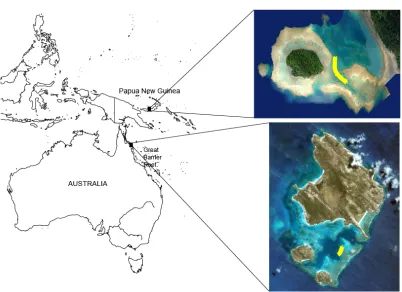
(48) 2.3 Methods 2.3.1. Experimental design and protocols. To test the effects of coral diversity on fish communities, manipulative experiments were set up in the lagoons of Lizard Island on the Great Barrier Reef, Australia (14º 41’S, 145º 27’E) and Schumann Island in Kimbe Bay, northern Papua New Guinea (5°31’S, 150°5’E) (Figure 2.1).. Figure 2.1: Map of the South-West Pacific showing the location of the two experimental sites Schumann Island in Kimbe Bay (Papua New Guinea) and Lizard Island on the Great Barrier Reef (Australia).. In each location, 45 patch reefs were constructed using a total of six different coral species (Table 2.1). To examine the effects of coral species richness on fish community characteristics, patch reefs consisted of: (i) one coral species, (ii) three coral species and (iii) six coral species. To examine the effects of coral species composition on fish assemblages, the single species treatment was duplicated for all of the six coral species. 13.
Figure


+7

Related documents