Abstract: The role and presumptive evidence of electronic messages used in the conclusion of online contracts are considered in this article. The legal significance of electronic messages is beyond question, since this institution has long and successfully been used in contractual obligations of all countries of the world. The main objective of the study is to determine the legal status of electronic messages in electronic commerce and the possibility of using them as evidence in court. The method of collecting and studying of the isolated facts; the method of generalization; the scientific abstraction methods; the methods of patterns cognition, as well as the method of objectivity, concreteness, and pluralism are used herein. It is concluded in the study that the specificity of electronic messages (the existence in an intangible (digital) form, the ease of changing the text, the presence of an unlimited number of originals, the possibility of making a hard copy) makes it possible to consider them as a special form of presentation of the information, along with oral and written forms and having a special legal status – the electronic form. It is proposed to stipulate in the international legal acts the imperative norm obliging the persons offering goods and services via the Internet to provide the access to electronic documents and communications containing contractual terms for six months, provided that the party, violating this norm, shall lose the right to demand the enforcement of contractual terms. As a result of the analysis, it is proved that the documents received via facsimile, electronic or other communication, including using the Internet, as well as the documents signed with an electronic digital signature or another analogue of a personal signature, are allowed as written evidence in court, pursuant to identity verification of the electronic messages. If it is impossible to determine the author of the message reliably and establish the integrity of the text, electronic messages do not have an evidential presumption. Such a conclusion opens up for law enforcement practice, first of all judicial, a unique opportunity to use electronic messages as evidence.
Index Terms: e-commerce; legally relevant messages; electronic documents; seller; customer; electronic digital signature; transaction.
I. INTRODUCTION
The rapid development of science and technology, as well as the integration of telecommunications links in human life, resulted in the emergence of a new economy sector –
Revised Manuscript Received on April 06, 2019.
Elena Anatolyevna Kirillova, Russian Federation Southwest State University, Kursk, Russia.
Varvara Vladimirovna Bogdan, Russian Federation Southwest State University, Kursk, Russia.
Valentin Nikolaevich Tkachev, Russian Federation Southwest State University, Kursk, Russia.
Konstantin Borisovich Semenin, Russian Federation Southwest State University, Kursk, Russia.
Petr Martynovich Filippov, Chechen State University, Grozny, Russia.
e-commerce. To date, it has become quite common to make various kinds of transactions, exchange information and perform other kinds of actions via the Internet, without seeing the counterparty, the subject of the transaction, making settlements using electronic transfers, signing contracts with an electronic digital signature [1]. The use of the Internet is so effective that many large companies refuse to purchase through other channels. In the USA, sectoral procurement network centers (vertical portals) are created in many industries: chemical, metallurgical, automotive. These portals combine even competing enterprises (for example, Ford and General Motors). The Internet significantly reduces the cost of sales of products or services. Thus, the cost of a typical banking transaction with the direct participation of a bank employee is 1.25 USD, by phone – 54 cents, using an ATM – 24 cents, via the Internet – 2 cents.
All this necessitates the legal regulation of this segment of the economy, including the creation of a single international legal platform, since a characteristic feature of e-commerce is its transboundary nature.
In connection with the development of a new form of commerce based on electronic data exchange, legal aspects in this area will become increasingly important. According to experts of the World Trade Organization (WTO), the electronic commerce turnover in the United States should be 500 billion USD by 2020 [2]. The forecast forces such authoritative international organizations as the UN and the WTO to study the phenomenon of e-commerce in order to identify the emerging problems and find the ways to solve them. According to the UN Commission on International Trade Law (UNCITRAL), some of these problems are more appropriately addressed through the development of legal provisions, both at the international level and at the national level [3].
Today there is no common understanding of the essence of electronic messages and documents when concluding transactions on the Internet. This situation is due to the novelty of legal relations on the conclusion of online contracts, so it is necessary to determine the role, legal status and presumptive evidence of e-mail messages and documents used in e-commerce.
Many scientists have devoted their work to the consideration of legal issues of concluding contracts on the Internet and the legal status of electronic documents and messages: Cao et al. [2] considered the optimal e-commerce strategy and legal status of
documentation; Robinson [4] considered the role of personal data in e-commerce;
E-Commerce: The Role of Electronic Messages
and Documents
Kearsley [5] studied the legal admissibility of evidence in a digital form; the research by Mason [1] was concerned with the evidence in an electronic form; Julià-Barceló [6] wrote about a new legal framework for electronic contracts in electronic commerce; Barker et al. [7] studied the problem of saving electronic documents for use as evidence. Many other researchers have considered various aspects of e-commerce, but the evidentiary presumption of electronic messages and their legal status in civil law is not defined, which leads to practical problems. At the present stage, the problem of determining the legal significance of electronic messages and electronic document circulation when concluding online transactions is of particular relevance.
II. METHODS
The object of the research is the legal status and the role of electronic messages and documents used in electronic commerce. The following methods are used in the study: collection and study of individual facts; generalization; scientific abstraction; cognition of patterns.
The method of objectivity made it possible to reflect truly the role, significance, and legal status of legally significant messages and documents that are used in online conclusion of contracts. The essence of such a concept as "legally significant electronic message" was defined using the principle of objectivity.
The method of specificity made it possible to consider all conditions for the use of legally significant messages in an electronic form, the proposals for the retention term of the electronic messages were developed based on judicial practice.
The method of pluralism made it possible to consider the object in all its bearings and to reveal the various properties of legally significant electronic messages.
Due to the pluralistic approach to the knowledge of the legal status of electronic documentation, the most optimal knowledge system was created, which reflected the objective data on the meaning and possibility of use of the electronic correspondence as evidence in court.
At the stage of collection and study of the individual facts, the methods of interpretation of law were used, with the help of which the evidentiary presumption of electronic messages was defined.
The prognostic method allowed the authors to make scientifically based predictions about the application of certain requirements to electronic messages and to develop the recommendations for law enforcement practice. The logical-semantic analysis was also used in conjunction with the above methods, which made it possible to consider in detail the peculiarities of the legal nature of electronic messages used in electronic commerce.
III. RESULTS
Electronic commerce is carried out on the basis of electronic document flow and is not accompanied by long-term paperwork. Thus, the entire trading cycle or its essential elements are carried out online using electronic digital means of telecommunication. This contributes to reducing the costs of trade and significantly affects the
decrease in the consumer value of the goods, as it reduces the time cycles between the stages of production and sale of goods, guarantees a significant saving of time for obtaining information about goods and services, eliminates the intermediary link and reduces various risks. The legal status of electronic documents in transactions on the Internet causes controversy among the researchers; moreover, it requires the definition of the information that may be considered legally relevant when selling goods [8].
The use of electronic documents and messages when concluding online contracts gives rise to many legal problems. These are issues related to the study of the reliability of electronic files, the ability to apply electronic files as evidence in court, the term of retention of electronic files. The important private-law problems in the field of computer technology are largely associated with the emergence of a new category of domestic and foreign trade – e-commerce [9]. There is a whole set of related concepts: electronic transaction, electronic signature, electronic messages; these concepts have not yet been adequately reflected in the law and have not been legally stipulated.
When investigating the electronic evidence, it should be noted that in practice, electronic correspondence between counterparties on various issues is widely used in order to save time and financial resources. The most difficult is legal regulation in the field of online conclusion of consumer contracts [10]. When concluding contracts, the seller and the consumer exchange messages via e-mail, but the legal significance of such messages is often in doubt. The forms of such messages may be notice, notification, proposal. For example, the contract of sale may be accompanied by electronic correspondence in which the buyer determines the quantity, quality of goods, delivery time and other important conditions. The buyer must notify the seller about the violation of the terms of the purchase and sale contract particularly concerning the quantity, assortment, quality, completeness, packaging of the goods within the period prescribed by law, other legal acts or the contract, and if such a period is not set, within a reasonable time after discovery of a breach of the relevant contract terms based on the nature and purpose of the goods [11]. In the event of failure to notify the seller, the latter is entitled to refuse, in whole or in part, to meet the buyer's requirements to deliver the balance of the goods, replace the goods that do not comply with the terms and conditions of the purchase and sale contract stipulating the quality or assortment, corrective measures, additional supply of missing or replacement of incomplete goods with complete ones, packaging of goods or replacement of improper packaging, if he proves that violation of this rule by the buyer caused the inability to meet the demands or shall result in disparate costs for the seller in comparison with those he would incur in case of timely notification of the breach of the contract. The buyer is entitled to notify the seller of the refusal of goods the delivery of which is overdue, unless otherwise provided in the supply contract. The buyer is obliged to accept and pay for the goods delivered prior to receipt of the notice by the
quantity and quality of the goods received in the manner prescribed by law, other legal acts, contracts or business practices, and immediately notify the seller in writing of any discrepancies or deficiencies in the goods. The parties may provide in the contract, that all applications, price negotiation protocols, and other documents will be an integral part of such a contract and be legally binding [12]. However, electronic messages are not accepted as evidence in the case if they were not provided for by the contract, the contract does not indicate the electronic addresses of the parties, and the other party disputes the existence of such correspondence.
Many researchers, referring to this topic, noted that it is necessary to distinguish between the concept of legally significant electronic communication and electronic document [13]. Documents include contracts, while electronic messages of legal significance should include all additional agreements, notifications about the termination of the contract and other documents related to the execution of contracts. Formally, electronic messages differ from electronic documents in that they do not contain an electronic signature. At the same time, electronic contracts and messages do not differ in principle from paper-based contracts and messages [14]. At the same time, the specificity of the means of communication used leads to the fact that with the electronic document circulation the procedures used in the course of conclusion of the contracts are reproduced either incompletely or with certain features. It is necessary to agree with the researchers, claiming that: "... an electronic contract is not a special type of contract, but a method of its conclusion. A special type of contract is determined by its subject matter, and not by the method of its conclusion" [15]. Legal regulation of electronic contracts should be focused on the conclusion and execution of the contracts through electronic messages, and not on substantive issues to be
regulated, based on the legal nature of the contract. The rules governing legal relations in the relevant area of commercial activity are subject to electronic contracts of the corresponding type. This point of view does not exclude that in harmonization of electronic contracts certain substantive rules will be changed, but these adjustments should be due to the specifics of communication systems, and not to change the subject matter and the essential terms of the contract [16]. Thus, the concepts of "electronic contract and messages" do not indicate a special kind of transactions and messages, but only the form in which they are transferred to the appropriate party.
Electronic messages represent a special physical form of representation of information [17]. However, when comparing the documents in electronic and written forms, one can come to conclusion about the identity of the functions performed by these forms of information. The specifics of electronic messages (existence in an intangible (digital) form, ease of changing the text, the presence of an unlimited number of originals, the possibility of making a hard copy) allow considering them as a special form of presentation of the information that exists along with oral and written forms and has a special legal status – the electronic form. Internet documents and Internet information acquire the status of legally significant documents only with their appropriate security and execution.
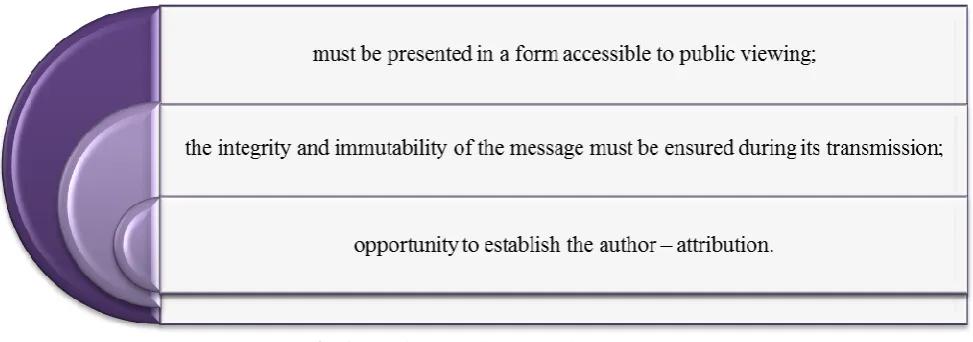
[image:3.595.55.542.482.653.2]The condition for equating the legal consequences of electronic messages to written documents is their authentication, that is, the messages must meet the following requirements: (Figure 1. Requirements for electronic messages):
Fig. 1. Requirements for electronic messages
The essential difference between electronic and written documents is that electronic messages are not related to paper and can have many originals in a computer environment. However, electronic information is easily transferred to paper, and such an action can be considered as making a copy of an electronic document.
Documents received via facsimile, electronic or other communication, including using the Internet, as well as documents signed with an electronic digital signature or
another analogue of a handwritten signature, are allowed as written evidence in court, while electronic messages are legally significant subject to authentication of electronic messages. In case of failure to determine the author of the message reliably and to establish the integrity of the text, the electronic messages do not
have an evidential
IV. DISCUSSION
Judicial practice in the field of the form of electronic documents and legally significant electronic messages is ambiguous, but there is a tendency to recognize the evidentiary power of electronic records. The most liberal approach is followed in the US courts when lex venditoris is used in settling the disputes [18]. In Western European countries, Proper Law (the law of the state with which this contract has the closest connection) is usually used when considering the cases related to the conclusion of online contracts [19]. In either case, the parties to the transaction or the court should define the location of the counterparties.
One of the problems arising from the execution of electronic contracts is the issue of the time of electronic transactions. It is not always easy to solve, since electronic contracts are characterized by conclusion of transactions using inter absentes, which is possible not only by "instant" communication (via telephone communication) but also by message exchange after a certain period of time (via e-mail service) [20]. The electronic message exchange in the course of conclusion of a contract is often similar to the postal message exchange. The contract will be concluded only when the offer is accepted. This fact can be established only by determining the time point at which the acceptance of the offer becomes effective.
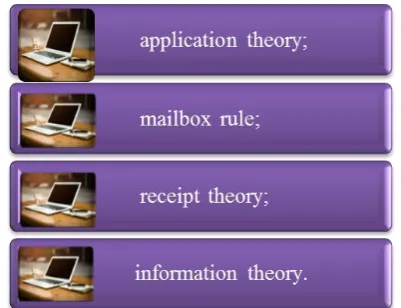
[image:4.595.68.269.402.556.2]There are four concepts determining the period of time in which an acceptance becomes effective (Figure 2. Concepts of the acceptance efficacy point in electronic commerce):
Fig. 2. Concepts of the acceptance efficacy point in electronic commerce
Considering these concepts, the researchers prefer to use the theory of receiving messages in electronic commerce [7]. The point of electronic message receipt is determined by the time when the data message enters the recipient's information system. However, in practice, a situation is possible in which the acceptance that reached the addressee is created in a format (that is, a standard is applied) that cannot be processed by the information system of the offeror and the offeror cannot read the text. This is especially inconvenient if there are minor changes to the offer in the acceptance, which are considered as an acceptance specifying the offer. If the offeror, without undue delay, does not object to these discrepancies or does not send a notice thereof, then the terms of the electronic purchase and sale contract will be the terms of the offer, with the changes contained in the acceptance. The
laws of some states, as well as the EU law, contain the rules obliging the sender to present the document in a form that provides the recipient with the opportunity to read the document [6]. Therefore, it is advisable to include a similar requirement in international legal acts regulating electronic transactions. In accordance with the receipt theory, an offer, an acceptance, or another expression of intent is deemed to be received by the addressee at the time of delivery. In this case, the receipt is due to external, easily provable facts and is interpreted as meaning the point in time when the message was delivered. At the international level, the presumption should be applied that, when using a single communication system, sending and receiving data occurs at the moment when it is possible to retrieve and process the message by the addressee.
The problem is the question of the need to preserve the text of electronic documents and messages within a reasonable time [4]. According to some experts, the establishment of such commitments is not required, but the establishment of such a duty will contribute to fair commercial practices and build confidence in electronic commerce [21]. Therefore, it is necessary to establish an imperative norm obliging those offering goods and services via the Internet to provide access to electronic documents and messages containing contractual terms for six months; if this norm is not observed, the violating party loses the right to demand the enforcement of contractual terms.
In order to clearly define the conditions of the electronic contract, it is necessary to resolve the problem of errors made by the parties to electronic commerce. Such errors can be either the result of human actions (for example, typographical errors in the message text or a careless mouse click when working at the computer) or they can be a consequence of failures in the operation of the information system. Humans themselves commit errors in making transactions most often, and the risk of not detecting the errors in transactions involving an automated system is much higher than in traditional transactions; at the same time, the errors in this situation may be irreversible [22]. Therefore, the point of view is fully justified, according to which there should be norms providing for the consequences of mistakes made by people when using a computer for the purpose of the transaction. In international documents, the consequences of mistakes in the conclusion of contracts are not considered, but the provisions on the conditions under which an individual will not be bound by the contract if he makes a material error, have already been included in the National Acts of Canada and the USA.
The consequences of a mistake or error for the validity of a contract are set forth in Articles 3.5 and 3.6 of the UNIDROIT Principles. These rules make it possible to refuse a transaction after the conclusion of a contract only if there are serious grounds, by the party on whose behalf the messages were sent [5].
The establishment of user responsibility for the malfunction of the computers used in e-commerce can lead to a limitation of the use of
development of society. Therefore, a person operating such a system should be relieved of responsibility for errors in the actions of automated systems if such a person succeeds in proving the unreasonableness of the counterparty’s behavior.
V. CONCLUSION
1. The specifics of electronic messages (the existence in an intangible (digital) form, ease of changing the text, the existence of an unlimited number of originals, the possibility of making a hard copy) allow considering them as a special form of presenting information that exists along with oral and written forms and has a special status – the electronic form.
2. Documents received via facsimile, electronic or other communication, including using the Internet, as well as documents signed with an electronic digital signature or another analogue of a handwritten signature, are allowed as written evidence in court, electronic messages are legally significant, pursuant to possibility to identity verification of the electronic messages. If it is impossible to determine the author of the message reliably and to establish the integrity of the text, electronic messages do not have an evidential presumption.
3. In accordance with the receipt theory, an offer, acceptance, or another expression of intent are deemed to be received by the addressee at the time of delivery. In this case, the receipt is due to external, easily provable facts and is interpreted as meaning the point in time when the message was delivered. At the international level, the presumption should be applied that, when using a single communication system, sending and receiving data occurs at the moment when it is possible to retrieve and process the message by the addressee.
4. It is necessary to establish a reasonable retention period for electronic messages, to stipulate in the international legal acts an imperative norm obliging persons offering goods and services via the Internet to provide access to electronic documents and messages containing contractual terms within six months; if this norm is not observed, the violating party loses the right to demand the enforcement of contractual terms.
Further research on the topic should consider the opportunity to amend the terms of the online contract; the methods and procedure for withdrawal of an erroneous acceptance; the method of storage and presentation of the electronic documents and the conditions for electronic access to this documentation, as well as the conditions for provision of hard copies of electronic documents.
ACKNOWLEDGMENTS
"Traditions and innovations of civil law: legally significant messages and their role in the civil law of Russia", T. 1.40.17F research work in the framework of the governmental assignment.
REFERENCES
1. S. Mason, ―Electronic Evidence: A Proposal to Reform the Presumption of Reliability and Hearsay‖, Computer Law & Security Review, 30(1), 2014, p. 80-84.
2. K. Cao, J. Wang, G. Dou, Z. Zhang, ―Optimal Trade-In Strategy of Retailers with Online and Offline Sales Channels‖, Computers & Industrial Engineering, 123, 2018, p. 148-156.
3. C. Connolly, P. Ravindra, ―First UN Convention on eCommerce Finalized‖, Computer Law & Security Review, 22(1), 2006, p. 31-38. 4. C. Robinson, ―Disclosure of Personal Data in Ecommerce: A
Cross-National Comparison of Estonia and the United States‖, Telematics and Informatics, 34(2), 2017, p. 569-582.
5. A.J. Kearsley, ―Legal Admissibility of Evidence Held in Digital Form‖, Computer Law & Security Review, 15(3), 1999, p. 185-187.
6. R. Julià-Barceló, ―A New Legal Framework for Electronic Contracts: The EU Electronic Commerce Proposal‖, Computer Law & Security Review, 15(3), 1999, p. 147-158.
7. R.M. Barker, A.T. Cobb, J. Karcher, ―The Legal Implications of Electronic Document Retention: Changing the Rules‖, Business Horizons, 52(2), 2009, p. 177-186.
8. M. Cristani, A. Bertolaso, S. Scannapieco, C. Tomazzoli, ―Future Paradigms of Automated Processing of Business Documents‖, International Journal of Information Management, 40, 2018, p. 67-75. 9. A.J. Hartig, ―Conceptual Blending in Legal Writing: Linking Definitions to Facts‖, English for Specific Purposes, 42, 2016, p. 66-75. 10. A. Case, G.G. Richard, ―Memory Forensics: The Path Forward‖, Digital
Investigation, 20, 2017, p. 23-33.
11. M. Zairi, M. Al-Mashari, ―eCommerce-Enabled Supply Chain Management: A Proposed Model Based on Retailing Experience‖, Journal of King Saud University – Computer and Information Sciences, 14, 2002, p. 61-86.
12. H.S. Ahmad, I.M. Bazlamit, M.D. Ayoush, ―Investigation of Document Management Systems in Small Size Construction Companies in Jordan‖, Procedia Engineering, 182, 2017, p. 3-9.
13. B.J. Jansen, P.R. Molina, ―The Effectiveness of Web Search Engines for Retrieving Relevant Ecommerce Links‖, Information Processing & Management, 42(4), 2006, p. 1075-1098.
14. eBusiness — Today and Tomorrow, World Pumps, 422, 2001, p. 30-31. 15. P.L. Parcu, V. Silvestri, ―Electronic Communications Regulation in Europe: An Overview of Past and Future Problems‖, Utilities Policy, 31, 2014, p. 246-255.
16. Y. Zhou, X. Wang, ―Explore the Relationship between Online Shopping and Shopping Trips: An Analysis with the 2009 NHTS Data‖, Transportation Research Part A: Policy and Practice, 70, 2014, p. 1-9. 17. E.A. Kirillova, V.V. Bogdan, ―Legal Significance of Electronic Messages and Documents‖, Journal of Advanced Research in Law and Economics, 9(3(33)), 2018, p. 997-1100.
18. S. Hillman, C. Neustaedter, ―Trust and Mobile Commerce in North America‖, Computers in Human Behavior, 70, 2017, p. 10-21. 19. A. Tauber, P. Kustor, B. Karning, ―Cross-Border Certified Electronic
Mailing: A European Perspective‖. Computer Law & Security Review, 29(1), 2013, p. 28-39.
20. Z.A. Mohammed, G.P. Tejay, ―Examining Privacy Concerns and Ecommerce Adoption in Developing Countries: The Impact of Culture in Shaping Individuals' Perceptions toward Technology‖, Computers & Security, 67, 2017, p. 254-265.
21. J.I. James, P. Gladyshev, ―A Survey of Mutual Legal Assistance Involving Digital Evidence‖, Digital Investigation, 18, 2016, p. 23-32. 22. A. Molla, P.S. Licker, ―eCommerce Adoption in Developing Countries: