InTrans Project Reports Institute for Transportation
2-2014
Development of Bio-Based Polymers for Use in
Asphalt
R. Christopher Williams
Iowa State University, [email protected]
Andrew A. Cascione
Iowa State University, [email protected]
Eric W. Cochran
Iowa State University, [email protected]
Nacú B. Hernández
Iowa State University, [email protected]
Follow this and additional works at:http://lib.dr.iastate.edu/intrans_reports
Part of theCivil and Environmental Engineering Commons
This Report is brought to you for free and open access by the Institute for Transportation at Iowa State University Digital Repository. It has been accepted for inclusion in InTrans Project Reports by an authorized administrator of Iowa State University Digital Repository. For more information, please [email protected].
Recommended Citation
Williams, R. Christopher; Cascione, Andrew A.; Cochran, Eric W.; and Hernández, Nacú B., "Development of Bio-Based Polymers for Use in Asphalt" (2014).InTrans Project Reports. 29.
Development of Bio-Based Polymers for Use in Asphalt
Abstract
Asphalt binder is typically modified with poly type (styrene-butadiene-styrene or SBS) polymers to improve its rheological properties and performance grade. The elastic and principal component of SBS polymers is butadiene. For the last decade, butadiene prices have fluctuated and significantly increased, leading state highway agencies to search for economically viable alternatives to butadiene based materials. This project reports the recent advances in polymerization techniques that have enabled the synthesis of elastomeric, thermoplastic, block-copolymers (BCPs) comprised of styrene and soybean oil, where the “B” block in SBS polymers is replaced with polymerized triglycerides derived from soybean oil. These new breeds of
biopolymers have elastomeric properties comparable to well-established butadiene-based styrenic BCPs. In this report, two types of biopolymer formulations are evaluated for their ability to modify asphalt binder. Laboratory blends of asphalt modified with the biopolymers are tested for their rheological properties and performance grade. Blends of asphalt modified with the biopolymers are compared to blends of asphalt modified with two commonly used commercial polymers. The viscoelastic properties of the blends show that biopolymers improve the performance grade of the asphalt to a similar and even greater extent as the
commercial SBS polymers. Results shown in this report indicate there is an excellent potential for the future of these biopolymers as economically and environmentally favorable alternatives to their petrochemically-derived analogs.
Keywords
Asphalt, Polymer asphalt, Soybeans, Styrene butadiene styrene, Biopolymers, Soybean oil, Styrenic block copolymers
Disciplines
Civil and Environmental Engineering | Engineering
Comments
InTrans Project 11-423
Iowa Highway Research Board (IHRB) Project TR-639
Iowa Department of Transportation
Development of Bio-Based
Polymers for Use in Asphalt
Final Report
February 2014
Sponsored by
About the Institute for Transportation
The mission of the Institute for Transportation (InTrans) at Iowa State University is to develop and implement innovative methods, materials, and technologies for improving transportation efficiency, safety, reliability, and sustainability while improving the learning environment of students, faculty, and staff in transportation-related fields.
Disclaimer Notice
The contents of this report reflect the views of the authors, who are responsible for the facts and the accuracy of the information presented herein. The opinions, findings and conclusions expressed in this publication are those of the authors and not necessarily those of the sponsors.
The sponsors assume no liability for the contents or use of the information contained in this document. This report does not constitute a standard, specification, or regulation.
The sponsors do not endorse products or manufacturers. Trademarks or manufacturers’ names appear in this report only because they are considered essential to the objective of the document.
Non-Discrimination Statement
Iowa State University does not discriminate on the basis of race, color, age, religion, national origin, sexual orientation, gender identity, genetic information, sex, marital status, disability, or status as a U.S. veteran. Inquiries can be directed to the Director of Equal Opportunity and Compliance, 3280 Beardshear Hall, (515) 294-7612.
Iowa Department of Transportation Statements
Federal and state laws prohibit employment and/or public accommodation discrimination on the basis of age, color, creed, disability, gender identity, national origin, pregnancy, race, religion, sex, sexual orientation or veteran’s status. If you believe you have been discriminated against, please contact the Iowa Civil Rights Commission at 800-457-4416 or the Iowa Department of Transportation affirmative action officer. If you need accommodations because of a disability to access the Iowa Department of Transportation’s services, contact the agency’s affirmative action officer at 800-262-0003.
The preparation of this report was financed in part through funds provided by the Iowa Department of Transportation through its “Second Revised Agreement for the Management of Research Conducted by Iowa State University for the Iowa Department of Transportation” and its amendments.
Technical Report Documentation Page
1. Report No. 2. Government Accession No. 3. Recipient’s Catalog No. IHRB Project TR-639
4. Title and Subtitle 5. Report Date
Development of Bio-Based Polymers for Use in Asphalt February 2014
6. Performing Organization Code
7. Author(s) 8. Performing Organization Report No.
R. Christopher Williams, Andrew Cascione, Eric Cochran, Nacu Hernandez InTrans Project 11-423 9. Performing Organization Name and Address 10. Work Unit No. (TRAIS) Institute for Transportation
Iowa State University
2711 South Loop Drive, Suite 4700 Ames, IA 50010-8664
11. Contract or Grant No.
12. Sponsoring Organization Name and Address 13. Type of Report and Period Covered Iowa Highway Research Board
Iowa Department of Transportation 800 Lincoln Way
Ames, IA 50010
Final Report
14. Sponsoring Agency Code IHRB Project TR-639
15. Supplementary Notes
Visit www.intrans.iastate.edu for color pdfs of this and other research reports. 16. Abstract
Asphalt binder is typically modified with poly type (styrene-butadiene-styrene or SBS) polymers to improve its rheological properties and performance grade. The elastic and principal component of SBS polymers is butadiene. For the last decade, butadiene prices have fluctuated and significantly increased, leading state highway agencies to search for economically viable alternatives to butadiene based materials. This project reports the recent advances in polymerization techniques that have enabled the synthesis of elastomeric, thermoplastic, block-copolymers (BCPs) comprised of styrene and soybean oil, where the “B” block in SBS polymers is replaced with polymerized triglycerides derived from soybean oil. These new breeds of biopolymers have elastomeric properties comparable to well-established butadiene-based styrenic BCPs.
In this report, two types of biopolymer formulations are evaluated for their ability to modify asphalt binder. Laboratory blends of asphalt modified with the biopolymers are tested for their rheological properties and performance grade. Blends of asphalt modified with the biopolymers are compared to blends of asphalt modified with two commonly used commercial polymers. The viscoelastic properties of the blends show that biopolymers improve the performance grade of the asphalt to a similar and even greater extent as the commercial SBS polymers. Results shown in this report indicate there is an excellent potential for the future of these biopolymers as economically and environmentally favorable alternatives to their petrochemically-derived analogs.
17. Key Words 18. Distribution Statement
asphalt—biopolymers—polymer-modified asphalt—soybean oil—styrenic block copolymers—styrene-butadiene-styrene
No restrictions.
19. Security Classification (of this report)
20. Security Classification (of this page)
21. No. of Pages 22. Price
Unclassified. Unclassified. 44 NA
D
EVELOPMENT OF
B
IO
-B
ASED
P
OLYMERS FOR
U
SE IN
A
SPHALT
Final Report February 2014 Principal Investigator
R. Christopher Williams Professor
Professor, Civil, Construction and Environmental Engineering, Iowa State University
Co-Principal Investigator
Eric Cochran
Associate Professor, Chemical and Biological Engineering, Iowa State University
Research Assistants
Andrew Cascione, Iowa State University Nacu Hernandez, Iowa State University
Authors
R. Christopher Williams, Andrew Cascione, Eric Cochran, Nacu Hernandez
Sponsored by
the Iowa Department of Transportation and the Iowa Highway Research Board
(IHRB Project TR-639)
Preparation of this report was financed in part
through funds provided by the Iowa Department of Transportation through its Research Management Agreement with the
Institute for Transportation (InTrans Project 11-423)
A report from
Institute for Transportation Iowa State University
2711 South Loop Drive, Suite 4700 Ames, IA 50010-8664
TABLE OF CONTENTS
ACKNOWLEDGMENTS ... vii
EXECUTIVE SUMMARY ... ix
Background ... ix
Research Methodology ... ix
Key Findings ...x
Implementation Readiness and Benefits ...x
Future Work ...x
CHAPTER 1 INTRODUCTION ...1
1.1 Problem Statement ...1
1.2 Objectives ...2
CHAPTER 2 LITERATURE REVIEW ...3
2.1 Polymer-Modified Asphalt ...3
2.2 Thermoplastic Elastomers ...3
2.3 SBS and Asphalt Compatibility ...5
2.4 Commercially Available SBS and SB Polymers ...6
2.4 Polymers Synthesized from Vegetable Oils ...6
CHAPTER 3 TEST PLAN AND PROCEDURE ...8
3.1 Research Plan ...8
CHAPTER 4 BIOPOLYMER SYNTHESIS ...12
4.1 Chemical Modification of Soybean Oil ...12
4.2 Synthesis of Thermoplastic Block Copolymers ...13
CHAPTER 5 TEST RESULTS AND ANALYSIS ...18
5.1 Characterizations of the Polymers ...18
5.2 Evaluation of Asphalt Modified with Kraton Polymers ...22
5.3 Evaluation of Asphalt Modified with the Biopolymers ...25
CHAPTER 6 ECONOMIC ANALYSIS ...30
CHAPTER 7 CONCLUSIONS AND RECOMMENDATIONS ...31
vi
LIST OF FIGURES
Figure 1. Effects of polymer modification in asphalt binder (after Epps, J. A.)...3
Figure 2. SBS polymer structure. ...4
Figure 3. Rheological testing of asphalt-polymer blends ...11
Figure 4. A representative structure of a triglyceride ...12
Figure 5. Conjugation of triglyceride molecule followed by two examples of AESO ...13
Figure 6. RAFT polymerization mechanism ...14
Figure 7. Molecular weight of polystyrene in RAFT reaction ...15
Figure 8. Molecular weight of PS-PAESO in RAFT reaction ...16
Figure 9. Molecular weight distribution of AESO, polystyrene (PS), and PS-PAESO ...17
Figure 10. PS-PAESO diblock ...18
Figure 11. PS-PAESO-PS triblock ...18
Figure 12. Nuclear magnetic resonance spectra results of PS-PAESO-PS ...19
Figure 13. Transmission electron microscopy image of PS-PAESO-PS ...19
Figure 14. Differential scanning calorimetry results for PAESO and polystyrene blocks ...20
Figure 15. Isothermal frequency scans of PS-PAESO-PS ...21
Figure 16. Tensile strain (mm/mm) vs. load (MPa) for PS-PAESO-PS ...21
Figure 17. Tensile strain (mm/mm) vs. tensile stress (MPa) for PS-PAESO-PS ...22
Figure 18. Comparison of high temperature continuous performance grades ...29
Figure 19. Comparison of low temperature continuous performance grades ...29
Figure 20. Commodity costs comparison ...30
LIST OF TABLES Table 1. Biopolymer molecular weights and styrene contents ...18
Table 2. DSR results for unaged asphalt modified with Kraton D1101 ...23
Table 3. DSR results for RTFO aged asphalt modified with Kraton D1101 ...23
Table 4. DSR results for unaged asphalt modified with Kraton D1118 ...24
Table 5. DSR results for RTFO aged asphalt modified with Kraton D1118 ...25
Table 6. BBR results for PAV aged asphalt modified with Kraton D1101 and D1118 ...25
Table 7. DSR results for asphalt modified with biopolymers ...26
Table 8. DSR results for PAV aged asphalt modified with biopolymers ...27
ACKNOWLEDGMENTS
EXECUTIVE SUMMARY
Background
Asphalt binder used for high-performing pavements needs sufficient properties to resist cracking at low temperatures and rutting caused by shear forces from sustained loads at high temperatures. To produce an asphalt binder with these performance characteristics, the binder is commonly modified with elastomeric polymers to improve its rheological properties and lower its temperature susceptibility over a range of in-service pavement temperatures.
The most common elastomeric polymers used for asphalt modification are styrenic block
copolymers (SBCs). SBCs are composed of blocks of polybutadiene and polystyrene to produce styrene-butadiene (SB) diblock polymers and styrene-butadiene-styrene (SBS) triblock
polymers.
Recent advances in polymerization techniques have led to the development of elastomeric block copolymers produced with polystyrene and polymerized soy-derived triglycerides. While the past two decades of plant-oil based polymer research has yielded only thermosets, the newly produced polymers are thermoplastic elastomers that are processable at high temperatures.
Research Methodology
The thermoplastic elastomers were produced using a controlled radical polymerization technique to create the block copolymers.
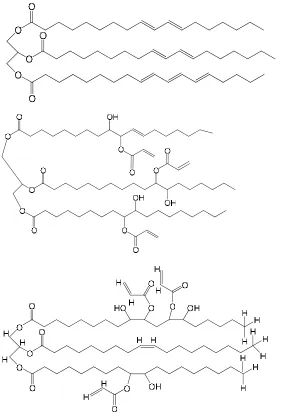
Soybean oil triglycerides were first acrylated and epoxidized, creating acrylated epoxidized soybean oil (AESO). This process made them suitable to polymerize via controlled radical polymerization techniques, such as reversible addition-fragmentation chain-transfer polymerization (RAFT).
SBS-like triblock copolymers were then synthesized by polymerizing AESO and styrene monomer in the presence of a free radical initiator and a chain transfer agent to create
polystyrene-b-polyAESO-b-polystrene (PS-PAESO-PS). The polymerizing step was carried out under conditions effective to achieve a number-average degree of polymerization (Nn) for the thermoplastic block copolymer of up to 100,000 repeat units per molecule without gelation. Following the same process, SB diblock copolymers were also produced.
Laboratory Investigation
x
Key Findings
Rheology test results showed the biopolymer has the ability to widen the grade range of asphalt and reduce its temperature susceptibility. The base asphalt tested as a continuous PG 51.1-37.7 for a grade range of 88.8C. Adding two percent D1101 to the base asphalt increased its
continuous high PG to 57.2 without changing its -34 grade qualification on the low temperature side. Adding two percent PS-PAESO-PS to the base asphalt changed its continuous PG to 70.4-33.0 for a 103.4C grade range. With the addition of two percent PS-PAESO, the base asphalt changed to a continuous PG of 69.1-32.8 for a 101.9C grade range.
Thus, biopolymers significantly enhanced the performance properties of the base asphalt. By adding two percent of either biopolymer to an asphalt binder, the rutting resistance and temperature performance range of an asphalt pavement will improve.
Implementation Readiness and Benefits
Soybean oil is the world’s most abundant vegetable oil and currently costs 40 percent less than butadiene. These lower costs will translate into lower costs of polymer-modified asphalt.
Polymerized triglycerides are also intrinsically renewable, environmentally friendly, and safer to handle than butadiene.
With future implementation of the developed biopolymers, Iowa source materials (e.g., soybean oil) can be utilized to produce polymers for use in Iowa. This can create improved economic opportunities for soybeans resulting in economic value to Iowa and maintaining soil qualities through a balanced crop rotation with corn.
Future Work
Currently, at a polymer content of two percent, a base asphalt’s low temperature PG may
increase one grade, which may warrant the use a softer base asphalt to compensate for that effect. As additional data from asphalt-modification experiments become available, additional or
improved polymer formulation designs may be developed. Future research can improve upon the biopolymers molecular architecture, styrene content, and molecular weight distribution.
A larger reactor has been purchased that is capable of making two kilogram samples,
substantially larger than the approximately 100 gram samples produced in this study. In addition, a pilot plant is currently being designed that can produce even larger quantities of the
biopolymers for future research.
Further work evaluating asphalt mixtures for rutting, low temperature cracking, and moisture susceptibility should be done while the pilot plant is being constructed. Based upon the
CHAPTER 1 INTRODUCTION
1.1 Problem Statement
The performance of asphalt pavements at in-service temperatures depends on the grade of asphalt binder used in the paving mixture. In many cases, the characteristics of asphalt binder need to be altered to improve its rheological properties. Asphalt binder needs sufficient properties to resist cracking at low temperatures and rutting caused by shear forces from sustained loads at high temperatures. The physical properties of asphalt binder are typically modified with elastomeric polymers to produce an improved performance grade. The most common elastomeric polymers used for asphalt modification are styrenic block copolymers (SBC). SBCs are composed of blocks of polybudiene and polystyrene to produce styrene-butadiene (SB) diblock polymers and styrene-styrene-butadiene-styrene (SBS) triblock polymers.
In 2008, there was a shortage of SB and SBS polymers for use in the asphalt industry. The shortage was due to a lack of global butadiene supply, the principal component of SBC grades for asphalt modification. Butadiene is a by-product of the production of ethylene, which is produced from the steam cracking process of petroleum based feedstocks. Steam cracker
facilities can use either liquid petroleum products or gaseous products such as ethane, butane, or propane as the raw material to produce ethylene. The by-products that result from the steam cracking reaction depend on the composition of the raw material. Butadiene is only a by-product when liquid feeds, not gaseous feeds, are used as the raw materials.
As shale gas supplies become more abundant, crackers are more commonly using lighter petrochemical feeds such as ethane to produce ethylene and its by-products. However, using lighter feeds lowers butadiene production and tightens the supply (Foster 2011). This in-part led to the 2008 butadiene shortage as well as short term closure of some facilities. Although the butadiene supply has rebounded since then, it remains volatile and has been susceptible to rapid price increases. The butadiene market in the United States is particularly sensitive to global supply since butadiene is not substantially produced domestically but primarily imported from Asian and European countries.
As the asphalt industry continues to grow, it will increasingly need SBCs to modify asphalt binder. The global asphalt market is projected to reach 118.4 million metric tons by 2015, according to a January 2011 report by Global Industry Analysts, Inc. With increasing growth in the developing markets of China, India, and Eastern Europe, asphalt will be needed to construct their roadway infrastructure well into the next decade and beyond. The demand for asphalt, along with the need for improved asphalt pavement performance, will put pressure on butadiene
supplies that have already experienced shortages. As a result, there is a growing need in finding sustainable and renewable SBC alternatives.
2
biopolymer from plant-based feedstocks that mimics the properties of polybutadiene. A bio-based alternative that could replace the petrochemically bio-based polybutadiene in SBCs would help solve the economic and environmental concerns of using them.
Indeed, many advances have been made in this area, most notably in the production of vegetable-oil-based thermosets via both traditional cationic and free radical polymerization routes. Lu and Larock (2009) have shown that a variety of plant oils may be successfully polymerized via cationic polymerization into thermosets with a broad spectrum of physical properties and aesthetic appearances. While these thermoset materials may supplant a number of
petrochemically-derived thermosets, the vast majority of commodity polymers, including SB and SBS, are thermoplastic materials that can be reheated and processed at high temperatures.
In laboratory studies, the research team has identified soybean oil as a viable renewable and biodegradable feedstock that can be polymerized into a material with similar properties as polybutadiene. This report documents the recent advances toward developing a formulation for a thermoplastic elastomer using the polymerized soybean oil as a replacement for butadiene. By replacing butadiene with the polymerized soybean oil in the SB and SBS block copolymer structure, this research has the potential to create a new class of renewable SB block copolymers that can be used for the asphalt industry as well as many others.
1.2 Objectives
This project supports the development of an innovative route to thermoplastic-elastomeric SBCs based largely on soybean oil, a renewable and biodegradable feedstock. The new class of SBCs contains a biopolymer derived from triglycerides in soybean oil that replaces the “B” block polymer (polybutadiene) in the block copolymer structure of SB and SBS. The efficacy these soy-based block copolymers as an alternative to the traditional polymer modifiers used in the asphalt industry are evaluated for this project. The objectives of this project are as follows:
Identify the most promising polymerization chemistries for forming linear-chain polymers from vegetable oils.
Synthesize soy-based biopolymers with blocks of polystyrene (PS) and polymerized soybean oil (PAESO) to create block copolymers with diblock PAESO) and triblock
(PS-PAESO-PS) structures that use PAESO as a replacement for polybutadiene. Characterize the thermal, rheological, and morphological properties of these materials.
Formulate blends of the diblock and triblock biopolymers with asphalt binder and
quantitatively evaluate their influence on asphalt binder performance; compare these results with commercially available SB and SBS polymers.
CHAPTER 2 LITERATURE REVIEW
2.1 Polymer-Modified Asphalt
Asphalt binder is commonly modified with polymers to improve its rheological properties in a paving mixture and to lower its temperature susceptibility over a range of in-service
temperatures. Figure 1 compares the stiffness of a conventional asphalt binder to an ideal modified asphalt binder at different in-service temperatures. At high temperatures, polymer modification increases binder stiffness and elasticity, as a result of an increased storage modulus and a decreased phase angle. Both increasing the storage modulus and decreasing the phase angle improves rutting resistance of the pavement (Bahia and Anderson 1995). At low temperatures, polymer modification lowers creep stiffness of the asphalt which improves resistance to thermal cracking (Isacsson and Lu 1999).
Figure 1. Effects of polymer modification in asphalt binder (after Epps, J. A.)
Polymers are very large molecules formed by linking together multiple small molecules called monomers. When a polymer consists of more than one repeating monomer unit, either in a random or block arrangement, it is termed a copolymer. The length of the polymer chain, monomer sequence, and chemical structure determine the physical properties of the resulting polymer. Polymers with blocks of repeating homopolymer chains are termed block copolymers (Odian 1991).
2.2 Thermoplastic Elastomers
The most important block copolymer used in commercial practice is the ABA triblock (Hiemenz 2007). The A block is usually polystyrene, and the B block is an elastomer such as isoprene or butadiene. Such polymers are known as thermoplastic elastomers. SBS is the most widely used thermoplastic elastomer for asphalt modification. It is comprised of
4
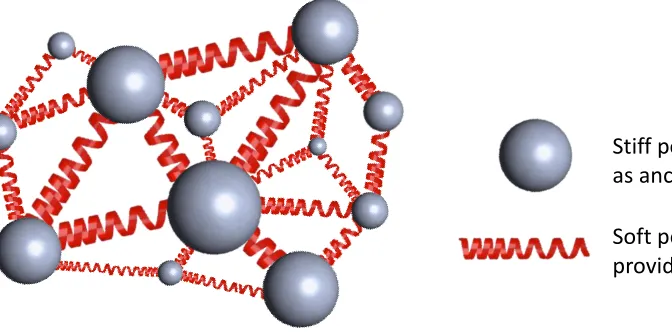
[image:18.612.86.422.226.393.2]polystyrene chains that create an ordered morphology of cylindrical glassy polystyrene block domains within a rubbery polybutadiene matrix (Bulatovic et al. 2012). The polystyrene end-blocks provide strength to the polymer, while the polybutadiene mid-block gives the material its elasticity (Figure 2). SBS polymers are thermoplastic, meaning that they can be easily processed at high temperatures due to the linear nature of their chains. When heated above the polystyrene glass transition temperature (100C), the crosslinked structure breaks down allowing the polymer to flow. Upon cooling, the rigid polystyrene end-blocks vitrify and act as anchors for the liquid rubbery domains by providing a restoring force when stretched (Fried 2008).
Figure 2. SBS polymer structure
The mechanism that allows SBS to possess the dual properties of thermoplasticity and elasticity in styrenic block copolymer arises from polymer thermodynamics and the chain architecture of the polymer. Flory-Huggins theory illustrates that nearly all polymers are mutually immiscible, due to the drastic loss of mixing entropy. The chemically dissimilar monomer sequences found in the block copolymers may be thought of conceptually as immiscible homopolymers bound covalently end-to-end. Due to this constraint, when a block copolymer phase separates, incompatible polymer types form meso-domains with a well-defined geometry dictated by the block composition and with a size governed by the overall molecular weight (Bates et al. 1999).
In a typical SBS elastomer, the styrene composition is about 10-30 wt% such that spherical or cylindrical styrene domains form in a matrix of butadiene. When the temperature is below the glass transition temperature of polystyrene (Tg =100°C), the polybutadiene matrix is liquid (Tg <
-90 °C) but is bound between the vitreous polystyrene spheres, which serve as physical
crosslinks. When the temperature is above the glass transition temperature of polystyrene, the entire elastomer system is molten and may be processed easily. Crosslinked poly(soybean oil) has been reported to have Tg values as low as -56 °C (Yang et al. 2010). Comparatively,
polybutadiene has a Tg of -90°C. Thus, the poly(soybean oil) is an excellent candidate to serve as
the liquid component in thermoplastic elastomers based on styrenic block copolymers.
Stiff polystyrene domains serve as anchors
SBS is incorporated into asphalt binder, normally between 2 and 5 percent by weight of the total binder, through mixing and shearing at high temperatures to uniformly disperse the polymer. When blended with asphalt, the polymer swells within the asphalt maltene phase to form a continuous tridimensional polymer network (Lesuer 2009). At high temperatures, the polymer network becomes fluid yet still provides a stiffening effect that increases the modulus of the mixture. At low temperatures, a linked network within the asphalt redevelops without adversely affecting the low temperature cracking performance due to the elastic properties of the
polybutadiene (Airey 2004). The resulting performance properties widen the working temperature range of the asphalt/polymer system.
2.3 SBS and Asphalt Compatibility
The differences in properties such as molecular weight, density, viscosity, and solubility coefficients between SBS and asphalt result in two distinct phases when using mechanical mixing to obtain SBS-modified asphalt (Sun et al., 2006). This can lead to thermodynamically unstable blends that have a tendency to segregate during hot storage (160C). For polymers to impart desirable properties to asphalt binder, the binder and the polymer must be compatible. Incompatible asphalt-polymer blends lack a homogenous network of polymer chains throughout the blend, thereby reducing the polymer’s effectiveness, and from a practical perspective, face handling issues.
Masson et al. (2003) showed that asphalt binder and polymer composition affect the stability of the blends. Asphalt binder consists of a complex system of hydrocarbon molecules that can be fractionated into asphaltene and maltene components (Hoiberg 1979). Asphaltenes are the heaviest components of the asphalt binder matrix and contribute to the stiffness of the asphalt, whereas maltenes are the lightest components and consist of compounds known as saturates, aromatics, and resins. The asphaltenes are dispersed throughout the maltene components in the asphalt matrix. Since the molecular weights of the polymeric chains are higher than or similar to those of the asphaltenes, they compete for the solvency of the maltene fraction and a phase separation may occur if there is an imbalance between the components (Fernandes et al. 2008). Therefore, it is recognized that asphalts with a lower asphaltene content and higher aromatics content are more compatible with SBS polymers (Alonso et al. 2010).
6
SBS copolymers should also meet several requirements to be compatible with asphalt: they should be rich in butadiene (generally 60-70%) and the molecular weight of the styrene fraction must exceed 10,000 daltons to obtain polystyrene rich domains (Lewandowski 1994).
The interaction between asphalt and SB is different from that with SBS (Martinez-Estrada et al. 2010). Maltenes have a more favorable interaction with the polybutadiene block compared with the PS block due to maltenes swelling the polybutadiene block and not the polystyrene block. In contrast, asphaltenes are incompatible with both polybutadiene and polystyrene. Therefore, interactions between asphalt and SB are more favorable than interactions between asphalt and SBS since SB only has one polystyrene block compared to the multiple end blocks of SBS. However, SBS is more commonly used for asphalt modification due to its ability to form an elastic network through physical entanglements in the polymer rich phase.
2.4 Commercially Available SBS and SB Polymers
Commercially available SBS and SB copolymers used for modifying asphalt binders in the United States are supplied by Kraton Performance Polymers, Inc. (Kraton). D1101 and D1118 are commonly used grades of Kraton for asphalt modification. D1101 is a clear, linear triblock copolymer (SBS), and D1118 is a clear, diblock copolymer (SB). Other SB and SBS polymers are produced by LG Chem, Korea Kumho Petrochemical Co., Taiwan Synthetic Rubber Corporation (TSRC), and others.
2.4 Polymers Synthesized from Vegetable Oils
Vegetable oils have been considered as monomeric feedstocks for the plastics industry for over 20 years. Polymers from vegetable oils have obtained increasing attention as public policy makers and corporations alike have been interested in replacing traditional petrochemical feedstocks due to their environmental and economic impact.
To date, moderate success has been achieved through the application of traditional cationic and free radical polymerization routes to vegetable oils to yield thermoset plastics (i.e., plastics which, once synthesized, permanently retain their shape and are not subject to further
processing). For example, a variety of polymers, ranging from soft rubbers to hard, tough plastics were made by using cationic copolymerization of vegetable oils, mainly soybean oil (SBO), using boron triflouridediethyletherate (BFE) as initiator (Andjelkovic et al. 2006, Pfister & Larock 2010). Soybean oil-based waterborne polyurethane films were synthesized with different properties ranging from elastomeric polymers to rigid plastics by changing the polyol
functionality and hard segment content of the polymers (Lu et al. 2005, Lu et al. 2011).
Moreover, soybean oil was used to synthesize different bio-based products such as sheet molding composites, elastomers, coatings, foams, etc. (Zhu et al. 2006). Bunker et al. synthesized
pressure sensitive adhesives using mini-emulsion polymerization of acrylatedmethyloleate, a monoglyceride derived from soybean oil (Bunker et al. 2002, Bunker et al. 2003). The polymers produced were comparable to their petroleum counterparts. Zhu et al. generated an elastic
polymerization (Zhu et al. 2006). Lu et al. created thermosetting resins synthesized from soybean oil that can be used in sheet molding compound applications by introducing acid functionality onto the soybean and reacting the acid groups with divalent metallic oxides or hydroxides, forming the sheet (Lu et al. 2005). Bonnaillie et al. created a thermosetting foam system using a pressurized carbon dioxide foaming process of acrylated epoxidized soybean oil (AESO) (Bonnaillie et al. 2007).
Uncontrolled chain branching and crosslinking is inevitable by using these conventional
polymerization routes due to the multifunctional nature of triglycerides, multiple initiation sites along the chain backbone, and chain transfer/termination reactions. While these thermoset materials may indeed supplant a number of petrochemically-derived thermosets, the vast
8
CHAPTER 3 TEST PLAN AND PROCEDURE
3.1 Research Plan
The research plan included the following specific tasks:
1. Synthesize soy-based styrenic block copolymers, with blocks of polymerized styrene (PS) and polymerized acrylated epoxidized soybean oil (PAESO), through the use of reversible addition-fragmentation chain transfer (RAFT). Triblock copolymers will contain outer blocks of polystyrene with an interior block of PAESO to form PS-PAESO-PS. Diblock copolymers will contain a block architecture of PS-PAESO.
2. Characterize the thermal, rheological, and morphological properties of the block copolymers.
3. Formulate blends of PS-PAESO-PS and PS-PAESO with bitumen and quantitatively evaluate their influence on asphalt performance; compare these results with commercially available SBS and SB block copolymers.
4. Evaluate the economics of soy-based polymers as bitumen modifiers.
Specific details of each task are outlined below.
Task 1: PS-PAESO-PS copolymers via RAFT polymerization
Reversible addition-fragmentation chain transfer (RAFT) polymerization was applied to acrylated epoxidized soybean oil, comprised predominantly of triglyceride mixtures. The distinctive feature of this chemistry is that it allows the design of the molecular architecture of the resultant polymers such that they are predominantly non-crosslinked linear or lightly branched chains. The chains behave as elastomers/rubbers at room temperature, but reversibly melt, and are susceptible to common processing techniques at elevated temperatures. RAFT has received a great deal of attention with respect to petrochemical feedstocks, but it has not been successfully applied to biofeedstocks such as soybean oil. The success of the technology on vegetable oils such as soybean oil is surprising, as conventional radical polymerization typically brings the polymerization of triglycerides into thermoset materials. RAFT successfully controls the polymerization of triglyceride so that it terminates at a desired molecular weight and block composition and produces thermoplastic polysoybean oil.
RAFT polymerization limits the number of initiation sites and drastically reduces the rate of polymer-to-polymer chain transfer and termination reactions, and also introduces the capability to produce custom chain architectures such as block copolymers (BCPs) and statistical
Task 2: Characterize the thermal, rheological, and morphological properties of the block copolymers.
Initial experiments during the project focused on the establishment of a reproducible procedure for the preparation of PS-PAESO-PS materials. In these experiments, reactions were allowed to progress for 12 hr, and gel permeation chromatography (GPC) was used to assess the degree of polymerization. In successful polymerizations, polymerization kinetics were assessed and fine-tuned such that polyAESO compounds with minimal polydispersity and of targeted molecular weight were produced. As structure-property relationships for the different PS-PAESO-PS systems were catalogued, composition and molecular weight ranges that were best suited as bitumen modifiers were rationally identified.
Presented in this report, are test results of two biopolymers (PS-PAESO-PS and PS-PAESO) that were developed specifically for this project as asphalt modifiers. These two materials represent the culmination of over fifty preliminary polymerizations that solidified our understanding of the reaction kinetic data and the processing parameters required to reproducibly synthesize polymers of designated composition and molar mass. As more data from asphalt-modification experiments become available, additional or improved formulation designs may be developed. The final soy-based block copolymers developed for the project were subjected to the following of
characterization techniques with a focus on the symmetric PS-PAESO-PS triblock copolymers.
Thermal Characterization: Differential scanning calorimetry (DSC) was used to assess the glass transition temperature of each material and also its thermal stability.
Spectroscopy: Hydrogen-1 Nuclear Magnetic Resonance (1H-NMR) was used to show the spectra of the PS-PAESO-PS triblock.
Rheology: Master curves were developed from oscillatory shear testing in a
temperature-controlled parallel plate rheometer. These data serve as a “fingerprint” for structural information, indicate the processablility of the material, are strongly correlated to their performance as asphalt modifiers, and serve as a direct point-of comparison with commercially available SBS materials.
Tensile Elongation: The PS-PAESO-PS materials were hot-pressed into “dogbones” for tensile elongation experiments yielding stress-strain curves. These experiments provideed direct
measurements of the strength, toughness, and (reversible) elasticity of these materials. These data also served as a direct point-of-comparison with the SBS family.
10
Task 3: Blended PS-PAESO-PS polymers with asphalt binders and rheological testing
The PS-PAESO-PS and PS-PAESO biopolymers were blended with asphalt binder to evaluate the rheological properties of the biopolymer-asphalt blend. Two commercially available Kraton polymers were also blended with the same asphalt binder to compare the biopolymer-modified asphalt to commercially used polymer asphalt modified. The two Kraton polymers selected for the study were D1101 (SBS triblock) and D1118 (SB diblock).
A soft asphalt from Flint Hills Resources’ Pine Bend Refinery in Rosemount, Minnesota graded as a PG XX-34 was used as the base asphalt. All asphalt-polymer blends were prepared in the laboratory with a Silverson L4RT shear mixer at 3000 rpm and 180°C. For each polymer-asphalt batch, 500 grams of asphalt was poured into a 1 quart aluminum can. Polymer was added to each can at two percent by total weight of the asphalt-polymer blend. The high shear mixing process was carried out for 1.5 hours.
A control batch of asphalt binder was also prepared to compare the properties of the base asphalt to the asphalt blends. It was processed following the same procedure as the polymer-asphalt batches where a 1 quart can of the base polymer-asphalt was mixed in the shear mixer at 180°C for 1.5 hours. In total, five polymer-asphalt batches were prepared; they are as follows:
XX-34 base asphalt processed in shear mill
XX-34 + SBS Kraton D1101
XX-34 + SB Kraton D1118
XX-34 + PS-PAESO-PS
XX-34 + PS-PAESO
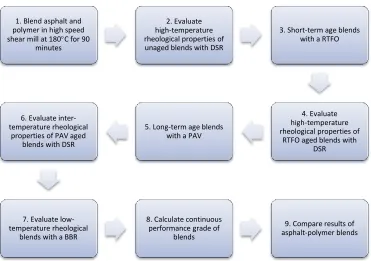
The subsequent rheological testing of the blends is outlined below in Figure 3and will follow the American Association of State Highway and Transportation Officials (AASHTO) M 320 testing for determining the performance grade of the modified asphalt binders. The polymer-asphalt blends were tested a dynamic shear rheometer (DSR) at high and intermediate temperatures and tested in a bending beam rheometer at low temperatures (BBR). A rolling thin film oven (RTFO) and pressure aging vessel (PAV) were used to conduct simulated aging of the blends
Figure 3. Rheological testing of asphalt-polymer blends
Task 4: Economic evaluation of soy-based polymers as bitumen modifiers
An economic analysis of the raw material costs for the biopolymers will be benchmarked to typical raw material costs for SBS polymers used in the asphalt paving industry.
1. Blend asphalt and polymer in high speed shear mill at 180C for 90
minutes
2. Evaluate high-temperature rheological properties of unaged blends with DSR
3. Short-term age blends with a RTFO
4. Evaluate high-temperature rheological properties of
RTFO aged blends with DSR 5. Long-term age blends
with a PAV 6. Evaluate
inter-temperature rheological properties of PAV aged
blends with DSR
7. Evaluate low-temperature rheological
blends with a BBR
8. Calculate continuous performance grade of
blends
12
CHAPTER 4 BIOPOLYMER SYNTHESIS
4.1 Chemical Modification of Soybean Oil
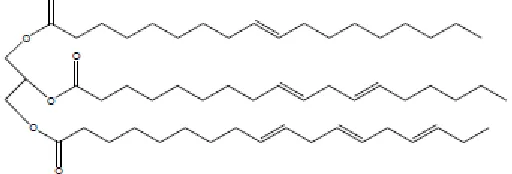
Soybean oil is the most abundant vegetable oil, which accounts for almost 30% of the world’s vegetable oil supply. It is particularly suitable for polymerization, because it possesses multiple carbon-carbon double bonds that allow for modifications such as conjugation, epoxidation of the double bonds, etc. Soybean oils are mixtures of triglycerides (a representative structure appears in Figure 4), containing a number of double bonds that may serve as candidates for
[image:26.612.176.432.228.315.2]polymerization.
Figure 4. A representative structure of a triglyceride
In unprocessed oils these are located in the middle of the alkyl chains, and have only limited reactivity towards propagation reactions due to steric hindrance and unfavorable stability of the free radical. This reactivity improves dramatically when the double bonds are conjugated (Li et al. 2001, Henna et al. 2007, Valverde et al. 2008, and Robertson et al. 2010). Evidently, this may be readily achieved to nearly 100% conversion with homogeneous Rh catalysis (Larock et al. 2001).
Figure 5. Conjugation of triglyceride molecule followed by two examples of AESO 4.2 Synthesis of Thermoplastic Block Copolymers
A radically polymerizable triglyceride monomer (AESO) was polymerized with polystyrene via reversible addition-fragmentation chain-transfer (RAFT) polymerization, in the presence of a free radical initiator and a chain transfer agent, to form a thermoplastic block copolymer. The polymerizing step was carried out under conditions effective to achieve a number average degree of polymerization (Nn) for the thermoplastic block copolymer of up to 100,000 repeat units per molecule without gelation.
RAFT polymerization is a type of living polymerization or controlled polymerization, utilizing a chain transfer agent (CTA). Conventional RAFT polymerization mechanism consists of a
14
Figure 6. RAFT polymerization mechanism
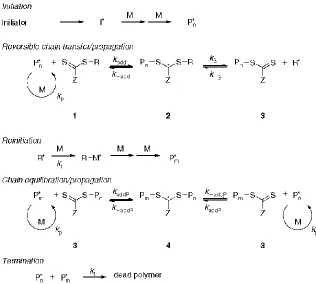
The RAFT polymerization reaction starts with initiation. Initiation is accomplished by adding an agent capable of decomposing to form free radicals; the decomposed free radical fragment of the initiator attacks a monomer yielding a propagating radical (P•n ), in which additional monomers are added producing a growing polymer chain. In the propagation step, the propagating radical (P•n) adds to a chain transfer agent (CTA), such as a thiocarbonylthio compound (RSC(Z)=S), (1), followed by the fragmentation of the intermediate radical (2) forming a dormant polymer chain with a thiocarbonylthio ending (PnS(Z)C=S), (3) and a new radical (R•). This radical (R•) reacts with a new monomer molecule forming a new propagating radical (P•m). In the chain propagation step, (P•n) and (P•m) reach equilibrium and the dormant polymer chain (3) provides an equal probability to all polymers chains to grow at the same rate, allowing polymers to be synthesized with narrow polydispersity. Termination is limited in RAFT, and, if occurring, is negligible. Targeting a specific molecular weight in RAFT can be calculated by multiplying the ratio of monomer consumed to the concentration of the CTA used by the molecular weight of the monomer.
the initiator. 1-phenylethyl benzodithioate was used as the chain transfer agent (CTA), and was synthesized according to established procedures (Moad et al. 2006, Moad et al. 2009).
Reversible Addition-Fragmentation Chain Transfer Polymerization (RAFT) of Styrene
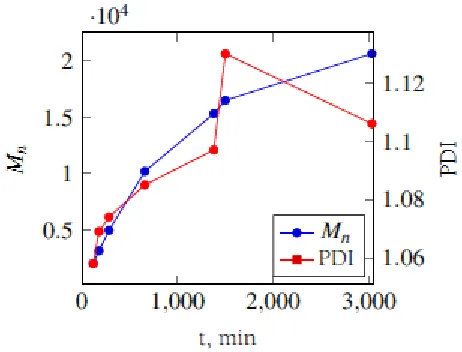
[image:29.612.191.422.270.446.2]Monomer (styrene), initiator, CTA, and solvent were mixed under argon in a round-bottomed flask with various mass ratios of monomer: solvent, 1:5 molar ratio of initiator to CTA, and 10:1 molar ratio of monomer to CTA. The reaction flask was bubbled with argon for 30 minutes to remove oxygen from the system before the temperature was increased. The reaction was run at 100 °C and the reaction time varied according the desired molecular weight (Mn). The molecular weight (number average) increase of the styrene homopolymer as a function of time is shown in Figure 7.
Figure 7. Molecular weight of polystyrene in RAFT reaction
RAFT of Acrylated Epoxidized Soybean Oil
Monomer (AESO), initiator, CTA, and solvent (1,2-dioxane) were mixed under argon in a 100 mL round-bottomed flask with various mass ratios of monomer: solvent, 1:5 molar ratio of initiator to CTA, and 10:1 molar ratio of monomer to CTA. This monomer to CTA ratio
16 Synthesis of P(Styrene-B-AESO)
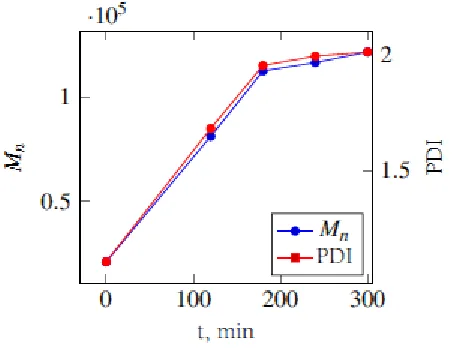
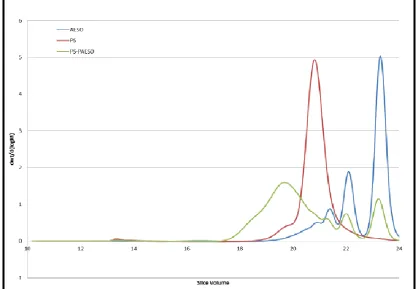
[image:30.612.190.416.253.427.2]For synthesis of P(styrene-b-AESO), AESO monomer dissolved in toluene (or dioxane) was transferred to the reaction vessel containing the styrene homopolymer. The reaction proceeded for 5-6 hours, and the product was cooled down and precipitated three times in excess methanol and water. Mn was monitored as a function of time for the diblock copolymer (Figure 8). The product was stirred in a 2:1 volume ratio of methanol to ethanol solution to remove unreacted AESO monomer. The final product was vacuum dried for 24 hours at room temperature. In Figure 9, the gel permeation chromatography (GPC) curves show a decrease in elution time (increase in molecular weight) from the AESO monomer, to polystyrene homopolymer (PS), and to the diblock copolymer (PS-PAESO).
Figure 9. Molecular weight distribution of AESO, polystyrene (PS), and PS-PAESO
Synthesis of P(Styrene-B-AESO-B-Styrene)
For P(styrene-b-AESO-b-styrene), the P(styrene-b-AESO) diblock was redissolved in toluene (or dioxane), styrene, and AIBN. The reaction vessel was bubbled with argon for 1 hour and the reaction proceeded for 1-2 hours at 70°C. The final product was precipitated two times in excess methanol and water. The product was then stirred in a 2:1 volume ratio of methanol to ethanol solution for 15 minutes to remove the unreacted AESO monomer. The product was filtered and vacuum dried at room temperature for 24 hours.
Reaction Time
18
CHAPTER 5 TEST RESULTS AND ANALYSIS
5.1 Characterizations of the Polymers
The final soy-based, thermoplastic, elastomeric, block copolymers are presented in Figures 10 and 11. The PS-PAESO diblock is shown in Figure 10, and the PS-PAESO-PS triblock is shown in Figure 11.
[image:32.612.78.540.195.370.2]
Figure 10. PS-PAESO diblock Figure 11. PS-PAESO-PS triblock
[image:32.612.71.534.523.584.2]The PS-PAESO and PS-AESO-PS block copolymers were subsequently characterized for their molecular weight and polydispersidy index using gel permeation chromatography (GPC) and for their polystyrene content using hydrogen-1 nuclear magnetic resonance 1H-NMR (Table 1). The results show 33 percent styrene in the PAESO diblock and 49 percent styrene in the PS-PAESO-PS triblock. 1H-NMR results are presented in Figure 12.
Table 1. Biopolymer molecular weights and styrene contents
M.W.a PDIb %Styrenec 1st d 2nd e
PAESO 29,500 1.39 0 - -
PS-PAESO 40,980 1.34 33 13,900 -
PS-PAESO-PS 53,300 1.84 49 13,900 12,200
a Total molecular weight of block copolymer b Polydispersity
c
Percent styrene in block copolymer
Figure 12. Nuclear magnetic resonance spectra results of PS-PAESO-PS
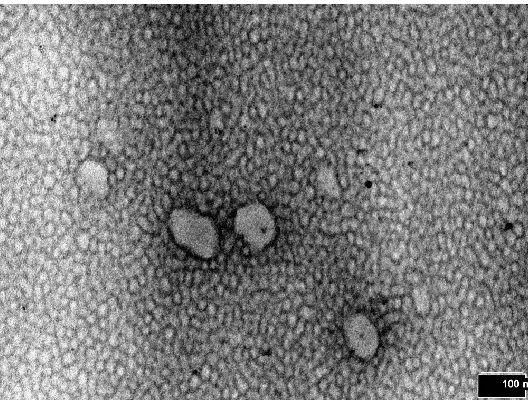
Figure 13 is a transmission electron microscopy (TEM) image of a PS-PAESO-PS sample. The image shows a semi-ordered structure where the black islands are the styrene (hard) blocks and the lighter regions are the AESO (soft) blocks.
20
[image:34.612.104.504.150.432.2]DSC testing provided a glass transition temperature for the PAESO and polystyrene blocks (Figure 14). The lower curve in the figure represents the PAESO block and the upper curve represents the polystyrene block. The glass transition of the PAESO is at -10°C; no apparent glass transition is present for the polystyrene block.
Figure 14. Differential scanning calorimetry results for PAESO and polystyrene blocks
Figure 15. Isothermal frequency scans of PS-PAESO-PS
Tensile testing was performed in an Instron 5569 using a speed of 60 mm/minute (Figure 16). The results show that the maximum stress that can be applied to the RAFT synthesized triblock copolymer was about 1.3 MPa (Figure 17).
[image:35.612.137.476.454.699.2]22
Figure 17. Tensile strain (mm/mm) vs. tensile stress (MPa) for PS-PAESO-PS
The characteristics of the soy-based polymers as presented in this chapter, demonstrate they should be suitable as an asphalt modifier. In addition to asphalt, they may also be used in various applications for other industries, such as viscosity modifiers for consumer care products,
adhesives, sealants, rubber compositions, products for the automobile industry, footwear, packaging, products for consumer electronics, etc.
5.2 Evaluation of Asphalt Modified with Kraton Polymers
Prior to evaluating blends of asphalt with the soy-based block copolymer, the XX-34 base asphalt was blended with Kraton D1101 SBS triblock and Kraton D1101 SB diblock at different percentages of polymer. The high PG failing temperature for each blend was evaluated using the DSR. The high performance grade (PG) temperature of an asphalt represents the temperature in degrees Celsius where the phase angle () divided by the complex shear modulus (G*) is equal to 1kPa for unaged binders and 2.2kPa for rolling thin film oven aged binders. Lower phase angles increase the elastic component of an asphalt binder, and higher complex shear modulus values increase the stiffness of the material. Thus, the higher the PG failure temperature of an asphalt binder, the greater its ability will be to resist pavement rutting from vehicular loading.
Table 2. DSR results for unaged asphalt modified with Kraton D1101
Temp Measurement Base Asphalt w/ 1% Kraton D1101 w/ 2% Kraton D1101 w/ 3% Kraton D1101 w/ 4% Kraton D1101 w/ 5% Kraton D1101
[image:37.612.73.511.417.720.2]46C
|G*| (Pa) 2023 2816 4500 5152
(degrees) 86.36 84.05 79.40 76.44 G*/sin() (kPa) 2.03 2.83 4.58 5.30
52C
|G*| (Pa) 879 1205 1962 2361 3560 4790
(degrees) 87.75 85.85 81.85 79.38 64.64 60.63 G*/sin(Δ) (kPa) 0.88 1.21 1.98 2.40 3.94 5.50
58C
|G*| (Pa) 569 928 1141 1946 2703
(degrees) 87.01 83.48 81.44 68.8 64.77 G*/sin() (kPa) 0.57 0.93 1.15 2.09 2.99
64C
|G*| (Pa) 588 1076 1532
(degrees) 82.36 71.78 68.65 G*/sin() (kPa) 0.59 1.13 1.65
70C
|G*| (Pa) 614 902
(degrees) 75.8 70.50 G*/sin() (kPa) 0.64 0.96
PG Failing Temp (C) 51.09 53.67 57.42 59.45 65.59 69.7
Table 3. DSR results for RTFO aged asphalt modified with Kraton D1101
Temp Measurement Base Asphalt w/ 1% Kraton D1101 w/ 2% Kraton D1101 w/ 3% Kraton D1101 w/ 4% Kraton D1101 w/ 5% Kraton D1101 46C
|G*| (Pa) 5449 7038 9619 11395
(degrees) 81.66 78.49 73.95 70.27 G*/sin() (kPa) 5.51 7.18 10.01 12.11
52C
|G*| (Pa) 2250 2998 4276 5230 6944 8541
(degrees) 84.13 81.33 77.59 74.14 67.80 62.57 G*/sin() (kPa) 2.26 3.03 4.38 5.44 7.50 9.62
58C
|G*| (Pa) 994 1349 1973 2475 3359 4516
(degrees) 86.09 83.87 81.03 78.36 73.11 65.74 G*/sin() (kPa) 1.00 1.36 2.00 2.53 3.510 4.95
64C
|G*| (Pa) 1198 1653 2442
(degrees) 82.06 77.11 70.00 G*/sin() (kPa) 1.21 1.70 2.60
70C
|G*| (Pa) 1331
(degrees) 73.61 G*/sin() (kPa) 1.39
24
Tables 4 and 5 show the DSR results of the unaged and RTFO aged XX-34 base asphalt modified with Kraton D1118 SB polymer, respectively, at polymer contents of 1, 2, 3, 4, and 5 percent. The D1118 polymer did not increase the grade of the base asphalt as much as the D1101 polymer. For example, when 5 percent D1118 polymer was blended with the base asphalt, the continuous grade of the base asphalt increased to 62.2C; whereas when 5 percent D1101
polymer was blended with the base asphalt, the continuous grade of the base asphalt increased to 65.6C. The high PG temperatures for the D1101 modified asphalt was expected since SBS is known to have a greater ability than SB to from an elastic network of physical chain
[image:38.612.71.512.233.492.2]entanglements in the polymer rich phase of an asphalt-polymer blend.
Table 4. DSR results for unaged asphalt modified with Kraton D1118
Temp Measurement Base Asphalt w/ 1% Kraton D1118 w/ 2% Kraton D1118 w/ 3% Kraton D1118 w/ 4% Kraton D1118 w/ 5% Kraton D1118
46C
|G*| (Pa) 2023 2674 3170 4745
(degrees) 86.36 83.89 81.14 75.27 G*/sin() (kPa) 2.03 2.69 3.21 4.91
52C
|G*| (Pa) 879 1162 1438 2242 2229 2870
(degrees) 87.75 85.73 83.54 77.96 75.86 72.95 G*/sin() (kPa) 0.88 1.17 1.45 2.29 2.299 3.00
58C
|G*| (Pa) 546 689 1102 1126 1488
(degrees) 87.14 85.49 80.80 77.34 74.26 G*/sin() (kPa) 0.55 0.69 1.12 1.15 1.55
64C
|G*| (Pa) 565 601 812
(degrees) 82.42 78.04 74.57 G*/sin() (kPa) 0.57 0.61 0.84
Table 5. DSR results for RTFO aged asphalt modified with Kraton D1118
Temp Measurement Base Asphalt w/ 1% Kraton D1118 w/ 2% Kraton D1118 w/ 3% Kraton D1118 w/ 4% Kraton D1118 w/ 5% Kraton D1118
[image:39.612.74.447.450.587.2]46C
|G*| (Pa) 5449 7233 8100 10065
(degrees) 81.66 78.39 75.76 72.06 G*/sin() (kPa) 5.51 7.38 8.36 10.58
52C
|G*| (Pa) 2250 3091 3575 4666 5079 6319
(degrees) 84.13 80.74 77.60 73.72 72.2 68.68 G*/sin() (kPa) 2.26 2.13 3.66 4.86 5.34 6.78
58C
|G*| (Pa) 994 1418 1695 2271 2540 3231
(degrees) 86.09 83.05 79.90 76.07 73.96 70.22 G*/sin() (kPa) 1.00 1.43 1.72 2.34 2.64 3.43
64C
|G*| (Pa) 1142 1311 1731
(degrees) 78.84 76.43 72.41 G*/sin() (kPa) 1.16 1.35 1.82
Failing Temp (C) 52.38 54.74 56.02 58.65 59.67 62.20
The low temperature creep stiffness and the m-value of the base asphalt and Kraton polymer-asphalt blends were evaluated using a bending beam rheometer (BBR) (Table 6). Three percent Kraton D1101 and D1118 each increased the continuous low temperature PG only by about three degrees which kept the low PG at -34C.
Table 6. BBR results for PAV aged asphalt modified with Kraton D1101 and D1118
Base Asphalt w/ 3% Kraton D1101
w/ 3% Kraton D1118 Temp Measurement PAV Aged PAV Aged PAV Aged -24C Stiffness (MPa) 182 - 245 244 245 237
m-value 0.346 - 0.310 0.306 0.311 0.307 -30C Stiffness (MPa) 479 - 520 489 492 495 m-value 0.271 - 0.239 0.241 0.244 0.235
Continuous
Low Grade (C) -37.68 -34.71 -34.78
5.3 Evaluation of Asphalt Modified with the Biopolymers
PS-PAESO and PS-PAESO-PS were blended with the base asphalt to determine how the
26
biopolymer production capacity.) The blends were compared to the base asphalt as well as the base asphalt processed in the shear mill without polymer. The results in Table 7 highlight the high heat levels that occur during shear mill processing which cause the asphalt to age, resulting in a 2.5 to 3 degree increase of the high PG temperature. Although a continuous high PG of 51.09C was measured in the base asphalt with the DSR, 53.64C should be used as the base asphalt PG for a proper comparison to respective polymer-modified asphalt blends since all polymer-asphalt blends were processed in a shear mill.
[image:40.612.71.533.307.683.2]When 2 percent PS-PAESO diblock was added to the base asphalt, the base asphalt’s continuous high PG increased from 53.64C to 69.08C. The PS-PASEO-PS triblock at 2 percent increased the continuous high PG to 70.4C. Both PG values are higher than the asphalt modified with 2 percent D1101 and D1118, which were 57.22C and 55.03C respectively. The higher PG values in the biopolymer-modified asphalt are a result of a lower phase angle and higher shear modulus value than the Kraton polymer-modified asphalt.
Table 7. DSR results for asphalt modified with biopolymers
Base Asphalt
Base Asphalt processed in shear
mill w/o polymer
Base Asphalt w/ 2%PS-PAESO
Base Asphalt w/ 2%PS-PAESO-PS Temp Measurement Unaged RTFO
Aged Unaged
RTFO
Aged Unaged
RTFO
Aged Unaged
RTFO Aged
46C
|G*| (Pa) 2023 5449 2843 8219
(degrees) 86.36 81.66 84.37 79.35 G*/sin() (kPa) 2.027 5.51 2.857 8.362
52C
|G*| (Pa) 879 2250 1214 3383 9599 18900 11250 21275
(degrees) 87.75 84.13 86.03 82.24 73.92 67.98 73.12 67.56 G*/sin() (kPa) 0.88 2.26 1.216 3.414 9.988 20.39 11.76 23.02
58C
|G*| (Pa) 994 557.2 1494 4323 8646 5100 9893
(degrees) 86.09 87.26 84.55 77.01 71.39 76.34 70.85 G*/sin() (kPa) 1.00 0.5579 1.501 4.436 9.124 5.248 10.48
64C
|G*| (Pa) 2012 4043 2384 4680
(degrees) 79.85 74.90 79.40 74.34 G*/sin() (kPa) 2.04 4.19 2.43 4.86
70C
|G*| (Pa) 983 1941 1157 2233
(degrees) 82.24 78.23 82.11 77.72 G*/sin() (kPa) 0.99 1.98 1.17 2.29
76C
|G*| (Pa) 583 1094
(degrees) 84.44 80.76 G*/sin() (kPa) 0.59 1.11
The asphalt properties from DSR testing at intermediate pavement temperatures on PAV aged blends are presented in Table 8. The intermediate PG temperature is calculated as the
temperature in degrees Celsius where the complex shear modulus multiplied by the phase angle equals 5000 kPa. Lower intermediate PG temperatures indicate an asphalt binder has a greater ability to deform without building up large stresses. A more compliant material will help reduce structural fatigue cracking in pavements. The biopolymers increased the intermediate PG
temperatures four to six degrees Celsius. The PS-PAESO-PS modified asphalt contained a lower continuous PG intermediate temperature (12.96C) than the PS-PAESO modified asphalt
[image:41.612.73.535.304.669.2](15.11C). The main factor contributing to this difference was the larger G* value component in the PS-PAESO modified asphalt. Although both PS-PAESO and PS-PAESO-PS asphalt blends possess similar elastic properties at intermediate temperatures as evident from the phase angles, the presence of the second polystyrene block in the PS-PAESO-PS may be contributing the polymers ability to form a network of physical entanglements throughout the asphalt binder to create a more compliant material at intermediate temperatures.
Table 8. DSR results for PAV aged asphalt modified with biopolymers
Base Asphalt
Base Asphalt processed in shear
mill w/o polymer
Base Asphalt w/ 2%PS-PAESO
Base Asphalt w/ 2%PS-PAESO-PS Temp Measurement PAV Aged PAV Aged PAV Aged PAV Aged
22C
|G*| (Pa) 8.22E+05 3.24E+06 2.49E+06
(degrees) 57.71 43.42 43.77 G*/sin() (kPa) 694.5 2228 1725
19C
|G*| (Pa) 1.35E+06 4.80E+06 3.72E+06
(degrees) 55.17 41.42 41.77 G*/sin() (kPa) 1110 3177 2476
16C
|G*| (Pa) 2.20E+06 2.47E+06 7.08E+06 5.49E+06
(degrees) 52.51 50.26 39.37 39.77 G*/sin() (kPa) 1748 1894 4490 3510
13C
|G*| (Pa) 3.61E+06 3.93E+06 1.03E+07 8.07E+06
(degrees) 49.61 47.49 37.39 37.76 G*/sin() (kPa) 2746 2900 6248 4937
10C
|G*| (Pa) 5.80E+06 6.21E+06 1.18E+07
(degrees) 46.7 44.68 35.75 G*/sin() (kPa) 4216 4366 6884
6C
|G*| (Pa) 9.13E+06 9.76E+06
(degrees) 43.73 41.78 G*/sin() (kPa) 6310 6495
28
[image:42.612.72.533.234.413.2]After intermediate temperature testing, the long-term aged biopolymer-asphalt blends from the PAV were evaluated for their low temperature properties (Table 9). When the base asphalt was processed in the shear mill without polymer, the creep stiffness increased and the m-value decreased at low temperatures which resulted in a higher critical cracking temperature. The critical cracking temperature is the temperature at which an asphalt binder’s creep stiffness is greater than 300 MPa or m-value is less than 0.300. Both the creep stiffness and m-value are determined from BBR testing after 60 seconds of loading. Adding two percent biopolymers to the base asphalt resulted in the critical cracking temperature increasing from -36.3C to -32.8C for the PS-PAESO modified asphalt and -33.0C for the PS-PAESO-PS modified asphalt.
Table 9. BBR results for PAV aged asphalt modified with biopolymers
Base Asphalt
Base Asphalt processed in shear
mill w/o polymer
Base Asphalt w/ 2%PS-PAESO
Base Asphalt w/ 2%PS-PAESO-PS Temp Measurement PAV Aged PAV Aged PAV Aged PAV Aged -18C Stiffness (MPa) - - - - 117 - 128 -
m-value - - - - 0.360 - 0.336 - -24C Stiffness (MPa) 182 - 190 223 267 279 271 274 m-value 0.346 - 0.319 0.327 0.291 0.280 0.296 0.290 -30C Stiffness (MPa) 479 - 444 479 471 - - - m-value 0.271 - 0.261 0.267 0.214 - - -
Continuous
Low Grade (C) -37.68 -36.34 -32.83 -33.02
A PG temperature grade comparison of the base asphalt, asphalt modified with Kraton polymers, and asphalt modified with the biopolymers, is shown in Figures 18 and 19. The charts highlight the differences among base asphalt modified with different polymers at two percent. The D1101 and D1118 polymers increased the high PG temperature approximately one grade, from 51.1C to 57.2C and 55.0C, respectively. For the biopolymers, when two percent PS-PAESO was added to the base asphalt, the high PG temperature increased from 51.1C to 69.1C; and when two percent PS-PAESO-PS was added to the base asphalt, the high PG temperature increased to 70.4C. These increases equate to approximately three grade bumps and demonstrate the
effectiveness of the biopolymers. By adding two percent of either biopolymer to the base asphalt, the increase in high temperature PG will enhance the rutting resistance of an asphalt pavement.
While the biopolymers were more effective than the Kraton polymers at increasing the high temperature performance grade, the biopolymers increased the low temperature PG of the base asphalt one grade while the Kraton polymers did not (Figure 2). This increase in the low
temperature PG caused the asphalt binder to be more susceptible to low temperature cracking at -34C. The benefit of adding two percent Kraton polymers was increasing the high PG
percent polymer. Since additional polymer will increase the low temperature PG, the extra 1% polymer in these samples should not affect the analysis.)
Therefore, the biopolymers were more effective than the Kraton polymers in increasing the high temperature, but not as effective in retaining the low stiffness modulus of the base asphalt. Adding two percent of either biopolymer to the base asphalt, increased the low temperature PG one grade (from -34 to -28C). Even so, adding two percent PS-PAESO-PS increased the grade range (the high PG minus the low PG) from 88.8 to 103.4 which substantially increases the performance temperature range of the base asphalt.
[image:43.612.93.518.218.430.2][image:43.612.92.521.289.676.2]
Figure 18. Comparison of high temperature continuous performance grades
Figure 19. Comparison of low temperature continuous performance grades
51.1 53.6
57.2
55.0
69.1 70.4
46.0 52.0 58.0 64.0 70.0 76.0 82.0
Base Asphalt Base Asphalt processed in shear mill w/o
polymer 2% Kraton D1101 2% Kraton D1118 2% diblock PS-PAESO 2% triblock PS-PAESO-PS PG Te m p era tu re ( C)
-37.7 -36.3
-34.7 -34.8
-32.8 -33.0
-40.0 -34.0 -28.0 -22.0 -16.0 Base Asphalt Base Asphalt processed in shear mill w/o
30
CHAPTER 6 ECONOMIC ANALYSIS
The most significant cost in manufacturing SBS polymers is the price of butadiene. For the last decade butadiene has been subject to large price fluctuations from crude oil price increases and global market shifts in supply and demand. Butadiene supply has been tightening due to the abundance of shale gas supplies. Since shale gas has become more available, lighter
petrochemical feeds such as ethane have been more commonly used as a feedstock at cracking facilities to produce ethylene and its co-products that include butadiene. However, butadiene is only a co-product when heavier liquid feeds, not lighter feeds, are used. The effects this has had on the price of butadiene over the last several years are shown in Figure 20.
[image:44.612.113.514.472.653.2]In contrast, polymerized triglycerides, such as those found in soybean oil, are intrinsically renewable, are environmental friendly, and may also be shown to exhibit biodegradability. The research presented in this report indicates the elastomeric properties of soybean oil polymer appear to be competitive with modern commodities such as polybutadiene (synthetic rubber). Furthermore, the cost of the soybean oil monomer has become highly competitive in recent years. As shown in Figure 20, soybean oil as a biomonomer is more economical than butadiene monomer feedstocks (e.g., a ton of soybean oil costs less than $1,000, whereas a ton of butadiene has cost up to $3,500). The lower raw materials costs of soybean oil translate into lower costs of polymer-modified asphalt. The handling of vegetable oils in producing the bioelastomers and subsequent linking with styrene is also much safer and has less impact on the environment. Thus, the novel soy-based, thermoplastic, elastomeric, block copolymers provide a cost-effective, environment-friendly, viable alternative for the conventional petrochemically-derived polymeric SBS and SB. With future implementation of the developed biopolymers, Iowa source materials (e.g., soybean oil) can be utilized to produce polymers for use in Iowa. This can create improved economic opportunities for soybeans resulting in economic value to Iowa and maintaining soil qualities through a balanced crop rotation with corn.
Figure 20. Commodity costs comparison
Preliminary simulations estimate PAESO will cost about $2000 per ton as compared with $3200 per ton for polybutadiene. Further, the storage and handling of PAESO is less than polybutadene.
0 500 1000 1500 2000 2500 3000 3500 4000
Jan-11 Jul-11 Jan-12 Jul-12 Jan-13
d o llar s ($) / t o n