Abstract: The world is in need of food, water, Shelter and without any of these there is no possibility to live. Agriculture is backbone of our nation which indeed supplies food for the entire people but the producers of food are facing many problems like moisture content, fertility of soil which affects the farming. Because of this reason cultivation and production of food grains are decreased. Current scenario is that the farmers need to go research center to test the fertility content of soil and to predict kind of plants can be cultivable in that land. In this paper perfect cultivable plants can be detected properly without approaching soil research centers which consumes more money as well time. By the application of pH sensors the fertility of soil can be measured. By measuring the pH soil nutrient content can be measured and so the suitable cultivable crop for different soil varieties can be predicted. In this view to give a healthful support to farmers, soil nutrients are analyzed and report the requirement using advanced sensors.
Index Terms: Soil nutrient measurement, Soil pH analysis by Arduino, Crop analysis, Method to improve cultivation, Nutrient based crop selection, Nutrient and crop analysis by Soil pH.
I. INTRODUCTION
An intelligent system for detecting cultivable crops by analyzing soil nutrients is a module to analyze the soil nutrients from its pH value. Soil nutrient is not a stable one; it will vary continuously depending upon the climatic variations, temperature and humidity. Soil nutrient plays vital role in both quality and quantity of production of cultivable crops. Nowadays the nutrients are analyzed only in the laboratories, which are a tedious process that consumes lot of time as well money that is not possible for a normal farmer to do that process. So they are cultivating same crops in the field which gave more yields in previous cultivation. If they again and again cultivating same crops, though they are adding fertilizers to it, the cultivation yield will not be up to the level because of its nutrient. Nutrient can be analyzed by measuring its pH value that is an easier process and will not consume
Revised Manuscript Received on July 05, 2019
K. Sakthisudhan, Associate Professor, Department of Electronics and Communication Engg., Dr.N.G.P. Institute of Technology, Coimbatore, Tamilnadu, India -641 048.
N.Saravanakumar Associate Professor, Department of Electronics and Communication Engineering, Dr.Mahalingam College of Engineering and Technology, Pollachi, Tamilnadu, India -642 003.
S. Mohanraj, Assistant Professor, Department of Electronics and Communication Engineering, M.Kumarasamy College of Engineering, Karur, Tamilnadu, India-639 113.
more money like in soil testing laboratories. With the help of this work cultivable plants can be detected properly without moving on to soil research centers which consumes more money as well time. By the application of pH sensors, the fertility of soil can be measured. By measuring the pH soil nutrient content can be measured and so the suitable crop can be predicted and alert is send through GSM/GPRS module[7]. On this view to help farmers some measurement such as physical and chemical parameters are analyzed and by using the latest sensor technology the parameters required are calculated. The main objective of this project is to reduce the difficulties faced by the farmer and to increase the rate of production of cultivation.
In this paper, pH of the soil will be measured and corresponding nutrient content will be analyzed. From that, the suggestion for crop which can grow well in that soil will be given and necessary steps to increase the soil fertility will be provided. The results can also be monitored in user’s mobile phone. Programming is done in Arduino IDE and it is uploaded to the processor board. This method is highly efficient and cost effective. Also this method doesn’t include any chemicals.
II. RELATEDWORKS
For those 1990’s enthusiasm toward soil personal satisfaction and seeing its vitality need come to the bleeding edge for ecological maintainability. The terms soil quality, soil degradation, soil health, soil flexibility are constantly utilized additional every now and again with more excellent desperation to association with methodologies on secure our worldwide earth. Those will enhance our personal satisfaction for an aggregation and ensure numerous rare regular assets are forcing the public eye to perceive the vitality about their soil asset. However, soil personal satisfaction and territory administration both have immediate impact around water Furthermore climatic nature also toward development with mankind's creature wellbeing. Same time apparently a straight-ahead concept, soil personal satisfaction had been troublesome with define and additional challenging to quantify.
Soil is a mixture about weathered rock fragments, minerals and natural matter that are on the earth’s surface. It gives a “Home” on incalculable microorganisms, invertebrates, and plant bases. Its profundity varies starting with a couple inches with a few feet. Dirt gives
nutrients, water and physical
A Smart Agriculture System Based On Intel
Galileo For Detection Of Cultivable Crops And
Implemented On Soil Nutrients
help to the plants. It may be additionally a sourball of air to plant roots. Attaches placed in the dirt would nature’s grade recyclers that turn dead cells and tissue under nutrients, energy, carbon dioxide and water to fuel new term. Soil may be a profitable asset likewise an establishment about plant development. A portion farmer and other area directors bring soil analyzed to supplement levels. Generally, soil tests need builds large amounts in the final one a few decades. As specified earlier, a percentage soils are natively secondary clinched alongside specific supplements. The essential plant nutrients include carbon and oxygen, which are observed from the air, where as other nutrients including hydrogen, are typically obtained from the soil.
Micro supplement focuses need aid for the most part higher in the surface soil that declines with soil profundity. Despite those high focus about the majority micro supplements over soils, best a little portion may be accessible with plants. Micronutrients, otherwise called follow elements, need aid in micro amounts however the way this absence might result in genuine crop preparation and creature wellbeing issue. Yields shift significantly to their light of different micro supplements. Micro supplement deficiencies need aid additional regular done muggy tropical regions, and in addition in muggy temperature regions, due to heightening draining connected with high precipitation. Macro organic entities would crucial for those development and metabolism for sugar fruit in the plant and union of plant symphonious and nucleic acids. It likewise works in the lignin creation from claiming cell dividers. Focuses about these Macro supplements in the dirt need aid for the most part decided preceding those sites might be disseminated. Furthermore, macronutrients there need aid different follow components that would be vital to plant growth. These follow components need aid necessary in littler amounts over macro supplements.
Miao Zhang et al.,[1] proposed an automatic fluidic system to detect soil nutrients. In this work, the test solution is filled with the chamber connected with ion-selective electrodes(ISE). The system also contains Micropump and valves controlled by a personal computer, which is used for delivering the solution. Custom controller software runs on the laptop was programmed to automatically control the fluidic system. ISE electrodes were employed as soil nutrient sensors. To lower the cost, the laptop computer can be replaced with a low-cost stand-alone embedded system.
John Carlo Puno et al.,[2] proposed an Artificial Neural Network based soil nutrient analysis system with image processing. In this work they measured primary and secondary micronutrients, the Soil Test Kit(STK) is used to analyze the primary nutrients and Rapid Soil Test(RST) is used to measure the level of secondary micronutrients. The image processing technique is used to identify the soil pH level with Soil Test Kit. The ANN is used to increase the performance and accuracy of the image processing results. In this work, the micronutrient level is identified in a short duration of time. The acidic, neutral or basic level of pH of a micronutrient is measured by colorimetric measurement and it suggests the fertilizer requirement.
Piyush K. Surkar and A R Karwankar,[3] worked on automatic testing of soil samples victimization particle selective electrodes. Ion-selective electrodes (ISEs) are a positive approach because of their little size, fast response, and skill to directly live the analytic resolution. These sensors give the conversion of chemical data into Associate in Nursing electrical signal. The management unit consisting of Arduino Uno converts this analog data and provides appropriate knowledge to the output unit consisting of LCD and printer. With the magnifying capability of recent automatic titrations, it's doable to live particle content in minutes victimization Associate in the Nursing ion-selective Electrodes (ISE). Automatic soil testing may be a favorable technique to live the soil properties during a speedy manner than several ancient research lab ways. It is used for on-field soil examination for higher exactness farming. Ion-selective electrodes give for the bulk of measurable macronutrients within the future.
III. EXISTINGSYSTEM
Many traditional methods are available to analyze the soil nutrient. Few chemical methods are really effective. However, for analyzing, farmer needs to go to the respective laboratory with the soil sample and it will take up to 3 days to complete entire process.
A. Analytical Laboratory
A large number of soil tests are done in analytical laboratories, which providing diverse knowledge about the submitted soil sample. But this information is not adequate in our present situation. This test required advice from an independent agronomist, we need help in deciding which test to perform. In certain cases, the basic test is sufficient to analyze the nutrients like pH. In other cases, comprehensive analyses covering the full range of major and trace elements, exchangeable cations and soil organic matter levels will be more appropriate. For economy and convenience, laboratories prefer to test groups of elements extracted by the same method (e.g. trace elements, cations) rather than to offer tests for each individual element.
B. Neubauer Seedling Method
In this method in a small amount of test soil, a large number of plants are grown based on uptake of the nutrients. In the short time duration how much available nutrients are drained in the test sample is calculated. The total nutrients removed are quantified and tables are established to give the minimum values of macro and micronutrients available for satisfactory yields of various crops.
C. Spectroscope Analysis Method
qualities of reflected light shift because of the soil physical and compound properties. Laser prompted fluorescence spectroscope or close infrared spectroscope strategy or UV spectroscope are extremely utilized to test and also to business end goal. Such optical strategies been investigated toward a number researches because of alluring preferences through electrochemical technology, for example, non-destructive estimation and for no detract of soil collection. These optical techniques are dependable on duration and also time consuming, intricate very high expense for every test. This brought about those restrictions of the number about dirt tests are tried characterizing the spatial accessibility of the dirt supplements to a field.
All the techniques, which are currently followed to test, the soil pH is efficient but not effective. They method is sophisticated and expensive as well as time consuming.
IV. MATERIALSANDMETHODS
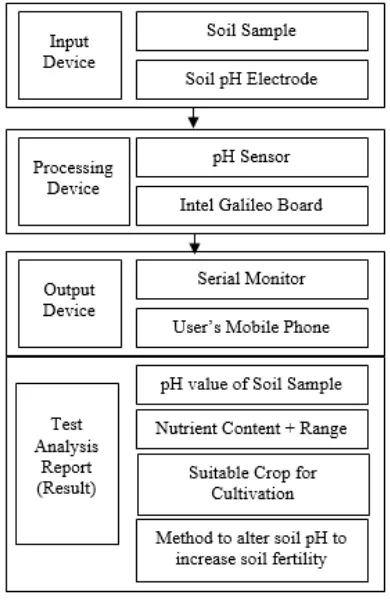
[image:3.595.318.525.423.523.2]Conventional method which uses separate sensors for every soil nutrient, chemical and organic method, spectroscopy technology is accurate and satisfactory but it is not convenient due to is sophisticated design environment and expensive which cannot be accomplished by the farmers all the time, also most of the farmers are unaware of it. Hence, to minimize the cost and complexity in the technology, soil nutrients are analyzed from its pH value in this project from that perfect cultivable crop can also be detected with less complexity. The workflow diagram for the proposed system is as shown in Fig.1 and hardware module shown in Fig.2.
Fig. 1 General Process Workflow
The nutrients present in the soil may vary depending upon the soil alkalinity and acidity. If there is any change in soil, it can directly affect the soil pH. The Fig. 3 clearly determine the available nutrients present in the soil depending upon the pH value. For example, the potassium is present more in above 6.5 pH value. Similarly, all the primary and secondary nutrients present will vary according to the pH of the soil. So it can be calculated without any deviation. In this work, we use a glass covered ion-selective electrode based soil pH sensor to identify the exact range of soil and it is very sensitive in a smaller range of variations. The normal glass electrode or any ion selective electrode for pH analysis is compatible with INTEL board, which is an Arduino device.
The input system consists of testing soil and soil pH electrode. This soil pH electrode is diluted and kept in the testing soil. After attaining the fixed time target, the input system is further processed. The processing device consists of the soil pH electrode along with the hardware Intel Galileo Board. The soil level nutrients are processed in this stage using pH sensor. Soil pH will be viewed as a master variable on soils as it influences a large number concoction technique. It particularly influences plant supplement accessibility by regulating the compound manifestations of those separate supplements by influencing the synthetic responses they experience. The connections were given and the board should be interfaced with computer. The soil that is going to be tested should be diluted with distilled water and kept undisturbed for a while. This makes the nutrients of soil to dissolve in water. Later the pH electrode should be immersed in the water.
Fig. 2 Hardware Module
[image:3.595.75.270.426.726.2]V. RESULTSANDDISCUSSION
A. Effect of Soil pH on its Nutrient
The alluring soil pH extent for ideal plant growth varies around harvests. Soil pH may be imperative on it influences the accessibility from claiming supplements and plants. The Fig. 3 shows the relation between soil pH value and its nutrient composition. To calculate all the secondary nutrients and minimal minerals present in the soil, measurement of pH alone is not sufficient, but to measurement of pH helps to detect the major and primary nutrients in soil [4]. This can be effectively utilized to detect corresponding cultivable crops and fertilizer requirement.
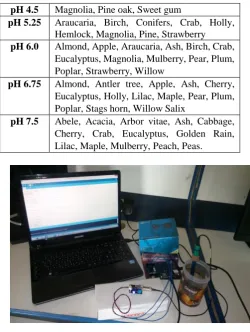
[image:4.595.306.554.144.842.2]B. pH Range and Corresponding Cultivable Crops The Table. I shows the list of pH value and corresponding cultivable crops. The alluring pH runs for ideal plant development shifts among yields. While a few harvests develop best in the 6.0 to 7.0 territory, others develop well under somewhat acidic conditions. Soil properties that impact the requirement for and reaction to lime differ by locale. Learning of the dirt and the yield is significant in overseeing soil pH for the best harvest execution. Soils framed under states of high yearly precipitation are more acidic than are soils shaped under more conditions that are bone-dry. Compare to Midwest and far west, south-eastern soils have move acidic. Soils shaped under low precipitation conditions will, in general, be essential with soil pH readings around 7.0. Serious cultivating over various years with nitrogen composts or fertilizers can result in soil fermentation. In the wheat-developing districts, which have soil pH of 5.0 and beneath, aluminum harmfulness in wheat and great reaction to liming have been reported as of late [5]. The Fig. 4 and Fig. 5 shows the experimental setup and simulation results respectively.
Fig. 3 Soil pH and Corresponding Nutrient Value
C. Method to Alter Soil pH
If the soil pH is above the optimum level, it is needed to be reduced and if it low it is needed to be raised up to the optimum level to make the soil suitable for cultivation. The soil pH can be lowered by adding Sulphur to it. [Suggested
[image:4.595.305.556.157.490.2]apply Sulphur at 1.2 oz. per square yard on sandy soils, or 3.6 oz. per square yard on all other soils.] The soil pH can be raised by adding lime [The most common method of raising pH is by adding lime to the soil. There are several kinds of lime. The preferred limes for garden use are hydrated lime and ground lime].
Table. I pH Value and Corresponding Cultivable Crops
pH 4.5 Magnolia, Pine oak, Sweet gum
pH 5.25 Araucaria, Birch, Conifers, Crab, Holly, Hemlock, Magnolia, Pine, Strawberry pH 6.0 Almond, Apple, Araucaria, Ash, Birch, Crab,
Eucalyptus, Magnolia, Mulberry, Pear, Plum, Poplar, Strawberry, Willow
pH 6.75 Almond, Antler tree, Apple, Ash, Cherry, Eucalyptus, Holly, Lilac, Maple, Pear, Plum, Poplar, Stags horn, Willow Salix
pH 7.5 Abele, Acacia, Arbor vitae, Ash, Cabbage, Cherry, Crab, Eucalyptus, Golden Rain, Lilac, Maple, Mulberry, Peach, Peas.
Fig. 4 Experimental Setup
[image:4.595.53.287.488.670.2]VI. CONCLUSION
This work represents a systematic approach to the analysis of soil fidelity by measuring pH of the soil in order to predict the cultivable crop. A hardware module is implemented with the Intel Galileo board along with pH sensor. Based on the results, the proper crops can be cultivated and hence the quality of cultivation will be increased to the formers and agriculturists. In future, measurement of temperature, humidity of soil can also be included. In addition, additional parameters like electrical conductivity can also be measured and added for better perception.
REFERENCES
1. M. Zhang, M. Wang, Li Chen, S. S Ang, C. V. Nguyen, J. Zhu, “An automatic fluidic system for the rapid detection of soil nutrients,” IEEE In. Conference on Automation and Logistics, 2008, pp. 2742–2746. 2. T. Adhikary, A. K. Das, Md. A. Razzaque, M. Enamul Hoque
Chowdhury, S. Parvin, “Test implementation of a sensor device for measuring soil macronutrients”, International Conference on NSysS, 2015, pp.1-8.
3. B. S. Shiva Prasad, M. N. Ravishankara, B. N. Shoba, “Design and Implementation of Seeding and Fertilizing Agriculture Robot,” Volume 3, Issue 6, 2014, pp. 251-255.
4. D. S.Loch, “Soil Nutrient Testing: How to Get Meaningful Results,” Redlands Research Station, Cleveland, 2003, pp.1-10.
5. C. S. Piper, “Soil and Plant Analysis,” University of Adelaide, South Australia. 1942.
6. Pfister C., “Getting Started with Internet of Things”, published by O’Reilly Media, Inc., first edition 2011.
7. Robert Faludi., “Building Wireless Sensor Networks”, published by O’Reilly Media, Inc., first edition 2010.
8. Onur Dundar., “Home Automation with Intel Galileo”, Published by Packt Publishing Ltd, UK., first edition march 2015.
9. Manoel Carlos Ramon., “Intel Galileo and the Intel Galileo Gen 2”, Apress open publishers, 2013.