Conscientisation and Human Development:
The case of digital inclusion programmes in Brazil
Sammia Poveda
Department of Geography
Royal Holloway, University of London
This dissertation is submitted for the degree of Doctor of Philosophy
i
Declaration of Authorship
I Sammia Cristina Poveda Villalba hereby declare that this thesis and the work presented in it is entirely my own. Where I have consulted the work of others, this is always clearly stated. This work has not previously been submitted in part or in whole to any university for any degree or other qualification. In accordance with regulations of Royal Holloway, University of London, the dissertation contains no more than 100,000 words of text.
Signed: ______________________
ii For to be free is not merely
to cast off one’s chains, but to live in a way that respects and enhances the freedom of others.
iii
Abstract
This thesis analyses digital inclusion programmes in Brazil through the combined theoretical lens of the Capability Approach (CA) to development and Freire’s Pedagogy of the Oppressed. Findings suggest that a process of conscientisation is needed for individuals to fully take control of their appropriation of the technologies. Appropriation is understood as individuals being able to use ICT as tools to achieve what they value and have reason to value.
Through interviews, focus groups, observation, participatory methods and action research, the research examined two separate digital inclusion initiatives in Campinas, Brazil. The courses were offered free of charge, one by a public body and one by an NGO, and targeted disadvantaged and vulnerable groups.
iv
Acknowledgements
It is my belief that everyone who has gone through the PhD process finds this experience emotionally, psychologically and intellectually challenging. It is much more than acquiring a new degree, and without the support of family, friends and colleagues, I would have never been able to finish this journey.
Above all, I would like to thank my parents, Sammia and Juan, for their support, trust, company, advice, and over all, their love. Thanks also to my brother Juan, Madre, Xime, Oma and Joaquín. A special thanks to my uncle Jairo, who has been a great support for me since I moved to the UK.
This thesis would not have been possible without the guidance, supervision, support and help from my supervisor Dr Dorothea Kleine. She has been an incredible mentor, both in the academic and the personal spheres. Also, thanks to my advisor, Prof Katie Willis, who has shared with me her wisdom in many ways.
I would also like to thank all my friends and colleagues (in no particular order), who have inspired me and helped me in this journey: Tony, Sonia, Silvia, Giulia, Sere, Wouter, Ugo, Caitlin, Paolo, Matt, Laura, Jay, Yajun, Andrea, Alba, Anne, Karen, Liz, Moya, Jenny, Sharon, Dr Lars. My apologies if I forget someone.
This research would have not been possible without my research partners CDI Campinas and Jovem.com. These two organisations opened their doors to me, worked with me, and without their trust, I would had never been able to conduct fieldwork and present here its results. I would like to thank all the members of staff, teachers, coordinators involved in this project, and in particular, all the students from the courses I observed. Finally, I would like to make a special acknowledgment to Andrea Portugal. She was Coordinator of CDI Brasilia years ago when I was a volunteer with CDI. She introduced me to CDI’s work and later on also introduced me to CDI Campinas.
v
Table of Contents
Declaration of Authorship ... i
Abstract ... iii
Acknowledgements ... iv
List of Tables ... ix
List of Figures ... ix
List of Plates ... xi
List of Acronyms ... xii
Chapter 1 Introduction ... 1
1.1 Inequalities and ICT4D ... 1
1.2 Introducing the case studies ... 3
1.3 Defining development as freedom ... 5
1.4 Defining freedom as a result of struggle ... 7
1.5 Sen’s and Freire’s approaches applied in digital inclusion ... 9
1.6 Research questions ... 10
1.7 Thesis structure ... 10
Chapter 2 Freedom, conscientisation and ICT ... 12
2.1 Introduction ... 12
2.2 Expanding freedom: the capability approach ... 12
2.2.1 The individual: reason and choice ... 13
2.2.2 Human diversity and adaptive preferences ... 15
2.2.3 Social structure and agency ... 21
2.2.4 The challenge of operationalisation ... 27
2.3 Obtaining freedom through struggle: the pedagogy of the oppressed ... 31
2.3.1 Internalised oppression and conscientisation ... 32
2.3.2 PPE: a concrete methodology to address adaptation ... 34
2.3.3 An old-school radical? ... 36
2.4 Development and conscientisation ... 38
2.5 Space, mobility and gender ... 41
2.6 Conclusions ... 47
Chapter 3 Freedom and digital inclusion ... 49
3.1 Introduction ... 49
vi
3.3 The complexity of the digital divide ... 52
3.4 ICT4D from a capabilities approach perspective ... 56
3.5 Appropriation for development ... 62
3.6 Conclusion: freedom, appropriation and conscientisation ... 67
Chapter 4 Fieldwork and data collection ... 68
4.1 Introduction ... 68
4.2 Researcher positionality ... 68
4.3 Research philosophy ... 70
4.4 Research design ... 73
4.4.1 Methodology for data collection ... 74
4.4.2 Participatory operationalisation of theoretical framework ... 78
4.4.3 Methods for data collection (mixed methods) ... 84
4.4.4 Data analysis approach ... 90
4.5 The case studies ... 92
4.5.1 Selection of cases and sampling of participants ... 92
4.5.2 CDI ... 94
4.5.3 Jovem.com ... 102
4.5.4 Similarities and differences between CDI and Jovem.com ... 105
4.6 Ethical concerns ... 106
4.7 Limitations of the research ... 108
4.8 Conclusions ... 110
Chapter 5 Brazil and Campinas ... 111
5.1 Introduction ... 111
5.2 Country overview ... 112
5.3 Social indicators: achievements and challenges ... 114
5.3.1 Employment and income inequalities ... 114
5.3.2 Programa Bolsa Familia: relieving poverty ... 116
5.3.3 Investments in social services ... 117
5.3.4 Particularities of the city of Campinas ... 121
5.4 ICT sector ... 125
5.4.1 Evolution of the ICT sector in Brazil ... 125
5.4.2 Digital inequalities: a replication of social inequalities ... 127
5.4.3 Efforts to overcome ICT-related inequalities ... 128
5.5 Conclusions ... 129
Chapter 6 Motives, goals and constraints ... 132
6.1 Introduction ... 132
vii
6.3 Social and cultural discourses ... 137
6.3.1 Political engagement – lack of interest and distrust ... 137
6.3.2 Cultural discourses and their impact on agency ... 140
6.4 The structures in Campinas related to geography ... 144
6.4.1 The impacts of space on the portfolio of resources ... 144
6.4.2 The impacts of mobility on the portfolio of resources ... 151
6.5 Conclusions ... 157
Chapter 7 Implementing Conscientisation ... 160
7.1 Introduction ... 160
7.2 Banking and dialogue: the pedagogy in the classroom ... 161
7.3 Fear of freedom: facing fear by challenging adaptive preferences ... 168
7.4 Teachers: trickle-down conscientisation ... 172
7.4.1 CDI: adapting Freire’s methodology for digital literacy ... 174
7.4.2 Jovem.com: youth development and digital inclusion ... 184
7.4.3 Managing people's sense of choice: challenges and shortcomings 187 7.5 Social structures: accountability and legitimacy vs. freedom ... 189
7.5.1 NGOs and funding ... 189
7.5.2 The other side of the coin: looking for public services efficiency ... 194
7.6 Conclusions ... 196
Chapter 8 Expanding freedoms: choice, agency and reason ... 199
8.1 Introduction ... 199
8.2 Expanding the portfolio of resources ... 200
8.2.1 Geographical resources and virtual mobility ... 200
8.2.2 Material resources and digital services ... 208
8.2.3 Expanding social and psychological resources ... 214
8.3 Raising awareness: safety, privacy, self-awareness and motivation ... 220
8.3.1 Use of choice and ICT uses ... 220
8.3.2 Free choice and the labour market ... 230
8.4 Challenging social structures: towards collective action ... 233
8.5 Conclusions ... 236
Chapter 9 Conclusions ... 238
9.1 Conscientisation for development ... 238
9.2 Theoretical contributions ... 244
9.3 Methodological contributions ... 246
9.4 Empirical contributions ... 247
viii
Bibliography ... 250
APPENDIX 1: Detail of Research Activities during Fieldwork ... 282
APPENDIX 2: CDI’s letter of recommendation ... 285
APPENDIX 3: JC’s letter of recommendation ... 287
APPENDIX 4: List of Interview Partners ... 289
APPENDIX 5: Key used in data collection ... 293
APPENDIX 6: Students’ Interview Guideline Phase A ... 294
APPENDIX 7: Students’ Interview Guideline Phase B ... 295
APPENDIX 8: Manager’s Interview Guideline ... 297
APPENDIX 9: Teachers’ Interview Guideline ... 298
APPENDIX 10: Coordinator’s Interview Guideline ... 299
APPENDIX 11: Students’ Questionnaire 01 Phase A ... 300
APPENDIX 12: Students’ Questionnaire 02 Phase A ... 306
APPENDIX 13: Students’ Questionnaire Phase B ... 314
APPENDIX 14: Teachers’ Student Evaluation Phase A and B ... 325
APPENDIX 15: Calculating the Spider Web Diagram ... 326
Material Resources ... 327
Geographical Resources ... 328
Information Resources ... 328
Time Resources ... 329
Educational Resources ... 329
Psychological Resources ... 330
Social Resources ... 332
ix
List of Tables
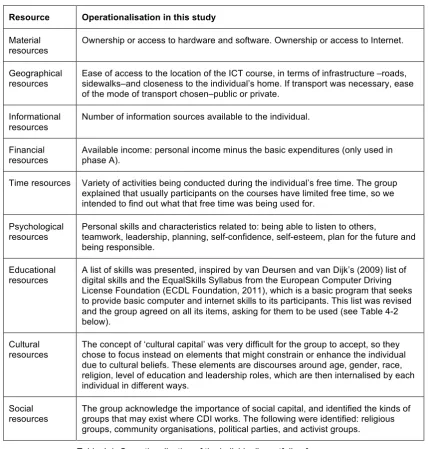
Table 4-1: Operationalisation of the individual's portfolio of resources. ... 80
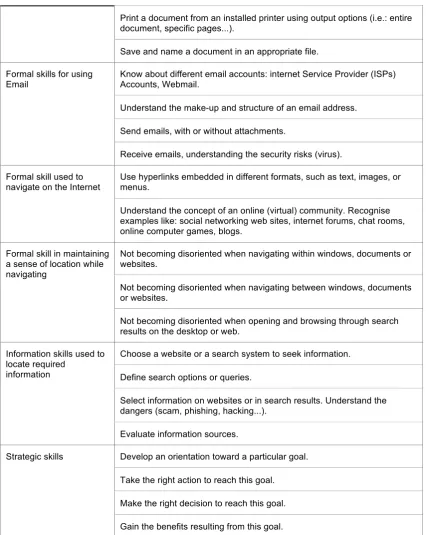
Table 4-2: Operationalisation of digital skills. Based on: van Deursen, van Dijk 2009 ... 82
Table 4-3: Operationalisation of the social structures. ... 83
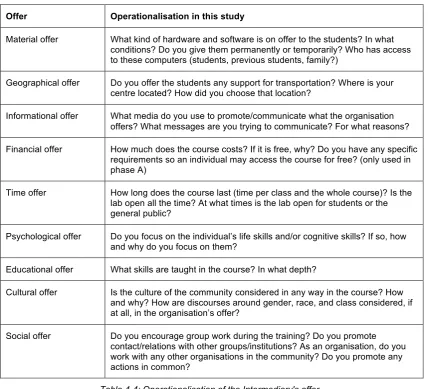
Table 4-4: Operationalisation of the Intermediary's offer. ... 84
Table 4-5: Profile of the case studies and their schools. Age range: child - C (1-10 years old), teen - T (11-20 years old, adult - A (21-50 years old), elder - E (51+ years old). Sex: female – F, male – M. ... 94
Table 4-6: Similarities and differences between the case studies. ... 106
Table 5-1: ICT sector in Brazil - Timeline (Adapted by the author from various sources) ... 126
Table 6-1: Analysis based on Cresswell's six aspects of mobility (2010, p.22-26) *SINFRECAR (accessed in 2014) ... 155
Table 7-1: Overview of CDI's offer of activities ... 176
Table 9-1: Resources for appropriation of the computer and the internet ... 242
List of Figures
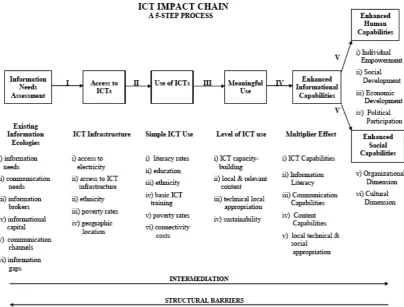
Figure 2-1: Freire's different kinds of consciousness. Adapted by the author from Freire 1974, p.13-15. ... 33Figure 3-1: ICT Impact Chain, a 5-step process (Gigler 2011, p.16) ... 59
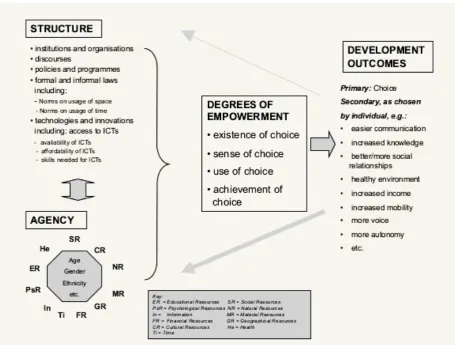
Figure 3-2: The process of empowerment (Alsop and Heinsohn 2005, p.6) ... 60
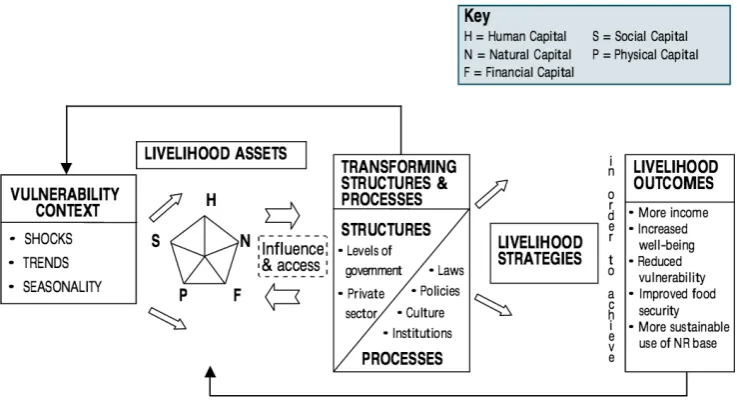
Figure 3-3: Sustainable livelihoods framework (DFID 1999, p.1) ... 60
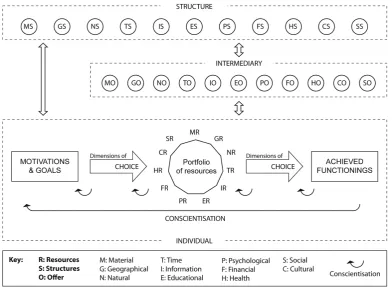
Figure 3-4: The Choice Framework (Kleine 2013, based on Alsop & Heinsohn 2005; DFID 1999; p.122) ... 61
Figure 3-5: Four successive kinds of access in the appropriation of digital technologies (van Dijk 2012, p.61) ... 64
Figure 3-6: Appropriation for Development Framework. Developed by the Author based on Kleine (2013), Gigler (2011) and van Dijk (2012)……….67
x
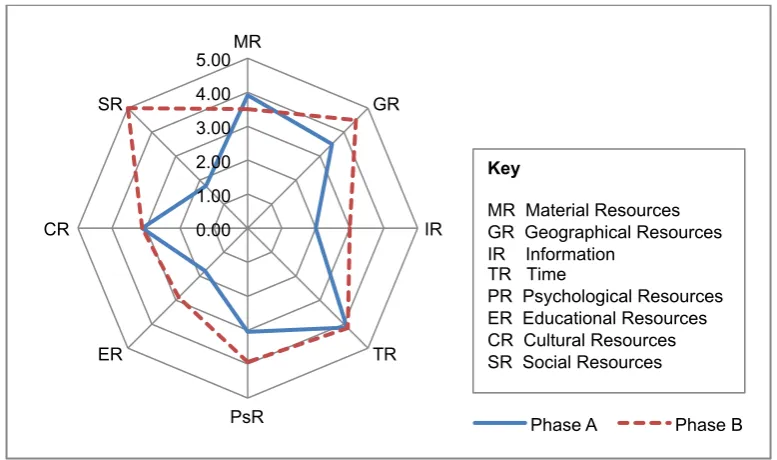
Figure 4-1: Example of a spiral web mapping: Each resource, calculated from data on the questionnaires, is placed on the web to visualise changes over
time simultaneously. Developed by the Author. ... 91
Figure 4-2: Map of Campinas showing CDI's and JC's fieldwork locations. Developed by the Author ... 101
Figure 5-1: Brazil - regional division and location of Campinas. ... 113
Figure 5-2: Comparing Gini Index - top fifteen and bottom fifteen ranked countries. This rank was calculated using data available from 1992 until 2013. (Adapted by the author based on data from World Bank 2015) ... 116
Figure 5-3: Variation of education indicators (1999-2011), from people in extreme poverty and people representing the wealthiest 10% (Adapted by the author based on data from Salvadori-Dedecca 2015) ... 118
Figure 5-4: Variation of social services indicators (1999-2011), from those in extreme poverty and the wealthiest 10% (Adapted by the author based on data from Salvadori-Dedecca 2015). ... 119
Figure 5-5: Percentage of people, according to their social deficiencies, 2001-2011 (Adapted by the author based on data from IBGE 2012b) ... 120
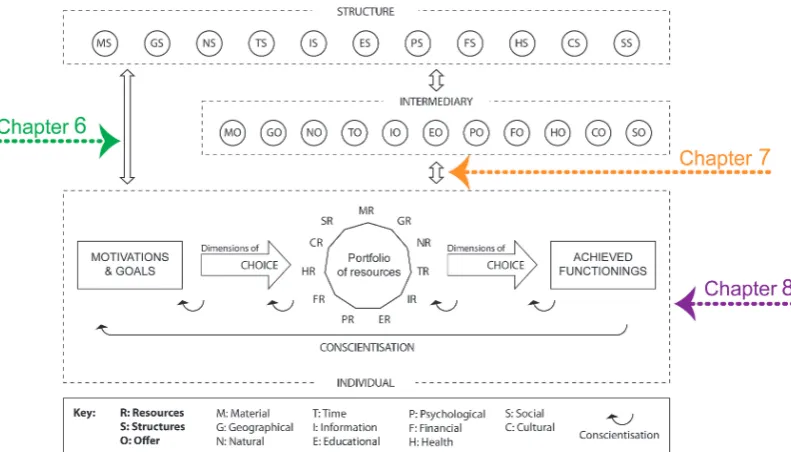
Figure 6-1: ICT Appropriation for Development Framework showing its relation with the chapters of this thesis. Developed by the Author based on Kleine (2013), Gigler (2011), van Dijk (2012). ... 132
Figure 7-1: CDI-CPS map of actors and networks (developed by Author) ... 177
Figure 8-1: Changes in Raquel's portfolio of resources ... 203
Figure 8-2: Changes in Bruna's portfolio of resources ... 209
Figure 8-3: Changes in Yara's portfolio of resources ... 212
Figure 8-4: Changes in Susana's portfolio of resources ... 216
Figure 8-5: Changes in Carlo's portfolio of resources ... 218
Figure 8-6: Changes in Simone's portfolio of resources ... 221
Figure 8-7: Changes in Joana's portfolio of resources ... 227
Figure 8-8: Changes in Mariana's portfolio of resources ... 235
Figure 9-1: Appropriation for Development Framework. Developed by the Author based on Kleine (2013), Gigler (2011) and van Dijk (2012). ... 245
xi
List of Plates
Plate 4-1: Initial Workshop at CDI's Headquarters. Credit: Author ... 75
Plate 4-2: Mid-term Workshop at CDI's Headquarters. Credit: Author ... 76
Plate 4-3: Presentation of results at Eufraten. Credit: Author ... 76
Plate 4-4: Presentation of results and feedback meeting with CDI. Credit: Author. 78 Plate 4-5: Presentation of results at HM Telecentre. Credit: Author ... 78
Plate 4-6: Mapping CDI's offer - participant workshop. Credit: Author ... 88
Plate 7-1: Images from CDI Comunidade Eufraten. Credit: Author. ... 162
Plate 7-2: Images from telecentre EECE from JC. Credit: Author. ... 163
Plate 7-3: Images from CDI Comunidade EEE. Credit: Author. ... 164
Plate 7-4: images from Telecentre HM. Credit: Author. ... 167
xii
List of Acronyms
ANATEL Agência Nacional para Telecomunicações
ANSP Academic Network at São Paulo
BPC Idoso Benefício Assistencial ao Idoso
BR Brazil
CA Capability Approach
CDHU Companhia de Desenvolvimento Habitacional e Urbano
CDI Comitê para a Democratização da Informática
CDI-CPS Comitê para a Democratização da Informática em Campinas
CEDLAS Centro de Estudios Distributivos Laborales y Sociales
CEPROCAMP Centro de Educação Profissional de Campinas
CGI.BR Comité Gestor da internet no Brasil
CIA Central Intelligence Agency
CPqD Centro de Pesquisa e Desenvolvimento
CV Curriculum vitae
DFIF Department for International Development EIC Escola de Informática e Cidadanía
ENEM Exame Nacional de Ensino Médio
FAPESP Fundação de Amparo à Pesquisa do Estado de São Paulo
FVG Fundação Getúlio Vargas
GDP Gross Domestic Product
HDCA Human Development and Capability Association
HDI Human Development Index
IBGE Instituto Brasileiro de Geografía e Estadistica
ICECAP ICEpop CAPability
ICT4D Information and Communication Technologies for Development
ICT Information and Communications Technologies
IPEA Instituto de Pesquisa Econômica Aplicada
ISP internet Service Provider
IT Information Technology
ITU International Telecommunication Union
ITU-ICT International Telecommunication Union Development Index
JC Jovem.com
M&E Monitoring and Evaluation
xiii
MPI Multidimensional Poverty Index
NGO Non-governmental organisation
NIED Núcleo de Informática Aplicada à Educação
ONIC Observatório Nacional de Inclusão Digital
OxCap-MH Oxford Capability Instrument
PAR Participatory Action Research
PBF Programa Bolsa Familia
PBSM Plano Brasil Sem Miséria
PDF Portable Document Format
PhD Doctor of Philosophy
PNBL Programa Nacional de Banda Larga
PPE Problem-posing education
PPP Propuesta Política-Pedagógica
RNP Rede Nacional de Pesquisa
SEI Secretaria Especial de Informática
SMCAIS Secretaria Municipal da Cidadania, Assistência e Inclusão Social
SOCINFO Programa Sociedade da Informação
SUS Sistema Único de Saúde
TV Television
UK United Kingdom
UNCTAD United Nations Conference on Trade and Development
UNICAMP Universidade de Campinas
WSIS World Summit on the Information Society
1
Chapter 1 Introduction
1.1 Inequalities and ICT4D
Rapidly changing technological innovation was at the forefront of the last century, becoming ubiquitous and impacting more and more on all areas of our daily lives. Already in the early 2000s, Wacjman (2004) had stated: “[t]echnology is an intimate presence in our lives and increasingly defines who we are and how we live” (p.102). This research focuses in particular on Information and Communication Technologies (ICT), which are today being used in the education, health and economic sectors to mention just a few. The television, telephone and radio, followed by digital technologies such as computers, the Internet, mobile phones, digital radio and digital television have spread worldwide, and each new technology experiences greater penetration rates than the previous ones. However, this so called ‘digital revolution’, has not been even, both worldwide or within each country (Henwood et al. 2000, van Dijk 2006, Toyama 2010). This asymmetry, known as the digital divide, was first understood as the difference of access to ICT, but research has shown this phenomenon has a complex nature. Differences in users' operational, and strategic, ICT skills and motivation, among other dimensions, are as important to consider as access to these technologies in order for individuals to benefit from ICT usage (Thomas and Wyatt 2000, Gunkel 2003, Fonseca 2010, Kleine 2011a). This thesis is interested in contributing to a greater understanding of the complexity of the digital divide, in particular its impact on development practices. While ICT ranges from TVs and radios to tablets and mobiles, this research focuses specifically on the internet and its use on computers and laptops (for a more detail discussion of the scope of this research refer to Chapter 3).
2
that use ICT with results that include: economic growth; the improvement of life conditions and social cohesion; increased social relationships; broader access to finance and government services, and more. For example, research into the use of mobile phones has shown that these can improve people’s communication capacities during emergencies (e.g. Mascarenhas 2010). Mobile phones can enable or strengthen social, economic and governance networks (e.g. Smith et al. 2011) and increase access to financial services, such as receiving and sending money (e.g. Mascarenhas 2010; Yunus 2008). Similarly, research has shown that the internet may have positive outcomes from a personal perspective, for instance, increasing access to online government services (e.g. Dijst 2004); and improving social connectedness (e.g. Heeks and Kanashiro 2009); or from an entrepreneurial perspective, for instance, promoting local services at a global level at low costs (e.g. Wresch and Fraser 2012); and from a governmental perspective, for instance, improving governance (e.g. Ojo et al. 2013).
Research has also shown that the impacts of digital inclusion do not depend solely on the project itself and the ICT being used. It is enhanced or constrained by people’s capacities and their intentions, whether people find meaningful ways in which ICT can benefit their lives, and how these impacts are defined (van Dijk 2009, Toyama 2010, Busch 2011). This thesis will focus on whether digital inclusion enhances development, using the capability approach (CA) as a theoretical framework. This approach places the individual in the centre of the analysis, with her freedoms as the means and ends of development. It acknowledges the constraining impact social structures may have on her freedom, known as adaptive preferences, explained in section 1.3 (below). The CA has been criticised for not addressing how to overcome adaptive preferences, and for a lack of attention to power relations. For this reason, Freire’s Pedagogy of the Oppressed will be used to complement the theoretical framework, as Freire has proposed a specific methodology to address this adaptation, called conscientisation, which also offers the CA a wider understanding of power relations and social change. This is introduced in section 1.4 (below).
3
order to be able to promote development, should go beyond simple inclusion and promote appropriation. Namely, while inclusion indicates integrating individuals into a predetermined space, appropriation recognises the individual as an agent who, in the case of ICT, will not only be able to operate the technologies, but will also be able to find ways to use them to solve her problems and/or achieve her goals, adjusting or changing the technologies as necessary (Overdijk and van Diggelen 2006, Cabral and Cabral 2010, van Dijk and van Deursen 2014). Accordingly, individuals will only be able to benefit from ICT if their choices are not constrained by adaptive preferences, as these limit what individuals expect from life.
If the multiple options and opportunities available through ICT use, in particular the Internet, are considered, people may require assistance to identify what are meaningful uses and to appropriate the technologies. According to Gigler, “an effective and local intermediary is required before ICT can have a positive contribution towards expanding the livelihoods of the poor” (2011, p11). However, according to him, what makes an intermediary ‘effective’ is not clear and research is still necessary. If the intermediary organisation plays such an important role for the individual to achieve development from ICT usage, then close attention to the process used to introduce these technologies is required. Considering digital inclusion programmes offer services to various groups of people or communities, the organisations operating the programmes can be considered intermediaries. Studying the role of these intermediaries may provide evidence to explain the gap in the literature mentioned above.
How can digital inclusion intermediaries support a meaningful appropriation of the computer and the Internet?
1.2 Introducing the case studies
Digital inclusion or technological appropriation has been implemented in different ways by different intermediary organisations. Considering that the CA focuses on the individual’s freedom and Freire’s pedagogy focuses on conscientisation, two case studies were selected to compare their practices. The first, the Comitê para Democratização da Informática1 – CDI (Committee for the Democratization of
4
Informatics), is a non-governmental organisation, which differentiates itself from other digital inclusion programmes because its aim is to promote social inclusion through a Freirean methodology. CDI adapted this methodology into their ‘digital inclusion’ practices, calling it a ‘proposta politico-pedagógica’ (PPP) (political-pedagogical proposal). The PPP is used in the classroom, promoting the use of ICT as tools to help the students solve their problems, instead of just learning how to use the technologies (CDI 2005b). In CDI’s view, ICT are tools that can help students to achieve this freedom. This organisation embodied digital inclusion practices, aiming for development outcomes, but applying a Freirean approach. This combination made CDI a suitable first case study.
The selection of the second case study aimed to provide a parallel with which CDI’s practices could be compared. The second organisation, Jovem.com – JC (Youth.com), is a programme from the Secretaria Municipal de Cidadania, Assistência e Inclusão Social – SMCAIS (Municipal Secretary for Citizenship, Assistance and Social Inclusion) of Campinas Municipality. Their more orthodox approach aims to promote “social inclusion and digital citizenship, by offering scholarships for young people aged 15 to 29 years old, [for a maximum of two years] who will receive educational training to be able to promote digital inclusion to communities of territories with great social vulnerability” (Jovem.com 2013). Distinct from CDI, JC’s approach is not based on any particular theory and all their activities are guided by three strategic lines: (i) digital culture, (ii) citizenship and social development, and (iii) telecentre management. Both organisations will be further introduced in Chapter 3, and an overview of the context in which they are located, the city of Campinas in Brazil, will be explained in Chapter 4.
5
1.3 Defining development as freedom
Above, appropriation was defined as meaningful ICT use, having the individual, as an agent, define what meaningful means for her on her own terms and being able to use ICT accordingly. This approach is inspired by a famous heterodox approach to development, the Capability Approach. The CA, initially inspired by the work of Amartya Sen, 1998 Economic Nobel Laureate, and subsequently expanded by the work of academics in a diversity of areas, has been used as a conceptual framework in the creation of the Human Development Index (HDI) used by the United Nations Development Program (UNDP). Development2, in this approach, is
“a process of expanding the real freedoms that people enjoy” (Sen 1999c, p.3). This is a general approach “that concentrates on the capabilities of people to do things - and the freedom to lead lives - that they have reason to value” (Sen 1999c, p.85). Freedom, namely the freedom to choose (ibid.), is seen as both an end and a means to development, considering in a “comprehensive and integrated manner ... the links between material, mental, spiritual and social well-being, or to the economic, social, political and cultural dimensions of life” (Robeyns 2003a, p.8).
To explain how to achieve the expansion of the individual’s real freedoms, the CA describes the diverse things a person may value doing, or being, as functionings. If the person is able to achieve these, it is said that she has the appropriate
capabilities to do so (Sen 1999c). Additionally, the ability to pursue what the individual values, and has reason to value, is known as agency (ibid.). It is this ability that enables a person to act towards the achievement of her goals.
Deneulin and Shahani (2009) state, “the key idea of the capability approach is that social arrangements should aim to expand people’s capabilities – their freedom to promote or achieve what they value doing and being” (p.31). Placing human freedoms at the focus of the analysis represents a strength, as it forces researchers and/or practitioners, to look beyond ICT and consider what other factors might be enhancing or constraining the individual’s development, and how the ICT services, such as training courses offered, are or are not expanding her3 freedoms during
2 The term ‘Development’ will henceforth be used from a CA perspective.
3 In recent years, due to gender discussions, the choice between “he” and “she” while writing has
6
digital inclusion programmes, i.e. whether the individual is able to appropriate the technologies in order to meaningfully use ICT.
In the analysis of ICT4D the use of the CA is not new but literature is still limited. Authors such as Johnstone (2007), Zheng and Walsham (2008), Kleine (2007; 2009; 2010; 2011b; 2013), Oosterlaken (2011) and Gigler (2004; 2011), among others, have applied the CA to study ICT4D initiatives. Their work will be further discussed in Chapter 2. This thesis, however, will limit the concepts applied to those which I have found most relevant to the analysis of digital inclusion programmes, one of which is choice.
The choice framework by Kleine (2007; 2009; 2010; 2011b; 2013) in particular defined a resource portfolio, electing to cover eleven resources - material, informational, natural, time, financial, educational, social, cultural, geographical, psychological and health - that may influence an individual’s ability to choose.
What resources do individuals need to meaningfully appropriate the computer and the Internet?
Further, if appropriation is successful, it might be possible to see positive impacts on the resource portfolio. This thesis aims to contribute by further developing a methodology to trace changes in these resources over time, considering concrete ways to implement this methodology in a participatory manner with organisations in the field, and proposing a visualisation tool to reflect the changes as will be further explained in Chapter 3.
From a CA perspective, choice may be hindered by adaptive preferences. This concept refers to the adjustment and mental conditioning that an individual may suffer due to continued exposure to unsuitable living conditions. A person living in conditions of oppression and deprivation may become used to these conditions and accept them as normal, and this will unconsciously limit her desires for things she considers she might obtain, with disproportionate reactions of happiness to very small improvements in well-being (Johnstone 2007; Nussbaum 2000). So, if digital inclusion programmes aim to expand choices, the limiting effect of adaptive preferences has to be considered and addressed.
7
However, while one of the strengths of the CA is its wide informational basis, it can be argued that this also weakens the approach. Criticisms of the CA range from difficulties for its operationalisation (Corbridge 2002; Devereux 2001; Robeyns 2000; Sen 1999c); an absence of attention to power relations (Corbridge 2002; Robeyns 2000; Stewart and Deneulin 2002); an over reliance on the ability of human beings to make reasoned choices (Alkire 2007; Corbridge 2002; Giri 2000); and a lack of attention on how to overcome adaptive preferences and their constraining effects on the individual’s development (Chan 2010; Evans 2002; Frediani 2010) (a full analysis is available in Chapter 2).
Various authors have called for a radicalisation of development practices, particularly with reference to the CA (Frediani 2010), in order to promote emancipatory social change (Belda et al. 2012) that enhances individual capabilities as well as “valuable structures of living together” (Stewart and Deneulin 2002, p.9). They call for a development that focuses both on the individual and on social structures. Stahl and Zheng (2011) proposed to integrate critical theory into the CA to bring about this change. Similarly, Frediani (2010) and Chan (2010) have proposed the integration of Freire’s Pedagogy of the Oppressed - a critical pedagogy theory - into the CA to add the critical aspect. This thesis will contribute by offering an integration of critical pedagogy into the CA.
1.4 Defining freedom as a result of struggle
8
The core of Freire’s work is a process called ‘conscientização’ (conscientisation). Conscientisation “represents the development of the awakening of critical awareness” (Freire 1974, p.15). In the 1960s, Freire argued that knowing how to read and write helped people to better understand the world in which they lived, and by doing so, they were ‘awakened’ from the state of oppression to which they had been submitted (Freire 1970b). Freire did not assume that the individual would spontaneously start a conscientisation by herself. As a pedagogue, Freire was a critic of the educational techniques used during the 1960s, calling them partly responsible for causing oppression, as he believed authorities were imparting adaptive rather than critical education (Gadotti and Torres 2009, p.1258-1259). To Freire (1970b), adaptive education follows a ‘banking’ process’ in which students are seen as empty depositories that the teacher has to fill by adding information. This concept does not allow dialogue, because the student is subjected to the simple role of spectator. Therefore, to acquire conscientisation, Freire proposed the PPE as “an antithesis to banking education” (Mejía 2004, p.67). PPE is based on participatory consultations: first identifying topics that the community/students may find interesting and valuable, and second, building up a curriculum appropriate for the group.
Starting from the students’ realities and common understandings, the problem-posing educator has to enter into a dialogue with the students, so that they are challenged to present valid arguments to support their ideas or else reformulate them. Students are required to participate and be co-responsible for the educational process, developing their critical thinking. By doing and reflecting on doing, also called dialogue by Freire, students will improve their level of consciousness. “In other words, the practice of critical teaching, implicit in a correct way of thinking, involves a dynamic and dialectical movement between ‘doing’ and ‘reflecting on doing’” (Freire 1998, p.43).
Is there a relationship between conscientisation and meaningfully appropriating the computer and the Internet?
9
not give up their position willingly (Freire 1970), so action is required, and it may manifest itself as collective action. This is particularly relevant for this thesis, because two different digital inclusion programs - CDI and JC - will be compared, exploring whether individuals experiencing Freire’s methodology do or do not gain greater freedom - in terms of their freedom to make real choices - than do those who do not experience this methodology, and, if they do, what mechanisms are used to achieve this freedom.
Is there a relationship between meaningfully appropriating the computer and the internet and promoting social transformation?
In other words, “one of the primary goals of conscientisation is social transformation” (Chan 2010, p.40), where freedom “is actually a necessary aspect of being fully human“ (Glass 2001, p.19). Indeed, both for the CA and the Pedagogy of the Oppressed, freedom is fundamental for human flourishing (Glass 2001, p.16). For Sen, “expansion of freedom is […] the primary end and […] the principal means of development” (1999c, p.xii), while for Freire, freedom is an indispensable “requirement of our human condition” (1998, p.55).
1.5 Sen’s and Freire’s approaches applied in digital inclusion
Freire’s concepts coincide in numerous ways with the CA. Individuals’ ability to act freely, particular their agency-freedom, may be hindered by a view of the world that has been distorted by oppressive social structures. Sen conceptualises this issue as adaptive preference, which for Freire is internalised oppression, characterised by different levels of consciousness - semi-intransitive, naïve or fanaticised consciousness (see Chapter 2). While both authors acknowledge the detrimental impact of this distorted view on the individual’s development, only Freire offers a methodology - problem-posing education (PPE) - to indicate how to promote this ‘awakening’ of the consciousness. Freire’s ideas offer an interesting view of how to address adaptive preferences, align individuals’ motivations/goals and choices, and increase individuals’ agency.
10
appropriation. Second, it aims conceptually to link the CA and Freire’s Pedagogy of the Oppressed and to further develop tools to operationalise the CA, as a way to address some of the CA’s criticisms, including how to overcome adaptive preferences and a wider understanding of power relations and social change.
1.6 Research questions
Grounded in the overall research aims mentioned in the previous section, the research questions for this thesis are as follow:
Research question 1 (RQ1):
How can digital inclusion intermediaries support a meaningful appropriation of the computer and the Internet?
Research question 2 (RQ2):
What resources do individuals need to meaningfully appropriate the computer and the Internet?
Research question 3 (RQ3):
Is there a relationship between conscientisation and meaningfully appropriating the computer and the Internet?
Research question 4 (RQ4):
Is there a relationship between meaningfully appropriating the computer and the internet and promoting social transformation?
1.7 Thesis structure
11
Chapter 2, Freedom, ‘Conscientisation and ICT’, will explore the literature further, critically evaluating their advantages and disadvantages, and propose how Freire’s theories can be integrated into the CA. This is followed by Chapter 3, ‘Freedom and Digital Inclusion’, which explores the potential benefits of using the CA and the Pedagogy of the Oppressed for the study of digital inclusion programmes.
Chapter 4, ‘Fieldwork and data collection’, introduces both case studies and explains in detail how the data was collected during fieldwork and how it was analysed. Chapter 5, ‘Brazil and Campinas’, provides background information to the reader about Brazil and the city of Campinas, where both case studies were located. Information about economic growth, current inequalities, development initiatives and particularities of the ICT sector are introduced, keeping in mind the CA and the Pedagogy of the Oppressed.
Chapters 6, 7 and 8 are analysis chapters, presenting results from the fieldwork. Chapter 6, ‘Motives, goals and constraints’, examines the complex relationship between agency and social structure, exploring how the particular conditions experienced by participants in this research influenced their motivations and goals. Keeping the CA in mind, which sees an individual’s freedom as the focus of the study, this chapter aims to understand the individual prior to the digital inclusion intervention, which will provide a baseline for Chapter 7. This chapter, ‘Implementing Conscientisation’, reflects on data collected from the practices of both intermediaries. The CA and Freire’s pedagogy are used to examine how the different implementation strategies impacted on those involved, also identifying the limitations of these strategies. Subsequently, Chapter 8, ‘Expanding freedoms: choice, agency and reason’, explores any impacts on the individual’s freedoms which may be attributable to the digital inclusion courses. It also explores whether these changes, if any, have been translated into actions towards social structural change as a way to improve the agency of each individual to become agents of change for their own benefit, and the benefit of their communities, as expressed by Freire’s Pedagogy of the Oppressed.
12
Chapter 2 Freedom, conscientisation and ICT
2.1 Introduction
The Capability Approach (CA) and the Pedagogy of the Oppressed each provide elements relevant to the analysis of development projects, such as the digital inclusion programmes that will be investigated as case studies of this thesis. While Chapter 1 briefly introduced Sen’s and Freire’s ideas, this Chapter, on the one hand, presents each of the theories in greater depth, and discusses strengths and weaknesses; and, on the other hand, proposes how these may be combined in order to address some of the shortcomings identified in the CA. In particular, considering both the CA and the Pedagogy of the Oppressed use terms that may have different dictionary definitions, this Chapter will examine the terms significant to this thesis, to provide the reader with an understanding of these two approaches. Also, literature from a variety of fields – development studies, human geography, information systems and pedagogy, to mention the most important ones - will be presented, as these have also been used to enrich the theoretical concepts used in this thesis. This analysis will serve as an introduction to Chapter 3, where it will be explained how the theoretical concepts proposed benefit the understanding of digital inclusion.
2.2 Expanding freedom: the capability approach
13
The freedom-based perspective of the CA has both advantages and disadvantages. Sen (1999c) himself has recognised that the CA exhibits some challenges, since for “many practical problems, the possibility of using an explicitly freedom-based approach may be relatively limited” (p.86). It is Johnstone’s (2007) view that “many of the difficulties are probably symptoms of the relatively early stage of development rather than being fatal flaws, but they do point to the need for further work” (p.85), which is the effort of several academics including the work of members of the Human Development and Capability Association (HDCA 2012).
This section will identify the relevant CA strengths for this research, and will name the critiques and challenges that the approach faces, in order to then propose alternatives to overcome them in section 2.4.
2.2.1 The individual: reason and choice
The CA is built upon what the individual values and has reason to value. Values may change over time, or, when goals have been achieved (called achieved functionings in the CA), these might be replaced by others. Therefore, development is seen as a process of endlessly improving the individual’s freedom. Individuals are able to identify their values because, according to Sen (1995), individuals are reasoning human beings that engage in a process of reasoned social choice with themselves and with others. Sen’s work on reasoning and social choice relates to social choice theory and focuses mainly on a systematic approach to rational decision-making for collective agreements and public choice in relation to public policy-making (Corbridge 2002; 1999a; Sen 1995). Both individual choices and collective choices are understood to result from a reasoned process that aims at both the individual maximisation of outcomes and the satisfaction of all those involved (Sen 1995).
14
using the computer or the internet. For instance, as will be presented in Chapter 8, various participants attend digital inclusion programmes to improve their CVs, but others engage in the programme to improve their self-esteem, as not knowing how to use the computer makes them feel out-dated and socially excluded.
Putting human freedom at the centre of the analysis has been considered the fundamental strength of the CA as a way to have “clarity of the objective” of development (Alkire 2005, p.117). It has also been criticised for overly relying on the capacity of human beings to make reasoned choices, and for being individualistic. Regarding the first, Giri (2000) argues that Sen “takes the self for granted and thinks that the task of creating a good society is primarily a task of collective action at the level of state and society” (p.1004). As Alkire (2007) argues, the CA views individuals “as agents who have diverse valued goals and commitments on behalf both of themselves and of their society, and who contribute to public discussions about social goals” (p.125) without acknowledging the possibility of there being individuals who are not committed to their society and/or not willing to contribute to public discussions, neither does it offer an alternative to these scenarios. In this respect, Freire’s Pedagogy of the Oppressed offers an explanation for individuals’ political apathy and offers a process for “awakening” citizens to participate in public discussion and collective action, as will be explained in section 2.3.
While Sen’s CA does not explore the reasons behind individuals’ choices, the CA scholar Kleine (2010; 2011b; 2013), has studied the choice process. Drawing on fieldwork conducted in Chile and Brazil, among others, Kleine’s (2010) four dimensions of choice, based on Alsop and Heinsohn’s (2005) degrees of empowerment and her own experience studying ICT4D (Kleine 2007; 2009; 2010; 2011b; 2013), provide an insight on choice that may show where the individual is experiencing difficulty in achieving meaningful ICT usage. The dimensions are:
existence of choice which refers to all the options available to the individual, and that “are, in principle, attainable for the individual if the combination of their resource portfolio and the social structures allow it” (Kleine 2010, p.679); sense of choice
which denotes the ideas an individual may have about a technology she does not know, for which “they have to imagine use/non-use” (ibid. p.680); use of choice
describes “whether or not an individual actually makes the choice” (ibid. p.680); and;
15
Accordingly, considering the internet has been called the “medium of choice par excellence” (Norris 2001, p.24) because it enables the user access to a vast amount of information, then exploring the different dimensions in the individual’s choices when using the internet may help to understand her decision-making process, and consequently how the choices made reflect and affect her life (Kleine 2010). Conversely, if her ability to choose is impaired, for example if her sense of choice about the internet is mistaken, it shows that the individual has a lack of agency and/or that she has been constrained by adaptive preferences (Frediani 2010), a concept that will be explained in the next section.
A further critique sees the CA as being too individualistic (Devereux 2001). In this regard, Robeyns (2000) mentions that this critique is based on the assumption that the CA fits with methodological and ontological individualism which “states that only individuals and their properties exist, and that all social entities and properties can be identified by reducing them to individuals and their properties” (p.17). Robeyns (2000) affirms that the CA responds to an ethical individualism, which “makes a claim about who or what should count in our evaluative exercises and decisions. It postulates that individuals, and only individuals, are the units of moral concern” (p.16). Keeping this in mind allows the CA to acknowledge how unique each individual is, both in how each one has adapted to the environment that they live in, and also how each individual is different from others – i.e. acknowledging the uniqueness of each participant of the digital inclusion programme, as will be explored in the following two sections.
2.2.2 Human diversity and adaptive preferences
One of the merits of the CA is its careful attention to distribution within a social group, and the need for an approach that will not only focus on happiness, as utilitarians do, as discussed above, but also provide every human being with a good quality of life, even if, due to adaptive preferences, they do not perceive their own scarcities. Distribution, from a CA perspective, considers individuals’ uniqueness, as “the assumption [that having the] the same choice behaviour and same demand function ... provide no reason to expect the same utility function” (Sen 1999c, p.69).
16
Even if both choose to attend the same course (choice) to improve their CVs (functioning) and have the help of the same teacher, every time some reading is required, the less able person may need more time to achieve the same functioning than the other. In the case of two individuals aiming for similar functionings, if their interpersonal differences affect their achieved functionings, to support them to achieve similar functionings, distribution needs to focus on equity, rather than equality. Regarding the example above, having equality of access to ICT or even to ICT skills training, will not necessarily guarantee that the students achieve similar functionings, as each individual may require different support from the teacher, for example different amounts of time to finish a task, among other things. This is quite important for this research (relating to RQ1), as the intermediary, in this example the teacher, needs to pay close attention to each of the students’ own characteristics and needs.
Attention to distribution is a common concern shared by capability theorists and redistributionalists, such as John Rawls. It is also a common critique of utilitarianism expressed by these theorists (Johnstone 2007). Rawls’ Theory of Justice is based in what he calls ‘Justice as Fairness’, and is built on two justice principles. The first, the liberty principle, states that “each person is to have an equal right to the most extensive total system of equal basic liberties compatible with a similar system of liberty for all” (Rawls 1973, p.53). The second, the difference principle, declares that “social and economic inequalities are to be arranged so that they are both: (a) to the greatest benefit of the least advantaged, consistent with the just savings principle, and (b) attached to offices and positions open to all under conditions of fair equality of opportunity” (ibid. p.53). Based on these principles, this theory establishes a list of social primary goods, such as liberty, opportunity, income, and wealth, among others, which have to be equally distributed, paying special attention to the most deprived. Its objective is that by achieving equality in the distribution of primary goods or resources, society may become fairer.
17
1999c, p.86), by changing the focus to human capabilities. Sen (1990) mentions that even though a Rawlsian understanding of primary goods is valuable, these are only “means to freedoms, whereas capabilities are expressions of freedoms themselves” (p.48). This characteristic of the CA values liberty and allows a deeper evaluation of problems like poverty and inequality, considering the diversity of each individual both with non-financial and non-material elements (Robeyns 2000, p.7). In the case of studying digital inclusion programmes, individuals’ motivations and aspirations, time available to learn and practice, and confidence in their own skills may be as important to consider as access to the computer and the Internet.
Indeed, attention to diversity also implies acknowledging how each individual has been influenced by the context where she lives, in particular, how she has adapted to her personal circumstances. Adaptive preference, as indicated in Chapter 1, is one of the relevant concepts of the CA for this thesis. Adaptation, per se, is a natural human characteristic. According to Steward and Deneulin (2002), “no-one is truly autonomous, independent of the influences of the society in which they live” (p.7). Individuals’ understanding of the world is the result of all the exchanges they had had with their surroundings since birth. If raised in a wealthy environment, a person may adjust to certain living standards (Clark 2009a), which, as stated by Spring (2011), may cause the person to be unhappy for reasons different to a lack of resources. Similarly, if the individual learned to evaluate her own life satisfaction by comparing herself to others, she may adapt her preferences to measuring her happiness by the gap with others, for example by establishing clear economic differences between her and her employees, constraining the latter to unjust and low salaries (Corbridge 2002). In the case of individuals living in constraining environments, adaptation may occur as a coping mechanism to help them experience brief moments of relief, since, as indicated by Teschl and Comim (2005), they may lower their expectations of life to experience less disappointment, therefore suffering less.
What differentiates adaptation from the CA’s term adaptive preference, is that the latter refers to the negative impact that adapting their preferences may cause to the individual’s freedom (Nussbaum 2000; Sen 1999c). On this matter, Sen (1999c)
18
“habit, fear, low expectations, and unjust background conditions deform people’s choices and even their wishes for their own lives” (p.114). Thus, Sen (1992a; 2003) and Nussbaum (2000) have found this term useful to analyse individuals that have adapted their preferences due to constraining cultural traditions, as these traditions may help reinforce their adaptive preferences, making them behave in ways that may hinder their own well-being, while still reporting feeling happy.
Adaptive preference is a term that is considered both a merit and a shortcoming of the CA. On one hand, acknowledging the negative impact adaptation may have on the individual’s freedom, solicits looking beyond what the individual reports about her own happiness or well-being, as these may be the result of her adaptive preferences. In reference to digital inclusion programmes, taking adaptive preferences into consideration urges us to consider that what the students are expressing as their motivations for attending the course, and what they prefer to learn, may be affected or constrained by their adaptive preferences. Rejection or fear towards ICT may also reflect adaptive preferences. For instance, older adults may resist learning how to use new technologies due to a belief that these are only for young people, or due to their lack of skills, among other reasons, as will be discussed in Chapter 8. The CA becomes particularly useful in these situations, as acknowledging the presence of adaptive preferences encourages the analysis of the individual’s choices and the reasons for those choices.
19 “the capability approach rests on the notion of reasoning, but reasoning depends upon the meanings that we share and that are constructed through our relationships in society. What we each understand to be valuable freedoms is dependent upon shared meanings and what we are prepared to agree upon in social collectives in order to live well together. However, Sen’s writings never acknowledge explicitly how the inevitable conflicts that arise from people’s different conceptions of wellbeing are ultimately to be resolved. His faith in human reasoning is unshakeable” (p.512-513).
If capabilities reflect what people value and have reason to value, but people lack reason due to adaptive preferences, then how are we to determine what capabilities are necessary to improve the individual’s development? As indicated above, Sen does not address this issue in his work, but various authors have expanded on this work using integrated concepts such as culture or autonomy to offer alternatives to this issue. For example, Clark (2003; 2009a; 2012; 2009b) argues that adaptation can occur not just from continued exposure to constraining circumstances, but also due to social conditioning, cultural and religious indoctrination, or from a lack of “necessary education, knowledge and experience to harbour grand desires and make rational choices” (Clark 2009a, p.25). Accordingly, this adaptation is reflected not only on individuals’ preferences, but also on their values, their ideas of what is a good life, their desires, aspirations and goals (Clark 2003). Appadurai (1981; 2004; 2013) has dedicated his work to understand how culture impacts on an individual’s aspirations, wants, preferences and choices. For Appadurai (2013), “culture is a dialogue between aspirations and sedimented traditions” (p.195), where “ideas of the future, as much as of those about the past, are embedded and nurtured” (p.179). Individuals’ understanding of the world and how they reflect this understanding in preferences about the present moment or aspirations about their future is then the result of a social constructed process. These aspirations and preferences are consequently not static, but dynamic, adjusting themselves to the contextual elements and the experiences individuals have (Conradie and Robeyns 2013a). Individuals, even those in the most constraining situations, rely on their available resources and capabilities, and are guided by their culture to ‘reason’ what they value and have ‘reason’ to value. Explicitly, these individuals do not lack reasoning ability, but their reasoning may not have sufficient resources or capabilities, or might be constrained by their culture (Clark 2009a; Deneulin and McGregor 2010; Ibrahim 2011).
20
terms of ideologies, doctrines, abstract norms and beliefs. This in turn means poor individuals are less “conscious of the links between the more and less immediate objects of aspirations” (Appadurai 2004, p.68). Accordingly, aspirations from the poor reflect these limitations, expressing their aspirations in concrete objects or resources, such as housing or employment, rather than in more abstract terms (Clark 2003; Clark 2009a; Ibrahim 2011). Appadurai (2004) indicates that, “the capacity to aspire, conceived as a cultural capacity, especially among the poor”, may provide individuals with “the resources required to contest and alter the conditions of their own poverty” (p.59). It is by considering the individuals’ capacity to aspire, that constraining cultural norms may be revealed and addressed. For example, Conradie and Robeyns (2013a) argue that “thinking about, talking about, and reflecting upon aspirations, especially when this is part of a group process that creates a supportive and encouraging atmosphere, motivates people to use their latent agency to make changes in their lives, which will expand their capabilities. This would particularly apply when the reflection is linked to action” (p.565). In sum, the effect culture has on individuals may be clearly visualised through their capacity to aspire. This revelation can, on the one hand, help distinguish which constraining social structures affect the individuals’ adaptive preferences, and, on the other hand, be used to reflect and act upon to motivate individuals to use their latent agency towards improving their own lives. This action will indeed improve individuals’ adaptive preferences, but relies on existing agency, and will not aid those lacking agency (Conradie and Robeyns 2013a).
21
empowerment, seen as an increase in the individual’s consciousness, is the same approach that has been taken in this thesis. Namely, if development is related to what the individual values and has reason to value, digital inclusion programmes have to take these values into consideration. However, if these values have been affected by adaptive preferences, the CA does not provide a way to approach this challenge. In particular, the CA does not tell us what teachers can do to overcome adaptive preferences in order to be able to promote their students’ freedom. To address this, Freire’s ideas have been incorporated, first as a useful source in understanding adaptive preferences, second, to appreciate their impact on the individual’s reasoning process, and finally to provide a procedure to ‘awaken’ the individual through conscientisation, as will be explained in section 2.3.
2.2.3 Social structure and agency
Human diversity relates not just to individuals’ interpersonal differences, but also, as Sen (1992b) comments, it refers to the different social structures of the society where each individual belongs. Consequently, what a person accomplishes (achieved functionings) is the result of the interplay of her interpersonal differences, her capabilities and agency (by which her portfolio of resources is implied) and the social structure, all-unique to each individual. Considering context as part of the study of well-being is one of the strengths of the CA. As Corbridge (2002) explains, “none of us are the sole authors of our fortunes or misfortunes. We are largely the accidental products of history and geography” (p.187). Two equally responsible and hardworking individuals may have very different outcomes depending where they live, which could also be a consequence of where they were born, a circumstance over which they had no control.
22
et al. 2009). This project was designed in a top-down manner as a unique global initiative that had to be adapted upon implementation. This has caused each country to have very different results, which can be explained if human diversity is considered, as each individual is influenced by the context of her surroundings, impacting on how she uses ICT. Thus, ICT4D projects need to be customisable (Kleine 2010) and some would say co-designed with the specific individuals or communities (Oosterlaken and Hoven 2012).
Even as the importance of structure for Sen can be seen in specific studies, for instance when he approaches issues about gender inequalities (Drèze and Sen 2013; Sen 1992b; 1999c), Sen’s CA did not fully develop an analysis of social structures. According to Giddens (1984), agency and social structures have a mutual effect on each other, structure is both medium and outcome of social activity and exists insofar as it continually produces and reproduces via this duality. Layder (1994) explains this duality as an internal flow that consists both of action and structure: “social production has to do with the way in which social life is produced (or created) by people as they engage in the social practices which are the substance of their lives and social experiences” (p.132).
The agency aspect is very present in the CA. For Sen, the individual is an agent, who needs to engage in a “careful assessment of aims, objectives, allegiances, […
that] must enter the moral accounting by others not only as people whose well-being demands concern, but also as people whose responsible agency must be recognised” (Sen 1985, p.204). As an agent, the individual must make public her understanding and beliefs about her deprivations (Sen 1999c), to feed public policy or other social initiatives, to be directed to what she values and has reason to value. That is, the individual has to take responsibility for her own development by exercising her agency; raising her voice to complain about her situation to the authorities, through, for example, any communication medium, the government’s opposition parties or civil society institutions, or, even better, organising the local community to solve the problem.
23
functionings pursued by the individual are related to aspects of her well-being, she is using her well-being freedom, and if these are achieved, it is said that the individual has achieved well-being. Sen (1999c) points out that the “intrinsic
importance of human freedom as the pre-eminent objective of development has to be distinguished from the instrumental effectiveness of freedom of different kinds to promote human freedom” (p.37). Well-being freedom may be very important, especially from an instrumental perspective, because it is guaranteeing the individual’s quality of life. But, as stated by Sen, freedom in itself is something the individual has reason to value, and there are situations in which she may pursue values which will negatively affect her well-being. If an individual follows one of these values, she is enacting her agency freedom, and if she fulfils it, it is called agency achievement (Robeyns 2003b). This is particularly important because
“motivation and aspiration are of equal importance to subjective well-being” (Teschl and Comim 2005, p.240).
For Kleine (2013), agency allows individuals to navigate the social structure, while agency “in turn is linked to their resource portfolio” (p.49). Because the CA focuses both on doings and beings of the individual, resources are much more than commodities or services, and these are not valued “for their own sake, but always for some other reason, some type of activity or state that they enable us to achieve” (Johnstone 2007, p.75). For this reason, Kleine (2013, p.46-48) defined a resource portfolio, which covers eleven resources that may influence the individual’s capabilities:
• Material resources: These resources sum up the material objects owned, including machinery and other equipment. They are also essential inputs in production processes.
• Financial resources: These stand for financial capital in all its forms (cash, savings, shares etc.). The ability to obtain credit is a combination of the structural character of the formal and informal lending rules and individual collateral.
• Natural resources: This includes issues such as climatic and geomorphological conditions in a locality, along with related aspects such as soil quality, naturally available resources and access to water as well as the attractiveness or specific features of the surrounding natural environment.
• Geographical resources: This covers the practical implications of location, along with relative distance and proximity, which is of varying significance depending on the transport and communication infrastructure available. It also includes the intangible psychosocial qualities of a location. [...]