City, University of London Institutional Repository
Citation:
Gashi, I. and Bloomfield, R. E. (2008). Evaluating the resilience and security of boundaryless, evolving socio-technical Systems of Systems. Centre for Software Reliability, City University London.This is the unspecified version of the paper.
This version of the publication may differ from the final published
version.
Permanent repository link:
http://openaccess.city.ac.uk/530/Link to published version:
Copyright and reuse: City Research Online aims to make research
outputs of City, University of London available to a wider audience.
Copyright and Moral Rights remain with the author(s) and/or copyright
holders. URLs from City Research Online may be freely distributed and
linked to.
Evaluating the resilience and security of
boundaryless, evolving socio-technical Systems of
Systems
Robin Bloomfield and Ilir Gashi
September 2008
[email protected], [email protected]
020 7040 8423, 020 7040 0273
Centre for Software Reliability City University London EC1V 0HB United Kingdom
EXECUTIVE SUMMARY ... 1
1 INTRODUCTION... 5
2 PART 1: THE FUTURE CONTEXT ... 7
2.1 INTRODUCTION... 7
2.2 SYSTEM CHARACTERISTICS AND CONTEXT ... 7
2.2.1 Scale, complexity and pervasiveness ... 8
2.2.2 Adaptation, evolution and architecture ... 8
2.2.3 Blurring of boundaries ... 9
2.2.3.1 Synthetic environments and decision support ... 10
2.2.4 Heterogeneity... 10
2.3 THE SECURITY CONTEXT ... 11
2.3.1 Multiplicity of faults and the threat space ... 11
2.3.1.1 Unintended side effects ... 11
2.3.2 Insights from the scenarios ... 12
2.3.2.1 Implications of Scenario 3: Electrical Power Sector ... 13
2.3.2.2 Threat Targets ... 14
2.3.2.3 Goals/intentions ... 15
2.4 SUMMARY OF EVALUATION CHALLENGES ... 15
3 PART 2: TOWARDS A SECURITY/RESILIENCE EVALUATION FRAMEWORK ... 17
3.1 TRENDS IN EVALUATION – THE EVALUATION CONTEXT ... 17
3.1.1 Resilience ... 19
3.1.2 Evaluation and cases ... 20
3.1.3 COTS components ... 21
3.2 CURRENT RESEARCH TRENDS ... 22
3.2.1 Economics of security ... 22
3.2.2 Interdisciplinary approach to assessment of SoSs ... 23
3.2.3 Emergent properties in complex and adaptive systems ... 24
3.2.4 Interdependencies ... 24
3.2.5 Formal methods and static analyses ... 25
3.2.6 Benchmarking and fault-injection related testing ... 26
3.2.7 Modelling and model-based assessment ... 27
3.2.7.1 Reliability and availability evaluation and modelling ... 27
4 PART 3: A FUTURE RESILIENCE EVALUATION FRAMEWORK ... 29
4.1 INTRODUCTION... 29
4.2 RESILIENCE AND SECURITY CASES ... 29
4.3 SYSTEM AND ENVIRONMENT MODELS AND THEORIES ... 31
4.3.1 Models for evaluation - complexity and fidelity... 32
4.3.1.1 Selecting the most appropriate model and fidelity level for a given assessment task ... 32
4.3.1.2 Modelling adaptation ... 32
4.3.1.3 Inter-organisation boundary models ... 33
4.3.1.4 Interdependencies and cascade failures ... 33
4.3.1.5 Interaction of markets, policy and security evaluation ... 33
4.3.1.6 Threat models... 34
4.3.2 Defining the evidence base and obtaining good metrics ... 34
4.4 EVALUATION OF THE APPROACH ... 34
4.4.1.1 Experimentation and benchmarking ... 35
4.5 ISSUES NOT ADDRESSED ... 35
4.5.1 Extreme Scenarios ... 35
4.5.2 Quantum computing ... 35
4.6 A THEMATIC VIEW ... 35
4.6.1 Problems/challenges per INDEED theme ... 35
5 SUMMARY AND FURTHER WORK ... 41
6 ACKNOWLEDGEMENTS... 44
SCENARIO 2:OIL AND GAS SECTOR –(PRESENT TIME) ... 58
SCENARIO 3:ELECTRICAL POWER SECTOR –(CIRCA 2012) ... 61
Background ... 61
The incident develops ... 62
Postscript ... 65
Adversary strategy ... 65
Threat Targets ... 66
APPENDIX B ... 68
ANALYSIS OF SCENARIO 1:MEDICAL AND FINANCIAL SERVICES SECTOR –(PRESENT TIME) ... 69
ANALYSIS OF SCENARIO 2:OIL AND GAS SECTOR –(PRESENT TIME) ... 73
ANALYSIS OF SCENARIO 3:ELECTRICAL POWER SECTOR –(CIRCA 2012) ... 78
APPLICABILITY OF TECHNIQUES TO GENERAL SOSS AND THEIR CONSTITUENT COMPONENTS (INCLUDING COTS) ... 83
APPENDIX C - TASK 2: STATE OF THE ART IN THE ASSESSMENT OF SOS OF COTS COMPONENTS ... 90
INTRODUCTION ... 90
NATURE OF COTS COMPONENTS ... 90
COTS-BASED DEVELOPMENT ... 91
PROBLEMS WITH COTS COMPONENT ASSESSMENT ... 92
Non-compliance to standards and best practice documents ... 92
Establishing COTS provenance ... 92
Problems from unwanted/unneeded functionality ... 93
Problems stemming from patches and updates ... 93
Difficulties with optimal COTS component selection... 93
Dependence Among Attributes ... 94
CURRENT APPROACHES TO ASSESSING COTS COMPONENTS ... 94
Overview of COTS selection approaches ... 94
Summary of main approaches ... 94
Uncertainty conscious approach to COTS component assessment and selection ... 95
Domain specific assessment solutions ... 96
COTS component use in the medical domain ... 96
COTS component use in the nuclear power-plant domain ... 96
COTS component use in the defence domain ... 96
Summary of evaluation, validation and verification techniques for COTS components ... 97
RESEARCH CHALLENGES ... 101
APPENDIX D ... 103
Executive Summary
This report describes the research we have conducted on identifying the technological advancements envisaged in the period 2007-2027, the research challenges that will be faced for the assessment of dependability and security of these complex systems and systems of systems (SoSs), and the assessment framework envisaged for these systems. The research has been conducted as part of a project titled “EMR (Extra Mural Research) proposal SoSoS Development Methodologies for Secure System Evolution” which has been sponsored by UK Defence Science and Technology Laboratory (DSTL).
The report is structured as follows:
Part 1: Define and characterise the 2027 research challenge by a review of existing road maps, technology watch papers and by brainstorming with DSTL (and NATO) contacts.
Part 2: Propose and justify a Security Evaluation Framework based on existing approaches from other sectors and disciplines. This draws on present state of the art in assessment of SoS of COTS based components and in particular explain and understand why existing methods do not either scale or otherwise translate to the SoSoS context.
Part 3: Define the characteristics of a security evaluation framework based on the future context explored in Part 1 with the proposed framework in Part 2. It also characterises the research challenge.
The research challenges from the context we and others envisage are as follows:
Critical societal role – The technological advancements discussed in section 2.2 and 2.3 show that an unprecedented reliance on technology may be created. Due to the increased access to advanced technology the future generations will become more vulnerable to either deliberate or unintentional disruption of the system implemented with these technologies.
Unprecedented scale and complexity coming from the ubiquity and pervasiveness of systems that are driven by adaptation and evolution, ambition and requirements, the blurring of boundaries and the increased tempo of threats and operations. It occurs through design and deliberate policy and accidentally, or as side effect, of other trends. It is shaped by the economic and political forces: systems were once seen as technical, then socio-technical and now we can see political-economical-socio-technical (p-e-s-t) systems
Concerns regarding privacy are likely to become especially important. The widespread data sharing and communication that will be required to make the new systems function may lead to serious infringements of privacy. Various infringements are possible such as identity theft, data laundering, disclosure of personal data, surveillance, risks from personalised profiling etc.
Trust / Assurance – The new technological advancements, especially those on ICT systems will require substantial level of trust to be placed on the new systems. Hence the new technology needs to be trustworthy. Building trustworthy systems (especially complex interconnected SoSs) will pose a significant challenge since current methods for both building and assuring a system that is sufficiently dependable or secure will most likely not scale well when applied to these complex systems.
Interoperability – There is likely to be an increased difficulty in architecting complex systems of systems. There might for example be inconsistencies between architectures (including inconsistencies in the interfaces) of the different systems of an SoS or inconsistencies in the timescales (timebands) in which the different systems interact.
Socio-technical aspects – The future systems are expected to become increasingly socio-technical in nature, hence the role of the human users and operators within the system, and their fallibilities also need to be considered in the overall assessment of the system.
Blurring of boundaries – The complexity of the future systems and the large inter-dependence and interconnectedness of the components will make it very difficult to define what the boundaries of a system or a SoS are, i.e. where does one system end and another one begin. This makes security and dependability assessment of a SoS very difficult. Assumptions may need to be made about the systems boundaries which may not hold in practice, hence leading to wrong conclusions being drawn from the assessment. We envisage future blurring of boundaries between human/machines and between classes of devices.
Information explosion – The future systems will deal with radically increased volume of information due to advance in sensor and networks technologies. There will also be greater pressure on both systems and human decision makers to deal with information in shorter response times. This will challenge effective decision-making progressively at all levels.
Rapid obsolescence of technology – The predicted pace of new technological innovations, listed in section 2.2 and 2.3, is likely to render existing technologies obsolescent more quickly than at present and also lead to heterogeneous systems composed on many generations of technology.
Tempo – There will be increasing tempo to operations and systems with dynamic and ad hoc coalitions being formed. Reconciling timing issues as systems and organisations are brought together to form larger SoSs also becomes an issue. There might be inconsistencies in the timescales within which the different systems interact and there might also be differences in the time domain within which two organisations, that form part of the same SoS, interact, e.g. which tasks/process are considered more urgent will depend on the organisation.
These implications might seem very incremental in that they are just extending social and technological trends we can already see. However this hides the fact that they would apply to many different future scenarios. Even those in this report are quite disparate but one can imagine a wide range of futures of different economic wealth distribution, of relationships between the state and the individual, of levels of social cohesion and of conflict and threat. However we have not analysed extreme scenarios where we see anti-technology refusenik cultures, disenchantment with a technology (e.g. as a result of successful attack of key systems, their oppressive use by the state, breakdown of complex systems such as financial markets), or scenarios of extreme state control. Nor have we tested the robustness of the work to developments in quantum computing.
problem, as the current difficulties with the NHS National Programme for IT (NPfIT) system [1] testifies.
The proposed framework would be composed of:
Evaluation and communication of risk-based resilience.
The definition of the evaluation target and the assumed threat model.
A claim-argument-evidence assurance case approach.
Methods for addressing scale and tempo required of both events and operations and system evolution.
The framework is probabilistic and should explicitly address uncertainty, both aleatory uncertainty in the world as well as epistemic uncertainty arising from incompleteness of knowledge. The framework should also:
Consider the economics of security and the role of the markets.
Have methods for handling decisions and evidence of different levels of confidentiality and trust.
Consider the (possibly conflicting) expectations of multiple stakeholders.
Be justified and validated (unlike many current standards).
Be repeatable and trustworthy but recognising the importance of human judgements
Be adapted as threats adapt to how the evaluation works.
It should be applicable in graduated manner commensurate with the importance and criticality of the system or service being considered.
The framework has been defined to address issues along the following themes:
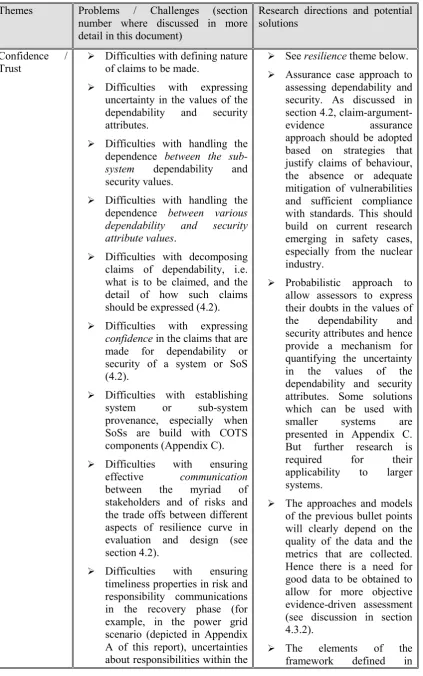
Confidence / Trust
Diversity and Heterogeneity
Complexity and Emergent properties which may arise from the novelty of the systems developed / integrated
Structure
Resilience
Tempo and adaptation
Markets
We then elaborated some of the research directions along these themes into two inter-related broad areas:
Resilience and security cases as an overarching approach within which we address: resilience models, claims decomposition, arguments, scalability and tempo. The argumentation will be about a service or system in an environment. To give meaning to the claims and to understand them they should be based on a coherent set of underlying models.
1 Introduction
This report describes the research we have conducted on identifying the technological advancements envisaged in the period 2007-2027, the research challenges that will be faced for the assessment of dependability and security of these complex systems and systems of systems (SoSs), and the assessment framework envisaged for these systems. The research has been conducted as part of a project titled “EMR (Extra Mural Research) proposal SoSoS Development Methodologies for Secure System Evolution” which has been sponsored by UK Defence Science and Technology Laboratory (DSTL).
The project proposal stated that there would be three main tasks of the research conducted as part of this project:
Task 1: Define and characterise the 2027 research challenge by a review of existing road maps, technology watch papers and by brainstorming with DSTL (and NATO) contacts.
Task 2: Characterise the present state of the art in assessment of SoS of COTS-based components and in particular explain and understand why existing methods do neither scale nor otherwise translate to the SoSoS context.
Task 3: Characterise the research challenge by addressing the INDEED themes of adaptation and diversity; confidence and uncertainty; time and structure and responsibility and trust. We would consider issues from the perspectives of:
♦ probabilistic approaches to diversity and adaptation in socio-technical systems that
incorporate changing perceptions of dependability, learning and adaptation with experience.
♦ models of organisational responsibility and the underlying trust between agents.
♦ argument modelling approaches that address confidence, uncertainty and diversity and by using trust models to support the presentation of assurance cases.
♦ the notion of timebands as structuring mechanism.
The rest of the report will present the research conducted for each of these tasks. The report is structured as follows:
Part 1: Define and characterise the 2027 research challenge by a review of existing road maps, technology watch papers and by brainstorming with DSTL (and NATO) contacts.
Part 2: Propose and justify a Security Evaluation Framework based on existing approaches from other sectors and disciplines. This draws on present state of the art in assessment of SoS of COTS-based components and in particular explain and understand why existing methods do not either scale or otherwise translate to the SoSoS context.
Part 3: Define the characteristics of a security evaluation framework based from the future context explored in Part 1 with the proposed framework in Part 2. It also characterises the research challenge.
Summary and Conclusions: Summarises the report, presents the main conclusions and lists suggestions for possible extensions to the report.
Appendix A: Details three scenarios developed by a NATO Research Task Group on the Dual Use of High Assurance Technologies.
Appendix B: Details analysis of the three scenarios presented in Appendix A.
Appendix D: Lists the assessment techniques and methods that are possible for COTS-based development.
2 Part 1: The future context
2.1 Introduction
This section characterises the systems and their dependability context predicted to occur up to 2027 and from this summarises the main research challenges faced for assessing their dependability and security. Of course it would be too unrealistic to try and predict the exact nature of the products and services that will emerge. Instead we hope to capture sufficient of the trends that we can provide some design criteria for a security evaluation framework. We have used a variety of sources to identify the predictions of technological advancements and trends and similar to [2] we followed a three-forked approach:
Top-down scenario driven approach: in partnership with a NATO Research Task Group IST-048/RTG-020 we developed three Scenarios to identify primarily the security and dependability challenges that can be faced by large SoSs. We have provided details of each of these scenarios and the analysis that was performed on these scenarios in Appendices A and B respectively. Additionally we have studied Scenarios developed by others, for example [3], [4], [5].
Lateral approach: we studied existing roadmaps and strategic trends documents to critically analyse the predictions made on those documents for the future technological advancements and the research challenges faced when and if these emerging technologies are deployed. Main sources for this section were [6], [7], [8], [2] and the references therein.
Bottom-up approach: we studied and reviewed current state of the art in the dependability and security assessment of systems to identify the research challenges faced when the current approaches are attempted for assessment of emerging systems or SoSs. The main sources for this work have been the recently completed state-of-the-art reviews (in which Centre for Software Reliability (CSR) was also a contributor) conducted as part of the EU-funded ReSIST [9] and AMBER [10] projects and the references therein.
2.2 System characteristics and context
The AMSD EU sponsored Dependability Roadmap for the Information Society in Europe1
[2] identified the key dependability related characteristics of future systems and these can be grouped as issues of:
Scale and complexity.
Adaptation and evolution.
Blurred boundaries.
Heterogeneity.
Multiplicity of faults and threats.
We have taken these as a starting point and augmented with additional insights from a complementary EU Study on the dark side of ambient intelligence [5], and from the UK Foresight programme [3]. The defence and security context are provided by the Global Strategic Trends Programme [6], Network Enabled Capability [11], Global Information Grid [12] and by discussing with DSTL experts.
1
2.2.1 Scale, complexity and pervasiveness
In [2] we envisaged a growing scale and complexity of systems. As hardware capabilities improve and costs reduce, there is continuing pressure to attempt to build systems of ever greater scope and functional sophistication, especially for the software components: given Moore’s law, Metclaf’s law and Bell’s Law this was hardly a prescient prediction.
The reasons why software is difficult have been covered elsewhere [13]. The scale and complexity comes from the ubiquity and pervasiveness driven by adaptation and evolution, ambition and requirements, the blurring of boundaries and the increased tempo of threats and operations. It occurs through both design and deliberate policy as well as accidentally, or as side effect, of other trends. It is shaped by the economic and political forces: systems were once seen as technical, then socio-technical and now we can see political-economical-socio-technical (p-e-s-t) systems e.g. in health service, financial markets etc. In the defence context there is the momentum given by the Global Information Grid [12], Network Enabled Capability [11] and Network Centric Operations as well as by the tempo and variety of military operations.
It is now commonplace to predict a growth in the use and pervasiveness of Information and Communications Technology (ICT) ([6], [2], [14]). In the DCDC report [6] it is stated that “Wearable and implanted wireless ICT is likely to be accessible to all that can afford it in the second half of the period [2020 onwards], and users will be linked through sensors and networks that are enabled by computers that are significantly more capable than at present, possibly by 100bn times if quantum computing reaches its potential”. The aforementioned sources also comment on the security and privacy concerns that will develop from the widespread use of these pervasive applications (e.g. [6] states that “…the majority of the global population will find it difficult to ‘turn the outside world off’. ICT is likely to be so pervasive that people are permanently connected to a network or two-way data stream with inherent challenges to civil liberties; being disconnected could be considered suspicious”). For more concrete scenarios of the predicted technological advancements and their use the reader is advised to read the scenarios depicted in [2].
These trends are also reflected in the Calls for Proposals 2007-1 and FP7-ICT-2007-3 of the Seventh Framework Programme (2007-2013) (FP7) of the European Commission on ICTs [15]. The principal stated objectives of the funding are:
“…to research, demonstrate and validate new computing architectures and algorithms that will allow designing, programming and managing future high-performance ICT components with up to oneTera (1012) devices integrated in a single chip.”
“…to investigate an invisible, implicit, embodied or even implanted interaction between humans and system components, for natural interaction (including communication) in surrounding environments, themselves augmented with pervasive and ubiquitous infrastructures and services.”
“…to overcome major scientific, technological and theoretical challenges for quantum technology to deliver on its promise to radically outperform its classical counterpart not only in terms of processing speed, capacity and communication security, but also, in the ability to solve classes of practical problems which currently cannot be solved”. The pervasiveness and growth of the internet can also be expected to continue. Semantic web [16], for example, which is an evolving extension of the World Wide Web, may bring a new way in which the internet information is organised and used.
2.2.2 Adaptation, evolution and architecture
and deployment – they are never finished, evolution is incessant, upgrades, changes in functionality and new features are being added at a continuous pace [1]. Two main strands of development are:
self-configuration and adaptation – systems are expected to be able to respond to the changing circumstances of the ambient where they are embedded;
multiple innovative types of networking architectures and strategies for sharing resources – GRID-like, peer-to-peer, “on-the-fly” services, Trusted Web services etc.
This is emphasised in [6] that predicts that our reliance on networks and the complex nature of our environment, (with often poorly understood properties), will increase. They state that “higher bandwidth, greater processing power, larger datasets, smaller sensors and greater understanding of the dynamics of physical and virtual network behaviour will converge to allow new types of network connection. However, the growth of many networks is not and cannot be governed by top-down planning and occurs in a decentralized manner, often analogous to naturally occurring systems”.
Web services technologies are expected to continue growing [17]: “Over the next 15 years [from 2008], we’ll see the rise of many trade-secret-based companies that do everything from image rendering to statistical calculations to heat-flow analysis ….No large corporate program will be able to run effectively without using of these services, and to do so, it will have to tell its secrets to service providers. Webs of trust will become webs of contracts, and control over security will be out of the hands of any individual organization”.
Continued growth is also expected in the development and adoption of virtualisation of computing and computer resources. For example, [17] states “the current trend to use a single physical-logical PC for everything will reverse—for example, I’ll eventually use my “office work” computer, my “Web browsing” computer, my “e-banking” computer, my “personal theatre” computer, and so forth. The fact that they may all exist in the same box is irrelevant because what matters is that they’ll be self-contained and non-interfering, yet will also have different levels of security and dependability”.
Virtualisation hence promises a new way of organising computing resources and more flexibility in the way users interact with the systems, but security concerns will arise from the closer proximity of virtual machines and the location of resources in the same physical host(s).
2.2.3 Blurring of boundaries
The AMSD roadmap [2] discussed the boundary-less nature of the systems and interconnectedness – few systems have a clear-cut frontier, and they are in systems within systems, within larger systems; in addition connectivity might be achieved through common underpinning information infrastructures that become a critical factor. Nodes and services of the system might be reachable from everywhere and the overall system might exhibit unpredictable emergent behaviours.
2.2.3.1 Synthetic environments and decision support
Interfaces are crucial to decision making. In [6] it is predicted that combined advances in social science, behavioural science and mathematical modelling will lead to more informed decision making. Hence “advanced processing and computational power will permit a new level of pattern recognition (Combinatronics) enabling the decoding of previously unrecognised or undecipherable systems and allowing the modelling of a range of biological to social, political and economic processes”.
Stemming from these advancements, simulation is predicted to become an increasingly powerful tool to aid policy and decision makers (but it may also “blur the line between illusion and reality” [6]). Later in the same report [6] it is predicted that the advancements in the ICT and Cognitive sciences fields are likely to produce advanced decision-support tools which are likely to be revolutionary leading to opportunities for novel or decisive application. Even though they predict that most of the advancements are likely to have positive effects, some advances are also predicted to present potential negative effects (e.g. perverse applications, such as the use of genetic engineering to produce designer bio-weapons).
2.2.4 Heterogeneity
As is evident with current systems, there will also be continuing increase in heterogeneity of the future systems caused by the use of components of different generations and the need to support legacy services, applications and protocols along with more modern variants. There will be multiple COTS and SoSs that are brought together for particular missions. The components and systems will be of different provenances and trustworthiness. This will be reflected in the range of standards that they might comply with and there will be an increasing need to address interoperability issues.
The increase in heterogeneous and disparateness of systems is partly due to the blurring of boundaries between systems; partly due to the different levels of scale; partly due to the blurring of human/device boundary – wrist-held gadgets, wearable devices, implantable devices; and partly due to the adaptation and evolution discussed above.
Advancements in biotechnology are predicted and the software related impacts are “development of artificial sensors capable of interfacing with the human mind and prosthetics capable of mimicking human actions precisely, improving human performance beyond current levels” [6]. The same source also states that due to the high costs of the biotechnology research that the distribution and benefits will be unevenly distributed in the society.
Details of short-medium term funding on biotechnology and ICT convergence (2007-2013) can also be found in FP7 call ICT-2007.8.3 [15] of the European Commission.
Details of short-medium term funding on nano-technology (2007-2013) can also be found in FP7 call ICT-2007.8.1 [15] of the European Commission.
2.3 The security context
2.3.1 Multiplicity of faults and the threat space
The AMSD roadmap [2] rather succinctly characterised the threat space in terms of multiplicity of fault types – in particular the growing danger of malicious faults, both due to individual or organised external attackers, and due to deceitful insiders – and the need to model and understand the multiple interactions and interconnections (human, technical, social, market) among systems, when they all depend on each other.
More recent publications ([11], [12]) amplify this and focus these especially in a security and military context. For example in [11], regarding the UK MoD planned Networked Enabled Capability (NEC), it is stated that “The growing threat from cyber attack, to which we will become more vulnerable as our reliance on the network increases, must also be contained through new measures”. Both [11] and the US DoD Global Information Grid [12] document envisage the tighter integration and interoperability of military and defence agencies, departments and systems over the network hence exposing these networks to an increased risk from cyber-attacks.
Some of the reasons for the increase in the threat space may be:
Wider availability of technology – Technology will become more widely available and affordable [6]. This technology is likely to have both military and commercial use. It will benefit the less technologically capable, particularly through cheap, novel applications. But the availability of this technology to the less technologically capable and inexperienced users will also increase the dangers of system or application mis-configurations which will create vulnerabilities in systems, making them more prone to malicious attacks and machine hijacking.
Rapid Mass-Mobilization – The pervasiveness of ICT will enable communities of common interest to be established very quickly and coordinate the mobilization of significant numbers of people. According to [6] “Rapid mobilization – ‘Flashmobs’ - may be undertaken by states, terrorists and criminals, and may involve dispersed communities across international boundaries, challenging security forces to match this potential agility and ability to concentrate”. An example of rapid mass-mobilisation may be the cyber-attack against Estonia in 2007 [18]. Even though the exact perpetrators of the attack are not known for sure (Estonia initially blamed the Russian government for involvement; the Russian government denied any involvement) it seems like a large number of the attacks may have come from disparate sources influenced by a common cause [19].
Innovations in forensics and counter-forensics tools and applications are also predicted, especially in commercial settings where litigation proceedings to get remuneration from consequences of attacks or breaches may be launched more frequently. For example, [17] states “Forensics and counter-forensics, a major trend in security to come within the social fabric. Military [computer security] failures don’t allow appeal: if you didn’t protect your transmissions, you won’t get far complaining about being exploited. Commercial security failures are quite different, and if you collected the right evidence, you could recover by suing.” The Estonia attack [19] highlights difficulties with attack attribution (and not only governmental but also commercial sites, such as banks, were targeted in this attack).
2.3.1.1 Unintended side effects
the cyber-space may be reduced due to the increasing use of obscure languages and commercially available ‘strong’ encryption tools and algorithms [6]. We may also see increasing pressure from nation states on developers of system to provide secret trap-doors and others surveillance mechanisms as a price to pay for access to markets.
In [6] it is stated that “innovation, research and development will originate from more international and diffuse sources and will proliferate widely, making regulation and control of novel technologies more challenging”. Further [6] states that (the emphasis is ours) “the exploitation of these may have catastrophic results, especially those associated with nanotechnology, biotechnology and weapon systems. These may be unintended, for example ‘runaway’ nanotechnology or biotechnology, or intended, such as the development and use of directed energy or electromagnetic-pulse weapons”.
Other side-effects include:
Information warfare – [6] reports that some states are developing sophisticated “information warfare capabilities” by exploiting the pervasiveness and pliability of digital information to gain commercial or political advantage. They predict that the threat of opportunistic hacking and network manipulation will also continue at an increasing rate and intensity. They predict that both hostile nation states and opportunistic criminal or terrorist hackers will represent a significant threat to military ICT systems. Hence these ICT systems will require robust and comprehensive protection.
Technology leakage – The interconnected nature of the networked systems will increase the risk of deliberate or accidental technology or information leakage [6]. This is likely to happen in spite of stringent regulations and security. This may lead to a “widening number of state and non-state actors accessing advanced and sensitive technologies”. For military and other safety-critical systems or SoSs this may result in hostile states organisations obtaining access to novel weapons and devices. [6] also states the risk (from the defence and law-enforcements point of view) from “ethical scientists” who may reveal details of advanced programmes “in the interests of ensuring a ‘level playing field’ and balance of risk.” Risks of technology and information leakage are also discussed in the three scenarios (Appendix A) developed in partnership with a NATO Research Task Group.
2.3.2 Insights from the scenarios
A NATO Research Task Group on the Dual Use of High Assurance Technologies (IST-048/RTG-020) has written a set of three scenarios of potential attacks against critical infrastructures. The task group was headed by Dan Craigen (University of Toronto, Canada), Ann Miller (University of Missouri-Rolla) and Robin Bloomfield (CSR, City University). A final report detailing the scenarios and the analysis performed is in preparation. Details of the scenarios and initial analysis performed are provided in Appendices A and B of this report.
The “Terms of Reference” (ToR) for the Research Task Group (RTG), provides the historical background for the group as follows:
“As a result of the terrorist attacks on the United States of America on September 11, 2001, NATO and its member countries have been actively investigating means for combating terrorism.
High Assurance Technologies (such as formal methods) have normally been used to develop systems requiring high degrees of assurance as to functionality, safety and security. One of the key benefits of such technologies is their ability to ferret out subtle problems with system requirements, design and implementation.”
“An important aspect of combating terrorism is the protection of NATO network-enabled systems from exploitation by terrorists and other foes.”
The three scenarios are entitled:
Scenario 1: Medical and Financial Services Sector – (present time)
Scenario 2: Oil and Gas Sector – (present time)
Scenario 3: Electrical Power Sector – (Circa 2012)
In what follows we will provide a brief analysis of Scenario 3 (developed by Robin Bloomfield at CSR, City University) with details of threat targets and the goals and intentions of the attackers. Details of how the attack in this scenario may unfold as well as details on the other two scenarios are given in Appendices A and B.
2.3.2.1 Implications of Scenario 3: Electrical Power Sector
The scenario in Appendix C provides a number of insights into the nature of potential incidents for SoS and implications for as security evaluation framework. The scenario describes an incident, initially from the point of view of a controller of the electricity network as he attempts to control and recover the electricity grid in the face of doubt and confusion caused by bad weather, possible attacks, heightened threat levels and malfunctioning information and control systems
One immediate insight from the scenario is that in a complex SoS, such as the electrical power supply grid and supporting infrastructure, it is over simplistic to think of an attack being designed and executed by a single, identifiable agent. While this is of course possible, the scenario shows how a number of malicious, uncoordinated events together with stresses due to accidental events, environmental effects and opportunistic escalation challenge the resilience of the complex system: using a disease metaphor, there is no need for opportunistic infections to co-ordinate. Not only had the adversary absorbed the vocabulary of systems of systems and “boundary-less” systems but had developed an approach that broadened effects-based planning to a more ecological or bio-inspired view. The incident described is just one of the many routes through to failures: it is not just a “security” event.
The scenario uses a mixture of “attacks” that are un-coordinated in the normal sense of having short term communication between the actors but rather through a long term, decentralised understanding and intent. The use of markets and ownership may require large nation-state levels of resource to influence and to hide their intentions.
The threat agents assumed that challenges to the power system were bound to occur so pursued tactics that would increase the magnitude of these effects, make their management more difficult and especially hamper recovery. The adversary made significant use of system engineering and risk analysis skills to understand complex systems. They were aware of “normal accident” theory and had knowledge of complex systems and the relationship between topology and cascading effects. They had the ability to run simulations, picking up on published work and the availability of topological information. They had designed their approach so it did not rely on a single type of attack or a single vulnerability as these could be found. They had understood that consequences in interdependent infrastructures increase non-linearly with time to repair2.
The difficulty in operation caused by bad weather had been amplified by:
Behaviour of the protection devices;
2
Incorrect risk information and Management Information System (MIS) problems had made recovery more difficult.
However hampering recovery and causing losses would be possible without the sophisticated compromise of the protection devices. The adversary might have been satisfied with just prolonging the disruption or could initiate it with more conventional attacks (e.g. graphite on sub stations, fires etc).
The adversaries had sown an easily detectable “bug” by using a friend in the contracting company to miss-set the trip levels in some of the protection devices. The malicious code they had inserted by intercepting the devices after manufacture had not been detected, despite the industry approved audits and assessments that had taken place, and some had been activated and tested in this incident. However once ran the code also self destructed3. They had made use of computer science tools for reverse engineering and mathematical modelling of the sensor code. The adversary had access to the code, unlike the industry assessors and auditors.
They had also learnt about the forensic capability of the system, the times to restore, had cast doubt on the risk information system, learnt how to stimulate consequential social unrest and exploit the legal system.
Another theme was the desire to escape detection, to have the incident seen as a conjunction of several unfortunate events. Part of the scenario was the doubt that it was hard to decide whether it was orchestrated or not. This was in part to avoid the massive retaliation that might follow an overt attack but also as a learning exercise4 so as to retain the potential for future escalation and pave the way to a “shock and awe” variant.
2.3.2.2 Threat Targets
The scenario concerns a system of systems – the electricity generation and supply systems and its supporting control and maintenance systems and the people, organisations and institutions that are stakeholders. The “system” included the
Technical system of electricity supply and control;
The organisation and management of that system;
The legal and insurance system;
The supply chain;
The maintenance system.
Also some abstract elements such as:
Situational awareness;
Doubt and confusion;
Confidence in the system.
It should be noted that the consideration of threat targets as the more concrete concerns may result in missing some important points (e.g. an effective attack on an eVoting machine might be in the voters’ confidence in the accuracy and robustness of the system).
3
Might have inserted code to be date specific, or randomly start. Could be wiped by rebooting the OK version then reload it but would then need to control type of reboots. Would need to compromise checksum and fault detection measures. Could be inserted before shipments, as in this version, but the connectivity of the devices, albeit over a partially Government approved network, might lead to credible scenario with external attack.
4
2.3.2.3 Goals/intentions
A variety of goals and intentions have been discussed for the immediate incident:
Challenge the state and corporations and show their vulnerability and fallibility;
Decrease confidence in the state’s competence;
Increase feelings of insecurity and under attack (prompting further measures);
Economic damage via loss of supply (secondary goal);
Learn how to mount a larger “shock and awe”.
There were also goals with respect to their capabilities
To develop and prove stealth based disruption.
Insert vulnerabilities and sources of instability that then promote and allow instabilities to grow.
2.4 Summary of evaluation challenges
The technological developments mentioned so far have various cultural, societal, political and environmental implications. They will be embedded in a world that is coping with the impact of climate change, rapid modernisation of China and India, competition for food and natural resources and increased sophistication, strategy and multiplicity of adversaries.
The discussion of the research challenges of assessing the dependability and security of these systems will take place later in the report. We will first summarise the main implications that arise from these technological advancements. We have touched upon some of these issues already in the report. Some of the main implications are in the fields of / due to:
Critical societal role – The technological advancements discussed in section 2.2 and 2.3 show that an unprecedented reliance on technology may be created. Due to the increased access to advanced technology the future generations will become more vulnerable to either deliberate or unintentional disruption of the system implemented with these technologies. As mentioned in [6] countries with developed economies (where the adoption of these advanced technologies is likely to be more widespread) are likely to be more vulnerable to such disruption compared with less technologically advanced societies.
Concerns regarding privacy are likely to become especially important. The widespread data sharing and communication that will be required to make the new systems function may lead to serious infringements of privacy. Various infringements are possible such as identity theft, data laundering, disclosure of personal data, surveillance, risks from personalised profiling etc.
Trust / Assurance – The new technological advancements, especially those on ICT systems will require substantial level of trust to be placed on the new systems. Hence the new technology needs to be trustworthy. Building trustworthy systems (especially complex interconnected SoSs) will pose a significant challenge since current methods for both building and assuring a system that is sufficiently dependable or secure will most likely not scale well when applied to these complex systems.
Interoperability – There is likely to be an increased difficulty in building complex systems of systems. There might for example be: inconsistencies between architectures (including inconsistencies in the interfaces) of the different systems of an SoS; but also inconsistencies in the timescales (timebands) in which the different systems interact.
Socio-technical aspects – The future systems are expected to become increasingly socio-technical in nature, hence the role of the human users and operators within the system, and their fallibilities also need to be considered in the overall assessment of the system.
Complexity and System boundaries – The complexity of the future systems and the large inter-dependence and interconnectedness of the components will make it very difficult to define what the boundaries of a system or a SoS are, i.e. where one system ends and another one begins. This makes security and dependability assessment of a SoS very difficult. Assumptions may need to be made about the systems boundaries which may not hold in practice hence leading to wrong conclusions being drawn from the assessment. We envisage future blurring of boundaries between human/machines and between classes of devices.
Information explosion – The future systems, will deal with radically increased volume of information due to advance in sensor and networks technologies. There will also be greater pressure on both systems and human decision makers to deal with information in shorter response times. This will challenge effective decision-making progressively at all levels. As is stated in [6] “Greater personal, corporate and military dependence on ICT and commercial interconnectedness and applications will create greater vulnerabilities and fragility, magnifying the impact of information denial, failure or manipulation.” Continuing leakage and diffusion of sensitive information (which can have potentially dangerous national security implications if it concerns for example weapons systems) will continue to happen at potentially a greater rate.
Rapid obsolescence of technology – The predicted pace of new technological innovations, listed in section 2.2 and 2.3, is likely to render existing technologies obsolescent more quickly than at present [6] and also lead to heterogeneous systems composed on many generations of technology.
Tempo – There will be increasing tempo to operations and systems with dynamic and ad hoc coalitions being formed. Reconciling timing issues as systems and organisations are brought together to form larger SoSs also becomes an issue. There might be inconsistencies in the timescales in which the different systems interact and there might also be differences in the time domain in which two organisations, that form part of the same SoS, interact, e.g. which tasks/process are considered more urgent will depend on the organisation.
3 Part 2: Towards a security/resilience evaluation framework
3.1 Trends in evaluation – the evaluation context
The achievement of security is mediated by a complex interaction of politics, regulation, culture and markets. The products that are available, the trust and threats, the methodologies used, the incentives to co-operate or compete are all shaped by markets. If we ignore or misjudge markets, information assurance and security evaluation initiatives can be blunted or have widespread unintended consequences.
For markets in security to operate effectively users and suppliers need to be able to evaluate the risks, costs and benefits of alternative courses of action. Even if we are not concerned about markets as a whole, an individual, an SME or large corporate as well as vendors and system integrators and security policy makers all need to evaluate alternative courses of action5. There is value not only in being secure, but also in knowing that you are secure, i.e.
value of confidence. If we could assess and communicate security risk in the same manner that other risks are handled then there is the potential for:
Awareness and discussion of appropriate risk based policies;
The ability to make trade offs between different security risks and between different types of risks;
A more refined approach to the insurance of digital risks.
Our current inability to make such risk assessments can be seen as contributing to a market and policy failure. We frame this failure as an inability to make informed risk-based decisions on the costs and benefits of security. In terms of the interaction of economics and security, there is a strong interdisciplinary academic research community and we provide a brief review in section 3.2.2.
However security is just one aspect of overall dependability that users and the market might be concerned with: typically users want an overall and comparable view of other identified risks. We therefore propose to consider this in terms of a risk based approach to resilience and introduce the concept in section 3.1.1.
We also propose to draw on the work of other sectors in evaluation of communication of risks of computer based systems. While it would be false to present the work in other attributes (such as safety) as having solved the problems of achieving and evaluating risk there are both frameworks and detailed technical aspects that could be readily adapted or deployed in security. For example, in the use of “assurance cases” [20], barrier models, worst case reliability bounds etc. We therefore briefly review these approaches in section 4.2.
It is not that risk assessment and security are strangers. The BS1779 2001 standard provides explicit normative guidance on risk assessment that is also extremely generic and could apply to any number of risks. The problems arise because there are particular uncertainties in these risk assessments and any IA policy should be constructed with a view to how to deal with these uncertainties.6 One obvious candidate is some form of probabilistic risk assessment.
One oft cited reason for the inapplicability of risk and probabilistic approaches is the very nature of security. The most obvious uncertainty concerns the behaviour of socio-technical systems: we cannot say with certainty when and how they will be attacked and whether they will fail and in what manner. The problem is not only predicting the behaviour of an
5
This is rather a simplification. Market failure and lack of information can benefit some in the market. Fear, Uncertainty and Doubt (FUD) is a recognised commercial strategy.
6
intelligent, malicious adversary but also the overall complex dynamic system that they are attacking. There might also be some cultural aspects concerning the IT security community favouring deterministic rather than probabilistic reasoning - for example in the way risk and uncertainty is dealt with within security standards. The concept of risk underpins all of this, in both security and safety publications. The safety community seems more fluent in expressing this risk. Although risk is the combination of consequence and probability the security standards are very coy about mentioning probability. For example: BS 1779-200 has 114 entries for risk and non for probability. HMG1 has 36 entries for risk and non for probability, 1 for likelihood. HMG19 has 69 entries for risk and non for probability, 3 for likelihood. There are 133 “risks” in BS 7779-2:2002 and no entries for probability but 2 for likelihood
It is now generally accepted that this uncertainty is best represented using a probability calculus. Whilst there are alternatives to probability as means of expressing this uncertainty, such as fuzzy/possibility theory, these do not have the power of probability, nor do they easily fit into a wider engineering framework, in particular for enabling quantitative risk assessment. The necessity for probabilistic formulation of security claims is elaborated in [21]. It is certainly true that predicting when a particular attack will occur is very difficult, but by analogy with insuring against crime, aggregation of behaviour can lead to the ability to predict probabilistically and can be seen as an emergent property.
This kind of uncertainty has been called “aleatory” (or, sometimes, stochastic), and concerns uncertainty in the world. What is less well accepted is the uncertainty involved in the assessment of dependability. The uncertainty here e.g. uncertainty about the accuracy of claims for a system’s dependability arises from incompleteness and inaccuracy of evidence, doubt about the truth of assumptions, and other non-physical causes. This second kind of uncertainty has been called “epistemic” (or, sometimes, subjective, or state of knowledge) as it arises from incompleteness of knowledge [22]. This uncertainty impacts upon the confidence with which we can make information assurance claims. Although there is a clear need to deal with uncertainty formally, there is a lack of theoretical and empirical work on fundamentals (although see some earlier work [23]). Relevant work is work on economics and security (section 3.2.1) and the interdisciplinary work on confidence (section 3.2.2).
While advocating a probabilistic approach this needs to be done with a mature appreciation of the benefits and pitfalls of such a policy. As with any policy there can be unintended consequences: in probabilistic risk assessment any quantification of the risk can be used and abused. In policy terms numbers can easily travel long social distances but the caveats and understandings surrounding them get left behind, so that bare figures of 10-n failure can be misleadingly quoted. There is already considerable Government guidance in [24] on risk communication in general, on risk management [25] and in the Information Assurance Governance Framework [26].
Additional policy risks of probabilistic approaches are the unintended redistribution or shifting of risks. A market might operate to reduce easily addressed risks at the expense of higher end risks that can not be so readily communicated and might even be increased by reducing the low end risk. For example, if the lifetime cost of security products is low and the perceived threat high there might be the temptation to install myriad firewalls, virus checkers, IDS that might introduce some new but very unlikely routes of serious compromise.
There are a variety of other issues that would have to be considered:
The result of risk assessment of socio-technical systems is very dependent on where the boundary is drawn (e.g. for e-voting [27]).
Risk communication is a well trodden path and any security work would need to take best practice into account (as we expect it does, see [24]).
Risk assessment relies heavily on expert judgment.
These are general issues for risk assessment. Peculiar to security is the intelligent and well resourced adversary and any policy appraisal would have to consider the implications of the adversaries knowing the basis of policy and how this might manifest itself (e.g. manipulation of markets, introducing a new type of security attack on the confidence in the risk assessment). Hence the evaluation needs to be two-pronged: evaluation of the adversaries (their strategies etc.) and the evaluation of the system defences.
3.1.1 Resilience
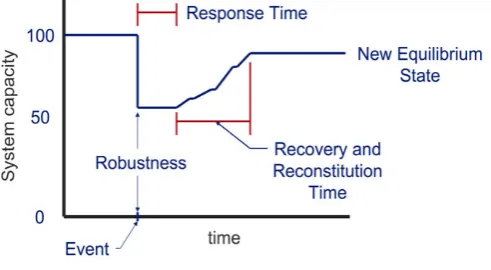
[image:23.595.177.423.326.461.2]One interesting trend in evaluation and policy is to consider an “all hazards” approach that addresses both malicious and accidental attacks on systems (e.g. in EU CIP Directives [29]). In addition the notion of dependability, or dependability and security, as an umbrella term to capture the need to address all attributes (safety, security, availability etc) rather than just a single one and the use of the term “resilience”.
Figure 1 - Resilience
Resilience has its common sense meaning but is used in a variety of ways. The US Department for Homeland Security (DHS) and UK resilience viewpoints consider the loss due to an incident as an indication of how resilient a system is. This is shown in Fig 1. In [30] the emphasis is on the ability of a system to adapt and respond to changes in the environment. We propose to distinguish two types of resilience:
Type1: Resilience to design basis threats. This could be expressed in the usual terms of availability, robustness, etc.
Type 2: Resilience to beyond design basis threats. This might be split into those known threats that are considered incredible or ignored for some reason and other threats that are unknowns. (The Rumsfeld part of resilience)
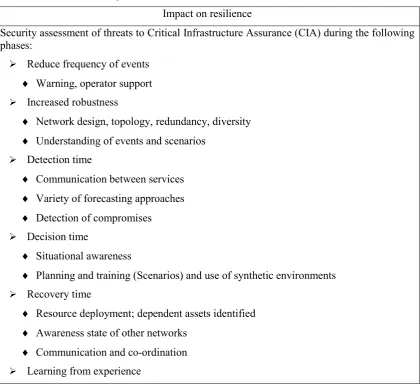
Table 1 – Security assessment of threats to Critical Infrastructure Assurance
Impact on resilience
Security assessment of threats to Critical Infrastructure Assurance (CIA) during the following phases:
Reduce frequency of events
♦ Warning, operator support
Increased robustness
♦ Network design, topology, redundancy, diversity
♦ Understanding of events and scenarios
Detection time
♦ Communication between services
♦ Variety of forecasting approaches
♦ Detection of compromises
Decision time
♦ Situational awareness
♦ Planning and training (Scenarios) and use of synthetic environments
Recovery time
♦ Resource deployment; dependent assets identified
♦ Awareness state of other networks
♦ Communication and co-ordination
Learning from experience
3.1.2 Evaluation and cases
For critical systems it is important to know whether the system is trustworthy and to be able to communicate, review and debate the level of trust achieved. In the safety domain, explicit Safety Cases are increasingly required by law, regulations and standards. Increasingly, the case is made using a goal-based approach, where claims (or goals) are made about the system and arguments and evidence are presented to support those claims. The need to understand risks is not just a safety issue: more and more organisations need to know their risks and to be able to communicate and address them to multiple stakeholders from the boardroom to back office and beyond. The type of argumentation used for safety cases is not specific to safety alone, but it can be used to justify the adequacy of systems in different applications, including security critical, business critical or service critical. An international community has begun to form around this issue of generalised assurance cases and the challenge of moving from the rhetoric to the reality of being able to implement convincing and valid cases [20], [31].
The “case” and associated supporting tools can be seen as having a number of roles:
about the timing of a component but leave that to a separate analysis. The balance between these two approaches should be part of on-going research.
Negotiation, communication, trust: as a boundary objective between the different stakeholders who have to agree (or not) the claims being made about the system. To this end it has to be detailed and rigorous enough to communicate the case effectively and allow challenges and the subsequent deepening of the case.7
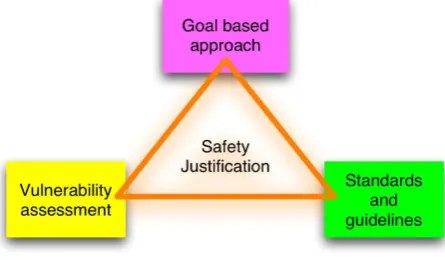
The assurance case contains a number of strategies that can be explained in terms of a “triangle” (see Fig. 2 below) of:
The use of accepted standards and guidelines.
Justification via a set of claims/goals about the system’s safety behaviour.
[image:25.595.199.422.253.383.2]An investigation of known potential vulnerabilities of the system.
Figure 2: Safety Case triangle
The first approach is based on demonstrating compliance to a known standard—which is the approach that is normally used. The second approach is goal-based—where specific goals for the systems are supported by arguments and evidence at progressively more detailed levels. The final approach is a vulnerability-based argument, where it is demonstrated that potential vulnerabilities within a system do not constitute a problem—essentially a “bottom-up” approach as opposed to the “top-down” approach used in goal-based methods.
These approaches are not mutually exclusive, and a combination can be used to support a safety justification, especially where the system consists of both off-the-shelf (OTS) components and application-specific elements. While there is considerable experience in other sectors with the claims-argument-evidence (CAE) structure for safety justification, this type of structuring is novel to the nuclear industry.
There are perceived large benefits in developing and generalising the goal-based Assurance Case approach to security and critical infrastructure.
3.1.3 COTS components
Software systems are increasingly created through the utilisation of commercial-off-the-shelf (COTS) components. COTS components are used due to financial pressures on system developers to reduce costs and shorten the systems’ development and delivery times. In this section we will briefly summarise the main characteristics of COTS components, problems with COTS components assessment, state-of-the-art in COTS assessment and the research challenges. We have provided a more detailed review of COTS assessment in Appendix C.
7
COTS components come in a variety of forms [32], from components that form part of a program (e.g. various graphical, statistical or mathematical libraries of functions) to complete systems of integrated software and hardware components (alarm systems, Programmable Logic Controllers (PLCs), medical devices, Enterprise Resource Planning (ERP) systems, air-traffic management systems etc).
The main characteristics of COTS components are:
They already exist and cannot be re-engineered (exceptions are some open-source off-the-shelf (OTS) with less restrictive license agreements for which the code is available for changing).
Due to their general-purpose use, most components may contain functions that are not necessary for a specific application.
COTS with a substantial user-base are subject to continuous change and evolution to meet users’ evolving requirements.
Contrasted with bespoke systems, there are several challenges that assessors are faced with when dealing with COTS components (more details in Appendix C):
Non-compliance with standards
Establishing COTS provenance
Problems with unwanted/unneeded functionality in the component
Problems stemming from patches and updates to component
Difficulties with optimal COTS components selection
Several assessment approaches are reported in literature for dealing with some of these problems. There is for example a vast literature on COTS component selection (see Appendix C for a review) which ranges from selection and assessment of components for use in commercial settings to safety-critical settings such as medical, nuclear power and military.
Research challenges for COTS components closely mirror those for bespoke systems and SoSs - which will be presented in the next sub-section and in Section 4, even though there are some differences for COTS component assessment which we have highlighted in Appendix C.
3.2 Current research trends
3.2.1 Economics of security