2,900+
OPEN ACCESS BOOKS100,000+
INTERNATIONALAUTHORS AND EDITORS
94+ MILLION
DOWNLOADSBOOKS
DELIVERED TO 151 COUNTRIESAUTHORS AMONG
TOP 1%
MOST CITED SCIENTIST12.2%
AUTHORS AND EDITORS FROM TOP 500 UNIVERSITIESSelection of our books indexed in the Book Citation Index in Web of Science™ Core Collection (BKCI)
Chapter from the book Virtual Learning
Downloaded from: http://www.intechopen.com/books/virtual-learning
World's largest Science,
Technology & Medicine
Open Access book publisher
‘Women on a Wiki’: Social Constructivist Analysis of
the Effectiveness of Online Collaborative Spaces for
Reflective Learning in Women‘s Health Studies
Julie‐Anne Carroll, Mangalam Sankupellay,
Michelle Cornford and Najmah Bahir
Additional information is available at the end of the chapter
http://dx.doi.org/10.5772/65298
‘Women on a Wiki’: Social Constructivist Analysis of the
Effectiveness
of Online Collaborative Spaces for
Reflective
Learning in Women‘s Health Studies
Julie
‐
Anne Carroll, Mangalam Sankupellay,
Michelle Cornford and Najmah Bahir
Additional information is available at the end of the chapter
Abstract
Public health undergraduate students studying the unit Women's Health undertook a teaching and learning exercise which required them to learn to create and use a wiki website for reflective learning purposes. A wiki is a group of web pages that allows users to add content, similar to a discussion forum or blog, while permitting others to edit and provide feedback. The Women's Health wiki provided an online shared, collaborative and creative space wherein the students’ perceptions of women's health issues could be discussed, reflected upon and debated. This chapter develops a social constructivist theoretical framework for analysing the content developed on the Women's Health wiki by the students and provides a theoretical model for how the wiki worked to aid reflective and critical thinking, as well as developing technological and communicative skills among students, and discusses implications for their future use in a tertiary setting.
Keywords: technology, public health, women’s health, education, wiki
1. Introduction
The use of online pedagogy within higher education institutions is increasing [1], with information communication technology (ICT) mediums used to promote interactive environ‐ ments and new approaches to learning, including a broad engagement of Web 2.0 platforms [2, 3]. Web‐based technologies known as Web 2.0 [4], allow users to provide information and
© 2016 The Author(s). Licensee InTech. This chapter is distributed under the terms of the Creative Commons Attribution License (http://creativecommons.org/licenses/by/3.0), which permits unrestricted use, distribution, and reproduction in any medium, provided the original work is properly cited.
promote collaborative environments [5]. The use of Web 2.0 tools provides greater independ‐ ence, collaboration and autonomy among students [5]. These e‐learning tools promote self‐ learning, stimulate students to delve deeper into issues presented to them and keep students interested in the learning process [2, 5, 6]. Studies conducted by Sarkar [1] found that the use of ICT mediums improved the quality of education of students in three ways: augmenting student enthusiasm and commitment, promoting thought provoking ideas and influencing collaborative environments [1]. Higher education institutions have been quick to adopt ICT mediums to facilitate collaborative learning environments among students [7].
ICT mediums, including most Web 2.0 programs, are also seen as playing a significant role in the empowerment of young adult women [8–10]. Umrani and Ghadially [11] posit that the use of ICTs by women have led to increased self‐esteem and significant knowledge gain. This not only broadens the spectrum of learning, but empowers women to make more informed decisions on issues that affect them, like their health and well‐being. Refs. [9, 11, 12] concur with these findings and suggest that ICT mediums empower women by actively involving them in contributing ideas, articulating their opinions and asserting their autonomy on issues that women face today. The perceived benefits of ICTs are consistent throughout the literature [2, 7]. Even though ICT mediums play a significant role in empowerment of women, women are underrepresented in the ICT industry both in Australia and internationally [13–16]. Women account for just under 30% of the total workforce within the ICT sector [17], 21% at professional level, 18% when electronics and communications workers are included and drops to 15% when all the relevant trades assistants are included [17]. Female participants in the ICT workforce has changed little over time, maintained relatively steady at around 16% over the past 6 years [18].
While women are underrepresented in the ICT's highly paid professions, occupations and research, they remain a very high‐level user group when it comes to seeking and obtaining support and advice online for health issues such as conception, contraceptive, pregnancy, depression, anxiety, child rearing, breast cancer and healthy ageing [19–22]. Women are more likely to utilise the Internet for health information specific to their health concerns and tend select information from a vast range of sources and websites and use a combination of sources to make their own decisions about their health and their paths of treatment [12, 20, 22–28]. In light of the evidence showing first that while women are active users of existing technol‐ ogies—including using ICTs (mobile apps, social media, government websites), they are less confident in producing and creating it, and secondly, that technological skills are important for academic and career enhancement and professional opportunity, public health students studying in the final year of the Public Health degree, and who had selected the unit Women's
Health, undertook a teaching and learning exercise which required them to learn to create and
Each student created their own wiki page on a shared wiki set up for Women's Health. The wiki provided an online shared, collaborative and creative space wherein the students’ perceptions of women’s health issues could be discussed, reflected upon and debated. This chapter will first develop a social constructivist theoretical framework for analysing the content developed on the Women's Health wiki by the students over the course of the semester; secondly, it will describe the methodology of the assessment; thirdly, it will demonstrate how the wiki content was analysed; fourthly, it will demonstrate the key learning themes that emerged via the weekly reflective posts by students; and finally, provide a theoretical model for how the wiki worked to aid reflective and critical thinking in this context and provide implications for their future use in a tertiary setting.
2. Social constructivist framework for use of interactive and social websites
for reflective learning practices
The social constructivist approach initiated by Vygostsky [31] and further developed by Jonassen [32] was used to analyse students’ contributions in relation to four key thematic outcomes. Vygostsky's [31] work was founded in the principles introduced by Piaget, who focused on the role of social dynamic and interpersonal dynamics in generating knowledge. Piaget stated that every function in a child's cultural development appears twice. First on the social level and second on the individual level [31]. Vygostsky [31] developed these ideas into a theoretical platform for learning that transformed the notion of the teacher/lecturer as a ‘transmitter of knowledge’ to a role that provided spaces for interactions that allowed learning to occur; between teacher and student, and between student and student. Jonassen [32] further developed this theoretical basis of interactive learning into the following four stages of critical thinking development:
1. Complexities in representations across contexts: This describes the process wherein
students start to recognise complexity and contradiction in how concepts and people are represented in different settings. In this case, the students focused on how this applies to the portrayal of gender in the media.
2. Critical evaluation in real‐world scenarios: Wherein the students apply theory to
evidence; they bring together new theoretical concepts and find examples of where these can be found in everyday real world practice.
3. Reflective practice based on experience: Students combine new theory and evidence and
bring it back to their own experiences. This is a crucial part of constructivist reflective learning as the students seek and locate stories from one another and insights from themselves to apply their learning and ground it in a sustained new level of knowledge.
4. Collaborative co‐construction of knowledge: Interactive and continuous dialogue
Both text and image/visual contributions are provided as examples within each of these learning processes. All data on the wiki was analysed in accordance with a social constructivist approach. According to Tam [33] constructivism is a fundamental departure in thought about the nature of knowing, hence of learning and thus of teaching. To facilitate the understanding of the constructivist view and its implications, it is compared to a familiar mental model of learning held by many: the objectivist epistemology. Guiding the discussions on constructi‐ vism and its implications for teaching and learning are four main questions: What is learning?
What is the learning process? What is the teacher's primary role in the learning process? What can the teacher do to carry out that role? We utilised Ref. [32] for constructivist categories to address these
questions in relation to an online reflective learning diary assessment.
3. Methodology: the wiki assessment
The aim of the wiki assessment was to encourage students to use their critical and reflective thinking skills for the theoretical analysis of women's health issues using feminist theory. They were encouraged to question, critique and reflect on the content of weekly women's health lectures to generate a deeper understanding of the policies and practices which impact on women's health at the government, community, family and individual levels. The aim of this pedagogical process was to encourage students to observe, critique and reflect on the topics covered during the women's health lecture. They are to take into account the ethical, theoretical and philosophical analysis of the issues relevant to women's health and to consider the implication of their analysis for equity, inclusion, policy and implication for women's health.
3.1. The assessment task
Students were invited to join the Women's Health Wiki in Wikispaces (http://www.wikispa‐ ces.com/) for the unit. They followed the steps outlined during the lecture to generate their own wiki page at this website and enter their reflections weekly. You can view the full Women's Health Wiki here: http://pub336womenshealth.wikispaces.com/
3.2. Reflection of women's health issues on the wiki
4. Research questions
1. Can shared ‘cyber spaces’ be occupied by undergraduate women's health students to
improve students’ critical thinking skills and what are the processes via which this occurs?
2. Does the interactive process of sharing and comparing assessment items generate
collaboration and competition amongundergraduate students wherein more critically informed arguments are made about public/popular media sources depicting issues in women's health?
3. What are the implications of this assessment trial for future teaching practices in under‐
graduate courses, especially those utilising reflective learning assessment pieces?
5. Data collection
The students’ weekly wiki entries were observed closely by the unit's teaching staff throughout the duration of the assessment. Comments by teaching staff sought to encourage and foster new ideas along with greater depths of understanding and critical thinking. Students were encouraged to think broadly about the topics for reflection and were expected to use a range of sources from which to form their conclusions. Students were therefore assessed on their use of lecture content, tutorial material, observations from media and empirical evidence as the basis for their reflections.
Secondly, and following the completion, submission, marking and returning of grades and feedback to the students on their wiki page reflection, we asked them the following questions:
• What did you think of the ‘Wiki Diaries and Reflection’ when it was first introduced at the
beginning of the semester?
• What did you think of the ‘Wiki Diaries and Reflection’ after completing the assessment at the
end of the semester?
We received a wide range of in‐depth written responses from students about their initial reactions to this assessment piece, their strategies for engaging with the task, their learning processes during the task and their final reflections on the assessment overall.
6. Analysis and findings from the women‘s health reflective learning
wiki diaries
• Acknowledging complexities in representations across contexts
This describes the process wherein students start to recognise complexity and contradiction in how concepts and people are represented in different settings. In this case, the students focused on how this applies to the portrayal of gender in the media. The following quotes on the wiki most strongly exemplify where this learning process occurred:
Women throughout the ages have been subjected to an image, which has created the ideal women and what should be expected of her. The advertisements don't just stop there; their images create an idealised expectation of the lifestyle and the conduct in which women ‘should’ be endlessly striving for.
We have to realise that the “supermum” is not the model who is photographed with the baby, it is the millions of mothers and women who look after their children day in day out
The ‘Twilight’ series not only brought us sparkly vampires and sexy werewolves but it also romanticized, what is in reality, an abusive relationship. There are numerous examples that prove the relationship is abusive:
• Edward isolates Bella from her friends and family • He drives recklessly with her in the car • Threatens to commit suicide • Controls where she goes • Threatens to kill her • Has his family babysit her
• Blames her actions for him not being able to control himself
An untitled drawing by Fons Van Woerkom. In this picture, a foetus and umbilical cord are a ball and chain, imprisoning and immobilizing a desperate woman. In my opinion, this symbolises the urgent plight for equal treatment of women as working mothers in our culture.
• Critical evaluation in real‐world scenarios
They found that mothers spend 40 minutes less time on ‘leisure activities; with their children when their partners work weekend, fathers spend an extra hour with friends on leisure activities when women work on Saturday. It was suggested that this was due to women having more responsibility for household and care work. In addition they found that men spent an average of 18 hours and 20 minutes on housework while women spent 33 hours and 43 minutes.
Disordered eating is emerging as a norm in Australian society with 90% of 12‐17 year old girls having been on a diet of some type. Drunkorexia is the new term I learnt from this week's lecture. It means disordered eating combined with alcohol abuse which was indicated to exhibit more risky behaviours such as unprotected sex and alcohol overdoes.
Statistics showed that up to 75% of DV reported to law enforcement agencies occur after separation of the couples, with women most likely to be murdered when reporting abuse or attempting to leave an abusive relationship, because the abuser thought that they have nothing to loose, and many many examples are seen in the everyday news include abduct children from mothers, murder, acid attacks, etc. which is quiet scary.
A study showed that delaying the first and second birth later in life among working and non‐working women in most of European countries is positively linked with the decline in total fertility rate (Bratti & Tatsiramos, 2008). Lack of family friendly organisations, cultural influences and socioeconomic status are the potential socio‐ cultural factor producing a delay of motherhood in the most of European countries (Bratti & Tatsiramos, 2011). In Australia, a report showed that the percentage of first birth to women aged 35 and over is increased %10.2 in 2000 compared to 1990.
• Reflective practice based on experience
Students combine new theory and evidence and bring it back to their own experiences. This is a crucial part of constructivist reflective learning as the students seek and locate stories from one another and insights from themselves to apply their learning and ground it in a sustained new level of knowledge. The following quotes on the wiki most strongly exemplify where this learning process occurred:
For me, I found from this that above all, women are sexualised constantly and in more ways than I thought possible. Advertisements with violent images and submissive women, I never realised the influence this could have on popular culture.
I must admit, I am a 24 year old woman who previously would not identify myself as a feminist. The term feminism sort of scared me and had an associated passion and fire for women’s rights which I simply could not relate to. It was not until this Women’s Health unit that I have had the reason to question and research feminism and feminist theory and to then see past the stereotype I was only ever familiar with.
Though I haven't found any examples of gender discrimination within my workplace or any evidence of women that power trip when given higher positions it is impossible to forget the comments one may often hear when a woman is promoted to power.
Even more interesting is that I too seem to care about my appearance. What are people saying about my body? Do I pass the test of being adequate? If there is such a thing as the ‘perfect female body’, how do I match up?
• Collaborative co‐construction of knowledge
This is where an interactive and continuous dialogue occurs wherein the learning processes are situated and developed for all those involved in the interactions. The following quotes on the wiki most strongly exemplify where this learning process occurred:
I really think your statement ‐” I think that the perfect mother image that is constantly portrayed on the
media made this woman feel inadequate as a mother and contributed to her mental health problems.” was
absolutely spot on. In a majority, if not all baby adverts there is a happy, smiling, beautifully presented mother with her laughing and giggling baby. This is not a real depiction of motherhood…
I quite agree with your entry regarding abortion. I personally think women are sometimes not given enough choice and I think it should be an individual choice.
Wow, great entry. I really agree with your point, how much of what has happened to us as women has hap‐ pened because we have let it?’ I see so many young girls totally degrade themselves to try and impress the opposite sex.
• Final reflection on the women's health unit and reflective diary practices
Finally, highlights from the answers students gave regarding our questions about how the wiki affected or influenced their learning processes are collated and presented below. This is useful insight for anyone considering inserting a collaborative online reflective learning space into their under graduate curriculum.
I really enjoyed doing the wikis every week. I felt it was a great way to ‘focus in’ on a topic of my interest and to delve further into a topic relating to women’s health. It gave me the opportunity to reflect upon my own opinions and critically analyse how this compared with the additional research I undertook to complete the wiki.
I really enjoyed having the weekly reflections. As the semester went on I found myself noticing little women's health issues on TV or on the internet or just in general out and about and I really enjoyed having a space to talk about it and to show how the unit was affecting how I viewed the world. I have even thought about continuing on with my weekly reflections on a tumblr or something.
It was a fun way to learn and very practical learning. I was able to pick something out of the lectures that I was interested in or wanted to learn more about which gave a sense of choice and being able to choose what we wanted made it good we would tailor the topics to our degree too.
There really wasn't anything I didn't like about the Wiki diaries – I thought it was a completely different assessment that allowed me to thinking and explore the coursework in an enjoyable way that related back to my own experiences and life.
But I actually enjoyed writing them. I enjoyed doing them because I thought that this was an opportunity for me to get my points of view out there. I also liked reading other student’s entries, it gave me a different per‐ spective as well.
[image:10.439.48.393.381.511.2]7. Theoretical model
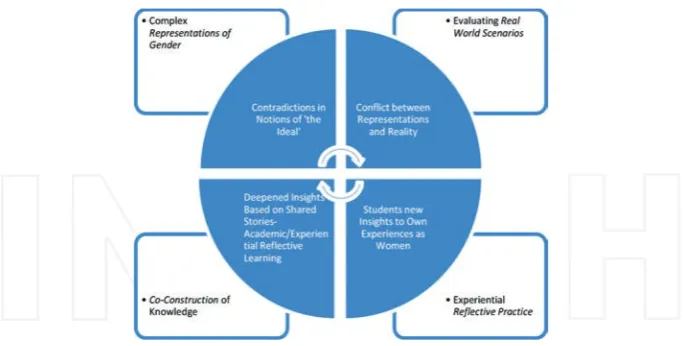
Figure 1 presents the social constructivist analysis of reflective learning processes on wom‐
Figure 1. Social constructivist analysis of reflective learning processes on women's health wiki diaries, QUT Public Health Undergraduate Students.
8. Conclusion
[image:11.439.49.391.64.237.2]processes of critical thought to more obtain a more sophisticated insight to new phenomenon in future. The students all developed confidence in creating and using a wiki, including skills that involved embedding a range of online resources, media, music and videos into their individual wikis, and effective online communication. Overall, we highly recommend the use of wikis as a successful mechanism for reflective learning practices and the development of ICT expertise in undergraduate learning.
Author details
Julie‐Anne Carroll1*, Mangalam Sankupellay2, Michelle Cornford1 and Najmah Bahir1
*Address all correspondence to: [email protected]
1 Queensland University of Technology, Australia
2 James Cook University, Australia
References
[1] Sarkar, S.: ‘The role of information and communication technology (ICT) in higher education for the 21st century’, The Science Probe 2012, 1(1), pp. 30–41.
[2] Alexander B., and Levine A.: ‘Web 2.0 Storytelling: Emergence of a New Genre’. Educause Review, EDUCAUSE. Boulder, CO, 2008,43(6),pp. 40–56.
[3] Carroll, J.‐A., Rodgers, J., Sankupellay, M., Newcomb, M., and Cook, R.: ‘Systematic evaluation of GoSoapBox in tertiary education : a student response system for improv‐ ing learning experiences and outcomes’. Proceedings of the 8th International Technol‐ ogy, Education and Development Conference (INTED2014), Valencia, Spain, 2014. [4] Duffy, P., and Bruns, A.: ‘The use of blogs, wikis and RSS in education: a conversation
of possibilities’. Proceedings Online Learning and Teaching Conference, Brisbane, Australia, 2006.
[5] Virkus, S., and Bamigbola, A.A.: ‘Students’ conceptions and experiences of Web 2.0 tools’, New Library World, 2011, 112(11/12), pp. 479–489.
[6] Gokcearslan, S., and Ozcan, S.: ‘Place of wikis in learning and teaching process’, Procedia: Social and Behavioral Sciences, 2011, 28, pp. 481–485.
[8] Morahan, J.: ‘Women and the internet: premise and perils’, Cyberpsychology & Behaviour, 2000, 3(5), pp. 683–691.
[9] Laizu, Z., Armarego, J., and Sudweeks, F.: ‘The role of ICT in women's empowerment in rural Bangladesh’. Proceedings Cultural Attitudes Towards Communication and Technology, Murdoch University, Australia, 2010.
[10] Sengupta, A., Long, E.G., Singhal, A., and Shefner‐Rogers, C.L.: ‘The Sada Says ‘We Women Have Our Rights’, A Gender Analysis of an ICT Initiative in Afghanistan’, International Communication Gazette, 2007, 69(4), pp. 335–353.
[11] Umrani, F., and Ghadially, R.: ‘Empowering women through ICT education: facilitating computer adoption’, Gender Technology and Development, 2003, 7(3), pp. 359–377. [12] Carroll, J.‐A., and McCarthy, R.: ‘Geekdom for Grrrls health : Australian undergraduate
experiences developing and promoting women's health in cyberspace’. Proceedings of the International Conference of Education, Research and Innovation, ICERI 2010, Melia Castilla Madrid, Madrid, 2010.
[13] Bandias, S., and Warne, L.: ‘What women in ICT say’. Proceedings of The Australasian Conference on Information Systems, Melbourne, Australia, 2009.
[14] Griffiths, M., Moore, K., and Richardson, H.: ‘Celebrating hetrogenity: a survey of female ICT professionals in England’, Information, Communication & Society, 2007, 10(3), pp. 338–357.
[15] Hafkin, N.J., and Huyer, S.: ‘Women and gender in ICT statistics and indicators for development’, Journal Information Technologies and International Development 2007, 4(2), pp. 25–41.
[16] Hellens, L.V., and Nielsen, S.: ‘Australian women in IT’, Communications of the ACM, 2001, 44(7), pp. 46–52.
[17] Australian Communication and Media Authority.: ‘Internet Use and Social Networking by Young People’, Canberra, Australia. 2008.
[18] Statistics, A.B.O.: ‘Employment in Information and Communication Technology (ICT)’, Australian Bureau of Statistics, Canberra, Australia. 2005.
[19] Zutphen, M.V., Milder, I., and Bemelmans, W.: ‘Usage of an online healthy lifestyle program by pregnant women attending midwifery practices in Amsterdam’, Preven‐ tative Medicine, 2008, 46(6), pp. 552–557.
[20] Pérez‐López, F.: ‘An evaluation of the contents and the quality of menopause informa‐ tion on the World Wide Web’, Maturitas, 2004, 49(10), pp. 276–282.
[22] Ziebland, S.: ‘The importance of being expert: the quest for cancer information on the Internet’, Social Science and Medicine, 2004, 59(9), pp. 1783–1793.
[23] Sillence, E., Briggs, P., Harris, P., and Fishwick, L.: ‘How do patients evaluate and make use of online health information?’, Social Science & Medicine, 2007, 64(9), pp. 1853– 1862.
[24] Kalichman, S., Weinhardt, L., Benotsch, E., DiFonzo, K., Luke, W., and Austin, J.: ‘Internet access and Internet use for health information among people living with HIV‐ AIDS’, Patient Education and Counseling, 2002, 46(2), pp. 109–116.
[25] Fredriksen, E., Moland, K., and Sundby, J.: ‘“Listen to your Body” A qualitative text analysis of Internet discussions related to pregnancy health and pelvic girdle pain in pregnancy’, Patient Education and Counseling, 2008, 73(2), pp. 294–299.
[26] Dey, A., Reid, B., Godding, R., and Campbell, A.: ‘Perceptions and behavior of access of the Internet: a study of women attending a breast screening service in Sydney, Australia’, International Journal of Medical Informatics, 2008, 77(1), pp. 24–32. [27] Toub, D.B., and Dunkel, E.: ‘The Virtual Physician Office: patient use of an Internet‐
based women's health forum’, Obstetrics & Gynecology, 2001, 97(4), pp. 575–584. [28] Pandey, S., Hart, J., and Tiwary, S.: ‘Women's health and the Internet: understanding
emerging trends and implications.’, Social Science & Medicine, 2003, 56(1), pp. 179–191. [29] Caverly, D., and Ward, A.: ‘Techtalk: wikis and collaborative knowledge construction’,
Journal of Developmental Education, 2008, 32(2), pp. 36–37.
[30] Carroll, J.‐A., Diaz, A., Meiklejohn, J., Newcomb, M., and Adkins, B.: ‘Collaboration and competition on a wiki: the praxis of online social learning to improve academic writing and research in under‐graduate students’, Australasian Journal of Education Technology, 2013, 29(4), pp. 513–525.
[31] Vygostsky, L.: ‘Interaction between learning and development’, in Gauvain and Cole (Eds.): ‘Readings on the Development of Children’, Scientific American Books, 1978, pp. 34–40.
[32] Jonassen, D.: ‘Thinking technology: toward a constructivist design model’, Educational Technology, 1994, 34(3), pp. 34–37.