0
RESEARCH PAPER
Effects of alkali treatment and elevated temperature on the mechanical
properties of bamboo fibre-polyester composites
(Title contains 15 words)
Running headline: Effects of alkali treatment and elevated temperature on the mechanical properties of bamboo fibre-polyester composites (104 characters)
by
Allan C. Manalo1, Evans Wani1, Noor Azwa Zukarnain1, Warna Karunasena1, Kin-tak Lau2
1
Centre of Excellence in Engineered Fibre Composites (CEEFC),
Faculty of Health, Engineering and Sciences, University of Southern Queensland, Toowoomba, Queensland 4350, Australia
2
Department of Mechanical Engineering, The Hong Kong Polytechnic University, Hung Hom, Kowloon Hong Kong SAR
Submitted to
Composites Part B: Engineering
Corresponding Author: Allan Manalo
Senior Lecturer in Civil Engineering
Centre of Excellence in Engineered Fibre Composites (CEEFC), Faculty of Health, Engineering and Sciences,
University of Southern Queensland, Toowoomba, Queensland 4350, Australia Tel: +61 7 4631 2547 Fax: +61 7 4631 2110
E-mail: [email protected]
Manuscript summary:
Total pages 33 (including 1-page cover) Number of figures 14
1
Effects of alkali treatment and elevated temperature on the mechanical
properties of bamboo fibre-polyester composites
Allan C. Manalo1, Evans Wani1, Noor Azwa Zukarnain1, Warna Karunasena1, Kin-tak Lau2
1Centre of Excellence in Engineered Fibre Composites (CEEFC),
University of Southern Queensland, Toowoomba, Queensland 4350, Australia
2Department of Mechanical Engineering, The Hong Kong Polytechnic University, Hung Hom, Kowloon Hong
Kong SAR
Email: [email protected]; [email protected]; [email protected]; [email protected]; [email protected]
ABSTRACT
2 Keywords: Bamboo; Polyester; Bio-composites; Alkali treatment; Elevated temperature; Mechanical properties.
_______________________
*Corresponding author, tel. +61 7 4631 2547; fax. +61 7 4631 2110, E-mail:
3 1. Introduction
Synthetic fibres such as glass, carbon and aramid have been used for several years in many applications varying from aerospace components to civil infrastructures. However, the high production and material costs of these fibres limit their wider use for the development of composite materials. As a result, there is an increasing interest in utilizing the less expensive natural fibres as reinforcement in composites because of their added advantages such as lightweight, renewability and biodegradability. Joshi et al. [1] also revealed that natural fibres are environmentally superior to glass fibres making them an emerging and realistic alternative to synthetic fibres in some engineering applications. It is anticipated therefore that the use of sustainable natural fibres in the development of new generation composites will be a necessity and will play a crucial role in the near future.
Among the well-known natural fibres, bamboo has one of the most favourable combinations of low-density and high stiffness and strength [2]. Nugroho and Ando [3] indicated that these properties of bamboo make them a promising material for the manufacture of various engineered composite products. However, it is only in recent years that the interest in utilising bamboo as reinforcing materials for composites is increasing because of limited availability of the fibres [2]. This is because it is technically difficult and expensive to extract long and straight bamboo fibres [4-5]. Another significant challenge in using bamboo is the inherent flaws within fibres which reduce their compatibility with polymer matrices resulting in poor mechanical properties of the composites [6]. This is due to the hydrophilic nature of natural fibres and the hydrophobic nature of the polymer matrix but their poor compatibility can be improved by fibre surface modifications using chemical treatments.
While many researchers have developed composites with natural fibres, the work on bamboo fibre reinforced composites is still very limited. Most of the studies focused mostly on tensile strength characterisation, thus Khalil el at. [5] suggested that more analysis and testing are warranted to comprehensively characterise the mechanical properties of bamboo fibre based composites. Similarly, investigation on the behaviour of such composites under elevated temperature is scarce. There is a need therefore to comprehensively investigate the mechanical properties of composites utilising bamboo fibres in order to increase its acceptance and wider use in the composites industry.
In this study, bamboo fibres were treated with different levels of alkali solution and infused with polyester resin to produce the composites. Experimental investigation using coupon specimens following ISO and ASTM test standards were performed to characterise the effect of alkali treatment on the flexural, tensile and compressive properties of the bamboo fibre-polyester composites at room and elevated temperature. It is expected that the results of this study will provide information to support the development and application of cost-effective and eco-friendly bio-composites utilizing bamboo fibre through an evaluation and understanding of their mechanical characteristics.
2. Background
4 that more than 2.5 billion people depend on the use of bamboo [7]. Bamboo is found in abundance in Asia and South America [5]. In Australia, bamboo has been in small-scale cultivation in several areas of Queensland for more than 20 years [8] wherein the current market is for shoots and culm production. However, the Australian market has long been importing bamboo products for housing and construction such as flooring, laminates, composite board, and chipboard. Thus, a study that supports the development and adaptation of more renewable materials while providing the construction and building industry with an alternative and environmentally sustainable materials such as bamboo is warranted.
Despite its high mechanical properties, biodegradability and low cost, bamboo is not fully utilized in modern construction due to its cylindrical shape requiring special joints and connections. Consequently, bamboo fibres are extracted and used as reinforcement for polymer composites to practically apply the benefit of bamboo in various engineering systems. Takagi and Ichihara [9] indicated that bamboo fibre is one of the most attractive candidates as a strengthening natural fibre. It has several advantages, such as the environmental load is small, because it is renewable yearly and it grows rapidly, and the bamboo fibre has relatively higher strength compared with jute and cotton fibres. Rao and Rao [4] indicated that bamboo fibres are stiffer but weaker than banana and sisal fibres, which are two of the mostly utilised natural fibres. Amada et al. [10] estimated the tensile strength, modulus and bulk density of bamboo culm is around 50 MPa, 2 GPa and 670 kg/m3 and that of fibre is 610 MPa, 46 GPa and 1160 kg/m3, respectively. Added to these advantages, bamboo is typical of unutilised natural bio-resources.
The favourable properties of bamboo fibres have led researchers to investigate its potential use as reinforcement in composites. Mohanty and Nayak [11] developed short bamboo fibre reinforced HDPE polyester composites with varying fibre content. They found that the bamboo composites possess good tensile and flexural strength with fibre loading from 10 to 30%, beyond which there was a decline in the mechanical strength. Takagi and Ichihara [9] fabricated green composites from starch-based resin and short bamboo fibres wherein they found that the strength of bamboo fibre reinforced composites were strongly affected by fibre aspect ratio. Wong et al. [12] conducted investigation into the effect of bamboo fibre length to tensile properties. Their research concluded that very short fibres detracted from the strength of the unreinforced composites. Manalo et al. [13] compared the mechanical properties of bamboo fibre composites made from non-woven textile, foam core, and randomly oriented fibres. Their results indicated that the good mechanical properties of bamboo composites can certainly have an edge over conventional panel products used in the housing and construction industry. However, these researchers have highlighted the need to modify the surface of bamboo fibres to enhance its bond with the polymer matrix to effectively utilise the high strength of bamboo fibres in the developed composites.
5 also reduces the aggregation of fibre in the matrix and increases surface roughness which improves the interlocking between the fibre and matrix [15-16]. However, not much of work has been done to investigate the effect of chemical treatment on the mechanical properties of bamboo fibre reinforced polyester composites which warrant further investigation.
Another limitation of natural fibres is their tendency to degrade at lower temperature compared to synthetic fibres. The majority of natural fibres including bamboo have low degradation temperature [17]. Temperature also plays an influential role in the thermal stability of natural fibre composites, where it causes direct thermal expansion or contraction and affects the rate and volume of moisture absorption that leads to fibre swelling [18]. While the thermal degradation of some natural fibres have been investigated [19-20], very limited efforts have been made to investigate the effect of elevated temperature on the mechanical properties of composites containing bamboo fibres. Moreover, the effect of elevated temperature on the mechanical properties of alkali treated bamboo fibres has not yet been investigated.
3. Materials and Methods
3.1 Bamboo fibres and polyester resin
Randomly oriented bamboo fibres obtained through steam explosion process and with lengths ranging from 40 to 60 mm were used in this study. The average diameter of the bamboo fibres is 161.52 µm. Polyester resin (AROPOL 1472/25P Infusion), which was supplied by Nuplex Composites Australia, was used as the matrix in the production of composites. This type of resin is selected as it is reactive and used for rapid cure at room temperature. The catalyst (Butanox M-50) was added for curing at a quantity of 1.5% by weight of the polyester resin. The properties of the neat polyester resin were determined experimentally and are listed in Table 1.
Table 1. Properties of neat polyester resin Modulus of
Elasticity, GPa
Strength properties, MPa Glass transition temperature (Tg), oC Flexure Tensile Compressive
3.1 80.3 30.9 107.7 110
3.2 Fibre preparation
6
3.3 Composites preparation
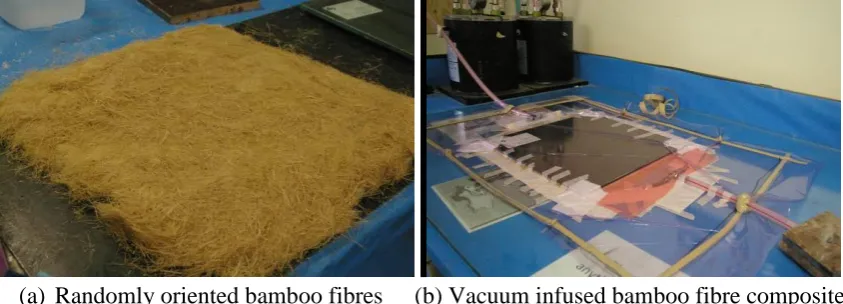
The composite laminates were prepared in 400 mm x 400 mm panels with a fibre fraction of approximately 20% by weight. The laminates were produced using the vacuum bagging process as shown in Figure 1. In this process, a pressure of 92 bar is applied to the fibres through a vacuum bag which is properly sealed with adhesive tape along its perimeter. In the production of composites, the bamboo fibres were randomly oriented and placed on the infusion table. A transparent glass was applied on top to ensure that the fibres are evenly distributed and to maintain the thickness of the panel. Once the fibres were fully impregnated with the matrix, the composite was then cured under vacuum at room temperature for 24 hours. The samples were then taken off the mould and pre-cured at 80oC for 5 hours before cutting into required specimen dimensions.
(a) Randomly oriented bamboo fibres (b) Vacuum infused bamboo fibre composites Figure 1. Preparation of bamboo fibre composites
3.4 Test procedure
The experimental investigation using coupon specimens were performed following the ISO and ASTM test standards to characterise the flexural, tensile, and compressive properties of the bamboo fibre reinforced polyester composites. Six replicates for each specimen type were cut and tested. The dimensions of the coupon specimen and standards followed for the different tests are listed in Table 2.
Table 2. Details of specimens
Type of test Test standard No. of coupons
Dimensions (mm) thickness length width
Flexural ISO 14125:1998(E) 6 5 120 15
Tensile ISO 527-1:1995 6 5 300 25
Compressive ISO 14126:1999 6 5 140 12.75
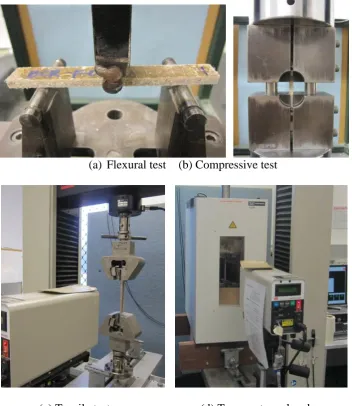
[image:7.595.88.510.279.431.2]7 From the characterisation of composites with different levels of alkali treatment, the % NaOH that results in optimum mechanical properties was determined and used in the investigation on the effects of elevated temperature. At elevated temperature, the specimens were tested in the Instron environmental chamber (Fig. 2d) at 40, 80 and 120oC. The specimens were preheated in an oven for at least 30 minutes prior to conducting the test. The test started once the chamber reached the required temperature and was maintained for 5 minutes.
(a) Flexural test (b) Compressive test
(c) Tensile test (d) Temperature chamber Figure 2. Test of bamboo fibre composites
4. Results and observations
4.1 Mechanical behaviour of NaOH treated bamboo composites
[image:8.595.123.476.169.576.2]4.1.1 Flexural behaviour
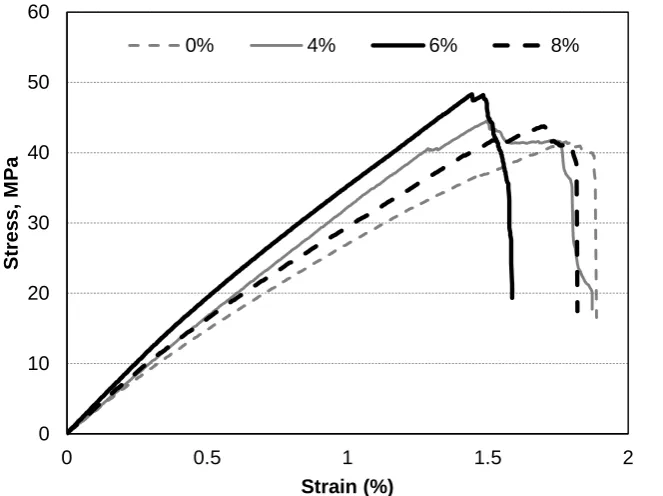
8 different levels of NaOH solution. All specimens exhibited an almost linear elastic stress-strain curve before any failure was observed. The specimens with untreated bamboo fibres (0% NaOH) failed at an average bending stress of 41.2 MPa and strain of 1.8% while the 4% NaOH specimens failed at a stress of 41.7 MPa and strain of 1.5%. On the other hand, the specimens with the bamboo fibres treated with 6% NaOH failed at a bending stress of 44.2 MPa and strain of around 1.5% while the 8% NaOH specimens failed at an average stress of 39.6 MPa and a strain of 1.7%. Interestingly, Osorio et al. [2] reported that the failure strain of bamboo fibre composites in flexure between 1.4 to 1.7%. This shows that the bamboo fibres started to break at this level of strain which resulted in the failure of the composites. As can also be seen from the figure, the stiffness of composites with chemically treated fibres (4 to 8% NaOH) is higher than the untreated specimens indicating that the pre-treatment of the bamboo fibres enhances the flexural behaviour of the composites.
9
0 10 20 30 40 50 60
0 0.5 1 1.5 2
S
tr
es
s,
M
P
a
Strain (%)
[image:10.595.132.464.77.325.2]0% 4% 6% 8%
[image:10.595.164.433.375.579.2]Figure 3. Flexural stress-strain behavior of bamboo composites
Figure 4. Failure of bamboo composites under bending
4.1.2 Tensile behaviour
10 composites is roughly 52 to 67% of the strength of the neat polyester. This can be explained by the orientation of the bamboo fibres within the composites. Mylsamy and Rajendran [21] indicated that the tensile properties in a composite depend mainly on the fibre orientation and the adhesion between the fibres and the matrix. The fibres should be also long along the direction of the load to effectively utilize its high tensile strength [3]. As the bamboo fibres are randomly oriented in the laminates, only the fibres which are oriented perpendicular to the load provided reinforcement to the composites. This is similar to the observation of Wong et al. [12] wherein they noted that only the longitudinal fibres contributes in the energy dissipation and in crack retardation in short bamboo fibre reinforced polyester composites. They added that the lower tensile strength of the composites than the neat resin is also due to the relatively short bamboo fibres. Takagi and Ichihara [9] mentioned that that bamboo fibres with a small aspect ratio (less than 20) do not act as reinforcement but only as filler. This explains why the strain at failure of the composites is lower compared to the tensile failure strain of long bamboo fibres.
11
0 5 10 15 20 25
0 0.2 0.4 0.6 0.8
S
tr
es
s,
M
P
a
Strain (%)
[image:12.595.135.453.77.327.2]0% 4% 6% 8%
Figure 5. Tensile stress-strain behavior of bamboo composites
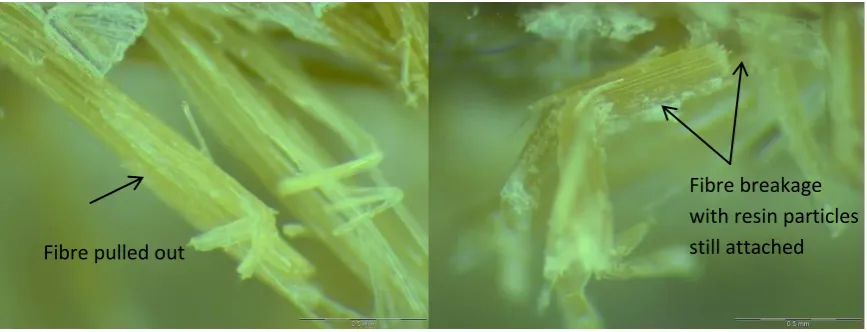
12 (a) Untreated fibres (b) Treated fibres – 6% NaOH
Figure 7. Microscopic observation of bamboo fibres
4.1.3 Compressive behaviour
Figure 8 shows the stress and strain relationship of the bamboo fibre polyester composites under compression. A linear elastic behaviour was observed at lower level of stress but became nonlinear at higher level of stress and strain for all specimens. This behaviour is expected as Sigley et al. [22] indicated that polyester resins are usually brittle in flexure and tension but show considerable ductility in compression. Under compressive load, the specimens 0%, 4%, 6%, and 8% NaOH failed at an average stress of 61.2, 84.6, 111.2, and 64.1 MPa, respectively, with the failure strain occurring between 2.5 to 5.2%. Mylsamy and Rajendran [21] suggested that the most important parameter controlling the compression properties of fibre composites is the interfacial adhesion between the fibre and matrix. Thus, higher compressive properties are expected for composites with treated bamboo fibres than the untreated samples as the resin can easily wet and impregnate the fibres. In the study, the composites with bamboo fibres treated with 6% NaOH exhibited the highest compressive strength (3% higher than that of the neat polyester resin) while the strength of other specimens is only between 56 to 78% of the neat resin.
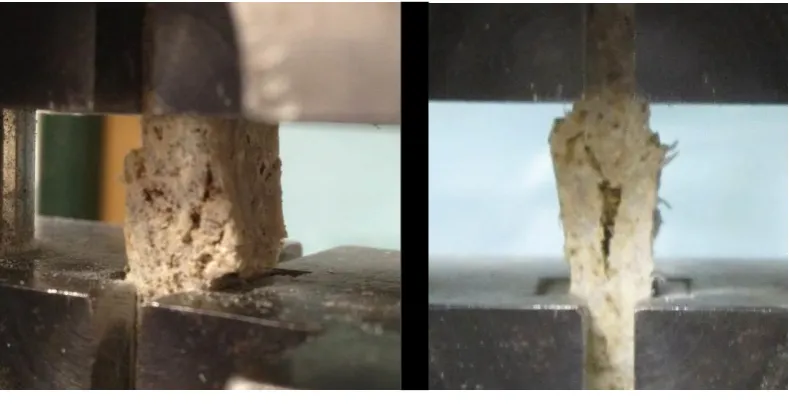
Figure 9 shows the failure behavior of bamboo composites in compression. It can be seen in Figure 9a that the weak fibre-matrix interface of composites with untreated fibres resulted in the shear crimping failure leading to lower failure strength than that of composites with treated fibres. This type of failure is due to the low fracture strain of bamboo fibres and the poor adhesion between the matrix and the fibres. In contrast, the better transfer of stress from the matrix to the bamboo fibres treated with 6% NaOH resulted in this specimen failing in shear as shown in Figure 9b.
[image:13.595.83.517.71.237.2]13
0 25 50 75 100 125
0 1 2 3 4 5 6
Stres
s
M
Pa
Strain (%)
[image:14.595.132.452.77.322.2]0% 4% 6% 8%
Figure 8. Compressive stress-strain behavior of bamboo composites
(a) Untreated fibres (b) Treated fibres – 6% NaOH Figure 9. Failure of bamboo composites under compression
4.2 Mechanical behaviour at elevated temperature
4.2.1 Flexural behaviour
[image:14.595.101.496.360.563.2]14 Interestingly, the bamboo composites exhibited almost the same bending strength when tested at RT, 40 and 80oC but a significant reduction in strength was observed when tested at 120oC. The specimens with untreated bamboo fibres failed at an average bending stress of 41.2, 40.8, 42.3, and 16.4 MPa while the composites with treated bamboo fibres failed at 44.2, 41.1, 43.0, aand 21.1 MPa when tested at RT, 40, 80, and 120oC, respectively. Moreover, the specimen became more ductile and failed at a higher strain with increasing temperature. This is because of the softening of the polyester matrix at elevated temperature.
The almost same level of flexural strength exhibited by the composites when tested under RT, 40 and 80oC could be due to the reorientation of the fibre during the softening of the resin. Moreover, the softening of the resin at these levels of temperature resulted in the bonding between the fibres and the resin being slightly enhanced. As a result, the composites with and without chemical treatment exhibited almost the same strength and stiffness when tested at elevated temperature. This also suggests that the matrix played a major role in the overall behaviour of the composites at elevated temperature.
The softening of the poleyster resin at higher temperature can also be observed from the failure behaviour of the composites shown in Figure 11. At RT, a brittle failure mode at the centre of the samples was observed and resulted in a rough fractured surface. At elevated temperature, the fractured surfaces of treated and untreated composites were quite similar. At 40oC, the fracture surface becomes rough with the breakage of the fibres more obvious, with half of the fractured surface showing a smoother profile than at RT. A rougher fractured surface was observed at 80oC than that at RT and 40oC. This indicates that the sample was broken as a result of softening of the polymer matrix and the specimens failed more gradually with the progressive failure and pull-out of the bamboo fibres. At 120oC, a high deformation was observed and multiple cracks were apparent in the composites. This explains the gradual drop in stress on the stress-strain curves, whereby as crack propagation is hindered by the fibres, another crack propagates at a different point on the specimen. The specimens did not break completely into halves as experienced at lower temperature, due to the the fibres remaining unbroken at the end of the test. This also suggests that the fibres are still able to carry some load, as long as the fibre/matrix adhesion remains intact.
0 10 20 30 40 50
0 2 4 6 8
St ress, M Pa Strain (%) RT 40C 80C 120C 0 10 20 30 40 50
0 2 4 6 8
15 (a) Untreated fibres (b) Treated fibres – 6% NaOH
Figure 10. Flexural stress-strain behavior of bamboo composites at elevated temperature
[image:16.595.108.518.117.306.2](a) Untreated fibres (b) Treated fibres – 6% NaOH Figure 11. Failure of bamboo composites in flexure at elevated temperature
4.2.2 Tensile behaviour
Figure 12 shows the tensile stress-strain curve for bamboo composites under elevated temperature. It can be observed that as the temperature increases, the stress-strain relationship curves changes from linear elastic to nonlinear. The curves at 40oC are similar to the stress-strain diagram obtained at RT with slightly lower stiffness. At 80oC, the slope gradually becomes less steep with the maximum stress was maintained for a few seconds before failure. As the temperature reaches 120oC, the composites failed at a lower strength but with a very high percentage of strain. The specimen with untreated and treated (6% NaOH) bamboo fibres tested at RT failed at an average tensile stress of 19.0 and 21.0 MPa, respectively. Interestingly, both composites with treated and untreated fibres exhibited almost the same tensile strength when the temperature increases. The composites tested at 40, 80 and 120oC failed at an average tensile stress of around 21, 22 and 9 MPa, respectively.
0 5 10 15 20 25
0 2 4 6
S tr e s s , M P a Strain (%) RT 40C 80C 120C 0 5 10 15 20 25
0 2 4 6
[image:16.595.77.515.548.755.2]16 (a) Untreated fibres (b) Treated fibres – 6% NaOH
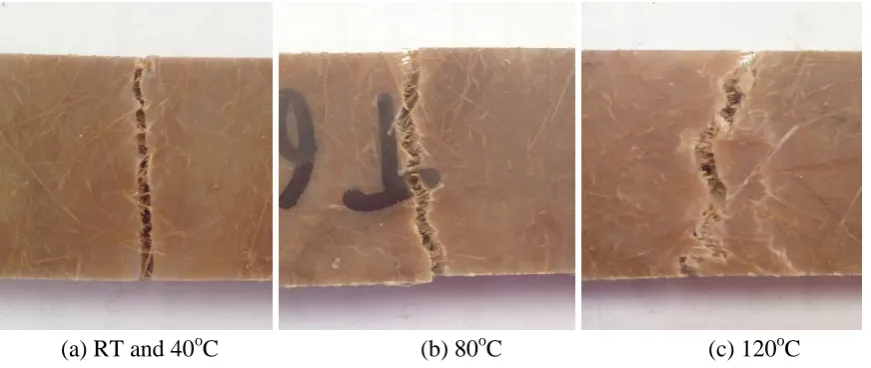
Figure 12. Tensile stress-strain behavior of bamboo composites at elevated temperature At RT and 40oC, all specimens failed primarily at a single cross-section along the width (Figure 13a) by brittle fracture, which was also indicated by the abrupt drop in the stress-strain curve. It was also apparent that the untreated composites have more fibres exposure on its fractured surface at 40oC than the treated composites. This is due to the poor fibre/matrix adhesion of the untreated composites which allowed the fibres to slip out from the polyester, while a better grip on the treated composites had caused fibres to break instead. With increasing temperature, bond failure between the fibres and matrix was responsible for specimen failure due to the softening of the resin matrix.
At 80oC, which is the midpoint between the solid phase of the polyester and its Tg, a transitional behaviour can be expected. The decrease in slope steepness suggests that the composites undergo a reduction in stiffness, while the plateau on the curves before the drop shows a semi-ductile failure. This behaviour suggests that at 80oC, the polyester have started to soften. As the Tg is reached, the polyester resin became very ductile, while the addition of fibres provided some stiffness and hindered the mobility of the polymer’s molecular chains. The increase in the tensile strength at this temperature proves that the softening of the matrix had allowed the fibres to be pulled in the direction of the tensile loading, rearranging themselves for better stress transfer. Figure 13b shows a slightly inclined failure surface along the width of the specimen tested at 80oC. As the bamboo fibres used are randomly oriented, this makes the loading on every fibres unequal. The resin can transfer stress between fibres however, as the temperature increases, the resin becomes soft and malleable, thus weakening the overall structure. At 120oC, the debonding of fibres from the matrix and shear failure between the same fibres was observed (Figure 13c). This gradual failure indicates that only the fibres resist the tensile load as the polyester softens. Similarly, the deterioration of the fibre/matrix adhesion at 120oC causes gradual separation between the fibre and the matrix upon the application of the tensile force.
[image:17.595.82.518.546.730.2](a) RT and 40oC (b) 80oC (c) 120oC
17
4.2.3 Compressive behaviour
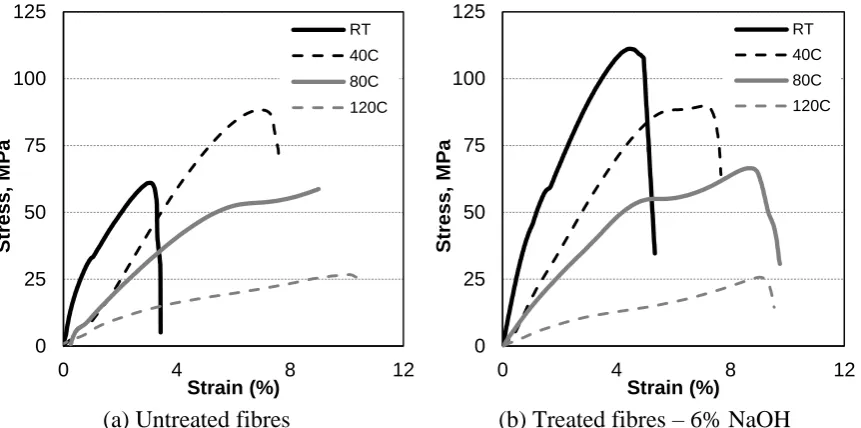
The compressive stress-strain behaviour of bamboo composites at elevated temperature is shown in Figure 14. In this test condition, the composites exhibited nonlinear behaviour. This is due to the behaviour governed more by the polyester resin than the fibres. With increasing temperature, there is a significant reduction in the strength and stiffness of the composites. It is interesting that the compressive strength of the composites with untreated fibres is higher when tested at 40oC than at RT. This could be because of the slight softening of the polyester which improves the bonding between the fibres and the matrix. Besides, the composites with and without treatment exhibited similar stress strain behaviour at elevated temperature. The specimens tested at 40, 80 and 120oC failed at a compressive stress of around 95, 58 and 26 MPa, respectively. The ultimate strain of all specimens increases with increasing temperature due to the softening of the matrix.
0 25 50 75 100 125
0 4 8 12
S tr es s, M P a Strain (%) RT 40C 80C 120C 0 25 50 75 100 125
0 4 8 12
S tr es s, M P a Strain (%) RT 40C 80C 120C
[image:18.595.83.514.264.478.2](a) Untreated fibres (b) Treated fibres – 6% NaOH
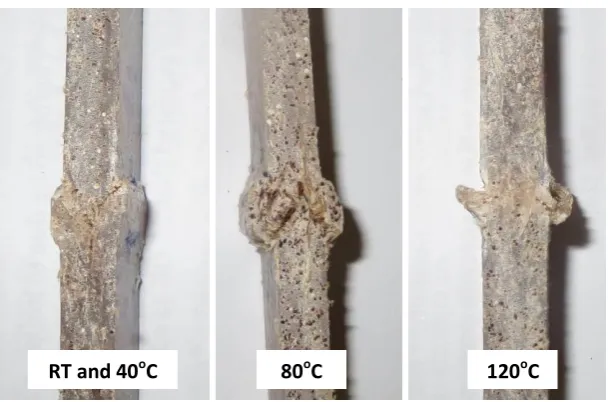
18 Figure 15. Failure of bamboo composites in compression at elevated temperature 5. Discussion
5.1 Effect of alkaline treatment on mechanical properties
5.1.1 Flexural properties
The effect of fibre treatment on the flexural strength of bamboo fibre reinforced polyester composites is shown in Figure 16. The results show that the flexural strength is slightly enhanced with treating the bamboo fibres with NaOH. The composites treated with 6 wt.% NaOH exhibited the highest flexural strength at 44.2MPa, which is 7% higher than that of the untreated composites. This enhancement is due to the removal of the hemicellulose, waxes, lignin and other impurities creating a rough surface topography on the bamboo fibres and offering a better fibre/matrix interfacial adhesion. The treatment also leads to fibre fibrillation which increases the effective surface area available for wetting by the matrix resin and hence, an increase in mechanical properties.
The enhancement in the flexural properties of composites with chemically treated fibres was also observed by other researchers. Aziz and Ansell [16] mentioned that polyester composites reinforced with hemp and kenaf fibres treated with 6% NaOH exhibited better flexural properties compared with untreated samples. Gourd and Rao [23] also recorded an almost 8% increase in flexural strength and modulus of alkali treated (5% solution) Roystonea regia fibre reinforced epoxy composites. Sinha and Rout [24] and Rokbi et al. [25] concluded that the alkali treatment has a significant effect on the flexural properties of composites due to the increased interface between matrix and fibre after treatment. However, they also suggested that there is an optimum level of alkali concentration, which minimises fibre breakage and results in better mechanical properties for the composites.
19
41.2 41.7 44.2 39.6
30 35 40 45
0 4 6 8
Bend ing stre n g th ( M P a) % NaOH
3.2 3.4 4.0 3.6
2 3 4 5
0 4 6 8
M o d u lus o f E las tici ty ( G P a) % NaOH
(a) Bending strength (b) Modulus of Elasticity
19.0 19.5 21.0 16.1
10 12 14 16 18 20 22
0 4 6 8
T ensile stre n g th ( M P a) % NaOH
61.2 84.6 111.2 64.1
40 60 80 100 120
0 4 6 8
Co m p res siv e streng th ( M P a) % NaOH
[image:20.595.73.513.90.557.2](c) Tensile strength (d) Compressive strength Figure 16. Mechanical properties of bamboo fibre composites with different
concentrations of NaOH treatment
20 composites with the Alfa fibres treated with 10% NaOH is lower than that of the untreated composites by about 22%. The degradation of long chain cellulose molecules at the fibre interface at higher concentration of NaOH resulted in the weakening of the load transfer by the fibres and consequently, lowering the mechanical properties of the composites.
The application of NaOH treatment also affected the stiffness of bamboo fibre composites as shown in Figure 16b. The stiffness improved with alkali treatment, as exhibited by all treated composites. The composites with 6% treated fibres achieved the highest modulus of elasticity of 4.0 GPa, which is 25% higher than the untreated composites. This increase in the flexural moduli of the composites is due to the efficiency of the interfacial adhesion between the fibre surface and resin matrix as indicated by Aziz and Ansell [16]. Lee and Wang [27] also reported that the elastic modulus of bamboo fibre/poly (lactic acid) composite to increase from 2.7 to 2.9 GPa with the addition of a bio-based coupling agent. They further mentioned that the treatment of fibres by alkalisation helped improve the mechanical interlocking and chemical bonding between the resin and fibre, resulting in better performance by composites.
5.1.2 Tensile properties
The tensile strength of the bamboo composites with and without fibre treatment is shown in Figure 16c. Results show that treatment has some effect on the tensile strength of the bamboo composites. The composites with the bamboo fibres treated with 6% NaOH exhibited the highest tensile strength of 21.0 MPa, which is 10% higher than untreated composites (19.0 MPa). Compared to untreated composites, the tensile strength of specimens treated with 4% NaOH increased by 2.6%. The observed increase in the tensile strength of treated bamboo fibre-polyester composites is attributed to the removal of the impurities on the fibre surface. This can be also explained by the fibrillation which increases the length/diameter ratio and enlarges the contact surface area of the fibre within the polymer matrix, producing a better fibre-matrix adhesion hence, increasing the strength. However, there was an obvious drop in tensile strength at 8% NaOH, with an 15% reduction compared to untreated composites.
21 toughness of the matrix, and the effectiveness of the interfacial stress transfer between the fibres and the matrix [28]. Nam et al. [29] also reported the improvement on the mechanical properties of composites using alkali treated fibres. In their investigation, an increase in tensile strength of coir/poly(butylene succinate) composites treated at 5% NaOH was achieved. They attributed the increased strength to the better wetting of the fibres due to the NaOH treatment.
The tensile strength of the composites is improved by the NaOH treatment. However, too high of alkali concentration can cause an excess removal of covering materials from the cellulose surface, which results in weakening or damaging of the fibre structure [30]. Thus, the decrease in strength for 8% NaOH can be attributed to the substantial delignification and degradation of cellulose chains during chemical treatment. A similar observation was reported by Misra et al. [31] wherein 5% NaOH treated sisal fibre-reinforced polyester composite exhibited a better tensile strength than 10% NaOH treated composites. Moreover, Lopattananon et al. [32] also found that the treatments with 5% NaOH provided the best improvement of tensile strength (28% increase) for pineapple leaf fibre composites when compared with that of untreated as well as chemically modified fibre with 1, 3, and 7% NaOH. Similarly, Wong et al. [12] mentioned that the tensile properties might decrease at higher amount of chemical treatment, as the adhesion of fibre and the matrix becomes less. Their scanning electron micrograph of fibre surface revealed that at higher percentage of the chemical treatment, not only the surface impurities were removed but also made the fibre surface smooth, which lessen the mechanical bonding between fibre and matrix. Thus, it can be concluded that the tensile strength of the bamboo composites may decrease after certain optimum NaOH concentration, which in this study was found at 6%. This concentration is just enough to remove the waxy material from the surface of the bamboo fibres resulting in an increased fibre-matrix interfacial strength and better properties of composites.
5.1.3 Compressive properties
22 The increase in the compressive strength for composites with treated up to 6% NaOH is due to the excellent fibre-matrix interface adhesion. It is also believed that the alkali treatment done on the bamboo fibres results in an improvement in the interfacial bonding by giving rise to additional sites of mechanical interlocking, hence promoting more resin/fibre interpenetration and resulting in higher compressive strength. A similar finding is also reported by Bisanda and Ansell [33] wherein they found a considerable enhancement in the compressive strength of sisal–epoxy composites due to silane treatment on the fibres. They mentioned that the mercerization greatly improved the resin pick-up of the sisal fibres. Prasanna and Subbaiah [34] also reported a higher compressive strength for composites with banana fibres treated with NaOH than the untreated composites. On the other hand, a remarkable reduction in the compressive strength was found in the composites with fibres treated with 8% compared to 6% NaOH. Yan et al. [35] explained that this can be due to high concentration of chemical treatment which damages the fibres and weakens the bond with the resin matrix.
5.2 Effect of elevated temperature on mechanical properties
5.2.1 Flexural properties
23
41.2 44.2 40.8 41.1 42.3 43.0 16.4 21.1
0 10 20 30 40 50
RT 40 80 120
Bend ing stre n g th ( M P a)
Temperature (oC)
0%
6%
3.2 4.0 2.5 2.6 1.9 2.1 0.5 0.6
0 1 2 3 4 5
RT 40 80 120
M o d u lus o f E las tici ty ( G P a)
Temperature (oC)
0%
6%
(a) Bending strength (b) Modulus of Elasticity
19.0 21.0 20.6 21.5 22.2 23.7 9.2 12.4
0 5 10 15 20 25
RT 40 80 120
T ensile stre n g th ( M P a)
Temperature (oC)
0%
6%
61.2111.2 96.2 93.3 58.2 59.5 26.5 27.0
0 20 40 60 80 100 120
RT 40 80 120
Co mp res siv e streng th ( M P a)
Temperature (oC)
0%
6%
[image:24.595.75.511.75.532.2](c) Tensile strength (d) Compressive strength Figure 17. Properties of bamboo fibre composites at elevated temperature
5.2.2 Tensile properties
24 thermosets occurs at elevated temperatures prior to the decomposition processes when the temperature reaches near or higher than the Tg [37]. Another probable reason is better fibre/matrix interlocking due to the softening of the matrix. With the more flexible molecular chains, the polyester may be able to penetrate the fibres further and reduce the voids within the composites. This also allowed the fibres to be rearranged in the direction of the applied load. As discussed by Manalo et al. [13], only fibres arranged in the direction of the loading will contribute to the tensile strength of a composites. As the fibres are able to move throughout the loading process, more fibres will participate in the load resistance of the composite. Obviously, the slightly higher mechanical properties of alkali treated composites compared to untreated ones is due to the better interfacial adhesion of the fibre and matrix; this advantage remained unchanged even at higher temperature.
5.2.3 Compressive properties
Figure 17d shows that the compressive properties of composites with treated bamboo fibres is higher than that of untreated composites when tested at RT. However, the compressive strength is almost similar for both treated and untreated composites at elevated temperature. When tested at 40oC, there is a significant increase in the compressive strength of composites with untreated bamboo fibres. This was due to the resin starting to soften which slightly improves the bonding of the matrix and the fibres. As expected, the compressive properties decrease when tested at 80 and 120oC due to the softening of the polyester resin.
It can be seen that the ultimate compressive strength of the bamboo composites, regardless of treated or not, decreases when the temperature increases from RT to 120oC. For untreated composites, the ultimate compressive strength decreases from 61.2 to 26.5 MPa while for treated composites, the ultimate strength decreases from 111.2 to 27.0 MPa. According to Liu et al. [38], the matrix is strong and the fibres carry much of the load when the temperature is low. When the temperature is high, the matrix is softened and could not support the fibres in carrying the load resulting in the overall decrease in the strength of the composites. The increase in the compressive strength of the untreated composites when tested at 40oC can be explained by the improvement of the adhesion between the bamboo fibres and the polyester resin. In fact, Khalil et al. [5] indicated that the increase in temperature generates new bonds which makes the matrix tightly close packed system, increasing the adhesion between the matrix and the fibres leading to better mechanical properties. Azwa and Yousif [39] also observed a better fibre matrix bonding at lower temperature for kenaf/epoxy composites due to the removal of hydrophobic components on the fibre, allowing its better compatibility with the matrix. However, at high temperature, both composites suffer fibre-matirx debonding due to softening of the matrix. This explains the significant decrease in the compressive strength of the bamboo composites when tested at 80 and 120oC.
6. Conclusion
25 chloride treatment (0, 4, 6, and 8% NaOH) for bamboo fibres were considered. From this result, the optimum level of alkali treatment was determined and was used in the investigation on the effect of elevated temperature. Coupon specimens were prepared and tested under bending, tension and compression. Based on the results of the study, the following conclusions are drawn:
An improvement in the mechanical properties of the composites was achieved with the treatment of the bamboo fibres with sodium hydroxide. This improvement is due to the enhancement in the adhesion between the bamboo fibres and the polyester resin. Alkali concentration of 6% was found optimum and resulted in the best mechanical properties for bamboo composites. Bamboo composites with the fibres treated with this alkali concentration have bending, tensile and compressive strength and stiffness of 7, 10, 81, and 25% higher, respectively than the untreated composites. A reduction in the mechanical properties was observed for composites with bamboo fibres treated with 8% NaOH. This was attributed to the substantial delignification and degradation resulting in a damaged fibre weakening the load transfer and the bonding with the matrix. The bending and tensile strength of composites with 8% NaOH treated bamboo fibres is 3 and 15% lower than the untreated composites. However, the compressive strength and the stiffness are 12 and 4% higher than the untreated composites as the polyester resin governs these mechanical properties. The elevated temperature has a different effect on the mechanical properties of
bamboo composites. The flexural and tensile strength of bamboo composites are enhanced when tested up to 80oC. The softening of the matrix up to this temperature had allowed the fibres to be pulled in the direction of the loading, rearranging themselves for better stress transfer. On the other hand, the bending stiffness and compressive strength decreased with increasing temperature as these properties are governed mostly by the behaviour of the polyester resin. Similarly, a significant decrease in all mechanical properties was observed for composites when tested at 120oC, which is higher than the Tg of the polyester resin.
26 between the untreated bamboo fibres and polyester is slightly enhanced resulting in the mechanical properties comparable to that of the untreated composites. At 120oC, the polyester resin becomes very soft weakening the overall structure of the composites.
Acknowledgements
27 References
[1] Joshi, SV, Drzal, LT, Mohanty, AK, Arora, S. Are natural fibres composites
environmentally superior to glass fibre composites? Composites Part A 2004; 35: 371-376. [2] Osorio, L, Trujillo, E, Van Vuure, AW, Verpoest, I. Morphological aspects and
mechanical properties of single bamboo fibres and flexural characterisation of bamboo/epoxy composites. Journal of Reinforced Plastics and Composites 2011; 30(5): 396-408.
[3] Nugroho, N, Ando, N. Development of structural composite products made from bamboo II: Fundamental properties of laminated bamboo lumber. Journal of Wood Science 2001; 47(3): 237-242.
[4] Rao, KMM, Rao, KM. Extraction and tensile properties of natural fibres: Vakka, date and bamboo. Composite Structures 2007; 77: 288-295.
[5] Khalil, HPS, Bhat, IUH, Jawaid, M, Zaidon, A, Hermawan, D, Hadi, YS. Bamboo fibre reinforced biocomposites: A review. Materials and Design 2012; 42: 353-368.
[6] Ma, H, Joo, CW. Influence of surface treatments on structural and mechanical properties of bamboo fibre-reinforced poly(lactic acid) composites. Journal of Composite Materials 2011; 45(23): 2455–2463.
[7] Hogart, NJ. Demography and management of top end bamboo, bambusa arnhemica. McS thesis, Charles Darwin University, Australia, 2006.
[8] Zhu, GX, Ockerby, S, White, DT, Midmore, DJ. Identifying agricultural practices to sustain bamboo production in Queensland, Australia. ACIAR Proceedings 2009; 129: 124-130.
[9] Takagi, H, Ichihara, Y. Effect of fibre length on mechanical properties of “green” composites using starch-based resin and short bamboo fibres. JSME International Journal 2004; 47(4): 551-555.
[10] Amada, S, Munekata, T, Nagase Y, Ichikawa Y, Kirigal A, Yang, Z. The mechanical structures of bamboo in view of functionally gradient and composite materials. Journal of Composite Materials 1996; 30(7): 800-819.
[11] Mohanty, S, Nayak, SK. Short bamboo fibre-reinforced HDPE composites: Influence of fibre content and modification on strength of the composite. Journal of Reinforced Plastics and Composites 2010; 29(14): 2199-2210.
28 [14] Mohanty, A, Misra, M, Hinrichsen, G. Biofibres, biodegradable polymers and
biocomposites: An overview. Macromolecular Materials and Engineering 2000; 276: 1–24. [15] Gomes, A, Matsuo, T, Goda, K, Ohgi, J. Development and effect of alkali treatment on tensile of curaua fibres green composites. Composites Part A: Applied Science and
Manufacturing 2007; 38(8): 1811–1820.
[16] Aziz, SH, Ansell, MP. The effect of alkalization and fibre alignment on the mechanical and thermal properties of kenaf and hemp bast fibre composites: Part 1 – polyester resin matrix. Composites Science and Technology 2004, 64: 1219–1230.
[17] Araújo, JR, Waldman, WR, De Paoli, MA. Thermal properties of high density polyethylene composites with natural fibres: Coupling agent effect. Polymer Degradation and Stability 2008; 93: 1770–1775.
[18] Wang, W, Sain, M, Cooper, PA. Hygrothermal weathering of rice hull/HDPE composites under extreme climatic conditions. Polymer Degradation and Stability 2005; 90: 540-545.
[19] Beg, MDH, Pickering, KL. Accelerated weathering of unbleached and bleached Kraft wood fibre reinforced polypropylene composites. Polymer Degradation and Stability 2008; 93: 1939–1946.
[20] Methacanon, P, Weerawatsophon, U, Sumransin, N, Prahsarn, C, Bergado, DT. Properties and potential application of the selected natural fibres as limited life geotextiles; Carbohydrate Polymers 2010; 82: 1090–1096.
[21] Mylsamy, K, Rajendran, I. Influence of alkali treatment and fibre length on mechanical properties of short agave fibre reinforced epoxy composites. Materials and Design 2011; 32: 4629-4640.
[22] Sigley, RH, Wronski, AS, Parry, TV. Three-parameter yield criterion for a brittle polyester resin. Journal of Materials Science 1991; 26(15): 3985-3990.
[23] Gourd, G, Rao, RN. Effect of fibre content and alkali treatment on mechanical properties of Roystonea regia-reinforced epoxy partially biodegradable composites. Bulletin of
Materials Science 2012; 34(7): 1575-1581.
29 [25] Rokbi, M, Osmani, H, Imad, A, Benseddiq, N. Effect of chemical treatment on the flexure properties of natural fibre-reinforced polyester composites, Procedia Engineering 2011; 10: 2092-2097.
[26] Das M, Pal A, Chakraborty D. Effects of mercerization of bamboo strips on mechanical properties of unidirectional bamboo–Novolac composites. Journal of Applied Polymer Science 2006; 100(1): 238–244.
[27] Lee, SH, Wang, S. Biodegradable polymers/bamboo fibre biocomposite with bio-based coupling agent. Composites Part A: Applied Science and Manufacturing 2006; 37: 80–91. [28] Rout, J, Misra, M, Tripathy, SK, Mohanty, AK. The influence of fibre treatment on the performance of coir-polyester composites. Composites Science and Technology 2001; 61(9): 1303–1310.
[29] Nam, TH, Ogihara, S, Tung, NH, Kobayashi, S. Effect of alkali treatment on interfacial and mechanical properties of coir fibre reinforced poly(butylene succinate) biodegradable composites. Composites Part B: Engineering 2011; 42: 1648–1656.
[30] Li, X, Tabil, L, Pnigrahi, S. Chemical treatments of natural fibre for use in natural fibre-reinforced composites: A Review. Journal of Polymers and the Environment 2007; 15(1): 25-33.
[31] Misra, S, Misra, M, Tripathy, SS, Nayak, SK, Mohanty, AK. The influence of chemical surface modification on the performance of sisal-polyester biocomposites. Polymer
Composites 2002; 23(2): 164–170.
[32] Lopattananon, N, Payae, Y, Seadan, M. Influence of fibre modification on interfacial adhesion and mechanical properties of pineapple leaf fibre-epoxy composites. Journal of Applied Polymer Science 2008; 110(1): 433-443.
[33] Bisanda, ETN, Ansell, MP. The effect of silane treatment on the mechanical and
physical properties of sisal-epoxy composites. Composites Science and Technology 1991; 41: 165–178.
[34] Prasanna, GV, Subbaiah, KV. Hardness, tensile properties and morphology of blend hybrid biocomposites. Journal of Engineering Research 2013; 2(1): 21-29.
[35] Yan, L, Chouw, N, Yuan, X. Improving the mechanical properties of natural fibre fabric reinforced epoxy composites by alkali treatment. Journal of Reinforced Plastics and
Composites 2012; 31(6): 425–437.
30 [37] Mouritz, AP, Gibson, AG. Fire properties of polymer composite materials. Springer, Dordrecht, The Netherlands, 2006.
[38] Liu, B, Huang, W, Wang, H, Wang, M, Li, X. Compressive behaviour of high particle content B4C/Al composite at elevated temperature. Trans. Nonferrous Metals Society of China 2013; 23: 2826-2832.