1
Community Learning Learner Survey
Wave 2
The views expressed in this report are the authors’ and do not necessarily reflect those of the Department for Business, Innovation and Skills.
Department for Business, Innovation and Skills 1 Victoria Street
London SW1H 0ET www.gov.uk/bis
Research paper number 170 March 2014
Contents
Contents ... 3
1 Executive summary ... 6
2 Introduction ... 13
2.1 Background ... 13
2.2 Research design... 17
2.2.1 Quantitative telephone survey... 18
2.2.2 Qualitative research ... 19
2.3 Scope of the report ... 20
3 Profile of learners and learning ... 22
3.1 Profile of learners in the quantitative survey at Wave 1 ... 22
3.1.1 Comparison of Learners at Wave 1 and Wave 2... 23
3.1.2 Profile of learners in the qualitative research at Wave 2 ... 27
3.2 Characteristics of courses and those taking them at Wave 1... 27
3.3 Learner motivations reported at Wave 1 ... 27
3.4 Short term impacts of the course reported at Wave 1 ... 28
4 Longer term progression, outcomes and attitudes ... 30
4.1 Illustrating the learner journey ... 30
4.2 Personal progression and development ... 35
4.2.1 Changes in skills and abilities over the previous 12 months ... 35
4.2.2 Changes in personal confidence and perception of abilities ... 37
4.3 Personal well-being ... 40
4.3.1 ONS measures of subjective well-being... 40
4.4.1 Changes in free-time activities ... 45
4.4.2 Involvement in volunteering... 47
4.4.3 Changes in participation in cultural activities... 51
4.5 Children and families ... 52
4.5.1 Confidence in helping children with specific subjects... 53
4.5.2 Do parents help children more with learning than at Wave 1?... 55
4.5.3 Confidence in dealing with issues affecting teenagers... 56
4.5.4 Views on parenting skills ... 56
4.6 Work and employability ... 58
4.6.1 Employment status at Wave 1 and Wave 2 ... 59
4.6.2 Reported changes at work ... 60
4.6.3 Confidence in getting a job... 61
5 Further learning... 63
5.1 Further learning undertaken ... 63
5.1.1 Did community learning courses encourage further taught learning? ... 63
5.1.2 Qualifications from new courses ... 65
5.1.3 Self-taught skills or individual learning ... 66
5.1.4 Progressing to independent or self-taught learning... 67
5.1.5 Reasons for not undertaking further learning ... 67
5.2 Further learning respondents would like to undertake... 69
5.3 Attitudes to learning... 70
5.4 Willingness to pay for learning... 71
5.4.1 Willingness to pay for future courses ... 71
5.4.2 General attitudes towards fee payment for learning... 72
6 Longer term progression in relation to the learner segments... 74
6.1 The learner segments... 74
6.2 Correspondence mapping of the learner segments ... 82
7 Conclusions... 88
Appendix 1: Research Design and Conduct of the Quantitative Survey... 93
Survey Design... 93
Sampling ... 93
Piloting ... 93
Keep in touch exercise... 93
Fieldwork... 94
Weighting ... 94
Appendix 2: Sample profile of Qualitative Workshops ... 96
Community learning (CL) describes a wide range of classes and learning activities, mostly unaccredited, that must meet national CL objectives1. These learning programmes bring together adults of different ages and backgrounds to acquire a new skill, re-connect with learning, pursue an interest, prepare for progression to formal courses, and/or learn how to support their children more confidently. The learning often benefits families & the wider community, as well as the individuals who take part.
In 2013-14, the Department for Business, Innovation and Skills (BIS) is supporting community learning with a contribution of £210 million through the Community Learning (CL) budget2, with a similar allocation for 2014-15. Learning providers report on this provision under the following broad headings:
Personal and Community Development Learning (PCDL)
Family English, Maths and Language (FEML)3
Wider Family Learning (WFL), and
Neighbourhood Learning in Deprived Communities (NLDC).
In December 2011, following a review and national consultation, BIS published new objectives and headline policy proposals for community learning in New Challenges, New Chances Further Education and Skills System Reform Plan: building a world class skills system4. Policy proposals included the piloting of local Community Learning Trust models in 2012/13 and a clear commitment to use the public funding subsidy to support access and progression for people who are disadvantaged.
The new objectives were introduced in August 2012. They require community learning providers to:
focus public funding on helping disadvantaged people get into learning and progress;
involve local people and organisations in decision-making;
maximise value for money, increase income generation and use income to support people who can’t afford to pay.
In April 2012, BIS issued a prospectus inviting directly-funded community learning providers to submit proposals for testing innovative planning and delivery approaches in
1 See figure 2.1
2 Previously called the Adult Safeguarded Learning Budget.
3 Previously called Family Literacy, Language and Numeracy (FLLN).
4 Department for Business, Innovation and Skills (2011) New Challenges, New Chances – Further Education and Skills System Reform Plan: Building a World Class Skills System
line with the new objectives. Fifteen Community Learning Trust (CLT) pilots were
appointed in July 2012. The pilot areas developed and tested collaborative approaches in which local providers, people and organisations worked together to develop local
community learning partnerships and strategies. The full evaluation report was published February 20145.
CLT approaches were endorsed in the Skills Funding Statement 2012-20156, which states that from the 2013/14 academic year onwards all directly-funded providers of CL must use their whole allocation to deliver the objectives set out in New Challenges, New Chances. All directly-funded providers of community learning are now required to maximise value for money and deliver a locally-determined learning offer in line with the new objectives and ways of working. These approaches were endorsed again in the Skills Funding Statement 2013-167, published in February 2014.
In 2011, BIS commissioned TNS BMRB to conduct longitudinal research in order to build a deeper and more robust understanding of the various impacts of community learning on individuals, families and communities. The research consists of a multi-cohort longitudinal design.
All learners in this cohort completed a community learning course between July 2011 and February 2012. The interviews at Wave 1 took place between March to June 2012, and the findings from the Wave 1 study are reported in the Community Learning Learner Survey (published in March 2013).8 All learners who agreed to be re-contacted at Wave 1 were approached for a follow up interview around 12 months later. In total 1,951 interviews were conducted. This report presents findings from the second wave of interviews. At both waves of the survey, the quantitative interview was complemented with some qualitative research to explore the learner journeys in further detail.
It is important to note that this cohort of learners completed their learning before the new community learning objectives were introduced in August 2012. The findings therefore provide useful baseline data to inform a comparison with subsequent cohorts of learners who will have completed community following the introduction of the new objectives and after the reforms introduced in August 2013.
It must be borne in mind that throughout the Wave 2 report the focus of the quantitative analysis is on examining changes reported by learners following the Wave 1 interview. It does not attribute these changes to the courses (i.e. causality is not implied). The
qualitative research, however, provides the opportunity to explore and examine the self-reported impact of course participation on learners’ lives.
5 https://www.gov.uk/government/publications/community-learning-trust-pilot-evaluation 6 Department for Business, Innovation and Skills (2012) Skills Funding Statement 2012-15. 7 Department for Business, Innovation and Skills (2014) Skills Funding Statement 2013-16 https://www.gov.uk/government/publications/skills-funding-statement-2013-to-2016
Chapter 3 of the report provides an overview of the key findings from the Wave 1 research.
Women, people aged 50 or over and people who were retired were more likely to
undertake community learning. A sizable proportion of learners from more disadvantaged backgrounds took part. The profile of the sample at Wave 2 was broadly in line with the profile of the sample at Wave 1.
The most commonly undertaken community learning course was a PCDL course
(completed by 81 per cent of learners). Nine per cent took a FEML course, five per cent a NLDC course and four per cent a WFL course.
Motivations for attending the community learning course were broad ranging, with high proportions citing reasons relating to ‘personal progression’, ‘social and community’ and ‘personal well-being’. A segmentation analysis was carried out to identify different learner ‘typologies’ based on motivations for learning and the following six distinct groups were identified: “Stepping Stone”, “Serial Attendees”, “Becoming Better Parents”, “Self
Confidence and Personal Wellbeing”, “Keeping up with Information Technology” and “Multiple Needs”.
Despite the relatively short time since learners had completed their community learning course at Wave 1, a range of self-reported short term impacts were evident. These
impacts were broad ranging and included those related to personal progression, personal well-being, social and community life, work and employability and improvements in
parenting and relationships with children.
Longer term progression, outcomes and attitudes
Chapter 4 of the report explores the longer term progression, outcome and attitudes of learners (approximate 18-24 months after the completion of the course).
The report includes findings from the quantitative survey, which examine changes in learners’ lives since the time of the Wave 1 interview. These quantitative findings do not directly link these changes to the course itself (i.e. causality is not implied). However, the qualitative research does explore how course participation has impacted on learners’ subsequent decisions and longer term choices and impacts.
The chapter includes four case studies of people’s learning journeys. These help to illustrate the benefits of participating in community learning and show how participation is linked to subsequent decision-making and longer term impacts.
Findings from the Wave 2 quantitative telephone survey are presented along with the findings from the qualitative workshops. A broad range of longer term changes were evident. Reflecting the broad ranging short term impacts realised at Wave 1, these longer term progression were also wide ranging and included:
Personal progression and development
With the quantitative survey, there were improvements in skills and abilities in a number of specific areas since the time of the Wave 1 interview. The most notable included: creative skills (49 per cent reported improvements) personal confidence (46 per cent reported improvements) communication skills (43 per cent) and IT/digital skills (42 per cent).
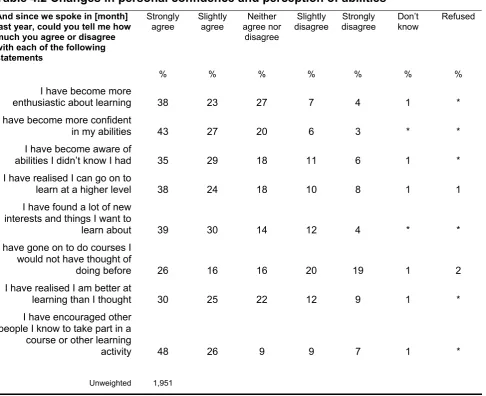
Learners also reported changes in personal confidence and the perception of abilities since the time of the Wave 1 interview, including:
o Seven in ten (70 per cent) learners reporting that they had become more confident in their abilities
o 69 per cent reporting that they had found new interests and things they wanted to learn about.
However, when interpreting these findings it must be borne in mind that it is not possible to directly attribute these changes to the original community learning course.
Encouragingly, in the qualitative workshops, one of the most notable reported impacts related to improvements in personal confidence. New found confidence was often linked directly to the course content and mastery of practical skills. For some learners this had a pervasive impact on their wider lives because it affected the way they related to others and led to broader achievements. Many learners reported developing new routines and new interests as a result of their new skills. Personal well-being
The qualitative workshops showed that community learning courses gave some participants an immediate and lasting sense of personal well-being. Courses fostered the improvement of personal well-being for different learners in different ways. For some it provided time away from everyday stresses and concerns, particularly for those learners who felt they had limited mental stimulation. Other learners reported that the course had been therapeutic and had given them time to focus on themselves, or that it helped to improve their sense of personal identity.
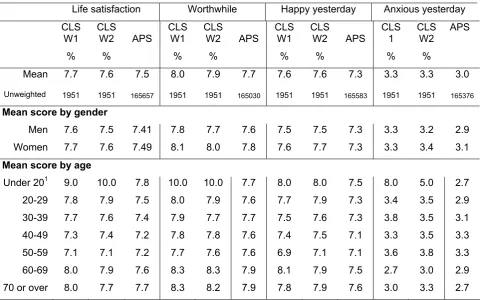
In the quantitative survey, analysis on the ONS measures of subjective well-being at Wave 2 indicated that learners’ subjective wellbeing remained at the same level that it was at the time of the Wave 1 interview.
The survey found that perceived improvements in some learners’ health and disabilities between the Wave 1 and Wave 2 interviews were matched by deterioration in others. While indicative analysis was conducted to examine whether improvements in health reported by learners were associated with continued course participation, no firm conclusions could be drawn.
Social and community activities
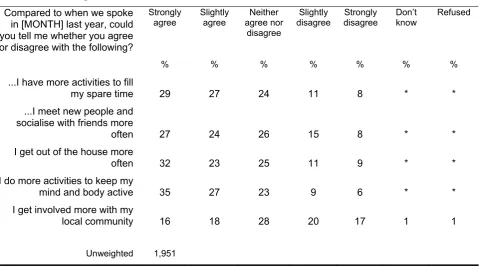
The quantitative survey reported a broad range of positive changes relating to social and community activities since the time of the Wave 1 interview. These
earlier, it is not possible to directly attribute these changes to participation in the original community learning course.
Positive improvements were echoed in the qualitative elements of the research. Meeting new people and developing new friendships were central to the course experience for learners. The relationships developed on the courses were also beneficial for learners in terms of creating a supportive environment. Additionally, meeting new people was a central part of their course experience - particularly among those who were living more socially isolated lives.
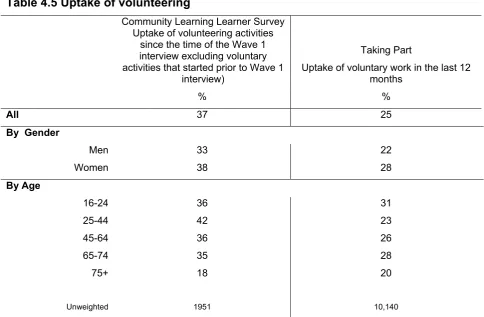
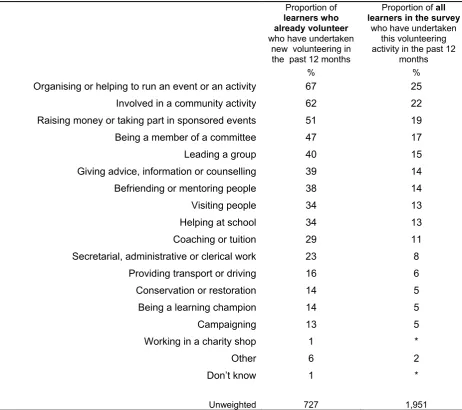
Thirty-seven per cent of respondents in the telephone survey reported that they had become involved in voluntary activities since the time of the Wave 1 interview. Whilst inferences can not be made about whether this change is directly attributable to community learning participation, it is encouraging that volunteering levels
amongst learners are higher than national estimates.
Participation in formal and informal voluntary work was common across many of the participants in the qualitative group discussions. Many of the new skills gained by learners led to benefits for their local communities; for example some learners reported teaching others at the community centre where they learnt, and other learners reported using their new skills to raise funds or undertake work for charitable organisations.
Children and families
In the qualitative discussions, parents who had taken part in community learning to specifically develop or improve their parenting skills or basic skills reported positive improvements in these areas. They included parents feeling better equipped to deal with their children’s behaviour, help and support their children with homework and understand more about their learning.
The quantitative findings reflect these qualitative findings. Just under half of parents (48 per cent) who had participated in community learning reported feeling more confident than at Wave 1 at helping their children with reading and 45 per cent with writing. Very similar proportions of parents also reported helping their children more with these subjects (47 per cent respectively).
Around six in ten parents reported improvements in a range of differing parenting skills over the previous 12 month period.
Work and employability
Positive long term impacts relating to work and employability as a result of the course were evident in the qualitative elements of the research. For example, learners who attended community learning courses to gain skills to help them secure a job typically reported that the course had assisted them in doing so.
In the quantitative telephone survey, learners reported positive changes in relation to their work since the time of the Wave 1 interview including: 65 per cent reporting that they had helped to mentor colleagues and 61 per cent that they had been able to do their job better.
Among learners who were unemployed and looking for work, on a government training scheme or looking after the home and family at both Waves 1 and 2, 43 per cent reported feeling more confident about finding a job in the future.
At Wave 1, a number of impacts were particularly strong among learners living in the most deprived areas and from the most disadvantaged backgrounds. At Wave 2, a similar pattern was evident around some of the longer term outcomes and changes.
Further Learning
Chapter 5 explores whether learners had undertaken further learning and their attitudes towards undertaking learning in the future.
At Wave 1, despite interviews taking place relatively shortly after learners had finished their courses (within seven months), half of learners reported that they had undertaken further learning. At Wave 2, 43 per cent of learners said that, since their Wave 1 interview they had taken part in at least one further taught course, and 47 per cent reported that they had undertaken some kind of self taught/ individual learning. Positively, among both of these groups, significant proportions (77 per cent and 70 per cent) reported that their original community learning course had encouraged them to undertake these further
activities. This was particularly strong for learners from more disadvantaged backgrounds. Among learners who had undertaken further taught courses, 38 per cent reported that they had gained (or would gain) qualifications from their course. The following types of learners were more likely to report gaining qualifications: learners from more disadvantaged
backgrounds, young learners, those who did not speak English as a first language, those from BME backgrounds and those looking for work or looking after the home and family. Future intentions for further learning were positive, with four fifths (81 per cent) reporting that they would like to undertake further learning courses or activities in the next two years. When asked about a number of statements describing general attitudes towards learning, agreement levels at Wave 2 were largely in line with those at Wave 1. However, it is noteworthy that the proportion disagreeing with the statement ‘I don’t have the confidence to learn new things’ reduced slightly (from 67 per cent to 61 per cent). This is perhaps a surprising finding, suggesting that confidence levels in some learners may have declined slightly since Wave 1.
Longer term progression in relation to the learner segments
Chapter 6 explores the longer term progression of learners across the six learner segments. Generally the findings were positive, with sizable proportions of learners in each of the segments tending to report some further improvements in areas directly
term progressions and changes. They tended to be more likely than average to cite virtually all of the longer term progressions examined in the Wave 2 interview.
Progression into further learning amongst the “Serial attendees” was broadly in line with the average, and this group were no more likely to report a desire to take part in further learning or training in the next two years. One possible explanation could be that this group could be attending ‘repeat’ courses which they do not consider as a ‘further’ or ‘different’ course. Alternatively it could be that progression into further learning activities is increasing among other segments, bringing them more in line with this group.
Learners in this segment were the least likely to report improvements in changes to their spare time activities. This could be because improvements were relatively widespread at Wave 2 and the scope (and need) for further improvements could be minimal.
Conclusions
The conclusion section of this report brings together the key findings of the Wave 2
research and discusses them in relation to the community learning objectives. Overall, the findings are encouraging and build on those evident at Wave 1, suggesting that community learning has brought many impacts and changes into learners’ lives, in both the short and long term. While many of the changes reported in the quantitative survey cannot be
directly attributed to the course itself, they show positive changes in the intervening period between the Wave 1 and Wave 2 interviews. The qualitative findings show how course participation has impacted on individual learners’ subsequent decisions and outcomes. This is very clearly illustrated in the four case studies.
A notable finding at Wave 2 was the longer term progression reported by learners in the “Multiple Needs” segment group. Across the majority of these progressions at Wave 2, learners from this segment were more likely to report positive changes than learners from the other segments. This is a very positive finding, as this segment cited very broad range of motivations for attending their original course – ‘multiple needs’ were strongly apparent. The socio-demographic characteristics of this segment show that these learners are likely to be from disadvantaged backgrounds, with significant proportions lacking qualifications, coming from BME backgrounds and/or living in the most deprived areas.
2 Introduction
2.1 Background
Community learning (CL) describes a wide range of classes and learning activities, mostly unaccredited, that must meet national CL objectives9. These learning programmes bring together adults of different ages and backgrounds to acquire a new skill, re-connect with learning, pursue an interest, prepare for progression to formal courses, and/or learn how to support their children more confidently. The learning often benefits families & the wider community, as well as the individuals who take part.
In 2013-14, the Department for Business, Innovation and Skills (BIS) is supporting community learning with a contribution of £210 million through the Community Learning (CL) budget10, with a similar allocation for 2014-15. Learning providers report on this provision under the following broad headings:
Personal and Community Development Learning (PCDL)
Family English, Maths and Language (FEML)11
Wider Family Learning (WFL), and
Neighbourhood Learning in Deprived Communities (NLDC).
In December 2011, following a review and national consultation involving a wide range of national organisations and more than 6,000 individuals, BIS published new objectives and headline policy proposals for community learning in New Challenges, New Chances Further Education and Skills System Reform Plan: building a world class skills system12. Policy proposals included the piloting of local Community Learning Trust approaches in 2012/13 and a clear commitment to use the public funding subsidy to support access and progression for people who are disadvantaged.
The new objectives (the full objectives are shown in Figure 2.1) were introduced in August 2012. They require community learning providers to:
focus public funding on helping disadvantaged people get into learning and progress;
involve local people and organisations in decision-making;
maximise value for money, increase income generation and use income to support people who can’t afford to pay.
9 See figure 2.1
10 Previously called the Adult Safeguarded Learning Budget.
11 Previously called Family Literacy, Language and Numeracy (FLLN).
Purpose of Government Supported Community Learning:
Maximise access to community learning for adults, bringing new opportunities and
improving lives, whatever people’s circumstances.
Promote social renewal by bringing local communities together to experience the joy of
learning and the pride that comes with achievement.
Maximise the impact of community learning on the social and economic well-being of
individuals, families and communities. Objectives
Focus public funding on people who are disadvantaged and least likely to participate, including in rural areas and people on low incomes with low skills
Collect fee income from people who can afford to pay and use where possible to extend provision to those who cannot.
Widen participation and transform people’s destinies by supporting progression relevant to personal circumstances, e.g.
- improved confidence and willingness to engage in learning
- acquisition of skills preparing people for training, employment or self-employment - improved digital, financial literacy and/or communication skills
- parents/carers better equipped to support and encourage their children’s learning - improved/maintained health and/or social well-being.
Develop stronger communities, with more self-sufficient, connected and pro-active citizens, leading to
- increased volunteering, civic engagement and social integration - reduced costs on welfare, health and anti-social behaviour - increased online learning and self organised learning - the lives of our most troubled families being turned around.
Commission, deliver and support learning in ways that contribute directly to these objectives, including:
- bringing together people from all backgrounds, cultures and income groups, including
people who can/cannot afford to pay
- using effective local partnerships to bring together key providers and relevant local agencies and services
- devolving planning and accountability to neighbourhood/parish level, with local people involved in decisions about the learning offer
- involving volunteers and Voluntary and Community Sector groups, shifting long term, ‘blocked’ classes into learning clubs, growing self-organised learning groups, and encouraging employers to support informal learning in the workplace
- supporting the wide use of online information and learning resources - minimising overheads, bureaucracy & administration.
In April 2012, BIS issued a prospectus inviting directly-funded community learning providers to submit proposals for testing innovative planning and delivery approaches in line with the new objectives. Fifteen CLT pilot areas were appointed in July 2012. The pilots developed and tested collaborative approaches in which local providers, people and organisations worked together to develop local community learning partnerships and strategies. The pilots were externally evaluated on the effectiveness of these approaches. An initial report providing an overview of the early set-up and subsequent progress of the CLTs, using evidence collected between September and December 2012, was published in March 201313. An evaluation summary report was published in September 201314, to inform wider implementation of the CLT approaches. The full report was published in February 201415.
CLT approaches were endorsed in the Skills Funding Statement 2012-201516, which states that from the 2013/14 academic year onwards all directly-funded providers of CL must use their whole allocation to deliver the objectives set out in New Challenges, New Chances. All directly-funded providers of community learning are now required to
maximise value for money and deliver a locally-determined learning offer in line with the new objectives. These approaches were endorsed again in the Skills Funding Statement 2013-1617, published February 2014.
13 Evans et al. (2013) Community Learning Trust Pilot Evaluation Report – set up stage. Department for Business, Innovation and Skills.
14 Department for Business, Innovation and Skills (2013) Evaluation of Community Learning Trust Pilots: Summary of Key Findings. BIS Research Paper number 137.
15 Evans et al (2014) Community Learning Trust (CLT) Pilot Evaluation. BIS Research Paper number 163. Available online at: https://www.gov.uk/government/publications/community-learning-trust-pilot-evaluation. 16 Department for Business, Innovation and Skills (2012) Skills Funding Statement 2012-15
http://www.bis.gov.uk/assets/BISCore/further-education-skills/docs/S/12-p172-skills-funding-statement-2012-2015.pdf
deeper and more robust understanding of the various impacts of community learning on individuals, families and communities. It is designed to:
establish a baseline for measuring future progress as the reforms announced in New Challenges, New Chances Further Education and Skills System Reform Plan: building a world class skills system18 take effect
find out how learners are affected by changes in the planning and delivery of
community learning associated with the new objectives and wider community learning reforms.
The research also fills a gap in the evidence base in relation to the full learner ‘journey’, including initial motivations, experience of learning, attitudes to learning, expectations of impact, future plans and whether or not those intentions came to fruition. Some of the key areas of exploration are:
The motivations behind learners’ decisions to undertake community learning courses.
How learners find out about courses, and how they get into community learning.
The experience of learners on their courses and whether their expectations are met.
The likelihood of future participation in community learning or more formal learning.
Whether community learning participation has led to greater levels of community participation, such as volunteering or setting up a self organised learning group.
Whether community learning has helped learners develop employability skills and/or motivation/confidence to (re)engage with the labour market.
The benefits of community learning on individuals’ mental or physical health and overall well-being. In particular, whether there has there been any effect on family relationships, social integration or social networks.
Whether learners have used ICT as part of their learning.
The survey is longitudinal in nature, with an initial interview shortly after completion of the course and a follow up interview around 12 months later. Areas explored in the follow up survey included:
Whether learners’ motivations for learning and intentions expressed during their learning were realised, in terms of increased confidence, progression into other learning, improvement in employability skills, involvement in their communities, improved sense of personal well-being, improved mental or physical health.
18 Department for Business, Innovation and Skills (2011) New Challenges, New Chances – Further Education and Skills System Reform Plan: Building a World Class Skills System. Strategy Document.
Whether there were any further benefits of the learning experience that learners did not anticipate during the learning.
Learners’ attitudes to learning since their learning experience.
This report complements findings from a BIS-commissioned suite of studies19 on the social impacts of adult learning and widens the evidence base on the impacts of BIS-funded learning.
2.2 Research design
The research uses a multi-cohort longitudinal study approach:
Cohort A: Interviews with learners shortly after completing a community learning course, with a follow up interview around 12 months later.
All learners in this cohort completed a community learning course between July 2011 and February 2012. The interviews at Wave 1 took place between March to June 2012, and the Wave 2 interviews between April and June 2013. At both waves of the survey, the quantitative interview was complemented with some qualitative research to explore the learner journeys in further detail.
Cohort B: Interviews with a second, new cohort of learners, with a follow up interview 12 months later (anticipated 2015 and 2016).
A longitudinal design (where repeat interviews take place with the same individuals) provides an understanding of the defining characteristics of people who undertake community learning and how these may change over time. Such a design allows
measurement of the immediate short term impacts of the learning, as well as the longer term impacts which might not be realised until much later. The multi-cohort design element also allows different cohorts of learners to be tracked, enabling outcomes to be assessed as policies evolve.
The first cohort of learners completed their community learning course in the second half of 2011, enabling researchers to collect baseline data before the new community learning objectives were introduced in August 2012.
The anticipated surveys with a second cohort of learners (planned for 2015 and 2016) will allow collection of data from people who participated in learning since the new community learning objectives were introduced in 2012 and after the new community learning reforms were implemented in August 2013. It will be possible to compare data from these learners with the baseline data to explore progress made towards the new objectives along with the impacts of the community learning reforms on learners.
https://www.gov.uk/government/organisations/department-for-business-innovation-skills/series/bis-interviews with learners in Cohort A (Wave 1). This second report sets out findings from the follow-up interview completed with these learners around 12 months later (Wave 2). This wave of the research had three components: the quantitative telephone survey and two qualitative elements:
2.2.1 Quantitative telephone survey
Wave 1
The first element was a telephone survey with learners who had recently completed a community learning course.
The development of the questionnaire posed a number of challenges. In particular, to design a research tool which could be used to investigate a broad range of learners, taking into account a wide spectrum of learning activities and measuring a wide variety of impacts on both individuals and the wider community. The questionnaire needed to strike a
balance between coverage and depth due to the breadth of information to be covered. It also had to take into account what could be realistically and accurately captured within a quantitative questionnaire tool. The questionnaire design phase included a number of stages, including the development of a questionnaire framework, a questionnaire design workshop, cognitive interviewing and a pilot exercise.
A representative sample of learners was drawn from the Individual Learner Record (ILR). Selected learners had completed a community learning course, funded through the BIS Community Learning budget, between July 2011 and February 2012. The sample was stratified by programme type, gender, length of course and age. Further details of the sampling approach can be found in Appendix 1.
Fieldwork took place between 8th March and 2nd May 2012. A total of 4,015 telephone interviews were conducted.
Wave 2 Sample
All learners who completed a Wave 1 interview and had agreed to be re-contacted were approached for a second interview.
Questionnaire
The questionnaire was designed to capture the longer term progressions and impacts experienced by learners since their Wave 1 interview. The Wave 1 questionnaire formed the basis of the questionnaire for Wave 2, with a number of amendments. Questions collecting details of the course were removed and new questions were included to capture longer term impacts and progressions. A number of attitudinal questions were retained to allow comparison of attitudes between the two interviews.
20 Harding et al (2013) Community Learning Learner Survey, BIS Research Paper 108.
Fieldwork
Fieldwork took place between 24th April and 13th June 2013. A total of 1,951 telephone interviews were conducted. Further details about the fieldwork procedures and response can be found in Appendix 1.
Weighting
Design weights and non-response weights were applied to the data to account for the sample stratification, and differing response among learner groups. Further details of the weighting approach can be found in Appendix 1.
2.2.2 Qualitative research
At Wave 2 the qualitative research comprised of:
six workshops, each comprising 6-8 learners who had taken part in the quantitative survey
an additional ‘immersion’ stage of more in-depth research with 8 learners to better understand their journey since the initial community learning course.
Qualitative workshops at Wave 2
After the survey, researchers conducted six follow-up qualitative workshops lasting 90 minutes. These workshops were stratified around primary motivations for learning
identified from the survey and demographics. The segmentation analysis, set out below, is discussed further in Chapter 3.
1. Stepping Stones 2. Serial Attendees
3. Becoming Better Parents 4. Self Confidence and Well-being 5. Keeping up with IT
6. Multiple Needs
Each workshop reflected one of the segments. The purpose of the workshops was to build on, and explore issues arising from, the survey and gain a more nuanced and in-depth understanding of the impact of community learning on the learners’ lives.
Qualitative immersions at Wave 2
From the workshops, eight learners reporting high impact - including a range of primary and secondary variables - were chosen to go on to the immersion stage of the research. This involved a researcher spending time with each of the eight learners in their home environment to help understand the full extent of the impact and the journey travelled by the learner since completing their course. The nature of the observational immersions was designed carefully to reflect the learner’s life and involved spending time with the learner at home or in a place they like to visit, meeting their family, going to their place of work or attending a regular activity with them. Each immersion visit lasted around four hours. The eight learners involved in these immersion visits are used in this report to illustrate the impact of community learning. In addition, the lives of four of the eight learners are the subject of stand-alone video / photo stories21 that show how community learning can radically improve the quality of people’s lives.
2.3 Scope of the report
This report sets out the findings from learners in Cohort A who took part in the second quantitative telephone study. It also includes findings from the qualitative workshops and immersions. It aims to build upon the findings from Wave 1 of the research22 by exploring the longer term progressions and impacts experienced by learners. It is important to note that throughout the report, the focus of the quantitative analysis is on examining changes reported by learners following the Wave 1 interview. It does not attribute these changes to the courses (i.e. causality is not implied). The qualitative research, however, provides the opportunity to explore and examine the self-reported impact of course participation on learners’ lives.
The ‘Profile of Learners and Learning’ chapter provides an initial introduction detailing the profile of learners, their motivations for attending the course and some of the short term impacts realised at the time of the Wave 1.
The report is divided into the following chapters:
Executive Summary
Introduction
Profile of Learners and Learning
Longer term progression, outcomes and attitudes
Further Learning
Longer term progression related to the learner segments
Conclusions.
As described in the Research Design Section earlier (Section 2.2), the findings from Wave 1 were reported in the first Community Learning Learner Survey Report. This second
21 These photo stories were produced after a day spent with a member of the research team accompanied by a photographer and videographer
22 Harding et al (2013) Community Learning Learner Survey, BIS Research Paper 108.
report aims to explore the longer term self-reported progression of these learners in the approximately 12 month period since their first interview.
The findings from the learners in Cohort A will provide baseline data which can be
3 Profile of learners and learning
This chapter provides an overview of the key findings from the Wave 1 quantitative survey. All learners who were interviewed at Wave 1 completed a community learning course between July 2011 and February 2012, and their Wave 1 interviews took place between March and May 2012.The chapter:
describes the profile of learners who completed these courses, making comparisons to UK averages;
examines the profile of learners at Wave 1 and compares it to the Wave 2 learner profile (Wave 2 interviews took place April and June 2013);
examines some of the key motivations for attending their courses reported by learners at Wave 1, and discusses some of the short term self-reported impacts that had been realised at the time of the Wave 1 interview.
These findings are set out in detail in the Wave 1 Community Learning Learner Survey report23. An overview has been included here to provide a contextual background for the interpretation of the Wave 2 findings.
3.1 Profile of learners in the quantitative survey at Wave 1
This section summarises the profile of learners at Wave 1. The Labour Force Survey (LFS) is the source for national comparison figures, unless otherwise specified.24
Women were more likely than men to take community learning courses (76 per cent of learners were female). Women were heavily over-represented among learners,
compared to national averages.
Learners tended to be older than the general population in England, with people aged 60 to 69 particularly over-represented (21 per cent compared with a national estimate of 13 per cent) and people under age 30 under-represented (12 per cent compared with 23 per cent nationally).
Given the age profile of learners, it is not surprising that retired people were
over-represented (29 per cent compared with a national figure of 20 per cent), nor that those in employment were under-represented (38 per cent compared with 59 per cent). People in full-time employment in particular were very under-represented among learners (20 per cent compared with 44 per cent in the national figures in the LFS).
23 Available online at:
https://www.gov.uk/government/uploads/system/uploads/attachment_data/file/128775/13-691-community-learning-learner-survey-march-2013.pdf
24 Labour Force Survey, Jan – Mar 2009, respondents in England aged 16 or over.
The majority of learners had some sort of qualification (only nine per cent reported no qualifications, compared with 14 per cent in the LFS figures) and learners were more likely to have higher education qualifications than the national averages (37 per cent of learners compared with 28 per cent in the LFS figures).
Learners were more likely to be from BME backgrounds than the wider population (19 per cent compared with 11 per cent in the LFS figures). While proportionally small, Asian/Asian British (nine per cent compared with six per cent in the LFS data) and Black/Black British (five per cent compared with three per cent in the LFS data) groups were over-represented in the profile of learners.
People with children aged under 18 made up 36 per cent of learners.
Among learners who reported their income (45 per cent of respondents in the survey), 43 per cent had an annual household income of less than £20,000 (including 17 per cent with an income of less than £10,000). However, 19 per cent reported an income of £50,000 or more. Twenty per cent reported receiving unemployment-related benefits or National Insurance credits, income support or council tax benefit.
Three quarters (76 per cent) of the learners described their health as good and the same proportion said they did not have any long-standing physical or mental health condition or illness. Twenty three per cent of learners report a long-standing physical or mental health condition or illness. Of these, three in ten (31 per cent) said that their condition or illness reduced their ability to carry out day-to-day activities a lot and a further 40 per cent said it reduced their ability a little.
Learners lived predominantly in urban areas (82 per cent, compared to 17 per cent living in rural areas). The distribution of learners in deprived or more affluent areas was in line with population figures; 32 per cent lived in areas among the three most deprived deciles of the index of multiple deprivation (IMD), while 67 per cent lived in areas among the seven least deprived IMD deciles.
3.1.1 Comparison of Learners at Wave 1 and Wave 2
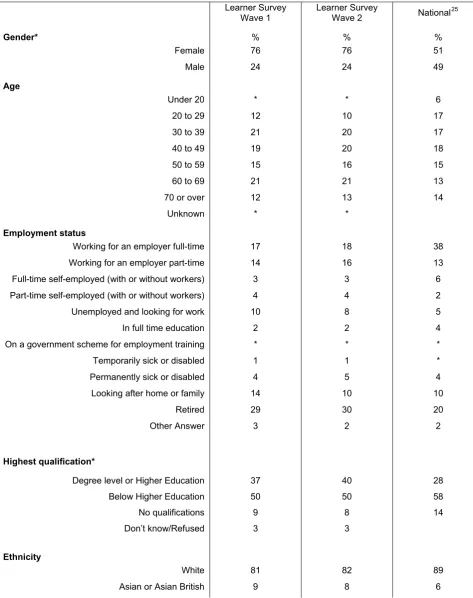
Table 3.1: Demographic profile of learners in the survey at Wave 1 and Wave 2 in comparison to national data
Learner Survey Wave 1
Learner Survey
Wave 2 National
25
Gender* % % %
Female 76 76 51
Male 24 24 49
Age
Under 20 * * 6
20 to 29 12 10 17
30 to 39 21 20 17
40 to 49 19 20 18
50 to 59 15 16 15
60 to 69 21 21 13
70 or over 12 13 14
Unknown * *
Employment status
Working for an employer full-time 17 18 38
Working for an employer part-time 14 16 13 Full-time self-employed (with or without workers) 3 3 6
Part-time self-employed (with or without workers) 4 4 2
Unemployed and looking for work 10 8 5
In full time education 2 2 4
On a government scheme for employment training * * *
Temporarily sick or disabled 1 1 *
Permanently sick or disabled 4 5 4
Looking after home or family 14 10 10
Retired 29 30 20
Other Answer 3 2 2
Highest qualification*
Degree level or Higher Education 37 40 28
Below Higher Education 50 50 58
No qualifications 9 8 14
Don’t know/Refused 3 3
Ethnicity
White 81 82 89
Asian or Asian British 9 8 6
25 Labour Force Survey, Jan – March 09, respondents in England aged 16 or over
Table 3.1: Demographic profile of learners in the survey at Wave 1 and Wave 2 in comparison to national data
Black or Black British 5 5 3
Chinese * *
Mixed ethnic group 1 1 1
Other 2 2 1
Base: All respondents in the Community Learning Learner Survey at Wave 1 / Wave 2 unless specified otherwise *As recorded at the Wave 1 interview
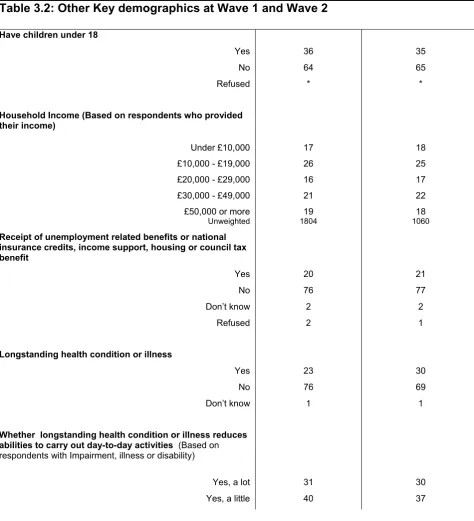
Table 3.2: Other Key demographics at Wave 1 and Wave 2
Have children under 18
Yes 36 35
No 64 65
Refused * *
Household Income (Based on respondents who provided their income)
Under £10,000 17 18
£10,000 - £19,000 26 25
£20,000 - £29,000 16 17
£30,000 - £49,000 21 22
£50,000 or more 19 18
Unweighted 1804 1060
Receipt of unemployment related benefits or national insurance credits, income support, housing or council tax benefit
Yes 20 21
No 76 77
Don’t know 2 2
Refused 2 1
Longstanding health condition or illness
Yes 23 30
No 76 69
Don’t know 1 1
Whether longstanding health condition or illness reduces abilities to carry out day-to-day activities (Based on respondents with Impairment, illness or disability)
Yes, a lot 31 30
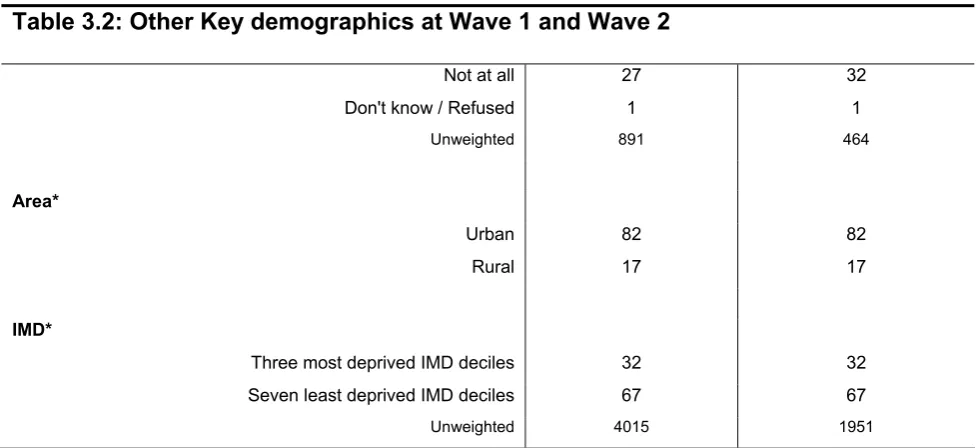
[image:25.595.63.538.274.796.2]Not at all 27 32
Don't know / Refused 1 1
Unweighted 891 464
Area*
Urban 82 82
Rural 17 17
IMD*
Three most deprived IMD deciles 32 32 Seven least deprived IMD deciles 67 67
Unweighted 4015 1951
Base: All respondents unless specified otherwise *As recorded at the Wave 1 interview
As highlighted in the Wave 1 report, it should be noted that many of these characteristics are not mutually exclusive. For some sub-groups in particular, it is not uncommon to find similarities between their responses and those of another sub-group, because of the overlap in their composition. This needs to be borne in mind when interpreting the findings and the sub-group analysis that follows. Some of the key relationships include (based on learners who took part in both Waves 1 and 2):
Age and economic status
There is overlap between age and economic status. The most noticeable point being that 83 per cent of learners aged 60 or over were retired. The report contains some instances where age and economic status are associated with a specific behaviour or attitude.
Learners whose first language is not English and those belonging to black and minority ethnic groups (BME)
There is a substantial degree of overlap between learners whose first language is not English and those from BME backgrounds, with three quarters (74 per cent) of people who do not speak English as a first language being from BME backgrounds.
Presence of children aged under 18 with age, and gender
There is a relationship between the presence of children aged under 18 with both age and gender. Of learners with children aged under 18, three quarters (77 per cent) were aged between 30 and 49, and the vast majority (86 per cent) were female.
It is also noteworthy that the total sample size for the Wave 2 survey is 1,951, which allows robust sub-group analysis to be conducted on the findings at Wave 2.
[image:26.595.56.545.83.307.2]3.1.2 Profile of learners in the qualitative research at Wave 2
Participants who engaged in the qualitative research were drawn from a range of
backgrounds and included learners with differing educational experiences, such as those with limited formal education and no qualifications through to those who had completed a post-graduate education. Additionally, groups were selected to reflect the wide age range of community learning participants, from those who had just left school through to retirees. The sample also reflected both genders and a range of ethnicities.
3.2 Characteristics of courses and those taking them at Wave 1
At the time of the Wave 1 interviews (which took place between March and May 2012), Personal and Community Development Learning (PCDL) was by far the most common type of course undertaken by learners, taken by 81 per cent of respondents. Nine per cent took courses in Family English, Maths and Language (FEML); five per cent in
Neighbourhood Learning in Deprived Communities (NLDC) courses and four per cent took courses in Wider Family Learning (WFL).
The key characteristics of learners within each course type were as follows:
The majority of PCDL learners were aged 50 or over and were either in employment or retired. They tended to be from White backgrounds and less deprived areas. Learners who attended PCDL courses were the most likely to be educated to degree level.
Learners in FEML and WFL provision were likely to be aged between 30 and 39 years old, and to have children aged under 18. The majority were women looking after the home or family or working part time. They were more likely than those in PCDL and NLDC provision to be from BME backgrounds, and to lack qualifications.
The NLDC courses were the most likely to attract men (33 per cent of learners on these courses were men). They also tended to be aged under 50 and were more likely to be unemployed and looking for work, from BME backgrounds and from the 30 per cent most deprived areas.
3.3 Learner motivations reported at Wave 1
Motivations for attending courses were wide ranging, with high proportions of respondents citing reasons relating to ‘personal progression’, ‘social and community’ and ‘personal well-being’. The most common reason overall was to improve knowledge or skills in the subject (mentioned by 91 per cent). Other important motivations included ‘being able to do
something fun in spare time’ (74 per cent), to ‘improve well-being / keep mind and body active’ (70 per cent) and ‘to improve self confidence’ (56 per cent).
with the aim of identifying learner ‘typologies’. A Hierarchical Cluster analysis was
performed in order to classify respondents into groups based on their reasons for taking a course. Six distinct groups were identified:
1. Stepping stone: Reasons for attending focused around current and future jobs. The development of reading, writing, speaking, personal finance and numeracy skills were also important motivators, as was taking part in learning as a stepping stone into further education and training.
2. Serial Attendees: These learners were more likely than those in other segments to have previously undertaken learning activities. Reasons for attending focused around doing something fun in spare time.
3. Becoming Better Parents: These learners attended the course to become more confident parents and/or to help their children with school work. The development of reading, writing, speaking, personal finance and numeracy skills were also
important.
4. Self Confidence and Well-being: Reasons for attending focused around self confidence and personal well-being. Social and community aspects were also important.
5. Keeping up with Information Technology: Developing IT and digital skills was the most important driver for attendance, including IT applications relating to work settings.
6. Multiple needs: This group differed from the other five groups, with learners citing the full range of possible motivations for attending.
3.4 Short term impacts of the course reported at Wave 1
All learners at Wave 1 took part in the research relatively soon after completing their course (within seven months). Reflecting the wide ranging motivations for attending the course, a broad range of short term self-reported impacts were evident. These included impacts related to:
personal progression and development;
personal well-being;
social and community aspects;
children and families;
work and employability;
future willingness to engage in learning.
It was particularly notable that many of the impacts reported by learners were relatively ‘soft’, with a minority resulting in something ‘tangible’ such as a new job.
4 Longer term progression,
outcomes and attitudes
This chapter describes respondents’ longer term progression, outcomes and attitudes following their participation in the community learning course. Short-term impacts were examined at Wave 1 (where interviews took place within seven months of the community learning course being completed) and the second wave of the survey explored progression during the subsequent 12 month period (approximately 18-24 months after the completion of the course).
The chapter begins with illustrative learner journeys derived from the qualitative elements of the research, followed by results from the quantitative survey.
It is important to note that while the quantitative analysis identifies changes reported by learners over the 12 months following their Wave 1 interview, it does not attribute these changes to the courses (i.e. causality is not implied). The qualitative research provides the opportunity to explore how course participation has impacted on
learners’ subsequent decisions and how the outcomes of participation are related to longer term choices and impacts.
Qualitative findings are used throughout this chapter to help illustrate how changes and developments in skills, well-being, health and community participation are linked to the community learning courses undertaken 18-24 months previously.
4.1 Illustrating the learner journey
Through the qualitative group discussions and eight learner immersions, researchers developed a detailed picture of the short and longer term impacts of participation in
community learning courses. The following case studies of four real learners’ journeys help illustrate the benefits of participating in community learning and show how participation is linked to subsequent decision-making and longer term impacts.
Ann
Ann left school at 15 with no qualifications, having struggled to study within an academic environment. Despite early negative experiences of learning she has continued
throughout her life to engage in more informal community learning opportunities, both to support her in her career (e.g. in relation to functional skills) and to expand her horizons and develop new interests.
In 2006 Ann suffered a double blow when her elderly father died and her mother shortly afterwards developed a brain tumour which left her requiring significant care. Ann went part-time in her job as a civil servant and spent two days a week looking after her mother. This role began to take a toll on her, both mentally and physically.
Ann enrolled on an evening pottery course at her local community learning centre to get some respite from her caring responsibilities. She has now been studying the craft of pottery for the past six years, taking both general classes at her local college and specialist courses such as figure pottery.
“The pottery courses absolutely rescued me. Otherwise I would have had some kind of a breakdown.”
As well as providing respite from her caring responsibilities, Ann believes the pottery courses have helped her to socialise, develop new self-confidence and keep her mind active in retirement. They have also enabled her to contribute to the local community by selling pottery for charity at local events and donating pieces to a local community garden which supports people with mental illnesses. She has recently received her first commission and is now selling her pottery at a gallery. Some of her pieces are also on display at her local college to showcase the work of current and previous students.
“I don’t feel sitting and doing nothing [in retirement] is a good idea. Now I feel like I have a new lease of life.”
32
Michael
Michael first found out about community learning courses while receiving occupational therapy at the North Camden Recovery Centre, having battled with depression, isolation and low confidence. He had always had an interest in computers and technology and began looking for opportunities to gain some IT skills that would help him back into education and work. He enrolled on an introductory IT course at his local college and, despite initial apprehensions, went on to learn some important skills (e.g. word processing and photo editing) as well as finding out more about skills that he previously had little knowledge of, such as website design. This introductory course gave him confidence and furthered his interest in IT. He subsequently took a community learning course in web design as well as enrolling in a radio DJ course and a distance learning course in social work (an area he had started training in prior to his depression
).
Taking part in community learning has had a marked impact on Michael’s confidence and mental well-being. He has now created his own personal website which shares his story and has also put his IT skills to use by designing two websites for his local church – an organisation that plays a key role in his life. A significant moment for him was giving a presentation to church members about the website he had designed for them - he felt a strong sense of accomplishment and fulfilment in doing this. Michael has been keen to share his new skills and has volunteered at the North Camden Recovery Centre and at the college to help support other learners as they develop their own IT skills.
“I had a ‘wow’ within myself that I have been able to do something. I have been able accomplish something. I never dreamt of becoming a web designer.”
Looking to the future, he is very optimistic and feels the skills and confidence he has gained improve his prospects for future employment, as well as enabling him to undertake positive activities in his spare time. He is going to do an advanced website design course and is looking for opportunities to do more radio presenting.
Keith
Back in 2008 Keith was a successful photographer undertaking freelance work for Vogue and other fashion magazines. However a shift in the market resulted in a demand for photographers with digital photography skills. Unable to afford to go on digital photography courses, Keith soon found himself out of work and in a situation where meeting his financial obligations, such as his mortgage, had become a serious issue. Keith was diagnosed with depression and was referred to counselling and cognitive behavioural therapy.
‘I was a drain on everyone and I was very negative.’
‘What I had lost in photography was the hands-on element… I had learned the old fashioned way, and everything I had learned was not of any use anymore… when I saw the picture frame course, I thought I could help my photographer friends frame their pictures instead and become useful again.’
As part of his treatment Keith was given support and encouragement in getting back into work,which led to him looking for suitable community learning courses via a mentoring support charity. He had always had an interest in woodwork and liked the idea of working with his hands, so chose to enrol on a picture framing course. Keith found that the course not only helped him to learn a new skill, which has subsequently led to a passion for woodwork, but also helped him to recover from his depression.
‘I remember thinking, I don’t get down any more like I used to; those things that used to be significant aren’t any more. I am working much more now than I was then. I feel so much better.’
After a month of the course, he attended the European Woodwork Convention and met a master craftsman who encouraged him to follow his passion and engage in further learning. He subsequently signed up to a residential weekend woodwork course which focused on wood turning and carving in order to make intricate items such as wooden spoons.
Since studying woodwork Keith employs his skills by making photo frames (bringing together new and old passions) and by restoring and selling old carving tools bought from Deptford Market. Keith has also enrolled on a undergraduate Furniture Design course at London Met University which will help him with his future employment ambition to design and sell wooden furniture.
34
Neil
Neil has spent the past 15 years caring for his three children, in particular his eldest son who was born with cystic fibrosis. His caring responsibilities have been a full time role, leaving limited opportunity to engage in employment or education opportunities - which resulted in feelings of social isolation. Neil was encouraged by his wife to begin a painting course at his local community learning centre, to gain respite from his caring responsibilities, and to add something different to his routine. Despite initial reservations around his artistic abilities, Neil overcame his confidence issues and excelled at his course. He has since used his new-found skills to undertake voluntary work within his local community, including in primary schools, libraries and a Sure Start Centre. Using his skills for the benefit of his local community and seeing his artwork on public display has been highly motivating for Neil and inspired him to continue with his interest in art.
Through the experience of community learning, Neil also gained confidence in his own ability to engage in new learning and was inspired to undertake other, more academic, qualifications. This decision was partly driven by his eldest son’s decision to progress into further education, which had implications for the benefits the family would be able to claim. As a precaution, Neil undertook courses to gain qualifications in English and Maths to help him seek work and give him additional confidence during the interviewing process.
“It’s got the educational [aspect], as in you’re keeping your mind active, you’re keeping your body active, you’re leading things. You’ve also got, when you do have to go for work, you’ve got a CV that [shows] you’ve done something.”
Neil is now more motivated and prepared for the future – he has diversified his painting work and is now beginning to explore the potential of working for himself doing painting and decorating work. He is also still looking to further his artistic skills by undertaking a more advanced course in Art and Design.
“If I struggle to get a job because of my employment record - the last 10-15 years [out of work], I may be able to go self-employed and turn my hobby into a business structure at a later date depending on circumstances and finances. So I’ve currently signed up to the level two diploma in Art and Design.”
4.2 Personal progression and development
4.2.1 Changes in skills and abilities over the previous 12 months
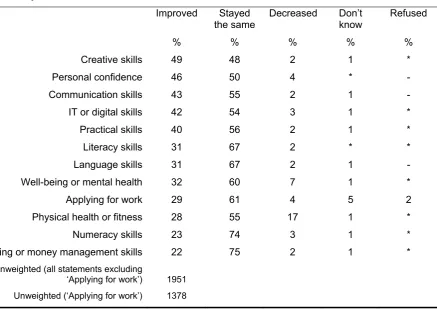
[image:35.595.100.538.220.530.2]In the quantitative survey learners were asked whether, since the Wave 1 interview (around 12 months earlier), they felt their skills or abilities in a number of specific areas had improved, stayed the same or decreased (Table 4.1)
Table 4.1 Improvements and decreases in ‘skills’ since Wave 1 interview
Improved Stayed
the same Decreased Don’t know Refused % % % % %
Creative skills 49 48 2 1 *
Personal confidence 46 50 4 * -
Communication skills 43 55 2 1 -
IT or digital skills 42 54 3 1 *
Practical skills 40 56 2 1 *
Literacy skills 31 67 2 * *
Language skills 31 67 2 1 -
Well-being or mental health 32 60 7 1 *
Applying for work 29 61 4 5 2
Physical health or fitness 28 55 17 1 *
Numeracy skills 23 74 3 1 *
Budgeting or money management skills 22 75 2 1 *
Unweighted (all statements excluding
‘Applying for work’) 1951
Unweighted (‘Applying for work’) 1378
Base: All respondents at Wave 2 (excluding ‘Applying for work’)
Base: ‘Applying for work’: All respondents excluding those currently retired.
While for most types of skills and abilities respondents reported that their own skills and abilities had stayed the same, there were some signs of marked improvement since the Wave 1 interview. On balance, respondents reported improvements in all areas,
particularly in creative skills (49 per cent reported improved skills), personal confidence (46 per cent), communication skills (43 per cent) and IT/digital skills (42 per cent).
aged 75 or older reported decreases, reducing to four per cent among 16-24 year olds), However, separate from this, it could be hypothesised that changes in health could be related to continued participation in courses and therefore deteriorations could be
associated with stopping participation. Firm conclusions about this cannot be drawn from the survey, because health prior to the course is not recorded, and changes to health between the Wave 1 and Wave 2 interviews cannot be causally linked to the course. However, the survey data does allow some initial indicative analysis, by comparing further course participation between those learners who reported improvements in health and those reported deteriorations. Some differences are evident:
Among learners who reported deterioration in physical health or fitness and/or well-being or mental health, 38 per cent had gone on to complete one further course since the time of the Wave 1 interview.
Among learners who reported an improvement in these areas, the proportion was higher, at 51 per cent.
An analysis of these questions on changes in skills since Wave 1 indicated that there was a high degree of correlation between them. This suggested that, rather than looking at sub-group differences that might be very similar for each of the skills, a factor analysis approach would be more useful in understanding the results. The analysis identified four factors among responses to the questions on changes in skill levels. These were:
1. Responses emphasising skills relating to communication, literacy, applying for work, confidence, language, numeracy;
2. Responses emphasising budgeting and IT skills; 3. Responses emphasising creative and practical skills;
4. Responses emphasising managing/improving physical and mental health. Among the skills covered by Factor 1 (communication, literacy, applying for work, confidence, language, and numeracy), the following groups of learners were more likely to report positive changes: women, younger respondents, those with children aged under 18 and those from the ‘Multiple Needs” segment.26
For Factor 2 (covering budgeting and IT skills), younger respondents were more likely to report positive changes, as were those with children, men and those from the “Multiple Needs” segment.
For Factor 3 (creative and practical skills), those with children under the age of 18 were more likely to report positive changes than those without; and those learners from the “Self Confidence and Well-Being” segment were the more likely to report positive changes than those from other segments.
For Factor 4 (covering the questions on skills relating to mental and physical health), interestingly, those with a disability, illness or other health condition were less likely to report positive changes than those without these conditions. Additionally, younger
26 See section 3.3 for explanation of segments.