University of Southern Queensland
Faculty of Health, Engineering and Sciences
Investigating the Impact of the Request For
Information Process in Construction
A dissertation submitted by
Mr Robert Colin Dinsmore
in fulfilment of the requirements of
Courses ENG4111 and 4112 Research Project
towards the degree of
Bachelor of Engineering (Civil)
[i]
ABSTRACT
The tightening nature of the global economic climate in today’s society is putting a significant strain on the efficiency of the construction industry. The impact of additional time and costs as a result of the Request for Information process on construction projects was identified, and the need to reduce said impact was validated.
This document aims to investigate the factors that are associated with the Request For Information process and identify the extent of the impact that this has on the delivery of construction projects from a time and cost perspective.
Parameters were set in order to conduct a case study on a sample set of real construction projects, where relevant data was obtained for analysis. Key project characteristics were revealed that were commonly evident on projects that have had high numbers of RFIs. These projects that are at the highest risk of being impacted by excessive RFIs are Residential/Retirement in nature that have contract values of over $15 million and construction durations of over 11 months.
These projects’ RFI registers were then investigated to find that the most frequently questioned design discipline was Architectural.
Having identified these vital pieces of information from the case study,
recommendations were made for the implementation of strategies for contracting companies who engage in work that demonstrate said characteristics. These
strategies look at reducing the RFI impact on future projects by reducing the number of RFIs that are required and by creating efficiencies in the RFI generation and submission process.
[ii]
University of Southern Queensland Faculty of Health, Engineering and Sciences
ENG4111 & ENG4112 Research Project
Limitations of Use
The Council of the University of Southern Queensland, Faculty of Health,
Engineering and Sciences, and the staff of the University of Southern Queensland, do not accept any responsibility for the truth, accuracy, or completeness of material contained within or associated with this dissertation.
Persons using all or any part of this material do so at their own risk, and not at the risk of the Council of the University of Southern Queensland, its Faculty of Health, Engineering and Sciences or the staff of the University of Southern Queensland. This dissertation reports an educational exercise and has no purpose or validity beyond this exercise. The sole purpose of the course pair entitled “Research Project” is to contribute to the overall education within the student’s chosen degree program. This document, the associated hardware, software, drawings, and other material set out in the associated appendices, should not be used for any other purpose: if they are so used, it is entirely at the risk of the user.
Associate Prof Kevin McDougall
[iii]
CERTIFICATION
I certify that the ideas, designs and experimental work, results, analyses and conclusions set out in this dissertation are entirely my own effort, except where otherwise indicated and acknowledged.
I further certify that the work is original and has not been previously submitted for assessment in any other course of institution, except where specifically stated.
Student Name: Mr Robert Colin Dinsmore
Student Number: 0050101342
[iv]
ACKNOWLEDGEMENTS
Out of gratitude and respect, I would like to acknowledge those who have helped and aided me through the completion of this research project. If not for these people, my objectives and goals would have been largely unattainable.
Supervisor Mr Paul Tilley has been of significant assistance and guidance
throughout the project and I would like to personally make thanks for the knowledge he has passed on to me, and for the preceding studies that he has carried out that I was able to utilise as the backbone to my research.
[v]
TABLE OF CONTENTS
ABSTRACT ... I
CERTIFICATION ... III
ACKNOWLEDGEMENTS ... IV
TABLE OF CONTENTS ... V
LIST OF FIGURES ...VIII
LIST OF TABLES ... X
LIST OF APPENDICES ... XI
CHAPTER 1 – INTRODUCTION ... 1
1.1 OUTLINE OF THE STUDY ... 2
1.2 INTRODUCTION ... 2
1.3 THE PROBLEM ... 3
1.4 RESEARCH OBJECTIVES ... 4
1.5 OVERVIEW OF DISSERTATION ... 5
CHAPTER 2 – LITERATURE REVIEW ... 6
2.1 INTRODUCTION ... 7
2.2 THE CONSTRUCTION INDUSTRY ... 8
2.2.1 GROWTH AND INFLATION ... 8
2.2.2 TECHNOLOGICAL ERA ... 9
2.2.3 CONSTRUCTION ORGANISATIONAL STRUCTURES ... 10
2.3 REQUEST FOR INFORMATION OVERVIEW ... 16
2.3.1 THE PROCESS ... 16
2.3.2 THE RFIFORM ... 17
2.3.3 CORRECT USE OF THE RFI ... 20
2.3.4 THE RFIREGISTER ... 21
2.3.5 INEFFICIENCIES ... 21
2.4 FACTORS INFLUENCING THE NUMBER OF RFIS ... 23
2.4.1 CONTRACT TYPES ... 24
2.4.2 PROJECT SIZE ... 28
2.4.3 PROJECT TYPE ... 31
2.4.4 PROJECT COMPLEXITY (NUMBER OF DRAWINGS) ... 34
2.4.5 YEAR OF CONSTRUCTION ... 35
2.5 ROOT CAUSES OF RFIS ... 36
2.5.1 DESIGN DEFICIENCY ... 36
2.5.2 CONSTRUCTABILITY ISSUES ... 37
[vi]
2.7 FLOW-ON EFFECT OF RFIS ... 41
CHAPTER 3 –METHODOLOGY ... 42
3.1 OVERVIEW... 43
3.2 PARAMETERS OF SAMPLED PROJECTS ... 44
3.2.1 CONTRACT TYPE ... 44
3.2.2 PROJECT TYPES ... 45
3.2.3 PROJECT VALUE ... 45
3.2.4 YEAR OF CONSTRUCTION ... 45
3.2.5 LOCATION ... 46
3.2.6 NUMBER OF PROJECTS ... 47
3.3 DATA COLLECTION ... 48
3.3.1 CONTRACT VALUE ... 49
3.3.2 PROJECT SIZE ... 50
3.3.3 PROJECT DURATION ... 52
3.3.4 PROJECT COMPLEXITY (NUMBER OF DRAWINGS) ... 53
3.3.5 PROJECT TYPE ... 54
3.3.6 NUMBER OF RFIS ... 55
3.4 DATA MANIPULATION ... 57
3.4.1 CONTRACT VALUE ... 58
3.4.2 PROJECT SIZE ... 60
3.4.3 PROJECT DURATION ... 62
3.4.4 PROJECT COMPLEXITY ... 64
3.4.5 PROJECT TYPE ... 66
3.5 KEY PROJECT CHARACTERISTICS ... 67
3.6 RFIS CATEGORIZED BY DISCIPLINE ... 69
3.6.1 AVERAGED FOR ALL 5PROJECTS ... 70
3.6.2 BHCCHURCH STREET ... 71
3.6.3 REGIS FAIRFIELD MANOR YARONGA ... 72
3.6.4 VILLAGE AT COORPAROO ... 73
3.6.5 VILLAGE AT COORPAROO,STAGE 2 ... 74
3.6.6 MASONIC CARE,KIRWAN... 75
CHAPTER 4 – RESULTS AND DISCUSSION ... 76
4.1 RESULTS ... 77
4.1.1 KEY PROJECT CHARACTERISTICS ... 77
4.1.2 KEY RFIDISCIPLINE ... 80
4.2 CIRCUMSTANTIAL FACTORS FOR HIGH RFI IMPACT ... 82
4.2.1 RELATIONSHIPS ... 82
4.2.2 PERFORMANCE OF CONSULTANTS ... 83
4.2.3 CONSTRUCTION DIFFICULTY AND CONTRACTOR EXPERIENCE ... 83
4.3 RECOMMENDATIONS FOR STRATEGY TO LIMIT IMPACT ... 84
CHAPTER 5 – CONCLUSIONS ... 86
[vii]
5.2 LIMITATIONS ... 88
5.3 FURTHER WORK ... 89
REFERENCES ... 90
[viii]
LIST OF FIGURES
Figure 1 - An over-arching look at the RFI process in construction ... 3
Figure 2 - Construction historical revenue (Korda Mentha 2012) ... 8
Figure 3 - Construction annual growth (pa, past five years) ... 8
Figure 4 - Typical Structure for Construction Organisations ... 11
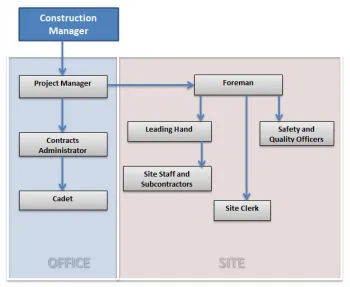
Figure 5 - Typical Organisational Chart for the operations of a project ... 15
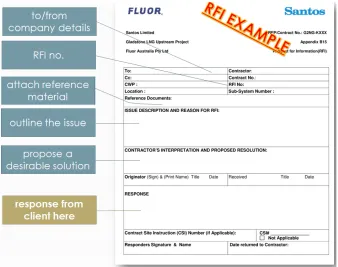
Figure 6 - An example of a blank RFI template (Fluor Australia 2013)... 18
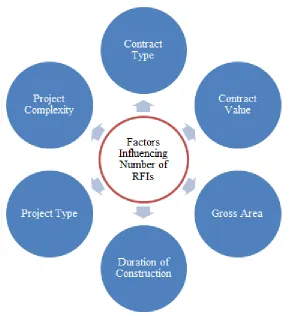
Figure 7– Primary Factors influencing the number of RFIs on a project ... 23
Figure 8 – Differences between Construct Only and D&C contracts ... 24
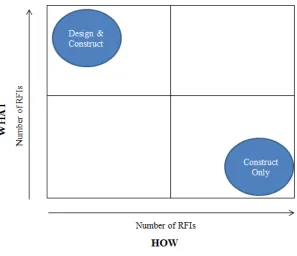
Figure 9 – Dombkin’s WHOW matrix - Construct Only v D&C ... 27
Figure 10 – Project characteristics that gauge the size of a project ... 28
Figure 11 – Constraints for measuring project size ... 30
Figure 12 – A photo of a Civil project - 150 Mega Litre Dam ... 31
Figure 13 –Photos of Commercial projects ... 32
Figure 14 –Photos of Education projects ... 32
Figure 15 –Photos of Government projects ... 33
Figure 16 –Photos of Industrial projects ... 33
Figure 17 –Photos of Residential/Retirement projects ... 34
Figure 18 – Personnel involved in RFIs ... 38
Figure 19 –Cost Implications throughout Project Life Cycle ... 40
Figure 20 – Diagrammatic view of the flow-on effects of RFIs ... 41
Figure 21 – Distribution of project locations around QLD ... 46
Figure 22 – Data Collection for Contract Value ... 49
Figure 23 – Histogram for Contract Value Data ... 50
Figure 24 - Data Collection for Project Size ... 51
Figure 25 - Histogram for Project Size Data ... 51
Figure 26 – Data Collection for Project Duration ... 52
Figure 27 – Histogram for Project Duration Data ... 52
Figure 28 – Data Collection for Project Complexity ... 53
Figure 29 – Histogram for Project Complexity Data ... 54
[ix]
Figure 31 – Data Collection for Number of RFIs ... 56
Figure 32 – Histogram for Number of RFIs Data ... 56
Figure 33 – Visual trend for Contract Value verses number of RFIs ... 58
Figure 34 – Visual trend for Project Size verses number of RFIs ... 60
Figure 35 – Visual trend for Project Duration verses number of RFIs ... 62
Figure 36 – Visual trend for Project Complexity verses number of RFIs ... 64
Figure 37 – Analysis of average number of RFIs for project types ... 66
Figure 38 – Discipline Information averaged for all 5 projects ... 70
Figure 39 – Discipline Information for BHC Church Street ... 71
Figure 40 – Discipline Information for Regis Fairfield Manor Yaronga ... 72
Figure 41 – Discipline Information for Village at Coorparoo ... 73
Figure 42 – Discipline Information for Village at Coorparoo, stage 2 ... 74
Figure 43 – Discipline Information for Masonic Care, Kirwan ... 75
Figure 44 – Flow chart for risk of excessive RFI impact on projects ... 79
[x]
LIST OF TABLES
Table 1 – Statistics for Contract Value Data ... 50
Table 2 - Statistics Histogram for Project Size Data... 51
Table 3 - Statistics for Project Duration Data ... 53
Table 4 - Statistics for Project Complexity Data ... 54
Table 5 - Statistics for Project Type Data ... 55
Table 6 - Statistics for Number of RFIs Data ... 56
Table 7 – Lower and Upper Quartile data for Contract Value ... 59
Table 8 – Lower and Upper Quartile comparison for Contract Value ... 59
Table 9 – Lower and Upper Quartile data for Project Size ... 61
Table 10 – Lower and Upper Quartile comparison for Project Size ... 61
Table 11 – Lower and Upper Quartile data for Project Duration ... 63
Table 12 – Lower and Upper Quartile comparison for Project Duration ... 63
Table 13 – Lower and Upper Quartile data for Project Complexity ... 65
Table 14 – Lower and Upper Quartile comparison for Project Complexity ... 65
Table 15 – Comparison of Upper Quartile Deviation percentages ... 67
Table 16 – 5 projects with key characteristics for further analysis ... 68
Table 17 – Discipline Information averaged for all 5 projects ... 70
Table 18 – Discipline Information for BHC Church Street ... 71
Table 19 – Discipline Information for Regis Fairfield Manor Yaronga ... 72
Table 20 – Discipline Information for Village at Coorparoo ... 73
Table 21 – Discipline Information for Village at Coorparoo, stage 2 ... 74
Table 22 – Discipline Information for Masonic Care, Kirwan ... 75
Table 23 – 5 projects with key characteristics for further analysis ... 78
[xi]
LIST OF APPENDICES
APPENDIX A – PROJECT SPECIFICATION ... 94
APPENDIX B – RFI EXAMPLE 1 ... 95
APPENDIX C – RFI EXAMPLE 2 ... 97
APPENDIX D – RFI EXAMPLE 3 ... 99
APPENDIX E – RFI REGISTER EXAMPLE ... 101
APPENDIX F – SUMMARY OF RAW DATA COLLECTION ... 102
APPENDIX G – RFI LATE RESPONSES (MASONIC CARE, KIRWAN) ... 104
[1]
[2]
1.1
Outline of the Study
To investigate the efficiency of a construction project given the impact of additional time and costs’ that accrue from dealing with RFIs as a result of design and
documentation deficiencies. The need was identified to minimise RFI impact on future projects.
1.2
Introduction
The construction industry as it is in today’s society is driven heavily by factors such as safety, quality, money and program, to name just a few of the more critical ones. The quest for companies to find improvements and gain efficiencies across the whole industry is never ending in the heightening realms of society. The implications for construction organisations that fail to deliver adequately on the aforementioned factors are severe.
Due to the nature of the industry having a large dependence on having drawings, specifications and other documents at everyone’s fingertips, there is a reliance on the efficient distribution of information between multiple parties involved on any given project. Information can take the form of letters, plans and specifications,
correspondence, contracts and contractual notices amongst a vast array of other examples. For the large majority of construction companies, electronic media is relied upon to be the means of distribution for these types of information.
This research topic will focus on one particular form of correspondence that has a number of associated problems for contractors and subcontractors; the Request For Information (RFI) or Technical Query (TQ). (CEMDC 2013)
Clients, engineers, architects, contractors, subcontractors and construction personnel in general deal with RFIs on a regular basis. An RFI provides a way for contracting companies to clarify and seek additional information from their client or designers, about a project that they are contracted to build. The RFI is intended to be used for clarifications that are technical in nature only, relating to the design documentation or the constructability of the project.
[3]
essence, not even be needed. Figure 1 below is a diagrammatical overview of the RFI process in construction.
Figure 1 - An over-arching look at the RFI process in construction
1.3
The Problem
In construction, apart from safety and quality, the number one thing on everyone’s mind is time and money. Being able to minimise the time it takes to build a job while maximising the jobs profitability is the key to success for today’s contractor. The need for contractors to have to question flaws in project design documentation consumes valuable resources. The RFI process would not be required if design documentation was 100% adequate, however it is only inevitable that due to human error and the nature of the construction industry, that there is a need to have an RFI process to clarify such queries.
[4]
The fundamental aim for this case-study based research topic is to reduce the impact that the RFI process has on construction projects in the future. With the support McNab Constructions Australia Pty Ltd, a number of real projects RFI registers will be utilised to provide data that will reveal trends and statistics for RFIs. The
statistics will be particularly applicable to Queensland based mid-tier construction companies who build mainly commercial retail, industrial, residential, and remote energy/mining sector, ranging from project sizes of $500,000 - $30,000,000. The reason why RFIs result in time and cost will be determined and then strategies to mitigate their effects will be formulated.
Reducing the impact is possible by reducing the amount of RFIs that are needed on a job in the first place, and secondly, streamlining the processes involved in creating an RFI itself and how the process is managed.
1.4
Research Objectives
In order to reduce the impact that the RFI process has on construction projects in the future, the two major objectives of this research project are to minimize the number of RFIs needed for future projects and to create efficiencies in the RFI process. The sub-objectives are therefore;
• Using information gathered from construction projects on McNab
Constructions’ database, identify trends that exist between the numbers of RFIs on a project and key characteristics of the project. Highlight the project characteristics that are attributed to high numbers of RFIs.
• Develop a strategy to streamline the RFI process for projects that
demonstrate above key characteristics, this is in order to reduce time and money lost due to the RFI process.
• Strategize and implement efficiencies that will streamline the RFI generation
[5]
1.5
Overview of Dissertation
The Literature review is contained in chapter two and it identifies all relevant
background information relating to the broader construction industry, the make-up of the organisations involved and what roles they play, and also discusses in depth the parameters around the RFI itself and the process. The factors that influence the number of RFIs on projects are discussed in addition to their related impacts and flow-on effects.
The Methodologies are contained in chapter three and included is a full presentation of the case study. The parameters relating to the sample of real projects are justified and the data collection is presented. Analysis and manipulation of this data reveals key characteristics for projects that impact on large RFI numbers. An investigation into these projects’ RFI registers reveals the discipline of design that is questioned the most frequently; this provides the basis of the recommendations and conclusions. The results of the case study are presented in chapter four, and a look into other circumstantial factors is provided. Recommendations are given as to develop and implement strategies for contractors to look to reduce the impact of RFIs on future construction projects.
[6]
[7]
2.1
Introduction
The ‘Request For Information’ is commonly abbreviated in the construction industry as ‘RFI’ and will be referred to throughout this report accordingly.
The RFI is a standard template form that is issued formally, the details of which are recorded on an RFI register for tracking purposes. Any given project may be subject to anywhere from five to 1000 RFIs, depending on the nature of the project and the client. There are many underlying factors that influence how many RFIs may be required on a construction project and this report will look to identify the major ones. In the head contract with the client, there will often be a clause that offers an RFI response turnaround time of ‘x’ amount of days, and if the client responds after this amount of time, it is potentially claimable by the contractor as delays. For this reason, contractors will put an onus on tracking the status of each and every RFI to ensure the response is timely.
A contractor would use an RFI if they need technical clarification relating to design documentation (such as drawings or specification), to highlight constructability issues or to propose alternative construction solutions that may differ from the design drawing or specification.
[8]
2.2
The Construction Industry
The construction industry has played a dominant role in the Australian Economy for some time now, and its growth in the past decade has been of notable significance.
2.2.1
Growth and Inflation
“From an income of around $100,000 million in 2008-09 to an income of nearly $300,000 million in 2011-12” (Australian Construction Resources 2013), the
construction industry continues to grow as a result of public investment in areas such as infrastructure, education and a booming mining industry, that provide the required stimulus. Figure 2 and Figure 3 illustrate the relevant trends that are evident in the construction industry in Australia relating to growth and revenue.
Figure 2 - Construction historical revenue (Korda Mentha 2012)
[9]
This growth is ensuring that employment rates are also steadily climbing, particularly in remote mining sectors, and is predicted to rise in the near future (Australian Construction Resources 2013).
While the total yearly revenue of the construction industry climbs, so does the potential loss of time and cost as a result of RFIs. With revenue growth in
construction, naturally comes more projects being built and the value of each project increasing with inflation, and thus there is an increasing importance for effective RFIs that influence the profitability of jobs for contractors. Delays resulting from the RFI process are costly for contractors due to both project preliminary costs (overheads, staff costs, on and off-site facilities, general costs of running the business etc), and on-site delays that disrupt the procurement of materials and the resulting discontinuity of construction. These delays are costing contractors more and more money in the heightening realms of the economy and thus validate a need for this research, in order to reduce the impact that RFIs have on construction projects in the future.
2.2.2
Technological Era
Along with this industry growth, the processes involved in construction to enhance safety, quality and profitability has also had more scrutiny and thus improvement. Technology is relied upon heavily to manage a typical construction project from enhanced computing software, processing power, internet, mobile communications, satellite connectivity for remote locations and advancements in
electronic/mechanical construction equipment and machinery. These elements have a significant impact on the development of construction processes both from a management perspective and the running of the project site. The industry is going to continue to see rapid advancements in technology as the Queensland Government have identified that improvements in Information Technology may be the greatest driver of change in the building and construction industry. (Queensland Government 2013)
The main element of technological advancements that is of influence to this research project is computing power and the ease of communication and distribution of files over the internet in recent times. The vast majority of correspondence and
[10]
the dynamic ability for technology to adapt to specific requirements which makes it such a great tool for construction organisations to adopt. The increasing size of documents in today’s era that are in existence can be processed by technology with ease, even in remote conditions, allowing for the smooth and reliable delivery of documents, drawings and contractually important correspondence. For an
organisation to effectively utilise technology that is at their disposal, it takes a great deal of consideration and nous, especially with regards to the interaction that occurs with site-personnel and the elder generation, who may not be familiar and perhaps not willing to accept the change.
When used correctly, (American Institute of Architects 2006) an RFI can provide an orderly, reliable, and documented mechanism to field and resolve legitimate
contractor questions and this is something achieved through communication between multiple organisations. The RFI process has been increasingly dependent on
electronic delivery and tracking over the past decade and has now reached a point where practically all contractors and clients will process RFIs electronically, along with all other project ‘paperwork’. For this reason, this research project will only consider construction projects in recent years with the context that electronic distribution has been utilised. This keeps the study as relevant as possible moving forward as electronic distribution will continue to act as the means for RFI
distribution. If pre-technological era case-study information was considered, this would inadvertently incorporate bias into the data. This would be due to the fact that data would incorporate RFI impact stemming from issues that have now become obsolete with the modern use of technology.
2.2.3
Construction Organisational Structures
Differentiating between the organisations and their roles in the construction industry is of importance to this research project, in order to understand how they are
involved in the RFI process. The relationships that are made between all
organisations involved in any given project are critical to ensure the end result is as-desired and that budgets are met. Figure 4 below shows a typical matrix of
[11]
Figure 4 - Typical Structure for the organisations involved in Construction Projects (Dion Seminara Architecture 2011)
There are obviously many other variations of this structure that are successful, and as such this diagram is to be used for a rough visual guide only.
The three major players are the Client (end user), the Main Contractor (builder) and the Clients Representative (acts as a mediator between the client and the contractor, usually the Architect). The relationship and the way that these three parties are engaged with each other, has the largest impact on the way that the project functions. Clawson Architects’ LLC (2011) describe this relationship as a “3-legged stool where they must work together in concert”.
i)
The Client
The Client (in the contractual sense of the word) is the company who pays for the construction project, whether it be a residential or commercial high-rise
[12]
processing compressor station. Their budget will facilitate and align with their specific goals and expectations of the final product.
The client may or may not be the end-user of the project depending on a number of circumstances. For example to consider a gas-mining company needing compressor infrastructure built, it is typical that these mining companies approach large
Engineering Design/Procurement/Management firms to coordinate the whole process from engineering design to finalising construction. Local contractors are then
contracted to the Engineering/Management firm as the client, through a head contract, however the end user is the gas company who will be extracting the goods using said infrastructure. This is an example of a client not being the end user of the construction project. As the client in this instance is suitably capable of responding to RFIs having engineering responsibility and capability, the RFI process is dealt with between the contractor and the client, not the contractor and the end user. An example of a client being the end user of the construction project would be when Woolworths want a new store built. They know what they want but not how to build it. They may have an internal department devoted to the development of new stores to manage the building process from tender stage to construction. It is common for companies of this nature to engage the help of a superintendent, to manage the construction of the project and correspond directly with the contracting company. In this instance, Woolworths are both the end user of the build, and the client (albeit with the help of a Superintendent).
The client can engage the full team of consultants to have their project designed, or alternatively liaise with just the Architect who then coordinates the full design. It is the Architect who will most likely be the Superintendent as their objectives align with the client to oversee the contractor, mediating as required. (Fewings 2005)
ii)
Superintendent (or Architect)
As stated above, the Superintendent acts as a mediator between the client and the contracting construction company, for most contractual, technical and on-site matters. Their role is to manage the clients requirements in the form of providing accurate detailed design drawings for the Contractor to work to, provide guidance for the client through reasonable and sustainable design solutions, and provide a level of service that ensures a smooth construction process. For clients who are not
[13]
Superintendent will respond to RFIs and deal with them accordingly to meet the needs of the client and adhere to applicable codes and standards. It is common for the Superintendent to also be the Architect, and figure 4 is formulated as per this arrangement. (McMullan Bros 2013)
a) Consultants
Consultants are the organisations who are qualified to design a job from the ground up and take on liability and risk for the performance of the building and compliance to any governing codes or standards that are applicable. Any given construction project may require input from Architects, Engineers (Geotechnical, Civil, Structural, Hydraulic, Chemical, Electrical, Mechanical etc) Surveyors, Quantity Surveyors, Project Managers, Planners and Certifiers in order for the project to be deemed suitable to proceed with construction.
The consultants can be appointed by the client, superintendent or the contractor depending on the nature of the contract that is in place between said organisations. Consultants will respond to RFIs that relate to their own design and documentation if appropriate.
b) Nominated Suppliers/Subcontractors
In certain circumstances the Contractor must adopt nominated suppliers or
subcontractors that are specified at tender time by the client. This may be due to a level of expertise that is required or for relationship/commercial purposes. An example of a nominated supplier/subcontractor may be ‘ABC Lifts Pty Ltd’ who are engaged each and every time by a particular client for commercial reasons.
Nominated suppliers/subcontractors are not considered for the purposes of this report to any further degree.
iii)
Contractor
[14]
• Project Manager (PM) – Over-arching role (can be a hybrid between office
and site-based) with the most influence on any given project. Deals directly with client for all matters. Ultimately responsible for the delivery of the project and accountable for program, turnover and cash flow, quality of construction and overall results. The project manager is concerned with project objectives though the use of human and material resources, within the context of the project environment. (Emmitt and Gorse 2013)
• Contracts Administrator(CA) – Working under PM, office-based role
fundamentally for processing of all payments and most likely involved in logistics, tendering and letting sub-contracts and contractual notices and letters etc. CA’s have a large influence on the day-to-day running of the job and should allow the PM to remain over-arching without needing to get into the minor details or processing/paperwork in the job.
• Foreman – On site supervisor responsible for meeting program and adhering
to construction methods. Ultimately responsible for everything on site.
• Safety and Quality Officers – Responsible for all matters relating to health,
safety and Quality Control on site, reports to the Foreman.
• Site Clerk – For site based administration, reports to the Foreman.
(Fewings 2005)
[15]
Figure 5 - Typical Organisational Chart for the operations of a project
The contractor will identify the need to submit an RFI, draft it up and submit/track it in order to get a timely response.
a) Subcontractors and Suppliers
[16]
2.3
Request for Information Overview
Implementation of an effective RFI process is an integral part of successful project management for construction projects that improves communication between the construction, design, and project management teams. (Hanna, Tadt and Whited 2012)
2.3.1
The Process
The RFI is a standard template form that is issued formally, the details of which are recorded on an RFI register for tracking purposes. Any given project may be subject to anywhere from five RFIs to 1000, depending on the nature of the aforementioned factors in section 2.2. Creating and tracking RFIs is a process, which Halpin and Riggs (1992) define as “being composed of inter-related tasks where a task may be defined as the basic element of a workflow process which requires time to perform”. Small jobs that are very well designed might not need many RFIs at all, because the documentation is adequate for all details to be constructed by the contractor. This is an ideal situation for a contractor to be in when considering lost time and money as a result of the RFI process. The alternative is for contractors to have large and
complex jobs that are not very well designed, that go on for years. These projects are likely to attract a huge amount of RFIs and are obviously attributed with wasted time, resources and money.
In a head contract, it is often stipulated that the client or consultant has a certain amount of time to respond to a contractors RFI and hence the importance of an RFI tracking register comes into play. This is the way that contractors track when each RFI was lodged and when they are expected to be returned with a response. For large projects that may have over 50 RFIs waiting for a response at any one time, the consequences are easy to imagine when contractors do not track the pending RFIs properly. All of these pending design interpretations disrupt the continuity of works and create additional delays and costs.
A contractor would use an RFI if they need technical clarification relating to design documentation, drawings or specification, refer to Appendix B for an example of an RFI where this is the case. An RFI is also able to be used for highlighting
[17]
can use RFIs in lieu of phone conversations or shop-drawing submission questions, which could be far more efficient in resolving minor issues” (American Institute of Architects 2006).
An RFI is a technical document; therefore the language used is to be concise and technical jargon is recommended, referencing plans and specification, using
sketches, mark-ups and data sheets to outline the issue at hand and propose solutions.
2.3.2
The RFI Form
An RFI can come in many different formats and each company typically have their own standard form or template that is utilised. The elements of all contractors RFI forms are fundamentally the same, which give basic prompts for the creator of the RFI to outline the issue at hand and request a desired response time.
[18]
Figure 6 - An example of a blank RFI template (Fluor Australia 2013)
This Fluor form is quite thorough which is advantageous to yield the best results out of the RFI.
i)
Administrative Details
The uppermost section is provided to enter the administrative details of the contract and the RFI information for tracking purposes. As Fluor are such a large
[19]
ii)
Referenced Material
There is an area usually provided to reference attached documentation that may strengthen the RFI and this is critical to take advantage of. RFIs are a technical engineering document and therefore referencing attached drawings or specification is an easy way to save long-winded explanations as the construction industry is very visual in nature. The intent of an RFI can be lost if it is explained in lengthy sentences and therefore calculations and/or sketches that are marked up on the drawings help to visualise a problem rather than explaining it. Other referenced material could consist of Material Data Sheets/Product Information,
manufacture/supplier/subcontractor recommendations in the form of written letters, calculations, sketches and mark-ups.
iii)
Issue/Reason for RFI
This section is to describe the issue behind why the RFI is being raised. The issue must be technical in nature and outlined by the contractor using professional, concise and suitable engineering language. This section should be as concise as possible without sacrificing important details that will influence the intended response. The referenced material should be given context in this section by referring to the attachments as required to ensure they are read in the desired manner.
It is important that the CA or PM discusses the RFI with their foreman prior to submitting it to the client, to ensure the crux of the issue is being addressed as required to proceed on site. As with all contractual correspondence, RFIs should also be proof read by an arbitrary person to confirm it is written correctly and conveying the desired message, free from error (CEMDC 2013).
iv)
Proposed Resolution
[20]
Consider if the Architectural drawings do not show the inclusion of bollards in front of a shopfront window adjacent to a car park, and the Structural drawings for bollard details are also omitted, this requires the submission of an RFI as it is the contractors responsibility to know that this is an error in the drawings and that bollards are actually required in these circumstances. This is a perfect opportunity for the contractor to nominate a type of bollard that is of their desire, one that is readily available to avoid lead time and one that is quick and easy to install. Without providing this as a solution, the consultant may respond and stipulate a specific bollard that may or may not be able to be sourced locally and may be more difficult to install.
v)
Response
The response from the client/consultant may or may not be written on the original form. Once the response is received, the date should be entered onto the register and it can be seen if the response was received on time or not and hence the need to formulate a delay variation is determined.
vi)
Administrative Close-Out
The bottom section on this form has provision for notifications of Site Instructions. As a result of RFI responses that directs the contractor to proceed with a method of construction, a Site Instruction is often necessary in order for contractors to proceed with something that was most likely not originally included in their scope of works in the contract, and thus, will come at an additional expense. It is for this reason that a high number of RFIs on a job will often result in additional Site Instructions and therefore Variations. This is discussed in further detail in section 2.7 (CEMDC 2013).
2.3.3
Correct Use of the RFI
The ideal method to formulate an RFI does differ depending on the particular circumstances and further case-study investigations will recommend the most effective technique that result in full and accurate responses.
[21]
personnel to prevent RFIs being submitted by someone in a junior position who may not have the required experience to draft it as best as possible (American Institute of Architects 2006). Preliminary research on real case-study data (samples of RFI logs) indicates a vast array of different techniques used to draft RFIs. It is also a good idea, prior to submitting the RFI, to ring the client/superintendent and advise them that an RFI is about to be issued and verbally explain the context behind the RFI. This is a good opportunity to advise the potential impact or severity of the issue at hand and aid in receiving a timely response if an urgent response is actually critical to the project. This also gives the project manager a chance to ensure the RFI is not misinterpreted, by explaining verbally the issue.
2.3.4
The RFI Register
The RFI register is typically an excel based document which lists the RFIs sequentially and is used to track the submission/received dates for all RFIs and enables each of the RFIs to be given a ‘status’ as to whether or not the issue was resolved, not resolved, pending or overdue. This is a good tool to print off and take to client meetings especially if there are a number of pending decisions that may or may not be overdue. An example of an RFI Register has been snapshotted and included in Appendix E. This is for illustration purposes only and is the standard template that McNab Constructions has adopted. This snapshot is the first tab of the excel workbook, which is auto-filled with references to tabs 1-100 which are the actual RFIs. Each tab between one and 100 is converted to PDF and forms the RFI that is submitted.
2.3.5
Inefficiencies
[22]
RFI template that the contractors use should be issued to all subcontractors and tied into their subcontract from the start, they should draft the RFI and issue to the main contractor in this template as this saves the contractor double handling the
information and re-formatting it.
[23]
2.4
Factors Influencing the Number of RFIs
[image:35.595.169.467.284.607.2]The RFI process can vary vastly depending on the nature of the particular job. Projects can differ from each other in a number of ways including various contract types, the project size and its classification of construction sector. The number of RFIs that a project incurs can come down simply to individual personalities of the personnel involved in the project however for the purpose of this dissertation, it is more important to consider the data in terms quantifiable and identifiable factors, as outlined in this section. It is also important to consider how different combinations of these factors influence the total number of RFIs that are raised on a project and this case study will look to reveal the high risk combinations of factors. Figure 7 below represents graphically the factors relating to RFIs.
Figure 7– Primary Factors influencing the number of RFIs on a project
It is obvious to say that a small project, of low contract value with minimal
complexity will have fewer RFIs needed when compared to a multi-story high-rise in a CBD that will take 2 years to construct. Design and construct contracts will typically attract fewer client RFIs than a construct only contract, and the
[24]
trades. In making these obvious statements, the background of each factor is outlined below to further substantiate the studies. The most influential aspect that can affect the number of RFIs on a job is simply how well the consultants design the job and communicates through effective and accurate drawings and specifications. This factor is somewhat out of the contractor’s power to influence apart from doing due-diligence in selecting the consulting team if it is a D&C job.
The factors outlined below are just a few of the major characteristics that influence RFI numbers on a given project. There are many other minor factors that were not investigated in this study that could all possibly influence RFI numbers, such as geographic location of the job, number of members on the project team or
construction personnel manpower. For the purposes of this study these minor factors are not considered further, as it is assumed that the trends would be stronger just considering the below major factors as outlined in the sub sections below.
2.4.1
Contract Types
A contract is an agreement between two parties to do certain things for a legal consideration and this is an agreement, which is enforceable by law (Singh 2009). It is important to distinguish between the types of construction contracts that are predominant in today’s industry, and how their varying properties affect the nature of the RFIs. Figure 8 below represents the two predominant types of contracts in the construction industry and outlines a few of their key differences that relate to the issuing of RFIs respectively.
[25]
There are many other types of contracts that are utilised in the construction industry however they are not as common as Construct Only and D&C, and for the purposes of having a practical case study, only these two contract types were considered as they feature predominantly on McNab Constructions sample of projects.
i)
Lump Sum Construct Only
For a construct only project (where the client has already engaged the consultants prior to tender), a full package of design drawings and specifications are handed to the bidding contractor, and the contractor submits a lump-sum price to build to these documents. All RFIs need to be issued to the client (or superintendent, external project manager or client’s representative) on this type of contact, as it is their
design, for them to settle through their consultants that designed the project. It is this type of contract where RFIs can be delayed more-so than when dealing directly with the consultants working for the contractor. Communication can be lost if the RFI is not written well as communication is sometimes not direct with the consultant, which reduces the chance of receiving a preferred response. (Ross & Williams 2012)
ii)
Design and Construct (D&C)
For D&C contracts, the Contractor takes the design risk and appoints their own consultants (Singh 2009). The bulk of the RFIs relating to the project are therefore issued directly from the contractor to the consultant for response, therefore the RFI will not actually go to the client on most occasions unless it will affect the end-user. Due to the fact that the contractor has appointed the consultant and thus essentially paying the people that are answering the RFIs, it is easy to manage the RFI process and enforce prompt responses. This is due to the fact that contractual conditions around RFI response times can be negotiated upon signing the consultancy agreement, and therefore penalties are enforceable for late responses.
Communication is also possible directly with the consultants meaning RFI responses can be more favourable (Ross & Williams 2012). It is also common for
correspondence between the contractor and their design consultants to be via general emails rather than RFIs depending on the relationship they have.
[26]
iii)
Construction Management Only
Sub-contractors are already appointed. Contractor will claim fixed margin overheads to manage the project.
iv)
Guaranteed Maximum Price contract
A contract where the contractor guarantees the end price will not be exceeded. (Singh 2009)
v)
Cost Plus or Schedule of Rates
[27]
2.4.1.1
Contract Type for this Research
Studies suggest that the number of RFIs generated will be influenced by the contract type as this dictates heavily the arrangement for submitting RFIs, and the nature of the RFIs in general.
[image:39.595.118.415.268.524.2]RFIs can be categorized into two major types depending on the nature of the information that is uncertain. Dombkins (2012) WHOW matrix has been adapted slightly below to help visualise the major differences between construct only projects and D&C projects, with respect to the types of RFIs as outlined below in figure 9.
Figure 9 – Dombkin’s WHOW matrix adapted to compare RFIs for Construct Only projects and D&C projects
Construct only projects require RFIs to be submitted for queries predominantly relating to issues of ‘HOW to build it’, as the conceptualisation has been taken care of prior to engaging the contractor. D&C contracts however require RFIs to submitted to the client relating to issues of ‘WHAT to build’, mainly during the design phase, as the conceptualisation of the project is being dealt with. Client RFIs are not required for the technicalities of how to build, as these issues are dealt with by consultants who are appointed directly with the contractor. It is the client RFIs that are of particular interest in this research project.
As such, it was deemed not viable to delve into case study project databases
[28]
the databases available within McNab Constructions, the large majority of projects are Construct Only, and therefore all projects with other contract types are not considered from here-on-in. Selecting Construct Only projects was advantageous for this research project as it provided a larger sample size to study, as well as meaning that the results and conclusions are more beneficial to the major type of work that McNab Constructions engage in.
2.4.2
Project Size
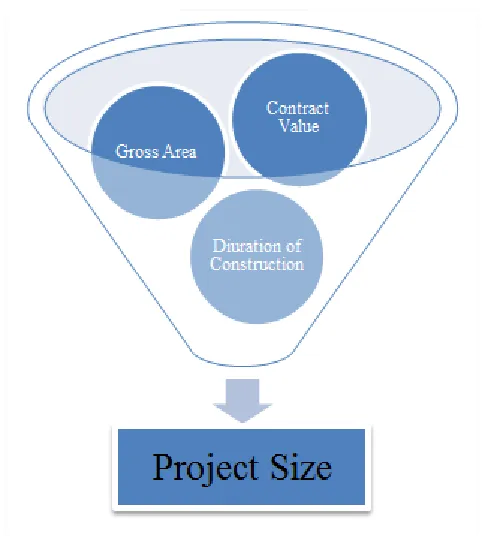
[image:40.595.198.439.395.663.2]It is predicted that the size of a project will have somewhat of an influence on the number of RFIs that it may be subject to. For the purpose of this research project, the project size is classified by a combination of its Contract Value, Gross Physical Area, and Project Duration, as outlined in the below sub-sections. While project size is a primary factor, each of these sub-factors will be taken on their own merits during the data collection as they are all project characteristics in themselves and can be analysed on their own.
[29]
i)
Contract Value
Upon tendering for a project, the contractor is given a scope of work that should specify every element of work that they are to complete for the client. This scope of work ties hand in hand with the project design documentation, the terms and
conditions of the contract and any other specific requirements that the client puts forward. In return, the contractor offers their price inclusive of all overheads and GST that encompasses the above and is perhaps negotiated to come to a final value, the contract value. Behind this single contract value is an estimated break down for all aspects of the project that was developed throughout the tender stage. This breakdown may or may not be requested by the client and will be used on a monthly basis to submit the contractor’s progress claims as an accumulated percentage complete for each line item of the breakdown.
The contract value of a project is an important characteristic that is used to gauge how large or significant a project is, and will therefore be incorporated into the case study. A projects contract value is a dynamic figure that usually increases in size throughout the duration of the project due to variations. It is important to consider at what stage of the project the contract value is recorded at for the case study, as the original contract values will tell a different story to the final contract values of each project. The change in contract value on a project could be closely related with the number of RFIs encountered; however this analysis is outside the scope of this dissertation. Therefore to make this study as practical as possible and due to the objective of this study being to reduce the RFI impact on future projects, only the original contract values are to be considered for each of the projects in the sample. The contract value is used simply to gauge the project size in terms of the analysis that will be conducted in the ensuing chapter.
ii)
Gross area (m
2)
Another factor that is used to gauge how big a project is its physical gross area. This is made up of the projects usable floor space and also includes any outdoor areas such as courtyards, car parks and landscaping. Having this is a project characteristic is important as the physical size of the build would indicate the amount of
construction that is needed, and with the great construction area there would potentially lay more risk of having RFIs.
A constraint that this project characteristic has is that there is nothing to distinguish between the portion of car parking areas or landscaped areas from the actual
[30]
figure 11 below, where these two projects both measure roughly 5,000 m2 however it is evident that project B would be a more prone to RFIs than project A providing they are similar in every other characteristic. The proportion of building space rather than outdoor area, is higher on project B however and would be at a higher risk to more RFIs, however according to the project characteristic of project size, both jobs are considered equally.
Figure 11 – Illustration of the constraint that is present for measuring project size
None-the-less it is still deemed worthy of using the gross area of the project as a characteristic to determine if there is actually a trend linking RFI numbers to projects’ physical area.
iii)
Duration of Construction (weeks)
The duration of construction is measured on a project by the development of the program, or schedule of events. The construction program will take into
consideration any milestone dates as stipulated in the contract, and appropriate manpower needs to be incorporated to meet the dates as required. The project duration includes float as to counteract the inevitable unforeseen delays such as inclement weather and other latent conditions.
[31]
likelihood that there will be fluctuations to the program and reductions or extensions of time will be applicable, and this could be caused by a number of factors. It is not uncommon for projects to be delayed significantly. For the purposes of this case study, the initial project duration will be recorded as well as the final adjusted project duration. For the most accurate results, both the initial and final durations will be recorded and an average taken to use for the analysis of data when relating the trend to the number of RFIs. The average will be taken due to the large variances on each project between the initial and final figures.
2.4.3
Project Type
The project type accounts for the various nature of construction methods that are used to achieve the end product. Due to the varying degrees of construction
methodologies, procedures and materials throughout the different types of projects, it is important to distinguish the project types that are likely to receive more RFIs than others. Some project types are simplistic in nature and are not hard for the design documents to be close to 100% adequate. Some project types have inherent
properties that mean perhaps significant amounts of RFIs are typically required, and it is these projects that need to be identified. The following sub sections categorize the projects that McNab Constructions commonly build into their project types, and these will form part of the case study in the ensuing sections.
i)
Civil
Civil projects are ones that involve majority of works on ground level of below, usually involving heavy machinery and/or the placement of concrete or bitumen. Civil jobs are inherently large in area and can be said to lack the complexity of detail that is found in general construction projects.
[32]
ii)
Commercial
Commercial projects are ones that are general construction projects usually
incorporating tilt panel construction or block work with facades. They include retail centres such as Woolworths’, Aldi’s, small shopping complexes, showrooms and CBD multi story buildings etc. These project types have heavy requirements for the finishes both internal and external.
Figure 13 –Photos of Commercial projects (McNab 2013)
iii)
Education
Education projects include school and university buildings consisting of single and multi-level construction, with clients from both private and government background.
[33]
iv)
Government
Government projects are varying in nature with only the client in common. Construction can vary from Pools, Courthouses to Affordable Housing Developments.
Figure 15 –Photos of Government projects (McNab 2013)
v)
Industrial
Industrial projects consist of warehouse type constructions, typically heavy duty structural steel portal frame with either cladded or tilt panel walls with large amounts of concrete floor area.
Figure 16 –Photos of Industrial projects (McNab 2013)
[34]
vi)
Residential/Retirement
Residential/Retirement projects are often multi-story developments however they can be an array low-set dwellings. The level of services throughout these projects is large with electricity, hydraulic and mechanical required throughout each unit or complex. There are lots of details throughout however much of these are replicated in each room and on each story.
Figure 17 –Photos of Residential/Retirement projects (McNab 2013)
2.4.4
Project Complexity (Number of Drawings)
Project documentation comes in the form of Plans, Specifications and Schedules that should detail every element of construction. The documents are maintained in project registers and all documents are susceptible to change where required. Drawings will be revised to show amended details if an RFI is issued that highlights a design deficiency or constructability issue. New documents can be issued and often a project will have many new documents by the end of construction than when it first started. This change in number of documents could be related to the number of RFIs that were submitted on the job however investigating this relationship falls outside the scope of these works, and has been highlighted as future studies in section 5.3 accordingly.
For the purpose of this case study, project complexity is measured by the number of drawings that the project has across all disciplines of design. The more drawings that the project has, indicates that there could be more risk for RFIs due to there being more room for error from the design consultants to miss something out or have a contradiction amongst the drawings. A large amount of project drawings could also be indicative of a thorough design.
[35]
2.4.5
Year of Construction
There is no doubt that certain elements of construction has developed significantly over the years and this can be put down to a number of factors. In a changing industry, it is therefore important to keep this case study as relevant as possible in the realms of today’s world, this will ensure the study stays applicable for as many years to come as possible.
As mentioned in section 2.2.2, the advancements in technology have had the most significant impact in the context of this case study. New technologies have impacted on the way that project correspondence is distributed, and the way design consultants produce their documents, and this bears a large influence on this dissertation. As such, parameters have been set on the available sample data to ensure projects are captured that share today’s similarities with respect to the construction industry. In today’s construction industry, there is more onus on the accuracy of
documentation than in the past where all aspects of the job may not have been documented. This would have had significant impact on what would and would not have been questioned in RFIs.
[36]
2.5
Root Causes of RFIs
RFIs are extremely simple in nature and can only be issued as a result of a select number of root causes. Even though these root causes (outlined in the sub sections below) are simple, they are very common in the construction industry and must be understood in order to reduce the impact of RFIs.
2.5.1
Design Deficiency
In an ideal world RFIs would not be needed as design drawings and specifications would be 100% adequate to not need any further clarification or information. During the construction phase however, it is inevitable that clarifications are needed, possibly from human error, or from design documentation that is incomplete,
conflicting or Erroneous (Mohamed, Tilley & Tucker 1998). Some of the design deficiencies that commonly result in RFIs are when the design;
• Contradicts itself between different documents
• Excludes information that are required for construction
• Incorrect elements of design
• Clash of services/members/details between the various design disciplines
• Nominated products are not ideal – better alternatives out there
Studies have been conducted (Tilley, McFallan & Tucker 1999) that provide lead indicators for measuring design and document deficiency and this is achieved through investigating drawing registers and RFI registers, however for the purpose of this study, realising the fact that design deficiency exists is sufficient.
[37]
Consultants, like other companies, have budgets to adhere to and trying to minimise expenditure is critical for them to remain profitable. This can come at the expense of how thorough their design documentation is. The consultants have a level of
comfort that even if they do not document every element of the project, the contractor will pick up the issue at construction stage. Essentially this means the consultant has got away with the expense designing the issue upfront. The performance of consultants in general is discussed in section 4.2.2 as part of the circumstantial factors behind RFI impact.
2.5.2
Constructability issues
Having a project that is easily constructible is a good thing as it means there are economic efficiencies due to the speed and simplicity of the project.
Constructability is more generally defined by Construction Industry Institute (1986) as “the optimum use of construction knowledge and experience in planning,
[38]
2.6
Impact of RFIs
-
Time & Cost
Studies show the man-hours spent on RFIs can be onerous for subcontractors, contractors, consultants and the client. It is easy to see how costs accrue rapidly when any given RFI typically has input from the following people at a minimum, all spending some amount of time to brain storm, collaborate, research, calculate, draft and finalise an RFI just to submit it and then respond to it. Figure 18 below
[image:50.595.118.497.294.672.2]represents the personnel that typically have some form of role to play in the RFI process.
[39]
The cycle time was estimated for a typical RFI in 1998 (Mohamed, Tilley & Tucker 1998) according to the time spent for each of the above personnel and taking into consideration their hourly rates, 17.3 hours totalling $1,379 was the cost calculated for completely processing an RFI. Considering just the contractors impact out of these figures (excluding subcontractor, superintendent, consultant hours), 6.44 hours were spent at a total of $486. The introduction of technology and general gains in efficiencies in the 15 years since this study, these costs will now be less; however the impact is evident none-the-less. This research project will not quantify the costs in today’s industry however it will use the assumption that there are significant costs associated with the RFI process, and look to create efficiencies to impact the RFI process and try to reduce the number of RFIs on future projects.
The common element between all RFIs is the associated lost-time as a result of the process. Compounding this above cost impact, is the tracking the RFIs through the use of the register and chasing responses, this consumes resources and therefore time and cost. In today’s society when organisations are typically under resourced, as opposed to over resourced, it is common for RFI responses to be late, vague, possibly missing important pieces of information and sometimes late or forgotten if they are not chased properly. Section 3.6.6 refers to Appendix G which is a further case study into late RFI responses on a particular project that forms part of the sample, referring to Appendix G shows the common late RFIs are on projects. These problems lead to the need for contractors to re-issue of the same (or similar) query on a revised RFI which exaggerates the time and cost spent to a higher degree (Mohamed, Tilley & Tucker 1998).
Another impact with regards to RFI responses is the issuing of additional
documentation as a result (Tilley, McFallan & Tucker 1999). This creates additional work on the administrative personnel to control these additional documents. Time is lost entering these documents into the document control system and issuing to the subcontractors and updating document sets in the office and on-site.
[40]
Figure 19 –Cost Implications throughout Project Life Cycle (Defranco 2010)
It is quite possible that the submissions of RFIs are not 100% efficient due to workloads of the project personnel. If an RFI sits with a particular person without action for even one day, this impacts the project as RFIs are critical to submit as soon as possible. Related to this is the efficiency that the contractor chases up the pending RFIs and keeps the communication flowing to the client/consultant that they are waiting for the RFI response.
RFIs also often lead to site instructions and therefore variations for additional work which is not favourable for the client as the contractor can add additional margin as the client has no real other option other than to approve the price for the additional work that results from the RFI. This will be discussed in section 2.7 below.
RFIs facilitate clarifications that are only technical in nature - that is, relating to the design drawings/specifications or the constructability of the design. Clarifications of any other nature (such as contractual issues or approvals) need to be separated from RFIs by using another form of correspondence. It is not uncommon for RFI registers to be miss-used due to their effectiveness to track and force prompt responses from the client. Contractors can stretch the definition of ‘technical’ and try to ask
contractual questions on an RFI, which leads to the rejection of the RFI which is not beneficial for any party as it costs time, money and resources (Mohamed, Tilley & Tucker 1998).
[41]
2.7
Flow-On Effect of RFIs
As mentioned in section 2.6, RFIs impact the ideal flow of construction some-what. In addition to the impacts as listed, the significance of the flow-on effects cannot be ignored.
If an element of unknown is questioned by the contractor, there is likelihood that as a result the contractor will be required to complete works that were not outlined in the original scope of works. In order for the contractor to undertake these works, they must be issued a ‘Site Instruction’, which is a contractual notification to proceed with the additional works. Related to this site instruction will be a variation to the contract. Depending on the nature of the site instruction, the variation may or may not need to be submitted and approved by the client to agree on the price, prior to proceeding with the works.
Figure 20 – Diagrammatic view of the flow-on effects of RFIs
[42]
[43]
3.1
Overview
In order to achieve the project objectives to minimise the impact of RFIs, the following methodology has been proposed and implemented.
• Obtain a sample of real projects to conduct a case-study.
• Set parameters that ensure the data obtained from the sample is relevant to
the study.
• Conduct a case-study on each of the sampled real projects and record the
relevant characteristics necessary for analysis.
• Tabulate the data obtained and present graphically; show basic statistical
information for each project characteristic in order to understand the sample projects.
• Manipulate the data to identify key project characteristics that are most
commonly evident on jobs that have had high numbers of RFIs.
• Filter the sample of projects to just those that demonstrate above key
characteristics. Further obtain data pertaining to each RFI issued for each of these projects.
• Using this specific information, develop strategies to minimise the impact of
[44]
3.2
Parameters of Sampled Projects
In order for the analysis of this study to be applicable for construction contractors to contemplate, it is important to consider the properties of the data and the project characteristics that make up the sample data, of which will have certain parameters. Considering these parameters, it will dictate the applicability of the results for companies other than McNab Constructions. If another company’s project type differs dramatically from the projects as described in the below parameters, they will be unable to utilise the results as the data will be out of context. For the scope of this study and for the time and resources available, it is intended for the purpose of McNab Constructions to utilise only as all of the data is obtained from their database, and hence is applicable for implementing the concluding strategies. The data obtained for this research project was made available by McNab Constructions, a mid-tier Construction company based throughout Queensland. McNab Constructions were established 16 years ago in Toowoomba where they were involved primarily in small agri-business projects. Over the years McNab have developed into a successfully expanding business that undertake projects for a multitude of clients throughout several construction sectors. “With over 80% of business from repeat clients, McNab is a civil and construction contractor of choice on Australia’s leading energy, resource and commercial projects” (McNab 2013). The parameters that govern the range of data available are set out below for each project characteristic, which sets a level of relevance that would be of benefit for other Contractors who are engaged in similar facets of construction.
The selected projects that the sample data was obtained from, exhibit the following parameters as outlined in each of the below sub sections.
3.2.1
Contract Type
Construct Only (Lump Sum)
The majority of McNab’s projects are engaged as Lump Sum Construct Only, with the exception of the occasional Design and Construct contracts. In order to gain the most benefit out of this study, it was deemed appropriate to only take into
consideration the Construct Only contracts. It would have been difficult to maintain an adequate sampl