1
Was the Flexible New Deal a more effective and efficient active labour
market policy than those it replaced?
William Davies
Department of Politics
1 Abstract
term unemployment creates a series of individual, social, and economic problems.
Long-term unemployment has been treated with a wide variety of public policies: this thesis focuses
on one approach - active labour market policies. Active labour market policies in the UK have
emerged in stages, as the welfare state has incrementally evolved from a largely
state-dominated and passive social security system to a market-led, work-first system where an
escalating percentage of benefit recipients are expected to be actively seeking work. The
theory and evidence underpinning these developments are explored in the first fives chapters.
In the last decade, British governments have sought the assistance of private and voluntary
sector organisations in the delivery of active labour market policies, using a system of
payment-by-results to encourage these organizations to move individuals into, and sustain, employment.
These are the core features underpinning the case study of this thesis, the Flexible New Deal.
The Flexible New Deal is a programme for all long-term unemployed persons, which operated
between the autumns of 2009 and 2011. In chapter six the objectives, structure and expected
outcomes of FND are detailed, and these are used to contextualize the core research problem.
With the use of data analysis and fieldwork the thesis seeks to answer whether the national
contracted market in labour market attachment has created a more effective and efficient
system for transferring the unemployed from benefits into work than the systems before it.
Within the broad parameters of the primary question, two further questions are considered.
The first, whether the contracting process can identify the best and worst providers in the
welfare market, and the second, whether work-first models of welfare-to-work are effective in
different economic environments.
Using careful data analysis, the results chapter shows that the Flexible New Deal did not meet
the government’s own objectives for the programme, and it did not outperform the
2
attaining the targets were much greater than others, and these differences are shown to be
largely reflective of the labour market characteristics of the operating areas.
The thesis concludes by returning to the theme of path dependence established in Chapter 4 as
the explanatory factor behind the reform of welfare-to-work programmes. It explains that
despite market-driven active labour market policies not meeting their own objectives, the
3
Contents
Introduction, Research Questions and Methodology 1
CHAPTER 1 Contemporary explanations of unemployment and welfare-to-work 19 CHAPTER 2 Active Labour Market Policies: Definitions and Development 41
CHAPTER 3 Do Active Labour Market Programmes work? A review of the literature 69 CHAPTER 4 Locating British employment policy within an Incremental Model of Historical Institutionalism 109
CHAPTER 5 Context and Potental: New Labour’s Welfare to Work Policies: Continuity or Change? 146
CHAPTER 6 The Flexible New Deal: features and outcome potential 190 CHAPTER 7 Flexible New Deal Results and Analysis 227
Conclusions: General and Specific 284
Annex A Delivery Directorate Performance Tables………301 Annex B Participant and Staff Interviews 303
Bibliography 310
List of Tables and Figures
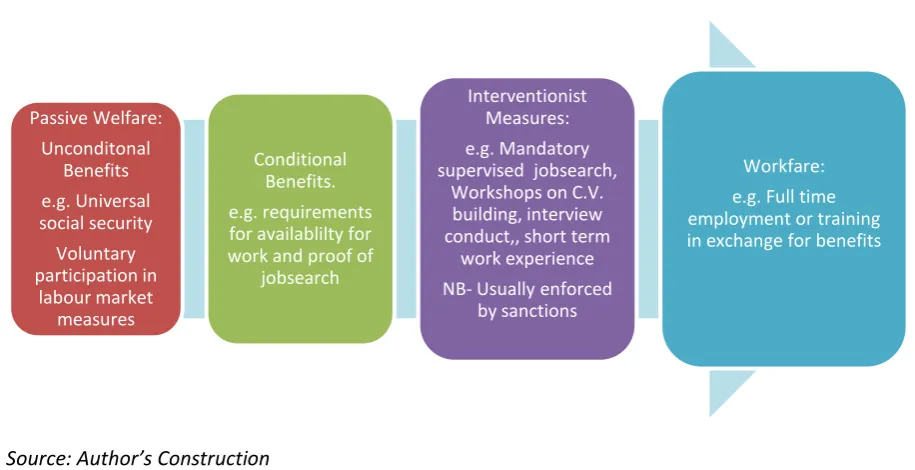
Figure 2.1 The Passive Active Policy Spectrum
4 Figure 5.1 Path Mechanics of New Deal for Young People
Figure 5.2 Job Entry Rate of New Deal for Young People participants
Figure 5.3 Sustainment Rate of New Deal for Young People jobs
Figure 5.4 New Deal 25+ Starts entering 13-Week employment
Figure 5.5 Employment Zones Starts entering 13-Week employment
Table 5.1 13- and 26-week Outcomes by active labour market policy
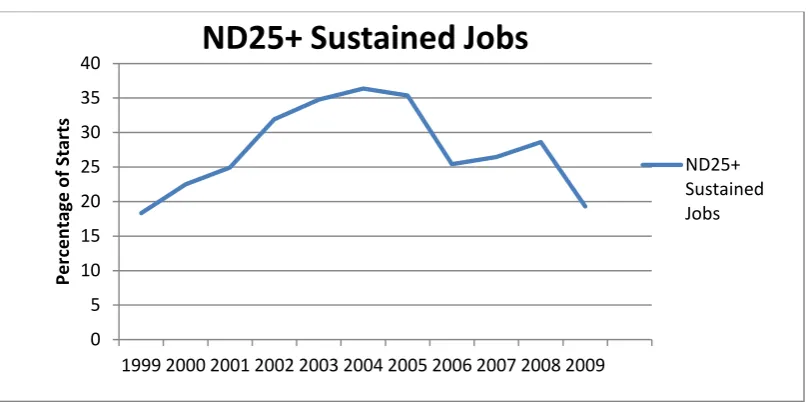
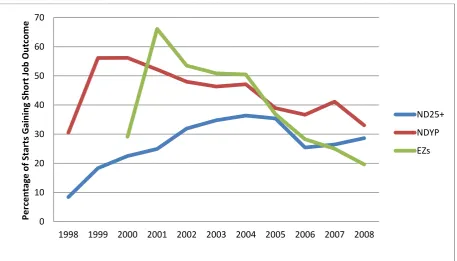
Figure 6.1 13-Week Active Labour Market Programme Outcomes over 10 years
Figure 6.2 Path Mechanics of Flexible New Deal
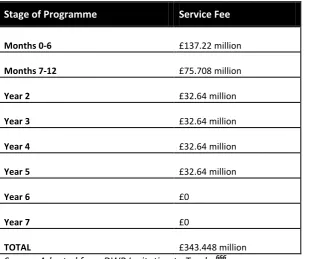
Table 6.1 Flexible New Deal Projected Service Fees during 7 contract years
Table 6.2 Gross Cost Per Participant of active labour market policies (£)
Table 6.3 Employment Zones 25+ 13-Week Outcomes
Table 7.1 Flexible New Deal employment outcomes totals and contract type totals
Table 7.2 Adjusted Flexible New Deal employment outcomes
Table 7.3 Adjusted Method Flexible New Deal outcomes as a percentage of national targets
Figure 7.1 UK Active Labour Market Policy Quarterly 13-Week Outcomes Since 2008
Table7.4 Active Labour Market Short Job Outcomes compared
Table7.5 Proportion of Programme Starts attaining 26-week employment by active labour market programme
Table 7.6 Proportion of Participants sustaining 26-Week employment
Figure 7.2 Contractor Short Job Outcome performance
Figure 7.3 Contract Zones 13-Week Outcomes Against the Programme Average
Table 7.7 Contract Area Performance and ILO Unemployment Compared
Figure 7.4 Contractor Short Job Outcomes and Local Claimant Count Unemployment Compared
Table 7.8 Correlation of Claimant Count Unemployment and Short Job Outcomes
5 Table 7.9 Relationship between Short Job Outcomes and claimant-vacancy ratios
Figure 7.6 12 Months Contract Area Vacancy Volumes and Short Job Outcome Volumes Compared
Table 7.10 Correlation of Contract Area population without qualifications and Contract Area Claimant Count
Table 7.11 Correlation of Contract Area Population Without Skills and Short Job Outcomes
Figure 7.7 Contract Area Skills Profiles and Short Job Outcomes
Table 7.12 Correlation between Short Job Outcomes and Proportion of JSA claimants out of work for two or more years
Table 7.13 Triangular Correlation Matrix of 13-Week Outcomes and key labour market variables
Table 7.14 Summary of correlations
Table 7.15 Intended and revised Flexible New Deal Service Fees by contract year
Figure 7.8 Service Fee expenditure before and after DWP Changes
Table 7.17 Flexible New Deal total expenditure
Table 7.18 Gross expenditure per participant of active measures (2005-2006)
Figure 8.1 Contract Area JSA-Vacancy Ratio and Contractor Short Job Outcomes
List of Abbreviations
6
CSF Critical Success Factor
DSS Department for Social Security
DWP Department for Work and Pensions
ERSA Employment Related Services Association
EZ Employment Zones
EZ25+ Employment Zones for Over-25s EZYP Employment Zones for Young People
FND Flexible New Deal
JSA Jobseekers Allowance
LJO Sustained Job Outcomes (26 Weeks) ND25+ New Deal for Long Term Unemployed NDYP New Deal for Young People
PAT Provider Assurance Team
PES Public Employment Service
PRaP Provider Referrals and Payments System
7
Acknowledgements
I would like to dedicate this thesis to the late, great, Mrs Kathleen Wilkin. A wonderful woman without whose support this research would have been impossible. She is deeply missed.
I would like to thank my supervision team, Dr. David P. Dolowitz and Professor Jonathan Tonge for the enormity of their knowledge, insight, and attention to detail throughout the entirely of this project. My colleagues in the Departments of Politics at The University of Liverpool, and Liverpool John Moores University, have my heartfelt thanks for the kindness and knowledge they have bestowed, as well as the outstanding teaching opportunities that I am fortunate to have had. Of my fellow postgraduates, I am indebted to Ben, Unn, and Sophie for every day sharing offices, ideas, and coffee; and Dan and Mark, for their friendship and clarity of thought.
To my mother and father, Nicky and Murray, I am eternally grateful. The love, support and encouragement they have shown throughout the years I cannot begin to repay. For my mother’s part, I am especially grateful for the requited requests for bail-outs; those I will attempt to repay. For my father’s part in this, I am deeply grateful for his painstakingly thorough proofing of the thesis, boldly unsplitting infinitives like no man before. He bears no responsibility for any in this work that remain split.
To Carla Marie Hawkins, for her boundless patience, affection and understanding I undoubtedly do not deserve. Thank you.
1
Introduction, Research Questions and Methodology
The benefits system in the United Kingdom has changed over the past three decades; the most substantial transformation is evident in the delivery of unemployment benefits. In this policy area, a once relatively passive welfare system has come to be regimented by interventionist active labour market programmes. The prime objective of these schemes is to move individuals from out-of-work benefits into unsubsidized employment.
These policies are now widely accepted as integral to, and effective at, managing levels of unemployment in the labour market by assisting people to move from benefits and into work.1 In this, there has been a pattern to the systemic reforms. Since the end of the 1970s unemployment policies have become increasingly focussed on unemployment at the individual rather than macro-economic level, where as Lowe phrases it the ‘abandonment of ‘full’ employment [...] reduced the active role which government played in the promotion of individual welfare.’2 As the state has drawn back from delivering ‘full employment’ in the traditional (Keynesian) sense, it has become more interventionist in the lives of the individual benefit recipient, while decreasing its role as deliver of unemployment services. This is shown through two observable trends presented in this thesis. First, thatthere has been a continuous tightening of eligibility tests for benefits and escalation of compulsion directed at individual active labour market programme participants.3 Second is there has been a movement towards a diversity of delivery arrangements in welfare-to-work initiatives.4 With regard to the former,
1
OECD (2006) General Policies to Improve Employment Opportunities for All, OECD Employment Outlook 2006, OECD, Paris, p71
2
Lowe, R. (1999) The Welfare State in Britain Since 1945, Second Edition, Palgrave Macmillan, Basingstoke, p339 3
Trickey, H. and Walker, R. in Lodemel, I. and Trickey, H (2000) An Offer You Can’t Refuse? Workfare in an International Perspective, The Policy Press, Bristol, p186
4
2 services and benefits have gradually moved away from universal and (relatively) passive cash transfers towards a complex system of conditionality (which mandates a series of activities, including work, in order to merit continued benefit receipt). The latter is demonstrated by the increased role of the private and voluntary sector in delivering a ‘contracted’ quasi-market in welfare-to-work services.
These themes are connected by the personalisation of the welfare state, where the problem of unemployment is ever-more bound with the deficiencies of the individual, in turn, decreasing the direct responsibility of the state. The thesis will demonstrate the proliferation of these tendencies since they represent a fundamental change in the relationship between the state and the individual. Now an individual’s right to receive benefits is being matched increasingly with greater levels of personal responsibility. This is itself being complemented by a growing use of contracted service providers for the delivery of unemployment related policies.
The situation in the UK now is one where the government contracts out active labour market policies for delivery by the for-profit and voluntary sectors, who are rewarded on their performance at moving individuals back to the labour market by the fastest possible route. The policy manifestation of this is the Flexible New Deal, the case under inspection for this thesis, and the last major welfare reform of the Labour government, implemented in 2009.
Research Question
In October 2009, the Flexible New Deal (FND) began to replace a number of existing welfare-to-work programmes and introduced private contractors to handle the majority of cases of long-term claimant unemployment. In some areas there was to be direct competition between contractors, in others a regional monopoly was in operation. As will be explored in successive chapters, both theory and
University, available at http://www.spsw.ox.ac.uk/fileadmin/static/Espanet/espanetconference/papers/ppr.11A.OB.pdf.pdf
3 practice have suggested that the national quasi-market of work-focussed employment services should produce improved employment outcomes. This is premised on the expectation that ‘a quasi-market [in employment policy] will deliver more efficient, effective and de-bureaucratised employment services.’5 This hypothesis will be tested using comparisons between the Flexible New Deal and those programmes it was to replace.
The core research question is:
Has the implementation of a national contracted market in labour market attachment created a more effective and efficient system for transferring the unemployed from benefits into work than existed before the reform was introduced?
To address this question, the research will compare the Flexible New Deal to active labour market policies that existed prior to the 2009 welfare reforms. Greater effectiveness was treated in the narrow manner of moving more individuals into 13-week employment than existing programmes, and greater efficiency in the economic constraints of being as effective using less financial resources.6
Within the parameters of the broader research question are two sub-questions:
1. Does contracting competition between providers serve to identify the best, and worst, suppliers in the quasi-market?
2. Is the emphasis on rapid labour market attachment effective in all labour markets?
These questions are of value because there has been considerable academic insight into active labour market policies, but there has been limited attention on the effects of contracting out welfare-to-work programmes in the UK, and the field remains in its infancy. In summarising the evidence behind quasi-markets in employment programmes in 2008, Bredgaard and Larsen explain that ‘the efficiency gains and cost-savings, which are spurring the introduction of quasi-markets, are still largely unknown and
5
Bredgaard, T, and Larsen F. (2008) Quasi-Markets in Employment Policy; Do they deliver on their promises? Social Policy and Society v7.3, p341
6
4 undocumented.’7 On the specific case study in question, the Flexible New Deal, the one research report conducted deals with neither effectiveness nor efficiency in a holistic manner. As a qualitative study commissioned by the Department of Work and Pensions,8 the appraisal conducted by the Policy Studies Institute focussed heavily on customer’s experiences of particular processes with the programme in the middle of programme operation, rather than a full analysis of programme outcomes. This thesis will therefore contribute to debate concerning the effects of contracting out by providing an, at present, unique data analysis of a major government employment programme.
Within this broader national appraisal of the Flexible New Deal there is an opportunity to explore how the contracting process at the local level, and identify the factors that determine the performance of contracted agencies. Specifically, it permits an exploration of one of the primary purposes of contracting: to identify and maintain the most effective contracting agents, and remove the worst.9 Many accounts of the (re)tendering process in contracted employment services have been offered,10 but little has been written about the challenge of ‘picking winners’.
Finally, the timing of the programme and the spatial analysis provide an opportunity to explore the effects of work-first during a period of recession, where historically these programmes have been evaluated (and celebrated) during periods of economic expansion.11 Because work-first programmes are now the norm in the UK, the effectiveness of these in weak or constricted labour markets is profoundly important.
7
Bredgaard, T, and Larsen F. (2008) Quasi-Markets in Employment Policy; Do they deliver on their promises? Social Policy and Society v7.3, p351
8
Vegeris, S. et al. (2011) Flexible New Deal Evaluation: Customer Survey and Qualitative Research Findings, DWP Research Report no.758, Policy Studies Institute and IFF Research, TSO, London
9
DWP (2008) DWP Commissioning Strategy, DWP, Cabinet Office, London, p21 10
For instance, see Eardley, T. (2003) Outsourcing Employment Services: What have we learned from the Jobs Network? Social Policy Research Centre, University of New South Wales, pp5-8, or Finn, D. (2008) The British Welfare Market: Lessons from Contracting Out Welfare to Work Programmes in Australia and the Netherlands, Joseph Rowntree Foundation, London, pp18-19
11
5 How these research questions are to be broadly addressed in this thesis is explored in the following section.
Methodology
This section outlines and justifies the methodology the project used to address the core research question. It will explore a number of available methods of public policy analysis, and detail how the predominantly quantitative approach will be executed. Before doing so, it is pertinent briefly to mention the use of documentary sources. As Chapters 5 and 6 are premised on the development of active labour market policy, the chapters use an array of green and white papers, government legislation, and reports to the Work and Pensions Select Committee. A range of academic journal articles and reports dealing with the welfare state and its active labour market policies have been used to help supplement the primary documentation. The goal has been to build a full picture of programme structure and anticipated consequences, and these anticipated consequences informed the quantitative and qualitative methodology. In particular, the specific design of the programme and its distinguishing features must be accounted for, as is necessary for appropriate comparisons with simultaneous active labour market policies. As Burnham et al., argue ‘careful use of a wide range of documentary material is one of the most reliable methods open to the political researcher and provides an opportunity for the production of authoritative studies, even if the ‘definitive account’ remains out of reach.’12 To compensate for the inevitable discrepancy between what the documents say, and what is actually occurring in employment service offices, qualitative research was undertaken to inform the case study in question.13
The Case Study
The research project is a case study of the Flexible New Deal. The use of case studies is widespread in social science research. This is because they enable the researcher to study a single policy area in depth,
12
Burnham, P. et al. (2004) Research Methods in Politics, Palgrave Macmillan, Basingstoke, p188 13
6 utilising both quantitative and qualitative data to build a comprehensive picture of the policy in question.14 According to Denscombe, this singularity is their defining feature where ‘case studies focus on one instance ... of a particular phenomenon with a view to proving an in-depth account of events, relationships, experiences or processes occurring in that particular instance.’15 The common criticism of case studies is equally associated with their singularity, that ‘explanations and generalisations are limited to the particular case study.’16 The findings for the case in this research project will not be suitable for generalisations concerning all active labour market policies, but the data analysis will be replicable for future studies of active labour market policies in the UK.
The case under study in this project, the Flexible New Deal, is a public policy. What is meant by public policy is an area of dispute in the literature, and the debate too large to warrant discussion at this stage.17 A sufficient explanation is offered by Goodwin et al. who state that ‘Ruling is an assertion of the will, an attempt to exercise control, to shape the world. Public policies are instruments of this assertive ambition.18 Public policies are therefore an exercise in control, introduced in order to achieve something, or prevent something occurring. For Goodwin et al, ‘Policy gets made in response to problems.’19 Such problems range from the multi-layered, such as low national life expectancy, to the specific, such as an excessive number of road traffic accidents. As is common amongst the public policy literature however, problems do not exist until they are identified as such, and importantly that public policy-making is ‘In part … a matter of transforming sheer ‘puzzles’ into ‘actionable problems;’ if no solution can be envisaged, then for all practical purposes there simply is no problem.’20 In the case of this research project, a clear and identified problem exists in the form of and volume of long-term
14
Burnham, P. et al. (2004) Research Methods in Politics, Palgrave MacMillan, Basingstoke, p53 15
Denscombe, A. (2003) The Good Research Guide for Small-Scale Social Research Projects, Open University Press, Maidenhead, p32
16
Burnham, P. et al. (2004) Research Methods in Politics, Palgrave MacMillan, Basingstoke, p55 17
For a fuller discussion of the term see Hill, M. (1997) The Policy Process in the Modern State, Prentice Hall, London, pp7-18 18
Goodwin, R. et al.in Moran, M. et al. (eds.) (2006) The Oxford Handbook of Public Policy, OUP, Oxford p3 19
Ibid, p26 20
7 unemployment in the UK. Correspondingly, there is an obvious desire amongst policy makers to a) recognise it as a problem, and b) seek a solution.
Having established identifiable problems and solutions, policy analysis enables the researcher to ‘discover what governments do, why they do it, and what difference, if any, it makes.’21 In particular, policy analysis facilitates the exploration of ‘what is ‘working’ and what is not’ and consequently what refinements, policy improvements and policy learning’ could be achieved.22 The analysis of public policy therefore renders the possibility of understanding whether the solutions, in this case the Flexible New Deal, to the given problem of long-term unemployment, have achieved their initial aims.
General Method
Addressing the primary research question requires the analysis of quantitative data. As the most appropriate method for evaluating the performance of an active labour market programme is to measure the number of individuals moving from social security to employment, the use of quantitative information is essential. The numbers moved from employment to work are meaningless without either a) an understanding of common performance levels, or b) performance objectives. Both of these elements are key to the method in this thesis. The level of performance which is expected from the policy case study, FND, has been outlined in three quantifiable ‘Critical Success Factors’ assigned to it by the Department of Work and Pensions, which were:
Suppliers will meet or exceed the Short Job Outcome targets (13 weeks employment) agreed in their contract;
Suppliers will meet or exceed the Sustained Job Outcome targets (26 weeks employment) agreed in their contract;
21
Dye, T. (2011) Understanding Public Policy, 13th Edition, Longman, Harlow, p5 22
8 Suppliers will deliver a service that represents excellent value for money and a step-change improvement in performance compared with previous programmes; 23
It is therefore clear that these objectives will require the analysis of performance data of the programme itself, of other programmes, and expenditure to assess the efficacy of the quasi-market in employment services.
To appreciate fully the operation of the Flexible New Deal’s welfare market requires an exploration of the programme first at the national level to evaluate its aggregate efficacy. This will serve to assess whether the programme met its Critical Success Factor objectives, and is also necessary for evaluating the programme against the other legacy programmes explored in this thesis to appreciate the FND’s added value. Because the programme has been contracted out to a number of different provider organisations, it is also necessary to explore the programme at the local level to evaluate spatial differences in provider performance. This will offer insight into the competition elements of private provision and address the two research sub-questions of the thesis. In accordance with the case study analysis, this will produce a fuller picture of the Flexible New Deal.
Quantitative Data Collection
The quantitative data collection process involved collecting, processing and adapting a selection of government and independent datasets. All data used in this project are interval/ratio data, which permitted a degree of adjustment not available to other categories of data.24 Most of the data used is ‘whole population’ data rather than sample data, which largely eliminated the need for tests of statistical significance tests that are necessary when attempting to apply a sample to an entire population. The fundamental source of Flexible New Deal information was the Delivery Directorate
23
DWP (2008) Flexible New Deal Phase 1 Invitation to Tender: Provision Specification and Supporting Information, DWP, p15 24
9 Report. This data set is full population data, pertaining to every individual who participated in the Flexible New Deal, making systematic sampling unnecessary. As John argues, the larger proportion of the population included in the dataset, the greater the strength of generalisations derived from the data.25 In this case, the Delivery Directorate report includes information on all 407,690 participant spells on the Flexible New Deal. The data was gathered by the Flexible New Deal prime provider organisations that were required to record and report accurate information to the Department of Work and Pensions concerning a selection of activities, including the volume of participants registered to their organisation, their labour market status, and the destinations of the customers upon exiting the programme. This applied to each of the contractors in each of the geographic districts of FND operation (henceforth known as Contract Zones).
It is important to note the discrepancy between the data input, and the data output. As John reminds, ‘official information is what politicians and bureaucrats wish to make public.’26 The rich variety of data provided to the DWP by providers was curtailed when consolidated into the national database. The dataset included total participants in each contractor in each area joining the programme, the number entering a short-term job (at least 13 weeks), and the number entering sustained work (at least 26 weeks). These have been publicly available on a monthly basis through the Delivery Directorate Report on contracted employment programmes, with the final statistics released in November 2011.27 However, a number of characteristics were omitted by the DWP in their consolidation of the data that could have contributed further to the understanding of the Flexible New Deal, such as the gender of participants, and the job entry rate of each contract area.28
The information in the Delivery Directorate Report was recorded against the robust, unambiguous criteria outlined above and then crosschecked and revised in a number of ways by the Department of
25
John, P. in Marsh, D. And Stoker, G. (eds.) (2002) Theory and Methods in Political Science 2nd Edition, Palgrave Macmillan, Basingstoke, p218
26 Ibid. 27
DWP (2011) Delivery Directory Performance Report, DWP, available at
http://statistics.dwp.gov.uk/asd/index.php?page=ddfnd [accessed 11/04/2011] 28
10 Work and Pensions. First, the data was authenticated by Jobcentre Plus to verify that participants had exited Jobseeker’s Allowance. This process was automatic, and used repeatedly to check whether the customer has left the JSA for a sufficient period to merit the job outcome criteria. A DWP inspectorate, the Provider Assurance Team (PAT), undertook the second check. Specifically, the PAT visited individual providers and manually checked their physical records.29
To provide a richer understanding of the data, further data sets were collected to provide information on the levels of supply and demand in the contract area labour markets. On the demand side, ILO unemployment, Claimant Count, and Claimant to Vacancy ratios were used to match provider performance with the local labour market. On the supply-side, data regarding benefit receipt length, and educational attainment were used in attempt to evaluate the quality of supply within the area. The labour market data was obtained from the Nomis Local Labour Market system.30
Analysis
The review of the literature in Chapter 2 highlights a selection of tools deployed to evaluate active labour market programmes. It is observable that most have utilised quantitative methods to assess impacts on aggregate employment, unemployment and wages. This project will continue the trend by using data analysis to quantify the outcomes of the Flexible New Deal, and make inferences of relative success or failure by triangulating outcomes with expectations from the literature and quantified outcomes of comparable simultaneous active labour market policies.
Quantitative data analysis presents many methodological choices and opportunities for understanding unemployment programmes. In this project, the method of analysis was determined by the nature of
29
Department of Work and Pensions (2010) Provider Referrals and Payments System Q&A, DWP, available at
http://www.dwp.gov.uk/docs/prap-qanda.pdf [accessed 03/10/11] p6 30
11 the available data. As Heckman argues in his detailed discussion of ALMP evaluation methods, ‘The choice of an appropriate [method] should be guided by the economics underlying the problem, the data that are available or that can be acquired, and the evaluation question being addressed.’31 The absence of certain key pieces of information, such as job finding rates, or participant tracking, prevented the longitudinal-based methods like ‘propensity score matching’32, or an ‘event history analysis’ approach,33 which have been deployed to some effect in evaluating impacts of employment policies and duration of these interventions. These data allow for the measurement of net impact by creating counter-factual scenarios, which allow the comparison of the treated client group against the untreated.34
Submitted formal requests for access to longitudinal data were rejected by the DWP on two occasions on data protection grounds. The lack of longitudinal information does not inhibit a comparative analysis of active measures, as a direct quantitative approach based on total employment outcomes can be achieved. A precedent for this approach is found with Considine’s approach to evaluating the Australian Jobs Network, which used the official labour market outcomes of public, private and voluntary agencies over time to assess the relative impact of a private sector led welfare-to-work scheme.35 Like Considine’s study, the analysis will assess the employment outcomes of agencies within the programme, and these will be evaluated against the government performance targets. The findings from the Flexible New Deal data analysis will, using the same method, be compared with three other existing programmes with similar client groupings, to observe any relative impact. This is necessary to address whether the Flexible New Deal demonstrated a tangible improvement on existing arrangements that it was to replace. The existence of a number of welfare-to-work programmes operating simultaneously,
31
Heckman, J. Et al. (1999) The Economics and Econometrics of Active Labor Market Programs, in Ashenfelter, O. and Card, D. (1999) The Handbook of Labor Economics Volume 3, Kenneth Arrow, Stanford, p1868
32
For a discussion see Bryson, A. et al. (2002) The Use of Propensity Score Matching in Active Labour Market Policies,
Department of Work and Pensions Working Paper 4, HM Stationary Office, London 33
For a discussion see Allison, P. (2004) in Hardy, M. and Bryman, A. (eds.) (2004) Handbook of Data Analysis, Sage, London, pp369-386
34
For one example see Belzil, C. (1995) Unemployment Insurance and Unemployment Over Time: An Analysis with Event History Data, The Review of Economics and StatisticsV77.1 pp. 113-126, for another, see DWP (2012) Early Impacts of Mandatory Work Activity, Department of Work and Pensions Ad Hoc Analysis, DWP Publications, available at
http://statistics.dwp.gov.uk/asd/asd1/adhoc_analysis/2012/early_impacts_mwa.pdf [accessed 17/06/2012] 35
12 with similar client groups, offers a valuable counter-factual. Using an array of inputs from the Department of Work and Pensions’ own models of how programmes, client groups, and expectations are different, an assessment of any benefit is possible. A detailed explanation of the specific methodology behind the data analysis is discussed at length in Chapter 7, but a brief description is offered here.
The data has been treated in a two-step process. The first leaves the data in its final format, but divides it into contract area types to identify the effects of competition in the quasi-market. The second stage required a minor remodelling to account for the abrupt termination of the programme by the Coalition government in October 2011 and offer a more reasoned description of programme performance. The remodelling process was detailed in Chapter 7. Using both standard and remodelled datasets, trends were explored in the national and contractor-level results. To help address the core research question, the Flexible New Deal outcomes were carefully compared with national targets and against other simultaneous active labour market policies to observe whether such a ‘step-change’ (quantified in Chapter 6) has occurred. Further exploration has occurred at the contract area level, where results were evaluated in light of local labour market conditions using the data sets described above. These have provided a more holistic understanding of where and how the programme has performed strongly. The analysis of data at the contract level served also to indicate why some contractors or contract areas have performed better or worse than others have. The ‘why’ was explored further using qualitative data and survey work by other researchers.
13 Qualitative Data
As part of understanding the Flexible New Deal, the use of qualitative data was necessary, but only at a supplementary level. For the purposes of the case study qualitative data is deployed primarily to understand whether the principles and objectives outlined in national and local policy documents are reflected in the services received by customers. As Bryman argues, a more complete response to the research question can be facilitated by using one method in support of another, because one method may leave knowledge gaps that the other can fill.36 A stronger grasp of detail through qualitative data is pertinent to understanding the Flexible New Deal, as often what programmes were believed to be doing at the national level may not be reflected at the customer or provider level; what may be outlined in official policy documents may not be occurring on the ground. Secondary qualitative data produced by the Vegeris et al. at the Policy Studies Institute was used specifically for Chapter 6 in order to verify that the regulations intended by policy documents were being applied in practice.37
In addition to the utilisation of secondary qualitative data to bolster the policy documents, a handful of face to face interviews were pursued to give the researcher a stronger grasp of the day to day of a customer’s FND journey, and close any gaps in the researcher’s knowledge of FND operations. The interviews with FND participants and a member of staff were achieved through an opportunity-sampling approach. There is precedent for this approach; in attempting to interview men in the hidden economy, Sixsmith approached men as they left the Social Services offices as she recognised that this was a logical approach for locating the relevant individuals.38 The four interviews were obtained through contact with participants on leaving provider offices. The content of these interviews is used sparingly in the thesis, as the qualitative data is intended only to have a supporting position in the project. Relevant quotes are therefore included where necessary, in manner advised by Critcher et al.: ‘Where these [qualitative data] are adjuncts to quantitative data, the usual strategy is to extract some quotations or case histories
36
Bryman, A. (2012) Social Research Methods 4th Edition, Oxford University Press, Oxford, p637 37
Vegeris, S. et al. (2011) Flexible New Deal Evaluation: Customer Survey and Qualitative Research Findings, DWP Research Report no.758, Policy Studies Institute and IFF Research, TSO, London
38
14 as exemplification of numerical findings.’39 The questions used for both the participants and staff are included in the annex.40
Summarily, using policy documents and quantitative research the research methodology was suitably equipped to construct a case study to address the primary research question of whether the FND would surpass the performance of legacy employment programmes.
Chapter Outline
Finally, having outlined the methodological approach of this thesis, this introduction turns to a brief description of each chapter to show how a staged approach to the thesis will illuminate what, why, and how the policy under review, the FND, emerged and whether it could match the objectives assigned to it by policy-makers. The thesis will address the primary research question through a staged approach. First, it will develop context by examining the historical development of British welfare policy, considering why particular unemployment related programmes have emerged and what effects these have on levels of unemployment. Based on this review, the thesis shows that particular policies have been favoured over others, considering both why this has been the case and what the implications are for the long-term unemployed. Third, it turns to examine policy in practice by exploring the performance of three schemes implemented in the UK to act as a benchmark for the national quasi-market. Finally, it turns to the case in question, the structure and outcomes of the Flexible New Deal at both national and local levels, comparing the performance against both government targets, and the previous programmes FND was intended to replace.
Chapter 1 positions the research question on active labour market policy by establishing the general causes of unemployment and the specific causes of long-term unemployment. It will proceed to examine the effects of unemployment on the individual, the state, and the economy, and address why
39
Critcher, C. et al. in Williams, F. et al. (1999) Welfare Research: A Critical Review, UCL Press, London, p76 40
15 sustained periods of unemployment are a commonly identified policy problem. These are fundamental to understanding what the capabilities and limitations of any active labour market policies are, why they are regarded as necessary, and what types of unemployment active labour market policies are designed to resolve.
Chapter 2 will introduce the concept of active labour market policies. Active labour market policies are defined and situated along a continuum of interventions, with the meanings of welfare-to-work and workfare outlined. The chapter will continue by looking at where these concepts have their origins and explain why active labour market policy has come to be viewed as an effective response to unemployment. In particular, the burgeoning popularity of their implementation is explored, with a detailed examination of the contextual necessity for their emergence; including the economic, social, and political contexts supporting their use.
Chapter 3 is a detailed discussion of the academic literature on active labour market policies in developed economies, exposing the key divisions of opinion on the necessity and effects of active measures. It will evaluate what the apparent effects of active measures are, and will look at particular components commonly featured in active measures, such as conditionality, work-first and human capital development approaches, and the use of contracted delivery to discover whether these trends expose positive effects of active interventions. Explicitly, they will address the literature on whether contracting out will deliver higher levels of employment and lower levels of unemployment. Additionally, it will explore the unintended consequences that have been observed in the labour market that are the result of these programmes. This evaluation of the literature will provide some explanations and expectations of the specific active measures discussed in Chapters 4, 5 and 6.
16 point away from post-war welfare consensus - specifically in its rejection of full employment as a core objective of macroeconomic policy.41 The historical analysis reaches its terminus with the last major welfare reform passed by the Brown government, the Flexible New Deal (FND), which at that point was the largest active labour market programme seen in the United Kingdom.42 The adjustments to welfare policy over this period are situated within the theoretical framework; which combines the policy-making theories of historical institutionalism with political incrementalism. The chapter shows that despite conflicting evidence for the efficacy of certain types of ALMP shown in Chapter 3, there is a clear path apparent in the types of policies that have been selected by British governments. This serves to understand why policies that are not proven to be demonstrably more effective than their alternatives, can often get locked in to policy preferences.
Chapter 5 provides a detailed account of the comparative elements to the thesis, and alternative positions that the British government has pursued. The chapter examines firstly, how the Labour Party adjusted the social security and employment systems, and then it moves to examine three specific policies. The first is New Labour’s flagship active labour market policy, the New Deal for Young People (NDYP); the second is Labour’s measures for over 25s, the New Deal for the Long-Term Unemployed (ND25+) and the third, Employment Zones (EZ). In each of these cases the origins, objectives and structures will be explained, with particular emphasis on the role of conditionality and different delivery models in each. It will proceed to discuss a selection of programme evaluations for each initiative, and provide a decade of data on programme performance in order to project the expected from the Flexible New Deal. As legacy programmes operated by the state and private sector on differing scales, these programmes supply comparable benchmarks against which the research question and case study can be assessed.
41
Kavanagh, D. (1997) The Reordering of British Politics: Politics After Thatcher, Oxford University Press, Oxford, pp121-122 42
17 Chapter 6 deciphers the structure of the Flexible New Deal, explaining the incentives behind the contracting process and how, theoretically, this might influence an improvement in employment outcomes and efficiency. To ground the research question, Chapter 6 explores the primary objectives of the FND and how these were quantified for the data analysis. These quantify the explicit expectations of private sector programme performance that are assessed in the data analysis of Chapter 7.
Chapter 7 is a detailed account of the methodological approach to the data analysis, and an analysis of the results of the data gathered. The programme data obtained from the Department of Work and Pensions explored and is used in conjunction with labour market data from the Nomis local labour market data bank to evaluate the Flexible New Deal. The chapter turns first to explain how the programme performed against its original targets. In order to address directly the core research question, it will compare the results of the Flexible New Deal against the programmes discussed in chapter 5 using identical outcome measures. Having address the primary research question, the chapter proceeds to evaluate differences in performance at the local level, and discuss the labour market features that account for the variance in local employment outcomes. Finally, it will account for why the results of the Flexible New Deal were significantly off-target.
18 Conclusion
Active labour market policies are now a core part of the UK’s labour market strategy in pursuit of lower levels of unemployment. The Flexible New Deal was at the cutting edge of ALMP, using private contractors in a deregulated environment to improve the employment outcomes beyond those achieved in the past. The government assigned clear targets to benchmark these achievements, and through data analysis, the programme performance can be established against these targets. Using careful comparisons of multiple programme datasets, the methodology is suited to address the primary research question of whether the shift to a national quasi-market in employment services resulted in a more effective policy than before. The methodology is also equipped to address the supplementary questions concerning the efficacy of work-first in different labour markets, and whether the contracting process is capable of identifying suitable providers for future contracts.
19
CHAPTER 1
Contemporary explanations of unemployment and
welfare-to-work
The prime objective of all active labour market programmes is to move people from unemployment into work; it is therefore essential to understand what the government means by the term ‘unemployment’. Exploring this concept requires an appreciation of the primary causes of unemployment, and what if any, measures might be suitable for efforts to reduce the number and types of groups becoming, and remaining, unemployed. To begin addressing these issues this chapter will present a definition of unemployment and then a range of commonly recognised causes of unemployment, particularly the nature and causes of long-term unemployment. This will subsequently provide the context for understanding the proliferation and use of active labour market programmes (ALMPs) as state mechanisms designed to ameliorate long-term unemployment.
The challenge facing all programmes designed to help the unemployed re-enter the labour market is identifying where and why the labour market is unable to integrate them. This section will outline the definitions of unemployment, some general principles of labour market economics and the widely held views of the causes of unemployment.
What is unemployment?
Unemployment has a variety of different meanings and measures and the International Labor Organisation (ILO) provides a basic definition:
The "unemployed" comprise all persons above a specified age who during the reference period were:
(a) "without work", i.e. were not in paid employment or self-employment;
20 and
(c) "seeking work", i.e. had taken specific steps in a specified recent period to seek paid employment or self-employment.43
In essence, unemployment is summarised as a status in which a person is not in paid work, but is able, available and actively looking for work. How unemployment is actually measured varies over time and location, and thus making comparisons within and between countries difficult. In the UK there are two measures used by governments and statisticians. The first is known as the Claimant Count, which calculates the number of people on work-related unemployment benefit, the Jobseeker’s Allowance, and does not include those claiming other benefits.44 Because it counts benefit recipients rather than the total number looking for work, governments often appear to prefer this measure since it leads to substantially lower unemployment counts. The second, consistently higher measure of unemployment is provided by the Labour Force Survey, which measures the number of people available, looking for, and willing to work but not in work. These figures include all individuals seeking work regardless of whether they are in receipt of JSA. It is important to note that neither measure includes all economically inactive individuals, for example, those who have voluntarily retired are not considered unemployed, nor is anyone on the wider measure if they are deemed not to be actively seeking employment.
Causes of Unemployment
Just as there are a number of different definitions of unemployment, a range of causes are identified in the literature. These can initially be cast in two different categories, equilibrium and disequilibrium
43
ILO (1982) Resolution concerning statistics of the economically active population, employment, unemployment and underemployment, adopted by the Thirteenth International Conference of Labour Statisticians, International Labour Organization, [available at] http://www.ilo.org/public/english/bureau/stat/download/res/ecacpop.pdf [accessed 10/11/10] 44
ONS (2011) Claimant Count: Topic Guide, UK National Statistics Publication Hub [available at]
21 unemployment. The former is (theoretically) where supply of labour matches demand for labour, and the latter is where supply and demand are out of step.
Equilibrium unemployment, commonly associated with economist John Maynard Keynes, exists where in the long-run supply may match demand, but large scale unemployment persists. Disequilibrium unemployment on the other hand can be accounted for where there is a mismatch between the number of vacancies in the labour market, and the number of workers available for them. It is important to note at this stage that in any theoretical approach, equilibrium between supply and demand does not mean unemployment is zero.45 The features of both types are explained in the following sections, as is an explanation of why zero unemployment does not exist when the labour market is in equilibrium.
Different models have emerged to try to account for these two broad categories of unemployment. The classical approach to unemployment contains many of the features of disequilibrium unemployment. In the classical model, wages are the key determinant to understanding the cause of unemployment. In this approach, the idea of a ‘labour market’ is at its most appropriate because it treats ones labour as a commodity, and a commodity that will only be purchased at the correct price to the buyer. At times, or in places, where wages exceed what the market is willing or able to pay, unemployment will occur. This is a ‘natural’ consequence of firms either reducing their workforce to save on wage costs (where demand for their products has fallen), or where they refuse to hire more workers at the wage demanded. Because there will be fewer jobs available during a contraction in the labour market, workers will compete on wage demands until a new equilibrium is found and the natural rate of unemployment is re-established based on the new wage.46 Temporary disequilibrium exists, but for the classical model, the labour market will return to equilibrium by natural market signals.
45
Borjas, G. (1996) Labor Economics McGraw-Hill, New York, p434 46
22 The ‘race to the bottom’ between workers should eliminate the possibility of sustained periods of mass unemployment as the market naturally self-corrects. It is important to stress that according to the literature the model does allow for both large-scale unemployment, and sustained periods of long-term unemployment. For instance, the model accepts that when the national economy moves into recession, consumer spending and finance shrink, sales fall, stock remains unsold and firms find that they cannot keep their workers at the current wage. In essence, the economy slows down and the demand for labour weakens if workers are not willing to reduce their wages. The evidence of this connection between the goods market and the labour market is shown through Okun’s Law, which suggests that for every 2 per cent an economy loses in GDP the unemployment rate will increase by 1 per cent.47
The model explains why the market may not self-correct and large numbers of workers remain un-hired and unemployed. The situation is known as ‘real-wage unemployment’, where there are barriers that prevent workers competing to drive down their own wages. For instance, it is often argued (particularly by those on the right of the political spectrum) that trade unions are responsible for demanding wages in excess of what the market is able to pay.48 Because of this, the level of unemployment is artificially inflated as fewer workers are hired at higher wages than the market would naturally pay. Alternatively, states or municipalities may set legally enforced minimum wages that are ‘too’ high, which prevent the labour market from being able to self-correct.4950
These two aspects of disequilibrium in the labour market can function together to make unemployment higher than classical model should allow. As trades unions and mandatory minimum wages resist pressure for workers to reduce their wage expectations at the end of the business cycle, firms may be forced to reduce their workforce or not rehire. These forces therefore prevent the labour market from
47
Samuelson, P. and Nordhaus, W. (1995) Economics 15th Edition, McGraw-Hill, USA, p559 48
See for example Friedman, M. (2002) Capitalism and Freedom: Fortieth Anniversary Edition, Chicago Press, Chicago, pp123-124
49
Sloman, J. (2003) Economics, Fifth Edition, Prentice Hall, Harlow, p406 50
23 wage competition and returning to an equilibrium state of full employment. Full employment, in this model, was a natural consequence of ‘Says Law’, which argued that supply created its own demand. To extrapolate this to the labour market, it suggests that ‘when we produce goods, we create a demand for other goods; consequently there can be no overproduction of goods in general. Since there can be no overproduction of goods in general, there can be no unemployment in general.’51
Marx in Kapital rejected this idea:
‘Nothing can be more childish than the dogma, that because every sale is a purchase, and every purchase a sale, therefore the circulation of commodities necessarily implies equilibrium of sales and purchases.’52
A more forceful response expressed half a century later can be located in Keynes’ General Theory,
which again refuted Say’s Law.53 He wrote that ‘There is, therefore, no ground for the belief that a flexible wage policy is capable of maintaining a state of continuous full employment’.54 Instead, according to Sloman the General Theory argued that the strength of demand in the economy can settle at different points of equilibrium and the economy in aggregate may not balance at the same level of output as a contraction, so higher unemployment may persist.55 This is widely known as a position of ‘unemployment equilibrium.’ The position of high unemployment, even when the economy has rebalanced, is possible because aggregate demand falls and natural market forces alone are inadequate to return the labour market to a position of full employment.56 In part, this is explained because if wages are reduced to boost employment chances, consumer spending must also fall; as Keynes wrote ‘it
51
Gill, R.T. (1973) Economics: A Text With Included Readings, Goodyear, California, p182 52
Marx, K. (2010) Kapital: A Critique of Political Economy, Volume 1, C3, [online]
http://www.marxists.org/archive/marx/works/download/pdf/Capital-Volume-I.pdf [accessed 10/01/12] 53
Harcourt, G.C. and Kriesler, P. (2011) The Enduring Importance of The General Theory, Review of Political Economy, v23.4, p509
54
Keynes, J.M. (2012) General Theory of Employment, Interest and Money, [Ebook available at]
http://ebooks.adelaide.edu.au/k/keynes/john_maynard/k44g/chapter19.html [accessed 12/06/12], C19 part 2 55
Sloman, J. (2003) Economics, Prentice Hall, Harlow, p408 56
24 would, I think, be more usual to agree that the reduction in money-wages may have some effect on aggregate demand through its reducing the purchasing power of some of the workers.’57
The purpose of examining this intractable debate between two competing theories has been to highlight a consensus that emerges in relation to two points. First, that unemployment will occur in the short-term when the number of vacancies is inadequate to absorb the supply of labour, and that this may persist in pockets where demand remains low. Second, ‘even when there are as many job vacancies as people unemployed – there will still be some unemployment’.58
Taking this a little further, the two main causes of equilibrium (or natural) unemployment are frictional unemployment and structural unemployment, and both concern the fit between the individual and the job available. Frictional (or search) unemployment is a common type of unemployment across all economies at all times, and occurs when employees leave or are dismissed from their occupations and are looking for a new job. 59 This type of unemployment is common because people regularly leave work or firms reduce their labour forces, therefore the unemployed are left temporarily out of work. While evidence provided by Mattila shows that a large proportion of the working population avoid unemployment as they transfer from one job to the next,60 the transition to unemployment and back to reemployment may not be immediate for all jobseekers. This is because jobseekers’ access to vacancy information is imperfect, and it may take time to match or revise their skills, or reduce their wage expectations to an existing vacancy. Search unemployment is likely to occur to most people in their lifetimes and is not strictly a policy problem unless jobseekers are persistently unsuccessful in their searches.
Frictional unemployment is more prominent in some sections of the population, in particular young adults. The younger portion of the labour market (i.e. those aged between 16 and 24) has a higher
57
Keynes, J.M. (2012) General Theory of Employment, Interest and Money, [Ebook available at]
http://ebooks.adelaide.edu.au/k/keynes/john_maynard/k44g/chapter19.html [accessed 12/06/12], C19 part 1 58
Sloman, J. (2003) Economics, Prentice Hall, Harlow, p408 59
Borjas, G. (1996) Labour Economics, McGraw Hill, Singapore, p434 60
25 propensity to frictional unemployment for a number of reasons. The first is that upon finishing formal education, vast numbers will enter the labour market at the same time. This is compounded by apparent ‘shopping around’ in the youth labour market and the freedom to relinquish their current employment due to the (theoretically) absence of a dependent family to support. Furthermore ‘young people are more likely to quit their jobs than adults, will continue to do so during recessions, and will therefore be disproportionately affected by recession-induced reductions in new hires’.61 Moreover, the skill and training levels of young people tend to be lower and therefore the costs of firing young people are lower than their older and more experienced employees.62 The likelihood of moving in and out of unemployment as young people a) decide what career to pursue, and b) the relative ease of severing their contracts makes frictional unemployment a common feature of the youth labour market.
Structural unemployment is different in nature and reflects the shifting patterns in the structure of the economy, as demand in certain areas and industries may rise or contract. There are two main causes of structural unemployment. The first is a changing pattern of demand in the economy, where certain goods are no longer required or can be found cheaper elsewhere, products fall out of fashion and places of employment close. This was evident in the United Kingdom where the coal mining industry gradually closed as alternative sources of fuel were found cheaper elsewhere. As certain industries are often concentrated in the same area, industrial decline can lead to high regional unemployment.63 This type of unemployment has obvious knock-on effects, and may affect entire geographic regions as unemployment reduces consumer spending in the area.
The other major cause of structural unemployment pertains to technology, where ‘new techniques of production often allow the same level of output to be produced with fewer workers.’64 Where a robot can build motor vehicles at multiple times the pace of humans for the same price, but demand for
61
O'Higgins, N. (1997) The Challenge of Youth Unemployment, International Labour Office, Geneva, p27 62
Ibid, p27 63
Sloman, J. (2003) Economics, Prentice Hall, Harlow, p410 64
26 motors remains the same, the need to retain the same sized sentient workforce diminishes. Marx, for instance, feared:
[A]portion of the working-class, thus by machinery rendered superfluous, i.e., no longer immediately necessary for the self-expansion of capital, either goes to the wall in the unequal contest of the old handicrafts and manufactures with machinery, or else floods all the more easily accessible branches of industry, swamps the market, and sinks the price of labour-power below its value.65
With structural unemployment, consequent of technological development or industrial decline, returning demand to a given area or industry can be difficult if the market is diminishing, or the goods can be produced more efficiently by machines or cheaper labour elsewhere.
The pattern of industry within a geographic area can periodically shift volumes of unemployment by altering the types of employment contracts they offer. For instance, a large manufacturer may offer a large number of short-term contracts that are not renewed once the demand for the labour declines. One example of this is ‘seasonal unemployment’, where, at certain times of year, unemployment tends to be higher and at others significantly lower.66 Seasonal unemployment is often associated with agricultural production, where in times of harvest the demand for labour increased, but this type of periodic labour demand can also be observed in tourist destinations, and the boom in vacancies in the run up to the Christmas retail period. When these ‘seasons’ pass, unemployment will often rise.
Explaining Long-Term Unemployment
The previous section outlined that unemployment has an array of causes, and unemployment over short durations is a more or less common experience over one’s working life. As such, short-term unemployment at the individual level is not strictly a policy problem, and as Borjas argues,
65
Marx, K. (2010) Kapital: A Critique of Political Economy, Volume 1, C3, [online]
http://www.marxists.org/archive/marx/works/download/pdf/Capital-Volume-I.pdf [accessed 10/01/12] P285 66
27 makers usually worry more about some types of unemployment than about other types.’67 Long-term unemployment, on the other hand, is often identified as a policy problem. The logic behind this is that short periods out of work do not require large income transfers and the loss of income experienced during most short spells without work can be absorbed by the individual through unemployment insurance, past savings, and reduced expenditures.
Unemployment becomes a more pressing individual and political issue when protracted. As an individual remains out of the labour market over a sustained period they lose most of their income, and often find that they are incapable of financing what are considered basic needs in a capitalist economy, such as the purchasing of food and paying mortgages and bills. Thus, long-term unemployment increases the costs to the state through income transfers while reducing its tax intake.
The designation of someone as long-term unemployed varies between states and regulatory agencies. However, on average the literature tends to view an individual as being ‘long-term’ unemployed at around the 12-month point.68 In some of the literature, this 12-month period may have been accumulated over a longer period, in recognition that individuals may experience a short succession of repeated cycles of short-term employment and return to benefits. This is the ‘carousel effect’ or ‘revolving door employment’, where cumulatively individuals suffer long-term unemployment over a period of, for example, two years. This phenomenon is relevant to the current discussion because the carousel effect may be just problematic for the individual and the state as the traditional single-spell classification of long-term unemployment.6970
Defining long-term unemployment raises questions because of its connection to short-term unemployment, and the fact that the point unemployment becomes ‘long-term’ is arbitrary. Indeed, traditionally the causes of long-term unemployment were not deemed distinguishable to those of
67
Borjas, G. (1996) Labour Economics, McGraw Hill, Singapore, p434 68
OECD (2002) The Ins and Outs of Long-term Unemployment, OECD Employment Outlook 2002, OECD, p189 69
OECD (2002) The Ins and Outs of Long-term Unemployment, OECD Employment Outlook 2002, OECD, p196 70
28 unemployment generally. For instance, at the aggregate level at any given point in time the lack of available jobs and higher levels of competition for vacancies will naturally result in longer search durations. This argument is simple; higher levels of unemployment create higher levels of long-term unemployment. A lack of demand for labour (whatever the cause) will not only increase unemployment, but also will extend search durations.
Whether long-term unemployment manifests distinct characteristics is a subject of debate in the labour market literature. In trying to come to terms with the disagreement a good starting place is to examine the ‘hysteresis’ effect. ‘Hysteresis’ is an expression drawn from physics research, which refers to the ‘failure of an object to return to its original value after being changed by an external force, even after that force is removed.’71 The application of this to the labour market is that ‘an increase in unemployment produces an increase in long-term unemployment which is simply not reversible by an increase in demand for labour.’72 For instance, Jackman and Layard found that after the UK recession in 1983 the proportion of those leaving unemployment was lower amongst the long-term unemployed than the short-term unemployed. They hypothesized that ‘long duration [of unemployment] may actually reduce a given individual’s probability of leaving unemployment.’73 The authors contend that the extension of unemployment spells in the UK is a consequence of two factors. First, ‘a fall in the ratio of vacancies to unemployed [i.e. deficient demand] and [second] a higher proportion of the unemployed being long-term unemployed, and hence demoralised and stigmatised in the eyes of employers.’74 Like the Keynesian contention that after a recession, unemployment fails to return to its pre-shock state, ‘hysteresis’ suggests that an upswing in the wider economy will not institute a reduction in the level long-term unemployment built up during the contraction, that long-term unemployment will be a larger proportion of total unemployment after the shock. At the individual level
71
Ball, L. and Mankiw, N.G. (2002) The NAIRU in Theory and Practice, Journal of Economic Perspectives, v16.4, p199 72
Webster, D. (2005) Long Term Unemployment, the Invention of ‘hysteresis’ and the misdiagnosis of structural unemployment in the UK, Cambridge Journal of Economics, v29, p975
73
Jackman, R, and Layard, R. (1990) Does Long-Term Unemployment Reduce a Person’s Change of a Job? A Time Series Test,
Economica v58, p93 74
Jackman, R, and Layard, R. (1990) Does Long-Term Unemployment Reduce a Person’s Change of a Job? A Time Series Test,