F. Mogavero, A. Murano, and M.Y. Vardi (Eds.): 2nd Workshop on Strategic Reasoning 2014 (SR14) EPTCS 146, 2014, pp. 65–73, doi:10.4204/EPTCS.146.9
c
C. Nalon, L. Zhang, C. Dixon & U. Hustadt Cl´audia Nalon
Departament of Computer Science University of Bras´ılia (Brazil)
Lan Zhang Information School
Capital University of Economics and Business (China) [email protected]
Clare Dixon Ullrich Hustadt Department of Computer Science
University of Liverpool (UK) {CLDixon,U.Hustadt}@liverpool.ac.uk
We present a prototype tool for automated reasoning for Coalition Logic, a non-normal modal logic that can be used for reasoning about cooperative agency. The theorem proverCLProveris based on recent work on a resolution-based calculus for Coalition Logic that operates on coalition problems, a normal form for Coalition Logic. We provide an overview of coalition problems and of the resolution-based calculus for Coalition Logic. We then give details of the implementation ofCLProverand present the results for a comparison with an existing tableau-based solver.
1
Introduction
Coalition Logic CL is a formalism intended to describe the ability of groups of agents to achieve an outcome in a strategic game [14].CLis a multi-modal logic with modal operators of the form[A], where A is a set of agents. The formula [A]ϕ reads as the coalition A has a strategy to achieveϕ, where ϕ is a formula. We note thatCL is a non-normal modal logic, as the schema that representsadditivity, [A]ϕ∧[A]ψ⇒[A](ϕ∧ψ), is not valid. However,monotonicity,[A](ϕ∧ψ)⇒[A]ϕ∧[A]ψ, holds. Coalition Logic is equivalent to the next-time fragment ofAlternating-Time Temporal Logic(ATL) [1, 5], where[A]ϕtranslates intohhAii hϕ(read asthe coalitionA can ensureϕat the next moment in time). The satisfiability problems forATLandCL are EXPTIME-complete [16] and PSPACE-complete [14], respectively. Proof methods for these logics include, for instance, tableau-based methods forATL [16, 6] and a tableau-based method forCL[8].
In order to make the paper self-contained, we present here the resolution-based calculus for CL, RESCL[12]. As to the best of our knowledge, there are no other resolution-based methods for eitherATL orCL. Providing such a method forCL gives the user a choice of proof methods. Several comparisons of tableau algorithms and resolution methods [10, 7] indicate that there is no overall best approach: for some classes of formulae tableau algorithms perform better whilst on others resolution performs better. So, with a choice of different provers, for the best result, the user could run several in parallel or the one most likely to succeed depending on the type of the input formulae. RESCLis sound, complete, and terminating as shown in [12].
2
Coalition Logic
As in [6], we defineΣ⊂Nto be a finite, non-empty set of agents. AcoalitionA is a subset ofΣ. For-mulae inCL are constructed from propositional symbols (Π={p,q,r, . . . ,p1,q1,r1, . . .}) and constants (true,false), together with Boolean operators (¬, for negation, and∧, for conjunction) and coalition modalities. Formulae whose main operator is classical are built in the usual way. Acoalition modality
is either of the form[A]ϕorhAiϕ, whereϕ is a well-formedCLformula. The coalition operatorhAi is the dual of[A], that is,hAiϕ is an abbreviation for¬[A]¬ϕ, for every coalitionA and formulaϕ. We denote byWFFCLthe set ofCLwell-formed formulae. Parentheses will be omitted if the reading is not ambiguous. We also omit the curly brackets within modalities. For instance, we write[1,2]ϕinstead of[{1,2}]ϕ. Formulae of the formW
ϕi(resp.
V
ϕi), 1≤i≤n,n∈N,ϕi∈WFFCL, represent arbitrary disjunctions (resp. conjunctions) of formulae. Ifn=0,W
ϕi(resp.Vϕi) is called theempty disjunction (resp.empty conjunction), denoted byfalse(resp.true).
A literalis either p or¬p, for p∈Π. For a literal l of the form¬p, where p is a propositional symbol, ¬l denotes p; for a literal l of the form p, ¬l denotes ¬p. The literals l and ¬l are called
complementary literals. We assume that literals are in simplified form, that is,¬¬lis assumed to bel. Apositive coalition formula(resp.negative coalition formula) is a formula of the form[A]ϕ (resp. hAiϕ), whereϕ∈WFFCL. Acoalition formulais either a positive or a negative coalition formula.
Coalition logic can be axiomatised by the following schemata (whereA,A0are coalitions andϕ,ϕ1, ϕ2are well-formed formulae) [14]:
⊥ : ¬[A]false
> : [A]true
Σ : ¬[/0]¬ϕ⇒[Σ]ϕ
M : [A](ϕ1∧ϕ2)⇒[A]ϕ1
S : [A]ϕ1∧[A0]ϕ2⇒[A ∪A0](ϕ1∧ϕ2),ifA ∩A0=/0
together with propositional tautologies and the following inference rules: modus ponens(fromϕ1 and ϕ1⇒ϕ2 inferϕ2) andequivalence (from ϕ1⇔ϕ2 infer [A]ϕ1⇔[A]ϕ2). It can be shown that the inference rulemonotonicity(from ϕ1⇒ϕ2 infer[A]ϕ1⇒[A]ϕ2) is a derivable rule in this system. The next result will be used later.
Lemma 1 The formula[A]ψ1∧ hBiψ2⇒ hB\Ai(ψ1∧ψ2)whereA andBare coalitions,A ⊆B, andψ1,ψ2∈WFFCL, is valid.
Proof.
1. [A]ψ1∧[B\A](ψ1⇒ ¬ψ2)⇒[B](ψ1∧(ψ1⇒ ¬ψ2)) S,A0=B\A
ϕ1=ψ1,ϕ2=ψ1⇒ ¬ψ2
2. ψ1∧(ψ1⇒ ¬ψ2)⇒ ¬ψ2 propositional tautology 3. [B](ψ1∧(ψ1⇒ ¬ψ2))⇒[B]¬ψ2 2,monotonicity
4. [A]ψ1∧[B\A](ψ1⇒ ¬ψ2)⇒[B]¬ψ2 1,3,chaining 5. [A]ψ1∧ ¬[B]¬ψ2⇒ ¬[B\A](¬ψ1∨ ¬ψ2) 4,rewriting 6. [A]ψ1∧ hBi¬¬ψ2⇒ hB\Ai¬(¬ψ1∨ ¬ψ2) 5,def. dual
7. [A]ψ1∧ hBiψ2⇒ hB\Ai(ψ1∧ψ2) 6,rewriting
Multiplayer Game Models(MGMs) [13]. Note also that MGMs yield the same set of validities as CGSs [5]. As we intend to extend the proof method given here to fullATL, the correctness proofs are based on the tableau procedure for fullATL[6] and we follow the semantics presentation given there.
Def. 1 AConcurrent Game Frame(CGF) is a tupleF= (Σ,S,s0,d,δ), where
• Σis a finite non-empty set ofagents;
• S is a non-empty set ofstates, with a distinguished states0, termedinitial state;
• d:Σ×S −→N+, where the natural numberd(a,s)≥1 represents thenumber of movesthat the
agentahas at the states. Everymovefor agentaat the statesis identified by a number between 0 andd(a,s)−1. LetD(a,s) ={0, . . . ,d(a,s)−1}be the set of all moves available to agentaats. For a states, amove vectoris ak-tuple(σ1, . . . ,σk), wherek=|Σ|, such that 0≤σa≤d(a,s)−1, for alla∈Σ. Intuitively,σarepresents an arbitrary move of agentains. LetD(s) =Πa∈ΣD(a,s)
be the set of all move vectors ats. We denote byσ an arbitrary member ofD(s).
• δ is atransition functionthat assigns to everys∈S and everyσ∈D(s)a stateδ(s,σ)∈S that results fromsif every agenta∈Σplays moveσa.
In the following, letF = (Σ,S,s0,d,δ)be a CGF with s,s0∈S. We say thats0 is asuccessor of s(ans-successor) ifs0=δ(s,σ), for someσ ∈D(s). Ifκ is a tuple, thenκn (orκ(n)) denotes then-th element ofκ. Let|Σ|=kand letA ⊆Σbe a coalition. AnA-moveσA ats∈S is ak-tuple such that σA(a)∈D(a,s)for everya∈A andσA(a0) =∗(i.e. an arbitrary move) for everya06∈A. We denote byD(A,s)the set of allA-moves at states. A move vectorσ extendsanA-move vectorσA, denoted by σA vσ or σ wσA, ifσ(a) =σA(a) for everya∈A. Let σA ∈D(A,s) be an A-move. The
outcomeofσA ats, denoted byout(s,σA), is the set of all statess0∈S for which there exists a move vectorσ∈D(s)such thatσA vσ andδ(s,σ) =s0.
Def. 2AConcurrent Game Model(CGM) is a tupleM = (F,Π,π), whereF= (Σ,S,s0,d,δ) is a CGF;Πis the set of propositional symbols; andπ:S −→2Πis a valuation function.
Def. 3LetM = (Σ,S,s0,d,δ,Π,π)be a CGM withs∈S. The satisfaction relation, denoted by |=, is inductively defined as follows.
• hM,si |=true;
• hM,si |=piffp∈π(s), for allp∈Π;
• hM,si |=¬ϕiffhM,si 6|=ϕ;
• hM,si |=ϕ∧ψ iffhM,si |=ϕ andhM,si |=ψ;
• hM,si |= [A]ϕiff there exists aA-moveσA ∈D(A,s)s.t.hM,s0i |=ϕfor alls0∈out(s,σA); • hM,si |=hAiϕiff for allA-movesσA ∈D(A,s)existss0∈out(s,σA)s.t.hM,s0i |=ϕ.
Semantics offalse, disjunctions, and implications are given in the usual way. Given a modelM, a state sinM, and a formulaϕ, ifhM,si |=ϕ,s∈S, we say thatϕissatisfied at the statesinM.
In this work, we considertight satisfiability, i.e. the evaluation of a formulaϕ depends only on the agents occurring inϕ[16]. We denote byΣϕ, whereΣϕ⊆Σ, the set of agents occurring in a well-formed
formula ϕ. If Φ is a set of well-formed formulae, ΣΦ⊆Σdenotes S
ϕ∈ΦΣϕ. Let ϕ ∈WFFCL and
M = (Σϕ,S,s0,d,δ,Π,π)be a CGM. Formulae are interpreted with respect to the distinguished world s0. Thus, a formulaϕis said to besatisfiable inM, denoted byM |=ϕ, ifhM,s0i |=ϕ; it is said to be
satisfiableif there is a modelM such thathM,s0i |=ϕ; and it is said to bevalidif for all modelsM we havehM,s0i |=ϕ. A finite setΓ⊂WFFCLissatisfiable in a statesinM, denoted byhM,si |=Γ,
if for allγi∈Γ, 0≤i≤n,n∈N,hM,si |=γi;Γissatisfiable in a modelM,M |=Γ, ifhM,s0i |=Γ;
3
Resolution Calculus
The resolution calculus forCL,RESCL, operates on sets of clauses. A formula inCL is firstly converted
into a coalition problem, which is then transformed into a coalition problem inDivided Separated Normal Form for Coalition Logic,DSNFCL.
Def. 4 Acoalition problemis a tuple(I,U,N ), whereI, the set of initial formulae, is a finite set of propositional formulae;U, the set of global formulae, is a finite set of formulae inWFFCL; and N, the set of coalition formulae, is a finite set of coalition formulae, i.e. those formulae in which a coalition modality occurs.
The semantics of coalition problems assumes that initial formulae hold at the initial state; and that global and coalition formulae hold at every state of a model.
Def. 5 Given a coalition problemC = (I,U,N), we denote byΣC the set of agentsΣU∪N. If C = (I,U,N)is a coalition problem andM = (ΣC,S,s0,d,δ,Π,π)is a CGM, thenM |=C if, and only if,hM,s0i |=I andhM,si |=U ∪N, for alls∈S. We say thatC = (I,U,N )issatisfiable, if there is a modelM such thatM |=C.
In order to apply the resolution method, we further require that formulae within each of those sets are inclausal form:initial clausesandglobal clausesare of the formWn
j=1lj;positive coalition clausesare of the formVm
i=1li0⇒[A]
Wn
j=1lj; andnegative coalition clausesare of the formVmi=1li0⇒ hAi
Wn
j=1lj; wherem,n≥0 andl0i,lj, for all 1≤i≤m, 1≤j≤n, are literals or constants. We assume that clauses are kept in the simplest form by means of usual Boolean simplification rules. Tautologies are removed from the set of clauses as they cannot contribute to finding a contradiction. Acoalition problem inDSNFCL is a coalition problem(I,U,N) such thatI is a set of initial clauses,U is a set of global clauses, andN is a set of positive and negative coalition clauses.
The transformation of a coalition logic formula into a coalition problem inDSNFCLis analogous to the approach taken in [4]. The transformation of a formula into acoalition problem inDSNFCL, which is given in [11, 12], reduces the number of operators and separates the contexts to which the resolution inference rules are applied, but may add new propositional symbols.
The set of inference rules forRESCLare given as follows. Let(I,U,N)be a coalition problem in
DSNFCL;C,C0be conjunctions of literals;D,D0be disjunctions of literals;l,libe literals; andA,B⊆Σ be coalitions (where Σis the set of all agents). The first rule, IRES1, is classical resolution applied to clauses which are true at the initial state. The next inference rule,GRES1, performs resolution on clauses which are true in all states.
IRES1 D∨l ∈I D0∨ ¬l ∈I∪U D∨D0 ∈I
GRES1 D∨l ∈U D0∨ ¬l ∈U D∨D0 ∈U
Soundness ofIRES1andGRES1follow from the semantics of coalition problems and the soundness result for classical propositional resolution [15]. The following rules perform resolution on positive and negative coalition clauses.
CRES1 C ⇒ [A](D∨l) ∈N
A ∩B=/0 C0 ⇒ [B](D0∨ ¬l) ∈N C∧C0 ⇒ [A ∪B](D∨D0) ∈N
CRES2 D∨l ∈U
C ⇒ [A](D0∨ ¬l) ∈N C ⇒ [A](D∨D0) ∈N
CRES3 C ⇒ [A](D∨l) ∈N
A ⊆B C0 ⇒ hBi(D0∨ ¬l) ∈N C∧C0 ⇒ hB\Ai(D∨D0) ∈N
CRES4 D∨l ∈U
Soundness of the inference rulesCRES1-4follow from the axiomatisation ofCL, given in Section 2. We give sketches of the proofs here. LetM be a CGM ands∈M a state. Recall that coalition clauses are satisfied at any state in M. For CRES1, if hM,si |=C∧C0, by the semantics of conjunction and implication, we have that hM,si |=C∧C0⇒[A](D∨l)∧[B](D0∨ ¬l). By axiom S, we have that[A](D∨l)∧[B](D0∨ ¬l) implies [A ∪B]((D∨l)∧(D0∨ ¬l)). Therefore, hM,si |=C∧C0 ⇒ [A ∪B]((D∨l)∧(D0∨ ¬l)). By classical resolution applied within the successor states, we obtain that hM,si |=C∧C0⇒[A ∪B](D∨D0). ForCRES3, by Lemma 1, we have that[A](D∨l)∧ hBi(D0∨ ¬l)⇒ hB\Ai((D∨l)∧(D0∨ ¬l)), withA ⊆B, is valid. IfhM,si |=C∧C0, by the semantics of implication, we have thathM,si |=C∧C0⇒ hB\Ai((D∨l)∧(D0∨ ¬l)). Applying classical resolu-tion within the successor states, we obtain thathM,si |=C∧C0⇒ hB\Ai(D∨D0). Soundness of the inference rulesCRES2andCRES4follow from the above and the semantics of coalition problems: as D∨linU is satisfied at all states, we have thattrue⇒[/0](D∨l)is also satisfied at all states.
The next two inference rules are justified by the axioms⊥and>, given by¬[A]falseand[A]true, respectively, which imply that the consequent in both rewriting rules cannot be satisfied.
RW1 Vn
i=1li⇒[A]false ∈N
Wn
i=1¬li ∈U
RW2 Vn
i=1li⇒ hAifalse ∈N
Wn
i=1¬li ∈U As sketched above, the resolution-based calculus for Coalition Logic is sound.
Theorem 1 (Soundness) LetC be a coalition problem inDSNFCL. LetC0 be the coalition problem in DSNFCLobtained fromC by applying any of the inference rulesIRES1,GRES1,CRES1-4orRW1-2
toC. IfC is satisfiable, thenC0is satisfiable.
Aderivationfrom a coalition problem inDSNFCLC= (I,U,N)byRESCLis a sequenceC0,C1, C2, . . . of problems such thatC0=C, Ci= (Ii,Ui,Ni), and Ci+1 is either (Ii∪ {D},Ui,N i), whereDis the conclusion ofIRES1;(Ii,Ui∪ {D},Ni), whereDis the conclusion ofGRES1,RW1, orRW2; or(Ii,Ui,Ni∪ {D}), whereDis the conclusion ofCRES1,CRES2,CRES3, orCRES4; andDis not a tautology.
Arefutationfor a coalition problem inDSNFCLC= (I,U,N)(byRESCL) is a derivation fromC
such that for somei≥0,Ci= (Ii,Ui,Ni)contains a contradiction, where a contradiction is given by eitherfalse∈Iiorfalse∈Ui. A derivationterminatesif, and only if, either a contradiction is derived or no new clauses can be derived by further application of resolution rules ofRESCL.
The completeness proof for RESCL is based on the tableau construction given in [6]. Given an unsatisfiable coalition problem inDSNFCLC, an initial tableau is obtained by this construction which is then reduced to an empty tableau via a sequence of deletion steps. We show that each deletion step corresponds to an application of the resolution inference rules to (sub)sets of clauses inC or clauses previously derived fromC. The derivation constructed in this way is shown to be a refutation ofC.
Theorem 2 (Completeness) Let C = (I,U,N) be an unsatisfiable coalition problem in DSNFCL. Then there is a refutation forC using the inference rulesIRES1,GRES1,CRES1-4, andRW1-2.
Theorem 3 LetC = (I,U,N )be a coalition problem inDSNFCL. Then any derivation fromC by RESCLterminates.
Full proofs for soundness, completeness, termination, and complexity of the resolution-based method forCLare given in [11, 12].
Example 1 We show a simple example, adapted from [9], of the application of RESCL to a problem
involving the cooperation of agents. There are two agents (1and2) and two toggle switches. For each agent a=1,2, there are two possible actions:[a]toga∧[a]¬toga, where togadenotes that the agent a can toggle the switch a (clauses 3, 9–13). The light is initially off, i.e. we have that t0⇒ ¬l (clauses 1 and 2). If the light is off and the switch is toggled, then at the next moment the light is on: toga∧ ¬l⇒[a]l (clauses 5 and 6). Similarly, if the light is on and the agent toggles the switch, then at the next moment the light is off: toga∧l⇒[a]¬l (clauses 7 and 8). We prove that the agents can cooperate to turn on the light, that is, we introduce the clauses 4 and 14, which corresponds to the negation of[1,2]l.
1. t0 [I]
2. ¬t0∨ ¬l [U] 3. ¬t0∨t1 [U] 4. ¬t1∨t4 [U] 5. tog1∧ ¬l ⇒ [1]l [N] 6. tog2∧ ¬l ⇒ [2]l [N] 7. tog1∧l ⇒ [1]¬l [N] 8. tog2∧l ⇒ [2]¬l [N]
9. t1 ⇒ [1]tog1 [N]
10. t1 ⇒ [2]tog2 [N]
11. t1 ⇒ [1]¬tog1 [N] 12. t1 ⇒ [2]¬tog2 [N] 13. t1 ⇒ [/0]t1 [N]
14. t4 ⇒ [/0]¬l [N ]
15. ¬t0∨t4 [U,GRES1,3, 4]
16. t4∧tog1∧ ¬l ⇒ [1]false [N,CRES1,5, 14]
17. t1 ⇒ [/0]t4 [N,CRES2,13, 4]
18. l∨ ¬t4∨ ¬tog1 [U,RW1,16] 19. t1 ⇒ [/0]l∨ ¬tog1 [N,CRES2,17, 18]
20. t1 ⇒ [1]l [N,CRES1,19, 9]
21. t1∧t4 ⇒ [1]false [N,CRES1,20, 14] 22. ¬t1∨ ¬t4 [U,RW1,21] 23. ¬t0∨ ¬t1 [U,GRES1,22, 15]
24. ¬t0 [U,GRES1,23, 3]
25. false [I,IRES1,1, 24]
4
CLProver
CLProver is a prototype implementation of the resolution-based method given in [12]. The prover is written in SWI-Prolog (Multi-threaded, 64 bits, Version 6.0.2) and the compiled binaries for Linux x86 64 together with instructions for usage and example files are available athttp://www.cic.unb. br/docentes/nalon/#software.
are represented as[1,[[],[],[t0]],[given],i],[3,[[],[],[neg t0, t1]],[given],u], and [20,[[t1],[1],[l]],[9,19,tog1,cres1],n], respectively.
Given this representation, the propositional resolution inference rule is modified in such a way that a clause [_,[LHS1],[AG1],[RHS1],_,S1]is resolved with [_,[LHS2],[AG2],[RHS2],_,S2], if such clauses meet the side conditions given by the inference rules presented in Section 3. For instance, the ruleCRES1is applied if bothS1andS2are equal to ’p’ and if the intersection betweenLHS1 and LHS2 is empty. The prover then recurs over the set of initial, global and coalition clauses using the following procedure (where S is a saturated set of clauses and N is a non-saturated set of clauses):
procedureresolution(S, N)
while(N6=/0 andfalse6∈N)
do Given←choose(N); N←N\ {Given}; S←S∪ {Given};
New←rewrite(res(Given,S)); /* Forward Subsumption */
N←sub(sub(New,S),N);
end-while
if false∈Nthen S←S∪ {false};
returnS;
where choose(N) randomly picks a clause in N; res(C, N) is the set of all non-tautological resolvents in simplified form derivable between a clause C and a set of clauses N by one of the inference rules; rewrite(N) is the union of N and the set of clauses derived by the rewriting rules; and sub(M,N) is the set of clauses in M not subsumed by a clause in N. Forward subsumption is implemented for both the propositional and modal portions of the language. For the propositional part, a clauseDinI (resp.U) is subsumed by a clauseD0 inI ∪U (resp.U) ifD0⊆D. A positive coalition clauseC⇒[A]Dis subsumed by another positive coalition clauseC0⇒[A0]D0, ifC0⊆C,A0⊆A, andD0⊆D. A negative coalition clauseC⇒ hAiDis subsumed by another negative coalition clauseC0⇒ hA0iD0, ifC0⊆C, A ⊆A0, andD0 ⊆D. Some other forms of subsumption have not been implemented in the current version of the prover, as, for instance, coalition clauses which are subsumed by global clauses.
The current version ofCLProveris a prototype. The prover implements subsumption, but it does not implement any of the usual performance improving techniques for resolution-based methods. For ex-ample, the function choose(N) does not use any heuristic to determine what given clause to pick. Further refinements of the resolution calculus, for example, ordered resolution or the the use of a set of support strategy would also greatly improve the performance of the prover. CLProver, however, performs well when compared with both versions of another tool, namely, TATL, a tableau-based prover forATL[3]. In the following, TATL-A refers to the April version of the TATL prover, available at athttps://www. ibisc.univ-evry.fr/~adavid/bin/tatl.tar.gz; and TATL-N refers to the November version, available athttp://atila.ibisc.univ-evry.fr/tableau_ATL/bin/tatl.tar.gz.
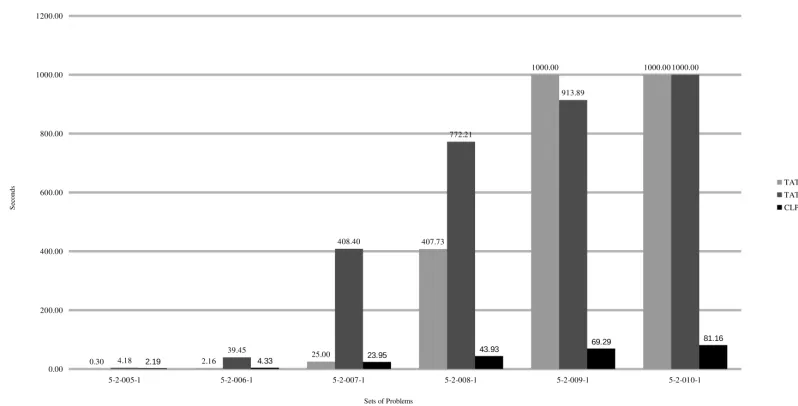
Figure 1: Performance Comparison betweenCLProver, TATL-A, and TATL-N.
where[A]is a coalition modality with a set of agents A randomly chosen fromP{1,...,A} andϕ is a random coalition CNF clause of modal degreeD−1 (defined below), or (b) a random atom of degree 0, otherwise. Arandom coalition literal(of degreeD) is with probability 0.5 a random coalition atom (of degreeD) or its negation, otherwise. Arandom coalition CNF clause(of degreeD) is a disjunction of three random coalition literals (of degree D). A random coalition CNF formula (of degreeD) is a conjunction ofLrandom coalition CNF clauses (of degreeD).
The six sets of problems used to compareCLProverand TATL were generated usingN=5,A=2, L∈ {5, . . . ,10},D=1, andP=1. The experiment was run on an i7-3537U CPU at 3.00GHz, 8GB RAM, under Linux kernel 3.11.10-100. The average run-time for each set of problems is shown in Figure 1. The provers were given a timeout of 1000 seconds. CLProverhas solved all problems in all sets within the given time. TATL-A has failed to solve any problems in the sets 5-2-009-1 and 5-2-010-1. TATL-N has solved all problems in the sets 005-1 and 006-1; nine problems in 007-1; three in 5-2-008-1; four in 5-2-009-1; and none in 5-2-010-1. For the calculation of the average times, whenever the prover has timed out, we have set the corresponding time to 1000 seconds.
5
Conclusion
The resolution-based calculus for the Coalition LogicCL is applied to a coalition problem inDSNFCL, which separates the dimensions to which the resolution rules are applied. The transformation into the normal form is satisfiability preserving and polynomially bounded by the size of the original formula. Soundness of the method follows from the axiomatisation ofCL. Completeness is proved with respect to the tableau procedure given in [6]: if a tableau for a coalition problem is closed, there is a refutation based on the calculus given here. Termination is ensured by the fact that number of propositional symbols and agents is finite, so there are only a finite number of clauses that can be generated.
The decision procedure based onRESCLis in EXPTIME, as shown in [12]. This is optimal, as the
the language ofCL. This result follows from [16, Lemma 4.10, page 785] and the fact that an extension ofCLwith positive occurrences ofATL’shh/0ii operator can be translated intoDSNFCL. It also follows
thatDSNFCLis more expressive thanCL.
CLProver is the first (prototype) implementation ofRESCL. The experiments we have performed suggest that it is a viable tool for reasoning about Coalition Logic. Future work includes further im-provements toCLProver. We also intend to extend our calculus to the full language ofATL.
References
[1] R. Alur, T. A. Henziger & O. Kupferman (1997): Alternating-Time Temporal Logic. In:Proceedings of the 38th IEEE Symposium on Foundations of Computer Science, pp. 100–109, doi:10.1109/SFCS.1997.646098.
[2] R. Alur, T. A. Henziger & O. Kupferman (2002): Alternating-Time Temporal Logic. Journal of the ACM 49(5), pp. 672–713, doi:10.1145/585265.585270.
[3] A. David (2013): TATL: Implementation of ATL Tableau-Based Decision Procedure. LNCS8123, pp. 97– 103, doi:10.1007/978-3-642-40537-2 10.
[4] A. Degtyarev, M. Fisher & B. Konev (2006):Monodic temporal resolution. ACM Trans. Comput. Log7(1), pp. 108–150, doi:10.1145/1119439.1119443.
[5] V. Goranko (2001): Coalition games and alternating temporal logics. In: TARK ’01, Morgan Kaufmann, San Francisco, CA, USA, pp. 259–272. Available athttp://dl.acm.org/citation.cfm?id=1028128. 1028157.
[6] V. Goranko & D. Shkatov (2009): Tableau-Based Decision Procedures for Logics of Strategic Ability in Multiagent Systems. ACM Transactions on Computational Logic 11(1), pp. 3:1–3:51, doi:10.1145/1614431.1614434.
[7] R. Gor´e, J. Thomson & F. Widmann (2011): An Experimental Comparison of Theorem Provers for CTL. In C. Combi, M. Leucker & F.. Wolter, editors: TIME 2011,Germany, September 12-14, IEEE, pp. 49–56, doi:10.1109/TIME.2011.16.
[8] H. Hansen (2004): Tableau Games for Coalition Logic and Alternating-Time Temporal Logic – theory and implementation. Master’s thesis, University of Amsterdam.
[9] A. Herzig (2007):Logics for Agency and Multi-Agent Systems. Slides. ESSLLI. Available athttp://www. staff.science.uu.nl/~broer110/ESSLLI07/.
[10] U. Hustadt & R. A. Schmidt (2002):Scientific Benchmarking with Temporal Logic Decision Procedures. In D. Fensel, F. Giunchiglia, D. McGuinness & M-A. Williams, editors:KR’2002, M. Kaufmann, pp. 533–544.
[11] C. Nalon, L. Zhang, C. Dixon & U. Hustadt (2013): A resolution-based calculus for Coalition Logic (Ex-tended Version). Technical Report ULCS-13-004, University of Liverpool, Liverpool, UK. Available at
http://intranet.csc.liv.ac.uk/research/techreports/?id=ULCS-13-004.
[12] C. Nalon, L. Zhang, C. Dixon & U. Hustadt (2014):A resolution-based calculus for Coalition Logic.Journal of Logic and Computation, doi:10.1093/logcom/ext074. To appear.
[13] M. Pauly (2001): Logic for Social Software. Ph.D. thesis, University of Amsterdam. Dissertation Series 2001-10.
[14] M. Pauly (2002):A Modal Logic for Coalitional Power in Games.Journal of Logic and Computation12(1), pp. 149–166, doi:10.1093/logcom/12.1.149.
[15] J.A. Robinson (1965): A Machine–Oriented Logic Based on the Resolution Principle. Journal of the ACM 12(1), pp. 23–41, doi:10.1145/321250.321253.