TRANSFERENCE AND SOCIAL CATEGORISATION
Andrew Frain
A thesis submitted for the degree of Doctor of Philosophy of The Australian National University
December 2016
D
ECLARATIONThe research described in this thesis represents original work undertaken in the Department of Psychology, at the Australian National University. The writing and work outlined in the thesis chapters are solely my own. The contribution of Ashlee Riorden to Study 3 should be noted (see Note 2, Chapter 7)
A
CKNOWLEDGEMENTSWhen young students come to seek advice about qualifying as a lecturer, the responsibility of giving it is scarcely to be borne… Of course, I live only for my “vocation” – but I, at least, have found only a handful of people who have survived this process without injury to their personality. (Weber, 1917/2004, p. 7)
As is the case for many, to the point of cliché, my PhD candidacy has been a marathon affair. The sensation at the time of writing these acknowledgements is the sort of whole of mind and body exhaustion that one might expect after
completing an endurance event. I also doubt that I have endured without injury to my psyche, perhaps for the same reasons as those students Weber observed approximately 100 years ago. First and foremost then, I must be thankful for the patience, love, and support of those dear to me. To my family in Canberra and further afield, and to my closest friends, thank you for putting up with me over these trying years. I could not have persevered without you.
Nor could I have persevered without the patience and support of my
This brings me to the other side of the coin. Yes, my PhD has been anything but a frolic - it is more accurate to say that I have survived it - but my PhD journey is also something that I look back on with the utmost gratitude. I have gained so much through that journey and it is no exaggeration to say that through my PhD I have discovered my two professional passions: social science methodology and the social identity approach. I also think that my PhD has helped me become a more understanding person; one who is more attuned to the background, experiences, and wellbeing of those around me.
It is for this reason that I now wish to thank those at the ANU Research School of Psychology, as well as affiliated institutions, for providing the academic environment that I look back on now with such gratitude. Of course, it is not possible to thank everyone who has contributed to that environment. There are innumerable colleagues, educators, examiners, and former students of mine whose passing interactions with me have had a profound impact. I must therefore limit myself to the fixtures of my ANU experience.
what the field might someday come to embody. I can only hope that I will be able to help in some small way.
Similarly, to my fellow PhD candidates, those who I spent most time with and who therefore shaped my ANU experience profoundly, thank you. Thank you Li Lim, Kerry O’Brien, Ben Jones, Kathy McNiell, Hugh Webb, Randal Tame, Suzi Keser, Emma Thomas, Aurore Chow, Michelle Quee, Maria Kostyanaya, Emma Croxford, Angela Nguyen, Lisa Stewart, Corie Lin, Shaistha Mohamed, and again Daniel Skorich. I truly believe that most of my learning occurred during our
fortnightly reading group discussions. What I know now, I owe in large part to you. Moreover, I have confidence that decades from now our beer-y discussions
concerning theory and the field, as well as a smattering of gossip, will be my fondest memories of my PhD candidacy. Without those discussions I do not think my efforts could have been sustained.
Speaking of sustaining my efforts, thank you especially to my love and partner, Ayndri de Soysa. You most of all have borne my frustration, despair, distraction, and isolation. It has meant the world to have your help in developing my intellectual passions, and then share my enthusiasm for them. Indeed, I suspect there are few couples whose highs and lows have been subject to as much social psychological scrutiny. I hope that you will continue to love the social psychology antiquarian (Billig, 1996a) that you accidentally created.
particular point, I hope those of you who may read this thesis will recognise some of your own thinking in my writing. Please know that I also see your influence. You all are the giants on whose shoulders I have tried to stand.
A
BSTRACT
This thesis concerns transference as a social psychological phenomenon, where transference has come to mean inferring that further characteristics of a significant other are present in a newly encountered target person after some observation of shared characteristics between those two figures. This thesis argues for the adoption of a social categorisation based approach to transference that is heavily informed by the social identity approach, and self-categorisation theory in particular. This approach is contrasted with the social cognitive model of
transference, which is currently the dominant theoretical account of transference
in social psychology. In terms of the empirical contribution of this thesis, three studies are reported that each attempt to test the predictive advantages of a proposed social categorisation model of transference. Study 1 leverages the social identity approach concept of comparative fit and consequently tests whether the characteristics of other people in the perceiver’s frame of reference (i.e., in addition to the target of transference) can moderate the extent of transference. Study 2 and Study 3 leverage the social identity approach concept of perceiver readiness and test whether the current goals of the perceiver can moderate the extent of
TRANSFERENCE AND SOCIAL CATEGORISATION
DECLARATION ... i
ACKNOWLEDGEMENTS ... ii
ABSTRACT ... vi
TABLES AND FIGURES ... .. Figures ... . Tables ... . CHAPTER 1: AIMS AND OVERVIEW OF THIS THESIS ... 1
The structure of this thesis ... 6
Summary ... 13
Notes ... 16
CHAPTER 2: TRANSFERENCE IN SOCIAL PSYCHOLOGY ... 17
Transference in clinical psychology and psychoanalysis... 18
First social psychological attention ... 21
Launching a paradigm ... 27
The social cognitive model of transference ... 28
A methodological framework ... 32
The content of transference ... 37
The relational self ... 45
Connecting transference with other psychological processes ... 51
Summary ... 54
Notes ... 55
CHAPTER 3: OPPORTUNITIES FOR PROGRESS ... 58
Key limitations of the social cognitive model ... 59
Similarity based cueing ... 59
SO representation storage ... 61
Impression formation ... 62
The social identity approach ... 64
Social categorisation in self-categorization theory ... 65
Summary ... 85
Notes ... 86
CHAPTER 4: HURDLES FOR A SELF-CATEGORIZATION THEORY BASED ACCOUNT OF TRANSFERENCE... 87
The social cognition approach versus the social identity approach ... 88
A metatheoretical debate ... 90
Objectivist implications for transference ... 99
Individual level processes versus group level processes ... 103
Psychological social categories versus sociological social categories ... 105
A psychology of stimuli types ... 107
The social identity approach versus itself ... 116
The challenge of version control ... 116
Out with the old... 121
Summary ... 129
Notes ... 130
CHAPTER 5: THE SOCIAL CATEGORISATION MODEL OF TRANSFERENCE ... 133
The model ... 134
Accentuation within SO and target social categories ... 135
SO and target social categories and multiple social categorisation ... 137
The content of SO and target social categories ... 139
Constraints on SO and target social categories ... 140
Overall comparison with the social cognitive model of transference ... 148
Theoretical implications ... 152
Similarity and transference as outcomes of SO and target category salience ... 152
SO knowledge, online category formation and connectionist networks ... 156
Impression formation as a unified cognitive process ... 165
Summary and empirical challenge ... 168
Notes ... 170
CHAPTER 6: STUDY 1:TRANSFERENCE AND COMPARATIVE FIT ... 172
Method ... 177
Procedure overview... 177
Participants and design... 179
Procedure ... 180
Results ... 189
Participant attrition ... 189
Manipulation checks and integrity of study pretence ... 190
Main analysis ... 191
Post hoc trend analysis ... 193
Discussion ... 195
Notes ... 200
CHAPTER 7: STUDY 2 AND STUDY 3:TRANSFERENCE AND PERCEIVER READINESS ... 202
Study 2: The role of processing goals in transference ... 205
Results ... 209
Discussion ... 214
Study 3: The role of processing goals in transference, mark two ... 214
Method ... 221
Results ... 225
Discussion ... 236
Notes ... 241
CHAPTER 8: REFLECTIONS ON THE EMPIRICAL PROGRAM AND FUTURE RESEARCH DIRECTIONS ... 243
Review of the empirical program ... 244
Study 1 and Study 2: Initial setbacks ... 244
Study 3: Support of the social categorisation model of transference ... 248
Reanalysis of Study 1 and Study 2 data ... 251
Key limitations of the empirical program ... 256
Further transference research from a social identity perspective ... 263
Transference and comparative fit ... 263
Investigating SO representations in and of themselves... 267
Further social categorisation research from a social identity perspective... 275
Types of social categories ... 276
The influence of theories on categorisation ... 281
Summary ... 288
Notes ... 289
CHAPTER 9:IMPLICATIONS ... 291
Transference and other psychological processes ... 291
Transference and cognitive resources ... 292
Transference and intergroup relations ... 296
The Relational self ... 302
Transference in the clinical domain ... 308
Messages for clinical practice ... 309
The influence of an objectivist metatheory ... 312
A social constructionist alternative ... 314
The cautionary tale of prejudice reduction... 321
Final comment ... 323
Notes ... 325
T
ABLES ANDF
IGURESFigures
Figure 2.1. The social cognitive model of transference in its first schematic
depiction (Andersen & Glassman, 1996, p. 265).
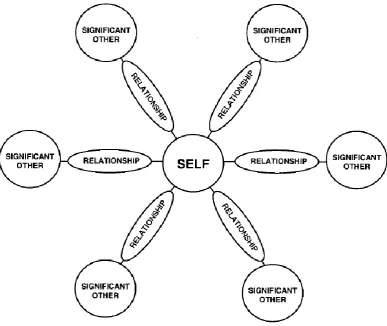
Figure 2.2. Andersen and Chen’s (2002) depiction of linkages between the self
and significant-other representations in memory (p. 621). They describe individuals as possessing a “repertoire of relational selves” (p. 619).
Figure 3.1. Are the two points close together or far apart? This question cannot
be answered without that ‘something’ more.
Figure 3.2. The meta-contrast ratio as articulated by McGarty. “nd is the
number of relevant dimensions; nx is the number of members of some category X; ny is the number of members outside the category X; and the x and y values are the positions of a member of one of or the other category on a particular dimension” (1999, p. 112).
Figure 3.3. Through meta-contrast the introduction of additional stimuli can
change our understanding of all stimuli in the frame of reference.
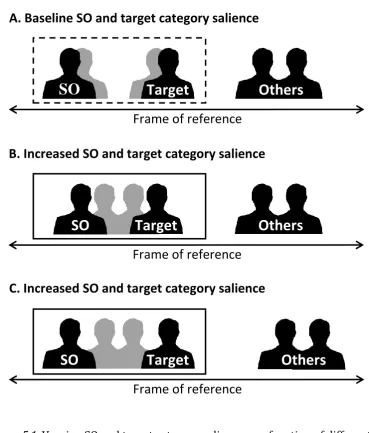
Figure 5.1. Varying SO and target category salience as a function of different
shifts within the frame of reference. Increased salience is denoted by the solid category border while the consequent degree of
accentuation is depicted by the shaded figures. The position of the black figures within the frame of represents the “objective”
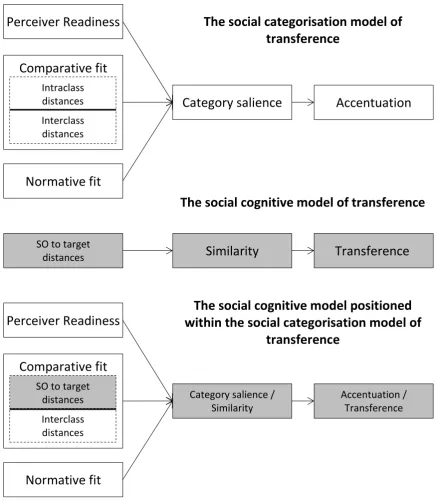
Figure 5.2. The social cognitive model of transference subsumed within the
social categorisation model of transference.
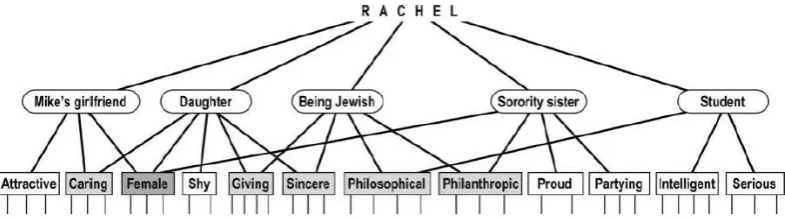
Figure 5.3. The multiple self aspects framework, depicted as a hypothetical self
concept for a person called Rachel (McConnell, 2010). Note that each node in the network represents a stored piece of semantic content.
Figure 5.4. The category activation and application approach to social
perception and the online category formation approach, with key unspecified elements identified.
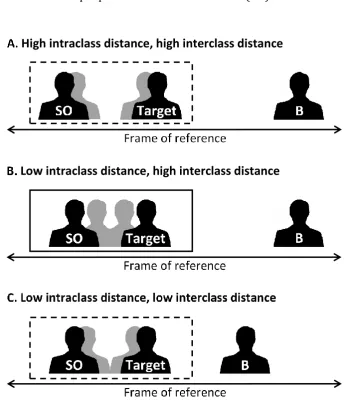
Figure 6.1. Moderated SO and target category salience as a function of changes
to intraclass and interclass distances. Increased salience is denoted by the solid category border while the consequent degree of
accentuation is depicted by the shaded figures. The position of the black figures within the frame of represents the “objective”
precognized distances among these social stimuli.
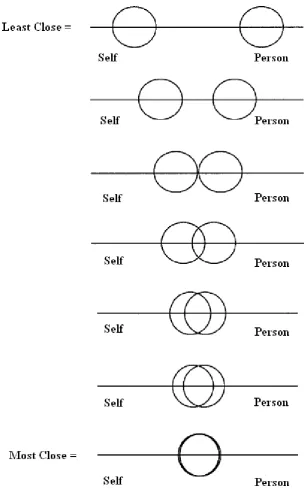
Figure 6.2. The IOS Scale as presented to participants in the first experimental
session. In the second experimental session another modified IOS scale was presented with the labels “Person A” and “Person B”.
Figure 7.1. Average probability of a false positive as a function of goal
relevance and item source.
Figure 7.2. Average probability of a false positive as a function of processing
goal, item source, and intraclass distance.
Figure 7.3. Average probability of a false positive as a function of processing
goal and item stereotypicality.
Figure 8.1. Hogg and Turner’s manipulation of the comparative context for
correspond to possible responses on the nine point Likert scale used by participants to indicate the level of social approval for personality traits. The asterisk indicates the response established prior to the study as the one most commonly selected outside the context of the study, the figures indicate responses provided by the six other “participants” in the study, and ‘I’ and ‘O’ denote whether those participants are ingroup or outgroup members for the participants, based on whether the group’s responses include the “correct” response.
Figure 8.2. Moderated SO and target category salience within high interclass
distance conditions as a function of changes to interclass distances.
Figure 8.3. Changing salient social categorisation as a function of the breadth of
Tables
Table 2.1. Andersen and Glassman’s suggested methodology for experimentally
demonstrating transference (1996, p. 287)
Table 2.2. The five propositions of Andersen and Chen’s “interpersonal social–
cognitive theory of the self and personality, the relational self” (2002,
p. 619)
Table 6.1. Pattern of means for Study 1, transference and comparative fit Table 7.1. Pattern of means for Study 2, the role of processing goals in
transference
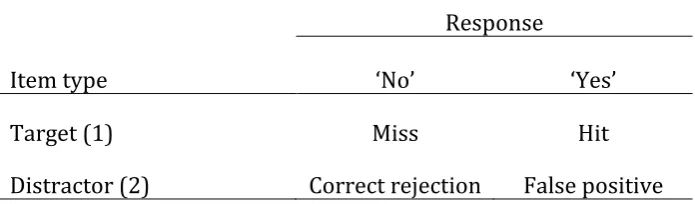
Table 7.2. Response outcomes for different item types
Table 7.3. Probability of false alarm as a function of intraclass distance and SO Table 7.4. Average probability of a ‘Yes’ response as a function of item type and
C
HAPTER1
A
IMS ANDO
VERVIEW OF THIST
HESISThe way that our relationships with those whom we are close to, or our significant others (SOs), influence our interactions with newly encountered people has received a steady stream of attention in social psychology. Since the early 1990s social psychological research has produced an impressive array of findings in relation the role of SOs in perception. This research has occurred under the banner of “transference”, and it has shed light on the content and structure of SO based perception (e.g., Andersen, Glassman, Chen, & Cole, 1995; Andersen, Reznik, & Manzella, 1996; Chen, Andersen, & Hinkley, 1999; Glassman & Andersen, 1999; Kruglanski & Pierro, 2008; Pierro, Orehek, & Kruglanski, 2009), as well as the relationship between SO representations and other psychological phenomena; phenomena such as the self-concept (Hinkley & Andersen, 1996), role expectations (Baum & Andersen, 1999), parental abuse (Berenson & Andersen, 2006),
attachment patterns (Brumbaugh & Fraley, 2006), and ingroup favouritism (Saribay & Andersen, 2007). This research has largely centred around the social
cognitive model of transference (Andersen & Glassman, 1996), which defines
transference as the “activation and use of a SO representation in interpreting and responding to a new person” (Andersen & Berenson, 2001, p. 232).
highly popular movement is called the social cognition approach, which is an approach predominately concerned with the relationship between cognition and the perception of stimuli considered to be social (i.e., humans and other stimuli considered to have “personhood” in some sense). It is through the insights of the social cognition approach that researchers in social psychology have substantially advanced our understanding of the transference phenomenon. The social cognition approach is not without its limitations, however. In particular, the social cognition approach has been subject to persistent criticism from researchers who hail from another movement in social psychology, the social identity approach.
The social identity approach and the social cognition approach have a great deal in common. The approaches are concerned with explaining a similar range of social phenomena (e.g., impression formation, stereotyping, social influence) (Oakes, Haslam, & Reynolds, 1999) and were temporal peers, each with critical developments occurring across the 1970s, 1980s, and 1990s. Indeed, both approaches emerged as potential antidotes to a crisis of confidence in social psychology (Hogg & Williams, 2000; Operario & Fiske, 1999). In many respects theorists from both backgrounds were engaged in the same work, using similar methodologies, and ostensibly armed with the same access to social psychological ideas and developments. One might expect then to find social identity and social cognition researchers working closely with one another, producing complimentary explanatory models and collaborating in their empirical efforts. Generally
what is shared between the two approaches appears to have set them against each other as rivals, rather fostering alliance.
The conflict between the social identity approach and the social cognition approach has meant that the cross fertilisation of ideas across the divide has been inhibited. This does not necessarily mean, however, that the relationship between the social identity approach and the social cognition approach has been
unproductive. It may well be the case that the rivalry between the two has been of net benefit to social psychology. In fact, it is a tenet of the social identity approach that a prerequisite for social competition is the presence of comparison groups that are similar, proximal, and situationally salient (Tajfel & Turner, 1979). The social cognition approach, with its vast similarities to the social identity approach, was perhaps ideally placed to create a competitive environment, spurring theorists on to further intellectual achievement and research vigour. At the very least, the social cognition approach has been critical as a point of departure from which to make social identity arguments. As Billig eloquently puts it:
No intellectual theory can be properly understood merely in terms of what the theorist is proposing, but it also needs to be seen in terms of rival ideas which the theorist is opposing. Tafjel’s [an architect of the social identity approach] theoretical work is no exception. (Billig, 1996b, p. 341)
The substantial benefit of the ongoing dialogue between the social identity and social cognition approaches is perhaps best observed in the domain of
stereotyping and intergroup relations. Frequently using the social cognition approach as a key contemporary comparison, social identity theorists have been able to advance an understanding of stereotyping that rejects the popular position that stereotypic perception occurs in conflict with realty and is characterised by inaccuracy, exaggeration, and approximation (e.g., Fiske & Neuberg, 1990; Macrae & Bodenhausen, 2000; Operario & Fiske, 2001; Taylor, Fiske, Etcoff, & Ruderman, 1978). Instead, it has been shown that stereotyping can be viewed as a process that is very much engaged with reality, and indeed is a necessary pathway toward veridical perception (Oakes, 2001; Oakes et al., 1999; Oakes, Haslam, & Turner, 1994; Oakes & Reynolds, 1997; Reynolds & Oakes, 1999; Turner, Oakes, Haslam, & McGarty, 1994). This position has been a foundational component of an alternative psychology of intergroup relations, with substantial implications for the
management of intergroup conflict. Rather than viewing intergroup conflict as a consequence of individuals’ faulty psychology, or prejudice, social identity theorists argue that intergroup conflict can only be properly understood with due respect to the very real intergroup circumstances (Turner, 1997, 2001a, 2001b). Further, any effort to manage intergroup conflict that places undue emphasis on individual psychological processes risks distracting from effective social change and entrenching the status quo (Billig, 1976; Dixon & Levine, 2012; Jussim & Eccles, 1995; Jussim, McCauley, & Lee, 1995).
social cognition researchers, the consistent research attention that transference has received has been saturated by the social cognition approach. Researchers in the transference space have all been sympathetic to the social cognition
perspective, which has meant that over the last two decades no meaningful
alternatives to, or deviations from, the social cognitive model of transference have been proposed.
It is our belief that the social psychological study of transference would be enriched by the addition of a social identity voice, just as has been the case for the social psychology of stereotyping and intergroup conflict, as well as management (Haslam, 2001), social power (Turner, 2005), health (Jetten, Haslam, & Haslam, 2012), education (Smyth, Mavor, Platow, Grace, & Reynolds, 2013), creativity (Haslam, Adarves-Yorno, Postmes, & Jans, 2013), etc. Moreover, we believe that the addition of a social identity voice to the study of transference is particularly timely. Transference researchers are increasingly looking to the practical implications of the social cognitive perspective on transference, with interest in the management of transference (Liviatan & Andersen, 2008; Przybylinski & Andersen, 2011) especially within a therapeutic setting (Andersen & Berk, 1998; Andersen & Przybylinski, 2012). These forays into the management of transference bear a strong resemblance to the notions of intergroup conflict management that the social identity approach cautions against. It may be important, therefore, to insert another perspective into that discussion; the hope being to raise awareness of, and potentially avoid, some of the pitfalls of managing social interactions through social psychology, whether they be intergroup or interpersonal. That importance is heightened by the fact that those in clinical settings represent a vulnerable
and the therapeutic setting commonly involves a substantial power imbalance. It is thus all the more critical to ensure that the management of transference in therapy is carefully considered, which should entail a diversity of perspectives.
The overarching goal of this thesis, therefore, is to persuasively introduce a social identity approach to the phenomenon of transference. To that end, the specific aims of this thesis are to a) introduce a social categorisation based account of transference based on the tenets of the social identity approach, and in
particular self-categorization theory (SCT) (Turner, 1985; Turner, Hogg, Oakes, Reicher, & Wetherell, 1987)1, b) accompany that theoretical account with some empirical support, and c) leverage the proposed account of transference to suggest changes to the way in which transference is researched, and how the management of transference is approached.
In the remainder of this chapter we will provide an outline of how this thesis will unfold, and how the case for a social categorical account of transference will be made. This outline is intended to provide a sense of the logic that has been applied to this task.
The structure of this thesis
The structure of this thesis deviates strategically from the structure usually adopted in arguments of this nature. Normally, when arguing for one theoretical perspective on a social psychological phenomenon over another, the first port of call is to provide a review of the literature that draws on existing critiques and points to key areas in the empirical work where the incumbent theoretical perspective does not account well for observations.
critiques. As stated above, there is a degree of homogeneity in the research and, in general, researchers have been in agreement with one another as to the
appropriate theoretical approach. Consequently, the focus up to this point has been on extending and applying that dominant theoretical approach, rather than subjecting that approach to critique.
It is also not our position that the incumbent theoretical perspective, the social cognitive model of transference, does not account well for existing
observations. As might be anticipated, a body of research that has revolved entirely around a single theoretical perspective has produced empirical findings consistent with its expectations. Our position instead is that the proposed social
categorisation based account is similarly able to account for those observations, while also addressing theoretical concerns that have thus far fallen outside of the span of interest of transference researchers. This again reflects the limited critique thus far applied to this literature.
Without existing critiques, or key areas of empirical concern, we must start from scratch in building the case for an alternate theoretical perspective. For this reason, Chapter 2 begins with a general review of the last 25 years or so of
observations of transference that we will later go on to argue are compatible with either a social identity or social cognitive based approach to the phenomenon. It is in Chapter 3 that we start to hone in on some of the present challenges of the social cognitive based approach to transference. Again, these are not issues previously identified as of concern in the existing literature, but are identified in this thesis as areas where the social cognition approach is vulnerable to criticism. The three areas of concern are a) the challenge of similarity based cueing as an antecedent to transference, b) questions around the storage of SO representations as discrete nuggets of information, and c) questions around the mechanism by which those SO representations are applied to newly encountered people. Identifying these areas of theoretical complexity sets the scene for our own proposed account of transference, where the social categorisation approach to transference is argued to better face these challenges. In a sense we begin this chapter by introducing some motivation for an attempt to advance our
understanding of transference: what are the limitations of present theory that we would want to face more effectively? We then use the remainder of this chapter to introduce the theoretical foundation for our approach to transference. That
foundation is the social identity approach, which is a theoretical perspective largely comprising of two social psychological theories. These are social identity theory (SIT) (Tajfel & Turner, 1979) and (SCT) (Turner, 1985; Turner, et al., 1987). Chapter 3 will mostly be concerned with the latter, and in particular will be
concerned with the model of social categorisation that arguably lies at the heart of SCT.
with Chapter 4 dedicated to further setting the scene for that account. Here we are responding directly to the great difficulty that others have had in the past in communicating across the social identity to social cognitive divide. If our goal is to
persuasively introduce a social identity approach to the phenomenon of
transference, where the audience includes social cognitive researchers, then it would be foolish to ignore the common key points of misunderstanding. The intent in Chapter 4 is therefore to “head off at the pass” a number of issues that have previously acted as a barrier to the acceptance of social identity based approaches to social phenomenon. The first of these relates to the difference between an
objectivist and social constructionist approach to social perception. The social
identity approach is aligned philosophically with social constructionism, which broadly speaking is the expectation that reality is always subjectively understood, whereas the social cognition approach is rooted in objectivism, which tends to foster the sense that subjectivity should be avoided. Without some introduction to the social identity approach’s assumptions about the perceiver’s relationship with reality, some of the more specific tenets of the approach are likely to seem
distraction and hindrance. Chapter 4 then concludes with a commentary on the social identity literature. This occurs in recognition of the fact that the social identity approach can be particularly impenetrable for newcomers. We see merit in spending some time discussing how someone from a social cognition
background might best navigate that literature and avoid some of the misapprehensions that frequently arise.
The social categorisation approach to transference is then introduced. In Chapter 5 this comes in the form of a specific cognitive model of transference, which we have named the social categorisation model of transference. As we articulate the key aspects of that model, it will be seen that we draw very heavily from the social identity approach, and the tenets of SCT specifically. For instance, the cognitive mechanism argued to underpin transference is the accentuation of
intraclass differences that naturally follows from social category salience, where in
three key limitations of the social cognition approach to transference that we identified in Chapter 3. They were: similarity based cueing, SO representation storage, and SO representation application.
From here we turn to the empirical contribution of this thesis. In Chapters 6 and 7 we report three studies that serve as initial empirical tests of the social categorisation model of transference. The rationale behind all these tests is the same. Here we use the tenets specific to that model to derive predictions about how transference should unfold in an experimental context. If those predictions are supported, and because those predictions could not be derived from the currently dominant account of transference (i.e., the social cognitive model of transference), then this may be taken as evidence that the social categorisation model of transference should be a preferred model of the phenomenon. Such empirical support would complement the theoretical advantages of the social identity based model already identified in Chapter 5. The focus for Study 1 is on the fit element of the perceiver readiness by fit interaction, while in Study 2 and Study 3 predictions are derived from the perceiver readiness concept as
articulated in that model.
In Study 1 and Study 2 the results were not in line with our predictions, meaning that these studies cannot serve as evidence for the social categorisation model of transference. Indeed, in those studies we were not able to replicate the basic social psychological transference finding that, when a newly encountered target person resembles a SO, perceivers will be more likely to ascribe SO
that both the extent of transference and the content of transference are constrained by perceiver readiness concerns, and in particular the processing goals of perceivers. Study 3 thus serves as initial empirical support for the proposed model of transference, in addition to being a critical independent replication of findings frequently reported in the social psychological literature concerning transference.
Chapter 8 begins a general discussion, with this chapter dedicated to a reflection on the empirical program as a whole. Here, we take note of what has been achieved in these three studies, but also dedicate time to exploring the
limitations of that empirical program. In particular, we are careful to point out that although our results provide some preliminary evidence for the predictive utility of the social categorisation model of transference, at least in comparison to the social cognitive model of transference, we have not obtained evidence of the social categorical nature of transference per se, which is critical to challenging a social cognition approach to the phenomenon. With this in mind, we explore a number of future possibilities for the empirical study of transference as a social categorical phenomenon in the social identity sense. In Chapter 8 we also describe a number of research directions for social categorisation in general, irrespective of whether SOs are involved. The argument for doing so is as follows: if transference is an instance of social categorisation, then advances in our understanding of social categorisation will necessarily enrich our understanding of transference. In the pursuit of a social psychological account of transference one should therefore consider current challenges for social categorisation theorising, and indeed
Our general discussion continues in Chapter 9, with this final chapter focused on further theoretical and practical implications for the social
categorisation model of transference. We explore a number of ways in which that model may impact three areas of interest that were encountered in our earlier review of the social psychological literature concerning transference. These are a) transference and other social psychological phenomena, b) the relational self, and c) transference in the clinical domain. We see this exploration as especially
justified because, even without strong empirical support for the model, the proposed account of transference is particularly parsimonious. Unlike the social cognitive model of transference, the categorisation based account of transference advanced here proposes no new mechanisms and no special cognitive processing features. In fact, our argument is that transference is, cognately speaking, an unremarkable outcome of standard social categorisation processes. The last of these, transference in the clinical domain, returns us to the ideas introduced at the opening of this thesis. It is here that we once again note the parallels between the emerging intervention suggestions concerning transference and the long standing interventions concerning intergroup relations that centre around individual psychology. Further, with a social identity approach to transference now fully elucidated, we propose alternative ideas around how transference might be appraised, and subsequently managed, in therapeutic settings.
Summary
of that model, and then reporting some initial empirical tests of that model. We then use this model as the basis for proposals about how transference should be best researched as a social psychological phenomenon and how the management of transference should be best approached.
We have argued above that transference has to date remained “largely insulated from social identity ideas” (emphasis added). The subtext here is that this is not strictly speaking the first time that the social identity approach has been brought to bear on transference. In the course of researching this thesis it became apparent that Hogg (2001) has also advanced a SCT based account of transference, if only very briefly. That account is so brief, in fact, that we can reproduce it here in its entirety:
[T]here are some interesting parallels between SCT’s explanation of group membership-based perception and Andersen’s social cognitive model of interpersonal transference (Andersen & Berenson, 2001; Chen & Andersen, 1999). Andersen explains that people form exemplar-type cognitive
representations of interpersonally significant others (e.g., parents, lovers) that are stored in memory (cf. prototypes of social groups). The
transference engages a process of connection with the new person (e.g., Andersen et al., 1996). The motivation to affiliate is a consequence of transference. (Hogg, 2001, p. 328, emphasis in original)
Needless to say, the treatment provided in this thesis of the potential connection between transference and SCT is far more detailed. More substantively, and as will be seen in the coming chapters, we are far less accommodating of the social
cognitive model’s representation storage, activation, and application approach that is implied by Hogg to be congruous with SCT’s account of social perception. Indeed, following others in the social identity tradition, we feel it is more illuminating to attend to the incongruities between the two approaches.
It may be said that there is a second goal to this thesis, one that is
intertwined with the first. That goal is to enact an instance of integrationist social
psychology. As will become clear, we have come to accept the long standing critique
that the field of social psychology is severely hampered by overspecialisation and redundancy; the result being a field that is a) increasingly riddled with
unaddressed internal inconsistencies, b) largely impenetrable to non-experts, and c) all too often contributing only trivially to “real world” psychological and societal challenges. In short, social psychology is not living up to its promise as a social science. What is the appropriate recourse, or treatment, for this state of affairs? A concerted and persistent effort is needed on the part of researchers toward integration. Researchers must be on the lookout for, and then pursue,
one small step in that direction. Our advocacy for a social categorisation based account of transference is an attempt to absorb transference into the range of social-perceptual phenomena that are already accepted as cognitively founded on social categorisation. In this way we hope to help move social psychology
marginally closer to the state of unity and coherence that some have argued is definitional of a true science (Staats, 1983). Indeed, Staats’ quote below calls for exactly this kind of endeavour:
There are few theoretical studies to draw on that have already unified some of the schisms in psychology; there are few theoretical studies that have systematically reduced the redundancy and artificial diversity in
psychology; there are few studies that have bridged the differences between some of the opposed methodologies in psychology; and so on. Consequently, the grand, unified theorist must confront those tasks herself or himself, with little foundation. (Staats, 1991, p. 908)
Our ideal would be that the theoretical and empirical work reported in the following chapters will prove useful for social psychology’s future “unified theorists”. May our efforts someday make the herculean task of unification that little bit easier and that little bit less lonely.
Notes
C
HAPTER2
T
RANSFERENCE INS
OCIALP
SYCHOLOGYWhat follows is an overview of the social psychological study of transference that has occurred to date, henceforth the social psychology of
transference. This overview will follow approximately the chronology of
transference research, and will focus on key thematic developments in the field. Specifically, we will begin with transference’s first appearances in the social psychological literature, then explore the development of the social cognitive model of transference, and finally provide coverage of the subsequent research trajectories that stemmed from that social cognitive perspective. It is those
research trajectories, and in particular the corresponding empirical observations, that must be able to be reconciled with any alternative theoretical approach to transference.
In term of those trajectories, we have clustered these together under three broad themes. In the first we will review the social psychological exploration of the
content of transference. We will look at examples where transference researchers
approach, it is particularly close to our own interests. Finally, in the third sub-section, we will review research that has explored transference alongside other
social psychological processes. In other words, we will briefly also turn our
attention to research that has sought to identify where this particular social cognitive process sits in relation to other cognitive processes of interest to social psychologists. There is, of course, some overlap with this theme and the two other thematic chapter sections, and vice versa, but this structure will suffice to help digest this wide-ranging body of research.
Prior to delving in to the social psychology of transference, however, we will first briefly take note of the clinical and psychodynamic research setting from which contemporary transference research in social psychology emerged. Here the origins of transference as a topic of academic interest will be described, the intent being to contextualise this thesis and its message for those unfamiliar with
transference as a research subject.
Transference in clinical psychology and psychoanalysis
Transference received its first academic attention from those in the
psychodynamic tradition, well before social psychology took interest. In fact, it was with none other than Freud that transference gained academic notoriety. Freud introduced the concept of transference chiefly as a counter-therapeutic
phenomenon (Breuer & Freud, 1895/2000; Freud, 1912/1950), where
transference was primarily the act of making the physician the target of disruptive fantasies and impulses (see also Freud, 1915/1993). Transference thus
content of transference may vary widely (e.g., encompass both negative and positive feelings), that the mechanics of transference involve relational
interactions that are mentally stored as patterns of behaviour, akin to stereotypes, and that what makes transference notable is the deviation from otherwise rational perception (Breuer & Freud, 1895/2000; Freud, 1912/1950).
These initial ideas were impactful. For clinical researchers and practitioners transference still primarily represents the impact of the maladaptive interpersonal habits of a patient on the therapeutic context. There have, of course, been
developments within this theme, three of which are worthy of mention here. First, the theorised psychosexual underpinnings that are so characteristic of Freud are, for the most part, gone from modern clinical accounts of transference. These have been replaced with a more generalised causal picture, where challenging and disruptive patterns of interpersonal interaction may have developed for any number of reasons; although that development is often attributed to traumatic experiences with SOs (Greenson, 1965; Weiss, 1986a). This is more in line with Sullivan’s concept of paratraxic distortion, which describes a similar phenomenon as Freud’s transference. In paratraxic distortion people develop patterns of
interpersonal behaviour, or dynamisms, that play out with a therapist. The source of these dynamisms are a patient’s past close relationships and when misapplied to a therapist the result is a “paratraxically illusory personal characterisation”
(Sullivan, 1940, p. 235). Paratraxically illusory personal characterisations can entail a wide array of content (e.g., they can be either positive or negative), and are also considered to be a deviation from otherwise rational perception.
transference is now seen less as a hindrance to therapy and more as a part of their therapeutic arsenal. Transference from SOs to a therapist has been viewed as a window, for both therapist and client, into the impact that past relationships are having on present behaviour (Horney, 1939; Safran & Segal, 1990; Sampson et al., 1986). Transference is also commonly now seen as a potential foundation upon which a therapeutic alliance may be built (Fenichel, 1939; Greenson, 1965; Stone, 1961), where a therapeutic alliance between the therapist and the client is often regarded as critical to the success of clinical treatment1. Third and finally, some in the clinical sphere have gone on to reject transference in this psychoanalytic
tradition as a meaningful phenomenon (Bandura, 1969; Safran & Segal, 1990). This is not a research development in the obvious sense, but it is important to note in order to avoid the impression that transference is a dominant feature of all modern clinical perspectives.
The clinical interest in transference has had a substantial impact outside the context of psychological research and clinical practice. As it stands the concept of transference has a vibrant life in the common lexicon, and it is not unusual to hear transference invoked as an explanatory tool for bar stool psychologists. Indeed, it not an unreasonable wager that you, the reader, without exposure to the
transference literature, have in the past suggested that someone’s unusual, but familiar, interpersonal interactions are outcomes of transference from another past relationship or experience. Why has transference experienced such popular appeal? One possibility is that transference’s popularity reflects the powerful role that the phenomenon plays in our everyday social interactions. That is,
psychologists have simply provided the label for what is essentially an
transference, by whatever name, was always going to be part of the lay analysis of human behaviour. This would likely be the explanation given by social
psychologists who have taken an interest in transference. As will be seen in the next chapter section, a key message of that social psychological literature is that transference should be thought of as a day-to-day perceptual phenomenon, rather than as part of the fringes of human social functioning.
First social psychological attention
Aside from a handful of mentions (Higgins & King, 1981; Sarbin, Taft, & Bailey, 1960), for a long time social psychology left the phenomenon of
transference largely untouched. It was not until 1990 that the first social
psychological paper dedicated to transference was published, and even then, this was to some extent transference redefined. Authors Andersen and Cole (1990) recast transference and were careful to shed some of what was characteristic of the clinical and psychoanalytic approach that had come before. First, and without disrespect to what was accomplished by clinicians and psychoanalysts in the area, Andersen and Cole turned away from the focus on pathology and therapy in their thinking about transference. They saw an opportunity to view transference
entirely as a general perceptual process, in action across a broad array of contexts and in no way defined by particular maladaptive interpersonal outcomes. Second, and facilitated by the shift away from an emphasis on interpersonal outcomes, they made the SO the critical defining feature of transference, where a SO is defined as any person who has been important and influential in an individual’s life. Said otherwise, Andersen and Cole took the early clinical interest in past experiences with the SO as a source of patterns of interpersonal behaviour and made the SOs
so on Freud’s transference, and more so on Sullivan’s paratraxic distortion, essentially making the latter the new meaning of transference. In paratraxic
distortion a perceiver’s assumptions and knowledge about a SO of theirs is used as the basis for judgements about new people (Sullivan, 1940). They thus defined transference as a phenomenon whereby “memory representations of SOs can be activated in social interaction and, when they are, that they can influence
inferences about new people, interpersonal expectancies, and affective responses” (1990, p. 385). The 1990 paper introduced transference to social psychology as a day-to-day perceptual phenomenon whereby perceivers may use their memories of SOs to assist them in forming impressions of newly encountered people.
From this new starting point Andersen and Cole connected transference conceptually with other social-perceptual processes under investigation in social psychology. They positioned transference as highly comparable to processes such as social categorisation and schema activation, in much the same vain as had been done for paratraxic distortion three decades earlier (Secord & Jourard, 1956). Further, by specifying memories of SOs as the source of content for transference, and by drawing on the previous work of Cantor and Mischel (1979), Andersen and Cole were able to operationalise transference in a way that was ideal for
investigation using social psychological experimental techniques; the presence of transference was said to be detectable via the appearance of SO characteristics in descriptions of newly encountered persons.
person, or “target”, and then accurately identify whether a series of characteristics was, or was not, a characteristics of that target in a subsequent recognition task. For Andersen and Cole a mistaken declaration by participants that additional characteristics of their SO were also characteristics of the target may be an indication that the process of transference was affecting the perception of that target. Thus, “false-positives” for SO characteristics under certain conditions could be used to experimentally demonstrate that transference was occurring.
At this point it is appropriate to take note of the specification of “new
people” as the targets of transference, which is a restriction that is also not present in the prior clinical literature. In all likelihood this reflects the influence of
methodology on theory, rather than the other way around. The above empirical demonstration of transference is facilitated by the tabula rasa quality of newly encountered people. Transference studies where the target person is previously known would be additionally complicated by the potential for other sources of inference to mask or moderate possible transference effects. It is this
methodological constraint that permeated back into the theory; it appears that to create congruence between the methodological and the theoretical the social psychology of transference has become about the perception of newly encountered people, despite the fact that outside of social psychology the target of transferred content can be anyone. The point is not that this is a major concern. It is simply an explanation for why the range of targets of transference has been restricted.
phenomenon (Andersen & Przybylinski, 2012), which does not specify the destination of transference as being newly encountered people:
Transference is the experiencing of feelings, drives, attitudes, fantasies, and defenses toward a person in the present which are inappropriate to that person and are a repetition, a displacement of reactions originating in regard to significant persons of early childhood. (Greenson, 1965, p. 156) Greenson does, however, view the source of transference as SOs from early childhood, which as we have seen is more narrow than the definition introduced into the social psychological literature. In Andersen and Cole’s conception of transference the source of transference may involve memories or characteristics from any SO, regardless of whether that person became important to the perceiver during childhood or later in life. Again, this reflects the move away from
transference as involving particular patterns of interpersonal interaction, toward transference as an everyday phenomenon.
Andersen and Cole go on to argue that SO representations are cognitive structures that are likely to be highly accessible and distinctive, as well as particularly rich in content. Consequently, they reasoned that although SO
memories function similarly to social categories and schemas, SO memories should be more powerful sources of inference in social perception. In other words,
transference was not just special because the source of information was SO
memories, but was also a special case because, all things being equal, transference should be the inferential process of choice when seeking to understand newly encountered people. Studies 1 and 2 of that paper addressed this aspect of
also compared the associative relations between features listed for the three types of stimuli, reasoning that mental representations that are distinct will possess features that are less readily associated with other mental representations. Overall they found that when describing a SO, participants listed more traits, listed those traits faster, and listed traits that were less concurrently descriptive of the other types of stimuli (i.e., the trait and the stereotype), thus supporting the special nature of SOs as a type of memory or mental representation.
SO memories and mental representations, as well as the potency of such
representations in influencing our impressions of new people, remained front and centre in subsequent transference publications in social psychology.
Before getting to that model though, it is worth touching on two other social psychological papers that also came prior to the formal statement of the social cognitive model of transference. These built on the foundation provided by that first transference paper and that also explored transference empirically. First, Andersen and Baum (1994) demonstrated the potential for transference in this new social psychological sense to additionally impact affect. They achieved this by asking participants to nominate both positive and negatively experienced SOs and then measuring liking ratings for the target person, as well as the transient
affective state of participants. On both measures participants transferred affect consistent with their nominated SO when the target person was experimentally manipulated to resemble that SO. Second, Andersen, Glassman, Chen and Cole (1995) sought to further explore the role of accessibility in transference, which following Higgins and colleagues (e.g., Higgins & King, 1981), they understood as the readiness to use, or activation potential, of different types of stored
condition whereby another participant’s SO characteristics were used for target learning and in the resemblance task. This ruled out the alternative explanation that all SO characteristics are in some way special regardless of who’s SO those characteristics belong to. As another example, both papers also introduced a two week delay between SO characteristic listing and the learning and recognition tasks. The rationale here was that a two week delay between experimental sessions should be sufficient to rule out the straight forward priming effects of listing the SO characteristics in the first place. Indeed, both these innovations became part of what was to become a standardised methodology for studying transference. In fact, that methodology would become just as defining for transference research as the theoretical perspective that it supported, both of which we will introduce presently.
Launching a paradigm
The social cognitive model of transference
The formal social cognitive model of transference itself draws heavily on the prior work of Andersen and colleagues introduced above. In terms of theory, it does not differ dramatically from that which was present in that earliest social psychological research. First and foremost, the defining outcome of transference is maintained as the perception that a newly encountered person possesses
[image:46.595.69.446.468.609.2]characteristics or qualities that are not actually present in that person, but rather are the characteristics or qualities of a SO of that perceiver. Further, to a large extent the cognitive process theorised to underpin transference closely resembles earlier reasoning, and can still be adequately captured in a concise statement: Transference occurs via the application of a cognitive representation of a SO that is stored in memory to the impression of a newly encountered person, which is cued by the observed similarity between that newly encountered person and the SO.
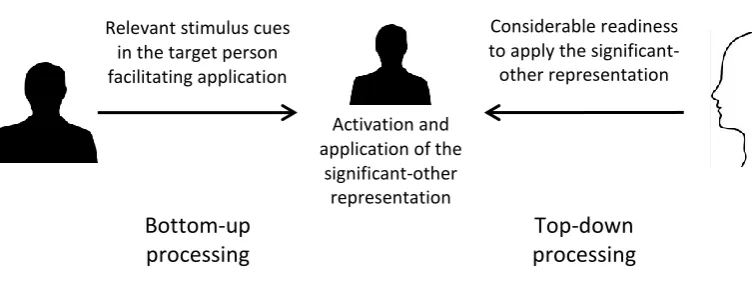
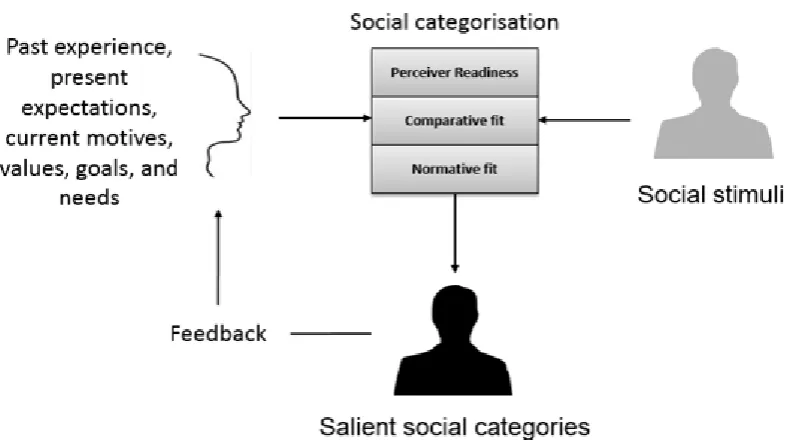
Figure 2.1. The social cognitive model of transference in its first schematic
depiction (Andersen & Glassman, 1996, p. 265).
Target Perceiver
Considerable readiness to apply the
significant-other representation Relevant stimulus cues
in the target person facilitating application
Activation and application of the
significant-other representation
Top-down processing Bottom-up
In Figure 2.1 we have reconstructed Andersen and Glassman’s own depiction of the key elements of the social cognitive model of transference. The authors describe this transference model as in line with Bruner’s (1957) landmark description of perceptual processes. Transference is described as “going beyond the information given”, where the perceiver is “filling in the blanks” (1996, p. 266) about a newly encountered target person by drawing upon a SO representation. In terms of more specific parallels with other social perceptual models, the social cognitive model is described as akin to Fiske and colleagues schema triggered
affect model (Fiske & Pavelchak, 1986). This is a social cognitive model of social
categorisation where stored category content, specifically a category’s evaluative tone, is activated and then cognitively linked to a target person. The authors suggest that this process of activation and linking is the basic process that underlies transference.
The social cognitive model also draws on social cognitive notions of
construct accessibility. In fact, the notion of a high, or chronic, accessibility (Bargh, Lombardi, & Higgins, 1988) is retained as a permanent part of the social cognitive model . In Figure 2.1, for instance, the top down processing includes “considerable readiness to apply the SO representation”. This, as we have seen, follows from their earliest theorising on the nature of transference. Here too the authors argue that due to the familiarity of SOs, the frequent relevance of SOs to our lives, and the importance of SOs to us, transference includes a chronic accessibility component. This argued chronic accessibility component of transference is one of two key features establishing the social cognitive model of transference as a distinct
cognitive process (see also Chen et al., 1999). By this we mean that it positions the
other models of social perception already present in the field. Without such unique components the model would be necessarily redundant; equivalent apart from differences in the source of information (i.e., a SO) and the key stimulus (i.e., a newly encountered person).
The second distinctive feature of the social cognitive model of transference is based on the concept of “n-of-one” representations. Andersen and Glassman argue that SO representations are special in that they are stored as exemplars. These exemplars, or n-of-one representations, correspond to the collection of knowledge about a single person only. For them this can be contrasted with the storage and use of social categories (see also Andersen & Baum, 1994; Andersen et al., 1995), where social categories encompass multiple individuals. This positions the social cognitive model firmly in contrast to categorisation models such as the schema triggered affect model, and here they draw on Higgins and King’s
distinction between categories and “proper constructs” (1981). They also see precedent for this line of reasoning in the exemplar based processing literature (Smith & Zarate, 1990, 1992; see also Fiske & Neuberg, 1990), although the expectation that individual people correspond to cognitive exemplars is not generally a presumption of exemplar models. An exemplar based approach does, however, resolve a logical problem for Andersen and Glassman. For them an inclusive social category approach, where the SO and target would come to share a social category, would imply that “one identifies the [target] as being the
in a way that does not imply that other stimuli are subsumed within a SO category. Hence the appropriateness of an exemplar based mechanism; one that does not rely on categorisation, but instead on the similarity based activation and
application of discrete SO representations. In sum, it is for these two reasons that a unique n-of-one representation approach is required, even if in all other respects these theorised cognitive structures are expected to “exist and operate as do other social constructs” (e.g., classes of people, social roles, trait groupings) (1996, p. 171; see also Hinkly & Andersen, 1996).
At this point we have covered the key components of the social cognitive model of transference. It is this model that has provided the theoretical foundation for the extensive body of transference research that has followed. While we will provide a snapshot of that research in the remainder of this chapter, it is first worth noting that this social cognitive model has received twenty years of
cueing condition and each ‘then’ is a linked behavioural or affective response. Thus, in the context of transference, the ‘if’ is some perceived similarity between a SO and a newly encountered person and the ‘then’ is the consequent transference, or the application of SO information to an impression of that person. This analogy, maintained consistently in the transference literature (Andersen & Chen, 2002; Andersen & Przybylinski, 2012; Andersen & Saribay, 2005), provides further clarity as to what type of cognitive process the social cognitive model of transference is attempting to capture.
A methodological framework
Andersen and Glassman rightly devoted a sizeable portion of their 1996 paper to the experimental method that they developed for demonstrating transference effects. Not only was that experimental method an innovative solution to a challenging methodological problem, but that method would also underpin later transference research at least as much as their theoretical analysis. Although we have already seen how this challenge was overcome - the
methodological solution in the 1996 paper does not differ meaningfully from that which had been developed first for Andersen and Baum’s (1994) study - for the sake of emphasis and clarity it is well worth taking the time to spell it out here.
The methodological challenge we refer to stemmed from two competing needs: first, the need to recognise the uniqueness of each person’s SOs, and second, the need for consistent methodologies across participants. Non-conscious
cognitive processes, of the kind transference is theorised to be, are easily affected by the extraneous factors in the research environment. Investigating
time, we all have SOs that are very different from the SOs of other people. This is a problem if an experimenter wishes to involve SOs as stimuli in experimental conditions aimed at investigating processes considered to be more or less
universal. While an experimenter may expect reasonably uniform responses when providing stimuli pertaining to gender, race, class, etc. (but see Haslam, Turner, Oakes, McGarty, & Reynolds, 1997), there is no general account of SOs that can be expected to capture the manner in which each SO is important to a wide range of participants. In sum, how one might investigate the universal effect that SOs have on social perception is not obvious.
Andersen and Glassman’s solution was a variation on Higgins and
colleagues’ methodological approach to self discrepancy theory (Higgins, 1987, for review). This approach was described by Andersen and Glassman as an
idiographic-nomothetic design. Idiographic, because it allows participants to
After two weeks participants are introduced to the second experimental session, however, the connection between the first and second sessions is not revealed to participants. Here they are informed that they will be learning about a new person and completing a memory task. In practise this second session has been presented to participants as an ‘impression formation study’ and they are told that researchers are interested in the way people form impressions. For the sake of credibility and maintaining the interest of participants the learning task is often described as pertaining to a person that they will actually be meeting. For example, in a number of studies participants were told that they will be meeting a new person who has been performing a similar task in the next room (e.g.,
Andersen & Baum, 1994; Andersen et al., 1996; Baum & Andersen, 1999; Berenson & Andersen, 2006; Kruglanski & Pierro, 2008).
In the task itself participants are asked to remember a series of descriptors of the new person and are told that their memory will be tested in a recognition test. Unbeknownst to participants they are split into ‘resemblance’ and ‘no resemblance’ experimental conditions. In the resemblance condition some of the descriptors of the new person are drawn from that participant’s own
self-generated list of SO descriptors. That new person therefore resembles that
participant’s SO to some degree. In the no resemblance condition some descriptors of the new person are instead drawn from a different participant’s SO descriptors. Andersen and Glassman called this ‘yoking’ and the result is that pairs of
participants across experimental conditions are exposed to the same SO
own SO, rather than the inclusion of more or less SO characteristics generally. If
yoking did not occur, and instead non-SO descriptors were included in place of SO descriptors in the no resemblance condition, then it would not be possible to argue confidently that what is being observed is transference; the alternative explanation would remain that participants are merely leveraging expectations about the characteristics of SOs in general.
In the subsequent recognition test participants are asked to declare whether a series of items were or were not present in the list of new person descriptors. In this test items from that participant’s own SO descriptions that were not present in the list of new person descriptors are included. Transference is most commonly measured by the number of false positives for these SO items. That is, the number of SO items that were not present in the list of new person descriptors but are mistakenly declared as having been present.
Andersen and Glassman provide a tabulated summary of their suggested experimental design and we have reproduced that table here verbatim (see Table 2.1.). This table does not include mention of the experimental control condition (i.e., the yoking procedure), but otherwise is a good summary of the key
Table 2.1.
Andersen and Glassman’s suggested methodology for experimentally demonstrating
transference (1996, p. 287)
Phase 1: Idiographic stimulus procedures
1. Subjects name a significant other (and possibly other people or categories).
2. Subjects complete a series of sentences (usually 14) to characterise the person, and then rank-order these listed sentences in terms of how descriptive they are of the person.
3. Subjects select from a list of adjectives those that are neither descriptive nor counter descriptive of the person (i.e., those that are essentially irrelevant to the person.
Phase 2: Learning about a new person and completing a recognition-memory test.
1. Subjects participate in a learning task in which they learn about one or more new target persons.
2. In the learning task, the target person (or one of the target persons) is characterised by some of the descriptive statements subjects listed earlier to describe their significant other, as well as by some irrelevant filler statements.
descriptive statements include those that were actually learned about the target and those that were not actually learned.
Representation-consistent biased memory is indexed by relatively high
confidence ratings about statements that were not actually presented about the target person but that do describe the representation. This reflects the activation and application of the representation via the tendency to “fill in the blanks” (Bruner, 1957) about the new person.
The content of transference
We begin this chapter section by stepping back momentarily in the chronology of transference research. This is because the first investigations into the content of transference came before the social cognitive model of transference was formally articulated. Andersen and Baum (1994) investigated the possibility that, in addition to SO characteristics, the affect that is associated with SOs can also become part of the impression of a newly encountered target. As briefly described above, those researchers augmented the basic transference methodological
paradigm by asking participants to nominate a positive and a negative SO. They were able to show that resemblance to positively regarded SOs led to more liking of the target person in comparison to targets resembling another participant’s positively regarded SO, while resemblance to negatively regarded SOs led to less liking of the target person in comparison to targets resembling another