INTERNATIONAL CONFERENCE ON ENGINEERING DESIGN ICED 01 GLASGOW, AUGUST 21-23, 2001
SHAPE MATCHING AND CLUSTERING
Sungwoo Lim, Alex H B Duffy, and Byungsuk Lee
Keywords: Information classification, machine learning, taxonomies
1 Introduction
Generalising knowledge and matching patterns is a basic human trait in re-using past experiences. We often cluster (group) knowledge of similar attributes as a process of learning and or aid to manage the complexity and re-use of experiential knowledge [1, 2]. In conceptual design, an ill-defined shape may be recognised as more than one type. Resulting in shapes possibly being classified differently when different criteria are applied. This paper outlines the work being carried out to develop a new technique for shape clustering. It highlights the current methods for analysing shapes found in computer aided sketching systems, before a method is proposed that addresses shape clustering and pattern matching. Clustering for vague geometric models and multiple viewpoint support are explored.
2 Analysing
Vague
Shape
To pattern match and cluster vague shapes we must firstly identify the types of vagueness that may occur during geometric sketching. Then the criteria for identifying a cluster must be defined. Various methods address the problem of shape analysis as summarised in Tables 1 and 2. However, these methods consider precise shapes and are not appropriate for vague geometry. The following types of vagueness in conceptual geometric shapes cones in a variety of ways, as identified below [3].
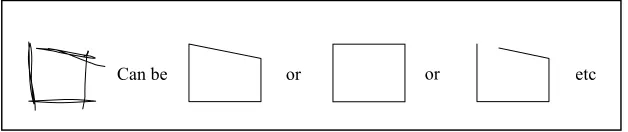
• Vague position of a line segment – In figure 1, because the line positions are not clearly expressed, we encounter two types of vagueness. Firstly, the open/closed status of the shape type is vague. It also includes the uncertainty of whether the ends of two lines meet to form a vertex. Secondly, the size of each element (i.e. a line segment) is vague. For example, the size of the right vertical line of the sketch in figure 1 will be determined by whether the sketch represents a rectangle or polygon.
Can be or or etc
Figure 1. Vague position, size, and close/open
[image:1.595.143.457.624.690.2]can be or
convex concave
Figure 2. Vague convex/concave vertex
• Vague shape type – The type of shape of an object is often vague giving rise to more than one feasible interpretation of the shape. For example a line element may be interpreted as a straight line or as an arc and can result in different shape types as shown in Figure 3.
Can be or or etc
Figure 3. Vague shape type
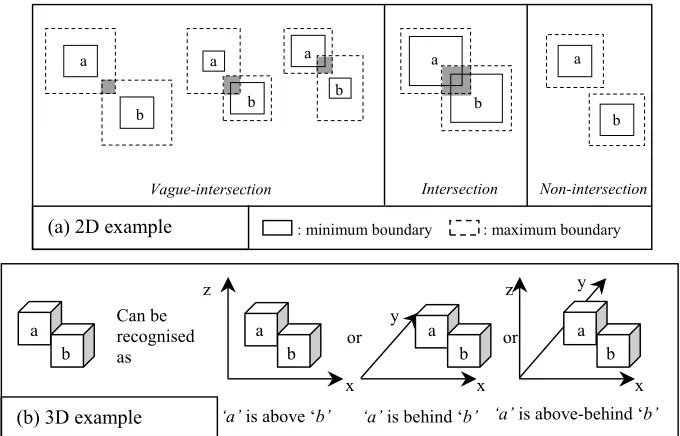
• Vague relative spatial relation – If an ill-defined geometric object has a vague surface, the distance between this and another object is vague. Figure 4(a) shows the possible relative spatial relation whether the surfaces of the objects are vague or not. In this 2D example, the boundary of the object ‘a’ and ‘b’ are vague. Considering the minimum and maximum boundaries, the intersection status between two objects can be recognised as vague intersection, intersection and non-intersection. In addition, a sketch representing 3D spatial relationships can lead to some confusion. In the 3D example shown in Figure 4(b), although the object ‘a’ and ‘b’ have precise surfaces, their relative spatial relation can be recognised as three different types, as the example sketch implicates vague co-ordinates.
Can be recognised as
or
b b
b b
a a
a a
: maximum boundary : minimum boundary
Vague-intersection
b a
Non-intersection Intersection
(a) 2D example
z
or
b a y
x
‘a’ is above-behind ‘b’
(b) 3D example
b a b
a b
a y
x x
z
‘a’ is behind ‘b’ ‘a’ is above ‘b’
[image:2.595.179.414.73.150.2] [image:2.595.146.454.217.288.2] [image:2.595.127.467.441.659.2]Table 1. Shape analysis methods (summarised from [4, 5])
Shape boundary Boundary (external)
algorithm Fourier transforms of the boundary Medial axis transform (MAT) Moment based approaches Shape
boundary
points Global (internal) algorithm
Shape decomposition into other primitive shapes Various fourier
numeric or non-numeric Scalar
transform technique Moment-based approaches
Information preservation Allows an accurate reconstruction of a shape.
Table 2. Summary of the existing visual perception methods (summarised on the basis of [5])
Theory Classification Note
Gestalt theory A non-computational theory of visual form.
Gibson’s theory Concentrated around perceiving real three-dimensional objects as real objects, representations of real objects, and abstract (non-real) objects.
Neuropsychological theory
Mostly qualitative and not computational.
T
ra
di
ti
ona
l
Fractal geometry Appropriate for natural shape representation. High curvature points Curve partitioning.
Lowe’s system Three-dimensional object recognition from unknown viewpoints and single two-dimensional images.
Marr’s paradigm (shape from x)
Extended as Shape from shading, contour, texture, stereo, and fractal geometry.
Morphogenesis A procedure for morphogenesis based on multiple levels of resolution has been developed.
Polygonal approximation of shape
Applied as
- Combination of high curvature points and line segment approximations.
- Measurement methods of the curvature of 3D surfaces. Symmetry-Curvature
theorem
For a hierarchical deformation of the object.
- The inference of the shape history from a single shape. - The inference of shape evolution between two shapes.
M
ode
rn
The principle of transversality
When two arbitrarily shaped convex objects interpenetrate each other, the meeting point is a boundary point of concave discontinuity of their tangent planes.
3 Clustering
and
Customised
Viewpoints
Computational clustering is performed using machine learning techniques. According to Reich [1], machine learning can be considered as explanation-based learning (EBL) or similarity-based learning (SBL). Because the ill-structured nature of design often precludes formalised theories of synthesis it has been suggested that SBL is more suitable for conceptual design [1]. There are two primary classes of machine learning techniques in the SBL approach: supervised concept learning and unsupervised concept learning. Supervised requires the user to support the learning process whereas learning is automatic in unsupervised.
[image:3.595.77.517.94.202.2] [image:3.595.79.526.94.204.2]problem of selecting criteria for clustering that are appropriate for analysing the data being investigated.
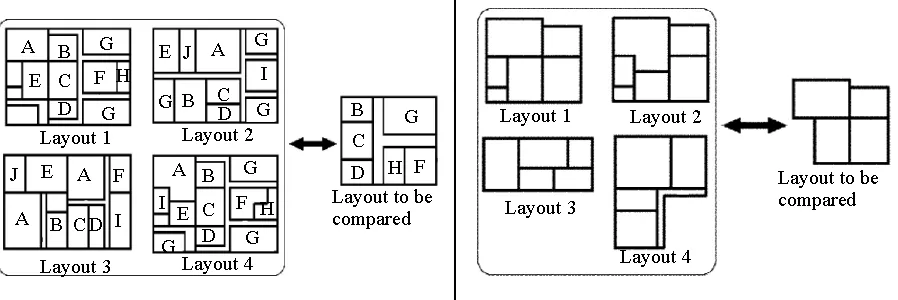
Manfaat [2] presented an approach, Customised Viewpoint-Spatial (CV-S), to support the effective utilisation of spatial layout design experience by generalising past spatial layout design cases and abstracting a single case into hierarchical levels of abstractions according to the designer’s needs. He argued that the layouts of a space can be hierarchically clustered into groups based on the measures of similarities between the layouts. An example of different views is shown in Figure 5.
Figure 5. An illustration of abstraction of a spatial layout in four different viewpoints (adopted from [2])
Thus, pattern matching plays a key role in machine learning. It can be defined simply as the activity of matching patterns with the aim of finding similarities between them for the purpose of recognition and/or retrieval of similar patterns [7]. Patterns are matched for their similarity, grouped (clustered) together, and induction techniques used to generalise knowledge form the group members to reflect knowledge common to all in the group.
4 Multiple
Clustering of Shapes
4.1 Clustering Vague Shape
[image:4.595.74.522.202.491.2]The probability of the element being a particular geometric primitive can be obtained by mutiplying the probability of the element belonging to the appropriate group at each level leading down to the primitive in question. For example, in Figure 6, the (n)th element of object A has a 0.2016 probability to be a Closed-Polygon-Triangle derived from its probability of being a closed shape (0.64), a polygon (0.7) and a triangle (0.43), i.e. 0.64 * 0.7 * 0.45 = 0.2016.
has-part
• Has-part relations are employed to link concepts of the type from more general levels to more detailed levels with respect to the whole design.
• Has-kind relations are employed to link concepts of the type from higher abstraction levels to lower abstraction levels.
has-kind Classification hierarchy Object hierarchy (n)th Elemen Object Object Object 1st Element 2nd Element (n-1)th Element (n)th Element Object
3rd Level 2nd Level
1st Level
………… ………… ………… 10% Polygon 3% 17% 35% 45% 70% 30% 63% 27% 64% 36%
Element(n) : A sketch stroke
Object : An Object which involves multiple elements : Highest probability path
Composite-Ellipse- Straight- Arc- ………… Pentagon Rectangle Triangle Free curve Ellipse Circle Polygon Closed curve Curve Straight line Closed shape Open shape
Figure 6. Hierarchical structure of vague information [3]
The hierarchical levels and the class list in each level can be changed or extended. For example, if a designer needs to analyse a sketch stroke as abstracted symbols, rather than a geometric shape element, they could change or add some levels and specific classes. Also, the level of the hierarchical structure could be extended to represent a compound object that is made from more than one object. A distinct advantage of working in this way is that the complex task of analysing the shape type is reduced to a relatively simple and manageable one through determining the probability at each level, regardless of how complicated the object, and, ultimately the whole sketch, is.
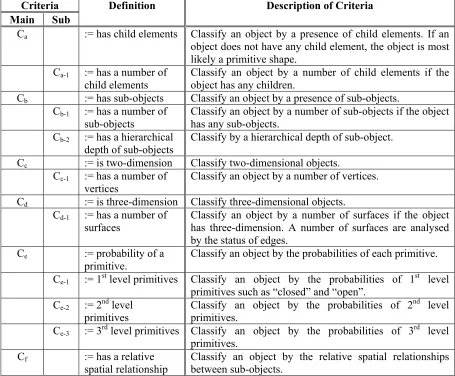
[image:5.595.74.529.175.521.2]Table 3. Classification Criteria for Clustering
Criteria Main Sub
Definition Description of Criteria
Ca := has child elements Classify an object by a presence of child elements. If an
object does not have any child element, the object is most likely a primitive shape.
Ca-1 := has a number of
child elements
Classify an object by a number of child elements if the object has any children.
Cb := has sub-objects Classify an object by a presence of sub-objects.
Cb-1 := has a number of
sub-objects
Classify an object by a number of sub-objects if the object has any sub-objects.
Cb-2 := has a hierarchical
depth of sub-objects
Classify by a hierarchical depth of sub-object.
Cc := is two-dimension Classify two-dimensional objects.
Cc-1 := has a number of
vertices
Classify an object by a number of vertices.
Cd := is three-dimension Classify three-dimensional objects.
Cd-1 := has a number of
surfaces
Classify an object by a number of surfaces if the object has three-dimension. A number of surfaces are analysed by the status of edges.
Ce := probability of a
primitive.
Classify an object by the probabilities of each primitive.
Ce-1 := 1stlevel primitives Classify an object by the probabilities of 1st level
primitives such as “closed” and “open”. Ce-2 := 2nd level
primitives
Classify an object by the probabilities of 2nd level primitives.
Ce-3 := 3rdlevel primitives Classify an object by the probabilities of 3rd level
primitives. Cf := has a relative
spatial relationship
Classify an object by the relative spatial relationships between sub-objects.
4.2 Multiple viewpoint clustering
Some investigations have been conducted addressing multiple viewpoints. Howard-Jones [9] carried out an experiment in which subjects looked at a geometrical shape and generated as many interpretations of the shape as possible based on a different viewpoint. Duffy and Kerr [10] pointed out the need to support ‘Customised Viewpoints (CV)’. Suwa et al. [11] insisted that ‘discovering hidden features in a representation without being fixated to a single perspective of viewing’ is one of the crucial acts in creative activities.
Vague shapes may also be clustered differently depending on different viewpoints. Consider that objects A and B have various properties {A| Ca, Cb, Cc, Cd} and {B| Ca, Ce, Cf}
respectively. If a designer considers that the property Ca is most important to cluster an object,
then object A and B could be classified in the same cluster. In all other cases, they would be classified in a different cluster.
4.3 Shape matching
[image:6.595.70.525.96.472.2]“required” layouts to be matched against the past design cases. Before proceeding the reader is invited to determine which cases best match the required layouts. You should attempt to decide the order of similarity of the layouts by determining for topological matching the cases that most reflect the required layout, where space B is adjacent to space C which is adjacent to space D, etc. For the geometric shape matching you should consider the overall shapes of the spaces and how they are related.
The results of the topological matching between each of the past design cases and the required layout are shown in Table 4. In this table, for each case, the layouts are ordered from the most to the least similar. This order is based on an analysis of corresponding spaces. If there are more than one layout case that has the same number of corresponding spaces, they have the same ranking.
Figure 7. Topological Pattern Matching Figure 7. Geometric Shape Matching
Table 5 shows the results of the combined topological and shape matching. In this table the cases are first ordered on the corresponding spaces and then on a shape dissimilarity measure. In this table, the layout cases are first ordered based on the corresponding spaces. They are then ordered based on a shape dissimilarity measure. The lower the measure the more similar the layout case is to the required.
Table 4. Results of Topological Pattern Matching Table 5. Results of Geometric Shape Matching
Ordered cases
Number of corresponding spaces
Ordered cases
Number of corresponding spaces
Shape dissimilarity measure
Case 1 7 1 4 0.00
Case 4 2 0.47
Case 3 6 3 0.23
Case 2 4 4
3
0.29
Given the ability to match the layouts they then can be clustered according to their similarity measures [2].
5 Conclusion
[image:7.595.75.524.250.400.2] [image:7.595.102.523.539.635.2]clustering with multiple aspects could be one way of doing this, particularly when it is desired to define the shape type of the geometric object. Work is on-going to develop the techniques presented in this paper and for a system to support the re-use of past design shape cases.
References
[1] Reich, Y. and S.J. Fenves, "The Formation and use of Abstract Concepts in Design", Concept Formation: Knowledge and Experience in Unsupervised Learning, p323-353 [2] Manfaat, D., A.H.B. Duffy, and B.S. Lee, "SPIDA: Abstracting and generalising layout
design cases", Artificial Intelligence for Engineering Design, Analysis and Manufacturing (AI EDAM), 12: 1998, 141-159
[3] Lim, S., B.S. Lee, and A. Duffy, "Incremental modelling of ambiguous geometric ideas (I-MAGI)", Special Issue on Conceptual Modeling in Design Computing of the International Journal of Artificial Intelligence in Engineering, 2001. (to be published) [4] Pavlidis, T., "A Review of Algorithms for Shape Analysis", Computer Graphics and
Image Processing, 7: 1978, p243-358
[5] Loncaric, S., "A survey of shape analysis techniques", Pattern Recognition, 31(8): 1998, p983-1001
[6] Gordon, A.D., "Hierarchical Classification, in Clustering and Classification", 1996, p65-121
[7] Manfaat, D., A.H.B. Duffy, and B.S. Lee, "Review of pattern matching approaches", The knowledge Engineering Review, 11:2: 1996, p161-189
[8] Lim, S., A. Duffy, and B. Lee, "Intelligent computational sketching support for conceptual design", International Conference on Engineering Design (ICED'01), Glasgow, UK. 2001 (submitted)
[9] Howard-Jones, P.A., "The variation of ideational productivity over short timescales and the influence of an instructional strategy to defocus attention", Proceedings of Twentieth Annual Meeting of the Cognitive Science Society, 1998
[10] Duffy, A.H.B. and S.M. Kerr, "Customised Perspectives of past designs from automated group rationalisations", International Journal of Artificial Intelligence in Engineering, Special Issue on Machine Learning in Design, 8(3): 1993, p183-200
[11] Suwa, M., J. Gero, and T. Purcell, "Unexpected discoveries: How designers discover hidden features in sketches", Visual and Spatial Reasoning in Design, 1999.
S W Lim
![Table 1. Shape analysis methods (summarised from [4, 5])](https://thumb-us.123doks.com/thumbv2/123dok_us/1732003.126657/3.595.77.517.94.202/table-shape-analysis-methods-summarised.webp)
![Figure 5. An illustration of abstraction of a spatial layout in four different viewpoints (adopted from [2])](https://thumb-us.123doks.com/thumbv2/123dok_us/1732003.126657/4.595.74.522.202.491/figure-illustration-abstraction-spatial-layout-different-viewpoints-adopted.webp)
![Figure 6. Hierarchical structure of vague information [3]](https://thumb-us.123doks.com/thumbv2/123dok_us/1732003.126657/5.595.74.529.175.521/figure-hierarchical-structure-vague-information.webp)