Intelligent Medical Case Based e-Learning System
Saleem Ameen
School of Engineering and ICT University of Tasmania Hobart, TAS, Australia
Email: [email protected]
Soyeon Caren Han
School of Information Technologies University of Sydney
Sydney, NSW, Australia
Email: [email protected]
Yingru Lin
School of Engineering and ICT University of Tasmania Hobart, TAS, Australia
Email: [email protected]
Minjae Lah
Genesis CancerCare, Queensland, Australia
Email: [email protected]
Byeong Ho Kang
School of Engineering and ICT University of Tasmania Hobart, TAS, Australia
Email: [email protected]
Abstract
Educational theory has purported the notion that student-centric modes of learning are more effective in enhancing student engagement and by extension, learning outcomes. However, the translation of this theoretical pedagogy of learning into an applied model for medical training has been fraught with difficulty due to the structural complexity of creating a classroom environment that enables students to exercise full autonomy. In this paper, we propose an intelligent computational e-learning platform for case-based learning (CBL) in Medicine that enriches and enhances the learning experiences of medical students by exposing them to simulated real-world clinical contexts. We argue that computational systems in Medicine should not merely provide a passive outlay of information, but instead promote active engagement through an immersive learning experience. This is achieved through a digital platform that renders a virtual patient simulation, which allows students to assess, diagnose, treat and test patients as they would in the real-world.
1
INTRODUCTION
Educational discourse has undergone turbulent reformation in recent decades as research trends have ostensibly purported the importance of student-centred learning approaches as an alternative framework to the traditional teacher-centric model of learning. This ideological shift has been the result of a contemporary society that has been inculcated with instantaneous access to information, a by-product of technological innovation, so that the passive acquisition of knowledge has become secondary to the development of applied skills needed to solve the complicated problems of the real world (Aparicio et al. 2012). Philosophically, these notions permeated as a result of constructivist theory, which posited that the inherent non-uniformity of reality necessitates a deep engagement in learning in order to respond to the variability of the challenges in the professional world (Mann 2010). In this respect, it is incumbent that the basis of learning is therefore both experiential and immersive; one that can only be achieved by intertwining two fundamental principles: learning that is student-centric as opposed to teacher-student-centric and learning that is applied and not theorised, through the exposure of real-world scenarios. These principles have been the tenets that founded the neoteric learning strategy known as case-based learning (CBL), which exposes students to real-world case scenarios that requires them to think critically and creatively about ways to translate relevant domain dependent theory into a strategy that solves an open-ended problem. As an approach to learning, CBL has been most prevalent in the professional training of medical students, but has increasingly been implemented in myriad disciplines such as business, law, IT and engineering.
Within the discipline of Medicine specifically, case-based learning has been of particular relevance given the disparity that exists between its theoretical and professional contexts. The professional development of medical practitioners occurs through clinical settings that involve interactions with patients. However, exposing students to a multitude of clinical settings that capably covers the exhaustive list of patient diagnoses, amidst an emergent socio-economic context that aims to minimise hospitalisation time and maximise revenue, is an educational setting that is impractical (Zary et al. 2006). This is coupled with the underlying ethical implications of associating students who have rudimentary knowledge of medical practice with willing patient participation, whose priority is to receive quality care. Case based learning activities alleviate these challenges by simulating patient encounters that require students to actively apply their clinical reasoning skills to understand, diagnose and treat patients in a way that is non-obtrusive and scalable (Garrett and Callear 2001). The benefits to this are innumerable; students are able to develop their clinical skills in an environment that produces no operational risk to the student or patient (mitigating the ethical ramifications of conventional approaches), and simultaneously provides students with exposure to mainstream conditions that are inevitably encountered in practice (Zary et al. 2006). Most importantly, this process instils a deep engagement in learning and fosters elevated confidence among the students, who are able to enter clinical practice with more exposure and experience as medical practitioners. While it is undeniable that the implications of CBL are profound, the utility it offers can be exacerbated enormously if the approach is simulated computationally. As Zary et al. (2006) note, “record keeping, reproducibility, assessment and validity” are issues that can be addressed through the implementation of a virtual system. With this in mind, it is important to distinguish casbased learning as independent to archetypal perceptions of learning platforms, particularly as the term e-learning has been evoked in multifarious contexts. In our scope, CBL e-e-learning is distinct from conventional e-learning insofar as it is immersive, interactive and applied. Thakore and McMahon (2006) highlight this distinction, when they illustrate how students often perceive e-learning as little more than a digital textbook, aligned with traditional teacher-centric positivism. Indeed, such approaches still have value as a medium of information delivery, however offer little to engage students beyond conventional learning approaches. Thus, CBL e-learning is distinct in the way that it is not viewed as a teacher-centred medium that transmits passive knowledge, but one that emphasises the actions of learners and their interactions with scenarios (Thakore and McMahon 2006).
resources. In terms of engagement, paper-based systems have an inability to reflect the interactivity that is demanded of the real-world. Furthermore, the medical domain is one that is fundamentally intertwined and defined by the notion of expansive knowledge with new information and clinical insights being recorded daily. Therefore, computational systems are further predicated on the necessity for efficiency, where educational material needs to be readily capable of updating to reflect new world challenges.
Given the value that an e-learning system has in improving the nature of learning outcomes in Medicine, this research proposes an innovative computer based Intelligent Tutoring System that utilises a case-based learning methodology targeted towards first year medical students. The system is designed to incorporate a functional recommendation system to facilitate the learning of medical terminology (an area that overwhelms new medical students), while providing an outlet for students to interface with patient simulations. The goals of this system can categorically be surmised as follows:
• The research aims to develop a realistic virtual environment that features an intelligent patient simulation (virtual patient) that enables students to practice clinical diagnostic skills using a CBL approach.
• The research aims to provide students with the ability to simulate and deploy the same practical skills used by physicians in a clinical context. Specifically, the system aims to provide students with the tools to analyse, interpret and interact with patient information. This involves developing a system that allows students to write a case summary of the virtual patient, determine an appropriate diagnosis and outline a treatment plan in a risk-free environment.
• The research aims to equip students with the mechanisms required to engage in dynamic, deep-learning activities related to medical terminology. First year students, new to the practice of medicine often struggle with the identification and spelling of key medical terms. The system therefore, must recommend the relevant medical terminology in real-time, to assist students achieve and understand this core learning outcome in an interactive way.
2
RELATED WORKS
2.1
Benefits of E-Learning in Medical Education and Training
There has been much qualitative and quantitative analysis and research on the value of virtual e-learning platforms for medical training. It has been unanimously asserted that such computational systems have the capacity to enrich the learning experiences of students. Gormley et al. (2009) specifically explored the role of e-learning in medical education. The focus of the paper attempted to answer one single question ‘is there a place for e-learning in clinical skills?’ and conducted an analysis through surveying the attitudes and experiences of undergraduate medical students.
Question Outcome
Did e-learning encourage you to attend clinical attachments? 81.4% Strongly Agree Did e-learning encourage you to practice clinical skills on real patients? 89.6% Strongly Agree
Did e-learning help standardise teaching? 86.7% Strongly Agree
Was e-learning particularly useful in terms of revision and exam
preparation? 95.9% Strongly Agree
Table 1. Quantitative analysis and summary on impact of e-learning in the experience of medical students with e-learning environments based on research by Gormley et al. (2009)
the notion of practicing real-world clinical skills in a virtual environment. This motivation for virtual simulation can be attributed to multiple factors: (a) it fosters student confidence as a by-product of enabling access to varied clinical contexts; (b) the perpetuation of a virtual format alleviates any inhibitions of ‘making a mistake’ by allowing learning to take place in a ‘safe, inconsequential environment’ that strengthens clinical skills prior to engagement in the real world; and (c) the systems create a sense of accountability and traceability through their ability to show progress in clinical settings. (2) Students identified the fact that e-learning was enormously useful for revision and exam preparation. The instantaneous access to relevant case-based information equipped students with the ability to revisit concepts and invoked higher-order cognition by providing a medium for students to reflect on their past case history and independently identify and address prior gaps in knowledge.
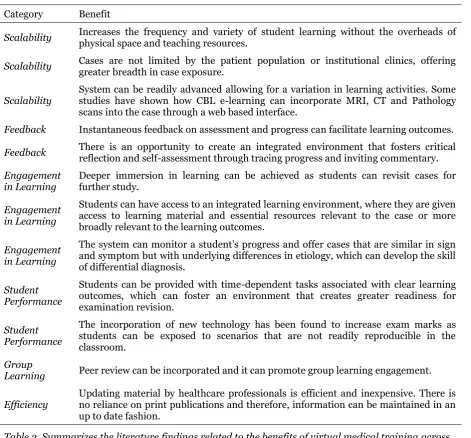
Category Benefit
Scalability Increases the frequency and variety of student learning without the overheads of physical space and teaching resources.
Scalability Cases are not limited by the patient population or institutional clinics, offering greater breadth in case exposure.
Scalability System can be readily advanced allowing for a variation in learning activities. Some studies have shown how CBL e-learning can incorporate MRI, CT and Pathology scans into the case through a web based interface.
Feedback Instantaneous feedback on assessment and progress can facilitate learning outcomes.
Feedback There is an opportunity to create an integrated environment that fosters critical reflection and self-assessment through tracing progress and inviting commentary.
Engagement
in Learning Deeper immersion in learning can be achieved as students can revisit cases for further study.
Engagement in Learning
Students can have access to an integrated learning environment, where they are given access to learning material and essential resources relevant to the case or more broadly relevant to the learning outcomes.
Engagement in Learning
The system can monitor a student’s progress and offer cases that are similar in sign and symptom but with underlying differences in etiology, which can develop the skill of differential diagnosis.
Student Performance
Students can be provided with time-dependent tasks associated with clear learning outcomes, which can foster an environment that creates greater readiness for examination revision.
Student Performance
The incorporation of new technology has been found to increase exam marks as students can be exposed to scenarios that are not readily reproducible in the classroom.
Group
Learning Peer review can be incorporated and it can promote group learning engagement.
[image:4.595.67.539.186.624.2]Efficiency Updating material by healthcare professionals is efficient and inexpensive. There is no reliance on print publications and therefore, information can be maintained in an up to date fashion.
Table 2. Summarizes the literature findings related to the benefits of virtual medical training across to a range of categories
management systems and virtual learning environments merely personified the classroom environment into an online delivery format (McLoughlin and Lee 2010). While rich and interactive content existed, they relied on tasks that were prescribed and failed to align with the four key areas that were pivotal to personalized learning through digital technology: (1) allow learners to make informed educational decisions, (2) diversify and recognize different forms of skills and knowledge, (3) create diverse learning environments and (4) include learner focused forms of feedback (Green et al. 2005). As Sampson and Karadiannidis (2002) argued: “An intelligent [personalized] learning environment is capable of automatically, dynamically, and continuously adapting to the learning context, which is defined by the learner characteristics and type of educational material being exchanged.” The aforementioned seems to suggest that the failures of past systems have been a result of a lack of understanding of end-user requirements. The stipulated suggestion surrounding student disorientation and disillusionment regarding the existing ecosystem of e-learning platforms was not because they did not help, but simply because they were limited in their potential, favouring an ‘educator-first’ over a ‘student-first’ approach to design. Therefore, it is critical that end-users are engaged into the process of design to cater for student-centric learning, which implies the need for participatory design practices as a methodology to the development of computational systems in e-learning. The participatory design principles and their corresponding motivation from within the literature is briefly delineated below.
The advent of modernity and the technological paradigm that it permeated, proliferated an evolution in the epistemology of design philosophy, promoting functionalism as a core tenet of the design process. While this ideological pursuit placed user requirements at the forefront of design deliberation and transformed the epoch of design culture into an amalgamation of design and applied social science; the design process was perpetually accompanied by an emergent problem: it was not clear as to who should define the system requirements (Suchman 1995). The user-centred design doctrine perceived technical expertise as an authoritative voice in system design requirements positing a design process ‘for the user’ (where user solutions are driven by designer presumption), yet without the user (where users are represented as a reactive component within a static system) (Frascara 2002). The underlying assumption here is that the designer’s point-of-view is sufficient enough to extrapolate the desires, needs and use cases of their audience across myriad contexts. While such assumptions have a place in innovative pursuits that transcend the conceptuality of its context, such assumptions have the capacity to hinder the adoption of emerging technology given its displacement from technology-in-use and its failure to recognize the variability of user context and motivation (Suchman 1995) – an issue that can only be rectified through a design process that involves and empowers the user’s voice. It is this latter conceptualization that has promulgated participatory design philosophy across multitude domains; an ideology that disintegrates the disparity between the designer and the user through the ‘democratization of design’, which emphasizes that design for people can only be truly achieved when designed with people. It argues that individuals are capable of being articulate, expressive and creative when they are provided with the appropriate tools to express themselves.
3
Methodology
3.1
Step 1: Requirements Elicitation Through Participatory Design
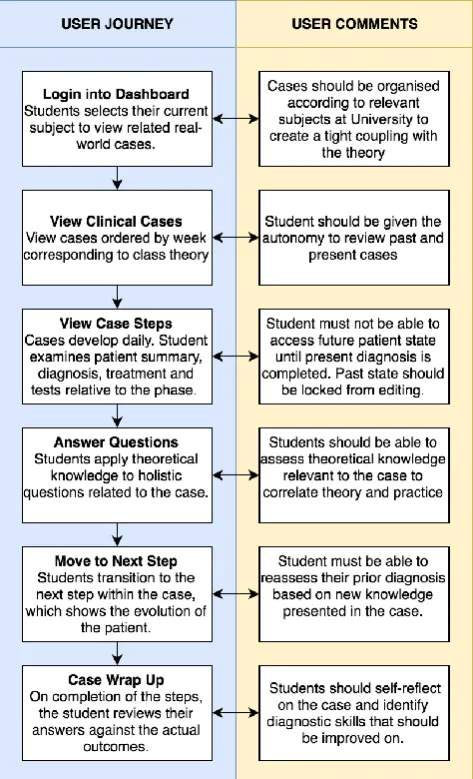
[image:6.595.180.417.317.707.2]As indicated in Section 2.2, participatory design is a philosophy that emerged after recognising the drawbacks of conventional development approaches that presumptively implementing systems for users, without the user. In designing the ideal e-learning platform, we wanted to ensure that we involved end-users throughout the whole process of design. Before starting the system development, we documented the current paper-based CBL process of instruction by immersing in one of the educational environments. This provided us with the necessary context to better understand the limitations of the current approach and gauge from end-users how the method of instruction may be improved computationally. The next step, involved engaging with medical students in the physical manifestation, design and representation of the CBL platform through partaking in design exercises conducted on a whiteboard. We asked students to embody their visualisation of the CBL platform and asked them to define each segment of the diagnostic process. While the students engaged in the exercise, we used the photo elicitation technique to derive further insights. We also disintegrated the rigidity of conventional software development by amalgamating the ‘requirements elicitation’ and ‘prototyping’ phases. We approached it in this way as we noticed that user perceptions of a system’s illustrated interactions differed quite markedly from their expectations in an interactive implemented system. Therefore, by prototyping individual components iteratively and in-sync with their photo designs, we were able to gain more insightful feedback. On completion of this process, we generated a flow-chart that showcased the optimal user-journey and this formed the foundation of our system’s architecture as illustrated in Figure 1.
3.2
Step 2: System Interactions
Each week, students were exposed to a particular case that reflected a real-world patient scenario. Students were provided with a case outline that divulged dialogue with a simulated patient whose medical history could be extrapolated and inferred from. Students were required to go through the process of diagnosing the patient based on the information at hand. Fundamental to our system was the notion that we wanted to model time-bound patient development, much in the way that doctor-patient interactions occurred in the real-world. In other words, a doctor-patient would ordinarily visit a practicing doctor with their symptoms and after an initial diagnosis / consultation, the patient may come back for a follow-up if the symptoms persist or new symptoms arise. This is of particular importance in diagnostic medicine as the symptoms outlined during conception are not necessarily indicative of the end-diagnosis. A doctor would be required to review their clinical notes associated with the initial consultation and update the diagnosis and/or treatment as new information was available. The ability to review past clinical insights and update them as new knowledge is made available is a distinguishing quality that defines our system. A demonstration of critical components of our system is made available in the ensuing sections.
[image:7.595.71.417.398.485.2]3.2.1
Table of Contents (Overview)
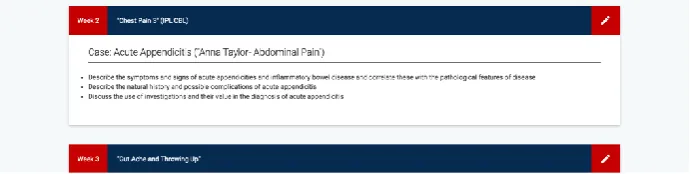
Figure 2 shows the view shown to a student upon first selecting a subject they are currently enrolled into within the system. Students are presented with a consolidated view of all the cases related to their current course and are provided with insights into the objectives of the case and the relationship that the case has with the theory they are learning at university. Illustrating this relationship within the system is important as it enables students to correlate their expectations of the case with learning outcomes acquired through theoretical studies. Students are also provided with functionality that displays their progress through past and present cases, using a colour coded system. Green boxes represent cases that have been completed with high accuracy, navy blue illustrates a case currently in progress and orange indicates that case outcomes conflicted with the student’s analysis extensively encouraging students to review and re-attempt.
Figure 2: A consolidated view of the cases a student is required to complete over the course of the Semester.
3.2.2
Weekly Case: A Step by Step Process
Figure 3: An example case outline provided to a student and the summary categories that they need to input information into is shown.
3.2.3
Case Analysis
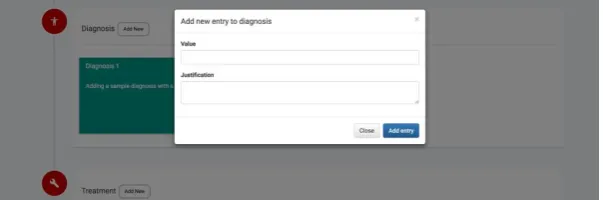
On summarising the case, students are required to provide a diagnosis, treatment plan, order additional tests and answer questions relevant to the scenario. There is a dual purpose behind this step. In terms of the diagnosis, treatment plan and ordering of additional tests, the student is able to develop their clinical diagnostic skills related to the scenario. This enables them to develop the clinical skills required for the real-world. By navigating through the various steps, students are able to review their prior analysis iteratively, which encourages forward thinking and critical self-reflection. The idea behind this is that seasoned practitioners are able to identify nuances in a clinical case that might be representative of a more endemic future problem. Critical to deep learning is not merely answering a case, but also justifying one’s answer. This ensures that students are rationalising and reflecting on their clinical decision-making process. This is important in conventional medical practice, as clinicians need to reflect on the reasons behind what warranted their initial prognosis, particularly when that diagnosis changes over time. The purpose of the ‘question answering’ segment on the other hand is to ensure that students understand the theoretical underpinnings of the case and to associate the case specificities to educational learning outcomes. In this way, the system not only aims to prepare students for complex clinical situations, but simultaneously add value to the theoretical learning processes prevalent through their formal academic studies.
Figure 4: A student is required to complete a diagnostic analysis of the case. This figure shows a partial view of the system. Students need to present their diagnosis, treatment and further testing insights combined with a justification for its selection.
3.2.4
Case Wrap-up
[image:8.595.72.374.451.551.2]4
EVALUATION
4.1
Evaluation Setup
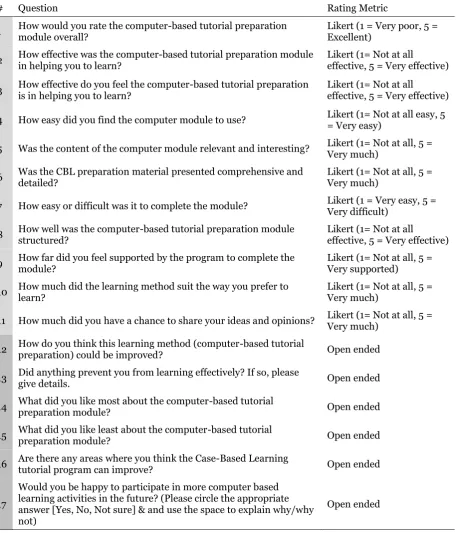
The goal of this paper is to explore the efficacy of our e-learning platform as an alternative to the paper-based system for case-based learning in Medicine. In order to do this, we conducted a user evaluation of the system with 209 UTAS undergraduate Medical students, predominantly in their 2nd year of study, after obtaining approval from the UTAS Ethics Committee. Upon using the system in a simulated setting, students were asked a combination of closed and open-ended questions to assess the user’s satisfaction with the system.
# Question Rating Metric
1 How would you rate the computer-based tutorial preparation module overall? Likert (1 = Very poor, 5 = Excellent)
2 How effective was the computer-based tutorial preparation module in helping you to learn? Likert (1= Not at all effective, 5 = Very effective)
3 How effective do you feel the computer-based tutorial preparation is in helping you to learn? Likert (1= Not at all effective, 5 = Very effective)
4 How easy did you find the computer module to use? Likert (1= Not at all easy, 5 = Very easy)
5 Was the content of the computer module relevant and interesting? Likert (1= Not at all, 5 = Very much)
6 Was the CBL preparation material presented comprehensive and detailed? Likert (1= Not at all, 5 = Very much)
7 How easy or difficult was it to complete the module? Likert (1 = Very easy, 5 = Very difficult)
8 How well was the computer-based tutorial preparation module structured? Likert (1= Not at all effective, 5 = Very effective)
9 How far did you feel supported by the program to complete the module? Likert (1= Not at all, 5 = Very supported)
10 How much did the learning method suit the way you prefer to learn? Likert (1= Not at all, 5 = Very much)
11 How much did you have a chance to share your ideas and opinions? Likert (1= Not at all, 5 = Very much)
12 How do you think this learning method (computer-based tutorial preparation) could be improved? Open ended
13 Did anything prevent you from learning effectively? If so, please give details. Open ended
14 What did you like most about the computer-based tutorial preparation module? Open ended
15 What did you like least about the computer-based tutorial preparation module? Open ended
16 Are there any areas where you think the Case-Based Learning tutorial program can improve? Open ended
17
Would you be happy to participate in more computer based learning activities in the future? (Please circle the appropriate answer [Yes, No, Not sure] & and use the space to explain why/why not)
[image:9.595.74.531.200.734.2]Open ended
4.2
Analysis of Mean User Satisfaction Ratings (Questions 1
–
11)
[image:10.595.73.345.180.352.2]Questions 1 – 11 presented medical students with a range of questions regarding their satisfaction of the computational CBL e-learning system. The students were required to answer these questions according to a 5 point Likert scale. The questions centred around themes related to effectiveness in the assistance of learning, engagement, ease of use, environment and its suitability for study. Across all question categories (excluding Q7, where a lower Likert score indicated better performance), an average score of 4 out of 5 was achieved, reflecting the efficacy of the system. This shows that the system performed formidably and was well received by the students included in this survey.
Figure 5: The following figure shows the mean rating for the first 11 questions in the questionnaire from Table 3, according to a 5 point Likert scale.
Of noteworthy commentary and significance are the responses to questions 10 and 11, where students were asked whether this approach to learning was favoured over their current approach. Students on the whole responded extremely positively to this. This indicates that a computational system offers advantages that are preferred to by contemporary students compared to other approaches.
4.3
Analysis of Open Ended Questions 12
–
17
In this section, we will summarise the key comments made by students in the open-ended questions. When students were asked about ways in which the system could be improved, the overwhelming recommendation was to extend the features of the case wrap-up. Students felt as though it would be beneficial to be provided with a final quiz to assess their understanding of the case and its conclusions, to ensure that they have understood where they misconstrued interpretations and to ensure that the knowledge gaps have been adequately mitigated. When asked about any features that prevented students from learning, students offered constructive feedback on the UX. Students suggested that a non-modal input form in the case summary would be more appropriate as students felt that the modal impinged on their ability to refer back to the case outline when adding in their conclusions. Regarding the features that were most welcomed by the students, the systematic and organised structure of the system was commended, particularly as it encouraged students to iterate and improve their answers with ease. They found use of the system easy and convenient with a low-technical overhead for those that were less computer-literate and commented that it encouraged a more comprehensive learning experience, which was particularly showcased through the case wrap-up at the end. Regarding areas of improvement, it was recommended that the system reinforces the use of standard acronyms in the recording of patient notes and provided greater fluidity in ascribing case summary headings (i.e. allowing the end-user to input new summary areas, such as immunisations, if necessary).
5
CONCLUSION
Ultimately, this study illustrates that computational systems have utility value as an e-learning tool for case-based learning in Medical education. In our study, we designed a case-based e-learning platform for medical students that was shown to enrich the learning experience for students and that illustrated a high satisfaction rating in our post-system simulation evaluation. Through the development process, we found that engaging end-users was a vital part to developing a system that met with high satisfaction and we discovered additional tools that added value to the system through this process, such as real-time medical terminology recommendation when inputting clinical notes. For our future work, we hope to extend on the capabilities of the system, using the user-evaluation data to update the system. In particular, we aim to implement UX changes that enables the system to better represent systems used in current clinical contexts and also address any functional drawbacks noted in the evaluation. We also hope to use the data ascertained through user engagement with the system to predictively identify student strengths and weaknesses. This data can be used to recommend new cases to practice for identified areas of diagnostic weakness, which can improve a student’s readiness to succeed in both academic and clinical settings.
6
REFERENCES
Aparicio, F., De Buenaga, M., Rubio, M., and Hernando, A. 2012. "An intelligent information access system assisting a case based learning methodology evaluated in higher education with medical students", Computers & Education (58:4), pp. 1282-1295(doi: 10.1016/j.compedu.2011.12.021). Frascara, J. 2002. Design and the social sciences, London: Taylor & Francis/Contemporary Trends
Institute.
Garrett, B., and Callear, D. 2001. "The value of intelligent multimedia simulation for teaching clinical decision-making skills", Nurse Education Today (21:5), pp. 382-390(doi: 10.1054/nedt.2001.0568).
Gormley, G., Collins, K., Boohan, M., Bickle, I., and Stevenson, M. 2009. "Is there a place for e-learning in clinical skills? A survey of undergraduate medical students’ experiences and attitudes", Medical Teacher (31:1), pp. e6-e12(doi: 10.1080/01421590802334317).
Green, H., Facer, K., Rudd, T., Dillon, P., and Humphreys, P. 2005. "Futurelab: Personalisation and Digital Technologies", Research report, pp. 6-33 https://telearn.archives-ouvertes.fr/hal-00190337/ .
Mann, K. 2010. "Theoretical perspectives in medical education: past experience and future possibilities", Medical Education (45:1), pp. 60-68(doi: 10.1111/j.1365-2923.2010.03757.x). McLoughlin, C., and Lee, M. 2010. "Personalised and self-regulated learning in the Web 2.0 era:
International exemplars of innovative pedagogy using social software", Australasian Journal of Educational Technology (26:1)(doi: 10.14742/ajet.1100).
Ryback, D., and Sanders, J. 1980. "Humanistic Versus Traditional Teaching Styles and Student Satisfaction", Journal of Humanistic Psychology (20:1), pp. 87-90(doi: 10.1177/002216788002000106).
Sampson, D., and Karagiannidis, C. 2002. "Personalised Learning: Educational, Technological and Standardisation Perspective", Interactive Educational Multimedia (4:1), pp. 24-39.
Suchman, L. 1995. "Making work visible", Communications of the ACM (38:9), p. 56-ff.(doi: 10.1145/223248.223263).
Thakore, H., and McMahon, T. 2006. "Virtually there: e-learning in medical education", The Clinical Teacher (3:4), pp. 225-228(doi: 10.1111/j.1743-498x.2006.00114.x).
Thistlethwaite, J., Davies, D., Ekeocha, S., Kidd, J., MacDougall, C., Matthews, P., Purkis, J., and Clay, D. 2012. "The effectiveness of case-based learning in health professional education. A BEME systematic review: BEME Guide No. 23", Medical Teacher (34:6), pp. e421-e444(doi: 10.3109/0142159x.2012.680939).
Acknowledgements
This work was supported by the Industrial Strategic Technology Development Program, 10052955, Experiential Knowledge Platform Development Research for the Acquisition and Utilization of Field Expert Knowledge, funded by the Ministry of Trade, Industry & Energy (MI, Korea). This work was also funded by the Asian Office of Aerospace Research and Development(AOARD) grant, #FA2386-16-1-4045.