EXTENDED RELEASE MATRIX TABLETS
OF TRIMETAZIDINE HCL
ANNAI VEILANKANNI'S PHARMACY COLLEGE SAIDAPET, CHENNAI – 600 015
OCTOBER - 2015 A Dissertation Submitted to
THE TAMILNADU Dr. M.G.R. MEDICAL UNIVERSITY,
CHENNAI-600 032
In partial fulfillment for the award of degree of MASTER OF PHARMACY
IN
PHARMACEUTICS Submitted by
Reg. No.: 261311052
Under the Guidance of
V. Sujini Devi,
M. Pharm, Assistant professorAt the outset, I thanks to God who brought this opportunity, gave me the
abundance of requiste determination and strength to pursue and complete this
course and dissertation successfully. It is my immense pleasure privileges to
acknowledge the untold contribution, thankfully received, the blessed inspiration
and unreserved support I had from the individual and institutional sources with
whom I have been in association during course of my last two years of pursuit I
hereby take this opportunity to acknowledge all those who have helped me in the
completion of this dissertation work.
I am extremely grateful to
Dr.Devaraj
, chairman and
Dr.Devanand
,
secretary Annai veilankanni’s pharmacy college, saidapet, Chennai-600015 for
providing me the opportunity to do project at Caplin point Laboratories ltd,
pondycherry.
It’s a fact every mission needs a spirit of hard work and dedication but
it needs to be put on the right on the path to meet its destination and in my case this
credit goes to my respected teacher
, Dr.M.Senthil kumar
principal, Annai
veilankanni’s pharmacy college I am very much thankful to him for his
inspiration, kind co-operation, caring attitude, timely help, valuable guidance and
constant encouragement during every phase of this dissertation . His patience way
of sharing knowledge, our numerous discussions support always propelled and
professor , Department of pharmaceutics
, Mrs.S.Valarmathi
, Assistant professor
department of pharmaceutics and
Mr. Sathish
Assistant professor for their co-
operation.
I am extremely grateful to
Mr.M.Siva kumar
assistant manager
Formulation Development for providing me the opportunity to do my project
Caplin Point Laboratories Limited, Pondycherry
I am indebted to industrial guide
Mr.M. Duaraivel
manager
Formulation development for allowing me to accomblish the projecr work in this
industry . He was always there with his enthusiastic suggestions and corrections.
I profoundly express my sincere thanks to
Mr.E.Arumugam
production manager,
Mr. S.Davamani
Manager Quality Control Department.
Mr.S.Shakul hameed
assistant manager production.
I would also like to extent my sincere thanks to the entire staff of
the Annai Veilankanni’s pharmacy college. Saidapet, Chennai. And caplin
pointlaboratories ltd pondycherry.
I thanks everyone who helped me directly or indirectly in the
S. No.
Topic
Page No.
1.
Introduction
1-28
2
Aim & Objective
29-30
3.
Plan of Work
31
4.
Literature Review
32-44
5.
Drug – Excipients Profile
45-56
6.
Methodology
57-71
7.
Results and Discussion
72-87
8.
Summary and Conclusion
88-89
9.
Bibliography
SI.NO
TITLE
PAGE
NO
1
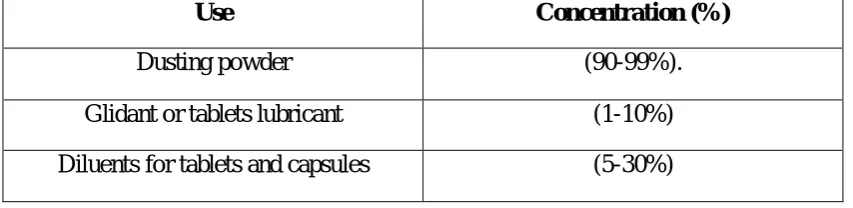
Application in pharmaceutical formulation or technology
54
2
Materials Used
57
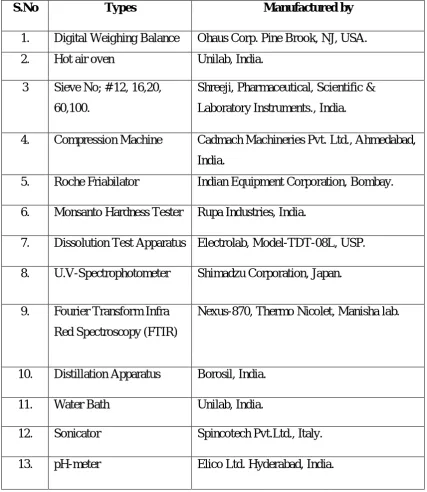
3
Instruments Used
58
4
Formulation of Trimetazidine HCL Matrix Tablets
63
5
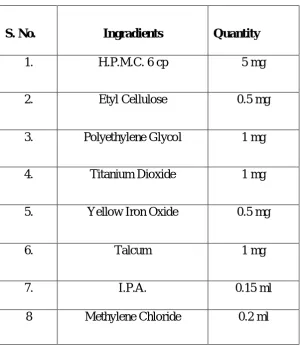
Coating Formula
66
6
Percentage deviation allowed under weight variation
67
7
Calibration curve of Trimetazidine HCL
78
8
Preformulation studies of pure drug and polymers
79
9
Preformulation studies of blend
80
10
Results of Thickness, weight variation, Hardness, Friability
and Drug content
81
11
Percentage release of drug of various Formulations
82
12
% Swelling Index of Tablets of Batch F1 to F
84
13
Huguchi Modeling & Zero order Kinetic
85
14
Stability studies of formulation F- stored at 30 C/65 % RH
87
15
Stability studies of formulation F- stored at 40 C/75 % RH
88
OBJECTIVE
:
Trimetazidine HCL is used as an potential treatment of
Angina pectorise. Trimetazidine HCL is the antianginal compound approved for
clinical use is widely used for treatment of antianginal either alone or in
combination with other antianginal agents. However, the main limitation to
therapeutic effectiveness of Trimetazidine is its dose-dependent hematological
toxicity, low therapeutic index, short biological half-life, and poor
bioavailability.After oral administration, it is rapidly absorbed from the
gastrointestinal tract (GIT) exhibiting a peak plasma concentration of 84 ng/ml at
1.8+/- .7 hrs hours. The biological half-life of Trimetazidine is 6 hours, thus
necessitating frequent administration (3 to 4 times a day) to maintain constant
therapeutic drug levels. To reduce the dosing frequency and improve the patient
compliance by extended release matrix tablets
METHODS:
Trimetazidine HCL 35mg matrix tablets were prepared by wet
granulation method. Hydrophilic polymers Hydroxy propyl methyl cellulose
K15-CR, Micro crystalline cellulose, Ethyl cellulose, Metalose, PVP K30 polymer
matrix system is used to achieve desirable extended release effect. The 9
formulations of trial batches were taken by different concentration of polymers and
all the formulations were evaluated physicochemical methods.Preformulation
studies was performed for all the ingredients and Drug and excipients interaction
also evaluated by FTIR method. The tablets were compressed by average weight of
180mg. Inprocess tests like weight uniformity test, hardness, friability,
compatible. Various formulations of sustained release matrix tablets of
Trimetazidine HCL were developed using various polymers viz, HPMC K-15CR,
Hypermellose, Ethyl Cellulose in different proportions and combinations by Wet
Granulation technique. The tablets were evaluated for physical characterization,
in
vitro
swelling behavior,
in vitro
release study and stability studies.
Results of
in vitro
release profile indicated that formulation F9 was
the most promising formulation as the extent of drug release from this formulation
was high as compared to other formulations. Results of in-vitro swelling study
indicate that the formulation F9 was having considerable swelling index. Stability
study was conducted on tablets of Batch F9 stored at 30
0C (Room Temperature)
and 40
0C for one month. Tablets were evaluated for hardness, friability, in-vitro
release profile and drug content. After one month no significant changes were
observed in any of the studied parameters during the study period, thus it could be
concluded that formulation was stable. It was concluded that the tablets of batch F9
had considerable swelling behaviors and
in vitro
drug release. Percentage drug
release in 8 hr is 80.77. It was observed that tablets of batch F9 followed the
Huguchi
release profiles
.
From the above results and discussion it is concluded that
formulation of Extended release matrix tablet of Trimetazidine HCL containing
HPMC K-15 (19.44%) and Hypermellose (19.44%), Ethyl cellulose (19.44%)
batch F9 can be taken as an ideal or optimized formulation Extended release matrix
tablet for 8 hour release as it fulfills the requirements for extended release matrix
API
Active pharmaceutical ingredient
BP
British pharmacopoeia
BD
Bulk density
Conc
Concentration
CI
Carr’s index
CR
Controlled release
HR
Hausner’s ratio
TD
Tapped density
NIR
Near infra red
MCC
Micro crystalline cellulose
Nm
Nanometer
µm
Micrometer
Mm
Millimeter
Cm
Centimeter
µl
Micro liter
Ml
Milli liter
UV
Ultra violet
USP
United States Pharmacopoeia
IP
Indian Pharmacopoeia
Mcg
Microgram
Mg
Milligram
Gm
Gram
Cps
Centipoise
DT
Disintegration time
TMT
Trimetazidine
qS
Quantity sufficient
pvp
Poly vinyl pyrolidone
DT
Disintegration time
HPMC
Hydroxy Propyl Methyl Cellulose
EC
Ethyl Cellulose
SR
Sustained Release
HCl
Hydrochloride
Min
Minute
ºC
Degree Celsius
GIT
Gastri Intestinal Tract
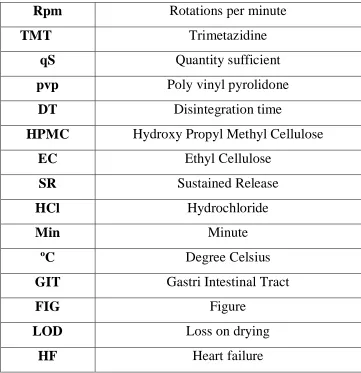
FIG
Figure
LOD
Loss on drying
[image:12.612.125.486.70.443.2]Figure.
No.
Name of Figure
Page
No.
1
Schematic representation of Barrier mediated models of
sustained release dosage form regimen
7
2
Schematic representation of Embedded matrix concept as
a mechanism of controlled released in sustained release
dosage form
8
3
Schematic representation of matrix release system
11
4
Schematic representation of Bioerodible matrix system
12
5
Structure of Trimetazidine HCL
45
6
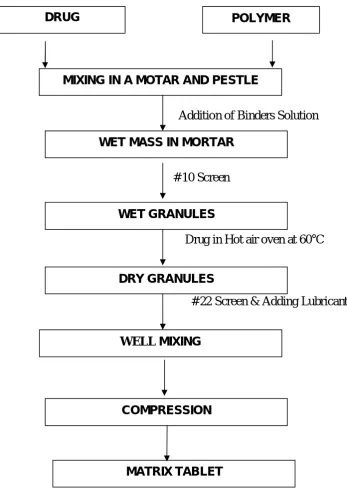
Schematic representation of preparation of Matrix Tablet
65
7
IR Spectrum of Pure Drug (Trimetazidine HCL)
73
8
IR Spectrum of drug + HPMC K15 CR
74
9
IR Spectrum of Drug + Metalose
75
10
IR Spectrum of Drug + Ethylcellulose
76
11
Absorbance Maxima of Trimetazidine HCL
77
12
Calibration Curve of Trimetazidine HCL
78
13
Graph of the Cum. % drug release versus Time (hrs)
83
14
Comparison of % swelling index of various formulations
84
15
Huguchi
Modeling
86
Department of Pharmaceutics. Page 1
1. INTRODUCTION
Oral route of drug administration is oldest and safest mode of drug
administration. It posses several advantages. It does not possess the sterility problem and
minimal risk of damage at the site of administration. It provides accurate dosing without
assistantship of administration. In conventional oral drug delivery system, there is little or
no control over release of drug, and effective concentration at the target site can be
achieved by administration of grossly excessive dosage form. This kind of dosing pattern
result in constantly changing, unpredictable and often sub or supra therapeutic plasma
concentration, leading to marked side effects in some cases. Moreover, the rate and extent
of absorption from conventional formulation may vary greatly, depending on factor such
as physiochemical properties of drug, presence of excipients, various physiological
factors such as presence or absence of food, pH of gastrointestinal tract, G.I. motility etc.
The above problem can be minimized by oral controlled drug delivery. In oral
controlled drug delivery the amount of drug release is constantly predetermined and these
constant releases of drug provide a constant blood plasma level of drug for a therapeutic
response. The oral controlled drug delivery have many advantage to conventional
delivery- it decrease the fluctuation of drug plasma concentration, it reduce toxicity,
provide a sustained effects, reduced the dosing frequency. Apart from other advantage it
reduces total amount of drug used, improve patient compliance and reduced patient care
time.
The disadvantage of oral controlled release product are longer time to achieve
therapeutic blood concentration, possible increase variation in bioavailability after oral
administration, enhanced first pass effect, dose dumping, sustained concentration in oral
dose case, lack of doses flexibility and usually grater expense.
Department of Pharmaceutics. Page 2 Hydrophilic polymers are widely used in oral controlled drug delivery due to
their flexibility to produce desirable drug release profile, cost effectiveness, and broad
regulatory acceptance. Among the hydrophilic polymers, HPMC
(hydroxyproylmethylcellulose) is the most widely used carrier for the preparation of oral
controlled drug delivery system due to its properties such as its ability to swell upon
jellification once contact with water, and its very low toxicity and easy of manufacture,
the gel becomes a viscous layer acting as a protective barrier to both influx of water and
efflux of drug in the solution. On the other hand, hydrophobic polymer, such as EC can
be alternative to the swelling polymers by forming an inert matrix with no physiological
action and stable at different pH values and moisture levels when a tablet with
hydrophobic matrix is placed in the dissolution medium, the drug at surface is released
quickly, with a possible burst effects, requiring its replacement drug from inner layers
that must diffuse through the pores until it reaches the surface.
Physician can achieve several desirable therapeutics advantages by prescribing
sustained release dosage form. Since, the frequency of drug administration is reduced,
patient’s compliances can be improved and the drug administration can be made more
convenient as well. The blood level oscillation characteristics of multiple dosing form of
conventional dosage form is reduced, because more even blood level is maintained in the
design of sustained release dosage form. The total amount of drug administered, thus
maximum availability with a minimum dose. In addition, the safety margin of high
potency drug can be increased and the incidence of both local and systemic adverse
effects can be reduced in sensitive patients. Overall, increased administration of sustained
release dosage form gives increased reliability.
Sustained release technology is relatively new field and as a consequence,
research in the field has been extremely fertile and has produced many discoveries. With
many drugs, the basic goal is to achieve a steady state blood level that is therapeutically
Department of Pharmaceutics. Page 3 The design of proper dosage form is an important element to accomplish this
goal. Sustained release, sustained action, prolonged action, controlled release, extended
action, timed release and depot dosage form are term used to identify drug delivery
system that are designed to achieve prolonged therapeutic effect by continuously
releasing medication over an extended period of time after administration of a single
dose. In the case of oral sustained released dosage form, an effect is for several hours
depending upon residence time of formulation in the GIT.
Not all the drugs are the suitable candidates for the sustained release dosage
form. Ideal characteristic of the drug for the sustained release dosage form are;
Drug should have a shorter half-life as drug with a longer half-life are inherently
long acting drugs.
Drug should be absorbed from large portion of gastrointestinal tract, since
absorption must occur through the gut.
Drug should be having a good solubility profile to be a good candidate for
sustained release dosage form.
Dose of the drug should not be too large, as a larger dose is to be incorporated
Department of Pharmaceutics. Page 4
1.1POTENTIAL ADVANTAGE OF SUSTAINED RELEASE DOSAGE FORM:
1) Avoid patient’s compliance problem due to reduced frequency of dosing.
2) Blood level oscillation characteristics of multiple dosing of conventional dosage
form are reduced because a more even blood level is maintained.
3) Employ a less total drug.
4) Minimize or eliminate local or systemic side effects.
5) Minimize drug accumulation with chronic dosing.
6) Obtained less potential of reduction in drug activity with chronic use.
7) Improved efficiency in treatment.
8) Cure or control condition more promptly.
9) Improved control of condition i.e. reduced fluctuation in drug level.
10) Improved bioavailability of some drugs.
11) Make a use of special effects, e.g. sustained release aspect for relief of
arthritis by dosing before bedtime.
12) Economy.
13)Overall, administrations of sustained release form enable increased reliability of
therapy.
Department of Pharmaceutics. Page 5
1.2 MATRIX SYSTEM:
The matrix system is most often used for a drug-controlled release from a
pharmaceutical dosage form. Among the innumerable method used in controlled release
drug from pharmaceutical dosage form, the matrix system is the most frequently applied;
it is release system for delay and control of the release of the drug that is dissolved or
dispersed in a resistant supports to disintegration.
To define matrix, it is necessary to know the characters that differentiate it from
other controlled release dosage forms. Hence the following must be considered:
The chemical nature of support (generally, the support are formed by polymeric
net)
The physical state of drug (dispersed under molecular or particulate form or both).
The matrix shape and alteration in volume as a function of time.
The route of administration (oral administration remains the most widely used but
other routes are adaptable).
Department of Pharmaceutics. Page 6
1.3 THE CLASSIFICATION OF MATRIX SYSTEM:
Mineral matrix:
Drug retained in the support.
Drug adsorbed on the support
Lipidic matrix:
Delivery by diffusion.
Delivery by surface erosion
Hydrophillic matrix:
Unlimited swelling, delivery by diffusion.
Limited swelling controlled delivery through swelling
Inert matrix:
Controlled delivery by diffusion
Biodegradable matrix:
Non-Lipidic.
1.4 ADVANTAGES OF MATRIX SYSTEM
The interest awakened by matrix system in last few years is completely justified in
view of the major advantages. Among these, the following stand out. With proper control
of manufacturing process, reproducible release profiles are possible.
There is no risk of “dumping” of a large part of dose, through the structure makes
the immediate release of a small amount of active principle unavoidable.
Their capacity to incorporate active principle is large, which suits them to delivery
of large dosage
Department of Pharmaceutics. Page 7
1.5 PRINCIPAL OF MODIFIED DRUG RELEASE:
Following either of the two principles can modify drug release.
1.5.1 Barrier principal
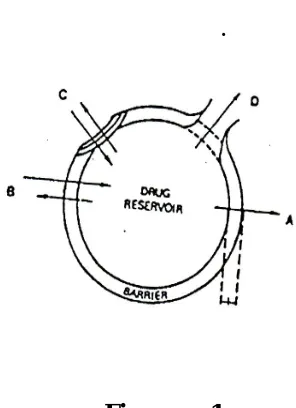
In this method the retardant material is imposed between the drug and elusion
medium. Drug release is by diffusion of the drug through the barrier and /or erosion of
the barrier or permeation of the barrier by moisture
[image:20.612.241.389.210.414.2].
Figure no.1.
Barrier mediated models of sustained release dosage form regimen.
A. Drug diffusion through the barrier,
B. permeation of barrier by elution media followed by drug dissolution,
C. Erosion of barrier releasing drug,
Department of Pharmaceutics. Page 8
1.5.2 Embedded matrix:
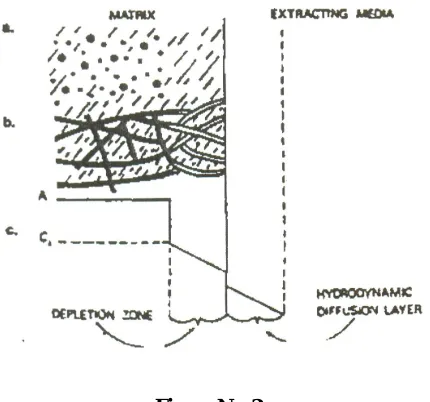
In this drug is dispersed/embedded in a matrix of retardant material that may be
encapsulated in a particulate form or compressed into the tablet. Drug release occurs by
permeation of water leaching extraction of diffusion of drug from the matrix and erosion
[image:21.612.220.435.185.386.2]of matrix material.
Figure No. 2
Embedded matrix concept as a mechanism of controlled released in sustained
release
A. dosage form design network model a drug is insoluble in the retardant material.
B Drug is soluble in the retardant material. Diffusion profile etc. Characterize drug
Department of Pharmaceutics. Page 9
1.6 SWELLABLE MATRIXS AS SYSTEM FOR ORAL DELIVERY:
Monolithic devices or matrices represent a substantial part of drug delivery
systems. Matrices containing swellable polymers are referred to as
Hydrogel matrices
Swellable control release systems.
Hydrophillic matrix tablet
Swellable matrices for oral administration are commonly manufactured as tablet
by compression of hydrophilic microparticulate polymers. Therefore, the most
appropriate classification for these systems is swellable matrix tablet. They are
constituted of a blend of drug and one or more hydrophilic polymers.
The release of drug from swellable matrix tablet is based on glassy-rubbery
transition of polymer as a result of water penetration into the matrix. The interaction
between water, polymer and drug are the primary factors for drug release. However,
various formulation variables such as polymer grade, drug–polymer ratio, drug solubility
and drug and polymer particle size, can influence drug release rate to greater or lesser
degree.
The central element of the mechanism of drug release in the gel layer (rubbery
polymer), which is formed around the matrix. The gel layer is capable of preventing
matrix disintegration and further rapid water penetration.Water penetration, polymer
swelling, drug dissolution and diffusion and matrix erosion are phenomenon determining
gel layer thickness. Finally drug release is controlled by drug diffusion through the gel
Department of Pharmaceutics. Page 10
1.7. MECHANISMS OF DRUG RELEASE FROM MATRIX SYSTEM
The release of drug from controlled devices is via dissolution of the matrix or
diffusion of drug through the matrix or a combination of the two mechanisms.
1.7.1. Dissolution controlled systems
A drug with slow dissolution rate will demonstrate sustaining properties, since the
release of the drug will be limited by the rate of dissolution. In principle, it would seem
possible to prepare extended release products by decreasing the dissolution rate of drugs
that are highly water-soluble. This can be done by:
Preparing an appropriate salt or derivative
Coating the drug with a slowly dissolving material – encapsulation dissolution
control incorporating the drug into a tablet with a slowly dissolving carrier – matrix
dissolution control (a major disadvantage is that the drug release rate continuously
decreases with time).
The dissolution process can be considered diffusion-layer-controlled, where the rate
of diffusion from the solid surface to the bulk solution through an unstirred liquid tablet
is the rate-determining step. The dissolution process at steady-state is described by the
Noyes-Whitney equation:
Dc/dt = kDA(Cs-C) = D/hA(Cs-C)
dC - dissolution rate
kd - the dissolution rate constant (equivalent to the diffusion coefficient
Divided by the thickness of the diffusion layer D/h)
D - Diffusion coefficient
Cs - saturation solubility of the solid
C - Concentration of solute in the bulk solution
Equation 1 predicts that the rate of release can be constant only if the following
Department of Pharmaceutics. Page 11 thickness and concentration difference. However, under normal conditions, it is unlikely
that these parameters will remain constant, especially surface area, and this is the case for
combination diffusion and dissolution systems.
1.7.2. Diffusion controlled systems
Diffusion systems are characterized by the release rate of a drug being dependent on
its diffusion through an inert membrane barrier, which is usually a water-insoluble
polymer. In general, two types or subclasses of diffusion systems are recognized:
reservoir devices and matrix devices.
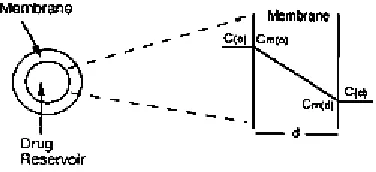
1.7.2.1. Reservoir devices
In these formulations where tablet coating constitutes the main factor in controlling
drug release. Examples of materials used to control drug release include hardened gelatin,
methyl or ethyl cellulose, polyhydroxymethacrylate, methacrylate ester copolymers, and
various waxes. Ethyl cellulose and methacrylate ester copolymers are the most commonly
[image:24.612.237.425.476.562.2]used systems in the pharmaceutical industry.
Department of Pharmaceutics. Page 12
1.7.3 Bioerodible and combination diffusion and dissolution system
Bioerodible devices constitute a group of system for which mathematical description
of release kinetics can be quite complex. Bioerodible matrix system consists of the drug
dispersed in an erodible matrix.
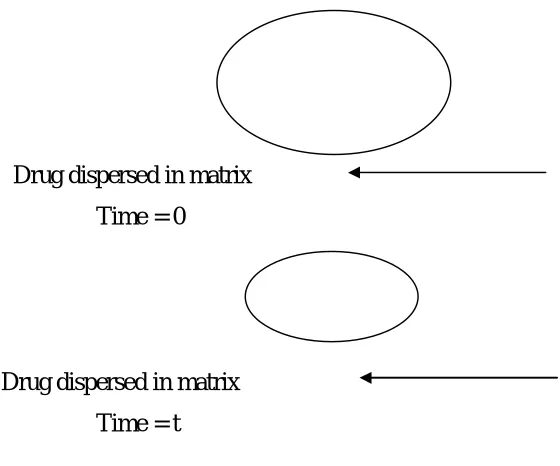
Drug dispersed in matrix
Time = 0
Drug dispersed in matrix
[image:25.612.162.442.157.390.2]Time = t
Figure 4: Representation of a Bioerodible matrix system.
Drug dispersed in the matrix before release at time = 0. At time = t release by drug
diffusion or matrix erosion has occurred.
The mechanism of release from simple erodible slab, cylinders, and sphere has been
described .by Eq. A simple expression describing release from all three of these erodible
devices is
M1/M = 1- (1-K0t/C0a)n
Where n=3 for a sphere, n=2 for a cylinder and n=1 for a slab. The radius of a
sphere, or cylinder, or the half-height of a slab is represented by a. Mt is the mass of a
drug released at infinite time. As a further complication, these systems can combine
diffusion and dissolution of both matrix material and the drug. Not only can drug diffuse
Department of Pharmaceutics. Page 13 complexity of the system can arise from the fact that, as the polymer dissolves, the
diffusional path-length for the drug changes. These usually result in a moving boundary
diffusion system. Zero order release can occur only if surface erosion occurs and surface
area dose not change with time. The inherent advantage of such a system is that
bioerodible property of the matrix dose not result in a ghost matrix.
The disadvantages of these matrix systems are that release kinetics is often hard to
control, since many factors affecting to both the drug and the polymer must be
considered. Another method for the preparation of bioerodible system is to attach the
drug directly to the polymer by a chemical bond. Generally, the drug is released from the
polymer by hydrolysis or enzymatic reaction. This makes control of the rate of release
somewhat easier. Another advantage of the system is the ability to achieve very high drug
loading, since the amount of drug placed in the system is limited only by the available
sites on the carrier.
A third type, which in this case utilizes a combination of dissolution and diffusion,
is that of a swelling controlled matrix. In this the drug is dissolved in the polymer, instead
of an insoluble or erodible polymer. This allows entrance of water which causes
dissolution of drug and diffusion out of the swollen matrix.
In these systems the release rate is highly dependent on polymer-swelling rate,
drug solubility, and the amount of soluble fraction in the matrix. This system usually
Department of Pharmaceutics. Page 14
1.8 ADVANTAGES OF HYDROPHILIC MATRIX TABLET :
1) With proper control of the manufacturing process, reproducible release profiles
are possible. The variability associated with them is slightly less than that
characterizing coated release form.
2) Structure allows an immediate release of small amount of active principle there is
no risk of dose dumping.
3) Their capacity to incorporate active principle is large, which suits them to
delivery of large doses.
4) The manufacturing processes are notably simple. Tablet formulation can be done
via direct compression or by wet granulation techniques.
5) Large variety of nonexpensives gelling agents is approved for oral use by the
Competent official organization.
6) The safety margin of high-potency drugs can be increased.
7) The drug release from hydrophilic matrices show a typical time dependent profile
i.e. decreased drug release with time because of increased diffusion path length.
1.9 FACTORS INFLUENCING THE DRUG RELEASE FROM MATRIX:
Choice of matrix material.
Amount of drug incorporated in the matrix.
Viscosity of the hydrophilic material in aqueous system at a fixed
Concentration.
Drug: matrix ratio.
Tablet hardness, porosity, and density variation.
Entrapped air in tablet.
Tablet shape and size.
Drug particle size.
Solubility of drug in aqueous phase.
Department of Pharmaceutics. Page 15
1.10 TABLET MANUFACTURING METHODS:
Tablets are manufactured by wet granulation, Dry granulation or direct compression
method.
1] Wet Granulation
Wet granulation is the process in which a liquid is added to a powder in a vessel
equipped with any type of agitation that will produce agglomeration or granules. These
granules after drying are compressed to form tablet.
2] Dry Granulation
In this technique, there is no use of liquids. The process involves the formation of
slugs. Then the slugs are screened or milled to produce granules. The granules formed are
then compressed to form tablet.
3) Direct compression
The term direct compression is used to define the process by which tablet is
compressed directly from powder blends of active ingredient and suitable excipients,
which will flow uniformly in the die cavity and forms a firm compact.
1.11 DRUG PROPERTIES RELEVENT TO CONTROLLED RELEASE
FORMULATIONS
The design of controlled - release delivery systems is subject to several variables of
considerable importance. Among these are the route of drug delivery, the type of delivery
system, the disease being treated, the patient, the length of therapy and the properties of
the drug. Each of these variables are interrelated and this imposes certain constrains upon
choices for the route of delivery, the design of the delivery system and the length of
therapy. Properties of drugs are very important for designing a sustained release dosage
Department of Pharmaceutics. Page 16
1.11.1 Physicochemical properties:
A) Aqueous solubility and pKa:
A drug to be absorbed it must be dissolved in the aqueous phase surrounding the
site of administration and then partition into the absorbing membrane. Two of the most
important physicochemical properties of a drug that influence its absorptive behavior are
its aqueous solubility and if it is a weak acid or base its pKa. These properties pay an
influential role in the performance of controlled release systems.
The aqueous solubility of a drug influences its dissolution rate, which in turn
establishes its concentration solution and hence the driving force for diffusion across
membrane.
Dissolution rate is related to aqueous solubility as shown by the Noyes-Whitney
equation that, under sink condition is:-
dc/dt = KDACS
Where, dc/dt = Dissolution rate
KD = Dissolution rate constant.
A = Total surface area of the drug particles.
Cs = Aqueous saturation solubility of the drug.
The dissolution rate is constant only if surface area 'A' remain constant, but the
important point to note is that the initial rate is directly proportional to aqueous solubility
Cs. Therefore, aqueous solubility of a drug can be used as a first approximation of its
dissolution rate. Drugs with low aqueous solubility have low dissolution rates and usually
suffer oral bioavailability problems.
Department of Pharmaceutics. Page 17 Aqueous solubility of weak acids and bases is governed by the pKa of the compound
and pH of the medium.
For weak acid,
St = So (1+ka/[H+]) = So(1+10 pH – pKa)…………...(1)
Where,
St = Total solubility (both ionized and un-ionized forms) of the weak acid
So = Solubility of the un - ionized form
Ka = Acid Dissociation constant
H+ = hydrogen ion concentration of the medium. .
Equation (1) predicts that the total solubility, st of a weak acid with a given pKa can
be affected by the pH of the medium.
For a weak base,
St = So (1+[H+] / Ka = So (1+10 Pka – PH) ……… (2)
Where ,
St = Total solubility (both conjugate acid and free base forms) of the weak base.
So = Solubility of the free base form
Ka= Acid dissociation constant of the conjugate acid.
So total solubility, St of a weak base whose conjugate acid has a given pKa, which
can be affected by the pH of the medium.
In general, extremes in the aqueous solubility of a drug are undesirable for
formulation into controlled release product. A drug with very low solubility and a slow
dissolution rate will exhibit dissolution limited absorption and yield an inherently
Department of Pharmaceutics. Page 18 Formulation of such a drug into a controlled release system may not provide
considerable benefits over conventional dosage forms. Any system upon diffusion of
drug through a polymer as the rate - limiting step in release would be unsuitable for a
poorly soluble drug, since the driving force for diffusion is the concentration of drug in
the polymer or solution, and this concentration would be low. For a drug with very high
solubility and a rapid dissolution rate, it is often quite difficult to decrease its dissolution
rate to slow its absorption. Preparing a slightly soluble form of a drug with normally high
solubility is, however, one possible method for preparing controlled release dosage
forms.
B) Partition Coefficient
Between time that a drug is administered and the time is eliminated from the body, it
must diffuse through a variety of biological membranes that act primarily as lipid like
barriers.
A major criteria in evaluation of the ability of a drug to penetrate these lipid
membranes is its apparent oil / water partition coefficient defined as
K = C0/CW
Where,
Co = Equilibrium concentration of all forms of the drug e.g ionized and
unionized in an organic phase at equilibrium.
Cw = Equilibrium concentration of all forms in aqueous phase.
In general, drugs with extremely large values of ‘K’ are very oil soluble and will
partition into membrane quite readily. According to Haunch correlation, the logarithm of
the activity of a drug or its ability to be absorbed and the logarithm of its partition
coefficient having parabolic relationship. The explanation for this relationship is that the
activity of a drug is a function of its ability to cross membranes and interact with the
Department of Pharmaceutics. Page 19 optimum partition coefficient value of a drug in which it most effectively permeates
membranes and thus shows the greatest activity.
The value of K at which optimum activity is observed is approximately 1000/1.
Drugs with a partition coefficient that is higher or lower than the optimum is, in general,
poorer candidates for formulation into controlled-release dosage forms.
C) Drug stability
One important factor for oral dosage forms is the loss of drug through acid
hydrolysis and/or metabolism in the GI tract. Since a drug in the solid state undergoes
degradation a much slower rate than a drug in suspension or solution. It is possible to
improve significantly the relative bioavailability of a drug that is unstable in the stomach;
the most appropriate controlling unit would be one that releases its content only in the
intestine. The reverse in the case for those drugs that are unstable in the environment of
the intestine, the most appropriate controlling unit in this case would be one that releases
its contents only in the stomach, so, drugs with significant stability problems in any
particular area of the GI tract are less suitable for formulation into controlled release
systems that deliver their content uniformity over the length of the GI tract. Controlled
drug delivery systems may provide benefits for highly unstable drugs because the drug
may be protected from enzymatic degradation by incorporation into a polymeric matrix.
D) Protein Binding
There are some drugs which having tendency to bind with plasma proteins (e.g.
Albumin) and causes retention of the drug in the vascular space. The main force of
attraction responsible for binding is vanderwal forces, hydrogen bonding and electrostatic
forces. In general, charged compounds, because of electrostatic effects.
If a drug binds with protein then the distribution of the drug into the extravascular
space is governed by the equilibrium process of dissociation of the drug from the protein.
The drug-protein complex can serve therefore as a reservoir in the vascular space for
Department of Pharmaceutics. Page 20 high degree of binding. Thus, the protein binding characteristics of a drug can play a
significant role in its therapeutic effect, regardless of the type of dosage form.
Extensive binding to plasma proteins will be evidenced by a long half-life of
elimination for the drug and such drugs generally does not required a controlled-release
dosage form, however, drugs that exhibit a high degree of binding to plasma protein also
might bind to biopolymers in the GI tract, which could have an influence on
controlled-drug delivery.
E) Molecular size and diffusivity:
Drugs in many controlled-release systems must diffuse through a rate controlling
membranes or matrix. The ability of a drug to diffuse through membranes, it's so called
diffusivity [diffusion coefficient), is a function of its molecular size (or molecular
weight). An important influence upon the value of the diffusivity. 'D', in polymers is the
molecular size for molecular weight) of the diffusing species. For most polymers, it is
possible to relate logD empirically to some function of molecular size as
Log D = -Sv log V + Kv = - SM logM + Km
Where,
V = molecular Volume.
M = molecular weight.
SV,Sm,Kv, Km = constant
The value of 'D' thus is related to the size and shape of the cavities as well as size
and shape of drugs. Generally, values of the diffusion coefficient for intermediate
molecular, weight drugs, i.e.150 to 400, through flexible polymers range from 10-6 to 10-9
cm2 / sec, with values on the order of 108 being most common. A value of approximately
10-6 is typical for these drugs through water as the medium. For drugs with a molecular
weight greater than 500, the diffusion co-efficient in many polymers frequently are so
Department of Pharmaceutics. Page 21 molecular weight drugs and/or polymeric drugs should be expected to display very slow
release kinetics in controlled release devices using diffusion through polymeric
membranes or matrices as the releasing mechanism.
1.11.2. Formulation variables
The physicochemical characteristics of the drug, in particular its aqueous solubility,
should be considered in the formulation of a matrix system. Other drug properties
affecting system design include drug stability in the system and at the site of absorption,
pH-dependent solubility, particle size and specific surface area.
Drug particle size
Effect of drug particle size on release is important in the case of moderately soluble
drugs. In the case of water-soluble aminophylline or propranolol HPMC-based tablet an
increase in drug particle size did not significantly alter the release rate of the drug. A
noticeable effect was seen only at a low drug: HPMC ratio and at a large drug particle
size (above 250µm), in this case, rapid dissolution of the water soluble drug would leave
a matrix with low tortuosity and high porosity. Another study showed that for a given
effective surface area, diclofenac particle size influenced the release rate from HPMC
tablet. The smallest particle size of drug dissolved more easily when dissolution medium
penetrated through the matrix resulting in a greater role for diffusion. The larger particle
size dissolved less readily and therefore was more prone to erosion at the matrix surface.
Drug: polymer ratio
For diclofenac tablet formulated with HPMC, an increase in polymer: drug ratio
reduced the release rate. This was because an increase in polymer concentration caused
an increase in the viscosity of the gel (by making it more resistant to drug diffusion and
erosion) as well as the formation of a gel layer with a longer diffusional path. Diffusional
release of the water soluble drug metoprolol decreased with increasing HPMC
incorporation. By varying the polymer level (Methocel® K4M 10-40%), Nellore et al.
Department of Pharmaceutics. Page 22
Polymer type
Various grades of commercially available HPMC differ in the relative proportion of
the hydroxypropyl and methoxyl substitutions; increasing the amount of hydrophilic
hydroxypropyl groups leads to a faster hydration: Methocel® K >Methocel® E >
Methocel® F. Generally rapid hydrating Methocel® K grade is preferred, especially for
highly soluble drugs where a rapid rate of hydration is necessary. It is important to note
that an inadequate polymer hydration rate may lead to dose dumping, due to quick
penetration of gastric fluids into the tablet core (Dow Pharmaceutical Excipients, 1996).
In each grade, for a fixed polymer level, the viscosity of the selected polymer affects the
diffusional and mechanical characteristics of the matrix. By comparing different
Methocel® K viscosity grades, the higher viscosity gel layers provided a more tortuous
and resistant barrier to diffusion, which resulted in slower release of the drug (metoprolol
HCl). Sung et al. (1996) compared different viscosity grades of HPMC (Methocel®
K100LV, K4M, K15M, K100M). The fastest release of adinazolam mesilate was
achieved for the K100LV formulation. The K4M formulation exhibited a slightly greater
drug release than K15M and K100M. Due to the lack of a significant difference in the
release profiles between K15M and K100M, the authors suggested a limiting HPMC
viscosity of 15000cP, above which, if viscosity increased, the release rate would no
longer decrease. In the case of ethyl cellulose, the findings are completely different. The
lower viscosity grades of ethyl cellulose are more compressible than the higher viscosity
grades, resulting in harder tablet and slower release.
Fillers
A study the effect of filler (57% of the tablet weight) on a metoprolol formulation at
20% Methocel® K4M level. They concluded that filler solubility had a limited effect on
release rate. The release profiles showed a decrease of about 5-7% after 6h, as the filler
was changed from lactose to lactose – microcrystalline cellulose then to dicalcium
phosphate dihydrate -microcrystalline cellulose. Addition of soluble fillers enhanced the
dissolution of soluble drugs by decreasing the tortuosity of the diffusion path of the drug,
while insoluble fillers like dicalcium phosphate dihydrate got entrapped in the matrix.
Department of Pharmaceutics. Page 23 cellulose changed the release profile to a small extent due to a change in swelling at the
tablet surface. Changing the filler from 100% dicalcium phosphate dihydrate to 100%
lactose resulted in an increase in metoprolol release from Methocel® K100LV tablet at 4,
6 and 12h this was explained by dissolution of lactose and the consequent reduction in
the tortuosity and or gel strength of the polymer. Similar dissolution profiles were
obtained for filler concentration up to 48%. No dose dumping due to stress cracks (Dow
Pharmaceutical Excipients, 1996) during gelling were observed in the case of insoluble
fillers.
Polymeric excipients
A study reported that non-ionic polymers did not alter drug release significantly
from HPMC matrices; however, ionic polymers were capable of retarding the release of
oppositely charged molecules. They studied the effect of polymeric additives (non-ionic
polyethylene glycol 6000 or ethyl cellulose, cationic diethylaminoethyl dextran, anionic
sodium carboxymethyl cellulose Na-CMC) on drug release (chlorpheniramine maleate,
sodium salicylate and potassiumfenoxymethylpenicillin) from HPMC matrix (85%).
Non-ionic polymers (15% of tablet weight) did not significantly alter the release rates.
Na-CMC (50% replacement of HPMC) reduced the chlorpheniramine maleate release in
pH 7 buffer (near zero order release), but not in an acidic medium. There was a
complexation of the drug with the anionic polymer; which was not possible below pH 3,
when Na-CMC was in its unionized insoluble form. As a result of the complexation, the
gel erosion became the prominent release mechanism instead of diffusion. No interaction
occurred between sodium salicylate and Na-CMC (both anionic). In the presence of
diethylaminoethyl dextran, sodium salicylate release was slower at pH 7, but not altered
at pH 1 (when the drug was present in its unionized form). Overall, the effect of ionic
polymers incorporated into HPMC matrices on the release of oppositely charged drugs
was small. The drug-polymer ionic complexation approach in designing oral dosage
formulation for controlled release of buspirone. Anionic exchange polymers sodium
carboxymethyl cellulose and methacrylic acid /ethylacrylate copolymer were
recommended based on the complexation affinity and dispersability in the aqueous
Department of Pharmaceutics. Page 24 exchange polymer varied between 4:1 and 1:6, preferably between 2:1 and 1:4. In
addition to facilitating the controlled release of buspirone, the formulations increased the
bioavailability and reduced the inter-individual variability. Therefore, the buspirone-ion
exchange polymer HPMC tablet permitted enhanced targeting of therapeutic amounts and
effects of the drug. The addition of anionic polymers (Eudragit® S, Eudragit® L 100-55,
and Na-CMC) on the release of weakly basic propranolol hydrochloride from HPMC
matrices. The interaction between propranolol hydrochloride and anionic polymers
influenced the drug release. The HPMC: anionic polymer ratio also affected the drug
release. The matrix containing HPMC: Eudragit® L 100-55 (1:1) produced
pH-independent extended release tablet. An optimization procedure to determine the HPMC:
e-carrageenan ratio (34:30) required for a pH-independent release of chlorpheniramine
maleate. e-Carrageenan was added to overcome the increase in diffusion path length and
decrease in the release rate associated with HPMC systems. e-carrageenan was subjected
to erosion, which was higher at acidic pH.
1.11.3 PROCESS VARIABLES
A) Compression force:
The compression force had a significant effect on tablet hardness; its effect on drug
release from HPMC tablet was minimal. It could be assumed that the variation in
compression force should be closely related to a change in the porosity of the tablet.
However, as the porosity of the hydrated matrix is independent of the initial porosity, the
compression force seems to have little influence on drug release. The changes in
compression force or crushing strength had minimal effect on drug release from HPMC
matrix tablet once critical hardness was reached. Increased dissolution rates were
observed when the tablets were found to be extremely soft, and this phenomenon was
attributed to a lack of powder compaction, as tablet hardness was only 3 kp.
B) Tablet shape:
The size and shape of the tablet for the matrix system undergoing diffusion and
erosion might impact the drug dissolution rate. Modification of the surface area for
Department of Pharmaceutics. Page 25 concave shape (0.568 sq. in.) to caplet shape (0.747 sq. in.) showed an approximately
20-30% increase in dissolution at each time point. Based upon these results, the researchers
concluded that for maximum uniformity of extended release characteristics, tablet
matrices should be manufactured to be as spherical as possible, in order to produce the
minimum release rate, with regard to tablet shape. Varying the aspect ratio (radius/height)
of the HPMC tablet is a very easy and effective tool to modify the release rate of the
matrix system.
Release rate for tablet with the same volume was higher for flat shape (ratio
= 20) than regular cylinders (ratio 2) and almost rod-shaped cylinders (ratio 0.2). The
results were attributed to difference in tablet surface area. A mathematical model was
proposed that could employ in order to calculate the optimal aspect ratio and size of a
cylindrical tablet required to achieve a specific release profile. The model takes into
account Fickian diffusion of water in and drug out of the tablet and swelling; it does not
take into account dissolution and it cannot be applied for water insoluble drugs, which are
released by dissolution process. The mathematical model proposed above was then used
to predict the dissolution rates of propranolol hydrochloride and chlorpheniramine
maleate (water soluble drugs).
C) Tablet size:
For tablet having the same aspect ratio and drug concentration, the tablet size had a
very strong influence on the release rate; within 24 hours, 99.8% was released from the
small tablet, 83.1% from the medium size and 50.9% from the large tablet. It was
hypothesized that the smaller tablet released drug more rapidly due to an increased
surface area per volume. Additionally, it was concluded that larger diffusion pathways
Department of Pharmaceutics. Page 26
1.11.4 BIOLOGICAL PROPERTIES
I) Absorption:
The rate, extent and uniformity of absorption of a drug are important factors when
considering it's formulation into a controlled - release system. Since the rate limiting step
in drug delivery from a controlled-release system is its release from a dosage form, rather
than absorption, a rapid rate of absorption of drug relative to its release is essential if the
'system is to be successful. In case of controlled release dosage form Kr<<< Ka this
becomes most critical in the case of oral administration. Assuming that the transit time of
a drug through the absorption half-life should be to 4 hrs. This corresponds to a minimum
absorption rate constant Ka of 0.17 to 0.23 hr necessary for about 80 to 95 % absorption
over a 9 to 12 hr transit time. For a drug with a very rapid rate of absorption, (i.e. Ka
>>0.23 hr-1), the above discussion implies that a first order release rate constant Kr <
0.17 hr-1 is likely to result in unacceptable poor bioavailability in many patients.
Therefore, slowly absorbed drugs will be difficult to formulate into controlled release
systems where the criteria that Kr <<< Ka must be met.
II) Distribution:
The distribution of a drug into vascular and extravascular spaces in the body is an
important factor in its overall elimination kinetics. Two parameters that are used to
describe the distribution characteristics of a drug are its apparent volume of distribution
and the ratio of drug concentration in the tissue is that in plasma at the steady state called
T/P ratio. The magnitude of the apparent volume of distribution can be used as a guide
for additional studies and as a predictor for a drug dosing regimen and hence there is a
need to employ a controlled-system.
III) Metabolism:
Drugs that are significantly metabolized before absorption, either in the lumen or:
tissue of the intestine can show decreased bioavailability from slower-releasing dosage
forms. Most intestinal wall enzyme systems are saturable. As the drug is released at a
Department of Pharmaceutics. Page 27 specific period allowing more complete conversion of drug to its metabolite. Formulation
of these enzymatically susceptible compounds as prodrug is another viable solution.
IV) Biological Half Life:
The usual goal of an oral sustained release product is to maintain therapeutic blood
levels over an extended period. To this, drug must enter the circulation at approximately
the same rate at which it is eliminated. The elimination rate is quantitatively described by
the half-life. Each drug has its own characteristics elimination rate, which is the sum of
all elimination processes including metabolism, urinary excretion and all other processes
that permanently remove drug from blood stream. Therapeutic compounds with short
half-life are excellent candidates for sustained-release preparations, since this can reduce
dosage frequency. However, this is limited, in that drugs with very short biological half
life as it may require excessively large amounts of drug in each dosage unit to maintain
sustained effect, forcing the dosage form itself to become limitingly large.
In general, drugs with half-life shorter than two hrs are poor candidates for sustained
release preparations. Drugs with long half-life, more than 8 hrs, are also generally does
not be used in sustaining forms, since their effect is already sustained.
V) Side Effects and Safety Considerations:
There are very few drugs whose specific therapeutic concentrations are known.
Instead, a therapeutic concentration range is listed, with increasing toxic effects expected
above this range and a fall off in desired therapeutic response observed below the range.
The most widely used measure of the margin of safety of a drug is its therapeutic
index, (Tl).
TI = LD50/ ED50
Where,
LD50 = median lethal dose
Department of Pharmaceutics. Page 28 For very potent drugs, whose therapeutic concentration range is narrow, the value TI
is small. In general, larger the value of TI, Usually are poor candidates for formulation
into controlled-release product. A drug is considered to be relatively safe if its TI value
exceeds 10.
VI) Dose Size:
Since a controlled-release system is designed to alleviate repetitive dosing, it is
naturally contain greater amount of drug that a corresponding conventional dosage form.
For lose drugs requiring large conventional doses, the volume of sustained dose may be
so large so to be impractical or unacceptable, depending on the route of administration.
The same may be true for drugs that require a large release rate from the
controlled-release system, e.g., drugs with shorter half-life. For oral route, the volume of the product
Department of Phamaceutics. Page 29
2. AIM AND OBJECTIVE
The aim of this study is to develop the extended release tablet of
Trimetazidine HCL for the potential treatment of Angina Pectorise.
2.1 REASONS FOR SELECTION OF TRIMETAZIDINE HCL:-
Trimetazidine HCL (TMZ), the antianginal compound approved for clinical
use is widely used for treatment of antianginal either alone or in
combination with other antianginal agents.
However, the main limitation to therapeutic effectiveness of TMZ is its
dose-dependent hematological toxicity, low therapeutic index, short
biological half-life, and poor bioavailability.
After oral administration, it is rapidly absorbed from the gastrointestinal
tract (GIT) exhibiting a peak plasma concentration of 84 ng/ml at 1.8+/- .7
hrs hours. The biological half-life of TMZ is 6 hours, thus necessitating
frequent administration (3 to 4 times a day) to maintain constant therapeutic
drug levels.
2.2 REASONS FOR SELECTION OF DOSAGE FORM
The goal of any drug delivery system is to provide a therapeutic amount of
drug to the proper site in the body to promptly achieve and maintain the
defined drug concentration.
In pharmaceutical practice, drug administration to patient exists in several
approaches, one of which is conventional, i.e. drug is given several times a
day, to produce desired therapeutic effect.
Due to frequent dosing, fluctuation in the drug blood level occurs; hence
maintenance of defined drug level can be above or below the minimum
therapeutic level. The conventional tablet provides only a single transient
release of drug.
Hence the above potential problem can be minimized or reduced by
formulating the drug in release control matrix i.e. sustain release system
Department of Phamaceutics. Page 30 compliance, economically and promptly achieves and maintains the desired
effect.
Hence due to above properties, it may be more efficient to deliver
the drug at a sustained manner, at a reduced input rate compared with oral
conventional dose occurring from a conventional release dosage form
Trimetazidine HCL is available in market, presently.
2.3 The main objective of present study:-
The present study is to investigate the possibility of developing extended
release dosage form for the drug Trimetazidine Hcl by using combined
polymers i.e. HPMC k15CR with Ethyl cellulose, Metalose (Hypermellose)
with Ethyl cellulose, HPMC k15CR with Metalose and Etyl Cellulose in
different ratios as matrix
It can be achieved by planning for trails until the desired release pattern is
obtained. The aim is to evaluate the release profile of drug from fabricated
extended release matrix tablets.
Dept.Of Pharmaceutics, Page 31
3. PLAN OF WORK
I. Literature survey
II. Preformulation studies -
Bulk density
Tapped density
Carr’s Index (Compressibility Index)
Hausner’s Ratio
Determnation of max
Drug excipients compatibility study by IR spectra
III. Preparation of Matrix tablets by using matrix forming polymers
Method
By Wet granulation method
IV. Evaluation of Matrix tablets by
Thickness
Hardness
Weight variation
Friability
In-vitro drug release study
Swelling Index
Department of Pharmaceutics. Page 32
4. REVIEW OF LITERATURE
Review of literature showed that the matrix formulation for oral administration of
many drugs are tried using various polymers and other release retardants
.
P. D. NAKHAT et.al. “Developing sustained release matrix tablets of diclofenac
sodium by using different drug: polymer ratios. Xanthan gum w as used as matrix former,
and microcrystalline cellulose as diluent. All the lubricated formulations were compressed
using 8 mm flat faced punches. Hence, Xanthan gum can be used as an effective matrix
former, to extend the release of diclofenac sodium”.
Chowdary KPR et al. “Olibanum and its resin and carbohydrate fractions were
evaluated as rate controlling matrix materials in tablets for controlled release of diclofenac.
Diclofenac matrix tablets were formulated employing olibanum and its resin and
carbohydrate fractions in different concentrations and the tablets were evaluated for various
tablet characters including drug release kinetics and mechanism. Diclofenac matrix tablets
formulated employing olibanum and its resin component provided slow and controlled
release of diclofenac over more than 24 h. Drug release from the matrix tablets was by
Fickian diffusion and followed first order kinetics”.
S C Basak et al. “Monolithic matrix tablets of ambroxol hydrochloride were
formulated as sustained release tablets employing hydroxypropyl methylcellulose polymer,
and the sustained release behaviour of the fabricated tablets was investigated. Sustained
release matrix tablets containing 75 mg ambroxol hydrochloride were developed using
different drug polymer ratios of hydroxypropyl methylcellulose”.
Department of Pharmaceutics. Page 33
J.P.G. Brakenhoff et al. “The effect of age and renal function on the pharmacokinetic
profile of a modified release tablet of trimetazidine (TMZ MR 35 mg) administered twice
daily.
Methods- Study 1: Twelve healthy elderly subjects (CLcreat 72±8 ml/min, 72±4 years
mean±SD) and eight young volunteers (CLcreat 134±18 ml/min, 25±8 years) received TMZ
MR 35 mg b.i.d. (eight doses). Study 2: eight patients with severe renal failure (CLcreat. 17±5
ml/min, 54±10 years), five patients with moderate renal failure (CLcreat. 39±6 ml/min, 54±15
years) and eight volunteers (CLcreat. 104±17 ml/min, 53±9 years) received TMZ MR 35 mg
b.i.d. (patients: ten doses, volunteers: eight doses). Serial blood and urine samples were
obtained following administration of the last dose in each study. TMZ plasma and urine
concentrations were determined by gas chromatography (NPD-detector). The resulting data
were analysed using standard non-compartmental pharmacokinetic methods”.
Basak SC et al. “Monolithic matrix tablets of ambroxol hydrochloride were
formulated as sustained release tablets employing hydroxypropyl methylcellulose polymer,
and the sustained release behaviour of the fabricated tablets was investigated. The results of
dissolution studies indicated that a decrease in release kinetics of the drug was observed on
increasing polymer ratio. The mechanism of drug release from the optimized formulation was
diffusion coupled with erosion (anomalous)”.
R.K.Khar et al. “Compressed tablets were prepared from theophylline and guar
gum. Effect of the viscosity grade of the polymer and polymer content in the tablets on
release pattern of theophylline was examined in vitro. Release rate was retarded with increase
Department of Pharmaceutics. Page 34
M. Marzilli et al. “The efficacy of trimetazidine as an antianginal drug has been
assessed in randomized, placebo-controlled studies, both as ‘solo’ treatment and in
combination with betablockers and calcium channel blockers.In patients with chronic angina,
trimetazidine increases work capacity and delays the appearance of symptoms and ECG
changes during exercise. The benefits observed after acute administration are
maintained in chronic treatment with trimetazidine, which is well tolerated by patients”.
Balasubramaniam et al. “Matrix tablets of cisapride and atenolol were prepared
with varying proportions of hydroxypropylmethylcellulose of different viscosity grades viz;
E15,E4M, K4M, And K15M, alone and combinations by wet granulation technique. The
study also indicated that the amount of drug released decreased with an increase the polymer
concentration. The combination of the different viscosity grades did not provide any
additional advantage”.
P D Nakhat et al. “In the present investigation, an attempt has been made to
increase therapeutic efficacy, reduce frequency of administration, and improve patient
compliance, by developing sustained release matrix tablets of diclofenac sodium. Sustained
release matrix tablets of diclofenac sodium, were developed by using different drug: polymer
ratios, such as F1 (1:0.12), F2 (1:0.16), F3 (1:0.20), F4 (1:0.24) and F5 (1:0.28). Xanthan
gum was used as matrix former, and microcrystalline cellulose as diluent. All the lubricated
formulations were compressed using 8 mm flat faced punches”.
Haider S.S. et al. “ Sustained release preparetations of metoclopramide HCl were
prepared using carnauba wax and stearic acid as matrix formers. Granules were prepared by
Department of Pharmaceutics. Page 35 The fastest release rate was observed at pH 4.5 and the slowest at pH 1.2 which
coincides with the drug's solubility behavior. The drug release kinetics followed the Higuchi's
square root model in all cases
.
Rathnanand M. et al. studied to develop sustained release matrix tablets of
Terbutaline Sulphate.The tablets were prepared by wet granulation method using isopropyl
alcohol with stearyl alcohol as granulating agent. Hydrophilic matrix materials like
hydroxypropylmethylcellulose(HPMC), hydrophobic polymer such as Eudragit RLPO where
used in the study. All the formulations exhibited Higuchi-dominated drug release. The
mechanism of drug release was found to be diffusion controlled.
Thapa P. et al. studied the effect of different viscosity grade of HPMC and drug
solubility on in-vitro release from matrix tablets. In addition to release mechanism, the
release rate and mean dissolution time for propranolol HCl, salicylic acid and furosemide was
compared using Krosmeyer-peppas equation. The release mechanism was found to be
predominately diffusion controlled, anomalous, and case II transport type.
Nashiru Billa et al. studied processing variables at the laboratory and pilot scales that
can affect hydration rates of xanthan gum matrices containing diclofenac sodium and the rate
of drug release. Drug release was linear from xanthan gum matrices prepared at the
laboratory scale and pilot scales; however, release was faster from the pilot scales.
Department of Pharmaceutics. Page 36
M. Helena Amaral et al. “effect of the concentration of hydrophilic (hydroxyl propyl
methyl cellulose [HPMC] and hydrophobic (hydrogenated castor oil [HCO] products, fillers
(lactose and dibasic calcium phosphate), and buffers (sodium bicarbonate, calcium carbonate,
and sodium citrate) on naproxen release rate was studied.
Robert O. Williams III et al. studied a reverse-phase high-performance liquid
chromatographic (HPLC) method for recovery of the lipophilic drug, alprazolam, from
matrix tablets