Dissertation submitted to
The Tamil Nadu Dr. M.G.R. Medical University, Chennai-32
In partial fulfillment for the award of the degree of
MASTER OF PHARMACY
IN
PHARMACEUTICS
Submitted by
Reg. No: 26103010
Under the guidance of
Dr.V. VENU, M.Pharm., Ph.D.,
DEPARTMENT OF PHARMACEUTICS
J.K.K. NATTRAJA COLLEGE OF PHARMACY
KOMARAPALAYAM - 638 183.
TAMIL NADU.
This is to certify that the dissertation work entitled“FORMULATION AND EVALUATION OF CONTROLLED RELEASE MATRIX TABLETS OF
ISRADIPINE
.
” submitted by the student bearing Reg. No:26103010to “The Tamil Nadu Dr. M.G.R. Medical University”, Chennai, in partial fulfillment for the award of degree of MASTER OF PHARMACY in PHARMACEUTICS was evaluated by us during theexamination held on……….
This is to certify that the work embodied in the dissertation entitled “FORMULATION AND IN VITRO EVALUATION OF CONTROLLED RELEASE MATRIX TABLETS OF ISRADIPINE” submitted to “The Tamil Nadu Dr. M.G.R.
Medical University”, Chennai, in partial fulfilment to the requirement for the award of Degree of MASTER OF PHARMACY in Pharmaceutics, is a bonafide work carried out by NGANGBAM BIRJIT SINGH [Reg. No: 26103010], under direct supervision of
Dr.V.VENU, M.Pharm., Ph.D., Assistant Professor, Department of Pharmaceutics, J.K.K
Nataraja College of Pharmacy, Komarapalayam, during the academic year 2011-2012.
PLACE: Komarapalayam Dr. P. Perumal, M.Pharm., Ph.D., A.I.C., DATE: Professor and Principal,
J.K.K. Nattraja College of Pharmacy Komarapalayam - 638183.
This is to certify that the work embodied in this dissertation entitled “FORMULATION AND IN VITRO EVALUATION OF CONTROLLED RELEASE MATRIX TABLETS OF ISRADIPINE” submitted to “The Tamil Nadu Dr. M.G.R.
Medical University”, Chennai, in partial fulfilment to the requirement for the award of
Degree of MASTER OF PHARMACY in Pharmaceutics, is a bonafide work carried out by Mr. NGANGBAM BIRJIT SINGH [Reg. No: 26103010], during the academic year
2011-2012, under my guidance and direct supervision in the Department of Pharmaceutics, J.K.K. Nattraja College of Pharmacy, Komarapalayam.
Dr. R. SAMBATH KUMAR, M. Pharm., Ph.D., Dr. V.VENU, M.Pharm., Ph.D.,
Professor and Head, Assistant Professor,
Department of Pharmaceutics Department of Pharmaceutics
J.K.K. Nattraja College of Pharmacy J.K.K. Nattraja College of Pharmacy
Komarapalayam- 638183 Komarapalayam- 638183
I hereby declare that the dissertation work entitled “FORMULATION AND IN VITRO EVALUATION OF CONTROLLED RELEASE MATRIX TABLETS OF
ISRADIPINE”is based on the original work carried out by me under the guidance of Dr. V. VENU, M.Pharm, Ph.D., for submission to The Tamil Nadu Dr. M.G.R Medical University,
Chennai, in the partial fulfillment of the requirement for the award of Degree of Master of Pharmacy in Pharmaceutics. The work is original and has not been submitted in part or full
for the award of any other Diploma or Degree of this or any other University. The information furnished in this dissertation is genuine to the best of my knowledge and belief.
PLACE: Komarapalayam NGANGBAM BIRJIT SINGH.
also the dreams of my parents, who have taken lots of pain for me in completion of my higher studies. I take this priviledge and pleasure to acknowledge the contribution of many individuals who have been inspirational and supportive throughout my work undertaken and endowed me with the most precious knowledge to see success in my endeavour. My work bears the imprint of all those people, I am grateful to.
I express my deep sense of grateful to my guide Dr. V. Venu, M.Pharm., Ph.D., Assistant Professor, Department of Pharma ceutics, J.K.K. Nattraja
College of Pharmacy, Komarapalayam, for his guidance, co-operation, affectionate encouragement and moral support throughout the course of investigation and successful completion of this work.
I am immensely thankful to Dr. P. Perumal, M.Pharm., Ph.D., A.I.C., Principal and Professor, J. K.K. Nattraja College of Pharmacy, for providing me necessary facilities and help in carrying out my dissertation work.
I extend my heartfelt thanks to the founder, Late. Thiru J.K.K. Natarajah Chettiar, for providing us Master of Pharmacy Degree Course and I pray that his
soul rests in peace.
My sincere thanks and respectful regards to our beloved correspondent Smt. N. Sendamarai, Managing Director, Mr. Ommsharravana, B.Com., L.L.B., and
Executive Director Mr. Omsingarravel, B.E., M.S., J.K.K Nattraja College of Pharmacy, Komarapalayam, for their help during my post graduate course by
lending all the necessary facilities to me for completing this project.
I take this opportunity to thank our administrative officer, Dr. K. Sengodan, M.B.B.S., for his help during my post graduate course by lending the facilities
inspiration, kind co-operation, valuable guidance, and continous encouragement throughout the project work. I express my deepest sense of gratitude towards Mrs. S. Bhama, M.Pharm., Ph.D., Assistant Professor, Mr. M.Senthil Kumar,
M.Pharm. Assistant Professor, Mr. K. Jaganathan, M.Pharm, Lecturer,
Department of Pharmaceutics, for their valuable suggestions during this work.
I also convey my thanks to Mr. Venkateswara Murthy, M.Pharm., Ph.D., Professor and Head, of the Department of Pharmacy Practice, fo r helping me throughout the research work.
My sincere thanks to Dr. P. Sivakumar, M.Pharm., Ph.D., Professor and Vice Principal, Mr. M. Vijayabaskaran, M.Pharm., Ph.D., Assistant Professor, Mrs. P. Vaijayanthimala, M.Pharm., Assistant Professor, Department of Pharmaceutical Chemistry, for their suggestions.
I express my sincere gratitude to Dr. V.Rajesh, M.Pharm., Ph.D., Head of the Department of Pharmacology, Mrs. M.Sudha, M.Pharm., Lecturer, Department of Pharmacology for their co -operation.
My sincere thank to Mr. V. Sekar, M.Pharm., Ph.D., Professor and Head of the Department, Mr. D. Boopathy, M.Pharm., Ph.D., Assistant Professor, Mr. Senthilraja, M.Pharm., Ph.D., Assistant Professor, Mr. S. Jayaseelan,
M.Pharm., Assistant Professor, Department of Pharmaceutical Analysis for their
valuable suggestions during my Analytical work.
My sincere thanks to Dr. Suresh Kumar, M.Pharm., Ph.D., Head of the Department of Pharmacognosy, Mr. S. Kanagasabai, M.Tech., Assistant Professor for his help during this work.
Pharmacy, Komarapalayam, for their precious advice encouragement for
completion of this work successfully.
I am extremely grateful and indebted to my colleagues and friends for the valuable constructive criticism, encouragement, support and help rendered by them throughout my project work.
NGANGBAM BIRJIT SINGH
1 INTRODUCTION 1
2 LITERATURE REVIEW 24
3 AIM AND OBJECTIVE 32
4 PLAN OF WORK 34
5 DRUG AND EXCIPIENT PROFILE 35
5.1 Drug profile 35
5.2 Excipient profile 39
6 MATERIALS AND METHODOLOGY 46
6.1 Materials 46
6.2 Methodology 48
6.2.1 Preformulation studies 48
6.2.2 Formulation of controlled release matrix tablet 54
6.2.3 Evaluation of controlled release matrix tablet 58
6.3 Kinetic studies 60
6.4 Stability studies 63
7 RESULTS AND DISCUSSION 65
8 SUMMARY AND CONCLUSION 87
1. INTRODUCTION
1.1. ORAL DRUG DELIVERY
Oral drug delivery is the most widely utilized route of administration among all the routes of administration that has been explored for the systematic delivery of drug through different pharmaceutical dosage forms. The popularity, of oral drug delivery may be in partly attributed to its ease of administration as well as the traditional belief that by oral administration, the drug is well absorbed because of the food stuff that are ingested daily. In fact, the development of a pharmaceutical product for oral delivery, irrespective of its physical form(solid, semisolid or liquid dosage forms), involves various extent of optimization of dosage form characteristics within the inherent consistent of gastro intestinal physiology.1
The oral route of drug administration is the most important method of drugs for systematic affects. It can be said that at least 90% of all drugs used to produce systemic effect by oral route of drugs that are administered orally, solid oral dosage forms represents the preferred loss of product because in this form one usual dose of the drug has been accurately placed.2
1.2. ORAL CONTROLLED RELEASE DOSAGE FORMS
Oral drug delivery system is the most popular route, which is due in part to the ease of administration and to the fact that gastrointestinal physiology offers more flexibility in dosage form design than most other routes. There is a plethora of oral controlled release products in the market place. Over the past decades the treatment of illness has been accomplished by administering dosage forms, like tablets, capsules, pills, creams, ointments, liquid, aerosols, injectables and suppositories.
Figure 1: Fluctuating drug levels and frequent dosing in case of IR products
A number of technical advancements have been recently made in developing new technologies for the rate of drug ,delivery sustaining the duration of the therapeutic action and /or targeting the delivery of drug to a tissue. These advancements have already led to the development of several novel drug drug delivery systems that could provide one/more of the following.4
1) Controlled administration of a therapeutic dose at a desirable delivery state. 2) Maintenance of drug concentration within an optimal therapeutic range for prolonged duration of treatment.
3) Maximization of efficacy-dose relationship. 4) Reduction of side effects.
5) Maximization of the needs for fragments dose intake and patient compliance.
1.3.
ADVANTAGES
AND
DISVANTAGES
OF
ORAL
CONTROLLED RELEASE DELIVERY SYSTEM
Development of oral controlled release dosage forms of a given drug involves optimization of the dosage form characteristics within the inherited constrains of the gastrointestinal physiology. Controlled release delivery systems have added advantages over immediate release dosage form.
Advantages:
Maintenance of plasma drug concentration within an optimal therapeutic range for prolonged duration of treatment.
Reduction of dosing frequency by administering the drug once or twice a day. Drug administration can be more convenient due to reduction of
gastrointestinal side effects.
Less fluctuation of plasma drug level and leads to more uniform drug effect and lesser total dose.
Maximization of efficiency-dose relationship. Improved patient compliance.
Employ less total drug than that in combined conventional dosage forms. Minimize drug accumulation with chronic dosing.
Reduction in health care costs.i.e, the average cost of treatment over an extended time period may be less with lesser frequency of dosing.
Disadvantages:
One the other hand, controlled release dosage forms have some disadvantages which include,
Relatively poor in-vitro/in-vivo correlation. Increased variability among dosage units.
Retrieval of drug is difficult in case of toxicity, poisoning or hypersensitivity reaction.
1.4 .CONTROLLED RELEASE FORMULATIONS
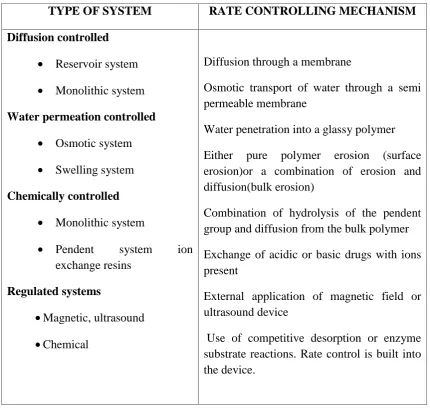
Table no.1: Type of controlled release system
I.TYPES OF CONTROLLED RELEASE TABLETS
1. Matrix type tablets
a) Hydrophobic and hydrophilic matrices.
b) Plastic matrices. c) Ion exchanges resins.
d) Co-precipitates and solid dispersions.
TYPE OF SYSTEM RATE CONTROLLING MECHANISM
Diffusion controlled
Reservoir system
Monolithic system Water permeation controlled
Osmotic system
Swelling system Chemically controlled
Monolithic system
Pendent system ion exchange resins
Regulated systems
Magnetic, ultrasound
Chemical
Diffusion through a membrane
Osmotic transport of water through a semi permeable membrane
Water penetration into a glassy polymer Either pure polymer erosion (surface erosion)or a combination of erosion and diffusion(bulk erosion)
Combination of hydrolysis of the pendent group and diffusion from the bulk polymer Exchange of acidic or basic drugs with ions present
External application of magnetic field or ultrasound device
2. Film-Coated tablets
a) Diffusion-controlled membranes. b) Osmotic pumps.
c) Enteric coating tablets. d) Floating tablets. e) Swellable tablets. f) Mucoadhesive tablets. g) Complexation.
h) Cyclodextrins.
i) Pharmaceutical adhesives. 3. Multiple-unit tablets
II. CAPSULES
a) Hard capsules b) Soft elastic capsules c) Floating capsules
III. Micro granules/spheroids
IV. Beads
V. Pellets
VI. Emulsions
VII. Suspensions
VIII.Liposome’s IX. Micro particles
1.5. MATRIX SYSTEMS
Types of oral controlled release tablets
1) Matrix type/matrix systems.
2) Film coating tablets.
3) Multiple unit tablets
1.5.1. Matrix tablets:
These are the simplest and least expensive system for controlled drug delivery. Their processing is reproducible and is similar to that conventional system. The polymer or other carrier is homogeneously mixed with drug.
Drug release from the bulk of matrix involves two matrix mechanisms: 1) The erosion rate of the matrix determines the drug release state in matrices governed by erosion or dissolution
Eq.(1)
Where:
-Drug release rate.
S - Surface area
- Matrix erosion rate
2) The diffusion through a barrier membrane describes drug release in insoluble
coating via fick’s second law of diffusion.
Eq. (2)
Where:
D–Diffusion coefficient S–Exposed surface area K–Partition coefficient
–Drug concentration gradient 1.5.2. Avantages of matrix system
Unlike reservoir and osmotic systems, products based on matrix design can be
manufactured using conventional processes and equipment’s. Secondly, development cost and time associated with the matrix system are viewed as variables, and no additional capital investment is required. Lastly, a matrix system is capable of accomodating both low and high drug loading and active ingredients with a wide range of physical and chemical properties.
1.5.3. Limitation of the matrix systems
1.5.4. Types of matrix systems
The matrix system can be divided into two categories depending on the types of retarding agent or polymeric materials.
1.5.4 (a) Hydrophobic matrix system
This is the only system where the use of polymer is not essential to provide controlled drug release, although insoluble polymers have been used. As the term suggests, the primary rate-controlling components of hydrophobic matrix are water insoluble in nature. These ingredients include waxes, glycerides, fatty acids, and polymeric materials such as ethyl cellulose, methyl cellulose and acrylate copolymer. To modulate drug release, it may be necessary to incorporate soluble ingredients such as lactose into formulation. The presence of insoluble ingredient in the formulations helps to maintain the physical dimension of hydrophobic matrix during drug release. As such, diffusion of active ingredient from the system is the release mechanism, and the corresponding release characteristic can be described by Higuchi equation known as square root of time release kinetic. The square root of time release profile is expected with a porous monolith, where the release from such system is proportional to the drug loading. In addition, hydrophobic matrix systems generally are not suitable for insoluble drug because the concentration gradient is too low to render adequate drug release. As such, depending on actual ingredient properties or formulation design, incomplete drug release within the gastrointestinal transit time is a potential risk and need to be delineated during the development. With the growing needs for optimization of therapy, matrix systems providing programmable rates of delivery become more important. Constant rate delivery always has been one of the primary targets of controlled release system especially for drug with narrow therapeutic index. .1.5.4 (b) Hydrophilic matrix system
penetrated solvent, so that the polymer chains become more flexible and the matrix swells. This allows the encapsulated drug to diffuse more rapidly out of the matrix. On the other hand, it would take more time for drug to diffuse out of the matrix since the diffusion path is lengthened by matrix swelling. Moreover, it has been widely known that swelling and diffusion are not the only factors that determine the rate of drug release. For dissolvable polymer matrix, polymer dissolution is another important mechanism that can modulate the drug delivery rate. While either swelling or dissolution can be the predominant factor for a specific type of polymers, in most cases drug release kinetics is a result of a combination of these two mechanisms. The presence of water decreases the glassy-rubbery temperature (for HPMC from 184°C to below 37°C), giving rise to transformation of glassy polymer to rubbery phase (gel layer). The enhanced motility of the polymeric chain favors the transport of dissolved drug. Polymer relaxation phenomena determine the swelling or volume increase of the matrix Boniferoni et al. (1995) showed a relationship between rheological behavior of HPMC gels and their erosion rate, conforming that the polymer-polymer and polymer-water interaction are responsible for the gel network structure and its sensitivity to erosion. In turn, they affect drug release rate in the case of poorly soluble drugs.6
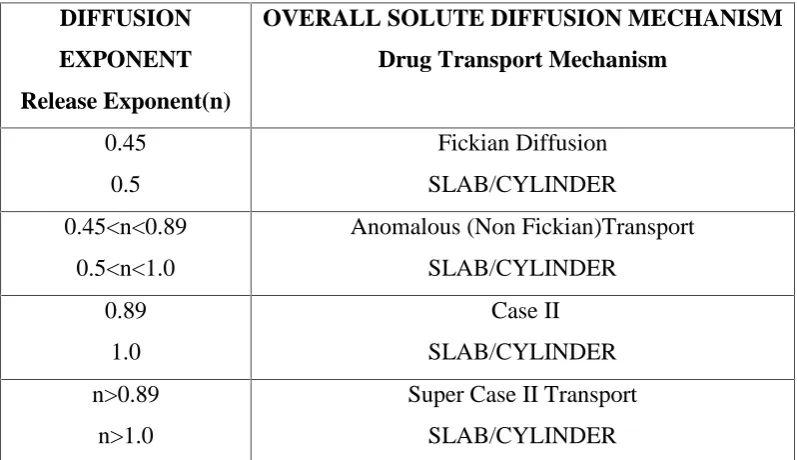
Swelling controlled release systems are based upon these principles. Due to the viscoelastic properties of the polymer which are enhanced by the presence of cross-linked network, anomalous penetrant transport can be observed. This behavior is bound by pure Fickian diffusion and case II transport. Therefore, transport can be reduced to three driving forces. The penetrant concentration gradient, polymer concentration gradient and osmotic force behavior are observed as a result of polymer network. Appropriate polymer can counterbalance normal Fickian diffusion by hindering the release of embedded drug, leading to an extended period of drug delivery, and possibly zero-order release.
grade and type, drug to polymer ratios, drug solubility, drug and polymer particle sizes, compaction pressure and presence of additives or excipients in the final formulation.
1.6. DRUG RELEASE FROM MATRIX SYSTEMS
1.6.1. Mechanism of drug release from swelling controlled release systems
1.6.1 (a) Polymer swelling and drug release
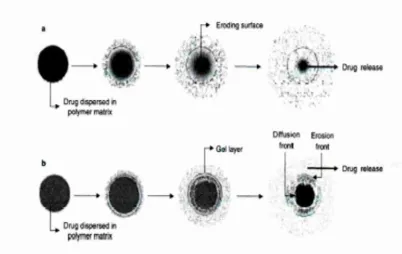
Figure 3(a) Drug release controlled by polymer erosion;
3(b) Drug release controlled by swelling and erosion.
[image:21.595.113.516.157.411.2]A detailed description of the swelling, erosion and drug release process can be described as follows.
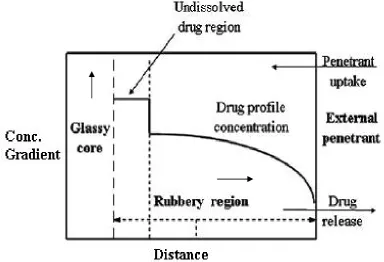
Figure 4: Drug concentration profile as a function of glass and rubbery regions9.
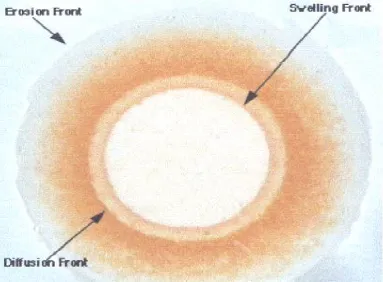
Figure 5: Different front position observed during matrix swelling and erosion.
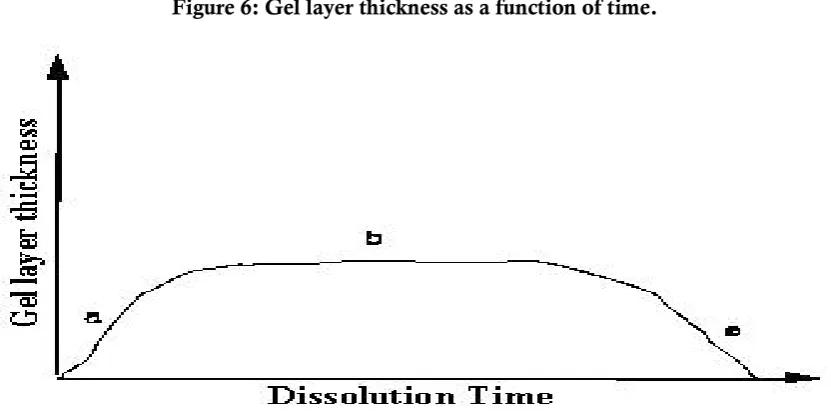
Figure 6: Gel layer thickness as a function of time.
iv). With increasing water content the diffusion coefficient of the drug increases substantially. It is to be noted that during drug delivery, as swelling and dissolution of the polymer compete, the gel layer thickness first increases due to swelling (Region a in Figure 6), then remains constant due to synchronization of swelling, drug diffusion, and dissolution (Region b) and finally decreases (Region c) as dissolution takes over.
1.6.1. (b) Polymer erosion
Polymer chain dissolution from the matrix involves two distinguishable processes as depicted in Figure 8.
The first step involves disentanglement of the individual molecules at matrix surface, which depend on rate of hydration. This occurs at a critical polymer
concentration, defined as ‘polymer disentanglement concentration. This polymer concentration depends on properties of the polymer and solvent.
The second step involves the transport of these molecules from the surface across an aqueous diffusion layer, adjacent to the matrix, to the bulk solution12
Figure 7: A system showing polymer erosion, (a) initial polymer entanglement in the matrix, (b) reptating chain disentangling from the system and (c) finally disentangling from the system.
Here the disentanglement of the “bold” chain is considered. A test chain in an
entangled system of chains is shown in (Figure 7a). When solvent penetrates into this system, the mobility of the test chain increases, and the chain begins to exhibit
1.6.2. POLYMERS USED IN MATRIX SYSTEMS
13Tablet formation is one way of designing a controlled release form. Depending on the type of formulation or processing technique a number of parameters need to be controlled in matrix systems. Some examples illustrate such parameters used in polymer resin, plastic or wax based matrices. The chemical and physical effects of polymers on matrix have been reported. Chemical effects include water vs. solvent solubility, hydration gel formation and physical wettability, porosity, viscosity, cohesiveness, permeation and so on. Some examples follow:
Types of polymers used in matrix systems
1) Insoluble, inert a) Poly ethylene b) Poly vinyl chloride
c) Methyl acryl ate–methacrylate copolymers d) Ethyl cellulose
2) Insoluble, erodible ( Fatty compounds ) a) Carnauba wax
b) Stearyl alcohol c) Stearic acid
d) Poly ethylene glycol e) Castor wax
f) Poly ethylene glycol mono stearate g) Tri glycerides
3) Hydrophilic polymers a) Methyl cellulose
b) Hydroxy ethyl cellulose
c) Hydroxy propyl methyl cellulose d) Sodium carboxy methyl cellulose e) Sodium alginate
i) Carbopol
j) Hydroxy propyl cellulose k) Guar gum
l) Alginic acid m) Chitosan n) Pectin
ETHYL CELLULOSE (EC):
It is an insoluble, inert (plastic materials) type of polymer.
Increasing the amount of EC resulted in decreased release rate. HYDROXY PROPYL CELLULOSE (HPC):
It is hydrophilic polymer. Mechanistic studies of HPC have shown gel formation, dissolution and diffusion to be important in controlling release.
HPC > EC aqueous solutions 0.5% concentration have decreased viscosities in the order shown.
Increasing the HPC concentration and viscosity decreases release rate of drugs. Possibly to both decreased porosity and cohesiveness of the matrix.
HYDROXY PROPYL METHYL CELLULOSE (HPMC):
It is hydrophilic polymer. As amount of HPMC in the mixtures was increased dissolution of gel layer took place in addition to diffusion.
Additives can be used to modify wettability of the pores and thus further increased and decreased the porosity14.
HYDROXY ETHYL CELLULOSE
Hydroxy ethyl cellulose is a non ionic, water-soluble polymer it in combination with Hydroxy propyl cellulose forms a good matrix system.
1.7.
NEED FOR INVESTIGATION OF DRUG
Drug is a highly lipid soluble BCS class II drug used as an antihypertensive for the treatment of hypertension, angina pectoris. It is a yellow crystalline solid, insoluble in water (˂10mg/L). The dose of the drug ranges from 10mg per day and its
steady state half life is relatively short(11/2-2hr).The bioavailability is very limited (15-24%) due to the hepatic first pass effect. While extended release of drug were originally developed to reduce or eliminate unwanted effects such as gastrointestinal disturbances, nausea, and vomiting; the short half life of the drug also indicates the need for modified release dosage form. Modified release solid oral dosage forms offer the advantages of improved patient compliance and decreased side effects. Majority of oral sustained and controlled release drug delivery systems are based on either gel forming matrix or coated formulations, or the combination thereof. Matrix tablet systems are most popular due to ease in scale-up. The drug is currently available in market as immediate release tablet and as an extended release capsule. At present the extended release tablets available in the market uses osmotic pressure to deliver the drug at a controlled rate over approximately 24 hours. The present research endeavor was directed towards the development of matrix tablets to be taken once daily reducing the price of drug and make the drug more affordable to the patients.
1.8. HYPERTENSION
Hypertension is a chronicmedicalcondition in which the blood pressure is elevated. It is also referred to as high blood pressure or shortened to HT, HTN or HPN. The word "hypertension", by itself, normally refers to systemic, arterial hypertension.
Hypertension can be classified as either essential (primary) or secondary. Essential or primary hypertension means that no medical cause can be found to explain the raised blood pressure and represents about 90-95% of hypertension cases. Secondary hypertension indicates that the high blood pressure is a result of (i.e., secondary to) another condition, such as kidney disease or tumours (adrenal adenoma or pheochromocytoma)
Causes of Hypertension
1.8.1. Essential hypertension15:
Essential hypertension is the most prevalent hypertension type, affecting 90-95% of hypertensive patients Although no direct cause has identified itself, there are many factors such as sedentary lifestyle, stress, visceral obesity, potassium deficiency (hypokalemia) obesity (more than 85% of cases occur in those with a body mass index greater than 25), salt (sodium) sensitivity, alcohol intake, and vitamin D deficiency. Risk also increases with aging, some inherited genetic mutations and family history. An elevation of renin, an enzyme secreted by the kidney, is another risk factor, as is sympathetic nervous system over activity. Insulin resistance which is a component of syndrome X, or the metabolic syndrome is also thought to contribute to
1.8.2. Secondary hypertension:
Secondary hypertension by definition results from an identifiable cause. This type is important to recognize since it's treated differently than essential type by treating the underlying cause. Many secondary causes can cause hypertension; some are common and well recognized secondary causes such as Cushing's syndrome, which is a condition where both adrenal glands can overproduce the hormone cortisol. Hypertension results from the interplay of several pathophysiological mechanisms regulating plasma volume, peripheral vascular resistance and cardiac output, all of which may be increased. More than 80% of patients with Cushing's syndrome have hypertension.] Another important cause is the congenital abnormality coarctation of the aorta
1.8.3. Mechanism of hypertension:
Most of the mechanisms associated with secondary hypertension are generally fully understood. However, those associated with essential (primary) hypertension are far less understood. What is known is that cardiac output is raised early in the disease course, with total peripheral resistance (TPR) normal; over time cardiac output drops to normal levels but TPR is increased.
Three theoeies have been proposed to explain this:
Inability of the kidneys to excrete sodium, resulting in natriuretic factors such as is Atrial Natriuretic Factor being secreted to promote salt excretion with the side effect of raising total peripheral resistance.
An overactive Renin-angiotensin system leads to vasoconstriction and retention and symptoms are especially important of sodium and water. The increase in blood volume leads to hypertension.
It is also known that hypertension is highly heritable and polygenic (caused by more than one gene) and a few candidate genes have been postulated in the etiology of this condition.
Recently, work related to the association between essential hypertension and sustained endothelial damage has gained popularity among hypertension scientists. It remains unclear however whether endothelial changes precede the development of hypertension or whether such changes are mainly due to long standing elevated Blood Pressure.
1.8.4 Symptoms of hypertension:
Mild to moderate essential hypertension is usually asymptomatic. Accelerated hypertension is associated with headache, somnolence, confusion, visual disturbances, and nausea and vomiting (hypertensive encephalopathy). Some signs and symptoms are especially important in infants and neonates such as failure to thrive, seizure, irritability or lethargy, and respiratory distress In children, hypertension may cause headache, fatigue, blurred vision, epistaxis, and bell palsy.
Some signs and symptoms are especially important in suggesting a secondary medical cause of chronic hypertension, such as centripetal obesity, "buffalo hump," and/or wide purple abdominal striae and maybe a recent onset of diabetes suggest glucocorticoid excess either due to Cushing's syndrome or other causes..
Treatment of hypertension:
There are several types of antihypertensive agent;s 1. Adreno receptor blocking agents.
2. Diuretics. 3. Vasodilators.
5. 5-HT antagonist.
1.8.5 Mechanism of action Calcium channel blockers:16
Calcium channel blockers work by blocking voltage-gated calcium channels (VGCCs) in cardiac muscle and blood vessels. This decreases intracellular calcium leading to a reduction in muscle contraction. In the heart, a decrease in calcium available for each beat results in a decrease in cardiac contractility. In blood vessels, a decrease in calcium results in less contraction of the vascular smooth muscle and therefore an increase in arterial diameter (CCB's do not work on venous smooth muscle), a phenomenon called vasodilation. Vasodilation decreases total peripheral resistance, while a decrease in cardiac contractility decreases cardiac output. Since blood pressure is determined by cardiac output and peripheral resistance, blood pressure drops.
With a relatively low blood pressure, the after load on the heart decreases; this decreases the amount of oxygen required by the heart. This can help ameliorate symptoms of ischemic heart disease such as angina pectoris.
Unlikeβ-blockers, calcium channel blockers do not decrease the responsiveness of the heart to input from the sympathetic nervous system. Since moment-to-moment blood pressure regulation is carried out by the sympathetic nervous system (via the baroreceptor reflex), calcium channel blockers allow blood pressure to be maintained more effectively than doβ-blockers.
However, because calcium channel blockers result in a decrease in blood pressure, the baroreceptor reflex often initiates a reflexive increase in sympathetic
activity leading to increased heart rate and contractility. A β-blocker may be combined with a dihydropyridine calcium channel blocker to minimize these effects.
LITERATURE REVIEW
1. Harekrishna Roy., (2010) et.al .44 studied the design and in vitro evaluation of sustained release matrix tablets of complexed nicardipine hydrochloride by employing hydrophilic and hydrophilic polymers. Due to poor water solubility of the drug its bioavailability is dissolution rate limited. The purpose of the study was to increase the solubility of Nicardipine by cyclodextrin inclusion complex technique. Kneading method was employed for preparation of inclusion complexes. Among different
complexes, a complex with 1:1 molar ratio of drug and β‐CD showed the highest dissolution rate. Matrix tablets were prepared by direct compression technique using different concentration of polymers and selected complex. The study has demonstrated that combination of hydrophobic and hydrophilic polymers effectively sustained the drug release for prolonged period of time and a minimum of 28 % sodium alginate is required to retard the release of nicardipine from matrix tablet for the period of 12 hours.
2. Antesh K Jha., (2009) et.al 45 formulated and evaluated sustained release matrix tablets of Metoprolol succinate using hydrophilic polymers. The drug belongs to the
category of β1-selective adrenergic receptor blocking agent. The tablets were prepared by wet granulation method. Ethanolic solutions of ethylcellulose (EC) and polyvinylpyrrolidone were used as granulating agents along with hydrophilic matrix materials like hydroxypropyl methylcellulose (HPMC) and guar gum. The results of dissolution studies indicated that formulation F1 (drug-to-HPMC, 1:4; ethanol as granulating agent) could extend the drug release up to 12 hours. In the further formulation development process, F5 (drug-to-HPMC, 1:4; EC 4% w/v as granulating agent), which is the most successful formulation of the study, exhibited satisfactory drug release. All the formulations exhibited diffusion- dominated drug release.
concentrations (X2) were the independent variables. The times required for 50% (t50) and 80% (t80) drug release were selected as dependent variables. The results indicated that the values of t50, t80, f2 and MDT are strongly dependent on the independent variables. in vitro drug release profile of all batches of factorial design was compared with theoretical drug release profile. The results indicated that batch F7 showed the highest value among all the batches, and it also shows similarity in t50 and t80 values. The f2 value (74) of batch F7 indicates less than 5% difference in in vitro drug release profile with theoretical release profile.
4. SH Lakade., (2008) et.al 47 formulated and evaluated sustained release matrix tablet of anti-anginal drug, and studied the influence of combination of hydrophobic and hydrophilic matrix former. A hydrophobic polymer (HPMC) and hydrophobic polymer (Ethyl cellulose) based Nicorandil matrix sustained release tablet which can release the drug up to a period of 24 hours in predetermined rate was developed. The formulation of Nicorandil matrix tablet was prepared by the polymer combination in order to get required theoretical release profile. The influence of hydrophilic and hydrophobic polymer and granulation technique on Nicorandil was studied. The formulated tablets were also characterized by physical and chemical parameters. The in vitro release rate profile should be higher concentration in case of F2. The combination of hydrophilic and hydrophobic combination showed less result than use of alone. The in vitro release data was well fit to Peppas and Hixon crowel release kinetics.
6. Anroop B. Nair., et.al. formulated controlled release matrix uncoated tablets of Enalapril Maleate using HPMC alone. Direct compression techniques was used to prepare the tablets, and were evaluated for physical properties, drug content, in vitro release and drug release kinetics as well. All the formulations demonstrated good physical integrity and the drug content were in the official limits. The formulations with HPMC K 100 (25mg/tablet) and K4M (15mg/tablet) have been found to release the required amount of drug (2.97mg/h) throughout the study period (14h). The calculated regression coefficients showed higher r2 value with Higuchi model and zero order kinetics. Given the excellent release profile, the study concluded that HPMC in different grades with low concentration alone can control the enalapril maleate release over a period of 14hours.
7. Hilde Celis, Jan Staessen, Robert Fagard, Lutgarde Thijis, and Antoon
Amery., et al.50 studied effect of modified release 5 mg once daily isradipine on twelve patient with essential hypertension in a double blind cross over study to investigate the blood pressure BP-lowering activity, the results shows isradipine modified release 5 mg influenced the 24 hr BP profile in a different way when administered in the morning or in the evening as compared to placebo.
8. Saleh A. Al-Suwayeh., et al.51 studied transdermal delivery of isradipine through excised rabbit skin for the effect of vehicle and drug concentration, the vehicles namely PEG, ethanol and isradipine . Highest amount of isradipine over 24 hr period penetrated was achieved in presence of Ethanol.
9. Madhusmruti Khandai, Santanu Chakraborty, Anuradha Sharma,
10. Juan G. Puig: Luis M. Ruilope; Rafael Ortega., et al. studied the efficacy of antihypertensive treatment like benazepril in Type II Diabetes Mellitus to confirm the diagnosis of hypertension and assess the response to antihypertensive therapy. Antihypertensive drug efficacy was assessed by casual (trough) and 24-hour ambulatory blood pressure monitoring. Diabetic patients were classified as no confirmed hypertensive if the mean 24-hour ambulatory diastolic pressure was below 85 mm Hg. Antihypertensive treatment significantly decreased both systolic and diastolic pressures when determined by either casual measurement (from a mean of 162.7/98.0 to 153.9/89.2 mm Hg; P<.001) or ambulatory monitoring (from a mean of 143.1/84.4 to 137.0/81.5 mm Hg; P<.05).
11. Vaisse. B., Herpin D, Asmar R, Battistella P, Zannad F, Boutelant S, Lyon A,
Co Denis J. Honore., et al.54Studies on the evaluation of the antihypertensive effect of drugs according to the initial ambulatory blood pressure (BP) level. In double-blind design, either bisoprolol (10 mg q.d.) or lisinopril (20 mg q.d.) for 8 weeks. BP monitoring showed that the antihypertensive effect depended on the baseline mean 24-h value; -15/-12 mm Hg for bisoprolol and -18/-13 mm Hg for lisinopril in the High group; -7/-6 mm Hg for bisoprolol and -6/-6 mm Hg for lisinopril in the Low group. This study shows that the antihypertensive effect depended on initial ambulatory BP values, with a lower BP decrease in the Low group.
12. Panna Thapa, Manish Ghimire, Alex B. Mullen and Howard N.E Stevens., et
al.55studied on controlled release drug delivery system to investigate the influence of different diluents, in the release of poorly water soluble drug ibuprofen. Matrix tablet prepared by wet granulation method at different polymer concentration using lactose, DCP, MCC and starch. The integrity of the tablets and drug release were found to be primarily governed by the properties of diluents at low polymer concentration.
13. Bhanja Satyabrata, Ellaiah P, Mohanty Chandan, K.V.R Murthy ,Panigrahi
The sintering times and the sintering temperature markedly affected the drug release properties of Perindopril buccal tablets; the release rate of Perindopril from buccal tablets was inversely related to the time of sintering and the sintering temperature. This is may be due to increase in extent and firmness of sintering which compacts the mass further, so that the drug release is affected. The best in-vitro drug release profile was achieved with the formulation F4 A (sintered at 600c for 1.5 hr.) which contain the drug, polyethylene oxide and carnauba wax in the ratio of 1:15:10.The surface pH, bioadhesive strength and swelling index of formulation F4 A was found to be 6.27, 34.8 gm and 179.31 (after 12 hr). The tablets (formulation F4 A) containing 4 mg of Perindopril exhibited 8 hrs sustained drug release (98 %) with desired therapeutic concentration.
14. Rajesh. N, Siddaramaiah and D.V. Gowda., et al.57 studied on the controlled release behavior of diltiazem hydrochloride from the Pellets of chitosan and microcrystalline cellulose to minimize the unwanted toxic effects of Diltiazem Hydrochloride by kinetic control of drug release. 12 ml of deminerlized water was used as binding agent volume of binding agent increases, irregularly shaped pellets were produced. As the volume of the binding agent was less than 12 ml, requires more pressure for compaction and difficult to separate as an individual pellets. The percent of wetting solution and volume of binding agent has also an effect on the sphericity of the pellets, confirmed by SEM photographs. Result showed that lowered drug release was noticed for the systems containing higher content of MCC. Because swollen MCC particles retards the penetration of dissolution media into pellets and thus limiting the release of drug from pellets.
15. S. M. Al-Ghannam A. M. Al-Olyan., et al.58 Studied on spectrophotometric determination of 1, 4-dihydropyridine compounds, nicardipine and isradipine. The method is based on the reduction of nicardipine and isradipine with zinc powder and calcium chloride followed by further reduction with sodium pentacyanoaminoferrate (II) to give violet and red products having the absorbance maximum at 546 and 539
nm with nicardipine and isradipine, respectively. Beer’s law was obeyed over the concentration range 8.0–180 μg/ml with the detection limit of 1.67 μg/ml for
The study shows high sensitivity (detection limit = 1.67 for Nicardipine and 1.74
μg/ml for Isradipine).
16. A Smith, J McPherson, M Taylor, A Mason, S Carney and A Gillies (1997) et
al.59 did a comparative study Atenolol and Isradipine. A 39%reduction of hypertension was seen with isradipine while 34% reduction with the other. Pro-haemorrhagic effects of Isradipine were minor when compared to Atenolol.
17. T Fujiwara, Y Ii, J Hatsuzawa, H Murase, T Watanabe, M Murakami, N
Kimura, J Buch, T Tsuchihashi and T Saruta (2009) et al.60 Worked on two strengths of Amlodipine, an antihypertensive drug. Phase III double-blind parallel-group controlled study was conducted to examine the superiority of Amlodipine 10 mg once daily to Amlodipine 5 mg once daily in 305 Japanese outpatients with essential hypertension .In conclusion, Amlodipine 10 mg once daily was found to be superior to Amlodipine 5 mg once daily, safe, well tolerated and useful for the relevant subjects.
18. Lacourcière Y, Poirier L, Dion D, Provencher P et al.61 The antihypertensive efficacy of sustained-release Isradipine administered once daily compared to the immediate-release formulation administered twice daily was assessed by ambulatory blood pressure (BP) monitoring in a double-blind randomized crossover study in 76 mild-to-moderate hypertensive patients. Data suggest that sustained-release Isradipine has a sustained antihypertensive effect throughout 24 hours comparable to that of Isradipine given twice daily and may improve compliance with long-term treatment. In addition, the results confirm the usefulness of ambulatory BP monitoring in determining truly hypertensive patients likely to respond to drug administration.
19. Bankole A. Johnson, Martin A. Javor, Yui-Wing Francis Lam, Lynda T.
appropriate as an investigational medication for the treatment of stimulant dependence and related neurovascular disorders.
20. Raslan & Maswadeh (2006) et al.63 have studied the effect of HPMC (hydrophilic) and glyceryl behenate (hydrophobic) polymers on controlled release of anhydrous Theophylline matrix tablets and studied in vitro release characteristics and kinetics of prepared formulations for explaining the release pattern from matrix tablets.
21. Selim., (2003) et al.64 Have done the comparative evaluation of plastic, hydrophobic and hydrophilic polymers as matrices for controlled-release drug delivery. They revealed that the drug release from plastic and hydrophobic matrix was less than hydrophilic polymer. Again, the release pattern of drug from hydrophilic matrices was closer to zero-order kinetics than that from other classes of matrices.
22. Nair.,(2007) et al.65 Have made an attempt to formulate a controlled-release matrix tablet formulation for Alfuzosin hydrochloride by using low viscous hydroxyl propyl methylcellulose (HPMC K-100 and HPMC 15cps) and its comparison with marketed product. Drug release from the matrix tablets was carried out for 12 hr and showed that the release rate was not highly significant with different ratios of HPMC K-100 and HPMC15cps. They concluded that the use of low viscous hydrophilic polymer of different grades (HPMC K-100 and HPMC 15cps) can control the Alfuzosin release for a period of 12 hr and were comparable to the marketed product.
23. Gurvinder Singh Rekhi, Ranjani V. Nellore, Ajaz S. Hussain, Lloyd G.
24. Raghavendra rao G, Gandhi Sagar, Patel Tarun., et al. work was to develop sustained release matrix tablets of water soluble Tramadol hydrochloride using different polymers viz. hydroxy propyl methyl cellulose (HPMC) and natural gums like Karaya gum (KG) and Carrageenan (CG). Zero order kinetics via, swelling, diffusion and erosion and the release profile of test formulation were comparable with the marketed product.
25. Sevgi Takka, Adel Sakr, Arthur Goldberg., et al.68study was to develop an
in-vitro–in-vivo correlation (IVIVC) for two Buspirone hydrochloride extended release
formulations and to compare their plasma concentrations over time with the commercially available immediate release (IR) tablets developed two types of formulations using methocel high and low viscosity grades and evaluated that these will control the release.
26. K.Mahalingan, S.Rajarajan, N.Sree Harsha., (2009). et al.69 study to investigate the formulation development of orally administrable Clarithromycin delayed release tablet. Clarithromycin tablet was designed for the delaying the release to prolong the duration of drug action with the help of various polymers like Microcrystalline Cellulose, HPMC K4M, HPMC K5M, HPMC6CPS, PEG 6000 with different additives are used for the trial and error method .preliminary results from this study suggest that tablets prepared from MCC, HPMC 6CPS and PEG 6000 can be used to incorporate antibiotics like Clarithromycin and may be effective when administered orally in the stomach against H. pylori.
28. M. Harris shoaib, Jaweria Tazeen, Hamid Merchant and Rabia Ismail
Yousuf ., et al.71 Develop a once-daily sustained release matrix tablet of ibuprofen using hydroxyl propyl methyl cellulose (HPMC) as release controlling factor and to evaluate drug release parameters as per various release kinetic models. In order to achieve required sustained release profile tablets were directly compressed using Avicel PH 101 and Magnesium stearate. Ibuprofen sustained release matrix tablet was prepared successfully using HPMC as polymer to retard release and achieve required dissolution profile. Drug release kinetics of this formulation correspond best to
3: AIM AND OBJECTIVE
3.1. AIM:
The aim of the present study is to develop a pharmaceutically stable, cost effective and quality improved, once in a day formulation of Isradipine controlled release Matrix tablets by using synthetic polymer HPMC of different grades.
3.2. OBJECTIVE:
The concept of controlled drug delivery has been explored for the delivery of soluble and insoluble drugs for prolong period of time for the past few years. This type of drug delivery seems to provide a solution to several problems encountered in the course of design of the dosage form for such molecules. Utilizing the concept of incorporating drug in to the polymer matrices and extend the drug release for prolong period of time an attempt was made to design and evaluate a matrix tablets for a insoluble drug facilitating drug release by diffusion of the matrix using materials like polymers, waxes like hydrophilic and hydrophobic polymers to obtain the controlled release of the drug in vitro.
To achieve this goal various prototype formulation trials were taken and evaluated with respect to the various quality control tests such as dissolution, assay. The formula was finalized by comparing the in vitro dissolution profile.
4: PLAN OF WORK
The present work was carried out to formulate and evaluate the controlled release matrix tablets of Isradipine using polymers like HPMC (E4M and E50). The study was proposed to carry out in the following stages.
Phase-I:
1. Pre-formulation study of pure drug. 2. Compatibility study.
Fourier transform infrared spectroscopy (FT-IR) 3. Preparation of standard curve of Isradipine.
Phase-II:
1. Formulation of Isradipine controlled release matrix tablets. 2. Evaluation of matrix tablets.
Physical evaluation. Drug content. Dissolution study. 3. Kinetic study.
Phase-III:
5. PROFILES
5.1. DRUG PROFILE
Isradipine:
Isradipine is a long-acting antihypertensive agent in vivo, exerting Primary effects on vascular tissue with secondary negative chronotropic action. Potent and selective L-type voltage-gated Ca2+ channel blocker. It belongs to dihydro pyridine class.
Structure:
Table no: 3. Physico–Chemical Properties
Description Yellow crystalline solid
Chemical name 4-(2,1,3-Benzoxadiazol-4-yl)-1,4-dihydro-2,6-dimethyl-3,5-pyridinecarboxylic acid methyl 1-methylethyl ester
Molecular formula C19H21N3O5 Molecular weight 371.39
Site and Mode of Action:
Possibly by deforming the channel, inhibiting ion-control gating mechanisms, and/or interfering with the release of calcium from the sarcoplasmic reticulum, Isradipine inhibits the influx of extracellular calcium across both the myocardial and vascular smooth muscle cell membranes. The resultant inhibition of the contractile processes of the myocardial smooth muscle cells leads to dilation of the coronary and systemic arteries and improved oxygen delivery to the myocardial tissue.
Pharmacokinetics:
Absorption and distribution;
Isradipine is 90%-95% absorbed and is subject to extensive first-pass metabolism; resulting in a bioavailability of about 15%-24%.administration of Isradipine with food significantly increases the time to peak by about an hour, but has no effect on total bioavailability of the drug. Isradipine is 95% bound to plasma protein.
Metabolism and excretion;
Isradipine undergoes extensive first-pass metabolism; Peak plasma
concentrations occur about2 hours after oral dosage Isradipine is extensively
metabolized in the liver, at least partly by the cytochrome P450isoenzyme CYP3A4.
About 70% of an oral dose is reported to be excreted as metabolites in urine, the
remainder in faeces. The terminal elimination half-life is often stated to be about 8
hours although a value of less than 4 hours has also been reported. In single-dose and
steady-state studies of the pharmacokinetics of Isradipine in 9 hypertensive subjects
using a specific high performance liquid chromatographic assay, Isradipine was found
to be rapidly absorbed with peak concentrations occurring 1.2(steady state) to 1.5
(single dose) hours after dosing.
Functional category In the treatment of Hypertension, vasodilation. Pharmacopoeial
status
USP
The mean terminal elimination half-life at steady state was 3.8 hours,
suggesting that duration of action is likely to be short and that Isradipine would need
to be given at least twice daily. There was considerable inter individual variation in
the pharmacokinetics. In an earlier study in healthy subjects the effective half-life of
Isradipine was calculated to be 8.8 hours, but radiolabelled Isradipine was used and
the assay method might have been less specific for unchanged drug.
Table no: 4. Pharmacokinetics-Pharmacodynamics
Parameters Data
Tmax 1.5 hr
Bioavailability 15-24%.
Cmax 1ng/ml/mg
Volume of distribution(VD) 3L/Kg
Clearance (CLT) 1.4L/min
Biological half life Biphasic with initial half of 1½-2hr,terminal half life of 8hr.
Site and Mechanism of absorption Oral absorption
Serum protein binding Highly serum protein bound (95%) Route of metabolism Rapidly metabolized in liver
Metabolites Six metabolites have been characterized in blood and urine with the mono acids of pyridine
derivative and a cyclic lactone product
Route of excretion Approximately 60-65% is excreted in urine and 25-30%in faeces.
Route of administration Oral
Indications Hypertension.
Adverse effects Symptoms of overdose include lethargy, sinus tachycardia, and transient hypotension.
Drug Interactions with Isradipine:
Using this medicine with any of the following medicines is not recommended.
Bepridil, Cisapride, Levomethadyl, Mefloquine, Mesoridazine, Pimozide, Thioridazine, Ziprasidone
Using this medicine with any of the following medicines is usually not recommended, but may be required in some cases. If both medicines are prescribed together, your doctor may change the dose or how often you use one or both of the medicines.
Amiodarone, vasopressin, trimethoprim, satolol, risperidone, sulfamethoxazole, fluoxetine, amitriptylline.
Using this medicine with any of the following medicines may cause an increased risk of certain side effects.
Amprenavir, Dalfopristin, Indinavir, Itraconazole.
Dosage:
5.2. EXCIPIENT PROFILE
Table no: 5.
Hypromellose
Synonyms Benecel, HPMC, Methocel, Hydroxy propyl methyl cellulose
Description White or creamy white fibrous or granular, odorless, tasteless powder.
Functional categories Coating agent, film former, rate controlling polymer for sustained release, stabilizing agent, suspending agent, viscosity builder.
Solubility Soluble in cold water, forming a viscous colloidal solution, practically insoluble in mixtures of ethanol and dichloromethane, mixtures of alcohol and water.
pH 5.5-8.0 for a 1%w/w aqueous solution.
Bulk density 0.341 g/cm3
Tapped density 0.557 g/cm3
Melting point Browns at 190-200oC Chars at 225-230oC
Moisture content Absorbs moisture from the atmosphere. Stability and storage
conditions
Stable between pH 3-11, should be stored in a well-closed container in a cool and dry place.
Incompatibility Incompatible with some oxidizing agents.
Table no: 6
.
Dibasic calcium phosphate dehydrate
Synonyms Calcii hydrogenophosphas dihydricus; calcium
hydrogen orthophosphate dihydrate; calcium monohydrogen phosphate dihydrate; Di-Cafos; dicalcium orthophosphate; DI-TAB; E341; Emcompress; phosphoric acid calcium salt (1 : 1) dihydrate;
Empirical formula CaHPO4_2H2O
Molecular weight 172.09
Description White, odorless, tasteless powder or crystalline solid. It occurs as monoclinic crystals.
Functional categories Tablet and capsule diluent
Solubility Practically insoluble in ethanol, ether, and water; Soluble in dilute acids.
Loss on drying 24.5–26.5%(as per US pharmacopeia) Stability and storage
conditions
Dibasic calcium phosphate dihydrate is a non hygroscopic, relatively stable material. However, under certain conditions the dihydrate can lose water of crystallization. This has implications for both, storage of the bulk material and coating and packaging of tablets containing dibasic calcium phosphate dihydrate.
The bulk material should be stored in a well-closed container in a cool, dry place.
Applications It is widely used as an excipient and as a source of calcium and phosphorus in nutritional supplements. Two main particle-size grades of dibasic calcium phosphate dihydrate are used in the pharmaceutical industry. The milled material is typically used in wet-granulated, roller-compacted or slugged formulations.
The ‘unmilled’ or coarse-grade material is typically used in direct-compression formulations.
Table no: 7.
Magnesium stearate
Synonyms Dibasic magnesium stearate; magnesium distearate; magnesiistearas; magnesium octadecanoate; octadecanoic
acid, magnesium salt; stearic acid, magnesium salt;
Description Magnesium stearate is a very fine, light white, precipitated milled, impalpable powder of low bulk
density, having a faint odor of stearic acid and a
characteristic taste.
Solubility Practically insoluble in ethanol, ethanol (95%), ether and water; slightly soluble in warm benzene and warm ethanol
Stability and storage conditions
Magnesium stearate is stable and should be stored in a
well-closed container in a cool, dry place.
Incompatibilities Incompatible with strong acids, alkalis, and iron salts. Avoid mixing with strong oxidizing materials.
Magnesium stearate cannot be used in products containing
aspirin, some vitamins, and most alkaloidal salts
Applications Magnesium stearate is widely used in cosmetics, foods, and
Pharmaceutical formulations. It is primarily used as a
lubricant in
capsule and tablet manufacture at concentrations between
0.25%
Table no: 8.
Colloidal Silicone Dioxide.
Synonyms Aerosil; Cab-O-Sil; Cab-O-Sil M-5P; colloidal silica; fumedsilica;
Description Colloidal silicon dioxide is a sub microscopic fumed silica with a particle size of about 15 nm. It is a light, loose,
bluish-white-colored, odorless, tasteless, amorphous powder.
Functional categories Adsorbent; anticaking agent; emulsion stabilizer; glidant; suspending agent; tablet disintegrant; thermal stabilizer;
viscosity-increasing agent.
Solubility Practically insoluble in organic solvents, water, and acids, except hydrofluoric acid; soluble in hot solutions of alkali
hydroxide. Forms a colloidal dispersion with water. For
Aerosil, solubility in water is 150 mg/L at 258C (pH 7).
pH 3.5-5.5 for a 4%w/w aqueous solution
Bulk density 0.029–0.042 g/cm3
Melting point 16000C
Stability and storage conditions
Colloidal silicon dioxide is hygroscopic but adsorbs large
quantities of water without liquefying at a pH greater than
7.5 the viscosity increasing properties of colloidal silicon
dioxide are reduced.
Incompatibility Incompatible with diethylstilbestrol preparations
Applications Colloidal silicon dioxide is also used to stabilize emulsions and as a thixotropic thickening and suspending agent in gels
and semisolid preparations. (5Colloidal silicon dioxide is
also used as an adsorbent during the preparation of wax
microspheres; as a thickening agent for topical preparations;
and has been used to aid the freeze-drying of nano capsules
Table no: 9
. Polyethylene Glycol
Synonyms Carbowax; Carbowax Sentry; Lipoxol; Lutrol E; macrogol; PEG; Pluriol E; polyoxy ethylene glycol.;
Description Polyethylene glycol grades 200–600 are liquids; grades 1000 and above are solids at ambient temperatures. Liquid grades
(PEG 200–600) occur as clear, colorless or slightly
yellow-colored, viscous liquids. They have a slight but characteristic
odor and a bitter, slightly burning taste. PEG 600 can occur as
a solid at ambient temperatures.
Functional categories Ointment base; plasticizer; solvent; suppository base; tablet and capsule lubricant.
Solubility Liquid polyethylene glycols are soluble in acetone, alcohols, benzene, glycerin, and glycols. Solid polyethylene glycols are
soluble in acetone, dichloromethane, ethanol (95%), and
methanol; they are slightly soluble in aliphatic hydrocarbons
and ether, but insoluble in fats, fixed oils, and mineral oil.
pH 4.5-5.5 for a 5%w/w.
Flash point 2380C
Stability and storage conditions
The temperature must be kept to the minimum necessary to
ensure fluidity; oxidation may occur if polyethylene glycols
are exposed for long periods to temperatures exceeding 508C.
However, storage under nitrogen reduces the possibility of
oxidation. Polyethylene glycols should be stored in
well-closed containers in a cool, dry place. Stainless steel,
aluminium, glass, or lined steel containers are preferred for
the storage of liquid grades.
Incompatibility All grades can exhibit some oxidizing activity owing to the presence of peroxide impurities and secondary products
formed by autoxidation. Liquid and solid polyethylene glycol
Applications Polyethylene glycol has been used experimentally in biodegradable polymeric matrices used in controlled-release
systems. (1) Useful as ointment bases. Can be used as
suppository bases, (3) for which they have many advantages
over fats.
Table no: 10
. Isopropyl alcohol
Synonyms Di methyl carbinol, isopropanol , 2-propanol. Empirical formula C3H8O
Molecular wt 60.1
Description Clear , colorless, mobile, volatile, flammable liquid with characteristic, spirituous odor & slightly bitter taste Functional category Disinfectant, solvent
Solubility Miscible with benzene, chloroform, ethanol. Soluble in acetone
Insoluble in salt solutions.
Storage conditions Store in a airtight container in a cool & dry place Incompatibility Incompatible with H2O2& Nitric acid.
Salting out from aqueous preparations by adding sodium salts
Applications Tablets - Film forming agent & Granulating agent 70% v/v used as disinfectant
6. MATERIALS AND METHODOLOGY
[image:57.595.110.526.192.486.2]6.1. MATERIALS
Table no: 11. List of materials used in the formulation study
S.No. Name of the ingredients Name of the Supplier
1
Isradipine GlaxoSmithKline Pharmaceuticals Ltd., Nashik
2. Dicalcium phosphate dehydrate (Calipharm D)
S.D. Fine chemicals Pvt. Ltd., Mumbai
5. Methocel E4M Strides Arco Labs, Bangalore
6. Methocel E50 Strides Arco Labs, Bangalore
7.
Poly ethylene glycol (PEG -400)
S.D. Fine chemicals Pvt. Ltd., Mumbai
8. Isopropyl alcohol S.D. Fine chemicals Pvt. Ltd., Mumbai
9. Aerosil S.D. Fine chemicals Pvt. Ltd., Mumbai
Table no: 12. Lists of equipment and instruments used in the present study
s. no. equipment manufacturer model no
1 Electronic Balance Shimadzu AUX220
2 Sieves United Engineering Ltd. ASL00
3 Tap density Tester Electrolab ETD-020
4 Electromagnetic Sieve Shaker Electropharma EMS- 8
5 Laboratory Stirrer Remi RQT-124A
6 Rapid dryer Retsch TG-200
7 pH Meter Thermo Orion 2 Star
8 Dissolution test apparatus Electro lab USP XXII TDT-08L
9 Stability chambers Thermolab Standard
10 Hardness tester Pharmatest PTB-311E
11 Friabilator Electrolab EF-1W
12 Tablet Compression machine-16Station
Cadmch Machinery co. Pvt.Ltd
CM D3-16
13 Peristalic pump Electrolab PP-50V
6.2. METHODOLOGY FOR DEVELOPMENT OF CONTROLLED
RELEASE MATRIX
TABLET:-6.2.1. PREFORMULATION STUDIES:
Preformulation testing was an investigation of physical and chemical properties of a drug substance alone and when combined with excipients. It was the first step in the rational and development of dosage forms.
Objective/purpose of preformulation
study:-Pre-formulation studies on active pharmaceutical ingredients (API), inactive ingredients (Excipients), and their combinations were carried out to serve following purposes:
i) To generate information useful in developing the formulation. ii) To Finalize specifications of active pharmaceutical ingredients (API) iii) To Study the compatibility between active and inactive ingredient
Scope:-The use of preformulation parameters maximizes the chances in formulating an acceptable, safe, efficacious and stable product.
Class
: - Preformulation study can divide in to Two Subclasses.I.API characterization,
II.Compatibility study
I. Active pharmaceutical ingredient (API)
characterization:-1. Organoleptic Evaluation: These are preliminary characteristics of any substance
II. Determination of melting
point:-The melting point of isradipine was determined by capillary method, using definite quantity of isradipine taken and replaced in apparatus and determined the melting point and matched with the standards.
III. Loss on
drying:-1.0g of sample of isradipine was accurately weighed and the powder was kept in a moisture balance apparatus for 3 min. At 105ºC and the moisture content was calculated.
IV. SOLUBILITY STUDIES
Isradipine is classified under class II according to BCS i.e.; highly permeable but low soluble. Solubility studies of Isradipine were conducted at all pH ranges from 1 to 7.4. The solubility of Active Pharmaceutical Ingredients was determined by dissolving the highest unit dose of the drug in 250 mL of buffer adjusted between pH 1.0 and 7.4. For this purpose 0.1N HCl, pH 4.6 buffer, pH 6.8 buffer and 0.1%, 0.2% Lauryl Dimethylamine Oxide in water, Purified water were used. Highest dose of the drug i.e., 10mg was dissolved in 250 mL of medium and was kept untouched for 12 hours. Later on the insoluble drug was filtered off and diluted with sufficient amount of the same solvent. The absorbance of the solution was determined 239 nm.
V. Powder Characterization
1. Angle of Repose:
Tan= h / r
= Tan–1h / r………………Eq (3)
Where
= angle of repose,
h = height, r = radius.
[image:61.595.187.503.405.669.2]A funnel was fixed at a height approximately of 2-4 cm over the platform. The loose powder was slowly passed along the wall of funnel, till the cone of the powder formed. The angle of repose was determined by measuring the height of the cone of powder and radius of the heap of powder.
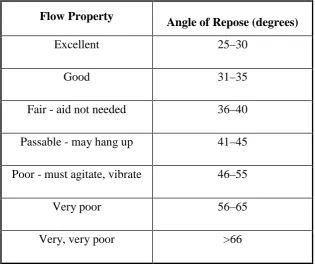
Table no.13: Flow Properties and Corresponding Angles of Repose
Flow Property
Angle of Repose (degrees)
Excellent 25–30
Good 31–35
Fair - aid not needed 36–40
Passable - may hang up 41–45
Poor - must agitate, vibrate 46–55
Very poor 56–65
2. Bulk
density:-Bulk density was determined by pouring gently 20 gm of sample (Isradipine) through a glass funnel into 50 ml graduated cylinder. The volumes occupied by the samples were recorded. Bulk density was calculated as:
3.
Tappeddensity:-Tapped density was determined by using Electro lab density tester, which consists of a graduated cylinder mounted on a mechanical tapping device. An accurately weighed sample of powder was carefully added to the cylinder with the aid of a funnel. Typically, the initial volume was noted, and the sample is then tapped (500, 750 or 1250 tapping) until no further reduction in volume is noted or the percentage of difference is not more than 2%.
A sufficient number o