STUDY ON THE PREVALENCE OF THYROID DYSFUNCTION IN TYPE 1 DIABETIC CHILDREN
THE TAMIL NADU DR.M.G.R.MEDICAL UNIVERSITY
In partial fulfillment of the regulations
M.D DEGREE (PEDIATRICS) BRANCH VII
INSTITUTE OF CHILD HEALTH AND
CHILDREN MADRAS MEDICAL COLLEGE
STUDY ON THE PREVALENCE OF THYROID DYSFUNCTION IN TYPE 1 DIABETIC CHILDREN
Dissertation submitted to
THE TAMIL NADU DR.M.G.R.MEDICAL UNIVERSITY
In partial fulfillment of the regulations
for the award of degree of
M.D DEGREE (PEDIATRICS) BRANCH VII
INSTITUTE OF CHILD HEALTH AND HOSPITAL FOR MADRAS MEDICAL COLLEGE APRIL 2013 STUDY ON THE PREVALENCE OF THYROID DYSFUNCTION IN TYPE 1 DIABETIC CHILDREN
THE TAMIL NADU DR.M.G.R.MEDICAL UNIVERSITY
M.D DEGREE (PEDIATRICS) BRANCH VII
CERTIFICATE
This is to certify that the dissertation titled, “Study on the prevalence of thyroid dysfunction in Type 1 Diabetic children
submitted by Dr.A.Jagadeesh, to the Faculty of Pediatrics, The Tamilnadu Dr.M.G.R Medical University, Chennai, in partial
fulfillment of the requirements for the award of M.D. Degree
(Pediatrics) is a bonafide research work carried out by him under our
direct supervision and guidance, during the academic year
2010-2013.
Prof.V.Kanagasabai,M.D,
Dean,
Madras Medical College,
Chennai – 600003.
Prof. Dr.P.S.Muralidharan, M.D., DCH.,
Professor of paediatrics,
Unit Chief, Research Guide,
Institute of Child Health
and Hospital for Children,
Prof.M.Kannaki,M.D.,DCH
Director and Superintendent,
Institute of Child Health and Hospital for Children,
Chennai - 600008.
DECLARATION
I, Dr.A.Jagadeesh, solemnly declare that the dissertation titled “Study on the prevalence of thyroid dysfunction in Type 1 Diabetic children”
has been prepared by me.
This is submitted to the Tamilnadu Dr. M.G.R. Medical
University, Chennai in partial fulfillment of the rules and regulations
for the M.D. Degree Examination in Pediatrics.
Dr.A.Jagadeesh
Place : Chennai
SPECIAL ACKNOWLEDGEMENT
My sincere thanks to Prof. Dr.V.Kanagasabai, M.D., Dean,
Madras Medical College, Chennai for permitting me to utilize the
clinical materials of the hospital for the successful execution of my
ACKNOWLEDGEMENT
I express my heartfelt gratitude to Prof.M.Kannaki,
M.D.,DCH., Director and Superintendent, Institute of Child health and Hospital for children, Madras Medical College, Chennai for his
guidance and support in the execution of this study.
I am very grateful to my unit chief, Prof.
Dr.P.S.Muralidharan, M.D., DCH., Professor of Pediatrics, for their constant guidance and encouragement, that made this study possible.
I express my gratitude to the Assistant Professors of
Diabetology Department Dr.S.Parivathini, MD.,DCHand Dr.
V.Poovazhagi, MD.,DCH and assistant professors of my medical
unit, Dr.D.Velmurugan,M.D., Dr.D.Prabakar M.D., and Dr.
Sridevi Narayan, M.D., for their invaluable help and support throughout the study process.
I am extremely thankful to Dr. K.Nedunchelian,MD.,DCH.,
for his valuable suggestions and guidance during this study.
I am extremely thankful to Dr. S. Srinivasan, DCH., Medical Registrar, for his valuable suggestions and guidance during this study.
I sincerely thank all the children and their parents who have
CONTENTS
Sl. No. Title Page No.
1 INTRODUCTION 1
2. REVIEW OF LITERATURE 9
3. STUDY JUSTIFICATION 15
4. AIM OF THE STUDY 17
5. SUBJECTS AND METHODS 18
6. OBSERVATIONS 26
7. DISCUSSION 51
8. CONCLUSION 62
9. BIBLIOGRAPHY
ABBREVIATIONS
1
STUDY ON THE PREVALENCE OF THYROID
DYSFUNCTION IN TYPE 1
DIABETIC CHILDREN
INTRODUCTION
Type 1 diabetes mellitus (T1DM) is an autoimmune disease
resulting in insulin deficiency. In the recent two decades, the world
wide prevalence of diabetes mellitus (DM) has increased
significantly.(1) There is a genetic predisposition towards T1DM. This also predisposes these individuals to other autoimmune diseases such
as thyroid disease, celiac disease and adrenal insufficiency. Of all the
above mentioned diseases autoimmune thyroiditis (AIT) is the most
frequently encountered one.(2, 3) According to various studies, 15-30%
of T1DM patients have AIT,(4-7) 4-9% have celiac disease and 0.5% have Addison disease.(7)
AIT is the most frequent autoimmune disease seen in diabetic
children. To diagnose AIT, thyroid peroxidase (anti-TPO) and
thyroglobulin (anti-TG) antibodies are measured. The prevalence of
2
hypothyroidism and duration of diabetes . Geographic location is an
important determining factor and the prevalence is high in areas with
higher iodine intake (De Block et al. 2001).
AIT is often clinically silent but it may progress to overt or
subclinical hypothyroidism or hyperthyroidism(8).. When compared to
the general population the positivity of anti-thyroid antibodies was
found to range from 2.9% - 3.4%(9,10) while in T1DM children it was
between 18.5% - 24.6%.(11-13) These thyroid antibodies may be seen just temporarily also.(Vondra et al1996).
According to previous studies age and sex are important risk
factors to develop AIT, (11,13,14,15,16) while there are very limited studies to correlate the age at thyroid diagnosis (11,14), duration of diabetes
(14,16,17)
and the development of thyroid antibody positivity.
EFFECT OF DIABETES ON THYROID FUNCTION
In T1DM children with normal thyroid function, the T3 and
TSH levels may be strongly influenced by the glucose levels . T1DM
which is poorly controlled may induce a low T3 state and it is the
3
EFFECT OF HYPOTHYROIDISM ON DIABETES
In children with hypothyroidism the insulin synthesis is
decreased. Gluconeogenesis is also reduced.It has been proposed that
there is a postreceptor defect which explains the decrease in insulin
stimulated utilization of glucose that occurs in peripheral tissues.This
predisposes to hypoglycemia in these children.(59)
Clinical status Effect on blood glucose
Effect onThyroid function
T1DM-
With normal thyroid
function
↓ T3
↓ TSH
TIDM– in
hyperthyroidism
individuals
Poor control of
glucose
↑ risk of ocular
involvement
Hyperthyroidism – In
euglycemic children
4
Hyperthyroidism- In
T1DM children
Poor control of
diabetes
Hypothyroidism- in
diabetic children
Predisposes to
recurrent
hypoglycemia
In Type 1 diabetic
children
↑ Risk of thyroid
5
Both thyroid hormones and insulin are closely related that
T1DM and thyroid dysfunction mutually influence the disease
process of each other. In hyperthyroidism, it will be difficult to
maintain the glycemic status thereby making the management of
diabetes difficult. T1DM children with hyperthyroidism might need a
increase in daily insulin requirement and hence there is increased risk
of diabetic ketoacidosis.(18,19)
Hypothyroidism usually predisposes to hypoglycemia .
Hypothyroidism as such causes growth retardation , increase in
weight, menstrual irregularities, abnormal lipid elevations and it can
also lead to cardiac complications in these T1DM children.(8)
In previous studies overt hypothyroidism occurs in 1-5% and
hyperthyroidism occurs in 0.5-7% individuals.( 3,20)Since the prevalence of AIT is increasing in T1DM children, these children
should undergo screening either by using TSH or measurement of
thyroid antibodies. Despite this fact, there is still no clear consensus
regarding screening of AIT and thyroid function in T1DM.(21)
In AIT antibodies are produced against thyroglobulin (Tg), a colloid,
and thyroid peroxidase (anti-TPO), which helps in the formation of
6
In T1DM children, the prevalence of anti TPO antibody was
found between 10.3% and 28.4% whereas anti-Tg was found to range
between 8.8% and 14.5%. (24,25,26,27) In the presence of both of these antibodies it was between 5.9%–7%. (24,26,27) These antibodies are usually not detected at diagnosis, but they may be seen after sometime
in the course of the disease particularly in those children who are
genetically predisposed. (11,17) In another study, 16.7% of the patients was found to have AIT at the onset of diabetes.(17)
In these children with AIT, family history of diabetes and
family history of thyroid abnormalities should be taken into account.
This is because AIT occurs more frequently in individuals with strong
family history because of genetic predisposition in causing this
autoimmunity.
In girls particularly in adolescents, history of menstrual
irregularities should be asked for, since both delayed and precocious
puberty is well known to occur. Also features of any specific
syndrome (Eg: Down syndrome) should be looked for, since AIT is
7
Intake of specific drugs triggering AIT and T1DM should be noted.
Any stressful event in the form of trauma, infection, exanthematous
illness also to be looked for.
Nearly one third of all T1DM children have co-existent AIT
and a high prevalence of thyroid dysfunction which is predominantly
hypothyroidism (clinical or subclinical) whilst a very few have
hyperthyroidism. Since the prevalence of thyroid dysfunction in
T1DM children is high, the importance of screening for AIT have
8
DEFINITIONS :
Overt hypothyroidism: was defined as elevated TSH and low T4,
Subclinical hypothyroidism as elevated TSH and normal T4,
AutoImmuneThyroiditis (AIT)
Positivity of at least one antibody either TPO or Tg, or
9
REVIEW OF LITERATURE:
Ardestani et al
Objective: Studies in different populations have shown great
variation in the prevalence of thyroid diseases in individuals with
T1DM. The objective was to study the prevalence of thyroid disorders
such as autoimmunity of thyroid (AIT), thyroid dysfunction, and
goiter in children with T1DM
Findings: The prevalence of subclinical hypothyroidism was
high in both groups (18%). T1DM patients had lower frequency of
goiter (21% vs. 38%), and higher prevalence of positive AIT (22% vs
8%), anti-TPO Ab positivity (19.2% vs. 5.2%), anti-Tg Ab (11.1% vs.
6.4%)
Conclusion: Results demonstrated the high prevalence of AIT
and thyroid dysfunction in patients with T1DM and regular thyroid
10
Kostas kakleas et al
Anti-TPO was seen in 17.3% while anti-Tg was 11.1%, and of
both anti-thyroid antibodies (10.4%). The presence of anti-thyroid
antibodies had a positive association with age, duration of diabetes,
and TSH levels. In general there is a female preponderance for AIT.
Though the prevalence of AIT was more common in middle aged
women, it still may start in early childhood. Hence early recognition
forms an important aspect in the long term management of these
children.
Ismael et al Diabetic care:
Study period: 2001
Study design: Descriptive study
.Sample size: 17,749 patients
Conclusion: 15% patients had AIT. Increase positivity were seen
during the second decade.
More common in women. Treatment may be initiated if the
antibody levels are too high, so that complications of hypothyroidism
11
Kordonouri et al, BMJ
Study period: 1990 - 2003
Study design: Longitudinal study
Study population: Children with Type 1 diabetes.
Methodology: Antithyroid antibodies were done in TIDM children
and correlated with age, gender and duration of diabetes
Results:
When screened initially, 15.4% of patients were positive for
anti-TPO and 14.4% were positive for anti-Tg. The incidence of AIT
after a decade was significantly higher particularly after 12 years of
age.
Individuals with AIT had poor glycemic control and frequent
admissions. Also the lipid parameters were significantly elevated.
Already individuals with T1DM are more prone for metabolic
12
Guillermo et al, Diabetic care
Study period:1983-2001
Study design: Randomized control trial
Sample size: 58 individuals
Results: 18 patients developed AIT, and 1 of them developed
hyperthyroidism. AIT was seen more in females (41%). No significant
association was found in BMI, lipid parameters, and glycemic control
in individuals with AIT.
Those individuals with AIT who were promptly managed had
less complications in terms of cardiovascular, metabolic, menstrual
irregularities when compared to those individuals who didn’t take
13
Pasupathi et al
The main objective was to investigate the effect of diabetes on
thyroid hormone levels and other biochemical variables. The study
population had 200 subjects who were divided into two groups:
diabetic and non-diabetic. A significant increase in the levels of blood
glucose, HbA1C, cholesterol, triglyceride were observed in diabetic
patients compared to non-diabetic subjects. TSH levels was
significantly decreased whereas T4 and T3 levels were significantly
increased in diabetic patients when compared to controls.
However, the T4 and T3 levels did not differ significantly
between the two groups. Of the 100 diabetic patients, 27% had low
thyroid hormone levels, 16% had high thyroid hormones, and 55% had
normal levels. This study demonstrated high incidence of abnormal
thyroid hormone levels among the diabetics. To conclude ,the
detection of abnormal thyroid hormone levels in the early stage of
diabetes mellitus will help the patients to detect the complications
14
Pranzy et al
The aim of this study was to detect subclinical AIT. The
presence of antibodies was correlated with the control of diabetes.
Fifty-one type 1 diabetic patients (mean age 37±11 years, mean
duration of diabetes 16±13 years) were included into this study. TPO ,
Tg and TSH were measured by RadioImmunoAssay.
11 new cases of thyroid dysfunction (22 % of patients) were
detected by the estimation of thyroid antibodies and TSH. Two new
cases of hyperthyroidism were diagnosed during the study. In both
patients with hyperthyroidism the control of diabetes initially
worsened and improved after treatment. The screening of antibodies
in type 1 diabetic patients revealed subclinical cases of AIT .
Subclinical forms of these disorders have no influence on the control
of diabetes . It was suggested to follow-up the patients with positive
antibodies because further deterioration of the thyroid function can be
15
STUDY JUSTIFICATION:
Finding of hypothyroidism in our TIDM children attending
diabetic clinic when they are routinely screened for the same and
unavailability of clear data regarding the prevalence of autoimmune
thyroiditis in these T1DM children prompted us to do the study. We
have a separate diabetic clinic where the patients are being followed
up. In their routine screening we found a significant number of cases
to overt hypothyroidism. In order to have a data for our own diabetic
children and to demonstrate the autoimmunity we have decided to do
this study.
Although it is generally agreed that because of increasing
prevalence of AIT in T1DM children, screening for AIT in all T1DM
is justified,(4,5) it is still not agreed which is the best method and how often to perform. The American Diabetes Association (6) (7,8) have recommended to use TSH as a screening tool in T1DM children once
a year., as autoantibodies may still persist for many years without
16
However, the American Diabetes Association have suggested
that the presence of thyroid autoantibodies increases the risk for
thyroid disease. These evidences clearly show that the incidence of
autoimmune thyroid disease is highly increased in T1DM children
when compared to the general population(7,8) But controversy still remains regarding the management when antibodies alone are
positive.
From previous studies it is clear that the prevalence of thyroid
antibodies in patients with type 1 diabetes increases with age, female
sex and duration of diabetes.(18,19)
Hence we confirm the recommendation that thyroid testing be
done at diagnosis and annually in children with type I diabetes.(30,31)
Also there are a very few studies which have analysed the risk factors
to relate AIT with T1DM(3,30) . It is noteworthy that there are limited studies to demonstrate the influence of AIT on BMI of children with
T1DM. Hence we decided to study the effect of AIT on the BMI of
children with T1DM and glycemic control in patients with thyroid
dysfunction. Also the effect of thyroid dysfunction in these individuals
17
AIM OF THE STUDY:
To study the prevalence of thyroid dysfunction among children
with newly diagnosed Type 1 diabetic children attending
Diabetic clinic at Institute of Child Health from August 2011 to
october 2012.
To correlate the effect of thyroid dysfunction on age, gender,
duration of diabetes, glycemic control, lipid abnormality and
18
SUBJECTS AND METHODS:
1.Methodology
a) Study design:
Descriptive study design
b) Place:
Diabetic clinic,
Institute of Child Health ,Egmore, chennai
C) Period of study:
19
D) Study population
Case definition:
Diabetes: Children with history of polydipsia, polyphagia,
polyuria and
Fasting blood glucose ≥126 mg/dl
Random blood glucose ≥200 mg/dl
Inclusion criteria: All children attending diabetic clinic at ICH
20
Exclusion criteria:
I. Children diagnosed to have secondary diabetes, secondary to
drugs.( Drugs include steroids, asparaginase, phenytoin )
II. Children with dysmorphic or syndromic facies.
III. Patients found to be having hypothyroidism prior to diagnosis of
diabetes
IV. Neonatal diabetes and in infants less than 1 year.
Sample size: 142 patients (All consecutive subjects were included)
Institutional Ethical Committee approval was obtained.
Informed consent was obtained from each parent before recruitment
21
2.Manouvres :
• Clinical examination of thyroid gland and Goiter grading was
done according to WHO/UNICEF/ ICCIDD classification (32)
Thyroid profile which includes serum T3, T4,TSH levels
Serum T3 and T4 concentrations were measured using Competitive
chemiluminescent immunoassay.
Normal range for T3 level: 60 - 200 ng/dl
T4 : 4.5 – 12 microgram/dl.
Serum TSH concentrations were determined with ultrasensitive
sandwich chemiluminescent assay.
Normal range for TSH level : 0.3-5.5 microU/ml.
Overt hypothyroidism was defined as elevated TSH and low T4, subclinical hypothyroidism as elevated TSH and normal T4, overt
hyperthyroidism as low TSH and elevated T4 and subclinical
hyperthyroidism as low TSH and normal T4.
Serum anti-TPO antibody and anti-Tg antibody were measured
by solid phase enzyme assay.
Anti-Tg antibody > 325 IU/ml
Anti-TPO concentrations >50 IU/ml, respectively, were
22
Positivity of at least one antibody was considered as having AIT. Thyroid ultrasonography was done in children with positive
anti-thyroid antibodies, with or without elevated TSH . AIT was
diagnosed when there is thyroid enlargement (33) with diffuse
hypoechogenicity and/or diffuse micronodules (34)
AIT was diagnosed when TSH is elevated (>5 µIU/mL),
associated with the presence of at least one thyroid autoantibody, with
or without ultrasonographic evidence of thyroiditis.(34)
Clinical hypothyroidism is said to be present when there is low T4
and TSH levels with or without goitre.
Lipid profile : S. Cholesterol & S.Triglycerides were done.
S.cholesterol > 200, S.Triglycerides > 150 was taken as
abnormal.(20)
USG of thyroid gland: Diffuse hypogenecity was suggestive of
AIT.
HbA1C > 10 was taken as having poor control. (27)
Hypoglycemic episodes : It was taken as significant when it is
symptomatic. ( sweating, palpitations and seizures)
DIABETIC CHILD WITH GOITRE
23
24
ULTRA SONOGRATHY OF THYROID SHOWING
25
3. Statistical analysis
Descriptive data was be used to calculate the prevalence.
Correlation of thyroid dysfunction on the age, gender, duration
of diabetes, glycemic control, effect on BMI and lipid
abnormality will be calculated using
A) Univariate analysis
B) Multivariate analysis
Quantitative variables are presented as mean±SD .
Qualitative variables were compared by Chi-square test. Correlation
between quantitative variables was calculated by P-value and <0.05
was considered statistically significant.
OBSERVATIONS
One hundred and forty two children with T1DM
the study.
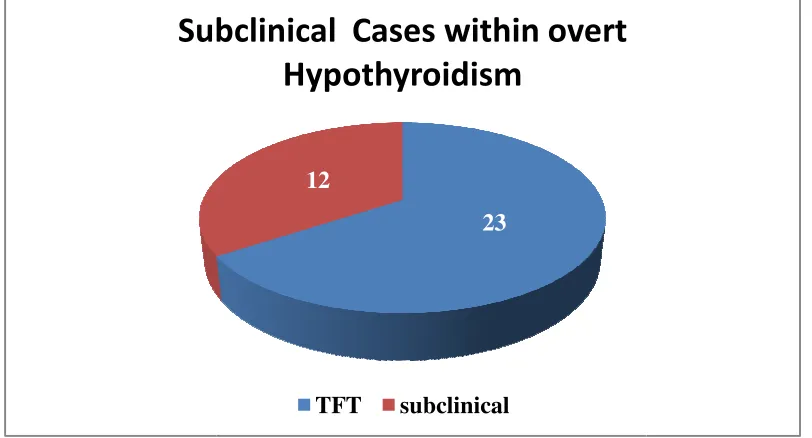
23 (16%) of the diabe
12 (8%) children
Subclinical Cases within overt
26
OBSERVATIONS:
hundred and forty two children with T1DM were enrolled into
) of the diabetic children had overt hypothyroidism.
children with T1DM had subclinical hypothyroidism.
Fig 1
23 12
Subclinical Cases within overt
Hypothyroidism
TFT subclinical
were enrolled into
hypothyroidism.
[image:34.595.107.513.317.536.2]27
Subclinical hyperthyroidism and overt hyperthyroid disease
was not detected in any case with T1DM .
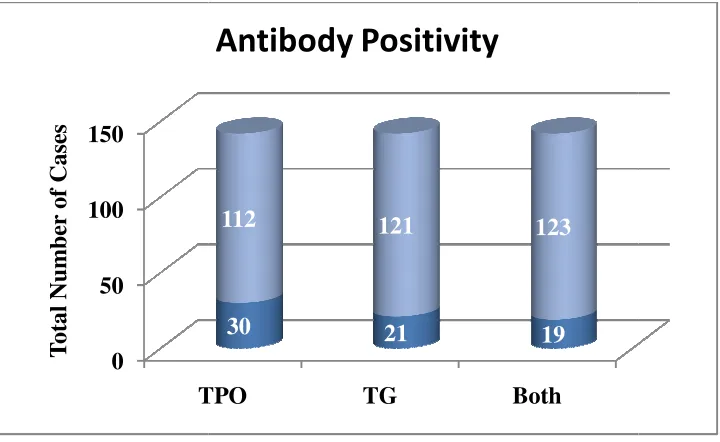
Among the diabetic children 30 (21%) were found positive for
0 50 100 150
TPO
T
ot
al
N
u
m
b
er
of
C
as
es
[image:36.595.111.471.89.310.2]28
Fig 2:
TPO TG Both
30 21 19
112 121 123
29
The overall prevalence of AIT based on the positivity of any
one of these antibodies in diabetic children was 32 (22.5%) . Diabetic children with AIT had higher prevalence of thyroid
dysfunction 23 (16%). Association of autoimmnune antibodies
and hypothyroidism was significant (p- 0.002).
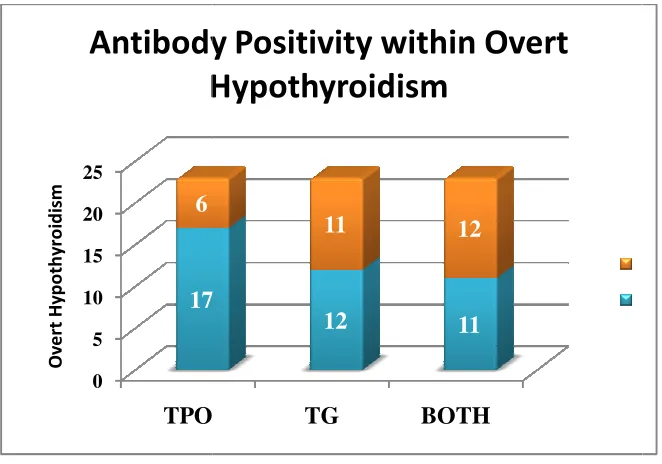
Among the children with overt hypothyroidism 17 (73%) were
positive for TPO antibodies, 12 (52%) were positive for TG
0 5 10 15 20 25
TPO
17 6
O
v
e
rt
H
y
p
o
th
y
ro
id
is
m
Antibody Positivity within Overt
Hypothyroidism
[image:38.595.109.440.88.320.2]30
Fig 3:
TPO TG BOTH
17
12 11
11 12
31
5 (3.5%) children had lab evidence of hypothyroidism but
negative for antibodies.
12 (8.4%) children were positive for antibodies but no lab evidence for hypothyroidism.
None had the clinical features of hypothyroidism.
In these TIDM children with presence of any of these antibodies (
anti-TPO and anti-Tg ) correlation was done with sex, duration of
diabetes, age at onset of hypothyroidism, lipid profile including
cholesterol and triglycerides, glycemic control using HbA1C,
presence of thyroid enlargement, presence of thyroid
echogenecity on USG, and subclinical hypothyroidism. BMI was
compared in these individuals with and without AIT.
In 2 of these 32 children (6.2%) were positive for AIT at the
onset of diabetes.
Anti-TPO antibodies were found positive at 3.01 ± 3.5 years after the onset of diabetes. Anti-Tg were positive 3.5 ± 2.5 years after the onset of diabetes. Both anti-TPO and anti-Tg were
found positive 3.6 ± 2.5 years after the onset of diabetes.
The mean ± SD age at onset of hypothyroidism with positive
32
was 6.64 ± 3.4 . The mean ± SD BMI of the children without
AIT was 15.8 ± 1.5 while the mean BMI in children with AIT
was 18.5 ± 2.6.
The prevalence of goiter in the study group with positive TPO
antibodies was 16 (94%), with TG antibodies it was 13(76.5%)
and it was 12 (70.6%) when positive for both antibodies.
Multivariate logistic regression analysis was done to correlate age at
onset of hypothyroidism, gender, duration of diabetes, against AIT.
The effect of AIT on the glycemic control, lipid abnormality, BMI
were analysed. In children with AIT, the presence of thyroid
enlargement and sonographic evidence of AIT were also analysed.
33
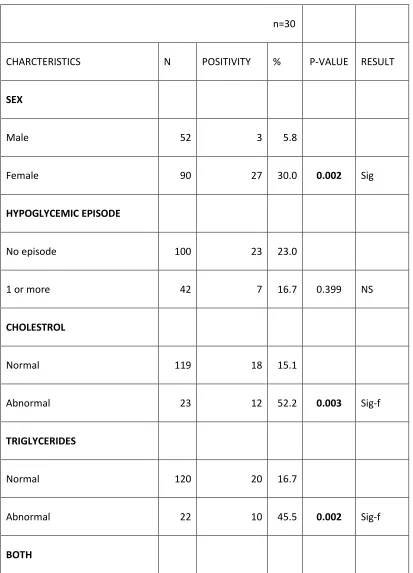
Table 1: Univariate analysis showing comparision of factors with TPO positivity
n=30
CHARCTERISTICS N POSITIVITY % P-VALUE RESULT
SEX
Male 52 3 5.8
Female 90 27 30.0 0.002 Sig
HYPOGLYCEMIC EPISODE
No episode 100 23 23.0
1 or more 42 7 16.7 0.399 NS
CHOLESTROL
Normal 119 18 15.1
Abnormal 23 12 52.2 0.003 Sig-f
TRIGLYCERIDES
Normal 120 20 16.7
Abnormal 22 10 45.5 0.002 Sig-f
34
Normal 128 22 17.2
Abnormal 14 8 57.1 0.002 Sig-f
HbA1C
Fair 101 17 17.0
Poor 41 13 31.7 0.049 Sig
GOITRE
Present 17 16 94.1
Absent 125 14 11.2 0.001 Sig-f
USG-AIT
Present 18 17 94.4
Absent 124 13 10.5 0.001 Sig-f
SUBCLINICAL HYPOTHYROIDISM
Absent 133 26 19.5
35
CHARCTERISTICS n POSITIVITY P-VALUE RESULT
MEAN(S.D)
BMI 30 15.7(1.5) 0.252 NS
DURATION 30 3.01(2.48) 0.001 Sig
BMI1 30 18.55(2.64) 0.465 NS
36
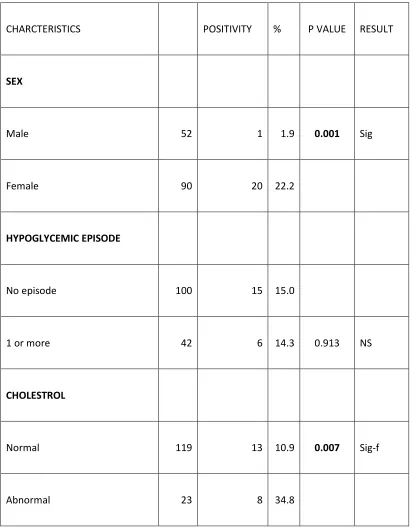
Table 2: Univariate analysis showing comparision of factors with TG positivity
CHARCTERISTICS POSITIVITY % P VALUE RESULT
SEX
Male 52 1 1.9 0.001 Sig
Female 90 20 22.2
HYPOGLYCEMIC EPISODE
No episode 100 15 15.0
1 or more 42 6 14.3 0.913 NS
CHOLESTROL
Normal 119 13 10.9 0.007 Sig-f
37
TRIGLYCERIDES
Normal 120 13 10.8 0.005 Sig-f
Abnormal 22 8 36.4
BOTH
Normal 128 14 10.9 0.001 Sig-f
Abnormal 14 7 50.0
HbA1C
Normal 101 12 11.9 0.126 NS
Abnormal 41 9 22.0
GOITRE
Present 17 13 76.5 0.002 Sig-f
38
USG-AIT
Present 18 14 77.8 0.023 Sig-f
Absent 124 7 5.6
SUBCLINICAL HYPOTHYROIDISM
Absent 133 19 14.3 0.622 NS
Present 9 2 22.2
CHARCTERISTICS n POSITIVITY P Value RESULT
MEAN(S.D)
BMI 21 15.8(1.5) 0.594 NS
DURATION 21 3.5(2.4) 0.004 Sig
BMI1 21 18.7(2.5) 0.304 NS
39
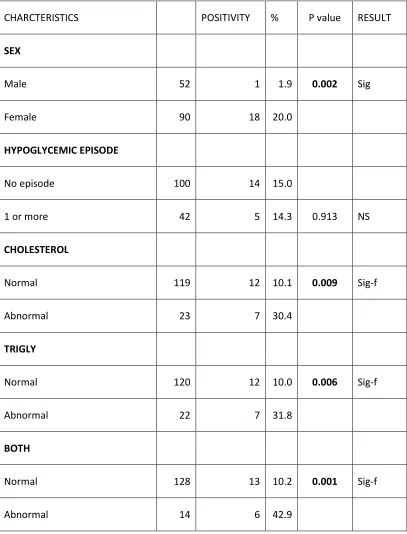
Table 3: Univariate analysis showing comparision of factors with Both TPO and TG positivity
TPO and TG
CHARCTERISTICS POSITIVITY % P value RESULT
SEX
Male 52 1 1.9 0.002 Sig
Female 90 18 20.0
HYPOGLYCEMIC EPISODE
No episode 100 14 15.0
1 or more 42 5 14.3 0.913 NS
CHOLESTEROL
Normal 119 12 10.1 0.009 Sig-f
Abnormal 23 7 30.4
TRIGLY
Normal 120 12 10.0 0.006 Sig-f
Abnormal 22 7 31.8
BOTH
Normal 128 13 10.2 0.001 Sig-f
40
HbA1C
Nor 101 10 9.9 NS
Abn 41 9 22.0 0.056
GOITRE
Present 17 12 70.6 0.021 Sig-f
Absent 125 7 5.6
USG-NECK
Present 18 13 72.2 0.003 Sig-f
Absent 124 6 4.8
SUBCLINICAL HYPOTHYROIDISM
Absent 133 18 13.5 0.836 NS
Present 9 1 11.1
CHARCTERISTICS N POSITIVITY P value RESULT
Mean(S.D)
BMI 19 15.8(1.5) 0.617 NS
DURATION 19 3.6(2.5) 0.002 Sig
BMI1 19 18.8(2.5) 0.25 NS
41
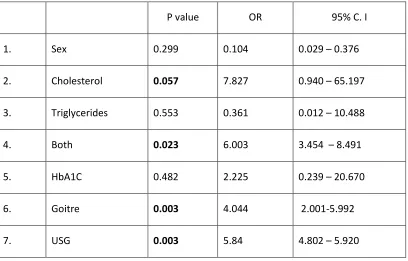
[image:49.595.105.513.205.466.2]Logistic regression analysis to estimate the risk factors associated with autoantibody positivity in T1DM children
Table 4: TPO positivity
P value OR 95% C. I
1. Sex 0.299 0.104 0.029 – 0.376
2. Cholesterol 0.057 7.827 0.940 – 65.197
3. Triglycerides 0.553 0.361 0.012 – 10.488
4. Both 0.023 6.003 3.454 – 8.491
5. HbA1C 0.482 2.225 0.239 – 20.670
6. Goitre 0.003 4.044 2.001-5.992
7. USG 0.003 5.84 4.802 – 5.920
P < 0.05, statistically significant- chi square test,
42
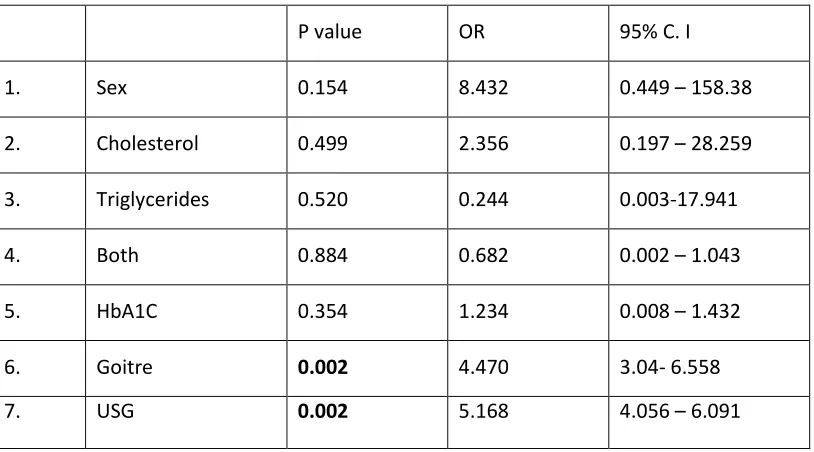
Table 5: Tg positivity
P value OR 95% C. I
1. Sex 0.154 8.432 0.449 – 158.38
2. Cholesterol 0.499 2.356 0.197 – 28.259
3. Triglycerides 0.520 0.244 0.003-17.941
4. Both 0.884 0.682 0.002 – 1.043
5. HbA1C 0.354 1.234 0.008 – 1.432
6. Goitre 0.002 4.470 3.04- 6.558
7. USG 0.002 5.168 4.056 – 6.091
P < 0.05, statistically significant- chi square test,
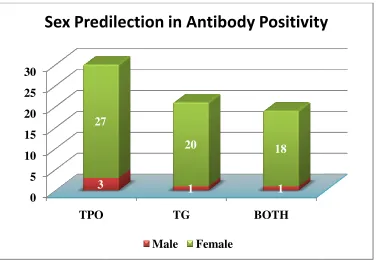
In children with TPO positivity n
and 3(10%) were males.
20(95%) were females and 1(5%) were males. When both
antibodies are positive 18( 94.7%) were seen in females and
1(5.3) were seen
preponderance among antibody positive T1DM children. Both
univariate and multivariate analysis showed
significance between thyroid antibody positivity and
gender. (Table 1,2,3,4,5).
0 5 10 15 20 25 30
TPO
3 27
Sex Predilection in Antibody Positivity
43
In children with TPO positivity nearly 27(90%) were females
and 3(10%) were males. Among the Tg positive children
20(95%) were females and 1(5%) were males. When both
antibodies are positive 18( 94.7%) were seen in females and
1(5.3) were seen in males. Thus overall there was
rance among antibody positive T1DM children. Both
and multivariate analysis showed
significance between thyroid antibody positivity and
[image:51.595.110.486.377.644.2]able 1,2,3,4,5).
Fig 4:
TG BOTH
1 1
27
20 18
Sex Predilection in Antibody Positivity
Male Female
27(90%) were females
positive children
20(95%) were females and 1(5%) were males. When both
antibodies are positive 18( 94.7%) were seen in females and
in males. Thus overall there was a female
rance among antibody positive T1DM children. Both
statistical
significance between thyroid antibody positivity and female
In children with positive TPO antibodies,
thyroid enlargement (goitre)
0.001 – 1.992
hypoechogeni
CI 2.01-3.774
(53.3%) showed
1.004 , 95% CI
sonographic evidence of AIT.
3.24-5.78 ). In
seen in 12(63.2%
of AIT was seen in 13 children(68.4%)
0 TPO TTG BOTH
Goitre and Hypoecho genecity with
44
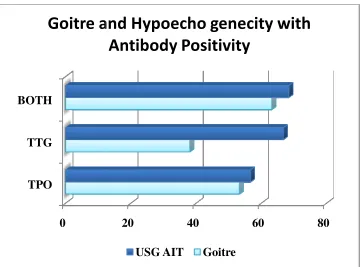
with positive TPO antibodies,16 (53.3%) developed
thyroid enlargement (goitre) (P= 0.001, OR 1.004 , 95% CI
1.992 ) and 17 (56.7%) children showed
hypoechogenicity on ultrasonography (P=0.002, OR 2.84 , 95%
3.774 ). In children with positive TG antibodies
(53.3%) showed thyroid enlargement (goitre) (P= 0.001, OR
1.004 , 95% CI 3.04-6.558) and 17 (56.7%)
sonographic evidence of AIT.(P=0.002, OR 5.168 , 95% CI
In children with both antibodies positive, goiter was
12(63.2%, p=0.003) children and sonographic
[image:52.595.110.473.440.707.2]seen in 13 children(68.4%)
Fig 5:
20 40 60 80
Goitre and Hypoecho genecity with
Antibody Positivity
USG AIT Goitre
%) developed
(P= 0.001, OR 1.004 , 95% CI
children showed diffuse
(P=0.002, OR 2.84 , 95%
TG antibodies 13
thyroid enlargement (goitre) (P= 0.001, OR
and 17 (56.7%) children had
(P=0.002, OR 5.168 , 95% CI
h antibodies positive, goiter was
, p=0.003) children and sonographic evidence
In patients with positive TPO antibodies only 4 (13.3%) had
subclinical hypothyroidism. (p= 0.0
positive Tg
hypothyroidism. (p=0.622). In children with both antibodies
positive only 1(5.3%) had subclinical hypothyroidism.
0 TPO
TG BOTH
Subclinical Hypothyroidism in
45
In patients with positive TPO antibodies only 4 (13.3%) had
subclinical hypothyroidism. (p= 0.077). In children with
Tg antibodies only 2 (9.5%) had subclinical
hypothyroidism. (p=0.622). In children with both antibodies
positive only 1(5.3%) had subclinical hypothyroidism.
Fig 6
5 10 15 20 25 30
Subclinical Hypothyroidism in
Antibody Positivity
Subclinical Total
In patients with positive TPO antibodies only 4 (13.3%) had
77). In children with
antibodies only 2 (9.5%) had subclinical
hypothyroidism. (p=0.622). In children with both antibodies
positive only 1(5.3%) had subclinical hypothyroidism.
[image:53.595.109.473.294.512.2]46
Hypercholesterolemia was seen in 12(40%) children with
positive TPO antibodies(p=0.002) while it was 8(38.1%) with
positive Tg antibodies(p=0.007) and 7 (30.4%) in children with
both antibodies positive(p=0.009). Hypertriglyceridemia was
seen in 10(33.3%) children with positive TPO
antibodies(p=0.001) while it was 8(36.4%) with positive Tg
antibodies(p=0.005) and 7 (36.8%) in children with both
antibodies positive(p=0.001). Both hypercholesterolemia and
hypertriglyceridemia was seen in 8(26.7%) children with
positive TPO antibodies (p=0.002) while it is 7(33.3%) with
positive Tg antibodies (p=0.001) and 6 (31.6%)in children with
0 20 40 60 80 100 120
TPO
33.3 26.7
Lipid Abnormality with Antibody
[image:55.595.110.507.90.339.2]47
Fig 7:
TPO TG Both
40 38 36.8
33.3 38 36.8
26.7 33.3 31.6
Lipid Abnormality with Antibody
Positivity
Choles Tri BOTH
Poor glycemic control
in 13(43.3%, p=0.049) while with positive
seen in 9(42.9%, p=0.126). In children with both antibodies
positive poor glycemic control was
0 5 10 15 20 25 30
TPO
17
13
Glycemic Status in Antibody Positivity
48
Poor glycemic control with positive TPO antibodies was
, p=0.049) while with positive Tg antibodies it was
seen in 9(42.9%, p=0.126). In children with both antibodies
[image:56.595.109.471.262.477.2]positive poor glycemic control was seen in 9(47.4%, p=0.056)
Fig 8:
TPO TG BOTH
17
12 10
13
9
9
Glycemic Status in Antibody Positivity
Good Poor
with positive TPO antibodies was seen
antibodies it was
seen in 9(42.9%, p=0.126). In children with both antibodies
In children with positive TPO antibodies, 7(26.3%) had
hypoglycemic episodes (p=0.399) while with positive TTG
antibodies 6(28.6%) had hypoglycemic episodes
children with both antibodies positive 5(
hypoglycemic episode
0 5 10 15 20 25 30
TPO 23 7
Hypoglycemia in antibody Positivity
49
In children with positive TPO antibodies, 7(26.3%) had
hypoglycemic episodes (p=0.399) while with positive TTG
antibodies 6(28.6%) had hypoglycemic episodes (p=0.913)
children with both antibodies positive 5(26.3%) had
[image:57.595.107.473.293.514.2]hypoglycemic episode (p=0.913).
Fig 9:
TG BOTH
15 14
6
5
Hypoglycemia in antibody Positivity
Hypo
No Hypo
In children with positive TPO antibodies, 7(26.3%) had
hypoglycemic episodes (p=0.399) while with positive TTG
(p=0.913). In
26.3%) had
Hypo
BMI of the children
with BMI in children without AIT
not observed for AIT and BMI
14 TPO
Tg BOTH
BMI WITH AND WITHOUT AIT
50
children with AIT positive children was
I in children without AIT. Statistical significance was
[image:58.595.108.473.229.443.2]not observed for AIT and BMI.(table 1,2,3,4,5)
Fig 10:
15 16 17 18 19
15.7 15.8 15.8
18.55 18.7
BMI WITH AND WITHOUT AIT
BMI T BMI
was compared
Statistical significance was
19 18.55
51
DISCUSSION
The present study showed that children with T1DM had high
levels of both anti-TPO and anti-Tg antibodies. AIT is the most
prevalent autoimmune disorders associated with T1DM(20,35). The
reason for the high prevalence of some autoimmune disorders in these
patients still remains undetermined. It may be due to a increased
tendency to act against specific antigens, or loss of self recognition
particularly when there is genetic or environmental trigger.(36).
According to some studies, HLA(30,31) or some genetic
component outside the HLA (i.e., CTLA4 and PTPN22 ) might be a
reason (37,38) in the occurrence of AIT in T1DM patients. Moreover, environmental triggers such as any stressful event, infection, trauma
may also play a role. Both T1DM and AIT are diseases which occurs
as a result of autoimmunity mediated through T-cell pathway. (39).
In the present study, the prevalence of positivity for anti-TPO
Antibody, anti-Tg antibody, and the prevalence of positivity for both
antibodies and AIT (at least one positive antibody) in children with
52
studies, the prevalence of positive anti-TPO antibody in T1DM
patients was reported to be 5.5-46.2% and that of anti-Tg antibody
ranged from 2.1 to 40%. Thus like in previous studies TPO antibody
has higher positivity.The wide range of these data can be explained by
the difference in genetic factors, age, and sex of the studied
population,(40) as well as the different methods of measurement of antibodies.(8)
Most studies that have reported low prevalence of AIT were
conducted 10-20 years ago,which shows the low sensitivity of the lab
tests. Meanwhile, this finding might also be a result of increase in the
prevalence of AIT during the recent decades(8) along with increasing TIDM cases. Epidemiologic studies have shown higher incidence of
AIT after elimination of iodine deficiency in endemic areas.(39) The lower prevalence of AIT in our study could be explained by the
different age group of studied individuals in our study. However, the
present study was conducted on children and showed comparable
results with other studies performed in similar age group. Age
dependent increase of AIT incidence has been described
53
From previous studies the prevalence of clinical and subclinical
thyroid dysfunction in T1DM patients is suggested to be 13.4-20% (40)
whilst the prevalence of hypothyroidism and hyper-thyroidism in the
normal population is 5-10% and 1%,respectively.(7)
A significant percentage of them were found to have AIT very
early after the onset of diabetes. In the present study, there was no
case of clinical thyroid dysfunction. However, there was lab evidence
of hypothyroidism and also thyroid enlargement were seen in those
cases which has overt or antibody positive hypothyroidism (Fig 3,5 ).
Subclinical hypothyroidism was present in 8% (Fig 1). In our study,
the prevalence of subclinical hyperthyroidism in T1DM patients was
0%, which is consistent with the findings of previous studies.(3)
We found that diabetic patients with AIT had higher prevalence
of thyroid hormones, which was statistically significant.(Fig 3).
Therefore, the higher prevalence of subclinical hypothyroidism in
T1DM patients could be explained by the high prevalence of AIT
54
Unfortunately, iodine status of the studied population was
not evaluated and as a result, we could not investigate the role of
iodine deficiency in the high prevalence of subclinical
hypothyroidism. In the present study, the prevalence of goiter in
T1DM was 11.2 % . The lower prevalence of goiter in T1DM patients
is in contrast with previous studies,which showed increase in goiter
prevalence in T1DM patients.(43-45). However in our study there is higher prevalence of goiter in T1DM patients with AIT(94%) (Fig 5)
which is statistically significant. Urine iodine concentration in T1DM
patients was previously reported to be high (46). Goiter was made by
inspection and palpation. All the cases clinically suspected to have
goiter were confirmed by thyroid ultrasonography.
In our study, the prevalence of AIT in female patients with
T1DM was higher than that in male T1DM patients which is
consistent with many studies with higher prevalence of positive
thyroid autoantibodies in females(47) though some studies reported similar prevalence in both genders. (48,49) In T1DM children with AIT, oestrogen were found to increase the risk of autoimmunity by acting
through the T cell pathway, while androgens usually protects against
55
In our study, the prevalence of AIT is increased with age and duration
of diabetes. These observations in our study are similar to previous
studies(11,54). This has lead to the suggestion that autoimmunity is the end result which started with self recognition, then passes through
immunity followed by appearance of antibodies finally leading to
autoimmune disease.(56) In our study, in children with AIT, duration of diabetes was found to have statistical significance in the univariate
analysis. As the duration increases the prevalence of AIT increases.
Thus strongly reinforces that along with initial screening, these
children with AIT should have a long term follow up.
In contrast to previous studies(5), in the current study, we found a relationship between HbA1c, a measure of metabolic control in
diabetic patients, and AIT or thyroid dysfunction. In TPO positive
children there was a statistical significance, while in Tg and both
antibody positivity there was no statistical significance. (Tab 1,2,3;
Fig 8). This clearly points out that children with AIT might have
fluctuating glycemic control and diabetic management can be made
difficult. Another explanation that can be given for no statistical
significance is that cut off of 10 was taken as to be having poor
56
atleast 6-8. It is well known fact that T1DM children with AIT are
prone to have poor glycemic control.
In TIDM children with AIT, there is significant elevation in lipid
parameters including both cholesterol and triglycerides.(Fig 7; Tab
1-5) which is in consistent with previous studies. Here there is a
statistical significance for both cholesterol and triglycerides when
compared for both the antibodies which is an extremely important
finding. As such the long term morbidity is increased, hence these
should be looked into while managing these children. Also we have
found a significant elevation in a very early age. Hence they should be
regularly followed up to avoid other cardiovascular complications.
Though the hypoglycemic episodes did not have statistical
significance in our study (Tab 1-5, Fig 9) it is an important
complication known to occur in diabetic children with
hypothyroidism. Again here hypoglycemic episodes were taken as
significant when there is documented low sugar along with other
manifestations like palpitations, sweating or seizures. It is a known
fact these children are more prone for hypoglycemia. Hence proper
57
Another important observation of our study was that the
influence of AIT on BMI, showed no statistical significance like in
other studies.(11,29). But, Chase et al (28) has observed decreased growth in T1DM children with AIT. But difference was noted in children with
and without AIT. (Fig 10) Thyroxine if given early leads to improved
growth in these children. This observation has highlighted the
significance of the early identification and treatment of AIT in these
individuals. Though BMI didn’t had statistical significance these
children should be followed in long term basis to exactly arrive at a
conclusion.
It was also observed that in the presence of both thyroid antibodies,
the autoimmune process is more vigorous, causing AIT. Among both
58
COMPARISION OF AIT IN VARIOUS STUDIES:
Ardestani et al 22%
Kostas kokleas et al Tpo-17.3%, Ttg-11.3%, both
10.4%
Ismael et al 15%
Kordonouri et al Tpo 15.4%, Ttg 14.4%
Guillermo et al 17.91%
This study Tpo-21%, Tg-14%, both- 13%
0 5 10 15 20 25
22
Comparision of AIT in Various Studies
[image:67.595.112.508.121.347.2]59
Fig : 11
17.3 15 15.4 17.9
Comparision of AIT in Various Studies
22.5
60
Parameters This study Previous studies
AIT at the diagnosis of
diabetes
6.2% 16.7 (Guillermo et al)
Hyperthyroidism 0% 1-2% (Ardestani et
al)
Mean age at onset of
AIT
6 years 15 years (Pranzy et
al)
Mean duration of
diabetes
3.5 years 4.6 years (Kostas et
al)
0 5 10 15 20 25
AIT 6.2
16.7
Comparision of Parameters with various
61
Hyperthyroidism Thyroid age
onset
Duration of diabetes
Goitre 0
6
3.5
11.2
2
15
4.6
Comparision of Parameters with various
Studies
ICH others
Goitre 11.2
62
CONCLUSION
Hypothyroidism is predominantly autoimmune in T1DM
children. Mostly it is asymptomatic. This emphasizes the need for
regular thyroid screening in diabetic children. Children with T1DM
had higher prevalence of AIT. To conclude, the presence of thyroid
antibody positivity was common among our T1DM children.
Important among the risk factors for AIT to develop in these children
include increasing age , female sex, longer duration of diabetes.
Importantly AIT significantly affects lipid status of the body
which increases the long term morbidity in these children. Presence of
AIT makes the glycemic control difficult, predisposing these
individuals to hypoglycemia. Though AIT has not been found to
affect the growth of T1DM children it is extremely important in long
term to monitor BMI .
Hence it is recommended that all patients with T1DM should
undergo screening for AIT at the time of diagnosis of diabetes and
then yearly or atleast 2-3 yearly. If thyroid antibody is positive they
63
an indicator to start treatment. Current recommendation is that
treatment is decided based on the level of TSH.
Importance of diagnosing AIT lies in the fact that these
individuals are more prone to develop thyroid dysfunction and that
early diagnosis aids to initiate treatment early. To summarize, the
antibodies should be screened in T1DM children to find AIT, but its
value to predict the progression of the clinical manifestation is
limited. These patients with positive antibodies should be followed up
64
RECOMMENDATION:
Screening for thyroid disease in type 1 diabetic children should
be initiated at diagnosis.
Preferably it should be checked annually, or at least every 2-3
years.
The preferred method of screening is using TSH.
Other method of screening includes thyroid peroxidase
antibody.
Thyroid antibody positivity alone is not an indication for
treatment in these children, but they have a increased risk to
65
LIMITATIONS OF THE STUDY:
Iodine status of our diabetic children was not estimated
Prevalence of AIT in normal children was not assessed and
66
TIME SCHEDULE
Protocol finalization – July 2011
Study period – August 2011- Oct 2012
Manuscript preparation – November 2012
67
BIBLIOGRAPHY
1.Owers AC, Type 1 Diabetes mellitus, DL,Braunwald E, Fauci,
Hauser SL. Harrison’s principles of internal.
2.Davidson , Diamond. New England Journal Medicine
2001;345(5):341-50.
3.Dretzkes, Cummin .Autoantibody screening in children with newly
diagnosed type 1 diabetes mellitus. Health Technololgy Assess
2004;8:1-182.
4.Perros , McCrimmon . Frequency of thyroid dysfunction in diabetic
patients: value of annual screening. Diabetes
Medicine1995;12(7):623–7.
5. Umpierrez , Murphy, et al. Thyroid dysfunction in T1DM : A
longitudinal study. Diabetes Care 2003; 26(4):1183–5.
6. Barker, Yue ; Autoantibody “specificity”in type 1 diabetes: Risk for
organ specific autoimmunity clusters. Diabetes Care2005; 28(4):851–
7. Barkers Clinical review: Type 1 diabetes associated autoimmunity:
Journal of Clinical Endocrinology Metabolism 2006;91(4):1210-7.
8.Severinski , Banac, et al. Epidemiology of thyroid dysfunction in
68
9. Kabelitz, Liesenkotter, et al. The prevalence of anti-thyroid
peroxidase antibodies and AIT in children in an iodine deficient area.
European Journal Endocrinology,2003;148:300–7
10. Loviselli , Velluzzi. Studies on antithyroid antibodies in Sardinian
schoolchildren: Relationship to prevalence of goitre and thyroid
function. Thyroid.2001;11:844–55
11. Kordonouri O, Klinghammer A,Thyroid autoimmunity in children
with type 1 diabetes. Diabetes Care. 2002;24:1345–50.
12. Prina Cerai, Weber,Prevalence of thyroid autoantibodies in T1DM
children. Diabetes Care.1994:781–3.
13. Holl, Bohm . Thyroid autoimmunity in children with T1DM.
Horm Res.1999;52:115–8.
14.De Block, et al. Belgian Diabetes Registry,autoimmunity and
HLA-DQ types in T1DM. Clinical Exp Immunology. 2001;:235–41
15.Mantovani,Thyroid autoimmunity in children with T1DM :
Prevalence and risk factors. Journal Pediatric Endocrinology
Metabolism. 2007;20:668–75
16.Barker. Autoantibody ‘subspecificity’ in TIDM,Diabetes
69
17. Kordonouri O,Natural history of AIT in T1DM and its association
with gender, age, duration of diabetes. Archives Disease Childhood.
2005;90:413–4.
18.Pranzy et al .Screening for autoimmunity in T1DM. Physiol Res
2005;54:41-8.
19. Vondra K, Thyroid gland diseases in adult patients with T1DM.
Minerva Endocrinology 2005;30(4):217-35.
20. ISPAD. Consensus guidelines for the management of T1DM
children ,2000.
21. Mantovani,AIT in T1DM children Journal Pediatric
Endocrinology Metabolism 2007;20(6):668-75.
22.Dayan, Chronic AIT. New England Journal of Medicine.
1996;335:98–107.
23.Sinclair . Analysis of thyroid antibodies estimation. Autoimmunity
2008;46–54.
24. Maugendre , Antibody screening of thyroid dysfunction in
T1DM,Ann Endocrinol . 2000;61:527–30
25.Kalicka, et al. Thyroid peroxidase antibodies and thyroid diseases.
Przegl Lek.2002;59:507–13.
26. Mouradian ,T1DM and thyroid disorder. Diabetes Care.
70
27. Kordonouri.,Prediction of AIT in T1DM children . Diabet Med.
2002;19–21
28.Chase .Thyroxine replacement in T1DM children with subclinical
hypothyroidism Diabet Med. 1990;7:298–303.
29. Mohn. Effect of subclinical hypothyroidism in T1DM Diabet
Med2002;19:704.
30. Bao , HLA matching in T1DM children.J Autoimmun
1999;13:143-8.
31. Boehm ;Clinical Investigation1993;71(3):221-5.
32.WHO, UNICEF and ICCIDD. Assessment of iodine deficiency
disorders;. 2nd edition. Geneva: WHO, 2001.
33. Liesenkotter , Thyroid volumes and iodine excretion in Berlin.
Exp Clin Endocrinology Diabetes. 1997;105:46–50.
34.Marcocci. Thyroid ultrasonography to detect AIT. Journal Clinical
Endocrinoogyl Metabolism. 1991;72:209–13.
35.Sharifi F,Thyroid function in Iranian patients with T1DM:
Iran Journal Allergy Asthma Immunology 2008;7(1):38-6.
36.Norden G et al. B-cell function in TIDM children . Acta Med
Scand 1983;213(3):198-203
71
38. Vaidya CTLA-4 gene in AIT, European Journal of Endocrinology
2004;150(5):617-26.
39.Okten ;Iodine levels in T1DM children in an iodine deficient area.
Diabetes Metabolism 2006;32(4):322-9.
40.Shiva.; AIT in T1DM Saudi Med Journal 2009;30(5):674-6.
40.Hadaegh. AIT in T1DM; Iranian Journal ofDiabetes 2004:71.
41. Sheikholeslami ,JQUMS 2007;11(3):51-6.
42. Karavanaki, Horm Res 2009;71(4):201-6.
43.Trimarchi ;Euopean Journal of Pediatrics 1984;252-6.
44. Hansen Eur J Endocrinology1999;140(6):513-8.
45. Darendeliler. USG thyroid in T1DM;J Pediatric Endocrinology
1994;33-7.
46. Volzke; Diabetes Metab Res Rev 2007;23(3):227-33.
47.Lorini. J Pediatric Endocrinol Metabolism1996:89–94.
48.Menon ,Vaidyanathan ;AITin Indian children withT1DM. J Pediatr
Endocriniol Metabolism2001:280-86.
49. Lindbergh; J Lab Clin Med 1997;130(6):585-9.
50. Perros ; Importance of annual screening. Diabet Med.
1995;12:621–7
51.Vanderhpump, a 22 follow-up of the Whickham Survey. Clin
72
52.Zamrazil. Prevalence of AIT in Czech population. Endocrinology
Exp.1989;23:97–104
53. Doufasnon; nontoxic goiter in Greece. Eur J Endocrinol.
1999;140:504–511
54.De Block, Immunology and AIT. J Endocrinol.2003;176:292–304
55.Kaloumenou ;Thyroid volume in T1DM children. Journal of the
Greek Paediatric Society
56. Ahmed. Sex hormones and the immune system. Baileres Clinical
Rheumatology. 1990;4:13–31.
57.Prazny ;Screening for AIT in T1DM. Physiol Res. 2005;54:41–8
58.Donckier. Endocrinolgy and diabetes., Chichester, 2003: 27.
ABBREVIATIONS
TIDM – Type 1 diabetes mellitus
TPO – Thyroid peroxidase
TG - Thyroglobulin
AIT - Autoimmune thyroiditis
USG - Ultrasonography
INFORMATION SHEET
Place of study: INSTITUTE OF CHILD HEALTH AND HOSPITAL FOR CHILDREN,
Diabetic OPD
Name of Investigator :
Name of Participant age: sex:
Hospital No: Diabetic No:
Study title : Study on prevalence of thyroid dysfunction in type 1 diabetic children
• We are conducting a study on prevalence of thyroid dysfunction in type 1 diabetic
children.
We request you to participate in the study
• The purpose of this study is to study the prevalence of thyroid dysfunction in type 1
diabetic children.
• The privacy of the patients in the research will be maintained throughout the study. In
the event of any publication or presentation resulting from the research, no personally
identifiable information will be shared.
• Taking part in this study is voluntary. You are free to decide whether to participate in
this study or to withdraw at any time; your decision will not result in any loss of benefits
to which you are otherwise entitled.
• The results of the special study may be intimated to you at the end of the study period or
during the study if anything is found abnormal which may aid in the management or
INFORMED CONSENT FORM
Study place: INSTITUTE OF CHILD HEALTH AND HOSPITAL FOR CHILDREN, Diabetic OPD
Title of the study: study on the prevalence of thyroid dysfunction in type 1 diabetic children.
Name of the investigator
Name of the Participant: Age: Sex:
Hospital number: Diabetic no:
1. I have read and understood this consent form and the information provided to me regarding the participation in the study.
2. I have had the consent document explained to me.
3. I have been explained about the nature of the study.
4. I have been explained about my rights and responsibilities by the investigator.
5. I have informed the investigator of all the treatments I am taking or have taken in the past
including any native (alternative) treatment.
6. I have been advised about the risks associated with my participation in this study.*
7. I agree to cooperate with the investigator and I will inform him/her immediately if I suffer
unusual symptoms. *
8. I have not participated in any research study in the past.
10. I am aware of the fact that I can opt out of the study at any time without having to give any reason
and this will not affect my future treatment in this hospital. *
11. I am also aware that the investigator may terminate my participation in the study at any time, for
12. I hereby give permission to the investigators to release the information obtained from me as result
of participation in this study to the sponsors, regulatory authorities, Govt. agencies, and IEC. I
understand that they are publicly presented.
13. I have understand that my identity will be kept confidential if my data are publicly presented
14. I have had my questions answered to my satisfaction.
15. I have decided to be in the research study.
I am aware that if I have any question during this study, I should contact the investigator. By signing
this consent form I attest that the information given in this document has been clearly explained to me
and understood by me, I will be given a copy of this consent document. For adult participants:
Name and signature / thumb impression of the participant /parents/guardian
Name _________________________ Signature_________________ Date________________
Name and Signature of impartial witness:
Name _________________________ Signature_________________ Date________________
Name and Signature of the investigator or his representative obtaining consent:
Annexure : Patient data entry form
Name of the patient:
Present age:
Age at onset of diabetes:
Gender:
Duration of diabetes:
Palpation of thyroid gland
Body mass index
Biochemical parameters:
Thyroid profile: T3,T4,TSH
Thyroid peroxidase antibodies, Thyroglobulin antibodies
Lipid profile
No. of hypoglycemic episodes
HbA1C