NATIONAL INSTITUTE OF SIDDHA
Chennai – 47
AFFILIATED TO THE TAMIL NADU DR. M.G.R. MEDICAL UNIVERSITY,
CHENNAI – 32
TOXICITY STUDY ON
AYAVEERA CHENDHURAM
(DISSERTATION SUBJECT)
For The Partial Fulfillment Of The
Requirements To The Degree Of
DOCTOR OF MEDICINE (SIDDHA)
BRANCH VI – NANJU NOOL AND MARUTHUVA NEETHI
NOOL
ACKNOWLEDGEMENT
I express my sincere thanks to the Secretary, Department of AYUSH, Health & Family Welfare, New Delhi.
I express my sincere thanks to the Vice-chancellor, The Tamil Nadu Dr. M.G.R. Medical University, Chennai.
I express my gratitude to Prof.Dr.K.Manickavasakam M.D (S), Director, National Institute of Siddha, Chennai, for granting permission to undertake a study in this dissertation topic and also for providing all the basic facilities in order to carry out this work.
I would like to express my profound sense of gratitude to
Prof.Dr.M.Murugesan, M.D (S), Former Dean, Head of the Department, Nanju
Nool, National institute of Siddha, Chennai for the valuable guidance to complete my project.
I express my sincere thanks to Prof. Dr.R.S.Ramasamy, M.D (S),
Director General, CCRS and Former Hospital Superintendent, National Institute of
Siddha, Chennai.
I hereby express our gratitude to Asso. Prof. Dr. M. Rajasekaran,
M.D(S) H.O.D I/C, Dept. of Gunapadam, National Institute of Siddha, Chennai- 47,
for permitting me to do my dissertation medicine in Gunapadam laboratory
I take this opportunity to acknowledge the encouragement offered to me by the HOD’s of other departments from time to time.
I express my deep sense of gratitude to Dr. R. Madhavan MD(S) and
Dr. P. Shanmugapriya M.D(S) Lecturers, Dept. of Nanju Noolum Maruthuva Neethi
Noolum, National Institute of Siddha, for his guidance, memorable support and ceaseless encouragement in carrying out this work.
I express my greatful thanks to my Lecturers, Dr. S. Murugesan, MD(S) &
Dr. V. Manjari, MD(S), Dept. of Nanju Noolum Maruthuva Neethi Noolum,
I am very much pleased to thank Dr. V. Subha , Ph.D, Pharmacology, National Institute of Siddha, for her guidance and a great deal of support in toxicity studies of my dissertation.
I express my heart gratitude to Prof.Dr.Rajavelu Indra, M.D (Pathology), Regional Institute of Ophthalmology, Govt. ophthalmology hospital, Chennai for research part of my dissertation and valuable suggestion in my carrier.
I thank Mr. A. Murugesan, scientific officer, Indian institute of Technology, and Dr P.Brindha, Dean i/c of Sastra University for conducting quantitative analysis of my dissertation drug
My special acknowledgements to Mr. M. Subramanian, MSc., Senior Research Officer, National Institute of Siddha, Chennai- 47, for his valuable help in statistical analysis.
I express my thanks to Mrs.Shakila, Asst.Director, Dept of Pharmacognosy, Siddha Central Research Institute, Chennai, for giving authentication of raw drug.
I wish to thank Dr.A.Muthuvel M.Sc (Bio-chemistry), Ph.D., Assisstant Professor of Biochemistry, National Institute of Siddha, for permitting me to do the qualitative analysis of my drugs.
I thank Mr. Sridhar & Mrs Vijaya Lab technician of Dept of Biochemistry and Clinical pathology for helping me in conducting qualitative study.
It would not be fair if I do not regret for all the animals that lost their lives for the sake of my study and without which I would not have been successful in my study.
I wish to thank my friend Dr.Venkatesan, BSMS, M.Sc epidemiology, Dr.
J.Sridevi, and Dr.R.Radhakrishnan for helping me to finish the dissertation work.
S. No
CONTENTS
P.NO
1
Introduction
1
2
Aim and Objectives
4
3
Review of Literatures
6
a.Gunapadam Aspect7
b.Modern Aspect
24
c.Toxicological aspect
42
4
Material and Methods
48
a.Preparation of the drug
51
b.Physicochemical analysis
52
c.Preclinical toxicity studies
70
5
Results and Inferences
78
6
Discussion
105
7
Summary
108
8
Conclusion
110
9
Bibliography
112
INTRODUCTION
In most developing countries, a traditional system are grounded in long standing cultural and spiritual values and is important that policy reflect and support this rather than attempt to replace tradition with science alone. Traditional health knowledge extends to an appreciation of both the materials and non material properties of plants, minerals and animals.
Siddha medicine" means a perfect medicine. Siddha medicine claimed to
revitalize and rejuvenate dysfunctional organs that cause the disease and to maintain three humours ideally. Siddhars who empowered the tremendous work in inventing siddha medicine before several decades, the knowledge was transmitted to each generation and different disciples written the evidence through palm scripts and in idol statues.
A fundamental concepts found in siddha medicine is that of balance between mind and body. Siddha philosophy investigates into the fundamental principles of the world, life and its origin. The breaking of these interconnections of life is a fundamental source of disease. Treatment therefore are designed not only to address the locus of the disease but also to restore a state of systemic balance to the individual and his or her inner and outer environment
The main effort in siddha medicine is using of metallic compounds, In the past many metallic preperations of siddha medicine and the practice were well flourished the best example is the idol statue of lord muruga architected by siddhar bogar in palani hills. The idols consist of nine different metallic preparations (navabhasanam) have high medicinal affinity. Since it is difficult to assay the therapeutic and toxicity of such drugs. Nowadays with the help of science, Toxicologist may overcome such difficulty, whether such preparation is neither safe nor threat. The ancient siddhars had their own methods of standardizing the drugs, by their spiritual knowledge. They detoxify the various metallic compounds in different purification methods and then processed into highly efficacious medicines
AIM AND OBJECTIVES
AIM
The aim of this study is to evaluate the toxicological profile of Aya Veera Chendhuram.
OBJECTIVES
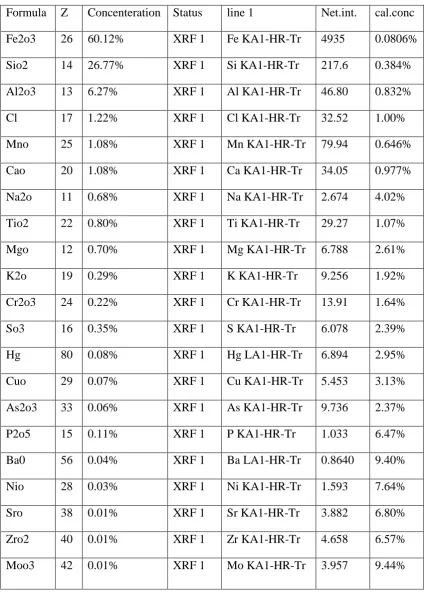
Based on the literature evidences, various sources of Ayam and Veeram have been collected and purified. At each stages of purification, compound analyses have to be done. After that, the purified Ayam and Veeram will be taken and used in the preparation of Aya Veera Chendhuram as per literature. Then, the finished product of Aya Veera Chendhuram is sent for elemental analysis to estimate the presence of any heavy metals and other organic and inorganic compounds. To analysis its safety, Aya Veera Chendhuram is subjected for acute and 28 days repeated oral toxicity evaluation under OECD guideline on rodents.
Aya Veera chendhuram has been evaluated in the following aspects:
1. Collection of relevant literatures regarding Ayam and Veeram.
2. Analysis the compounds present in before and after purification of Ayam and Veeram.
3. Preparation of Aya Veera chendhuram as per textual method. 4. Physiochemical analysis of Aya Veera chendhuram.
REVIEW
of
GUNAPADAM ASPECTS
«Âõ §ÅÚô ¦ÀÂ÷¸û «¸¢
«ÂÍ «Â¢ø þÊ þÕõÒ ®º ¦ºÂõ ¸Õí¦¸¡ø ¸ÕôÀ¢ ¸ÕõÒ ¸ÕÁ½ø ¸Õõ¦À¡ý ¸ÂÍ
¸¢ÕŒ½¨ÅÂõ ¸¡Ä¢ø ¦¿¸¢Çõ ¬¾¢
þÐ ±øÄ¡ Á¨Ä¸Ç¢Öõ, ¿¢Äí¸Ç¢Öõ «§¿¸Á¡¸ì ¸ó¾¸õ §À¡ýÈ º¢Ä ¦À¡Õû¸Ù¼ý ¸ÄôÒüÚì ¸¢¨¼ì¸¢ýÈÐ. þÐ, ¾¡Åà ƒ£Åô ¦À¡Õû¸Ç¢ø º¢È¢¾Ç× ¸ÄóÐõ þÕ츢ýÈÐ.
«ñ¼§Å¡Î, «ôÀ¢Ã¸õ, ¸ó¾¢, ¸¢Ç¢ïº§Ä¡Î, ¦¸Çâ, ºùÅ£Ãõ, º¡Ãõ, º¢í¸¢, º¢Ä¡ºòÐ, º¢¨Ä, ¾Ã¡, ¿¢Á¢¨Ç, â¿£Ú, Åí¸õ, ¦Åí¸¡Ãõ, ¦Åñ¸Äõ, ¦Åû¨ÇôÀ¡¼¡½õ, ¬¸¢Â þ¨Å¸û «Âò¾¢üÌô À¨¸î ºÃì̸û ±ýÚõ, þáƒÅ÷ò¾õ, ¸¡ó¾õ, ¦¸ó¾¢ ¦ºõÒ, ݼý, ¦ºõÒ, ¾í¸õ, ¿¡¸õ, â¿¡¸õ, âÃõ, ÁäÃõÒ, ¦ÅûÇ¢ ¬¸¢Â þ¨Å¸û ¿ðÒî ºÃì̸û ±ýÚõ ÜÈôÀðÊÕ츢ýÈÉ.
þ¾üÌ ¦ÀÕõÀ¡ý¨Á ÐÅ÷ôÒõ, º¢ÚÀ¡ý¨Á ÒÇ¢ôÒì ¨¸ôÒîͨŸÙõ, ¦ÅôÀţâÂÓõ Àº¢Ôñ¼¡ì¸¢, ¯¼ø ¯ÃÁ¡ì¸¢, ¯¼ø §¾üÈ¢ ¬¸¢Â ¦ºö¨¸Ùõ ¯Ç.
«Âõ ÌÕ¾¢Â¢ý ¾ý¨Á¨Â §ÁõÀÎòÐõ. «Â ºõÀó¾ôÀð¼ ÁÕóиû ÁÄì¸ð¨¼ ¯ñÎÀñÏž¡ø «¨¾ ¾Å¢÷ì¸ ÓôÀ¨ÄÜðÊì ¦¸¡ÎôÀÐÅÆì¸õ. ¯¼Ä¢ý ±øÄ¡ ¯ÚôҸǢý ¦¾¡Æ¢ø¸¨ÇÔõ àñÎÅ¢ìÌõ. þ¾É¡øþÐ ¯¼ø §¾üȢ¡¸ ¦¾¡Æ¢ø Ò⸢ÈÐ.
¦À¡Ðì̽õ
"À¡ñÎ ¦Åñ Ìð¼õ ÀÕóàÄ §¿¡ö§º¡¨À Á¡ñʼö Áó¾í¸¡ Á¡¨ÄÌýÁõ âñ¼ ¦ÀÕó¾¡Ð ¿ð¼Óõ§À¡õ §À¾¢Àº¢ Ôñ¼¡í ¸Õó¾¡Ð ¿ð¼Á¢Îí¸¡ø"
þÕõÀ¢É¡ø À¢ò¾ À¡ñÎ, ¦ÅñÌð¼õ, «¾¢àø §¿¡ö, §º¡¨À, Áó¾õ, ¸¡Á¡¨Ä, ÌýÁõ, Í츢Ŀð¼õ, ¸Æ¢îºø, þ¨Å ¿£íÌõ, Àº¢ ¯ñ¼¡Ìõ.
Íò¾¢
´Õ ÀÄõ «Âô¦À¡ÊìÌ ¬Ú ÀÄõ þÖô¨Àô âîº¡Ú Å¢ðÎ ¸¡¨Ä Ó¾ø Á¡¨Ä Ũà ¦Å¢Ģø ¨Åì¸ §ÅñÎõ. þùÅ¢¾õ ¬Ú ¿¡û ¦ºöÐ þÃñÎ ¿¡û º¡Ú Å¢¼¡Áø ¯Ä÷ò¾¢, À¢ýÛõ þ¨¾ô§À¡ø þÕÓ¨È ¦ºöÐ, 25 ¬õ ¿¡û Ó¾ø ÀòÐ ¿¡ð¸û þ¨¼Å¢¼¡Áø §ÁüÀÊ º¡ÚÅ¢ðÎ, ¦Å¢Ģø ¨ÅòÐô À¢ýÒ, º¡ÚÅ¢¼¡Áø þÃñÎ ¿¡û ¯Ä÷ò¾¢ ¿£÷Å¢ðÎ ¸ØÅ¢ ±Îì¸î Íò¾¢Â¡õ.
§ÅÚ
´Õ ÀÄõ «Âò¨¾ ´Õ À¡ñ¼ò¾¢Ä¢ðÎ, «òмý «øÄ¢§Å÷ ±ðÎÀÄÓõÒý¨É §Å÷ ±ðÎÀÄÓõ þÊòÐô§À¡ðÎ À¾¢É¡Ú ÀÄõ ¸¡Ê Å¢ðÎ þÃ×õÀ¸Öõ ¾£À¡ì¸¢É¢Â¡ö ±Ã¢ì¸ §ÅñÎõ. «ôÀÊ ±Ã¢ìÌõ §À¡Ð ¸¡Ê ̨ÈóРŢð¼¡ø ÁÚÀÊÔõ «§¾ «Ç× ¸¡Ê Å¡÷òÐ ±Ã¢ì¸ §ÅñÎõ.
§ÅÚ
«Âò¨¾ ¦¸¡øÄý ¯¨Ä¢ĢðÎî º¢Åì¸ ¸¡ö ¬Ú Á¡¾ «ýÉ측Ê, ±ñ¦½ö, ¬Å¢ý ¿£÷, ¦¸¡û ÌÊ¿£÷, þó¿¡ý¸¢Öõ ¸ØÅ¢ì ¦¸¡ûÇ Íò¾¢Â¡õ
§ÅÚ
þÕõÀ¢ý «Ãô¦À¡Ê¨Â ±ÖÁ¢îºõÀÆÚ, ¸¡Ê, ¿¡ðÎ ¸¡ð¼¡Á½ìÌô À¡ø þ¨Å ´ù¦Å¡ýÈ¢Öõ ãýÚ ¿¡û °È ¨ÅòÐì ¸ØÅ¢ ±Îì¸ Íò¾¢Â¡õ
§ÅÚ
«Âõ §º÷ó¾ ÁÕóÐ
1.«Â¸¡ó¾ ¦ºóàÃõ
«Ç×: ÌýÈ¢
«ÛÀ¡Éõ: §¾ý
¾£Õõ §¿¡ö: ÀÄ §¿¡ö ¾£Õõ
- ¬¾¡Ãõ: «¸ò¾¢Â÷ ¨Åò¾¢Â ¸¡Å¢Âõ 1500
2.¯§Ä¡¸ ¦ºóàÃõ
«Ç×: 3 À½¦Å¨¼
«ÛÀ¡Éõ :§¾ý, À¡ø
¾£Õõ §¿¡ö:ºÄì¸Æ¢îºø
- ¬¾¡Ãõ: «¸ò¾¢Â÷ ¨Åò¾¢Â ¸¡Å¢Âõ 1500
3.º¼¡ðºÃ ÌÁ¡Ã¢ ¦ºóàÃõ
«Ç×:À½¦Å¨¼
«ÛÀ¡Éõ:§¾ý
¾£Õõ §¿¡ö:Å¡¾õ, Å¡Ô,ݨÄ,À¢ò¾õ,ã÷
-¬¾¡Ãõ: «¸ò¾¢Â÷ ¨Åò¾¢Â ¸¡Å¢Âõ 1500
4.¯§Ä¡¸ ÀüÀõ
«Ç×:2 À½¦Å¨¼
«ÛÀ¡Éõ:§¾ý
¾£Õõ §¿¡ö: ºýÉ¢, À¢Ã§Á¸õ, Å¡Ô, ±Ã¢ÌýÁõ
5.ºõÀ¢Ã¾¡Âî ÝýÀüÀõ
«Ç×:§ÅñÊ «Ç×
«ÛÀ¡Éõ:¿£÷,§¾ý
¾£Õõ §¿¡ö:ÌýÁõ,¸¢Ã¡½¢,«ì¸¢É¢ Áó¾õ
- ¬¾¡Ãõ:«¸ò¾¢Â÷ ¨Åò¾¢Â ¸¡Å¢Âõ 1500
6.«Â ¦ºóàÃõ
«Ç×:1-2 ÌýÈ¢
«ÛÀ¡Éõ:§¾ý
¾£Õõ §¿¡ö:Å¡¾ §¿¡ö, À¢ò¾À¡ñÎ, Å£ì¸õ, ¯½§Åü¸¡¨Á
- ¬¾¡Ãõ:«¸ò¾¢Â÷ ÀûÙ 200
7.ÌÕôÀðÎì ¸ÕôÒ
«Ç×:¦Åó¾¢Âõ «Ç×
«ÛÀ¡Éõ:§¾ý
¾£Õõ §¿¡ö:º¸Ä §Ã¡¸õ
- ¬¾¡Ãõ:¡§¸¡Ò
8.¾¡Á¢ÃìÌÕ ¦ºóàÃõ
«Ç×:º£Ã¸ò¾Ç×
«ÛÀ¡Éõ:§¾ý
¾£Õõ §¿¡ö:º¸ÄŢ¡¾¢
9.«ÂÀüÀõ
«Ç×:§¾¨ÅÂ¡É «Ç×
«ÛÀ¡Éõ:§¾ý
¾£Õõ §¿¡ö:¸Àõ,Å¡¾õ,ݨÄ,ãÄõ,À¢Ã§Á¸õ,¸¡Á¡¨Ä,À¡ñÎ,ÌýÁõ
- ¬¾¡Ãõ:§¸¡„¡Â¢
10.«Â «ôÀ¢Ã¸î ¦ºóàÃõ
«Ç×:1-2 ÌýÈ¢
«ÛÀ¡Éõ:¬Å¡ÃõÀ𨼠àû
¾£Õõ §¿¡ö:ºÂõ, þÕÁø, þ¨ÃôÀ¢ÕÁø,À¢Ã§Á¸õ.
- ¬¾¡Ãõ:«Û§À¡¸ ¨Åò¾¢Â ¿Å¿£¾õ
11.«ÂÅ£Ãî ¦ºóàÃõ
«Ç×:2-4 «Ã¢º¢
«ÛÀ¡Éõ:§¾ý,À¨É¦ÅøÄõ, þﺢÚ
¾£Õõ§¿¡ö:ÌýÁ§¿¡ö, Å¡Ô§¿¡ö, ºýÉ¢
Å£Ãõ
Å£ÃÁ¡ÉÐ
Á£É¡ðº¢ ¨Áó¾ý, âÅ¢óÐ §ºÅ¸ý, ºÃìÌî Íñ½õ, ÀÈí¸¢ô À¡¼¡½õ, º¡Ãò¾¢ý ºòÐÕ, ÀÈ¢Á¢òÐÕ,
¦¸¡îº¢ Å£Ãõ ±ýÈ Àø§ÅÚ ¦ÀÂ÷¸Ç¡ø ÅÆí¸ôÀÎõ.
̽À¡¼õ ¾¡Ð º£Å ÅÌôÒ «ýÈ¢Ôõ,
“²È¢Â ţæÁŨÃì Üʧɡý
¬È¢Â Å¢üÀýÉ¡¾¢ ¦Åû¨Ç ¦ºóàÃó ݾȢ §ºÅ¸ý §º÷ À¢¼Ã¡¸É¡õ ÜȢ ţÃí ¦¸¡û¸¢Â ¿¡Á§Á''
ºð¼ÓÉ¢ ¿¢¸ñÎ 1200
Å¢üÀý ¬¾¢ ¦Åû¨Ç ¦ºóàÃõ §ºÅ¸ý À¢¼Ã¡¸ý ±É×õ ÅÆí¸ôÀθ¢ÈÐ.
''Å£Ãò¾¢ý §À÷¾¨É§Â Å¢ÇõÀ째٠ŢÇí¸¢Â§¾¡÷ ¾¢È× ¾¢ÈÛÁ¡Ìõ Á¡ÃÁ¡¾¢ ¦Åû¨Ç ¦ºóàÃÁ¡Ìõ Á¡¸¡É Å¡¾¢¸Ùì ¦¸üÀÁ¡Ìõ Å¡ÃÁ¡õ Ÿ¡Ãò¾¢ý ¾¨ÄÅÉ¡Ìõ Áýɢ§¾¡÷ âÅ¢óÐ ×ò¾õ §ºÅ¸É¡õ àÃÁ¡ Á¨Ä¸Ç¢§Ä ¯üÀÅ¢ò¾
ÍÂõÀ¡É Å£Ãò¾¢ý §ÀÕÁ¡§Á ''
À¡¼¡½ Ũ¸¸û «ÚÀòÐ ¿¡ý¸¢ø Å£ÃÓõ ´ýÚ. þÂü¨¸Â¢ø ¸¢¨¼ì¸ì ÜÊ Ũ¸ ´ýÚ, ¨ÅôÒ À¡¼¡½ Ũ¸ ´ýÚ . þ¾¢ø þÂü¨¸Â¢ø ¸¢¨¼ì¸ì ÜÊ À¡¼¡½õ ¾ü§À¡Ð ¸¢¨¼ôÀ¾¢ø¨Ä. ¨ÅôÒÀ¡¼¡½§Á Å£Ãõ ±É ÀÂýÀÎò¾ôÀθ¢ÈÐ. þô¦À¡Õû ¦¸¡Ê Ţ¼Á¡Ìõ, «ÇÅ¢ø º¢È¢Ð «¾¢¸ôÀÊÛõ ¿ïº¡¸ì ¦¸¡øÖõ.
- ̽À¡¼õ ¾¡Ð º£Å ÅÌôÒ
þÐ ¦Åû¨Ç ¿¢ÈÁ¡É¾¡Ôõ, ±ùÅ¢¾ Å¡º¨ÉÔõ þøÄ¡¾¾¡Ôõ, ´Õ Å¢¾ ¸¡ÃÓûǾ¡Ôõ ,º¢Ú ÀÇ¢íÌ ¸ü¸¨Çô §À¡Ä¡ÅÐ, ¦Àâ Àʸì¸ø¨Äô §À¡Ä¡ÅÐ þÕìÌõ. ¦¿ÕôÀ¢Ä¢ð¼¡ø þÄÌÅ¢ø ¯ÕÌõ. ¿£Ã¢Öõ, º¡Ã¡Âò¾¢Öõ, ®¾Ã¢Öõ ¾¡Ã¡ÇÁ¡ö ¸¨ÃÔõ .þúõ ¦¾¡¼÷À¡É ¦À¡Õð¸Ç¢ø ¿£Ã¢ø ¸¨ÃÔõ ¾ý¨Á ¯¨¼ÂÐ ¬¸§Å þÐ ¦ºÂ¿£÷ ¾¢Ã¡Å¸í¸Ç¢ø Ó츢ÂÁ¡¸ §º÷ì¸ôÀθ¢ÈÐ. þì¸ðÊ¢ý Á£Ð º¢È¢Ð Íñ½¡õ¨Àò ¾¼Å¢É¡ø º¢ÅóÐ ¸¡½ôÀÎõ. Å£Ãô¦À¡Ê¨Â Íñ½¡õÒ ¿£Õ¼ý ¸Äó¾¡ø Áïºû ¿¢È Åñ¼ø «Ê¢ø ÀÊó¾ À¢ý º¢ÅìÌõ. þÐ ´Õ ¨ÅôÒî ºÃìÌ.
- þúš¾ º¢ó¾¡Á½¢ 2õ À¡¸õ
ºùÅ£Ãõ
þЧŠţÃõ ±ýÚ ¦º¡øÄôÀÎõ ´÷ ¨ÅôÒî ºÃìÌ. ¸¨¼¸Ç¢ø ¸¢¨¼ôÀÐ Àʸ ¿¢Èõ §À¡Ä «øÄÐ º¢È¢Ð Áí¸Ä¡¸×õ þÕìÌõ. þÐ ¯¼õÀ¢ý À¢½¢¸¨Ç «¸üÚõ. ãò¾¢Ãõ, Å¢Â÷¨Å¨Âô ¦ÀÕìÌõ ̽õ ¯¨¼ÂÐ.
þÐ ¸¢Ãó¾¢, §Á¸õ, ºÕÁ §¿¡ö, ¸¡ì¨¸ÅÄ¢, Å¡¾ §¿¡ö, ¦¾¡ñ¨¼ §¿¡ö þ¨Å¸ðÌ ¯ûÙìÌ ¦¸¡Îì¸×õ, ¸ñ §¿¡ö, Òñ þ¨Å¸Ç¢ø ¦ÅÇ¢ô À¢Ã§Â¡¸Á¡¸×õ ÀÂýÀÎõ. þ¾üÌ Å¡ö À¢ÊìÌõ «øÄÐ §Å¸î ¦ºöÔõ ̽ÓûǾ¡ø Ó¨ÈôÀÊ ¯ûÙìÌ ¦¸¡Îì¸ §ÅñÎõ. þÐ Å¡¾ Ó¨ÈìÌ ÀÂýÀÎõ.
Å£Ãõ
ͨŠ- ¸¡÷ôÒ,¯ôÒ.
ţâÂõ - ¦ÅôÀõ
À¢Ã¢× - ¸¡÷ôÒ. Àïºâ¾ «õºõ - «ôÒ.
¦ºö¨¸
¯¼ø §¾üÈ¢ ¸¢ÕÁ¢ ¿¡º¢É¢ «Ø¸Ä¸üÈ¢ ÒñÏñ¼¡ì¸¢
''ÜðÊ ţÃÓõ ͼ÷ ¦ºôÒò ¦¾¡ðÊÔõ, À¡ðÊÉ¢ø ¦ÉøÖõ À¾¢Å¡É §¾öÅ¢§¾ '' . Å£ÃÁ¡ÉÐ “Å¢óÐî ºÃìÌ” ±Éì ÜÈôÀθ¢ÈÐ. ÀñÒ
''ÌýÁ¦Á¡Î Ìð¼í ¦¸¡Ê ÅÉ¢Äò ¾¢ÃðÎ, Ðý Á¡í¸¢ºô ¦ÀÕì¸ï Ý¨Ä §¿¡ö- Åý¨ÁÔÚ, ¸¡Á¢Âô Òñ½¡¾¢Â §¿¡ö ¸ñ¼¡üºù
ţæÉÛï º¡Á¢ ¿¡Áò¨¾ ÔîºÃ¢''
- À¾¡÷ò¾ ̽º¢ó¾¡Á½¢ ¦À¡Õû
ºùÅ£Ãò¾¢ý ¿¡Áò¨¾ ¯îºÃ¢ò¾¡§Ä ÌýÁõ, Ì¨È §¿¡ö, ¾£í¨¸ Å¢¨ÇŢ츢ýÈ Á¸¡ Å¡¾ §Ã¡¸í¸Ç¢ý Üð¼õ, Ð÷Á¡Á¢º ÅÇ÷, Ý¨Ä §¿¡ö¸û, Åý¨Áô ¦À¡Õó¾¢Â ¦Àñ §À¡¸ò¾¢É¡ø Å¢¨Ç¸¢ýÈ ¦¸¡ÕìÌ, «¨Ã¡ôÒ Ó¾Ä¢Â Òñ¸û ¿£íÌõ.
þÐ ÀÄÁ¡É â¾Ãº¸¡Ã¢ þ¨¾ ¯ð¦¸¡ñ¼¡ø ¯¼Ä¢ÖûÇ ¾¡Ðì¸û «Ø¸¢ô §À¡¸¡Áø þÕì¸ ¦ºö¸¢È ÁÕóÐ. þ¨¾ ÁÕóи§Ç¡Î §º÷ò¾¡ø ºÃì̸û ÁÊóÐ Á츢ò ¾õ ̽í¸û ¦¸ðÎô §À¡¸¡Áø ¸¡ìÌõ ̽ÓûÇ ÁÕóÐ.
''ÍÃÁñ¼ Å¡Ô ºýÉ¢ ¦¾¡¼÷ÅÇ ÌÁøñ¼ý, ÅÕÉ¢í ¸ñ¼Á¡¨Ä Å¡¾õ Å¢ôÒÕ¾¢ §¸¡¨Æ, ¯¨Ã ¦ÀÕ §¿¡ö ¸ÃôÀÛõ ÌòÐô ÒÈţ¨Æ, ºÕŢ ¸¢Ãó¾¢ Ìð¼ï ºùÅ£Ãó ¦¾¡¨ÄìÌÁ¡§Á '' ¦À¡Õû
ÍÃõ, «ñ¼Å¡Ô, ºýÉ¢, ÌÁøñ¼ÅÄ¢, ºÂõ, ¸ñ¼Á¡¨Ä, Å¡¾õ, Å¢ôÒÕ¾¢, §¸¡¨Æ,¦ÀÕ §¿¡ö,¸ÃôÀ¡ý, ¸¢Ãó¾¢, Ìð¼õ ӾĢ¨ŠºùÅ£Ãò¾¡ø ¾£Õõ.
-«Á¢÷¾ º¡¸Ãõ Íò¾¢ Өȸû
1.'' ¿ÂõÀ¼§Å Å£ÃÁÐ Íò¾¢§¸Ù, ¿øÄ þÇ¿£Ã¢ø ¸üâÃõ §À¡ðÎ ÍÂõÀ¡É ºðÊ¢§Ä ¸Ä츢 ¦¸¡ñÎ ¦¾¡Ä¡Âó¾¢ÃÁ¡ö Å£Ãò¨¾ì ¸ðʧ¾¡ý ÁÂÁ¡¸ «Îô§Àò¾¢ ¦ÂâòÐì ¦¸¡ñ¼¡ø ÅÖÅ¡É Å£ÃÓó¾¡ý Íò¾¢Â¡î§º ''
-¡§¸¡Ò ¨Åò¾¢Âõ 300.
2. ¸üâÃò¨¾ ШÇòÐ, «òШÇ¢ø Å£Ãò¨¾ ¨ÅòÐ ¸üâÃò¾¡ø ãÊ ¦¸¡Ùò¾¢Â À¢ý¦ÉÎòÐ ´Õ μðÊø ¸ó¾¸ò¨¾ ¦À¡ÊòÐô §À¡ðÎ «Ê¢ø ¾£Â¢ðÎ, ¯Õ¸¢ ¿¢üÌõ §À¡Ð Å£Ãò¨¾ ¦ÁÐÅ¡¸ ÒÃðÊ ±Îì¸ Íò¾¢Â¡Ìõ.
-À¾¢¦Éñ º¢ò¾÷ შÅò¾¢Â §À¡¾¢É¢.
3. ´Õ ÀíÌ Å£Ãò¾¢üÌ 3 ÀíÌ «¾¢¸Á¡¸ Á¢Ç¨¸ ¸ïº¢ ºÄõ Å¢ðÎ ¦ÁØÌ À¾Á¡¸ «¨ÃòРţÃò¾¢üÌ «í¸¢ âðÊ º£¨Ä¢ø ÓÊóÐ þÇ¿£Ã¢ø «Øó¾¡Áø ÐÄ¡ ±ó¾¢ÃÁ¡¸ ¸ðÊ «¨Ã º¡Áõ ±Ã¢ì¸ Íò¾¢Â¡Ìõ.
4. À¡¸ü¸¡¨Âô À¢ÇóÐ ¿ÎÅ¢ø Å£Ãì¸ðʨ ¨ÅòÐì ¸Â¢üÈ¡ø ¸ðÊ ÐÄ¡Âó¾¢ÃÁ¡¸ ¿£Ã¢ø Óظ¡Åñ½õ þÇ¿£Ã¢ø «øÄÐ ÀÆüÈ¢ø ´Õ Á½¢ §¿Ãõ ±Ã¢òÐ ±Îì¸ §ÅñÎõ. «ô¦À¡ØÐ Íò¾¢Â¡Ìõ.
-̽À¡¼õ ¾¡Ð º£Å ÅÌôÒ
5. Å£Ãò¨¾ ´Õ À£í¸¡É¢Ä¢ðÎ ãúÌõ Ũà ¾¡öôÀ¡ø Å¢ðÎ À¡ø ÓØÅÐõ ÍñÎõ Ũà ¦Åö¢Ģø ¯Ä÷ò¾¢ ±ÎòÐ즸¡ûÇ Íò¾¢Â¡Ìõ
- ºÃìÌ Íò¾¢ ¦ºöӨȸû
6. Àʸ¡Ãõ ݼý Ũ¸ìÌ ´Õ ÀÄõ ±ÎòÐ þÃñ¨¼Ôõ ¦À¡ÊòÐ ¨ÅòÐì ¦¸¡ñΠţÃì¸ðÊìÌ ¦¸¡ïºõ ¦¸¡ïºÁ¡ö ¸¢Ã¡ºõ ¦¸¡ÎòÐ ±Îì¸ Íò¾¢Â¡Ìõ.¸¢Ã¡ºõ ¦¸¡ÎìÌõ§À¡Ð Å£Ãõ Ò¨¸Â¡Åñ½õ À¡÷òÐì ¦¸¡ûÇ §ÅñÎõ
- ̽À¡¼õ ¾¡Ð º£Å ÅÌôÒ.
7. þÇ¿£Ã¢ø º¢È¢Ð ݼ¨Éì ¸ÄóÐ ´Õ À¡¨É¢ĢðΠţÃò¨¾ ÐÄ¡Âó¾¢ÃÁ¡¸ ¿£Ã¢ø À¼¡Áø «¨Ã Á½¢ §¿Ãõ ±Ã¢òÐ ±Îò¾ø.
-̽À¡¼õ ¾¡Ð º£Å ÅÌôÒ. 8.±Õì¸õÀ¡Ä¢ø Å£Ãò¨¾ ãýÚ ¿¡ð¸û °È ¨Åì¸ Íò¾¢Â¡Ìõ.
-ºÃìÌ Íò¾¢ ¦ºöӨȸû 9. ºùÅ£Ãï Íñ½¡õ§À¡Î º¡üÚÁ¡ Á½ì¸ ¦¿ö¢ø
¦ÅùÅÁ¢ø Íò¾¢Â¡Ìõ
10. ´Õ ÀÄõ Å£Ãò¾¢üÌ Á¢ÇÌì ÌÊ¿£÷ Å¢ðÎ 6 Á½¢ §¿Ãõ ÍÕìÌ ¦¸¡ÎòÐô À¢ÈÌ Á¢ÇÌì ¸ø¸ò¾¢üÌû ¨ÅòÐ, ´Õ À¡ñ¼ò¾¢ø «¨ÃôÀÊ ¸È¢ÔôÒ¼ý ´Õ ÀÄõ ݼ¨Éì ¸ÄóÐ «¾üÌû §ÁüÀÊ Å£Ãò¨¾ô Ò¨¾òÐî º¢Ä Á½¢ §¿Ãõ º¢Ú ¾£Â¡ø ±Ã¢òÐ ±ÎôÀÐ.
-̽À¡¼õ ¾¡Ð º£Å ÅÌôÒ 11.Å£Ãì¸ðʨ ¾¡öôÀ¡ø «øÄÐ ÀÍõÀ¡ø Å¢ðÎ ¦Åö¢Ģø ¸¡Â ¨ÅòÐ ±ÎòÐì ¦¸¡ûÇ Íò¾¢Â¡Ìõ.
-ºÃìÌ Íò¾¢ ¦ºöӨȸû
12.Å£Ãõ ´Õ ÀÄõ, º£É¡ì¸¡Ãõ ãýÚ ÀÄõ, þÕõÒ ºðÊ¢ø º£É¡ì¸¡Ãò¨¾ ¯Õ츢 ¾ñ½£Ã¡É×¼ý Å£Ãì¸ðʨ þðÎ ¸ò¾¢Â¡ø ÒÃðÊì ¦¸¡ñÎ ÅÃ×õ.¸ðÊ¡ÉÐ ¸£§Æ «Øó¾¢ Å¢¼¡Áø ¾¼¨ÅìÌ ¾¼¨Å ¦¸¡ïºõ à츢 ¦¸¡ÎòÐ Åà §ÅñÎõ. þôÀÊ ¦ºöÐ º£É¦ÁøÄ¡õ ÅÈñ¼ À¢ý¦ÉÎòÐ ¨ÅòÐ ¬È¢É À¢ý ¸ðÊ¢ý Á£ÐûÇ º£Éò¨¾ ¸ò¾¢Â¢É¡ø ¦ÁÐÅ¡¸ ÍÃñÊ ´ýȨà ÀÄõ ݼ¨É àû ¦ºöÐ ¸ðÊ¢ý ¸£ú §ÁÄ¢ð¼Øò¾¢ ¦¸¡Ùò¾¢ Å¢ð¼¡È¢É À¢ý¦ÉÎò¾¢ì ¦¸¡ûŧ¾ Íò¾¢Â¡Ìõ.
- «Û§À¡¸ ¨Åò¾¢Â ¿Å¿£¾õ À¡¸õ- 4
13. ´Õ ÀÄõ Å£Ãò¨¾ ´Õ þÇ¿£Ã¢ø, ´ý§È¸¡ø ÅḦɨ¼ ¸üâÃõ §À¡ðÎ ¸Ä츢 ºðÊ¢ø °üÈ¢ «ÎôÀ¢§ÄüÈ¢ §ÁüÀÊ Å£Ãò¨¾ ÐÄ¡Âó¾¢ÃÁ¡¸ ¸ðÊ ±Ã¢òÐ ±ÎòÐì ¦¸¡ûÇ §ÅñÎõ.
Å£Ãõ §ºÕõ ÁÕóиû. 1. Å£Ãì¸ÕôÒ
«Ç× : 1/4 Ó¾ø 1/2 ÌýÈ¢ «ÛÀ¡Éõ : ¦¿ö, ¦Åñ¦½ö, §¾ý ¾£Õõ§¿¡ö¸û : ÌýÁõ, ̨ȧ¿¡ö.
2. §Ä¡¸Á¡Ã½î ¦ºóàÃõ
«Ç× : 1 Ó¾ø 2 ÌýÈ¢
«ÛÀ¡Éõ : §¾ý, ¦¿ö, ¦Åñ¦½ö ¾£Õõ§¿¡ö¸û : Å¡¾ô À¡ñÎ, §º¡¨¸, ÌýÁõ.
3.þÄ¢í¸ Å£Ãî ¦ºóàÃõ
«Ç× :1/2 Ó¾ø 1 ÌýÈ¢
«ÛÀ¡Éõ :À¨É¦ÅøÄõ, ¦¿ö, þﺢ þǸõ ¾£Õõ§¿¡ö¸û :ºýÉ¢, ݨÄ, ݾ¸ÅÄ¢, ݾ¸ºýÉ¢.
4.Å£ÃóàÃõ
«Ç× :1/4 Ó¾ø 1/2 ÌýÈ¢
«ÛÀ¡Éõ :þﺢ º¡Ú, §¾ý, À¨É¦ÅøÄõ,. ¾£Õõ §¿¡ö¸û :Àì¸Å¡¾õ, Å¢¼¡ì¸Æ¢îºø
5.ţæÁØÌ
«Ç× :1 Ó¾ø 2 «Ã¢º¢ ±¨¼ «ÛÀ¡Éõ : À¨É¦ÅøÄõ
¾£Õõ§¿¡ö¸û :ÌýÁõ, ݨÄ, Àì¸Å¡¾õ. 6.ţà ÀüÀõ
«Ç× : 1/2 Ó¾ø 1 «Ã¢º¢
«ÛÀ¡Éõ : À¨É¦ÅøÄõ, ¦Åñ¦½ö
¾£Õõ§¿¡ö¸û : ÌýÁõ, Ìð¼õ, ݨÄ, Àì¸Å¡¾õ 8.Å£ÃÁ¡ò¾¢¨Ã
«Ç× : 1/2 Ó¾ø 1
«ÛÀ¡Éõ : À¨É¦ÅøÄõ, ¿¡ðÎîº÷츨à ¾£Õõ§¿¡ö¸û : 13 Ũ¸ ºýÉ¢, Å¡¾õ.
9.Å£Ã Ãºî ¦ºóàÃõ
«Ç× :1 Ó¾ø 1 1/2 ÌýÈ¢
«ÛÀ¡Éõ :§¾ý,Å¢øÅ¡¾¢þǸõ,ÀÈí¸¢ôÀ𨼠þǸõ. ¾£Õõ§¿¡ö¸û :§Á¸Ã½í¸û, ݨÄ, «Æ¢ôÒñ,
ÌÆ¢ôÒñ, ¸¢Ãó¾¢. 10.ÍÅ÷½ þúóàÃõ
«Ç× : 1 Ó¾ø 1 1/2 ÌýÈ¢ «ÛÀ¡Éõ : ¦ÅøÄõ, §¾ý
¾£Õõ§¿¡ö¸û : §Á¸Å¡Ô,ݨÄ, Ìð¼õ 11. Àïº â¾ ¦ºóàÃõ
«Ç× : 1/2 Ó¾ø 1 ÌýÈ¢ «ÛÀ¡Éõ : À¨É¦ÅøÄõ
¾£Õõ§¿¡ö¸û : ÌýÁõ, ¦ÀÕÅ¢Ú, ݨÄ, ºýÉ¢ 12. ÀïºÓ¸ ¦ºóàÃõ
«Ç× : 1 Ó¾ø 2 «Ã¢º¢ ±¨¼ «ÛÀ¡Éõ : À¨É¦ÅøÄõ
¾£Õõ§¿¡ö¸û : ±ñŨ¸ ÌýÁõ, §Á¸Ý¨Ä, §Á¸Å¡Ô. 13.Á¸¡Å£Ã¢Âî ¦ºóàÃõ
«Ç× : 1 Ó¾ø 2 «Ã¢º¢ ±¨¼ «ÛÀ¡Éõ : §¾ý
¾£Õõ§¿¡ö¸û : ±ó¾ Ũ¸Â¢Öõ ¬È¡¾ ýí¸û
14. Àïºôâ¾ô À¾í¸õ
«ÛÀ¡Éõ : À¨É¦ÅøÄõ, ¦Åñ¦½ö ¾£Õõ§¿¡ö¸û :«ñ¼ Å¡Ô, §Á¸Å¡Ô, ÌýÁõ 15.§¸¡§Ã¡º¨É ¦ÁØÌ
«Ç× : 1/2 Ó¾ø 1 ÌýÈ¢
«ÛÀ¡Éõ : À¨É¦ÅøÄõ, ¦Åñ¦½ö ¾£Õõ§¿¡ö¸û : Àì¸Å¡¾õ, ¿Ã¢ò¾¨Ä Å¡¾õ 16.ºñÓ¸ ¦ÁØÌ
«Ç× : 1 Ó¾ø 1 1/2 ÌýÈ¢ «ÛÀ¡Éõ : À¨É¦ÅøÄõ, º÷츨à ¾£Õõ§¿¡ö¸û : ݨÄ, «íÌÄ¢ Å¡¾õ 17.þú¦ÁØÌ
«Ç× :1/2 Ó¾ø 1 ÌýÈ¢ «ÛÀ¡Éõ : À¨É¦ÅøÄõ ¾£Õõ§¿¡ö¸û :ݨÄ, À¡Ã¢ºÅ¡Ô 18.ÀïºÝ¾ Á¡ò¾¢¨Ã
«Ç× :1 Ó¾ø 2
«ÛÀ¡Éõ : À¨É¦ÅøÄõ, ¦¿ö, §¾ý ¾£Õõ§¿¡ö¸û : Ӹš¾õ, Àì¸Å¡¾õ, ÌýÁõ 19.§Á¸ºïº£Å¢ Á¡ò¾¢¨Ã
«Ç× : 1/2 Ó¾ø 1
«ÛÀ¡Éõ : º÷츨Ã, ¦Åñ¦½ö
¾£Õõ§¿¡ö¸û : À¢Ã§Á¸õ, º£ú§Á¸õ, ¾ó¾¢§Á¸õ 20.ÌպﺣŢ ¦ÁØÌ
«Ç× :1/2 Ó¾ø 1 ÌýÈ¢ «ÛÀ¡Éõ : §¾ý
21. ¿Å§Ä¡¸ ¦ÁØÌ
«Ç× : 1/4 Ó¾ø 1/2 ÌýÈ¢ «ÛÀ¡Éõ : À¨É¦ÅøÄõ
¾£Õõ§¿¡ö¸û :§Á¸§¿¡ö, ¸¢Ãó¾¢ôÒñ¸û, ݨÄ
22.þÄÌÅ¡ÉÁ¡ ¦ÁØÌ
«Ç× : 1/2 Ó¾ø 1 ÌýÈ¢ «ÛÀ¡Éõ : À¨É¦ÅøÄõ, º÷츨Ã
IRON
Overview
The period in human history beginning in about 1200 B.C. is called the Iron Age. It was at about this time that humans first learned how to use iron metal
Iron is a transition metal. The transition metals are the elements that make up Groups 3 through 12 in the periodic table. The transition metals are typical metals in that they tend to be bright, shiny, silvery solids. They all tend to conduct heat and electricity well. And they usually have high melting points.
SYMBOL Fe
ATOMICNUMBER : 26
ATOMICMASS: 55.847
PRONUNCIATION
EYE-um
Iron normally does not occur as a free element in the earth. In fact, iron was not of much value to humans until they learned how to free iron from its compounds. Once they could do that, humans were able to make tools, weapons, household implements, and other objects out of iron. This step marked the beginning of the Iron Age.
Iron is most valuable not as a pure metal, but in alloys. An alloy is made by melting and mixing two or more metals. The mixture has properties different from those of the individual metals. The best known and most widely used alloy of iron is steel. Steel contains iron and at least one other element. Today, specialized steels of all kinds are available for many different applications.
Discovery and naming
Ancient Egyptians had learned how to use iron before the First Dynasty,
which began in about 3400 B.C. The Egyptians probably found the iron in meteorites. Meteorites are chunks of rock and metal that fall from the sky. Some meteorites are very rich in iron. The Egyptians made tools and jewelry out of iron.
Iron is probably the most widely used and most important metal today.
Iron was also known to early Asian civilizations. In Delhi, India, for example,
a pillar made out of iron built in A.D. 415 still stands. It weighs 6.5 metric tons and remains in good condition after nearly 1,600 years.
Early Chinese civilizations also knew about iron. Workers learned to produce
iron as early as 200 B.C. A number of iron objects, including cannons, remain from the Han period (202 B.C. to A.D. 221).
The Bible also includes many mentions of iron. For example, a long passage in the book of Job describes the mining of iron. Other passages tell about the processing of iron ore to obtain iron metal.
By the time of the Roman civilization, iron had become an essential metal.
It is by the aid of iron that we construct houses, cleave rocks, and perform so
many other useful offices of life. But it is with iron also that wars, murders, and robberies are effected, and this, not only hand to hand, but from a distance even, by the aid of weapons and winged weapons, now launched from engines, now hurled by the human arm, and now furnished with feathery wings.
Even from the earliest days, humans probably seldom used iron in a pure form. It was difficult to make iron that was free of impurities, such
as carbon (charcoal) and other metals. More important, however, it became
obvious that iron with impurities was a stronger metal that iron without impurities.
It was not until 1786, however, that scientists learned what it was in steel that
made it a more useful metal than iron. Three researchers, Gaspard Monge (1746-1818), C. A. Vandermonde, and Claude Louis Berthollet (1748-1822) solved the puzzle. They found that a small amount of carbon mixed with iron produced a strong alloy. That alloy was steel. Today, the vast amount of iron used in so many applications is used in the form of steel, not pure iron.
Ancient Egyptians had learned how to use iron before the First Dynasty,
which began in about 3400 B.C.
The chemical symbol for iron is Fe. That symbol comes from the Latin name
for iron, ferrum.
Physical properties
Iron is a silvery-white or grayish metal. It is ductile and malleable. It is one of only three naturally occurring magnetic elements.Iron has a very high tensile strength.
Chemical properties
Iron is a very active metal. It readily combines with oxygen in moist air. The product of this reaction, iron oxide (Fe 2 O 3 ), is known as rust. Iron also reacts with
very hot water and steam to produce hydrogen gas. It also dissolves in most acids and reacts with many other elements.
Occurrence in nature
Iron is the fourth most abundant element in the Earth's crust. Its abundance is estimated to be about 5 percent. Most scientists believe that the Earth's core consists largely of iron. Iron is also found in the Sun, asteroids, and stars outside the solar system.
The most common ores of iron are hematite, or ferric oxide (Fe 2 O 3 );
limonite, or ferric oxide (Fe 2 O 3 ); magnetite, or iron oxide (Fe 3 O 4 ); and siderite, or
iron carbonate (Fe2CO 3 ). An increasingly important source of iron is taconite.
Taconite is a mixture of hematite and silica (sand). It contains about 25 percent iron.
The largest iron resources in the world are in China, Russia, Brazil, Canada, Australia, and India. The largest producers of iron from ore in the world are China, Japan, the United States, Russia, Germany, and Brazil.
Isotopes
There are four naturally occurring isotopes of iron, iron-54, iron-56, iron-57, and iron-58. Isotopes are two or more forms of an element. Isotopes differ from each other according to their mass number. The number written to the right of the element's name is the mass number. The mass number represents the number of protons plus neutrons in the nucleus of an atom of the element. The number of protons determines the element, but the number of neutrons in the atom of any one element can vary. Each variation is an isotope.
produced when very small particles are fired at atoms. These particles stick in the atoms and make them radioactive.
Two radioactive isotopes of iron are used in medical and scientific research. They are iron-55 and iron-59. These isotopes are used primarily as tracers in studies on blood. A tracer is a radioactive isotope whose presence in a system can easily be detected. The isotope is injected into the system. Inside the system, the isotope gives off radiation. That radiation can be followed by detectors placed around the system. Iron-55 and iron-59 are used to study the way in which red blood cells develop in the body. These studies can be used to tell if a person's blood is healthy.
Extraction
Iron goes through a number of stages between ore and final steel product. In the first stage, iron ore is heated with limestone and coke (pure carbon) in a blast furnace. A blast furnace is a very large oven in which the temperature may reach 1,500°C (2,700°F). In the blast furnace, coke removes oxygen from iron ores.
limestone removes impurities in the iron ore.
Iron produced by this method is about 91 to 92 percent pure. The main impurity left is carbon from the coke used in the furnace. This form of iron is known as pig iron. Pig iron is generally too brittle (it breaks too easily) to be used in most products.
Most scientists believe that the Earth's core consists largely of iron.
A number of methods have been developed for purifying pig iron. A common method used today is called the basic oxygen process. In this process, pig iron is melted in a large oven. Then pure oxygen gas is blown through the molten pig iron. The oxygen burns off much of the carbon in the pig iron:
The term "steel" actually refers to a wide variety of products. The various forms of steel all contain iron and carbon. They also contain one or more other elements, such as silicon, titanium, vanadium, chromium, manganese, cobalt, nickel, zirconium, molybdenum, and tungsten. Two other steel-like products are cast iron and wrought iron. Cast iron is an alloy of iron, carbon, and silicon. Wrought iron contains iron and any one or more of many other elements. In general, however, wrought iron tends to contain very little carbon.
Uses
It would be impossible to list all uses of iron and steel products. In general, those products can be classified into categories: (1) automotive; (2) construction; (3) containers, packaging, and shipping; (4) machinery and industrial equipment; (5) rail transportation; (6) oil and gas industries; (7) electrical equipment; and (8) appliances and utensils. (For more information on specific kinds of steel alloys, see individual elements, such as titanium, vanadium, chromium, manganese, molybdenum, and tungsten.)
Compounds
Some iron is made into compounds. The amount is very small compared to the amount used in steel and other iron alloys. Probably the fastest growing use of iron compounds is in water treatment systems. The terms ferric and ferrous refer to two different forms in which iron occurs in compounds. Some of the important iron compounds are:
The U.S. Recommended Daily Allowance (USRDA) for iron is 18 milligrams.
ferric acetate (Fe(C 2 H 3 O 2 ) 3 ): used in the dyeing of cloth
ferric ammonium oxalate(Fe(NH 4 ) 3 (C 2 O 4 ) 4 ): blueprints
ferric arsenate (FeAsO 4 ): insecticide
ferric chloride (FeCl 3 ): water purification and sewage treatment systems; dyeing of
ferric chromate (Fe 2 (CrO 4 ) 3 ): yellow pigment (coloring) for paints and ceramics
ferric hydroxide (Fe(OH) 3 ): brown pigment for coloring rubber; water purification
systems
ferric phosphate (FePO 4 ): fertilizer; additive for animal and human foods
ferrous acetate (Fe(C 2 H 3 O 2 ) 2 ): dyeing of fabrics and leather; wood preservative
ferrous gluconate (Fe(C 6 H 11 O 7 ) 2 ): dietary supplement in "iron pills"
ferrous oxalate (FeC 2 O 4 ): yellow pigment for paints, plastics, glass, and ceramics;
photographic developer
ferrous sulfate (FeSO 4 ): water purification and sewage treatment systems; catalyst in
production of ammonia; fertilizer; herbicide; additive for animal feed; wood preservative; additive to flour to increase iron levels
Health effects
Iron is of critical importance to plants, humans, and animals. It occurs in hemoglobin, a molecule that carries oxygen in the blood. Hemoglobin picks up oxygen in the lungs, and carries it to the cells. In the cells, oxygen is used to produce energy the body needs to survive, grow, and stay healthy.
The U.S. Recommended Daily Allowance (USRDA) for iron is 18 milligrams. The USRDA is the amount of an element that a person needs to stay healthy. Iron is available in a number of foods, including meat, eggs, and raisins.
Mercury(II) chloride
Mercury(II) chloride or mercuric chloride (archaically, corrosive
sublimate)is the chemical compound of mercury and chlorine with the formulaHgCl2.
This white crystalline solid is a laboratory reagent and a molecular compound. Once used as a treatment for syphilis, it is no longer used for medicinal purposes because of mercury toxicity and the availability of superior treatments.
Production
Mercuric chloride is not a salt but a linear triatomic molecule, hence its tendency to sublime. In the crystal, each mercury atom is bonded to two close chloride ligands with Hg—Cl distance of 2.38 Å; four more chlorides are more distant at 3.38 Å.
Mercuric chloride is obtained by the action of chlorine on mercury or mercury(I) chloride, by the addition of hydrochloric acid to a hot, concentrated solution of mercury(I) compounds such as the nitrate:
HgNO3 + 2 HCl → HgCl2 + H2O + NO2,
Heating a mixture of solid mercury(II) sulfate and sodium chloride also affords volatile HgCl2, which sublimes and condenses in the form of small rhombic
crystals.
Its solubility increases from 6% at 20 °C (68 °F) to 36% in 100 °C (212 °F). In the presence of chloride ions, it dissolves to give the tetrahedral coordination complex [HgCl4]2-
Application
The main application of mercuric chloride is as a catalyst for the conversion of acetylene to vinyl chloride, the precursor to polyvinylchloride:
C2H2 + HCl → CH2=CHCl
synthesis and analytical chemistry . It is being used in plant tissue culture for surface sterilisation of explants such as leaf or stem nodes.
As a chemical reagent
Mercuric chloride is occasionally used to form an amalgam with metals, such as aluminium. Upon treatment with an aqueous solution of mercuric chloride, aluminium strips quickly become covered by a thin layer of the amalgam. Normally, aluminium is protected by a thin layer of oxide making it inert. Once amalgamated, aluminium can undergo a variety of reactions. For example, it will dissolve in water (this can be dangerous, as hydrogen gas and heat are generated). Halocarbons react with amalgamated aluminium in the Barbier reaction. These alkyl aluminium compounds are nucleophilic and can be used in a similar fashion to the Grignard reagent. Amalgamated aluminium is also used as a reducing agent in organic synthesis. Zinc is also commonly amalgamated using mercuric chloride.
Mercuric chloride is used to remove dithiane groups attached to a carbonyl in an umpolung reaction. This reaction exploits the high affinity of Hg2+ for anionic sulfur ligands.
Historic use in photography
Mercury(II) chloride was used as a photographic intensifier to produce positive pictures in the colloid on process of the 1800s. When applied to a negative, the mercury(II) chloride whitens and thickens the image, thereby increasing the opacity of the shadows and creating the illusion of a positive image.
Historic use in preservation
term, as well as poisonous. Furthermore, alternative treatment processes, such as copper sulfate, zinc chloride, and ultimately creosote; were found to be less toxic. Limited kyanizing was used for some railroad ties in the 1890s and early 1900s.
Historic use in medicine
Mercuric chloride was used to disinfect wounds by Arab physicians in the Middle Ages. Syphilis was frequently treated with mercuric chloride before the advent of antibiotics. It was inhaled, ingested, injected, and applied topically. Poisoning was so common that its symptoms were confused with those of syphilis. This usage of "salts of white mercury" is referred to in the Englishfolk-song, "The Unfortunate Rake".
Physical Properties
Melting point : 277° C(lit)
Boiling point : 302 °C
Density : 5.44
Vapor pressure : 1.3mm Hg(236° C)
Refractive index : 1.859
Fp : 302° C
Storage temp. : store at RT
Solubility : H2O : soluble
Form : powder
Water solubility : 7.4g/100ml (20° C)
Merk : 14,5876
colour : white crystals
Reactivity profile :
Mercury chloride is decomposed by sunlight. Incompatible with formats sulfites, hypophosphites, phosphates, sulfides, albumin, gelatin, alkalis, alkaloid salts, lime water, antimony, arsenic, bromides, borax, carbonates, reduced iron, copper, lead and silver salts, infusions of cinchona, oak bark or senna, tannic acids and vegetable astringents.
Health hazard :
Mercury chloride is classified as extremely toxic. All forms of mercury are poisonous if absorbed. Probable oral lethal dose is 5-50 mg/kg; between 7 drops and 1 tea spoonful for a 150 lb. person. Mercury chloride is one of the most toxic salts of mercury. Material attacks the gastrointestinal tract and renal systems.
Fire hazard :
Material may explode on heating, with friction, or contact with alkali metals, sulfides, acetylene, ammonia, and oxalic acid. Upon decomposition highly toxic chloride and mercury fumes are emitted. Avoid formats, sulfites, hypophosphites, phosphates, sulfide, albumin, gelatins, alkalis, alkaloid salts, ammonia, lime water antimony, arsenic, bromides, borax, carbonates, reduced iron, copper, iron, lead, lead, silver salts, infusions of cinchona, columbo, oak bark or senna, and tannic acid. Mercury chloride may explode with friction or application of heat. Mixtures of mercury chloride and sodium or potassium are shock sensitive and will explode on impact. Avoid contact with acids or acid fumes
Related compounds:
Other anions
Mercury (II) Fluoride
Mercury(II) Bromide Mercury(II) Iodide
Other cations
Handling and storage:
Keep in a tightly closed container, stored in a cool, dry, ventilated area. Protect from physical damage and direct sunlight. Isolate from incompatible substances. Follow strict hygiene practices. Containers of this material may be hazardous when empty since they retain product residues (dust, solids); observe all warnings and precautions listed for the product.
Stability :
Mercury is stable under ordinary conditions of use and storage. Slowly decomposes to metallic mercury in the presents of organic matter and sunlight, and becomes volatile at 300° C (572° F)
Hazardous Decomposition Products:
Oxides of the contained metal and halogens, possibly also free or ionic halogen.
Incompabilities :
Reacts violently with potassium and sodium. Incompatible with many compounds : formats, sulphides, phosphates, albumin, ammonia, gelatin, carbonates, hypophosphites, sulfides, alkalis, alkaloid salts, lime water, antimony and arsenic, bromids, borax, reduced iron copper, iron, lead, tannic acid and vegetable astringents.
Conditions to Avoid :
Heat, shock, friction, incompatibles.
Ecological Information
Environmental Fate :
Environmental Toxicity :
24 Hr LC50 rainbow trout (juvenile) : 0.903 mg/L; 48 Hr LC50 fathed minnow : 0.037 mg/L;
96Hr LC50 bluegill sunfish (size 0.6 g) : 0.16 mg/L (static)
Dangerous to the environment. Very toxic to aquatic organisms; may cause long term adverse effects in the aquatic environment.
Mercury II chloride Therapeutic Application :
In the treatment of syphilis, the bichloride is advised hypodermically, in doses of
one-twelfth to one-sixth of a grain.
It is also used as an intestinal antiseptic in typhoid and other conditions of this
character, as has been previously stated.
The bichloride of mercury in doses of from one-sixtieth to one-thirtieth of a grain
every two hours has been used successfully in malignant sore throat and diphtheria. It is considered a potent germicide in those cases in which it can be safely used.
The addition of a small quantity of a sodium chloride solution to the mercuric
chloride solution will prevent such a decomposition. It is most commonly used upon the skin, to render it aseptic in preparation for surgical operation.
It may be used as a gargle for the throat and mouth, and to wash putrid abscess
cavities, as well as the vagina and bladder.
Bichloride of mercury is most commonly used as a Antiseptic.
The antiseptic properties of the bichloride of mercury are generally acknowledged
and this agent as a germ destroyer is in constant use in surgery.
Inhalations of the vapor of mercury are administered in the treatment of
membranous croup and diphtheria, and if any internal use of the agent be considered rational, this method certainly could be so considered.
If the inflammation abates and the temperature falls after its use in typhoid fever
Oyster shell (calcium carbonate)
Calcium carbonate is a chemical compound with the formula CaCO3. It is a common substance found in rocks in all parts of the world, and is the main component of shells of marine organisms, snails, coal balls, pearls, and eggshells. Calcium carbonate is the active ingredient in agricultural lime, and is usually the principal cause of hard water. It is commonly used medicinally as a calcium supplement or as an antacid, but excessive consumption can be hazardous.
Chemistry
Calcium carbonate shares the typical properties of other carbonates. Notably:
It reacts with strong acids, releasing carbon dioxide:
CaCO3(s) + 2 HCl(aq) → CaCl2(aq) + CO2(g) + H2O(l
It releases carbon dioxide on heating, called a thermal decomposition reaction, (to above 840 °C in the case of CaCO3), to form calcium oxide, commonly
called quicklime, with reaction enthalpy 178 kJ / mole:
CaCO3(s) → CaO(s) + CO2(g)
Calcium carbonate will react with water that is saturated with carbon dioxide to form the soluble calcium bicarbonate.
CaCO3 + CO2 + H2O → Ca(HCO3)2
This reaction is important in the erosion of carbonate rocks, forming caverns, and leads to hard water in many regions. An unusual form for calcium carbonate is ikait with crystal water, CaCO3 - 6 H2O. Ikait is only stable below 6°C.
Oyster shell calcium carbonate
Specifications:
Analysis report of sanskar: oyster shell : Calcium Carbonate
Colour : creamish
Bulk density : 0.6 to 0.8gms
Description : Fine, White To Off White Micro Crystalline Powder
Solubility : Practically Insoluble In Water And In Ethanol (95%), Slightly
Soluble In Water Containing Carbon Dioxide Or Any
Ammonium salt. It is soluble with Effervescence in dilute acids.
Substances insoluble in Acid : 0.5 %
Arsenic : nil
Heavy metals : Traces
Barium : passes test
Iron : 0.03
Magnesium and alkali : 1%
Chloride : 0.02%
Sulphate : 0.017%
Loss on drying (1gm aat 200°C) : 2%w/w
Tapped density: 0.8gms/cc
Particle size : 100% passes thoroughly sieve of 200 (linear inch)
Health and dietary applications
Calcium carbonate is widely used medicinally as an inexpensive dietary calcium supplement or gastric antacid. It may be used as a phosphate binder for the treatment of hyperphosphatemia (primarily in patients with chronic renal failure). It is also used in the pharmaceutical industry as an inert filler for tablets and other pharmaceuticals.
Calcium carbonate is known among IBS sufferers to help reduce diarrhea. Some individuals report being symptom-free since starting supplementation. The process in which calcium carbonate reduces diarrhea is by binding water in the bowel, which creates a stool that is firmer and better formed. Calcium carbonate supplements are often combined with magnesium in various proportions. This should be taken into account as magnesium is known to cause diarrhea.
Calcium carbonate is used in the production of toothpaste and has seen resurgence as a food preservative and color retainer, when used in or with products such as organic apples or food.
Excess calcium from supplements, fortified food and high-calcium diets, can cause the milk-alkali syndrome, which has serious toxicity and can be fatal. In 1915, Bertram Sippy introduced the "Sippy regimen" of hourly ingestion of milk and cream, and the gradual addition of eggs and cooked cereal, for 10 days, combined with alkaline powders, which provided symptomatic relief for peptic ulcer disease. Over the next several decades, the Sippy regimen resulted in renal failure, alkalosis, and hypercalcemia, mostly in men with peptic ulcer disease. These adverse effects were reversed when the regimen stopped, but it was fatal in some patients with protracted vomiting. Milk alkali syndrome declined in men after effective treatments for peptic ulcer disease arose. During the past 15 years, it has been reported in women taking calcium supplements above the recommended range of 1.2 to 1.5 g daily, for prevention and treatment of osteoporosis, and is exacerbated by dehydration. Calcium has been added to over-the-counter products, which contributes to inadvertent excessive intake. Excessive calcium intake can lead to hypercalcemia, complications of which include vomiting, abdominal pain and altered mental status.
IRON POISONING
Iron poisoning is an iron overload caused by a large excess of iron intake and usually refers to an acute overload rather than a gradual one. The term has been primarily associated with young children who consumed large quantities of iron supplement pills, which resemble sweets and are widely used, including by pregnant women—see over nutrition (approximately 3 grams is lethal for a 2 year old). Targeted packaging restrictions in the US for supplement containers with over 250 mg elemental iron have existed since 1978, and recommendations for unit packaging have reduced the several iron poisoning fatalities per year to almost nil since 1998. No known cases of iron poisoning have been identified that are associated with iron mining.
Nature of iron
In nature, iron is usually found in its oxidized form, iron (III) oxide, which is insoluble. Ferrous iron is soluble and its toxicity varies, largely with the integrity of the gastrointestinal lining.
Iron supplements are typically used to treat anemia. Modalities include: diet, parasite control, vitamin A, riboflavin (B2), vitamin C (for absorption),
folate, vitamin B12 and multivitamin-multi mineral supplements, with or without iron;
potentially avoiding the use of iron only supplements.
Toxic dosage
A 325-mg tablet of ferrous sulfate has 65 mg (20%) of elemental iron
A 325-mg tablet of ferrous gluconate has 39 mg (12%) of elemental iron
A 325-mg tablet of ferrous fumarate has 107.25 mg (33%) of elemental iron
In terms of blood values, iron levels above 350-500 µg/dL are considered toxic, and levels over 1000 µg/dL indicate severe iron poisoning.
Symptoms
The first indication of iron poisoning by ingestion is a pain in the stomach, as the stomach lining becomes ulcerated. This is accompanied by nausea and vomiting. The pain then abates for 24 hours as the iron passes deeper into the body resulting in metabolic acidosis, which in turn damages internal organs, particularly the brain and the liver. The body goes into shock and death from liver failure
If intake of iron is during a prolonged period of time, symptoms are likely similar to other causes of iron overload.
Treatment
VEERAM(MERCURY II CHLORIDE) POISONOUS EFFECTS:
ţà ¿ïÍì ÌȢ̽õ
þÃò¾¾¢ø Å¢¨ÃÅ¢ø ¸ÄóРŢ¼ò¨¾ Å¢¨ÃÅ¢ø Å¢¨ÇÅ¢ìÌõ. þ¾É¡ø, ¸Ç¢õÒî ͨÅÔõ , Å¡ö ¿£ÕÈø, Å¡ó¾¢,§À¾¢,þÃò¾ §À¾¢,±îº¢ø Å¢Øí¸¦Å¡ð¼¡ÁüÀÊ
¦¾¡ñ¨¼ §¿¡¾ø,Ó¸õ Å£í¸ø,§¾¡ø ¦ÅÊòÐî º¢¨Ä ¿£÷Åʾø ,Å¡ö, ¦¾¡ñ¨¼, ¬Á¡ºÂõ, Å£í¸¢ôÒñ½¡¾ø Àì¸ÅÄ¢, ¾¡¸õ, Å¢ì¸ø, ÁÂì¸õ, ã÷,ÅÄ¢,ӾĢÂÉ×õ ¯ñ¼¡õ.«ýÈ¢Ôõ ÁýӼ¡õ.
ÓÈ¢×:
Өȡ¸î ºùţà ¦Á¡öÌÆÄ¡ö ¦¸¡ñ¼¡ø
º¢Ú¦¿Õﺢü º¡Úñ½ò ¾£Õõ-«¨È§¸û
¿£Ä§Å á̧Á ¦¿öîºðÊî º¡È¡§Á
À¡Ä¢ ¦¾ýÉí ¸ûÙõ À¸÷
º¢Ú ¦¿Õﺢüº¡Ú,¿£Ä¢§Å÷ôÀð¨¼ì ¸ø¸õ, ¦¿öîºðÊì ¸£¨ÃÚ, ¦¾ýÉí¸û þ¨Å¸Ç¢¦Ä¡ý¨È ¿ïº¢ýÅý¨ÁìÌ ¾ì¸ «ÇÅ¢ø ¿ïÍ
ÓâÔÁðÎõ ¦¸¡Îì¸ §ÅñÎõ.
§¸¡Æ¢Ó𨼠¦Åñ¸Õ¨Åò ¾ñ½£÷ «øÄÐ À¡Ö¼ý ¸ÄóÐ «Êì¸Ê ¦¸¡ÎòÐ Åó¾¡Öõ , þÇ¿£÷,«Õó¾¢É¡Öõ ¿£íÌõ.
«ñ¼ò¾¢ý ¦Åñ¸Õ¨Å ¡ŢýÀ¡ Ä¢ü¸Äó
ÐñÎÅà ţà ÛÃÁ¸Öí-¸ñ¼Ã¢Å¡ö
²½ü¦¸¡Ê§Â ¢ǿ£ ÃÕó¾¢ÎÛ
Á¡½ô¦ÀÕ¨Á ÅØòÐ.
Inhalation:
Causes irritation to the respiratory tract. Symptoms include sore throat,Coughing, pain, tightness in chest, breathing difficulties, shortness of breath and headache. Pneumonitis may develop. Can be absorbed through inhalation with symptoms to parallel ingestion. Vapor inhalation can burn the mucous membrane of the nose and throat.
Ingestion:
Highly toxic average lethal dose for inorganic mercury salts is about one gram. May cause burning of mouth and pharynx, abdominal pain, vomiting, corrosive ulceration, bloody diahrroea. May be followed by a rapid and weak pulse , shallow breathing, paleness, exhaustion, central nervous problems, tremours and collapse. Delayed death may occur.
Skin Contact:
Causes irritaton and burns to skin. Symptoms include redness and pain. May cause skin allergy and sensitization. Can be absorbed through the skin with symptoms to parallel ingestion.
Eye Contact:
Causes irritation and burns to eyes. Symptoms include redness, pain, blurred vision, may cause serious and permanent eye damage.
Aggravation of Pre-existing Conditions:
Persons with nervous disorders, or impaired kidney or respiratory function, or a history of allergies or a known sensitization to mercury may be more susceptible to the effects of the substance.
Toxicological Data :
Oral rat LD 50:1 mg/kg.
Reproductive Toxicity :
All forms of mercury can cross the placenta to the fetus, but most of what is known has been learned from experimental animals. See chronic Health Hazards.
Carcinogenicity :
MATERIALS AND METHODS:
TEST DRUG : AYAVEERA CHENDHURAM [AVC]
Ingredients:
Purified ayam (ferrum) – 1 palam(35 gm),
Purified Veeram(Hydrargyrum per chloride) _ 1palam
Sunnambu theli neer( limestone water) _ sufficient quantity
Purification:
Ayam
The purification of iron ore (Ayam) is carried out by soak it in fruit juice of syzygium cumini and kept in the sunlight to get dried. This process is repeated for six times.
- Gunapadam thathu jeeva Vagupu, pg: 91
Veeram
Take Veeram and Piper nigrum seeds in the ratio of 1:3.Ground the seeds with rice pottridge until paste form. Gently cover the veeram with that paste and tie with a white cloth. Sufficient quantity of tender coconut water is add in to a mud pot. By the method of thulaiyandram, prepared veeram was tied witout dipping into the tender coconut water and heat for 11/2 hours (1/2 samam).
Sikicha rathina deepam, pg. no 37
Sunnambu thelineer
Unpurified ayam purified ayam
Unpurified veeram purified veeram
Oyster shell powder Ayaveera chendhuram
Preparation of the medicine:
Method of Preparation:
Purified Ayam and Purified Veeram is taken which should placed in the
kalvam and ground it with adding sufficient quantity of sunnambu theli neer until 4
samam, made it in to a single pellet and dried under the sunlight. Then Pellet was
placed in the mud plate and closed it with similar mud plate. The margins are covered with 5 layers of clay cloth, dried and kept in the pit under earth. Pudam is made with cow dung cakes(the weight of the cow dung measures 25 times weight of the prepared mud pot). Next morning on being cooled mud plate is removed and processed aya
veera chendhurum is collected in a container. It must be identified by observing
colour which will resemble like the flower of the Butea frontosa. Dose of drug : Two – four kundri(Abrus seed) (120 -520mg)
Adjuvant : Honey, palmjaggery
Therapeutic uses : Eight types of Gunmam,mega vayu, mega pidipu, pakkavatham, oduvayu, pakkasoolai,mega soolai.
Precautions : Ichha pathiyam
QUALITATIVE ANALYSIS - PHYSICO-CHEMICAL PROPERTIES
COLOUR
About 50 gm of AVC was taken in a clean glass beaker and tested for its colour by viewing against a white opaque back ground under direct sunlight.
ODOUR
About 50 gm of the AVC was placed in 100 ml of beaker and tested for its odour by wafting the air above the beaker.
pH
The pH of the AVC was estimated as per the method prescribed in the Indian standard (IS) - 6940(1982). One gram of the AVC was taken into a 100ml graduated cylinder containing about 50 ml of water and filled up to the mark with water. The cylinder was stopped and shaken vigorously for two minutes and the suspension was allowed to settle for an hour at 25 to 27˚C. About 25 ml of the clear aqueous solution was transferred into a 50 ml beaker and tested for pH using DIGISUN digital pH meter (DIGISUN electronics, Hyderabad, India)
DETERMINATION OF ASH VALUE
Two gms of the AVC was weighed accurately in tarred platinum or silica dish and incinerated at a temperature not exceeding 450˚C until free from carbon, then cooled and weighed. Calculate the percentage of ash with reference of the air dried drug.
WATER SOLUBLE ASH
ACID INSOLUBLE ASH
Ash was boiled for 5 minutes with 25 ml of 1:1 diluted. Hcl. The insoluble matter was collected in a Gooch crucible and placed on an ash less filter paper, washed with water and then ignited. Finally cooled in a desiccators and weighed. The percentage of insoluble ash was calculated with reference to the air dried drug.
LOSS ON DRYING
BIO -CHEMICAL ANALYSISOF AYAVEERA CHENDHURAM –
ANALYSED AT NATIONAL INSTITUTE OF SIDDHA
Appearance of sample Dark brown in colour
S. no
EXPERIMENT OBSERVATION INFERENCE
1. Solubility:
a. A little (500mg) of the sample is shaken well with distilled water. b. A little (500mg) of the sample is shaken well with con. HCl/Con. H2So4
Sparingly soluble Presence of Silicate
2. Action of Heat:
A small amount (500mg) of the sample is taken in a dry test tube and heated gently at first and then strong.
No White fumes evolved
Absence of Carbonate
3. Flame Test:
A small amount (500mg) of the sample is made into a paste with con. HCl in a watch glass and introduced into non-luminous part of the Bunsen flame.
No Bluish green flame appeared
Absence of copper
4. Ash Test: A filter paper is soaked
into a mixture of sample and dil. cobalt nitrate solution and introduced into the Bunsen flame and ignited
Yellow colour
Preparation of Extract:
5gm of Ayaveera chenduram is weighed accurately and placed in a 250ml clean beaker and added with 50ml of distilled water. Then it is boiled well for about 10 minutes. Then it is cooled and filtered in a 100ml volumetric flask and made up to 100ml with distilled water.
I.Test For Acid Radicals
S. no
EXPERIMENT OBSERVATION INFERENCE
1 Test For Sulphate :
2ml of the above prepared extract is taken in a test tube to this added 2ml of 4%dil. ammonium oxalate solution. No cloudy appearance appeared Absence of sulphate
2 Test For Chloride:
2ml of the above prepared extracts is added with 2ml of dil-HCl is added until the effervescence ceases off.
No cloudy appearance appeared
Absence of chloride
3 Test For Phosphate:
2ml of the extract is treated with 2ml of ammonium molybdate solution and 2ml of con.HNO3
Mild yellow appearance present
Presence of Phosphate
4 Test For Carbonate:
2ml of the extract is treated with 2mldil. magnesium sulphate solution
No Cloudy appearance seen
Absence of Carbonate
5 Test For Fluoride & Oxalate:
6 Test For Nitrate:
1gm of the substance is heated with copper turning and concentrated H2SO4 and viewed the test tube vertically down
No brown gas evolved
Absence of nitarte
7 Test For Sulphide:
1gm of the substance is treated with 2ml of con. HCL
No Rotten Egg Smelling gas evolved
Absence of sulphide
8 Test For Nitrite:
3drops of the extract is placed on a filter paper, on that-2 drops of dil.acetic acid and 2 drops of dil. Benzidine solution is placed.
No characteristic changes
Absence of Nitrite
9 Test For Borate:
2 Pinches (50mg) of the substance is made into paste by using dil.sulphuric acid and alcohol (95%) and introduced into the blue flame.
Bluish green colour flame not appeared
Absence Of Borate
II. Test For Basic Radicals
1 Test For Lead:
2ml of the extract is added with
2ml of dil.potassium iodine solution. No Yellow Precipitate is obtained.
Absence of lead
2 Test For Copper:
One pinch (50mg) of substance is made into paste with con. HClin a watch glass and introduced into the non-luminuous part of the flame.
No blue colour
Precipitate formed.
3 Test For Aluminium:
To the 2ml of extract dil.sodium hydroxide is added in 5 drops to excess.
No Yellow colour appeared
Absence of Aluminium
4 Test For Iron:
a. To the 2ml of extract add 2ml of thiocyanate ammonium solution
b. To the 2ml of extract add 2ml of thiocyanate ammonium solution and 2ml of con HNO3 .
Red colour appeared
Presence of iron
5 Test For Zinc:
To 2ml of the extract dil.sodium
hydroxide solution is added in 5 drops to excess and dil.ammonium chloride is added.
White precipitate is not formed
Absence of Zinc
6 Test For Calcium:
2ml of the extract is added with
2ml of 4% dil.ammonium oxalate solution Cloudy appearance and white precipitate is obtained Presence of Calcium
7 Test For Magnesium:
To 2ml of extract dil.sodium hydroxide solution is added in drops toexcess.
White precipitate is obtained
Presence Of Magnesium
8 Test For Ammonium:
To 2ml of extract 1 ml of Nessler's reagent and excess of dil.sodium hydroxide solution are added.
No Brown colour appeared
9 Test For Potassium:
A pinch (25mg) of substance is treated off with 2ml of dil.sodium nitrite solution and then treated with 2ml of dil.cobalt nitrate in 30% dil.glacial acetic acid.
No yellowish precipitate is obtained
Absence of Pottasium
10 Test For Sodium:
2 pinches (50mg) of the substance is made into paste by using HCl and introduced into the blue flame of Bunsen burner.
Yellow colour flame appeared
Presence of sodium
11 Test For Mercury:
2ml of the extract is treated with 2ml of dil.sodium hydroxide solution.
Yellow precipitate is obtained
Presence of Mercury
12 Test For Arsenic:
2ml of the extract is treated with 2ml of dil.sodium hydroxide solution.
No Brownish red obtained
Absence of Arsenic
III.Miscellaneous
1 Test For Starch:
2ml of extract is treated with weak
dil.iodine solution No blue colour devolopped
Absence of Starch
2 Test For Reducing Sugar:5ml of
Benedict's qualitative solution is taken in a test tube and allowed to boil for 2 minutes and added 8 to 10 drops of the extract and again boil it for 2 minutes. The colour changes are noted
Brick red colour not devolopped
3 Test For The Alkaloids:
a) 2ml of the extract is treated with 2ml of dil.potassium lodide solution. b) 2ml of the extract is treated with 2ml of dil.picric acid.
c) 2ml of the extract is treated with 2ml of dil.phosphotungstic acid.
Yellow colour not developed
Absence of alkaloid
4 Test For Tannic Acid:
2ml of extract is treated with 2ml
of dil.ferric chloride solution black precipitate obtained
presence of Tannic acid
5 Test For Unsaturated Compound:
To the 2ml of extract 2ml of diluted Potassium permanganate solution is added.
Potassium permanganate solution is decolourised Presence of Unsaturated compounds
6 Test For Amino Acid:
2 drops of the extract is placed on a filter paper and dried well. 20ml of Biurette reagent is added.
Violet colour not developed
Absence of
Aminoacid
7 Test For Type Of Compound:
2ml of the extract is treated with 2
ml of dil.ferric chloride solution. No Brown colour developed <