delivered by text message
.
White Rose Research Online URL for this paper:
http://eprints.whiterose.ac.uk/138623/
Version: Published Version
Article:
Jones, Matthew, Smith, Murray, Lewis, Sarah et al. (2 more authors) (2019) A dynamic,
modifiable model for estimating cost-effectiveness of smoking cessation interventions in
pregnancy : application to an RCT of self-help delivered by text message. Addiction. pp.
353-365. ISSN 1360-0443
https://doi.org/10.1111/add.14476
[email protected]
https://eprints.whiterose.ac.uk/
Reuse
This article is distributed under the terms of the Creative Commons Attribution-NonCommercial (CC BY-NC)
licence. This licence allows you to remix, tweak, and build upon this work non-commercially, and any new
works must also acknowledge the authors and be non-commercial. You don’t have to license any derivative
works on the same terms. More information and the full terms of the licence here:
https://creativecommons.org/licenses/
Takedown
If you consider content in White Rose Research Online to be in breach of UK law, please notify us by
A dynamic, modi
fi
able model for estimating
cost-effectiveness of smoking cessation interventions in
pregnancy: application to an RCT of self-help delivered by
text message
Matthew Jones
1, Murray Smith
2, Sarah Lewis
3, Steve Parrott
4& Tim Coleman
1Division of Primary Care, University of Nottingham, Nottingham, UK,1Community and Health Research Unit, University of Lincoln, LincolnshireUK,2Division of Epidemiology and Public Health, University of Nottingham, Nottingham, UK3
and Department of Health Sciences, University of York, York, UK4
ABSTRACT
Background and Aims Previous evaluations of smoking cessation interventions in pregnancy have several limita-tions. Our solution to these limitations is the Economics of Smoking in Pregnancy (ESIP) model, which estimates the life-time cost-effectiveness of smoking cessation interventions in pregnancy from a National Health Service (NHS) and personal social services perspective. We aim to (1) describe how ESIP has been constructed and (2) illus-trate its use with trial data.Methods ESIP links mothers’ and offspring pregnancy outcomes to estimate the bur-dens of smoking-related disease they experience with different rates of smoking in pregnancy, both in pregnancy and throughout their life-times. Smoking rates are inputted by model users. ESIP then estimates the costs of treating disease burdens and also mothers’and offspring life-years and quality-adjusted life years (QALYs). By comparing costs incurred and healthy life following different smoking rates, ESIP estimates incremental cost-effectiveness and benefit–
cost ratios for mothers or offspring or both combined. We illustrate ESIP use using data from a pragmatic randomized controlled trial that tested a smoking cessation intervention in pregnancy. Results Throughout women’s and off-spring life-times, the intervention proved cheaper than usual care, having a negative incremental cost of £38.37 (in-terquartile range = £21.46–56.96) and it improved health, demonstrating a 0.04 increase in incremental QALYs for mothers and offspring, implying that it is ‘dominant’ over usual care. Benefit–cost ratios suggested that every £1
spent would generate a median of £14 (interquartile range = £8–20) in health-care savings.
Conclusions Economics of Smoking in Pregnancy is the first economic model to link mothers’ and infants’ costs
and benefits while reporting cost-effectiveness in readily-comparable units. Using ESIP with data from a trial which
reported only short-term economic analysis showed that the intervention was very likely to be cost-effective in the longer term and to generate health-care savings.
Keywords Cost-effective, economic evaluation, pregnancy, smoking, smoking cessation, tobacco.
Correspondence to:Matthew Jones, Division of Primary Care, Room 1403, 14th Floor Tower Building, University Park, University of Nottingham, Nottingham NG7 2RD, UK. E-mail: [email protected]
Submitted 30 May 2018; initial review completed 10 August 2018;final version accepted 16 October 2018
INTRODUCTION
Tobacco smoking during pregnancy remains a major global public health concern estimated to cost £23.5 lion annually in the United Kingdom [1] and US$110 mil-lion in the United States; [2] the prevalence varies from 39% in Spain [3] to 23% in Canada [4] and 12–14% in the United Kingdom, United States, Australia and Germany [5–8]. Many mothers expose themselves and
their offspring to both pregnancy-related and long-term risks from smoking [9–12].
Economic evaluation is important for demonstrating the value for money afforded by programmes competing for scarce health-care resources. Previous evaluations of smoking cessation interventions for pregnant women have been inconsistent, making comparison offindings difficult
[13]. For example, models have: treated maternal and in-fant health outcomes as mutually exclusive [14]; provided
© 2018 The Authors.Addictionpublished by John Wiley & Sons Ltd on behalf of Society for the Study of Addiction. Addiction
METHODS AND TECHNIQUES doi:10.1111/add.14476
outputs in‘cost-per-quitter’units which cannot be com-pared with other economic measures [15]; not adequately justified the inclusion of morbidities [16]; or have provided
only limited allowance for uncertainty [17].
We describe the Economics of Smoking in Pregnancy (ESIP) model which we designed to address these limita-tions, by estimating the future health gains and treatment costs associated with both the mother and her infant up to the age of 100 years, using a UK National Health Service (NHS) and Personal Social Services (PSS) perspective [18]. We also demonstrate how ESIP estimates the cost-effectiveness of a within-pregnancy cessation intervention by using the data from a recently published trial.
DESCRIPTION OF ESIP MODEL
Overview
The cost-effectiveness of a smoking cessation intervention can be expressed as the ratio of the increased‘per-person’
costs of providing that intervention to the ‘per-person’
health benefits that the intervention causes. In the short
term, costs mainly comprise paying for intervention deliv-ery; however, if an intervention promotes cessation and smoking-related diseases occur less frequently, then longer-term costs for treating these reduce. For women and infants and for different smoking rates in pregnancy, ESIP estimates the burden of smoking-related disease in pregnancy and during their life-times and calculates the health service costs incurred treating this. ESIP also estimates the potential life years that women and infants can expect before adjusting these into standard economic
terminology, quality-adjusted life years (QALYs). By com-paring costs incurred due to different smoking rates, ESIP estimates how much an intervention costs or saves; simi-larly, by comparing healthy life which accrues following dif-ferent smoking rates in pregnancy, ESIP estimates whether a cessation intervention provides health benefit; finally,
these cost and benefit estimates are combined to generate
cost-effectiveness measures.
ESIP components
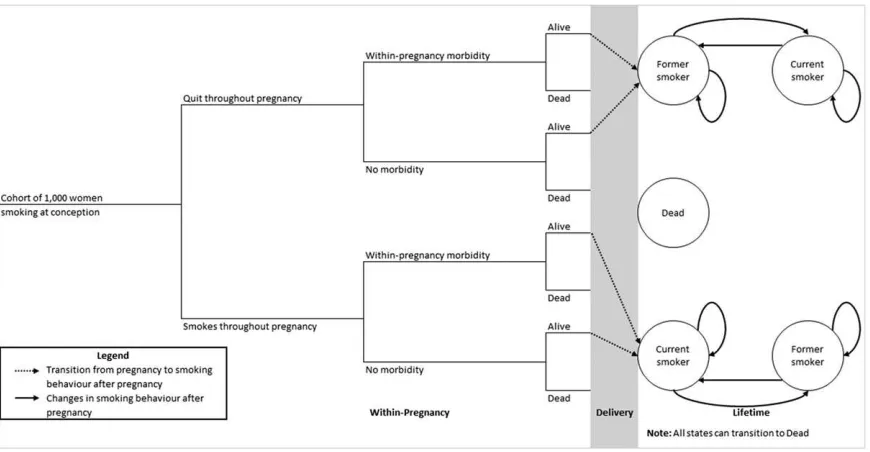
Figure 1 provides a simplified maternal model structure
(full detail in Supporting information, Appendix S1). A hypothetical cohort of 1000 singleton-pregnancy women who smoke enter a decision tree (left-hand side), which estimates smoking-related morbidity in pregnancy; thefirst
branch of this tree is where smoking rates in pregnancy are entered into the model, affecting all model calculations. The tree determines women’s smoking behaviour at childbirth, whether or not they survive pregnancy and whether live births occur. Next, surviving women enter a
‘life-time’ Markov chain model component (right-hand side) that predicts changes in their life-time smoking behaviour and, dependent on this, determines their life-time burden of smoking-related morbidity and mortality. We defined‘life-time’as modelling women’s and infants’
[image:3.594.89.524.480.706.2]outcomes until 100 years old or death.
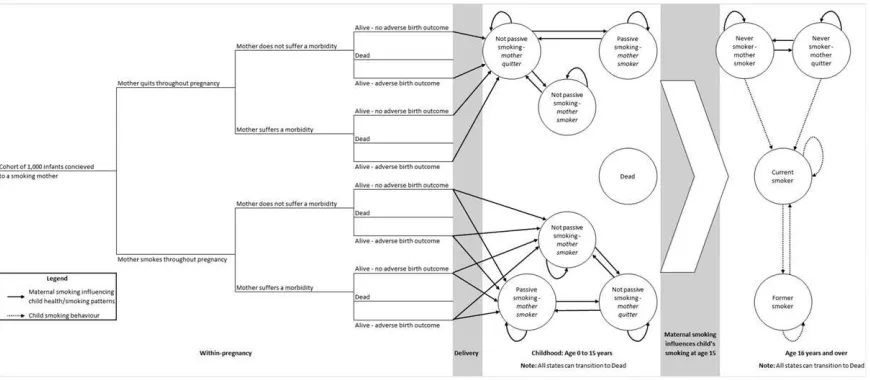
Figure 2 shows a simplified fetal model structure
(Supporting information, Appendix S1). Fetuses conceived by virtual cohort women enter a decision tree (left-hand side) which determines how many survive to birth and, of these, what proportion have low birth weights. Key
parameters in the fetal decision tree (e.g. proportion of stillbirths) are generated in the maternal one; hence, both are linked and fetal pregnancy and birth outcomes are dependent on smoking rates entered into the mater-nal tree. Between birth and 15 years infants enter a
‘childhood’ Markov chain component (middle section) which estimates their burden of asthma, factoring in the impact of second-hand exposure to maternal smoking, with smoking rates used, coming from the maternal life-time model. However, not all women who smoke expose their child to their smoking, and this is allowed for (see Table S1 in Supporting informa-tion, Appendix S2). However, it is assumed that once a mother exposes a child to passive smoking, this behav-iour would not change. This component also estimates children’s rates of smoking uptake incorporating an al-lowance for the influence of maternal smoking [19].
Fi-nally, at 16 years children enter an‘adulthood’ Markov chain component (right-hand side) which estimates their life-time burden of smoking-related morbidities and mortality.
Inclusion of morbidities
We want decision trees and Markov components to in-clude only those morbidities which are both caused by smoking and are sufficiently prevalent to have
meaning-ful economic impacts. A scoping review identified
smoking-attributable morbidities occurring in pregnancy and in infants [20]. Using the criteria outlined above, de-cision trees include the following maternal morbidities: placental abruption, ectopic pregnancy, pre-eclampsia, placenta previa and miscarriage (fetal death and expul-sion from uterus before 24 weeks). Trees also include the following infant morbidities: low infant birth weight (LBW; i.e. < 2500 g), stillbirth (i.e. born dead after
22 weeks gestation) and premature birth (i.e. born be-fore 37 weeks). For infants in the ‘childhood’ compo-nent, we included asthma [21,22]. For both women’s and infants’ ‘life-time’ components, as in other models [17,23,24], we included coronary heart disease (CHD) [25], chronic obstructive pulmonary disease (COPD) [26], lung cancer [26] and stroke [27].
Incorporating maternal smoking behaviour
ESIP incorporates maternal smoking-related data in four places:
i) In pregnancy—user input: as above, the proportions of women anticipated to stop smoking in pregnancy both with and without an intervention are inputted and used at the first node in the maternal decision tree
(Fig. 1).
ii) Maternal‘life-time’component: in thefirst two
postpar-tum years, relapse to smoking rates are higher than those generally. For women who were not smoking at childbirth a systematic review indicated their probabil-ities of returning to smoking within thefirst and
sec-ond postpartum years (see Supporting information, Appendix S2) [20,28]. For women who smoked at childbirth, we estimated the percentage who would make a quit attempt in thefirst postpartum year from
the 2010 Infant Feeding Survey (IFS), using data re-ported at 10 months after childbirth as a proxy for 1-year data [29].
[image:4.594.74.509.58.248.2]iii) Both‘life-time’components: except for the situation in (ii) above, we used English ONS smoking data to annu-ally estimate‘transition probabilities’, the annual prob-abilities of moving between smoking ‘states’ (see Supporting information, Appendix S2 and section C1 in Appendix S3) [22]. To estimate the annual probabil-ity of restarting smoking after long abstinence periods,
Figure 2 Simplified fetal and infant model: offspring progress through‘within-pregnancy’decision tree determining‘states’for entry into Markov childhood and life-time components
3
we used 8-year follow-up data from a smoking cessa-tion trial (see Supporting informacessa-tion, Appendix S2 and section C2 in Appendix S3) [30].
iv) ‘Childhood’ component: we used Health Survey for England data to estimate the proportion of maternal smokers who exposed children to passive smoking [31], and systematic reviewfindings [19] were used
to calculate teenagers’ probabilities of starting smoking, given that their mothers smoked (see section C2 in Supporting information, Appendix S3).
Determining smoking-related morbidity
To estimate accurately the burden of smoking-related morbidity, ESIP needed contemporary data on the fre-quency with which included conditions occurred. For nodes in decision tree components, we sought propor-tions of women and fetuses developing smoking-related morbidities. We sourced data on frequency of fetal loss, maternal morbidities and gestational length from Hospi-tal Episode Statistics (HES) NHS Maternity Statistics for England (2006–16) [32] on gestation-specific infant
mortality from Office of National Statistics (ONS),
En-gland and Wales (2006–12) [33] and on live births and stillbirths by birth weight and prematurity from Child Mortality Statistics (2006–12) [34]. A technical explanation of how the proportions were calculated can be found in section C3 in Supporting information, Appendix S3. To estimate the probabilities that ‘never smokers’ or their fetuses might experience morbidities, we adjusted bootstrapped proportions, using the same approach. Odds ratios and relative risks representing the increased harm caused by smoking during preg-nancy came from three systematic reviews [9–11]. Prob-ability estimates can be found in Supporting information, Appendix S2.
For life-time, childhood and adulthood components, we calculated the number of women/infants with smoking-related morbidities using English age- and gender-specific
prevalence for asthma, CHD, COPD, lung cancer and stroke [35–37]; relative risks for current and former smokers experiencing these were sourced from a US Surgeon Gen-eral’s report (see section C4 in Supporting information, Ap-pendix S3) [38]. Where the model predicted that a cohort member had been abstinent for more than 1 year, they were treated as former smokers. For the‘childhood’ com-ponent, we adjusted asthma prevalence for low birth weight and passive smoking exposure, as both may in-crease asthma risk (see section C5 in Supporting informa-tion, Appendix S3) [20–22,39,40]. Odds ratios for developing asthma after low birth weight birth and following exposure to maternal smoking in pregnancy and passive smoking came from the literature [40,41].
Prevalence estimates used are shown in Supporting infor-mation, Appendix S4.
Determining smoking-related mortality
To estimate maternal deaths in pregnancy in ESIP, we used ONS mortality statistics (2006–15) to apply morbidity-specific probabilities of death with no adjustment for
smoking behaviour, as there was no evidence that this
in-fluenced chances of dying from within-pregnancy
morbid-ities (see section C6 in Supporting information, Appendix S3) [42,43]. For the‘life-time’ and offspring‘adulthood’
components, we estimated male and female mortality using ONS cohort life tables [44]. Probabilities were ad-justed using relative risks from Dollet al. to represent the impacts on mortality of smoking and former smoking (see Supporting information, Appendix S4 and section C7 in Appendix S3) [26,45], with prevalence for current-, former- and never-smoking taken from ONS data [46]. When allocating mortality probabilities, those abstinent for more than 1 year were treated as former smokers. For the‘childhood’component, we similarly adjusted mortality rates to allow for the impact of LBW, using odds ratios for LBW-specific mortality (see section C8 in Supporting
infor-mation, Appendix S3) [47].
Determining health-related quality of life
ESIP calculates the potential for healthy life experience by
first awarding ‘life years’ to women and offspring, with
the numbers of years lived by cohort members being deter-mined by model components. Life years are then converted into QALYs. We assigned life years to mothers at the end of pregnancy, adjusting for gestational length by assuming that a pregnancy lasts 40 weeks. Informed by HES NHS Maternity Statistics for England, we assumed the average gestational length after ectopic pregnancy was 10 weeks, miscarriage (14 weeks), premature birth (33 weeks), pla-centa previa (38 weeks) and abruption and pre-eclampsia (39 weeks) [32]. After birth, wefirst awarded 1 life year
to offspring for each year of life.
(SE) = 0.3)] for CHD [52], 0.73 (SE = 0.23) for COPD [53], 0.67 (SE = 0.22) for lung cancer [54] and 0.72 (SE = 0.32) for stroke [55]. In the‘childhood’component the utility value for offspring aged 1–15 years in perfect health was 1 and, for children with asthma, 0.9 (SE = 0.18) [56].
Estimating health-care costs
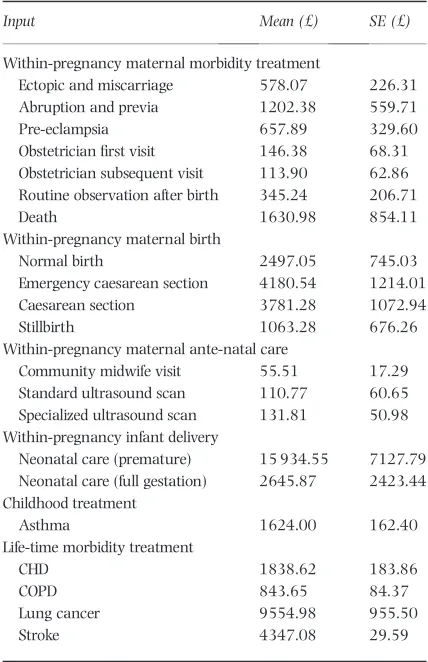
ESIP’s determination of health-care costs depends on the burden of morbidity estimated. Health-care events experi-enced by both mothers and fetuses were counted only once, hence costs were split between maternal and infant components to avoid duplication. Costs attributed only within the maternal components were those of antenatal care, treatment(s) for within-pregnancy morbidities, still-birth and mode of delivery. Neonatal care costs for infants born with LBW and prematurity and treatment costs for childhood asthma were attributed only in infant compo-nents. Treatment costs associated for‘life-time’morbidities were attributed in both maternal and infant components. ICD-10 codes were linked to Healthcare Resource Groups (HRG) currency codes, and hence to NHS reference costs (see Supporting information, Appendix S5) [57]. Treat-ment costs for morbidities and delivery were then calcu-lated across the different health-care settings to estimate a weighted mean [58]. The cost of a cardiac event was used as a proxy for the cost of a maternal death [1]. A practising NHS midwife advised on attribution of health-care costs and a detailed explanation of these is shown in Supporting information, Appendix S5. All pregnancies received an an-tenatal care cost amended for gestational length, morbidity and, for live births, a delivery cost. All live-born infants re-ceived a neonatal care cost based upon length of gestation, using weighted neonatal care costs by the average gestation-adjusted length of stay in a neonatal intensive care unit [59]. Treatment costs for‘life-time’morbidities and childhood asthma were taken from the literature [60–62], and inflated to 2014–15 prices [63]. Individual
cost components are shown in Table 1.
Incorporating uncertainty
To enable ESIP outputs to reflect the uncertainty of
esti-mates, wefitted distributions enabling probabilistic
sensi-tivity analysis (PSA) using established methods [64]. ESIP has 390 variables with fitted distributions and performs
10 000 Monte Carlo simulations to control for uncertainty [65]. A technical description can be found in section C9 in Supporting information, Appendix S3.
Analysis and outcomes
ESIP is constructed in Microsoft Excel 2010 [66] and is available online at https://www.nottingham.ac.uk/re-
search/groups/tobaccoandalcohol/smoking-in-pregnancy/esip/index.aspx. Because we adopted a UK NHS and PSS perspective [18], costs and benefits accrued after
pregnancy (i.e. in life-time components) were discounted at 3.5% [18]. Markov chains are run in annual cycles up to age 100.
The key outcomes ESIP produces are incremental cost-effectiveness ratios (ICERs) per additional QALY for mother and child, presented both separately and as a combined
‘per pregnancy’measure of cost-effectiveness with a‘ life-time’perspective. Other outcomes are ICERs per additional life year and per additional quitter, and all outcomes can also be reported to reflect cost-effectiveness measured only
until the end of pregnancy.
Return on investment (ROI) estimates can also be pro-duced for maternal and infant health care, both separately and combined, and reported for all time horizons. These are benefit–cost ratios, defined as incremental health-care
[image:6.594.296.510.87.418.2]savings divided by incremental intervention cost. ESIP can also estimate the following ICERs at end of pregnancy: per experience of maternal morbidity, infant death (fetal loss and stillbirth), premature birth, LBW birth and per adverse birth outcomes avoided. Output from the Table 1 Cost components for ‘within-pregnancy’, ‘life-time’,
‘childhood’and‘adulthood’maternal and infant components.
Input Mean (£) SE (£)
Within-pregnancy maternal morbidity treatment
Ectopic and miscarriage 578.07 226.31
Abruption and previa 1202.38 559.71
Pre-eclampsia 657.89 329.60
Obstetricianfirst visit 146.38 68.31
Obstetrician subsequent visit 113.90 62.86
Routine observation after birth 345.24 206.71
Death 1630.98 854.11
Within-pregnancy maternal birth
Normal birth 2497.05 745.03
Emergency caesarean section 4180.54 1214.01
Caesarean section 3781.28 1072.94
Stillbirth 1063.28 676.26
Within-pregnancy maternal ante-natal care
Community midwife visit 55.51 17.29
Standard ultrasound scan 110.77 60.65
Specialized ultrasound scan 131.81 50.98
Within-pregnancy infant delivery
Neonatal care (premature) 15 934.55 7127.79
Neonatal care (full gestation) 2645.87 2423.44
Childhood treatment
Asthma 1624.00 162.40
Life-time morbidity treatment
CHD 1838.62 183.86
COPD 843.65 84.37
Lung cancer 9554.98 955.50
Stroke 4347.08 29.59
SE = standard error; CHD = coronary heart disease; COPD = chronic ob-structive pulmonary disease.
5
PSA is demonstrated by incremental cost-effectiveness plane scatterplots and cost-effectiveness acceptability curves (CEACs), which illustrate the likelihood that an in-tervention might be judged to be cost-effective at preselected thresholds.
USING ESIP WITH TRIAL DATA: A WORKED EXAMPLE
In this section we demonstrate the use of published data from the‘MiQuit’pilot randomized controlled trial (RCT) in conjunction with the ESIP model to estimate the cost-effectiveness of the intervention used: self-help smoking cessation support delivered by text message [67,68]. Par-ticipants were pregnant smokers who received standard NHS smoking cessation care with an intervention group additionally receiving a 12-week programme of tailored text messages; for full details see Naughtonet al. [68] No pregnancy outcome data were collected, follow-up ended at 36 weeks gestation and a simple economic evaluation estimated a‘cost per quitter’of £134 [95% confidence
in-terval (CI) =–£396 to £844), basing this only upon inter-vention costs incurred during pregnancy [68].
Inputting data
The following data from the trial paper are inputted (values in brackets): mean maternal age (27 years); birth year (2014); per-participant intervention cost (£3.04, standard error = £0.30) and control and intervention group quit rates (2 and 5.4%). ESIP requires standard errors for cessa-tion outcome data; as these were not reported [67,68] they were estimated as 1.6 and 1.1%, respectively, using established methods [69,70]. As MiQuit was delivered in addition to standard NHS treatment, we assumed that, in the worst-case scenario, MiQuit would not improve the chances of a woman quitting over NHS treatment. There-fore, we restricted ESIP to not sample MiQuit quit rates be-low that of NHS treatment; where this did happen (i.e. sampled MiQuit quit rate was less than sampled NHS treat-ment), ESIP would assume that the quit rates in the inter-vention and comparison were equivalent.
ESIP outputs
Although the published trial economic analysis suggested that the MiQuit intervention was potentially cost-effective, as measured in‘cost-per-quitter’ units [68], ESIP shows that the greatest health benefits come in the longer term
and it also estimates value for money in terms of QALYs, life years and in ROI, none of which was possible in the original trial.
More specifically, Table 2 shows base case (using initial
model input values with no allowance for uncertainty) and
PSA (allows model inputs to vary to estimate the impact of uncertainty)findings. The base case suggests that MiQuit is
dominant because it is more effective and cheaper than standard NHS care (incremental cost was negative). The benefit–cost ratio suggests that for every £1 spent on
MiQuit the health-care provider could expect to save £14 per pregnancy throughout the life-time of the mother and offspring, afinding reinforced by PSA, which
demon-strates negative median incremental costs and positive me-dian incremental life years/QALYs with an interquartile range suggesting that the saving could be as little as £8 and as great as £20. The scatterplot of incremental costs versus incremental QALYs (see left-hand side of Fig. 3) demonstrates that the majority of iterations can be found in the south-east quadrant (i.e. indicating cost-effectiveness) [71], and the associated cost-effectiveness ac-ceptability curve (CEAC) (right-hand side of Fig. 3) suggests that MiQuit has a probability 0.95 of being cost-saving, which increases to 0.97 when a decision-maker is willing to pay £20 000 to gain an additional QALY.
Table 3 provides results constrained to the end-of-pregnancy time horizon, including estimates for infant morbidities averted by using the intervention. Although ESIP estimates that MiQuit increases maternal QALYs and decreases several adverse infant birth outcomes, it is no longer dominant because it also leads to an increase in cost. However, both base case and PSA ICERs are still be-low commonly accepted threshold values for QALYs so, even in this analysis, MiQuit appears cost-effective against standard care as judged by usual norms [72,73]. Benefit–
cost ratios suggested that there may be health-care savings in terms of infant health care; however, this was outweighed by the increased cost associated with the mother.
DISCUSSION
ESIP is thefirst economic model to acknowledge that ma-ternal smoking in pregnancy and afterwards directly af-fects fetal and infant pregnancy outcomes, offspring smoking uptake and life-time experience of smoking-related illness for both mothers and children. Previous models have considered mothers or infants in isolation [14,16,74,75], and none have incorporated the impact of infants’exposures to passive smoking. ESIP estimates not only common measures of cost-effectiveness [13], but also ROI, which may be of interest to decision-makers.
Impact of modelling assumptions
By assuming that women who stop smoking in pregnancy have the same risks as those who have never smoked, the model may overestimate the benefits and cost-effectiveness
Table 2 ESIP MiQuit trial outputs for women and offspring: base case and probabilistic sensitivity analyses, life-time horizon.
Outcome
Base case (deterministic: no allowance for uncertainty)
Estimates from the probabilistic sensitivity analysis (incorporates uncertainty for model inputs)
Comparator Experimental Incremental
Comparator Experimental Incremental Median Interquartile range Median Interquartile range Median Interquartile range
Maternal outcomes
Quit rate at delivery (%) 0.0196 0.0542 0.0346 0.0180 0.0119 0.0256 0.0529 0.0431 0.0646 0.0340 0.0214 0.0468
Expected life years per mother 25.1797 25.1827 0.0030 25.2003 25.1634 25.2340 25.2033 25.1670 25.2365 0.0028 0.0018 0.0041
Expected QALYs per mother 23.1165 23.1246 0.0081 23.1946 22.7342 23.5788 23.2028 22.7449 23.5866 0.0074 0.0045 0.0112
Expected cost per mother (£) 10 002.04 9988.28 13.76 10 033.81 9523.45 10 601.76 10 019.46 9509.49 10 587.53 13.44 20.29 6.99
ICER per additional life year (£) 4636.23 4423.80 5437.41 3448.47
ICER per additional QALY (£) 1701.05 1619.91 2084.53 1229.48
ICER per additional quitter (£) 397.70 384.84 461.88 298.00
Offspring outcomes
Expected life years per infant 24.0721 24.1020 0.0299 24.0787 23.9804 24.1722 24.1082 24.0143 24.1991 0.0291 0.0181 0.0410
Expected QALYs per infant 23.5449 23.5771 0.0322 23.5953 23.3523 23.7965 23.6282 23.3859 23.8282 0.0310 0.0194 0.0441
Expected cost per infant (£) 7805.18 7777.79 27.39 7337.74 6409.01 8772.84 7310.38 6380.97 8750.28 26.37 39.39 14.87
ICER per additional life year (£) 915.58 884.29 1104.35 679.31
ICER per additional QALY (£) 850.36 823.64 1033.68 625.10
Combined per pregnancy outcomes (mother and offspring)
Expected life years per pregnancy 49.2519 49.2847 0.0329 49.2754 49.1683 49.3811 49.3091 49.2058 49.4090 0.0321 0.0200 0.0450
Expected QALYs per pregnancy 46.6614 46.7017 0.0403 46.7560 46.1134 47.3147 46.7935 46.1575 47.3575 0.0391 0.0245 0.0552
Expected cost per pregnancy (£) 20 915.76 20 876.48 39.28 20 677.53 19 251.01 22 428.84 20 638.17 19 212.41 22 383.83 38.37 56.96 21.46
ICER per additional life year (£) 1194.68 1150.13 1422.75 894.08
ICER per additional QALY (£) 974.83 939.53 1156.12 737.99
ICER per additional quitter (£) 1135.27 1114.32 1297.95 909.49
Cost-offset analysis
Cost savings ratio for maternal health-care only (£)
5.53 5.42 3.30 7.78
Cost savings ratio for offspring health-care only (£)
10.01 9.67 5.84 14.12
Cost savings ratio for combined health-care only (£)
13.92 13.65 8.02 19.98
ESIP = Economics of Smoking in Pregnancy; QALY = quality-adjusted life year; ICER = incremental cost-effectiveness ratio.
7
©
2
01
8
T
he
A
u
th
o
rs
.
Add
ic
ti
on
pu
bl
is
he
d
by
Jo
hn
W
il
ey
&
So
ns
Lt
d
on
be
ha
lf
of
So
ci
et
y
fo
r
th
e
St
ud
y
of
A
dd
ic
ti
on
.
Add
ic
ti
pregnancy will have slightly greater risks of experiencing morbidities than‘never smokers’, as they will have smoked for at least at some of their pregnancies. However, the in-crease in risk may be small because, for example, when women quit early in pregnancy their infants’birth weights are no different from those born to non-smokers [76] and low birth weight is arguably the principal cause of morbid-ity and mortalmorbid-ity among neonates and infants [40,47]. Furthermore, most smokers who stop when pregnant do so early on in pregnancy [77,78], so this assumption may not affect ESIP outputs greatly.
The model assumes that smoking by household mem-bers other than mothers have no impact on either children’s passive smoking or their uptake of smoking, so it may un-derestimate children’s smoking-related morbidity and smoking uptake. If a household has a father or other family members who smoke [19] this has an additional influence
on children’s smoking uptake, so the benefits attributable
to maternal smoking cessation may be overestimated. How-ever, it has been shown that maternal smoking has more impact on children’s smoking uptake than paternal smoking [19,39], so ESIP incorporates the major influence.
The assumption that smoking mothers do not change their smoking behaviour around their child (i.e. either ex-posing or not exex-posing them to second-hand smoking) may mean that ESIP does not estimate children’s smoking-related morbidity accurately. It is unlikely that a mother’s smoking behaviour around her child would re-mainfixed throughout childhood [79], but we could
iden-tify no longitudinal data to inform the model about this, and this remains a model limitation. However, the model does attempt to model maternal smoking behaviour after pregnancy accurately, making use of the most recent data on postnatal relapse, and it could be argued that this will have a more substantial impact.
ESIP allows women to make quit attempts after preg-nancy, but because Markov models are‘memoryless’it as-sumes each attempt is independent of previous ones [80].
However, the more quit attempts an individual makes, the more likely that they are to quit successfully [81–84], and a woman takes, on average, 6.3 quit attempts throughout her life-time to become a former smoker [85]. ESIP may, therefore, underestimate long-term abstinence. However, we believe the model makes optimal use of the best available smoking behaviour data and improves on other models by taking into account the different rates of restarting smoking during thefirst two postnatal years [17,24].
As incorporating subsequent pregnancies would have been challenging, the model assumes that women have only one pregnancy in their life-times. The impact this might have on model estimates is uncertain; ESIP may un-derestimate health-care costs incurred, but equally it may underestimate siblings’ benefits resulting from mothers’
cessations. In England and Wales in 2013 there was an av-erage of two children in families [86], suggesting that this is a potentially serious limitation. However, if a cessation in-tervention proved to be cost-effective for a single child, it seems likely that this would also have benefits for any other
children (e.g. in reduced passive smoking) and ESIP esti-mates would be conservative.
The assumption that MiQuit is superior to standard care removes the possibility of negative incremental quit rates between MiQuit and standard NHS care. The MiQuit pilot study found that there was a non-significant increase
[image:9.594.89.531.57.204.2]in abstinence [odds ratio (OR) = 2.7, 95% CI = 0.93–9.35] [68], therefore there is the possibility that MiQuit could de-crease the likelihood that a woman quits. By not estimating negative incremental quit rates, ESIP could be overestimating the cost-effectiveness of MiQuit because ESIP is ignoring cases where women and infants are made worse off. However, if MiQuit was to become part of NHS practice in the United Kingdom, it would be delivered in ad-dition to usual care, and hence we considered it additive to usual care rather than replacing it. Furthermore, out of 10 000 replications, this assumption was only applied 345 times, therefore the chance that MiQuit will make
Table 3 ESIP MiQuit trial outputs for women and offspring: base case and probabilistic sensitivity analyses, end-of-pregnancy horizon.
Outcome
Base case (deterministic: no allowance for uncertainty)
Estimates from the probabilistic sensitivity analysis (incorporates uncertainty for model inputs)
Comparator Experimental Incremental
Comparator Experimental Incremental Median Interquartile range Median Interquartile range Median Interquartile range
Maternal outcomes
Number of pregnancies with a morbidity 122 121 1 122 118 126 121 118 125 1 1 0
Expected QALYs per mother 0.6842 0.6852 0.0010 0.6841 0.6779 0.6902 0.6852 0.6790 0.6912 0.0010 0.0006 0.0014
Expected costs per mother (£) 3108.55 3113.45 4.91 3046.26 2618.44 3514.32 3050.83 2622.09 3519.06 4.55 3.72 5.72
ICER per morbidity avoided (£) 6093.90 6385.64 4776.11 9152.32
ICER per additional QALY (£) 4930.28 5251.48 3899.71 7414.55
ICER per additional quitter (£) 141.79 149.78 112.89 206.82
Offspring outcomes
Number of fetal losses (including stillbirths) 106 105 1 106 103 110 105 102 109 1 1 1
Number of premature births 73 73 0 73 72 74 73 71 74 0 1 0
Number of LBW infants 113 111 2 113 111 115 111 109 113 2 3 1
Total number of infants with adverse birth outcomes
213 211 2 213 210 217 211 208 215 2 3 1
Expected cost per infant (£) 3261.81 3263.58 1.77 2738.18 1821.11 4154.83 2740.49 1820.83 4156.79 1.94 0.57 3.66
ICER per adverse birth outcome avoided (£) 892.80 1144.95 258.57 2973.27
Combined per pregnancy outcomes (mother and offspring)
Expected cost per pregnancy (mother and infant) 6370.35 6374.00 3.64 5880.56 4832.65 7419.67 5881.73 4834.59 7424.81 3.16 1.24 5.61
ICER per additional QALY (£) 3658.58 4217.09 1235.06 8220.71
ICER per additional quitter (£) 105.22 121.41 34.63 233.44
Cost-offset analysis
Cost savings ratio for maternal health-care only (£) 0.61 0.50 0.88 0.22
Cost savings ratio for offspring health-care only (£) 0.42 0.36 0.19 1.19
Cost savings ratio for combined health-care only (£) 1.20 1.01 1.83 0.42
ESIP = Economics of Smoking in Pregnancy; QALY = quality-adjusted life year; ICER = incremental cost-effectiveness ratio.
9
©
2
01
8
T
he
A
u
th
o
rs
.
Add
ic
ti
on
pu
bl
is
he
d
by
Jo
hn
W
il
ey
&
So
ns
Lt
d
on
be
ha
lf
of
So
ci
et
y
fo
r
th
e
St
ud
y
of
A
dd
ic
ti
on
.
Add
ic
ti
women less likely to quit smoking is 3.45%. While this as-sumption might be made in instances where new interven-tions are delivered in addition to usual care, it can be relaxed for instances where the new intervention is a direct replacement for usual care, thus ESIP can perform those types of analyses.
The model is restricted to singleton pregnancies. Multi-ple gestations are infrequent: in 2013 fewer than 2% of all births in England and Wales were multiple births [87]; however, pregnancy outcomes in multiple pregnancies are worse than after singleton ones and so health-care costs are likely to be higher. ESIP would need substantial amendments to account for multiple births; it is not en-tirely clear how estimates may be affected by excluding the possibility of multiple births but, as these are reasonably rare, any impact is unlikely to be large.
The MiQuit RCT recruited women at an average at 15 weeks gestation and so may have had a limited impact on fetal loss due to miscarriages, which occur principally early in pregnancy; however, we included this outcome in our example, as late miscarriage could be affected by the MiQuit intervention. This may have resulted in some over-estimation of MiQuit’s cost-effectiveness in our‘worked ex-ample’, but a positive feature of ESIP isflexibility and it is
possible to re-run analyses removing miscarriage from the list of outcomes as a sensitivity analysis, if desired.
Application and implication for policy
The ability of ESIP to provide‘common currency’outputs (e.g. cost per QALY) is likely to be of most interest to decision-makers and researchers, as these will allow simple comparisons between cessation interventions delivered in pregnancy and other health-care interventions. Provided the additional costs of delivering an intervention and the likely (or demonstrated) absolute effect on cessation are known, these can be fed into the programmable interface of ESIP to generate life-time estimates for intervention cost-effectiveness without the need for an additional eco-nomic model to be built. ESIP inputs currently apply only to the UK population, and so caution is needed when ap-plying ESIP estimates to countries with very different prev-alence of smoking behaviours or of smoking-related illnesses. Model outputs may not be generalizable to such jurisdictions; however, with support, it would be straight-forward to re-parameterize ESIP with other countries’ mor-bidity and mortality data. ESIP is to be published at: https:// www.nottingham.ac.uk/research/groups/tobaccoandalcohol/ smoking-in-pregnancy/esip/index.aspx and the lead author would able to provide such support.
One consideration with regard to the cost-effectiveness estimates from the ESIP outputs is to what extent infant outcomes are valued in comparison with maternal out-comes. Currently, there is a lack of international
standardization with regard to the inclusion of infant out-comes not only in evaluations of smoking cessation inter-ventions, but also many other pregnancy-related interventions [88]. In the United Kingdom, current guid-ance on economic evaluations for decision-making is am-biguous [18]. Many previous evaluations of within-pregnancy smoking cessation interventions have either fo-cused solely on outcomes related to the mother or infant [13]; however, several recent interventions have presented a combined measure [17,24], and thus we presented com-bined measures of cost-effectiveness to aid comparison with previous evaluations. It is anticipated that guidance regarding the inclusion of infant outcomes is likely to change, although what this societal decision will be cannot be foreseen. The authors hope that we have demonstrated theflexibility of ESIP in terms of valuing both maternal and
infant outcomes, allowing decision-makers the facility of having the maximum amount of information available to make an informed decision, irrespective of their viewpoint regarding the valuing of infant outcomes.
CONCLUSION
ESIP resulted from a systematic approach to address the limitations of previous economic evaluations of smoking cessation interventions used in pregnancy, and offers researchers a comprehensive approach to estimating costs, outcomes and cost-effectiveness. The inclusion of future cost savings for both mother and child enables decision-makers to allocate scarce resources with an information set which demonstrates the longer-term paybacks associated with current investment. Short-term cost-effectiveness ratios are misleading when evaluating preventive interventions because future savings are not included, the result being a suboptimal allocation of resources.
Declaration of interests
None.
Acknowledgements
of Health under the auspices of the UK Clinical Research Collaboration. T.C. acknowledges support from the East Midlands CLAHRC and is a member of the NIHR School for Primary Care Research. We wish to thank Dr Felix Naughton and the MiQuit study team for allowing us access to and use of the MiQuit study data. We wish to thank Dr Katharine Bowker for her advice on prenatal healthcare and delivery costs.
References
1. Godfrey C., Pickett K., Parrott S., Mdege N., Eapen D.
Estimat-ing the Costs to the NHS of SmokEstimat-ing in Pregnancy for Pregnant Women and Infants. York: Public Health Research Consortium, University of York; 2010.
2. Mason J., Wheeler W., Brown M. J. The economic burden of exposure to secondhand smoke for child and adult never
smokers residing in U.S. public housing. Public Health Rep
2015;130: 230–44.
3. Palma S., Pérez-Iglesias R., Pardo-Crespo R., Llorca J., Mariscal M., Delgado-Rodríguez M. Smoking among pregnant women in Cantabria (Spain): trend and determinants of smoking
ces-sation.BMC Public Health2007;7: 65.
4. Cui Y., Shooshtari S., Forget E. L., Clara I., Cheung K. F.
Smoking during pregnancy:findings from the 2009–2010
Canadian community health survey. PLoS One 2014; 9:
e84640.
5. NHS Information Centre and IFF Research. Infant Feeding Survey 2010: Early Results. The Health and Social Care Infor-mation Centre. London: The NHS InforInfor-mation Centre; 2011. 6. Tong V. T., Dietz P. M., Farr S. L., D’Angelo D. V., England L. J. Estimates of smoking before and during pregnancy, and smoking cessation during pregnancy: comparing two
population-based data sources.Public Health Rep2013;128:
179–88.
7. Schneider S., Maul H., Freerksen N., Pötschke-Langer M. Who smokes during pregnancy? An analysis of the German
perina-tal quality survey 2005.Public Health2008;122: 1210–6.
8. Hilder L., Zhichao Z., Parker M., Jahan S., Chambers G. M. Australia’s Mothers and Babies 2012. Canberra, The Austra-lian Institute of Health and Welfare; 2014.
9. DiFranza J. R., Lew R. A. Effect of maternal cigarette smoking on pregnancy complications and sudden infant death
syn-drome.J Fam Pract1995;40: 385–94.
10. Castles A., Adams E. K., Melvin C. L., Kelsch C., Boulton M. L.
Effects of smoking during pregnancy. Five meta-analyses.Am
J Prev Med1999;16: 208–15.
11. Shah N. R., Bracken M. B. A systematic review and meta-analysis of prospective studies on the association between
ma-ternal cigarette smoking and preterm delivery.Am J Obstet
Gynecol2000;182: 465–72.
12. Jauniaux E., Greenough A. Short and long term outcomes of
smoking during pregnancy. Early Hum Dev 2007; 83:
697–8.
13. Jones M., Lewis S., Parrott S., Coleman T. Systematic critical review of previous economic evaluations of smoking cessation
during pregnancy.BMJ Open2015;5: e008998.
14. Boyd K. A., Briggs A. H., Bauld L., Sinclair L., Tappin D. Are
financial incentives cost-effective to support smoking
cessa-tion during pregnancy?Addiction2016;111:–370.
15. Dornelas E. A., Magnavita J., Beazoglou T., Fischer E. H., Oncken C., Lando H.et al. Efficacy and cost-effectiveness of a
clinic-based counseling intervention tested in an ethnically
di-verse sample of pregnant smokers.Patient Educ Couns2006;
64: 342–9.
16. Hueston W. J., Mainous A. G. III, Farrell J. B. A cost–benefit
analysis of smoking cessation programs during thefirst
tri-mester of pregnancy for the prevention of low birthweight. J Fam Pract1994;39: 353–7.
17. Taylor M. Economic Analysis of Interventions for Smoking Cessation Aimed at Pregnant Women. NICE Guidance PH26, Supplementary Report, National Institute for Health and Care Excellence. Editor. York: York Health Economics Consortium; 2009.
18. National Institute for Health and Care Excellence. Guide to the methods of technology appraisal 2013.2013 04/05/ 2013. Available at: http://publications.nice.org.uk/guide-to- the-methods-of-technology-appraisal-2013-pmg9/the-refer-ence-case (accesed 15 May 2014).
19. Leonardi-Bee J., Jere M. L., Britton J. Exposure to parental and sibling smoking and the risk of smoking uptake in childhood
and adolescence: a systematic review and meta-analysis.
Tho-rax2011;66: 847–55.
20. Jones M.J. The development of the Economic impacts of Smoking In Pregnancy (ESIP) model for measuring the im-pacts of smoking and smoking cessation during pregnancy. Nottingham: School of Medicine, University of Nottingham; 2015, p. 496.
21. Newacheck P. W., Taylor W. R. Childhood chronic illness:
prevalence, severity, and impact.Am J Public Health1992;82:
364–71.
22. Lifestyle Statistics and Health and Social Care Information
Centre.Statistics of Smoking: England 2013. London: Lifestyle
Statistics and Health and Social Care Information Centre; 2013.
23. Flack S., Taylor M., Trueman P. Cost-Effectiveness of
Interven-tions for Smoking Cessation,Final Report. National Institute for Health and Care Excellence. York: York Health Economics Consortium; 2007.
24. Mallinder J., Bertranou E., Bacelar M., Roberts S. In: National
Institute for Health and Care Excellence, editor.
Economic Analysis of Smoking Cessation in Secondary Care: NICE Public Health Guidance PH48. London: Matrix Knowledge; 2013.
25. Willett W. C., Green A., Stampfer M. J., Speizer F. E., Colditz G. A., Rosner B.et al. Relative and absolute excess risks of
coro-nary heart disease among women who smoke cigarettes.N
Engl J Med1987;317: 1303–9.
26. Doll R., Peto R., Wheatley K., Gray R., Sutherland I. Mortality
in relation to smoking: 40 years’observations on male British
doctors.BMJ1994;309: 901–11.
27. Wolf P. A., D’Agostino R. B., Kannel W. B., Bonita R., Belanger A. J. Cigarette smoking as a risk factor for stroke: the
Framing-ham study.JAMA1988;259: 1025–9.
28. Jones M., Lewis S., Parrott S., Wormall S., Coleman T. Re-starting smoking in the postpartum period after receiving a
smoking cessation intervention: a systematic review.
Addic-tion2016;111: 981–90.
29. McAndrew F., Thompson J., Fellows L., Large A., Speed M., Renfrew M. J. In: The NHS Information Centre for Health
and Social Care, editor.Infant Feeding Survey 2010. London:
Health and Social Care Information Centre; 2012.
30. Yudkin P., Hey K., Roberts S., Welch S., Murphy M., Walton R. Abstinence from smoking eight years after participation in
randomised controlled trial of nicotine patch. BMJ2003;
327: 28–9.
11
31. Information Centre for Health and Social Care and
Depart-ment of Health.Health Survey for England. London: UK Data
Service; 2017.
32. Health and Social Care Information Centre.Hospital Episode
Statistics: NHS Maternity Statistics—England. London: Health and Social Care Information Centre; 2015.
33. Office for National Statistics. Gestation-specific infant mortal-ity in England and Wales. 2015. 15th October 2014. Available at: http://www.ons.gov.uk/ons/rel/child-health/
gestation-specifi
c-infant-mortality-in-england-and-wales/in-dex.html (accessed 15 September 2015).
34. Office for National Statistics. Child mortality statistics: Child-hood, infant and perinatal. 2015. 10th March 2015. Available at: http://www.ons.gov.uk/ons/rel/vsob1/child-mortality-sta-tistics--childhood--infant-and-perinatal/index.html (accessed 17 September 2015).
35. Flowers J., Hill F., Tennison I., Tovey R. Chronic disease prev-alence by age, sex and region in 2008, Eastern Region Public Health Observatory (ERPHO). London: Public Health England; 2010.
36. Townsend N., Wickramasinghe K., Bhatnagar P., Smolina K.,
Nichols M., Leal J.et al.Coronary Heart Disease Statistics: A
Compendium of Health Statistics: 2012 edition. London: Depart-ment of Public Health, University of Oxford; 2012. 37. Forman D., Stockton D., Møller H., Quinn M., Babb P., de
Angelis R.et al. Cancer prevalence in the UK: results from
the EUROPREVAL study.Ann Oncol2003;14: 648–54.
38. US Department of Health and Human Services (USDHHS).
The Health Consequences of Smoking—50 Years of Progress.
A Report of the Surgeon General, Department of Health and Human Services. Atlanta, GA: Centers for Disease Control and Prevention, National Center for Chronic Disease
Preven-tion and Health PromoPreven-tion, Office on Smoking and Health;
2014.
39. Royal College of Physicians (RCP).Passive Smoking and
Chil-dren. A report by the Tobacco Advisory Group. London: RCP; 2010.
40. Mu M., Ye S., Bai M. J., Liu G. L., Tong Y., Wang S. F.et al. Birth weight and subsequent risk of asthma: a systematic review
and meta-analysis.Heart Lung Circ2014;6: 511–9.
41. Burke H., Leonardi-Bee J., Hashim A., Pine-Abata H., Chen Y.,
Cook D. G.et al. Prenatal and passive smoke exposure and
in-cidence of asthma and wheeze: systematic review and meta-analysis.Pediatrics2012;129: 735–44.
42. Office for National Statistics.Mortality Statistics: Death Regis-tered in England and Wales (Series DR). London: Office for National Statistics; 2015.
43. Office for National Statistics. Mortality Statistics: Cause,
England and Wales (Series DH2). London: Office for National
Statistics; 2004–2005.
44. Office for National Statistics.Historic and Projected Mortality Data from the Period and Cohort Life Tables, 2012-based, UK, 1981–2062. London: Office for National Statistics; 2013. 45. Doll R., Peto R., Boreham J., Sutherland I. Mortality in
rela-tion to smoking: 50 years’ observations on male British
doctors.BMJ2004;328: 1519.
46. Office for National Statistics. Compendium: Adult Smoking
Habits in Great Britain, 2013. London: Office for National Sta-tistics; 2014.
47. Li C. I., Daling J. R., Emanuel I. Birthweight and risk of overall
and cause-specific childhood mortality. Paediatr Perinat
Epidemiol2003;17: 164–70.
48. Maheswaran H., Petrou S., Rees K., Stranges S. Estimating EQ-5D utility values for major health behavioural risk
factors in England.J Epidemiol Community Health2013;67:
172–80.
49. National Collaborating Centre for Women’s and Children’s
Health (UK).Appendix H, Cost effectiveness of aspirin compared
with no aspirin in preventing pre-eclampsia in women at risk of de-veloping pre-eclampsia, in Hypertension in Pregnancy: The Management of Hypertensive Disorders During Pregnancy. Lon-don: RCOG Press; 2010.
50. Partridge J. C., Sendowski M. D., Martinez A. M., Caughey A. B. Resuscitation of likely nonviable infants: a cost-utility
anal-ysis after the Born-Alive Infant Protection Act.Am J Obstet
Gynecol2012;206: 49.e1–0.
51. Gillespie P., O’Neill C., Adams E., Turner K., O’Donovan D.,
Brugha R.et al. The cost and cost-effectiveness of
opportunis-tic screening for chlamydia trachomatis in Ireland. Sex
Transm Infect2012;88: 222–8.
52. The Community Pharmacy Medicines Management Project Evaluation Team The MEDMAN study: a randomized
con-trolled trial of community pharmacy-led medicines
management for patients with coronary heart disease.Fam
Pract2007;24: 189–200.
53. Starkie H. J., Briggs A. H., Chambers M. G., Jones P. Predicting
EQ-5D values using the SGRQ. Value Health 2011; 14:
354–60.
54. Pickard A. S., Neary M. P., Cella D. Estimation of minimally important differences in EQ-5D utility and VAS scores in can-cer.Health Qual Life Outcomes2007;5: 70.
55. Haacke C., Althaus A., Spottke A., Siebert U., Back T., Dodel R. Long-term outcome after stroke: evaluating health-related
quality of life using utility measurements.Stroke2006;37:
193–8.
56. Carroll A. E., Downs S. M. Improving decision analyses:
par-ent preferences (utility values) for pediatric health
outcomes.J Pediatr2009;155: 21-5, 25.e1-5.
57. Department of Health.NHS Reference Costs: Financial year
2014–15. London: Department of Health; 2015.
58. Department of Health.NHS reference costs. 2015. Available at:
https://www.gov.uk/government/collections/nhs-reference-costs (accessed 19 May 2015).
59. Imperial College London.Neonatal Data Analysis Unit (NDAU):
NDUA Report 2015.2016. Available at: https://www1.impe-rial.ac.uk/neonataldataanalysis/supporting/na/ (accessed 15 November 2016).
60. European Lung White Book. Respiratory health and disease in Europe 2014. Available at: http://www.erswhitebook.org/ (accessed 8 September 2014).
61. Liu J. L., Maniadakis N., Gray A., Rayner M. The economic
burden of coronary heart disease in the UK.Heart2002;88:
597–603.
62. Youman P., Wilson K., Harraf F., Kalra L. The economic
bur-den of stroke in the United Kingdom. Pharmacoeconomics
2003;21: 43–50.
63. Curtis L., Burns A.Unit Costs of Health and Social Care 2016.
Canterbury: University of Kent; 2016.
64. Briggs A., Claxton K., Sculpher M. Decision Modelling
for Health Economic Evaluation. In: Handbooks in
Health Economic Evaluation. Oxford: Oxford University Press; 2006.
65. Doubilet P., Begg C. B., Weinstein M. C., Braun P., McNeil B. J. Probabilistic sensitivity analysis using Monte Carlo
simula-tion. A practical approach. Med Decis Making 1985; 5:
157–77.
66. Microsoft Excel 2010. Microsoft Office Professional Plus.
67. Cooper S., Foster K., Naughton F., Leonardi-Bee J., Sutton S., Ussher M.et al. Pilot study to evaluate a tailored text message intervention for pregnant smokers (MiQuit): study protocol for a randomised controlled trial.Trials2015;16: 29. 68. Naughton F., Cooper S., Foster K., Emery J., Leonardi-Bee J.,
Sutton S.et al. Large multi-centre pilot randomized controlled
trial testing a low-cost, tailored, self-help smoking cessation
text message intervention for pregnant smokers (MiQuit).
Ad-diction2017;112: 1238–49.
69. Wilson E. B. Probable inference, the law of succession, and statistical inference.J Am Stat Assoc1927;22: 209–12. 70. Miller I., Miller M.John E. Freund’s Mathematical Statistics with
Applications,7th edn. Uper Saddle River, NJ: Pearson Prentice-Hall; 2004.
71. Cohen D. J., Reynolds M. R. Interpreting the results of cost-effectiveness studies.J Am Coll Cardiol2008;52: 2119–26. 72. McCabe C., Claxton K., Culyer A. J. The NICE
cost-effectiveness threshold: what it is and what that means. Pharmacoeconomics2008;26: 733–44.
73. Marseille E., Larson B., Kazi D. S., Kahn J. G., Rosen S. Thresh-olds for the cost-effectiveness of interventions: alternative
approaches.Bull World Health Organ2015;93: 118–24.
74. Marks J. S., Koplan J. P., Hogue C. J. R., Dalmat M. E. A cost–
benefit/cost-effectiveness analysis of smoking cessation for
pregnant women.Am J Prev Med1990;6: 282–9.
75. Ruger J. P., Weinstein M. C., Hammond S. K., Kearney M. H., Emmons K. M. Cost-effectiveness of motivational interviewing for smoking cessation and relapse prevention among
low-income pregnant women: a randomized controlled trial.Value
Health2008;11: 191–8.
76. Cnattingius S. The epidemiology of smoking during pregnancy: smoking prevalence, maternal characteristics,
and pregnancy outcomes. Nicotine Tob Res 2004; 6:
S125–S140.
77. Munafo M. R., Heron J., Araya R. Smoking patterns during pregnancy and postnatal period and depressive symptoms. Nicotine Tob Res2008;10: 1609–20.
78. Eiden R. D., Homish G. G., Colder C. R., Schuetze P., Gray T. R., Huestis M. A. Changes in smoking patterns during pregnancy. Subst Use Misuse2013;48: 513–22.
79. Shaw A., Ritchie D., Semple S., Turner S., O’Donnell R., Amos
A.et al.Reducing Children’s Exposure to Second Hand Smoke in the Home: A literature review. Scotland: ASH; 2012.
80. Petrou S., Gray A. Economic evaluation using decision
analyt-ical modelling: design, conduct, analysis, and reporting.BMJ
2011;342: d1766.
81. Caponnetto P., Polosa R. Common predictors of smoking
ces-sation in clinical practice.Respir Med2008;102: 1182–92.
82. Vangeli E., Stapleton J., Smit E. S., Borland R., West R. Predic-tors of attempts to stop smoking and their success in adult
general population samples: a systematic review.Addiction
2011;106: 2110–21.
83. Zhou X., Nonnemaker J., Sherrill B., Gilsenan A. W., Coste F., West R. Attempts to quit smoking and relapse: factors associ-ated with success or failure from the ATTEMPT cohort study. Addict Behav2009;34: 365–73.
84. Zhu S. H., Sun J., Billings S. C., Choi W. S., Malarcher A.
Pre-dictors of smoking cessation in U.S. adolescents.Am J Prev
Med1999;16: 202–7.
85. US Department of Health and Human Services (USDHHS). Women and Smoking: A report of the Surgeon General. Washington, DC: USDHHS; 2001.
86. Office for National Statistics (ONS). Childbearing for Women
Born in Different Years, 2013. 2014: London: ONS.
87. Office for National Statistics (ONS).Characteristics of Birth 2, England and Wales—2013.Characteristics of Birth 2, England and Wales. London: ONS; 2014.
88. Goldhaber-Fiebert J. D., Brandeau M. L. Evaluating cost-effectiveness of interventions that affect fertility and
child-bearing: how health effects are measured matters.Med Decis
Making2015;35: 818–46.
Supporting Information
Additional supporting information may be found online in the Supporting Information section at the end of the article.
Appendix S1Technical summary of methods.
Appendix S2Transition probabilities used in model.
Appendix S3Prevalence of morbidities and mortality.
Appendix S4Detailedfigures of model structure.
Appendix S5ICD-10 codes and NHS reference costs codes. 13