This is a repository copy of The development of seaweed-derived fuels in the UK : an
analysis of stakeholder issues and public perceptions.
White Rose Research Online URL for this paper:
http://eprints.whiterose.ac.uk/149346/
Version: Accepted Version
Article:
Gegg, Per and Wells, Victoria orcid.org/0000-0003-1253-7297 (2019) The development of
seaweed-derived fuels in the UK : an analysis of stakeholder issues and public
perceptions. Energy policy. 110924. ISSN 0301-4215
https://doi.org/10.1016/j.enpol.2019.110924
[email protected] https://eprints.whiterose.ac.uk/ Reuse
This article is distributed under the terms of the Creative Commons Attribution (CC BY) licence. This licence allows you to distribute, remix, tweak, and build upon the work, even commercially, as long as you credit the authors for the original work. More information and the full terms of the licence here:
https://creativecommons.org/licenses/
Takedown
If you consider content in White Rose Research Online to be in breach of UK law, please notify us by
1
The development of seaweed-derived fuels in the UK: an analysis of stakeholder issues and
public perceptions
Per Gegg
Durham University Business School, UK
Victoria Wells
The York Management School, UK
Acknowledgments: This research was supported by the Economic and Physical Sciences Research
Council (EPSRC)(grant: EP/KO14900/ (MacroBioCrude))
2
The development of seaweed-derived fuels in the UK: an analysis of stakeholder issues and
public perceptions
Abstract
Macroalgae (seaweed)-derived fuels are gaining increasing attention due to the high rate of seaweed
growth, its lack of lignocellulose (which makes for energy-efficient processing), its lack of need for
land or freshwater, and its potential suitability for commercial applications in the UK. However, while
technological issues are progressively being solved, wider issues of stakeholder and public perception
have largely been ignored, potentially hindering the development of this technology. This research fills
this gap by conducting 19 interviews with stakeholders and 7 focus groups with members of the public
to gain a deeper and broader understanding of perceptions of macroalgae-derived fuels. The results
highlight the technological promise and confidence in the potential of macroalgae-derived fuels.
However, they also emphasise conflicts and uncertainties among stakeholders (e.g. competition with
other high-value products derived from macroalgae) and the general public (e.g. conflict with marine
users). This paper provides insight into potential social resistance and key issues in the
macroalgae-to-fuels supply chain. This information will enable two-way communication between everyone involved
and increase the likelihood of successfully developing this supply chain. Key policy issues are discussed
to facilitate this communication and encourage investment in the process.
Keywords
Biofuel, Seaweed, Macroalgae, Stakeholders, Public perceptions, Bio-derived fuel policy
Highlights
Public responses to seaweed-derived fuels are important for acceptance.
Scaling up, with policy support, is important to determine the potential of seaweed-derived
fuels.
Policy that supports seaweed farming and biofuel production is vital.
Consistent long-term policy is required to support seaweed-derived fuels.
3
The development of seaweed-derived fuels in the UK: an analysis of stakeholder issues and
public perceptions
1. Introduction
Significant academic attention has been paid to the development and acceptance of sustainable,
economically viable alternatives to hydrocarbon fuels and their infrastructures in response to concerns
about climate change (Diaz-Chavez, 2011; Batel et al., 2013) and government policy on the reduction
of non-renewable sources. For example, the UK government committed to deliver 15% of the UK’s
energy consumption from renewable sources by 2020 (Department of Energy & Climate Change, 2011).
Advances have been made in renewable and sustainable methods of generating heat and power, and use
of electric vehicles for non-commercial transport has increased (Dijk et al., 2013). However, large-scale
road and air transport, with its high energy demands, still relies on high-value, high-energy-density
liquid hydrocarbon fuels that are favoured by the existing transport infrastructure (Zhao, 2017).
Addressing transport issues is key to meeting climate-change targets (Lah, 2017). Hence, transport
sectors have shown increasing interest in bio-derived fuels (Gegg, et al. 2014) while acknowledging the
need for government support to meet climate goals (www.iata.org). In 2018 the UK government
published a bioeconomy strategy to 2030 (HM Government, 2018) and a response to a bioeconomy call
for evidence (Department for Business, Energy & Industrial Strategy, 2018). Both documents note the
importance of the bioeconomy in meeting long-term carbon-reduction targets and aim to create a
supportive environment where all stakeholders can realise the full potential of the bioeconomy to meet
day-to-day challenges. Government policy is also focused on the Renewable Transport Fuel Obligations
Order, which requires fuel suppliers to ensure that a proportion of the fuel they supply comes from
sustainable bio-derived sources (www.gov.uk/guidance/renewable-transport-fuels-obligation).
However, the percentage of renewable sources in fuels has remained stubbornly low; only 4% of fuel
supplies came from renewable sources in 2018
(https://www.gov.uk/government/organisations/department-for-transport/series/biofuels-statistics) and
it is not clear whether they were used by commercial or non-commercial vehicles. In addition, while
4
100,000 in 2018) (IATA, 2019), there are no significant supplies of this fuel and establishing a supply
chain is a major challenge (McGrath et al., 2016;de Jong et al., 2017). The UK bioeconomy strategy
(2018) suggests that producing sustainable aviation fuels in the UK could be worth £265m GVA and
create 4,400 jobs.
First-generation bio-derived fuels are controversial due to their impact on the supply of food (Gallagher,
2008). Meanwhile, second-generation bio-derived fuels – from feedstocks such as woody biomass and
solid waste – have been attracting attention (Naik et al., 2010). Macroalgae (seaweed), mentioned in
the UK bioenergy strategy as “an important source…of liquid biofuels” is garnering particular attention
because it has a high growth rate (i.e. high photosynthetic efficiency), does not contain lignocellulose
(which makes processing more energy efficient), does not require land or freshwater, and is expected
to thrive in increasingly acidic oceans (Brennan et al., 2018). However, despite early optimism, full
commercial development is yet to be secured (Kraan, 2013; Fernand et al., 2017) and UK liquid sourced
biofuel feedstocks in 2017/18 were dominated by waste oil (providing ~ 78%) and food waste
(providing ~ 12%) (Royal Academy of Engineering, 2017; Defra, 2019). The UK has a high density of
seaweed thanks to its extensive coastlines, which have been proposed as appropriate for commercial
seaweed farming and harvesting (Hermannsson and Swales, 2015) and may be capable of supporting a
macroalgae biofuel market. However, uncertainties exist about the optimal methods of producing fuels
from this feedstock (Watson and Dring, 2011; Steiner et al., 2012; Hughes et al., 2013; Fernand et al.,
2017). In addition, compared with microalgae, for which a range of commercial organisations are
exploring its use, only limited commercially operating projects are generating fuels from seaweed. One
company is using macroalgae to produce fuels, food additives, animal feed and renewable plastics, but
the scale of its biofuel production is unclear and its focus seems to be on agri-inputs
(www.sea6energy.com). Current pilot projects that will provide technical detail on the potential for
macroalgae-derived fuels include the MacroBioCrude Consortium
(community.dur.ac.uk/p.w.dyer/page2/styled-2/index.html) and the BioMara project
5
Using the Feedstock Readiness Level (FSRL) tool for aviation, it is possible to assess the further stages
of development that are needed to bring macroalgae-derived fuels to maturity and commercialise their
production (Verbong et al., 2008; Adenle et al., 2013). Current technological projects have
demonstrated the basic principles, concept formulation and proof of concept (levels 1–3). Primary
technical evaluation and process validation (levels 4 and 5) are taking place in the pilot projects. Current
research needs to take macroalgae biofuel production to full-scale technical evaluation and certification
(fuel approval) to pave the way to commercialisation and established production capacity (levels 6–9).
While the FSRL tool suggests that macroalgae-derived fuels have achieved levels 3–5 from the
technological perspective, work on policy lags behind. Few of the policy components in levels 1–3 are
complete which includes formulating plans to address regulatory requirements and plans to address
societal resistance and concerns (Moula et al., 2013; Gegg and Wells, 2017).
Niche technologies are traditionally characterised by a “technology push” approach, focusing on
research and development (R&D) without considering the commercial prospects, societal embedding
and legal procedures. This results in implementation problems from public perceptions (Burton et al.,
2009). Gegg and Wells (2017) highlight that apart from limited research on the implications for marine
policy (Hughes et al., 2013), there are no investigations into the potential socio-economic,
environmental or political issues associated with macroalgae-derived fuels (Werner et al., 2004) for the
supply chain or the general public. Indeed, a specific UK bioeconomy strategy (HM Government, 2018)
has only just been developed. Furthermore, a recent response to the bioeconomy call for evidence
(Department for Business, Energy & Industrial Strategy, 2018) highlights that to support development
in this area a joined-up review of the complex and diverse regulatory environment is needed. It is also
not clear how the regulatory environment relates to seaweed-derived fuels.
In summary, seaweed is a potential source of fuel in the transport industry and interest is growing in the
technological aspects of this use. This paper seeks to understand the social, political and economic
implications of this technology for supply-chain stakeholders and the general public. These issues have
been thoroughly investigated in the context of conventional biofuels (Gegg, et al. 2014) and wind –
6
tidal (Devine-Wright, 2011a) and hydrogen (Sherry-Brennan et al., 2010) energy. Therefore, it is
sensible to examine these aspects in the context of seaweed-derived fuels so that evidence-based policy
and commercial decisions can be made (Goetz et al., 2017). Levels of public acceptance and commercial
development differ across technologies, contexts and scales, so we cannot assume that reactions to
seaweed-derived fuels will be the same as for other renewables (Wiersma and Devine-Wright, 2014).
Public opinions could form barriers to growth; therefore:
“building trust in new products and services needs a conversation with the very broadest
range of stakeholders involved at all stages of a supply chain. It is therefore important that
this task involves government, industry and the research community as well as NGOs
[non-governmental organisations] and consumer bodies” (Department for Business, Energy &
Industrial Strategy, 2018, p. 47).
This project focuses on ensiled seaweed, gasification and drop-in diesel because this process is expected
to be environmentally and economically sustainable and produce fuel of a high enough quality for
aviation and other transport (Milledge et al., 2014, 2015; Redden et al., 2016). In response to previous
research on seaweed-derived fuels, this paper seeks to provide the perceptions of a wide range of
stakeholders. Thus, it is structured as follows. In the next section we detail relevant studies on
macroalgae-derived fuels and highlights the social, political and economic issues that were important
in the development of other renewable technologies. We then present the research methodology, before
discussing the results of our investigations and their policy implications.
2. Background and literature review
In this section we highlight research that has examined relevant macroalgae processes (such as
cultivation, harvesting) and their impact. Much of this work has been done outside the UK context,
particularly in Asia; therefore, it may not reflect the social, cultural and economic contexts in the UK.
We also reflect on work on other renewable technologies and their infrastructures. However,
7
the variables that may be important for wind, for example, may not apply to macroalgae in the same
way.
As noted, much attention has already been paid to the technological issues that apply to using seaweed
as a source of liquid fuels for transport1. Although beach (naturally occurring) and cultivated (farmed)
seaweed can both be used, we focus on farmed seaweed, which is expected to provide a more sustainable
source. Removing large volumes of beach seaweed is problematic because it provides an important
habitat for invertebrates (Wood et al., 2017). From a technological perspective, seaweed production and
harvesting processes are still in the early stages of development (Fernand et al., 2017) and designs for
seaweed hatcheries, storage and processing have not been tested on a large scale (Kraan, 2013 Dave et
al., 2013; Msuya, 2013). Mechanical harvesting is currently banned in the UK. Roberts and Upham
(2012) note that this could be done sustainably and would not be as damaging as other aquaculture
industries, but it would require local trials and a sustainable harvesting policy. A number of Life Cycle
Assessments (LCAs) have been completed and although these have focused largely on
biomethane/biogas production (with only Brentner et al, 2011 focusing on biodiesel production via
transesterification) they note that seaweed production is relatively resource efficient and provides
environmental benefits compared to microalgae and terrestrial plants such as maize developing on the
exact cultivation methods, type of seaweed utilised (Aitken et al, 2014; Taelman et al, 2015; Seghetta
et al, 2017).
The potential environmental impacts, such as the effect of seaweed farming on the physical and marine
environment, have also been highlighted (Wood et al., 2017). Positive impacts discussed by
stakeholders include improving the benthic ecosystem, increasing carbon sequestration, conserving
local marine habitats and improving fish stocks (Hurtado, 2013; Kronen, 2013; Krishnan and
Narayanakumar, 2014). Furthermore, seaweed farming does not use fertilisers and research suggests
that macroalgae can purify polluted water by removing nutrients mitigating marine eutrophication
(Haglund and Lingström, 1995; Tsagkamilis et al., 2010; Langlois et al, 2012). Potential negative
impacts include seasonal availability (Gold, 2011), the potential for invasive species (Ramachandran,
8
Upham, 2012), which may also be a public concern. Furthermore, Marine Special Areas of
Conservation (MSACs) may be important in determining support for the inshore cultivation and
harvesting of seaweed. Research on other renewable energy sources has noted that the impact of noise
and unpleasant smells is important for public acceptance (Perlaviciute et al., 2018).
From an economic perspective, any renewable technology must be economically viable and benefit the
region in which it is situated (Gegg and Wells, 2017). In the commercial context of fuels, this viability
depends on where and how the fuel is produced (Edwards and Watson, 2011; Nigham and Singh, 2011),
seaweed prices (Neish, 2013; Hermannsson and Swales, 2015), and inshore cultivation is favoured
(Hughes et al., 2013). In Asia, seaweed farming has benefited coastal communities by supporting
farming and supply-chain employment due to its labour-intensive nature (Netalgae, 2012; Krishnan and
Narayanakumar, 2013; Hermannsson and Swales, 2015; Fernand et al., 2017). Conversely, in Europe,
profitable production has dropped significantly (Sakshaug, 2002). Here, negative impacts on other
industries (e.g. fishing) have been reported (Angus, 2017) and many jobs are available only seasonally
(Roesijadi et al., 2017). However, recent work suggests that if commercialised, a seaweed-derived fuel
industry may foster economic development and create jobs, especially in rural areas (Adenle et al.,
2013; Chanthawong and Dhakal, 2016). In the context of other renewable energies, the associated
economic benefits have led to positive perceptions (Wiersma and Devine-Wright, 2014). The
algae-derived fuels industry could create high- and low-skilled jobs (Adenle et al., 2013) and the “employment
rates of bioenergy … are higher compared to fossil fuel supplies” (Ramachandran, 2012, p. 455).
However, potential skills shortages, perhaps exacerbated by restrictive immigration policies, have also
been noted (Department for Business, Energy & Industrial Strategy, 2018).
Related to these economic issues, additional political and legal questions may be pertinent. However,
these are not widely discussed in the academic literature. The regulation of seaweed-based industries in
Europe differs by country: in southern Europe, the state regulates the use of foreshore coastal areas and,
in general, public authorities decide on how space is used (Netalgae, 2012). In northern Europe,
maritime areas can fall under the responsibility of the state, the Crown Estate (in the case of the UK) or
9
seaweed farm in the UK, a lease is required to use the seabed and a marine licence is needed from the
national regulator (Wood et al., 2017). It is suggested that clarity about these procedures (in particular
the assessment for marine licensees), especially for macroalgae, is needed for supply-chain stakeholders
(Wood et al., 2017).
With regard to seaweed, in Asia positive social impacts of cultivating this feedstock have been noted,
such as social equality through female employment and, because of increasing incomes, greater
community cohesion and participation in leisure activities (Troell et al., 2006; Roesijadi et al., 2010;
Hurtado, 2013; Kronen, 2013). However, no research has yet focused on the societal impacts in the UK.
Public acceptance is important for the successful transition to renewable sources (Bidwell, 2013;
Perlaviciute et al., 2018). Indeed, more public engagement in bioeconomy concepts is needed
(Department for Business, Energy & Industrial Strategy, 2018). Although general opinion surveys often
show support for renewable energy, this does not always translate to local acceptance: forceful local
resistance has affected the development of wind, biomass and solar technologies (Ladenburg and
Lutzeyer, 2011; Ramachandran, 2012; Bidwell, 2013).
This public opposition was based on negative perceptions of emissions, smells, visual impact, and
traffic congestion in addition to concerns about the impact on property value and health (Firestone et
al., 2012; Jensen et al., 2018; Perlaviciute et al., 2018), marine life and recreational activities (Firestone
et al., 2007). Place theory, in particular place attachment, has often been used to understand people’s
reactions to renewable-energy developments (Sulu et al., 2003; Devine-Wright 2011b, 2012;
Perlaviciute et al., 2018). The fit between perceptions of what the technology and the place represent
(Devine-Wright, 2011a) is a key indicator of public acceptance. In studies of marine infrastructure, the
ocean is often perceived as a special place where built structures contrast negatively with nature and are
seen to urbanise rural areas (Devine-Wright and Howes, 2010; Devine-Wright, 2012; Wiersma and
Devine-Wright, 2014). Longer-term residents often have stronger attachments to a place
(Devine-Wright, 2012) and frequent beach users are also less supportive of marine developments (Wiersma and
Devine-Wright, 2014). These attachments to place can form at local, national and global levels
10
developments (Wiersma and Devine-Wright, 2014). Place attachment issues are accentuated if an
individual lives close to the development site (Bidwell, 2013), is unfamiliar with the technology, which
is likely in the case of macroalgae biofuels (Haggett, 2011; Firestone et al., 2012) and feels powerless
to influence the development in their neighbourhood (Ramachandran, 2012). Relationships with
developers are also important predictors of acceptance (Gifford and Nilsson, 2014). In particular,
acceptance may be affected by distributional justice (the allocation of benefits and costs, especially in
communities that are affected), procedural justice (the perceived fairness and transparency of
decision-making) and trust in the development organisation, especially during the planning stage
(Devine-Wright, 2011b, 2012; Hall et al., 2013). However, it is not clear if these issues would play a part in
acceptance of developments related to producing seaweed-derived fuels.
Doubts about the environmental and social sustainability of using feedstock for bioenergy may also
increase resistance from local residents and NGOs (Ramachandran, 2012). This opposition may occur
when social acceptance is ignored in favour of technology (Burton et al., 2009). To overcome resistance,
trust must be built through transparent, two-way communication and knowledge transfer in the early
planning stages (Ramachandran, 2012). Therefore, the current focus on the technological aspects of
macroalgal biofuel development risks this type of opposition, because the potential social impacts have
largely been ignored. This paper seeks to fill that gap.
Not all perceptions are negative, and renewable technologies do not always result in public opposition.
Perceived social benefits include job creation, energy security and economic development through
employment, which may lead individuals to support developments (Ramachandran, 2012; Wiersma and
Devine-Wright, 2014; McGrath et al., 2016). In terms of job creation, areas of north-west Scotland
have been identified as suitable for macroalgae production, partly due to an existing skills base in the
area (Milledge et al., 2015).
Overall, little empirical research goes beyond technological development in the context of seaweed
biofuels. Given the uncertainty over potential production and processes (aquaculture and supply-chain
elements) for macroalgae biofuels, we know very little about commercial stakeholders and public
11
The key message is that any development in this area must be preceded by a proactive understanding
of the potential for these issues, especially as public acceptability is often addressed too late and varies
by context and project (Perlaviciute et al., 2018). Hence, this work examines the perceptions of a range
of commercial stakeholders and the public within the macroalgal supply chain. It focuses on supply
chains producing biofuels via gasification and goes beyond the current focus on technology. By taking
this proactive approach, this examination provides detailed information that can be used to develop
relevant and meaningful policy and pre-empt resistance from residents, consumers and the general
public.
3. Methodology
This empirical study examined stakeholder perceptions associated with the macroalgae biofuel supply
chain. It was divided into two parts: (1) key industry and policy stakeholders; and (2) the wider public.
We outline the methods used for each part below. By including these audiences, we responded to
accusations that energy-infrastructure research fails to consider actors’ roles, expectations and
interactions at macro, meso and micro levels (Devine-Wright et al., 2017). Both parts take an
exploratory qualitative approach intended to provide depth, insight, and understanding (Malhotra et al.,
2012 to this under researched area.
3.1 Industry and policy stakeholders
In the first part of the study we completed 19 semi-structured interviews with key informants.
Semi-structured interviews allowed us to capture in-depth insights while giving stakeholders the freedom to
elaborate on important topics (Horton, et al. 2004). Because they can capture significant amounts of
data in a single meeting, they reduce the need for follow-up research, which can be problematic when
targeting high-level experts (Horton, et al. 2004). A key aspect of this approach was to identify
appropriate stakeholders. In line with Savage et al. (1991), Gold (2011) and Chanthawong and Dhakal
(2016), we were concerned with stakeholders who had an interest in the action taking place (in this case,
developing a biofuel supply chain) and the practical ability to influence it. We conducted an extensive
12
regulatory), legitimacy (level of interest) and urgency (those more prevalent to supply-chain
development). This resulted in identifying nine groups of stakeholders as ‘influential’ or potentially
‘influenced by’ the development (see Table 1). These groupings allowed us to identify stakeholders in
detail and invite them for interviews. Although it became obvious that the Crown Estate was an
important stakeholder in the UK, we were unable to gain access for an interview. The reason given was
that they were not open to all types of end-product generation and did not support gasification/drop-in
diesel – the focus of this work. Table 1 details each stakeholder interviewed.
Stakeholder group Respondent Description
Government/regulators/environment
agencies
A Policy expert
B Fisherman’s association
Beach or land owners/offshore wind C Oyster farmer/seabed owner
D Major offshore wind generator
Seaweed industry/fishing industry E Aquaculture
F Seaweed wild harvest
G Fin-fish aquaculture
H Seaweed cultivation and harvest
Silage experts I Silage construction
Biofuel producers J Major EU biofuel producer
Fuel distributors/forecourts K Aviation biofuel distribution
L UK international airport
End users M British airline
N UK international airport
Consultancy and academia O Seaweed expert (food)
P Seaweed expert (academia)
Q Algae academic
13
Venture capital S British private equity
Table 1: Industry and policy stakeholders interviewed.
The interviews questions focused on drivers and challenges (what drives development, relevant
incentives and policies, challenges of developing macroalgae biofuels), industry networks and
communication (communication with government, within the biofuel sector and
cooperation/collaboration between different parties), and macroalgae trials (challenges and support).
3.2 The wider public
The second part of the study explored the perceptions of the wider public and the potential for public
acceptance, which is key to the success of renewable technologies (Perlaviciute et al., 2018). Members
of the public are considered to be non-experts; they are unlikely to be able to answer specific questions
about the impact of a technology without being given at least some basic information. Therefore, we
used focus groups to investigate these issues.Focus groups are an effective means to explore concerns,
experiences and opinions about a certain topic (Barbour and Kitzinger, 1999; Bryman, 2001) and collect
data through group interaction (Morgan, 1996) and spontaneous responses. They can provide possible
solutions to problems raised (Duggleby, 2005; Qnwuegbuzie et al., 2009) while acknowledging
disagreements (Perlaviciute et al., 2018). Furthermore, they can capture a wide variety of views and
allow respondents to ask questions about the issues (Barbour and Kitzinger, 1999). They have been
used to capture attitudes towards similar projects, such as road-based bio-derived fuels (Jenson and
Anderson, 2013), low-carbon energy and carbon-capture technology (Upham and Roberts, 2011). Each
focus group had three parts: (1) respondents’ general perceptions of renewable technologies,
specifically biofuels; (2) a short presentation of the biofuel/macroalgal biofuels process (developed in
collaboration with the wider project team of scientists and social scientists); and (3) a final open
discussion in reaction to the presentation. We were aware that an open discussion followed by a
presentation of the key processes and issues might cause stronger, potentially negative reactions from
the respondents. This is in line with a study by S tterlin and Siegrist (2017), who found that when
discussing renewable technologies (which did not include biofuels), a more specific, concrete approach
14
was appropriate because, as S tterlin and Siegrist (2017) note, informed decision-making is possible
only when positive and negative aspects are tackled. In addition, this design responded to the need for
research on unfamiliar technologies and hypothetical developments (Wiersma and Devine-Wright,
2014).
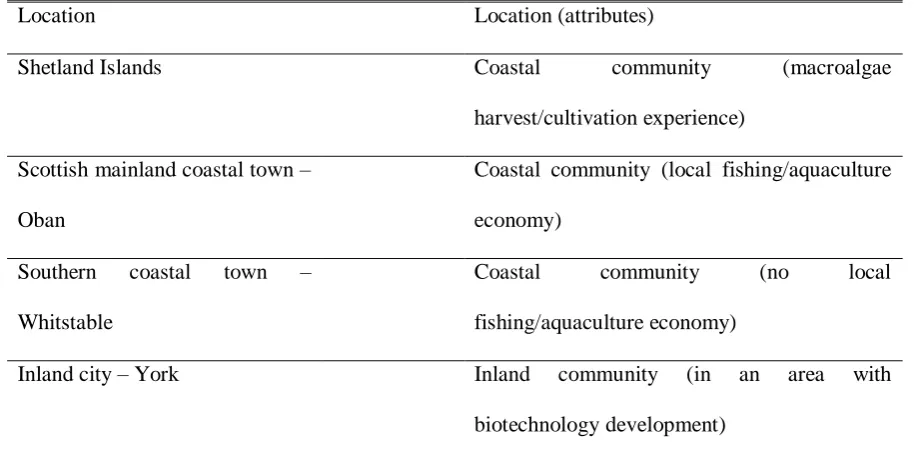
We held focus groups in four locations where seaweed cultivation and production could take place. We
selected these locations based on the following criteria: (1) proximity to the coast, where the need for
economic development is highlighted by the UK government’s Coastal Communities Fund (CCF); (2)
a history of fishing and aquaculture within the local economy; and/or (3) involvement with macroalgae
cultivation and harvesting. One focus group took place inland, where a bioeconomy cluster is already
in place. The groups were designed to capture a broad range of UK public perceptions while
investigating any variances between UK locations. This responded to comments that similar energy
projects may be evaluated differently depending on the unique characteristics of the community
(Perlaviciute et al., 2018), and that evaluations of changes to places are diverse (Devine-Wright and
Howes, 2010). In addition, rural or coastal communities may see large-scale energy infrastructure as
unwanted industrialisation, while it may overburden communities in locations that are already
developed (Perlaviciute et al., 2018). Table 2 details the locations.
Location Location (attributes)
Shetland Islands Coastal community (macroalgae
harvest/cultivation experience)
Scottish mainland coastal town –
Oban
Coastal community (local fishing/aquaculture
economy)
Southern coastal town –
Whitstable
Coastal community (no local
fishing/aquaculture economy)
Inland city – York Inland community (in an area with
[image:15.595.74.536.493.720.2]biotechnology development)
15
We recruited the focus-group participants through leaflet drops in the local area and advertising in local
newspapers. We had planned to hold two focus groups in each location, but recruitment was problematic
in one area; therefore, seven focus groups took place with 33 participants in total.
Using a two-part methodology, this concurrent mixed-methods study (Farquhar et al., 2011) attempts
to combine “evidence from a variety of sources that do not share the same weaknesses” (Craig et al.,
2008, p. 2). This comprehensive approach provides a diversity of viewpoints (Johnson and
Onwuegbuzie, 2004; Harrison and Reilly, 2011) and responds to comments that little
energy-infrastructure research has used mixed methods (Wiersma and Devine-Wright, 2014). For both
methods, the data analysis was driven by an etic approach (guided by previous literature and a PESTEL2
framework) and an emic approach (the situated knowledge of the participants) (Reinecke et al., 2016).
This enabled us to determine key themes in the data and remain open to factors specific to
seaweed-derived fuels.
4. Results and discussion
Several different issues were identified by the stakeholders and the public participants. We examined
the importance of each issue by considering the number of appearances in the transcripts and the length
of time for which it was discussed. Levels of knowledge about various issues differed significantly
among stakeholder groups, and even the commercial seaweed experts lacked knowledge of seaweed
biofuel-production techniques and the potential technological constraints. This supports James’ (2010)
finding that although technical studies and commercial interests exist, demonstration projects are
lacking and there are large knowledge gaps about the prospects of seaweed biofuels.
The following sections mirror the PESTEL framework. This type of strategic planning analysis
framework is vital in emerging industries and has been used to assess several energy sectors, including
liquid biofuels and bio-coal (Walsh, 2005; Talamini et al., 2013; Wang et al., 2014; Gegg and Wells,
2017). We begin with the technological issues, which are presented in the same order as the background
section, and end with the social issues.
16
All the stakeholders discussed the technological issues that they felt were pertinent, but their focus
depended on their expertise. Stakeholders with seaweed experience focused on cultivation and
harvesting, whereas those experienced in policy, biofuels and venture capital discussed the wider
constraints of gasification. Regarding cultivation and harvesting, there was a split between perceptions
of the readiness of the technology required. Respondent H was confident that the technology was ready
for large-scale seeding and mechanised harvesting, and that all issues have been solved:
… we have solved all of those! We are now working with the textiles industry to grow
seaweed on materials … Technically there is no issue.
However, the majority of the stakeholders mentioned technological issues that remained, which
supports previous research (Kraan, 2010; Dave et al., 2013; Msuya, 2013). They highlighted the
following concerns: the physical structures required for large-scale cultivation, particularly in deep
waters; cost-effective methodologies and economics of harvesting (due to high European Union (EU)
labour costs); and high depreciation costs of seaweed-cultivation machinery. They did not discuss the
current ban on mechanised harvesting (Roberts and Upham, 2012). Respondent B also noted the
weather challenges of upscaling:
The storms are absolutely unbelievable.
However, locations with less potential for weather damage could be chosen (Roberts and Upham, 2012).
Overall, most stakeholders highlighted that technological issues remain due to the lack of demonstration
facilities.
While we did not expect the general public to be technological experts in the field of seaweed-derived
biofuels, technological issues were discussed in the focus groups. Respondents were sceptical about the
strength of the equipment and whether an appropriate seaweed volume could be produced, which
mirrored the technological concerns of the stakeholders. This scepticism led respondents to question
whether it would be worth the effort to develop macroalgae biofuels rather than use more established
renewable technologies (which they were familiar with) or encourage behaviour change to reduce
17
I think it’s stupid. Biofuels are for cars and they are over 100 years old, and we are still
using it, normally there is nothing that we use for that long … It is old fashioned? It is now
stuck in this system. And now biofuels are prolonging it!
Given the doubt about the technological aspects, respondents were at best confused – “so it is rather
theoretical isn’t it … it’s confusing!” – and at worst felt that further development was not worth the
effort. Scepticism about new technologies has also been noted in consumer assessments of domestic
microgeneration (Watson et al., 2006).
4.2 Environmental issues
Perhaps surprisingly, environmental issues were not extensively discussed by the stakeholders.
Although they mentioned the uncertainty resulting from a lack of demonstration projects (especially on
seaweed, aquaculture and fishing), they focused on the potential benefits.
Conservation issues were raised by one respondent (C), but this was related to potential opposition by
the Inshore Fisheries Conservation Authority rather than MSACs (Roberts and Upham, 2012).
Stakeholders mentioned the environmental benefits from reducing emissions, but focused on the
benefits from cultivation. Algae’s ability as a nutrient filter in aquaculture featured prominently in the
interviews, which supports previous findings (Tsagkamilis et al., 2010). One stakeholder said:
Positive for us would be taking nutrients from the water. Not sure about the downsides, to
be honest. Anything to help take out nutrients is really good for us!
Although stakeholders considered the general environmental impact to be positive, they acknowledged
that large-scale testing and demonstration projects are needed urgently to assess environmental
problems (“we need to demonstrate the technology” – Respondent J) and noted that without this, the
industry was in danger of stagnating. This mirrors comments from the Department for Business, Energy
& Industrial Strategy (2018). The algae expert gave an example of a proposed joint tidal and seaweed
18
… someone wanted to put tidal barriers into the Wash and integrate macroalgae and other
stuff, and it was an SSI and had high bird populations etc. I think nobody really could give
them an accurate estimate of the environmental impact … good or bad and I think that that
was the main issue. With no data, it was very difficult for them to make a decision regarding
investments.
Unlike the stakeholders, the focus-group respondents discussed environmental issues extensively and
were extremely concerned about potential negative impacts on marine life. In Oban, these included
concerns about local wildlife: the respondents stated that seals were already being affected by the
aquaculture industry. A York respondent summarised these issues:
… what chemicals are you going to introduce to the environment to maximise growth or
minimise pests … what does it do to the other creatures that are there? Have many studies
been made about the flora and fauna that are native and the migration patterns and what
happens?
Respondents were also concerned about pollution from lost equipment and from plastic:
… the oceans are filling up with plastic and it’s getting worse and worse. This will add to
that problem.
Finally, many of the environmental concerns were related to the potential scale of cultivation and
harvesting, with more concerns about large-scale farms (e.g. several hundred hectares) than smaller
scale farms.
Overall, the responses from the stakeholders largely supported previous research, but the perceptions
and concerns among the general public have been highlighted here for the first time.
4.3 Economic issues
Several significant economic challenges to developing a macroalgae supply chain were identified by
the stakeholders. Cost uncertainty and the challenges of predicting costs were frequently cited as issues
19
seaweed cultivation. James (2010) notes that the highest area of cost would be associated with the
technical challenges of cultivation and harvest, and the stakeholders agreed: “The biggest cost is
probably the cultivation” (Respondent P). However, some respondents suggested that the technological
challenges have been overcome and that reasonable cost estimates should be available soon. Respondent
H noted:
Technically there is no issue. It’s purely financial at the moment.
Gasification costs were also considered to be uncertain,particularly when accounting for the capital
costs of the production facilities. Furthermore, because seaweed can also be used to produce high-value
items such as food, animal feed and chemicals (with high-value returns), the respondents questioned
whether low- or zero-value feedstocks (e.g. solid waste) would be better suited to biofuels and provide
a better economic return for producers. These points were noted by Adap+ (2013) and align with the
“cascading use of biomass” principle of realising one or more material uses before using the residual
biomass for other outputs such as energy (Keegan et al., 2013). However, this may lead to competition
for a biomass resource (Department for Business, Energy & Industrial Strategy, 2018). Several
stakeholders suggested that using waste residue from manufacturing high-value seaweed products
might be the best option and make biofuels from seaweed cost-effective. Indeed, they suggested that
the economic viability of a gasification facility would be unsustainable if the raw material had any cost.
Respondent H noted:
For us the economic driver is the chemicals that you can get out of the seaweed. That’s
what drives us. Let’s put it this way – if large-scale cultivation would really take off in the
next 10 years, which I think it will … then you will have a product which is left over which
could be used for biofuels.
Stakeholders also discussed the lack of private investment due to its high-risk nature, in alignment with
20
I’m being quite harsh but if you look at private-equity houses of a business typical
investment then you can always argue that the future is an educated guess, but this sort of
thing has no reference points in the past … so it will have a very high-risk premium. So it
is very difficult for investors to even contemplate …
Respondent S then went on to highlight that those who were likely to invest in seaweed biofuel
technology would already be highly knowledgeable about the industry and would probably be involved
in the seaweed industry or the aquaculture industry. Without concrete demonstrations of the whole
process, private-equity firms would be unlikely to invest in seaweed biofuels within the next 10 years,
so demonstration projects cannot rely on these firms for support.
As in other technologies, scaling up brings economic considerations. Stakeholders were confident that
seaweed cultivation could provide large volumes of biomass in the UK: “Of course [we can produce
that much] – yes we can, but give us the space and the licence to do it!” (Respondent H). Supporting
the literature (Chanthawong and Dhakal, 2016), the stakeholders felt that Scotland was a promising
region. One respondent said:
In theory there is adequate water in Scotland [for mass seaweed cultivation for biofuels],
in other parts of the UK there is too much coastal activity and there is too much risk from
excessive weather, etc.
However, stakeholders also noted a lack of interest from the biofuel industry:
the biofuel industry often say, if you have a new feedstock, we need over 100,000 tonnes
on a yearly basis to run a proper biorefinery – but we [the seaweed cultivators] have to
stand with our hands in the air and say we can only produce 40 tonnes at the moment.
Partnerships with aquaculture and potential to generate high profits were mentioned by stakeholders in
the seaweed and fishing industry. As noted in the environmental section, nutrient-cleaning benefits the
21
previously attempted (but failed) to produce seaweed with fin fish to increase the sustainability of the
product:
We wanted to look at a seaweed site and to market the seaweed for food. Mainly the drivers
were environmental and marketing as well, selling the seaweed alongside the product. They
were trying to make a difference to the environment and asked for a premium for the
product. Mainly from the nitrogen uptake. I think that was a key thing – being able to sell
the product at a slight premium.
Many focus-group participants were sceptical about the potential profitability of the industry: biofuels
and more broadly. One respondent spoke of his disdain for renewable energy projects:
… Google were investing in a technology to make a renewable form of energy that would
be cheaper than coal … However, after four years the project was canned, it failed. Big
fail, not little fail. Failed! Impossible, it can’t be cheaper, people are going to continue
using coal … All this is stuff is great for creating jobs, great, but the stuff you get from
the end of it is … crap.
Participants in coastal locations also discussed job creation, which may be expected due to the lower
employment rates in these communities (Depledge et al., 2017). In Shetland, however, participants did
not feel that job creation would be useful: there is already almost full employment, and the seasonal
nature of the jobs created by farming would not be attractive. In the mainland coastal towns there were
concerns about the seasonal nature of jobs, workers being brought in to fill posts, the availability of the
necessary skills and housing new workers. One respondent commented:
… seasonal workers as quite disruptive, they generate short-term needs, that means people
don’t want to invest to meet those needs, like accommodation etc., this is an expensive area
to live. We don’t have large amounts of short-term reasonably priced accommodation to
22
Overall, the focus-group respondents did not perceive the same economic benefits that aided the
acceptability of other types of renewable development (Wiersma and Devine-Wright, 2014).
4.4 Political and legal issues
These issues were discussed alongside the economic issues, so they were mentioned briefly in the
previous section. Policy and aquaculture legislation were the two main issues for the stakeholders.
Many stakeholders felt that the policy framework was inadequate in the UK. They suggested that
without strong policy support from government, investment would not take place because of the
significant cost of developing biofuels:
… if you’re going to produce aviation biofuels without any form of policy support, it has
to be cost competitive. The carbon price is totally not there to support aviation biofuels.
There has been very little moving on integrating aviation into biofuel policy.
Policy support was considered to be particularly lacking for seaweed, with the lack of stability
discouraging investment and pushing seaweed towards high-value products rather than biofuels (Wells
et al., 2013). However, the stakeholders also acknowledged that this was an issue not just for seaweed
or even biofuels, but for the wider renewables landscape:
I think the whole renewable policy framework for renewables in in disarray at the moment.
I think it has been a political football, and so the whole thing is largely uniformed and
certainly not clear.
Regarding competition for seaweed from high-value products, the food industry was seen much more
positively. A respondent from the industry mentioned that the Scottish Association for Marine Science
(SAMS) is a major driver for UK seaweed cultivation. Respondent P stated that SAMS is working with
the seaweed sector on government interests and Respondent O stated:
… [with SAMS] we are headed in the right direction. We had a visit from ministerial and
government legislators. So, at government ministerial level there is interest but that has yet
23
Furthermore, Respondent O spoke positively about work being done by the UK government and the
seaweed industry to develop the seaweed food industry in the UK:
… we have just started the Scottish Seaweed Association, to bring together various
stakeholders together with government and it is very much in its infancy … Certainly, in
terms of long-term food policy macroalgae has been identified by the UK government.
Other stakeholders also felt that policy direction in the UK did not suit the development of
gasification/drop-in diesel biofuels. A policy stakeholder who chose not to take part in the interviews
commented, by e-mail, on a preference for biomethane rather than synthetic diesel mainly to reduce
particulates.
Stakeholders made some positive comments about the relatively progressive licensing framework for
seaweed in the UK. This was complemented by positive perceptions of the Crown Estate and its active
licensing for UK seaweed cultivation:
We have a pretty progressive framework that already allows seaweed cultivation in the UK.
You need policy and regularity processes in place before you can put the stuff at sea. … In
the UK we already have it. And in Scotland we have a draft plan for the cultivation of
seaweed at the government level.
While the Crown Estate is active in licensing seaweed cultivation, it is not open to all end-product
generation (in particular, gasification/drop-in diesel). When questioned further, the respondents made
comments that were less positive. Respondent O noted:
… legislation is challenging – if you look at current legislation you can only grow in
certain areas with a certain distance from the other aquaculture sites because of fear of
viral transmission and things. These things need to be adjusted [for large-scale
cultivation].
The stakeholders discussed whether challenges in aquaculture legislation stem from a lack of
24
(Wood et al., 2017). For example, rules about distances between aquaculture sites exist to reduce the
spread of disease, but this may not apply to seaweed. Respondents gave examples of other countries
where the rules have been relaxed. For example:
… now Canada have already done this where you can grow seaweed within 10 metres of a
salmon farm, so they can take up the nutrient there. Which could be beneficial. It also grows
faster. So, these little things need to be solved.
The stakeholders felt that larger demonstration projects would not happen without relaxing certain rules,
increasing knowledge and introducing seaweed-specific legislation. As summarised by Respondent R:
… the licences fall under aquaculture, so people don’t really know what to do with it. I
would say that if there was a specific driver or incentives, it would maybe accelerate
change, but as it is, people that have to navigate this patchwork of regulations …
In the focus groups, the respondents felt that renewable energy in the UK was inadequate and they
would support government or tax incentives to boost renewables. However, they did not feel that there
was enough information to make an informed choice about seaweed biofuels. While they valued having
a mix of energy sources, they felt that if one was not economically viable or a good long-term plan, it
should not join the mix. One respondent noted:
Well, it’s about the [energy] mix isn’t it. And you have to do the sums. Having a pragmatic
approach and also looking at what’s happening and what legacy you’re going to leave.
Discussions about policy often turned to the benefits of behaviour change versus investment in
renewables. Indeed, apart from the Shetland focus group, behaviour change was key. In the inland focus
group, one respondent noted:
A lot more can be done very easily … one of the discussions I have with lots of people is
that we could easily, right here now … tomorrow! … we could reduce our fuel consumption
on the roads by a third by restricting the speed limit to 55. The fuel consumption rises
25
you could do that tomorrow morning by creating a speed limit and enforcing it. You reduce
the fuel consumption down by a third!
This was supported by a respondent in the Oban focus group, who noted:
I just did a driver fuel-efficiency course and I’m what I thought was an efficient driver and
even I gained 10% … everyone who drives should do the course … we could achieve the
same savings [as using seaweed biofuels].
Overall, the respondents felt that more needs to be done in the UK to provide renewables, which may
include seaweed biofuels. Behaviour change was highly valued as a way to tackle climate change and
energy-security issues, and respondents noted this should be considered with all options, especially if
new technologies (such as seaweed biofuel) are untested.
4.5 Social issues
Marine-user conflicts were highlighted by several stakeholders, in particular in the context of
near-shore cultivation. Respondent F explained:
Yeah, it’s a coastal zone management problem … if you overlay onto all other activities
which are already going on in the coastal zone – growing macroalgae for biofuels … you’ll
have people [other marine users] reaching for their revolvers.
Although stakeholders discussed offshore sites as a potential solution, they suggested that these sites
lack the nutrients required for optimum growth.
Because of the potential benefits of nutrient uptake, aquaculture companies in Shetland were less
concerned about marine-user conflicts and felt that there was room for seaweed cultivation:
From our point of view, I don’t think there would be conflict of interest at all, but saying
that, if they were going to go close to one of the sites that we would like to expand into,
26
Stakeholders were concerned about conflict with fishing in inshore waters. They felt that conflicts could
be prevented with careful planning but further knowledge was needed:
I think the initial reaction would be negative [from fishermen and trawlers]. They would
say there is enough development already. The area they can fish in already is quite
circumscribed. And the threat really is that it could become more circumscribed because
the government already have plans to do things with wind turbines and things like that …
But then again, there are large areas of sea which you can’t fish in because they are closed
areas and there are lots of areas which are unsuitable for fishing because of the sea floor…..
In the focus groups, the main concern was the potential visual impacts of large-scale cultivation,which
supports previous work on renewable-energy infrastructure (Wiersma and Devine-Wright, 2014). The
level of concern varied by geographical region and scale of development. Small-scale production was
received fairly positively, but large-scale production caused a much more negative reaction.
Respondents in coastal communities (except Shetland) were very concerned about the visual impact,
supporting research on wind turbines (Firestone et al., 2012). One respondent said:
I think for most people that live in places like this, I can’t speak for most people, but I think
that that would be visually unacceptable for most people, it’s got to be far enough out to
not be intrusive.
Respondents in these communities were worried that the expansion could get out of control, especially
alongside other aquaculture:
… we moved up here because we love the area [western Scotland] and were glad to get out
of the rat race, but it seems like it might follow us. It’s not really the visual impact so much
because they don’t look that bad, but it’s never controlled.
However, in the York and Shetland groups there was much less concern about visual impact. In York,
this may be because most residents are not regularly close to the sea; previous work suggests that those
Devine-27
Wright, 2014). In the Shetland group, the lack of concern appeared to relate to their often daily
interactions with aquaculture, the fishing industry and similar structures. This supports work on wind
turbines, which found that familiarity and proximity are key drivers for acceptance (Haggett, 2011;
Bidwell, 2013). Drawing on place theory, because these communities are familiar with marine
infrastructure, there is a positive symbolic fit between the place and the development; it fits the character
of the area, as seen in studies on some tidal projects (Devine-Wright, 2011a, 2011b, 2012).
Other concerns about visual impact included the size and location of biofuel plant facilities and the
location of silage depots. Respondents also mentioned that the smell of seaweed in summer could be a
big issue for seaside towns. One respondent said:
… it’s the inland processing that worries me, it doesn’t look particularly attractive. But as
everybody said, you also have the road issues and do you want lorryloads of raw seaweed
coming through the town, and trust me if you live here in the summer, the seaweed
absolutely stinks, it is very unpleasant.
Interestingly, there was very little concern overall about ensiling the seaweed in depots or silage
materials. The subject of silage was generally well received by the respondents, possibly because they
had already seen silage depots dedicated to land-based farming. Drawing on place theory, there is a
natural fit between these new developments and current land uses. Furthermore, in Shetland the impact
of the on-land infrastructure was seen as positive. The prospect of regular work in silage, biofuel
processing or logistics outweighed any negatives.
Respondents also drew attention to potential impacts on local infrastructure; in particular, disruption on
public roads. One respondent with planning experience explained that a dramatic increase in haulage
could be a problem:
I don’t think this would even get though planning in Kent… It would almost certainly be
28
This supports the work of Roberts and Upham (2012) and is potentially similar to work on shale gas,
which highlights impacts such as increased congestion, deterioration of roads, threats to drivers posed
by increased volume, and maintenance costs (Anderson and Theodori, 2009; Kargbo et al., 2010). In
some places this has led to regulation, via fees, for heavy trucks (Rahm et al., 2015).
Distributional justice, procedural justice and trust, which were deemed important in previous work (Hall
et al., 2013), were not important factors for the participants. This may be because the developments
were hypothetical, not actual.
5. Conclusions and policy implications
The discussion highlights several important aspects for stakeholders and the general public with regard
to developing macroalgal biofuels. These support and extend earlier work on macroalgal biofuels,
biofuels and renewable technologies more broadly. From a technological perspective, while the
processes needed are feasible, particularly with experience gained from the aquaculture industry,
scaling up is still required to be certain of its potential and develop a sustainable harvesting policy
(Roberts and Upham, 2012). From an environmental perspective, stakeholders saw nutrient-filtering as
a benefit, but the general public were concerned about sea waste, rubbish and impacts on wildlife. From
an economic perspective, there was concern about cost uncertainty (related to technological aspects)
and competition with high-value products for seaweed. It looks likely that for now, seaweed will be
sold into the growing high-value markets for food, pharmaceuticals and animal feed. If this market is
developed on a large scale, there may be scope to use waste residues for biofuels. The general public
were positive about local employment and wider energy-security benefits, which supports the
suggestion that individuals are more likely to support a project when they see societal benefits
(Perlaviciute et al., 2018). However, they did not see particularly strong benefits, which may affect
future acceptance. Overall, stakeholders perceived the regulatory framework for seaweed farming and
producing macroalgal biofuels as relatively open, but they felt that policy support, which would be key
to successful development, was inadequate. The public supported renewables in general, but they felt
29
suggests that these developments are more readily accepted when accompanied by a coherent
environmental policy (Wiersma and Devine-Wright, 2014); therefore, the interplay between policy and
public acceptance should not be ignored. Many of the public respondents mentioned behaviour change
as potentially more important, highlighting a policy link with the Behavioural Insights Team
(www.behaviouralinsights.co.uk). Finally, from a social perspective, both groups highlighted potential
marine-user conflicts. For the public, these depended on location and familiarity, as is the case for
offshore wind (Haggett, 2011; Firestone et al., 2012). Applying place theory, in particular the fit
between the development and the place, the findings supported the prior literature (Devine-Wright
2011b). This suggests that widespread demonstrations (such as those seen for hydraulic fracturing)
would be unlikely, but local opposition is possible and should be tackled proactively (Perlaviciute et
al., 2018).
While this work broadly supports stakeholder issues noted by previous research, the key contribution
here is understanding social opposition, resistance and potential support. These issues are vital for future
development and moving through the stages of the FSRL (Steiner et al., 2012). Firstly, the foci differed
between the stakeholders and the public, and even between different stakeholders. These differences
should be considered in order to enable mutually beneficial two-way communication and knowledge
transfer between those involved (Ramachandran, 2012). Furthermore, involving NGOs and the public
through relationship-focused management at an early stage considerably increases societal acceptance
(Gold, 2011). This must involve the highest level of public engagement: a two-way exchange of
information that may transform opinions on both sides (Devine-Wright, 2011b). Secondly, given the
mixed responses to macroalgae as a biofuel among the public (and, in some cases, stakeholders),
policy-makers need to question whether the public will react positively to uncertain and (in their eyes) marginal
gains from the further development of potentially peripheral offerings. The energy mix, biofuels as part
of a diverse portfolio of renewable energy sources (Koh and Ghazoul, 2008) and energy security may
be more important to the public. Participants in this study were more likely to support established
renewable technologies and were more in favour of behaviour-change interventions overall. However,
30
(Zhao, 2017), if government policy supports any bio-derived fuel (regardless of source material) it must
highlight this reliance, which cannot be met through electrification and the technologies that
focus-group respondents appeared to support. This current reliance, and therefore the mix of technologies
needed, is a key message that must be communicated clearly alongside the government’s plan to shift
most new cars and vans to zero emissions by 2040 (Defra/DfT, 2017). Thirdly, this public and
stakeholder support was uncertain largely because the relevant technologies have not yet been scaled
up enough to provide a deep understanding of the technological, cost and visual implications.
The only way to provide a clear view of the potential for macroalgal-derived fuels, and to allow
appropriate development, is to scale up and provide demonstration projects with policy support. Given
the level of uncertainty, this is very unlikely to be funded by private investors, who would need
longer-term consistent and transparent policy commitments to be sure of returns (Lah, 2017, Department for
Business, Energy & Industrial Strategy, 2018). Therefore, government investment is needed: directly,
through universities or via other funding methods. These types of capital grants (with repayment) can
complement subsidies or other supporting policies (Leach et al., 2011). Further investment in the UK
Future Fuels for Flight and Freight Competition, launched in 2017, may begin to fill this gap, but is
unlikely to provide enough funding for capital infrastructure. Only stable long-term policy, which is
transparent and consistent and stays in place for a significant period of time to allow stability and
sustainable technical development will result in investment (Wells et al, 2013; Chanthawong and
Dhakal, 2016); political uncertainty increases perceptions of risk in a project (Leach et al., 2011). Any
subsidies for this technology, versus alternative technologies, need to be defined and committed to.
Investment in large-scale cultivation and harvesting would also benefit the wider aquaculture industries
and increase potential demand for high-value products such as food; however, as noted by Chanthawong
and Dhakal (2016), any policy should try to balance biofuel feedstock use in the food and energy
industries. This type of symbiotic relationship, through co-location or efficient feedstock use, might
attract private investment if marine policy is developed to further support this alongside existing
aquaculture. Czyrnek-Delêtre et al (2017) note benefits of co-location with salmon farming while
31
should “focus on the areas where it can have the most impact in convincing investors to put their own
capital at risk” (Leach et al., 2011, p. 4015), and subsidies or public funds should be used to encourage
private R&D investment (Jamasb and Pollitt, 2015). Balanced policies that combine measures that result
in larger synergistic effects are likely to have the greatest effect overall (Lah, 2017). Policy could also
incentivise links between aquaculture and biofuels by encouraging cooperation and coordination in the
supply chain (Gold, 2011). Finally, if policy supports the development of aquaculture and
demonstration facilities, the benefits and reasoning must be communicated clearly to the public early
in the planning stage to avoid resistance (Ramachandran, 2012).
5.1 Limitations
One limitation of this work is that key stakeholders may not have been included. While we made every
attempt to include all relevant stakeholders, the full supply chain is complex and a vital opinion may
have been missed. The Crown Estate’s refusal to take part meant that an important voice was not
considered. Although the Crown Estate is not in favour of drop-in diesel, this study has provided
perceptions of seaweed farming, ensilage, gasification and drop-in diesel that are useful for the supply
chain for this process and for organisations producing non-biofuel seaweed products (e.g. cosmetics)
and biofuels using other feedstocks. An international perspective would also be useful, given that
aviation fuels are a global commodity and any new fuel may need approval from multiple governments.
In addition, although the focus groups were representative, a wider selection of participants might have
led to different issues being raised and some key issues might have been missed. Because the
participants had little knowledge of seaweed-derived fuels, the issues raised may have been influenced
by the methodology; therefore, future work should seek to collaborate these findings.
5.2 Future research
From a stakeholder perspective, the supply chain will continue to evolve as technology and processes
develop, so future work must involve any new stakeholders and include those whom it was not possible
to include here. From a public perspective, the next logical step is to use a more representative sample