Tansley review
Unity in diversity: structural and functional
insights into the ancient partnerships between
plants and fungi
Author for correspondence: Katie J. Field
Tel: +44 0113 3432849 Email: [email protected] Received:17 December 2017 Accepted:6 March 2018
Katie J. Field
1and Silvia Pressel
21Centre for Plant Sciences, School of Biology, Faculty of Biological Sciences, University of Leeds, Leeds, LS2 9JT, UK;2Department of
Life Sciences, Natural History Museum, Cromwell Road, London, SW7 5BD, UK
Contents
Summary 996
I. Introduction 996
II. An ancient, and diverse, symbiosis 998
III. Structural diversity in ancient plant–fungal partnerships 1000
IV. Mycorrhizal unity in host plant nutrition 1002
V. Plant-to-fungus carbon transfer 1003
VI. From individuals to networks 1003
VII. Diverse responses of mycorrhizal functioning to dynamic
environments 1006
VIII. Summary of future research direction 1007
Acknowledgements 1006
References 1006
New Phytologist(2018)220:996–1011 doi: 10.1111/nph.15158
Key words: carbon-for-nutrient exchange, diversity, evolution, fungi, Glomeromycotina, Mucoromycotina, mycorrhiza, symbiosis.
Summary
Mycorrhizal symbiosis is an ancient and widespread mutualism between plants and fungi that facilitated plant terrestrialisation>500 million years ago, with key roles in ecosystem functioning at multiple scales. Central to the symbiosis is the bidirectional exchange of plant-fixed carbon for fungal-acquired nutrients. Within this unifying role of mycorrhizas, considerable diversity in structure and function reflects the diversity of the partners involved. Early diverging plants form mutualisms not only with arbuscular mycorrhizal Glomeromycotina fungi, but also with poorly characterised Mucoromycotina, which may also colonise the roots of ‘higher’ plants as fine root endophytes. Functional diversity in these symbioses depends on both fungal and plant life histories and is influenced by the environment. Recent studies have highlighted the roles of lipids/fatty acids in plant-to-fungus carbon transport and potential contributions of Glom-eromycotina fungi to plant nitrogen nutrition. Together with emerging appreciation of mycorrhizal networks as multi-species resource-sharing systems, these insights are broadening our views on mycorrhizas and their roles in nutrient cycling. It is crucial that the diverse array of biotic and abiotic factors that together shape the dynamics of carbon-for-nutrient exchange between plants and fungi are integrated, in addition to embracing the unfolding and potentially key role of Mucoromycotina fungi in these processes.
I. Introduction
The evolution of symbiosis, ‘the living together of unlike organisms’ (de Bary, 1879), has been central to the evolution of
subphyla Glomeromycotina and Mucoromycotina (Bidartondo
et al., 2011; Spataforaet al., 2016), as well as the ‘higher’ fungal phyla Basidiomycota and Ascomycota (Smith & Read, 2008). These fungi form intimate, usually mutualistic symbioses known as mycorrhizas or mycorrhiza-like in nonvascular plants lacking true roots (Read et al., 2000), where mutualism is defined as being characterised by the bidirectional exchange of resources between partners to their mutual fitness benefit (Raven & Allen, 2003).
Mycorrhizal partnerships are thought to play a key role in the global carbon (C) cycle, through the allocation of photosynthet-ically fixed host plant C to fungal symbionts (van der Heijdenet al., 2015) and by affecting soil C sequestration processes (Soudzilovskaia et al., 2015). It is estimated that plants direct generally 10–20% and up to 50% of their photosynthates to their fungi, with ecosystem C cycling and storage being strongly influenced by the predominant mycorrhizal type of the ecosystem (Averill et al., 2014; Soudzilovskaia et al., 2015). In return, mycorrhizal fungi may provide host plants with up to 80% of their phosphorus (P) requirements (van der Heijdenet al., 2017) while also making significant contributions towards plant nitrogen (N) and micronutrient needs (Smith & Read, 2008). Mycorrhizas are often defined by their structural characteristics, with ectomy-corrhizal fungi (ECMF) growing within the apoplast between host cells, while endomycorrhizal fungi, including arbuscular, ericoid and orchid mycorrhiza-forming groups, penetrate the host plant cell wall, forming complex intracellular fungal structures such as arbuscules, hyphal coils and hyphal pelotons (Brundrett & Tedersoo, 2018; Fig. 1).
The most widespread (c. 74% of all plant species) association involves arbuscular mycorrhiza-forming fungi of the Glomeromy-cotina (AMF) (van der Heijdenet al., 2015) with other types of mycorrhizas (ectomycorrhizas, ericoid and orchid mycorrhizas) formed by later diverging Basidiomycota or Ascomycota fungi through multiple independent conversions of AM (Wang & Qiu, 2006). Several plant families or species within mycorrhizal families have lost, independently, their ability to form mycorrhizal associations (nonmycorrhizal (NM)) (Wang & Qiu, 2006). NM plants fall broadly into two categories: those with alternative
nutritional strategies (e.g. parasitism, carnivory, specialised roots for phosphorous (P)-mining such as cluster roots) and those from habitats nonconducive to mycorrhizas (e.g. epiphytic, aquatic, heavily disturbed habitats) (Brundrett, 2009). The lack of mycor-rhiza-like associations in mosses, an entire clade (Pressel et al., 2010), remains somewhat puzzling. It has been proposed that their multicellular rhizoids with terminal ramifications of 2lm in diameter might afford similar nutritional advantages to mycor-rhizas (Fieldet al., 2015a). Mycoheterotrophy, whereby achloro-phyllous, nonphotosynthetic, plants gain organic carbon and other essential elements from their fungi, is also considered a derived condition that evolved independently over 40 times within plant lineages (Leake, 1994; Wang & Qiu, 2006; Merckxet al., 2009). Glomeromycotina are aseptate, filamentous fungi (Spataforaet al., 2016) which occur almost ubiquitously in clades across the land plant phylogeny. Their presence in all early diverging lineages of major clades of land plants supports arbuscular mycorrhizas as the ancestral type (Wang & Qiu, 2006). These obligately biotrophic fungi form characteristic intracellular structures within the host plant roots including highly branched, tree-like arbuscules in
Arum-type colonisations that give them their common name of arbuscular mycorrhizal fungi, tightly wound hyphal coils (inParis -type colonisations), vesicles and intercellular hyphae (Fig. 1). In plants without roots (i.e. the bryophytes: hornworts and liverworts) AMF tend to inhabit a distinct region within the thallus from which the rhizoids develop and form both arbuscules and coils alongside vesicles and strictly intracellular hyphae (Ligrone et al., 2007; Presselet al., 2010).
Recent discoveries are now revealing a hitherto unappreciated role of facultative saprotrophic Mucoromycotina fungi in myc-orrhizal and mycorrhiza-like associations with early diverging land plant clades (Bidartondo et al., 2011; Field et al., 2015b), potentially extending to angiosperms (Orchard et al., 2017a,b; Hoystedet al., 2018). Such discoveries are now questioning, for the first time, the paradigm of AM as the ancestral type. Others are challenging our notion of AMF: their potential, and so far largely ignored, role in plant host nitrogen nutrition (e.g. Thirkell
et al., 2016) and how the AM symbiosis is better considered as a many-to-many interaction rather than a one-to-one, wherein fungi and plant partners form complex networks through which resources are shared (Leakeet al., 2004; Selosseet al., 2006; van der Heijdenet al., 2015). These findings have potentially major implications for further understanding the origin and roles of mycorrhizal symbiosis in shaping terrestrial ecosystems – past, present and future.
This review aims to explore the considerable diversity in structure, function and response to environmental variables that exists within the unifying role of different mycorrhiza-forming fungi in C-for-nutrient exchange with plant partners. We will focus in particular on the mycorrhizal and mycorrhiza-like associations formed by plants with Glomeromycotina and Mucoromycotina fungi within the ancient phylum Mucoromycota and on how the latest research on these partnerships is leading the way to a paradigm-shifting view on the origin, evolution, and past and future responses to the environment of this key symbiosis between plants and fungi. Along the way, we identify current challenges and
A V
V A
[image:2.595.41.286.541.674.2]potential exciting new avenues of investigation emerging from these latest developments in mycorrhizal research.
II. An ancient, and diverse, symbiosis
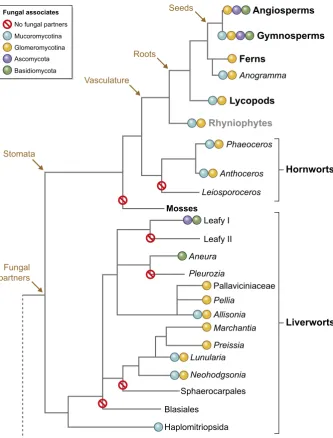
The prevalence of mycorrhiza-like and mycorrhizal associations in the earliest diverging clades of land plants points towards plant– fungal mutualisms having ancient origins with potentially critical significance in the initial establishment of a land flora>500 million yr ago (Ma). In early diverging thalloid liverworts (Marchantiop-sida (Complex thalloid) and Pellidae (Simple thalloid I), glom-eromycotean fungal associates take on a Paris-type colonisation pattern, producing arbuscules and vesicles with large, colonising hyphae spreading from cell to cell (Fig. 2). Fungal colonisation occupies taxon-specific zones within the thallus, with the fungus gaining access to the plant tissue via rhizoids, specifically the smooth rhizoids in Marchantiopsida (Presselet al., 2010). In the more derived leafy liverworts (Jungermanniales), mutualistic associations with Ascomycota fungi are widespread (including
Pezoloma ericae (D.J. Read) Baral & Kreiglsteiner, 2006 (syn.
Rhizoscyphus ericae(D.J. Read);Hymenoscyphus ericae(D.J. Read);
Pezizella ericae (D.J. Read); the same mycobiont as in ericoid mycorrhizas (Kowalet al., 2018)). These fungi colonise rhizoids, inducing swelling of their tips, and form dense hyphal coils and, in many taxa, penetrate the host stems (Pressel et al., 2008, 2010; Kowal et al., 2016; Upson et al., 2007; Fig. 2). Fewer leafy liverworts associate with Basidiomycota fungi, predominantly with members of theSebacina vermiferaspecies complex (Pressel
et al., 2010, and references therein) whilst the Aneuraceae, the only thalloid family with basidiomycetous endophytes, harbour prefer-entially members of the genusTulasnella(Bidartondoet al., 2003; Kottke et al., 2003; Fig. 2). Therefore, fungal diversity in liver-wort–fungus associations parallels that in ‘higher’ vascular plant– fungus symbioses (Presselet al., 2010; Fieldet al., 2015a).
Recently, it has been shown that several extant, early diverging land plant clades are also colonised by members of the poorly characterised fungal subphylum Mucoromycotina, within Mucoromycota (Spataforaet al., 2016). Thus, the earliest diverging Haplomitriopsida liverworts (TreubiaandHaplomitrium) associate exclusively with Mucoromycotina fungi (Bidartondoet al., 2011; Fig. 2), whilst several thalloid liverworts form partnerships with both mucoromycotean and glomeromycotean mycobionts, some-times harbouring both fungi simultaneously (Fieldet al., 2016a). These liverwort–Mucoromycotina associations are nutritionally mutualistic (Field et al., 2016a) and therefore represent mycor-rhiza-like symbioses. The occurrence of both fungi, either singly or in simultaneous ‘dual colonisations’, has also been observed throughout the hornworts (Desiroet al., 2013) and the lycopods (Rimington et al., 2015) and in one fern genus, Anogramma
(Bidartondo et al., 2011; Fig. 2). However, their mutualistic, mycorrhizal nature in these lineages remains to be established and is the subject of current investigations.
The first plants to colonise Earth’s terrestrial land masses faced significant abiotic challenges. The biological soil crust (Edwards
et al., 2015) onto which the earliest bryophyte-like (Wellmanet al., 2003), rootless plants (Kenrick & Strullu-Derrien, 2014) first
emerged was probably scarce in plant-accessible mineral nutrients and atmospheric CO2concentrations were very high compared to
those of today (Berner, 2006; Millset al., 2018). However, long before the migration of plants onto Earth’s terrestrial surfaces, the land masses were probably colonised by diverse microbes including fungi (Blair, 2009; Berbee et al., 2017). A major evolutionary hypothesis posits that the formation of mutually beneficial partnerships between ancient plants and fungi was key to the establishment and evolutionary success of the terrestrial flora (Nicolson, 1967; Pirozynski & Malloch, 1975; Kringset al., 2012). It has been proposed that these arbuscular mycorrhiza-like associations provided the earliest embryophytes with access to growth-essential nutrients, such as P (Pirozynski & Malloch, 1975), from skeletal mineral soils in exchange for plant-fixed organic carbon-based compounds (see Jianget al., 2017; Keymer
et al., 2017) in much the same way as the vast majority of land plants interact with their fungal symbionts today.
Strong support for this hypothesis was first provided by compelling evidence from fossil ecosystems, such as the Rhynie Chert, showing beautifully preserved fungal structures including arbuscule-like structures (Remyet al., 1994; Tayloret al., 1995), vesicles (Taylor et al., 1995), and even spores and germination shields (Dotzleret al., 2006) within the cells of ancient land plants– all remarkably similar to the fungal structures characteristic of extant arbuscular mycorrhizal associations (Smith & Read, 2008). Based on the striking structural homology between ancient, fossilised plant–fungus interactions and modern plant– Glom-eromycotina partnerships, it was concluded that members of this fungal sub-phylum were probably involved in the ancestral plant– fungus symbiosis (Remyet al., 1994; Tayloret al., 1995). Subse-quently, further corroborating evidence was provided by molecular, physiological and cytological studies. These established: (1) that the divergence dates of Glomeromycotina fungi fit within the timeframe of plant terrestrialisation (Simon et al., 1993; Redeckeret al., 2000; Blair, 2009; Berbeeet al., 2017); and (2) that Glomeromycotina fungal associations present in extant early diverging lineages of land plants, that is liverworts (Presselet al., 2010) and ferns (Fieldet al., 2012, 2015c; Presselet al., 2016), are nutritional mutualisms, although they provide greater nutrient returns to nonvascular liverworts compared with vascular ferns when grown under simulated Palaeozoic CO2-rich atmospheres
(Fieldet al., 2012). Other studies examining fitness and produc-tivity in liverworts with Glomeromycotina fungal associates have demonstrated clear benefits to the plants in terms of growth, asexual reproduction and photosynthetic output by associating with Glomeromycotina fungal partners (Humphreys et al., 2010). Indeed, not only are the genes and biochemical pathways necessary for the formation and maintenance of symbiotic fungal associa-tions–the symbiotic ‘toolkit’–ubiquitous across the entire land plant phylogeny (Wanget al., 2010; Delauxet al., 2013; Oldroyd, 2013), this being strongly indicative of vertical inheritance from the earliest land plants, but also components of this ‘toolkit’ have been shown to be present within ancestral lineages of charophytic algae (Delauxet al., 2015).
has been challenged by the discovery that partially saprotrophic Mucoromycotina fungi, rather than Glomeromycotina, engage in nutritionally mutualistic partnerships with the earliest diverging Haplomitriopsida liverworts (Bidartondoet al., 2011; Fieldet al., 2015b; Fig. 2). Additionally, members of both fungal sub-phyla appear to form mutualistic mycorrhiza-like associations with early diverging simple and complex thalloid liverworts (Bidartondo
et al., 2011; Field et al., 2015b) and are also widespread in hornworts and lycopods (Desiro et al., 2013; Rimington et al., 2015), although their functioning in early diverging vascular plant lineages is yet to be determined. The presence of Mucoromycotina fungi in early diverging land plant clades and resolution of Glomeromycotina as more closely related to Dikarya (Ascomycota and Basidiomycota) than Mucoromycotina (Sch€ußleret al., 2001; Jameset al., 2006; Bidartondoet al., 2011) points to Mucoromy-cotina as the more likely symbionts involved in facilitating plant
terrestrialisation (Feijen et al., 2017) during the Ordovician (Edwardset al., 2014; Morriset al., 2018). However, other studies have presented contrasting topologies in which Glomeromycotina pre-date Mucoromycotina and are, possibly, the earliest diverging lineage of the Mucoromycota (Changet al., 2015; Spataforaet al., 2016; Uehlinget al., 2017). Considerable uncertainties also remain regarding the timing of the divergence of Mucoromycota, hitherto estimated to pre-date the origin of land plants by some 100 million yr (Berbeeet al., 2017) and of the emergence of embryophytes, with latest estimates placing this major event earlier than generally assumed, in a middle Cambrian–Early Ordovician interval (Morris
et al., 2018). Given these large uncertainties, four evolutionary scenarios remain probable: (1) Glomeromycotina as the ancestral type (Mondo et al., 2012; Chang et al., 2015; Spatafora et al., 2016); (2) Mucoromycotina as the ancestral type (Bidartondo
et al., 2011; Fieldet al., 2015b); (3) dual colonisations involving
Charophytes Haplomitriopsida Blasiales
Sphaerocarpales
Neohodgsonia Lunularia
Preissia Marchantia Allisonia Pellia
Pallaviciniaceae
Pleurozia Aneura
Leafy I
Leafy II Mosses
Phaeoceros
Anthoceros
Leiosporoceros Rhyniophytes
Lycopods
Anogramma
Ferns
Gymnosperms Angiosperms
Liverworts Hornworts
Seeds
Roots
Vasculature
Fungal partners Stomata
No fungal partners
Mucoromycotina Glomeromycotina
Basidiomycota Ascomycota
Fungal associates
[image:4.595.39.373.60.499.2]both fungal subphyla as the ancestral type (Rimingtonet al., 2015; Field et al., 2016a); and (4) symbiotic interactions between the common ancestor of Mucoromycota and early land plants, or even their algal ancestors (Selosse & Strullu-Derrien, 2015; Feijenet al., 2017).
In line with the general trend for greater emphasis to be placed on examination of the rhizosphere depicted in Rhynie Chert fossils (Taylor et al., 2003; Kringset al., 2012) and with reports of mucoromycotean fungal symbionts in liverworts (Bidartondo
et al., 2011), re-examination of Rhynie fossils has revealed a potentially greater diversity of fungi forming symbioses with early plants than was previously thought (Strullu-Derrien et al., 2014). Analysis of the Rhynie Chert fossil plant Horneophyton lignierishowed that there were two distinct, intra- and intercel-lular fungal associates inhabiting its aerial axes and corms, respectively;these formed fungal structures comparable to those observed in both modern Mucoromycotina and Glomeromy-cotina symbioses. Thus, the intercellular colonisation of the
Horneophyton corm is highly reminiscent of that of mucoromy-cotean fungi inTruebia(Duckettet al., 2006; Presselet al., 2010; Field et al., 2015b), hornworts and lycopods, whilst the intra-cellular finely branched arbuscule-like structures and terminal spores within the aerial tissues conform to typical glomeromy-cotean colonisation patterns. Interpretation of early fossilised fungal remains in putative mutualistic associations with plants must, however, also consider a potential interaction between early embryophytes and the ancestor of Mucoromycotina and Glomeromycotina fungi. If indeed they represent this scenario, then questions regarding drivers of divergence of the two lineages gain greater prominence; why have both types of symbioses, sometimes simultaneous within the same individual, persisted in modern plants? In a similar vein, the phylogenetic affinity of early land plant fossils hitherto considered, by and large, as stem tracheophytes might require re-evaluation. The latest phyloge-netic analyses aimed at resolving uncertainties of the relationships among bryophytes and between bryophytes and tracheophytes have found strong support for a clade of mosses and liverworts, or ‘Setaphyta’, suggesting that the ancestral embryophyte was more complex than hitherto assumed from topologies in which liverworts are the sister lineage to all other embryophytes (Puttick
et al., 2018). Regardless, the body of evidence that currently exists encompassing palaeobotanical, molecular, physiological and cytological data provides compelling support for the idea that the first associations between ancient plants and symbiotic fungi were nutritionally mutualistic and more diverse–in terms of both fungal identity and symbiotic function–than previously assumed (Selosse & Le Tacon, 1998; Readet al., 2000; Wang & Qiu, 2006; Parniske, 2008; Bonfante & Selosse, 2010; St€urmer, 2012; Fieldet al., 2015a).
III. Structural diversity in ancient plant
–
fungal
partnerships
These recent discoveries of diverse fungal partners in early diverging lineages of land plants, involving members of both Mucoromy-cotina and GlomeromyMucoromy-cotina subphyla, have spearheaded a
re-evaluation of the until-recently puzzling range of fungal colonisation patterns observed across basal land plant clades. The cytology of colonisation in extant Mucoromycotina-exclusive symbioses (Bidartondo et al., 2011; Field et al., 2015b), that is those of Treubia (Duckett et al., 2006; Fig. 3a,b) and
Haplomitrium(Carafaet al., 2003), shows a distinctive extracellu-lar proliferation of the fungus forming coarse hyphae (2–3lm) (Fig. 3b) and thick-walled spore-like structures in the mucilage-filled intercellular spaces of the thallus inTreubia(Duckettet al., 2006) and within the thick layer of mucilage enveloping the underground axes ofHaplomitrium(Carafaet al., 2003). Similar patterns of extracellular colonisation, unknown in Glomeromy-cotina-only symbioses, have also been observed in hornwort thalli (Ligrone, 1988; Desiro et al., 2013) and in the protocorm and gametophytes of lycopods (Duckett & Ligrone, 1992; Schmid & Oberwinkler, 1993), both of which we now know also harbour Mucoromycotina alongside Glomeromycotina symbionts (Desiro
et al., 2013; Rimington et al., 2015). Also based on structural similarities with mucoromycotean cytology in Treubia was the recent re-evaluation of the fungal endophyte in the corm of the Rhynie fossil Horneophyton ligneri, and its reassignment to the Mucoromycotina (Strullu-Derrienet al., 2014). A now overdue re-evaluation of another fossil plant,Nothya aphylla, might well lead to a similar conclusion (Krings et al., 2007; Strullu-Derrien et al., 2014; Fieldet al., 2016b). Mucoromycotina fungi colonising the cells in the thallus midrib and underground axes ofTreubiaand
Haplomitrium, respectively, also form distinctive structures com-prising thin hyphae (0.5–1lm) forming tightly wound coils with numerous terminal, small (10–15lm) and short-lived ‘lumps’ or swellings (Duckett et al., 2006; Carafa et al., 2003; Fig. 3a). However, a similar pattern of intracellular colonisation by mucoromycotean symbionts is yet to be described in liverwort– Mucoromycotina symbioses other than those of Haplomitriopsida. In thalloid liverworts known from molecular studies to be symbiotic with both fungi (and which all lack intercellular spaces), for exampleNeohodgsonia,AllisoniaandFossombronia(Fig. 3c–g), it has not yet been possible to separate the two mycobionts on the basis of anatomy alone (Fieldet al., 2015a, 2016a). The cytology of colonisation in these liverworts exhibits a range of fungal structures, including terminal arbuscules on trunk hyphae (Fig. 3c), arbuscu-lated coils with intercalary arbuscules (Fig. 3d), tightly wound coils (Fig. 3e) and vesicles of varying diameters (15–45lm) (Fig. 3f), that parallel those in liverwort–Glomeromycotina partnerships except for a greater variation in hyphal sizes (down to <2lm) (Fig. 3g). In this context, it is interesting to note that Becket al.
(2005, 2007) in their studies of arbuscular mycorrhizas in the neotropical treeAlzatea verticillatafound a much greater structural diversity than previously reported in glomeromycotean symbionts in ‘higher’ plants. They characterised distinct morphotypes including one, morphotype III, structurally comparable to fine root endophytes by virtue of very thin hyphae (up to 1.5lm), knobbly intercalary swelling, lack of vesicles and fine, fan-shaped branching. Parallel molecular analyses revealed diverse Glom-eromycotina fungi and nine sequences from an unknown fungus clustering as a sister group toEndogone(Mucoromycotina) (Beck
More recently, Orchard et al. (2017a) have proposed the reclassification of fine root endophytes (FRE) in the Mucoromy-cotina, rather than the Glomeromycotina. FRE have a global distribution and apparently colonise numerous vascular plant families (Orchard et al., 2016, 2017b), often co-occurring with AMF in the same host, as well as having been described in bryophytes and ferns (Hoystedet al., 2018, and references therein). Colonisation by FRE is, like AMF, characterised by the presence of arbuscules and arbuscule-like structures (Orchardet al., 2016, and references therein), while the small diameter of their hyphae, and vesicles, is considered a distinctive morphological trait, clearly separating FRE from AMF, which consistently develop coarser (>3lm in diameter) hyphae and larger vesicles (Orchard et al., 2016, 2017a).
What these studies clearly highlight is that there is considerably more diversity, both structural and in terms of the identity of the fungal symbionts involved, than hitherto appreciated across the land plant phylogeny. While some fungus-specific characters have
been identified (Beck et al., 2007; Strullu-Derrien et al., 2014; Fieldet al., 2015b), others such as the arbuscule can no longer be considered diagnostic of a particular fungal group, being found in both glomeromycotean and mucoromycotean colonisations or indeed lacking all together from some lower land plants in exclusive association with Glomeromycotina fungi (e.g. Psilotum), where fungal colonisation is characterised by prominent hyphal coils with small terminal vesicles (Winther & Friedman, 2009; Strullu-Derrienet al., 2014). Assignment of fungal structures to a given fungal clade in plants colonised by diverse fungi is therefore not possible and immunocytochemical and molecular cytogenetic approaches are currently being developed to overcome this problem. Also requiring further investigation is the potential role(s) in nutrient exchange of the various structures, other than arbuscules, now characterised in Glomeromycotina and/or Mucoromycotina associations. Structural considerations aside, recent research (Orchard et al., 2017a) showing FRE sequences closely related to several Mucoromycotina sequences from
(a) (b)
(c) (d)
(e) (f) (g)
[image:6.595.36.377.59.491.2]liverworts (Fieldet al., 2015b, 2016a,b; Rimingtonet al., 2015) raises important questions on the occurrence, diversity and functional roles of Mucoromycotina associations, including FRE, across the land plant phylogeny, as recently highlighted by Hoysted
et al.(2018).
IV. Mycorrhizal unity in host plant nutrition
Mycorrhizas are unified in participating in bi-directional exchange of resources between partners, whereby the fungus provides the plant with soil nutrients in return for photosynthesis-derived C (Smith & Read, 2008). The nutritional role of mycorrhizas was first established through the pioneering work of Mosse (1957) and others (e.g. Baylis, 1959; Daft & Nicolson, 1966; Murdochet al., 1967; Hattinghet al., 1973), with a wealth of subsequent isotope tracer studies characterising the transfer and assimilation of fungal-acquired P to plants as a key feature of the arbuscular mycorrhizal symbiosis. Given their strictly biotrophic nature, AMF are considered to be entirely dependent on the host plant for their C requirements and to contribute significantly to plant P nutrition (Smith & Smith, 2011), with a negligible role in host N nutrition (Read, 1991; Hodge & Fitter, 2010). Nitrogen is mainly assimilated by plants as inorganic NH4+or NO3 released by soil
microbes through decomposition and nitrification, although the majority of N in the soil is present in plant-inaccessible organic forms (Vitousek & Howarth, 1991). As obligate biotrophs with no degradative capability it has long been thought that Glomeromy-cotina fungi are unable to utilize organic N sources from within the soil and that they therefore do not contribute to host plant N nutrition (Hodge & Fitter, 2010). Indeed, Tisserantet al.(2013) showed that the arbuscular mycorrhiza-forming fungus
Rhizophagus irregularis lacks genes encoding plant cell wall-degrading enzymes. However, several studies have now shown that AMF hyphae acquire compounds from 15N-labelled organic nutrient patches (St. Johnet al., 1983; Hodgeet al., 2001; Leigh
et al., 2009), probably as microbial decomposition products (Leigh
et al., 2009; Hodge & Fitter, 2010), and a plant ammonium transporter that is mycorrhiza-specific and preferentially activated in cells containing arbuscules has been discovered (Guetheret al., 2009a,b). The extra radical hyphae of the fungus are thought to act as a major conduit between the microbial decomposer communi-ties within the soil and the host plant, providing decomposers with photosynthates (Hodge & Fitter, 2010) and influencing bacterial community assembly during decomposition processes (Toljander
et al., 2007; Drigoet al., 2010). However, whether the fungus then transfers the decomposition products to the host plant in exchange for C, leading to plant N assimilation (Ameset al., 1983; Azcon
et al., 2003; Kaiseret al., 2015; Thirkellet al., 2016), or uses this N principally for its own growth and metabolism, thus essentially competing for soil N resources with its host plants (Hodge & Fitter, 2010) remains debated. While Thirkellet al.(2016) showed that AMF access to organic matter resulted in increased host plant N content and biomass, other studies have reported no effect on these two host plant parameters (Hodge et al., 2001; Herman et al., 2012) or even a reduction in biomass (Reynolds et al., 2005). However, it should be noted that contrasting responses to
mycorrhization have also been reported in terms of P (Corr^ea
et al., 2015, and references therein). These may relate to the degree to which plants depend on fungal symbionts for nutrient uptake and the ease and/or pathway(s) by which a plant is able to acquire its own P (Smith et al., 2010), underlining the notion that overall plant growth responses to mycorrhizal colonisation are not uniformly positive (e.g. Klironomos, 2003; Hoeksema et al., 2010).
There is clear evidence that some fungal genotypes provide far greater nutritional benefits to plant partners than others (Munkvoldet al., 2004). Indeed, it has been shown that coloni-sation by multiple, diverse fungal partners may bring nutritional benefits over and above those when plants are colonised by a single fungus over the course of multiple seasons (van der Heijdenet al., 2006; Jansaet al., 2008). Additionally, plant identity must also play a decisive role, with life history traits being key determining factors. There are also numerous examples of AM partnerships where plant growth is retarded upon colonisation by AMF (e.g. Klironomos, 2003; Hoeksemaet al., 2010). It is possible that in such cases the fungus imparts alternative, non-nutritional benefits to the plant partner, including enhanced defence capacity (Cameron et al., 2013) and the potential role of the root as a refuge for the fungus under unfavourable environmental conditions (Fieldet al., 2016b). These are both important factors that may contribute to the net fitness of each symbiont yet are often overlooked, with the main thrust of mycorrhizal physiological research remaining focused on C-for-nutrient exchange between symbionts.
Given the ecological role of AMs in N cycling (Hodge & Storer, 2015), unravelling the role of AMF in host plant N nutrition and potential C-for-N trades between symbionts (Corr^eaet al., 2015; Thirkellet al., 2016) is crucial. These considerations must now also be extended to symbioses involving Mucoromycotina fungi, in particular following the recent demonstrations that these, on a par with AMF, are nutritionally mutualistic, participating in bi-directional exchange of plant-fixed C for mineral nutrients (Field
recent placement of FRE in the Mucoromycotina (Orchardet al., 2017a), determining potential differences in nutritional modes and requirements between Mucoromycotina and Glomeromycotina fungi might have important implications for our understanding of mycorrhizas and their role in nutrient cycling. The potential non-nutritional roles of mucoromycotean fungal symbionts have also not yet been explored, representing another major potential avenue for future research.
V. Plant-to-fungus carbon transfer
Plant-to-fungus C transfer is another fundamental aspect of mycorrhizal partnerships, particularly in AM symbioses where the fungi, being obligate biotrophs, are entirely reliant on their host plants for organic C (Jennings, 1995; Smith & Read, 2008). In mycorrhizal partnerships, plants may direct up to 50% of photosynthates to their mycobionts (Doudset al., 2000; Graham, 2000; Tayloret al., 2009; Soudzilovskaiaet al., 2015); thus, these symbioses contribute significantly to global C cycles, with AM alone determining the flow of an estimated 5 billion tons of C annually (Bagoet al., 2000).
The position of the plant–fungal interfaces is highly significant in a nutritionally mutualistic symbiosis for a reciprocal exchange of resources to occur between partners. In AM symbioses, the transport of plant-fixed C to the fungus is widely thought to be confined to the highly branched arbuscules (Arum-types) or tightly wound coils (Paris-types) produced by the fungus inside plant host cells (Smith & Read, 2008). These structures have a large surface area to volume ratio (Smith & Read, 2008) which would facilitate a rapid exchange of resources between symbiotic partners. However, while P transporters have been localised, unambiguously, to the peri-arbuscular membrane (Javot et al., 2007; Pumplin & Har-rison, 2009) the role of fungal membrane-bound transporters in regulating and facilitating movement of C from plant to fungus is less clear (Fitter, 2006; Parniske, 2008), particularly given that plants transfer C in a variety of forms (Keymer et al., 2017; Luginbuehl et al., 2017; Roth & Paszkowski, 2017). Recently published studies have confirmed the intriguing prospect that lipid/fatty acids play a role in transferring C from plants to AMF, initially raised in 2005 by Trepanier et al. (Jiang et al., 2017; Keymeret al., 2017; Luginbuehlet al., 2017). However, quantifi-cation of fatty acid fluxes between symbionts and the relative proportions of sucrose : fatty acids transferred between symbionts remain unknown.
Although the underpinning mechanistic basis for C transport is equivocal (Fieldet al., 2016b)–particularly when plant-to-fungus fatty acid and lipid transport is taken into account (Jiang et al., 2017; Keymeret al., 2017; Luginbuehlet al., 2017)–it remains highly probable that the movement of C-based compounds across the plant–fungal interface is active, and therefore must involve membrane-bound transporters. However, even the most recent models for C transport between symbionts are based on the assumption that hexose sugars form the major substrate for exchange, thus outlining a pressing need for further functional studies to investigate diversity in fungal C acquisition. These considerations aside, it has been shown previously that
plant-derived hexoses are converted into tricylglycerol lipid droplets upon transfer to AMF and are subsequently transported to fungal sinks (Parniske, 2008). The genes encoding transporters assumed to be involved in such hexose transfers between symbionts have been known to occur in the Glomerales for several years (Doidyet al., 2012), and their expression has been shown to be present in the fungal arbuscular membrane (Helberet al., 2011). However, the expression of such transporters, including the AM fungal monosac-charideMST2, is not restricted to the fungal arbuscular membrane but also occurs throughout the length of the fungal hyphae, within both the intra- and extramatrical mycelium (Helberet al., 2011). This pattern of expression raises the hypothesis that, for hexoses at least, transfer and assimilation from plant to fungus is not restricted to the arbuscules and that both inter- and intracellular hyphae are also involved in the process (Gianinazzi-Pearsonet al., 1991; Fitter, 2006). It is critical that this hypothesis is now tested through comprehensive experimentation to determine the extent to which uptake via hyphal transporters contributes to the total movement of C from plant to fungus. Similarly, detailed studies are now needed to quantify and assess the degree to which plant lipid/fatty acid transfer to fungal partners contributes to overall C fluxes between symbionts and the wider rhizospheric communities. Given the apparent diversity in functioning between plant and fungal taxa (e.g. Kiers et al., 2011; Lendenmann et al., 2011; Walder et al., 2012; Merrildet al., 2013; Fieldet al., 2015c) such experiments should strive to encompass as much plant and fungal diversity as is feasible within a given experimental system. Crucially, future research should seek to identify the positions of the plant–fungus interfaces and C transfer mechanisms of the Mucoromycotina fungi that form mutualistic symbioses with plants.
VI. From individuals to networks
A wealth of laboratory studies, from transformed root organ culture-based experiments to whole plant microcosms, have investigated the plant-to-fungus C transfer dynamics and C–P trades between symbionts across plant and fungal lineages. The tightly controlled conditions inherent to these laboratory-based investigations on mycorrhizal C transfer (see Box 1), often limit– albeit necessarily–the range of fungal partners made available to experimental plants. In nature, mycorrhizal plants are likely to interact with a much wider repertoire of fungal symbionts, especially because mycorrhizal fungi colonise multiple plants simultaneously and form huge underground hyphal networks that may link plants of the same and different species together (Leake
et al., 2004). C fluxes within such complex systems have important repercussions on wider ecosystem structure and function (van der Heijden et al., 1998) and, given the variation in functioning of different symbiotic fungi (e.g. Kiers et al., 2011; Lendenmann
et al., 2011; Walderet al., 2012; Merrildet al., 2013; Fieldet al., 2015b), it is highly probable that fungal diversity plays a key role in these processes.
Sawers et al., 2017). However, in many cases where fluxes of nutrients between symbionts are quantified, a tight coupling of mycorrhizal nutrient uptake with plant C transfer does not always hold true (e.g. Lendenmann et al., 2011; Walder et al., 2012; Merrildet al., 2013; Fieldet al., 2015c). In these studies, a distinct diversity in mycorrhizal resource exchange between plants and their fungal partners has been demonstrated, particularly where plants and fungi are not limited in their symbiotic options, instead forming common mycorrhizal networks. This evidence of a nonlinear relationship between C and nutrient exchanges between plant and fungal symbionts suggests such nutritional mutualisms are driven instead by mechanisms involving source–sink and mass flow dynamics. It is key that a combination of techniques to quantify and characterise the exchange of resources between partners are now coupled with transcriptomics and genomics approaches, and that such research is expanded to include diverse mycorrhiza-forming fungal groups rather than focusing solely on Glomeromycotina symbioses. Furthermore, given recent demon-strations of a potentially important role of AMF in plant N nutrition, these considerations should also be extended to possible C–N trade (Smith & Smith, 2011; Corr^eaet al., 2015; Thirkell
et al., 2016) as well as possible interactions between P and N transport in the AM symbiosis (Cruzet al., 2007; Fellbaumet al., 2012; B€ucking & Kafle, 2015).
Plant communities are often highly diverse, encompassing many species with a variety of life histories and with plant diversity driving diversity in mycorrhizal fungal communities and vice versa (Kottke
et al., 2013). Such diversity translates into differences in the flow of C and nutrients through the associated mycorrhizal networks. It follows that resource exchange within mycorrhizal networks is often asymmetrical, with some plant species benefitting, in terms of C invested and nutrients obtained, much more than others (van der Heijden et al., 1998, 2015). An extreme example of this are communities that include mycoheterotropic (either partial or full) plants. Mycoheterotrophic species rely fully on C and nutrients from mycorrhizal networks linking them with surrounding
autotrophic plants (Leake, 1994; Merckx et al., 2009; Hynson
et al., 2013). They are often achlorophyllous (e.g. the liverwort
Aneura mirabiliswhich parasitises a Basidiomycota fungus (Bidar-tondoet al., 2003)), and may even spend part of their lifecycles below ground as is the case in many lycophyte and fern species (Fig. 4). In these species, the subterranean gametophytes and early sporophytes are entirely nonphotosynthetic and rely on their fungal symbiont for nourishment. This subterranean phase of the life-cycle may last several years, or may re-occur throughout the plant’s life-cycle (Winther & Friedman, 2007), such as is the case for the ophioglossoid fernOphioglossum vulgatum. Upon commencement of autotrophy in this species, it has been shown by isotope tracer experiments on wild-collected O. vulgatum (Field et al., 2015c) that the plant ‘repays’ C back into the mycorrhizal network it is connected to, although this may not be the case in all myco-heterotrophic plant species. A ‘take now, pay later’ mode of symbiosis has, however, been observed in several orchids (Cameron
et al., 2006, 2008) where germination and growth of young seedlings is fuelled exclusively by mycorrhizal fungi. It is likely that in such cases specificity and intergenerational fidelity are key factors in stabilising mutualistic symbioses (Leakeet al., 2008). It follows that in communities containing mycoheterotrophic plants, in addition to the variation in fungal C demands inherent to a diverse microbial community, the flow of C from plants to rhizosphere may become limited and this in turn may influence soil nutrient cycling and availability.
Even in communities that do not involve mycoheterotrophic plants, there is strong evidence for asymmetry in C-for-nutrient exchange. By using the characteristic C isotope signatures of C3and
C4 plants, Walder et al. (2012) showed that flax (Linum
usitatissimum) contributes relatively little to a common mycelial network (CMN) but gained the vast majority of the available P and N while interconnected sorghum (Sorgum bicolor) allocated substantially more C to the CMN but received few nutrients in return. Most research efforts to date have been driven on the whole by the idea that mycorrhizal fungi are supplied with C derived from
Box 1Untangling carbon-for-nutrient exchange dynamics: experimental considerations
It has been suggested that the persistence and stability of mycorrhizas across evolutionary time-scales is the result of stabilisation where so-called ‘generous’ plants are ‘rewarded’ with greater nutrient returns from their fungi for their C ‘investment’, and vice versa (Kiers & van der Heijden, 2006; Hammeret al., 2011; Kierset al., 2011). There are significant issues to consider when interpreting results from microcosm experiments using transformed root organ cultures that are quite unlike the complex networks formed by mycorrhizal fungi in nature (Leakeet al., 2004) that support such a mechanism. In these, plants cannot generate photosynthates, thereby removing the source element from any symbiotic source–sink relationship. Fungal competition, for example for nutrients and space, is also removed, probably affecting regulation of resource exchange dynamics away from those in natural systems. Finally, it is almost impossible to determine whether measured plant nutrient gains represent nutrients released by fungi into plant tissue or whether nutrients are withheld within the intraradical mycelium (Walder & van der Heijden, 2015).
recent plant photosynthetic activity (Merryweather & Fitter, 1995). A potential role of plant C reserves–particularly in plant species with large capacity for C storage such as bulb-forming and tuberous plants (Merryweather & Fitter, 1995)–has been largely overlooked. This may have led to underestimates of the C ‘cost’ of mycorrhizas on their host plants. Furthermore, latest confirmations that mycorrhizal fungi acquire C from host plants as fatty acids (Jianget al., 2017; Keymeret al., 2017; Luginbuehlet al., 2017), as well as carbohydrates, represent another potentially large under-estimate of the C sink strength of mycorrhizas. In many studies, C flux between symbionts is quantified according to instantaneous measures of C at a single given time point. This does not allow for any temporal variation in metabolic processes for photosynthates vs fatty acids or lipids. As such, it is entirely possible that C fluxes from plants to fungi have been underestimated and, if this is the case, then the overall flux of C to mycorrhizas on a global scale might have been also grossly underestimated.
Clearly, it is crucial that future avenues of research maintain a holistic viewpoint of the whole plant and soil microbial commu-nities to fully understand and appreciate the complexity of C fluxes between plants and soil at an ecosystem scale. This point is particularly pertinent when alternative soil microbial C and nutrient cycling processes are considered. A significant proportion of photosynthates are moved below ground for production of the fruiting bodies of ECMF and in extraradicular vesicles in AMF. A further substantial proportion of plant-fixed C is released into the rhizosphere by plant roots and fungal hyphae (Drigoet al., 2010;
Kaiseret al., 2015; Gallowayet al., 2018). These C-based exudates stimulate microbial decomposition activities, which in turn increase nutrient availability through depolymerisation of soil organic matter (Kaiseret al., 2015). Furthermore, unravelling how CMNs influence plant establishment, survival, physiology, growth and defence chemistry and especially whether and how C and other resources are potentially shared between linked plants (Gorzelak
et al., 2015, and references therein) might have tremendous consequences for our understanding of plant interactions (Fitter
et al., 1998). It is also critical that C transfer between symbionts at the plant–fungal interface is better characterised, particularly in the Mucoromycotina/FRE where it is almost completely unexplored. Given the apparent unity and variation in functioning between plant and fungal taxa, such experiments should seek to encompass as much plant and fungal diversity as is feasible within the given experimental system.
VII. Diverse responses of mycorrhizal functioning to
dynamic environments
As outlined previously, the environment plays a critical role in determining plant and rhizosphere community structure and function. Indeed, mycorrhizal functioning, in terms of bidirec-tional C-for-nutrient exchange between symbionts, has been repeatedly shown to be influenced by changes in the abiotic environment. Throughout the 500 million-yr history of terrestrial plant life on Earth (Morris et al., 2018), there have been considerable shifts in climate, particularly with respect to changes in atmospheric composition and temperature.
Atmospheric conditions, including CO2and O2concentrations,
have varied throughout Earth’s history. When plants first colonised the terrestrial environment, atmospheric CO2 concentrations
([CO2]) were>1000 ppm (Royer, 2014). Both climate models
and proxies suggest that the global environment underwent major changes throughout the Palaeozoic, with a general decline in atmospheric [CO2] being coincident with a rise in O2and the
evolution of the terrestrial biosphere (Berner, 1991, 2006; Bergman et al., 2004; Lenton et al., 2016). According to these models, and corroborated by proxies such as fossilised leaves (Frankset al., 2014) and palaeosols (Breeckeret al., 2010; Royer, 2014), CO2levels in the atmosphere are likely to have reached
modern concentrations by the end of the Carboniferous, and thus land plant–fungal symbioses evolved under a CO2 atmosphere
much greater than that of today. Early diverging land plant–fungal partnerships, whether involving exclusively Mucoromycotina fungi (Fieldet al., 2015b), or both Mucoromycotina and Glom-eromycotina fungal associates (Field et al., 2016a), have been shown to respond very differently to changing atmospheric [CO2]
when compared with liverwort–Glomeromycotina exclusive sym-bioses (Fieldet al., 2012). These findings demonstrate significant diversity in mycobiont responses to changes in atmospheric CO2,
although the underpinning physiology for these differences remains unknown. Of course, changing atmospheric [CO2] is
not limited to Earth’s deep history; modern atmospheric [CO2]
reached the symbolic milestone of 400 ppm in May 2013 (as reported for Mauna Loa, Hawaii, by Richard Monastersky in
Sporophyte
Subterranean gametophyte
Early sporophyte Spores
Mycorrhizal fungus
Mycoheterotrophy Autotrophy
Fig. 4Schematic diagram showing key phases of theOphioglossum vulgatumlife-cycle where the plant is initially reliant on its fungal symbiont, and therefore surrounding plants, for its entire carbon (C)
[image:10.595.41.286.64.303.2]Nature, 2 May 2013) and has since increased to 403.38 ppm (September 2017). These concentrations are thought to have last occurred in the Pliocenec. 3 Ma when mean temperatures on Earth were c. 2–3°C higher than today (Martınez-Botı et al., 2015). Climate predictions suggest that [CO2] will continue to increase
unless drastic measures are taken to curb anthropogenic CO2
emissions, with current [CO2] expected to double by 2070
(Pachauriet al., 2014).
Such changes in atmosphere are known to affect plant growth and productivity, with experiments and computer models showing gains in both under increased atmospheric [CO2] (Ainsworth &
Long, 2005). While much of the total photosynthate produced is thought to be transported to fungal mycelium below ground (Rillig & Allen, 1999), its precise fate can vary according to plant life history traits. The additional photosynthates produced under elevated atmospheric CO2 may be stored as starch within
specialised structures (e.g. bulb, rhizomes, tubers; Merryweather & Fitter, 1995), or it may be exuded directly into the soil in a variety of high- (Galloway et al., 2018) or low-molecular-weight com-pounds (Poole, 2017). Changes in the allocation and fluxes of C between source and sink plant tissues are likely to affect mycor-rhizas, particularly given that they form the critical interface between the majority of land plants and the soil.
While mycorrhizas themselves occupy environments that are of inherently high [CO2] (Fitteret al., 2000), it is reasonable that
increased abundance of photosynthates in below-ground plant structures in response to rising atmospheric [CO2] would lead to
greater plant C assimilation by mycorrhizal fungi (Drigo et al., 2010). Indeed, it has been shown that even moderate increases in atmospheric [CO2] can lead to a 36% increase in root colonisation
and a mean 47% increase in hyphal growth of mycorrhizal fungi across a range of land plants (Treseder, 2004). This trend is echoed across arbuscular and ectomycorrhizal fungal species (Staddon & Fitter, 1998; Albertonet al., 2005) and it seems likely to be driven by increased allocation of photosynthates to fungal partners by the host plants. Alternatively, increased atmospheric [CO2] might
facilitate fungal growth and root colonisation indirectly, by enhancing plant growth (Staddon & Fitter, 1998) or by causing substantial changes to the community composition of the symbi-otic fungi. Such an effect has previously been observed, with the ratio of Glomeracea to Gigasporaceae fungi increasing significantly under increased atmospheric [CO2] (Cottonet al., 2015).
The direct quantification of movement of plant C and fungal-acquired mineral nutrients using isotope tracers has shed important new light on the impact of varying atmospheric [CO2] on
C-for-nutrient exchanges between plants and their symbiotic fungi (see Field et al., 2012, 2015a, 2016a; Zhang et al., 2015). Both Glomeromycotina and Mucoromycotina fungi (and dual fungal symbioses involving both fungal partners) gain a greater proportion of recently fixed photosynthates when grown under an elevated atmospheric [CO2] compared to current ambient conditions (Drigo
et al., 2010; Fieldet al., 2012, 2015b, 2016a), decreasing further in response to subambient atmospheric [CO2] (Zhanget al., 2015).
Nutrient transfer from fungus to plant appears to respond differently to changing [CO2] according to both fungal and plant host identity
(Fieldet al., 2012, 2015b, 2016a; Werneret al., 2018). For instance,
Glomeromycotina-associated nonvascular plants exposed to ele-vated atmospheric [CO2] assimilate more fungal-acquired33P tracer
than under ambient atmospheric [CO2] (Fieldet al., 2012; Werner
et al., 2018). By contrast,33P tracer uptake via fungal symbionts in vascular plants appears to be either maintained across CO2
treatments, or is reduced under the higher [CO2] (Field et al.,
2012). Interestingly, this contrasts with the responses of Mucoromy-cotina symbioses in liverworts, the only group to have been tested so far (Field et al., 2015b, 2016a). Potential resource exchanges between Mucoromycotina and vascular plants, and how these might be influenced by changes in atmospheric [CO2], remain to be
determined. Given that symbioses involving Mucoromycotina fungi are much more widespread than initially thought (Bidartondoet al., 2011; Rimington et al., 2015; Orchard et al., 2017b), their responses to changes in atmospheric [CO2] may be far more
significant than previously assumed, emphasising an urgent need for more functional studies of a wider variety of plant–fungal symbioses. In conjunction with changing atmospheric [CO2], temperature
has also been shown to play an influential role in mycorrhizal colonisation and function. Indeed, there have been major shifts in Earth’s global temperatures throughout history with average surface temperatures ranging from between 20 and 22°C around the time plants first colonised the land to the 300 Ma ‘icehouse’ conditions in the Permo-Carboniferous where ice sheets extended into the subtropics (Millset al., 2018). These changes in global ambient temperatures together with the persistence of mycorrhizas and mycorrhiza-like associations across similar timescales demonstrate the potential plasticity and tolerance of the symbiosis to changes in abiotic conditions, although it is unlikely the symbionts we see today are identical to those that persisted at the dawn of land plant–fungal symbiosis. However, it remains critical that we test how modern mycorrhizal plasticity translates into function in order to under-stand how a changing climate may affect nutrient fluxes between symbionts in the past, present and, importantly, future. Plants grown under high vs ambient atmospheric [CO2] (700 vs 350 ppm)
and correspondingly increased temperature (15 vs 10°C) showed enhanced mycorrhizal colonisation and P uptake with temperature being the critical determining factor (Gavitoet al., 2003). This finding is in line with several other studies showing similar increases in AMF proliferation with rising temperature (Zhanget al., 2005; Castro et al., 2010). These observations lend support to the hypothesis that when exposed to elevated atmospheric [CO2] and
higher temperatures, plant productivity is enhanced and greater proportions of photosynthates are transferred to fungal partners. Given recent discoveries that C is transferred between symbionts not only as hexose molecules but also as fatty acids and lipids, it is now imperative that this hypothesis is tested and elaborated upon to determine the identities, quantities and relative proportions of C-based molecules that are transferred between partners under changing environmental conditions, including ambient tempera-tures and atmospheric O2concentrations.
VIII. Summary of future research direction
further understand the diversity, biology, ecology and evolu-tion of mycorrhizas. They also raise new challenges, with several outstanding key questions. The recent discovery that Mucoromycotina fungi form mutualistic partnerships with early diverging land plant clades (Bidartondo et al., 2011; Field
et al., 2015a,b, 2016a) and also colonise the roots of numerous vascular plant families (Orchard et al., 2017a) raises alternative hypotheses on the origin and evolution of mycorrhizas and on the potential importance of Mucoromycotina fungi in past and present terrestrial ecosystems. However, we know very little of the occurrence, diversity and functional roles of these fungi across the land plant phylogeny (Hoysted et al., 2018). It remains unknown whether the contrasting responses observed in liverwort–Mucoromycotina mutualisms to changes in [CO2]
(Humphreys et al., 2010; Fieldet al., 2015b, 2016a) extend to vascular plant–Mucoromycotina associations, or indeed whether these also represent mutually beneficial symbioses.
Given that Mucoromycotina fungi are considered facultative saprotrophs, it might be expected that they afford different nutritional benefits to their host plants than the obligate biotroph arbuscular mycorrhizal Glomeromycotina. However, hardly any-thing is known of the nutritional modes of mycorrhizal Mucoromycotina fungi or indeed of their colonisation patterns, location of plant–fungus interfaces and nutrient transfer mech-anisms. Recent genomic studies have indicated that the repertoire of genes encoding plant cell wall-degrading enzymes in Mucoromycotina fungi is much greater than in AMF (Tisserant
et al., 2013), although only nonsymbiotic Mucoromycotina species were analysed. It is critical that similar future studies include species known to form mycorrhizas/mycorrhiza-like associations. Even our understanding of the roles of AMF in host plant nutrition and the mechanistic basis for C-for-nutrient exchanges remains patchy. Recently it has been shown that AMF might have a hitherto unappreciated role also in plant host N nutrition (Hodge & Fitter, 2010; Kaiser et al., 2015; Thirkell
et al., 2016). Given the ecological role of AMs in N cycling (Hodge & Storer, 2015), unravelling the role of AMF in host plant N nutrition and potential C-for-N trades between symbionts (Corr^ea et al., 2015; Thirkell et al., 2016) is now crucial. Recent discoveries of a role of lipid/fatty acids in C transfer from plants to AMF (Jiang et al., 2017; Keymer et al., 2017; Luginbuehlet al., 2017) also invite further studies not least to quantify and assess the degree to which plant lipid/fatty acid transfer to fungal partners might contribute to overall C fluxes between symbionts and the wider rhizospheric communities. Understanding these processes will have important consequences for improving current estimates of the role of mycorrhizas in ecosystem C cycling, as will also an unfolding appreciation of common mycorrhizal networks as multi-species resource-sharing systems. Mycorrhizal fungi colonise multiple plants simultane-ously and form extensive underground hyphal networks, poten-tially linking plants of the same and different species together (Leakeet al., 2004). Resource exchange within these networks is often asymmetrical, reflecting the diversity and different life histories of the plants and fungi involved (van der Heijdenet al., 2015). An extreme example is that of communities which include
mycoheterotrophic plants, which potentially limit the flow of C from plants to the rhizosphere, impacting soil nutrient cycling and availability. It is therefore crucial that future research efforts maintain a holistic viewpoint of the whole plant and soil microbial communities to fully understand and appreciate the complexity of C fluxes between plants and soil at an ecosystem scale.
Furthering our understanding of the diversity, biology and ecology of symbiotic Mucoromycotina fungi, of the roles in and mechanistic basis of C-for-nutrient exchanges in both Mucoromy-cotina– and Glomeromycotina–plant symbioses, and of the impacts of mycorrhizal networks on ecosystem nutrient cycling also has important implications for determining the influence– past, present and future – of the environment on this key partnership between plants and fungi. Recent advances in myco-logical research, including the development of high-throughput molecular tools (van der Heijden et al., 2015) and ever more sophisticated isotope tracer techniques to quantify plant-to-fungus nutrient exchange dynamics (Field et al., 2015b, 2016a; Zhang
et al., 2015), present us with unrivalled opportunities to dissect the ‘diversity within unity’ of this ancient and widespread mutualistic partnership between plants and fungi, its past roles in facilitating plant terrestrialistation>500 Ma, and present and future roles in ecosystem functioning.
Acknowledgements
We gratefully acknowledge funding from NERC (NE/N00941X/ 1; S.P. and K.J.F.). K.J.F. is supported by a BBSRC Translational Fellowship (BB/M026825/1). We thank Francis Martin and three anonymous referees for providing constructive comments on an earlier version of the manuscript.
ORCID
Katie J. Field
X
http://orcid.org/0000-0002-5196-2360References
Ainsworth EA, Long SP. 2005.What have we learned from 15 years of free-air CO2
enrichment (FACE)? A meta-analytic review of the responses of photosynthesis, canopy properties and plant production to rising CO2.New Phytologist165: 351–
372.
Alberton O, Kuyper TW, Gorissen A. 2005.Taking mycocentrism seriously: mycorrhizal fungal and plant responses to elevated CO2.New Phytologist167:
859–868.
Ames RN, Reid CPP, Porter LK, Cambardella C. 1983.Hyphal uptake and transport of nitrogen from two15N-labelled sources ofGlomus mosseae, a
vesicular-arbuscular mycorrhizal fungus.New Phytologist95: 381–396.
Averill C, Turner BL, Finzi AC. 2014.Mycorrhiza-mediated competition between plants and decomposers drives soil carbon storage.Nature505: 543–545.
Azcon R, Ambrosano E, Charest C. 2003.Nutrient acquisition in mycorrhizal lettuce plants under different phosphorous and nitrogen concentration.Plant Science165: 1137–1145.
Bago B, Pfeffer PE, Shachar-Hill Y. 2000.Carbon metabolism and transport in arbuscular mycorrhizas.Plant Physiology124: 949–958.
Baral HO, Krieglsteiner L. 2006.Hymenoscyphus subcarneus, a little known bryicolous discomycete found in the Białowie_za National Park.Acta Mycologica
de Bary A. 1879.Die Erscheinung der Symbiose. Straßburg, Germany: Karl J. Tr€ubner.
Baylis GTS. 1959.Effect of vesicular-arbuscular mycorrhizas on growth of
Griselinia littoralis(Cornaceae).New Phytologist58: 274.
Beck A, Haug I, Oberwinkler F, Kottke I. 2007.Structural characterization and molecular identification of arbuscular mycorrhiza morphotypes ofAlzatea verticillata(Alzateaceae), a prominent tree in the tropical mountain rain forest of South Ecuador.Mycorrhiza17: 607–625.
Beck A, Kottke I, Oberwinkler F. 2005.Two members of the Glomeromycota form distinct ectendomycorrhizas withAlzatea verticillata, a prominent tree in the mountain rain forest of southern Ecuador.Mycological Progress4: 11–22.
Berbee M, James T, Strullu-Derrien C. 2017.Early diverging fungi: diversity and impact at the dawn of terrestrial life.Annual Review of Microbiology71: 41–59.
Bergman NM, Lenton TM, Watson AJ. 2004.COPSE: a new model of biogeochemical cycling over Phanerozoic time.American Journal of Science304: 397–437.
Berner RA. 1991.A model for atmospheric CO2over Phanerozoic time.American Journal of Science291: 182–204.
Berner RA. 2006.GEOCARBSULF: a combined model for Phanerozoic atmospheric O2and CO2.Geochimica et Cosmochimica Acta70: 5653–5664.
Bidartondo MI, Bruns TD, Weiß M, Sergio C, Read DJ. 2003.Specialized cheating of the ectomycorrhizal symbiosis by an epiparasitic liverwort.Proceedings of the Royal Society of London B: Biological Sciences,270: 835–842.
Bidartondo MI, Read DJ, Trappe JM, Merckx V, Ligrone R, Duckett JG. 2011.
The dawn of symbiosis between plants and fungi.Biology Letters7: 574–577.
Blair JE. 2009.Fungi. In: Hedges SB, Kumar S, eds.The time tree of life. Oxford, UK: Oxford University Press, 215–219.
Bonfante P, Selosse M-A. 2010.A glimpse into the past of land plants and of their mycorrhizal affairs: from fossils to evo-devo.New Phytologist186: 267–270.
Breecker DO, Sharp ZD, McFadden LD. 2010.Atmospheric CO2concentrations
during ancient greenhouse climates were similar to those predicted for AD 2100.
Proceedings of the National Academy of Sciences, USA107: 576–580.
Brundrett MC. 2009.Mycorrhizal associations and other means of nutrition of vascular plants: understanding the global diversity of host plants by resolving conflicting information and developing reliable means of diagnosis.Plant and Soil
320: 37–77.
Brundrett MC, Tedersoo L. 2018.Evolutionary history of mycorrhizal symbiosis and global host plant diversity.New Phytologist220: 1108–1114.
B€ucking H, Kafle A. 2015.Role of arbuscular mycorrhizal fungi in the nitrogen uptake of plants: current knowledge and research gaps.Agronomy5: 587–612.
Cameron DD, Johnson I, Read DJ, Leake JR. 2008.Giving and receiving: measuring the carbon cost of mycorrhizas in the green orchid,Goodyera repens.
New Phytologist180: 176–184.
Cameron DD, Leake JR, Read DJ. 2006.Mutualistic mycorrhiza in orchids: evidence from plant–fungus carbon and nitrogen transfers in the green-leaved terrestrial orchidGoodyera repens.New Phytologist171: 405–416.
Cameron DD, Neal AL, van Wees SC, Ton J. 2013.Mycorrhiza-induced resistance: more than the sum of its parts?Trends in Plant Science18: 539–545.
Carafa A, Duckett JG, Ligrone R. 2003.Subterranean gametophytic axes in the primitive liverwortHaplomitriumharbour a unique type of endophytic association with aseptate fungi.New Phytologist160: 185–197.
Castro HF, Classen AT, Austin EE, Norby RJ, Schadt CW. 2010.Soil microbial community responses to multiple experimental climate change drivers.Applied and Environmental Microbiology76: 999–1007.
Chang Y, Wang S, Sekimoto S, Aerts AL, Choi C, Clum A, LaButti KM, Lindquist EA, Yee Ngan C, Ohm RAet al.2015.Phylogenomic analyses indicate that early fungi evolved digesting cell walls of algal ancestors of land plants.Genome Biology and Evolution7: 1590–1601.
Corr^ea A, Cruz C, Ferrol N. 2015.Nitrogen and carbon/nitrogen dynamics in arbuscular mycorrhiza: the great unknown.Mycorrhiza25: 499–515.
Cotton TE, Fitter AH, Miller RM, Dumbrell AJ, Helgason T. 2015.Fungi in the future: interannual variation and effects of atmospheric change on arbuscular mycorrhizal fungal communities.New Phytologist205: 1598–1607.
Cruz C, Egsgaard H, Trujillo C, Ambus P, Requena N, Martins-Loucao MA, Jakobsen I. 2007.Enzymatic evidence for the key role of arginine in nitrogen translocation by arbuscular mycorrhizal fungi.Plant Physiology144: 782–792.
Daft MJ, Nicolson TH. 1966.Effect ofEndogonemycorrhiza on plant growth.New Phytologist65: 342–350.
Delaux PM, Radhakrishnan GV, Jayaraman D, Cheema J, Malbreil M, Volkening JD, Sekimoto H, Nishiyama T, Melkonian M, Pokorny Let al.2015.Algal ancestor of land plants was preadapted for symbiosis.Proceedings of the National Academy of Sciences, USA112: 13390–13395.
Delaux PM, Sejalon-Delmas N, Becard G, Ane JM. 2013.Evolution of the plant– microbe symbiotic ‘toolkit’.Trends in Plant Science18: 298–304.
Desiro A, Duckett JG, Pressel S, Villarreal JC, Bidartondo MI. 2013.Fungal symbioses in hornworts: a chequered history.Proceedings of the Royal Society of London B: Biological Sciences280: 20130207.
Doidy J, Grace E, K€uhn C, Simon-Plas F, Casieri L, Wipf D. 2012.Sugar transporters in plants and in their interactions with fungi.Trends in Plant Science
17: 413–422.
Dotzler N, Krings M, Taylor TN, Agerer R. 2006.Germination shields in
Scutellospora(Glomeromycota: Diversisporales, Gigasporaceae) from the 400 million-year-old Rhynie chert.Mycological Progress5: 178–184.
Douds DD, Pfeffer PE, Shachar-Hill Y. 2000.Carbon partitioning, cost, and metabolism of arbuscular mycorrhizas. In: Kapulnik Y, Douds DD, eds.
Arbuscular mycorrhizas: physiology and function. Dordrecht, the Netherlands: Springer, 107–129.
Drigo B, Pijl AS, Duyts H, Kielak AM, Gamper HA, Houtekamer MJ, Boschker HT, Bodelier PL, Whiteley AS, van Veen JAet al.2010.Shifting carbon flow from roots into associated microbial communities in response to elevated atmospheric CO2.Proceedings of the National Academy of Sciences, USA107:
10938–10942.
Duckett JG, Carafa A, Ligrone R. 2006.A highly differentiated glomeromycotean association with the mucilage-secreting, primitive antipodean liverwortTreubia
(Treubiaceae): clues to the origins of mycorrhizas.American Journal of Botany93: 797–813.
Duckett JG, Ligrone R. 1992.A light and electron microscope study of the fungal endophytes in the sporophyte and gametophyte ofLycopodium cernuumwith observations on the gametophyte–sporophyte junction.Canadian Journal of Botany70: 58–72.
Edwards D, Cherns L, Raven JA. 2015.Could land-based early photosynthesizing ecosystems have bioengineered the planet in mid-Palaeozoic times?Palaeontology
58: 803–837.
Edwards D, Morris JL, Richardson JB, Kenrick P. 2014.Cryptospores and cryptophytes reveal hidden diversity in early land floras.New Phytologist202: 50–78.
Feijen FAA, Vos RA, Nuytinck J, Merckx VSFT. 2017.Evolutionary dynamics of mycorrhizal symbiosis in land plant diversification.bioRxiv213090. doi: 10.1101/213090
Fellbaum CR, Gachomo EW, Beesetty Y, Choudhari S, Strahan GD, Pfeffer PE, Kiers ET, B€ucking H. 2012.Carbon availability triggers fungal nitrogen uptake and transport in arbuscular mycorrhizal symbiosis.Proceedings of the National Academy of Sciences, USA109: 2666–2671.
Fellbaum CR, Mensah JA, Cloos AJ, Strahan GE, Pfeffer PE, Kiers ET, Bucking H.€ 2014.Fungal nutrient allocation in common mycorrhizal networks is regulated by the carbon source strength of indivdual land plants.New Phytologist203: 646–656.
Field KJ, Cameron DD, Leake JR, Tille S, Bidartondo MI, Beerling DJ. 2012.Contrasting arbuscular mycorrhizal responses of vascular and non-vascular plants to a simulated Palaeozoic CO2 decline.Nature
Communications3: 835.
Field KJ, Davidson SJ, Alghamdi SA, Cameron DD. 2016b.Magnitude, dynamics and control of the carbon flow to mycorrhizas. In: Johnson N, Jansa J, Gehring K, eds.Mycorrhizal mediation of soil. Chichester, UK: John Wiley & Sons, 375–393.
Field KJ, Leake JR, Tille S, Allinson KE, Rimington WR, Bidartondo MI, Beerling DJ, Cameron DD. 2015c.From mycoheterotrophy to mutualism: mycorrhizal specificity and functioning inOphioglossum vulgatumsporophytes.New Phytologist205: 1492–1502.
Field KJ, Pressel S, Duckett JG, Rimington WR, Bidartondo MI. 2015a.
Symbiotic options for the conquest of land.Trends in Ecology & Evolution30: 477–486.