Advancing Nuclear Security:Evaluating
Progress and Setting New Goals
The Harvard community has made this
article openly available.
Please share
how
this access benefits you. Your story matters
Citation Bunn, Matthew G.,Martin B. Malin, Nickolas Roth, and William H. Tobey. 2014 Advancing Nuclear Security: Evaluating Progress and Setting New Goals (Cambridge, Mass.: The Project on Managing the Atom, Belfer Center for Science and International Affairs, Harvard University, March 2014).
Published Version http://belfercenter.ksg.harvard.edu/publication/24014/ advancing_nuclear_security.html
Citable link http://nrs.harvard.edu/urn-3:HUL.InstRepos:12200459
Terms of Use This article was downloaded from Harvard University’s DASH repository, and is made available under the terms and conditions applicable to Other Posted Material, as set forth at http://
Advancing Nuclear Security:
Evaluating Progress and
Setting New Goals
By Matthew Bunn, Martin B. Malin,
Nickolas Roth, and William H. Tobey
Report by The Project on Managing the Atom
Belfer Center for Science and International Affairs John F. Kennedy School of Government
Harvard University
79 JFK Street
Cambridge, MA 02138 617-495-4219
http://www. belfercenter.org/mta
Paper Number: 2014-04
Copyright 2014 President and Fellows of Harvard College
The authors of this report invite liberal use of the information provided in it for educational purposes, requiring only that the reproduced material clearly cite the source, using:
Matthew Bunn, Martin B. Malin, Nickolas Roth, and William H. Tobey. “Advancing Nuclear Security: Evaluating Progress and Setting New Goals” (Cambridge, Mass.: The Project on Managing the Atom, Belfer Center for Science and International Affairs, Harvard University, March 2014).
Advancing Nuclear Security:
Evaluating Progress and
Setting New Goals
By Matthew Bunn, Martin B. Malin,
Nickolas Roth, and William H. Tobey
About the Authors
Matthew Bunn is a Professor of Practice at the Harvard Kennedy School. His research interests include nuclear theft and terrorism; nuclear proliferation and measures to control it; the future of nuclear energy and its fuel cycle; and innovation in energy technologies. Before coming to Harvard, Bunn served as an adviser to the White House Office of Science and Technology Policy, as a study director at the National Academy of Sciences, and as editor of Arms Control Today. He is the author or co-author of more than 20 books or major technical reports (most recently Transforming U.S. Energy Innovation), and over a hundred articles in publications ranging from Science to The Washington Post.
Martin B. Malin is the Executive Director of the Project on Managing the Atom at the Belfer Center for Science and International Affairs at Harvard’s Kennedy School of Government. His research fo cuses on arms control and nonproliferation in the Middle East, US nonproliferation and coun ter-proliferation strategies, and the security consequences of the growth and spread of nuclear energy. Before coming to Harvard, Malin taught international relations, American for-eign policy, and Middle East politics at Columbia University, Barnard College, and Rutgers Uni-versity. He also served as Director of the Program on Science and Global Security at the American Academy of Arts and Sciences.
Nickolas Roth is a research associate at the Project on Managing the Atom. Mr. Roth has a B.A. in History from American University and a Masters of Public Policy from the University of Maryland. While at Maryland, he served as a research assistant for the Center for International and Security Studies’ Nuclear Materials Accounting Project. He has expertise in national security issues related to US nuclear weapons policy.
William H. Tobeyis a Senior Fellow at the Belfer Center for Science and International Affairs. He was most recently Deputy Administrator for Defense Nuclear Nonproliferation at the National Nuclear Security Administration. There, he managed the US government’s largest program to prevent nuclear proliferation and terrorism by detecting, securing, and disposing of dangerous nuclear material. Mr. Tobey also served on the National Security Council Staff in three adminis-trations, in defense policy, arms control, and counter-proliferation positions. He has participated in international negotiations ranging from the START talks with the Soviet Union to the Six Party Talks with North Korea. He is chair of the board of directors of the World Institute for Nuclear Security. He also has extensive experience in investment banking and venture capital.
Acknowledgments
Table of Contents
Executive Summary.... i
I. Beyond the Four-Year Effort: The Continuing Challenge of Nuclear Security...1
Incident: Intrusion at Y-12, United States, 2012.....3
II. Nuclear and Radiological Terrorism: The Continuing Threat...5
Incident: Cash Depot Robbery, Västberga, Sweden, 2009...8
III. Nuclear Security: What Goals Are Necessary?...11
Securing Nuclear Weapons and Materials: A Definition of Success...12
IV. Assessing Progress and Remaining Gaps... 13
Improvements in the Protection of Nuclear Weapons and Materials...14
Pakistan...17
Incident: Attack on Pakistani Military Headquarters, 2009...20
India...20
Russia...24
Incident: Insider Conspiracy in Siberia, 2012......28
HEU Research Reactors...29
Progress in Reducing the Number of Sites and Buildings with Weapons-Usable Material...30
Civilian HEU...31
Protecting Against Nuclear Sabotage...32
Civilian Plutonium...36
Military Stockpiles...38
Remaining Consolidation Gaps...40
Security for Radioactive Sources...42
Progress on Security Culture, Best Practices, and Training...44
Security Culture...44
Best Practices...45
Nuclear Security Training...46
Incident: Intrusion at Pelindaba, South Africa, 2007...47
Progress on Strengthening the Global Regime...49
A Growing IAEA Nuclear Security Role...49
Ratifications of Nuclear Security-Related Conventions...52
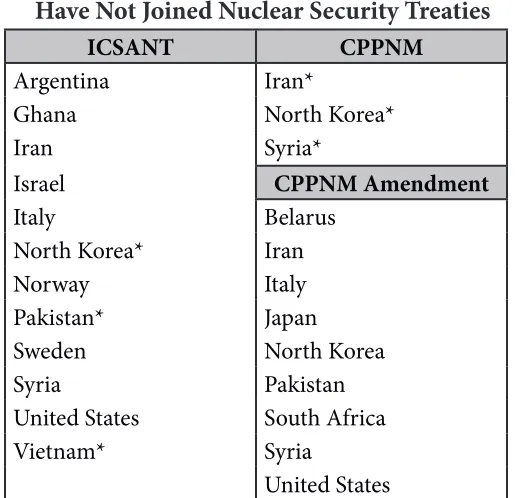
Table 1: Key States that Have Not Joined Nuclear Security Treaties...53
Renewed and Expanded Security Council Resolutions...54
Extended and Expanded Cooperative Initiatives...55
The Nuclear Security Summit Process...57
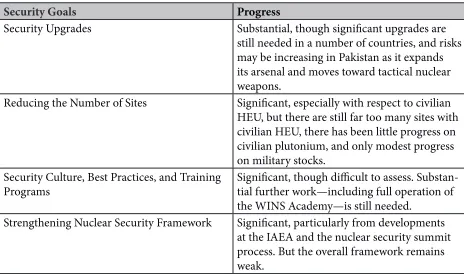
Table 2:Progress on Risk Reduction During the Four-Year Effort...59
V. Recommendations...61
Combating Complacency...61
US Failure to Ratify Key Conventions...62
Improving Protection for Facilities and Transports...64
Consolidating Stockpiles...67
A New Approach to US-Russian Nuclear Security Cooperation...68
Strengthening Security Culture, Best Practices, and Training... 71
Building a More Effective Global Nuclear Security Framework...72
Continuing the Dialogue Beyond the Nuclear Security Summits...74
A Multi-Layered Defense Against Nuclear Terrorism...74
Nuclear Security for the Long Haul...77
Executive Summary
The threat of nuclear and radiological terrorism has not disappeared, though the world has made important progress in reducing these risks. Urgent new steps are needed to build effective and lasting nuclear security worldwide. The nuclear security effort must now shift from short-term improvements toward a focus on a continued search for excellence, lasting as long as terrorist groups bent on mass destruction and the nuclear and radiological materials they might use both continue to exist.
The Continuing Threat of Nuclear and Radiological Terrorism
Nuclear and radiological terrorism remain real and dangerous threats:
• Terrorist groups continue to seek nuclear weapons and the materials and expertise needed to make them.
• Some potential nuclear weapons materials remain dangerously vulnerable, protected by security systems that would not provide an effective defense against the full spectrum of plausible adversary tactics and capabilities. All countries with nuclear weapons, separated plutonium, or highly enriched uranium (HEU) on their soil have more to do to ensure these items are effectively and lastingly secured.
• Terrorists have plotted attacks on nuclear reactors, and the nuclear Fukushima disaster highlighted the terror and disruption a successful act of sabotage could cause.
• Terrorists have also plotted attacks with radiological “dirty bombs” – which would be far simpler to execute than use of a nuclear bomb (though far less devastating).
• Al Qaeda in particular pursued a significant effort to get nuclear weapons, repeatedly at -tempting to buy stolen nuclear bomb material and to recruit nuclear expertise – an effort that went as far as carrying out crude tests of conventional explosives for their nuclear program in the Afghan desert. Despite the death of Osama bin Laden and the substantial disruptions the core al Qaeda organization has suffered, nearly all of the people involved in al Qaeda’s nuclear effort remain at large.
• The Japanese terror cult Aum Shinrikyo actively sought nuclear weapons, and there is some evidence that North Caucasus terrorist groups have as well.
• With at least two and possibly three groups having pursued nuclear weapons in the past quarter century, they are not likely to be the last. The imperative for nuclear security will continue as long as terrorist groups bent on mass destruction and the materials needed to make nuclear weapons both exist in the world.
Substantial Progress in Nuclear Security
Countries around the world have made substantial progress in improving nuclear security during the four-year effort to secure nuclear material that President Obama launched in 2009 – which
Advancing Nuclear Security: Evaluating Progress and Setting New Goals
ii
• Thirteen countries eliminated all the highly enriched uranium (HEU) or separated pluto-nium on their soil during the four-year effort.
• Many countries strengthened their rules and procedures for securing nuclear weapons, nuclear materials, nuclear facilities, or dangerous radiological sources.
• All of the locations in non-nuclear-weapon states where enough high-quality HEU for the simplest type of terrorist nuclear bomb existed at a single site were either eliminated or had
significant security improvements put in place.
• States, the International Atomic Energy Agency (IAEA), and the World Institute for Nuclear Security (WINS) are working together to strengthen nuclear security culture by publishing guides and hosting workshops.
• Programs to identify and exchange nuclear security best practices and nuclear security training programs expanded greatly.
• The nuclear security effort was elevated to the level of presidents and prime ministers, transforming the global nuclear security dialogue.
• Many additional states joined relevant nuclear security conventions and initiatives.
• The nuclear security role of the IAEA was significantly strengthened, as were the IAEA’s
recommendations on physical protection of nuclear materials and facilities.
But Significant Gaps Remain
Despite these successes, the four-year effort did not meet its stated goal—providing effective security for all the world’s vulnerable nuclear materials. Serious dangers of nuclear theft and ter-rorism remain:
• Events such as the intrusion at the Y-12 facility in the United States—in which an 82-year-old nun and two other protesters penetrated multiple fences and reached a building housing thousands of bombs’ worth of HEU before being stopped—make clear that, even in coun-tries that invest heavily in nuclear security, complacency can sap performance. Building strong nuclear security cultures, in which all staff take security seriously and constantly look for ways to improve it, remains a profound challenge.
• Many countries still have important weaknesses in their approaches to nuclear security. There are still countries with: no on-site armed guards to protect nuclear facilities, even ones with plutonium or HEU; no required background checks before granting access to nuclear facilities and materials; and limited protections against insider theft. Few countries conduct realistic tests of their nuclear security systems’ ability to defeat determined and cre-ative adversaries; and few have targeted programs to assess and strengthen security culture in each relevant nuclear organization.
• The international nuclear security framework remains weak and uneven. There are no global rules that say how secure a nuclear weapon or the materials needed to make one
their nuclear security responsibilities. After the Nuclear security summits end, it is not yet clear what forums will enable focused high-level dialogue on improving nuclear security to continue.
• Despite major improvements in nuclear security in Pakistan, it remains the locus of the world’s most deadly terrorist capabilities and fastest-growing nuclear stockpile, posing
significant ongoing dangers.
• India is also expanding its nuclear stockpiles, and faces significant terrorist threats – though
smaller than those in Pakistan. India has so far declined most nuclear security cooperation with the United States, though some initial work is beginning. Delhi has revealed very little about how it secures its nuclear materials and facilities.
• Russia has dramatically improved nuclear security and accounting in the last two decades (with substantial US help). But Russia continues to have the world’s largest nuclear stock-piles stored in the world’s largest number of buildings and bunkers, and sophisticated ad-versaries could exploit remaining security weaknesses—especially vulnerability to insider theft. Underfunding raises serious questions about whether effective nuclear security and accounting systems will be sustained. Continued US-Russian nuclear security cooperation
is needed, but the crisis in Ukraine is likely to make such cooperation more difficult. • Over 120 research and isotope production reactors around the world still use HEU for fuel
or targets. Many of these have very modest security measures. The goal of eliminating the civil use of HEU is still a long way from achievement.
Recommendations: Urgent Actions to Strengthen Nuclear Security
At the 2014 Nuclear Security Summit in The Hague and beyond, leaders around the world must commit to taking the steps necessary to close the remaining gaps in nuclear security. The ef-fort must shift from a short-term rush for improvements, to a continuing push toward excellent nuclear security performance that lasts as long as nuclear weapons and the materials needed to make them continue to exist. All of the needed steps should be taken with an eye on sustainabil-ity over the long haul. And to be effective and sustainable, they all should be done with partner-ship-based approaches that respect the interests of all participants. Action is needed in several areas, described below.
Combating Complacency
Complacency is the enemy of action. Policymakers, nuclear managers, and nuclear staff around the world will only take the steps required to achieve effective nuclear security if they are
con-vinced that nuclear terrorism is a real and urgent threat to their countries, worthy of a significant
investment of time and money, and that improvements on their part are necessary to reduce the risk. To build that sense of urgency, the United States and other interested countries and organi-zations should:
Advancing Nuclear Security: Evaluating Progress and Setting New Goals
iv
• Prepare threat reports and briefings outlining the very real possibility that terrorists could get nuclear material and make a nuclear bomb, and update information on efforts to do so that some groups have made.
• Undertake discussions of the nuclear terrorism threat among intelligence agencies; these organizations are often a government’s main source for assessments of national security threats.
• Conduct nuclear terrorism exercises with policymakers from key states, which can reach
officials in a way that briefings and policy memos cannot and improve preparations against
attacks.
• Launch an “Armageddon Test,” in which intelligence agents would attempt to penetrate nuclear smuggling networks and get information leading to the recovery of weapons-usable nuclear material.
Improving Protection for Facilities and Transports
To ensure that nuclear facilities and transports are effectively secured, countries should:
• Establish and sustain protection against the full spectrum of plausible threats. All nuclear weapons and weapons-usable nuclear material everywhere should at least be pro-tected against a baseline threat that includes a placed insider; a modest group of well-trained and well-armed outsiders, capable of operating as more than one team; and both an insider and the outsiders working together. Countries facing more capable adversaries should provide higher levels of protection.
• Provide effective nuclear security regulation, giving regulators the independence and resources they need, and demanding that they maintain the expertise and culture necessary to do their jobs effectively.
• Strengthen protection against insider threats, with measures designed to protect against theft and sabotage, including improved assessment and testing of these measures’ effectiveness.
• Improve security for bulk processing facilities, which appear to have been the source of almost all of the known thefts of plutonium and HEU, including in particular with nuclear material accounting and control measures for prompt detection of insider theft of even small amounts of material stolen over time.
• Sustain effective nuclear security, including assigning sufficient resources, including both money and trained personnel.
• Carry out realistic tests of nuclear security systems’ performance against intelligent
adversaries looking to find ways to overcome them.
• Accept independent nuclear security reviews, to get ideas for improvement from experts outside the groups that designed and are operating the systems in question.
• Improve security for dangerous radiological sources, including better protection for the transport of these sources, while shifting, where practicable, to the use of less dangerous alter-natives.
Consolidating Stockpiles
To minimize the locations that might pose a risk of nuclear theft, countries should:
• Undertake more consolidation, with the goal of eliminating civilian HEU, constrain-ing the accumulation of separated plutonium and the number of sites where it is used, and consolidating military stocks as much as possible. Such an effort should also use policy tools, including incentives to encourage the closure of unneeded HEU-fueled reactors and
the elimination of unneeded fissile material.
• Review the costs, risks, and benefits of each site with nuclear weapons, HEU, or
sepa-rated plutonium, eliminating any site where the costs and risks outweigh benefits. The
United States and Russia, in particular, should each develop a national-level plan for ac-complishing their military and civilian objectives with the smallest practicable number of sites with nuclear weapons or weapons-usable material.
Strengthening Security Culture, Best Practices, and Training
To build organizations capable of and committed to continuous improvement in nuclear security, countries should:
• Require targeted security culture assessment and improvement programs, in which each operator with nuclear weapons, HEU, separated plutonium, or major nuclear facilities
undertakes specific efforts to assess their organization’s security culture and to strengthen it
over time.
• Establish incentives for nuclear security performance to motivate both organizations as
a whole and their key staff to take security seriously and invest time and effort in finding and fixing vulnerabilities and suggesting improvements.
• Participate in and support best practice exchanges, and seek to ensure that all opera-tors handling nuclear weapons, separated plutonium, HEU, or major nuclear facilities are
participating as well—including participation in and financial support for best practice
organizations such as WINS.
• Provide and require high-quality training and professional certification, so that all staff playing key roles in nuclear security meet recognized standards of competence.
Strengthening the Multi-Layered Defense Against Nuclear Terrorism
Advancing Nuclear Security: Evaluating Progress and Setting New Goals
vi
Building a More Effective Global Nuclear Security Framework
The world needs a stronger global nuclear security framework, a structure that helps states co-operate to: establish standards and goals for nuclear security; discuss and decide on next steps to
improve nuclear security; confirm that states are fulfilling their responsibility to provide effective security; and track states’ progress in fulfilling their nuclear security commitments. To strengthen
this framework, states should:
• Commit, along with like-minded states, to protecting nuclear stockpiles against the full spectrum of plausible adversaries, including, at a minimum, the “baseline” threat described earlier in “Improving Protection for Facilities and Transports.”
• Undertake sustained, partnership-based nuclear security cooperation, without letting political disputes interfere with cooperation that serves the interests of all sides. The current crisis in Ukraine should not be permitted to stop US-Russian cooperation on programs that serve each country’s national interest.
• Ratify and implement existing treaties, join cooperative initiatives such as the Global Initiative to Combat Nuclear Terrorism (GICNT) and the Global Partnership Against the Spread of Weapons and Materials of Mass Destruction, and commit to implementing the
treaties provisionally pending ratification.
• Act to strengthen the IAEA’s nuclear security role, providing it with additional political support, direction, and resources.
• Take steps to build global confidence that nuclear security systems are effective, in-cluding by publishing detailed information on their nuclear security practices (while pro-tecting information that would be helpful to terrorists) and requesting international reviews
led by the IAEA. States with military stocks should work out measures to build confidence
in the security of military stocks without revealing information that must remain secret.
• Continue the dialogue beyond the nuclear security summits, through multiple forums ranging from IAEA meetings to those of cooperative initiatives such as GICNT to bilateral engagements.
I. Beyond the Four-Year Effort:
The Continuing Challenge of Nuclear Security
The four-year effort to secure the world’s vulnerable nuclear material that President Obama launched in April 2009 is now over. As this report will describe, in one sense the effort was a ma-jor success: it elevated discussions of nuclear security from technical specialists to presidents and prime ministers, cut through red tape, and drove improvements in security for nuclear weapons and materials in many countries. Thirteen countries eliminated all the highly enriched uranium (HEU) or separated plutonium on their soil during the four-year effort. The global dialogue about nuclear security has been transformed.
But the four-year effort did not succeed in meeting its stated goal—providing effective security for all the world’s vulnerable nuclear materials. Serious dangers of nuclear theft and terrorism remain. Incidents such as the 2012 intrusion at the Y-12 nuclear facility in the United States— where hundreds of tons of HEU are stored—make clear that, even in countries that have invested heavily in nuclear security for decades, complacency can creep in and sap security.
Indeed, nuclear security is not a switch to be flipped, permanently taking nuclear material from “vulnerable” to “secure,” but rather an ongoing struggle to combat complacency, find and fix
vulnerabilities, improve practices, and adapt to ever-changing threats and circumstances. The leaders gathering for the nuclear security summit in The Hague in 2014 must avoid the tempta-tion to conclude that the job is done. There will still be work to do to improve nuclear security for as long as terrorists bent on mass destruction and the materials needed to make nuclear weap-ons both exist. Instead, the leaders who will gather in The Hague in March 2014 must work to transform the nuclear security effort into an ongoing, long-term search for excellence— because
organizations that are satisfied with their nuclear security and not striving to do better are in most
cases going to get worse.
The four-year effort itself focused on security for nuclear weapons and the materials needed to make them, but the nuclear security dialogue has broadened to encompass security of major nuclear facilities that might be sabotaged; security of radiological sources that might be dispersed in a so-called “dirty bomb;” interdicting nuclear and radiological smuggling and identifying the sources of seized materials; and responding to nuclear and radiological emergencies. The leaders
gathered in The Hague will need to find a structure that supports progress in these areas as well.
Nuclear security is ultimately a national responsibility—but all countries have an interest in
mak-ing sure that other countries are fulfillmak-ing that responsibility appropriately. Because nuclear mate -rial can readily be transported across borders, insecure nuclear mate-rial anywhere is a threat to everyone, everywhere. Ultimately, international cooperation is an essential part of addressing the threat. States should do everything they can to avoid letting crises and political disputes—from the current crisis over Ukraine’s future to disagreements over disarmament or democracy—inter-fere with cooperation that serves the security interests of all.
Achieving the steps just outlined will require expanded international cooperation and a
strength-ened global framework for governing nuclear security. Countries will have to find approaches to
Advancing Nuclear Security: Evaluating Progress and Setting New Goals
2
Washington, D.C., in 2016. Before then, the leaders at The Hague will need to take the next steps to strengthen the international nuclear security framework, to make it possible for countries to come together and set and meet clear nuclear security objectives.
Efforts to sustain effective nuclear security face a fundamental obstacle: complacency. Unless political leaders and nuclear security managers are convinced that the threat is real, that it affects their country directly, and that action in their own country and not just in some foreign land is needed to reduce the risk, they will not take the actions required to reduce the danger of nuclear and radiological terrorism. Even once the fundamental obstacle of complacency has been sur-mounted, these efforts will continue to have to overcome bureaucratic impediments, strictures imposed by secrecy, political disputes, organizational weaknesses, and resource constraints—
among other obstacles. However, officials motivated by a clear perception of the threat and the
steps needed to address it can overcome these obstacles.
Incident: Intrusion at Y-12, United States, 2012
In the early morning hours of July 28, 2012, an 82 year-old nun and two other protesters broke into the Y-12 nuclear weapons production facility—sometimes referred to as the Fort Knox of HEU—in Oak Ridge, Ten-nessee. Equipped with hammers, paint, blood, and a pair of bolt cutters, they cut through four fences—three of them with intrusion detectors—setting off alarms, and traversed a 600-meter semi-wooded area until they arrived at the wall of a building housing hundreds of tons of HEU, enough for thousands of nuclear weapons.
They painted blood on the walls, sang songs, and pounded on the building with their hammers, before finally
being accosted by a single guard. Fortunately, they were not terrorists armed with explosives and did not mean
any harm (and the building has specially designed walls that would be very difficult for terrorists to penetrate,
along with extensive interior protections). But later investigations revealed a security culture failure of epic proportions, not only in the intrusion but also in the response.
How could this happen? The subsequent investigation of the incident by the Department of Energy (DOE) Inspector General revealed “multiple system failures on several levels” and “troubling displays of ineptitude” in Y-12’s security practices. For example, it turned out the site had a new intrusion detection system, which was setting off ten times as many false alarms as usual. Normally, the guard at the central alarm station could check if an alarm was caused by a real intruder using cameras along the fence—but the cameras had been broken for
months. They had not been put on the priority list to be fixed, on the assumption that guards could always check
out the alarms; but it appears that with so many false alarms, the guards had grown weary of investigating. For whatever reason, even a series of alarms on a path leading directly to the HEU building was not enough to prompt the guard at the central alarm station to take more serious action. The heavily armed guards inside the facility heard the hammering and thought it might be construction they had not been told about, even though it was before dawn, and did not bother to check.1
In short, there was a profound breakdown in security culture—among those who tolerated an intrusion system
setting off ten times as many false alarms as usual, among those who did not bother to fix the cameras, among
the guards who did not react to the alarms or the hammering, and eventually in the armed response to the intru-sion.
Perhaps even more troubling, prior to the intrusion, officials at DOE headquarters thought of Y-12 as one
of their most secure sites, and had no idea such a serious erosion of security practices had occurred. Tom D’Agostino, then-administrator of the National Nuclear Security Administration (NNSA), warned that “this incident raises important questions about the security of Category I materials [those requiring the highest level of security] throughout the DOE complex.”2
Lessons:
1. People and organizations matter—a poor security culture can severely undermine security even at facili-ties with modern security equipment, extensive security spending, stringent security rules, and regular security testing.
2. Governments can never be complacent about nuclear security, even in countries with strong security rules and substantial nuclear security budgets.
3. Those responsible for carrying out assessments and inspections need to find ways to understand not just
the equipment in place and the performance planned on paper or shown during long-scheduled tests, but what is actually going on every day.
4. Detection and assessment equipment must be fully operational and adequately maintained if it is to be effective.
1 For a detailed account of the incident, see Office of the Inspector General US Department of Energy, Inquiry Into the
Security Breach at the National Nuclear Security Administration’s Y-12 National Security Complex, DOE/IG-0868
(Wash-ington, D.C., DOE, August, 2012); http://energy.gov/sites/prod/files/IG-0868_0.pdf (accessed March 8, 2014), p. 14.
II. Nuclear and Radiological Terrorism:
The Continuing Threat
Unfortunately, nuclear and radiological terrorism remain real and dangerous threats.1 The
con-clusion the assembled leaders reached at the Washington Nuclear Security Summit and
reaf-firmed in Seoul remains correct: “Nuclear terrorism continues to be one of the most challeng -ing threats to international security. Defeat-ing this threat requires strong national measures and international cooperation given its potential global political, economic, social, and psychological consequences.”2
There are three types of nuclear or radiological terrorist attack:
• Nuclear weapons. Terrorists might be able to get and detonate an assembled nuclear weapon made by a state, or make a crude nuclear bomb from stolen separated plutonium
or HEU. This would be the most difficult type of nuclear terrorism for terrorists to ac -complish—but the devastation could be absolutely horrifying, with political and economic aftershocks reverberating around the world.
• “Dirty bombs.” A far simpler approach would be for terrorists to obtain radiological mate-rials—available in hospitals, industrial sites, and more—and disperse them to contaminate an area with radioactivity, using explosives or any number of other means. In most scenarios of such attacks, few people would die from the radiation—but the attack could spread fear,
force the evacuation of many blocks of a major city, and inflict billions of dollars in costs of
cleanup and economic disruption. While a dirty bomb attack would be much easier for ter-rorists to carry out than an attack using a nuclear explosive, the consequences would be far less—an expensive and disruptive mess, but not the heart of a major city going up in smoke.
• Nuclear sabotage.Terrorists could potentially cause a Fukushima-like meltdown at a nuclear reactor or sabotage a spent fuel pool or high-level waste store. An unsuccessful sab-otage would have little effect, but a successful one could spread radioactive material over a
huge area. Both the scale of the consequences and the difficulty of carrying out a successful
attack would be intermediate between nuclear weapons and dirty bombs.
Overall, while actual terrorist use of a nuclear weapon may be the least likely of these dangers,
its consequences would be so overwhelming that we believe it poses the most significant risk. A
similar judgment drove the decision to focus the four-year effort on securing nuclear weapons
1 For an up-to-date assessment, see William H. Tobey and Pavel Zolotarev, “The Nuclear Terrorism Threat”
(Pat-taya, Thailand: Presentation, Meeting of the 2014 Nuclear security summit Sherpas, Hosted by the Thai Ministry of
Foreign Affairs, January 13, 2014), http://belfercenter.ksg.harvard.edu/publication/23879/nuclear_terrorism_threat.ht ml?breadcrumb=%2Fexperts%2F1969%2Fwilliam_h_tobey (accessed March 8, 2014). For an earlier joint US-Rus -sian account, see Matthew Bunn et al., The U.S.-Russia Joint Threat Assessment of Nuclear Terrorism (Cambridge, Mass.: Belfer Center for Science and International Affairs, Harvard Kennedy School, and Institute for US and Ca-nadian Studies, June, 2011), http://belfercenter.ksg.harvard.edu/publication/21087/ (accessed March 11, 2014); Mat-thew Bunn, Securing the Bomb 2010: Securing all Nuclear Materials in Four Years (Cambridge, Mass.: Project on Managing the Atom, Harvard University, and Nuclear Threat Initiative 2010), http://www.nti.org/securingthebomb (accessed March 11, 2014), pp. 1–22.
2 “Seoul Communique,” 2012 Nuclear Security Summit (Seoul, Korea, March 27, 2012), https://www.nss2014.com/
Advancing Nuclear Security: Evaluating Progress and Setting New Goals
6
and the materials needed to make them. Most of this report will focus on the threat of terrorist use of nuclear explosives, but the overall global governance framework for nuclear security is relevant to all of these dangers.
The danger of nuclear terrorism is driven by three key factors—terrorist intent to escalate to the nuclear level of violence; potential terrorist capability to do so; and the vulnerability of nuclear weapons and the materials needed to enable terrorists to carry out such an attack—the motive, means, and opportunity of a monstrous crime.
Terrorist intent. While most terrorist groups are still focused on small-scale violence for local
political purposes, we now live in an age that includes some groups intent on inflicting
large-scale destruction to achieve their objectives. Over the past quarter century, both al Qaeda and the Japanese terror cult Aum Shinrikyo seriously sought nuclear weapons and the nuclear materials and expertise needed to make them. Al Qaeda had a focused program reporting directly to Ayman al-Zawahiri (now head of the group), which progressed as far as carrying out crude but sensible conventional explosive tests for the nuclear program in the desert of Afghanistan. There is some evidence that North Caucusus terrorists also sought nuclear weapons—including incidents in which terrorist teams were caught carrying out reconnaissance on Russian nuclear weapon stor-age sites, whose locations are secret.3
Despite the death of Osama bin Laden and the severe disruption of the core of al Qaeda, there are
no grounds for complacency. There is every reason to believe Zawahiri remains eager to inflict
destruction on a nuclear scale. Indeed, despite the large number of al Qaeda leaders who have been killed or captured, nearly all of the key players in al Qaeda’s nuclear program remain alive and at large—including Abdel Aziz al-Masri, an Egyptian explosives expert who was al Qaeda’s “nuclear CEO.” In 2003, when al Qaeda operatives were negotiating to buy three of what they
thought were nuclear weapons, senior al Qaeda officials told them to go ahead and make the purchase if a Pakistani expert with equipment confirmed the items were genuine. The US govern -ment has never managed to determine who the Pakistani nuclear weapons expert was in whom al
Qaeda had such confidence—and what he may have been doing in the intervening decade.
More fundamentally, with at least two, and probably three, groups having gone down this path in the past 25 years, there is no reason to expect they will be the last. The danger of nuclear terror-ism will remain as long as nuclear weapons, the materials needed to make them, and terrorist groups bent on large-scale destruction co-exist.
Potential terrorist capabilities. No one knows what capabilities a secret cell of al Qaeda may have managed to retain or build. Unfortunately, it does not take a Manhattan Project to make a nuclear bomb—indeed, over 90 percent of the Manhattan Project effort was focused on making the nuclear materials, not on designing and building the weapons. Numerous studies by the United States and other governments have concluded that it is plausible that a sophisticated terrorist group could make a crude nuclear bomb if it got enough separated plutonium or HEU.4 A “gun-type”
bomb, such as the weapon that obliterated Hiroshima, fundamentally involves slamming two pieces of HEU together at high speed. An “implosion-type” bomb, which is needed to get a
sub-3 Bunn et al., US-Russia Joint Threat Assessment.
4 Matthew Bunn and Anthony Wier, “Terrorist Nuclear Weapon Construction: How Difficult?,” Annals of the Ameri
stantial explosive yield from plutonium, requires crushing nuclear material to a higher density—a more complex task, but still plausible for terrorists, especially if they got knowledgeable help. Many analysts argue that, since states spend billions of dollars and assign hundreds or thousands of people to building nuclear weapons, it is totally implausible that terrorists could carry out this task. Unfortunately, this argument is wrong, for two reasons. First, as the Manhattan Project
statistic suggests, the difficult part of making a nuclear bomb is making the nuclear material.
That is what states spend billions seeking to accomplish. Terrorists are highly unlikely to ever be able to make their own bomb material—but if they could get stolen material, that step would be bypassed. Second, it is far easier to make a crude, unsafe, unreliable bomb of uncertain yield, which might be delivered in the back of a truck, than to make the kind of nuclear weapon a state would want in its arsenal—a safe, reliable weapon of known yield that can be delivered by missile or combat aircraft. It is highly unlikely terrorists will ever be able to build that kind of nuclear weapon.
Remaining vulnerabilities. While many countries have done a great deal to strengthen nuclear security, serious vulnerabilities remain. Around the world, there are stocks of nuclear weapons or
materials whose security systems are not sufficient to protect against the full range of plausible
outsider and insider threats they may face. As incidents like the intrusion at Y-12 in the United States in 2012 make clear, many nuclear facilities and transporters still grapple with serious problems of security culture. It is fair to say that every country where nuclear weapons, weapons-usable nuclear materials, major nuclear facilities, or dangerous radiological sources exist has more to do to ensure that these items are sustainably secured and accounted for.
At least three lines of evidence confirm that important nuclear security weaknesses continue to
exist. First, seizures of stolen HEU and separated plutonium continue to occur, including, mostly recently HEU seizures in 2003, 2006, 2010, and 2011.5 These seizures may result from material
stolen long ago, but, at a minimum, they make clear that stocks of HEU and plutonium remain outside of regulatory control. Second, in cases where countries do realistic tests to probe whether
security systems can protect against teams of clever adversaries determined to find a weak point,
the adversaries sometimes succeed—even when their capabilities are within the set of threats the security system is designed to protect against. This happens with some regularity in the United States (though less often than before the 9/11 attacks); if more countries carried out comparable performance tests, one would likely see similar results. Third, in real non-nuclear thefts and ter-rorist attacks around the world, adversaries sometimes demonstrate capabilities and tactics well beyond what many nuclear security systems would likely be able to handle (see the discussion of the recent Västberga incident in Sweden).
5 Additionally, in recent years there have been several seizures of scrap metal contaminated with surprisingly large
amounts of HEU; it appears that one or more HEU-processing facilities in the former Soviet Union has been or is
being dismantled without sufficient care for the resulting scrap. Interview with US laboratory nuclear smuggling expert, July 2013. See also “Illicit Trafficking in Weapons-Useable Nuclear Material: Still More Questions Than
Answers,” Center for Nonproliferation Studies, December 11, 2011,
http://www.nti.org/analysis/articles/illicit-traf-ficking-weapons-useable-nuclear-material-still-more-questions-answers/ (accessed March 8, 2014). US Congress,
Senate, Committee on Foreign Relations, Enhancing Non-Proliferation Partnerships in the Black Sea Region: A Minority Staff Report (Washington, D.C.: US Government Printing Office, 2011),
http://wid.ap.org/documents/np-minority-report.pdf. Nick Amies, “US Concerns Over Nuclear Smuggling Between Europe, North Africa,” Deutsche Welle, May 10, 2011, http://www.dw.de/dw/article/0,,15434811,00.html (accessed March 11, 2014). Desmond
Advancing Nuclear Security: Evaluating Progress and Setting New Goals
8
Of course, the initial theft of nuclear material would be only the first step. Adversaries would have
to smuggle the material to wherever they wanted to make their bomb, and ultimately to the tar-get. A variety of measures have been put in place in recent years to try to stop nuclear smuggling, from radiation detectors to national teams trained and equipped to deal with nuclear smuggling cases—and more should certainly be done. But once nuclear material has left the facility where it
is supposed to be, it could be anywhere, and finding and recovering it poses an enormous chal
-lenge. The immense length of national borders, the huge scale of legitimate traffic, the myriad
potential pathways across these borders, and the small size and weak radiation signal of the
mate-rials needed to make a nuclear bomb make nuclear smuggling extraordinarily difficult to stop.
There is also the danger that a state such as North Korea might consciously decide to provide nuclear weapons or the materials needed to make them to terrorists. This possibility cannot be ruled out, but there is strong reason to believe that such conscious state decisions to provide these capabilities are a small part of the overall risk of nuclear terrorism. Dictators determined to maintain their power are highly unlikely to hand over the greatest weapon they have to terror-ist groups they cannot control, who might well use it in ways that would provoke retaliation that would remove the dictator from power forever. Although nuclear forensics is by no means perfect, it would be only one of many lines of evidence that could potentially point back to the state that
provided the materials; no state could ever be confident they could make such a transfer without
Incident: Cash Depot Robbery in Västberga, Sweden, 2009
In September 2009, a group of masked men armed with automatic weapons and explosives used a stolen helicopter to rob a cash depot in Västberga, Sweden. Early in the morning, the helicopter hov-ered above the depot, which was owned by one of the world’s largest security companies, as the men landed on the roof and used a sledgehammer to break through a skylight. The thieves, some of whom
were later identified as former members of a Serbian paramilitary group, had automatic weapons and
used explosives to blast their way to the money in the building. The entire raid took approximately twenty minutes and the thieves avoided injuring the nearly two dozen people in the facility at the time. The masked men hoisted millions of dollars up to the helicopter and escaped without being pursued because they anticipated the police response.
Prior to the robbery, they left a bag with the word “bomb” written on it at the police heliport to prevent any helicopter pursuit and placed caltrops (spikes) on the road near the depot to prevent a car chase. About 15 miles from the depot, they transferred to ground vehicles which had not been at the scene of the crime and abandoned the helicopter.
Many of the thieves were later caught and convicted, but most of the money was never recovered—and
the security systems in place clearly were insufficient to protect against the threat.
This incident offers two lessons:
1. Adversaries can employ a broad range of capabilities, including military-style tactics and
weaponry; use of helicopters to rapidly surmount barriers and fly away; and means to delay
the arrival of response forces.
being caught.6 And terrorists are unlikely to have enough money to make a substantial difference
in either the odds of regime survival or the wealth of a regime’s elites, even in North Korea, one of the poorest countries on earth. On the other hand, serious risks would arise in North Korea, or other nuclear-armed states, in the event of state collapse—and as North Korea’s stockpile grows, one could imagine a general managing some of that stockpile concluding he could sell a piece of it and provide a golden parachute for himself and his family without getting caught.
No one knows the real likelihood of nuclear terrorism. But the consequences of a terrorist nu-clear blast would be so catastrophic that even a small chance is enough to justify urgent action to reduce the risk. The heart of a major city could be reduced to a smoldering radioactive ruin, leaving tens to hundreds of thousands of people dead. The perpetrators or others might claim to have more weapons already hidden in other major cities and threaten to set them off if their demands were not met—potentially provoking uncontrolled evacuation of many urban centers.
Devastating economic consequences would reverberate worldwide. Kofi Annan, while serving
as Secretary-General of the United Nations, warned that the global economic effects of a nuclear terrorist attack in a major city would push “tens of millions of people into dire poverty,” creating a “second death toll throughout the developing world.”7
Making plutonium or HEU is well beyond the plausible capabilities of terrorist groups. Hence, if all the world’s stockpiles of these materials can be secured from falling into terrorist hands, nuclear terrorism can be prevented. Improved nuclear security is the single point on the terrorist pathway to the bomb where government policies can do the most to reduce the danger. After a nuclear weapon or the material needed to make one has been stolen, every later step on the ter-rorist pathway is easier for terter-rorists to take and harder for governments to block.
6 Keir A. Lieber and Daryl G. Press, “Why States Won’t Give Nuclear Weapons to Terrorists,” International Security
Vol. 31, No. 8 pp. 80-104 (Summer 2013), DOI: 10.1162/ISEC_a_00127.
7 Kofi Annan, “A Global Strategy for Fighting Terrorism: Keynote Address to the Closing Plenary,” The
Internation-al Summit on Democracy, Terrorism and Security (Madrid: Club de Madrid, 2005), http://english.safe-democracy.
III. Nuclear Security: What Goals Are Necessary?
The stated goal of the four-year effort was to secure all vulnerable nuclear material worldwide. But neither the Obama administration nor any other government or international organization
ever defined what success of this effort would look like—how much improvement in security for what stocks of nuclear weapons or weapons-usable materials would be sufficient.8 Instead, the
Obama administration saw the four-year effort as a “forcing function” to help “accelerate ongo-ing US nonproliferation programs, drive closer integration of nuclear nonproliferation programs across the federal government, and mobilize greater international responsibility for and com-mitment to nuclear material security.”9 In one account, the administration identified the goal as merely making “significant progress” toward securing the world’s most vulnerable materials, a
stark contrast from the goal of securing “all” such materials in the original speech.10 Particular
programs outlined what they sought to accomplish during the four-year effort, but these program goals were quite partial, and did not by any means provide for effective security for all of the world’s vulnerable weapons-usable nuclear material.11
In the absence of an official definition of the goal, our last report recommended a set of goals,
focused on sustainably reducing to a low level the overall risk that a nuclear weapon or enough weapons-usable nuclear material to make one could be stolen.12
Facilities or transports with nuclear weapons or weapons-useable materials must be reliably protected against the full suite of plausible adversary capabilities (both insider and outsider) that they might face. Hence, how much security is enough will vary from country to country, depend-ing on what kinds of capabilities terrorists or criminals can muster. A security system that was perfectly adequate in Canada might still be considered “vulnerable” or “high risk” in Pakistan.
8 US Congress, Government Accountability Office, Further Actions Needed by U.S. Agencies to Secure Vulnerable
Nuclear and Radiological Materials, GAO-12-512T (Washington, D.C.: GAO, 2012), http://www.gao.gov/as-sets/590/589345.pdf (accessed March 8, 2014), p. 6.
9 GAO, Further Actions Needed, p. 7.
10 See “Make Significant Progress Toward Securing the Most Vulnerable Materials Worldwide Within Four Years”
(Washington, D.C.: Performance.gov, no date), http://goals.performance.gov/goal_detail/doe/423/print#overview
(accessed March 8, 2014).
11 In particular, the Global Threat Reduction Initiative (GTRI), a program of the National Nuclear Security
Adminis-tration (NNSA) at the US Department of Energy (DOE) set a goal of completing the removal or confirming the dis -posal of 4,353 kilograms of potentially vulnerable highly enriched uranium (HEU) or plutonium by December 2013,
which DOE defined as the end of the four-year effort. NNSA’s International Material Protection and Cooperation
program set a goal of completing security upgrades on all of the 229 buildings with plutonium or HEU where it has
been cooperating with Russia. See “Make Significant Progress,” http://goals.performance.gov/goal_detail/doe/423/ print#overview (accessed March 8, 2014). As discussed later in this report, by NNSA’s accounting GTRI’s goal was
exceeded (though it did not succeed in removing much of the material it had originally planned to remove), while the goal for installing upgrades in Russia was not met, because of delays in Russian approval of contracts.
12 Matthew Bunn, Eben Harrell, and Martin B. Malin, Progress on Securing Nuclear Weapons and Materials: The
Four-Year Effort and Beyond (Cambridge, Mass.: Project on Managing the Atom, Harvard University, March, 2012), http://
Advancing Nuclear Security: Evaluating Progress and Setting New Goals
12
However, in a world with terrorists with global reach, countries need to require facilities and transporters working with nuclear weapons, HEU, and separated plutonium, to protect against at least:
• a modest group of well-armed and well-trained outsiders;
• a well-placed insider;
• both outsiders and an insider working together, using a broad range of possible tactics. Countries facing more capable adversaries should provide even higher levels of protection.
Securing Nuclear Weapons and Materials: A Definition of Success
• All nuclear weapons and stocks of HEU and plutonium are protected against at least a baseline threat—and have additional protection in locations that are threatened by more capable adversaries.
• All nuclear weapons and weapons-usable nuclear materials have been consolidated in as few locations as possible, and civilian use of HEU has been phased out.
• All countries where nuclear weapons or weapons-usable nuclear materials exist have established and enforced effective nuclear security rules, and ensured that all operators
responsible for these stocks have the financial and personnel resources to implement
and sustain effective security and accounting.
• A structure of governance is in place that provides mechanisms for setting agreed
standards, reviewing performance, building confidence that states are implementing
nuclear security effectively, and identifying priorities for next steps.
IV. Assessing Progress and Remaining Gaps
Nuclear security around the world has improved substantially during the four-year effort and in the years leading up to it. Yet, there is more to be done to secure nuclear weapons and the materi-als needed to make them; nuclear facilities that might be sabotaged; and radiological sources. A multi-pronged approach is needed that includes security measures where these items exist; measures to stop nuclear and radiological smuggling; emergency response; efforts to counter the terrorist groups interested in nuclear and radiological attacks; steps to prevent and deter state as-sistance with nuclear or radiological terrorism; and more.13 But security and accounting
mea-sures to prevent terrorists and thieves from getting nuclear weapons and materials are the most important single chokepoint blocking the terrorist pathway to the bomb.
The goal, as just discussed, must be to reduce the overall risk of nuclear theft and terrorism to the
lowest practicable level. But balancing the risk-reduction benefits of increased security against the costs and inconveniences that come with it is a difficult task—particularly as there are no
clear measures of the total remaining risk, which facilities are the riskiest, or how much risk reduction would come from any particular investment.
Measuring progress toward a uniformly low risk of nuclear theft is a difficult task. Both nuclear
security system performance and terrorist or criminal capabilities change over time, largely in secret. Hence, no comprehensive quantitative measures of the effectiveness of nuclear security are available.14 In the absence of such measures, this report will qualitatively assess the progress
made during the four-year effort and the work remaining to be done in four categories: strength-ening the security measures and standards in place for nuclear facilities and transports around the world; reducing the number of sites with nuclear weapons and weapons-useable materials; boost-ing security culture, implementboost-ing best practices, and providboost-ing effective trainboost-ing; and strength-ening global governance of nuclear security.
There are two principal pathways by which nuclear security improvements occur. In some cases, the US government (or, less often, another donor state or organization) works with countries to
agree on a particular nuclear security improvement step and finances much of the initial work—
usually with arrangements in place for the host country to take over and sustain the effort after
13 See “Beyond Nuclear Security,” in Matthew Bunn, Securing the Bomb 2008 (Cambridge, Mass.: Project on
Man-aging the Atom, Belfer Center for Science and International Affairs, Harvard Kennedy School of Government and
Nuclear Threat Initiative, November 2008), pp. 70-87, http://www.nti.org/media/pdfs/Securing_The_Bomb_2008. pdf?_=1317161155 (accessed March 8, 2014). See also Michael Levi, On Nuclear Terrorism (Cambridge, Mass.: Harvard University Press, 2007).
14 The NTI Nuclear Security Index provides a valuable assessment of whether or not countries can be shown to have
taken particular nuclear security steps, such as establishing a DBT that operators are required to protect against or ratifying relevant conventions. It also provides an assessment of the overall nuclear materials security conditions in
a country by looking at openly available information on indicators in five categories relevant to the risk of theft. But
Advancing Nuclear Security: Evaluating Progress and Setting New Goals
14
an initial period. In other cases, states undertake security improvements on their own, financing
the work themselves. Although this second pathway receives less attention in US debates, it is ultimately the better approach for US security because indigenous improvements are more likely
to be sustained. US agencies track the nuclear security improvements which they finance, but
data on indigenous improvements is harder to come by. The discussion below attempts to assess overall improvements in nuclear security, including both categories.
Improvements in the Protection of Nuclear Weapons and Materials
In recent years, many countries have strengthened their requirements and procedures for securing nuclear weapons and weapons-usable nuclear materials. In a recent survey with respondents from all but two of the states with nuclear weapons and most of the non-nuclear-weapon states where separated plutonium and HEU exist, all of the respondents reported that their countries had made their nuclear security requirements either “much more stringent” or “modestly more stringent” in the last 15 years.15 Overwhelmingly, the experts reported that their countries had made either
dramatic or major changes in the design basis threat (DBT)—the set of adversary capabilities and tactics against which their nuclear security systems are designed to provide protection. Other im-provements covered a wide spectrum, from increased use of realistic testing of the performance of security systems to greater capabilities for guard forces at nuclear sites. Some of these chang-es occurred during the four-year nuclear security effort, and some had already been accomplished when that effort began. The Nuclear Threat Initiative’s (NTI) Nuclear Materials Security Index for 2014 reports that during the four-year effort:
• Belgium strengthened its regulations that updated its DBT, beefed up protections against insider threats, and upgraded access control procedures.16
• Belarus put in place new rules on protecting against insider threats and securing material during transportation. Belarusian and US experts also worked together to implement major security improvements at the single site in Belarus with HEU.17
• Pakistan strengthened rules on physical protection of its civilian nuclear infrastructure (se-curity for Pakistan’s military stocks is discussed in more detail below).18
• Canada and Germany strengthened their rules on securing nuclear material during trans-port.19
15 Matthew Bunn and Eben Harrell, Threat Perceptions and Drivers of Change in Nuclear Security Around the
World: Results of a Survey, (Cambridge, Mass.: The Project on Managing the Atom, Belfer Center for Science and International Affairs, Harvard University, February 2014), pp. 7.
16 NTI Nuclear Materials Security Index, Belgium Country Profile, http://ntiindex.org/countries/belgium/ (accessed
March 8, 2014).
17 NTI Nuclear Materials Security Index, Belarus Country Profile, http://ntiindex.org/countries/belarus/ (accessed
March 8, 2014). Also data provided by NNSA officials, January 2014.
18 NTI Nuclear Materials Security Index, Pakistan Country Profile, http://ntiindex.org/countries/pakistan/ (accessed
March 8, 2014).
19 NTI Nuclear Materials Security Index, Canada and Germany Country Profiles, http://ntiindex.org/countries/cana
• The Netherlands toughened its rules on vetting of personnel with access to nuclear materi-als and facilities.20
• Uzbekistan established requirements for testing the performance of nuclear security sys-tems.21
• Japan took steps to strengthen protection against insider threats.22 Indeed, Japan approved
a broad range of changes to its nuclear security rules in December 2011 and March 2012, including new rules on cybersecurity, on protection for backup power supplies that might be sabotaged, on searches with metal detectors and nuclear material detectors before enter-ing protected areas, and on backup power supplies for security systems. Protection against insider threats remains an issue: there are still no background checks before people are granted access to potential nuclear bomb material in Japan.23
In addition, after the 2007 break-in at the Pelindaba nuclear facility, South Africa completed millions of dollars’ worth of security improvements, in part with US help, greatly strengthening security for the hundreds of kilograms of HEU from its former nuclear weapons program. For the
first time, South Africa instituted a regulatory requirement that sites handling nuclear material be able to protect against a specified DBT.24 France approved major new nuclear security
regula-tions in 2009 and 2011, which strengthened its DBT, ensured consistency with the Amendment to the Convention on the Physical Protection of Nuclear Material, and strengthened requirements for protection against sabotage.25
In Kazakhstan, a long-running Kazakh-US-Russian joint project to secure fissile material (pri -marily plutonium) left behind by Soviet nuclear testing was completed during the four-year ef-fort, drastically reducing what had been a dangerous risk of nuclear theft, as metal scavengers came perilously close to the weapons-grade plutonium.26 The four-year effort also saw the
com-pletion of a major Kazakh-US joint effort to beef up security for irradiated breeder reactor fuel
20 NTI Nuclear Materials Security Index, Netherlands Country Profile, http://ntiindex.org/countries/netherlands/ (ac
-cessed March 8, 2014).
21NTI Nuclear Materials Security Index, Uzbekistan Country Profile, http://ntiindex.org/countries/uzbekistan/ (ac
-cessed March 8, 2014).
22 NTI Nuclear Materials Security Index, Japan Country Profile, http://ntiindex.org/countries/japan/ (accessed March
8, 2014).
23 The new regulations and the ongoing controversy over background checks are described in Kaoru Naito, “Nuclear
Security Regime in Japan: Policies and Activities of Japanese Government,” Proceedings of International Nuclear Security: Enhancing Global Efforts, Vienna, July 1–5, 2013 (Vienna: International Atomic Energy Agency, 2013).
24Interview with South African nuclear security expert, March 2013, and discussions with NNSA officials, June 2013. 25 See, for example, Gen. Laurent Demolins, “Implementing a New Legal and Regulatory Framework to Enhance
Protection of Nuclear Material and Facilities,” presentation to US Nuclear Regulatory Commission’s “International Regulators Conference on Nuclear Security,” December 4–5 2012, Rockville, Maryland, http://www.nrcsecuritycon-ference.org/slides/Dec4/France.pdf (accessed March 8, 2014) and Patrick Raymond, presentation to the Institute for Nuclear Material Management, “Risk Informing Security Workshop,” Stone Mountain, Georgia, February 11–12, 2014.
26 See Eben Harrell and David E. Hoffman, Plutonium Mountain: Inside the 17-Year Mission to Secure a Legacy of
Soviet Nuclear Testing (Cambridge, Mass.: Report for Project on Managing the Atom, Belfer Center for Science and
Advancing Nuclear Security: Evaluating Progress and Setting New Goals
16
containing tons of low-grade HEU and three tons of better-than-weapon-grade plutonium. This material was packaged in massive containers and shipped to a secure site far from the Caspian Sea, where it had been stored.27
In recent years, including during the four-year effort, many countries have taken action to strengthen cybersecurity for nuclear facilities. The Stuxnet virus used to sabotage Iran’s centri-fuge facility at Natanz highlighted the threat of cyberattack on nuclear facilities in a very public way.28 Three main forms of cyber attack are particularly important for nuclear security. First, a
cyber attack might be used to sabotage a nuclear facility, as Stuxnet reportedly did. In the case
of Iran, the attack was intended to inflict damage on centrifuge cascades and slow Iran’s enrich -ment progress, not to cause the spread of radioactive material. A similar kind of cyber attack on a nuclear power plant could have the objective of causing a major radioactive release and have far more damaging results. Second, a cyber attack might contribute to a more conventional theft or sabotage attempt—for example by confusing or disabling alarm and assessment systems or unlocking doors. Third, adversaries might use cyber weaknesses to get access to sensitive nuclear information—ranging from information about making nuclear weapons to information about nu-clear security systems and their weaknesses. Even before Stuxnet, regulators in the United States and several other countries were establishing new requirements for cyber defenses and vulner-ability assessments, and operators were developing new approaches—though the ever-changing nature of the threat made defense an extraordinary challenge. The IAEA published its technical guidance on computer security at nuclear facilities in 2011, and a number of countries are draw-ing from that guidance.29 The World Institute for Nuclear Security (WINS) has also produced a
best practice guide on the matter. Overall, it is fair to say that, in many countries with extensive
nuclear establishments, cybersecurity for nuclear assets is significantly better today than it was
before the four-year effort began—though there is still a great deal to be done.30
These actions are welcome—though the resulting reductions in the overall risk of nuclear theft or sabotage range from large to small. Other countries have also taken steps to upgrade security
27 US Department of Energy, National Nuclear Security Administration, “NNSA Secures 775 Nuclear Weapons
Worth of Weapons-Grade Nuclear Material from BN-350 Fast Reactor in Kazakhstan” (Washington, D.C.: NNSA, November 18, 2010), http://nnsa.energy.gov/mediaroom/pressreleases/bn35011.18.10 (accessed March 8, 2014). As we have noted previously, NNSA’s headline is incorrect in two respects: the material was not remotely enough
for 775 nuclear weapons (NNSA is using the IAEA’s “significant quantity” figures incorrectly), and most of it is not close to being weapon-grade, but rather is medium-enriched uranium that would be quite difficult to make into a
nuclear bomb without further enrichment. The material likely had an average enrichment in the range of 25 percent prior to irradiation and has much lower enrichments now. The material is embedded in spent fuel and would require
reprocessing to recover it for use in nuclear weapons, though it no longer has a radiation field that would protect it
from theft. For a more detailed critique of NNSA’s repeated assertion on this point, see Eben Harrell’s comment
in the comments section below Ferenc Dalnoki-Veress, Jeffrey Lewis, and Miles Pomper, “Significantly Wrong on Significant Quantities,” March 1, 2012, http://lewis.armscontrolwonk.com/archive/5028/significantly-wrong-about-significant-quantities (accessed March 8, 2014).
28 For a detailed journalistic account, see David Sanger, Confront and Conceal: Obama’s Secret Wars and Surprising
Use of American Power (New York: Crown, 2012), pp. 118–225.
29 International Atomic Energy Agency, Computer Security at Nuclear Facilities (Vienna: IAEA, 2011),
http://www-pub.iaea.org/MTCD/Publications/PDF/Pub1527_web.pdf (accessed March 8, 2014). Several additional guidance
documents on computer security are in development.
30 The IAEA’s nuclear security conference in July 2013 featured a panel on cybersecurity, with perspectives from the