This is a repository copy of Developing agent-based models for community resilience:
connecting indicators and interventions.
White Rose Research Online URL for this paper:
http://eprints.whiterose.ac.uk/103011/
Version: Published Version
Book:
Taylor, Richard, Forrester, John Martin orcid.org/0000-0002-8730-2671, Dressler, Gunnar
et al. (1 more author) (2015) Developing agent-based models for community resilience:
connecting indicators and interventions. CRED, Louvain , (81pp).
[email protected] https://eprints.whiterose.ac.uk/ Reuse
Items deposited in White Rose Research Online are protected by copyright, with all rights reserved unless indicated otherwise. They may be downloaded and/or printed for private study, or other acts as permitted by national copyright laws. The publisher or other rights holders may allow further reproduction and re-use of the full text version. This is indicated by the licence information on the White Rose Research Online record for the item.
Takedown
If you consider content in White Rose Research Online to be in breach of UK law, please notify us by
i
2015-5-31
Developing agent-based models for
community resilience
Connecting indicators and interventions
Deliverable 4.4/4.5
Authors
Richard Taylor SEI Oxford
John Forrester University of York
Gunnar Dreßler UFZ
Contract Number: 283201 Project Acronym: emBRACE
Title: Building Resilience Amongst Communities in Europe
Deliverable N°: 4.4/4.5
Due date: 31-5-2015
Delivery date: 31-5-2015
Short Description:
This report is the documentation of the emBRACE task 4.5 on simulating community resilience using ABM, which was linked to the following two deliverables:
D4.4: Report on the development of agent based models and their application in case studies
D4.5: Report on assessment of indicators of resilience using historically informed ABM
Lead Beneficiary: SEI Oxford
Partner/s contributed: University of York, UFZ, University of Reading
Made available to: emBRACE Consortium
Version Control
Version Date Name, Affiliation
0.1 27-4-2015 Richard Taylor, SEI Oxford
John Forrester, SEI Oxford
i
Acknowledgements
Funding for this report was made available by the European Commission under the 7th Framework Programme – Grant Agreement No 283201.emBRACE
Contact:
Technical Coordination (Administration)
Centre for Research on the Epidemiology of Disasters (CRED)
Institute of Health and Society Université catholique de Louvain
30 Clos Chapelle-aux-Champs, Bte 30.15
1200 Brussels
Belgium
T: +32-2-764.33.27
E:
[email protected] W: www.cred.beTechnical Coordination (Science)
School of the Built and Natural Environment,
University of Northumbria
Newcastle upon Tyne
NE1 8ST,
UK
T: + 44 (0)191 232 6002
E:
[email protected]W:
www.northumbria.ac.ukii
About emBRACE
The primary aim of the emBRACE project is to build resilience to disasters amongst communities in Europe. To achieve this, it is vital to merge research knowledge, networking and practices as a prerequisite for more coherent scientific approaches. This we will do in the most collaborative way possible.
Specific Objectives
Identify the key dimensions of resilience across a range of disciplines and domains
Develop indicators and indicator systems to measure resilience concerning natural disaster events
Model societal resilience through simulation experiments
Provide a general conceptual framework of resilience, tested and grounded in cross-cultural contexts
Build networks and share knowledge across a range of stakeholders
Tailor communication products and project outputs and outcomes effectively to multiple collaborators, stakeholders and user groups
The emBRACE Methodology
The emBRACE project is methodologically rich and draws on partner expertise across the research methods spectrum. It will apply these methods across scales from the very local to the European.
iii
Partners
Université catholique de Louvain (UCL) -
Belgium
University of Northumbria at Newcastle (UoN) -
UK
King’s College London (K
CL) -
UK
United Nations University Institute for Environment and Human
Security (UNU),
Bonn
Accademia Europea per la Ricerca Applicata ed il Per-fezionamento
Professionale Bolzano (EURAC) -
Italy
Helmholtz-Zentrum Fuer Umweltforschung GMBH - UFZ (UFZ) -
Germany
University of York (SEI-Y) -
UK
Stockholm Environment Institute - Oxford Office Limited (SEI-O) -
UK
Swiss Federal Institute for Forest, Snow and Landscape Research -
WSL (WSL) -
Switzerland
Middle East Technical University - Ankara (METU)
–
Turkey
iv
Table of Contents
TABLE OF CONTENTS ... IV
1. INTRODUCTION ... 6
2. BACKGROUND TO THE USE OF ABMS ... 9
2.1.HISTORY OF DEVELOPMENT AND USE IN RESILIENCE RESEARCH ... 12
2.2.REVIEW OF ABM AND SYSTEMS-BASED SIMULATION STUDIES ... 14
2.2.1. Outlook ... 18
2.3.SOME METHODOLOGICAL OBSERVATIONS ... 19
3. CASE STUDIES OF ABM ... 21
3.1.DISASTER PREPAREDNESS ... 21
3.1.1 Data and case study ... 22
3.1.2. Methodology and rationale ... 22
3.1.4. Model description and simulation experiments ... 25
3.1.5. Results ... 31
3.1.5. Discussion & lessons learned ... 37
3.1.6. Comparison with analysis in Van ... 38
3.1.7. Analysis of Interventions in Van... 42
3.2DISASTER RESPONSE IN GERMANY: PERFORMANCE OF DISASTER MANAGEMENT UNDER CHANGE ... 48
3.2.1 Case study ... 48
3.2.2 Idea behind the model ... 49
3.2.3 Description of the agent-based model ... 51
3.2.3.1 Overview... 51
3.2.3.2 Design concepts ... 53
3.2.3.3 Details ... 54
3.2.4 Measuring performance – indicators for resilience ... 55
3.2.5 Scenario description ... 56
3.2.6 The influence of the number of DMOs ... 57
3.2.7 Variation of DMO properties ... 59
3.2.8 Variation of flood settings... 60
3.2.9 Regional comparison ... 61
v
3.2.11 Conclusion... 63
4. DISCUSSION AND OUTLOOK ... 64
4.1.RELATIONSHIP OF ABM WITH OTHER CASES AND APPROACHES ... 64
4.2.RELATIONSHIP OF SNM WITH ABM... 66
4.3.OUTLOOK ... 68
4.3.1 Northern England ... 68
4.3.2 South Tyrol ... 69
4.3.3 London ... 71
6
1. Introduction
This deliverable aims at addressing one of the overall emBRACE objectives (see page ii): that is to model societal resilience through simulation experiments in order to contribute to an understanding of community resilience from a methodological point of view. We must consider this position as a starting point and as an introductory context to this deliverable, before looking at development of modelling and the many different approaches available. Task 4.5 concerns computer simulation models (agent-based models), and its focus of enquiry is on resilience at the municipality, organisation, or city level. Simulation is just one of a number of modelling approaches taken in the emBRACE project. Work package 4 concerns the development and improvement of methods for modelling resilience and links work package 5 assessments of these methods through the empirical application within five case studies.
Considering uses of modelling, several concepts are important to keep in mind. Firstly, modelling helps the investigator to explore the complexity of the situation where environment is coupled with the social system (and sub-systems to be considered, e.g. geography, community system, policy and institutional systems), and both the modelling process and model outputs can help to clarify and to communicate that understanding. Disaster management situations are often described as complex systems given their characteristic unpredictability, uncertainty, sensitivity to initial conditions, interconnectedness. Examples in the literature will be given below. This exploration helps to generate new knowledge; modelling is particularly useful for looking, experimentally, at possible future evolutions of the situation, using simulations.
Secondly, given that considerable complexity is represented, there are further questions about dynamics of complexity which are particularly relevant for us in emBRACE: these are to do with the actual dynamics of social complexity (e.g. cf.
McLennan 2003); the interplay between social and natural sciences and engineering involved in DRR planning and responses (e.g. cf. Donaldson et al 2010); and the
7
long and the short run: and what is the relationship between individual [agent/actor] resilience and community-level resilience. The point is to use simulations and simulation data as an aid (where real data is often scarce), in combination with other methods, to help both researchers and practitioners, and community members themselves, in understanding dynamics, correlations among different factors, and possible causal mechanisms.
Thirdly, it offers an opportunity for integration of different types of knowledge (i.e. technical, traditional, local) and with the participation of different stakeholders, reality-checking and elicitation of preferences. In the best case it allows different actors to
“play” with some representations of community resilience, on the basis of including
different knowledge frames, to generate shared understandings and co-learning.
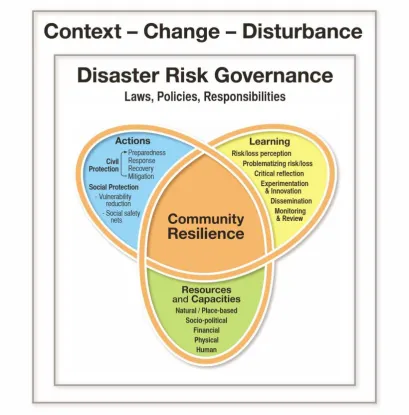
his deliverable describes the progress made towards the aim of modelling societal resilience through simulation experiments, and it should be read alongside framework document (in emBRACE Deliverable 6.6 (Jülich, Kruse and Björnsen Gurung 2014) and subsequent developments of the emBRACE framework – see Fig 1.1 below), for understanding the overall meta-model of emBRACE. However, the ABM work also links to the framework through case studies. Thus, actual realities of
each case study’s social and civil Actions; experience and Learning; and natural and
social-political Resources & Capacities can be explored within the context existing
there, allowing case-study-specific explorations to be carried out within an understanding provided by the generic framework.
8
Fig. 1.1: the final iteration of the emBRACE framework
9
2. Background to the use of ABMs
This section updates the literature reviews of Del. 1.1 and Del. 1.3 (Birkmann et al 2012) from earlier in the project, concerning methods for modelling resilience. We begin with a brief introduction to the method.
Agent-based modelling concentrates on describing the social system at the micro-level of the actors within it, and nowadays this is usually done using a computer model (program). In this system, an agent is an autonomous piece of program code representing an actor in a social system. With great design flexibility, ABM can be used to model many or multiple types of agency at different levels of action. The agent design templates are used to create many 'instances' of these actor-representations, and thereby populate the model (hence, ABMs are sometimes also known as multi-agent models).
ABM is also noted for being a highly flexible method, which does not depend on an a priori set of given techniques or assumptions, and without particular attachment to
any theoretical approach. In this respect, ABM may lend itself to being more directly informed from observation and evidence – although the cost and difficulty to collect sufficient data continually presents a barrier. Usually the rules of behaviour of agents are informed, empirically, from a combination of field studies, participant methods (e.g. games, co-construction workshops), and case studies, or sometimes from stylised facts (cf also the emBRACE deliverable on social network mapping (Matin et
al 2015), which also discusses data gathering issues and also the use of stylized facts – see particularly section on complex dynamic social networks).
There is also an important role for theory in ABM. In this respect, it can be argued that there is a lack of appropriate social theory that may be linked to social simulation modelling (This is, for example, very unlike social network mapping). Central though the concerns of sociology are; it is noticeable the deficit of theory on how humans actually interact which can be used readily in agent-based computer simulation; moreover much is still to be learnt about social factors in actor decision making. Decision networks (a.k.a. influence diagrams) sometimes used in psychology are often simplified enough representations of social realities to be useful in
10
developing and expanding this theory, as well as having much to contribute to the discussion on the possible links between micro and macro.
Another of the major continuing themes of ABM (as with social network analysis: Hanneman & Riddle, 2005) is the way in which individual actors "make" larger social structures through their patterns of interaction while, at the same time, “society” - and its institutions - shape the choices made by the individuals who are embedded within structures.
The design of agent attributes and rules step involves a clarification and formalisation of knowledge about the target social system, and it also involves an abstraction step as we cannot (and nor would we want to) attempt to capture everything. Here Zeitlyn
and Just’s “Merological Anthropology” (2014) is perfectly designed as a theoretical
framing. Zeitlyn (2009) describes merological anthropology as “partial” (in the sense
of describing part of the system well but also from a particular standpoint). We can have good confidence in that bit of the system which we do know, and structuring our understanding – e.g. through the application of an ABM – allows us to organise,
reduce, and select (op.cit: 211) what ‘facts’ we have confidence in.
Having described the micro-foundational aspects, the simulation is used to explore consequences the model design by observing the aggregate (macro) outputs of the model. Batches of simulations are run as experiments to test different assumptions, different parameter choices, different initial conditions and scenarios etc.
Validation is done by testing 'reality of assumptions' with stakeholders. Participation is designed as an iterative process to help clarify stakeholders' understandings, to improve the accuracy with which their knowledge is represented in the model, and to improve a model's relevance.
ABM helps in understanding relationships and thus possible causal mechanisms in complex systems, by generating them 'from the bottom-up'. In other words, ABM helps with the explanation of certain complex phenomena, through development of theory and simulation experiments carried out. It is useful for exploring consequences of sets of assumptions (model rules) that interact through strong dependencies and trigger feedbacks.
11
(MAS1) to describe observed social systems, arguing that there are very few
examples of well-validated representational models. Boero and Squazzoni (2005) proposed three categories of agent-based model: 'theoretical abstractions', 'typifications' and 'case-based models. More recently Schlüter et al. (2012) and others have written about this dichotomy. One of the dimensions proposed by the Schlüter et al. MORE framework is the modelling level of abstraction – from generic to context based, which corresponds to orientation either towards foundational theory or towards case study empiricism.
Most authors agree, however, the boundary between the two strands of research is not always so clear-cut. In this deliverable we will report on development of different types of models – a more abstract one in the case of disaster preparedness and a more case-focussed one in the case of disaster response. We discuss lessons learned in terms of development of the methodology and an outlook on further uptake.
In fact, choosing an ABM approach is only relevant in the case where one is trying to explore the consequences of dense interaction among actors in a social system (bringing on board the concepts of social networks, dynamics of norms, imitation, social learning, social influence, power, social coordination and control). ABM could work well as part of a suite of methods used to explore and understand complex social systems (Taylor et al 2014: 261): further, ABM can be used with other modelling methods such as systems models and unified modelling language (Forrester et al 2014) but also, potentially, with numerical models such as those routinely used by geologists, hydrologists, seismologists, volcanologists and other technical disaster experts.
In recent years, many researchers have developed ABMs in the context of environmental resources, ecological dynamics, and development or adaptation processes under environmental change.
We now turn to discussion of this growing literature, moving from an interpretation of the history of development of different trends in resilience modelling research, to
1 The generic term Multi-Agent System (MAS) applies to all such distributed
systems and applications, whereas if we are concerned only with models, ABMs, and still more specific - social models are also referred to as Agent-Based Social
12
some recent examples of state of the art in resilience modelling. This section discusses differences and commonalities among modelling approaches looking at climate adaptation and resilience. This is followed by a discussion of dynamic simulation modelling, looking in more detail at particular techniques and referring to some good examples of their application on research in community resilience. In the text box below, links to further resources are also provided.
2.1. History of development and use in resilience research
Vulnerability and resilience modelling includes a diverse set of approaches including conceptual modelling, statistical modelling and dynamical modelling. Most of the attention has been on the latter. The predictive ability of statistical models depends on the availability of adequate data. Parsimonious statistical models can, in general, provide clarity and better fit to historical data. However, the need to consider multiple drivers of vulnerability and the difficulty of obtaining historical data for all relevant covariates has usually precluded the use of statistical modelling. Dynamical models instead explicitly model the key equations or relationships among model variables. They can potentially be applied in different contexts to those in which they were developed, and to explore and compare possible future states of a system, i.e. scenario analysis.
Whereas many of the concepts and definitions of vulnerability originate in the field of disaster risk research, the modelling techniques have flowed down from macroeconomics and integrated assessment. These include Integrated Assessment Models (IAMs), system dynamics, and Bayesian networks – and in these types of
A selection of introductory articles for further reading:
May 2007 (Issue 2603 pgs.) New Scientist entitled: Interview: Can we model the
real world? (An interview with JOSHUA M.EPSTEIN)
Simulation: an emergent perspective (by Nigel Gilbert)
Nigel Gilbert and Klaus G. Troitzsch (2005), Simulation for the Social Scientist,
13
models, there is often input from expert stakeholders in their design. For example, Bayesian networks (BN) and FCMs both involve conceptual modelling with stakeholders – which may be followed by use of computational methods to investigate sensitivities to changes in the different drivers identified. These techniques often also incorporate climate change scenarios.
Research on the concept of ecological resilience, which originated in the early 70's (Holling 1973), has developed independently of hazards and disaster research, and hence independently of this work on vulnerability. Although more recently authors are pointing out the apparent connections between (social-ecological systems) resilience and adaptation research which aims at understanding how adaptation may reduce vulnerabilities. The differences between vulnerability and resilience concepts has been discussed by Miller et al. (2010). Both resilience and vulnerability approaches are concerned with how systems respond to change. However, each approach considers systems in quite different ways. Nelson et al. (2007) observe that the resilience community tends to prefer a systemic approach, whereas the climate change adaptation and the vulnerability communities tend to take an actor-oriented approach (see McLaughlin and Dietz 2007).
Moreover, resilience research has a strong theoretical basis and mathematical formulation. It focuses on modelling of systems and their interconnections, alternative states and critical ecological thresholds, with biophysical variables (particularly ecological ones) more often than socio-economic ones forming the main aspect of study. In this context, system dynamics modelling is a widely used research method for resilience researchers to understand the overall aggregate picture of system function, including its social-ecological relations, and the dynamics in terms of changes in stocks and flows.
14
Miller et al. (2010) argue that the two approaches are potentially complementary, in the sense that actor-based analyses look at the processes of negotiation, decision making, and action, whereas systems-based analyses complement this approach by examining the interaction of social and ecological processes. Furthermore, each of these communities has differentially emphasized either the ecological- biophysical or the social-political dimensions of problems under investigation, i.e. that biophysical variables tend to be the focus within resilience research, and historical and political economic processes in vulnerability research.
2.2. Review of ABM and systems-based simulation studies
Applications of ABM in resilience studies are relatively few. In their review and conceptual framing paper which introduces the MORE framework mentioned above, Schlüter et al. (2012) carried out a systematic review of 29 examples of modelling work in the area of social-ecological systems resilience (they remark that models have received rather little attention in SES resilience research so far) finding that the great majority were aimed at improving understanding and providing decision support. According to their own elaboration of review criteria, they highlighted existing gaps/opportunities such as use of models for integration of knowledge and communication of ideas. They also argued that a plurality of methods, model types and applications would be needed to fulfil necessary tasks for modelling.
Interestingly, it was found that the majority (69%) of the studies used difference and differential equations to formulate the model whereas 24% used rule-based models (including ABM) and 24% state and transition models (including SDM). They also observed that human activities are considered independently from environmental stimuli and independently from any context of social interaction among multiple actors. Modelling tends to focus on development and valuation of management strategies - but not on the responses of individual actors to these strategies –
therefore these can be characterised as system-based analyses.
The authors observe the models' “very rudimentary representation of the social
15
a “static externality” (Karin Frank, pers.comm., emBRACE Project Workshop Leipzig,
6-7 March 2012).
Recently we looked, in addition, specifically for agent-based modelling studies that pertain to social resilience that have been published in the last few years (2009 and after; the date of the Schlüter et al. survey) by doing an identical Web of Science
search including the term “agent-based” and additionally widening the search including the more broadly dedicated Journal of Artificial Societies and Social Simulation (JASSS). The former yielded 13 publications and the latter yielded around 4 publications and following review we concluded that little had changed since 2009 as far as concerns the use of ABM.
The most relevant of these papers (approx. 8 papers) were reviewed for this report. Generally these studies use the term resilience to describe the macro stability of the models and to discuss the pattern of simulation outcomes. For example, Becu et al (2014) refer to social resilience in terms of stability of the model cultivation system over large spatial and temporal scales, in which different balances are established. The authors show demographic cycles in the simulation run reported. Altaweel et al (2010) model group decision making for implementing measures promoting resilience to social-ecological change, although the underlying model is not based on environmental risk factors (it is based on an artificial neural network model). The outcome indicator of interest is the amount of compliance in a village community,
Search terms used for this review:
WoK: TOPIC: (resilience) AND TOPIC: (agent-based) AND TOPIC: (ecol*)
AND TOPIC: (management OR resource OR governance)
JASSS: “resilience” and “agent
-
based”
As a dedicated journal to social simulation (and strongly oriented to ABM) JASSS
is a key outlet for the type of work of interest. Within this one journal the search
was widened by dropping the ecol* term.
16
tested over different scenarios. Heckbert (2013) reports an archaeological simulation to study development of settlement patterns and their persistence, measured by five different model indicators (population, trade, ecosystem services, forest condition and soil degradation) mapped across geographical space and over time. The biophysical model introduces disturbance to the system through cyclical variation in rainfall model input, which is calibrated on paleoclimatic records. Although climate
perturbations are driving the model they “concurrently contribute to resilience or vulnerability” along with other interconnected variables. Parrott et al. (2012) present 3 examples of regional landscape models, including one social network study (not an ABM) of agricultural system resilience. The social network is mapped from interviews and includes governance actors and farmers, and is connected to a habitat network based on remote sensing spatial data. The authors argue that the model can be used to analyse how perturbations caused by removal of nodes or edges might spread through the networks and affect resilience, both in terms of actors (e.g. funding cuts affecting social capital) and habitats (e.g. communicating information about biodiversity protection).
Spies et al. (2014) outline an approach for understanding complexity in a coupled
system with challenges for forest fire management. They argue that “one of the main
reasons to develop more comprehensive models [...] is to improve social-ecological
resilience and adaptation strategies” and introduce a conceptual model as the basis
for an ABM. The idea is to test two different models of decision making in which multiple indicators are used (indicators mentioned include timber production, biodiversity and aesthetics). The intention is to use the model with stakeholders to
“facilitate dialogue about increasing adaptation and resilience in this fire-prone
landscape” and to test management scenarios.
Polhill et al. (2010) adapted an existing model to a particular application context, showing where evidence, i.e. new findings, suggested specific changes. The context is a particular regional landscape, farm managers and farming service providers, and the interest is the “apparent resilience in land use and land ownership change to various shocks over the past 20 years”. Different shocks are explored through ABM
in a later working paper by Filatova and Polhill (2012) (not in Web of Knowledge).
under-17
specification seems important because, on the one hand, it is essential to understand what are the conditions of applicability for each model. On the other hand, however, if multiple sorts of social, economic or ecological changes could be studied simultaneously, this could also inform work on the concept of 'generalised resilience'.
The lack of clarity is apparent particularly where the term resilience is used interchangeably with closely related terms such as viability or sustainability. We also find that most studies do not look at the effect of 'shocks' or exogenous disturbances which are a central concept of the resilience literatures. In the case of most ABM literature, modelled changes seem to be ones driven by quite slow or moderate environmental changes rather than shocks such as sudden policy changes or demographic change in the human system (where changes might be faster). In other words shocks are exclusively related to the environmental system (they may overstep a desirable range for the disturbance regime) rather than the social change (where shocks could include new types of economies or social environments). See Filatova and Polhill (2012) for further discussion.
It is interesting that resilience is studied at the emergent level (as an outcome emerging from the lower-level interactions and decisions) rather than addressing resilience at other levels of agency and decision-making, such as at the household-level, or in local community groups and other organisations.
One notable work is Smith (2014) who uses ABM in understanding environmentally induced migration. The starting point for this paper about development and testing of an ABM is a well-specified conceptual model, but lack of underpinning data, especially about spatial and temporal aspects. The author suggests that data usable for modelling are rare and difficult to collect. The main data source available is 'Rainfalls project' case-study data including a survey in 3 communities. This is used initially to derive a statistical model of migration decisions to help understand what attributes to include in the ABM. Surveys at household level are also used to define 'resilience' of a household to changing rainfall distributions. Here, household resilience is determined by household-level income and food production each month. Surplus post-consumption, computed each simulated month, is a number used as a proxy for resilience in all results. The number must be above a threshold of 0.5 for the household to be classified as resilient. A threshold of 1.5 is used as a determinant of household-level migration decisions (where migration becomes
18
livelihood and food security”; distinct types of migration are defined corresponding to 'opportunistic' and 'needs-based' forms of migration.
Smith (op.cit.) extends the original conceptual model to specify social and farm labour networks in the simulation model - using different information-sharing network size scenarios. Scenarios also explore the impact of changing rainfall patterns on household behaviour and choices, including migration. For each of the scenarios, household resilience classification rates (time series) are compared to a base scenario. The author finds that, because of the interaction of other drivers in the simulation, there is no clear correlation between climate changes and migration. In this study context, low data and epistemic uncertainty is compensated to some extent by checking the model against parameterisations derived from case studies and other literature. He argues that this could limit the extrapolation of findings to other situations.
In this section, and in other comprehensive review studies (Schlüter et al 2012; Miller et al 2010) we have observed that applications of ABM in resilience studies are still relatively few. This is interesting because the approach and its relative merits are by now widely known and have been discussed for a long time, particularly in the area of ecological studies (Bousquet et al 1999; Bousquet and Le Page 2004) and social-ecological systems (Poteete et al 2006; Cumming et al 2010) who suggest that agent-based modelling is a promising way to understand dynamic aspects of ecological systems and networks (cf. Cumming et al 2010). Seemingly, however, there has been no change, or only modest change, in the volume and the focus of simulation studies that address resilience at the individual, social or community levels, in the last 5 years. Accordingly, in the following sections we can give an outlook and make some observations in relation to the current state of the art in simulation modelling.
2.2.1. Outlook
Many researchers – working both in vulnerability and resilience-related disciplines –
19
circumspectly. Relatively few articles have been published describing ABMs that consider, for example, climate change adaptation (e.g. Bharwani et al. 2005, Berman et al. 2004).
As a descriptor of an attribute of something (an exposure unit), it can be difficult to formalise vulnerability as a model variable. Consideration must be given to what outcome the entity is vulnerable to, and whether this is presented as a relational variable, or whether the vulnerability is a general concept. The aspects to be included depend on the problem domain. Social vulnerability has many additional complicating features, for example, it is highly dynamic, multi-stressor, operates across scales, and also has significant social stratification. It is difficult to capture this complexity in one single model, to validate the large number of assumptions needed, and to provide summary information presenting the model results.
The outlook, then, is that simulation modelling may deliver a partial picture of resilient communities, systems and individuals, which appears most promising when ABM is included alongside other methods (and other modelling approaches) which are complementary and may facilitate better use of empirical data to inform and constrain the models (Poteete et al 2010: 195) identify four such types of empirical inputs: case-study analysis, laboratory experiments, role-playing games, and observed stylized facts).
Other authors warn us of the difficulties of developing social simulations (Edmonds et al 2013) and the relative lack of use of models (Lucas 2011). In addition to the complication of some of the different concepts in resilience research, discussed above, these observations may throw some light on why there is a relatively low uptake and publication of few new studies. Moreover, some of the barriers are also linked to how ABM is perceived and the critiques it receives (cf. Waldherr and Wijermans 2013). What is apparent is that new methods and tools are needed to address data scarcity and to better recognise the subjectivity within models which will help to counter some of the criticisms.
2.3. Some methodological observations
In this section we consider the use of quantitative indicators in modelling, as well as the prospects for incorporating qualitative field data.
20
directly measurable using a SNM or SNA approach, or other structured subjective methods such as Q-methodology – and changes to these (in terms of an ordinal or nominal scale – that is direction of change) are directly modellable using ABM. This will provide a useful tool for engaging with decision makers, practitioners, and community members.
One of the very active areas in modelling research and related fields is development of methods for incorporating qualitative field data into model specifications in a more rigorous way (cf. JASSS special section, Edmonds 2015). New methods and tools are needed to address data scarcity and to make better use of existing data sets. This is also closely related to the need for better documentation and easier maintenance and re-use of models.
Despite the advances made and the growing appreciation for interdisciplinary, mixed-method approaches, the following remains an open question: What are complementary methods that can be used with ABM to elicit the most suitable data, i.e. in sufficient quantity and quality for design and validation? Further insight into this question is likely to come from approaches that unpack why people behave the way they do, what drives their decisions, their interactions with (social and natural) environments, and of the context that is present in every modelled situation in relation to hazards, risks and disasters.
21
3. Case studies of ABM
Modelling case studies are different to emBRACE case studies but with an overlap
as they focused on smaller (i.e. see Zeitlyn’s “partial” – see above) areas or particular aspects of interest to the case studies.
3.1. Disaster preparedness
This modelling case study aims to contribute to a growing literature on preparedness theory, explaining – in a more visual and experimental manner – a part of this theory, specifically Paton's disaster preparedness model (Paton 2003) and community engagement theory of preparedness (Paton 2008), by generating it using an ABM.
The background for increased academic interest in this area is the shift in emergency management from response-based to a risk management focus, in which disaster preparation plays an important role. Within this risk perspective, there has also been a shift towards a focus on development of community capacity to co-exist with acceptable levels of risk and the possibility to grow in face of this risk and benefit from it (Paton 2000).
Empirical research has consistently found that levels of preparedness remain low, even in areas where risk is high, and in spite of provision of information about hazards and how to prepare for them (e.g. Lindell & Perry 1992, Lindell et al 2006 & 2007, Paton and McClure 2013). In other words, knowledge about risks is not translated into preparedness and the adoption of 'desired' adjustment items. Paton's model, like others (e.g. PADM, Lindell and Perry 2011; PrE model, Duval and Mulilis 1999) translates disaster preparedness into a sequence of stages in order to model
how people “typically” make decisions about adopting such actions, which resembles
the well-known approach more universally formulated as “stage theory”.
Becker et al. (2011) state that “An ongoing challenge is to better understand how to motivate people to actually take action and get prepared”. To meet this need, both
22
3.1.1 Data and case study
Data collected in the emBRACE Turkish scase study and discussed in METU's case study deliverable (Karanci et al 2014) is extensive on individual psychological resilience, and on response, recovery and reconstruction processes as perceived by different stakeholders. Researchers used a mix of qualitative and quantitative methods. A set of focus groups were carried out with actors from various organizations/ institutions. Data also include semi-structured interviews plus in-depth interviews with 20 actors (disaster survivors) in Van, as well as quantitative survey data, which were used in statistical analysis.
Models used were the Multivariate Risk Factor (MRF) model of Freedy, Resnick and Kilpatrick (1993), which includes many pre-disaster factors. A second model (not used in the Turkish empirical study) is the disaster preparedness (DP) model of Paton and colleagues, which is discussed at length in emBRACE Del.4.1, focusing on individual and household-level resilience (Karanci, Ikizer and Doğulu 2015). Also, in Van although the main focus was on the individual, the research also connected with community factors and analysed the perception of community resilience. Main findings were the identification of key predictors of individual psychological resilience, as well as the qualitative findings, e.g. how the Marmara earthquake may have influenced how the response and recovery operations were managed. The qualitative study concluded, based on the focus group qualitative content analysis, that
discussion evolved around “...common topics, namely, increased awareness on earthquake safety of buildings, increased interest in mandatory earthquake insurance for buildings, economic recession in the post-quake period, and change in values and
attitudes of the community members”.
3.1.2. Methodology and rationale
23
stages. It was developed by SEI and discussed with colleagues at METU. The team at METU was not experienced with ABM but became more interested as the work progressed. Some ideas for 'scenarios' to explore with the ABM are based on the case study work in Turkey and are discussed in a later section.
We used NetLogo (Wilensky 1999) modelling software to implement the model. NetLogo is a high-level, open source, cross-platform programming language which developed from an educational domain and is now one of the most widely used platforms for ABM research. R statistical programming (R Core Team 2015) was used for the analysis. R is one of the most widely used tools for computational statistics, visualization and data science. There is also the package 'Rnetlogo' available for R which makes it possible to use the two applications jointly by exchanging commands and data. The simulations were run from Rnetlogo.
In the next section a single example simulation is presented first. Then, a set of sensitivity analysis tests are carried out across different parameter settings with replicate simulations. For each experiment, 51 runs were made with different random seeds and then averages of the outputs were calculated. This number, 51, was chosen because each experiment could be completed in around 1 hour of PC time and because the median values (calculated for the counts of the number of agents) would be integer valued.
The main outcome of interest for testing the model is the individual actors' intention to prepare. From a socio-cognitive perspective, intention to prepare is thought to be a key predictor of actual preparation, where actual preparation is often the desired adaptive responses from point of view of risk reduction. Paton et al (2005) note: “That
intention played a prominent mediating role in the model proved to be a highly
significant element of the model.” In the same paper the author defines a key element of adaptive response to adversity as “the ability of communities to draw on internal personal and social resources”. They continues: “This makes preparation, the process by which resource availability is encouraged, and important component
of resilience.”
24
aspects of resilience, both qualitatively and quantitatively. These factors were not captured as individual-level variables which could also have been useful for modelling. We could not obtain quantitative values from interview respondents; we do, however, have some qualitative/categorical data to compare with the distributions for model variables, such as risk perceptions. This is sufficient to explore whether the simulation model produces outputs that reflect what has been observed in Van.
Another variable used in the quantitative study in Van as an outcome (dependent) variable was stress-coping ability. In relation to the DP model, stress-coping ability
seems to be closely related to the individual’s ability to manage hazard anxiety at
high levels (avoiding denial and) and indicating healthy psychological functioning.
An initial assumption for this model is that communication is in accordance with the deficit model of hazard information (see section 3.1.6) which has the usual components, i.e. source, message, target. However, we also look at some critiques of this model with the aim of improving how communication is considered and how it is modelled. Other findings can be drawn from literature. For example, Becker et al. (2011) focuses on people’s use of information. According to Becker et al. (2011),
among passive forms, information in brochures may be more difficult to recall than TV visual images.
Intention to prepare has been identified as an important variable, and appears to be a good candidate for understanding personal disaster resilience, albeit it is only part of the story. In this modelling work we decided to investigate this partial picture of resilience, selecting only one 'output' variable, using the DP framework to consider it detail, and from a dynamic perspective with ABM.
Paton's model argues that preparedness represents the outcome of a three stage reasoning process: motivation to prepare; forming intentions to prepare, and their conversion into actual preparation (Paton 2003). The ABM was developed to show the interaction of several of the variables in the precursor stage that are thought to affect intentions. In particular we wanted to extend the static picture of preparedness to include a more time-dependent analysis. This may be useful in thinking about what type of disaster preparedness measures are attainable over different time periods, and also how this might scale across a heterogeneous population.
25
a moderating factor, was demonstrated by Paton et al. (2005) using regression analysis within structural equation modelling. In the study the variable included was the time frame within which people estimate or assume that the next hazard event will occur. Including time within a simulation of a preparation process, where the actual mechanism is considered, has not so far been considered. The next section describes the agent-based model and the simulation experiments carried out with the model.
3.1.4. Model description and simulation experiments
An ABM, based on the Paton 2003 conceptual model of disaster preparedness, was developed and explored through simulation experiments. The ABM was developed to show the interaction of several of the variables in the precursor stage that are thought to affect intentions. The scope of this model is limited: the outcome of interest is only the intention to prepare (i.e. the first two stages of the conceptual model of Paton). Variables linking intentions to other factors that are thought to moderate how intentions lead to preparedness are not included (although they could be included in a future version).
The simulation model also includes a simple social network in which messages related to intentions are transmitted. The time step for the model is the week – an approximate correspondence with a real time frame. Each week time step in the model is broken down into 4 sub-steps in which agents:
update network connections
send, receive and process messages
calculate risk, and expectations (beliefs)
26
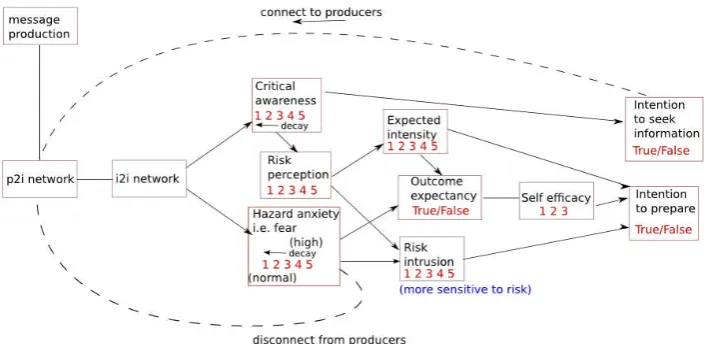
Figure 3.1.1: Overview model conceptual diagram, showing key model variables and relationships. Values of model variables, assuming integer scales, are shown in red.
This section, model description, provides details on all of the variables at precursor, mediator, and intention formation stages as well as the network aspects depicted in Fig 3.1.1.
Precursor variables; Critical awareness, Risk perception and Hazard anxiety.
Critical awareness is 'the extent to which people think and talk about the hazard' similar to 'hazard intrusion' which depends on a person's knowledge/experience gained through previous exposure to the hazard and hazard information (especially through interactive activities). In the model, awareness (an integer between 1 and 5) can be increased when suitable messages are received from the producer/individual networks. Awareness decays after a number of time-steps (decay-rate) if no further messages have been received (saliency is zero).
[image:29.595.106.461.125.297.2]27
in the simplest case – but that perceived risk does not exceed real risk2). Therefore,
in the model, perceived risk changes with critical awareness.
Hazard anxiety, is a measure of fear which combines concern for magnitude of the hazard and its consequences and for impending occurrence. Anxiety precursor has two different effects because at moderate levels it can motivate to prepare and at high levels it can impede the intention formation, and both are captured in the model. Low and moderate levels influence via a variable called risk intrusion, whereas at high levels of fear the ability to function normally can be compromised via a link to outcome expectancy (if hazard anxiety exceeds a tolerance level the expectancy that the event can be mitigated is false). This precursor at high levels also causes the individual to disconnect from producers. Similarly to Critical Awareness, the level of anxiety decays after a number of time-steps (decay-rate) if no further messages have been received (saliency is zero).
Mediator variables: beliefs which mediate between precursors and intentions:
Expected Intensity is a measure of the severity of the anticipated hazard. It is closely related to perceived risk by further specifying the magnitude of the event (i.e. large or small) that the individual is anticipating, and potentially, preparing for. Expected Intensity is initialised as an integer value drawn from a random uniform distribution with minimum 1 and maximum equal to the risk perception. When an individual’s risk
perception changes, Expected Intensity is updated.
Outcome Expectancy is a belief about whether a community will be able to respond effectively to a hazard and reduce risk. It depends on two input variables and two corresponding thresholds. Firstly, if anxiety is above the anxiety threshold, then it is assumed that the hazard will exceed response capacity and therefore nothing can be done (the problem is irreducible) and this variable is set False (preparation is subsequently not worth being pursued). Otherwise, Outcome Expectancy depends on comparing the Expected Intensity with the idealised community response efficacy (a fixed integer) and if the Expected Intensity is less or equal to the available response then the Expectancy is set as True.
2 This state of affairs does not necessarily reflect ‘reality’ but is a device necessary for
the modelling process. Further, though, the fact that the model has this characteristic is useful
in discussion to what extent this – and other characteristics within the model – is (or is not)
28
Risk Intrusion is a variable proposed that captures the extent to which an individual factors risk into their intentions to prepare. It is based on the idea that some level of anxiety is necessary; the higher the anxiety the more likely one is to be motivated prepare. Paton states that anxiety makes people more sensitive to risk, and this is captured as 'intrusion of risk into planning'. Risk Intrusion is a function of Risk Perception and Hazard Anxiety. It is compared with a risk tolerance threshold to establish whether current risks might lead to intentions to prepare.
Self-efficacy is, similarly to the (idealised) community response efficacy, a belief about the possession of sufficient capacity to respond, and it operates at the
personal level of individuals. It is a key variable in Paton’s and other models. In the
ABM, individuals each have a fixed value of this variable, and it is compared with the Expected Intensity to inform the intention. If Self-efficacy is lower (i.e., is not adequate for meeting the intensity) then the individual does not feel capable of response, and therefore will not form intention to prepare.
Intention formation variables: model outcomes taking values True or False:
Intention to prepare is one of the main outcomes of interest in the Paton model, and there are several mediating variables that can influence the formation of such intentions: here, direct influence comes from expected intensity and self-efficacy (which are compared, as explained above) and from Risk Intrusion (which is compared with risk-tolerance). If Self-efficacy and Risk Intrusion are both sufficiently above corresponding thresholds, then the individual will form the intention to prepare. Conversely, if either of these preconditions does not hold then the individual will not form the intention to prepare.
Intention to seek information is influenced directly only by the Critical Awareness. It is positively influenced, i.e. if Critical Awareness is above the awareness threshold, then the individual will form the intention to seek information. As we will see, this involves connecting to further producers and becoming exposed to potential additional messages, which is somewhat circular (messages can raise awareness). Also, however, if the individual is in the state of disconnecting (has high anxiety above the threshold) the individual will not add any links [Not shown on the diagram].
Network variables: generation of social networks and their function:
29
system and including dynamics of the disaster preparedness model. When the simulation is initialised, a set of messages is created. Then, in each time-step, message production occurs: each producer agent selects a different message and broadcasts it via all of its connections to individuals (p2i network). Messages can cause changes in values of certain individual's variables (Critical Awareness, Hazard Anxiety) when they are processed.
The p2i network is set up initially with few connections between producers and individuals. The set of links of the network then evolves – the network structure is changed by connecting and disconnecting. Message production influences the network content and therefore the interactions. The p2i network also influences the network of connections among individuals (i2i network) because it influences the content. Some messages produced in the p2i are then sent from individual to individual through these connections (there are a number of 'rounds' of i2i communication but the messages do not persist in the network from one time-step to another). The i2i network also influences the precursor variables Critical Awareness and Hazard Anxiety.
Recording model output variables
Intention to prepare over time is the main output variable of interest in the model. In its raw form this is a binary value, True or False, measured at every tick. However, rather than report the time series evolution of this model variable, or simply report a total number of weeks ,we defined 4 categories which typify different kinds of response:
(i.e., 0 = L0; 1<=L1<=6 ; 7<=L2<=33 ; 34<=L3<<=52)
30
planner anticipate what sort of strategy (for enhancing preparedness) may be effective. For example providing high-maintenance safety equipment may not be the best strategy if most of the population is in L0 and L1. Thus it could help understand who would benefit from different interventions and possibly help to prioritise those.
Simulation experiments
An initial experiment was done with base parameters. Then, a set of 5 simulation experiments were carried out to better understand the effect of different model parameters on results. We investigated four parameters in the category of motivating factors – critical awareness, hazard anxiety, risk perception, underlying risk – and one parameter in the category of moderator variables – self-efficacy – which affect indirectly intentions to prepare. For most of these variables we focused on examining the thresholds for behavioural change.
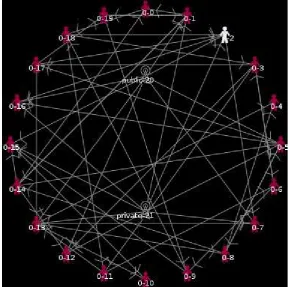
[image:33.595.153.444.336.623.2]In each experiment the model is set up with 20 individuals and 2 producers that also comprise a communication network (see Figure 3.1.2 above). The outcome of interest for the experiment is the indication of how many individuals form intentions to
Figure 3.1.2: screen shot of the simulation
31
prepare and for how long they remain in this state over a specific period, i.e. one model year. We recorded the result by running the model for an initial spin-up time of 2 x 52 weeks (i.e. two warm-up years), and then for a further 52 weeks after which a set of measurement values was returned. We monitored the state of each agent during the final period of 52 weeks and used the result to calculate incidence of adopting preparation intentions.
3.1.5. Results
An initial experiment serves to illustrate the model parameter set up and the analysis of outputs. In this experiment the parameter set is shown on the left and the result is shown on the right hand panel. This was produced with one single simulation run.
Base parameters: set fear-t-levels [3 4 5] set aware-t-levels [2 3 4] set risk-t-levels [3 4] set underlyingrisk 4 set selfefflevels [1 2 3] set decay-rate 5
[image:34.595.266.492.292.473.2]set i2i-rounds 1
Figure 3.1.3: initial experiment
32
throughout the year (L3). Plotting this signature produces a parabolic curve with relatively more individuals in L0 followed by L3.
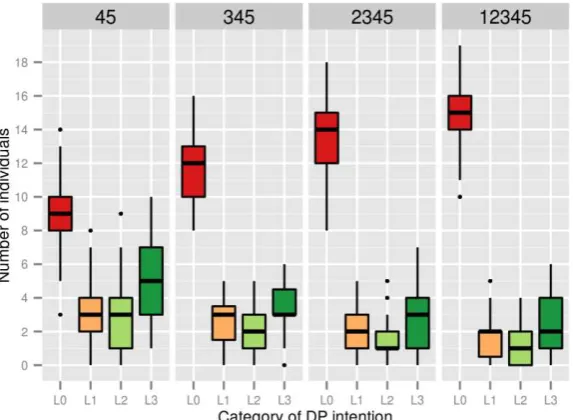
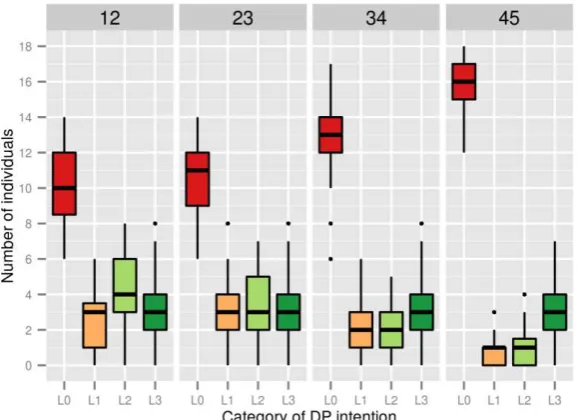
The simulation experiments involve doing many replications with different values for the initialisation of the selected parameters. In the first experiment, labelled S1, we vary the hazard anxiety threshold (fear threshold). This is initialised by drawing values from a uniform (integer) distribution for each agent in the simulation. We vary the way the uniform distribution is constructed, firstly constructing it from the interval (4,5) and then subsequently including lower values in the interval (3,4,5), (2,3,4,5) and (1,2,3,4,5), meaning that in the later sets of replications, the agents will be likely to have lower hazard anxiety thresholds and there will be a wider range of values. All other parameter settings are identical, so in Fig 3.1.4 we can compare the effect of the changes in the hazard anxiety threshold.
[image:35.595.156.443.471.681.2]The results are shown differently to the frequency histogram in Fig 3.1.3. Rather than a histogram, boxplots are used to illustrate the results distribution and median values over 51 simulations. The central bar shows the median (also reported in the table 3.1), top and bottom of the bar show the Q1 and Q3 statistics, and whiskers on the bar show the min. and max. range. Looking at the median values, one can see the relatively higher frequency in L0 and L3. Multiple panels are used to show differences in outputs with different parameter values labelled at the tops of each panel.
33
In the S1 experiment, first panel shows the hazard anxiety threshold is drawn from the interval (4,5). The result is that around half of the agents (median = 9) never develop the intention to prepare, L0. Around 3 of the agents fall into each of the L1 and L2 response categories, and around 5 agents in L3, although there is quite a lot of variation across replications. In contrast, in the case where the interval (3,4,5) is used (second panel from the left), more than half, around 12, agents are in L0 and their occurrences in L1, L2 and L3 are lower. In the third panel and fourth panel this difference between heights of the bars increases – very few agents (around 5 or 6) form any intention to prepare over the entire time period. To sum up, higher anxiety threshold levels (interval (4,5)) encourage greater incidence of disaster preparedness intention than low anxiety thresholds (the interval (1,2,3,4,5)).
[image:36.595.156.443.341.551.2]In experiment S2, we varied the critical awareness threshold in a similar way to the anxiety threshold described earlier. The intervals were again varied from (4,5) to (1,2,3,4,5). The results can be seen in Fig 3.1.5 above, and the intervals used can be seen in the panel labels. In the case (4,5), a median of 17 agents (85% of population) never formed the intention to prepare (L0) whilst very few were classified into L1, L2 or L3 (medians of 1, 0 and 2 respectively). In the second and third panel the picture looks a little better, as more agents are joining L1, L2 or L3 (medians of 2, 1 and 2) meaning more agents are forming intentions over some part of the time period.
34
However more than half (median 12 in the fourth panel) are still never forming such intentions. To sum up, lower critical awareness threshold levels (using the interval (1,2,3,4,5)) encourage greater incidence of disaster preparedness intention than high awareness thresholds (from the interval (4,5)).
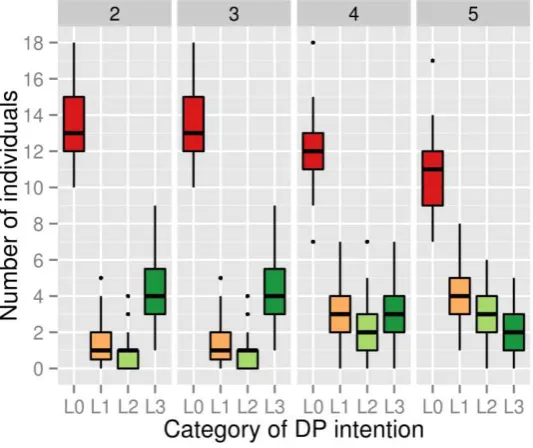
[image:37.595.154.444.170.380.2]Experiment S3 investigated the risk tolerance threshold. In a similar way to the above, the parameter distribution was varied using the intervals (1,2), (2,3), (3,4) and (4,5). Thus the risk tolerance threshold increases looking at the panels from left to right in Fig 3.1.6. Higher risk tolerance threshold means that risk perception (moderated by hazard anxiety) of agents needs to reach a high level before it may lead to intentions to prepare (see model overview). In the figure on the left panel, where the threshold is lower, around half of the agents never form intentions to prepare, whereas a small number form intentions over few weeks (L1), more agents over a moderate time frame (L2), and few again over 34-52 weeks (L3). As we increase the risk tolerance, intentions to prepare become more scarce, as could be expected. In the right-hand panel, few actors are classified in L1 and L2 whereas the median in L0 increases to 16 actors. This simulation has confirmed that risk tolerance it is an important factor over the intervals tested.
35
Figure 3.1.7: self-efficacy
In simulation experiment S4, self-efficacy was investigated. Self-efficacy was modelled as a fixed attribute which is important for moderating expectancy; the higher the self-efficacy, the more a person believes he/she personally could affect adequate preparation. In the model it is compared with expected intensity. It is not surprising that results show that lower expected intensity predicts lower preparation quite well. In Fig 3.1.7 above there is a strong contrast between the second and third panels, with respective intervals (1,2,3) and (2,3,4). The median result shifts from 12 in L0 (second panel) to 7 in L0 (third panel) and from 3 in L3 (second panel) to 6 in L3 (third panel). This shows that the results are very sensitive to changing this parameter around certain values. The final panel shows that outcomes are not sensitive at the higher range of values (3,4,5).
36
Experiment S5 shows the changes to simulation outcomes varying the underlying risk parameter, where underlying risk is assumed to be uniform for the whole population. Fig 3.1.8 shows that the model is not as sensitive to this parameter as some of the other parameters tested. What is noticeable is that the shape of the profile changes from a parabola shape at low values of u-risk to a monotonic curve at high values – with fewer agents in L3 and more agents in L2, L1 and L0. However the median number of agents in L0 does not change very much.
[image:39.595.165.432.120.344.2]The five experimental outputs can be summarised in the following table, which reports the mean values of each experiment, in Table 3.1.2.
[image:39.595.94.504.573.655.2]37
3.1.5. Discussion & lessons learned
Considering that, in general, improved preparedness should correspond to a pattern with more L3, L2 and L1 outcomes, and this is linked to strengthened resilience, we can now identify which parameter range supports this 'best' outcome in terms of intentions to prepare. An initial look at five model parameters showed that:
1. lower critical awareness threshold levels (the interval (1,2,3,4,5)) encourages greater incidence of disaster preparedness intention than high awareness thresholds (from the interval (4,5))
2. higher anxiety threshold levels (interval (4,5)) encourages greater incidence of disaster preparedness intention than low anxiety thresholds (the interval (1,2,3,4,5))
3. lower risk tolerance thresholds (interval (1,2)) encourages greater incidence of disaster preparedness intention than high risk tolerance thresholds (interval (4,5))
4. lower self-efficacy levels (the interval (1,2)) results in lower disaster preparedness intention than higher self-efficacy levels (the interval (1,2,3))
5. higher underlying risk (5) produces disaster preparedness intention levels falling more in the L1 L2 and L3 and less in L0 and L4 than low u-risk (1)
The patterns were all quite strong and significant, and they are for the most part easily explainable and expected results. There was some variation between the replications of each experiment, which is usual. It also revealed that changing these parameters slightly can often make a large difference to the results. The experiments above have systematically explored the model to identify some of these sensitivities.
We should point out that some of these variables, such as intentions, may be difficult to measure. Measurements used by Paton included items that assessed peoples' intention to increase actual preparedness (Paton et al 2005) however the measuring system and questions asked are not reported in these publications. Paton and Johnson (2008) discuss the inclusion of intention variables and the advantage of taking measurements of this in order to help understand preparedness: “the assessment of intentions can thus provide an indication of people’s potential to act. It
also represents a more stable indicator since it is less susceptible to bias or moderation by factors such as beliefs regarding the timing of the next hazard event