
Entertainment as a tourism development tool in Macao
322
0
0
Full text
(2) Entertainment as a Tourism Development Tool in Macao. Thesis submitted by Kim Ieng LOI MSc, PgD, B.Tourism For the degree of Doctor of Philosophy Department of Tourism James Cook University Townsville Campus July 2009. 1.
(3) STATEMENT OF ACCESS. I, the undersigned author of this work, understand that James Cook University will make this thesis available for use within the University Library and, via the Australian Digital Theses network, for use elsewhere. I understand that, as an unpublished work, a thesis has significant protection under the Copyright Act and;. I do not wish to place any further restriction on access to this work. _____________________________________ Signature. ______________ Date.
(4) STATEMENT ON SOURCES. Declaration. I declare that this thesis is my own work and has not been submitted in any form for another degree or diploma at any university or other institution of tertiary education. Information derived from the published or unpublished work of others has been acknowledged in the text and a list of references is given.. …………………………………………….. (Signature). ……………………… (Date).
(5) ELECTRONIC COPY. I, the undersigned, the author of this work, declare that the electronic copy of this thesis provided to the James Cook University Library, is an accurate copy of the print thesis submitted, within the limits of the technology available.. _______________________________ Signature. _______________ Date.
(6) Statement of the Contributions of Others. I declare that this thesis is my own work but I acknowledge that the production of this thesis has benefited significantly from the contribution of several others.. Specifically I acknowledge the tremendous assistance of. Professor Philip Pearce and Dr. Laurie Murphy in the supervision of the thesis and their contribution to the editing process.. I also acknowledge Institute For Tourism Studies, Macao for their financial support in the data collection process of this thesis.. 28 July 2009. 5.
(7) Declaration on Eth ics. The research presented and reported in this thesis was conducted within the guidelines for research ethics outlined in the National Statement on Ethics Conduct in Research involving Humans (1999), the James Cook University. .. Policy on Experimentation Ethics, Standard Practices and Guidelines (2001). The proposed research methodology received clearance from the James Cook University Experimentation Ethics Review Committee (Approval number H2493).. 28 July 2009. 6.
(8) Acknowledgements. The writing of this thesis has spanned over three and a half years and I have been very lucky to be supported by many helpful individuals throughout the whole process. The thesis represents a joint effort and care from many generous parties and could not have been completed without their contribution.. First of all my thanks go to my two supervisors at James Cook University, Prof. Philip Pearce and Dr. Laurie Murphy, who have been so patient and supportive in the whole course of my studies.. Their constructive comments. have guided me through this difficult yet rewarding process and have made this piece of work valuable.. Being a non-native English speaker, the writing. of a thesis in English of academic quality is something close to impossible without their continuous guidance.. My gratitude also goes to James Cook. University which has provided me with very good facilities, resources and friendly administrative staff members.. Secondly, I would also like to thank my working affiliation, Institute For Tourism Studies (IFT), Macao, for providing me financial support and a collegial environment which nurtured my growth both in my career as well as my studies.. 7.
(9) Last but definitely not least, I would like to dedicate my gratitude to all those who have helped me in the who data collection process – the student helpers who collected the street surveys, the administrative staff in IFT who handled my grants as well as those informants who provided generous information in the interviews.. Kim Ieng Loi. 28 July 2009. 8.
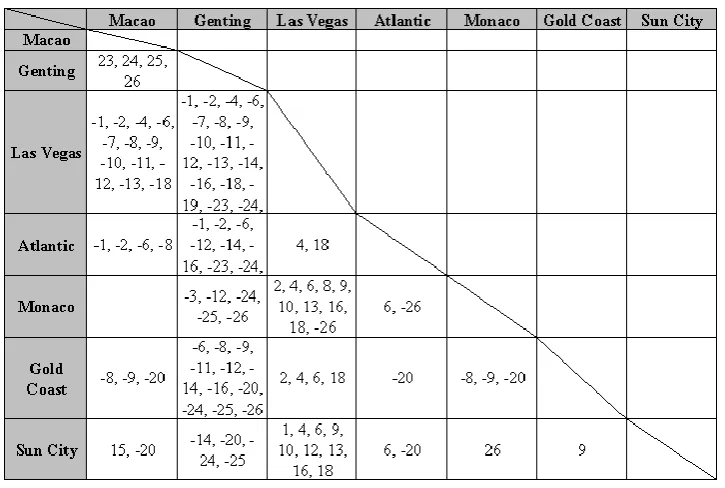
(10) Abstract. The central aim of this thesis is to explore entertainment (its role and function) in the tourism development context.. The sequence of discussion. commences with a review of the existing literature regarding entertainment (be it in the context of tourism or not).. It includes the definition of. entertainment made by other scholars, the importance of entertainment as well as some examples of gaming destinations.. Based on this literature. review, an operational definition of entertainment in the context of tourism was synthesised and developed for the thesis research.. This is then. followed by a brief introduction concerning the research destination – Macao, a special administrative region of the People‘s Republic of China with distinctive characteristics.. A conceptual model of the role of entertainment. in tourists‘ destination experience was outlined.. It is argued that. entertainment is at the centre of the whole tourists‘ destination experience and that it interacts and is affected by competitors, users and suppliers. The thesis comprises 3 inter-related studies:. Firstly, there was a comparative Study of Macao with six other major international gaming destinations (through Internet archival analysis and questionnaires completed by academics).. It was a positioning study and. Multidimensional Scaling (MDS) was adopted.. The key finds of this study. were that while the assessment of the physical properties revealed a higher level of similarity among the destinations, especially for Macao which was considered to be highly competitive with the top gaming destinations such as 9.
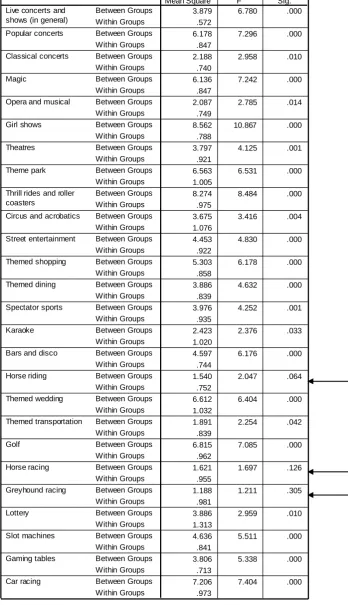
(11) Las Vegas and Atlantic City in terms of physical data, the perceptual responses by the scholars provided multiple differences.. Several. comparable pairs of gaming destinations evolved as a result and were discussed in considerable detail.. A second study addressed the perception and evaluation of the existing entertainment activities / facilities by stakeholders in Macao and adopted a destination benchmarking approach.. This study was approached using. questionnaires completed by tourists (sample size = 200), industry employees (sample size = 48) and Macao residents (sample size = 200). Some of the principal results indicated that (1) Macao was not very favourably rated given the competition arising from the six selected gaming destinations and it was particularly weak in the non-gaming entertainment elements which were suitable for families and children; (2) gaming-related entertainment activities did not play a very important role in the destination choice process but did exert significant influence on tourists‘ on-site destination experience; (3) non-gaming entertainment elements played bigger role in the destination choice process; (4) satisfaction with the entertainment provision had a significantly positive effect on the overall destination experience but (5) the importance of a destination‘s entertainment provision did not powerfully enhance the tourists‘ destination experience.. The final study used Discourse Analysis to explore the prospects for entertainment development in Macao through key stakeholder interviews. The information obtained from these extended conversations revealed the. 10.
(12) importance of entertainment in the tourism development of Macao but there were constraints on this enthusiasm for the role of entertainment. Some of the concerns highlighted by the policy-makers and the stakeholders included potential conflicts between the public and the private sectors in the collaboration process; the over-reliance on gaming development; the changing of government in 2009; and the continuous determination of the government in fostering sustainable tourism by allowing more room for entertainment development.. One overall contribution of this thesis has been to explore closely the perspective on entertainment in a gambling linked tourism context.. In. particular, the three studies have also highlighted two key misalignments, one between the structural comparison and the perceptual comparison of destinations (discussed in Chapter 3) and another between the low importance of entertainment in destination choice process and the high influence of a positive experience in entertainment activities on the overall tourists‘ destination experience (discussed in Chapter 4). The thesis also outlined some prospect for further localised work on entertainment in Macao but also suggested the wide applicability of entertainment-based studies in many tourism destinations.. Two full journal articles were published from this thesis. Chapter 3 of this thesis has been published as:. 11.
(13) Loi, K.I. (2008). Gaming and entertainment tourist destinations – A world of similarities and differences. Tourism Recreation Research, 33(2), 165-183.. Chapter 4 has been published as: Loi, K.I. (2008). The role of gaming as recreation in travel destination choice Attitude comparison between tourists and residents in Macao. Journal of Macao Polytechnic Institute, 2008 Issue (Serial No.2), 62-77.. 12.
(14) Contents Statement of Access Statement of Sources Electronic Copy Statement Statement on the Contribution of Others Statement on Ethics Acknowledgements Abstract Table of Contents List of Tables List of Figures. Chapter. 1. Introduction - Entertainment. Pg.. 1.0 1.1 1.2. Chapter Outline Introduction Why Entertainment?. 22 23 23. 1.3. Growth and Importance of Leisure and. 26. Entertainment. Chapter. 1.3.1. Transformation of Leisure and Life Style. 26. 1.3.2. Entertainment – Status Quo. 29. 1.4. Current Entertainment Literature. 32. 1.5. Definition of Entertainment in Tourism Context. 36. 1.6. Theming. 41. 1.6.1. Themes in Different Industries. 42. 1.7. Chapter Summary. 44. 2. Destination in Context and Thesis Framework. 2.0. Chapter Outline. 45. 2.1. The Context - Macao. 46. 2.1.1. The Current Situation. 46. 2.1.2. The Hypothetical Situation. 52. 2.2. The Proposed Conceptual Model. 55. 2.2.1. The Tripartite Model for Tourists‘ Destination. 55. Experience 2.2.2. Research Questions. 60. 2.3. Chapter Flow Structure. 63. 2.4. Relevance of Thesis. 65. 13.
(15) Chapter. Chapter. 3. Comparative Study of Macao with Other Major Gaming Destinations. 3.0. Chapter Outline. 67. 3.1. Aims of Study. 68. 3.2 3.3 3.4. Destination Benchmarking and Positioning Measuring Destination Image Multidimensional Scaling (MDS). 70 76 79. 3.5. Methodology and Instrumentation. 85. 3.5.1. Structural Comparison. 86. 3.5.2. Perceptual Comparison. 88. 3.6. Analysis and Result Discussion. 91. 3.6.1. Multidimensional Scaling Analysis. 91. 3.6.2. Result Discussion. 92. 3.7. Chapter Summary. 105. 4. Perception and Evaluation of the Existing Entertainment Activities / Facilities by Stakeholders in Macao. 4.0. Chapter Outline. 107. 4.1. Introduction. 107. 4.1.1. Tourist Satisfaction. 109. 4.2. Methodology and Instrumentation. 113. 4.2.1. Answering the Research Questions. 116. 4.3. Sample. 120. 4.4. Result Discussion. 125. 4.4.1. Tackling Research Question 1. 125. 4.4.1.1. Reliability of the Data. 126. 4.4.1.2. Destination Comparison Overview. 127. 4.4.1.3. Macao in Comparison. 130. 4.4.1.4. Research Question Summary. 131. 4.4.2. Tackling Research Question 2 and 3. 133. 4.4.2.1. Reliability of the Data. 133. 4.4.2.2. Correlation between Overall Enjoyment and. 134. Overall Destination Experience 4.4.2.3. Pair-wise Correlation between Enjoyment in. 135. Each Entertainment Element and Overall Destination Experience 14.
(16) 4.4.2.4. Stepwise Multiple Regression Analysis. 138. 4.4.2.5. Detecting and Coping with Multicollinearity. 146. 4.4.2.6. Research Question Summary. 150. 4.4.3. Tackling Research Question 4. 152. 4.4.3.1. Reliability of the Data. 153. 4.4.3.2. Importance of Entertainment when Visiting a. 153. Destination for Holiday. Chapter. 4.4.3.3. Research Questions: A Summary. 162. 5. Prospect for Entertainment Development in Macao. 5.0. Chapter Outline. 164. 5.1. Introduction. 165. 5.2. Methodology. 166. 5.2.1. Qualitative Research Approach. 166. 5.2.2. Interview as a Qualitative Research Technique. 168. 5.3. Instrumentation and Sample. 173. 5.3.1. Instrumentation. 173. 5.3.2. Sample. 175. 5.4. Discourse Analysis. 182. 5.4.1. Introduction. 182. 5.4.2. Data Analysis of the Discourses. 185. 5.4.2.1. The Role of Entertainment in the Tourism. 187. Development of Macao 5.4.2.2. The Boundary of Entertainment Elements. 188. 5.4.2.3. Areas of Improvement. 190. 5.4.2.4. Policy Tools Needed. 192. 5.4.2.5. Contribution of Entertainment to Tourism. 195. Development 5.4.2.6. Promotion Targeted to Wider Tourist Base. 198. 5.4.2.7. Public-Private Collaboration. 200. 5.4.2.8. Challenges Underlying Collaboration. 203. 5.4.2.9. Entertainment as an Important Tourist Product. 206. 5.4.2.10. Willingness to Increase Supply if Demand. 209. Exists 5.4.2.11. Prospect of Entertainment Development in. 212. Macao 5.5. Chapter Summary. 215. 15.
(17) Chapter. 6. Summary and Conclusion. 6.0. Chapter Outline. 217. 6.1. Tripartite Model for Tourists‘ Destination. 218. Experience – A Review 6.2. Competitor Analysis – A Destination. 222. Benchmarking Approach 6.3. Research Question: A Synthesis and. 224. Re-exploration 6.3.1. Impact of Competitors on a Tourist‘s. 224. Evaluation of a Destination 6.3.2. Impact of Tourists‘ Satisfaction / Enjoyment. 225. with a Destination‘s Entertainment Provision on Overall Tourists‘ Destination Experience 6.3.3. Importance of Entertainment Provision as an. 226. Enhancing Effect on Tourists‘ Destination Experience 6.3.4. Entertainment as a Pull Factor of Visit. 227. 6.3.5. Prospect of Entertainment Tourism in Macao. 229. 6.3.5.1. Current Evaluation of Entertainment. 230. Development in Macao 6.3.5.2. Policies / Action Needed for Improvement. 232. 6.3.5.3. Prospect of Entertainment Tourism in Macao. 235. 6.4. Key Contributions of the Thesis. 237. 6.5. Limitation of the Thesis. 241. 6.6. Areas for Future Study. 244. 6.6.1. Planned-versus-Realised Tourist Behaviour. 244. 6.6.2. Volatility of Entertainment in an Unstable. 245. Economic Situation 6.6.3. In-depth Comparative Approaches to. 246. Entertainment Provision 6.7. Final Comments. 247. References. 249. 16.
(18) Appendices I. List of entertainment offers classified by the. 301. Macao Government Tourist Office II. Questionnaire (Scholars) – Study 1. 304. III. Questionnaire (Tourists and Residents) –. 308. Study 2 IV. Questionnaire (Employees) – Study 2. 314. V. Invitation Letter – Study 3. 320. 17.
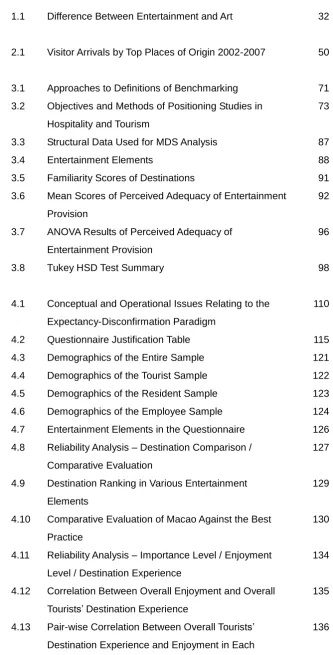
(19) List of Tables Table 1.1. Difference Between Entertainment and Art. 32. 2.1. Visitor Arrivals by Top Places of Origin 2002-2007. 50. 3.1. Approaches to Definitions of Benchmarking. 71. 3.2. Objectives and Methods of Positioning Studies in. 73. Hospitality and Tourism 3.3. Structural Data Used for MDS Analysis. 87. 3.4. Entertainment Elements. 88. 3.5. Familiarity Scores of Destinations. 91. 3.6. Mean Scores of Perceived Adequacy of Entertainment. 92. Provision 3.7. ANOVA Results of Perceived Adequacy of. 96. Entertainment Provision 3.8. Tukey HSD Test Summary. 4.1. Conceptual and Operational Issues Relating to the. 98. 110. Expectancy-Disconfirmation Paradigm 4.2. Questionnaire Justification Table. 115. 4.3. Demographics of the Entire Sample. 121. 4.4. Demographics of the Tourist Sample. 122. 4.5. Demographics of the Resident Sample. 123. 4.6. Demographics of the Employee Sample. 124. 4.7. Entertainment Elements in the Questionnaire. 126. 4.8. Reliability Analysis – Destination Comparison /. 127. Comparative Evaluation 4.9. Destination Ranking in Various Entertainment. 129. Elements 4.10. Comparative Evaluation of Macao Against the Best. 130. Practice 4.11. Reliability Analysis – Importance Level / Enjoyment. 134. Level / Destination Experience 4.12. Correlation Between Overall Enjoyment and Overall. 135. Tourists‘ Destination Experience 4.13. Pair-wise Correlation Between Overall Tourists‘. 136. Destination Experience and Enjoyment in Each. 18.
(20) Entertainment Element 4.14. Multiple Regression Summary – Step 1. 140. 4.15. Multiple Regression Summary – Steps 2 to 4. 141. 4.16. Multiple Regression with Optimal Variable set. 142. 4.17. Correlation Matrix for the Optimal Variables. 149. 4.18. Reliability Analysis – Importance Level. 153. 4.19. Importance Ranking of the Entertainment Elements. 154. when Visiting a Destination for Holiday – All Samples 4.20. ANOVA – Importance of Entertainment Elements. 158. Between Sample Groups 4.21. Tukey HSD Test Summary. 160. 5.1. Major Types of Interviews. 170. 5.2. General Statistics for Discourse Analysis. 186. 5.3. Role of Entertainment in Tourism Development of. 187. Macao 5.4. Agreeable List of Entertainment Elements. 189. 5.5. Areas of Improvement. 191. 5.6. Policy Tools Needed. 193. 5.7. Adjectives/Descriptors. 196. 5.8. Contribution of Entertainment to Tourism Development. 197. in Macao 5.9. Promotional Strategies. 199. 5.10. Roles of the Public Sector in the Collaboration Process. 201. 5.11. Roles of the Private Sector in the Collaboration. 202. Process 5.12. Challenges Underlying Cross-Sector Collaboration. 205. 5.13. Adjectives/Descriptors. 207. 5.14. Entertainment as an Important Tourist Product. 208. 5.15. Adjectives/Descriptors. 210. 5.16. Willingness to Increase Supply. 211. 5.17. Adjectives/Descriptors. 212. 5.18. Prospect of Macao as a City of Entertainment. 213. 19.
(21) List of Figures Figure 1.1. The Experience Realms. 39. 2.1. GDP of Macao 2000-2006. 47. 2.2. Current Visitor Arrival Trend in Macao. 52. 2.3. TALC Model. 54. 2.4. Tripartite Model for Tourists‘ Destination Experience. 57. 2.5. Chapter Flow Chart. 64. 3.1. Structural Comparison. 93. 3.2. Perceptual Comparison. 94. 6.1. Literature Connection. 219. 6.2. Tripartite Model for Tourists‘ Destination Experience. 220. 20.
(22) "I would rather entertain and hope that people learned something than educate people and hope they were entertained." -. WALT DISNEY (1901-1966). 21.
(23) Chapter 1 Introduction - Entertainment. Chapter Outline 1.1 Introduction 1.2 Why entertainment 1.3 Growth and Importance of Leisure and Entertainment 1.4 Current Entertainment Literature 1.5 Definition of Entertainment in Tourism Context 1.6 Theming 1.7 Chapter Summary. This thesis considers entertainment in the context of tourism. The first chapter serves as a justification for the selection of entertainment as the focus of research. The chapter also provides an introductory note on the conceptions of entertainment in the current literature.. Entertainment has. had many different forms of interpretation, yet little literature examines entertainment from the point of view of it as a tourist activity, and therefore as an important revenue-generator in the tourism industry.. 22.
(24) _______________________________________________________ 1.1 Introduction. The central aim of this thesis is to explore entertainment (its role and function) in the tourism development context.. The sequence of discussion. commences with a review of the existing literature regarding entertainment (be it in the context of tourism or not).. It includes the definition of. entertainment made by other scholars, the importance of entertainment as well as some examples of gaming destinations.. Based on this literature. review, an operational definition of entertainment in the context of tourism was synthesised and developed for the thesis research.. This is then. followed by a brief introduction concerning the research destination – Macao, a special administrative region of the People‘s Republic of China with distinctive characteristics.. A conceptual model of the role of entertainment. in tourists‘ destination experience was outlined.. It is argued that. entertainment is at the centre of the whole tourists‘ destination experience and that it interacts and is affected by competitors, users and suppliers.. _______________________________________________________ 1.2 Why entertainment?. ―You Are Now Entering the Entertainment Zone‖ is the title of the first Chapter in Wolf‘s (1999) book ―The Entertainment Economy‖.. We are 23.
(25) indeed entering the entertainment era.. Las Vegas, Atlantic City, Genting. Highlands, Macao, Gold Coast, Monaco, Sun City, among others, all have one thing in common, that is, they are moving towards being recognized as ―Cities of Entertainment‖. For a tourist destination, entertainment is more than just a public good for the local community; since tourists are another major user group and must be considered. Entertainment in the tourism context is not widely researched and there is no one specific type of tourism named Entertainment Tourism.. The existence of the following forms of. tourism from the literature (in alphabetic order) can be highlighted:. Adventure tourism (Benley, et al., 2007; Buckly, 2007; Swarbrooke, et al., 2003) Agritourism (Kuo & Chiu, 2006; McGeehee, et al., 2007) Archaeological tourism (Kirch & Kirch, 1987) Backpacker Tourism (Hampton, 1998; Murphy & Pearce, 1995; Scheyvens, 2002) Cultural tourism (Hughes & Allen, 2005; MacDonald & Jolliffe, 2003; Tighe, 1985) Dark tourism (Lennon & Foley, 2000; Strange & Kemper, 2003) Ecotourism (Jones, 2005; Tsaur, et al., 2006; Weaver & Lawton, 2007) Extreme tourism (Baldacchino, 2006) Heritage tourism (Garrod & Fyall, 2000; Li, et al., 2008; McKercher, et al.,. 24.
(26) 2005; Poria, et al., 2003) Literary tourism (Fawcett & Cormack, 2001; Herbert, 1996; Squire, 1994) Medical/health tourism (Connell, 2006; Goodrich & Goodrich, 1987; Kaspar, 1990) Music tourism (Butler, 2006a; Sellars, 1998; Xie, et al., 2007) Pilgrimage/Religious tourism (Eade, 1992; Nolan & Nolan, 1992; Rinschede, 1992) Sex tourism (Cohen, 1988; Hall, 1998; Iverson & Dierking, 1998; Oppermann, 1999; Ryan & Hall, 2001; Ryan & Kinder, 1996) Space tourism (Apel, 1997; Ashford, 1990; Billings, 2006; Collins, 2006) Sustainable tourism (Briassoulis, 2002; Herremans, 2006; Hunter, 1997; World Tourism Organization, 1999) Virtual tourism (Cheong, 1995; Chiou, et al., 2008; Wang, et al., 2002; William & Hobson, 1995) Volunteer tourism (McGeehee & Santos, 2005; Wearing, 2001) Wine tourism (Getz, 2000; Hall, et al., 2000; Sparks, 2007). There is no such study on entertainment tourism.. Nevertheless, few. people would agree that they would not seek entertainment of some sort when they travel and as Wolf (1999) also pointed out, “(E)entertainment content has seeped into every part of the consumer economy …” (p.4). Because of the exclusion of this important aspect from the general forms of 25.
(27) tourism, there is a need to fill this gap.. Additionally it can be suggested that. while there is not a specific focus on entertainment and tourism, elements of entertainment penetrate many of the ―content‖ forms of tourism outlined.. _______________________________________________________ 1.3 Growth and Importance of Leisure and Entertainment. 1.3.1 Transformation of Leisure and Life Style. A look at how life style has evolved to its current status will reveal the increasing importance of leisure and entertainment in modern society.. A. knowledge and understanding of leisure history facilitates better vision of the current and future paradigms (Leitner, Leitner & Associates, 2004).. We live in a society that is changing all the time. Side by side with these changes, life style and leisure have undergone considerable transformation and will continue to do so in the future (Kelly & Freysinger, 2000). It can be easily visualised how life would be when there was nothing to worry except filling the stomach and finding a safe place for the night. People then were not aware of the need or existence of leisure. They might be doing things that were leisurely in nature but were not even aware of them. It is therefore difficult to be definitive about a precise starting date for the activity we know as leisure.. In earlier times forms of leisure might have 26.
(28) been very simple but there is ample evidence that at least painting and structured sports are several thousand years old (Toner, 1995).. As time and life styles have changed, however, so have the leisure alternatives.. A fact is that almost everyone engages in leisure activities of. some sort – watch a movie, go to theatre plays, go shopping, or have some special hobby or interest (Kelly & Freysinger, 2000). The rapid development of technology and economy increases ―the efficiency of provision for basic wants (and) allows the society to shift its time progressively towards production and consumption activities relating to more sophisticated wants‖ (Gershuny, 2000, p.19). These wants are far beyond the basic needs of avoiding starvation and having a safe shelter.. As economies progress and people get richer, their demand for the type of life they want to live or deserve becomes more sophisticated.. At the. same time however, as they get richer, they might get busier (Gershuny, 2000) and the time available for such pursuits might be less.. This creates a. contradiction – ―people have time but could not afford leisure activities‖ versus ―people have money but time is a scarcity‖.. Nevertheless the. ultimate question lies with how important people perceive leisure to be. A Canadian survey conducted in 1997 reported that over half of all Canadians thought that leisure was as important as work, if not more important (Pavelka, 2000). An American national survey also found that 41 percent of the public thought leisure was more important than work while only 36 percent reversed. 27.
(29) this perspective.. Additionally 23 percent thought leisure and work were. equally important (Roper Organization, 1990). As leisure time is crowded out by daily work stress, the importance of leisure appears to be growing.. Another school of thought identifying the growing importance of leisure takes a completely different perspective.. It suggests that the growing. importance of leisure is not because of time scarcity but instead reflects the availability of more free time across the life span. There is a growth of free time and a higher level of affluence.. People of all ages and backgrounds. are involved in different forms of leisure activities (Kraus, 2000).. This. perspective argues that people are getting more protection from work union and labour laws which trim down daily/weekly/month work hours and yet they are also earning higher incomes.. Other benefits generating a growth in. leisure include a set retirement age and provident/pension fund schemes. Coupled with the medical advancement, the net result is that many people nowadays have more life time free for leisure and less constraints from paid work (Godbey, 1997; Kraus, 2000; Mannell & Reid, 1999; Roberts, 1999). As free time continues to increase, there will be a growing awareness of leisure among people. No matter which school of thought one follows, the ultimate consequence is that demand for more diversified and higher quality leisure activities is ever-increasing.. Dumazdier (1967), one of the early. contributors to leisure study, noted that the main functions of leisure are entertainment, relaxation and personal development. The demand for these benefits could apply to entertainment as well as to leisure in general.. It is. the specific topic of entertainment which is a sub-set of the growing world of 28.
(30) leisure which is at the core of this thesis.. 1.3.2 Entertainment – Status Quo. The entertainment sector of the economy has gradually become an important force in the services industry, employing more than 2.5 million people in 1995 (Gleckman, 1995; Koku, 1995).. Wolf‘s (1999) statistics. show that entertainment is a $480 billion industry with a growth of 50 percent per year in the next five years.. Consumer expenditure on entertainment and. recreation has increased rapidly from US$290.2 billion in 1990 to US$841 billion in 2007 (or about 8.7% of total consumption) (U.S. Bureau of Economic Analysis, 2007).. All these statistics show the growing importance of. recreation and entertainment in the daily life of people.. Gaming, a term mostly associated with waging money on chance outcomes as a recreational pursuit, represents one of the fastest growing and profit-making sectors in the world.. Gaming accounted for 36 percent of the. nearly $100 billion spent on entertainment by Americans in 1999 (Pellegrini, 2001). Casino gaming is often considered a catalyst for the development of a tourism industry and a quick solution for a declining or stagnating economy, providing good revenues, job opportunities, and visitor arrivals. A recent report on ―Basic Policy for the Introduction of Casino Entertainment into Japan‖ stated that the gaming industry could bring in the following benefits: (1) improve tourism (2) provide government revenue (3) enhance entertainment 29.
(31) industry and (4) provide economic stimulus (Doocey, 2007).. The global. casinos and gaming sector grew by 5.3% in 2006 to reach a value of USD$306 billion and it is forecast that, in 2011, the global casinos and gaming sector will have a value of $396.8 billion, an increase of 29.7% since 2006 (Datamonitor Plc., 2006).. The importance of gaming as a. revenue-generator cannot be ignored.. In many gambling destinations, entertainment has been a critical element in the experience. Those destinations which are trying to combine these two lucrative sectors (gaming and entertainment) together hope to see synergy and diversification created as a result.. Entertainment helps create. a better image and package for the gaming industry; in return, gaming revenue supports the huge capital needed for the continuous development of entertainment elements.. For example, Tenner (1997) postulated that ―…. entertainment is becoming the primary focus of Las Vegas.. Tourism is. based on entertainment now, not gaming … It means the quality of our entertainment is improving … most importantly, we are setting precedents for all types of entertainment.” (p.5).. This is especially true for gambling destinations.. The business plan of. most managers and owners of casinos has been to pursue diversified entertainment ventures and no longer exclusively rely on gambling.. As a. result, most people prefer to use the term ―gaming‖ instead of gambling to reflect the recreational component of the industry. For many people, gambling. 30.
(32) may simply mean a pure risk-taking action for which the pursuit of recreation is not paramount.. Because the image of gambling is sometimes associated. with a certain level of negativity, the incorporation of entertainment into gambling helps dilute this negative image.. d‘Hauteserre (2000), quoting. Paynton (1993), considered that, the incorporation of entertainment could make visiting a casino no longer a vice, only a slightly sinful indulgence. Entertainment is thus fast becoming the driving wheel of sections of the new world economy.. In this era of entertainment, people are spending more and. more on entertainment and recreation today than they are putting away for later (Wolf, 1999). Entertainment has also been seen as a regeneration or rejuvenation strategy for the sector (McCarthy, 2002; Fainstein & Robert, 1998; Minton, 1998).. Many gaming destinations have an entertainment. orientation emphasising media, arts and sports, while only a limited few are set in the context of tourism (Bosshart & Macconi, 1998; Dyer, 1992; Hughes, 2000; Inskeep, 1991; Peterson, 1996; Vorderer, 2001; Waters, 1994; Wolf, 1999; Zillmann & Bryant, 1986).. 31.
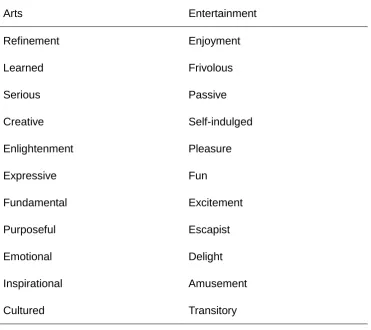
(33) _______________________________________________________ 1.4 Current Entertainment Literature. Entertainment has been discussed by many scholars but very few of them have a tourism focus. Waters (1994) made a case for an all inclusive approach to entertainment.. Hughes (2000) differentiated entertainment. from arts by listing points of differentiation as follows:. Table 1.1 Differences between Entertainment and the Arts Arts. Entertainment. Refinement. Enjoyment. Learned. Frivolous. Serious. Passive. Creative. Self-indulged. Enlightenment. Pleasure. Expressive. Fun. Fundamental. Excitement. Purposeful. Escapist. Emotional. Delight. Inspirational. Amusement. Cultured. Transitory. From Hughes‘ table, one can notice an emphasis on the enjoyable and 32.
(34) pleasant features of entertainment as opposed to the more serious and self-advancing nature of art. There is a clear distinction between art and entertainment (Hughes & Allen, 2008) and therefore they should not be treated as interchangeable.. Hughes also classified entertainment as including live performances of music, dance, shows, plays, going to cinemas, clubs and discos, sport matches, watching television, playing computer games and listening to CDs.. According to Bosshart and Macconi (1998), entertainment can be described as and is experienced as a “reception phenomenon” (p.3).. In this. context, entertainment meant (1) psychological relaxation (restful, refreshing, light, distracting); (2) change and diversion (it offers variety and diversity); (3) stimulation (dynamic, interesting, exciting, thrilling); (4) fun (it is merry, amusing, funny); (5) atmosphere (beautiful, good, pleasant, comfortable) and (6) joy (happy and cheerful) (Bosshart & Macconi, 1998, p.4).. Similarly. Crouch and Ritchie (1999) also echo the view that entertainment primarily encompasses behaviours where the visitors assume a rather passive ―spectator‖ role than an active ―participant‖ role.. Bosshart and Macconi (1998) also postulated that the basic factors of the term ―entertainment‖ would show the following profile: Entertainment is pleasant, agreeable, good, beautiful, and enjoyable.. 33.
(35) Entertainment is light, restful, easy, not demanding, and not compulsory. Entertainment is stimulating, dynamic, alive, exciting, thrilling, spontaneous, and varied.. As. such,. entertainment. in. their. views. has. basically. active,. tension-reducing, and positive components. This view is shared by Zillmann and Bryant (1994) who defined it as any activity designed to delight.. The views of Vorderer (2001) do not seem to agree totally with those of Bosshart and Macconi (1998).. Vorderer asked what exactly entertainment. was and how entertainment could be described and explained. in the context of mass media.. He placed it. He pointed out that it was difficult to answer. these questions because there were at least two misunderstandings of what entertainment actually was.. The first one saw entertainment as a feature of. the media offer itself and it is the characteristics and the people controlling from behind the media that dictate the level of enjoyment.. Vorderer,. however, disagreed with this first view and thought that the users were the ones to decide what was entertaining and what was not, not the media.. A. second misunderstanding saw entertainment in direct contrast to information. That is, the most entertaining experience should be one with the least information.. Vorderer contended by way of contrast that an experience. could be entertaining and self-enlightening at the same time.. In responding. to Bosshart and Macconi‘s proposition that entertainment experiences were primarily pleasant and joyful, Vorderer considered that entertainment would 34.
(36) be primarily, but not exclusively delightful. He pointed out that the notion of unpleasant, even distressing experiences that the audience might experience could still be regarded as an entertaining experience.. As a result,. entertainment, to Vorderer, was an activity that was most often characterised by different forms of pleasure but – in certain situations – also by unpleasant aspects.. It was an intrinsically motivated action that usually led to a. temporary change in perceived reality.. Inskeep (1991) has identified a common system of classification of tourist attractions and activities which can be seen as relevant to this discussion. The classification system categorised the tourist attractions and activities into 3 major groups.. Natural attractions that are based on features. of the natural environment; cultural attractions that are based on man‘s activities; and special types of attractions that are artificially created.. It is. within the third category entertainment activities were placed. The Macao Government Tourist Office (government tourism board in Macao) has its own classification of entertainment which seems to agree with the manmade feature supported by Inskeep (1991).. Descriptions are found on Appendix I.. From the above literature review, obviously there is no one common definition demarcated within the tourism context and the better specification of the phenomenon of interest is a necessary step in establishing the framework of interest for this study.. 35.
(37) _______________________________________________________ 1.5 Definition of Entertainment in Tourism Context. Based. on. the. literature. reviewed,. the. proposed. definition. of. entertainment set in the tourism context is:. ―Any revenue-generating (direct or indirect) activities that are artificial or structured (e.g. street performances are structured but passing-by crowds, which some people find entertaining, are not), not practised at home (thereby eliminating home theatre, video games, television and other media programme and the like, all of which are common inclusions of the general entertainment elements), with tourists as one of the core audience groups, and, upon completion (the end is important, the process can therefore include elements that are not really delightful), produce a range of emotional responses that relieve the audience from daily stress.. Entertainment is. predominantly receptive, but occasionally participative.‖. Entertainment activities are not an end themselves but are means to an end.. How they achieve this end is not as important. They can be pleasant. in nature or distressing.. As long as the end is achieved, they are then. deemed as entertaining.. Such activities should be equally enjoyed by both. residents and tourists. In the context of tourism, entertainment should be confined to those activities that are both reachable by residents and tourists.. 36.
(38) Tourism connected entertainment is conceived of as requiring consumer travel and mobility (Pearce, 2005a). Pearce (2008) also pointed out that the audience for the entertainment should largely be comprised of tourists if it is to be studied in the context of tourism.. As a result, activities which tourists. cannot access, such as community entertainment (programmes organised by neighbourhood associations for example) will be excluded (It is also for this reason that the home entertainment elements are excluded from the definition of entertainment proposed above).. Entertainment can be both fee-paying and free.. If it were to be applied. as a tourism development tool however, some economic benefits have to be sought.. Recall that one school of thought for the growing demand for leisure. is that people have less and less free time for entertainment (Wolf, 1999); their desire to have themselves entertained is becoming higher and higher; their willingness to spend more on quality-assured entertainment is getting stronger than ever.. Since free time is becoming a scarcity, whenever they. can afford to spend it, especially through vacationing elsewhere, they demand it to be spent with the highest quality, not minding to invest more money to make this happen. Wolf (1999) mentioned that in a study by Telenation Survey, 84.2% of the public chose fun as the prime reason for making a vacation decision, as compared to a mere 9.7% for luxury and an even lower 4.1% for elegance.. The goal of fun is consistent with the. entertainment emphasis being studied in this thesis.. 37.
(39) Increasingly, people are not easily satisfied with ordinary entertainment activities (Wolf, 1999).. Since their free time is so scarce, they demand high. quality experiences rather than simple participation.. Traditionally, people. felt entertained by, for example, spending a whole afternoon in making a flowerbed or walking around a city, either free of charge or at a very low cost. Now we are entering into an entertainment era when time is a luxury rather than a necessity and people are showing a willingness to spend money in exchange for a more concentrated dose of entertainment at the highest quality possible. a. free-of-charge. In other words, the entertainment pattern may change from flower-bedding. afternoon. to. joining. a. fee-paying. rose-pruning lesson which is compacted to one and a half hours.. Following these considerations, it is proposed to focus in this research on revenue-generating entertainment. That said, it does not mean that only entertainment that can generate direct revenue will be included. In fact, some image-building entertainment elements are as constructive to the destination as any revenue-generating entertainment. One good example is the free-of-charge shows and performances held in Las Vegas.. The more. famous ones are the water fountains outside the Bellagio Hotel, the volcanic-eruption outside the Mirage and the laser-ceiling show in the old town.. These shows and performances are non-gated but help draw flows of. tourists and create a positive image.. These shows and performances. therefore bring indirect revenue to the destination.. In addition, Bosshart and. Macconi (1998) highlighted the receptive nature of entertainment. Pine and Gilmore (1999) stated that experiences had always been at the heart of 38.
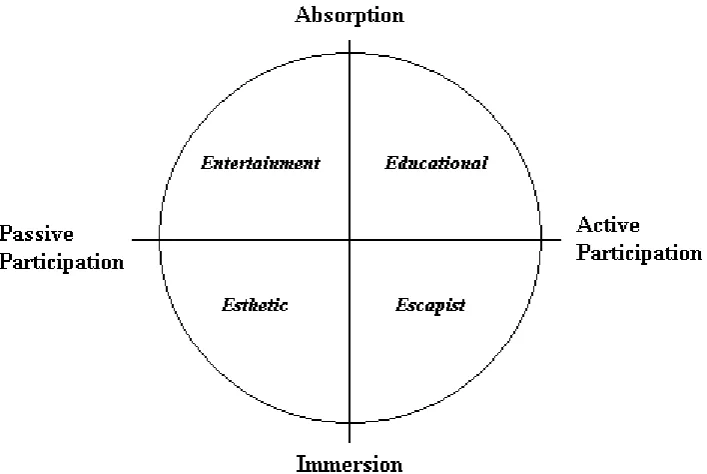
(40) entertainment and framed experience into four ―realms‖ (Figure 1.1). According to them, the kind of experiences most people considered as entertainment occurred when they passively absorb the experiences through their senses. This coincides with the interpretation of entertainment as a receptive phenomenon by Bosshart and Macconi.. Source: Pine & Gilmore, 1999 Figure 1.1 The Experience Realms. To summarise, the definition of entertainment proposed here comprises the following characteristics:. It should relieve people from daily stress upon completion.. 39.
(41) The process can be both pleasant or, if less pleasant, engaging. It should be revenue-generating and/or image-building (both direct and indirect). It should be accessible by both residents and tourists. It should be artificial and/or structured (not of natural resources nor pure cultural purposes as per Inskeep‘s classification). It should be practised in places other than home. It is predominantly receptive.. There are three key stakeholders of entertainment implicit in this definition. The first key component is the entertainment providers who provide, structure and direct the performance.. A second key component is the performers. themselves to be received, and in occasions, to get involved in.. A very last. stakeholder group is the audience – the receivers of the performance.. With these three key components, the new definition will now exclude many elements which are traditionally thought as part of entertainment, such as sport participation and going to non-themed restaurant and food establishments.. There are many activities that carry dual or multi-purposes.. In this case,. only those activities (or participants) whose core purpose suits the definition 40.
(42) of entertainment proposed here will be included. sports as an example.. Let us take participation in. People may watch sports for many reasons.. If. people go to watch a basketball game mainly because they are sport journalists, this is not included in the definition.. By way of contrast, those. people who pay to watch sport activities for leisure purpose are included (Waters, 1994).. Following the above proposition, the classification of entertainment by such bodies as the Macao Government Tourist Office, needs to be reshaped. One very preliminary observation is the lack of several commonly cited entertainment elements in such lists, namely, themed restaurants and other food establishments, festivals and events, themed shopping facilities and theme parks.. The scope of entertainment and the presentation of. entertainment at tourist destinations will be revisited later in the thesis.. _______________________________________________________ 1.6 Theming. From the definition above, an important role of the themed experience in the entertainment system can be identified.. Themed dining, themed. shopping, themed parks are all common terms, and once a theme is involved, a certain level of entertainment is to be expected by the consumers who anticipate ―the opportunity to be entertained and to enjoy novel experiences‖. 41.
(43) (Bryman, 2004b, p.16). entertainment economy.. And as Wolf (1999) suggested, we are living in an Constant exposure to forms of entertainment. heightens people‘s expectations of being entertained in many activities even when the main focus of these occasions is not entertainment (Bryman, 2004b).. Therefore it is not surprising to see many operations across. different industries trying to ―dress up‖ their operations with different themes.. 1.6.1 Themes in Different Industries. The most typical and pioneering example of theming is Disneyland. The first Disneyland in Anaheim used the overall theme of celebrating America and its achievements as well as attempting to create a magical place in which people can leave reality temporarily and submerge themselves in ―The Happiest Place on Earth‖ (Bryman, 2004b). Other theme parks include Universal Studio which uses Hollywood movies as the theme centre; Alton Towers in the UK carrying a Gothic-style country house theme; the Fisherman‘s Wharf in Macao representing various places around the world, in the style of different world seaports such as Cape Town, Amsterdam, Venice, New Orleans, Miami; the Window of the World in Shenzhen China showcasing the famous landmarks around the world in miniature; and the HelloKittyland in Tokyo Japan which uses the Japan-created Sanrio characters as the theme.. Many destinations have included theme parks into. their tourist product portfolio because a theme park alone can attract millions of tourist attendance (Swarbrooke, 1999).. By applying a particular theme,. 42.
(44) these parks could proclaim themselves as theme parks rather than clustering with the many other amusement parks in this highly competitive arena.. Like the amusement parks, the restaurant business is drawing on an array of themes of music, sport, movies, history and geography.. The Hard. Rock Café, the Planet Hollywood, the Rainforest Café, the Harley-Davidson Café, McDonald‘s and the KFC are just some examples.. A theme is very. important in the restaurant business in the whole entertainment industry because only themed dining is included in my definition proposed above but not ordinary dining.. People go to a restaurant for many reasons. Some of. them simply go there for the sake of filling stomachs, others are seeking a pleasure dining experience on top of this basic need fulfillment. The former focuses on the products (food) and the latter focuses on the experience (ambience, service, décor etc.).. The incorporation of a theme helps. enhance such experience and instill elements of entertainment into the event. In themed restaurants, experiences are sometimes more important than the food itself which ―functions as a prop for what is known as an „eatertainment‟ experience‖ (Pine & Gilmore, 1999, p.3).. The application of themes is very wide indeed.. Parades, fairs and. festivals are commonly organised as themed events (Sonder, 2004). Themes are also seen in hotels, shopping malls (terms such as ―shoppertainment‖ and ―entertailing‖ are recently used to refer to the integration of entertainment with retail), museums, casinos and any. 43.
(45) businesses that are deemed to be able to benefit from the incorporation of a theme.. Besides the benefits brought by the theme application,. merchandising at a themed location is significant and can be a major contributor to profits from the operations (Bryman, 2004).. A vast array of. merchandise bearing the theme logo or mascot can be marked up with a larger profit margin than the same products without the application of theme. The widespread popularity of such merchandise effectively serves two roles; they are both products for sale and promotional tools.. Undoubtedly theming. is a critically important element of the entertainment industry.. _______________________________________________________ 1.7 Chapter Summary. This chapter introduced the thesis topics by considering the evolution of leisure and modern life.. It highlighted the growing importance of leisure and. entertainment in contemporary society.. A gap in the literature was. discussed and the need to study entertainment in the tourism context was identified.. In addition, the review synthesised a more specific definition of. entertainment in the tourism context from the many different definitions of entertainment that currently exist.. The centrality of theming in defining. entertainment was specifically considered as an important variable for future consideration. These fundamental points comprise a background for the further construction of the thesis.. 44.
(46) Chapter 2 Destination in Context and Thesis Framework. Chapter Outline 2.1 The Context - Macao 2.2 The Proposed Conceptual Model 2.3 Chapter Flow Structure 2.4 Relevance of Thesis. This chapter gives an overall introduction to Macao, which provides the context of the thesis.. It also sets forth the overall conceptual model. proposed in the thesis and considers each of the research questions embedded within the model and how they can be answered.. Methodology,. aims and goals for the research overall are presented in outline only.. 45.
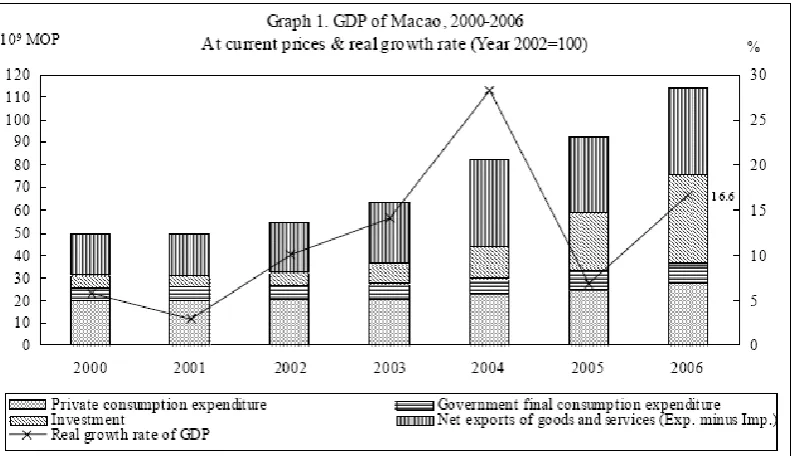
(47) _______________________________________________________ 2.1 The Context - Macao. 2.1.1 The Current Situation. The thesis will be based in Macao and therefore it is appropriate to describe the current situation of Macao.. Macao, a former colony of Portugal and now an important coastal city on the west bank of the Pearl River in the southeast of China, is merely a small dot (27.3 km2) on the world map. exceeds its small size, however.. Its economic and political importance. In 2003, despite the negative influence of. the war in Iraq and SARS, Macao still witnessed a real GDP growth of 15.6% (Macao Statistics and Census Service 2003), at 63.37 billion (equivalent to around USD7.92 billion) and a real GDP growth of 16.6% in 2006, amounting to more than 110 billion (equivalent to around USD14 billion). The GDP growth for the current 7 years is shown in Fig. 2.1 below.. 46.
(48) Source: Macao Statistic and Census Service 2008a Figure 2.1 GDP of Macao 2000-2006. Macao relies very much on the tourism and the gaming industry employs around one-third of its working population (Macao Statistics and Census Service, 2008a) and 85.6% of the total government tax revenue in 2006 came from direct gaming taxes (Monetary Authority of Macao, 2008). Macao is the only legalised gaming city in China.. It has been labeled for a long time. as the ―Las Vegas of the East‖. The enclave‘s gaming revenue, amounting to 57.5 billion patacas (more than USD7 billion), exceeded that of Las Vegas in 2006 (Macao Gaming Inspection and Coordination Bureau, 2008). Gaming revenue contributes to more than 50% of Macao's Gross Domestic Product and 70% of government revenue (Macao Statistics and Census Service, 2008c).. 47.
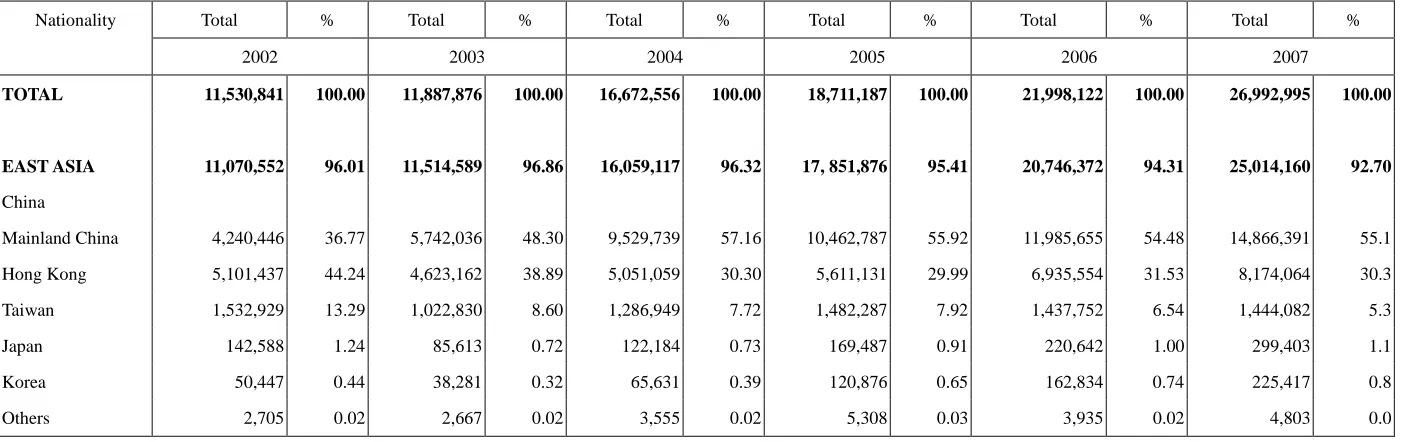
(49) This small piece of land received close to 27 million visitors in 2007 (a contrast to the local population base of 448,500) (Macao Statistics and Census Service, 2008d).. The tourism industry, however, differs from many. other economic activities in that it is subject to considerable instability of demand (Sinclair, 1999) and at the same time highly seasonal. Such high level of uncertainty means that tourism destinations without affluent reserves and savings are exposed to the risk generated from such instability in terms of income generated.. The tourist profile of Macao is also very concentrated.. Visitors to Macao mainly come from three markets – Mainland China, Hong Kong and Taiwan. These three markets accounted for over 92% of total visitor arrivals in 2006 (Macao Statistics and Census Service, 2008d).. In. fact, visitors coming from Mainland China and Hong Kong outnumbered that of Taiwan. These two places of origin generated 86% of the visitor arrivals (see Table 2.1 below). Hong Kong used to be Macao‘s largest generator of tourists before 2002.. This situation, however, has slowly changed and. Mainland China visitors have exceeded Hong Kong visitors since 2003. This is not surprising since it was in July when Macao started opening up for individual visa application by some places in Mainland China. More and more cities have received this 1privilege since then.. At the same time the. tourist arrivals from other destinations remain relatively stable. This could mean only one thing, that is, Macao‘s clientele base is too narrow and concentrated.. It relies too heavily on the two nearby markets. The tourism. industry can be regarded as a highly seasonal and demand-driven industry. It is also so vulnerable that it is often the first to be hard-hit in times of crisis. 1. Mainland Chinese were not allowed to come to Macao and Hong Kong by applying for individual visa prior to this policy. They travelled to Macao and Hong Kong by applying for a group visa and followed a packaged guided tour. 48.
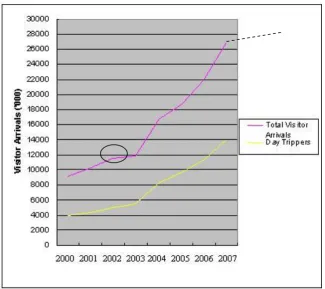
(50) This is compounded by the fact that the tourist-generating countries coming to a destination are themselves very sensitive to (possible) bad news, thereby making the demand very unstable.. This problem would be. intensified if the market sources are very concentrated and from only a few places, such as in the case of Macao. Therefore Macao, although it has achieved quantity in terms of tourist arrivals, it is in fact very prone to negative impacts arising from any sudden changes in the demand and/or taste of the tourists from these two concentrated market sources.. 49.
(51) Table 2.1 Visitor Arrivals by Top Places of Origin 2002-2007 Nationality. Total. % 2002. Total. % 2003. Total. % 2004. Total. % 2005. Total. % 2006. Total. % 2007. TOTAL. 11,530,841. 100.00. 11,887,876. 100.00. 16,672,556. 100.00. 18,711,187. 100.00. 21,998,122. 100.00. 26,992,995. 100.00. EAST ASIA. 11,070,552. 96.01. 11,514,589. 96.86. 16,059,117. 96.32. 17, 851,876. 95.41. 20,746,372. 94.31. 25,014,160. 92.70. Mainland China. 4,240,446. 36.77. 5,742,036. 48.30. 9,529,739. 57.16. 10,462,787. 55.92. 11,985,655. 54.48. 14,866,391. 55.1. Hong Kong. 5,101,437. 44.24. 4,623,162. 38.89. 5,051,059. 30.30. 5,611,131. 29.99. 6,935,554. 31.53. 8,174,064. 30.3. Taiwan. 1,532,929. 13.29. 1,022,830. 8.60. 1,286,949. 7.72. 1,482,287. 7.92. 1,437,752. 6.54. 1,444,082. 5.3. Japan. 142,588. 1.24. 85,613. 0.72. 122,184. 0.73. 169,487. 0.91. 220,642. 1.00. 299,403. 1.1. Korea. 50,447. 0.44. 38,281. 0.32. 65,631. 0.39. 120,876. 0.65. 162,834. 0.74. 225,417. 0.8. Others. 2,705. 0.02. 2,667. 0.02. 3,555. 0.02. 5,308. 0.03. 3,935. 0.02. 4,803. 0.0. China. Source: Macao Statistics and Census Service, 2008d. 50.
(52) In addition to the concentration problems, the average length of stay of tourists in Macao has always remained low at 1.1 days (Macao Statistics and Census Service, 2008d). overnight.. In fact, around 50% of tourists do not stay. One of the mostly cited reasons is that people come to Macao. mainly for gambling. They do not perceive Macao as an attractive tourist destination other than a gambling paradise. With the liberalisation of the gaming industry, the reliance of Macao tourism on this sector is even more obvious. Whether this trend is good or bad remains inconclusive as there are both advantages and disadvantages to the opening up of the gaming market.. Nevertheless, the Macao SAR Government has sought to diversify. for the interests of visitors and to package Macao in ways that it has more to offer.. For example, the Macao government submitted an application for. listing ―The Historic Centre of Macao‖ to the World Heritage List in 2002. This attempt was announced as successful on the 15th of July 2005 and ―The Historic Centre of Macao‖ has now been formally inscribed on the World Heritage List, making it the 31st designated World Heritage site in China (Macao World Heritage, 2005).. In fact, Macao should be actively assessing and enhancing other aspects (tourism products) that can entice visitors to stay longer. Kong is a very good example.. Hong. Hong Kong is an attractive city for. establishing retail outlets: it received 25.25 million visitors in 2006 (Hong Kong Census and Statistics Department, 2008).. Tourist receipts totalled. over US$11 billion in 2006, some US$6 billion of which was for shopping, with a per-capita shopping spending of around US$240 (Hong Kong Tourism 51.
(53) Board, 2008), as opposed to US$93 in Macao in 2006 (Macao Statistics and Census Service, 2008d). Macao surely needs to find a way to enhance its tourism product so as to maintain its competitiveness.. 2.1.2 The Hypothetical Situation. In terms of visitor arrivals, if we frame Macao‘s statistics into Butler‘s (1980; 2006b) Tourism Area Life Cycle (TALC) model (Fig. 2.3), Macao has not even reached the stage of consolidation, not to mention the stage of decline (Fig. 2.2).. Figure 2.2 Current Visitor Arrival Trend in Macao 52.
(54) Does that mean that Macao‘s prospects are all positive and there is no need to rejuvenate though? the quality is not.. As mentioned earlier, the quantity is there but. Half of the visitors are day-trippers and the origins of. visitors are very concentrated.. In addition, the average length of stay of. tourists coming to Macao was only 1.1 days and the per-capita expenditure was very low at USD200 in 2006 (Macao Statistics and Census Service, 2008d). Half of the visitors coming to Macao do not stay overnight because most of them think that Macao has nothing to offer except gaming.. More. importantly, if we do not consider the surge in tourist arrivals starting 2003 when the Mainland Chinese government implemented the open-visa policy (previously mentioned in footnote 1) to various provinces, we can say that Macao had actually reached the stage of stagnation.. Now with the. tremendous increase in Mainland Chinese visitors, the situation is brought to a new stage of growth.. Macao is reaching the point of saturation however,. and it is reasonable to expect that Macao will reach another stagnation very soon (see the dotted line in Fig. 2.2).. The evidence is adequate to signal a need for rejuvenating strategies. Obviously, the government has to develop other tourism products to keep people in Macao for longer period.. It is definitely advantageous to select. tourists who tend to stay longer and spend more.. An interpretation of. Butler‘s TALC model is that the definition of the different stages is not confined to the number of tourists per se but also to the tourist composition. Macao, being such a small space and with very few natural resources, there 53.
(55) are limited tourism development options.. The role of entertainment in. destination development in Macao could be to serve as a tool to improving the composition of tourists (more overnight visitors who are willing and able to spend more) by offering greater variety in entertainment activities / facilities. A substantial justification for exploring the entertainment topic in Macao is therefore provided by this contextual consideration of Macao‘s vulnerability in terms of its tourism positioning and product.. Source: Butler, 2006b Figure 2.3 TALC Model. 54.
(56) _______________________________________________________ 2.2 The Proposed Conceptual Model. 2.2.1 The Tripartite Model for Tourists‟ Destination Experience. The tourism product is a complex consumption experience that results from a process where tourists use multiple travel services during the course of their visit (Gunn, 1988).. Components of entertainment facilities and. activities can be glimpsed from Smith‘s (1994) Tourism Production Function as partly intermediate inputs (facilities) and partly intermediate outputs (services/activities), all of which ultimately lead to the final outputs (tourists‘ experiences).. Ritchie and Crouch (2000) treat entertainment as one of the. core resources and attractors in their Destination Competitiveness and Sustainability model.. Beerli and Martin (2004) incorporate and classify. factors determining the perceived destination image made by individuals into nine dimensions, one of which is ―Tourist Leisure and Recreation‖. Under this classification are theme parks, entertainment and sports activities. Some entertainment elements are also found in another classification named ―Tourist Infrastructure‖ which includes restaurants, bars, discotheques and clubs.. Not only these authors but also Murphy, Pritchard and Smith (2000),. in their conceptual model of destination product, reserve an important role for Service Infrastructure in determining tourists‘ destination experience and elements of entertainments are explicit within the precinct of this service infrastructure.. In their work, they identified ―Service Infrastructure‖ as an 55.
(57) important predictor of both destination quality and perceived trip value whereas quality is also found to be a key predictor of visitors‘ intention to return within two years. This indirectly highlights the role of entertainment (as a subgroup of Service Infrastructure) as a key determinant of both destination quality and perceived trip value.. Dwyer et al. (2004) introduce a model of destination competitiveness that identifies key success factors in determining destination competitiveness. This model classifies the determinants of destination competitiveness under eight main headings, one of which is ―Core Resources and Supporting Factors and Resources‖. Core resources are further divided into two types Endowed and Created.. Created resources include attributes such as. tourism infrastructure, special events, activities, entertainment and shopping. Explicit in this model is the importance of the resource base for destination competitiveness.. The model also suggests that the mere existence of. resources is insufficient to generate visitation to a destination in the absence of tourism infrastructure (accommodation, transportation, restaurants, organised activities, entertainment and shopping, etc.), which enables or facilitates visitation. In fact Dwyer‘s model contains many of the variables and category headings identified by Ritchie and Crouch (2000).. Since. entertainment has been treated as an important attribute / factor in influencing perceived destination image, the thesis proposes to develop and examine a ―Tripartite Model for Tourists‘ Destination Experience‖ in which entertainment plays a central role in determining tourist experience in a destination through the interaction of three parties, namely users, competitors 56.
(58) and suppliers.. * The R notation in the diagram refers to the identification of research. R links. questions built around these Figure 2.4 Tripartite Model for Tourists’ Destination Experience. 1. A model can in fact be further partitioned into 4 This large generic tripartite sub-models, the interaction among which is elaborated below.. R f. e Users – Suppliers - Entertainment f. R. R. 5. 2. a e Tourists and residents continuously evaluate the existing entertainment. c c t t. 57.
(59) facilities and provide feedback on how they could be improved. Suppliers then react to this feedback and make adjustments to the entertainment facilities accordingly.. Increasing recognition of the importance of. customer-supplier relationships and their important roles have been emphasised in many tourism studies (Ashworth & Voogd, 1994; Binkhorst & van der Duim, 1995; Boerwinkel, 1995; Dietvorst & Ashworth, 1995; Go & Williams, 1993; Herbin, 1995; Smith, 2000; Williams, 1999).. Yet not many. studies have looked at their roles in the context of entertainment (Bryman, 2004b).. As a result, this model attempts to investigate this relationship.. Users – Competitors – Entertainment. The perceived performance of one product/service may affect evaluation judgments of another (Gardial, et al., 1993; Yuksel & Yuksel, 2001b). Consumers‘ perceptions of what competitors have to offer may affect evaluation judgments of the product/service they are currently experiencing (Yuksel & Yuksel, 2001b) and their experiences with competitors also affect their attitudes and behavior (Bolton & Drew, 1991a,b; Cadotte, et al., 1987; Smith, 2000; Tse & Wilton, 1988).. Studies assessing consumer evaluations. of competitors have been common (Botha, et al., 1999; Riege & Perry, 2000; Smith, 2000; Swarbrooke & Horner, 1999). This part of the model focuses on whether the awareness of the variety and quantity of entertainment facilities by competitors will affect users‘ evaluation of the local entertainment provision.. Users will frequently compare the local entertainment facilities. 58.
(60) with that of the competitors‘ and a performance gap may be identified.. Users – Competitors – Suppliers. As an expansion and combination of the two previous sections, suppliers will react to users‘ feedback regarding the performance gap between the competitors and the destination and provide remedial actions accordingly.. If. actions are successful, the role of entertainment as a pull factor will be strengthened, thereby generating more demand from the users.. Users – Entertainment – Tourists‘ Destination Experience. The previous sections have explored the complex nature of consumption experience (Gunn, 1988) and the role of entertainment in contributing towards the formation of such experience (Beerli & Martin, 2004; Dwyer at al., 2004; Murphy, Pritchard & Smith, 2000; Ritchie & Crouch, 2000; Smith, 1994). One of the propositions here is that the quality of entertainment provision is significant for the tourists in forming destination experience. Therefore, the result of the evaluation process (be it negative or positive) will have an enhancement effect on the tourists‘ destination experience. positive/negative. tourists‘. destination. experience. improvement needs in entertainment facilities.. will. In turn, the. help. reinforce. If such needs are being 59.
(61) accommodated, the pull effect on users can be further strengthened.. In fact,. this tripartite model can be generalised to be applied to other tourism developmental options as well.. 2.2.2 Research Questions. There are several research questions implicit in the above model. These linkages were included in Figure 2.4 and are specified verbally in the following section.. R1: How does the entertainment provision of other competing destinations affect users‘ evaluation of a destination‘s entertainment provision?. To achieve competitive advantage for its tourism industry, any destination must ensure that its overall attractiveness, and the tourist experience, must be superior to that of the many alternative destinations open to potential visitors (Dwyer, et al., 2004).. It is therefore important to be. aware of the entertainment provision of other competing destinations and their relative effect on users‘ evaluation of the researched destination‘s entertainment provision.. In this vein, destination benchmarking could be a. helpful way to carry out such comparisons.. 60.
(62) R2: How is tourists‘ destination experience affected by tourists‘ satisfaction with the destination‘s entertainment provision?. Discussion on how destination experiences affect visitors is increasingly evident in the tourism literature.. Tourist satisfaction with a destination‘s. performance is often viewed as key indicator for a region‘s tourism industry mainly because it can stimulate behaviour and motivate visitors to recommend or revisit a place (Kozak, 2001b; Kozak & Rimmington, 2000; Pritchard, 2003).. R3: Does tourists‘ evaluation of the importance of a destination‘s entertainment provision have an enhancement effect on their tourists‘ destination experience?. Murphy, Pritchard, and Smith (2000) examined whether positive perceptions of a destination‘s infrastructure and environment were able to influence statements of satisfaction and a visitor‘s intent to return to Canada and they found that both had positive significant impact on the intention to return. ratings. Danaher and Arweiler (1996) found that performance-expectation of. New. Zealand‘s. recreation. activities,. attractions,. and. accommodations explained a tourist‘s sense of satisfaction. Kozak‘s (2001b) study of repeat behaviour found that the performance of certain destination attributes (e.g., natural environment and beaches, transportation services, nightlife and entertainment) along with overall satisfaction was able to explain 61.
(63) whether tourists would revisit Mallorca or Turkey.. The possibility of. entertainment provision also functioning as an enhancement factor in destination experience will be studied in this thesis.. R4: How important is entertainment as a pull factor that stimulates tourists to come?. It is important to understand why people travel and why they choose their destination because it allows tourism marketers to better understand what motivates people to travel and what destination-specific factors influence the selection. of. a. specific. destination.. Several. researchers. use. a. two-dimensional or forces approach called ―push and pull‖ concept. While push factors are generally regarded as influencing people‘s travelling decisions, it is the pull factors that affect people‘s destination choice behaviour (Gavcar & Gursoy, 2002).. Lee et al. (2002) established that. destination attribute-based pull factors exerted a stronger influence on destination choice, in comparison with those factors intrinsic to individual psychological motivations in their 1996 German Pleasure Travel Market Surveys.. Pull factors emerge or are aroused as a result of attractions at the. destination. They help explain destination selection decision (Lee, et al., 2002).. R5: What is the consensus among key stakeholders for the preferred entertainment tourism futures in Macao? 62.
(64) Many scholars have agreed that stakeholders‘ opinions are important to the whole planning process of tourism development (Gunn, 1988; Haywood, 1988; Inskeep, 1991; Jamal & Getz, 1997; Jamal & Getz, 1995; Murphy, 1983; Ritchie, 1993; Yuksel, Bramwell & Yuksel, 1999). Freeman (1984) depicts that the tourism stakeholders include local businesses, employees, government, competitors, national business chains, tourists, activist groups and residents (p.55).. This research question thus focuses on what the. stakeholders (mainly the ones that are more involved in the strategic planning of tourism development) think about the prospect for entertainment development in Macao and some challenges.. _______________________________________________________ 2.3 Chapter Flow Structure. Based on the model already discussed, the thesis largely consists of 3 phases:. First, comparing the position of Macao to that of several selected gaming destinations and learning lessons from them. Then, assessing opinions and evaluation of the entertainment stakeholders (residents, tourists, employees and employers).. 63.
(65) Finally, projecting the future development direction of the entertainment industry in Macao by collecting information from the stakeholders and policy-makers.. For each phase, a core element is an empirical study.. These three. studies, when combined together, form the main framework of the thesis.. A. chapter flow chart is included for easy reference of the structure of this thesis.. Figure 2.5 Chapter Flow Chart. 64.
(66) _______________________________________________________ 2.4 Relevance of Thesis. This thesis is relevant and contributes to the body of literature because entertainment science, as termed by Pearce (2005a) is ―a particularly adaptable specialism of interest capable of augmenting tourism research‖ (p.1). Entertainment, being such a lucrative market, receives less attention than most other types of tourism provision.. It and its components are. implicit in all types of tourism yet are not well-discussed and studied explicitly, especially in the context of tourism development.. Most tourists will. incorporate some forms of entertainment elements into their itinerary but they are seldom singled out to be studied as a standalone area in tourism. Additionally, entertainment is not well-studied from the consumers‘ and providers‘ perspective.. Pearce (2005a) pointed out that in order for. entertainment science to fulfill the promise of providing new direction in tourism study; four key issues need to be considered.. Firstly, a structured. approach to entertainment as a general source of new thinking in tourism is valuable.. Secondly, there are three more specific themes in entertainment. science, the first one being the ownership and production of entertainment. Second is entertainment and the consumers and third is entertainment and employment.. It is obvious that the proposed thesis helps to address all of these four issues.. The definition of entertainment helps form a demarcation of 65.
(67) entertainment in tourism (first issue) and the different studies will look at the role of entertainment and the different stakeholders, namely the suppliers (second and fourth issues) and consumers (third issue). Additionally, the thesis will go beyond to include policy-makers into the picture.. Moreover, this thesis is particularly relevant to Macao which is in need of developing alternative forms of tourism products to save it from the unilateral reliance on the gambling industry.. 66.
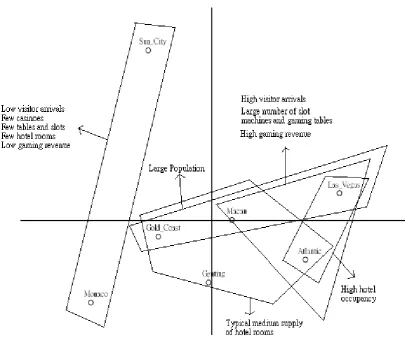
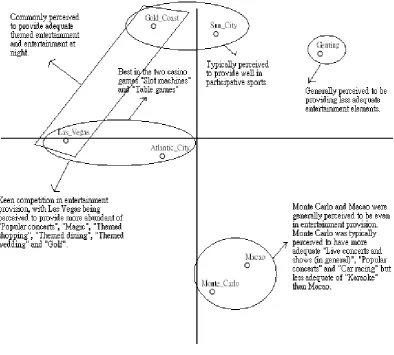
(68) Chapter 3 Study 1 – Comparative Study of Macao with Other Major Gaming Destinations. Chapter Outline 3.1 Aims of Study 3.2 Destination Benchmarking and Positioning 3.3 Measuring Destination Image 3.4 Multidimensional Scaling (MDS) 3.5 Methodology and Instrumentation 3.6 Analysis and Result Discussion 3.7 Chapter Summary. This chapter presents a general and exploratory comparison among the seven selected gaming and entertainment tourist destinations across five continents by exploring the possible similarities and differences among them from both a structural approach and a perceptual approach.. Entertainment. has been seen in all gaming destinations as a concerted, integrated effort to diversify the tourist product portfolio and balance the ―supposed‖ negative image of gaming.. Additionally, entertainment itself has been established as. a lucrative growth sector in its own right, not simply a supplement to gaming.. 67.
Figure
+7
Outline
Related documents