September 2008 http://www.becta.org.uk page 1 of 1
© Becta 2008 Research report
Web 2.0 Technologies for Learning at Key Stages 3 and 4:
Summary Report
Charles Crook and Colin Harrison On behalf of the full project team: Charles Crook, University of Nottingham Colin Harrison, University of Nottingham Tony Fisher, University of Nottingham Rebecca Graber, University of Nottingham
Mike Sharples, University of Nottingham Cathy Lewin, Manchester Metropolitan University John Cummings, Manchester Metropolitan University Rose Luckin, London Knowledge Lab, Institute of Education
September 2008 http://www.becta.org.uk page 2 of 2
© Becta 2008 Research report
Contents
Executive summary and key findings ... 3
Introduction ... 8
What is Web 2.0? ... 9
Why is Web 2.0 of interest to education? ... 11
Findings ... 13
Web 2.0 in secondary schools ... 19
The use of Web 2.0 by young people ... 13
Implementation: Barriers, tensions and facilitators ... 23
Impact of Web 2.0 on learning and teaching ... 21
E-safety and Web 2.0 ... 29
New modes of learning ... 34
Priorities and possibilities: Policy imperatives ... 40
A final word ... 45
September 2008 http://www.becta.org.uk page 3 of 3
© Becta 2008 Research report
Executive summary and key findings
The research project on Web 2.0 technologies for learning at Key Stages 3 and 4 was a major initiative funded by Becta to investigate the use and impact of such technologies in and out of school.
The project’s reports can be downloaded from:
http://partners.becta.org.uk/index.php?section=rh&catcode=_re_rp_02&rid=14543
The literature
Despite the anecdotal evidence and hype surrounding the concept of Web 2.0 technologies in education, there is a lack of studies providing empirical evidence on the role of Web 2.0 technologies to support learning.
In principle, Web 2.0 technologies fit well with current policy agenda and educational theory. Web 2.0 tools such as blogs, wikis, podcasts and messaging applications could potentially make a valuable contribution to furthering the personalised learning agenda, and could support autonomous learning, peer assessment and the
development of critical internet literacy.
Learners’ use of Web 2.0
At Key Stages 3 and 4, learners’ use of Web 2.0 and related internet activities is extensive.Despite most learners being confident or even prolific users of Web 2.0 sites, use is not generally sophisticated. Broadly speaking, learners may be
characterised as consumers rather than producers of internet content.
Of the 2,600 learners surveyed across 27 schools, 74% have social networking accounts and 78% have uploaded artefacts (mostly photographs or video clips from phones) to the internet. However, nearly all Web 2.0 use is currently outside school, and for social purposes.
In the sample, the percentage of learners with home access to the internet was high and the range of personal devices used by learners was extensive. However,
PC/internet access outside school was often shared, and this could limit its use by individuals.
There are some significant gender and age differences in the use of Web 2.0 technologies:
• Older learners take part in more social networking
September 2008 http://www.becta.org.uk page 4 of 4
© Becta 2008 Research report
• Boys do more internet-connected gaming than girls
• Girls do more social networking than boys, and also use video more than boys.
Overall, although most learners use the internet for learning, there is only limited use of Web 2.0, and only a few embryonic signs of criticality, self-management and meta-cognitive reflection.
Many learners lack technical skills, and lack an awareness of the range of
technologies and of when and how they could be used, as well as the digital literacy and critical skills to navigate this space. Teachers should be careful not to
overestimate learners’ familiarity and skills in this area. There is a clear role for teachers in developing such skills.
There is a disparity between home and school use of IT, both in terms of the larger range of activities and the increased time spent on IT at home. Many learners do not see some aspects of Web 2.0, such as social networking, as relevant to learning in school.
Use in schools
The use of Web 2.0 technologies in schools is limited, and where it is being used it is generally at an experimental and exploratory stage. Individual teachers and some schools are innovating in this area and developing approaches to the use of Web 2.0 to support learning. This use often took place within the walled garden of a virtual learning environment (VLE), and was not accessible for public view on the open internet.
Broadly speaking, the team found two modes of use of Web 2.0 applications: some teachers focus on the new tools, while others take a broader view and see Web 2.0 as introducing new educational practices. Innovators generally tended to focus on tools, and expressed a sense of continuity with existing practices rather than a radical departure from them.
Impact on learning and teaching
Findings on impact are cautiously positive. The research team identified four potential benefits to learning and teaching from using Web 2.0 to establish and sustain a participatory, collaborative, creative ethos of enquiry. These were found in the data, though in differing degrees:
• Stimulating new modes of enquiry
September 2008 http://www.becta.org.uk page 5 of 5
© Becta 2008 Research report
• Engaging with new literacies • Online publication of content.
When used effectively, Web 2.0 technologies had a positive impact on motivation and engagement through involving students in more participatory learning. For example:
• Web 2.0 engaged many learners who were tentative contributors in class or who had special needs, and supported learners’ natural curiosity by enabling expression through different media and a sense of audience, providing access to further resources and the ability to gain confidence and skill in speaking and presenting. Some teachers had found that Web 2.0 technologies could encourage simultaneous, learner-directed
discussions which extended beyond the lesson.
• The ‘anytime-anywhere’ availability of Web 2.0 can also be highly
motivating, and can enhance learner autonomy and encourage extended learning through open-ended tasks.
• Publication was felt to enhance a learner’s sense of ownership,
engagement and awareness of audience. Publication online was used by some teachers as a key element in peer assessment and was found to encourage more attention to detail and improved the quality of work. Some teachers are enthusiastic proponents of Web 2.0. 59% believed that popular Web 2.0 resources should get more use in the classroom. However, more than a third of teachers surveyed were concerned about issues such as time for
familiarisation and planning of the use of Web 2.0, while 65% reported that managing the internet in class could be difficult.
The teacher survey (which needs to be interpreted cautiously, since it was online and voluntary) found that 93% used search engines regularly and 70% used the internet for work purposes. In terms of personal use, 45% had used social networking at some point, 29% had written or contributed to a blog and nearly a third (30%) had uploaded a video they had shot. However, most had never used Web 2.0 applications in lesson time. Overall, when questioned about use in lesson time, 12% had used uploaded video, 9% reported writing to a discussion board, 6% reported editing a wiki, 4% reported creating or editing a social networking profile, and 9% reported creating or adding to a blog.
September 2008 http://www.becta.org.uk page 6 of 6
© Becta 2008 Research report
Barriers and issues
A number of educators reported barriers that inhibit greater use of Web 2.0:
• Many indicated that there was a tension between the collaborative learning encouraged by Web 2.0 and the nature of the current assessment system. • Concerns about e-safety and strict filtering in schools could be a barrier to
use.
• Lack of adequate bandwidth was sometimes an issue.
• Teachers need the support, time and space to develop skills and practices.
• Much of the web 2.0 activity encountered was supported by learning platforms and a ‘walled garden’ approach that addressed safety concerns, though a minority of Web 2.0-innovating schools enabled some or all of their Web 2.0 activities to be visible on the open internet.
E-safety
The central challenge for schools in considering the adoption of Web 2.0
technologies is how to support children to engage in productive and creative social learning while protecting them from undue risk. Most learners surveyed were aware of internet dangers, though many demonstrated poor practice around password security.
• E-safety concerns can be a barrier to the adoption of Web 2.0 activity. • Schools have a clear role in educating children for safe and responsible
engagement with Web 2.0 and the internet in general. As most learners have access to the internet outside of school, this education is important even if Web 2.0 sites are blocked on the school network.
• Despite a desire from some teachers to explore its benefits for creativity and social learning, they are often constrained by real or perceived limitations set by Local Authorities and schools.
• In an increasingly risk-averse society, where schools and local authorities are vulnerable to legal action, there is a strong incentive to avoid risk to children from internet predators and abusers. This concern was often focused on avoiding the most extreme, but rare cases.
• Parents have concerns about e-safety, but are generally positive about the use of technology to support learning.
September 2008 http://www.becta.org.uk page 7 of 7
© Becta 2008 Research report
Children’s web activity is monitored and action is taken against threatening or unsafe online behaviour.
The future
Perhaps the key implication for practice, therefore, is for evangelists, innovators and visionaries (and policy makers) to take careful account of the effort required of teachers if encouraging the wider implementation of Web 2.0, and to recognise that, although most teachers are positive towards Web 2.0 in principle, relatively slow and cautious progress is inevitable.
September 2008 http://www.becta.org.uk page 8 of 8
© Becta 2008 Research report
Introduction
The research project on Web 2.0 technologies for learning at Key Stages 3 and 4 was a major initiative funded by Becta to investigate the use and impact of such technologies in and out of school. The purpose of this research is to help shape Becta’s own thinking and inform policy-makers, schools and local authorities on the potential benefits of Web 2.0 technologies and how their use can be effectively and safely realised.
While appropriating Web 2.0 ideas into education seems to have face-value appeal, there has been little research into the benefits of doing so, the extent to which this is already happening and the barriers and issues to implementation. This research project aimed to address some of these gaps.
The project had five primary objectives:
1 To present an overview of current research into Web 2.0 and its potential uses in education.
2 To provide insight into learners’ use of Web 2.0 both at home and at school.
3 To evaluate the impact on learning and teaching of Web 2.0 and opportunities presented by its use in education.
4 To investigate barriers and challenges to implementation by evaluating experiences across local authorities.
5 To identify e-safety and child protection issues surrounding the use of Web 2.0 and identify how these technologies can be used safely.
The research took place between August 2007 and April 2008. The project reports findings from data collected from 27 schools – a demographically representative sample of 15 schools across the country and 12 Web 2.0 schools that were carefully selected to illustrate innovative practice. To gain an insight into students’ use of Web 2.0, data was collected using a guided survey of 2,611 Year 8 and Year 10 pupils from these schools, augmented by transcripts of conversations from 60 focus groups with a total of approximately 300 learners. The team also interviewed over 100 teachers, headteachers and ICT leaders in the schools, plus over 40 national Web 2.0 innovators and regional broadband consortium (RBC) managers. Finally, a version of the guided survey was completed by over 200 teachers.
The project produced four reports concentrating on different aspects of Web 2.0 for learning:
September 2008 http://www.becta.org.uk page 9 of 9
© Becta 2008 Research report
2 A report on a detailed exploration of students’ use of Web 2.0
technologies, in and out of school, based on survey data from 2,611 pupils in 27 schools and focus groups held with 300 students from 22 of those schools. Report title: Learners’ Use of Web 2.0 Technologies In and Out of School in Key Stages 3 and 4.
3 A report on evidence relating to Web 2.0 practices as they are currently realised in the educational community at Key Stages 3 and 4, including data collected from headteachers, teachers (particularly ICT specialists), support staff, curriculum innovators and national leaders in RBCs. Report title: Implementing Web 2.0 in Secondary Schools: Impacts, Barriers and Issues.
4 An investigation into the e-safety issues that surround the use of Web 2.0 technologies, in and out of school. Report title: E-safety and Web 2.0. The reports can be downloaded from:
http://partners.becta.org.uk/index.php?section=rh&catcode=_re_rp_02&rid=14543
This report summarises the key findings and implications of each of the four earlier reports, and adds two further sections: an analysis of the tensions and challenges relevant to managing the implementation of Web 2.0 in educational contexts, and implications for policy are brought together and related to the Government’s wider policy and skills agenda.
What is Web 2.0?
Web 2.0 is a catch-all term to describe a variety of developments on the web and a perceived shift in the way the web is used. This has been characterised as the evolution of web use from passive consumption of content to more active
participation, creation and sharing – to what is sometimes called the ‘read/write’ web. These are internet activities and tools that are broadly concerned with encouraging communication and participation among internet users. Among many young people, there is a growing involvement with so-called online ‘social software’ and the related uploading of creative material.
September 2008 http://www.becta.org.uk page 10 of 10
© Becta 2008 Research report
Table 1: Major categories of Web 2.0 activity
Trading
Buying, selling or exchanging through user transactions mediated by internet communications
Media sharing
Uploading and downloading media files for purposes of audience or exchange Conversational arenas
One-to-one or one-to-many conversations between internet users Online games and virtual worlds
Rule-governed games or themed environments that invite live interaction with other internet users
Social networking
Websites that structure social interaction between members who form subgroups of ‘friends’
Blogging
An internet-based journal or diary in which a user can post text and digital material while others can comment
Social bookmarking
Users submit their bookmarked web pages to a central site where they can be tagged and found by other users
Recommender systems
Websites aggregate and tag user preferences for items in some domain and thereby make novel recommendations
Collaborative editing
Web tools are used collaboratively to design, construct and distribute a digital product
Wikis
A web-based service allowing users unrestricted access to create, edit and link pages
Syndication
September 2008 http://www.becta.org.uk page 11 of 11
© Becta 2008 Research report
Why is Web 2.0 of interest to education?
Young people seem to be particularly attracted to many Web 2.0 developments, often for the social aspects of easy communication, co-ordination and online expression of personal identities.
At the same time, the affordances of Web 2.0 seem to harmonise well with current policy initiatives and modern thinking about educational practice. In particular, they seem to:
• offer new opportunities for learners to take more control of their learning and access their own customised information, resources, tools and services
• encourage a wider range of expressive capability
• facilitate more collaborative ways of working, community creation, dialogue and sharing knowledge
• furnish a setting for learner achievements to attract an authentic audience.
Taken together, these developments in Web 2.0 create four broad forms of impact, which can be summarised as:
1 Enquiry. 2 Literacies. 3 Collaboration. 4 Publication.
On the more cognitive side, Web 2.0 invites users to develop confidence in new modes of enquiry and new forms of literacy. Web 2.0 users must acquire the skills that are necessary to navigate and interrogate this new knowledge space. They must also become literate in digital formats for expression that go beyond the familiar medium of print.
On the more social side, effective Web 2.0 users must be comfortable with
collaborative modes of engagement. They must also welcome new opportunities for publication on the internet and the audience attention that this entails.
September 2008 http://www.becta.org.uk page 12 of 12
© Becta 2008 Research report
These recent developments also highlight a certain set of approaches that practitioners might adopt in relation to teaching and learning with Web 2.0. New attention needs to be given to:
• the multi-perspective nature of knowledge • the reality of multiple literacies
• the value of collaborative thinking and learning
• and the significance for creativity of finding an audience.
While there is a groundswell of enthusiasm for adopting Web 2.0 practices in
Findings
The use of Web 2.0 by young people
The research data from the project confirms that learners have high levels of access to many of the technologies that support Web 2.0 and that Web 2.0 activities are prolific.
• There are high levels of access to the internet and many Web 2.0
technologies: 98.4% of participants have access to a computer and 96.6% have access to the internet. Virtually all schools were found to have a few individuals who reported lack of access.
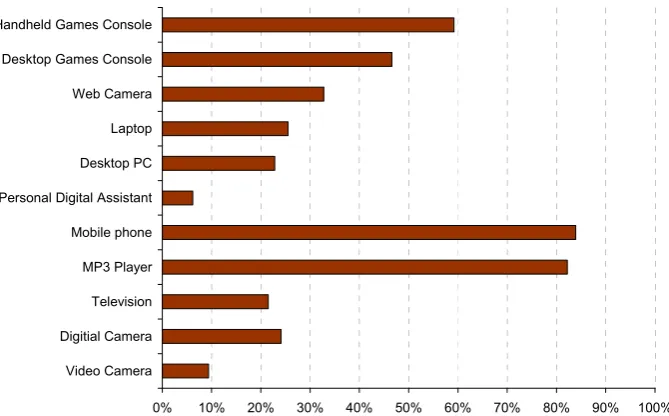
[image:13.595.113.448.382.590.2]• Only a minority have their own laptop or desktop computer, and for most the computer is a family resource, resulting in constraints on the amount of time they can spend using it, as well as when they might be able to do this.
Figure 1: Percentage of learners indicating access to technology that was mainly for their personal use
0% 10% 20% 30% 40% 50% 60% 70% 80% 90% 100% Video Camera
Digitial Camera Television MP3 Player Mobile phone Personal Digital Assistant Desktop PC Laptop Web Camera Desktop Games Console Handheld Games Console
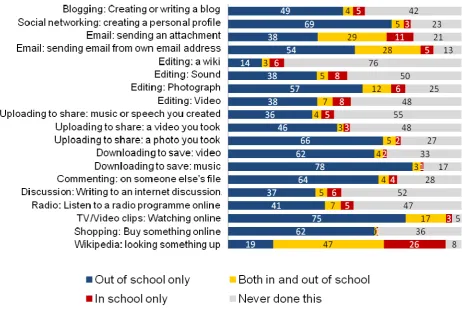
• Over 74% of participants have at least one social networking site account (79.4% in Web 2.0 schools), and the use of email and instant messaging is almost ubiquitous.
• Over 78% of all respondents had participated in sharing artefacts (through uploading pictures, video and/or music), with photographs the most
common product being shared; 50% had done this in the last week. Posting one’s own videos, voice communication using Voice over Internet
September 2008 http://www.becta.org.uk page 13 of 13
Protocol (VoIP) (20%) and communication via a webcam (36.5%) are less common.
[image:14.595.68.531.208.530.2]• Podcast and discussion board use was rare, and use of wiki technology focused on Wikipedia.
Figure 2: Learners’ use of related Web 2.0 activities in and out of school*
September 2008 http://www.becta.org.uk page 14 of 14
© Becta 2008 Research report
* Note that any totals need to include ‘both in and out of school’ as these learners indicated that they had carried out this activity in both locations.
Age and gender are factors in the types of Web 2.0 activity in which learners engage.
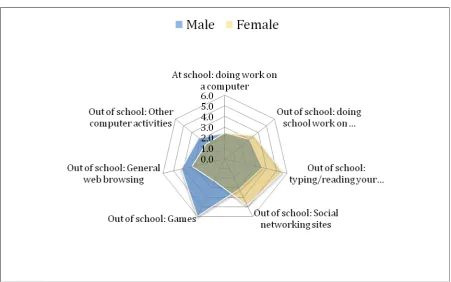
• Older learners take part in more social networking, general typing/email reading and browsing the web. Younger learners do more gaming. • Girls are more likely to own and use a webcam and to record video than
boys. Boys are significantly more likely to own a Wii or PSP/DS and play more games.
• Social networking and communication activity is more common among girls, and girls in Year 10 reported significantly greater rates than boys of receiving messages from people they did not know through instant messaging and via email.
Figure 3: Chart showing average time in hours spent each week by gender on selected computer-related activities*
* All values except time spent in school using computer for school work are significantly different between genders.
Normative sample only.
The primary motivation for engaging with social networking sites is interacting with one’s existing social network.
The benefits most frequently cited by young people were that:
• Web 2.0 technologies are free and facilitated communication with friends at school as well as those who lived elsewhere or attended a different school
• learners reported finding online communication easier than face-to-face conversation because of the lack of immediate, visual contact
• the opportunity to meet new friends (friends of friends) was attractive to some, but meeting entirely new people online was viewed by most learners as dangerous.
September 2008 http://www.becta.org.uk page 15 of 15
September 2008 http://www.becta.org.uk page 16 of 16
© Becta 2008 Research report
Relatively few learners are engaging in more sophisticated Web 2.0 activities such as producing and publishing their own content for wider consumption.
• Patterns of use are complex, and not all learners are familiar with the complete spectrum of Web 2.0 activities. Digital consumers are more prevalent than digital producers.
• In order to be motivated to publish content, learners must perceive that publication carries utility for the self or important others.
• Learners may lack the technical knowledge and skills needed to publish content online. Learners may also be unaware of the potential applications to which particular tools are especially suited.
• Prior experience with user-friendly social networking technologies may encourage them to see Web 2.0 applications as services that they consume, rather than as tools that they can use to advance their own aims.
• There were a few examples of quite sophisticated technical knowledge in discussions of scripting, web page design and caching. There were also examples of learners whose hobbies had engaged them in more
sophisticated activities.
Examples of more sophisticated learning activities were found when the school had engaged learners appropriately.
• There is a failure to see Web 2.0 activity as strongly relevant to the demands of learning at school. Learner interest in technologies for learning was largely limited to familiar activities such as presentations or communication. The range of sites used by learners for learning is limited: Wikipedia, BBC sites and Google account for over 60% of all the sites suggested by learners as those they use for work.
• Most learners expressed a preference for using the internet to support learning. Among the motivations they revealed were: the ease and speed with which information could be accessed; the sheer availability of
information; and, less commonly, the opportunity to work within different literacies.
• Only 21% of participants stated that they did not use the internet for school work. Use of the internet for research and enquiry was common, but
learners rarely used Web 2.0 tools.
• There is little evidence of groundbreaking activities and only a few embryonic signs of criticality, self-management and metacognitive
September 2008 http://www.becta.org.uk page 17 of 17
© Becta 2008 Research report
• Some learners who used Web 2.0 tools to support informal learning out of school believed that this helped them develop skills that assisted them in their formal learning pursuits.
• Few learners reported engaging in collaborative learning using Web 2.0, although some learners reported using Web 2.0 tools to support ‘chat’ about work. The tension between the collaborative nature of much Web 2.0 activity and the individual nature of most school assignments should be noted as a contextual factor here.
• Learners seem cautious about some values associated with the Web 2.0 initiative, such as the shared construction of knowledge in a public format. • While the data shows that learners have the potential to be critical
consumers of information on the internet, they are selective in applying that criticality.
There is a large discrepancy between in-school and out-of-school Web 2.0 use. • Learners spend, on average, more time working using a computer for
school work out of school than in school, with 34% of learners estimating that they spend only an hour each week using a computer at school. • Learners’ use of technology varied widely between use in school and out.
Wikipedia is particularly popular both in and outside school, but other activities that could support learning, such as listening to audio and watching video, are used far more at home.
• Collaborative activity is also higher outside school, as are file-sharing activities such as sharing pictures and videos and music downloading. • Tensions arise from the ways in which school procedures and tools
monitor internet use, and while learners acknowledge that inappropriate behaviour needs to be prevented, they perceive blanket bans to be inappropriate.
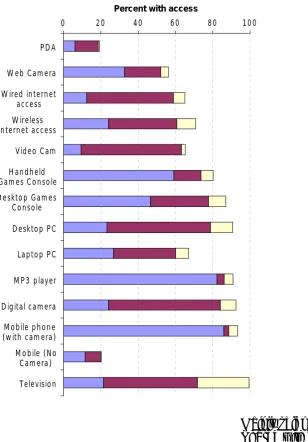
Figure 4: Learners’ reported access to technology at home and at school*
September 2008 http://www.becta.org.uk page 18 of 18
© Becta 2008 Research report
0 20 40 60 80 100
PDA
Percent with access
Web Camera
Wired internet access Wireless internet access
Video Cam
Handheld Games Console Desktop Games
Console
Desktop PC
Laptop PC
MP3 player
Digital camera
Mobile phone (with camera) Mobile (No Camera)
Television
█ Mainly self only
█ Shared with family only █ Self and shared with family
September 2008 http://www.becta.org.uk page 19 of 19
© Becta 2008 Research report
Web 2.0 in secondary schools
Two rather different approaches to Web 2.0 were encountered:
• For some, implementation was primarily about adopting Web 2.0 tools • For others, it was about practice resonating with the Web 2.0 ethos of
establishing and sustaining collaborative learning communities.
Web 2.0 technologies in action
The project looked closely at the implementation of those Web 2.0 tools most prevalent among learners at home and at participating innovating schools: social networking, blogs, wikis, conversational arenas and media sharing (including podcasting). Unless otherwise stated, all statistics refer to the full data set.
Social networking
• Social networking using popular commercial applications such as Bebo or Facebook (on which 74% of students surveyed had accounts) was very rare in schools. Only 7.3% of teachers reported having used a social networking site in lessons or lesson planning.
• Practitioners’ aspirations to utilise social networking in school encountered particular obstacles which then shaped the way the tools were used. These challenges included e-safety concerns, restrictive filtering
implemented by the RBC, and integrating a walled garden social network within a VLE.
• Where social networking occurred in schools, teachers attributed its popularity to ease of use and a degree of student ownership and control, although everything can be monitored by teachers. At school W7, instant messaging is viewed as a positive incentive to engage students with the environment (which is being populated with learning resources) rather than being perceived as a major classroom distraction.
• Another important aspect of the potential of social networking in schools is the fact that some students are more comfortable using online
communication than talking in class.
Blogs
September 2008 http://www.becta.org.uk page 20 of 20
© Becta 2008 Research report
• Some teachers used blogs to record information, opinion and ideas, and for sharing good practice among colleagues; some of these were available on the open internet.
• Some teachers used blogs with students, setting open-ended tasks with structured support provided through the blog, with the goal of encouraging enquiry and empowerment. Blogs were found to be useful both for in-class activities and for extra-curricular activities such as debate, peer
assessment and commenting on shared experiences. Wikis
• Teachers were generally enthusiastic about the opportunities presented by wikis: 46% believed that students should have the experience of building their own wiki encyclopaedia.
• Although examples of teachers editing wikis for school work were comparatively few, 75.2% of teachers reported using a wiki – 32% had done so during lessons.
• Wikis were used with students for peer assessment, development of behaviour guidelines, and sharing knowledge and research. However, some teachers found that wikis were unsuitable as document repositories and were unable to cope with the conversational demand generated, and moved from wikis to linked discussion forums.
Discussion forums and online chat
• Nearly half of teachers felt competent or very competent using discussion boards. Only about 13% of teachers felt very competent with internet chat and instant messaging and teachers were divided about their potential for future use in the classroom.
• Discussion boards were perceived by a number of teachers to have significant potential for learning – provided activities were carefully structured and monitored. They can also play an important role in
personalised learning. Use was most effective when there had been some prior classroom preparation for a task.
• Discussion boards provide a means for supporting weaker students (through monitoring and additional, targeted prompts), and higher-ability students (through extension materials and activities, or through bringing in outside experts).
• Discussion boards can be particularly valuable for students who choose not to participate in class.
September 2008 http://www.becta.org.uk page 21 of 21
© Becta 2008 Research report
• Where forums were used, they were normally hosted within the protective environment of a school’s VLE. Teachers were generally expected to moderate postings themselves.
• At some schools, forums were largely used for homework tasks due to the constraints of the curriculum and because face-to-face activities were seen as more appropriate in the classroom. The forums were seen as a means of extending and deepening learning from classroom discussions, and supporting autonomous, anytime-anywhere learning.
Uploading and downloading material
• Three-quarters (74.5%) of teachers surveyed believed that students needed more experience of uploading and downloading materials, and 54.1% believed proficiency in communicating using visual and audio media to be important.
• General access to YouTube was blocked in all but two of the participating schools. A small number of teachers mentioned the use of video clips from YouTube but usually directed learners to particular videos owing to
concerns about access to inappropriate material.
• Podcasting was only used experimentally or sporadically in the schools studied. However, some languages teachers made extensive use of ‘vokis’ where an avatar on a website is used to replay a sound recording of a student.
What tools were absent?
• Some Web 2.0 tools were absent in nearly all the schools that were surveyed. These were: collaborative editing; recommender systems; syndication; and media manipulation and distribution. Where collaborative editing occurred, it was largely between teachers and students rather than between students; access to computer suites was reported as a constraint to this activity. Social bookmarking tools were only used by one innovator and one Web 2.0-innovating school.
Impact of Web 2.0 on learning and teaching
Student motivation and engagement were, for both teachers and innovators, the most powerful drivers behind using Web 2.0 tools for learning. Innovators tended to express a sense of continuity with existing practices rather than a radical departure from them.
September 2008 http://www.becta.org.uk page 22 of 22
© Becta 2008 Research report
Web 2.0 to establish and sustain a participatory, collaborative, creative ethos of enquiry were found in the data, though in differing degrees.
The first of these was stimulating new modes of enquiry.
• Enthusiasts often expressed their positive disposition in terms of the ‘independence’ of enquiry that web 2.0 access offered, though this was tempered with an awareness that learners needed to be guided into acquiring this independence, particularly when students were tentative or even suspicious of using internet resources.
• Opportunities for stimulating new forms of enquiry seemed poorly developed among these young learners. While they were aware of the scope of internet resources, learners could also be impatient with and intimidated by the internet, and lacked critical literacy skills. While teachers were themselves more comfortably discriminating in their own research, they were not yet investing heavily in developing such enquiry confidence in learners.
• Supporting the development of critical internet literacy would appear to be an important area for the future.
The social internet affords new opportunities for engaging in collaborative learning activities.
• The social internet affords new opportunities for engaging in collaborative learning activities. Activities grounded in communication (such as
discussions, speaking and listening) can clearly be facilitated through technology, and 82% of teachers indicated that their students needed more experience of collaborative learning.
• Two-thirds of teachers thought that Web 2.0 tools could support such collaboration, although 41% of teachers had never used Web 2.0 to facilitate it.
• Perceived challenges to using Web 2.0 to facilitate collaborative learning included barriers presented by the assessment system, with both teachers and learners viewing Web 2.0 tools primarily as ‘chat spaces’.
• Although not desired by all practitioners, collaborative learning was viewed by many teachers as intrinsically compelling to learners, with activities generating substantial communication from a wide range of learners. Some teachers had found that Web 2.0 technologies could encourage participation in simultaneous, learner-directed discussions which extended beyond the lesson.
September 2008 http://www.becta.org.uk page 23 of 23
© Becta 2008 Research report
activities such as peer assessment and group enquiry are brought into the assessment system.
Some teachers emphasised engaging with new literacies as one of the experiences that Web 2.0 seemed to offer learners.
• Practitioners noted that Web 2.0 engaged many learners who were tentative contributors in class or who had special needs, and supported learners’ natural curiosity by enabling expression through different media and a sense of audience, providing access to further resources and the ability to gain confidence and skill in speaking and presenting.
• The anytime-anywhere availability of Web 2.0 can also be highly motivating, and can enhance learner autonomy.
• Over two-thirds of teachers agreed with the statement: ‘Assessment should shift from writing towards visual media.’
A small but significant group of innovating teachers saw publication of content as an important Web 2.0 area. Teachers felt they had an important role in providing learners with the skills and confidence to do this.
• Despite enthusiastic reports of success in publishing student work when this is initiated by a teacher, student-instigated content creation and publication was fairly uncommon, albeit more frequent at Web 2.0-innovating schools.
• Publication was felt to enhance a learner’s sense of ownership, engagement and awareness of audience.
• Publication online was used by some teachers as a key element in peer assessment and was found to encourage more attention to detail and improve the quality of work.
• Internet publication was felt by innovating teachers to encourage research and learning informally or outside the classroom.
• Learning platforms were the most common outlet for publication – through publishing presentations for use in lessons, engaging in writing
competitions, building personal web spaces, and uploading images and text for peer assessment.
• Teachers were generally interested in publishing more of their students’ work online, but felt more comfortable doing this within a VLE.
Implementation: Barriers, tensions and facilitators
September 2008 http://www.becta.org.uk page 24 of 24
© Becta 2008 Research report
that were met were active internet users (93% reported having used a search engine within the last 24 hours), active Web 2.0 users represented a minority.
Potential
• Some teachers are enthusiastic proponents of Web 2.0 and 59% believed that popular Web 2.0 resources should get more use in the classroom.
• In terms of potential for learning, 54% of teachers believed that “Web 2.0 resources could support more effective collaborative learning”, but many were unsure about the opportunities presented by Web 2.0 or felt they did not have enough information to decide. Many teachers who had not adopted Web 2.0 indicated a wariness of the demands that doing so would create. More than a third of teachers surveyed were concerned about time for familiarisation and planning of the use of Web 2.0 and issues of control and trust. Teachers frequently (18.7%) or occasionally (47.0%) found that student use of the internet in class was hard for them to manage.
•The teacher survey (which needs to be interpreted cautiously, since it was online and voluntary) found that 93% used search engines regularly and 70% used the internet for work purposes. In terms of personal use, 45% had used social networking at some point, 29% had written or contributed to a blog and nearly a third (30%) had uploaded a video they had shot. However, most had never used Web 2.0 applications in lesson time. Overall, when questioned about use in lesson time, 12% had used uploaded video, 9% reported writing to a discussion board, 6% reported editing a wiki, 4% reported creating or editing a social networking profile, and 9% reported creating or adding to a blog.
• Many teachers felt that curriculum and assessment pressures reduced their opportunities to introduce Web 2.0 approaches.
E-safety, filtering and blocking
• Practitioners and RBC managers shared the belief that parents as well as schools must be engaged with e-safety in order for responsible behaviours to develop, and expressed concerns about the current level of parental engagement.
• Paradoxically (given that 58% of teachers surveyed wanted tighter internet controls), many teachers reported frustration at being unable to access websites due to RBC/local authority and/or school filtering systems. • Not all staff were clear about how to un-block sites. While many teachers
September 2008 http://www.becta.org.uk page 25 of 25
© Becta 2008 Research report
• In addition to ‘cyberbullying’ worries, practitioners expressed concerns about sharing of passwords, the use of public forums and the possible traceability of children.
• Ultimately, the goal of all educators was that learners should become aware, responsible and safe users and generators of internet content.
Technology issues
•Adequate and reliable access to technology was felt by teachers to be crucial for effective Web 2.0 use. Some teachers had concerns about being let down by technical failure, or even worse removal of the facility due to rising
costs/insufficient budgets.
• In some schools, barriers include insufficient access to computer suites (where ICT subject teaching predominates), insufficient levels of technical support (including specialist support for Web 2.0 tools) and/or insufficient bandwidth.
• The most active Web 2.0 schools had high levels of ICT resourcing,
particularly in terms of staffing to support teachers as well as learners. There can be an administrative burden in using Web 2.0 technologies, such as the need to register learners for different services.
• Adequate bandwidth is essential where schools need to access large files over the internet and to run simulations and podcasting. RBC leaders are looking to significantly expand bandwidth beyond current levels as some schools consume up to 94% of their allocation.
• Moderating learner contributions was important and needs to be carefully managed.
• Issues of storage, back-up systems and control of content were addressed by practitioners in different ways – some through local control, and others
through buying into a regionally managed system. The desire for some secondary schools to maintain their autonomy in this area was still evident.
Other barriers to uptake include legal, content and portability issues
• Findings suggest most teachers have a lack of awareness of legal and copyright issues when using external resources. There are policy implications for staff training and teacher development here.
September 2008 http://www.becta.org.uk page 26 of 26
© Becta 2008 Research report
• Transition and portability were a concern of RBC leaders and were being addressed through developments in single sign-on workspaces and authentication of users. These issues were rarely considered by schools. • There seem to be advantages to managing different technology and
process issues at classroom, school or regional level as appropriate.
Encouraging innovation
• Effective staff development opportunities, with support and time for innovation, play a crucial role in the process of Web 2.0 adoption.
• Innovation was most commonly identified as starting at the individual and local level, though management support could greatly facilitate the
embedding of change.
• Individual innovators’ experience indicated that becoming a member of a community of practice can be crucial in increasing the awareness of possibilities. A general orientation to advancing one’s practice seems key – usually as measured by stimulating or refreshing the engagement of pupils.
• Developing a supportive staff context might be a matter of having access to a sympathetic and competent team of ICT support staff, as well as encouraging (or non-obstructive) management and sufficient ICT resourcing.
• Staffing changes could have a major impact when innovators moved to new posts.
• Just over half (56%) of teachers indicated that they would welcome more guidance in the use of Web 2.0 technologies. This means that novices will still find few models of well-developed practice to draw upon.
• It was clear that many innovators were giving time to supporting Web 2.0 that went well beyond their working hours. This was admitted to be a matter of personal enthusiasm, blurring the boundaries between work and recreation for them.
• A third (32.5%) of teachers frequently or occasionally use Web 2.0 to share resources and ideas with other teachers.
• Young people themselves can be a source of expertise in Web 2.0 activity (though teachers should not assume that a high proportion of learners have skills such as media editing and publishing).
Choices, opportunities and visions
September 2008 http://www.becta.org.uk page 27 of 27
© Becta 2008 Research report
How large is a walled garden?
• Nearly all the Web 2.0 schools did have some form of VLE (whether
developed in-house or externally), and this was often used to support Web 2.0 activity. For most schools, hosting Web 2.0 activity implied a walled garden approach with password-protected content, but a minority of Web 2.0-innovating schools enabled some or all of their Web 2.0 activities to be visible on the open internet – podcasts, in particular, benefited from wider publication.
• Some RBCs said they aimed to replace the concept of a school-level walled garden with a much bolder and more extensive concept that will connect up to a million users (teachers, pupils and other stakeholders, including parents) in large-scale, protected learning communities while maintaining duty of care.
• It is central to many enthusiasts’ conception of Web 2.0 activity that it should be exercised on the open internet and the full reach of the web’s structure should be always available. These ideals were less prominent in the thinking of staff responsible for stimulating Web 2.0-like activity in schools. Issues of security, confidentiality, plagiarism, public image and cost loomed large as realities in their circumstances. Moreover, many were investing time, resource and personal energy into the growth of a VLE. Indeed, the concept of an institutional learning platform seemed to fit far more comfortably with the local-level community tradition of a school. But, most important, it seemed to furnish a safe environment in which activity could be both regulated and celebrated. Thus, for many school-based enthusiasts the VLE seemed to offer a space for experimentation and, perhaps, a route to accessing a more open arena of communication. • For many, however, a more compelling case for the walled garden was
that it provided a layer of security. Authors of postings could be identified and any subversive activity would be contained.
September 2008 http://www.becta.org.uk page 28 of 28
© Becta 2008 Research report
Local autonomy or regional community?
Schools have to choose how much autonomy to retain as regards implementation of the technical infrastructure needed for Web 2.0. In-house expertise, at its best, yielded tools which were more specific to the schools’ needs and more immediately responsive to problems (for example, immediately facilitating access to a blocked website or updating content). However, use of external services may be felt to offer a greater pool of functionalities and capabilities.
Externally hosted VLEs solved many problems, but were sometimes felt to place a greater strain on bandwidth as pupils needed to upload and download resources. The need to moderate conversational arenas was also seen as a potential barrier, particularly in relation to staff time.
The perceived rigidity of the secondary school timetable
• Timetable rigidity was viewed by managers and practitioners as a barrier to implementation.
• There was a perceived tension between requirements for assessment and adoption of Web 2.0 tools. Little mention was made of the formal
assessment of work done using Web 2.0 sources or where computer-supported collaboration has been involved.
• For the local authority and RBC managers interviewed, Web 2.0 approaches were seen as particularly key to developing personalised, anytime-anywhere, independent learning. Related to this was an
September 2008 http://www.becta.org.uk page 29 of 29
© Becta 2008 Research report
E-safety and Web 2.0
The central challenge for schools in considering the adoption of Web 2.0
technologies is how to support children to engage in productive and creative social learning while protecting them from undue risks.
E-safety concerns can be a barrier to the adoption of Web 2.0 activity:
• Despite a desire from some teachers to explore its benefits for creativity and social learning, they are constrained by real or perceived limitations set by local authorities and school governors.
• In an increasingly risk-averse society, where schools and local authorities are vulnerable to legal action, there is a strong incentive to avoid the worst-case risk to children from internet predators and abusers. To develop effective policy for adopting Web 2.0 technologies, it is important to distinguish the current fears of society from evidence of actual risk to children:
• The fears relate to children being exposed to inappropriate content,
children being lured into exhibiting inappropriate behaviour, children being abused by strangers, and online bullying.
• The evidence so far is that the risk of children being duped by online predators is small and the public image of online predators who trick naive children into becoming victims of abuse is largely inaccurate. In most cases, the victims are aware they are conversing online with adults and offenders rarely deceive victims about their sexual interests. Most victims who meet offenders face to face go to such meetings expecting to engage in sexual activity.
The survey of children at Key Stages 3 and 4 shows that a substantial minority
(42%) of children regularly interact socially online with people they have not met face to face.
This does not, of itself, indicate that children are naive or are engaging in behaviour that puts them at significant risk. Rather, it shows that online interaction forms a different, though overlapping, social space to that of face-to-face friendships,
involving friends of friends and people encountered in the online world, for example, through multiplayer games.
September 2008 http://www.becta.org.uk page 30 of 30
© Becta 2008 Research report
• Just over a quarter (27%) reported they occasionally received an instant message from a stranger, and 14% said they received such messages frequently; 20% have occasionally sent an instant message in reply to a stranger, with 15% having done so frequently. Also, 20% of the
respondents indicated that they occasionally engaged in instant
messaging or email correspondence with friends they had never met, and a further 17% indicated that they did so frequently.
• For social networking sites, 32% reported occasionally receiving ‘friend’ requests from unknown people, with 22% receiving such requests
frequently; 29% occasionally accepted such requests, and 22% accepted them frequently. Also, 27% reported occasionally maintaining online friendships with people they had not met in person, and 22% did so frequently.
• For social networking activity, 13% of respondents who use these sites reported that people had occasionally posted pictures of them that they wish had not been posted, with 3% reporting that this happened
frequently. Furthermore, 10% reported that people had occasionally written unacceptable things about them online, with 4% reporting such behaviour happening frequently. Approximately half the respondents using these sites have been subject to unwelcome postings at some point. Learners seemed very aware of how to deal with abusive commentary using the channels available to them in social networking.
• A minority (9%) indicated that they occasionally told their email or instant messaging passwords to other people and 2% said they did so frequently; 20% reported that they had occasionally learnt a password of another person, and 8% reported having done so frequently. Just under a quarter (23%) reported that they never change their password, 37% do so rarely, 27% occasionally and 9% frequently. Password strength was also poor and suggests the need for more education in this area.
The majority of learners are knowledgeable about basic online safety. The school’s role
• Schools have a role in educating children on how to engage safely and responsibly with the new internet.
• Teachers can help children to appreciate when they cross the line from normal and acceptable Web 2.0 activity (which may include posting some personal details online) to abnormal and risky behaviour.
September 2008 http://www.becta.org.uk page 31 of 31
© Becta 2008 Research report
have home access, safe behaviours are essential, but a strongly protected online environment at school may not provide the opportunity to learn these.
Cyberbullying
• Online bullying, or cyberbullying, can be an upsetting experience and a recent phenomenon is the posting of hurtful images and videos on the web.
• The survey responses suggest that online bullying is seen as a frequent or occasional problem by some 15% of children and that approximately half have been subject to unwelcome postings at some point.
• Schools are beginning to extend their bullying policies to include the internet. They will need to address this issue whether or not they adopt Web 2.0 technologies, since the most likely route to online bullying is for a child to use a personal phone to capture an image and a home computer to post a hurtful message.
What were teachers’ concerns in relation to e-safety?
• Just over half (55%) of teachers surveyed knew that their school had an e-safety policy, 3% believed that their school did not have such a policy, and 42% did not know. Furthermore, 42% of teachers said they never taught students about e-safety, and only 11% did so frequently.
• Just under half (46%) reported having had a negative experience caused by students using Web 2.0, with 4% of teachers reporting that this
occurred frequently.
• The main concern expressed by teachers was about how much
information children actually or might give away about themselves. This was a mixture of anxiety about online bullying and strangers contacting identified pupils. The underlying tension was typically expressed by teachers in terms of a worst-case incident and the effect that might have on the child and on the school community.
• The teacher survey data indicated that 42% of teachers agree that online bullying is currently a problem, with a further 13% strongly agreeing. • Some interviewees indicated that schools were prevented by media scare
September 2008 http://www.becta.org.uk page 32 of 32
© Becta 2008 Research report
Parents’ views
• While 17% of parents agree or strongly agree that they worry about their child being at risk of online bullying, concern is greater regarding contact from inappropriate adults (23% strongly agree, 44% agree), accidental exposure to inappropriate material (15% strongly agree, 59% agree), and children’s visits to unapproved websites (13% strongly agree, 55% agree). • Despite widespread concern about exposure to inappropriate content and
individuals on the internet, most parents remain positive about using technology to support their children’s education. The vast majority (91%) of parents surveyed agree or strongly agree that every child should have strong technology skills while 94% believe that the internet may be useful in subjects other than ICT. Most parents also view the internet as a good way for their children to keep in touch with school friends (8% strongly agree, 54% agree).
• Most of the parents surveyed (66%) indicated that they had measures in place to prevent their children from visiting websites of which they
disapprove.
• Parents generally trust their children to conduct themselves safely online, with 66% agreeing or strongly agreeing that their child knows how to create secure passwords and 62% agreeing or strongly agreeing that their child would not disclose personal details on the internet.
What did experts think were the most useful approaches to e-safety?
To seek expert opinion, the project formed an e-safety and Web 2.0 advisory panel comprising 30 people in the UK with specific expertise in e-safety and in enabling creative use of web technology. Four positions were discussed and rated for desirability and feasibility:
1 Walled garden. Schools provide protected and moderated Web 2.0 activities for learning, through a school or educational network with Web 2.0 facilities but not access to public Web 2.0 sites. Schools educate children in how to take responsibility and manage risk in the public web. 2 Empower and manage. Schools allow children access to public Web 2.0
sites. Children are educated and helped in school to use Web 2.0 activities for responsible and creative learning. Children’s web activity is monitored and action is taken against threatening or unsafe online behaviour.
3 Lock down. Schools prevent children’s access in school to Web 2.0 sites. They provide children with education on safe use of the internet.
September 2008 http://www.becta.org.uk page 33 of 33
© Becta 2008 Research report
activity and on trusting children to exercise self-control and social awareness.
September 2008 http://www.becta.org.uk page 34 of 34
© Becta 2008 Research report
Understanding Web 2.0- a perspective from across the four studies
In the light of evidence from the four reports produced by this project- a review of research, and in-depth analyses of learner, teacher and e-safety issues- it is appropriate for the research team to comment on some of the issues and tensions that have surfaced and that need to be more clearly understood if Web 2.0 is to achieve its educational potential.These issues can be considered in relation to two important insights that have emerged from the evidence:
• the first is that one of the reasons Web 2.0 has been slow to make a deep impact is because it demands new modes of learning from students;
• the second is that Web 2.0 applications result in new products of learning, and teachers and schools will need to find ways to accommodate these into new curriculum practices.
More detail on these issues is given below.
New modes of learning
Successful appropriation of Web 2.0 technologies into classroom practice will
demand new modes of learning from students. Similarly, this will demand of teachers new sensitivities to what is involved in these novel approaches to enquiry and study. The five pairs of alternatives below highlight tensions that arise from introducing these new modes of learning.
(i) Private learning versus collaborative learning
• Web 2.0 is strongly associated with collaborative styles of enquiry and production. There are potential tensions with the management of assessment in such collaborative arrangements. Current assessment arrangements tend to individuate work. There are also issues arising from the varying willingness of individual students to enter into these
collaborative arrangements and the significance of personalisation agendas for managing such student preferences.
• The public debates about plagiarism have led many school students to regard the internet not as a rich repository of ideas and instantly
September 2008 http://www.becta.org.uk page 35 of 35
© Becta 2008 Research report
• The young people spoken to were undoubtedly strongly social in their outlook. That does mean that they recognise school as a crucial focus for their interpersonal relationships. However, this did not seem to imply that they had a fully open attitude towards the prospect of collaborating more actively on the production of work for school.
• Whether or not the prevailing culture of education mitigates against these more collaborative practices, there is a need to recognise the reality that some learners may always approach school work with a preference for more private modes of study and production.
(ii) Creative editing versus cutting and pasting
• The new modes of enquiry afforded by Web 2.0 study confront the learner with difficult decisions of selection, organisation and the judgement of authority. Effective relationships with such resources involve a creative editing and development of the products of personal research. Yet, the media involved readily encourage quick solutions based on cutting and pasting from resources without active processing of their content. Hence, what is needed is the development of critical judgement leading to
intelligent synthesis, rather than mere digital patchwork.
• Both teachers and learners were well aware of the attraction and appeal of solutions to study that were lazy or careless in the sense that the phrase ‘cut and paste’ implies. Both parties also acknowledged that such
practices were widespread – albeit something that was occasionally rather than systematically done by most.
• Some students expressed frustration at the exhortation to use the internet for personal and imaginative research – when it was coupled with teacher disbelief that a student could have thought or understood what was then submitted. Plagiarism remains a problem, and is something that will certainly be encountered at this very early stage of serious independent learner research.
(iii) Serial processing versus parallel processing
• The creation and storage of information in Web 2.0 encourages a more patterned or parallel orientation to its organisation and investigation. Informal tagging takes precedence over hierarchical taxonomies as a basis for this organisation. How readily is this informality accepted by young learners and their teachers?
September 2008 http://www.becta.org.uk page 36 of 36
© Becta 2008 Research report
urgent. Clearly, this point connects with those made in Report 3 on the need to teach critical internet literacy.
(iv) Successive attention versus simultaneous attention
• Study in Web 2.0 environments typically encourages a multitasking approach to resources. How acceptable is such simultaneous source processing within a tradition of study that has tended to encourage focus and sustained patterns of attention?
• Vigorous multitasking is not a necessary aspect of interacting with Web 2.0 services. Yet, those services naturally encourage this style of engagement. In particular, most learners reported having text
communication services permanently active on their desktops at home. A small number of students identified this as a form of distraction that they had chosen to avoid or admitted they felt a victim of it when working at home. Teachers did not express strength of feeling in relation to
multitasking – either as a strength of the medium or a limitation. However, the style of working in school settings was likely to be much more focused on single tasks with background activities such as media players and chat systems not included.
(v) Authorised knowledge versus distributed knowledge
• The reach of the internet is now such that publication is enjoyed by a vast constituency of users. How readily does the young learner make
judgements about the authority of material that is found in this distributed knowledge base?
• The culture of Web 2.0 has challenged the boundaries of traditional
academic authority and stimulated a new breed of enthusiastic author and commentator. At its best, this flourishing arena of publication manages its own quality control – as well exemplified by Wikipedia.
• However, learners were not universally thankful for the opportunities of distributed internet knowledge. Finding images to support their own writing was widely acknowledged as a valuable use of searching. But a significant number of learners expressed frustration with finding material that was poorly pitched to their level of understanding. Some expressed preference for researching from textbooks rather than the internet because these books were written for learners and they addressed a learner’s lack of understanding more directly and sympathetically than material stumbled across from internet searches.
• Teachers were keenly aware of the challenge of sifting and filtering
September 2008 http://www.becta.org.uk page 37 of 37
© Becta 2008 Research report
their own management of internet searching. Information or disciplinary portals provide one solution to managing the unauthorised and distributed nature of Web 2.0 information. The favourite internet sites reported by these teachers did not include any such information portals that might be relevant to their educational interests. These findings suggest it would be useful to cultivate awareness of more useful points of entry to internet resources along with guidance on how best to navigate within them.
Recognising new products of learning
New modes of learning imply new products from learning. These, too, can be considered in relation to a series of creative tensions.
(i) Print literacy versus digital literacy
• Our intellectual tradition is founded on a ‘literate mind’, where this has been based on a command of the written version of spoken language. How comfortable do practitioners find the shift towards other forms of expressive literacy implied by Web 2.0, whether in non-verbal forms or using new linguistic conventions and codes?
• Broadly speaking, it was the innovators and RBC managers who had a clear vision of how new digital literacies might be embedded in learning. The great majority of teachers interviewed had not yet grasped (or had doubted) the potential of Web 2.0 for producing new types of outcomes from learning, or were not as yet connected to frameworks that enabled this to happen without a great deal of additional effort. Insofar as
alternative digital literacies were pursued, they tended to be seen in terms of an accommodation to variations in ‘learning style’ – a popular and fashionable conception.
• Whatever balance of ‘literacies’ is achieved, Web 2.0 services clearly offer a variety of tools to manipulate and share material that is expressive within those literacies. RBC managers who were optimistic for the future pointed to three factors that were promising in this respect:
o First, server-end software such as Google Docs and Just2Easy now offered easily accessed spaces for creating multi-author documents. These could be read or edited from anywhere, and stored securely online.
o Second, as young people’s skills and confidence with multimedia
hardware and software grew, creating new types of educational outputs would become something that was not primarily dependent on teacher knowledge and skills.
o Third, the teacher workforce is changing, as the use of electronic
September 2008 http://www.becta.org.uk page 38 of 38
© Becta 2008 Research report
not turn on a whiteboard had in many cases now not only moved beyond the ‘electric chalk’ and ‘death by PowerPoint’ phases, they were now confidently integrating live internet material into their lessons, and were routinely creating multimedia products.
• As these activities become more widespread, argued the RBC managers, it has become clear that most teachers have no fundamental antipathy towards broadening the range of digital outputs that are accepted as
educationally worthwhile. Progress is a matter of accumulating experience, at a pace congruent with the realities of workloads.
(ii) The transient versus persistent fate of work products
• Web 2.0 encourages the publication and dissemination of student work in pursuit of authentic audiences for what they create. However, the
persistence of work published in electronic arenas contrasts with the transient nature of most work that will have been done in school. How comfortable are students with exposure of this kind? Where will work that is no longer current be stored, and who will make choices about what happens to it?
• Most teachers interviewed saw social networking as ‘play’, and as a medium to be discouraged in school. Most young people surveyed, however, saw social networking as usefully transient and private, occupying a space safely distant from the gaze of their teachers and parents.
• More generally, many students did not favour the idea of either displaying or sharing the products of their school work online; they saw such
publication as either a form of vanity or an invitation to steal intellectual property or, more simply, cheat. Where the products of Web 2.0
approaches had an authentic purpose and a real audience, however, students became enthusiastically engaged:
o Podcasts featuring short videos of ‘The Best Bits of Year Seven’, made by Year 7 and aimed at Year 6 students were an example of this. o Equally, podcasts featuring iMovie presentations with music and a
commentary on the topic of conservation demonstrated great
commitment on the part of students in geography. Students were very happy to see these products of their work published on the internet for the benefit of others.
• In common with other Becta projects that have explored e-portfolios, the research team found that only a minority of teachers were beginning to make use of the internet for assessment, either formatively (with teachers using ‘track changes’ as part of their marking, for example) or
September 2008 http://www.becta.org.uk page 39 of 39
© Becta 2008 Research report
o The experience of one student who had lost three days’ work because she had exceeded her storage space was indicative of the network and storage problems associated with changes in this area.
o By contrast, other students welcomed the fact that once saved, their work would be stored permanently and safely.
• School network managers and RBC technical managers acknowledged that many of the technical and intellectual property issues related to the storage and ownership of student work were still being addressed, and that installing VLEs in every school will bring these issues into sharp focus. • Nevertheless, it should be noted that it was in the area of assessment that