DEVELOPING THE NEXT GENERATION OF DESIGN FOR
ENVIRONMENT (DFE) TOOLS
Thesis submitted in accordance with the requirements of the University of Liverpool for the degree of Doctor in Philosophy by Andrew Birch
ABSTRACT
Research on the incorporation of environmental considerations into product design is now into its third decade. A recognised way of reducing environmental impacts is through the adoption of DfE tools into the design process. These design tools are intended to assist the designer when attempting environmental design. The potential benefit of DfE tools is fundamental to the success of future design and manufacture. However, utilization by design specialists remains limited.
Investigation of the structure and internal mechanisms present in DfE tools has painted a clearer picture for why some tools work well and why others do not. By understanding what makes some tools better than others it has been possible to distil the fundamental features and characteristics from the tools that perform the best, and develop the next generation DfE tool framework. Verification has been possible through quantitative analysis and user testing using a prototype tool, which exploits the framework.
The increase in effectiveness could potentially reduce the time taken to conduct an environmental assessment of a product and therefore lead to tools with improved appeal, potentially improving adoption by designers in industry.
The significance of this study is that it will lead to a better understanding of how designers interact with DFE tools and methods. By understanding this relatively unknown aspect of DFE tools it will be possible to design future tools to be more effective and useful for the designer.
ACKNOWLEDGEMENTS
A list of people I would like to thank, without whom this thesis would have not been completed:
My primary supervisor Bernard Hon who helped to shape and direct my project; My secondary supervisor Tim Short who was always available to bounce ideas off and focus my attention; Denise Bain and Linda Letman for their unquestioned help with any problems I’ve had, both project related and personal; My step-father, Guy, for his immeasurable help proof reading my work and ensuring its clarity; My mother for her constant support and belief in my abilities; and my loving girlfriend Jenny for putting up with my variable moods, supporting me through the lows, both work related and medical, and helping me celebrate the highs.
CONTENTS
ABSTRACT ... ii
!
ACKNOWLEDGEMENTS... iii
!
CONTENTS ... 1
!
LIST OF TABLES... 5
!
LIST OF FIGURES... 7
!
CHAPTER 1 – Introduction... 10
!
1.1 A Brief history of Environmental Consideration in Design ... 12!
1.2 Problem statement and aims ... 14!
1.3 Research objectives ... 15!
1.4 Thesis structure and research papers ... 18!
CHAPTER 2 – Literature review ... 20
!
2.1 Design Process and the Environment ... 20!
2.3 Design for Environment terminology... 23!
2.2 Designers role ... 24!
2.4 Approaches to improved environmental performance ... 26!
2.4 Design for Environment tools... 28!
2.5 Deriving DfE tool categories ... 30!
2.5.1 Full LCA tools ... 31!
2.5.2 Simplified LCA tools ... 32!
2.5.3 Prioritisation tools ... 33!
2.5.4 Eco-resource tools... 33!
2.5.5 Guideline tools ... 34!
2.5.6 Material selection tools ... 34!
2.6 Barriers to adoption ... 35!
CHAPTER 3 – Research approach ... 46
!
3.1 Research strategy ... 47!
3.2 Phase 1 study methodology... 48!
3.2.1 Selecting the tools ... 48!
3.2.2 Testing the tools ... 51!
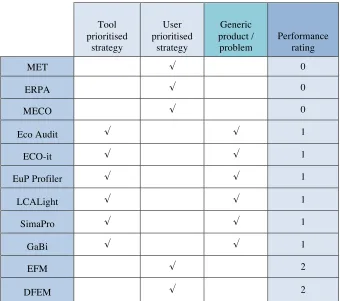
3.2.3 Performance rating ... 53!
3.3 Phase 2 study methodology... 54!
3.3.1 Selecting and testing the tools... 54!
3.3.2 Overall rating ... 55!
3.4 Feedback generation strategy ... 56!
3.4.1 Design of questionnaire ... 56!
3.4.2 Selection of respondents ... 60!
3.4.3 Data collection and analysis... 65!
3.5 Quality of research... 65!
3.5.1 Reliability... 65!
3.5.2 Replication ... 66!
3.5.2 Validity of research ... 67!
CHAPTER 4 – Phase 1: Understanding the framework of current DfE tools ... 68
!
4.1 Phase 1 study findings... 69!
4.1.1 The tools... 69!
4.1.2 Output mechanisms... 71!
4.2 Discussion of findings ... 73!
4.2.1 Strategy prioritisation... 74!
4.2.2 Reliance on expert input ... 75!
4.2.3 Output mechanisms in use ... 76!
4.2.4 Paradigm shift – Strategy-specific tools to product-specific tools ... 80!
4.3 Link between Phase 1 and Phase 2... 82!
4.4 Initial conclusions... 84!
CHAPTER 5 – Phase 2: Understanding factors effecting DfE tools performance ... 85
!
5.1 General approach ... 85!
5.2.1 Guidance components ... 86!
5.2.2 Component frequency ... 89!
5.3 Discussion of findings ... 90!
5.3.1 Overall rating versus performance rating... 90!
5.3.2 Types of guidance ... 92!
5.3.3 Delivery components ... 93!
5.3.4 Initial conclusions ... 95!
5.4 Issues with existing tools ... 96!
CHAPTER 6 – New tool framework ... 97
!
6.1 Proposed new framework ... 98!
6.1.1 Overview of new framework ... 98!
6.1.2 Guidance capability of new framework ... 100!
6.1.3 Guidance informed by both functional and strategic data ... 101!
6.1.4 Product Function Category (PFC)... 102!
6.1.5 Simplified Life Cycle Assessment (SLCA) ... 103!
6.1.6 Guidance matrix ... 103!
6.2 Key requirements of new tool... 107!
6.2.1 Small household appliance focus... 107!
6.2.2 Manufacture and use phase focus ... 109!
6.2.3 Product categorisation... 109!
6.2.4 Guidance components ... 112!
6.2.5 Frequency of guidance ... 113!
6.3 Development of the tool prototype ... 113!
6.3.1 SLCA inputs required ... 114!
6.3.2 Strategic guidance and advice databases ... 115!
6.3.3 TRIZ examples database ... 117!
6.4 Conclusions ... 118!
CHAPTER 7 – Analysis of the new tool, Inspire Ideas. ... 120
!
Step 1 – Quantitative analysis against current best ... 121!
7.1 Determining new tool overall rating... 121!
7.2.2 Advice ... 123!
7.2.3 Case study ... 124!
7.2.4 Eco-resource... 125!
7.3 Discussions of step 1 findings ... 125!
Step 2 – User feedback ... 126!
7.4 Student designer group ... 126!
7.4.1 Overview of feedback data ... 126!
7.4.2 Discussions of feedback analysis... 133!
7.5 Professional designer group... 139!
7.5.1 Overview of feedback data ... 139!
7.5.2 Discussions of feedback analysis ... 144!
7.6 Discussions of step 2 findings ... 146!
7.7 Conclusions ... 148!
CHAPTER 8 – Discussion ... 150
!
8.1 Contrasting approach and applicability ... 150!
8.2 Taking findings forward ... 154!
8.2.1 Guidance components ... 155!
8.2.2 Framework refinement ... 155!
8.2.3 Testing and refinement... 156!
8.2.4 Educate future designers ... 157!
CHAPTER 9 – Summary of findings and concluding remarks... 158
!
9.1 Critical review ... 159!
9.2 Limitations... 160!
9.3 Reaching objectives ... 161!
9.4 Concluding remarks... 162!
LIST OF TABLES
Table 1 – List of the 22 tools selected for Phase 1 study, with source... 49!
Table 2 – Information about rejected tools, including reason for rejection ... 50!
Table 3 - The performance rating system derived from the VDI 2225 scale and rating system (Pahl, Beitz 1996)... 53!
Table 4 - The overall rating system, modified from the VDI 2225 scale (Pahl, Beitz, 1996). .... 55!
Table 5 - Comparison of the test groups. ... 60!
Table 6 - Designer details required for inclusion in study. ... 63!
Table 7 – Details of the 11 respondents to the questionnaire ... 65!
Table 8 - Characteristics of the 22 Design for Environment tools. ... 69!
Table 9 - The structure of each tool's output mechanism... 71!
Table 10 - Output mechanism 1 breakdown by tool... 76!
Table 11 - Output mechanism 2 breakdown by tool... 77!
Table 12 - Output mechanism 3 breakdown by tool... 78!
Table 13 - Output mechanism 4 breakdown by tool... 80!
Table 14 - Basic information from the 10 DfE tools that demonstrated 'advice' in Phase 1 and are applicable for Phase 2. ... 83!
Table 15 - The frequency of each guidance component recorded during the analysis and the corresponding overall rating. ... 89!
Table 16 - Examples of the way guidance is delivered to the user. ... 92!
Table 17 - A list of the proposed inputs used to gather product information during the SLCA section of the new framework... 103!
Table 18 - How guidance components are employed in the ‘Guidance matrix’... 104!
Table 19 - Examples of small appliances with primary function details. ... 111!
Table 22 – Inspire Ideas guidance component frequency against only the two previously best
performing tools, SortED and Info / Insp... 122!
Table 23 - Frequency of strategy-based guidance broken down by life cycle. ... 123!
Table 24 - Frequency of advice broken down by life cycle. ... 124!
Table 25 - Frequency and type of case study components. ... 125!
Table 26 – Overview of responses to Q1 and Q2... 127!
Table 27 - Overview of responses to Q3, showing response % for rating 4 and 5 for each question. ... 128!
Table 28 - Overview of responses to Q5, showing response % for rating 4 and 5 for each question. ... 129!
Table 29 - Overview of responses to Q6, showing response % for rating 4 and 5 for each question. ... 129!
Table 30 – Overview of responses to Q4, showing response % for rating 4 and 5 for each question. ... 130!
Table 31 - Overview of responses to Q7, showing response % for rating 4 and 5 for each question. ... 131!
Table 32 - Overview of responses to Q8. ... 132!
Table 33 - Overview of responses to Q9. ... 133!
Table 34 - Overview of responses to Q10. ... 133!
Table 35 - Responses to tool strengths (Q8) against how useful the tool is (Q3), showing how the order of strengths differs depending on whether all, or only positive responses are considered. ... 136!
Table 36 – Overview to responses to Q1 and Q2... 139!
Table 37 - Overview of responses to Q3. ... 140!
Table 38 - Overview of responses to Q4. ... 140!
Table 39 - Overview of responses to Q5. ... 141!
Table 42 - Overview of responses to Q8. ... 143!
Table 43 - Comments from the ‘Other…’ option to Q9. ... 143!
Table 44 - Overview of responses to Q9. ... 144!
Table 45 - Overview of responses to Q10. ... 144!
Table 46. The 61 steps required to turn the current prototype tool into a commercially ready software tool ... 156!
LIST OF FIGURES
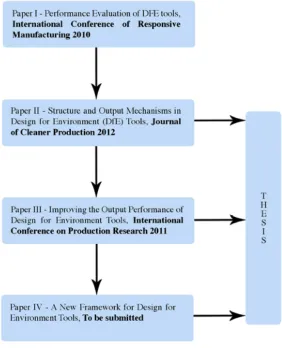
Figure 1 - Illustration of how the papers fit into the thesis report... 19!Figure 2. A general approach to design (Pahl, Beitz 2007) ... 21!
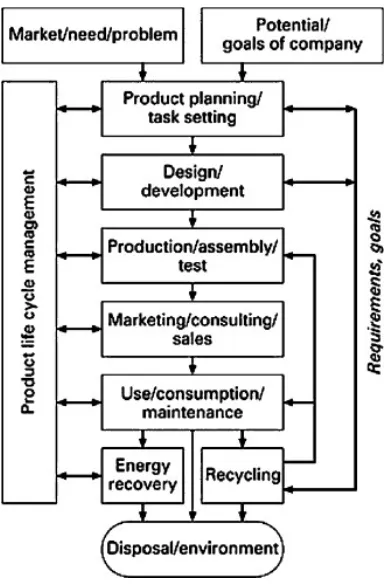
Figure 3 - Product life cycle (Pahl, Beitz 2007) ... 22!
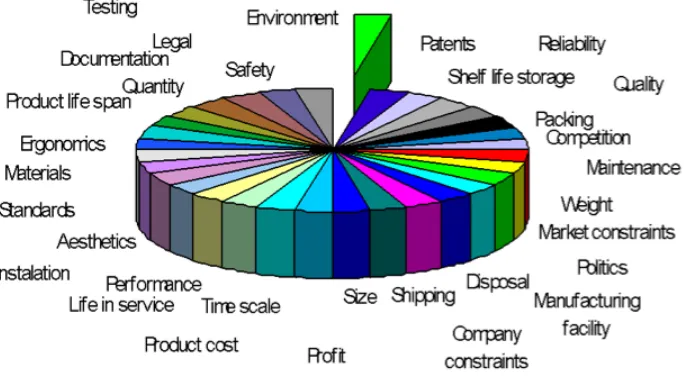
Figure 4 - Representation of all the requirements that need to be addressed during product development. Note that ‘Environment’ is just one of the many (Luttropp 1999). ... 26!
Figure 5 – Charter’s four-step model of ecodesign innovation ... 27!
Figure 6 - The degree of embodiment of design versus quantity of environmental information (Adapted from (Man, Diez-Campo et al. 2002)). ... 30!
Figure 7 - Output mechanism 1... 73!
Figure 8 - Output mechanism 2... 73!
Figure 9 - Output mechanism 3... 73!
Figure 10 - Output mechanism 4... 73!
Figure 11 - Paradigm shift required in the way DfE tools output results. ... 82!
Figure 12 - Example of case study component taken from Info / Insp at www.informationinspiration.org.uk (Lofthouse 2006)... 88!
Figure 13 - Example of eco-resources taken from Eco Design pilot at www.ecodesign.at/pilot (Wimmer, Ostad-Ahmad-Ghorabi et al. 2008)... 88!
Figure 16 - The tools and their performance rating from Birch et al (Birch, Short et al. 2011) 91!
Figure 17 - Illustration of how the guidance and delivery components interact within the contents of a DfE tool... 94!
Figure 18 - A flowchart showing the main sections and features of the new framework, including the required inputs and where they are recalled to inform outputs. ... 100! Figure 19 - How the user inputs inform the outputs. ... 102!
Figure 20 - The energy charts for a coffee machine, left, and an electric kettle, right (Ashby 2009)... 109! Figure 21 - Screenshot of the first page of the new tool, Inspire Ideas. ... 114!
Figure 22 - A graphical representation of the database structure for each life cycle stage used in the strategy inspired section of the Inspire Ideas tool. ... 116! Figure 23 - Example of the way TRIZ data in structured in Inspire Ideas ... 118!
Figure 24 - Responses to Q3 presented as a proportionality diagram. Legend corresponds to adjacent Table. ... 128!
Figure 25 - Responses to Q6 presented as a proportionality diagram. Legend corresponds to adjacent Table. ... 129!
Figure 26 - Responses to Q4 presented as a proportionality diagram. Legend corresponds to adjacent Table. ... 129!
Figure 27 - Responses to Q4 presented as a proportionality diagram. Legend corresponds to adjacent Table. ... 130!
Figure 28 - Responses to Q7 presented as a proportionality diagram. Legend corresponds to adjacent Table. ... 131!
Figure 29 - The responses to Q8, showing how the relative % of responses per option varies depending on respondents’ response to Q3. ... 137!
Figure 30 - Reponses to Q3 as a proportionality diagram. Legend corresponds to adjacent Table... 140!
Figure 32 - Responses to Q5 as a proportionality diagram. Legend corresponds to adjacent Table... 141!
Figure 33 - Responses to Q6 as a proportionality diagram. Legend corresponds to adjacent Table... 141!
CHAPTER 1 – Introduction
Suggested barriers to DfE adoption range from low priority being assigned to environmental issues against functional performance and economics, through to an apparent lack of usability and real value of the tools available (Lagerstedt 2003, Fitzgerald, Herrmann et al. 2010, Sakao 2007). Common complaints from designers about DfE tools include a lack of sufficient support during design and a lack of the necessary eco-information required for full implementation (Byggeth, Hochschorner 2006, Bhamra, Lofthouse 2003). Despite numerous investigations, the fundamental reasons for this lack of DfE tool take-up are still unclear (Baumann, Boons et al. 2002, Lagerstedt 2003, van Hemel, Cramer 2002, Knight, Jenkins 2009, Lindahl 2005).
Many researchers suggest that the earlier environmental issues are considered during the development of a new product, the higher the chance of reducing their associated impacts (Fiksel 1995). Effective tools that enable designers to reduce these issues early are of clear benefit as they limit the cumulative impacts ‘locked-in’ to the product (Lewis, Gertsakis et al. 2001).
1.1 A Brief history of Environmental Consideration in Design
Ever since the book ‘Silent Spring’ shattered the assumption that the environment had an infinite capacity to absorb pollutants, public and commercial interests in the field of environmental consideration has gathered pace (Carson 1962). The book documented detrimental effects of pesticides on the environment, and later facilitated the banning of the pesticide DDT in the US in 1972.
In 1969 Coca Cola Company funded the first Life Cycle Assessment (LCA) study investigating the associated environmental impacts of their beverage cans. This fuelled LCA development within the manufacturing industry, and in 1979 Ian Boustead published the Handbook of Industrial Energy Analysis which became the basis for modern LCA (Boustead 1996). The subsidence of the 1970’s energy crises produced an ‘oil glut’ which in turn demoted the importance of energy analysis, and consequently slowed LCA development through out the 80’s (Jensen, Hoffman et al. 1998, Hershey Jr 1981).
The aim was to achieve sustainable development, a concept that had been introduced in the Our Common Future report released by the Brundtland Commission - more commonly known as the Brundtland Report - in 1987. Brundtland served “an urgent notice based on the latest and best scientific evidence that the time has come to take the decisions needed to secure the resources to sustain this and coming generations”. The report proposes a sustainable development, which is defined as: “A development that satisfies the needs of today without compromising the ability of future generations to meet their needs” (Brundtland 1987).
The sustainable development concept aims at designing industrial progress across the industrial world, and is therefore by definition a macro level view. In order for every day business to develop and integrate sustainability requirements into processes there is a need for a micro level view (Sun, Han et al. 2003). A promising view for this came in the form of DfE.
Originating shortly after UNCED in ’92, DfE was first coined to describe the concerted effort by many electronics firms attempting to build environmental awareness into their product development (Sun, Han et al. 2003). Initially defined as ‘the systematic consideration of design performance with respect to environmental, health, and safety objectives over the full product and process life cycle’ (Fiksel 1995), DfE was similar to other concurrent engineering techniques popular at the time such as Design for Assembly (DfA) and Design for Assembly (DfA) (Boothroyd, Dewhurst et al. 1994), as it seeks to address product life cycle concerns early in the design phase (Fitzgerald, Herrmann et al. 2007).
LCA is considered to be the first DfE methodology, or tool. However, by the mid 90’s many tools began appearing attempting to exploit the benefits of LCA. Over the years more than 100 DfE tools have been developed (Simon, Poole et al. 2000).
products entire lifetime. The approach is based on the understanding that every action taken, from the beginning of a products conception through to its end of life has some impact on the natural environment. This holistic view includes everything, from the oil used to lubricate the machinery used to excavate the raw materials, to the energy used to separate an assembly into recyclable groups at its end-of-life. All of these actions have some adverse effect on the environment.
1.2 Problem statement and aims
There is an accepted consensus that the issues causing environmental impacts need to be accounted for during product development within the engineering industry to allow designers to minimise or design them out. Although the necessity of design tools for this job is not without its opposition, many studies have praised the use of DfE tools and methodologies as a viable method for environmental consideration (Lindahl 2005).
Evidence from the literature review shows there is a lack of understanding of what the user requires from a tool, and therefore the tools do not meet the needs of the designer. This results in many of the current shortfalls associated with DfE tools. The main issue is that the current tools do not provide sufficient guidance and support to enable users to bridge the gap between identification of environmental problems and their resolution.
effectively provide adequate design solutions because vital components of the decision making process were missing.
'Developing the next generation of Design for Environment tools' proposes that a tool can be of more use to a designer if the design support and guidance is delivered by an improved output mechanism in a framework better suited to a designers requirements.
To prove this claim this research has two primary aims. The first aim is to investigate the different types of design support and guidance available, and the, second, it to understand how support and guidance can be best formulated and output from a DfE tool for the greatest impact.
The overall intention is to generate a deeper understanding of the interaction between the designer and DfE tools, and how this relationship can be improved to develop more accessible and more effective tools. By doing this, we'll be enabling the whole of the design world to take greater account of the importance of designing products that have minimum impact on the world's resources both in production and during their lifetime. Creating a truly effective DfE tool, which is both thorough and easy to use, will have a real impact on both resource use and climate change.
1.3 Research objectives
In order to achieve the research aims it is necessary to complete two main research objectives. The first of these consecutive objectives is:
O1 – To explore and develop recommendations for how Design for Environment tools can
better fit the requirements of the designer.
Q1 – Are current DfE tools letting the designer down?
Q2 – What changes need to be made to DfE tools to improve performance?
The first research question (Q1) aims to understand a wide range of DfE tools and evaluate their performance using a metric devised to enable comparison. It asks whether or not a DfE tool could be of more use to the designer if it was improved in some way. To answer this question it is necessary to understand what a designer expects from a DfE tool. Current attitudes towards DfE tools highlight a number of barriers to adoption relevant to the structure and presentation of these tools.
Q1 is intended to identify what designers require from DfE tools in order to adopt them into common use. One of the most common issues is the lack of support and information offered by these tools when dealing with environmental design issues. Given that DfE information is often widely dispersed, it makes the ability of a tool to provide information and guidance to the designer all the more important (Tischner, Charter 2001).
Q2 asks whether there are any particular changes that can be made to the structure and framework of DfE tools which would ensure that the requirements of the user are more successfully met. To answer this question it is necessary to understand which features and aspects of a tools framework are responsible for its performance. This will require detailed analysis of many tools enabling a performance ranking to be conducted and an in depth assessment of the components which constitute each tools structure to allow all relevant frameworks to be mapped and analysed. Once this has been done the framework for the next generation DfE tools can be considered using the best performing components.
O2 - To develop and evaluate an innovative Design for Environment tool with a next
generation framework.
The main deliverable from this project is a novel Design for Environment prototype tool. The tool will bring together all the new knowledge learned whilst meeting O1 into a working prototype to test enhancements to the tools structure and framework. To complete this objective it is necessary to answer the two following research questions:
Q3 – What specification does the next generation framework include?
Q4 – Can a framework with increased design support improve a Design for
Environment tool’s performance?
Q3 asks what specific details will be responsible for the new ideal tool specification. This will include a number of novel improvements to the framework resulting from the analytical investigation of current DfE tools. It will also include many improvements derived from literature. The combination of new and innovative improvements, coupled with the high performance, tried and tested features of best performing current tools will come together to generate a specification for an ideal DfE tool.
Before Q4 can be addressed, it will be necessary to develop a working prototype tool, as defined in the specification, to demonstrate the new framework in the viable way. Q4 will be addressed with the aid of a two-fold analysis of the new tool prototype. The first step of the analysis will be a comparison against the current best tools. These results will be considered along with the second step, consisting of collecting feedback data from user testing to assess the success of the new concept.
highest ranked ideas and practices learned from current DFE tools, it will be possible to evolve the design of tools and methods to generate an improved next generation concept.
1.4 Thesis structure and research papers
This thesis reports the findings of a study consisting of three phases and the development and testing of a new DfE tool framework. The approach discussed in this chapter outlines how the aims and objectives of this research will be achieved. A brief outline of the approach is as follows:
Initial phase – Initial activity highlighted a number of potential enhancements to DfE tools which would result in improved performance and potentially greater acceptance by industry. This initial phase took a qualitative approach to evaluate four DfE tools and proposed that new features, including an ‘Alternative recommendations’ feature, could dramatically reduce the time required to implement improvements (Paper I) (Birch, Hon et al. 2010)).
Phase 1 – The findings from the Initial phase led to Phase 1 being conceived to further investigate the highlighted potential enhancements with the aim of gaining an enhanced understanding. Phase 1 deployed a mixed research method. A qualitative, interpretive research method was used to investigate and explore the output mechanisms and guidance components of 22 DfE tools, whilst a quantitative, deductive method was used to determine their performance. The results concluded that there were four common output mechanisms linked to tool performance, which existed as either strategy-specific or product-specific. The study also identified four common guidance components (Paper II) (Birch, Hon et al. 2012)).
understanding of the guidance components. A quantitative approach was taken to further investigate the guidance components and how their presence would affect performance (Paper III) (Birch, Short et al. 2011)).
[image:22.595.111.393.355.703.2]CHAPTER 2 – Literature review
2.1 Design Process and the Environment
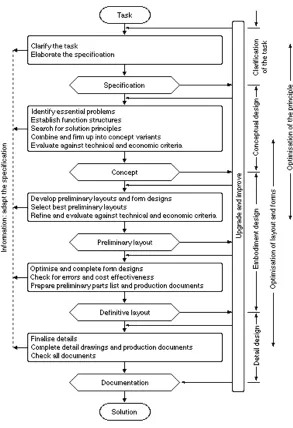
The product development process is defined as “a sequence of steps or activities which an enterprise employs to conceive, design and commercialise a product”, and it is best expressed by Pahl and Beitz, as Figure 2 (Pahl, Beitz 2007, Ulrich, Eppinger 2008). The process consists of an initial stage, often referred to as planning, where the identified task is clarified and defined, before a Product Design Specification (PDS) begins formulation.
task within the limitations of the PDS. Once successful concept variants have been established design embodiment begins.
[image:24.595.116.409.249.677.2]The embodiment design phase, also referred to as the system-level design, consists of the steps necessary for the development of a product layout, including functional specification and a preliminary process flow diagram for final assembly.
The final phase, detailed design, results in the achievement of all of the requirements of the PDS. Dimensions of individual parts are laid down, materials are specified, production possibilities are assessed, costs estimated and all drawings and other production documents produced.
This systematic approach is rarely so clearly defined in practice and neither is it necessary for it to be. The boundaries between the phases are often blurred as activities overlap, for example defining layout issues in the conceptual design phase. Nevertheless, this division is essential for work planning and ensuring nothing is forgotten.
[image:25.595.216.408.411.703.2]Manufacturing industry has been accused of adopting operations that takes, makes and wastes. However, it has the potential to create products that generate ecological and social value, as well as economic value (McDonaugh 2002). At every stage of the product's commercial life cycle there is enormous potential for reducing the environmental impacts of the final product. Equally true is that at every stage of the process negative environmental impacts are generated. These impacts result from the intended and unintended outputs generated during a product's lifetime. Outputs such as the product itself, intermediates, co-products and by-products amass to generate a range of impacts, such as:
• depletion of resources; • ozone depletion; • smog formation; • eutrophication; • climate change; • alteration of habitats; • acidification;
• reduction of biological diversity; • air, water and soil pollution.
Consideration and limitation of these environmental impacts is required, without causing detrimental effect to product performance. In the specific case of the design process this might involve the adoption of a DfE approach (Knight 2009), requiring that, “environmental issues and demands must be integrated in to the product development process” (Lagerstedt 2003).
2.3 Design for Environment terminology
There is a lack of agreement when differentiating between DfE and Eco-design. Some parties argue that Eco-design is a broader term than DfE, incorporating not only the products life cycle environmental impacts, but also the design effort in a more balanced view (Simon, Poole et al. 2000). Others suggest that the difference in terminology is simply geographical with DfE finding favour in the US and Eco-design in Europe (Baumann, Boons et al. 2002). Bhamra suggests that the differing terminology may be due to the traditions which began with DfE emerging from the Design for ‘X’, which is prevalent in engineering, and life cycle design, in contrast, developing from environmental sciences and ecology terminology resulting in Eco-design (Bhamra 2004).
Additionally some researchers argue that Eco-design is a more holistic term, with the “eco” not only referring to ecology, but also to financial aspects and the economy (Karlsson, Luttropp 2006). However largely the two terms are taken to be synonymous (Baumann, Boons et al. 2002, Knight, Jenkins 2009, Bhamra 2004, Lindahl, Sundin et al. 2007, Fleischer, Schmidt 1997).
Design for Sustainability (DfS) is also sometime wrongly taken to be synonymous with DfE. DfS is distinct as it encompasses not only DfE factors, but also societal factors making up the ‘Triple Bottom Line’ of sustainability (Short 2008). Either way, the purpose of this work is not to argue terminology, therefore this thesis uses the term Design for Environment, to mean “The development of products by applying environmental criteria aimed at the reduction of the environmental impacts along the stages of the product life cycle” (Bakker 1995).
2.2 Designers role
and activities that require their attention and time. In a commercial environment time is very limited, the addition of environmental issues to a product's specification makes the designer's job all the more harder and time scarce.
There are organisations that believe protecting the environment should play a greater role in the development of new products. With the increasing cost of raw materials and emissions of greenhouses gases they argue that for the future of the planet it is essential that all future products should be produced to use the minimum of energy and materials in their construction, and use as little energy as possible during their lifetime.
For example, Friends of the Earth are focussing heavily on how to reduce the use of the world's mineral resource by encouraging recycling and ending built-in obsolescence of consumer goods. It is calling for:
• Lean production: re-design products to reduce material weight. This is extremely effective as it influences a wide range of goods sectors and saves costs for producers (Lutter 2011).
• Longer product life: more durably designed products could cut discard rates by a third by 2020. Linked to this - a third of products are thrown away still working, of which a third could be used to their full lifetime by 2020 (Kirby 2010).
Short (2008) suggests that successful product design demands satisfaction of, above all, the functional requirement of the product as expected by the consumer. This means that the environment cannot take centre stage. Given a task with such complexity it is no wonder that generally, both academia and industry agree ”design methods and tools are important for improving product development performance” (Lindahl 2005).
the PDS, i.e. they are one segment of a proportionality ‘cake’ which includes all aspects of a product. Luttropp succinctly depicts the issue in Figure 4, where each of the segments is the same size. This is, of course, an unrealistic proportionality. In practice, some segments are valued over others, i.e. cost and performance often demand a larger representation.
Figure 4 - Representation of all the requirements that need to be addressed during product development. Note that ‘Environment’ is just one of the many (Luttropp 1999).
Governments and EU regulation will drive the need for greater focus on environment in design, therefore it is essential to have high quality DfE tools in place so that private sector is capable of meeting the challenge.
2.4 Approaches to improved environmental performance
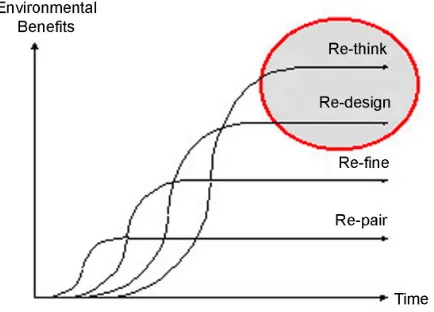
accounting and methods of cleaning up production techniques have a focus on assessing impacts and applying last minute, ‘end of pipe’ solutions which are often criticised due to their relatively small, incremental improvements in impact reduction (Re-pair and Re-fine).
Product level approaches are deployed by designers, and are characterised by their attempts to build in environmental accountability into products during development from the early stages resulting in tools and methods that allow evaluation and improvement achieving greater environmental inclusion. Therefore the design of products can be altered to improve environmental performance (Re-design).
[image:30.595.105.322.518.674.2]The next level up is company level approaches. Operating at an organisational level these approaches offer a means for deploying and managing an organization's environmental programs in a comprehensive, systematic, planned and documented manner, such as Environmental Management Systems (EMS) (TC 207/SC 2004). Tischner (2000) discusses the benefits of these methods and explains their employment to bring about not only new ways of designing and generating solutions, but new ways of thinking about problems (Re-think) and even the requirement of a new product to solve a problem (Lindahl 2007).
These numerous approaches can be deployed at the appropriate level of an organisation with the overall aim of reducing environmental impacts. Our understanding of what DfE is and how it is conducted has led some researchers to suggest it is “not a specific method or tool” which has to be deployed but more “a way of thinking and analysing” (Lindahl 2006). This belief then identifies the requirement of applicable tools and their integration in to the design process as a way of assimilating DfE principles in to an organisation.
2.4 Design for Environment tools
Design for Environment tools and methodologies give a structured approach to the incorporation of environmental impact reduction measures. The benefits of this holistic lifecycle view of a product and its associated processes found common acceptance among academics and industry, with the development of ISO 14040:1997 series, which details the Life Cycle Assessment method (LCA). LCA was the first formal method that gave a structured methodology for evaluating environmental impacts associated with products and services (ISO/TC 207 2006b).
The popularity of LCA resulted in growing interest and subsequent development of a wide range of LCA based DfE tools aimed at addressing perceived issues with the method, such as the long completion time and high level of detail required for accurate analysis. Parallel development of non LCA based DfE tools led to a variety of tools with a focus on other aspects. Prioritisation of important criteria such as Voice of the Customer (VOC) in Quality Function Deployment (QFD) and Design by Analogy – designing products by applying proven techniques used on previous solutions – drove more function oriented tools.
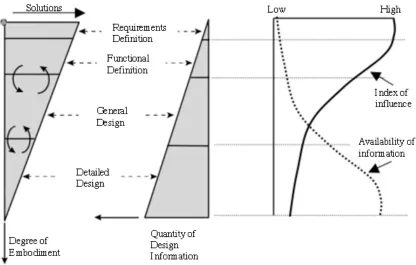
example, a client asks a designer to design a household kettle, and wants the product to be new and innovative with minimal environmental footprint. As the designer works through the design process he or she makes decisions which define aspects of the product, generating the information needed to assess the product whilst at the same time building up ‘embedded’ environmental impacts. So as the product takes shape and more decisions are made the amount of information available to assess the product increases. As this happens the potential for improvement becomes reduced as the environmental impacts are locked in as a result of design decisions.
Figure 5 illustrates that as the designer advances the product design from initial definition through to detailed design the index of influence reduces as development decisions are made and the product takes shape. It is only when decision constraints have been made that the information to allow analysis becomes available. Hence information is needed at the start of the development where it can be used to inform analysis and therefore influence the design most.
Figure 6 - The degree of embodiment of design versus quantity of environmental information (Adapted from (Man, Diez-Campo et al. 2002)).
2.5 Deriving DfE tool categories
Many companies and institutes drove the tool development, resulting in a vast number of tools and methodologies being made available to designers. Simon et al (1998) details 54 tools in the ‘Ecodesign Navigator’ (Simon, Evans et al. 1998), whilst Luttropp (2006) documents 32, and Byggeth (2006) considers a further 15 tools with only a few duplication of tools.
[image:33.595.103.519.96.361.2]Six categories were identified: Full LCA; Simplified LCA; Prioritisation; Eco-design resource; Guidelines and Material selection. These categories are not mutually exclusive with many tools encompassing different aspects, however they describe the main purpose of the tools.
2.5.1 Full LCA tools
Full LCA tools represent the most successful attempts to structure environmental consideration and accountability into tool form (Millet et al. 2007) and have been practiced by industry worldwide for over three decades (Bhander, Hauschild et al. 2003). The methodology began formalisation in 1997 as part of the ISO 14040 series, and now exists in its fifth revision, ISO 14040:2006 (ISO/TC 207 2006a). From the beginning, practitioners of LCA have intensified the belief that the method had great value for environmental management (Jensen, Hoffman et al. 1998). However, its emergence into the mainstream has always been hampered by characteristics intrinsic to its success.
LCA is a four-phase methodology that uses techniques for identifying and evaluating the adverse environmental effects associated with a product system over its entire life cycle. It involves “compiling an inventory of relevant inputs and outputs of a system, evaluating the potential environmental impacts associated with those inputs and outputs, and interpreting the results of the inventory and impact phases in relation to the objectives of the study” (ISO/TC 207 2006a).
compounded further by the relative complexity and resultant necessity of expert knowledge to interpret and translate the output results.
Tools that exploit the full LCA methodology are characterised by the same issues as the method itself. Although computer based efforts, such as SimaPro and GaBi can assist the user in many ways, including data collection and analysis, and organisation of results, a large amount of data is still required, hence a large time frame, and the complexity of the results still requires expert translation.
2.5.2 Simplified LCA tools
2.5.3 Prioritisation tools
Prioritisation tools are characterised by outputs focused on potential product improvements derived from a non life-cycle internal structured method. These tools prioritise issues which are relevant to their underlying methodology. The Tool for Environmentally Sound Product Innovation (TESPI) is based on the Quality Function Deployment (QFD) method so the prioritised issues are relevant to the voice of the customer (Misceo, Bounamici et al. 2004). The Design for Manufacture and Assembly (DFMA) ’09 tool has its foundation in the DFMA principles therefore cost reduction through part simplification and reduced manufacturing costs are focused upon (Boothroyd 1994). The Eco-Functional Matrix (EFM) prioritises the functional characteristics of a product to maintain that function should not be superseded by environmental issues throughout improvement development (Lagerstedt 2003). Envirz uses the Theory of Inventive Problem Solving (TIPS, or in its original Russian, TRIZ) as its structure which allows the user to prioritise criteria for improvement while reducing environmental issues (Fitzgerald, Herrmann et al. 2006). For this group of tools inputs are mainly qualitative. The user informs every stage of the decision process with inputs or selections as the tool prioritises the outputs (Lofthouse, Bhamra 2005).
2.5.4 Eco-resource tools
2.5.5 Guideline tools
Some of the simplest DfE tools are sets of guidelines. Often passive, i.e. requiring no inputs, these tools summarise key environmental aspects which should be considered during decision making processes. They often act as a checklist to ensure that the user is aware of the main issues during design. The Ten Golden Rules are a compact list of best practice rules which pick up on the key issues necessary when attempting and teaching eco-design (Luttropp, Lagerstedt 2006). The Lifecycle Design Strategy wheel is a pictorial list surrounded by strategic options at every stage of development prompting the user to consider the necessary issues (Brezet, van Hemel 1997). Both of the above tools are simplistic and paper-based. The Sustainability Design-Oriented toolkit is a more complex set of guidelines hosted on a website, and it also allows product assessment. There are a series of guidelines covering general issues which the user reads and applies during product development. The user is then encouraged to assess their product against a benchmark (Vezzoli, Tishner 2009).
2.5.6 Material selection tools
2.6 Barriers to adoption
Although a vast number of tools offering a huge variety have been developed, there still appear to be barriers to their adoption into common use.
Many studies have been conducted investigating different aspects of DfE tools (Knight, Jenkins 2009, Ashby 2009, Goedkoop, Effting et al. 2000, Dimache, Brennan et al. 2007, Graedel 1998, Hunt, Boguski et al. 1998, Ashby, Ball et al. 2008, Stevels 2007, Bhamra, Lofthouse 2003, Lofthouse 2006).
O’Hare et al (2009) compiled a comprehensive list of reasons for poor industrial uptake of tools. The list draws from common reasons found in literature from a number of authors:
A lack of demand - A lack of environmental criteria in the product requirement specification, translating to a lack of need for environmental consideration and hence no need for DfE tools (Luttropp 2006, Olundh 2006, Lee-Mortimer 2009).
Not enough time – Due to the relative importance of environmental impacts among the many other constraints designers must meet when developing a product, i.e. environment is only one piece of the pie (See Figure 4), they have very little time to dedicate to them ( Luttropp 2006).
Lack of consideration of designers’ requirements – The developers of DfE tools lack a thorough understanding of the designer's considerations when choosing to use a tool or not (Lindahl 2006).
Poor integration – Due to the treatment of DfE activities as a separate stream, this can marginalise efforts resulting in them struggling to gain acceptance by the mainstream product development activities (Lindahl 2005).
Tools not adapted to a specific application – A number of variations exist in the product development activities depending on different companies, i.e. organisational, cultural, process and product differences. These need consideration as tools may need adaption for different situations, however, this is rarely conducted (Ritzen 2001).
This list suggests barriers for what is stopping DfE tools being taken up in companies, and it contains a number of points which are not down to the tool itself. They refer more to the organisational issues and integration. We have already established the value of tools and their use by designers on projects. Therefore we will consider the barriers to tool adoption from the perspective of maximising tool performance as a driver for its use.
Apparent in literature are the building blocks to potentially overcome some of these issues
leading to more accessible, beneficial tools. A large puzzle is emerging, with many pieces
For Life Cycle Assessment tools and methods, very little work has been done in the transformation of the results from the assessment into useable information for the designer. Although the relative evaluation of alternate designs is possible by comparison, it became apparent that when a tool is used to evaluate a product the results given would only inform the designer which life cycle phase was the largest in relation to other phases. This is a useful identification for further work, however, it results in the designer asking the question, “How do I solve this issue?”
The focus of Design for Environment tools and methods to date has been on informing the user where the environmental impacts occur with the product, including the scale of the damage, so that the user can attempt to reduce them. A commonly accepted trend with these tools is to output the results showing the environmental impacts of each life cycle phase, i.e. Raw materials extraction, Manufacturing, Distribution, Use and End-of-life (ISO/TC 207 2006b, Graedel 1998, Hunt, Boguski et al. 1998, Ashby, Ball et al. 2008).
These results inform the designer which life cycle phases are responsible for generating the environmental impacts. For example, if the product assessed was a small electrical appliance then the ‘Use’ phase can account for around 80% of the environmental impacts caused over the product's life (Stevels 2007). This suggests that in order to reduce the environmental impacts of the product, the most effective way would be to reduce the energy consumption during use (Ashby 2009). Though this information is essential for the understanding of ‘where to start’ attempting to minimize impacts, the information attained is often too vague and general, or too complex and abstract to immediately highlight possible solutions.
Lofthouse (2006) generated a framework for eco-design tools for designers that included the incorporation of ‘Guidance, Information and Education’ aspects.
This study suggested that designers wanted simple guidance in order to get them started on eco-design, though this should then be backed up with appropriate information, legislation and product examples. Product examples are offered as case studies where the particular environmental problem has been overcome. Different forms of guidance and design support are offered by other DfE tools ranging from simple generic guidelines to specific strategies, for example with the LCA Calculator by IDC the results of the analysis are translated into generic guidelines such as “Manufacture and extraction is the largest use of energy in your products’ life cycle. Value engineering would help to remove any unnecessary components reducing product impact”.
2.7 Searching for solutions
Design by Analogy and TRIZ
According to Hipple (2005) an enhancement to the CPS model is Theory of Inventive Problem Solving (TIPS, or in its original Russian TRIZ). Whereas CPS requires the designer to analyse many alternatives to find the best fitting, TRIZ has the capability to produce an optimum solution without this step. TRIZ deploys Design by Analogy, a process of mapping knowledge from one situation to another through a supporting system of relations or representations between situations and is well recognized for its innovative power (Linsey 2007). Fitzgerald (2011) discusses the benefits of TRIZ and Design by Analogy and concludes that its verification during use within companies such as Proctor and Gamble, Ford Motor Company and Boeing make it a strong tool for assisting solution generation (Fitzgerald 2011).
The development of increasingly perfect systems and products could not be possible without the wealth of past development knowledge and discoveries. Until the 1950’s it was commonly accepted that inventing, or innovating was a random act where a large improvement to a product or system is achieved through applying a radical change to a design.
Genrich Altshuller, a Russian patent examiner, identified that over 90% of 1.5 million patents had a fundamental engineering problem which had been previously solved. By studying the solutions Altshuller and his team were able to identify principles and process that can be used to direct the designer towards solutions. The result was the Theory of Inventive Problem Solving (TIPS or in its original Russian, TRIZ), a creative problem solving methodology especially tailored for scientific and engineering problems (Serban, Man et al. 2004).
and inventive methods is the reduction of ineffective solutions by using a systematic procedure to overcome the psychological inertia barrier (Serban, Man et al. 2004).
This is achieved by TRIZ through generalising the specific problem into an analogous problem. Comparison of the current problem with similar standard solutions well known in other scientific areas and industries is made, before transferring the analogous standard solution back to a specific solution. Instead of randomly searching the design space for a solution to a problem, TRIZ tools are able to direct designers to possible solutions, providing an extensive knowledge base (Fitzgerald 2011). Key TRIZ standard tools are the 40 Inventive Principles (IP’s) and the contradiction matrix. The 40 Inventive Principles are design principles that have been found to repeat across many fields, as solutions to many general contradictions, which are at the heart of many problems. The contradiction matrix gives a recommendation of relevant IP’s based on an evaluation of contradictions.
Design by Analogy is also achievable through other methods. The research and consultation company Creax, specialise in innovation development (Creax 2012a). It has developed two very useful free online databases: Function database and MoreInspiration. The Function database is a resource tasked with helping users find alternate methods of achieving a similar function (Creax 2005). It allows the user to search all methods for ‘heating a liquid’, for example. The database gives a short explanation of the different methods and uses animations to secure the understanding. The method of Design by Analogy is very simple to use, and potentially very useful to designers when overcoming environmental issues.
sectors allowing the user to explore solutions which they may not usually consider. The advanced search allows the user to cross reference innovations using common ‘clusters’ to organise the search results. This cross-sector search ability and the capability to explore such a large database gives this resource a huge potential for assisting designers.
2.8 Guidance for environmental design
An initial study and literature review identified various types of guidance delivered by DfE tools which are not being fully optimised in order to maximise tool performance. An initial study identified a tool that had the capacity to offer guidance to the designer by
recommending appropriate action based on where the greatest impact occurs (Birch, Hon
et al. 2010). It used the results of an abridged LCA to identify which life cycle phases are most detrimental over its life-time and then gave advice as to what the user can do to reduce them. It was observed that while the advice did help to highlight the issues a designer needs to consider, it failed to offer the support needed to resolve them.
Research into the handling of trade-off situations with DfE tools by Byggeth and Hochschorner observed that some tools offered guidance (Byggeth, Hochschorner 2006). This study used the term guidance as a broad term to define any type of support expressed across these situations. Many of the tools showed examples of guidance. It was often no more than a short sentence or phrase stating an environmental goal, such as to minimise material input or increase service potential. Though this type of support is defined as guidance in as much as it attempts to direct the designer towards some issues needing consideration, it does not offer sufficient support to resolve the issues.
information should be provided in isolation, and therefore rather than simply stating the need to consider disassembly, a tool should provide links to useful information for solving a particular problem. Identifying the ability of a tool to link together guiding questions and comments to information sources that provide potential solutions shows the potential of these types of guidance to assist the designer.
The contrast in the style and content of guidance types present in DfE tools suggests that some effort has been made to incorporate them into tools. However, little seems to be known about their structure and performance. Identified in literature are examples of guidance types present in tools with varying degrees of performance (Birch, Hon et al. 2012).
Tools such as, The Ten Golden Rules and Life-cycle Design Strategy Wheel showed guidance that is of little direct use to the designer, consisting mainly of generic statements broad enough to cover a range of issues, such as “Use the lowest energy-consuming components available”, without any additional information to back it up (Byggeth, Hochschorner 2006, Knight, Jenkins 2009). Comparing that to guidance delivered by Information/Inspiration, which links guiding comments to potentially useful information, suggests that a better understanding of the guidance component could improve DfE tools.
development process (Luttropp, Lagerstedt 2006), there is very little research into how it should be delivered.
Very few studies that have interpreted this issue specifically for DfE tools. However, it is directly related to a fundamental problem which designers face: ‘How do you actually
‘Design for Environment’?’. The results from any DfE tool alone are not sufficient to lead directly to design alternatives, in the case of the simplified LCA they can only direct the designer to the specific life cycle stage where the majority of the impact is occurring. The designer must then return to their usual resources and design process, which resulted in the previous flawed designs, in order to generate alternate solutions.
But results from these tools have the potential to offer significantly better design support and guidance to the designer, resulting in improved designs whilst taking less time.
Byggeth et al (2006) highlight the importance of an eco-design tool having a method of evaluation which provides support in trade-off situations where it is not always clear which design alternative should be chosen. Their study showed, however, that none of the 15 eco-design tools they analysed offered sufficient support, with only 9 having a valuation system to rate criteria, suggesting insufficient beneficial features to attract designers to use them. Lindahl (2006) backs this up by highlighting that whether a designer actively and frequently utilises a tool depends on four reasons,:
• the tool has been found to be beneficial; • the customer requires its use;
Lindahl (2006) goes on to state that ‘there is a need for more research about designers’ requirements for methods and tools’, suggesting that existing requirements need to be less vague and imprecise and instead better defined, more detailed and quantified.
A recurring theme throughout this research is the lack of support offered by tools when the designer is attempting to overcome eco-design issues (Byggeth, Hochschorner 2006, Bhamra, Lofthouse 2003). A plausible reason could be that DfE tools are designed to be universally applicable, with the designer given the same assistance no matter what kind of product is being designed. A common complaint is that much of the guidance given to the designer is not relevant to the product they are developing - a designer attempting to design a small electrical appliance will find much of the information and guidance regarding large non-electrical products will be of no direct use.
Our research prioritises investigating the types of guidance and recommendations for
further work offered by DfE tools. Many tools have been identified that have the capacity
to offer the designer some form of guidance or design support in order to make their job
of environmental accountability easier, however, to date no tool has been able to capture
and exploit this significant benefit. Designers argue that there is a severe lack of information available for eco-design, and therefore attempts to conduct it are met with resistance, due to time constraints (Lofthouse 2006, Bhamra, Lofthouse 2003). It is evident that further work in this area is required to capture and enhance this feature to benefit designers.
2.9 Reasons for continued tool development
accountability easier. General opinion is that the tools are not yet at a stage where designers are happy with them, and consequently it is argued that their potential hasn’t yet been met.
CHAPTER 3 – Research approach
3.1 Research strategy
The intention of this scientific study was to generate and explore theories and then test and evaluate their validity. Consequently a mixed method research design was adopted. A qualitative research methodology was adopted to induce knowledge from research in order to generate theories. The research then took a quantitative approach to deduce the validity of those theories through testing.
The area of Design for Environment tools is little known, reflected in the low use of the tools in industry (Lee-Mortimer 2009). Therefore, it was expected that researching the issues interpretively, i.e. asking designers then interpreting their responses, would be the wrong approach. Instead, a positivistic approach was taken where data and values were collected from the tools themselves, in order to induce theories about favourable characteristics. The process took a mix of qualitative and quantitative approaches in order to capture sufficient information in an attempt to explain and describe how DfE tools are structured and perform.
This study is structured in two phases. Phase 1 study aims to investigate the frameworks of current DfE tools, and establish a greater understanding of their structure. Phase 2 study aims to investigate and develop a better understanding of the components that make up the frameworks. The outcome will be a new framework which exploits the new knowledge derived from the tools and literature.
activities were then combined to verify the study findings and address the second research objective.
3.2 Phase 1 study methodology
The first stage of the research involved a large quantitative study designed to inspect and investigate 22 DfE tools and methodologies that are currently available to designers. The purpose of this study was to derive and induce features and approaches that are favourable to the performance of a DfE tool. During the study information regarding each tool was collated into a spreadsheet for analysis.
3.2.1 Selecting the tools
Initially 33 DfE tools were considered for inclusion in the study. These tools were identified for potential inclusion by reference from journal papers and books. Four main criteria were then used to narrow down the number of suitable tools:
• They must be product oriented;
• They must be intended for primary use by a designer;
• They must have sufficient literature available for them to be understood; • They must be accessible.
Table 1 – List of the 22 tools selected for Phase 1 study, with source.
Tool name Category Source
Granta Eco-Audit* Simplified LCA (Ashby 2009)
Pre ECO-it (Evaluation version) Simplified LCA Product Ecology Consultancy EuP eco-profiler Simplified LCA LiMaS Eco-innovation IDC LCA Calculator* Simplified LCA Industrial Design Consultants
LCALight tool Simplified LCA ABB Corporate Research
Eco-Design online Pilot* Simplified LCA
(Wimmer, Ostad-Ahmad-Ghorabi et al. 2008)
Material Energy Toxicity* Simplified LCA (Brezet, van Hemel 1997) Environmentally Responsible Product
Assessment* Simplified LCA (Graedel 1998)
Material Energy Chemical Other* Simplified LCA (Wenzel 1998) SimaPro 7.1 (Demo) Full LCA Product Ecology Consultancy
GaBi 4.2 (Demo) Full LCA PE International
BDI Design For Manufacture and
Assembly '09* Prioritisation Boothroyd Dewhurst Inc. Envriz* Prioritisation (Fitzgerald, Herrmann et al. 2006) Tool for Environmentally Sound Product
Innovation* Prioritisation (Misceo, Bounamici et al. 2004) Eco-Functional Matrix* Prioritisation (Lagerstedt 2003) Design for Environment Method* Prioritisation (MacDonald, Short 2007)
IdeMAT '05* Material selection Faculty of Design, TU Delft
SortED* Prioritisation (Lofthouse, Bhamra 2005)
Information / Inspiration* Educational resource (Lofthouse 2006) Lifecycle Design Strategy wheel Guidelines (Brezet, van Hemel 1997) Sustainability Design-Orienting toolkit* Guidelines (Vezzoli, Tishner 2009)
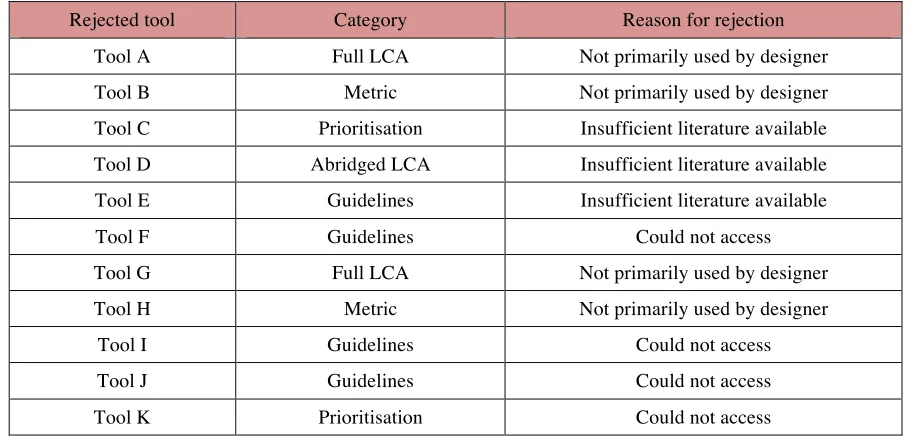
Table 2 – Information about rejected tools, including reason for rejection
Rejected tool Category Reason for rejection
Tool A Full LCA Not primarily used by designer
Tool B Metric Not primarily used by designer
Tool C Prioritisation Insufficient literature available Tool D Abridged LCA Insufficient literature available
Tool E Guidelines Insufficient literature available
Tool F Guidelines Could not access
Tool G Full LCA Not primarily used by designer
Tool H Metric Not primarily used by designer
Tool I Guidelines Could not access
Tool J Guidelines Could not access
Tool K Prioritisation Could not access
The full versions of some tools were unattainable due to high cost, therefore evaluation or demonstration versions were used instead. These criteria are intentionally broad in order to allow DfE tools with a wide range of scopes to be evaluated. It was conjectured that this would allow for the evaluation of different types of tool, giving a better representation of the large body of tools available.
As previously discussed in Chapter 2, the categorisation of the tools was conducted with reference to many sources (Byggeth, Hochschorner 2006; Luttropp, Lagerstedt 2006; Knight, Jenkins 2009; Simon, Poole et al. 2000). Six categories were identified, Simplified LCA; Full LCA; Prioritisation; Guidelines; Material selection and Eco-design resources.
3.2.2 Testing the tools
Preparation
To ensure ecological validity of the research the author decided it would be necessary to replicate as best as possible the usual working environment that the tools would be used in. To replicate a commercial environment the product information required to complete these DfE tools had to be generated and collected. This was done using a structured method to reverse engineer two small, electrical household appliances (Appendix 2). A kettle and a food blender were disassembled and a bill of materials generated. Basic tests and Resin Identification Codes (RIC) were used to identify each component’s material and primary process. The components were then weighed and the information recorded in a spreadsheet along with the component’s estimated end of life path (Appendix 2).
Re-design
Time limit
The application of each tool for both products aimed to be completed over one working day, the morning used to gain familiarity with the tool, i.e. reading literature, including manual, and taking tutorials. The full evaluation of the tool, using the product data from the two case studies, was then conducted in the afternoon. This tight time restriction approximates to the constraints placed on designers in industry given their pressure of work. However, due to the relative simplicity of some tools and complexity of others this time frame was not always fully adopted. Four of the 22 tools required more than one day in this study, i.e. SimaPro, GaBi, DFMA and DFEM.
Order of tool testing
The tools were tested and evaluated in the order shown in Table 1. The tools were grouped into similar categories – Simplified LCA, Full LCA, Prioritisation, Material selection, Educational resource and Guideline. The reason for this is that the researcher intends to gain familiarity with the category of tool and a general overview of their workings before attempting to carry out the evaluation process. A conscious attempt was also made to approach each tool objectively and minimise bias during the evaluations by reinforcing the research objectives after each tool had been looked at.
The researcher gained familiarity during the morning session, by reading the available literature and conducting test-runs of the tool using fabricated data. Once familiar the researcher then used the afternoon session to fully evaluate the tool using the product information from the two case study products.