Evidence for a planetary mass third body orbiting the binary star
KIC 5095269
A. K. Getley,
1‹B. Carter,
1R. King
1and S. O’Toole
21Computational Engineering and Science Research Centre, University of Southern Queensland, Toowoomba, QLD 4350, Australia 2Australian Astronomical Observatory, PO Box 915, North Ryde, NSW 1670, Australia
Accepted 2017 March 9. Received 2017 March 8; in original form 2016 September 11
A B S T R A C T
In this paper, we report the evidence for a planetary mass body orbiting the close binary star KIC 5095269. This detection arose from a search for eclipse timing variations amongst the more than 2000 eclipsing binaries observed byKepler. Light curve and periodic eclipse time variations have been analysed usingSYSTEMICand a customBINARY ECLIPSE TIMINGScode based
on the TRANSIT ANALYSIS PACKAGEwhich indicates a 7.70 ± 0.08MJup object orbiting every
237.7± 0.1 d around a 1.2 M primary and a 0.51 M secondary in an 18.6 d orbit. A dynamical integration over 107 yr suggests a stable orbital configuration. Radial velocity
observations are recommended to confirm the properties of the binary star components and the planetary mass of the companion.
Key words: binaries: eclipsing.
1 I N T R O D U C T I O N
Planet formation is widely considered to be dominated by core accretion, but an alterative disc instability mechanism has been pro-posed to explain gas giant planets and brown dwarfs (Boss2012; Chabrier et al.2014). In addition, while it is convenient to set a mass divide (at around 13 Jupiter masses) between planets and deuterium burning brown dwarfs (Burgasser2008), it has been argued that a separation of planets and brown dwarfs based on the formation mechanism is more physically meaningful (Nordlund2011). A key way to constrain planet formation models is to test their predictions as to the frequency, masses, orbits and stability of planets orbiting eclipsing binary stars, whose mutual eclipses can also provide ac-curate host star properties. The problem to be solved however is to find such planets, as to date very few such circumbinary plan-ets have been found (Sigurdsson et al.2003; Correia et al.2005; Lee et al. 2009; Doyle et al.2011; Kostov et al. 2016). In par-ticular, the discovery of the long-period transiting circumbinary planet Kepler-1647b may represent an example of a large popula-tion of distantly orbiting massive planets orbiting close binary stars (Kostov et al.2016). Our research therefore represents the initial re-sults of a search for eclipsing binary planets that use eclipse timings to enable planets orbiting above or below the stellar orbital plane to be detected.
Contained in the ‘Kepler Eclipsing Binary Catalog’ are more than 2000 eclipsing binaries that have been observed over the life of the
Keplermission (Prˇsa et al.2011; Slawson et al.2011). Predomi-nately detached binaries stars, i.e. binary stars with a morphology classification of less than 0.5, account for almost half of the systems
E-mail:[email protected]
in the eclipsing binary catalog. The high precision observations that were performed allows an eclipse time study to be performed. Eclipsing binary stars that are detached and isolated should have eclipses that occur at a constant and predictable time apart. Plotting the observed eclipse time (O) minus the calculated eclipse time (C) against a best-fitting linear ephemeris, variations from this constant time may be able to be seen. Periodic variations may be the result of a third body orbiting the binary (Beuermann et al.2010).
In systems that show periodic variations, the properties of the binary stars need to be estimated in order to fit and determine the characteristics of any additional bodies. Estimates for the masses of the binary stars are calculated from the colour data given in the Kepler data and modelling the light curve inJKTEBOP (South-worth, Maxted & Smalley2004). Colours and masses for spectral types are given in Pecaut & Mamajek (2013). With a mass ra-tio and mass estimate from the system colours, individual masses can be worked out. By using SYSTEMIC (Meschiari et al. 2009; Meschiari & Laughlin2010), a system can be set up with the masses and characteristics of the binary stars. From here additional bodies can be added and fit to determine if characteristics can account for eclipse time variations.
In this paper, we report on the results of an eclipse time study of a specific Kepler system, KIC 5095269, and the follow-upSYSTEMIC study in order to determine the characteristics of a third body. We propose the existence of a third body around KIC 5095269 with a mass of 7.70±0.08 Jupiter masses.
2 O − C P R O D U C T I O N A N D I D E N T I F I C AT I O N
primary eclipse occurs when the larger star passes in front of the smaller star, while a secondary eclipse occurs when the smaller star passes in front of the larger star. The time of as many primary eclipses and secondary eclipses as possible must be determined in order to perform an eclipse time variation study. We created a program, calledBETorBINARY ECLIPSE TIMINGS, to determine eclipse times.BETis based on the softwareTRANSIT ANALYSIS PACKAGEorTAP (Gazak et al.2012) and uses the analytic formulae for the transit or eclipse of a star which are found in Mandel & Agol (2002). The analytic formulae in Mandel & Agol (2002) describe a system of two objects during various points in its orbit. The objects can be a star and a planet (i.e. describing transits) or two stars (i.e. describing eclipses). The systems are described using the parameters: orbital period, the radius ratio of the two objects, scaled semimajor axis, orbital inclination, orbital eccentricity, argument of periastron, mid-time of eclipse/transit and two parameters specifying quadratic limb darkening.BETdetects eclipses from the Kepler data and uses the analytic formulae to accurately determine the mid-eclipse times of a system.
With the observed eclipse times of a system determined, cal-culated eclipse times are needed in order to produce an O− C diagram. Since the time between eclipses should be constant, a calculated eclipse time can be found with the equation
Tn=P×n+T0, (1)
wherePis the period of the system,nis the cycle number andT0is the initial eclipse time.
Equation (1) can be modified to account for primary and sec-ondary eclipses and take the form seen in (2):
Tnp=P ×n+T0p,
Tns=P ×n+T0s, (2)
whereT0pis the initial primary eclipse,T0sis the initial secondary eclipse,nis the cycle number andPis the period of the system which is common to both primary and secondary eclipses.
By performing a least-squares best fit to the observed eclipse times with (2) the best-fitting period and initial eclipse times will be found. Expected eclipse times can then be calculated. By plotting the observed eclipse time minus the calculated eclipse time against the predicted eclipse time, variations from the expected may be observed. These variations have been separated into five different, custom defined, categories based on their O−C diagrams: no or irregular variations, periodic variations, sudden period flips, long-term trends and out of phase long-long-term trends. Variations may be caused by star spots (Orosz et al.2012), apsidal motion (Beuermann et al.2010) or dynamical interactions (Borkovits et al.2003). It is also possible that periodic variations are caused by the effects of a third body (Beuermann et al.2010).
The times of observations in the Kepler data is in Barycentric Ju-lian Date (BJD) which is the JuJu-lian Date that has been corrected for the effects of the Earth’s orbit. This correction will prevent Earth’s orbit from appearing in the O−C diagrams. During the eclipse timing study, systems with no or irregular variations could be seen. These O−C variations would range from 0 to approximately 30 s and appear with no recurring pattern. Systems that have O−C vari-ations larger than 30 s and particularly those that exhibit periodic O−C variations that are suspected to be caused by the addition of a third body should be prioritised for further investigation. How-ever, as apsidal motion may also be the cause of periodic variation (Beuermann et al.2010), it cannot be assumed that third bodies are the cause of the O−C variations. In the hunt for planets, small
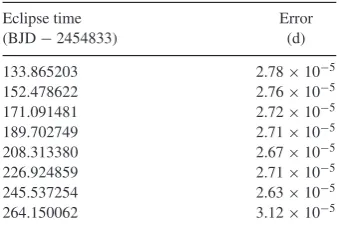
am-Table 1. Table of eclipse times for KIC 5095269. The eclipse time is in BJD−2454833. The eclipse times are used to produce an O−C diagram to look for eclipse timing variations. A sample of the table is shown here, the full table is available online.
Eclipse time Error
(BJD−2454833) (d)
133.865203 2.78×10⁻⁵
152.478622 2.76×10⁻⁵
171.091481 2.72×10⁻⁵
189.702749 2.71×10⁻⁵
208.313380 2.67×10⁻⁵
226.924859 2.71×10⁻⁵
245.537254 2.63×10⁻⁵
264.150062 3.12×10⁻⁵
plitude variations (i.e. a few minutes) are also prioritised over larger variations as larger objects (i.e. stars) will have more of an effect on binary stars than smaller objects (i.e. dwarf stars or planets).
3 F O L L OW I N G U P O N I D E N T I F I E D O − C D I AG R A M S
With an O−C diagram showing periodic variability, the next task is to try to determine the cause of the variability. In this study, the soft-wareSYSTEMIC(Meschiari et al.2009; Meschiari & Laughlin2010) has been used to model the system and estimate the characteristics of a third based on its effect on the binary stars.SYSTEMICcan be used to model eclipse and transit timing variations. In order to accurately determine the properties of any potential third bodies the mass for the primary and secondary stars must be estimated. Radial velocity data are needed to determine the mass of binary stars; however, these data can be difficult to obtain for Kepler stars without the use of a large telescope. As a result, mass estimates for the binary stars were calculated based on the data in the Kepler data base and the light curve of the system.
JKTEBOP(Southworth et al.2004) was used to find the best fit to model the light curve in order to determine/estimate the parameters of the system such as the orbital period, mass ratio of the binary stars and inclination of the system. Other data for the binary star systems such as theV−Kcolour can be used to help validate and guide the mass estimates of the binary star. By using the colours of the system and the mass ratio and other property estimates fromJKTEBOP, a system can be set up inSYSTEMICto determine the properties of a potential third body. If the colours fall between two star types, the larger masses can be used and as a result the mass of any third body present should be an upper estimation of the mass.JKTEBOP was selected as it is capable of fitting the parameters of a system, including limb darkening and mass ratio.
4 R E S U LT S
[image:2.595.344.514.112.225.2]Figure 1. Example of a primary eclipse fit byBET(blue solid line) to the data obtained fromKepler(red circles).
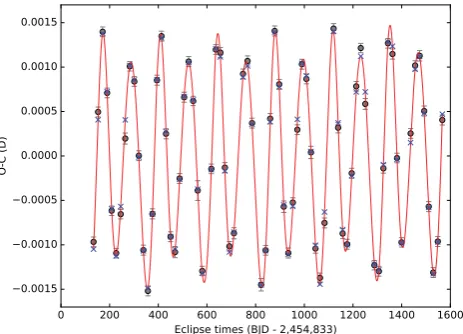
Figure 2. The O−C points and best-fitting model to explain the eclipse timing variations. The grey circles are the O−C points for KIC 5095269 while the red line is the modelled eclipse time variations. A blue X marks the best-fitting O−C points.SYSTEMICtakes the entered eclipse times, integrates
the system to find the eclipse time closest to the entered time and plots the O−C value. Non-Keplerian dynamics and the orbital characteristics of the third body (visualized in Fig.5) are thought to be the source of the variation in the maxima and minima in this O−C diagram.
Using the data found in Table 1 and fitting using the func-tions found in (2), the period of the system, P, was found to be 18.611 957 d and the initial primary eclipse, T0p, occurred at 133.866 170 (BJD−2454833). The secondary eclipses were found to be too shallow to accurately fit and as such no secondary eclipse times were obtained. The O − C diagram and data for the pri-mary eclipses in KIC 5095269 are shown by the circles in Fig.2. The O−C diagram shows periodic variability that has a period of approximately 120 d with variations in the eclipse times of up to approximately 2 min.
In addition to the orbital period of 18.611 957 d and an initial eclipse occurring at 133.866170 (BJD−2454833), modelling the light curve inJKTEBOP(Southworth et al.2004) found a mass ratio of approximately 0.421 and an inclination of 80.02 deg. An eclipse from the Kepler data with the modelled light curve fromJKTEBOP can be seen in Fig.3. With a Kepler magnitude of 13.528 and a 2MASS K magnitude of 12.215, this system has a V−Kvalue
Figure 3. A small section of the light curve fromKeplerand the model fromJKTEBOPshowing an eclipse. The light-curve data fromKepleris shown
by the circles, while the model data obtained fromJKTEBOPis shown by×.
of 1.313. ThisV − K value approximately matches an F7 star (Bessell & Brett 1988). If the secondary star were much hotter than an M star it would have an impact on theKmagnitude of the system, and therefore theV−Kvalue. This is not consistent with observations. With an F7V primary star with a mass of 1.21 M (Pecaut & Mamajek2013) and a mass ratio of 0.421, the secondary star would have a mass of 0.51 M. This is consistent with the mass of an M star as theV−Kcolour suggests.
SYSTEMIC(Meschiari et al.2009; Meschiari & Laughlin2010) was then used to set up a representative system with the main (larger) star being set to a mass of 1.21 solar masses. ‘Planet 1’ was set up with the characteristics of the secondary star and the system, i.e. a mass of 0.51 solar masses, an orbital period of 18.611 957 d and an inclination of 80.0235 deg. The masses as well as the orbital period and inclination of the binary stars were fixed while all the other parameters were free to be fit by the program. An additional planet (Planet 2) was added to the system with the period of the O−C variability set as the period of the planet. All parameters for the additional body were also free to be fit. The eclipse times were loaded intoSYSTEMICand the uncertainties in the eclipse times were doubled inSYSTEMICin order to estimate the true uncertainty in the eclipse times. A best fitting was then performed bySYSTEMICto find the values for the system that best explains the O−C variability.
The results of theSYSTEMICbest fitting can be seen in Fig.2, the residuals of the fit are shown in Fig.4 and the data for the binary system are shown in Table2while the data for the third body are shown in Table 3. The properties of the binary sys-tem were entered into PHysics Of Eclipsing BinariEs orPHOEBE (Prˇsa & Zwitter2005; Degroote et al.2013) to view a synthetic light curve.PHOEBEsuggested an inclination of approximately 86.5 deg was required to view a primary eclipse but no/minimal secondary eclipse as can be seen in the light curve. The inclination of the sys-tem was kept at 80.02 deg suggested byJKTEBOPas this was found by fitting the light curve; however, the larger inclination fromPHEOBE was noted.
5 D I S C U S S I O N
[image:3.595.48.280.281.448.2]Figure 4. Residuals of theSYSTEMICfit showing the difference between
the observed eclipse times and the modelled eclipse times. The smaller the values of the residuals, the closer the modelled eclipse times are to the observed eclipse times.
Table 2. Table of data provided by theSYSTEMICfit for the binary system.
The mass of the primary and secondary stars, the orbital period of the binary stars and the inclination were fixed at pre-calculated values while the rest of the parameters were free to be fit. The median and median absolute deviation (MAD) values were also determined bySYSTEMIC.
Property Best-fitting value Median value MAD value
Primary star mass ( M) 1.21 N/A N/A
Secondary star mass ( M) 0.51 0.51 1.24×10⁻³
Orbital period (d) 18.611 96 18.611 96 1.55×10⁻⁷
Mean anomaly (deg) 7.44 7.44 1.31×10⁻⁴
Eccentricity 0.246 0.246 9.3×10⁻⁶
Long. peri (deg) 22.82 22.82 2.23×10⁻⁴
Inclination (deg) 80.0 80.0 0.02
[image:4.595.350.509.56.223.2]Node (deg) 305.54 305.54 2.3×10⁻⁴
Table 3. Table of data provided by theSYSTEMICfit for the third body. All of
the parameters were free to be fit. The Median and MAD values were also determined bySYSTEMIC.
Property Best-fitting value Median value MAD value
Mass (Mj) 7.698 7.693 0.054
Orbital period (d) 237.70817 237.68977 0.08237
Mean anomaly (deg) 290.92 289.44 2.34
Eccentricity 0.0604 0.0603 0.0021
Long. peri (deg) 27.67 29.03 2.07
Inclination (deg) 105.92 105.83 0.98
Node (deg) 64.19 64.10 0.28
[image:4.595.46.286.346.447.2]Jupiter masses could account for the eclipse timing variations seen (all errors are quoted to a single standard deviation unless otherwise noted). The mass of this third body is expected to be an upper limit and suggests the third body is actually a planet orbiting the binary stars. The best-fitting orbit of the binary stars is 18.611 96 d. The eccentricity of the binary stars and planet as determined by SYSTEMICwas found to be 0.246 and 0.060±0.003, respectively. The data produced fromSYSTEMICfound that the best fit to match the eclipse timing variations occurs when there is a third body with a mass of 7.70± 0.08 Jupiter masses. This mass is below the proposed planet/brown dwarf boundary of roughly 13 Jupiter masses (Burgasser2008) and as such the third body is regarded
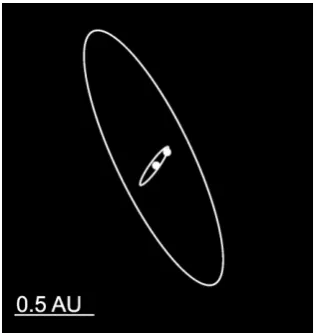
Figure 5. A visualization of the system as determined by the program
SYSTEMIC. The primary and secondary stars are at the centre and the third body is found to be orbiting both stars.
as a planet rather than a brown dwarf. Though how this object formed may determine whether it is a large planet or a small brown dwarf (Nordlund 2011). If this third body is confirmed to be a circumbinary planet it would join a small number of previously confirmed circumbinary planets (Sigurdsson et al. 2003; Correia et al.2005; Lee et al.2009; Doyle et al.2011; Kostov et al.2016), and this body would have one of the largest masses of these circumbinary planets.
With the period of the O− C variability being approximately 120 d, it was expected that the orbital period of the third body would be approximately the same. However, theSYSTEMICfit was significantly better (both visually and by reducedχ2value) with a period of 237.7 d and therefore this fit was chosen as the optimal fit. SYSTEMICincorporates non-Keplerian dynamics found in Fabrycky (2010) and it is thought that the orbital characteristics of the planet (as visualized in Fig.5) coupled with non-Keplerian dynamics are the reason the orbital period of the planet varies from what was expected and also accounts for the variation seen in the maxima and minima of the O−C diagram in Fig.2. The orbital period of the planet approximately matches the period of the variation in the maxima and minima of the O−C diagram.
[image:4.595.47.286.499.590.2]Figure 6. Eccentricity of the secondary star and planet after integration of theSYSTEMICsystem over a period of 107yr. The secondary star has very little
variation in eccentricity. The planet has some variation in the eccentricity.
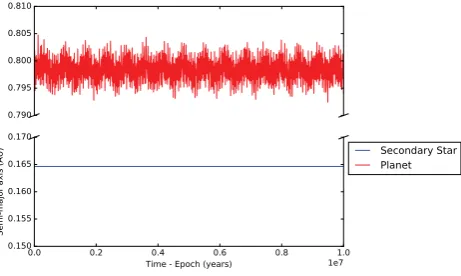
Figure 7. Semimajor axis of the secondary star and planet after integration of theSYSTEMICsystem over a period of 107yr. The secondary star has an
almost constant semimajor axis while the planet has some variation in the semimajor axis.
the third body is 5.04 Jupiter masses. In all of the tests performed, with varying properties of the binary system, a planetary mass third body is capable of producing the eclipse timing variations seen. The effect of limb darkening on the mass ratio of the binary stars was also analysed withJKTEBOP. It was found that as the amount of limb darkening of both stars increased, the mass ratio decreased. It was also found that increasing the amount of limb darkening on the primary star only resulted in a lower mass ratio, while increasing the amount of limb darkening on the secondary star only had a very minor effect and slightly increased the mass ratio.
The stability of the proposed orbits are important in determin-ing whether the proposed orbits are the correct interpretation of the eclipse timing variations (Hinse, Horner & Wittenmyer2014). The system was integrated over a period of 107yr to determine the long-term stability of the system.SYSTEMIC(Meschiari et al.2009; Meschiari & Laughlin2010) was used to perform the integration on the best-fitting system found. The eccentricity results of the integra-tion can be found in Fig.6while the semimajor axis results of the integration can be found in Fig.7. The semimajor axis of the planet was found to vary between 0.795 and 0.805 au while the eccen-tricity was found to fluctuate between 0.05 and 0.13 and indicates the planet orbits the binary stars in an almost circular orbit. As the orbits were found to be stable over large time periods, a planet in the proposed configuration is unlikely to be ejected from the system and is therefore the likely source of the eclipse timing variations seen (Hinse et al.2014).
With a proposed inclination of 105.◦92±1.◦45, the probability of transits occurring needs to be considered. Kane & von Braun (2008) presented an analysis of the effect of orbital parameters, specifically eccentricity and argument of periastron, on the probability of a transit as a function of the orbital period. The probability of a transit occurring for a planet in a circular orbit drops dramatically as the orbital period of the planet increases. As the planet found in this system has a proposed orbit of approximately 237 d and a nearly circular orbit, the expected transit probability is less than approximately 0.01. By viewing the light curve, no transits can be seen to occur which can be expected with such a low probability of a planet in this orbit transiting the parent stars.
6 C O N C L U S I O N S
In this paper, we presented the evidence for a third body with a mass below the proposed planet/brown dwarf boundary (Burgasser2008) around KIC 5095269. An eclipse timing variation study was per-formed on the Kepler detached binaries where KIC 5095269 was found to exhibit periodic eclipse time variations. As eclipse time variations may be the result of a third body (Beuermann et al.2010), estimates for the mass of the binary stars were calculated and a model was produced with SYSTEMIC (Meschiari et al. 2009; Meschiari & Laughlin2010).
The model produced bySYSTEMICsuggests the cause of the eclipse timing variations is a third body with a mass of 7.70±0.08 Jupiter masses. Based on the proposed planet/brown dwarf mass bound-ary (Burgasser2008), we propose that this third body is a planetary candidate; however, how this object formed may determine whether it is a planet or a brown dwarf (Nordlund2011). The system was also found bySYSTEMICto be stable over a period of 107yr with an eccentricity of the third body that varies between 0.05 and 0.13. No transits could be seen to occur within the light curve although a planet with an orbital period of approximately 237 d has a proba-bility of transit of less than 0.01.
In the future, we will be attempting to obtain radial velocity data for the system in order to further constrain the properties of the system. This planetary candidate has provided us with a template, both the features of O−C variations and the method for analysis, to use for future systems with periodic variations. Systems with low-mass secondary stars, combined with small O−C variations, are the best chance for detecting planetary sized bodies via the eclipse time variation method.
AC K N OW L E D G E M E N T S
We would like to thank the referee and editor for their feedback and for helping us to fine tune the details of the paper. We would also like to thank Stefano Meschiari for his assistance withSYSTEMIC.
N OT E A D D E D I N P R E S S
The triple nature of this system was first reported in Borkovits et al., 2016, MNRAS, 455, 4136.
R E F E R E N C E S
Bessell M. S., Brett J. M., 1988, PASP, 100, 1134 Beuermann K. et al., 2010, A&A, 521, L60
Borkovits T., ´Erdi B., Forg´acs-Dajka E., Kov´acs T., 2003, A&A, 398, 1091 Boss A. P., 2012, MNRAS, 419, 1930
[image:5.595.48.279.253.391.2]Chabrier G., Johansen A., Janson M., Rafikov R., 2014, Protostars and Planets VI, 914, 619
Correia A. C. M., Udry S., Mayor M., Laskar J., Naef D., Pepe F., Queloz D., Santos, N. C., 2005, A&A, 440, 751
Degroote P., Conroy K., Hambleton K., Bloemen S., Pablo H., Giammarco J., Prˇsa A., 2013, in Pavlovski K., Tkachenko A., Torres G., eds, EAS Publ. Ser. Vol. 64, Setting a New Standard in the Analysis of Binary Stars. EDP Sciences, Les Ulis, France, p. 277
Doyle L. R. et al., 2011, Science, 333, 1602
Fabrycky D. C., 2010, in Seager S., ed., Non-Keplerian Dynamics of Exo-planets. The Univ. Arizona Press, ExoExo-planets. Arizona, p. 217 Gazak J. Z., Johnson J. A., Tonry J., Dragomir D., Eastman J., Mann A. W.,
Agol E., 2012, Adv. Astron., 2012. 697967
Hinse T. C., Horner J., Wittenmyer R. A., 2014, J. Astron. Space Sci., 31, 187
Kane S. R., von Braun K., 2008, in Mamajek E. E., Soderblom D. R., Wyse R. F. G., eds, Proc. IAU Symp. 4, The Age of Stars. Cambridge Univ. Press. Cambridge, p. 358
Kostov V. B. et al., 2016, ApJ, 827, 86
Lee J. W., Kim S.-L., Kim C.-H., Koch R. H., Lee C.-U., Kim H.-I., Park J.-H., 2009, AJ, 137, 3181
Mandel K., Agol E., 2002, ApJ, 580, L171 Meschiari S., Laughlin G. P., 2010, ApJ, 718, 543
Meschiari S., Wolf A. S., Rivera E., Laughlin G., Vogt S., Butler P., 2009, PASP, 121, 1016
Nordlund Å., 2011, in Sozzetti A., Lattanzi M. G., Boss A. P., eds, Proc. IAU Symp. 276, The Astrophysics of Planetary Systems: Formation,
Structure, and Dynamical Evolution. Cambridge Univ. Press. Cambridge, p. 105
Orosz J. A. et al., 2012, Science, 337, 1511 Pecaut M. J., Mamajek E. E., 2013, ApJS, 208, 9 Prˇsa A., Zwitter T., 2005, ApJ, 628, 426 Prˇsa A. et al., 2011, AJ, 141, 83
Sigurdsson S., Richer H. B., Hansen B. M., Stairs I. H., Thorsett S. E., 2003, Science, 301, 193
Slawson R. W. et al., 2011, AJ, 142, 160
Southworth J., Maxted P. F. L., Smalley B., 2004, MNRAS, 351, 1277
S U P P O RT I N G I N F O R M AT I O N
Supplementary data are available atMNRASonline.
Table 1.Table of eclipse times for KIC 5095269. The eclipse time is in BJD−2454833.
Please note: Oxford University Press is not responsible for the content or functionality of any supporting materials supplied by the authors. Any queries (other than missing material) should be directed to the corresponding author for the article.