
Preparing for 2014-20: programming, concentration and performance : IQ-Net Thematic Paper, 32(2)
73
0
0
Full text
(2) European Policies Research Centre University of Strathclyde 40 George Street Glasgow G1 1QE United Kingdom Tel: +44 (0) 141 548 3672 Fax: +44 (0) 141 548 4898 Email: [email protected]. The place of useful learning The University of Strathclyde is a charitable body, registered in Scotland, number SC015263.
(3) Preparing for 2014-20: Programming, Concentration and Performance. PREFACE The research for this paper was undertaken by EPRC in preparation for the 34th IQ-Net meeting held in Laško, Slovenia on 12-14 June 2013. The paper was written by Carlos Mendez, Stefan Kah and John Bachtler. The paper is the product of desk research and fieldwork visits during Spring 2013 to national and regional authorities in EU Member States (notably partners in the IQ-Net Consortium). The field research team comprised: . Stefan Kah (Austria, Slovenia). . Dr Sara Davies (Germany). . Dr Arno Van der Zwet (Belgium). . Victoria Chorafa (Greece). . Dr Marie Feřtrová (Czech Republic). . Dr Martin Ferry (Poland). . Prof Henrik Halkier (Denmark). . Carlos Mendez (Portugal, Spain). . Kaisa Granqvist (Finland). . Rona Michie (United Kingdom). . Frederike Gross (France). EPRC thanks all those respondents from national and regional authorities and other organisations who participated in the research. EPRC also gratefully acknowledges the financial support provided by participating Member States and regions, whose contributions are co-financed by technical assistance from the European Structural Funds. The authors are also grateful for helpful advice and feedback on earlier drafts of this paper from the IQ-Net research team, especially Rona Michie, and for support with the formatting of the paper from Alyson Ross. The report is, however, the responsibility of the authors alone. The partners in the IQ-Net network are as follows: Austria . State Government of Niederösterreich (Lower Austria), Economic and Tourism Department. . State Government of Steiermark (Styria), Department for Economy, Tourism and Sport. Belgium . Enterprise Flanders Agency. Czech Republic . Ministry of Regional Development. Denmark . Danish Business Authority. . Alliance of Länsi-Suomi (Western Finland) and the Ministry of Employment and the. Finland Economy. IQ-Net Thematic Paper 32(2). i. European Policies Research Centre.
(4) Preparing for 2014-20: Programming, Concentration and Performance. France . Délégation interministérielle à l'aménagement du territoire et à l'attractivité régionale (DATAR, Interministerial Delegation of Territorial Development and Regional Attractiveness). Germany . Nordrhein-Westfalen (North Rhine-Westphalia), Ministry for Business, Energy, Industry, SMEs and the Craft Sector, EU Affairs Unit. . Sachsen-Anhalt (Saxony-Anhalt), Ministry of Finance. . Management Organisation Unit of Development Programmes S.A.. . Ministry of Economic Development and Promuovi Italia SpA. . Śląskie Voivodeship (Marshal's Office of Silesia). Greece. Italy. Poland. Portugal . Financial Institute for Regional Development (IFDR). . País Vasco (Basque Country), Provincial Council of Bizkaia, Department of Economy. Spain and Finance Slovenia . Ministry of Economic Development and Technology, EU Cohesion Policy Directorate. United Kingdom . Department of Communities and Local Government. . Scottish Government. . Welsh European Funding Office. For further information about IQ-Net, and access to the full series of IQ-Net Papers, please visit the IQ-Net website at: http://www.eprc.strath.ac.uk/iqnet/ To cite this paper, please use the following: Mendez C and Kah S (2013) Preparing for 2014-20: Programming, Concentration and Performance. IQ-Net Thematic Paper 32(2), European Policies Research Centre, University of Strathclyde, Glasgow.. Disclaimer It should be noted that the content and conclusions of this paper do not necessarily represent the views of individual members of the IQ-Net Consortium.. IQ-Net Thematic Paper 32(2). ii. European Policies Research Centre.
(5) Preparing for 2014-20: Programming, Concentration and Performance. PREPARING FOR 2014-20: PROGRAMMING, CONCENTRATION AND PEFORMANCE TABLE OF CONTENTS 1.. INTRODUCTION. 2.. AN UPDATE ON THE 2014-20 FINANCIAL & LEGISLATIVE FRAMEWORK .............................. 4. 3.. 2.1. The European Council Budget agreement: implications for Cohesion policy ........................ 4. 2.2. Progress with the negotiation of the Cohesion policy legislative framework ......................... 6. STRATEGIC PROGRAMMING 3.1. 3.1.1. Programme architecture ..................................................................................................... 8. 3.1.2. Financial allocations and criteria ...................................................................................... 10. 3.1.3. European Commission guidance and dialogue ............................................................... 12. 3.1.4. Added value of Partnership Agreements: Strategic direction and coordination .............. 21 Operational Programmes ..................................................................................................... 22. 3.2.1. State-of-play ..................................................................................................................... 22. 3.2.2. EU Guidance - Reactions to the Commission template for OPs ..................................... 25. 3.2.3. Results-orientation: Intervention logic, indicators and targets ......................................... 26. STRATEGIC CONTENT. ..................................................................................... 31. Thematic concentration ........................................................................................................ 31. 4.1.1. Shifts in thematic orientation ............................................................................................ 31. 4.1.2. Drivers of change ............................................................................................................. 34. 4.2. The Territorial Dimension ..................................................................................................... 35. 4.2.1. Territorial instruments ...................................................................................................... 35. 4.2.2. Funding for less developed areas .................................................................................... 39. 4.3. 6.. Partnership Agreements ........................................................................................................ 8 State-of-play ....................................................................................................................... 8. 4.1. 5.. ....................................................................................... 8. 3.1.1. 3.2. 4.. ....................................................................................... 3. Financial Instruments ........................................................................................................... 40. STRATEGIC DELIVERY AND PERFORMANCE ......................................................................... 45 5.1. Programme management .................................................................................................... 45. 5.2. Monitoring Committees ........................................................................................................ 48. 5.3. Simplified and results-oriented financial management ........................................................ 49. 5.3.1. Simplified costs ................................................................................................................ 49. 5.3.2. Joint Action Plans ............................................................................................................. 50. CONCLUSIONS. IQ-Net Thematic Paper 32(2). ..................................................................................... 52. iii. European Policies Research Centre.
(6) Preparing for 2014-20: Programming, Concentration and Performance. ANNEX 1: PROGRESS WITH DEVELOPING THE PARTNERSHIP AGREEMENTS IN IQ-NET COUNTRIES ..................................................................................... 54 ANNEX 2: FINANCIAL ALLOCATIONS IN AUSTRIA, GERMANY, POLAND AND THE UNITED KINGDOM ..................................................................................... 58 ANNEX 3: STATE-OF-PLAY WITH OPERATIONAL PROGRAMMES IN IQ-NET COUNTRIES ....... 61. IQ-Net Thematic Paper 32(2). iv. European Policies Research Centre.
(7) Preparing for 2014-20: Programming, Concentration and Performance. PREPARING FOR 2014-20: PROGRAMMING, CONCENTRATION AND PEFORMANCE EXECUTIVE SUMMARY With the European Council Agreement on the 2014-20 Multiannual Financial Framework in February 2013 and the launch of inter-institutional negotiations with the European Parliament on the budget and regulatory framework for Cohesion policy, attention is now firmly focused on strategic planning for European Structural and Investment Funds in 2014-20. In the Member States, national and regional authorities have been developing their new Partnership Agreements (PAs) and Operational Programmes (OPs) and in some cases discussing draft versions with the European Commission. On the basis of the information available in April/May 2013, the aim of this paper is to undertake a preliminary assessment of the preparation, content and delivery implications of the PAs and OPs for 2014-20. The development and drafting of the PAs has progressed considerably by the end of the first quarter of 2013, although complete drafts are only available in a limited number of countries. The Commission expects informal submission of complete PAs before the summer and formal submission during September 2013. It is not clear whether these targets will be achieved, especially in the absence of an agreement on the EU Budget and because the regulatory package is unlikely to be approved till October 2013. As a consequence, most IQ-Net countries have not yet made formal decisions on the financial allocations to programmes, the division of funding across Funds, or on allocations to spending priorities. Despite the regulatory and financial uncertainty, the PAs are perceived to be supporting the strategic alignment of the ESI Funds with Europe 2020 themes, although the main drivers are the regulatory obligations on thematic concentration and ring-fencing; and are encouraging a more coordinated approach to programming involving all of the ESI Funds, notwithstanding the specificities of the different Funds objectives and governance arrangements. Radical changes in the programme architecture are expected in several Member States involving a considerable reduction in the number of programmes (notably where regional programmes are being replaced with national programmes) and the use of multi-fund programmes in accordance with the new options available for 2014-20. However, experiences with multi-fund programming in the 1990s and 2000s were not always positive as the programmes were complex and difficult to manage, and it remains to be seen how such challenges will be addressed in these countries. An important development since the end of 2012 is the launch of the informal dialogue between the Member States and the Commission, kick-started by the publication of Commission Position Papers on the future Partnership Agreements and programmes, subsequent bilateral meetings, and multilateral meetings on EU guidance documents. While the Position Papers have helped to provide more clarity on the European Commission’s position and supported the process of domestic debate and programming, there have been procedural and content disagreements. Procedurally, the legal status of the Position Papers has been questioned, with several Member States arguing that they should only represent ‘soft guidance’ rather than binding reference documents or recommendations. On content, country-specific concerns have centred on the Commission’s diagnosis of development challenges, the treatment of the territorial dimension, the proposed thematic concentration and various governance recommendations which are seen to intrude into domestic competences. Another. IQ-Net Thematic Paper 32(2). 1. European Policies Research Centre.
(8) Preparing for 2014-20: Programming, Concentration and Performance. concern is that a formalistic and rigid approach to drafting and presenting the PA is being encouraged through the template model issued by the Commission, which hinders the ability to present a narrative of the strategy. The drafting of the Operational Programmes is at different stages across IQ-Net countries and regions. Some countries do not yet have drafts of programmes, the focus till now being on the Partnership Agreements. The socio-economic analysis and SWOT analysis seem to be well advanced in many cases although progress with strategic priorities and indicators is more variable. Again, the lack of agreement on the MFF and Cohesion policy regulations is partly to blame, although there are also domestic strategies that need to be finalised (notably relating to smart specialisation) to inform the programmes and comply with ex-ante conditionality requirements. As a result, the adoption of the new round of programmes by the Commission is likely to be even more delayed than in the previous period. This could have important consequences for the operation of regional development policies across the EU, particularly in countries and regions receiving substantial amounts of EU funding and facing strong public investment constraints. In formulating the next generation of programmes, the Commission is requiring a stronger emphasis on the intervention logic of programmes, indicators and target-setting, particularly thorough the recently issued OP template model. The clarity of objectives appears to be given more serious attention by IQ-Net authorities than in previous periods although there are mixed views about the impact on the approach to programming and substantive content of programmes. What is clear is that the role and importance of indicators and targets will rise in 2014-20 across all EU countries and regions, particularly given the financial implications of the new performance reserve. This is reflected in the increased attention given to indicators in the preparatory work rather than as an after-thought in the final stages of programming, although none of programme authorities surveyed had set targets at this stage. Closely associated with the results agenda, the programmes are required to concentrate the majority of funding on a limited number of thematic objectives relating to Europe 2020. For many IQ-Net countries and regions, this is not perceived to pose a challenge, particularly where funding is already concentrated on similar themes or where funding allocations are relatively low. However, various IQNet programme authorities are planning substantial shifts in spending towards R&I, SME competitiveness and especially the low-carbon economy objective or to new types of interventions within these objectives. In some cases, this is likely to lead to important changes in the profile of beneficiaries and potentially to challenges for these beneficiaries in adapting to the EU’s administrative obligations. Changes and adaptation to programme management and implementation structures will be needed across all EU countries to deal with new regulatory obligations. Major changes in the allocation of Cohesion policy competences across different levels of governance – involving either centralisation or decentralisation - are only expected in a small number of cases in response to shifts in the policy architecture and territorial governance. A more common trend across IQ-Net countries and regions is a rationalisation in the number of intermediate and implementing bodies, although so far there is no indication of substantial changes to contractual relations with these bodies with respect to performance. This may, however change, once the drafting of programmes is finalised and the new performance frameworks, indicators and targets are set.. IQ-Net Thematic Paper 32(2). 2. European Policies Research Centre.
(9) Preparing for 2014-20: Programming, Concentration and Performance. PREPARING FOR 2014-20: PROGRAMMING, CONCENTRATION AND PEFORMANCE 1. INTRODUCTION The reform of Cohesion policy for 2014-20 is in a critical period. The inter-institutional negotiations on the EU’s 2014-20 budget and regulatory package for Cohesion policy are reaching their conclusion, and the strategic planning for the next round of Structural and Cohesion Fund programmes is in full swing. Since late 2012, the Member States and European Commission have been engaged in informal dialogue on the programming for 2014-20 on the basis of Commission position papers transmitted to each Member State. Throughout the EU, the Member States and regions are developing the framework and the basic planning documents (Partnership Agreements and Operational Programmes) for the next generation of programmes to be implemented in 2014-20. Whether the Commission’s ambitious objectives for the next programme period are met depends not just on the conclusion of the regulatory negotiations but how the new obligations for more strategic coherence, greater thematic concentration and better performance are interpreted at programme level. Against this background, the following paper examines the current state-of-play with the preparations for the 2014-20 period across the EU and specifically in IQ-Net partner countries and regions. It draws on a mix of desk research and interviews with government officials working on the implementation of Structural Funds programmes in the 14 Member States where managing authorities and programme secretariats are partners in IQ-Net. The surveyed programmes collectively account for almost onethird of Cohesion policy spending and encompass a mix of Convergence, Regional Competitiveness & Employment, and Phasing-In/Out regions. The desk-based research has focused on EU-level and programme documents. Interviews were conducted with managing authorities, programme secretariats and national coordination bodies. The paper begins with an update of the 2014-20 financial and legislative framework, notably the European Council budget agreement and the implications for Cohesion policy, as well as progress with the negotiation of the Cohesion policy legislative framework. The paper then discusses the progress with programming, reviewing the development of Partnership Agreements and Operational Programmes. It also explores the strategic content of these documents with respect to thematic concentration, the territorial dimension and financial instruments. Implementation arrangements – and specifically performance management – are also discussed, focusing on programme management, monitoring committees and simplified and results-oriented financial management. Conclusions draw together the main points to emerge and annexes provide country-specific information on the progress of programming.. IQ-Net Thematic Paper 32(2). 3. European Policies Research Centre.
(10) Preparing for 2014-20: Programming, Concentration and Performance. 2. AN UPDATE ON THE 2014-20 FINANCIAL & LEGISLATIVE FRAMEWORK 2.1. The European Council Budget agreement: implications for Cohesion policy. The European Council on 7-8 February 2013 agreed a Multiannual Financial Framework (MFF) containing some significant changes in EU spending, including a new methodology for allocating Cohesion policy funding. The upper limit of commitments was set at 1 percent of EU GNI (€959 billion), with payments expected to be 0.95 percent of EU GNI (€908 billion). These are reductions compared to the current limits in 2007-13 – 1.12 percent (€994) and 1.06 percent (€942 billion) respectively – of around three percent in real terms. Cohesion policy is projected as declining by 8.4 percent, bringing its share to a third of the overall budget on a par with the CAP. The next stage in the MFF negotiations is to reach an Inter-Institutional Agreement with the European Parliament. The Parliament's formal mandate to negotiate was approved in a resolution on 13 March 2013 which rejected the 8 February European Council conclusions and called for more flexibility and efficiency within the budget. The negotiations should result in a regulation laying down the MFF, for which parliament's consent is required, as well as an inter-institutional agreement between Parliament, the Council and the Commission before the summer of 2013. Although the inter-institutional agreement with the European Parliament has not yet been agreed, an assessment of the implications of the European Council deal for the allocation of Structural and Cohesion Funds to the Member States has been provided in a recent EPRC Policy Briefing.1 This reveals elements of continuity in the allocations – Poland remains the single largest beneficiary of the funds – but also elements of change (see Figure 1): fewer countries have LDR status in their entirety (only the three Baltic states and Bulgaria); some countries see significant reductions in LDR coverage and associated allocations, notably Germany, Spain and Greece; and some benefit from the new transitional category, even where the regions concerned did not previously have Convergence status, notably Belgium, France and the United Kingdom. The implications of these changes for the levels of funding varies widely between countries, with some seeing increases in relation to current allocations, but others substantial reductions (see Figure 2). Reflecting the overall reduction in the Cohesion policy budget, most countries would see a reduction in their allocations – 11 countries look set to lose more than a fifth of current allocations. On the other hand, nine countries appear likely to gain, although some of these gains are modest.. 1. Wishlade F (2013) Cohesion Policy 2014-20: National Allocations - Who are the Winners and Losers from the 7-8 February European Council? EPRC Policy Briefing, 25 February 2013, University of Strathclyde, Glasgow. Available at: http://www.eprc.strath.ac.uk/news/COHESION_POLICY_ALLOCATIONS_201420_EPRC_Policy_Briefing_Feb_2013.pdf (accessed 6 June 2013).. IQ-Net Thematic Paper 32(2). 4. European Policies Research Centre.
(11) Preparing for 2014-20: Programming, Concentration and Performance. Figure 1: Projected Cohesion policy allocations by Member State, 2014-20. Source: Wishlade (2013) op. cit.. Figure 2: Project changes in Cohesion policy allocations by Member State, 2014-20. Source: Wishlade (2013) op. cit.. IQ-Net Thematic Paper 32(2). 5. European Policies Research Centre.
(12) Preparing for 2014-20: Programming, Concentration and Performance. 2.2. Progress with the negotiation of the Cohesion policy legislative framework. In parallel with the negotiations on the Multiannual Financial Framework, further progress has been made on the negotiation of the Cohesion policy regulations, associated secondary legislation and various guidance documents to inform programming. Nevertheless, the adoption of the legislative framework is behind schedule owing to delays in agreeing the EU budget and the on-going inter-institutional negotiations on the Cohesion policy regulations. The latest reports by DG REGIO officials to the European Parliament suggest that the legislative package will not be adopted till October 2013 at the earliest. This is likely to lead to delays in adoption of Partnership Agreements and programmes, beyond the target of the end of 2013. Discussions with European Commission staff suggest that the revised target is to adopt Partnership Agreements by end of the year and all programmes by European elections in 2014 (see Table 1). Table 1: DG Regional Policy management objectives for the 2014-20 period Legislative decisions and guidance for 2014-20. 2013 Targets. Adoption of EU 2014-20 Legislative Package. By mid-2013. Inter-institutional legislation Operational decisions Guidance. Adoption of Delegated and Implementing Acts. By 6 months after adoption of the Regulations. Adoption of Partnership Agreements and Programmes. 100% by end of 2013. Guidance notes for the 2014-20 period. By early 2013. Source: DG Regional Policy (2012) REGIO Management Plan 2013, 21 December 2012, Brussels.. An important development in late 2012 is the launch of the inter-institutional negotiations between the Council and European Parliament. An intensive programme of trilogue meetings was organised but there is still some way to go to finalise the Regulations. By the end of May 2013, around 40 trilogues were held on the common provisions Regulation (CPR) leading to provisional agreement on five out of eighteen CPR blocks and a further four were close to agreement: Performance Framework, Ex-ante conditionalities, Technical Assistance, Eligibility, Monitoring and Evaluation, Management and Control, Information and Communication, Major Projects and Revenue Generating Operations and PPPs. Lots of groundwork has been done on the remaining CPR blocks, but there are evidently many issues still to agree. As noted, it is unlikely that the legislative package will be adopted till October 2013 at the earliest. Aside from the primary legislation, there is secondary legislation to prepare for 2014-20. The Regulations foresee a wide range of Delegated and Implementing Acts relating to various programming and implementation issues. An ‘Expert Group on the Delegated and Implementing Acts for the European Structural and Investment Funds’ has been meeting on a monthly basis since the start of 2013 to assist and advise the Commission on the Delegated Acts and to provide informal advice on the preparation of the Implementing Acts before formal consideration at Council committee level. There have been contentious debates on the content of the Acts as well as procedural/competence disputes about which type of act should be used. To take one example, the Commission considers that an Implementing Act should be adopted for ‘Innovative Actions’, but the Council has argued for the use of a Delegated Act.. IQ-Net Thematic Paper 32(2). 6. European Policies Research Centre.
(13) Preparing for 2014-20: Programming, Concentration and Performance. Finally, the Commission has prepared various guidance documents to assist the Member States and regions in the programming for 2014-20. Of particular importance in the first two quarters of 2013 are the templates on the Partnership Agreements and programmes, along with guidance on ex-ante conditionalities, territorial instruments and the performance framework (see Box 1). Box 1: DG Regional Policy Guidance on 2014-20 programming 2012. 1. Strategic planning and programming 2. Summary of provision on ring-fencing funds 4. Draft PC template 5a. Draft OP template 5b. Examples of operational programmes and priority axes 5c. ESF OP examples 6. Categories of intervention 7. Common Strategic Framework 8. Performance Framework Reserve 9. Simplification table 10. Ex-ante conditionality 11. E-Cohesion 12. Financial Instruments 13. Policy Based Guarantees (PBGs) 14. Reporting deadlines 15. Art. 54: flat rates 19. Common Strategic Framework 20. Innovative Actions in Urban Areas 21. Area and population for CLLD 22. Urban development platform. 2013 1. Template and guidance for the partnership agreement 2. Template and guidance for the operational programmes 3. Fiche on the draft model for the operational programmes under the investment for growth and jobs goal 4. Guidance on ex-ante conditionalities 5. Guidance fiche on Integrated Territorial Investment 6. Guidance on CLLD 7. Guidance fiche on performance framework review and reserve. Note: all guidance prepared before the formal adoption of the Regulations is in ‘draft’ form. IQ-Net Thematic Paper 32(2). 7. European Policies Research Centre.
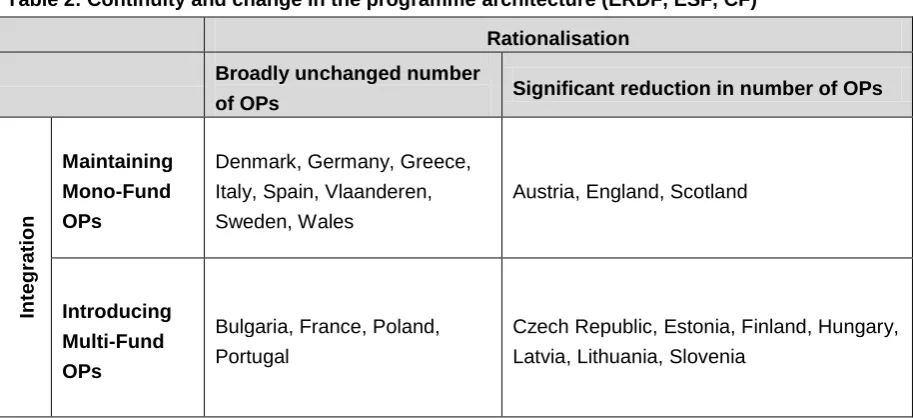
(14) Preparing for 2014-20: Programming, Concentration and Performance. 3. STRATEGIC PROGRAMMING 3.1. Partnership Agreements. 3.1.1 State-of-play Considerable progress has been made in the development of the Partnership Agreements (PAs) over the last six months. Extensive inter-governmental consultation and coordination within and across different levels of government has been taking place in all Member States, and public consultations have been organised or finalised. Ex-ante evaluations of the PA have been launched in some countries, where governments have chosen to do this at both PA and programme level (namely, Germany, Poland, Portugal, Spain, United Kingdom). The other option is to include a summary of the OP ex-ante evaluations in the programmes, which could affect the sequencing and timing of the PA drafting if, for instance, there are delays in the programme ex-ante evaluations. Progress with the drafting the PAs is variable, and redrafting has been necessary in many cases to take account of new Commission guidance. Full drafts of the PA have been developed in a number of countries (e.g. Austria, Denmark, Finland, Slovenia), most of which are planning to submit final versions to the Commission before or during August (Denmark, Germany, Slovenia), although there is uncertainty due to the lack of an EU inter-institutional agreement on the MFF and regulations. In most IQ-Net countries, the aim is to submit the PA to the Commission after the summer or late 2013 (e.g. Belgium, Czech Republic, Finland, France, Poland, Portugal, Spain, United Kingdom). Nevertheless, informal dialogue with the Commission on draft PAs and key sections is taking place bilaterally in all Member States. For its part, the Commission expects informal submission of 'complete' PAs by the end of June and formal submission during September. A summary of progress with the development of the PAs in each IQ-Net country is provided in Annex 1.. 3.1.1 Programme architecture There are elements of both continuity and change in the programme architecture for 2014-20 across IQ-Net countries and regions in terms of programme rationalisation (the number of programmes and associated balance between national and regional programmes) and integration (the use of mono-fund or multi-fund OPs) (see Error! Reference source not found.).. IQ-Net Thematic Paper 32(2). 8. European Policies Research Centre.
(15) Preparing for 2014-20: Programming, Concentration and Performance. Table 2: Continuity and change in the programme architecture (ERDF, ESF, CF) Rationalisation Broadly unchanged number. Integration. of OPs Maintaining. Denmark, Germany, Greece,. Mono-Fund. Italy, Spain, Vlaanderen,. OPs. Sweden, Wales. Introducing Multi-Fund OPs. Significant reduction in number of OPs. Austria, England, Scotland. Bulgaria, France, Poland,. Czech Republic, Estonia, Finland, Hungary,. Portugal. Latvia, Lithuania, Slovenia. A significant reduction in the number of programmes can be seen in Austria, the Czech Republic, England, Finland, Scotland and Slovenia. In Slovenia, the plan is to have a single national programme for 2014-20 to replace the three existing national programmes. In Finland, the current five programmes (four ERDF ROPs and one ESF NOP) will be reduced to just one national programme jointly funded by the ERDF and ESF. In Austria, there will be a joint Länder ERDF programme, with the current nine Land-level managing authorities continuing to play an important in programme delivery. The seven regional programmes in the Czech Republic will be replaced with one integrated regional programme managed by the Ministry for Regional Development. The proposed 2014-20 model in England includes four single-fund national OPs within a single National Growth Programme (currently there are ten sub-national ERDF OPs in England, and one for each of the other Funds). Rationalisation is also evident in Scotland, where the currently separate ERDF and ESF OPs for Lowlands and Uplands Scotland and the Highlands and Islands (four OPs in total) are likely to be replaced with one Scotland-wide OP per Fund. Despite the centralisation in the programme architecture in all three countries, managing authorities argue that a strong regional and/or local dimension will remain in terms of the design, management and implementation of the strategies. Elsewhere, the number of programmes is likely to remain broadly unchanged in most IQ-Net countries/regions (Denmark, France, Germany, Poland, Portugal, Spain - País Vasco), Vlaanderen, Wales), notwithstanding a reduction in the number of national programmes in some cases (Poland, Spain) or the introduction of integrated programmes combining ERDF and ESF (France, Greece, Poland, Portugal). The continuation of the existing and well-embedded regionalised structure of programmes in most of these countries militates against a substantial change in the number of programmes, especially in countries with federal/regionalised political systems where regional development competences are devolved; while in Denmark the existing programmes at national level are already restricted to just two NOPs for the ERDF and ESF, a structure which is considered to remain appropriate. As noted, national programmes will be eliminated or reduced in Germany and Spain respectively, but this will not have a major impact on the overall number of programmes which are predominantly regional programmes. Another distinctive trend for 2014-20 is the introduction of multi-fund programmes, responding to the new voluntary provisions in the draft Regulations (Czech Republic, Finland, France, Poland,. IQ-Net Thematic Paper 32(2). 9. European Policies Research Centre.
(16) Preparing for 2014-20: Programming, Concentration and Performance. Portugal, Slovenia). A single, jointly funded national programme is being developed in Slovenia and in Finland combining the ERDF and ESF (as well as the CF in Slovenia). In several other countries, integrated regional programmes are planned or being considered (France, Greece, Poland). In Poland, all 16 regional programmes will integrate the ERDF and ESF. France’s regions are keen to develop joint ERDF-ESF regional programmes, although a decision has not yet been formally taken. However, the current approach to a national Technical Assistance programme will be maintained, which will be used to provide technical support in a coordinated way. A final group envisage using the multi-funding option for both national and regional programmes (Czech Republic, Portugal). In Portugal, provisions have been made for multi-fund NOPs and ROPs for the mainland regions combining the ERDF and ESF (in ROPs) and potentially also the Cohesion Fund (NOPs). In the Czech Republic, a multi-fund ERDF-ESF approach is planned for the single ROP remaining (for Prague), and for the NOP Research, development and education. The main perceived benefits from the use of multi-fund programmes are more effective coordination and integration of territorial development investments (Finland, Greece, Poland, Slovenia). For the remaining IQ-Net countries/regions, the existing mono-fund approach will be continued (Austria, Denmark, Germany, Spain, United Kingdom, Vlaanderen). In Denmark, there is widespread satisfaction with the current architecture of separate ERDF and ESF programmes, and only the smallest of the six Regional Growth Fora, for the small Baltic island of Bornholm, has briefly suggested that a multi-fund OP could have administrative advantages. Multi-fund OPs will not be used in the United Kingdom, but the four England-wide single-fund OPs will contribute to an overarching national ‘Growth Programme’ and, at the local level, local economic partnerships (LEPs) will receive combined funding allocations made up of different Structural Funds. The main reasons for maintaining mono-fund OPs in Spain is that a shift in the programme architecture would entail additional administrative efforts and potential complications in financial management. Further, other instruments can be used within programmes – such as CLLD or ITIs – to advance the integration agenda (Spain, United Kingdom). There are also domestic political considerations that may explain the choice to maintain mono-fund programmes. In particular, the sectoral structure of public administration and the dispersal of regional policy management competences across ministries can lead to resistance against efforts to integrate programming across different Funds. In summary, therefore, four groups of countries/regions can be identified in terms of continuity or change (Error! Reference source not found.). The most significant changes in the programme rchitecture – including both a reduction in the number of OPs and the introduction of multi-fund programmes – is planned in Austria, the Czech Republic, Finland and Slovenia. This contrast with the more limited change in Denmark, Germany, Spain, Vlaanderen and Wales, where the number of programmes will remain largely unchanged and mono-fund programmes will be continued. In the final two groups, there are changes in one of the two dimensions of the programme architecture, either a significant reduction in the number of programmes (England, Scotland) or the use of multi-fund programmes (France, Poland and Portugal).. 3.1.2 Financial allocations and criteria Following agreement on the overall programme architecture, a key decision for the Member States is the distribution of funding across Funds, programmes and regions. Based on the European Council agreement on the budget, the Member States have global figures for the proposed financial allocation by Objective / Category of Region, but most have not taken decisions on the. IQ-Net Thematic Paper 32(2). 10. European Policies Research Centre.
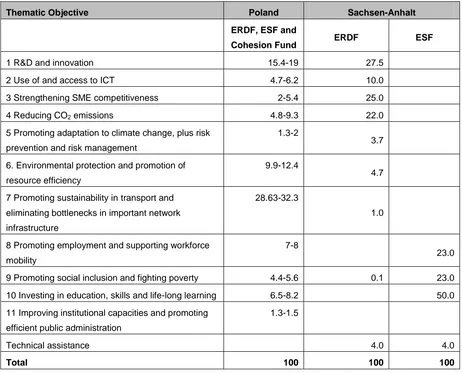
(17) Preparing for 2014-20: Programming, Concentration and Performance. distribution to regions or programmes (Denmark, France, Greece, Portugal, Spain). This is primarily due to the absence of final EU-level agreement on the budget with the European Parliament, which in many cases is necessary to kick-start internal negotiations on the distribution of funds. Further, none of the IQ-Net authorities at national or regional level had yet received Commission proposals for allocating funds between programmes. Nevertheless, programme authorities have made calculations on the possible allocation of funds between programmes and regions and in some cases indicative figures have been proposed internally (Czech Republic, Germany, Slovenia) or publicly (Poland, United Kingdom). Among IQ-Net countries, the most in-depth information available on current thinking and plans is on the cases of Austria, Poland and the United Kingdom (see Annex 2). A common goal informing the plans in these countries is to ensure an equitable distribution of funding across regions that minimises abrupt changes relative to the previous period. There are also concerns about potential differences in the goals of domestic authorities and the Commission on the allocation of funding, particularly given the political sensitivities involved in funding redistribution across different levels of government. In most other IQ-Net countries there is less clarity on the thinking underpinning future funding allocations to regions or programmes beyond the general criteria that are likely to inform the decisions. For instance, in the Czech Republic the key criteria will include: current programmes allocations; ability to use funds by particular programmes; absorption capacity; Europe 2020 parameters and the principle of thematic concentration. In Greece, national authorities suggest that the breakdown on regional/national programme allocations has not been decided but the key criteria for deciding on allocations will be: the change in funding; the thematic concentration and the allocation of resources between the investment priorities; and the horizontally implemented projects; and the integrated character of the interventions. Aside from the distribution of funding across regions and programmes, an important issue for 201420 is the division of funds between the ERDF and ESF. The Commission is seeking to increase the share of funding allocated to the ESF in the new period. Achieving this goal will, however, depend on the on-going negotiations with the European Parliament on the legislative package, implying uncertainty on how to proceed with the programming of the two Funds. In France, it is assumed that the current balance of ERDF/ESF (54/46) will be maintained. By contrast, the German authorities are working on the assumption that there will be a 50/50 division overall between the ERDF and ESF. This issue is particularly important in the current Convergence and Phasing-out regions, where overall division is currently 70/30 in favour of the ERDF but would shift to 60/40 in Transition Regions in 2014-20. There are concerns over the economic development implications of a strong shift in funding towards the ESF, particularly because it is difficult to see what more the ESF could fund in practice in a context of falling unemployment; and the macro-region of the eastern German Länder is experiencing some of the most significant demographic issues in the EU, which is generally seen to be due to a lack of appropriate job opportunities and thus to require a broad-based policy response that includes, not only investment in education/training and other ESF-type interventions, but also ERDF-type support (e.g. RTDI, infrastructure, business support) and also broader measures (e.g. to encourage appropriate immigration).. IQ-Net Thematic Paper 32(2). 11. European Policies Research Centre.
(18) Preparing for 2014-20: Programming, Concentration and Performance. 3.1.3 European Commission guidance and dialogue (i). Reactions to the templates. To support the drafting of the PAs, the Commission issued a draft template and guidelines on the PA content in January 2013. Modifications were made to take on board Member State comments and a second draft was presented and discussed in March 2013. The guidance is structured according to PA objectives, implementation issues and the integrated approach to territorial development (see Box 2), based on elements set out in Article 14 of the Common Provisions Regulation. The reception of this document has been mixed. On the positive side, a number of countries consider that the template and guidance provides a useful tool for drafting the PA (Denmark, Czech Republic, France, Slovenia, Spain, Vlaanderen). The guidance is considered to be clear (Slovenia, Vlaanderen) and in line with the Regulations (France). Accordingly, it helps to structure the drafting of the PA (Austria, Finland), and gives some certainty regarding Commission expectations (Austria). The main criticisms are four-fold. First, it is argued that the template and guidance encourages a formalistic approach and format to the PA based on disaggregated tables, which hinders the ability to present a narrative of the strategy for public communication and dialogue with stakeholders (Czech Republic, France, Portugal, Scotland). Along with complaints about the template being too long and making too many demands (Czech Republic, Germany), there is a concern that the approach is reinforcing a historical trend towards placing more priority on compliance tasks than on policy content (Austria). Several interviewees surmise that this IT-driven logic is designed to facilitate input of information on the EU’s SFC system and so that sections of the PAs can be transmitted to different parts of the Commission for inter-service ‘admissibility’ checks. The implication is that the Commission’s procedures for treating the PAs and OPs will be more formal and more clearly defined than in the past (Germany). Second and related, there are concerns about the Commission exceeding its decision-making competences. In particular, there is uncertainty about the implications of disagreements with the Commission over those parts of PAs that are not subject to a formal Commission decision and whether this would hold up approval of those parts that are subject to a Commission decision (Greece). Associated with this, there is disagreement about the role of the Commission’s Position Papers which, as noted earlier, are presented in the PA template as a compulsory requirement to take account in programming rather than guidance documents to facilitate the informal dialogue. Third, the process of distinguishing OP content from PA content has been challenging where the two documents are largely based on the same material. Wales notes that there is duplication with the OP template requirements, as the Welsh PA chapter will rely heavily on the content of the final OPs. In the case of Finland, there will be only one national programme for ERDF and ESF, which means that there will be significant overlaps in the Partnership Agreements and the programme. Fourth, there is a lack of clarity on the PA word limit or guidance on the length of different sections, which contrasts with the heavily prescriptive approach in the OP template guidance where strict limits are pre-defined in the template (Austria, Finland, Wales).. IQ-Net Thematic Paper 32(2). 12. European Policies Research Centre.
(19) Preparing for 2014-20: Programming, Concentration and Performance. Finally, technical clarifications are needed on methodological provisions in the template regarding climate change and additionality (Greece). There is uncertainty about the scope of thematic objectives that can be used for calculating the total indicative amount of EU support for the climate change objectives, and concerns that the associated Implementing Act for this methodology may not be approved before the submission of PAs. As regards additionality, inconsistency was noted between the guidance and the wording of the Regulations, namely that the verification of ex-ante additionality should only concern the less developed category of regions; the guidance should therefore clarify that transition regions are excluded from the additionality provisions.. IQ-Net Thematic Paper 32(2). 13. European Policies Research Centre.
(20) Preparing for 2014-20: Programming, Concentration and Performance. Box 2: Draft template and guidelines on the content of the Partnership Agreement. 1. Arrangements to ensure alignment with the Europe 2020 strategy as well as the fund specific missions pursuant to their treaty-based objectives 1.1 An analysis of disparities, development needs, and growth potentials with reference to the thematic objectives and the territorial challenges and taking account of the national reform programme and relevant country-specific and Council recommendations 1.2 A summary of the ex-ante evaluations of the programmes or key findings of the ex-ante evaluations of the Partnership Agreement 1.3 Selected thematic objectives, and for each of the selected thematic objectives a summary of the main results expected for each of the ESI Funds 1.4 The indicative allocation of support by the Union by thematic objective at national level for each of the ESI Funds, as well as the total indicative amount of support foreseen for climate change objectives 1.5 The application of horizontal principles and policy objectives for the implementation of the ESI Funds 1.6 The list of the programmes under the ERDF, the ESF, the Cohesion Fund, except those under the European territorial cooperation goal, and of the programmes of the EAFRD and the EMFF, with the respective indicative allocations by ESI Fund and by year 2. Arrangements to ensure effective implementation 2.1 The arrangements, in line with the institutional framework of the Member States, that ensure coordination between the ESI Funds and other Union and national funding instruments and with the EIB 2.2 The information required for ex-ante verification of compliance with the rules on additionality 2.3 A summary of the assessment of the fulfilment of applicable ex-ante conditionalities at national level and of the actions to be taken, the responsible bodies, and the timetable for their implementation, where ex-ante conditionalities are not fulfilled 2.4 The methodology and mechanism to ensure consistency in the functioning of the performance framework 2.5 An assessment of whether there is a need to reinforce the administrative capacity of the authorities involved in the management and control of the programmes and, where appropriate, of the beneficiaries, as well as, where necessary, a summary of the actions to be taken for this purpose. 2.6 A summary of the actions planned in the programmes, including an indicative timetable, to achieve a reduction in the administrative burden for beneficiaries 3. Description of the integrated approach to territorial development or a summary of the integrated approaches to territorial development based on the content of the programmes 3.1 Arrangements to ensure an integrated approach for the territorial development of specific subregional areas 4. Arrangements to ensure efficient implementation of the Partnership Agreement and programmes 4.1 An assessment of the existing systems for electronic data exchange, and a summary of the actions planned to gradually permit all exchanges of information between beneficiaries and authorities responsible for management and control of programmes to be carried out by electronic data exchange Source: European Commission (2013) Draft template and guidelines on the content of the partnership agreement version 2 – 26.02.2013, Ad hoc Expert meeting on draft templates and models for the content of the Partnership Agreement and programmes under cohesion policy, 1 March 2013, Brussels.. (ii). Reactions to the Commission Position Papers. The Commission has produced country Position Papers to provide a framework for dialogue with the Member States on the content of the 2014-20 Partnership Agreements and Programmes in advance. IQ-Net Thematic Paper 32(2). 14. European Policies Research Centre.
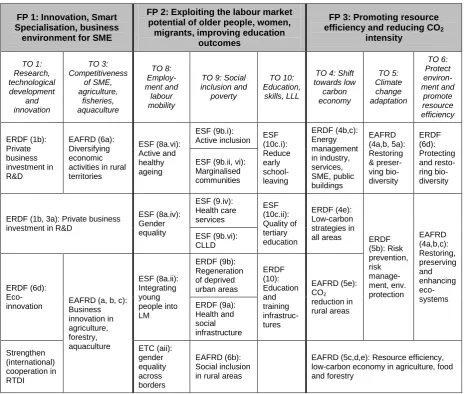
(21) Preparing for 2014-20: Programming, Concentration and Performance. of the formal negotiations. The Position Papers were sent to the Member States and discussed in bilateral meetings towards the end of 2012, followed by further informal meetings on key themes during 2013. The papers share a common structure and provide the Commission’s views on each country’s development challenges along with proposals for funding priorities, thematic and specific objectives, and governance recommendations. A comprehensive review of the content of the papers for all EU28 Member States has been published in another EPRC Report. 2 The main focus here is on the views of IQ-Net managing authorities. The reaction of most IQ-Net programme authorities to their respective Position Paper has generally been positive. A key perceived benefit for programming is the provision of more clarity on the European Commission’s position. Managing authorities welcome the insight gained into the Commission’s thinking and key priorities covering all the relevant Commission DGs (Poland, Portugal, United Kingdom). Confirming expectations about shared goals is another positive outcome of the exercise. In Denmark, the funding priorities have been useful in underpinning the aims of DBA and other national bodies to continue focussing programming in thematic areas. Vlaanderen staff note that the paper recognises the already strong links between current priorities and the Europe 2020 agenda – innovation and SME development are already priority axes in the current programme – and the territorial dimension, reflected in the strong contribution to urban development. In general, the German authorities support the Commission’s approach of endeavouring to link Structural Funds more strongly with EU-level strategies for economic growth and employment and also of concentrating funds on specific thematic objectives so that funds are not scattered ineffectively (‘watering can’ or Giesskanne approach). Similarly, the Commission’s emphasis on a smaller menu of options is welcomed in England and Scotland, as it is thought that this can deliver more impact than a more diffused approach. Although Austrian policy-makers had initially some concerns when the paper was presented in October 2012, ÖROK now considers the paper to be in line with their own views on the forthcoming programme period. The Position Papers are seen as providing a useful tool for programming in two main ways. First, the papers have helped to structure the on-going, informal dialogue and bilateral meetings between the Member States and Commission services on key themes (e.g. Greece, Portugal, Spain). Second, the papers can support the process of domestic debate and programming (Austria, Greece Spain). In Austria, a consultancy supporting the national authorities in the development the PA provided an in-depth analysis of the Commission Position Paper translating the core funding priorities and thematic/specific objectives into the relevant investment priorities of the draft ERDF, ESF and EAFRD Regulations to ensure coherence (see Error! Reference source not found.). Programme anagers in the Czech Republic welcomed the way the position paper shines a light on some of the less positive experiences of the current period to inform programming. Lastly, the Commission recommendations have been useful in justifying planned changes in regional programmes to beneficiaries, e.g. in the decision to not support the construction of local roads and sport infrastructure (Poland).. 2. Mendez C, Bachtler J and Granqvist K (2013) European Commission Perspectives on the 2014-2020 Partnership Agreements & Programmes: A Comparative Review of the Commission’s Position Papers, European Policy Research Paper, No. 84 , Glasgow. Available at: http://www.eprc.strath.ac.uk/eprc/documents/PDF_files/EPRP_84.pdf (accessed 6 June 2013).. IQ-Net Thematic Paper 32(2). 15. European Policies Research Centre.
(22) Preparing for 2014-20: Programming, Concentration and Performance. Table 3: The Austrian Country Position Paper – translated into CPR terms FP 1: Innovation, Smart Specialisation, business environment for SME TO 1: Research, technological development and innovation. TO 3: Competitiveness of SME, agriculture, fisheries, aquaculture. ERDF (1b): Private business investment in R&D. EAFRD (6a): Diversifying economic activities in rural territories. ERDF (1b, 3a): Private business investment in R&D. ERDF (6d): Ecoinnovation. Strengthen (international) cooperation in RTDI. EAFRD (a, b, c): Business innovation in agriculture, forestry, aquaculture. FP 2: Exploiting the labour market potential of older people, women, migrants, improving education outcomes TO 8: Employment and labour mobility. ESF (8a.vi): Active and healthy ageing. ESF (8a.iv): Gender equality. ESF (8a.ii): Integrating young people into LM. ETC (aii): gender equality across borders. TO 9: Social inclusion and poverty. ESF (9b.i): Active inclusion ESF (9b.ii, vi): Marginalised communities ESF (9.iv): Health care services ESF (9b.vi): CLLD ERDF (9b): Regeneration of deprived urban areas ERDF (9a): Health and social infrastructure EAFRD (6b): Social inclusion in rural areas. FP 3: Promoting resource efficiency and reducing CO2 intensity. TO 10: Education, skills, LLL. TO 4: Shift towards low carbon economy. TO 5: Climate change adaptation. TO 6: Protect environment and promote resource efficiency. ESF (10c.i): Reduce early schoolleaving. ERDF (4b,c): Energy management in industry, services, SME, public buildings. EAFRD (4a,b, 5a): Restoring & preserving biodiversity. ERDF (6d): Protecting and restoring biodiversity. ESF (10c.ii): Quality of tertiary education. ERDF (4e): Low-carbon strategies in all areas. ERDF (10): Education and training infrastructures. EAFRD (5e): CO2 reduction in rural areas. ERDF (5b): Risk prevention, risk management, env. protection. EAFRD (4a,b,c): Restoring, preserving and enhancing ecosystems. EAFRD (5c,d,e): Resource efficiency, low-carbon economy in agriculture, food and forestry. Source: Adapted by EPRC from ÖROK (2013) STRAT.AT 2020, Prozess & inhaltliche Bearbeitung, Informeller Austausch mit der Europäischen Kommission, 9 April 2013, p. 8.. Several drawbacks, tensions or inconsistencies were also highlighted by IQ-Net authorities. First, there is uncertainty and disagreement about the legal status of the Position Papers. Commission statements and guidance have given the impression that the papers are binding instruments that must be fully taken into account, but this view has been rejected by a number of Member States that see the papers as unbinding guidance, not least because there is no reference to the document in the draft Regulations. The Commission has countered that the purpose of the papers is to open a dialogue and that even if the paper is not referenced in the Regulations it presents the Commission’s position, which must be taken into account in the programming of the Funds. The administrative workload associated with reviewing and addressing the recommendations is a further challenge (Germany, Spain). Spain’s national authorities have identified around 100 specific objectives/recommendations in the paper and while the intention is to take into account as many as possible a considerable amount of administrative coordination would be required. This is compounded by the need to take account of other EU-level guidance documents, programming templates as well as the National Reform Programmes (Czech Republic, Germany). Moreover, there is a degree of uncertainty in working with guidance documents that are developed in parallel to the informal dialogue with the Member States and that contain elements that depend on the on-going negotiations on the legislative framework (Portugal).. IQ-Net Thematic Paper 32(2). 16. European Policies Research Centre.
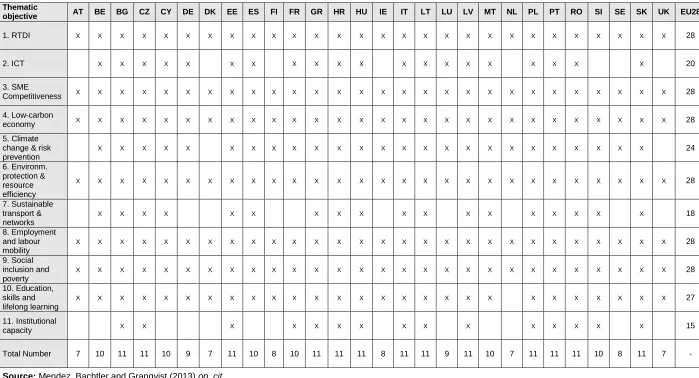
(23) Preparing for 2014-20: Programming, Concentration and Performance. Turning now to the content of the Position Papers, the main concerns are about the Commission’s analysis of challenges, proposed objectives and targets, and governance arrangements. . Development challenges. There is an issue of alignment between the limited number of (three to four) challenges and the more extensive list of (eight to 11) thematic objectives. In the paper for Spain, the business/SME theme includes elements of R&I, ICT and transport. This is not considered to be an appropriate structure for the programming of the Funds. Similarly, the United Kingdom notes that the three key challenges set out in the Position Paper are very broad and some key contributors to growth in some areas are not mentioned (e.g. infrastructure) or are not given enough prominence (e.g. intermediate and higher level skills).. . Territorial dimension. A consequence of the thematic organisation of the papers is a lack of sensitivity to territorial specificities or synergies across different domains (Portugal, Spain, United Kingdom). For instance, the papers do not sufficiently recognise that the barriers to growth differ across regions, and that policy preferences and local solutions will accordingly differ across countries (Bizkaia, United Kingdom).. . Concentration. While the broad approach taken by the Commission is welcomed in many countries, this does not sit easily with concentration requirements or recognise domestic policy efforts. According to Niederösterreich, the breadth of thematic and specific objectives proposed creates demand amongst a wider range of actors to benefit from funding than is currently the case. United Kingdom authorities note that if everything that the Commission wants to address is included in the programmes, they would be doing ‘everything’. Not all of the proposed activities will be addressed as they are not all considered to be a priority for Structural Funds (for example, in England), especially because the Structural Funds represent a modest proportion of domestic expenditure and other channels of funding are available to address the issues. By contrast, German managing authorities note that the Commission is encouraging concentration in the Partnership Agreement (not simply within programmes), which is challenging in a large and economically diverse country.. . Europe 2020 targets. The Position Papers list the national Europe 2020 targets included in National Reform programmes, omitting those targets that have not been signed up to by some Member States, as is the case with the United Kingdom position paper (i.e. targets relating to the employment rate, R&D expenditure levels, early school leavers and those engaging in tertiary education). The United Kingdom argues that the Commission must respect this in the negotiation of the Partnership Agreement and programmes. According to Greece, revisions of the targets are needed (such as two percent of GDP expenditure on R&D) to reflect the latest National Reforms Programme targets (now at a lower level of 0.67 percent of GDP) which are more consistent with current economic realities and trends.. . Thematic Objectives. The Commission has identified what it considers to be the most important Thematic Objectives for each Member State, illustrated in Table 4. The main concern among IQ-Net authorities is ensuring that the Thematic Objectives are sensitive to Member State needs and challenges. This requires a degree of flexibility with respect to national or regional objectives that may not be included or given sufficient emphasis in the Position Papers. For instance, Greece would like greater emphasis on sectors with. IQ-Net Thematic Paper 32(2). 17. European Policies Research Centre.
(24) Preparing for 2014-20: Programming, Concentration and Performance. competitive advantage such as tourism and culture, while in Germany some of the current Convergence regions consider that there is still a need for other types of intervention that are not listed within the 11 Thematic Objectives. Concerns relating to specific thematic or crosscutting objectives include: o. Information and Communication Technology. There is a question of funding ICT infrastructures in C&E regions, where the Commission position (against) does not seem to be in line with recent negotiations at the EU level (e.g. in the European Parliament). The Scottish managing authority finds that the Commission’s recommendations lack regional specificity; e.g. what is stated for the United Kingdom as a whole with regards to ICT provision does not hold for parts of Scotland such as the Highlands and Islands.. o. Business competitiveness. The German authorities argued strongly during negotiations on the text of the Structural Funds regulations for changes relating to business aid (i.e. the inclusion of aid for large firms, especially for projects relating to R&D and energy efficiency) and business-oriented infrastructure. Even though these interventions are in principle eligible, it may not be possible to allocate much funding to these types of project due to the Commission’s demand that funding be concentrated strongly on the themes with threshold values and because of the approach taken in the Position Paper.. o. Low-carbon economy. While there is a requirement to spend at least 20 percent of ERDF through the low-carbon Thematic Objective, the United Kingdom Position Paper only encourages investments in sustainable transport under this heading. The Paper suggests investments in renewable energy, which could also contribute to meeting this thematic concentration goal, should sit under the resource efficiency Thematic Objective. This will affect programme planning and needs clarification. Similarly, Greek authorities argue for a broader description of actions under the low-carbon economy theme.. o. Accessibility. Contrary to the Commission’s view, Finland is keen on including a regional accessibility priority in the programme, albeit limited to Northern and Eastern Finland where population is sparse and distances are long.. o. Transport. In Poland, the construction of regional roads will continue although the Commission would prefer a focus on railways. In the opinion of the ERDF unit, railways should be supported by central government (although the new ROP will also support railway investment through the purchase of rolling stock through a company owned by the regional government). According to Greece, the Position Paper is more restrictive than the relevant guidelines on EU transport policy. While they agree with the Commission’s view on ports and cruise ships, there may be tensions with new State aids rules for infrastructures and the new Regional Aid Map.. o. Social cohesion. The importance given to the different ESI Funds varies and, in some cases, the ESF themes are considered to be overrepresented (Austria).. o. Macro-regional cooperation. Some Member States consider that there is an overemphasis on macro-regional strategies, such as the Baltic Strategy (Denmark). In a similar vein, the United Kingdom authorities note that coverage of the Atlantic Strategy in. IQ-Net Thematic Paper 32(2). 18. European Policies Research Centre.
(25) Preparing for 2014-20: Programming, Concentration and Performance. the United Kingdom Partnership Agreement should be proportionate to its contribution to domestic economic strategies. o. Ageing. Finland agrees with the emphasis placed on the ageing theme in the position paper, but views this as a multifaceted, cross-cutting challenge that must be tackled with a range of measures including those targeted at increasing skills in the workforce and youth unemployment.. The Position Papers also review the future governance arrangements, including proposals relating to: ex-ante conditionality; the programme architecture; coordination arrangements; horizontal principles; partnership; financial management, audit and control; administrative capacity; and monitoring and evaluation.3 The main concerns and issues raised by IQ-Net authorities are as follows. . Conditionality. The Commission has included a range of ‘general considerations to improve governance and delivery’ under the Thematic Objectives proposed in the papers, which are considered to exceed its competences and provide additional conditions on funding. For example, the United Kingdom authorities note that the recommendations relating to access to publicly funded training and synergies with the Youth on the Move initiative, should not constitute preconditions for approval of the Partnership Agreement and programmes. Similarly, the Greek authorities note that the ‘general considerations’ to ‘improve governance and delivery’ should not provide additional conditions that are not part of the agreed Regulation Annex on conditionalities.. . Number of OPs. The Commission has asked for a reduction in the number of OPs in Portugal and Spain, but has not identified which OPs. It is difficult to significantly reduce the number of OPs where there is a regionalised ERDF architecture, and the Position Papers do not explicitly encourage the integration of regional ERDF and ESF OPs. Moreover, the logic or rationale underpinning the Commission’s proposals are not provided in the Position Paper.. . Regionalisation of OPs. As noted, the Commission recommends maintaining ESF OPs at the national level for many countries. However, regional councils in France would have preferred to see regionalisation of ESF in its entirety and believe that there was some reticence on the Commission’s side to engage with new actors at the regional level.. . Number of Intermediate Bodies. The Commission has encouraged Finland to reduce the number of intermediate bodies and streamline administration. However, the number of intermediate bodies is not seen as being a problem, rather they ensure efficient decisionmaking and better guidance for beneficiaries. Nevertheless, the managing authority has taken steps to align the administrative processes (e.g. payment process) of different bodies.. . Project selection. The Commission has recommended more use of project calls in France, but the national position on this is not clear yet. Opinions are divided as to the usefulness of the calls (which might exclude certain actors) and whether it is better to use both, closed and open (au fil de l’eau) calls.. 3. For a detailed review, see Mendez et al. (2013) op. cit.. IQ-Net Thematic Paper 32(2). 19. European Policies Research Centre.
(26) Preparing for 2014-20: Programming, Concentration and Performance. Table 4: EU28 Thematic objectives in the Commission Position Papers Thematic objective 1. RTDI. AT. BE. BG. CZ. CY. DE. DK. EE. ES. FI. FR. GR. HR. HU. IE. IT. LT. LU. LV. MT. NL. PL. PT. RO. SI. SE. SK. UK. EU28. X. X. X. X. X. X. X. X. X. X. X. X. X. X. X. X. X. X. X. X. X. X. X. X. X. X. X. X. 28. X. X. X. X. X. X. X. X. X. X. X. X. X. X. X. X. X. X. X. 2. ICT. 20. X. 3. SME Competitiveness. X. X. X. X. X. X. X. X. X. X. X. X. X. X. X. X. X. X. X. X. X. X. X. X. X. X. X. X. 28. 4. Low-carbon economy. X. X. X. X. X. X. X. X. X. X. X. X. X. X. X. X. X. X. X. X. X. X. X. X. X. X. X. X. 28. X. X. X. X. X. X. X. X. X. X. X. X. X. X. X. X. X. X. X. X. X. X. X. X. X. X. X. X. X. X. X. X. X. X. X. X. X. X. X. X. X. X. X. X. X. X. X. X. X. X. X. X. X. X. X. X. X. X. X. X. X. X. X. X. X. X. X. X. X. X. X. X. X. X. X. X. X. X. X. X. X. X. X. X. X. X. X. X. X. X. X. X. X. X. X. 28. X. X. X. X. X. X. X. X. X. X. X. X. X. X. X. X. X. X. X. X. X. X. X. X. X. X. X. X. 28. X. X. X. X. X. X. X. X. X. X. X. X. X. X. X. X. X. X. X. X. X. X. X. X. X. X. X. 27. X. X. X. X. X. X. X. X. X. X. X. X. 11. 11. 10. 11. 11. 11. 11. 11. 11. 11. 11. 10. 5. Climate change & risk prevention 6. Environm. protection & resource efficiency 7. Sustainable transport & networks 8. Employment and labour mobility 9. Social inclusion and poverty 10. Education, skills and lifelong learning. X. 11. Institutional capacity Total Number. 7. 10. X. X. 10. 9. 7. 11. 10. 8. 8. X. 9. 11. 10. 7. 24. X. 18. X. 15. X. 8. 11. 28. 7. -. Source: Mendez, Bachtler and Granqvist (2013) op. cit.. IQ-Net Thematic Paper 32(2). 20. European Policies Research Centre.
(27) Preparing for 2014-20: Programming, Concentration and Performance. 3.1.4 Added value of Partnership Agreements: Strategic direction and coordination A central goal underpinning the regulatory design innovations to the new Partnership Agreements for 2014-20 is to support a greater strategic orientation to programming. Although it is still too early to provide a full assessment, some IQ-Net managing authorities consider that this goal is being achieved, partly because of the increased importance of the PA as a reference document. For instance, in Poland the key programming principles embodied in the PA will be important for ensuring thematic concentration in the programmes and driving the results-orientation linking the programmes more directly to specific indicators. The United Kingdom Partnership Agreement will be a more concrete document than the NSRF. It is intended to be a more practical, useful ‘business plan’ for the United Kingdom than the previous NSRF. The Greek national authorities stress the role of the PA in providing strategic guidelines for the drafting of the OPs, although this is not perceived to be a major change compared to the NSRF. Another strategic function of the PA is to build consensus around a shared strategy. National programme administrators in Denmark and France highlight the role of the PA in promoting shared ownership between different actors at different levels based on close cooperation in the development of the document. In Germany, the approach of developing the PA is bottom-up with repeated iteration between the federal and Land levels, as was the case with the NSRF. In the case of the United Kingdom, the PA will be more locally informed than the current NSRF, not least because of the current domestic importance of the local agenda. Nevertheless, various IQ-Net authorities argue that the key driver of strategic shifts in the thematic content of the PA and programmes are the new thematic concentration obligations (Czech Republic, Germany, Vlaanderen). In this sense, it is not the PA per se that is driving strategic concentration and direction but rather the pre-defined regulatory objectives on spending priorities at EU level. While thematic concentration is generally welcomed, in the view of one managing authority this leaves less room for strategic creativity and may encourage formalistic cross-referencing of EU strategic documents rather than genuine strategic thinking. A second key goal of the PA is to encourage a more integrated approach to programming across the ESI Funds. The expectations are largely positive in this respect (Finland, Greece, Portugal, Slovenia, Spain, United Kingdom). PA consultations have often sought feedback on this issue to support the development of the strategy. At the very least, the definition of the scope of intervention across all ESI Funds in a single national document is likely to improve options to make use of combinations of funding and to allow better information exchange about activities. Arguably more important is the new option to use multi-fund programmes combining the ERDF, ESF and CF, which is being taken up in several countries (see next section). Second, the priority to territorial instruments represents a further opportunity to develop a more integrated approach, especially across CF, ERDF and ESF (Poland). There are other informal arrangements for encouraging integration that are not tied to specific regulatory requirements. For instance, in Germany there seem to be stronger efforts at Land level to find practical means of improving coordination between the four different EU Funds in 2014-20 (ERDF, ESF, EAFRD, EMFF) compared to 2007-13, e.g. via more cooperation between managing authorities, joint ex-ante evaluations, domestic strategic political agreements covering all four Funds,. IQ-Net Thematic Paper 32(2). 21. European Policies Research Centre.
Figure


+4

Related documents