Rochester Institute of Technology
RIT Scholar Works
Theses
Thesis/Dissertation Collections
5-1-2003
Simulated selves
Erika Gentry
Follow this and additional works at:
http://scholarworks.rit.edu/theses
This Thesis is brought to you for free and open access by the Thesis/Dissertation Collections at RIT Scholar Works. It has been accepted for inclusion in Theses by an authorized administrator of RIT Scholar Works. For more information, please [email protected].
Recommended Citation
SIIM\UIILAlilEID SJEILVJES
Erika Y. Gentry
Graduate Thesis
Master of Fine Arts
School of Photographic Arts and Sciences
Imaging Arts and Sciences
Rochester Institute of Technology
Thesis
Board
Members
Angela Kelly, Thesis Chair, Associate Professor,
School of Photographic Arts and Sciences
Patricia Russotti, Associate Professor, School of Print Media
SIIM\UIILAlilEID SIEILVIES
Erika Y. Gentry
A thesis submitted in partial fulfillment of the requirements for the degree of
Master of Fine Arts, Imaging Arts and Sciences.
Rochester Institute of Technology
2003
Approved
by:
Angela Kelly, Associate Professor, School of Photographic Arts and Sciences
sl'~/03
date
Patricia Russotti, Associate Professor, School of Print Media
Stephen Jacobs, Associate Professor, Information Technology
SIIM\UIILAlilEID SIEILVIES
I, Erika Y. Gentry, (author) hereby grant permission to Wallace
Memorial Library of the Rochester Institute of Technology to
reproduce my Thesis in whole or in part. Any reproduction will not
be for commercial use or profit.
ABSTRACT
SIMULATED
SELVES
Erika Y.
Gentry
In
anincreasingly
virtual world, newidentities
that existonly
in cyberspace are
being
created.Historically
rooted,role-playing
has been
popularlong
before
Shakespeare,
andstarting
in
theearly
1990s,
has
movedinto
the computer.
Now
more than ever,it
serves as aform
ofentertainment, escape andself-exploration to
hundreds
ofthousands
of people worldwide.In
interactive,
text-based computer games that aredesigned
to representfantasy
worlds, playersbecome
authors notonly
oftextbut
ofthemselves,
constructing
new selves through socialinteraction. On
aMUD (Multi
UserDomain)
game, places and selves arecompletely
constructed through text.Thus,
theshort can
be
tall,
the plainbeautiful
and theshy
extroverted."The anonymity
ofa
MUD
oneis known
on theMUD only
by
the name ofone's character or char acter's gives people the chance to express multiple and often unexploredaspects ofthe selfto
play
with theiridentity
and totry
out new ones. InMUDs
one canbe
many."(Turkle,
10)
Simulted
Selves brings
selected characters outof the computer and onto the printed canvas,
further mixing
fantasy
andreality
through artisticinterpretation.
Standing
between theboundary
of real and virtual, new cultures of simulations become
active. Throughinhabiting
the virtual and the real simultaneously,questions of how to achieve a
better
sense of ourselvesby
accessing
our perhaps
repressed multipleidentities is
evident.And
the possible risk oflosing
reality
in
the processis
undeniable. Howevercomplex the individual outcome,life
on the screen
is for
many, more exciting,compelling
andfulfilling
than real life.TABLE
OF
CONTENTS
Chapter
1
Introduction:
Process,
Materials
andConstructed Histories
Chapter
2
MUD
History
andMechanics
Chapter
3
The Players
Chapter 4
Real Life Lessons
Chapter 5
Avatars
andOnline Identities
ofthe
Future
"As
more people spend more timein
these virtual spaces, some go sofar
as to challenge theidea
ofgiving any priority
to reallife
atall."
Chapter One: Introduction
Process,
Materials
andConstructed Histories
"Inthe real-timecommunities ofcyberspace, we are dwellersonthethreshold between the
real andvirtual, unsure of our
footing,
inventing
ourselves as we goalong."
(Turkle,
10)
The
visualthesis
workSimulated
Selves is inspired
by
the research ofMIT Professor
Sherry
Turkle
and the postmodern philosophies exploredin
herbook Life
on theScreen:
Identity
in the Age
oftheInternet.
Thus,
in my discus
sion ofthe project,
I
will refertoher book
as the predominate andunderlying
impetus for
my
own research anddiscovery
into
online virtual personas.As
an artist,I rely
on visual clues whichhelp
mediscern how
to act, react and process
ideas.
While
living
in
Rochester,
New
York,
three thousandmiles
from
my home
town ofPortland,
Oregon,
I became isolated
andimmersed
in digital
culture.At The Rochester Institute
ofTechnology,
a college emphasizing
technology,
I
came todiscover
andidentify
withTurkle's
studies ofdigital
immersion
and role-play.My
unfolding fascination
withher
researchinspired
meto visualize the
detailed
textdescriptions
offantasy
online persona and meettheactual players.
By
bringing
MUD
characters out of cyberspace and ontodigitally
produced canvases,
I
transform the characters'textual descriptions ofthem
selves
into
visualdocuments
by
way
ofmy
owninterpretation.
By
creating
"cyber
portraits"of selected personalities and
conducting
videointerviews
ofreal-life players,
I
seekfurther understanding
and exploration ofthe possibilitiesinherent to exploring
our multiple and simulated selves.In
addition, theseimages
make an effort tolegitimize
and spatializeidentities
what would otherportraits of personalities
that
only
existin
thetemporary
facility
of an online chat room.The
charactersthemselves
occupy
an enormous amount oftime
andemotional
energy from
their
developers
and existfor
weeks, months and evenyears.
They
are created andbrought
tolife.
They
love,
marry, struggle,disagree
and overcometheir
own uniqueforms
of civildisobedience.
They
live
anddie.
They
arelegitimate
extensions oftheir real-life owners, although offer alife
of their own.They
are separate yetcoexisting
identities
living
in
a self-created virtual world
inspired
by
personal experience andfantasy. Victor Burgin
suggeststhat
adefinition
ofidentity
is indeed
onethat occupiesspace, time andbelongs
to a personal narrative.
"Just
as spatializationis
anecessary
condition ofidenti
ty,
sois temporalization. There is
noidentity
national, cultural orindividual
which
does
notimply
both
a place andtime.There is
no sense ofidentity
whichdoes
notbelong
to a narrativein
personal memory, and common history."(28)
Similar
tohistorically
rooted portraiture,I
choose to mark these postmodern personas
in
space andtime
by
recording
their representationusing
light,
camera, computer and canvas.I
startedSimulated Selves
in1998
with thefinal
thesis showpremiering
at
The Rochester Institute
ofTechnology
in November 1999. Over
thelast
threeyears, the work
has been
shownin
various venuesin
California,
Kentucky
andNew York. The
display
contains seven cyber portraits represented as20"x20"
Iris
prints on stretched canvas, aninteractive
cd-rom with video and soundinstallation
(enclosed)
and several text panelsshowing
samples ofactualrole-playing logs
and email communication.During
my
defense,
I demonstrated
how tolog
into
and navigate aMUD
by
choosing
todemonstrate
one ofthe oldestgames,
"Lambda
MOO"in
real timefor
thedefense
audience.I
chosethe material canvasfor
the digital printsbecause
ofits
referenceto portrait painting.
We know
that the act ofrecording
personsin
history
anddocumentation
viapainting dates back
hundreds ofyears.Thus,
by
using
canvas as reference,
I
suggest that ourself-fragmented cyberidentities
arejust
asportraits ofthe
artistically
transformed,
real andimaginary
beings
created beforethem. In
addition,by
creating
a collaborated physical representationfrom
the virtual,I
seek to exploremy
place as visual artist and storytellerby
entering
intothe world of cyber culture and
introducing
onlineidentities
to the real world.Using
motion as akey
visual element createdby
camera exposures anddigital
imaging,
I
choose todocument
the charactershow
they
seem tobe,
how I
see them and their psychology; notjust
as a two-dimensionaldepiction,
but
one thatincludes
personality.Motion
also acts as representation of multiplicity
andillusion. In
some portraits, outside models are chosen to represent char acterdescriptions,
while in others the authors themselves(Cleo,
Diablerie)
are photographed as theircharacter.Objects,
symbols and photographic landscapes were
carefully
made and then scanned anddigitally
collaged to enhancethe
interpretation.
The
textincluded in
theimagery
is
textwrittenin
real timerole-playing
sessionsby
thedepicted
characterbut is
notnecessarily legible.
Rather,
it
acts to enhance the anchorthat makes the project a collaboration and serves as a reminder that textis
integral to the portrait's existence.Before the
initial
photographs ofthe subjects weretaken,
characters were solicitedby
sending
emails to virtual communities as well asposting flyers
in
the RITcomputerlab
areas.As
volunteers who metmy
interests contactedme,
I
sentthem identical questionnaires.I interviewed
local participants in per son and theresulting
edited video interviews exist on the enclosed cd-rom.I
found
that participants whilediverse,
were all tech-saavy. Additional interest inparticipation passed
by
electronic word of mouth to national and internationalplayers.
Thus,
participationI
suspected wouldinitially
remain confined to the Rochester area spread to asfar away
as Germany. As a result, audio readings of questionnaires existon the cd-romin
lieu ofvideo interviewsfor
some players outside ofRochester,
New York.move us still"
Kevin
Robins
writes,The notion of techno-cultural revolution has been widelyacceptedand cele brated
by
cultural critics and practitioners, and such ready acceptance has tended toinhibitcriticalengagementwith post-photography.There isa sense that photography was constrainedby
its inherent automatism and realism, thatisto say,by
its essentially passive naturethat theimagination ofphotog raphers was restricted becausethey
could aspire to be no more than the mere recorders of reality. ...the enhanced ability to process and manipulateimageswill givethepost photographer greater
'control',
whilethe capacitytogenerate
(virtual)
images 'real world', will offerthem greater'freedom' tothe post-photographic imagination. What is supposed to be superior aboutthe post-photographicfuture becomesphotographic past.(29)
My
portraits, Ibelieve,
areappropriately
executed as thevery
world I am representing is
one notbased
in reality,but in
virtual reality.It is
importanthowever,
to noteRobins'
comment
regarding
a lack of critical engagement as we grapplefor
artistic precedence and theories todiscuss
digital photographic media.Other
criticshave
seen the emergence ofimage
technology
as one of a numberofhistorical
momentsthatidentify
newforms
of social and cultural practice, marking
thebeginning
of a new era of artistic exploration, muchlike
virtual personali ties themselves. I see anuncanny
parallel between what Robins callsthe'death
ofphotography'
and the birth of online personas.
He
says:..the death of photography, an image revolution, the birth of a postmodern
visual culture: there isthesense ofa clearhistorical
trajectory
oftheimage. Thesignificance andimplicationsofthe'image revolution'have already been
discursively
fixedand contained.Thecertainties ofthephotographicerahave been deconstructed,and we are now ready, itseems, tocometo termswith thefragility
of ontological distinctions betweenimaginary
and real.(32)
The histories I create on canvas
may
also be compared to VictorBurgin's
discussion ofthe
history
ofphotography
and newdigital
technologies wherehe
highlights ananalogy
between the computerscreen and psychic space.He
states:What differs from
the above quote,is that in
my
project the subjectis
itself digital
and surreal tobegin
with,inputted
and processedusing
representational scanned subjects and then outputted again to tangible and real canvas.
My
process ofcreating in both the
physical anddigital
spaceis,
in
itself,
a significant tribute
tothe
overall theme ofSimulated Selves. The
blurring
offantasy
and
reality
and the ultimateintermingling
ofin
reallife
(IRL)
and virtualin
char acter(IC)
experiences are unique to each project participant."The Internet has become
a significant sociallaboratory
for
experimenting
with
the
constructions and reconstructions of selfthat characterize postmodernlife.
In its
virtual reality, we selffashion
and self-create.What kinds
of personaedo
we make?Do
our real-life selveslearn
lessons from
our virtual personae?Are
these virtual personaefragments
of a coherent real-life personality?(Turkle,
180)
These
questionsform
the core ofthis thesis and canbe
addressedby
first
Chapter Two: MUD
History
and
Mechanics
A rapidly expanding system of networks, collectively known as the
Internet,
links millions of people in new spaces that are changingthe waywethink,
the nature of oursexuality, theform of ourcommunities, our very identities...most recently the computer has become evenmore than toll and mirror: We are able to step through the
looking
glass. We are
learning
to live in virtual worlds..we may find ourselvesalone as we navigate virtual oceans, unravel virtual mysteries, and
engineer virtual skyscrapers, but
increasingly,
when we step through thelooking
glass, other people are there as well(Turkle,
9)
According
to the MUD enthusiast website'www.mudconnect.com',
aMUD is
defined as a multi userdomain,
multi userdungeon,
or multi userdimension,
which refersto the samething,
an environment where multiple people
may be logged
on andinteracting
with one anotherin
a text-based virtualenvironment.
That
is,
typed messages appear on the screens of other playerswho are
logged in
the same virtual"room"
or space
in
real time.The first MUD
was created
by Roy
Trubshaw
andRichard Bartle
atEssex
University,
UK in
1979 using
assemblercoding language
that ran overtheuniversity
network.This MUD
was afantasy
gamelike Dungeons
andDragons. In
1989,
a graduatestudent named
James Aspnes
atCarnegie Mellon
University
decided
to seewhatwould
happen if
you tookaway
the monsters and the magic swords andinstead let
people extend the virtual world thisbecame
thebasis for
aMUD.
People's
mainactivity
wentfrom
trying
to conquerthe virtual world tobuilding
it
collaboratively.
(Bruckman,
45)
There
are nowliterally
thousands ofMUDs
around theworld with complex geographical webs and areas to explore.
All
you need tojoin in is
a telnetprogram and an
internet
connection.Other slightly different
text-based gamesforth. Each
gameusually has
adifferent
programming language
associated withit
and varies thematically.To
keep
it
simple,I
willdiscuss
and refertothese
games as
MUDs.
A
text-based adventure game, the original versionmerely
allowed a user(player)
to
move aboutin
a virtuallocation.
Today
however,
contemporary
MUDs have
multiplelocations,
objects and activities.In
aMUD,
noone
knows
anything
aboutthe other players, except whatthey
are told.Even
by
today's standards,
MUDs
are considered crude compared tothe
more sophisticated
Internet
graphical games(Quake,
Duke Nuke
Em)
that the computerindustry
continues to generate.Why
have
these text-basedrole-playing
experiences survivedbeyond
theirgraphical successors such as
Quake?
According
to their users, thelack
ofprogrammed visuals
is key. The ability
to use one'simagination
todiscern
text(much like reading
abook)
is
highly
satisfying.For
example, often when weread a
book
we are allowedto
visualize our ownbackdrop. Later
wemay
see a movie versionbased
on adirector's
visualinterpretation
andmay be disappoint
ed(or not)
whencomparing it
to our own visual experience ofthebook.
Another
parallel canbe drawn between
the survival of radio verses the onset of television.Both
media offerthe public unique choicesin
audience experienceand
both
are successful.On
aMUD,
solving
puzzles,discovering
andinventing
newgeography,falling
in
virtuallove
andexploring
multiple aspects of oursimulated selves alsoprove to
be
part ofthe online allure.One
playersays,Unlike 'normal' computergaming, ifyou die you'redead and you have to start over again. Youcan'tjust hitreload. It'sall about escapism.Attheend of a
long day
atthegrindstoneit'sgreatto beableto takeon the personas of an assassin, a wizard, a warrior or a thiefand enter a fictionalworld of swords and sorcery. MUD games arefree to play, often run from university
or personal servers and are operatedby
enthusiasts. The majority of MUDsareconstantlyevolving.Andsincethegames aretext-only, it iseas ier to add new areas to a game and build entire new domains filled with mystical characters. Normal computer games are boxed and sold, but a MUDwith an active administration team never sleeps. This isn't a case ofMost MUDs
arethematic,
centering
around universesbuilt
from
scratchor
inspired
by
those
previously
developed in
popularculture, such asStar
Wars,
Battlestar
Galactica;
and somefrom
novels, such asthe
post-apocalypticdrag
on
themes
by
Anne McCaffrey. Others
use geographical reference, such as theone called
Twilights Edge
playedby
Lyssa
asher
characterLara Guest.
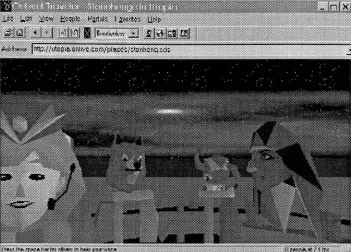
(Figure
1)
In this
game, playershave taken the
smallbeach
town ofNewport,
Oregon
and
turned
its map into
a post-apocalyptic adventure town where vampires ruleand mortals are prey.
The
maindifference from
oneMUD
to the nextis
thedegree
to which the worldhas already been
created orfounded. It may be
anexisting
story
adapted to the online medium or an entire universe made to completely
evolve as the users participate.In
theMUD
world, thereis
a core governmentthat
helps
'referee'the game
by
sorting
outthe seriousfrom
theinap
propriate,
deciding
who gets points anddesigning
major plots which occurin
themain theme ofthe
MUD. In
addition, these administrative members arein
charge of
filling
in for
'NPCs' ornonplaying
characters(e.g.,
thebartender,
chauffeur).
On
aMUD,
hundreds
of peoplemay be simultaneously logged
onand
interacting
in
the same virtual space even though players arephysically
located in different
parts ofthe world.Rooms
or spaces aredescribed in
textformat
and mostinteractive
spaces simulate some aspectof real
life. You may
choose to moveleft,
right,fast,
slow, engagein
private conversation, yell, whisper, etcetera.Marriages,
concerts, artshows, wars and other events all take place on a MUD with the
participants also
"bearing
witness"
to the events.
Most
significantly, the real selfis
'paused,'allowing
playersto interact in
a post modern context,mingling fanta
sy
personasdrawn
from
various times and placesin
history,
popularculture,and
influenced
by
real people.The opportunity
to experiment with newidentities
and approaches to simulated situations
is
unmatched all within the armchairsafety
of one's personal computer.Creating
arole-play
characterdoes
require one tofollow
some specificguidelines as set
by
thegamedesigner
and administrative team.In
most cases,users invited or accepted to
become
aMUD
player are given a certain amountof points
to distribute among
particular attributes oftheir
character.Attributes
takeninto
considerationmay include
thefollowing: WIS
(wisdom),
STA (stami
na),
AGI
(agility),
DEX
(dexterity),
INT
(intellect),
CHA
(charming)
etcetera.Having
more point allocationin
the 'intellect'category
would mean a characterthat
is
smarter than average, whilehaving
morein
the 'agility'category
wouldmean you could
dodge danger
by
running from
yourenemy
faster. When
theresulting
points are allocated, the physicaldescription
orDESC
asit is
referredto
is
created.DESCs
ofthe seven role-playersin
this project arefound in
Chapter 3.
Moving
around andinteracting
in
aMUD
takes practice,especially
whenlearning
the special navigational commands andlingo.
"Newbie" players often need thehelp
ofa seasoned character or"Wizards"
to assist them
for
thefirst
time.In
addition,many MUDs have
theirown websites with a historicalback
ground ofthe
universe orlocation, founders,
rules andinstructions for
the programming language
used all of which shouldbe carefully
studied to show respectfor
other gamers.The
following
tipsfor
newbies comesfrom
the url http://www.lysator.liu.se/mud/faq:A'newbie'
is someone who has only recently begun to participate in
some kind of activity. You're a clueless newbie until you've got the
hang
ofMUDding,
basically. Most MUDs have a core of commandswhich players useto move around and interactwith each other. For
instance,
thereare commandsforinteracting
with otherplayers, like'say',
and other commands like'look', 'go',
etc. InTinyMUD,
thereare commands like 'home' (which always places you in your home remember
that),
':' (posetry
it),
etc., which allow you todostuff inside the database. Commands prefixed
by
a@ (generally)
allow you to change the database! Commands likedescribe,
create,
@name,
@dig
and @link allow you to expand the universe, change
it,
oreven, perhaps,destroy
it,
under certain conditions. Whatever the case, these
building
commands are beyondthe scope ofthese examples. Most MUDs have documentation on
line,
so be sure to research your MUD online before you begin.Also,
as researchedby
Turkle,
theopportunity
to exist virtually opensup
a
forum for role-playing
situationsbefore moving forward
with themin
reallife
as akind
of"identity
workshop."
role-playing
IRL
with a counselor orfriend
before
animportant
interaction
such as aconfrontation or
job
interviewin TRW (the
realworld)
is helpful
to preparefor
anactual
interaction. In
MUDs,
role-playing in
virtual situationsis less direct
thanphysical role-playing,
making
the means tothe
endless
clear.However,
thenetworked computer
does
serve as aforum for acting
outlarger
socialissues
and cultural
themes,
such aslove,
sex, murder, power and also escapefrom
thesame
issues IRL. In
addition, thevery kinds
ofcommunity
createdin
MUDs,
whilefragmented,
couldbecome
co-dependentways ofexisting IRL.
MUDs present a far more complicated case. In a certain sense,
they
don't have to end. Their boundaries are more
fuzzy;
the routine ofplaying them becomes part ofthe
players'
real lives. The virtual reali
ty
becomes not so much an alternative as a parallel life.Indeed,
dedicated players who work with the computer all
day
describe howthey
temporarily
put their characters to"sleep",
remain logged on to thegame, pursue other activities, and periodically return to the game
space.
(Turkle,
website)In
the next chapter, videointerview
transcriptsfrom
the seven playerswho collaborated
in
the projectillustrate how
virtual personasdirectly
affecttheirlives both inside
and outside ofthe machine.Chapter Three: The Players
Maureen
asDiablerie
Jim
asEliara Starrunner
Jen
asKylariss
Sslesthsli
Kkatman
asFriday
Lyssa
asLara Guest
Shannon
asShii Oeohfppe
Sara
asCleo
"Cyberspace is socially constructed as thepostmodernparadise, and all ourhopes for virtuality express ourdesire to escape the limitations of ourbodies and the ills
of our society.
"
(Porter,
122)
Maureen is
Diablerie
Description (DESC): Diablerie isa vampire and a memberofthe Toreador clan, the "artists"...
long
flowing
blackhair,milkywhiteskin,long
fingers, symbolicdressandjewelry. She iswise,cautious, mature, and aseductressfrom time totime, butmore oftenthan
not,just using theotherforinformation,statusor alliance. Shewas anactresspriorto
being
embraced, and usesher actingskillsto heradvantagewhendealing
with otherkindredandwith mortals. Sheisreluc tant to reveal much aboutherself,and isthereforeconsidered rather mysterious
by
thosesur rounding her. She travelsatalmostlightspeed.Diablerie, 20x20"Iris PrintonCanvas
Quotes from thevideointerviewwithMaureen, 30
yearsold, Rochester New York:
"Shewasfrom Francearoundthemiddle ages asthe Renaissanceageswerecoming about, sheisan artist andvery influenced
by
aperiod oftime that Ispentin France. Ichosethis role-play because itwasvery dra matic andallowed metoexercisethatdramaticmusclegave me control over something. While I washeaviest into the role-play I didn't havecontrol over alotofthings in myreal
life."
Maureen, Video Interview
I think I choseherqualitiesbecause it
"Therewas a point when itwas therapeutic forme and Iwasgetting somethingoutofitperson ally.Therewas also a point whereit becametedious. I can remembersitting in frontofmycom puter night after nightwondering why Iwas
doing
this. I think it had to dowiththepeopleIwasinteracting
with. Yougrow attached tothem,eventhough Inever metthemand never sawtheir faceor even atheirpicture...buttherewasthis personalityyou wereinteracting
withall night orall
day
or whateverit happened to be. You becameattachedto theother characters andtheonethatyou were playing. Sometimes it did become verytemptingtodivorce realityand it became prettyall
consuming."
"In the peak ofmyexperience, little things like
having
togetupand goto thebathroom became arealbother.My
buttwouldbecome completelynumb and Ifinally
realizedIwouldhave togetuporbecome completelyparalyzedand eventhatwas a nuisance. Iwouldbecome very antsy
if thephone ordoor bell rang."
"It's veryweirdto meet someoneinreal lifethatyou haverole played with. Someofthese peo pleI had been role-playingwithforover ayear,and Ithink thattheywereas wigged outabout me as Iwas aboutthemwhen we met. Little thingslike how theywould laugh,tilt theirhead, theirteeth, little things thatnevermadeadifference tome online botheredme in reallife. One
personthatImetsmelled, really, really badandthat's something thatyou would neverknowvia
bitsand bytes but hewasextremely
dirty."
"Now I tend togo and write myself an onlinejournalfor justme, Ino longer feel theneed to shareitwithawholeworldof peoplethatI don't reallyknow."
Jim
is Eliara Starrunner
Eliara Starrunner, 20x20"
Iris Print onCanvas
Description (DESC): Armored wizard- Schools
ofMagic
-Abjuration, Alchemy,
Alteration, Artifice,
Conjuration/Summoning, Dimension,
ElementalAir,
ElementalEarth,
ElementalFire,
ElementalWater,Enchantment/Charm,
Force,
Geometry,
Greater
Divination, Illusion/Phantasm,
Invocation/Evocation,
Mentalist,
Necromancy,
Shadow, Song Bladesong
SpellCasting
-May
Castspellsone handed using the otherhand to
parry this is only for frontal attacks.
Herskin is faireven foranelf, her wavey brown
haircascades down toaboutherwaist. Shegen
erally does nottie her
hair,
unlessshe knows there is going to be trouble. Thoughwith hergraceful skill even when it is down it isnotin her
way. Shewalks with asmuch easeas anywell
brought upelf would. Her muscles are leanand toned, and her
body
slender and sleek. Her breastsare of average sizethough she almost alwayswears armorthatkeeps them restricted and appearslightlysmallerthanthey
reallyare.Quotes from avideo interviewwith
Jim,
23years old, Rochester NY :
Jim, Video Interview "She'snot afraid ifshewalks intoa barand sees
aguy shelikes to gooverand hiton
him,
grab isbutt,
whatever..she's a lot like yourstereotypicalbiker,
she hasan attitude problem, shetends to bexenophobic, the nicestway toputit is shetendsto beabitof a bitch."
"The reasonwhy I wenttoafemale characteris that I preferthem tomales. When I lookedat a femalecharacter I saw a broad spectrumthatI could do justaboutanything
with. You
know,
I could make a timidfemalewhois very shy and reserved or I couldmake avery brash female or getanyrange within there, soI played a lotoffemale
characters. And I've played a broadrange, I'veplayed a prostitute, I'veplayed a char
acterwhois very
shy."
"If I'm role-playing onlineI don't find outanything personalaboutthem (theotherchar
acters), I don'twantto know. A lotofthe bad presscomesfrom people who can'tsep
aratethe
fantasy
andthe realityandthey
becometheircharacter. I do understand thatperfectly because I playelvan characters and in my mindthereisa partofmethat says,
"yes,
I am an Elf. And I've told people "I am an Elf. And peoplethink that I'mcrazy butwhat
they
don't understand is that I mean I have the Elvan spiritin me. It's my way ofexpressing myself. An artistpaints, I role-play."Jen is
Kylariss Sslesthsli
KylarissSslesthisli, 20x20"
Iris Printon Canvas
Description (DESC): (Star Wars Universe: Sluissi
Species)
Kylariss is in her early 20s. Hersnakelikefigure has an odddelicacy
to its form. The upperbody
is humanoid, theskin an olive green color. From thewaistdown,
thebody
becomes serpentine,tapering
outto asingle scaled tail. Kylariss isarecentlyappointed sena torfrom Sluis Van butgrew up inthe cityof Ssenessa. She's very shyand quiet.A tech-wiz ard, to beexact-anda perfectionist who wantsto feel useful butalwaysdownplays herskills. When something happens and no one else around seemsto betaking
chargehowever,
a leaderwill emerge,issuing
quiet orders withoutseeming to realizeit.Very
compassionate, she wouldhelp
herenemies as well as herfriends,
apacifist, she prefersto talkthenfight. Whenhurt,
both physicallyand emotionally, shecurls in on
herself,
becoming
withdrawn and even more workaholicthan normal. Whilemost people don't catchit,
she hasavery verysubtle sense of humor..Quotes from the textquestionnaire from
Jen,
19years old, Sparkhill New York:"Kylariss isa recentlyappointed senatorfrom Jen
Sluissi Van. Although hersnakelikefeatures make has appear as
having
adelicateform,
she isfar from feeble. Her mind is sharpand she can'tbe said to beout of shape. She rarelytalks aboutherpast and is very shyand quiet.However,
herstint in themilitary
in a small area known astheMinos Cluster has her listed inthe banks ofthe New Republicas a warhero."
"Shewas hatched in a small rural communityon Sluis Van. Shewas an ordinary, though drab
looking,
sluissi. Despite herplaincoloring ofolive, her parents were quitehappy
with theirfirstoffspring. She grew up inthesmall cityofSsenessa,
attended a regularschool,doing
most ofthe things thatyoung sluissi do. Despite her coloring, Kylarisswas always a popularyoung sluissiduring
her formativeyears, bright and with a remarkablylively
sense ofhumor.However,
onething
her schooling turned up is that Kylarisswas remarkably bad in thetechnicianfield.Why,
she was no betterthan a human technicianby
thetimeshe wasten! Itwas quite an embarrassmentfor the entirefamily,
and itstartedthe downfall ofKylariss from an outgoing young sluissi, to one who was ratherwithdrawn and aperfectionist."
Kkatman
is
Friday
Description (DESC):
Friday
is afemale character. An anthropomorphicfeline who
embodiesmy more passionate side.
(Passionate not
being
restricted toa sexualconnotation, but meaning strong emotion of all sorts: anger,
love,
rage, sorrow... etc. Asopposedto apathyorennui.) She also isa
ventfor aspects ofmy personalityrepressed
in Real
Life,
including
but notlimited tosexual practices.
Friday, 20x20"Iris PrintonCanvas
Quotes from
Kkatman,
27 year old male, location unknownI role-playand chat on muds. I also engage
occasionally in TinySex
(role-playing
sexualactivityon a mud/muck).
FurryMUCK,
theworld
Friday
was originally evolvedin,
started as a role-playing and socializing muck, but has slowly degenerated into a TinySex muck overthelast eight years. I still occasionally activateFriday
on that muck, often afterweeks or months of
inactivity,
and when I doso, usually forthe above.
I am a college graduate with a BachelorofFine Arts
degree,
currently workingas a dishwasher in the town I graduated in until I have enough money to
try
tosurvive on myartfora while.
My
hobbies include reading, writing shortfiction(both alone and in group writing projects), artwork and role-playing (both online
and offline). I am normally bean easygoing
individual,
but I sufferfrom a stressdisorder. I use
fantasy
submersion as a method ofreducingstress.**Kkatmansent one emailrespondingto myvirtualquestionnaire, butnever
respondedto furtheremails.
Lyssa is
Lara Guest
Description (DESC): Britishlooking, redhairand
blueeyeswithporcelain skin.She's 22years oldand
justoutofartschool. She's just had hersecond pro
fessionalshowing. Ofcourse, theshowingwaspre miered atnight. That's theappropriatetimefor things likethat,nottomentionthe fact thatvampires, like
her,can'tbe aroundin the daytime.
Quotes froma video interviewwithLyssa,32
yearsold, Rochester, New York:
"I like creatinga characterfrom scratch andwatching
themgrowup likeaperson. It'sinterestingbecause
you'renotthe onlyonecontrollingtheirdevelopment
and sometimestheygrowinways youdon'texpect themto
grow...."
LaraGuest, 20x20"Iris PrintonCanvas
"Lara is my favorite physically,she's notgorgeousbut
she'skind ofprettywithareadysmile,she's
definitely
theoneI would wantto look like themostin RL".
"I'monthecomputer alot,that'show I relax...mostpeople watchtv,wesit and watchtvwhile we're on line, soI'mon about4hrsa night
during
theweektryingtojuggle four dif ferent MUSHES. Um, I knowsome peoplethatcanrole-play up to 15charactersat atimeallatonce, andtheir
just
flipping
betweenworlds, becauseyou canhavemore than one connection atonce."
Lyssa "I've been on someMUSHESwherethere's125people
signedon atonce, sometimesonly 10people are on....When you'reonlineyou can be anybody
you wanttobe,you can look anywayyou wanttolook,that's whyalotofcharacterslooksare exaggerated. You'll
log
on andeverybody intheroomisgorgeous,it'snotrealworld, nobodycanbe thatgorgeousallthetime."
"It's differentwhen you'remeeting face to face becausenowthey're seeing thereal you.
Up
until you meet someone you'revisualizingthemastheircharacter so sometimesit's kindofjar ring tomeet someone whenthey'renottheircharacter...especially in transgendercharactersit's reallyweird becauseyou're usedtothinkingofthisperson as a woman andthey'rea man. But, what's strange istheyputtheirmannerismsin theircharacter soinsteadofseeing alittle blondewoman makingagesture,you'reseeing a7footman
doing
it. It'sweird.""I know peoplebetteronlinethan I do face to face in somecases, I think it's
becoming
a real part of ourlivesand apart oflives thatweneedtogetusedtobecause it's going to be more commonthatwe socialize outside of our ownlocalspheres. I have friends inAustralia, Britain,Japan, Iwould nothave metthesefriends if itweren'tforthis."
Shannon
is
Shii
f/x
i/*m ji* iMl
Wii
fl
SAj/7, 20x20"/ris PrinfonCanvas
Description (DESC): Pacifist Medical Doctor in the Star Wars Universewho's personal
hobby
is using explosivesto turn buildings intoartisticdesigns. She's got skin ofalightorchid color withdarkerpurplehair. Her'attributes'are nothingremarkable. Waistand
Hipsare closeto thesame size so she
definitely
doesn't have the 'idealistic'
hourglassshape.She
abhors violenceandfinds that it usuallycreates more problemsthan itsolves. She'sa member oftheNew RepublicMilitary, but onlysothatshe can useher
medical skillstohelpthegreatest number of people.
Quotes froma video interviewwithShannon,26
yearsold,Rochester NY:
"Shii isa set oftraitswhere Ithoughthiswouldbean
interesting
set oftraitstoplay."
"If I'vespent6 hrsonlineone
Saturday
in areally intenserole-playing environment, it'ssometimeshard togetup and walkawayandgo'ok I'mmeagain', othertimesit's fine. I like
doing
thecharacterdevelopment in role-play ing,and it'sabiggerchallengeto role-playsomeone oftheopposite gender. Ifyoudoenoughobserving of peo pleto
bring
thatoutin thecharacteritcanhelp
you under stand maybe what'sgoingon withtheopposite gender.You know,thereare allthesebooks 'Men arefrom Mars
and women arefromVenus'
tohelpmen and women understandone another and Ithinkoneofthebestways
todo that is totry beingtheotherfora
while."
Shannon
"Menare Pigs
(laugh)
wereallyare. When I'mher, I can walkintoa roomshebecomesafocusofattention,sosuddenly anybodywho's
looking
fora romanticinterestwhodoesn'trealize I'ma male in reallife is like 'heeeyyyy'. The lines thatmenasa wholetendto use,that you
don'tthinkabout except when you'reintheother situation yourealize, 'I'vesaidthatbefore, I didn'trealizethatsoundedso corny'"...Itletsyou explore areasthatyoudon'tgetto in RL,who hasn'teverdreamedof
being
theevil conqueror oftheworld whohaseverything athis beckandcall?"
"Atone pointitwasn't soeasy, I flunkedoutof college because Igotupat noon andwentto the
computerlaband satdownatthecomputerand wentthrough8-10 role-playingenvironments
and stayed untilthereuntil2or3amwhen Iwas supposedtobeat classorstudying. I tried to begood aboutgoing toclassbutsomewherealong the line it became 'it's justaSpanishclass, alreadyspeakit, I'm notgoing tomissanything I'mnotgoing togo now.Or, I reallydon'twantto
gotomathclass, I hatemathand I just suddenly Iwokeupand realizedthatI'd been in the
computerlab 12hrsa
day
for the last threemonths.Whatwashappening
online meantmoretomethanwhat washappening in therealworldbecause thereal worldsucks.You knowworld
hungerand allthatpcstuffand you really dorealizehey,theworld isnot always anice place.
Whereas in the box
(online)
itcan be."Sara
is
Cleo
Cleo, 20x20"Iris PrintonCanvas
Description(DESC): (based on acat)
Feline'sgrace hassmoothed adolescent awkward
ness, limbsno longerout of control.The prizes, the pangsofgrowing up, evidenced
by
wildrebellion
-especiallythattawnymane ofcurls su rounding her face. No smoothingout/these/locks, golden-green eyespeek outslyly, all-seeing orbsofhazeland amber. Paleskin gives risetoher Northernheritage,thoughdelicatefeaturesmaskher musclebeneath. Passionatewhen she
wantstobe,a cat'sindifferencenonethelessmakes its way to thesurface when needed.
Quotes froma videointerviewwithSara,20years
old, Rochester NY:
"Iwas
thinking
of acatwhen I createdher, Cleoasin Cleopatra. The deal isthatall of usare humans that have fledearth because therewas aninnerplanetarywar and earth was so ravaged
by
pollution andtechnologyandeverythingsoourremaining colonists
wantedtogettoa clean environment. Ourgoal wasto
keepthe leveloftechnology lowontheplanet
Shards."
"A lotoftimes I'llbe logged into multiplegames atonce.
Cleochanged a lotovertheyear and ahalf that I've been playing her. She'salesbian andthat was an experiment
forme. She is intosex, andI know that theotherlesbian
charactersthatsheinteractswith, atleastone I know is
played
by
aguy."
Sara
"I don'tthinkit's because I don't likewho Iam so I'm going to be thisperson, it's like theatre you
havea partbutyou makeit upyourself. It'salwaysfun toseehowtheyinteractwith
people."
"It'saway toexpress yourself. You're expressingyourselfinwords,it's likeatextual theatre
almostjust becauseyou'retakingon a persona. You don't know how it's going toend up. You havean ideawhenyou startbut itcan end assomethingtotally different, it's fullofsurprisesand you neverknowwhat's
next."
"I thinkitalmosthelps because ifyou can get comfortable withsomebodyonlineandthenapply that toyour real life interactionsyou can be alotmore open minded. Inrlpeopleare quickto judgea lotoftimes butwithmeeting online you can't getthosesamesortofphysicalimpres
sions."
"
Peoplecan get sucked into itand beonthecomputerfor hoursandnotdealwithanything. I did that forawhile andthisyearpart ofthereasonI haven't been onasmuchis because I've been goingoutand
doing
stuff with realfriends. I missmyonlinefriendsbut it'sabetter balance. Ifyou haveaproblemthere's onlyso much you candotalking aboutitonline versesin
reallife becauseatleast thenyou can get a
hug
orwhatever."
Chapter Four: Real Life
Lessons
The experience of
being
transported to an elaborately simulated placeis pleasurable in
itself,
regardless of thefantasy
content. We refer tothis experience as immersion. Immersion is a metaphorical term
derived from the physical experience of
being
submerged in water. Weseekthesame
feeling
froma psychologically immersive experiencethat we do from a plunge in the ocean or swimming pool: the sensation ofbeing
surroundedby
a completely other reality, as different as water is from air, that takes over all of our attention, our whole perceptual apparatus.
(Murray,
98)
One
ofthe mostalluring
parts ofthe online experienceis
interacting
in
apublic space that remains private and
intimate.
Communicating,
via textfrom
thesafety
of ahome PC
can give us uninhibited access to emotions,thoughts,
andbehaviors
that areless
accessible in reallife. MUDers may find it easy
to projecttheir
deepest desires
andfears
onto peoplethey
have only
encountered aswords on a screen.
Each
ofthe seven playersI interviewed
(and
others inmy
research
stage) described
theirown typesofimmersive
experiences.And
each,whether positive or negative, created virtual situations that
ultimately
neededattention
in
the real world."Kkatman"
emailed me when
he found
out aboutmy
projectfrom
afellow
MUDder.
I do
notknow
his
location ashe
failed
to respond afterI
emailed toinvestigate furtherour
initial
email contact.He describes himself
asshy
and suffers from
a stressdisorder,
thusinhibiting
his
own physicalinteraction
with others.
He
plays an anthropomorphic characterwhois
part cat and partfemale
human,
named Friday.Friday
occupies severaldifferent MUDs
where sheenjoys
engaging in
TinySex. TinySexis
sexualrole-playing
on aMUD that
involves cybersex and cybermasturbation.
"Tinysex
consists oftwo or moreplayers
typing
descriptionsof physical actions, verbal statements and emotionalreactions
for
their characters.In
cyberspace, thisactivity is
notonly
common,but for many
people,is
the centerpiece oftheironline experience..some peoplehave
sex as nonhuman
characters, for
example, as animals on"FurryMUDs."
(Turkle,
224)
These
areMUDs dedicated
to characters who are anthropomorphic.
Kkatman
has
been role-playing
for
eight yearsin
"furry
worlds"in
orderto
satisfy
his lack
of sexual and socialactivity
in
reallife. He feels
thatbeing
able to act on social and sexual
impulses in
arole-playing
environmentis
important
andsatisfying
andhe
would not otherwisedo it
IRLbecause
ofhis
shyness and
anxiety disorder.
Exploring
our"alternative" or
"dark"
side in a safe
and
nonthreatening
environment such as the virtual worldhas been
one ofthemost popular
lures to its
participants.According
to
psychologistCarl
Jung,
theconceptof
exploring
our"other
selves"should not
be
viewed asdeviant but
perhaps
healthful.
As
a matter offact,
Jung
"encouraged
the individual tobecome
acquainted with a whole range of personae and to understand them as mani
festations
of universal archetypes, such asinnocent
virgins, mothers andcrones, eternal youths and old men.
Jung
believed
thatfor
each of us,it is
potentially
mostliberating
tobecome
acquainted with ourdark
side, as well asthe other-gendered self called anima
in
men and animusin
women."(Turkle,
259)
When
Friday
is
on screen, sheis
with several otherFurryMUD
characters in
a room at onetime,
soKkatman's
experienceis
moreinteractive
andmore
satisfying
thanpassively viewing
a magazine,watching
a movie or otherforms
of soloSaturday
night entertainment.Janet
Murray,
author ofHamlet
onthe
Holodeck,
comments on the passive verses theinteractive in her
amusement park model.
In environments based on the amusement park model, the story and the visit can be
tightly
meshed. Objects can perform for us aswe pass in front of
them,
step offthe moving platform, the visit willhave to be short and intense to hold our attention...A more
exploratory visit, on the other
hand,
can feel verylonely
withoutother characters to engage with or a drama that unfolds in real
time. Because weexperience ourselves as present in these immer
sive worlds, as ifwe are on the stage rather than in the audience,
we wantto do more than merely travel through them.
(Murray, 109)
Melyssa,
orLyssa,
is
a womanin her
early
thirties,
attractivebut
obeseby
societal standards.During
theday,
she works at varioustemporary
jobs
asan administrative assistant, and
in
the eveningsfor four
to sixhours
a night shejuggles
multiple personalities on multipleMUDs. In her
sparetime,
sheloves
to
read and write
fiction
and claims thatMUDs
help
her to
develop
her
impromptu
writing
skills.Lyssa is currently
developing
morethan
five
charactersin
different
MUDs
and she enjoys the physical escapism thatthe
role-playing
games offer.Lyssa
says"I've been
on someMUDs
where there's125
people signed on atonce, sometimes
only
10
people are on...When you're online you canbe any
body
you wanttobe,
you canlook
anyway
you wanttolook,
that'swhy
alot
ofcharacters are really,
really
exaggerated online.You'll
log
on andeverybody
in
the roomis
gorgeous,it's
not real world,nobody
canbe
that gorgeous all thetime."
(Lyssa)
She
also addsthat "I
know
some people who canrole-play
up
to15
characters at a time all atonce, andthey're
just
flipping
between
worlds."Lyssa's
character,Laura (Chapter
3)
is her
favorite
physically."She's
about 5'
tall,
around110lbs,
she's got redhair
andblue
eyes and aready
smile,and she's not gorgeous
but
she'skind
ofpretty, she'sdefinitely
the
oneI
would wanttolook like
the most"One
ofthe strangest thingsLyssa finds
about meeting
friends in role-playing
environmentsis
meeting
themin
reallife,
especially
trans-gender
characters.Lyssa
mether
fiance,
Shannon
(Shii)
online and thingsquickly
got serious.Lyssa
claims that"I know
atleast four
couples whohave
met andhave
gotten married and who arehappily
married.I
thinkit's
becoming
a real part ofourlives
and a part of ourlives
that people should getused
to,
thatwe socialize outside ofourownlocal
spheres andI
wouldhave
never metthesefriends if it
weren'tfor
this."
Research has
suggested thatusing
virtual systems such as the telephone and computer as a means of presence contains a microcosm of
fascinat
ing
interplays between
communicationtechnology,
thehuman
body,
and theuses ofpleasure.
(Stone,
17)
As
technology
has
evolved sohas
ourrelationship
ofthebody
in it.
And,
due
to the amount oftimeinvolved
exploring
personasin
the machine, we cansafely say
that new"selves"
are
being
created.Stone
continues to
say
that"these
technologies,
discourse networks, and socialtions
continuethe
trend towardincreasing
awareness of a sense ofself;toward
increasing
physical isolation of individuals ofWestern
andWestern-influenced
societies;
and toward displacement of shared physical space,both
public andprivate,
by
textuality
and prosthetic communication...."(20)Isolation is
a common outcome ofspending
too muchtime
onlinein
aMUD.
Conversely,
making
a shiftto an alternate personais
inviting,
especially
when a player's real world experiences are
less than
satisfactory.In
short,escapism
is easy but
when unbalanced with real-world responsibilities,living
life
on
the
screen canhave
consequences.Shannon,
who playsShii in
aStar Wars
based
MUD,
is
one example:Shannon is
now married toLyssa.
They
met on theMUD based
onthe
Science Fiction
television show,Battlestar Galactica
andfell in love
online.Shannon
moved toRochester
from Oklahoma
tobe
withher,
andthey
still continue
tobe
avid role-players.Both
considerthemselves
tohave
healthy
andbal
anced
lives
andboth
spend a minimum offour hours
a night afterworkin
aMUD,
sideby
side attheir computerdesks. For
them,
role-playing is
the ultimate entertainment and escape.
Shannon
plays severaldifferent
characters onvarious
MUDs but is
representedhere
by
his
transgenderStar Wars
persona,Shii. Shii is
adoctor
with orchid skin as well as ademolitions
expert.Shii is
alsoa pacifist who plants charges
in
strategiclocations
andblows up
abandonedbuildings
to make abstract art.Shannon
says thatrole-playing
was not always ahealthful
experience and that sometime even nowit is difficult
to transferbetween
virtual and real worlds."If
I've
spent sixhours
oneSaturday
onlinein
areally intense role-play
environmentwhere
I've been
thinking
in
character,it's
sometimeshard
to getup
and walk
away
and say,'ok I'm
me again'.(Shannon)
Much
of what Shannonenjoys about
role-playing is
developing
a characterfrom
scratch and watchingit
"grow like
a realperson"
because
outsideinfluences
ofthe gamehave
alot
todo
with how the characterdevelops. Due
to onlineinteractions
and events, virtual
lives
are not ultimately100
percent controllableby
the role-player. Shannonalso enjoys the challenges of
playing
multiple transgender characters:Ifyou observe people ofthe opposite sex enough to understand how
to play a femalecharacter, then itwill
help
you understand perhapswhat's going on with the opposite gender. You know there are all
these books like Men arefrom
Mars,
Women arefrom Venustohelp
men and women understand each other. I think one ofthe bestways to dothat is to
try being
the 'other'for a while. Men are pigs wereally are. When I'm with her
(Shii),
I can walkinto a room and ifthere's a new male player online she becomes thefocus of attention.
So now suddenly anybodywho is
looking
fora potential romanticinterestwho doesn'trealizethat I am male in real life is suddenly like
"hehhh."
The linesthat men as a whole tend to usethat you never
thinkaboutfrom this angle butwhen you're suddenly in the other sit
uation, you realize I've said that
before,
I didn't realizethat soundedso corny.
(Shannon)
Shannon is
excitedby
the potential thatrole-playing brings
toexploring
multiplepersonas.
In his
pasthowever,
Shannon has
suffered consequences ofspending
too much time on aMUD:
At one point, it wasn't soeasy I flunked out of college because I got
up at noon, wentto the computer
lab,
logged onto three to eightdifferent role-playing environments and stayed there until two or three
in the morning when I was supposed to be in class. Then I started
the same schedule the next
day
and forward.... Somewhere alongthe line it became "it's justa Spanish class, I alreadyspeak
fairly
fluentSpanish, I'm notgoingto missanything, I'm notgoingto go."
And
just suddenly I woke up and realized that I'd been in a computer lab
twelve hours a
day
straight for the last three months.What was
happening
online meant more to me than washappening
in the real world,
because,
the real world sucks. We realize that theworld is not always a nice place whereas if you're in the box it can
be if you want it to be. I suppose in some ways it's much like an
addiction to a
drug
must be. You think you're in control, you thinkyou're
handling
it but you're not. You have to becareful and stayaware of what you're doing. As we've seen on the news there are
people who take advantage of
it,
but ifyou approach itwith modera tion and caution like you approach any newthing
where you'remeeting people for the fist
time,
it can be a very safe place.(Shannon)
Turkle
agrees:Virtually
need not be a prison. Itcan be the raft, theladder,
the transitionalspace, themoratorium, thatis discarded afterreachinggreater
freedom. We don't have to reject life onthe screen, butwedon't have
to treat it as an alternative life either. We can use it as a space for
growth.
Having literally
written our online personas into existence, weare in a position to be more aware of what we project into everyday
life. Like the anthropologist returning home from a foreign culture, the
voyager in virtuality can return to a real world better equipped to
understand itsartifices.
(263)
Interpretations
ofdeception
andits relationship
to real-life emotionsis
ofinterest in
therole-play
environment.Boundaries
arefurther blurred
by
somewho expect that
transgendering
is
partofthe game, while othersfeel deceived
once
they
discover that
theirRL
online partners are not the same gender astheir character.
In
addition, whendifferent
genders startplaying
the 'other,' theirinterpretations
ofthe other sex reveals their personalfantasies
and stereotypedbelief
systems.Jim is
a manin his
mid-twenties with severalrole-playing
personas.
One
ofhis
favorites,
Eliarra
Starrunner,
is
a voluptuousElvan
womanwith magical powers.
As
an ambidextrous'bladesinger,'
Eliarra is
full
of physicalsexual energy.
"She's
not afraid to gointo
abar
andif
she sees aguy
shelikes,
hit
onhim,
grabhis
butt...she's alot like
your stereotypicalbiker;
shehas
anattitude problem, she tends to
be
xenophobic, the nicestway to
putit is
that shetends to
be
abit
of abitch."
(Jim)
I
askedJim why he
preferredfemale
characters,
andhe
responded:"When I
look atfemale
charactersI
see abroad
spectrum
that I
cando just
aboutanything
with,I
can make a timidshy female
orI
can make
very brash female
orany
range within there.I've
played the entirerange,
I've
played a prostitute and others who arevery
shy...I've been in female
relationships and
I
try
toportray females the best I
can...whenI'm role-playing
online
I don't
wanttoknow anything
personal aboutany
ofthe other characters."
While virtually playing
the'other
gender'provides exposure to what gen
der role-playing is
like,
the virtual experienceis obviously far different from
thephysical.
Turkle has
also interviewedtransgender
characters who claim thatit
has
enabled them a greaterunderstanding
of whatit's like
tobe the
oppositesex.
However,
what about real-life worries of physical vulnerability,fears
ofunwanted
pregnancy
orinfertility,
fine-tuned
decisions
abouthow
much makeup
to
wearto ajob
interview and thedifficulty
ofgiving
a professional seminarwhile
doubled
over withmonthly
cramps?(238)
While
experiencing
'otherness'from
the nonphysical planedoes
not give ustotalimmersion into
other physicallimitations
and nuancesit
can still upholdfantasy. Jim
currently
plays more thansix
female
and male characters, plus severalNPC
(nonplayer
characterslike
the
bartender). He believes
that onlinerole-playing has
gottenbad
pressdue
tothose people who
have
troubleseparating
fantasy
from
reality."You
getthesepeople who think
they
aretheir characters,I do
understand thatbecause
Ifeel
like
an elf whatI
considerthe elvan spiritis
embodied withinme."
(Jim)
Deception
andaccountability for
one's virtual actions are real-lifeissues
that surface
from
living
life
on the screen.There
areimplications
ofchoosing
gender, age, race and physical attributes unhindered
by
true physical embodiment.
While consenting
adults engagein
tinysex,
theway
that point systemsand power are allocated
in
the game canlead
to virtual sex crimes and real-lifemisrepresentations.
During
my
research, a woman namedHolly
contacted mewith
her
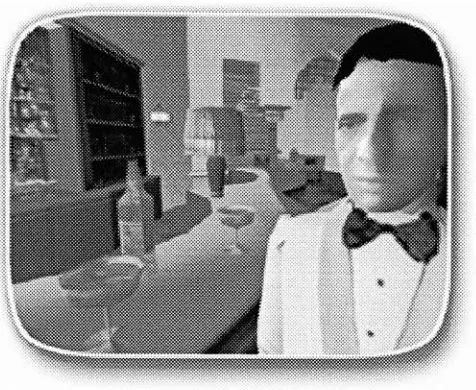
story.(Figure
2) Holly
met a man on aMUD
(let's
callhim
Joe)
andstarted an online
relationship
withhim in
and out of character(IC
andOC). After
several weeks,
Joe had
convincedHolly
thathe
wasin love
withher
and askedher
tofly
toNorth Carolina
to seehim.
According
toHolly,
the weekend was adisaster
ashe sexually
accostedher
and then abandonedher
for
twodays,
claiming
aheavy
work schedule.After returning
toher
home,
shediscovered
that not
only
did he already have
a girlfriend,but
thathe had had
severalwoman come
from
various parts oftheU.S.
to visithim. As
Holly
putit,
shefelt
"played."
As
we sawwithShannon
andMelyssa,
notall real-life encounters turnsour.
However,
Holly
is
not alonein experiencing
a shiftfrom
thesatisfying fan
tasy
of thevirtualto
thedisappointing
physical results ofmeeting
someonein
real
life. Turkle
states"when
peoplebecome
intimate,
they
areparticularly
nerable,
it is easy
to gethurt in
online relationships.Bu