Viral Genome Methylation Differentially Affects the Ability of BZLF1
versus BRLF1 To Activate Epstein-Barr Virus Lytic Gene Expression
and Viral Replication
Coral K. Wille,a,bDhananjay M. Nawandar,a,cAmanda R. Panfil,*a,cMichelle M. Ko,aStacy R. Hagemeier,aShannon C. Kenneya,d
Departments of Oncology (McArdle Laboratory for Cancer Research),a
Medical Microbiology and Immunology,b
Cellular and Molecular Biology,c
and Medicine,d
University of Wisconsin School of Medicine and Public Health, Madison, Wisconsin, USA
The Epstein-Barr virus (EBV) immediate-early proteins BZLF1 and BRLF1 can both induce lytic EBV reactivation when
overpressed in latently infected cells. Although EBV genome methylation is required for BZLF1-mediated activation of lytic gene
ex-pression, the effect of viral genome methylation on BRLF1-mediated viral reactivation has not been well studied. Here, we have
compared the effect of viral DNA methylation on BZLF1- versus BRLF1-mediated activation of lytic EBV gene transcription and
viral genome replication. We show that most early lytic viral promoters are preferentially activated by BZLF1 in the methylated
form, while methylation decreases the ability of BRLF1 to activate most early lytic promoters, as well as the BLRF2 late viral
pro-moter. Moreover, methylation of bacmid constructs containing the EBV genome enhances BZLF1-mediated, but decreases
BRLF1-mediated, early lytic gene expression. Methylation of viral promoter DNA does not affect BRLF1 binding to a variety of
different CpG-containing BRLF1 binding motifs (RREs)
in vitro
or
in vivo
. However, BRLF1 preferentially induces H3K9
his-tone acetylation of unmethylated promoters
in vivo
. The methylated and unmethylated forms of an oriLyt-containing plasmid
replicate with similar efficiency when transfected into EBV-positive cells that express the essential viral replication proteins in
trans
. Most importantly, we demonstrate that lytic viral gene expression and replication can be induced by BRLF1, but not
BZLF1, expression in an EBV-positive telomerase-immortalized epithelial cell line (NOKs-Akata) in which lytic viral gene
pro-moters remain largely unmethylated. These results suggest that the unmethylated form of the EBV genome can undergo viral
reactivation and replication in a BRLF1-dependent manner.
E
pstein-Barr virus (EBV) is a double-stranded DNA
gamma-herpesvirus that infects over 90% of the world population and
causes infectious mononucleosis and oral hairy leukoplakia (
1
–
3
).
Additionally, EBV is associated with several types of cancer,
in-cluding nasopharyngeal carcinoma (NPC), gastric cancer, and
B-cell lymphomas (
2
–
4
). The EBV genome is heavily methylated in
many EBV-infected cancer cells (
5
). EBV-positive cancers are
composed primarily of cells with the latent forms of viral infection
(
2
,
3
), in which the virus is replicated once per cell cycle by the host
cell DNA polymerase and only a subset of the virally carried genes
are expressed (
2
,
3
,
6
). In contrast, oral hairy leukoplakia lesions
(which result from EBV infection of epithelial cells along the side
of the tongue) contain the lytic form of EBV infection, in which
the virus is replicated by the virally encoded DNA polymerase and
infectious viral particles are produced (
1
–
3
,
7
,
8
).
EBV genomes produced by the lytic form of viral infection are
not methylated, since the EBV-encoded DNA polymerase does
not have the capacity to methylate the replicated viral genome (
5
,
9
). Following infection of B cells, the EBV genome is initially
un-methylated, but it becomes progressively methylated in cells that
support the latent form of infection by host cell-encoded DNA
methyltransferases (
5
,
10
,
11
). DNMT3A, a
de novo
methyltrans-ferase which is upregulated by viral infection of germinal center B
cells, may mediate methylation of the incoming EBV genome
(
12
). EBV genome methylation begins to be detectable by
meth-ylated DNA immunoprecipitation (MeDip) approximately 2
weeks after primary infection of B cells (
11
).
The switch from latent to lytic infection is mediated by the EBV
immediate-early (IE) proteins BZLF1 (also called Z, Zta, ZEBRA,
or EB1) and BRLF1 (also called R or Rta) (
2
,
3
). The BZLF1 and
BRLF1 proteins are transcription factors that cooperatively
acti-vate expression of the EBV lytic genes, many of which are involved
in lytic replication (
13
–
20
). BZLF1 is a bZip transcription factor,
homologous to c-jun and c-fos, that binds as a homodimer to the
consensus AP-1 site as well as AP-1-like motifs known as
BZLF1-responsive elements (ZREs) (
13
,
21
–
26
). Interestingly, BZLF1 was
the first transcription factor shown to preferentially activate the
methylated forms of certain target promoters (
27
). Many early
lytic EBV promoters have CpG-containing ZREs that must be
methylated for efficient BZLF1 binding (
10
,
11
,
24
,
27
–
29
). A
BZLF1 mutant (S186A) that is defective for binding to methylated
CpG-containing ZREs (but not the consensus AP-1 motif) cannot
induce lytic reactivation (
28
,
30
,
31
), suggesting that the ability of
BZLF1 to bind to methylated CpG-containing ZREs is essential
for induction of lytic gene expression in cells latently infected with
a methylated viral genome. However, recent evidence suggests
that methylation is not uniformly required for efficient BZLF1
transactivation of all early lytic promoters (
10
,
24
), and some
highly BZLF1-responsive promoters (such as BHLF1 and BHRF1)
are not thought to encode CpG-containing ZREs (
10
,
24
,
25
).
Received11 July 2012 Accepted26 October 2012
Published ahead of print7 November 2012
Address correspondence to Shannon C. Kenney, [email protected]. * Present address: Amanda R. Panfil, The Ohio State University, Columbus, Ohio, USA.
Copyright © 2013, American Society for Microbiology. All Rights Reserved.
doi:10.1128/JVI.01790-12
on November 7, 2019 by guest
http://jvi.asm.org/
Expression of the BRLF1 immediate-early protein (the
ho-molog of the ORF50 gene product in Kaposi’s sarcoma-associated
herpesvirus [KSHV]) can also induce lytic reactivation in a subset
of latently infected cell lines (
20
,
32
). Although BRLF1 binds to
and activates many of the same early lytic EBV promoters as
BZLF1 (
33
–
39
), the effect of DNA methylation on
BRLF1-medi-ated activation has not yet been examined. BRLF1 activates certain
lytic promoters (for example, the BRLF1 promoter itself) through
indirect mechanisms (
40
–
43
). BRLF1 also directly binds as a
ho-modimer to BRLF1-responsive elements (RREs) contained within
many early lytic viral promoters, with a consensus sequence of
GNCCN
9GGNG (in which N
9is a spacer sequence that can be any
nucleotide) (
33
–
39
). Interestingly, a number of previously
con-firmed RREs contain CpG motifs, suggesting that DNA
methyl-ation may affect the ability of BRLF1 to bind to and/or activate
lytic viral promoters.
During lytic replication, the virally encoded DNA polymerase
(BALF5) replicates the viral genome via the oriLyt origin (
2
,
44
).
oriLyt contains two divergent early lytic promoters (BHLF1 and
BHRF1) and has at least three RREs and seven ZREs (
15
,
25
,
33
,
36
,
37
,
44
–
46
). BZLF1 binding to four ZREs located proximal to the
BHLF1 promoter is essential for oriLyt replication independent of
BZLF1 transcriptional function (
45
–
47
), and there is evidence
that BZLF1 recruits core viral replication machinery to oriLyt (
48
,
49
). Interestingly, a recent study showed that the highly
tran-scribed BHLF1 transcript (which is not thought to encode a
func-tional protein) is required in
cis
for effective lytic replication (
50
).
However, the effect of viral genome methylation in
cis
on oriLyt
replication remains uncertain. Recent studies found that
infec-tious virions are not produced following infection of B cells until
13 days postinfection (coincident with the onset of viral genome
methylation) (
11
) and suggested that completion of the viral lytic
life cycle in B cells requires viral genome methylation (
9
).
How-ever, these results could be due to the inability of BZLF1 to activate
expression of essential viral replication proteins (such as the
vi-rally encoded DNA polymerase) from an unmethylated viral
ge-nome in B cells, rather than an effect of methylation in
cis
on
oriLyt-mediated replication.
In addition, the potential effect of viral genome methylation on
late viral gene expression has not been examined. Since late genes
are expressed after lytic viral DNA replication (
2
) and thus from
an unmethylated template, DNA methylation could potentially be
used by the virus as an inhibitory mechanism for restraining late
gene expression prior to lytic viral DNA replication. Interestingly,
BRLF1 activates a subset of late viral promoters in reporter gene
assays performed with nonreplicating vectors and binds directly
to at least two late gene promoters, BLRF2 and BFRF3 (
31
,
33
,
37
);
however, the effect of promoter methylation on the ability of
BRLF1 to activate late promoters is not known.
Here, we have compared the effect of viral genome methylation
on the ability of BZLF1 versus BRLF1 to activate expression of a
series of different early and late genes and have studied the
mech-anism(s) for the methylation effects. Consistent with previous
re-ports, we show that most early lytic viral promoters are
preferen-tially activated by BZLF1 in the methylated form (with some
functionally important exceptions) and that methylation of the
viral genome enhances BZLF1 binding to CpG-containing ZREs
in early lytic promoters. In contrast, we show that DNA
methyl-ation decreases the ability of BRLF1 to activate many early lytic
EBV promoters (as well as a late viral promoter), although
meth-ylation of the viral genome does not affect BRLF1 binding to
CpG-containing RREs. Furthermore, we find that BRLF1 induces
acet-ylation of histone H3K9 in the chromatin of unmethylated, but
not methylated, viral promoters
in vivo
. Furthermore, we
demon-strate that DNA methylation of an oriLyt-containing plasmid does
not have a
cis
-acting effect on its replication efficiency when all of
the essential viral replication proteins are supplied in
trans
. Most
importantly, we have identified a cell line (the
telomerase-immor-talized normal oral keratinocyte cell line NOKs) that supports
long-term viral infection with a largely unmethylated form of the
EBV genome, and we demonstrate that BRLF1, but not BZLF1,
expression is sufficient to induce the lytic form of viral replication
in this cell line.
MATERIALS AND METHODS
Cell lines and culture.HEK 293T, HeLa, and D98/HR-1 cells were main-tained in Dulbecco modified Eagle medium (DMEM) supplemented with 10% fetal bovine serum (FBS), and 1% penicillin-streptomycin (pen-strep). HONE-1 (a gift from Ron Glaser, Ohio State University) is an early-passage EBV-negative NPC cell line and was maintained in RPMI 1640 supplemented with 10% FBS and 1% pen-strep. The NOKs cell line (a gift from Karl Munger, Harvard University) is a telomerase-immortal-ized normal oral epithelial keratinocyte cell line that was derived as pre-viously described (51) and was maintained in keratinocyte-SFM (Life Technologies, Inc.) supplemented with epidermal growth factor, bovine pituitary extract, and 1% pen-strep (K-SFM). Akata-GFP Burkitt lym-phoma (BL) cells (a gift from Kenzo Takada [received from Bill Sugden]) were maintained in RPMI 1640 supplemented with 10% FBS, 1% pen-strep, and 500g/ml G418. Akata-GFP BL cells are derived from Akata BL, a type I latency Burkitt lymphoma line, that lost the endogenous EBV genome and then was superinfected with an Akata EBV containing in-serted green fluorescent protein (GFP) and G418 resistance genes as pre-viously described (52). HONE-Akata cells are derived from HONE cells stably infected with EBV produced from the Akata-GFP BL line and were maintained in RPMI 1640 supplemented with 10% FBS, 1% pen-strep, and G418 (400g/ml). NOKs-Akata cells were derived from the EBV-negative NOKs cell line. Briefly, 105NOKs cells were plated in a 6-well dish and cocultured with 2⫻106Akata-GFP BL cells in 2 ml of K-SFM for 24 h. Akata-GFP BL cells were removed by washing with phosphate-buff-ered saline (PBS), and EBV-positive NOKs cells were selected by adding 50g/ml of G418 to the medium starting 1 week after infection. The NOKs-Akata cell line used in these studies had been infected with EBV approximately 6 months prior to experimentation and maintained in G418 since the time of infection.
Plasmids and cloning.Plasmid DNA was prepared using the Qiagen Midi/Maxiprep kit according to the manufacturer’s instructions. pSG5 was obtained from Stratagene. The SG5-BRLF1 expression vector (a gift from S. D. Hayward, Johns Hopkins University) was constructed as pre-viously described (17) and carries the BRLF1 open reading frame under the control of the simian virus 40 (SV40) early promoter. SG5-BRLF1 aa1-550 (R550) was constructed using the Stratagene QuikChange II XL site-directed mutagenesis kit and the following primer set: BRLF1(aa1-550) forward (5=-CCCCTCGTGGCCATTTGTAGGAACTGACCACAA CACTAGAGTCC-3=) and reverse (5=-GGACTCTAGTGTTGTGGTCAG TTCCTACAAATGGCCACGAGGGG-3=). SG5-BZLF1 was a gift from Diane Hayward, Johns Hopkins University, and contains the BZLF1 genomic sequence under the control of the SV40 promoter (47). Flag-tagged-BZLF1 contains BZLF1 cDNA inserted into a p3XFLAG-myc-CMV24 vector (Sigma) for mammalian cell expression (a gift from Paul Lieberman, Wistar Institute). The promoterless luciferase reporter gene construct pCpGL-basic (a gift from Micheal Rehli, Universitätsklinikum Regensburg) was constructed as previously described (53) and contains no CpG motifs in the entire vector. Various EBV promoters (Table 1) were PCR amplified from the EBV B95.8 genome and cloned upstream of
on November 7, 2019 by guest
http://jvi.asm.org/
the luciferase gene in pCpGL-basic using the SpeI and BglII restriction sites. The following promoters were cloned into pCpGL-basic (the posi-tion in the EBV genome is in parentheses): BALF2p (164776 to 165375), BARF1p (164825 to 165503), BFLF2p (56948 to 57548), BGLF4p (123619 to 124322), BGLF5p (122355 to 122966), BLRF2p (88203 to 88895), BMLF1p (84311 to 84922), BMRF1p (79317 to 79886), BRLF1p (106144 to 107250), and BRRF1p (104447 to 105161). The BHLF1p and BHRF1p-luciferase reporter gene constructs were constructed by PCR amplifying the divergent BHLF1 and BHRF1 promoter sequences (52781 to 53797) with the primer set 5=-CCCCAGATCTCGACGCTGGCGAGCCGGGC C-3=and 5=-CCCCAGATCTGTGATGAAACAGGCAACTCC-3=within the oriLyt region of EBV B95.8 genomic DNA and were inserted upstream of the luciferase gene in pCpGL-basic using the BglII restriction site.
EBV bacmid preparation.The B95.8 bacmid (p2089) contains the EBV B95.8 genome as well as the hygromycin resistance and GFP genes on anEscherichia coliF-factor-based plasmid as previously described (a gift from Henri-Jacques Delecluse) (54). The Akata bacmid (AK-BAC) con-tains the EBV Akata genome in addition to the GFP gene and chloram-phenicol resistance gene, as previously described (52) (a gift from Kenzo Takada, Hokkaido University, via Clare Sample at Pennsylvania State University College of Medicine). EBV bacmid DNA was isolated from 2.5-liter bacterial cultures by alkaline lysis and purified with CsCl2 -ethidium bromide gradients (55).
In vitromethylation of reporter gene constructs and bacmid DNA.
Reporter gene constructs and EBV bacmids were methylatedin vitrousing CpG methyltransferase M.SssI (NEB) according the manufacturer’s in-structions. EBV bacmid DNA was methylated using the large-scale meth-ylation protocol. After completion of the methmeth-ylation reaction, the DNA was cleaned by phenol chloroform extraction and salt precipitation. Suc-cessful methylation was confirmed by enzymatic digestion with two re-striction enzymes (NEB) that recognize the same cut site: HpaII (digestion is blocked by methylation) and MspI (cuts regardless of methylation sta-tus).
Transient transfection.HONE-1, HEK 293T, NOKs-Akata, and D98/ HR-1 cells were transfected with Lipofectamine 2000 transfection reagent
(Invitrogen) according to the manufacturer’s instructions. HeLa cells were transfected using FuGENE6 transfection reagent (Roche) according to the manufacturer’s instructions.
Reporter gene assays. HONE-1 cells were transfected in 12-well dishes with 50 ng of pCpGL-basic promoter constructs, 10 ng of BZLF1 alone, 10 ng of BRLF1 alone, 5 ng of both BZLF1 and BRLF1 (synergy studies), and up to 500 ng of SG5 control expression vectors. The cells were washed with PBS and harvested in 1⫻Reporter lysis buffer (Pro-mega) at 48 h posttransfection. Lysates were subjected to one freeze-thaw cycle, and relative luciferase units were quantified with a BD Monolight 3010 luminometer (BD Biosciences) using Promega luciferase assay re-agent. For each condition, at least 3 independent experiments were per-formed in duplicate.
Immunoblotting.Immunoblotting was performed as previously de-scribed (27). Cells lysates were harvested in Sumo lysis buffer including proteasome inhibitor cocktail (Roche), and the protein concentration was determined using the Sumo protein assay (Bio-Rad). Equal amounts of protein were resolved with 10% or 4 to 20% gradient (Bio-Rad) sodium dodecyl sulfate (SDS)-polyacrylamide gels and transferred to nitrocellu-lose membranes. Membranes were first blocked in a phosphate-buffered saline solution containing 5% milk and 0.1% Tween 20 and then incu-bated with primary antibody. The following antibodies were used: anti--actin (Sigma; 1:5,000), anti-BMRF1 (Vector; 1:250), anti-BRLF1 (Argene; 1:250), anti-BZLF1 (Santa Cruz, sc-53904; 1:250), and anti-tu-bulin (Sigma; 1:2000). The murine monoclonal antibody against BALF2 (1:250) was a gift from Jaap Middeldorp (VU University medical center). The secondary antibody used was horseradish peroxidase (HRP)– goat anti-mouse (Fisher Scientific; 1:5,000).
Reverse transcription-PCR (RT-PCR).HEK 293T cells were trans-fected in 6-well dishes with 550 ng of methylated or mock-treated EBV bacmid DNA and cotransfected with either 225 ng of BZLF1, 100 ng of BRLF1, or SG5 control vector. NOKs-Akata cells were transfected in 6-well dishes with SG5 control vector, 100 ng BZLF1, 100 ng BRLF1, or 20 ng of BZLF1 plus 20 ng BRLF1 (synergy studies). RNA was isolated at 2 days posttransfection using the RNeasy Minikit (Qiagen). The RNA con-centration was determined, equivalent amounts of RNA were DNase treated, and cDNA was made using the Improm-II reverse transcription system (Promega) according to the manufacturer’s instructions. PCR us-ing the cDNA was performed to quantify relative transcript levels of mul-tiple EBV lytic genes with the following primers: BALF2, 5=-TCAATGTC AAGGCTCTGCACAGGA-3=and 5=-ACCATATGGGCATTGTGGAAC ACG-3=; BLRF2, 5=-TGTCAGCTCCACGCAAAGTCAGAT-3=and 5=-A GGACCTGTTGCTTCAGAGCCTTA-3=; BHLF1, 5=-ATGAGCTCCAGG ACCAGGCAA-3=and 5=-TAGGGTTCGAATGGGCGTGGT-3=; BMLF1, 5=-TCTCCCGAACTAGCAGCATTTCCT-3=and 5=-ATCGCAGTCTGT GTTGGTGTCTGA-3=; BMRF1, 5=5=-GCCGCCGTGTCATTTAGAAAC CTT-3=and 5=-TGTGGTGGCTCTTGGACACCTTAT-3=; BRLF1, 5=-TG GCTTGGAAGACTTTCTGAGGCT-3=and 5=-AATCTCCACACTCCCG GCTGTAAA-3=; BZLF1, 5=-AATGCCGGGCCAAGTTTAAGCAAC-3= and 5=-TTGGGCACATCTGCTTCAACAGGA-3=; and beta-2 micro-globulin (2 M) cellular gene, 5=-TTCTGGCCTGGAGGGCATCC-3= and 5=-ATCTTCAAACCTCCATGATG-3=.
[image:3.585.40.287.77.346.2]EMSAs. Electrophoretic mobility shift assays (EMSAs) were per-formed as previously described (33). Methylated and unmethylated probes were prepared as previously described (29) or commercially ob-tained from IDT. Whole-cell extracts containing BRLF1 protein (missing the inhibitory carboxy-terminal domain) were created by transfection of HeLa cells with the R550 deletion construct. Cells were harvested at 48 h posttransfection in lysis buffer (0.42 M NaCl, 20 mM HEPES [pH 7.5], 25% glycerol, 1.5 mM MgCl2, 0.2 mM EDTA, 1 mM dithiothreitol [DTT], 1 mM phenylmethylsulfonyl fluoride [PMSF], and 1⫻proteasome inhib-itor cocktail [Roche]) and spun down for 15 min at 10,000 rpm at 4°C. Protein concentrations were determined by the Bradford assay (Bio-Rad), and supernatants were stored at⫺80°C. The whole-cell extracts were used to perform EMSAs with known and novel BRLF1-responsive elements
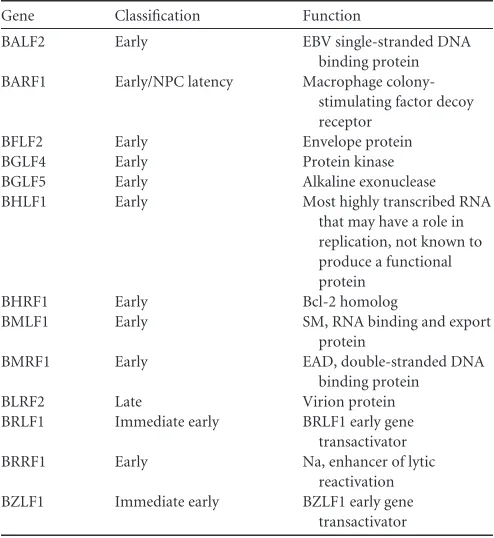
TABLE 1Function and expression kinetics of selected EBV lytic genes
Gene Classification Function
BALF2 Early EBV single-stranded DNA
binding protein
BARF1 Early/NPC latency Macrophage
colony-stimulating factor decoy receptor
BFLF2 Early Envelope protein
BGLF4 Early Protein kinase
BGLF5 Early Alkaline exonuclease
BHLF1 Early Most highly transcribed RNA
that may have a role in replication, not known to produce a functional protein
BHRF1 Early Bcl-2 homolog
BMLF1 Early SM, RNA binding and export
protein
BMRF1 Early EAD, double-stranded DNA
binding protein
BLRF2 Late Virion protein
BRLF1 Immediate early BRLF1 early gene
transactivator
BRRF1 Early Na, enhancer of lytic
reactivation
BZLF1 Immediate early BZLF1 early gene
transactivator
EBV DNA Methylation Differentially Affects Z versus R
on November 7, 2019 by guest
http://jvi.asm.org/
(RREs). The BMLF1 promoter probe spanned positions 84691 to 84728 (5=-GGCCCAGATGTCCCTCTATCATGGCGCAGACATTCTC-3=). BALF2 probe 1 spanned positions 165056 to 165093 (5=-GCACAGCACCACCC TGAGCCGCGACCAGTAGTCGTAG-3=), and BALF2 probe 2 spanned positions 165266 to 165303 (5=-CCGGGTGAACACCGCGTACATGGC CCTGAACATGAGG-3=). The BLRF2 promoter probe spanned positions 88638 to 88675 (5=-GCGCTTCCAGTCCCACAAACGCGGCGGCGGCT TCCCT-3=). The underlined portion of the probes contains the site of the RRE, and the bold nucleotides are CpGs that were methylated or not. Double-stranded, annealed DNA oligonucleotides were labeled with [␥ -32P]ATP (Perkin-Elmer) using T4 polynucleotide kinase (NEB) and
de-salted with G-25 Sephadex columns (GE Healthcare). Whole-cell extracts (1g for BMLF1 reactions and 15g for BALF2 and BLRF2 reactions) were incubated for 5 min in binding buffer containing 10 mM HEPES, (pH 7.5), 50 mM NaCl, 2 mM MgCl2, 2.5M ZnSO4, 0.5 M EDTA, 1 mM DTT, 15% glycerol, and 0.5g poly(dI-dC), and 30,000 cpm of labeled oligonucleotide was added to the reaction mixture and allowed to incu-bate for 20 min at room temperature. For supershift reactions, 1l of anti-BRLF1 (Argene) was added, and reactions were allowed to incubate for an additional 20 min at room temperature. The reaction mixtures were loaded onto a 4% polyacrylamide gel in 0.5⫻Tris-borate-EDTA buffer and electrophoresed at 35 mA. Gels were dried on Whatman paper under a vacuum and exposed to autoradiography film for 12 to 40 h at⫺80°C.
Chromatin immunoprecipitation (ChIP) assays.HEK 293T cells were transfected in 10-cm dishes with 200 ng methylated or mock-treated EBV bacmid DNA, 1g BZLF1, 1g BRLF1, or SG5 control vector (up to 6g). Cells were cross-linked for 10 min at room temperature with fresh 1% paraformaldehyde at 48 h posttransfection. The cross-linking reaction was quenched using 125 mM glycine, and the cells were lysed. The lysate was sonicated to yield approximately 500-bp DNA fragments. DNA-pro-tein complexes were immunoprecipitated with the following antibodies: anti-BRLF1 (Argene), anti-BZLF1 (Argene), anti-FLAG (Sigma; F1804), anti-acetyl H3K9 (Abcam), mouse isotype anti-IgG control (Santa Cruz), and rabbit isotype anti-IgG control (Santa Cruz). Immunoprecipitated DNA-protein complexes were washed with low-salt, high-salt, lithium chloride, and Tris-EDTA (TE) wash buffers. The protein-DNA cross-links were reversed at 65°C overnight, and the DNA was purified using the Qiagen gel extraction kit. PCR was used to determine the presence and relative amount of specific DNA fragments that were immunoprecipi-tated. Primers used for amplifying the for the BALF2 promoter were 5= -AAACACCACTGTGTAGCACAGCAC-3= and 5=-TGAGTCCAGCTAC CTCATGTTCAG-3=, those for the BHLF1 promoter were 5=-CTCTTTT TGGGGTCTCTGTG-3=and 5=-CCTCCTCCTCTCGTTATCC-3=(56), those for BLRF2 were 5=-ACTGAAGCCCAGGACCAGTTCTA-3=and 5= -TAAGACAAGCGTCAGAAGTGCCCA-3=, those for BMLF1 were 5=-CG TGACATGGAGAAACTGGGGG-3= and 5=-CCTCTTACATCACTCAC TGCACG-3=, those for the BMRF1 promoter were 5=-ATGCCCAGAAA CCTGAGCAAGTAGCC-3=and 5=-CCTTGGTGGATGTGCGAGCCAT AAAG-3=, those for BRLF1 were 5=-CTCTTACCTGCGTCTGTTTGT G-3= and 5=-CTCTCTGCTGCCCACTCATACT-3=, those for BZLF1 were 5=-GGTGTAAATTTTACATCTTC-3=and 5=-GCTAATGTACCTC ATAGACACACC-3=, and those for-globin were 5=-AGGGCTGGGCA TAAAAGTCA-3=and 5=-GCCTCACCACCAACTTCATC-3=.
qPCR.Quantification of ChIP samples was performed by quantitative PCR (qPCR) analysis using SYBR green (Bio-Rad) according to the man-ufacturer’s protocol. Samples were measured with an ABI Prism 7900 real-time PCR system (Applied Biosystems). BMRF1 was amplified with primers 5=-CACTGCGGTGGAGGTAGAG-3=and 5=-GGTGGTGTGCC ATACAAGG-3=(56). Input samples were diluted to 5%, 1%, and 0.2% into H2O with 100g/ml sonicated salmon sperm DNA (Agilent). A standard curve was calculated from the threshold cycle (CT) of the input
sample dilution series and used to calculate percent input bound in the tested samples. Each condition and input dilution was loaded in triplicate.
OriLyt plasmid-based replication assays.OriLyt plasmid replication assays were performed as previously described (44). Latently infected,
EBV-positive D98/HR-1 cells were transfected with 500 ng of the oriLyt-containing plasmid p588 (57) (a gift from Bill Sugden, University of Wis-consin-Madison), 1g of BZLF1, or SG5 control vector (up to 6g) in 10-cm dishes. Cells were harvested at various time points posttransfec-tion, and nuclei were isolated using a modified REAP method (58). Briefly, cells were resuspended twice in a solution of cold PBS plus 0.1% NP-40. DNA was isolated from the nuclear pellets using the DNeasy blood and tissue kit (Qiagen), concentrated with salt precipitation, and quanti-fied using spectrophotometry. Equivalent amounts (4 to 6g) of DNA were digested overnight with 2l of restriction enzymes (BamHI and DpnI) and spiked with an additional 1l of restriction enzymes. The DNA was separated on 0.8% agarose gels at 25 V for 16 h. The gel was prepared for transfer by incubation with 0.25 N HCl for 30 min, denatur-ing buffer (0.5 M NaOH, 1.5 M NaCl) for 30 min, neutralizdenatur-ing buffer (0.5 M Tris-HCl, 1.5 M NaCl, [pH 7.0]) for 30 min, and 20⫻SSC (3 M NaCl, 0.3 M sodium citrate [pH 7.0]) for 30 min. The DNA was transferred to nylon membranes overnight using the Turboblotter rapid downward-transfer system (Whatman) and cross-linked with UV irradiation. Mem-branes were prehybridized in Church hybridization buffer (0.5 M Na2HPO4[pH 7.2], 1% bovine serum albumin, 7% sodium dodecyl sul-fate [SDS], 5 mM EDTA [pH 8.0]) for 1 h at 65°C. Membranes were then hybridized at 65°C overnight with a DNA probe directed against the hy-gromycin resistance gene labeled with [␥-32P]ATP using the random primer labeling system (GE Healthcare). After hybridization, membranes were washed with Church wash buffer (1% SDS, 20 mM Na2HPO4[pH 7.2], 1 mM EDTA) one time at 65°C (15 min) and three times at 45°C (10 min for each wash). The membrane was exposed to film at⫺80°C over-night, and films were developed.
Methylation status of selected EBV promoters.The methylation sta-tus of various EBV promoters in HONE-Akata cells and NOKs-Akata cells was determined. Cells were treated for 3 days with 100g/ml of acyclovir (Sigma) prior to DNA extraction. Genomic DNA was prepared using the Qiagen DNeasy blood and tissue kit. Two hundred nanograms of genomic DNA and 20 ng of methylated or mock-treated bacterial artificial chro-mosome (BAC) DNA (control) were digested with HpaII and then as-sayed by PCR amplification using the following primers: BALF2, 5=-GCG ACTAGTTGTTTGTGAGGACCCCGGTCGAGGCGT-3=and 5=-CTGA GATCTCCAAGGTATCGCCCCGGCCTCCCAGT-3=; BHLF1, 5=-GAG ACTAGTGGAGACCTGCATCTGCACACC-3=and 5=-CTGTGTAATAC TTTAAGGTTTGCTCAGGAG-3=; BLRF2, 5=-GCAACTAGTCGCTGAT TCTGGAGGATTAGCC-3=and 5=-GACAGATCTCAAACAGCCGAGA TTGCTGCC-3=; BMLF1, 5=-GCGACTAGTTGCGCCTCTTTGTCTGTC ATCCGGAA-3=and 5=-CAGAGATCTTAGCTGGGATGTAGTGCTGT CTTGACTGGC-3=; BRLF1, 5=-AATAGATCTTGAGGTGTTGTGTCCT GTATGGTATTC-3=and 5=-CTGACTAGTCCCAACACCATGGGTGAT AACGTC-3=; and BZLF1, 5=-GCGACTAGTAGGTGTGTCAGCCAAAG AGGATCA-3=and 5=-GCGAGATCTCCGGCAAGGTGCAATGTTTAG TGA-3=. The BMRF1 promoter does not contain an HpaII site and hence could not be assessed by this assay.
Virus titration assay.Virus titration assays were performed in NOKs-Akata cells as previously described (59). NOKs-NOKs-Akata cells were plated onto a 12-well dish and then transfected with control SG5 vector, 50 ng of BZLF1, 50 ng of BRLF1, or 10 ng of BZLF1 plus 10 ng of BRLF1 expression vectors (for synergy studies). Supernatant was harvested at 48 h posttrans-fection and filtered through a 0.8-m-pore-size filter. Raji cells (2⫻105 cells/infection) were infected with 100l of supernatant and incubated at 37°C. Phorbol-12-myristate-13-acetate (TPA) (20 ng/ml) and sodium butyrate (3 mM final concentration) were added 24 h after infection. GFP-positive Raji cells were counted at 48 h postinfection to determine the viral titer.
RESULTS
Methylation enhances BZLF1-mediated activation of many, but
not all, early lytic promoters.
To examine the effect of promoter
methylation on the ability of BZLF1 to activate various different
on November 7, 2019 by guest
http://jvi.asm.org/
early lytic EBV promoters, we cloned multiple different lytic
pro-moters (
Table 1
) upstream of the luciferase gene in a CpG-free
vector (
53
) and then methylated or mock treated the various
pro-moter constructs
in vitro
as previously described using the CpG
methyltransferase M.SssI (
29
). The CpG-free luciferase vector
prevents nonspecific inhibitory effects of total plasmid DNA
methylation on luciferase gene activity by ensuring that only the
inserted EBV promoter sequences can be methylated.
EBV-nega-tive HONE-1 NPC cells were transfected with the methylated or
the mock-treated promoter constructs in the presence or absence
of a limiting amount of cotransfected BZLF1 expression vector (10
ng/12-well dish), and the amount of luciferase activity for each
condition was quantitated 2 days later.
As shown in
Fig. 1A
, methylation of promoter DNA increased
the ability of BZLF1 to activate 9 out of 11 early lytic promoters
tested (BALF2, BARF1, BFLF2, BGLF4, BGLF5, BMLF1, BMRF1,
BRLF1, and BRRF1). We documented that similar levels of
trans-fected BZLF1 were expressed under each condition (
Fig. 1C
and
data not shown). Of note, while we previously reported that the
BRLF1 promoter is more efficiently activated by BZLF1 in the
FIG 1DNA methylation enhances BZLF1 transactivation of most early lytic EBV promoters. (A and B) EBV-negative HONE-1 cells were transfected with BALF2p, BARF1p, BFLF2p, BGLF4p, BGLF5p, BMLF1p, BMRF1p, BRLF1p, and BRRF1p (A) and BHLF1p and BHRF1p (B) pCpGL luciferase constructs that were either methylated (dark bars) or mock treated (light bars). The reporter gene constructs were transfected in the presence or absence of BZLF1 and SG5 control vector as indicated. Luciferase assays were performed 2 days after transfection. The fold luciferase activity under each condition is shown relative to the activity of the unmethylated promoter in the presence of the SG5 control vector (set to 1). The error bars indicate⫹1 standard deviation calculated from 3 experiments performed in triplicate. (C) A representative immunoblot shows similar levels of cotransfected BZLF1 protein in the extracts used in the methylated (M) versus unmethylated (U) BHLF1 promoter luciferase assays; similar results were observed in other luciferase assays (data not shown).
EBV DNA Methylation Differentially Affects Z versus R
on November 7, 2019 by guest
http://jvi.asm.org/
[image:5.585.122.463.68.523.2]methylated form (
28
), the positive effect of methylation on BZLF1
activation of this promoter is even more apparent in the current
study, likely reflecting the use of the CpG-free luciferase vector, as
well as the limiting amount of BZLF1 used in the current (but not
the former) study. Interestingly, using this lower level of
trans-fected BZLF1 (which we found to be similar to that expressed in
transforming growth factor

[TGF-

]-treated Mutu 1 Burkitt
cells [data not shown]), we did not observe autoactivation of the
BZLF1 promoter in either the methylated or unmethylated form
(data not shown).
The oriLyt early lytic promoters BHLF1 and BHRF1 are more
efficiently activated by BZLF1 in the unmethylated form.
In
contrast to the case for the majority of early lytic promoters, we
also identified two early lytic EBV promoters that are activated by
BZLF1 more efficiently in the unmethylated form (
Fig. 1B
).
Inter-estingly, both of these promoters, BHRF1 and BHLF1, are located
within the EBV lytic origin of replication (oriLyt), and in contrast
to many early lytic promoters, the previously identified ZREs
lo-cated upstream of the BHRF1 and BHLF1 promoters do not
con-tain CpG motifs (
10
,
25
,
45
). These results suggest that while
pro-moter
methylation
generally
enhances
BZLF1-mediated
activation of early lytic promoters, the two oriLyt promoters are
potentially important exceptions to this rule.
BRLF1 activation of early lytic promoters is inhibited by
DNA methylation.
Although BRLF1 can bind directly to, and
ac-tivate, many of the same early lytic EBV promoters that are
acti-vated by BZLF1, the effect of DNA methylation on
BRLF1-medi-ated activation has not yet been explored. We therefore examined
the ability of limiting levels of BRLF1 (10 ng/12-well dish, which
produced a level of BRLF1 similar to that in TGF-

-treated Mutu
1 cells [data not shown]) to activate a series of methylated and
mock-methylated early and late lytic EBV promoters. As shown in
Fig. 2A
, we found that BRLF1 activated five different early lytic
promoters (BALF2, BARF1, BFLF2, BMRF1, and BRRF1) much
more efficiently in the unmethylated form than in the methylated
form. Four other promoters (BGLF4, BHLF1, BHRF1, and
BMLF1) were also activated more efficiently in the unmethylated
forms, although the inhibitory effect of methylation was not as
dramatic. We documented that similar levels of transfected
BRLF1 were expressed under each condition (
Fig. 2C
and data not
shown). At the low level of transfected BRLF1 used in these
stud-ies, we did not observe BRLF1 activation of the other early lytic
promoters listed in
Table 1
(including the BZLF1 and BRLF1 IE
promoters) in either the methylated or unmethylated form (data
not shown). Thus, all BRLF1-responsive early lytic promoters
tested were more efficiently activated by the BRLF1 protein in the
unmethylated form than in the methylated form, although the
effect of methylation was more dramatic for some early lytic
pro-moters (such as the BALF2 promoter) than for others (such as the
BMLF1 promoter).
BRLF1 activation of the BLRF2 late lytic viral promoter is
also inhibited by promoter DNA methylation.
BRLF1 has also
been reported to activate certain late gene viral promoters in a
replication-independent manner in reporter gene assays, and it
binds directly to at least two of these promoters (BLRF2 and
BFRF3) (
33
,
37
). Interestingly, the previously identified RRE in
the BLRF2 promoter (GTCCCACAAACGCGGCG) contains
sev-eral CpG motifs (
33
). Therefore, we examined how promoter
DNA methylation affects the ability of BRLF1 to activate the
BLRF2 promoter in the methylated versus the unmethylated
form. We found that promoter DNA methylation greatly inhibits
the ability of BRLF1 to turn on the BLRF2 promoter (
Fig. 2B
).
However, we did not observe BRLF1 activation of several other
late lytic viral promoters tested (including the BcLF1, BDLF3, and
BLLF1 promoters) in either the unmethylated or methylated form
under the conditions used in our studies (data not shown). Thus,
the ability of BRLF1 to activate at least one late lytic EBV
pro-moter, BLRF2, requires that the viral promoter be in the
unmethy-lated form.
Viral genome methylation differentially affects the ability of
BZLF1 versus BRLF1 to induce early lytic gene expression in the
context of the intact viral genome.
To examine how methylation
affects lytic gene expression in the context of the intact viral
ge-nome, purified EBV bacmid DNA was methylated or mock treated
in vitro
and then transfected into HEK 293T cells in the presence
or absence of cotransfected BZLF1 or BRLF1. Immunoblotting
was performed 3 days later to compare the ability of cotransfected
BZLF1 versus BRLF1 to activate expression of the BMRF1 and
BALF2 early lytic genes from the EBV bacmid genome in the
methylated versus unmethylated state. As indicated in
Fig. 3A
,
methylation of the EBV bacmid genome enhances
BZLF1-in-duced BMRF1 and BALF2 protein expression, in agreement with
the results of the reporter gene assays (
Fig. 1
). In contrast,
meth-ylation of the EBV genome decreases BRLF1-induced BMRF1 and
BALF2 protein expression (
Fig. 3A
), as also predicted by the
re-porter gene assays (
Fig. 2
). Similar results were obtained using
either the B95.8 or Akata bacmid DNA (data not shown). These
results confirm that methylation differentially affects the ability of
BZLF1 versus BRLF1 to induce early lytic viral protein expression
in the context of the intact viral genome.
To determine if the differential effect of EBV bacmid
methyl-ation on the ability of BZLF1 versus BRLF1 to activate lytic protein
expression is associated with differences in lytic viral gene
tran-scription, we harvested RNA from 293T cells transfected with
methylated or mock-methylated EBV bacmids (in the presence or
absence of cotransfected BZLF1 or BRLF1) and performed
RT-PCR to detect various EBV transcripts. As shown in
Fig. 3B
,
BRLF1 preferentially activates expression of the BMRF1, BALF2,
and BLRF2 transcripts from the unmethylated EBV bacmid,
whereas BZLF1 preferentially activates expression of the BMRF1
and BALF2 early lytic EBV transcripts from the methylated EBV
bacmid. Activation of the BLRF2 late transcript occurs only in
response to BRLF1 expression, and this activation requires an
un-methylated viral genome. Of note, the ability of transfected BZLF1
to induce BRLF1 gene transcription from the cotransfected EBV
bacmid construct and, vice versa, the ability of BRLF1 to induce
BZLF1 transcription from the cotransfected bacmid construct
were very limited, for unclear reasons.
The combination of BZLF1 and BRLF1 synergistically
acti-vates early lytic BMRF1 protein expression from either the
methylated or unmethylated EBV bacmid genome.
Deletion of
either the BZLF1 or BRLF1 protein severely inhibits expression of
the early lytic BMRF1 protein in stably EBV-infected 293 cells
(
16
), which contain a highly methylated viral genome (
29
).
How-ever, the mechanism(s) by which BZLF1 and BRLF1 cooperate to
synergistically activate expression of early lytic viral proteins, and
in particular whether this effect is dependent upon the DNA
methylation state of the lytic viral promoters, is not well
under-stood. To examine whether the combination of BZLF1 and BRLF1
can synergistically induce early lytic BMRF1 protein expression
on November 7, 2019 by guest
http://jvi.asm.org/
from either the methylated or unmethylated forms of EBV
bac-mids, we transfected methylated or mock-treated EBV bacmid
DNA into 293T cells in the presence of BZLF1 alone, BRLF1 alone,
or the combination of both BZLF1 and BRLF1 and compared the
amounts of BMRF1 protein expression derived from the
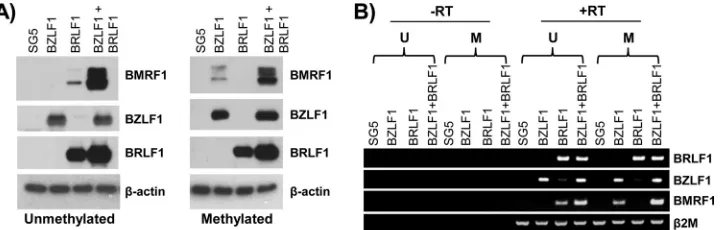
trans-fected EBV bacmid DNA 3 days later. As shown in
Fig. 4A
, the
combination of BZLF1 and BRLF1 synergistically activated
ex-pression of the BMRF1 protein from either the unmethylated
(left) or methylated (right) form of the EBV genome; similar
re-sults were obtained using either B95.8 or Akata bacmid DNA.
To determine if the synergistic effect of the BZLF1/BRLF1
combination on BMRF1 protein expression is associated with an
increase in BMRF1 transcription, we harvested RNA from 293T
cells transfected with methylated or mock-methylated EBV
bac-mids (in the presence or absence of cotransfected BZLF1, BRLF1,
or BZLF1 and BRLF1 together) and performed RT-PCR to
exam-ine the level of BMRF1 transcript (
Fig. 4B
). Somewhat
surpris-ingly, for both the methylated and unmethylated forms of the EBV
bacmid, the combination of BZLF1 and BRLF1 together resulted
in only a relatively modest increase in the level of BMRF1
tran-script relative to the effect of BZLF1 or BRLF1 alone, in contrast to
the large effect observed at the BMRF1 protein level. These results
FIG 2BRLF1-mediated activation of lytic promoters is inhibited by CpG methylation. (A and B) HONE-1 cells were transfected with methylated or mock-treated BALF2p, BARF1p, BFLF2p, BMRF1p, BRRF1p, BGLF4p, BHLF1p, BHRF1p, and BMLF1p (A) and BLRF2p (B) pCpGL luciferase constructs in the presence or absence of BRLF1 and SG5 control vector, and luciferase assays were performed 2 days after transfection. The fold luciferase activity under each condition is shown relative to the activity of the unmethylated promoter in the presence of the control vector (set to 1). The error bars indicate⫹1 standard deviation calculated from 3 replicate experiments. (C) A representative immunoblot shows similar levels of cotransfected BRLF1 protein in the extracts used in the methylated (M) versus unmethylated (U) BHLF1 promoter luciferase assays; similar results were observed in other luciferase assays (data not shown).
EBV DNA Methylation Differentially Affects Z versus R
on November 7, 2019 by guest
http://jvi.asm.org/
[image:7.585.123.463.66.517.2]suggest that BZLF1 and BRLF1 may cooperate to enhance BMRF1
protein expression through at least a partially (as-yet-unknown)
posttranscriptional mechanism(s).
DNA methylation does not affect BRLF1 binding to RREs
in
vitro
.
Given our finding that promoter DNA methylation
de-creases the ability of BRLF1 alone to activate lytic gene expression,
we next asked if methylation of CpG-containing RREs inhibits
BRLF1 binding. To examine the effect of RRE methylation on
BRLF1 binding
in vitro
, we prepared extracts from HeLa cells
transfected with a BRLF1 expression vector containing amino
ac-ids 1 to 550 (since it is difficult to detect BRLF1 binding activity by
EMSA in cells transfected with the intact BRLF1 protein [
33
]) and
performed EMSAs using unmethylated versus methylated RRE
probes. As shown in
Fig. 5A
, BRLF1 binds similarly to the
meth-ylated and unmethmeth-ylated forms of a CpG-containing RRE in the
BMLF1 promoter. Likewise, the methylated versus unmethylated
forms of two different CpG-containing RREs within the BALF2
promoter were bound similarly
in vitro
(
Fig. 5B
), even though
BRLF1 activation of this promoter
in vivo
is much more efficient
for the unmethylated form of the promoter (
Fig. 2
and
3
). BRLF1
binding to the methylated and unmethylated forms of a
CpG-containing RRE in the late BLRF2 promoter was also similar (by
EMSA) (
Fig. 5C
), even though BRLF1 activates this promoter
much more efficiently in the unmethylated form (
Fig. 2
and
3
).
DNA methylation does not affect BRLF1 binding to RREs
in
vivo
but enhances BZLF1 binding to most ZRE-containing
pro-moters.
We next performed ChIP assays to examine the effect of
viral genome methylation on BRLF1 (full length) versus BZLF1
DNA binding
in vivo
in 293T cells transfected with the methylated
or unmethylated forms of the EBV bacmid DNA (
Fig. 6
). BRLF1
bound similarly to the methylated and unmethylated forms of the
BALF2, BMLF1, and BMRF1 promoters
in vivo
(
Fig. 6A
), similar
to the results of the EMSA studies (
Fig. 5
); quantitative PCR
anal-ysis of the BMRF1 promoter ChIP results (
Fig. 6B
) confirmed that
BRLF1 binding to the methylated and unmethylated forms of this
promoter is similar. Although BRLF1 clearly activates the
un-FIG 3EBV genome methylation enhances BZLF1-mediated expression of lytic genes yet decreases BRLF1-induced lytic gene expression. 293T cells were transfected with methylated or mock-treated EBV bacmid DNA (with or without cotransfected SG5 control vector, BZLF1, or BRLF1 expression vectors) as indicated. (A) Immunoblot analysis was performed at 3 days posttransfection to compare the levels of BZLF1- and BRLF1-induced BMRF1 and BALF2, as well as the levels of transfected BZLF1 and BRLF1.-Actin served as a loading control. (B) RNA was isolated from cells at 2 days posttransfection and DNase treated. RT-PCR was performed using primers to detect BZLF1 (transfected and EBV bacmid derived), BRLF1 (transfected and EBV bacmid derived), BMRF1, BALF2, BLRF2, or beta-2 microglobulin (2 M) transcripts as indicated.
FIG 4BZLF1 plus BRLF1 induce synergistic expression of the BMRF1 protein from both the methylated and unmethylated viral genomes. (A) Mock-methylated (left) or methylated (right) EBV bacmid DNA was transfected into 293T cells with or without SG5 control vector, BZLF1, BRLF1, or BZLF1 plus BRLF1 expression vectors, as indicated. Immunoblot analysis was performed at 3 days posttransfection to compare the levels of BZLF1- or BRLF1-induced BMRF1, as well as the transfected BZLF1 and BRLF1 proteins.-Actin served as a loading control. (B) Unmethylated (U) or methylated (M) EBV bacmid DNA was transfected into 293T cells with or without SG5 control vector, BZLF1, BRLF1, or BZLF1 plus BRLF1 expression vectors, as indicated. Two days later, RNA was isolated from the cells and DNase treated, and RT-PCR was performed using primers to detect BRLF1, BZLF1, and EBV bacmid-derived BMRF1 transcripts as indicated. The cellular beta-2 microglobulin (2 M) transcript was also measured as a control.
on November 7, 2019 by guest
http://jvi.asm.org/
[image:8.585.116.474.66.233.2] [image:8.585.115.476.541.656.2]methylated forms of the BMRF1 and BALF2 promoters more
ef-ficiently than the methylated forms in reporter gene assays (
Fig.
2A
) and in the bacmid studies (
Fig. 3
), these results suggest that
the inhibitory effect of DNA methylation on BRLF1-mediated
ac-tivation of the BALF2 and BMRF1 promoters is not due to a
de-creased ability of BRLF1 to bind to methylated BALF2 or BMRF1
promoter DNA.
As shown in
Fig. 6C
, methylation of EBV bacmid DNA
pro-motes BZLF1 binding to multiple CpG-containing early lytic viral
promoters (BMRF1, BRLF1, and BMLF1), consistent with the
en-hanced BZLF1-mediated activation of the methylated forms of
these promoters in reporter gene assays (
Fig. 1A
) and bacmid
studies (
Fig. 3
). Increased BZLF1 binding to the methylated versus
unmethylated form of the BMRF1 promoter was confirmed by
quantitative PCR analysis (
Fig. 6D
). Interestingly, although
BZLF1 activates the unmethylated form of the BHLF1 promoter
(which has CpG-free ZREs) more efficiently than the methylated
form in reporter gene assays (
Fig. 1B
), it bound at least as well to
FIG 5BRLF1 binds to unmethylated and methylated DNA similarlyin vitro. BRLF1 binding to the unmethylated versus methylated forms of an RRE from the BMLF1 promoter (33) (A), two predicted RREs from the BALF2 promoter (B), and an RRE from the late BLRF2 promoter (33) (C) was measured by EMSAs performed with whole-cell extracts. Extracts were derived from HeLa cells transfected with a truncated mutant of BRLF1 (R550) or SG5 control vector. Anti-BRLF1 antibody was added to the indicated reaction mixtures to ensure that retarded probe was indeed bound by BRLF1. BRLF1-DNA complexes, as well as supershifted complexes, are designated by arrows. The underlined cytosines indicate methylated sites in each RRE sequence (shown below the respective EMSA image). Boxed nucleotides encompass the core binding site where BRLF1 directly contacts DNA. This sequence is separated by a 9-nucleotide spacer.
EBV DNA Methylation Differentially Affects Z versus R
on November 7, 2019 by guest
http://jvi.asm.org/
[image:9.585.70.521.69.533.2]the methylated, versus unmethylated, form of this promoter
in
vivo
. Thus, the inhibitory effect of DNA methylation on BZLF1
activation of the BHLF1 promoter is not associated with reduced
BZLF1 DNA binding to this promoter.
We also performed ChIP assays to examine whether BRLF1
and BZLF1 increase one another’s ability to bind to several
differ-ent lytic EBV promoters. As shown in
Fig. 6E
and
F
, BZLF1 and
BRLF1 did not significantly increase each other’s ability to bind to
FIG 6Viral genome methylation does not alter BRLF1 DNA bindingin vivobut enhances BZLF1 binding. 293T cells were transfected with unmethylated (U) or methylated (M) EBV bacmid DNA in the presence or absence of SG5 control vector, BZLF1, or BRLF1 as indicated. ChIP assays were performed at 2 days posttrans-fection. (A and C) Cross-linked protein-DNA complexes were immunoprecipitated with anti-IgG isotype control and anti-BRLF1 antibodies (A) or anti-IgG isotype control and anti-BZLF1 antibodies (C) as specified. The relative presence of bound promoters was assayed by PCR amplification using primers spanning BALF2p, BMLF1p, BMRF1p, BRLF1p, BHLF1p, and-globin (negative control) as indicated. (B) Quantitative PCR was performed on immunoprecipitated DNA to examine the amount of BRLF1 binding to the unmethylated versus methylated BMRF1 promoter. (D) Quantitative PCR was performed on the immunoprecipitated DNA to examine the amount of BZLF1 binding to the unmethylated versus methylated BMRF1 promoter. (E) 293T cells were transfected with methylated EBV bacmid DNA in the presence or absence of SG5 control vector, FLAG-BZLF1, BRLF1, or FLAG-BZLF1 plus BRLF1 as indicated. A ChIP assay was performed at 2 days posttransfection with anti-IgG isotype control, anti-BRLF1, and anti-FLAG (denoted BZLF1) antibodies as specified. The relative presence of bound promoters was assayed by PCR amplification using primers spanning BALF2p, BHLF1p, BLRF2p, BMLF1p, BMRF1p, BRLF1p, and-globin (negative control) as indicated. Similar results were obtained with the unmethylated EBV bacmid (data not shown). (F) Quantitative PCR was performed on the immunoprecipitated DNA to examine the amount of BZLF1 and BRLF1 binding to the methylated BMRF1 promoter in the presence or absence of the other IE protein as indicated.
on November 7, 2019 by guest
http://jvi.asm.org/
[image:10.585.82.508.66.546.2]any of the six different lytic promoters examined in the
methyl-ated EBV bacmid. Similar results were obtained in studies
exam-ining BZLF1 and BRLF1 binding to lytic promoters in the
un-methylated EBV bacmid (data not shown).
BRLF1 induces an activating histone modification (H3K9
acetylation) more efficiently on unmethylated viral promoters.
Since BRLF1 interacts directly with the histone acetyltransferase
CBP (
60
), we hypothesized that BRLF1 binding to promoter DNA
may induce the activating histone modification H3K9 acetylation.
To determine if promoter DNA methylation affects the ability of
BRLF1 to induce H3K9 acetylation, we performed ChIP assays
(using an antibody that recognizes acetylated H3K9) in 293T cells
transfected with the methylated or unmethylated forms of EBV
bacmid DNA in the presence or absence of cotransfected BRLF1
or BZLF1. The results of these experiments confirmed that BRLF1
can induce H3K9 acetylation on numerous different early lytic
EBV promoters (
Fig. 7
). Importantly, however, BRLF1 induced
much more H3K9 acetylation on the unmethylated form of the
EBV bacmid DNA than on the methylated form. These results
indicate that while BRLF1 binds similarly to both the
unmethy-lated and methyunmethy-lated forms of viral promoters, it preferentially
confers H3K9 acetylation to the unmethylated forms of the
pro-moters. Of note, BRLF1 also conferred H3K9 acetylation to the
unmethylated (but not methylated) form of the BZLF1 promoter,
even though it is not known to bind directly to this promoter.
Interestingly, in comparison to BRLF1, binding by the BZLF1
pro-tein to the unmethylated and methylated forms of EBV bacmid
DNA induced relatively little H3K9 acetylation, even though we
and others have shown that BZLF1 interacts directly with CBP and
p300 (
61
,
62
).
Methylation does not affect lytic replication of an
oriLyt-containing vector in
cis
.
Since the BHLF1 transcript has been
shown to be required in
cis
for efficient lytic replication and BZLF1
binding to oriLyt is essential for efficient lytic replication
indepen-dent of the transcriptional function of BZLF1 (
45
,
47
), we also
studied the effect of methylation in
cis
on oriLyt replication. A
vector containing the EBV BamHI fragment (which contains the
entire EBV oriLyt), in addition to a hygromycin resistance gene,
was methylated or mock treated
in vitro
and transfected into
EBV-positive D98/HR-1 cells in the presence or absence of a BZLF1
expression vector. Nuclear DNA was harvested at various time
points after transfection and digested with DpnI, and a Southern
blot assay was performed using a probe directed against the
hy-gromycin resistance gene (to avoid detection of the replicated
en-dogenous D98/HR-1 viral genome). As previously described (
44
),
the unreplicated oriLyt plasmid is sensitive to DpnI-mediated
cut-ting (since plasmid DNA replicated in bacteria is dam methylated
at the adenine in the GATC motif), whereas oriLyt plasmid DNA
replicated by the viral DNA polymerase in human cells is not
methylated at this site and is thus resistant to DpnI cutting.
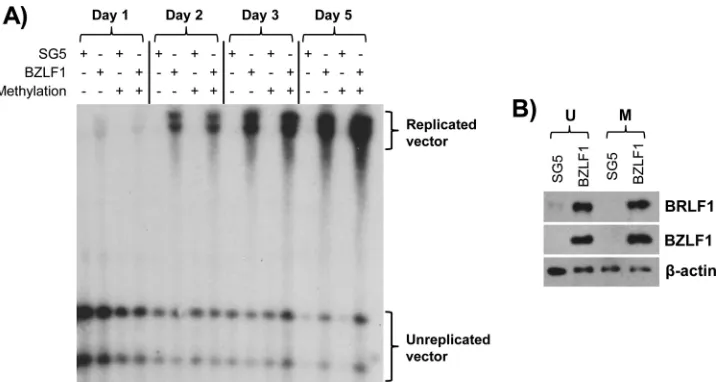
As shown in
Fig. 8A
, the methylated and unmethylated
oriLyt-containing vectors replicated similarly at all time points, in a
BZLF1-dependent manner. Note that transfection of BZLF1 into
D98/HR-1 cells results in strong expression of the BRLF1 protein
(derived from the endogenous viral genome) (
Fig. 8B
), and hence
both BZLF1 and BRLF1 are available in this replication assay.
Since the
trans
-acting BZLF1-induced viral replication proteins in
this experiment were all derived from the endogenous viral
ge-nome of D98/HR-1 cells, this oriLyt plasmid replication assay
re-sult indicates that DNA methylation of oriLyt does not alter the
efficiency of lytic replication in
cis
.
BRLF1, but not BZLF1, expression results in lytic viral
reac-tivation and release of infectious viral particles in a cell line
in-fected with a highly unmethylated form of the EBV genome.
We
have recently identified a telomerase-immortalized oral
keratino-cyte cell line (NOKs) that can be stably infected with EBV in a
latent form and maintains the lytic viral promoters on the EBV
genome in a highly unmethylated state. To examine the
methyl-ation status of the various lytic viral promoters in NOKs-Akata
cells, DNA was purified from the cells and cut or mock cut with the
HpaII restriction enzyme (which can cut the unmethylated, but
not methylated, form of the CCGG recognition sequence), and
lytic EBV promoter sequences were then PCR amplified using
primers located on either side of the HpaII restriction site(s). As
shown in
Fig. 9A
, the methylated EBV bacmid DNA was resistant
to HpaII cutting (and hence could be PCR amplified when
ex-posed to the restriction enzyme), while the unmethylated form of
the bacmid was sensitive to cutting (and hence could not be PCR
amplified), as expected. The EBV DNA purified from
NOKs-Akata cells could not be PCR amplified following HpaII cutting at
any of a variety of different lytic EBV promoters tested (including
the BZLF1, BRLF1, BALF2, BHLF1, BLRF2, and BMLF1
promot-ers), indicating that the CpG-containing HpaII sites present in
each of these promoters are not methylated. In contrast, with the
exception of the BZLF1 and BHLF1 promoters, each of the lytic
viral promoters in EBV DNA purified from the HONE-Akata line
was partially protected from HpaII digestion, suggesting that this
cell line contains a mixture of methylated and unmethylated viral
genomes. Interestingly the BZLF1 promoter was recently shown
to be generally unmethylated in various EBV-positive tumors,
even when other lytic viral promoters were methylated (
5
).
We next compared the ability of transfected BRLF1 versus
BZLF1 expression vectors to induce early lytic protein expression
in NOKs-Akata versus HONE-Akata cells. As shown in
Fig. 9B
,
although the NOKs-Akata cells expressed at least as much
trans-fected BZLF1 as the HONE-Akata cells, BZLF1 activated BRLF1
FIG 7BRLF1 preferentially enhances acetylation of H3K9 on unmethylated viral promoters. 293T cells were transfected with unmethylated ( U) or meth-ylated (M) EBV bacmid DNA in the presence or absence of SG5 control vector, BZLF1, or BRLF1 as indicated. A ChIP assay was performed at 2 days post-transfection with anti-IgG isotype control and anti-H3K9Ac antibodies as specified. The relative presence of bound promoters was assayed by PCR am-plification using primers spanning BALF2p, BHLF1p, BLRF2p, BMLF1p, BMRF1p, BZLF1p, and-globin (negative control) as indicated.
EBV DNA Methylation Differentially Affects Z versus R
on November 7, 2019 by guest
http://jvi.asm.org/
[image:11.585.56.274.64.231.2]and BMRF1 expression from the endogenous EBV genome in
HONE-Akata cells but had no effect whatsoever in the
NOKs-Akata cells. In contrast, BRLF1 activated BZLF1 and BMRF1
ex-pression from the endogenous viral genomes in both NOKs-Akata
and HONE-Akata cells (
Fig. 9B
and data not shown). Similar
re-sults were obtained when lytic viral gene expression was examined
using RT-PCR analysis (
Fig. 9C
).
To determine if the combination of BRLF1 and BZLF1 induces
synergistic early lytic BMRF1 protein expression in NOKs-Akata
cells (as was observed using the unmethylated as well as
methyl-ated EBV bacmids), cells were transfected with control vector,
BZLF1 alone, BRLF1 alone, or the combination of BZLF1 and
BRLF1. As shown in
Fig. 9D
, the combination of BZLF1 and
BRLF1 together induced much more BMRF1 protein expression
than either BZLF1 or BRLF1 alone. Interestingly, NOKs-Akata
cells did not show a significant increase in lytic gene transcript
levels (including the BMRF1 transcript) in cells transfected with
BRLF1 alone versus the combination of BRLF1 and BZLF1 (
Fig.
9C
). This result is similar to that obtained using EBV bacmids
(
Fig. 4
) and again suggests that the BRLF1/BZLF1 combination
synergistically enhances BMRF1 protein expression (and perhaps
other lytic viral proteins as well) through an at least partially
post-transcriptional mechanism.
Finally, we also examined the amount of infectious viral
parti-cles released (using the Green Raji cell assay) from NOKs-Akata
cells transfected with control vector, BZLF1 alone, BRLF1 alone,
or the combination of BZLF1 and BRLF1. As shown in
Fig. 9E
,
BZLF1 alone did not result in release of infectious viral particles
(in comparison to cells transfected with a control vector), while
BRLF1 alone induced release of infectious viral particles.
How-ever, the combination of BZLF1 and BRLF1 together resulted in
the greatest number of infectious viral particles, consistent with
the ability of this combination to increase expression of the
essen-tial viral replication protein BMRF1 (the viral DNA polymerase
processivity factor). These results confirm that BRLF1 plays a
crit-ical and primary role in initiating lytic gene expression in cells
containing the unmethylated form of the EBV genome and show
that cells infected with a highly unmethylated form of the EBV
genome are capable of undergoing the lytic form of viral
replica-tion in response to BRLF1 but not BZLF1 expression.
DISCUSSION
DNA methylation enhances the ability of the EBV
immediate-early BZLF1 protein to bind to, and activate, certain immediate-early lytic
viral promoters, and viral genome methylation has previously
been shown to promote virion production following infection of
human B cells (
9
–
11
,
24
,
27
–
29
). However, while the EBV BRLF1
immediate-early protein can also induce lytic reactivation in
many latently infected cell lines (
20
,
32
), the effect of promoter
DNA methylation on the ability of BRLF1 to activate various EBV
lytic gene promoters has not been explored. In this study, we have
investigated how viral genome methylation affects the ability of
BZLF1 versus BRLF1 to activate transcription using a series of
different lytic EBV promoters in reporter gene assays and using
methylated versus unmethylated EBV bacmid DNA. We show
that DNA methylation enhances BZLF1-mediated activation, but
inhibits BRLF1-mediated activation, of most early lytic EBV
pro-moters. We also demonstrate that methylation of oriLyt plasmid
DNA does not have a
cis
-acting effect on its ability to replicate
when essential viral replication proteins are provided in
trans
.
Most importantly, we have identified an EBV-positive cell line
(NOKs-Akata) stably infected with a highly unmethylated viral
genome and have shown that BRLF1, but not BZLF1, expression
in this line results in lytic viral gene expression and release of
infectious viral particles. Together, these results suggest that in
cellular environments that promote efficient expression of both
the BRLF1 and BZLF1 proteins, lytic viral replication may occur in
both the presence and absence of viral genome methylation.
In agreement with previous results reported by our own lab
and others (
9
–
11
,
24
,
27
–
29
,
63
), we found that methylation
en-FIG 8DNA methylation incisdoes not alter the efficiency of lytic replication. Lytic replication of an oriLyt-containing plasmid, p588, was assayed as previously described (57). Methylated or mock-treated p588 was transfected into EBV-positive D98/HR-1 cells with and without SG5 control vector and BZLF1 as indicated. (A) DNA was isolated from nuclear extracts at the specified time points after transfection and digested with BamHI (to linearize the p588 plasmid) and DpnI (to differentiate replicated versus unreplicated p588 plasmid). Southern blotting employing a [␥-32P]ATP-labeled probe directed against the hygromycin resistance gene was performed. The positions of the replicated and unreplicated plasmids are indicated at the right. (B) Cell lysates were harvested in SUMO buffer, and the level of BRLF1 expression induced by BZLF1 transfection into D98/HR-1 cells was assayed by immunoblot analysis.
on November 7, 2019 by guest
http://jvi.asm.org/
[image:12.585.114.473.65.256.2]hances BZLF1 activation of the majority of early lytic promoters
tested, with some functionally important exceptions. In
particu-lar, we found that the two early lytic promoters within oriLyt,
BHLF1 and BHRF1, are preferentially activated by BZLF1 in the
unmethylated form. This result (also reported by another group
[
10
]) likely reflects the fact that the ZREs in oriLyt do not contain
CpG motifs, and thus viral genome DNA methylation does not
increase BZLF1 binding to these sites. In contrast, as shown here
FIG 9The NOKs-Akata cell line contains a highly unmethylated form of the EBV genome and undergoes lytic reactivation in response to BRLF1, but not BZLF1, expression. (A) DNA isolated from NOKs-Akata cells (N/A) or HONE-Akata cells (H/A) was digested or mock digested with HpaII and then PCR amplified using primers located on either side of HpaII restriction sites in various different lytic EBV promoters as indicated. Methylated (M) or mock-methylated (U) EBV bacmid DNA was similarly treated and PCR amplified to serve as controls representing completely unmethylated and completely methylated viral DNA. Similar results were obtained in a second experiment (data not shown). (B) NOKs-Akata (N/A) and HONE-Akata (H/A) cells were transfected with SG5 control vector, BZLF1, or BRLF1 (50 ng of each vector in NOKs-Akata cells and 10 ng of each vector in HONE-Akata cells) as indicated. Immunoblotting was performed at 2 days posttransfection to compare the levels of BZLF1- or BRLF1-induced BMRF1 and the transfected BZLF1 and BRLF1 proteins. Tubulin served as a loading control. (C) NOKs-Akata cells were transfected with SG5 control vector, BZLF1, BRLF1, or the combination of both BZLF1 and BRLF1 as indicated. Two days later, RNA was isolated from the cells and DNase treated, and RT-PCR was performed using primers to detect BZLF1 (transfected and EBV genome-derived), BRLF1 (transfected and EBV genome-derived), BMRF1, BALF2, BHLF1, BLRF2, BMLF1, or beta-2 microglobulin (2 M) transcripts as indicated. (D) NOKs-Akata cells were transfected with SG5 control vector, BZLF1, BRLF1, or the combination of both BZLF1 and BRLF1 as indicated. Immunoblotting was performed at 2 days after transfection to compare the levels of BZLF1- or BRLF1-induced BMRF1 and the transfected BZLF1 and BRLF1 proteins. Tubulin served as a loading control. (E) NOKs-Akata cells were transfected with SG5 control vector, BZLF1, BRLF1, or the combination of both BZLF1 and BRLF1 as indicated. The number of infectious virions released into the supernatant under each condition was quantitated 3 days later using the Green Raji cell assay.
EBV DNA Methylation Differentially Affects Z versus R
on November 7, 2019 by guest
http://jvi.asm.org/
[image:13.585.137.472.66.529.2]and previously (
10
,
27
–
29
), methylation of CpG-containing ZREs
is associated with greatly increased BZLF1 binding
in vitro
and
in
vivo
(
Fig. 6
).
The BRLF1 protein binds to the consensus element, GNCCN
9GGNG, known as the R-responsive element (RRE), and RREs
of-ten contain CpGs motifs in either the nine-nucleotide spacer
se-quence or the 4-bp core sese-quences directly contacted by the R
protein at either end of the motif. However, in EMSAs we did not
find that methylation of CpG motifs located either in the RRE
spacer region or within the core binding sites at either end of the
motif affected BRLF1 DNA binding.
In vivo
ChIP assays
con-firmed that BRLF1 binding to promoters with RREs is similar in
the presence or absence of viral genome methylation.
Although direct BRLF1 binding to DNA does not appear to be
affected by methylation of RREs, we nevertheless found that
BRLF1 activation of at least a subset of early lytic promoters is
rather dramatically inhibited by DNA methylation (
Fig. 2
and
3
).
Consistent with this result, we found that BRLF1 binding to
un-methylated, but not un-methylated, promoters
in vivo
is associated
with H3K9 acetylation (
Fig. 7
). This result suggests that repressive
chromatin modifications associated with viral genome
methyl-ation may inhibit the ability of BRLF1 to recruit histone acetylases
such as CBP and p300 to promoters. Interestingly, although
BZLF1 has been reported by our own group and others to interact
directly with the histone acetylases CBP and p300 (
61
,
62
), we
found that BZLF1 binding to lytic EBV promoters did not result in
robust H3K9 acetylation. Likewise, another recent study found
that BZLF1 promoter binding did not result in uniform
acetyla-tion of H3K9 and showed that BZLF1 is able to bind to and
acti-vate target promoters despite high levels of repressive chromatin
modifications (
56
).
Similar to the results reported by another group (
11
), we found
that DNA methylation inhibits BZLF1 activation of the BHRF1
and BHLF1 oriLyt promoters, which are not thought to have
CpG-containing ZREs. We also found that BZLF1 binding to the
DNA of these promoters
in vivo
is not affected by the viral genome
methylation state (
Fig. 6
), even though transcriptional activation
of these promoters is reduced by methylation (
Fig. 1B
). These
results suggest the possibility that BZLF1 assumes different
con-formations when bound to different types of ZREs and that the
conformation bound to methylated CpG-containing ZREs is
par-ticularly efficient in activating transcription in the context of a
repressive chromatin environment.
Interestingly, while we found that EBV bacmid DNA
methyl-ation has the opposite effect on the ability of BZLF1 alone versus
BRLF1 alone to activate BMRF1 expression, the combination of
BZLF1 and BRLF1 synergistically activates BMRF1 protein
ex-pression regardless of the viral genome methylation state.
None-theless, the mechanism(s) by which BZLF1 plus BRL