Evaluation of the
18-21 Work Skills Pilot 1:
final report
Research Report
September 2018
2 Acknowledgements
The research team is sincerely grateful to the support offered by the research managers, Robin Elliot Marshall, Andrew Stocks and Richard Ward.
We also wish to thank the policymakers within the Departments who supported and contributed to the research.
We are indebted to the Jobcentre Plus offices and Pilot providers who hosted visits by members of the research team during the testing phase to enable insight to emerge into the Pilot’s operation and implementations
The research team
The evaluation was conducted by a consortium of organisations formed of the Institute for Employment Studies (IES), the National Centre for Social Research (NatCen) and AlphaPlus Consultancy Limited. IES developed the final synthesis report of findings. Key research and administrative contributors at IES: Lucia Barbone, Gill Brown, Jonathan Buzzeo, Rosie Gloster, Francisco Gonzalez Carreras, Jim Hillage, Vahé Nafilyan, Becci Newton, Stefan Speckesser, Arianna Tassinari, and Matthew Williams. Key research contributors at NatCen: Triin Edovald, Valdeep Gill, Hayley Lepps, Francisco Moraiz, Stephen Morris and Ellie Roberts.
Key research contributors at AlphaPlus Consultancy Limited: Angus Alton, Andrew Boyle, Naomi Horrocks, Seb Schmoller and Jenny Smith.
The Institute for Employment Studies
The Institute for Employment Studies (IES) is an independent, apolitical, international centre of research and consultancy in public employment policy and organisational human resource issues. It works closely with employers in the manufacturing, service and public sectors, government departments, agencies, and professional and employee bodies. For over 40 years the Institute has been a focus of knowledge and practical experience in employment and training policy, the operation of labour markets, and human resource planning and development. IES is a not-for-profit organisation which has over 30 multidisciplinary staff and a network of international associates. IES expertise is available to all organisations through research, consultancy, publications and the
3
Contents
Executive Summary 7
1 Introduction 13
1.1 About the 18-21 Work Skills Pilot 1 14
1.1.1 How the Pilot was implemented 14
1.1.2 Subsequent developments 15
1.2 About the evaluation 16
1.3 Report structure 18
2 Expectations for the Pilot 19
2.1 Aims and outcomes 19
2.2 Key operating principles 21
2.3 Conditions for success 22
2.3.1 Communication and collaboration 22
2.3.2 Learner support and management in light of mandation 22 2.3.3 Access to information and communications technology and facilities 23
2.3.4 Effective randomisation procedures 23
2.4 Policy perspective on the commissioning process 23
2.4.1 The providers 24
2.4.2 Provider experiences of the commissioning process 24
2.5 Concerns about the viability of the Pilot contracts 25
2.6 Messages from the ex-ante cost benefit analysis 25
3 Entry to the Trial 27
3.1 Pre-Pilot provision 27
3.2 Participation in the Pilot 28
3.3 New claim interview and qualification screening 30
3.4 Assessment 33
3.4.1 Format of the assessment 33
3.4.2 Referral to assessment 34
3.4.3 Attending the assessment 36
4
3.5 Randomisation to online training or control group 39
3.5.1 Referral processes and online training 43
4 Training Provision 45
4.1 Learning infrastructure 45
4.1.1 Issues raised by the analysis of provision 48
4.2 Online training experience 49
4.2.1 Treatment engagement 49
4.2.2 Differences to school learning 50
4.3 Business as usual provision 51
4.4 Training and take-up of other provision 53
5 Outcomes 56
5.1 Training completion and achievement 56
5.2 Destinations 57
5.3 Receipt of Welfare Benefits 60
5.4 Analysis of sanctions 61
5.5 Individual learner experiences 62
5.5.1 Experience of the training and any changes 63
5.5.2 The difference the training made 63
6 Discussion and conclusions 65
6.1 Evidence on the key principles 65
6.1.1 The role of mandation 65
6.1.2 Attitudinal and behavioural changes amongst learners 66
6.1.3 Value for money 67
6.1.4 Market capacity 68
6.2 Conclusions and lessons learned 68
Appendix 1 71
5
List of figures
Figure 1: Youth Claimant Count (18-24 years) November 2013-2014 15
6
List of tables
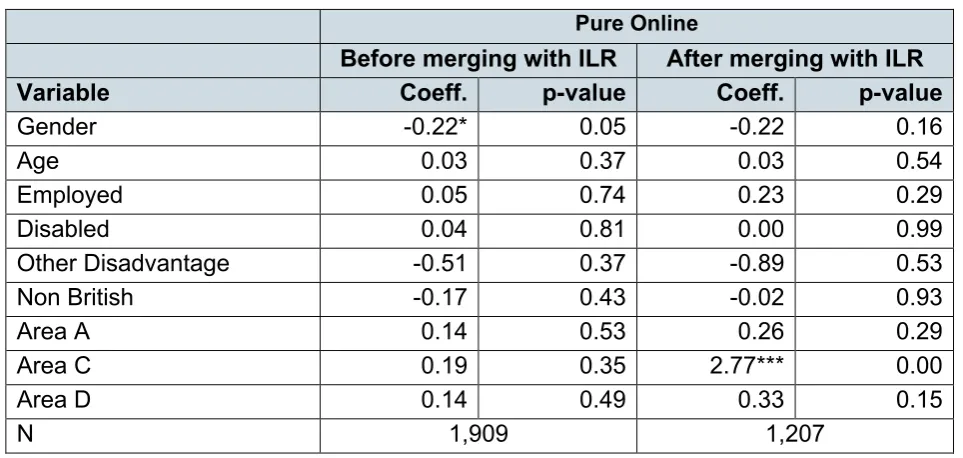
Table 3.1: Randomisation Test: Multinomial Logit Regression (Blended Online Group) . 41
Table 3.2: Randomisation Test: Multinomial Logit Regression (Pure Online Group) ... 41
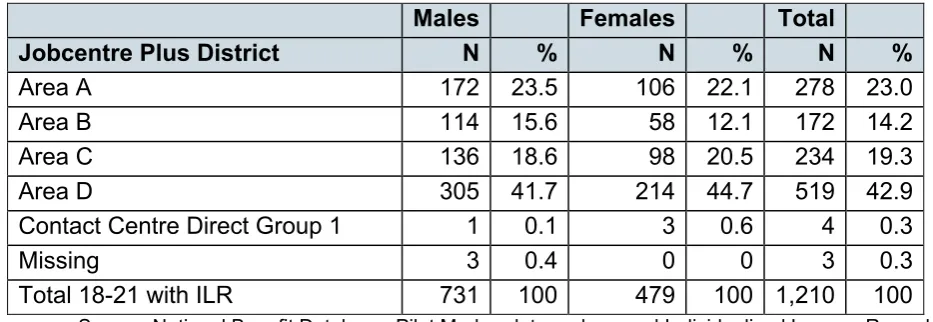
Table 3.3: Geographical Location by gender of 18-21 WSP programme participants ... 42
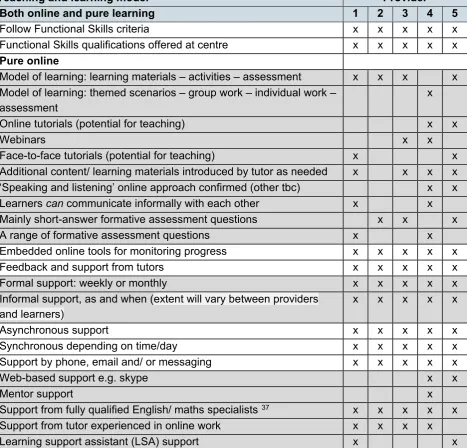
Table 4.1: Overview of teaching and learning models by provider ... 47
Table 4.2: Number of learning aims started by JSA/ESA(WRAG claimants) aged 19-24 51 Table 4.3: Learning Aims Recorded by Treatment Group ... 53
Table 4.4: Recorded Pilot participants in LMS Opps data with least 1 opportunity after assessment (other than Assessment) by status in Marker data (%) ... 55
Table 5.1: Number of individuals with at least one Pilot aim achieved by subject, by group ... 56
Table 5.2: ILR recorded destinations by RCT group ... 57
Table 5.3: Regression results on recorded destinations comparing the blended or online group with the business as usual group ... 59
Table 5.4: Regression results on each type of destination... 60
Table 5.5: Duration before the assessment ... 61
Table 5.6: Duration of spells after assessment ... 61
7
Executive Summary
Introduction
In response to persistent youth unemployment and causal links between unemployment, low skill levels and poor long term economic and social outcomes, the Departments of Business, Innovation and Skills (BIS) (transferring to Department for Education in the 2016 Machinery of Government change), and Work and Pensions (DWP), collaborated to launch a new Pilot in November 2014. Known as the 18-21 Work Skills Pilot 1, it aimed to investigate whether the provision of online training in English and maths could help
increase the skills and employability of young Jobseeker’s Allowance (JSA) claimants aged 18-21 years who could not provide evidence of possessing these skills at Level 2. The Pilot was delivered through a randomised controlled trial (RCT). This meant that ‘treatment’ (access to online training through the pilot) could be systematically compared to business as usual (BAU) (i.e. what would have been offered in the absence of the Pilot). As part of BAU, Jobcentre Plus (JCP) staff had discretion to decide the support young people required which could include access to provision such as work experience, sector-based work academies, traineeships, as well as SFA-funded training.
The Pilot required JCP staff to screen claimants’ qualifications and to mandate them to an assessment where Level 2 skills could not be proven. Assessments and online training provision were operated by 5 providers who bid for Pilot delivery. Where
assessment showed claimants’ English and maths skills to be below Level 2, JCP staff used a random allocation tool to mandate them to 1 of 2 treatments (pure or blended online training) or to the control group, where claimants would receive the BAU provision. The Pilot initially operated across 3 DWP districts in 62 JCP offices. Providers were contracted to deliver in 5 Skills Funding Agency (SFA) contract package areas with 1 provider allocated to each of these. This meant that in 1 of the DWP districts, 3 providers were responsible for Pilot delivery while in the other 2, only 1 provider operated. All providers offered pure as well as a blended online training provision.
Subsequent closure of the Pilot
8
22,600 young people. 1 In parallel, an accelerated implementation of Universal Credit (UC) was announced. These factors reduced the availability of young jobseekers to participate in the Pilot. Efforts were made by both Departments to overcome the
consequences: the Pilot was extended into a further DWP district (14 JCP offices), with an existing provider winning the delivery contract. Consideration was given to involving UC claimants although the evaluation team advised that the differences in the UC and JSA regimes meant that data could not be combined. Even with these changes, however, the decision was taken to close the Pilot after its testing phase as it was judged that it would take an unsustainably long time to obtain the volume of claimants required for a reliable analysis and that this would be at an unrepresentative cost per learner.
The evaluation
An evaluation was underway at the point of closure. This had collated a sizeable evidence base about the Pilot’s implementation through qualitative research with
policymakers, strategic-level provider staff and case studies involving JCP staff, provider staff, BAU providers, and learners. In addition, 2 intervention studies were completed: 1 into assessments and the other into online training. Further, a preliminary forecast of the economic and social gains and losses that could arise from the Pilot had been
completed. As part of closure activities, the RCT data was analysed and follow-up, qualitative interviews were conducted with learners already recruited to the research. This report collates and synthesises all the evidence emerging from the evaluation and draws lessons for future RCTs in this policy arena. The associated technical report contains a full description of the quantitative analysis undertaken with the RCT data available during the closing stages of the pilot.
Findings
Pre-Pilot approaches and provision
The available evidence confirmed that pre-Pilot there was no consistent mechanism to check claimants’ qualification levels, not least since there is no requirement or
expectation that JCP staff screen qualifications under BAU arrangements (Section 3.1). Until the Pilot introduced systematic qualification screening, JCP staff asked about skill levels as part of initial claim interviews and took decisions about whether to refer claimants to provision based on their own judgements. Commentary from JCP staff taking part in the process evaluation about the English and maths provision to which they
1 Based on ONS data, downloaded October 2016 from:
9
could refer claimants pre-Pilot, suggested that the availability of this provision was quite variable across the Pilot areas. Forms of training thought by JCP staff to be useful for the age group were traineeships, not necessarily because of the English and maths content, and sector-based work academies.
Pilot data sources and entry into the Pilot
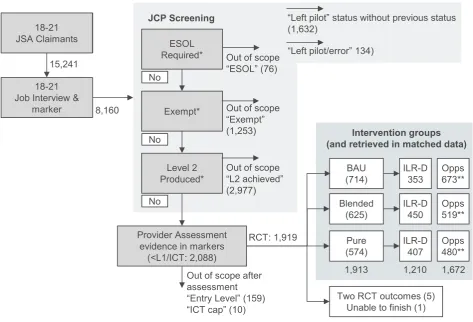
Data on participation in different stages of the Pilot were recorded using 3 different sources across DWP and BIS. However, there was variation in those recorded as participants between these sources, which led to difficulties reconciling the data to fully understand Pilot participation (Section 3.2). Using Pilot marker data from the DWP Labour Market System (LMS),2 it was estimated that 8,160 young JSA claimants were available to enter into the pilot and have their qualifications screened. Of these:
• 76 were out of scope because they needed language support, and 1,253 were
exempted because they were vulnerable or had other special circumstances.
• 2,977 produced evidence of being qualified to Level 2.
• A further 1,632 were recorded as ‘left pilot’, and 134 as ‘left pilot/error’.
Following screening, this left a minimum of 2,088 who were referred to assessment3 and according to the marker data, subsequent to this, 1,919 were allocated to the RCT i.e. were randomised to either treatment or the control group. However, once decode data from the BIS Individualised Learner Records (ILR) dataset were examined in addition to the Pilot marker data, the treatment group became smaller (1,211 claimants).4 The data showed that those who left following assessment (e.g. due to exemption) tended to have shorter spells of unemployment than those who continued into the Pilot at this point. The qualitative accounts of JCP staff taking part in the process evaluation indicated that, for the large part, Pilot guidance was being followed correctly in respect of screening procedures and exemptions. This was confirmed by the analysis of Pilot marker data on randomisation. However, the analysis of the ILR decode data indicated some differences in characteristics between the 2 treatment groups and the BAU control group once
randomised into training. This was problematic as there should not be a statistically significant relationship between the group a claimant was randomly allocated to, and other characteristics, if the process was truly random. The effect was observed in area C
2 Please refer to section 3.2 in this report and the technical report that accompanies this synthesis for a full
description of each of the sources available and of each stage of the quantitative analysis.
3 The combined data suggested a much higher number of assessments at 4,042 although for 2,370 of
these (about 60%) no further Pilot participation could be established
4 Again, please refer to the Technical Report for a full discussion of the various data-sets and how they
10
(Provider 4) where claimants appeared to be more likely to be allocated to the pure or blended online treatment groups. There was also a weak difference by gender across areas. This meant that, in some respect, Pilot guidance was not consistently applied. The early end to the Pilot meant it was not possible to unpick this conflicting evidence.5
The assessments
In most cases providers used a commercial assessment package although they had selected different packages. The assessments shared similar relationships to the Functional Skills standards although there were differences which potentially could weaken their reliability and comparability for the RCT.
Handover and referral processes between JCP and providers varied between areas, and in some cases there could be lengthy delays between referral and assessment. This was due to difficulties in matching supply with demand. There were anecdotal accounts of high rates of failure to attend assessments, which meant that while all assessment appointments were booked, only half were used at any time in some areas.
There was varying practice in respect of communicating the results of assessment. Most providers gave young people a result on the day of the assessment. Providers said they rapidly communicated the results to JCP offices, although JCP staff could note delays. The point at which JCP staff told claimants their results could also vary; where this took time, any referral to training also became delayed. For those claimants who received an assessment but for whom no further record of Pilot participation could be found, the quantitative analysis showed spells of claiming JSA were, on average, shorter than those entering treatment (pure or blended online training).
Practice varied in respect of approaches with the control group (BAU). Some JCP staff believed it was no longer possible to provide training or work experience, whereas 1 office had devised a bespoke training provision for the control group with a BAU provider, which included English and maths training combined with work placement.
Referral to training and the training experience
The learning infrastructure and platforms implemented by providers were varied and there was not a consistent difference between blended and pure online training between the 5 providers (i.e. each provider configured the 2 forms of training differently and for example, some included an element of face-to-face provision in the pure online training, and the extent of face-to-face training in the blended models varied substantially between
5 Although it must be noted that only a small sample of JCP offices were visited for the process evaluation
11
providers). Thus considering all the blended forms to be the same, or all the pure forms to be the same, was unlikely to be reliable, with consequences for understanding the RCT data. Moreover, provision and platforms were still in development at the time of the research which meant there was potential for change in the future, again with
implications for assessing the RCT data.
Nonetheless, young people in the process evaluation who joined the online training were often positive and appreciated the training environment and experience. They liked the employability content although this varied in format between providers. This content helped young people to see the applicability of their training to the world of work.
Outcomes
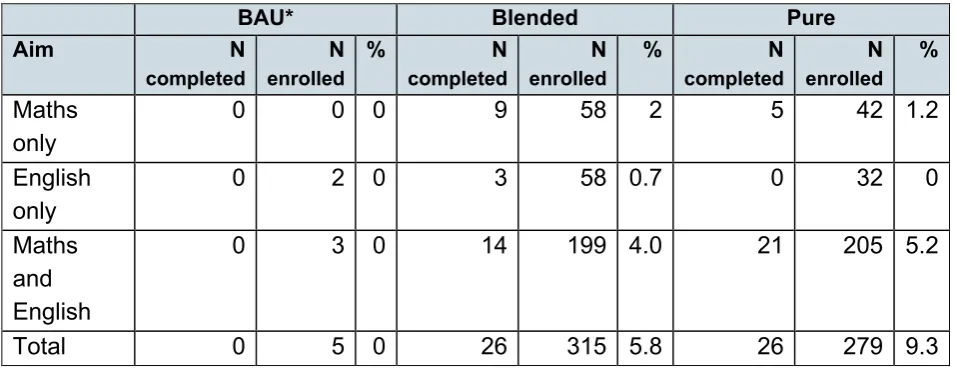
The RCT data was drawn too early to demonstrate long term outcomes and outcomes that were captured were unlikely to be representative of the Pilot if it had continued to operate as planned. Hence while a completion rate of c.10% was seen for learners involved in either pure or blended online training this captured completion only at the point data were drawn. The data also showed that many treatment learners were
continuing training. It was thus unlikely that a 10% completion rate was representative of what could have been achieved with more time.
The qualitative accounts from the limited number of Pilot learners involved in the follow-up interviews showed that employment and training outcomes had emerged with some working and others involved in apprenticeships. Only those in this small sample who remained unemployed continued with Pilot training. Many said they had realised benefits including improvements to literacy and numeracy skills which they attributed to Pilot training. Some saw attitudinal and behavioural changes such as understanding how and why employers valued core skills, and feeling more control over their own situations.
Discussion and lessons learned
Overall, many of the key principles set out by policymakers for the Pilot held true in
practice. Young people could be convinced of the value of returning to English and maths learning and found the online training format engaging. The applied nature of the training was also important to their engagement. JCP staff and providers were largely able to provide sufficient encouragement for a positive engagement to emerge and were able to supply the level of learner support that helped learners persist in training. As a result of training, learners believed they gained benefits including in respect of skills as well as attributes and behaviours.
12
training. It was thus impossible to say what would have happened without the lever of mandation being in place.
The Pilot had great potential to add to the evidence base of what works for young, unemployed people and particularly whether improving core skills could make a
difference. However, its delivery was undermined by the changed economic environment and notably by increasing levels of youth employment. In combination these undermined not only the financial planning but also the judgements that it was possible to draw based on the RCT data. Lessons could however be drawn from its operation which included:
• The value of testing the RCT and referral process as part of a Pilot implementation before any national roll-out: this delivered insights into the effects of the reduced on flows to the unemployment register as well as operational factors that could have improved delivery and consistency, making the resulting data more reliable.
• The lack of time for outcomes to emerge: an unfortunate consequence of closure before main-stage implementation was the lack of time for longer term outcomes to emerge which meant the impact of the Pilot could not be determined.
• More consistent data source(s): the analysis of the RCT data was hindered in part by a lack of consistency, particularly between the different data-sets that had to be used. A more consistent source would have allowed a clearer picture of operation, and with time impact. Without this, the research relied upon estimated effects.
• Ensuring key staff understand the rationale for an RCT and comply with
procedures: to avoid any disruption to the randomisation process and to prevent baseline practices changing during operation. Within the Pilot, a longer lead time to delivery to allow for communications and to provide guidance on relevant procedures would have been valuable. Being clear on the benefits of the new provision over BAU could also have increased staff support of the Pilot.
• The need to commission training provision as tightly as possible for an RCT: while providers met high level definitions for blended and pure online training, delivery models varied considerably which brought uncertainty for the validity and utility of the RCT data to understand the relative impact of these two forms of training.
• The challenges of matching supply with demand: doing more to facilitate
13
1 Introduction
The dominant theme guiding UK labour market policy over the last decade has been to encourage labour-market participation and as such, reducing the proportion of young people who are unemployed has been a key priority. While youth unemployment has been falling in recent years it remains higher than the adult rate; the economic downturn had a disproportionate effect on young people’s transitions into work.
A review led by Sir Jeremy Heywood in summer 2013, collated the evidence on youth unemployment with an aim to make recommendations for government on how to improve labour market outcomes for young people. Given the importance of Level 2 qualifications in English and maths (i.e. GCSE A*-C) to longer term outcomes, his recommendations included the implementation of Pilot support for low skilled, unemployed 18-21 year olds. This was announced in the Autumn Statement6 in 2013, with further details contained in a speech by the Deputy Prime Minister in February 20147. Thus the 18-21 Work Skills Pilot 1 was introduced which aimed to support new Jobseeker’s Allowance claimants aged 18-21 who did not have Level 2 maths or English to improve their skill levels through mandating them to an English and/or maths GCSE or Functional Skills8 online training.
Alongside this, a second Pilot, 18-21 Work Skills Pilot 2, sought to test whether employment outcomes for 18-21 year olds still on benefit after 6 months could be improved by mandating them to participate in a work, skills or work/skills intervention most appropriate to them (for example, a traineeship or other training intervention, a Sector-Based Work Academy, or work experience, although the latter could not be mandated). Pilot 2 operated between November 2014 and September 2015.
The Department for Business, Innovation and Skills (BIS) and the Department for Work and Pensions (DWP) jointly led the Pilots and jointly commissioned their separate evaluations. Pilot 1, the subject of this report, was launched in late November 2014 and continued to operate until February 2016.
6 For more details on the Autumn Statement 2013 pilot announcement, see paragraph 1.197 (p53)
https://www.gov.uk/government/uploads/system/uploads/attachment_data/file/263942/35062_Autumn_Statement_201 3.pdf
7https://www.gov.uk/government/speeches/better-choices-better-prospects-helping-young-people-succeed
8 Functional Skills are the skills of English, maths and information and communication technology essential
14
1.1 About the 18-21 Work Skills Pilot 1
The 18-21 Work Skills Pilot 1 was introduced with the intention of improving young jobseekers’ outcomes by improving their maths and English. The aim was to test the impact on employment outcomes and the development of these skills of systematically mandating (i.e. requiring as a condition of benefits receipt) all 18-21 year old Jobseeker’s Allowance (JSA) claimants who had not achieved Level 2 in English and/or maths to English and/or maths training. The training provision available was designed to be in 2 distinct forms: ‘blended’ or ‘pure’ online learning.Blended online was defined as pre-dominantly online but offered a combination of online learning with face-to-face support from a tutor. ‘Pure’ online which was defined by policymakers as 100% online learning with only virtual support from a tutor
The Pilot operated through a randomised controlled trial (RCT). It required Jobcentre Plus Work Coaches to screen the qualifications of new claimants aged 18-21 years at their New Jobseeker’s interview. Where claimants could not demonstrate possession of a Level 2 qualification in both English and maths they were mandated to attend a skills assessment at a learning provider. In addition to English and maths skills, this
assessment covered information and communication technology (ICT) skills and
capabilities. Where the assessment found claimants to possess English and maths skills beneath Level 2, and adequate ICT skills, they were judged as eligible for the Pilot and subject to the randomisation. This referred them to 1 of the 2 treatments (blended or pure online training) or to business-as-usual (the offer typically made available to such
claimants pre-Pilot).
Where they were randomised to training this was on a mandatory basis, following the provisions of the Jobseeker’s Allowance (18-21 Work Skills Pilot Scheme) Regulations 2014.9 The DWP supplied JCP offices with a random allocation tool, which used national insurance number as the basis for allocation, and JCP staff notified claimants of the result of randomisation. Where JCP staff believed young claimants were not suitable for the Pilot, for example, due to chaotic lifestyles or substance misuse problems, they were able to apply a discretionary exemption if approved by their manager.
1.1.1 How the Pilot was implemented
Delivery commenced on the 25 November 2014 in 3 DWP districts which between them had 62 JCP offices: Cornwall, Devon and Somerset; Kent; and Mercia. DWP provided funding for the additional advisory and management time the Pilot required. In the lead
15
up to the Pilot’s launch, it delivered training to JCP staff to equip them to operate the Pilot.
The online learning was commissioned by the SFA on behalf of BIS. It had 5 contract package areas covering the 3 districts; this meant it commissioned provision separately in each of the counties in the Cornwall, Devon and Somerset district.10 The maximum duration for learning was 6 months and claimants were able continue training during this time even where they entered employment. Following a competitive tendering process, 5 providers were selected by the SFA; 1 to deliver in each of its contract package areas. Each was contracted to offer both pure and blended online learning and each was granted development costs for their online learning infrastructure. Beyond this start-up payment, the Pilot delivery contract offered an agreed fee for the assessments, and for supporting learners in training. The funding included the entry fees associated with the qualifications (Functional Skills or GCSEs) that learners could take.
1.1.2 Subsequent developments
[image:15.595.65.526.463.627.2]After the Pilot had been launched, the economic environment started to improve. The unemployment register showed a significant decline in the period between November 2013 and November 2014. The overall claimant count dropped by 1.2 percentage points or by around 362,00 individuals. The decline amongst young claimants (aged 18-24) was sharper across the same period at 2.2 percentage points and 22,6000 individuals (see Figure 1).
Figure 1: Youth Claimant Count (18-24 years) November 2013-2014
Data downloaded 25 October 2016 from:
https://www.nomisweb.co.uk/query/construct/submit.asp?menuopt=201&subcomp=
10 A coding structure for districts and providers is used throughout the report to protect identities. Appendix
1 maps DWP district codes and with the SFA’s provider contract package areas.
0 10,000 20,000 30,000 40,000 50,000 60,000 70,000 80,000 90,000 100,000
Nov
16
Source: Office for National Statistics
Crucially, the impact of this was lower than forecast numbers of young people coming onto the unemployment register which affected numbers entering the Pilot. For example at the end of February 2015, the number of people referred to the trial was only 15% of the forecast for this point. In addition, the Secretary of State for Work and Pensions announced an accelerated roll-out of Universal Credit11. Since the Pilot targeted JSA claimants once this took effect it would further reduce Pilot flows.
In efforts to address the effects on the Pilot’s implementation, the 2 Departments
systematically explored options to increase the volume of new claimants who could enter random allocation. This included extending the Pilot’s reach as well as its duration. The outcome was that the Pilot was extended into 1 further DWP district (the Black Country12) which had 14 JCP offices, with 1 of the existing 5 providers selected to operate in this area following an additional procurement exercise. Delivery in the Black Country commenced on 2 March 2015. The Departments also considered extending the Pilot’s duration by several months. Finally, policy officials explored the option of including Universal Credit claimants.
In light of these new options, the evaluation team provided advice on whether the
reduced onflows meant an impact analysis remained viable at the level of detail expected by policymakers within a reasonable period of time (i.e. being able to measure an
outcome effect of around 2 to 3 percentage points) and judged that it was not. The number of new claimants in the Black Country district could not compensate for the overall reduced onflow of young people to the unemployment register. In addition, the different conditions that apply to Universal Credit meant that this would have to be considered as a separate Pilot – losing the advantage of increasing numbers.
Consequently by June 2015 policymakers decided to close the Pilot early with the last skills screenings taking place on 22 June 2015 and last assessments funded within 2 weeks of this date. Registered learners were able to continue their training until
completion. The total number of learners entering the trial, by the end of July 2015, was significantly lower than originally forecast.
1.2 About the evaluation
The Departments set multiple aims and objectives for the evaluation across the planned course of the Pilot’s delivery and an extensive period beyond this to allow longer term
11 More detail is available from this link:
https://www.gov.uk/government/news/plans-announced-for-accelerated-rollout-of-universal-credit-after-success-in-north-west
17
outcomes to emerge. As such, the original intention was that the evaluation would supply a full impact assessment, an assessment of cost-effectiveness, and a process evaluation including studies into the online training packages, including the assessment tools. It was possible to complete many, but far from all, of these elements in the period before the decision was reached to close the Pilot and these data are synthesised within the current report along with some additional elements that were agreed once the decision to close the Pilot had been reached. This report is thus based on the following methods; the latter 2 of which were agreed as part of wind-down activities:
1. Process evaluation involving qualitative interviews with 6 national stakeholders, 12 strategic-level contacts and 25 operational contacts within providers, as well as case studies13 which included group interviews with 34 JCP staff and observations of 25 meetings associated with the Pilot in JCP offices, 8 observations of skills assessment meetings in online learning centres, interviews with 33 young people who participated in learning as part of the Pilot and interviews with 8 providers of the BAU offer in local areas.
2. Intervention studies drawing on qualitative interviews and desk-based research to explore the assessment tools and the characteristics of the 2 forms of online learning provision in each provider.
3. A preliminary ex-ante cost benefit analysis (in essence, a forecast) of planned spend and the social returns to investment that could emerge from individuals completing training and acquiring qualifications. This quantitative analysis drew on the planned spending for the Pilot from provider contracts and used the original estimates of Pilot flows. An achievement rate for qualification attainment through the Pilot was based on assumptions drawn from the existing evidence. Further information on the approach to the ex ante CBA may be found in Appendix 2 to this report.
4. Quantitative assessment of the randomised controlled trial data including flows
through the various stages of the Pilot. Data from 2 sources within the DWP’s Labour Market System (LMS) were used and were linked to the Individual Learner Record (ILR) to understand more about individuals’ experiences of learning and outcomes. This analysis is available in full in the technical report that accompanies this
synthesis.
5. Follow-up telephone interviews with Pilot learners who had been recruited to the case study element of the process evaluation. All learners were contacted for this element, although the contact telephone numbers for many had changed. Consequently, 8 of these interviews were completed.
13 Each of the 5 providers was involved in case study research but in the DWP District that covered three
18
1.3 Report structure
This report contains synthesised findings from all strands of work completed during the testing phase of the Pilot and during the period of its closure. The expectations for the Pilot held by national stakeholders, policymakers and the strategic-level staff in providers are set out in Chapter 2. This includes some evidence on the commissioning of the Pilot. In Chapter 3, the data on entry into the Pilot is presented. This chapter includes a
description of pre Pilot provision in local areas, claimant flows including into assessment and subsequently referral to training. This includes an examination of the qualifications screening process as well as of the assessment tools in use.
Chapter 4 focuses on the online training provision and the experience of training. It includes coverage of what was available to the control group and provides some evidence on training and other outcomes.
A more detailed discussion of outcomes is contained in Chapter 5, which covers the available data on destinations, welfare claiming, and rates of sanctioning as well as learners’ views on their achievements.
19
2 Expectations for the Pilot
This section reviews the initial expectations for the Pilot among policy stakeholders and providers and perspectives on the commissioning process.
To build up a picture of how the Pilot was developed, establish the key principles that underpinned it, and understand how it was intended to work in practice; interviews were completed with representatives from BIS, DWP, Cabinet Office and the SFA as well as staff operating at a strategic level within the selected providers.
2.1 Aims and outcomes
Policymakers felt that the Pilot reflected the findings of the Heywood Review, and that it aimed to find the best way of improving young people’s English and maths skills which were seen as crucial to improving their employability, productivity and earnings. Other, more limited, outcomes were also envisaged such as improving the engagement and commitment to progression among the more disaffected young people. However the main aim was clear: to improve young people’s basic skills and thereby their employment prospects.
Following on from this, there was a consensus about the types of outcome for young people that should result from the Pilot, namely increased skill levels, and employment activity leading to sustained employment, although some policymakers also identified softer outcomes such as ongoing engagement with the support available and being able to use time more productively. However, there was no shared definition about what constituted either sustained work or skill acquisition when these interviews were undertaken.14
While some stakeholders indicated that sustained employment should mean holding down 1 job for a specified period, this was far from a universally accepted definition. Alternative definitions included a period of time (e.g. 6 months) during which a young person mostly remained employed, to shorter durations (3 or 4 months) in continuous employment in a series of jobs. Given the low skill levels and lack of experience that the target group might have, some stakeholders suggested that getting a short-term or temporary job was a key achievement and could provide the platform for future
advancement in terms of pay and job security. The quality and sustainability of jobs was also a consideration raised.
20
Similarly, definitions of what appropriate skill acquisition would entail varied at this early stage of the pilot. Some believed that the achievement of a Level 2 qualification was the key measure. However, as young people could not be required to pass qualifications, a qualification measure was not felt to be appropriate and it was recognised that some participants would not be able to achieve Level 2 within the time-frame of the Pilot due to their prior level of achievement. In addition, policymakers perceived that measuring skills gains in the absence of qualification gains would rely upon providers’ initial, interim and final assessments which in turn would rely upon reliable and consistently applied
diagnostic tools. As the Pilot contract had allowed providers to select the initial
assessment tools as well as those for interim and final assessment, it was judged that this could be challenging.15
Some policy stakeholders also expressed interest in outcomes related to behaviour change, such that:
• Participants would take control of their learning and engage in a positive manner that would lead them towards skill improvement; that through online learning with an employability focus, learners would understand that employers value these skills as part of 'work cultures’; that they would also understand the value of these skills to their own situations and circumstances; and that their behaviour would change in that they would recognise they could achieve a Level 2 qualification and above, through a non-traditional approach i.e. they would gain confidence and a greater sense of agency.
• Jobcentre Plus advisers would see that discussion of skills and mandation to assessment where a good level of achievement (e.g. A*-C or equivalent) was not clear should be the norm and should be the starting point in any claimant’s
journey. It was proposed that it should become the norm that people who lack English and maths qualifications and skills be referred to provision that addressed this.
Providers were concerned that prior educational experiences and notably a sense of failure in education could act as a barrier to learners’ engagement. They expected that young people would need to be encouraged to participate, which would emerge in part from mandation, from being advised of the benefits that would result and the reassurance that the training experience would differ substantially from their prior experiences.
15 This led the Pilot steering group to conclude, ahead of the Pilot’s launch, that it was not feasible to
21
2.2 Key operating principles
In order to achieve the expected outcomes and behavioural changes policymakers identified a number of levers for change:
• Mandation – seen as part of the policy framework and as such a necessary
element of the Pilot. While some stakeholders saw it as the crucial means to ensure individuals engaged with the Pilot’s processes, others believed that it would only work in conjunction with, for example, a compelling case being made for taking part in assessment or training, with work coaches providing the means to motivate engagement and participation.
• Qualification screening was viewed as a necessity by some stakeholders in order
to avoid duplication of prior learning, but they did not see much of a role for it beyond this. The wish to avoid learners being required to repeat a level of learning applied to the assessment.
• Assessment was believed to be crucial in order that learning could be pitched to the capabilities of individuals and to provide learners with feedback from which they could measure their own progress. There was recognition that an
assessment that was not engaging could have negative impacts on learners’ willingness to take part in training.
• Randomisation – while understanding the benefits of a randomised controlled trial
in terms of a robust evidence base, not all stakeholders believed online learning would be suitable for all young people who would enter the trial and some believed that the process of randomisation would mean that some learners would be
entered into training that would not be effective for their needs. Providers were further concerned that randomisation meant they could not offer guidance to learners.
• Online learning provision – for some policymakers the Pilot was an opportunity to
22
2.3 Conditions for success
2.3.1 Communication and collaboration
The policymakers conceptualised the conditions that would be necessary for success in different ways. For some this surrounded the effective operation of the Pilot by Jobcentre Plus and online learning providers who would need to communicate effectively,
collaborate on individuals’ cases and provide effective handovers between each other. A lack of understanding among Work Coaches of the benefits of training to individual outcomes would mean that they could not effectively sell this new provision to claimants to encourage their engagement.
Providers engaged with Jobcentre Plus offices across their local areas and viewed these relationships as crucial to successful delivery. They showed a willingness for
collaboration, such as offering to share feedback on claimants’ assessment results and to allow Jobcentre Plus staff access to the online provision in order that they would
understand more about it and could provide positive encouragement to engage amongst claimants.
2.3.2 Learner support and management in light of mandation
Personal support for learners, to help them address their barriers to work and learning, was viewed as crucial by policymakers although there was some considerable
confidence in both advisers’ and providers’ ability to supply and signpost the nature and types of support likely to be required. This confidence was well placed and all strategic-level contacts within the providers were planning to supply learner support in a variety of forms, including peer support online, access to mentors on- and off-line, as well as learning support assistance.
23
2.3.3 Access to information and communications technology and
facilities
Some policymakers identified potential issues surrounding learners’ access to suitable IT facilities including smart phones, laptops and computers, 3G, 4G or wifi networks speedy enough to support online learning, as well as IT skills that would enable effective online learning engagement. However, some also had concerns that the Pilot should not be sold in a way that individuals would believe that they might be given IT equipment; if they lacked these, access would be offered via learning centres and expectations should be set accordingly to avoid misunderstanding, and more importantly, disengagement. Some providers were particularly concerned about supporting pure online learners who needed access to IT facilities. Most planned for such learners to use facilities at the assessment centre although 1 planned to make laptops and dongles available.
2.3.4 Effective randomisation procedures
For policymakers, the Pilot as a randomised controlled trial could only be successful if it was properly implemented with some expressing concerns that Jobcentre Plus would find ‘work-arounds’ that would undermine randomisation.
2.4 Policy perspective on the commissioning process
It was reported by policy makers involved in the commissioning process that a good number of providers had come forward in response to the invitation to tender though not so many to make the commissioning process unwieldy. Some policymakers recognised that entering a relatively new market for online learning would not be the choice for all further education (FE) providers because their physical infrastructure created overheads such that traditional models of delivery made commercial sense. Moreover, policymakers pointed to lessons from the Higher Education (HE)-sector that suggested not all providers would want to enter the pure online learning market because this could only comprise a small niche in an overall much larger portfolio.The provider information event held as part of the commissioning process was viewed as effective and successful in weeding out those providers who had not fully understood the innovative approach required.
24
2.4.1 The providers
The organisations selected to deliver the Pilot were a mix of FE colleges and private training providers. Some had national footprints and others were more localised. The majority had worked in their contract package16 area for some time, although 1 had not. All had significant track records in the delivery of maths and English, and all had
delivered provision for similar target groups, for example, as part of the Jobcentre Plus Offer (although not necessarily working within the Skills Conditionality regime17) and/or provision under the European Social Fund (ESF) umbrella. Some were highly
experienced in the provision of online learning although more often delivered in a
blended rather than pure online form. The providers viewed the Pilot as a means to build on their existing expertise and to repackage their provision for a new audience or with a more applied, employability feel. Some also saw the Pilot as a means to start to respond to the recommendations Further Education Learning Technology Action Group
(FELTAG).18
‘One of the reasons for us getting involved with the Pilot was to see how we could deliver things in reaction to that document [FELTAG report]... especially as [area] is rural so online could be vital for some of our students.’
Strategic-level member of staff, Pilot provider
2.4.2 Provider experiences of the commissioning process
For the most part, providers were satisfied with the operation and experience of
commissioning. Most were used to using the electronic portal system. Most were content with the level of detail offered within the invitation to tender, and some said that a lack of very detailed information on certain points had encouraged innovative approaches and new thinking. There was a mix in terms of the number of contract package areas that providers had bid for. Some had kept within their immediate locality (despite having a bigger overall footprint) whereas others had bid in all areas. Providers were aware that the SFA intended to fund 1 in each of its 5 areas for the Pilot, rather than appointing any to cover multiple areas.
16 This term refer to the geographic areas in which providers have been commissioned to operate by the
SFA
17 The process of Jobcentre Plus referring claimants to a skills training provider, FE college or Next Step
adviser with potential benefit sanctions for non-participation.
25
2.5 Concerns about the viability of the Pilot contracts
Within the theme of commissioning, 1 policymaker highlighted the impact of the lower than expected flows onto the Pilot which changed the estimates of the costs of online learning at the individual and overall contract level19. The viability of providers delivering in light of this change was raised as a risk by this policymaker which would have to be balanced against paying a higher cost per individual for training. A consequence of the reduced flow was stated by the policymaker to be that information on the costs of online English and maths learning, compared to BAU would be far less easy to ascertain because volumes were much lower than expectations in the original budget forecasts. This meant investment in the fixed cost of learning platform development would be spread over a smaller number of learners, thus increasing its unit cost as an overhead.
2.6 Messages from the ex-ante cost benefit analysis
This element of the research aimed to supply a preliminary cost-benefit assessment (CBA) for the Pilot. 20 The approach to this ex-ante CBA is contained in Appendix 2 of this report. There were some limitations, in that (i) the estimates assumed that the
comparator group (which was based on the approach taken by Buscha et al, 2013 as individual participant data was unavailable that would allow a comparison group to be drawn from administrative data sources) comprised individuals who held no qualifications rather than English and maths qualifications below Level 2; (ii) there were benefits that were not examined, related to health and reductions in criminal activity that derive from Level 2 achievement; (iii) in assessing costs, only operational costs were included, with opportunity costs disregarded; and, (iv) tax effects, in terms of increased revenues resulting from individuals’ entry to work and subsequent earnings were not considered. In addition, the estimates were based on cost data contained within provider contracts (see Appendix 2) which were based on the original forecasts for Pilot inflows, rather than those that were revised down (as these data were consistent). With smaller numbers entering the Pilot, the costs of platform development per learner would increase. While the overall effect of these limitations could not be stated with certainty they were likely to mean the results of this analysis were over-stated.
With these limitations in mind, the preliminary ex-ante CBA estimated the lifetime
economic return to individual learners achieving Level 2 English and/or maths as part of the Pilot, net of those individuals who would have achieved these qualificaitons without
19 Early data were indicating that some of the estimates in the Departments’ flow model were over-stated 20 A full CBA based on actual costs was planned towards the end of the evaluation however the early
26
the Pilot and taking account of training costs, would be £7.82 per every £1 invested by government. This was slightly higher than the estimate of the returns to Below Level 2 qualifications, established in Wiseman et al, 201321 and demonstrated positive prospects for participants resulting from Pilot participation.
Adopting the same achievement rate as Wiseman et al (i.e. 63.2%), and subject to the limitations already noted, it was estimated that a break-even point on spending would be reached if 4% the originally forecast learner population was achieved (i.e. if 237
individuals were referred to training, 150 would achieve qualifications with a 63.2% achievement rate).
This 4% was arrived at as follows: if lifetime benefits of £25,000 resulted per treatment completer (this is a well-established figure from past BIS research; see Wiseman et al, 201322) then 150 completers would cover an investment of £3.75m. If it was safe to assume a 63.2% achievement rate, then 237 treatment learners would generate 150 completers.
However, it was possible that this achievement rate was too high for the cohort and form of learning involved in the Pilot. Hence, some scenarios were built using lower
achievement rates. These showed that if the achievement rate was a little lower, at
around 57%, the break-even point would be reached at nearer 5% of the original forecast for learners. A scenario where the achievement rate was much lower (at 31.6%) showed the break-even point at 23% of the original forecast volume i.e. 1,361 learners generating 430 completions.
In essence, if the assumptions contained within the ex ante held true, the Pilot could have broken even financially on a very small number of learners (430 to be precise) completing qualifications because the returns to achieving Level 2 English and maths qualifications to individuals and society are so great.
21 Wiseman J, Roe P, Parry E, Speckesser S, Gloster R, (2013) Evaluation of the Impact of Learning Below
Level 2, Research Paper 150, Department for Business, Innovation and Skills (BIS), Oct 2013
22 Wiseman J, Roe P, Parry E, Speckesser S, Gloster R, (2013) Evaluation of the Impact of Learning Below
27
3 Entry to the Trial
This chapter looks at the operation of the Pilot and how the qualification screening, assessment and allocation to the trial worked in practice. To do so it draws on the
process evaluation case study data as well as the quantitative data arising from the RCT.
3.1 Pre-Pilot provision
Pre-Pilot provision for English and maths and for the development of other employability skills varied greatly between areas according to the accounts of JCP staff taking part in case studies. For instance, in some areas, there was little referral to maths and English provision of the target group, while in others provision was available though only at Entry Level or with long waiting lists operating. In contrast, staff in some areas said they had pre-Pilot provision that was very well matched to the need for English and maths skills development, often combined with other activities, such as work placement, industry accreditations (such as CSCS or SIA cards23) or soft skills development activities. Staff in some areas noted the availability and suitability of sector-based work academies for the target group. Classroom and face-to-face learning was said to work well for the target group.
JCP advisers typically described how they would use their judgement, pre-Pilot, as to whether to refer claimants to English and maths provision and it must be noted that prior to the Pilot there was no requirement or expectation for JCP advisers to use a
qualification screening procedure. Rather, at the time of the Pilot, it was JCP policy to leave skills screening up to adviser discretion. Tools were available to support advisers to make such assessments and they were able to refer claimants to an in-depth skills health check led by the National Careers Service, or skills assessment with an SFA-funded provider where they deemed it appropriate. Thus, as expected, it was apparent there was no systematic consideration of English and maths skills as part of the early discussions with claimants and certainly no requirement for claimants to demonstrate adequate skills level through producing certificates or attending an assessment. Instead, advisers
described using their judgement about whether to refer claimants to training.
‘We would just gauge it ourselves whether they needed help with their English and maths... We had no tests.’
Jobcentre Plus staff member The line of questioning surfaced some other concerns that potentially had implications for Pilot operation. In 1 area, when discussing pre-Pilot provision, staff discussed how no
28
such provision could now be made available to those claimants allocated to the control group. In contrast, another area discussed how they had worked with an established provider to ensure the high quality business-as-usual model could be made available to those assigned to the control group. These points suggest shifts to the baseline which could affect the integrity of the RCT.
'...When we heard about Pilot coming in and heard about the control group I made contact with them [the pre-Pilot provider] and asked if they could send a rep up here so we could have a chat. That is where I met the lady I spoke to on the phone to discuss how she wanted us to refer [the control group]'
Jobcentre Plus staff member
3.2 Participation in the Pilot
Information on Pilot participants was contained in the DWP’s Labour Market Systems (LMS). This system collates information new Job Seekers Allowance (JSA) claimants who attend a new claims interview, including subsequent referrals to labour market provision, and participation in pilots and trials. Pilot participation was recorded in two different parts of LMS (opportunities dataset and the pilot marker dataset). Due to
recording differences by work coaches, the number of people flagged as being eligible for the Pilot in 1 part of the LMS system was different to the number recorded as having had an assessment for the Pilot in another part of the system. In addition, a third data source, the Individual Learner Record (ILR), owned by BIS, was used to record Pilot assessment and training participation. However there was variation between those recorded as participants in the DWP-owned data and those in the BIS-owned data.
Due to the inconsistencies in recording Pilot participation in each of the 3 sources, it was not possible for the data in all parts of the system to be fully reconciled which meant there was no means to derive a definitive set of participants. For the purposes of this report the Pilot marker data is used to report on the early pilot stages (through to assessment) while individuals in the combined data source deriving from Pilot Marker data, LMS Opportunities and the ILR Decodes with Pilot records are reported on in the analysis of treatment and outcome.
On the basis of these data,24 there were 15,241 claimants aged 18-21 who either started or had an ongoing JSA claim in the Pilot areas during the relevant period. Only those starting a new claim were eligible for the Pilot. As such, 8,160 were marked as in focus for the Pilot and had their qualifications screening. However it must be emphasised that this was a broad estimate as the marker data did not allow an exact number of
24 Please refer to the technical report that accompanies this synthesis for a full discussion of the available
29
[image:29.595.56.530.169.491.2]individuals, who participated in the Pilot to be derived.Of the 8,160 that were identified by these means, at least 2,088 claimants had an assessment25 (see Section 4.4) and 1,210 were allocated to the in RCT based on the ILR Decode data (see Section 4.5). A flow diagram setting out the Pilot volumes extracted on this basis and tracking how the above numbers were identified is set out in Figure 2.
Figure 2: 18-21 WSP Pilot volumes using ‘Marker data’
Notes:
1. The chart shows the planned flow through the Pilot stages however, it must be noted that ‘out of scope’ markers were not set in this order in practice and each could be set at any stage before and after assessment
2. The term ‘Marker data’ refers to the data on people marked as eligible for the Pilot on the DWP’s Labour Market System
3. Group size based on final Marker (or RCT status if in experimental group). Final Marker left/error replaced by earlier Marker if different
4. * includes late produced; might also follow provider assessment
** Marker status in intervention groups and Opps consistent in Marker data and LMS Opps (Online and blended) or referred to initial interview (BAU)
25 As an illustration of the inconsistency in the data the ‘Opportunity’ element of the LMS data system
suggest that 4,290 people were referred to a ‘work skills referral assessment’ – more than double those identified among people marked in the data as being eligible for the pilot – although for 60% of these no further Pilot records could be found.
18-21 JSA Claimants
18-21 Job Interview &
marker ESOL Required* Exempt* Level 2 Produced* Provider Assessment evidence in markers
(<L1/ICT: 2,088) No 15,241 8,160 No No
Out of scope “ESOL” (76)
Out of scope “Exempt” (1,253)
Out of scope “L2 achieved” (2,977)
Out of scope after assessment “Entry Level” (159) “ICT cap” (10)
RCT: 1,919
BAU (714)
JCP Screening “Left pilot” status without previous status (1,632)
“Left pilot/error” 134)
Blended (625)
Pure (574)
ILR-D
353 Opps673**
ILR-D
450 Opps519**
ILR-D
407 Opps480**
Two RCT outcomes (5) Unable to finish (1)
30
Source: NBD, DWP Pilot Marker data, linked ILR and LMS Opps data
3.3 New claim interview and qualification screening
Discussions with JCP staff indicated that Pilot guidance was followed with qualification screening taking place in order to identify young people eligible for the Pilot. Typically, the appropriate letter (known as WSP01) was issued during the new claims interview, and some staff described how this offered a very useful description of the Pilot, which streamlined the verbal information they need to give about the Pilot.
Of the 8,160 claimants marked in the available data as being in focus for the Pilot and who had a qualification screening: 76 were deemed out of scope because they needed language (ESOL26) support; 1,253 were classified as ‘exempt’ as individuals were vulnerable or subject to special circumstances and 2,977 produced evidence that they were qualified to Level 2 or above. A further 1,632 were recorded as ‘left pilot’ and 134 as ‘left pilot/error’. The group who were assessed as exempt or left without a reason
specified had shorter spells of unemployment than those who continued to further Pilot stages.
This left 2,088 unemployed young claimants theoretically eligible to receive an assessment (See Figure 2 above).
The accounts of JCP staff taking part in the process evaluation indicated that they were meeting the requirement to see physical evidence of qualifications in order to reach a decision about eligibility for assessment and to set the appropriate marker on the LMS. Consequently, in some areas claimants who said they had Level 2 qualifications but who could not prove it, were referred for assessment. For the most part, staff did not believe there were considerable numbers of claimants in this situation although 1 example that was noted was that a claimant who said they had A* grades but did not have certificates. The cost associated with requesting copies from his school meant he did not pursue gathering his evidence. In another area, JCP staff were frustrated that they had to refer claimants who possessed relevant Level 3 qualifications but who could not prove they held Level 2 qualifications for English and/or maths. However, this may have represented a misunderstanding of the guidance since it was intended that claimants with higher qualification levels in these subjects should be exempted.
31
‘The other issue is if they have A levels or a degree... I had 1 with English
Literature, maths plus or something and English A levels and a degree but couldn’t find his GCSEs and we had to still refer them’
Jobcentre Plus staff member Evidence from the observations and interviews with claimants tended to confirm this picture. However, it was apparent that frequently claimants either forgot to bring
certificates to their appointments or could not locate them, which started to build in delays in terms of the flow through Pilot processes. Typically claimants appeared at ease about the qualification checks and JCP staff made the process supportive and straightforward. In 1 instance, an assessment referral was made without the certificate being checked but the process evaluation evidence suggested this was unusual.
In all areas, JCP staff taking part in the case studies said they made very little use of discretion to exempt claimants from the Pilot for example, where individuals had very poor English language skills or chaotic lives. However, 1,253 individuals were recorded in the Pilot marker data as exempted on this basis. It was not possible for the evaluation, on the basis of the evidence collected, to explain the discrepancy between the quantitative data and the qualitative accounts of JCP staff. Typically, few claimants were said by JCP staff to fall into these exemption categories. In 1 area, staff described exempting
individuals on the basis of inadequate IT skills and said they assessed this through discussion. Generally, their accounts suggested that there was little discretion available to them and some JCP staff said they referred young claimants into the Pilot who they believed would be better served by other provision or support, for example those with significant learning disabilities or difficulties (LDD) including autism and Asperger’s syndrome, as well as those with criminal convictions still working with the probation service. From the perspective of the Pilots’ planned process, the process evaluation data suggested that case conferences with senior managers were held if staff did believe an individual should be exempted.
‘I feel that the steer is that they go on and do the assessment, and it is only in extreme cases that they would be excluded, so I don't even feel it is a discretionary issue. It's just something they have got to do.’
JCP staff member There were some variations in processes operated and some challenges encountered that were worth exploring in more detail.
First, the national call centre for new claims was said to be unable to mention the requirement to bring qualifications to the new claim appointment because the Pilot operated in a relatively small proportion of areas, rather than being a national
32
The point at which this follow-up appointment took place varied with 1 area requiring claimants to bring their certificates within 3 days, and other areas requiring them at the next standard appointment which could be a week or fortnight away. In 2 offices, a text was sent or a telephone call made ahead of the new claim interview to tell claimants to bring their certificates to the meeting. However, staff in offices where reminders were not sent ahead of the initial claim meeting stated that they had no time or resource to lead this additional activity. Where claimants brought their certificates in response to
reminders, the process evaluation evidence suggested it reduced the elapsed time in Pilot processes. In contrast, where they were required to bring them to a follow-up meeting at some delay from the initial 1, they might forget which increased the elapsed time.
Secondly, in 1 area, staff were uncomfortable having to discuss the Pilot before
randomisation because of the impact on those allocated to the control group. In this area staff believed they were unable to offer any training or intervention to support the control group. They also believed that most eligible claimants were excited by the opportunity presented by the Pilot and keen to access training; consequently being allocated to the control group – with no training made available – was a huge disappointment.
Finally, in 1 area, the new claim interview and the referral to assessment were combined. Claimants were asked to read the introductory letter (known as WSP01) which explained the Pilot during their new claim interview. A telephone call was made during the
33
3.4 Assessment
At least 2,088 of the 18-21 year old claimants in focus for the Pilot received an
assessment.27 This minimum was derived from the DWP’s Pilot marker data. Following assessment 1,919 were recorded in the LMS as being randomised for the Pilot. From those referred to randomisation, 1,210 claimants could be found within the ILR decode data as referred to BAU or 1 of the 2 treatments. There were no data to report on destinations for the remaining 709 cases; where data could be retrieved on benefit
duration for this group (in 584 cases) this showed a spell of unemployment very similar to those who could be found in the treatment groups.
3.4.1 Format of the assessment
Information drawn from the assessment study showed that in conducting the initial assessment, in most cases, providers used a commercially available package. In only 1 case did a provider, working with an awarding organisation, develop a bespoke individual assessment tool for the Pilot.
Interrogation of the tests, whether online, or less frequently, on paper, with expected answers revealed that typically the initial assessments were referenced to the Functional Skills standards. It also showed that they tended to measure coverage and range (i.e. knowledge) elements of the Functional Skills rather than process skills (i.e. application of knowledge). This was thought to matter because Functional Skills qualifications (which providers predicted most learners who did the training would sit) tended to place
emphasis on process skills. If input and output assessments measured different things, there was a risk of mis-measuring learners’ progress.
In addition, the initial assessments were similar in type and had a similar relationship to the Functional Skills standards, although with probable differences in reliability and utility as initial assessments. As such, as an indicative measure of learners’ attainment at the outset of the Pilot, the assessments were judged as broadly comparable although potentially weak tools to use within an RCT, because it could not be stated categorically that they were similar in ways that are scientifically demonstrable. This could matter because typically within RCTs there is an emphasis on ensuring key elements such as this are subject to tight control to avoid the skewing of outcome and impact findings.
27 This figure is referred to as a minimum as some claimants were recorded on the LMS as being referred
34
A final point on the initial assessment was whether any data would be captured that would allow a measure of distance travelled in terms of skills acquisition in the absence of qualifications gains (see Chapter 2). Policymakers were keen to understand the
progress that learners could make and were aware that they could not require learners to sit qualifications. The analysis showed that none of the providers required learners to repeat the same initial assessment at the end of their programme of learning. One had trialled this approach but found that the data were compromised because learners did not complete the assessment accurately or well.
3.4.2 Referral to assessment
Most providers said that the handover processes between themselves and JCP offices took some bedding down as referrals started picking up. Most providers liaised with individual JCP offices to establish the best methods of working together and to formalise processes. As a result, they operated several models for referring claimants and
transferring information. The method differed depending on the size of the JCP office. For larger offices, it was common to send a booking sheet whereas small offices were
encouraged to telephone a named contact at the provider to make referrals.
While the process and means of making a referral was jointly agreed between providers and local JCP offices, the speed with which an assessment appointment could be accessed was determined by the provider, the resources they had at their disposal and their ability to organise these. It was clear that the slow start and low referral numbers in the early stages made it difficult for training co-ordinators to predict how many sessions to make available, and how much tutor time to book.
As such, there was a great deal of variation between areas in when assessment appointments could be booked following a referral. In some, JCP staff reported (and observation evidence confirmed) that bookings could be made for a couple of days after their referral appointment with claimant. Arrangements were in