This is a repository copy of
Developing a theory-driven contextually relevant mHealth
intervention
.
White Rose Research Online URL for this paper:
http://eprints.whiterose.ac.uk/151353/
Version: Published Version
Article:
Jennings, Hannah Maria, Morrison, Joanna, Akter, Kohenour et al. (8 more authors) (2019)
Developing a theory-driven contextually relevant mHealth intervention. Global health
action. p. 1550736. ISSN 1654-9880
https://doi.org/10.1080/16549716.2018.1550736
[email protected] https://eprints.whiterose.ac.uk/
Reuse
This article is distributed under the terms of the Creative Commons Attribution (CC BY) licence. This licence allows you to distribute, remix, tweak, and build upon the work, even commercially, as long as you credit the authors for the original work. More information and the full terms of the licence here:
https://creativecommons.org/licenses/
Takedown
If you consider content in White Rose Research Online to be in breach of UK law, please notify us by
Full Terms & Conditions of access and use can be found at
https://www.tandfonline.com/action/journalInformation?journalCode=zgha20
Global Health Action
ISSN: 1654-9716 (Print) 1654-9880 (Online) Journal homepage: https://www.tandfonline.com/loi/zgha20
Developing a theory-driven contextually relevant
mHealth intervention
Hannah Maria Jennings, Joanna Morrison, Kohenour Akter, Abdul Kuddus,
Naveed Ahmed, Sanjit Kumer Shaha, Tasmin Nahar, Hassan
Haghparast-Bidgoli, AK Azad Khan, Kishwar Azad & Edward Fottrell
To cite this article: Hannah Maria Jennings, Joanna Morrison, Kohenour Akter, Abdul Kuddus, Naveed Ahmed, Sanjit Kumer Shaha, Tasmin Nahar, Hassan Haghparast-Bidgoli, AK Azad Khan, Kishwar Azad & Edward Fottrell (2019) Developing a theory-driven contextually relevant mHealth intervention, Global Health Action, 12:1, 1550736, DOI: 10.1080/16549716.2018.1550736
To link to this article: https://doi.org/10.1080/16549716.2018.1550736
© 2019 The Author(s). Published by Informa UK Limited, trading as Taylor & Francis Group
Published online: 11 Jan 2019.
Submit your article to this journal Article views: 465
View related articles View Crossmark data
ORIGINAL ARTICLE
Developing a theory-driven contextually relevant mHealth intervention
Hannah Maria Jenningsa, Joanna Morrisona, Kohenour Akterb, Abdul Kuddusb, Naveed Ahmedb, Sanjit Kumer Shahab, Tasmin Naharb, Hassan Haghparast-Bidgoli a, AK Azad Khanc, Kishwar Azadb and Edward Fottrella
aInstitute for Global Health, University College London, London, UK;bPerinatal Care Project, The Diabetic Association of Bangladesh, Dhaka, Bangladesh;cThe Diabetic Association of Bangladesh, Dhaka, Bangladesh
ABSTRACT
Background: mHealth interventions have huge potential to reach large numbers of people in resource poor settings but have been criticised for lacking theory-driven design and rigorous evaluation. This paper shares the process we developed when developing an awareness raising and behaviour change focused mHealth intervention, through applying behavioural theory to in-depth qualitative research. It addresses an important gap in research regarding the use of theory and formative research to develop an mHealth intervention.
Objectives: To develop a theory-driven contextually relevant mHealth intervention aimed at preventing and managing diabetes among the general population in rural Bangladesh. Methods: In-depth formative qualitative research (interviews and focus group discussions) were conducted in rural Faridpur. The data were analysed thematically and enablers and barriers to behaviour change related to lifestyle and the prevention of and management of diabetes were identified. In addition to the COM-B (Capability, Opportunity, Motivation-Behaviour) model of behaviour change we selected the Transtheoretical Domains Framework (TDF) to be applied to the formative research in order to guide the development of the intervention.
Results: A six step-process was developed to outline the content of voice messages drawing on in-depth qualitative research and COM-B and TDF models. A table to inform voice messages was developed and acted as a guide to scriptwriters in the production of the messages.
Conclusions: In order to respond to the local needs of a community in Bangladesh, a process of formative research, drawing on behavioural theory helped in the development of aware-ness-raising and behaviour change mHealth messages through helping us to conceptualise and understand behaviour (for example by categorising behaviour into specific domains) and subsequently identify specific behavioural strategies to target the behaviour.
ARTICLE HISTORY
Received 13 September 2018 Accepted 18 November 2018
RESPONSIBLE EDITOR
Peter Byass, Umeå University, Sweden
KEYWORDS
mHealth; behaviour change; message development; diabetes; Bangladesh
Background
mHealth in low- and middle-income countries
The low cost and accessibility of mobile technology means mHealth (the use of mobile technology in health) in low- and middle-income countries (LMICs) has huge potential to reach and improve the health of large numbers of people [1–3]. Due to the nature of technology, mHealth can bypass some of the barriers to health access and knowledge of low-literacy, geographi-cal remoteness and lack of finances [1].
Despite its potential, the evidence base for the effec-tiveness of mHealth interventions is limited. A review of 76 mHealth studies conducted in LMICs found while there is evidence of effectiveness of some inter-ventions the overall quality and quantity of evidence is limited as many of the studies lack scale and rigorous evaluation [1]. It is possible that poor initial design is a contributing factor to the general lack of scale for mHealth interventions, it may also be that they have
not been designed to reach scale. Another review of 16 intervention studies on mHealth covering a range of issues in Africa, Asia and multi-countries found a lack of consistent improvement in behaviour and weak evaluation methods [4]. It did highlight the impor-tance of tailoring messages to an audience, using local language and understanding context to the inter-ventions’ success. While many mHealth behaviour change interventions do not have a clear theoretical framework, a study by Ramachandran and colleagues provides a notable exception [5]. The study was a randomised control trial in India testing the effec-tiveness of mobile messaging on preventing type two diabetes mellitus (T2DM) among men aged 35–55 with impaired glucose tolerance [5]. The messages were based on the trans-theoretical model of beha-viour change and the results indicated a 36% reduction in the incidence of diabetes among this high-risk group over two years [5]. A review of web-based interventions for diabetes management found that
CONTACTHannah Maria Jennings [email protected] Institute for Global Health, University College London, 30 Guilford Street, WC1 1EH London
GLOBAL HEALTH ACTION 2019, VOL. 12, 1550736
https://doi.org/10.1080/16549716.2018.1550736
© 2019 The Author(s). Published by Informa UK Limited, trading as Taylor & Francis Group
having a theoretical base increased the likelihood of success [6]. While there were only nine studies reviewed, most of which were based in high-income countries, their findings support the argument for theory-based approaches to behavioural mHealth interventions. A theoretical base to interventions means the intervention is underpinned and guided by a behavioural model and/or theory of change. Theory-based approaches may be more effective as theories help to explain behaviour and provide a rationale and focus for strategies.
As in other LMICs, despite poor infrastructure and weak health systems, mobile phone use and owner-ship in Bangladesh is widespread. An estimated 87% of rural households in Bangladesh owned at least one mobile phone in 2013 [7]. While the opportunity for mHealth to promote health has been recognised by NGOs and researchers, a recent scoping study of eHealth and mHealth initiatives in Bangladesh found that they are sporadic and disjointed with a lack of evidence of their effectiveness [8]. UCL and BADAS (the Diabetic Association of Bangladesh) set out to develop an mHealth interven-tion targeting awareness-raising and behaviour change related to diabetes prevention and control in rural Bangladesh. From the outset we aimed to address some of the gaps in research by ensuring the intervention is contextually relevant, grounded in theory and rigorously evaluated.
Diabetes in Bangladesh
There were an estimated 422 million adults living with diabetes in 2014 [9], with LMICs accounting for almost 80% of cases [10]. In Bangladesh diabetes affects an estimated 20% to 30% of the adult popula-tion either as intermediate hyperglycaemia or fully expressed diabetes mellitus [8]. Ninety percent of diabetes cases are type two diabetes, which is the result of an inadequate production or sensitivity to insulin [10]. Despite the high levels of diabetes, there are low levels of awareness about prevention, control and management of the condition [7] and the resource-poor health system is ill-equipped to meet the demands of the increasing diabetes burden [11].
As part of a three-arm cluster randomised trial [12], we set out to develop, implement and evaluate an mHealth intervention aimed at preventing and managing diabetes among the adult population in rural Bangladesh. Our intervention targeted adults aged over 30, and focused on modifiable risk factors relating to diabetes as recommended by the World Health Organisation [9]: care seeking, diet, physical activity, smoking and stress. The intervention con-sisted of people signing up (through a community recruitment drive) to receive one-minute voice mes-sages twice a week for 14 months. From the outset we
planned for the messages to be informative and enter-taining, with professional scriptwriters involved in their production. In order to embed the messages in theory we planned to use the COM-B model of beha-viour change [13] to inform the development of the voice messages. In-depth qualitative research in rural Bangladesh ensured the messages were relevant and tailored towards the needs of the message recipients. The content of the messages was therefore informed by both contextual research and the application of behavioural theory, as detailed in the current paper. The intervention developed, informed by this study, was tested as part of the randomised control trial.
Methods
Development and application of a process for creat-ing content for voice messages was achieved through: 1. Formative research in intervention areas; and 2. Applying theory to formative research findings.
1. Formative research
Aim
The aim of the formative research was to describe the context of the interventions and inform the develop-ment of culturally sensitive, tailored mHealth messages. This included exploration of local understandings of diabetes mellitus and barriers and enablers to having a healthy lifestyle related to specific behaviours (care-seeking, diet, physical activity, smoking and stress).
Setting
Data were collected from three upazillas (sub-districts) of Faridpur district in central Bangladesh. Faridpur is 200 km2with a population of 1.7 million. Farming (jute and rice) is the main livelihood source in the district. The population is mostly Bengali and 90% Muslim [14]. Data from our trial baseline survey in the area reveal approximately 10% of the popula-tion have diabetes and 20% have intermediate hyper-glycaemia [15].
Sampling and data collection
In total 16 semi-structured interviews and nine focus group discussions (FGDs) were conducted. Six dia-betics (3 women, 3 men), 5 non-diadia-betics (3 women, 2 men) and 5 health care workers were interviewed. Focus group discussions were conducted with five groups of diabetics (3 women, 2 men) and 4 groups of non-diabetics (2 women, 2 men). Research respondents were purposively sampled. They were recruited through key informants, snowball sampling and the assistance of local staff from the Diabetic Association. The respondents were aged between 30 and 60. The researcher sought to achieve a sample in which approximately half were perceived to be
overweight, and there was a balance of better off and poorer socio-economic groups as estimated by observing house construction materials. This pro-vided a range of views that aimed to be reflective of the rural population. Additionally, five local health workers were recruited in order to triangulate findings.
The interviews and FGDs were conducted in Bengali by a qualitative, bilingual researcher from BADAS (KAk). The interviews followed a topic guide, which is a list of topics and open-ended questions that serve as a guide for the interviewer. The topic guides were developed on the basis of the aims of the research, literature reviews and COM-B theory of behaviour change. The topic guides were developed in English, translated into Bangla and piloted with two non-diabetic participants in a suburb of Dhaka and one health worker and one person with diabetes at BIRDEM (Bangladesh Institute of Research and Rehabilitation in Diabetes Endocrine and Metabolic disorders) hospital in Dhaka. In addition to the interview schedule, map-ping of the village and pile sorting (pictures described and categorised by research participants) were used in the interviews and FGDs in order to promote discussion.
Data analysis
The FGDs and interviews were recorded and tran-scribed from Bangla into English by professional translators. The translations were checked and parts back-translated to ensure accuracy. The data were analysed by two UCL researchers (JM and HMJ) and one from the BADAS (KAk). The soft-ware NVIVO 13 was used to assist, share and organise the analysis. Descriptive content analysis [16] was used. Transcripts were analysed themati-cally. The process involved the researchers who analysed the data (JM, HMJ and KAk) familiarising themselves with the data, independently listing emerging themes (patterns in the data), comparing notes and reassessing the themes and data [17]. The data and discussed themes were presented to the wider trial team (all the researchers involved in the randomised control trial) before finalising the coding structure and coding the transcripts in NVivo.
These data were subsequently organised and tabu-lated according to barriers (things that prevent) and enablers (things that assist) healthy behaviours that the intervention focuses on – general cross-cutting themes, care-seeking, diet, physical activity, smoking and stress. The result was a detailed list of barriers and enablers to a healthy lifestyle for each focus area, complete with quotes and context.
2. Applying theory to formative research to inform content
Selecting a theory
The COM-B model [13] was referred to in the origi-nal project proposal as the framework we would use to develop and guide evaluation of the intervention. COM-B and its corresponding ‘behaviour change wheel’ (BCW) is an integrated framework based around a ‘behaviour system’ known as COM-B: Capability, Opportunity, Motivation-Behaviour [13], that explains behaviour and what needs to be addressed in order for behaviour to change. Capability is the psychological and physical capacity to engage behaviour. Motivation is defined as pro-cesses that energise and direct behaviour. Opportunity is factors outside the individual that make the behaviour possible. The model is broad as it was developed from 19 existing frameworks of behaviour change [13]. The comprehensiveness of the model has been criticised, as by synthesising such a range of approaches it means that complex theories have been simplified and it is difficult to unpack exactly what is effective [18,19]. However, given the heterogeneity of the target of our interven-tion (variety of ages, gender, socio-economic status and health needs) it was difficult to assume a single process or model will be applicable for all as focused behaviour-change models tend to rely on specific processes working within limited domains [19]. Furthermore, in practice intervention design fre-quently draws on several behaviour theories with overlapping theoretical constructs which makes it difficult to identify the exact process underlying behaviour change [20]. So, while we did look at other more specific models, we decided the broadness of COM-B made it more suitable for our context.
Corresponding to COM-B, and further elaborating it, the Theoretical Domains Framework (TDF) was developed [20] and thus also considered for applica-tion in our project. TDF is an integrative framework of behaviour change theory that simplifies and inte-grates existing theories to make them more accessible [20]. TDF was developed through consensus by a range of experts, and later refined and validated by specialists [20,21]. TDF covers 14 domains of theoretical constructs that are a useful way of under-standing and classifying behaviour. Examples of the domains include knowledge, skills, social influences, beliefs about capabilities, social influences, and envir-onmental context and resources. Additionally, speci-fic behaviour change techniques (BCTs) have been identified to correspond with individual domains [20]. BCTs are the smallest constituents of behaviour change interventions; they are both replicable and observable [22]. Examples of BCTs include shaping
knowledge, modelling behaviour, information about health consequences and goal setting. A BCT taxon-omy consisting of 93 BCTs has been created through a series of consensus exercises involving over 50 behaviour change experts [20]. While the individual BCTs have been critiqued as being too simple and overly prescriptive [18], the range allows choice and it would be difficult to apply overly complex BCTs to our mHealth intervention due to the constraints of short voice messages.
As our intervention covers a broad population we needed an understandable theory that comprehen-sively covers behaviour, thus we utilised both COM-B and TDF frameworks. COM-COM-B had framed much of our formative research and was easier to communi-cate with the wider research team. COM-B was uti-lised in association with TDF in helping to identify TDF components that are likely to be important in changing behaviour [20,23]. The TDF model further elaborated COM-B and was a tool suited to the prac-tical application of a range of behaviour change tech-niques in our study population, and thus was used as a tool to specifically guide the messages.
Applying TDF and COM-B to formative research to inform content
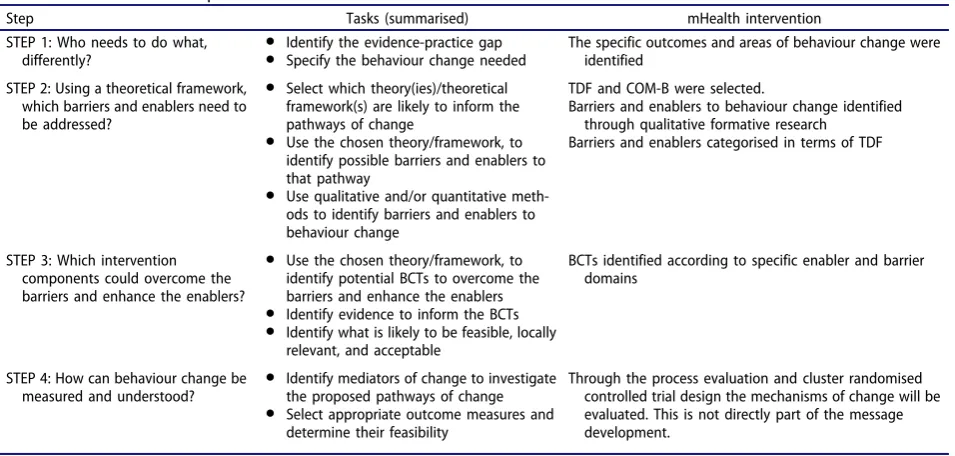
[image:6.595.61.539.554.782.2]A paper by French and colleagues in 2012 outlined practical steps to developing an intervention by con-sidering theory, evidence and practice [24]. We drew on this approach when developing our intervention.
Table 1summarises French et al’s model and identi-fies elements we drew on. This included the need to specify the behaviour change we are targeting, iden-tifying barriers and enablers that need to be addressed and applying appropriate BCTs. However,
we tailored our approach to specifically address TDF for an mHealth intervention, meaning we added, omitted and adapted steps. For example, step 2 of French et al’s model was broken down and adapted to align with TDF, we omitted step 4 from French et al’s model and we added our own steps 1 (context of the intervention) and 6 (a table of content bringing together the earlier steps).
For our intervention development we considered the outcomes needed for the mHealth intervention to be a success and we were able to identify the barriers and enablers to this through the formative research. TDF theory enabled us to systematically classify the barriers and enablers and thereby identify BCTs to address them. We were able to break down this process into six-steps as detailed in the results.
Results
Through the analysis of the qualitative research and the TDF framework, a six-step process to developing a guide for the content of behaviour-orientated voice messages was produced. The end result was a comprehensive guide for the study team as well as scriptwriters and producers of the voice messages (who come from a non-medical, non-academic or behaviour change background). Table 2 outlines the steps, with more detail provided under the corre-sponding sub-headings below.
Step 1: the context of the intervention
An overview and key findings from the formative research were shared with those involved in message development. A full description is beyond the scope
Table 1.Steps for developing a theory informed implementation intervention: summary of French et al (2012) and mHealth intervention content development.
Step Tasks (summarised) mHealth intervention
STEP 1: Who needs to do what, differently?
● Identify the evidence-practice gap
● Specify the behaviour change needed
The specific outcomes and areas of behaviour change were identified
STEP 2: Using a theoretical framework, which barriers and enablers need to be addressed?
● Select which theory(ies)/theoretical framework(s) are likely to inform the pathways of change
● Use the chosen theory/framework, to identify possible barriers and enablers to that pathway
● Use qualitative and/or quantitative meth-ods to identify barriers and enablers to behaviour change
TDF and COM-B were selected.
Barriers and enablers to behaviour change identified through qualitative formative research
Barriers and enablers categorised in terms of TDF
STEP 3: Which intervention components could overcome the barriers and enhance the enablers?
● Use the chosen theory/framework, to identify potential BCTs to overcome the barriers and enhance the enablers
● Identify evidence to inform the BCTs
● Identify what is likely to be feasible, locally relevant, and acceptable
BCTs identified according to specific enabler and barrier domains
STEP 4: How can behaviour change be measured and understood?
● Identify mediators of change to investigate the proposed pathways of change
● Select appropriate outcome measures and determine their feasibility
Through the process evaluation and cluster randomised controlled trial design the mechanisms of change will be evaluated. This is not directly part of the message development.
of this paper, instead we provide a summary of some of the key findings on context that directly influenced mHealth message development, in Table 3, with
specific emphasis on themes of religion, balance, family and societal pressure and gender roles. There were aspects on which the messages were able to build on, for example the responsibility to look after oneself as a religious duty. Importantly, understand-ing of context was crucial to definunderstand-ing the behaviour the intervention aimed to influence in step 2.
Step 2: breakdown of outcomes
When planning an intervention it is important to iden-tify changes the intervention should have (i.e. outcomes). The overall primary outcome of the trial was the reduc-tion in the prevalence of intermediate hyperglycaemia and T2DM and a decrease in the two-year cumulative incidence of T2DM among individuals with intermediate hyperglycaemia [12]. Secondary and explanatory trial outcomes include a range of outcomes related to risk factors, awareness and control of diabetes.
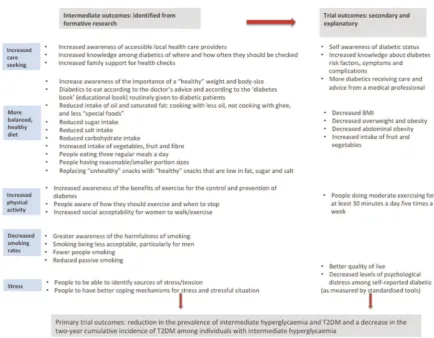
[image:7.595.61.288.62.341.2]We developed a comprehensive list of intended intermediate outcomes for the intervention focused on behaviour and awareness, and related to each of our focus areas (Figure 1). The intermediate out-comes are behaviours that need to change in order to achieve the trial outcomes, and are directly rele-vant to the context of the intervention and emerged
Table 2.Steps to message content development.
Step Summary of step
STEP 1: Context of the intervention
The formative research provides an in-depth analysis of the context of the intervention. STEP 2: Break down intended
outcomes
Related to the formative research and the overall outcomes of the project, specific outcomes for the five areas of focus, i.e. care-seeking, diet, physical activity, smoking and stress, were identified.
STEP 3: Identify and list the enablers and barriers to behaviour change
Enablers to promoting a healthy lifestyle and barriers to implementing a healthy lifestyle were identified from the formative research and listed.
STEP 4: Categorise the barriers and enablers according to COM-B and the TDF
The identified enablers and barriers were categorised according to TDF and COM-B. STEP 5: Suggest behaviour change
approaches for each enabler and barrier
In light of the appropriate transtheoretical domains, behaviour change approaches were identified for each enabler and barrier STEP 6: Table of message content
produced based on the intended outcomes, barriers and enablers and BCTs
A table of message was produced based on the intended outcomes and assigned BCTs addressing each enabler and barrier.
Table 3.Context from formative research.
Aspect Description Influence on the messages
Religion and belief The importance of religion and a belief that everything is under the control ofAllahwas crucial in peoples’understanding of their health. While many still valued medical advice, this belief could lead to people being fatalistic about their health and less motivated to change behaviour as explained by one respondent‘Allah has given us this disease…It’s not about being rich or being poor. Who has bad luck will have diabetes
no matter what they do’(diabetic woman, FGD021). However,
some people also spoke about how because Allah gave life it is one’s responsibility to look after it. Additionally during Ramadan‘bad habits’and‘unhealthy’behaviour (such as smoking) reduced.
Emphasis on responsibility to look after ones’health. Additional messages were created to correspond with the
month ofRamadanand how diet should be approached
Balance Routines, balance and moderation were perceived as key to achieving health; eating regularly and reasonable portion sizes, getting enough rest and work are examples of balance. One respondent explained‘Maintaining three proper meals every day is enough to keep us healthy. Regular eating, bathing,
and proper lifestyle–that is enough’(diabetic man, FGD023).
This was built on–the need for regular and reasonable sized meals was emphasised
Family and social pressure
Whether family members valued and supported each other affected an individual’s access to treatment and their welfare; for example women often rely on their husband to take them to the doctor, and the family diet depends on what the mother has prepared. Social norms are important factors in affecting one’s behaviour. For example, hospitality is very important with people expected to serve and consume different foods during visits and on special occasions, as explained by a respondent‘In a social ritual…or in a gathering, if I refuse the dishes offered to me it would not be
polite.’(diabetic woman SSI008).
Messages targeted the whole family.
Specific examples in social situations were drawn on/ highlighted
Gender Social norms are highly gendered as women are expected to behave in a certain way and are judged accordingly. Seclusion prevents some women from going outside of the home making it difficult for them to walk or be physically active. One health worker explains‘walking is hardly possible for most of the women in the village for some reasons. Where should
they walk?’(health worker SSI020). Additionally there are strict
gender roles within society and families–for example men do most of the food shopping and women prepare and cook.
Messages were tailored to men and women, they also highlighted the importance of women being able to engage in‘healthy’behaviour.
[image:7.595.59.535.429.791.2]from the formative research as well as the secondary trial outcomes (reported in full elsewhere [12]). Having a clear understanding of the intended con-sequences of the intervention helped focus the mes-sages of the intervention as well as identify the barriers and enablers to achieving them.
Steps 3: identifying and listing enablers and barriers to behaviour change
As explained in the methods section, the analysis of the formative research included a detailed breakdown of the barriers and enablers according to areas of focus. This list of barriers and enablers provided the basis of the message content, and enabled targeting of behaviour change specific to the context and grounded in theory. Table 4 provides examples of barriers and enablers from each focus area.
Steps 4 and 5: dividing the enablers and barriers according to TDF and COM-B and suggesting behaviour change techniques for the messages
For each enabler and barrier a COM-B characteristic and transtheoretical domain was identified. Identifying underlying domains enabled a better understanding of the behaviour and appropriate BCTs associated with the
domains could be identified. Drawing on the BCT tax-onomy compiled by the same group who developed TDF [22], BCTs were selected for each enabler and barrier. BCTs that could be selected were limited due to the nature of voice messages. Identified BCTs included: modelling (demonstrating) behaviour, shaping knowl-edge, information about consequences, repetition and substitution, social support (encouraging), pros and cons and goal setting. Table 5 provides examples of TDF and BCTs for a selection of barriers and enablers (the complete table of TDF and BCTs identified for each barrier and enabler are shown inTable 6). The completed table enabled us to align messages with each barrier and enabler, and ensure that they were all addressed.
Step 6: producing table of message content based on the intended outcomes, barriers and enablers and BCTs
[image:8.595.79.514.46.384.2]In order to guide the scriptwriters as to the content of the voice messages we created a table with the guidelines for the content of individual messages. The details in the table include the TDF, BCT, barriers/enablers, the con-tent, audience and suggested format. Each message was based around a specific enabler and/or barrier. The con-tent addresses the barrier and/or enablers through one of the BCTs suggested.
Figure 1.List of intended outcomes for the intermediate and trial outcomes.
An example of one of the messages is in Table 7. This message addresses the barrier that people are often expected to eat sweets and rich food during social occasions. The BCT is modelling behaviour: hence a drama with a scenario of someone going to a wedding and the techniques someone uses to eat smaller portions and less sweet food is described. The scenario was informed by the outcomes (smaller por-tions, less sugar, less oil etc.) and the context (the types of food and events extracted from the data). Doctors working with diabetic patients in Bangladesh checked all the messages to ensure they are in-line with current medical advice and standards. More examples from the table can be found inTable 8.
Message production and delivery
The finalised table of contents was used to guide the intervention; specifically exact information needed to be shared as part of the intervention–and ensured all
barriers and enablers emerging from the research were addressed. The table was shared with scriptwri-ters and a production company who were responsible for the format of the messages and making them both entertaining and understandable. Songs, dramas and straight information were all used with the language colloquial and tailored to the region. Project research-ers and clinicians had final editorial control over the messages to ensure they were in-line with the context, and that they represented the content. A total of around 100 unique messages were produced and delivered to approximately 9000 individuals across 32 villages in Faridpur on a twice weekly basis between October 2016 and December 2017.
Discussion
[image:9.595.61.535.64.277.2]In response to a lack of guidance in research regard-ing the development of a theory-driven mHealth intervention rooted in local context, we have
Table 4.Examples of barriers and enablers to a healthy lifestyle (from formative research)a.
Enablers Barriers
General
Allah gave you life it’s your responsibility to keep it healthy Fate determines diabetes/health status
Care-seeking
Diabetics tend to go for check-ups/testing if they feel unwell Lack of consistency in taking medicines: patients may decide themselves that they feel better and stop taking medication Diet
Family support and encouragement to change eating habits i.e. all eatingrutiin the evenings, mother cooking‘healthy’foods, daughter encourages grandmother to eat with less salt etc.
Family not changing or supporting different eating habits i.e. husband demanding food is cooked with more oil, wife not changing cooking practices
Physical activity
Can integrate walking into routine (walking children to school, going to the shops, walking to work etc.)
Social acceptability: Not always socially acceptable for women to be walking outside and judgements made
Smoking
Knowledge: greater public awareness of health and smoking i.e. warnings of cigarette packages and doctor’s advice
Knowledge: overall general unawareness about the harmfulness of smoking to health
No awareness regarding smoking and the link to diabetes Stress
Some coping mechanisms identified: talking to someone, music, religious rituals etc.
‘Unhealthy’coping mechanisms: smoking, taking too many or unnecessary pills
aThere are some empty cells in this tables. This is because where possible we match barriers to enablers. If there is not a matching enabler or barrier we leave the corresponding cell blank.
Table 5.Examples of barriers and enablers to a healthy lifestyle divided by COM-B and TDF domains, and associated Behaviour Change Techniques.
TDF Domain/
COM-B Enabler Barrier Behaviour Change Technique
TDF: 1. Knowledge COM-B: Capability
Greater public awareness of the link between smoking and ill health
Overall lack of awareness regarding the link between smoking and ill health, particularly diabetes and smoking
Shaping knowledge
Information about consequences
TDF: 2. Skills COM-B: Capability
Some coping mechanisms identified: talking to someone, music, religious rituals etc.
Lack of control and coping mechanisms
Shaping knowledge: identify stress, look for coping strategies Modelling behaviour TDF: 6. Beliefs about
consequences COM-B: Motivation
Religious beliefs and responsibility Religious beliefs and fate Information about consequences Shaping knowledge: personal responsibility and reinforcing the enabler
TDF: 11. Environmental context and resources COM-B: Opportunity
Walking with other people Women feel unsafe walking alone Modelling behaviour: examples of people walking together
TDF: 12. Social influences COM-B: Motivation
Family supporting different/healthy eating habits
Cooking: women cooking with high levels of oil etc., men asking for it
Modelling behaviour Shaping knowledge
[image:9.595.65.537.345.517.2]Table 6.Complete list of barriers and enablers to a healthy lifestyle divided by COM-B and TDF domains, and associated Behaviour Change Techniques.
General
TDF domain/
COM-B Enabler Barriers Behaviour change technique
TDF: 1. Knowledge COM-B: Capability
People have some knowledge about diabetes and its management
Lack of in-depth knowledge about the causes of diabetes Shaping knowledge: build on enablers
Some knowledge that sedentary lifestyle causes diabetes
Shaping knowledge
Some knowledge about hereditary nature of high blood pressure and connection between high BP and diabetes
Belief that diabetes is contagious Shaping knowledge: challenge incorrect beliefs
Lack of knowledge about how to prevent diabetes Shaping knowledge TDF: 4. Beliefs about capabilities
COM-B: Motivation
Beliefs: too many pills can make one unwell, older people put on weight, complications other than diabetes blamed for making one feel unwell
Shaping knowledge
Information about health consequences
Feelings of lack of control over body weight, health and diabetes
Modelling behaviour Goal setting
Information about health consequences Difficulties to convince pre-diabetics to change Modelling behaviour
Goal setting TDF: 6. Beliefs about consequences
COM-B: Motivation
Religious beliefs and responsibility Religious beliefs and fate Information about health consequences Shaping knowledge
Bad habits stopped during Ramadan Modelling behaviour: encourage this to continue
Routine, balance and moderation = healthy lifestyle Modelling behaviour
People not taking responsibility for their health Information about health consequences TDF: 10. Memory, attention and decision making
COM-B: Capability
Difficulties to maintain a routine Modelling behaviour Social support (encourage) People identified as being‘careless’ Modelling behaviour,
Social support (encourage) Perception that if you are addicted there is nothing that can
be done (smoking, sugar etc.)
Modelling behaviour
TDF:
11. Environmental context and resources COM-B: Opportunity
Lifestyle changes are not too complicated and within peoples’reach
Poverty makes it difficult to maintain a moderate, regular lifestyle
Modelling behaviour
Poverty and time constraints make it difficult to manage/ control diabetes
Modelling behaviour
Increase in stress = increased BP and poor health Social support (encourage) TDF: 12. Social influences
COM-B: Opportunity
‘Slim’perceived as being healthy Fat looking good Shaping knowledge: challenge perception
Diabetes thought to damage appearance Shaping knowledge
Advice and criticism from friends Criticism from friends Social support (encourage)
Family support for management of diabetes Social support (encourage)
Modelling behaviour TDF: 13. Emotion
COM-B: Motivation
Good explanations of diabetes can reduce fear Diabetes and complications cause fear Shaping knowledge
8
H
.
M.
JENNINGS
E
T
Care Seeking
TDF Domain/
COM-B Enabler Barrier Behaviour Change Technique
TDF: 1. Knowledge COM-B: Capability
Doctors offering advice on lifestyle improvement factors
Lack of awareness on how to prevent diabetes Shaping knowledge
TDF: 3. Social/Professional Role and Identity COM-B: Motivation
Women and poor people go for regular check-ups Better-off don’t think check-ups are so important Shaping knowledge: everyone needs to go to the doctor Modelling behaviour
TDF: 4. Beliefs about capabilities COM-B: Motivation
Belief in fate and a lack of control to seek care Shaping knowledge
Information about health consequences Modelling behaviour
Testing own blood sugar is empowering and motivates a person to control their diabetes
Pros and cons Shaping knowledge Taking medicinal plants makes someone feel in
control of their diabetes
Medicinal plants unregulated and could be safety concerns Pros and cons Shaping knowledge TDF: 6. Beliefs about consequences
COM-B: Motivation
Diabetics will go for check-ups if they feel unwell Not taking medicines because they are not improving or because they improve feel they no longer need to take them
Modelling behaviour Shaping knowledge
Information about health consequences Waiting until diabetes is‘bad’or suffering from complications
before seeking care
Shaping knowledge
Information about health consequences Belief that medication is enough to treat diabetes, without
lifestyle changes
Shaping knowledge Modelling behaviour TDF: 10. Memory, attention and decision process
COM-B: Capability
Forgetting to take medication, particularly when not in a routine
Habit formation: suggest a reminder Imaginary reward
Descriptions of being too‘lazy’and‘careless’to take medicine
Habit formation Shaping knowledge Diabetes book (provided by healthcare providers) difficult to
understand
Shaping knowledge: providing straight forward information
TDF:
11. Environmental context and resources COM-B: Opportunity
Some people request local pharmacy to carry medicine
Strips, insulin etc. not always available locally Modelling behaviour
Examples of high quality of care Low quality of care, chaotic treatment; having to wait/crowds Modelling behaviour:
Acknowledge difficulties and suggest ways of overcoming Dr’s consulting specialists by phone, specialists
visiting villages once a month
Lack of training and resources to treat diabetes locally Modelling behaviour: Pros and cons
Free services will motivate people to seek care Costs: travel, tests, check-ups, medicine Shaping knowledge: importance of check-ups Pros and cons
Doctors prescribing locally Shaping knowledge
Local services can’t confirm a diagnosis of diabetes–will refer to specialists/Faridpur
Modelling behaviour: Pros and cons Herbs taken due to costs of medicines Shaping knowledge
Pros and cons Business/lack of time to take medicine and visit facilities:
particularly for women
Modelling behaviour: examples of balancing and prioritising Pros and cons
TDF: 12. Social influences COM-B: Opportunity
Family support: taking to health facilities, arranging appointments, encouraging to seek care
Lack of family support: women rely on husbands to get strips and to take them to the doctor
Modelling behaviour: examples of how can support family
Women not feeling comfortable talking about health/ sensitive issues
Modelling behaviour
TDF: 13. Emotion COM-B: Motivation
People reporting understanding a doctors’advice Fear of doctors Shaping knowledge
Trust, rapport with a doctor Modelling behaviour
Pros and cons
Fear of dying can mean people take advice seriously Shaping knowledge
Fear after diagnosis prevents patients coming back for care/ check-ups
Shaping knowledge: stress diabetes is manageable if controlled
Feeling out of control Shaping knowledge:
TDF: 14. Behavioural regulation COM-B: Capability
If treatment is planned in stages patients more likely to return and not feel overwhelmed
Modelling behaviour
Goal setting: encourage people to have targets
GLO
B
AL
H
EALTH
AC
TION
Diet
TDF Domain/
COM-B Enabler Barrier Behaviour Change Technique
TDF: 1. Knowledge COM-B: Capability
Basic knowledge about a diabetic diet Lack of in-depth knowledge/knowledge on portions Shaping knowledge Basic knowledge about‘good’/’bad’food Lack of in-depth knowledge, confusion, incorrect knowledge Shaping knowledge
Desire for more knowledge Shaping knowledge
Dr’s advice valued and people report trying to follow it
Lack of knowledge about diet and prevention of diabetes Shaping knowledge General lack of understanding about the seriousness of
diabetes
Shaping knowledge
TDF: 2. Skills COM-B: Capability
Growing vegetables/home gardens Modelling behaviour
TDF: 4. Beliefs about capabilities COM-B: Motivation
Lack of control: belief will put on weight despite what one eats, concept of‘body letting me down’
Shaping knowledge
TDF: 6. Beliefs about consequences COM-B: Motivation
Allah gave life and our responsibility to look after it Religious beliefs and fate–changing eating habits will not help
Information about health consequences Shaping knowledge
‘Home-cooked’food believed to be healthy and ‘outside’food unhealthy
Shaping knowledge: building on existing knowledge
Balance in food considered to be good Shaping knowledge
Diagnosis of diabetes encouraging to change eating habits
Shaping knowledge Information about health consequences
Border-line/people at risk of diabetes will try to follow doctor’s advice
Shaping knowledge Information about health consequences: building on existing motivation Feeling better after changing diet/medication means
diabetics may revert to old habits as believe they are ‘better’
Shaping knowledge Modelling behaviour
Belief that non-diabetics can eat whatever they like Shaping knowledge TDF: 8. Intentions
COM-B: Motivation
Personal motivation to eat well and refuse certain foods
Modelling behaviour
Good practices: making snacks with reduced sugar, replacement sugars in tea,‘raw tea’drinking
Modelling behaviour
TDF: 10. Memory, attention and decision process COM-B: Capability
Good practice: developing the habit of eating with less salt and sugar
Modelling behaviour
Habit of snacking inside and outside the home Shaping knowledge TDF: 11. Environmental context and resources
COM-B: Opportunity
Cost of food:daaland vegetables reasonable price Cost of food:ruti, eggs, meat, fruit more expensive Shaping knowledge Modelling behaviour Education: means people are more likely to follow
‘rules an regulations’
Lack of education Shaping knowledge
Booklet provided by some care providers explaining what food and portions diabetics should eat found useful
Lack of availability of this booklet and other resources Shaping knowledge: increase awareness of available resources
Underweight and malnourishment a problem Shaping knowledge: giving practical advice that considers a range of people
Lack of time to eat regularly Modelling behaviour Lack of time to cater to everyone’s nutritional needs Modelling behaviour
Pros and cons Availability of‘unhealthy’food inside and outside the home Modelling behaviour
Pros and cons Convenience of eating outside the home Modelling behaviour
Pros and cons Fertilisers, chemicals etc. used to grow food Shaping knowledge
Pros and cons
(Continued)
10
H.
M.
JENNINGS
ET
Table 6.(Continued).
Diet
TDF Domain/
COM-B Enabler Barrier Behaviour Change Technique
TDF: 12. Social influences COM-B: Opportunity
Body image: Being‘slim’perceived as healthy (not too thin, not too fat)
Body image: being‘heavier’perceived as healthy and beautiful
Shaping knowledge: changing/reinforcing perceptions
Body image: extra fat meaning there are more diseases, can cause difficulties
Shaping knowledge
Cooking: women may cook with lower levels of oil etc.
Cooking: women cooking with high levels of oil etc. as men (husbands, fathers, in-laws etc.) are asking for it
Modelling behaviour
Shaping knowledge: whole family affected by cooking Family supporting different/healthy eating habits Family not supporting different/healthy eating habits Modelling behaviour
Pros and cons
Shopping: men shop, women can intervene Modelling behaviour
Good practices: family and friends bringing/serving alternatives to sweets/snacks
Hospitality: expected to eat and serve foods during social occasions and visits
Modelling behaviour
Social gatherings and meeting in tea shops Modelling behaviour Status and food: eating meat,gheeetc. can be associated
with being a higher social status
Shaping knowledge Pros and cons TDF: 13. Emotion
COM-B: Motivation
Feeling unwell when eating unhealthy food Feeling unwell, hungry, having gas etc. when having smaller portions/healthy food
Shaping knowledge: stress long-term benefits
Diabetics feeling better when eating healthy food Shaping knowledge
Modelling behaviour
Eating less and better during Ramadan Shaping knowledge
Goals setting: suggest continuing some of the behaviour after Ramadan
Taste and enjoyment of certain foods that are unhealthy Information about health consequences Pros and cons
Shaping knowledge: promoting moderation Modelling behaviour: cooking tasty, healthy food Lack of concern for health and living for‘now’ Information about health consequences
Pros and cons Shaping knowledge:
Importance of rice: complete meal, nourishment etc. Information about health consequences Pros and cons
Shaping knowledge
GLOB
AL
H
E
ALTH
AC
TION
Physical Activity TDF Domain/
COM-B Enablers Barrier Behaviour Change Technique
TDF: 1. Knowledge COM-B: Capability
Some knowledge exercise is good for diabetics Not a detailed knowledge of the relationship between exercise and diabetes
Shaping knowledge
Some awareness exercise is related to body weight Shaping knowledge
Doctors advice that walking helps the body to create its own insulin
Shaping knowledge: reinforce/build on this knowledge
Diabetics understand/take doctors’advice Shaping knowledge
Modelling behaviour Lack of knowledge that exercise can help prevent diabetes Shaping knowledge
Information about health consequences TDF: 2. Skills
COM-B: Capability
Men: Swim, do push-ups, walk, some sports Women: walk, stretch, occasionally swim
Shaping knowledge Modelling behaviour TDF: 3. Professional role and identity
COM-B: Motivation
People who exercise seen as educated Modelling behaviour: exercise is for everyone
Exercise is seen as a sign of having diabetes/done by‘fat’ people
Shaping knowledge Modelling behaviour TDF: 4. Beliefs about capabilities
COM-B: Motivation
Having diabetes makes people feel unwell, therefore difficult to do exercise
Shaping knowledge: exercise makes people feel better in the long-term
Goal setting TDF: 6. Beliefs about consequences
COM-B: Motivation
Unsure/unconvinced about the benefits of exercise: Shaping knowledge Belief hard work is enough to keep healthy, there is no need
to do other exercise
Shaping knowledge
TDF: 10. Memory, attention and decision making processes
COM-B: Capability
No habit of walking (availability of cheap transport) Goal setting
Repetition and substitution: habit formation
TDF: 11. Environmental context and resources COM-B: Opportunity
Able to integrate walking into everyday routine Lack of time to exercise/walk Shaping knowledge: Modelling behaviour Walking with other people Women feel unsafe walking alone Modelling behaviour: Rural areas do have more open spaces than urban
areas
Lack of space/places to exercise Shaping knowledge: types of exercise that are possible
Weather/muddy roads make it difficult to walk Pros and cons Other people do household works (women, servants,
younger people), therefore others are less active
Shaping knowledge
TDF: 12. Social influences COM-B: Opportunity
Friends recommending to walk to manage diabetes Modelling behaviour
Walking with friends feels good, encourages walking Modelling behaviour
Not walking viewed as‘lazy’ Modelling behaviour
(Need to be careful not to stigmatise people) Social acceptability: sports not seen as socially acceptable for
older people or women
Shaping knowledge: importance of exercise and challenge perceptions
Social support: encourage support Women feel judged/shamed if walking around outside
(especially if they get muddy etc.)
Social support Pros and cons Exercise viewed as not a normal thing to do Social support Pros and cons Exercise viewed as only for those in the city who have no
manual labour
Social support Pros and cons TDF: 13. Emotion
COM-B: Motivation
Feeling better/good after manual work/exercise Shaping knowledge
Information about consequences Fear of getting injured when playingha dudu; risk of getting
cold after swimming
Pros and cons
12
H.
M.
JENNINGS
ET
Smoking
TDF Domain/COM-B Enablers Barrier Behaviour Change Technique
TDF: 1. Knowledge COM-B: Capability
Greater public awareness of the link between smoking and ill health
Overall lack of awareness regarding the link between smoking and ill health.
No awareness of the link between smoking and diabetes
Shaping knowledge
Information about health consequences
Dr’s advise to give up smoking Shaping knowledge: reinforce doctor’s advice
TDF: 4. Beliefs about capabilities COM-B: Capability
Belief that can only give up by quitting completely Shaping knowledge: about how to reduce gradually Goal setting
TDF: 6. Beliefs about consequences COM-B: Motivation
People quit due to physical health problems People wait to quit until they have physical health problems Shaping knowledge
Information about health consequences TDF: 8. Intentions
COM-B: Motivation
Personal motivation to stop smoking People still smoke despite doctor’s advise Pros and cons
Information about health consequences TDF: 10. Memory, attention and decision process
COM-B: Capability
Addiction to smoking Goal setting
Pros and cons TDF: 11. Environmental context and resources
COM-B: Opportunity TDF: 12. Social influences COM-B: Motivation
Economic costs discourages from smoking People smoke to suppress hunger Pros and cons Stigma: generally not accepted for women to smoke Very normal for men to smoke Shaping knowledge
Social support
Stigma: when smoking in front of elders, women etc. Shaping knowledge: information on the effects of passive smoking
Not acceptable to smoke in public spaces (bus, mosques etc)
Shaping knowledge
Information about health consequences Family: less likely to smoke if it is not done in the
family
Modelling behaviour
Family: discouraging smoking/encouraging to give up Modelling behaviour
Social support (encouraging) Religion discouraging smoking, people giving up for
religious reasons
Modelling behaviour: build on this motivation
Quitting smoking because of work Shaping knowledge: reasons to quit
Pros and cons
Less likely to smoke with age Shaping knowledge:
Smoking perceived to be common among certain groups: farmers, younger people, people in rural areas, people in university
Shaping knowledge: on the extent of problem Social support: encouraging people to quit Modelling behaviour
Introduction at a young age to smoking by others Modelling behaviour: example of someone introduced to smoking and later regretting it
Information about health consequences Peer pressure to smoke Modelling behaviour: examples of peer pressure Smoking is a social activity Modelling behaviour
Pros and cons Incentives to smoke: as part of a political campaign Modelling behaviour
Pros and cons
Men and women also take other tobacco products Shaping knowledge: information about other tobacco products
TDF: 13. Emotion COM-B: Motivation
Pleasure and comfort of smoking Pros and cons: acknowledge comforts of smoking, but also the negatives
Smoking relieves stress Pros and cons
Modelling behaviour: alternative ways to deal with stress
GLOB
AL
H
E
ALTH
AC
TION
Stress
TDF Domain/
COM-B Enablers Barrier Behaviour Change Technique
TDF: 1. Knowledge COM-B: Capability
Some knowledge that stress can make diabetes worse
Most people did not link stress and diabetes Shaping knowledge: the link between diabetes and stress
Some understanding that stress affects health Shaping knowledge
TDF: 2. Skills COM-B: Capability
Some coping mechanisms identified: talking to someone, music, religious rituals etc. (See more below)
Modelling behaviour
TDF: 4. Beliefs about capabilities COM-B: Motivation
Lack of control and coping mechanisms Shaping knowledge: identify stress, look for coping strategies, acknowledge some things are not within the individuals’control
Modelling behaviour TDF: 10. Memory, attention and decision making
process TDF: Capability
Coping mechanisms: music, watching TV, reading Modelling behaviour
Pros and cons: of different coping mechanisms, stress finding the right ones
Coping mechanisms: distraction, focusing on other things
Modelling behaviour Pros and cons ‘Unhealthy’coping mechanisms: smoking, taking pills Pros and cons TDF:
11. Environmental context and resources COM-B: Opportunity
Identified sources of pleasure: money, security, health Identified sources of stress: money, poverty, land Shaping knowledge Health professionals able to treat the symptoms of
stress: hypertension, headaches etc.
Not dealing with the root causes of stress Shaping knowledge Pros and cons TDF: 12. Social influences
COM-B: Opportunity
Sources of pleasure: family, socialising Sources of tension: family, responsibilities, early marriage, conflict in family
Shaping knowledge
Coping mechanisms: talking to others Others will know their problems if they talk about them Social support (encourage) Modelling behaviour People of the village come together to help those in
need e.g. if sick
Social support (encourage) Modelling behaviour TDF: 13. Emotions
COM-B: Motivation
Coping mechanisms: music, praying, rituals, being alone, resting
Modelling behaviour Pros and cons Symptoms of stress: poor health, headaches etc. Shaping knowledge
Additional notes
In the working table of content for script writers there was an additional column entitled‘message number’ –this way we were able to add the message numbers that addressed the individual barriers and enablers–allowing us to track the messages and ensure all the barriers and enablers were addressed.
In the final column of this table‘behaviour change technique’some additional information explaining how the BCT can be approached is occasionally added–again there was more information in the original table. The BCT‘modelling behaviour’refers to‘demonstration of the behaviour’in the BCT taxonomy.
14
H.
M.
JENNINGS
ET
developed and applied a six-step process to develop content for mHealth messages related to awareness raising and lifestyle changes for prevention and con-trol of diabetes in rural Bangladesh. The process involved integrating in-depth qualitative contextual research with theory. The benefits of the steps out-lined in the paper are that they are replicable and hence the model developed can be tested in other contexts. The exact methods used in the formative research do not need to be replicated, however con-textual research identifying enablers and barriers to behaviour change is important. TDF and the corre-sponding BCTs can be applied to identify barriers and enablers to behaviour change. Hence the steps provide a guideline to intervention development, and due to the comprehensive nature of TDF and BCTs there is room for flexibility regarding the problems the interventions may address and the techniques that can be implemented to address them. The effec-tiveness of the messages is yet to be tested through the outcome of the trial and if applied in other contexts.
Many behaviour change interventions are targeted at individuals, and in those cases a clear target and pathway of change may be needed. For example, according to the transtheoretical change model, change is assumed to follow certain stages through which they are targeted [5,13]. While other models may account for wider societal and higher level influ-ences (social ecological model for example) [25], pathways, influences and beliefs vary widely not just according to individuals, but also groups. Behaviour and behaviour change is complex, having multiple targets is more complex: based on our experiences we believe it would be difficult for a classic, single theory to address these challenges. While the broad-ness of TDF, COM-B and BCTs have been criticised for not being specific enough, we found this to be a strength when applied to a population level inter-vention as it means a range of strategies and pro-cesses could be applied–increasing the likelihood of appealing to different segments of the population. For example we could classify problems specific to both genders and find appropriate BCTs to address them. Furthermore, within the range of the domains and BCTs, specific needs and approaches could be addressed according to specific barriers and enablers. We found TDF and the process we developed useful in enabling us to break down the specific needs of a population, identify what needs to change and what can be built upon and identify techniques in which this could be achieved.
An important aspect of the intervention was the packaging of the messages–with a production com-pany being responsible for this. It was therefore important to convey the primary research effectively so that it could be applied appropriately. We did have
Table 7. Example of a message (relating to diet) from the table of content. Area TDF BCT Barriers Enablers Content Audience Format Diet Social influences Modelling behaviour Hospitality: being expected to eat sweets/rich food at social occasions such as weddings Scenario: A person newly diagnosed with diabetes goes to a wedding and tries to resist large amounts of biryani and sweets. Friends pressure him to eat them. Men and women Diabetic Drama Strategies used by the person with diabetes: -Requests a smaller portion and does not have any sweets -Explains to his friends why he needs to be careful and control his diabetes Other messages: -Everyone needs to be careful about what they eat -It is important to be supportive of people and allow them to have smaller portions/have alternatives to rich and sweet food
Table 8.Further examples of messages from the table of content for script writers.
Message
no Focus area Aspect
Communication objective
(BCT) Barrier Enabler/motivator Content/key message Audience Format Comments
48 General Memory, attention and decision making Environment
Modelling behaviour Difficulties in maintaining a routine Poverty makes it difficult to maintain a moderate, regular lifestyle
Routine, balance and moderation = healthy lifestyle
Lifestyle changes are not too complicated and within peoples’reach
Scenario: conversation between someone who is drinkinglalcha with no sugar and a friend/relative about healthy lifestyles.
Men and women Non-diabetic
Drama/conversation Could have a woman and/or an older person
Friend Response
Why are you drinking lal cha and no sugar?
I try not to have too much sugar. I also try to eat regularly and not too much. If I do have sweets just have a little bit. I don’t have oily food at home, but on certain occasions when I havepilouI will just have a little bit.
So you try to keep to a routine? When I can. I walk in the morning, eat regularly and have a balance of different types of food. I don’t smoke or eat many snacks. Is it hard to have this lifestyle? No, you just have to be careful. When
you start it is possible to continue. It is good for all the family, we all eat a moderate, balanced diet and I walk with my sister. When you are working can you do this? Yes. I just plan things around my work.
Everyone rich and poor needs to think about how they can have a healthy lifestyle and plan accordingly.
And do you keep healthy? Yes the doctor said I am very well, and I feel healthy. My blood pressure is good and I don’t have diabetes. Oh I have high sugar, or pre-diabetes,
can I still do this?
Yes of course! See your doctor, but eating well and exercising regularly is important way of managing your health
Key messages:
- Strive for a moderate lifestyle; regular exercise and eating reasonable amounts, having small amounts of‘unhealthy’food
- lifestyle changes are within people’s reach: rich and poor, male and female. - They help keep you healthy and manage illness
68 General
(Diet, smoking)
Beliefs about consequences Environment, context and resources Social influences
Shaping knowledge Religious beliefs and fate Poverty makes it difficult to maintain a moderate, regular lifestyle
Religious beliefs and responsibility Routine, balance and moderation = healthy lifestyle
Lifestyle changes are not too complicated and within peoples’reach Balance in food considered to be good
Religion discouraging smoking
Doctor and an imam:
- A balanced, regular lifestyle is healthy for diabetics and non-diabetics - Try to eat a balanced diet in moderation
- Exercise everyday
- Try to avoid bad habits like smoking and smokeless tobacco products - Draw on support from your families and communities
- These changes are possible for everyone, rich or poor - Islam teaches we need to look after our bodies and health - We can change ourselves, our families and communities
Men and women Diabetic and non-diabetic
Straight information Motivational message to encourage a moderate, healthy lifestyle
(Continued)
16
H.
M.
JENNINGS
ET
Table 8.(Continued).
Message
no Focus area Aspect
Communication objective
(BCT) Barrier Enabler/motivator Content/key message Audience Format Comments
49 Care
seeking
Beliefs about consequences
Health consequences Shaping knowledge: complications of diabetes
Wait until diabetes is bad before seeking care
The story of a diabetic:
I suffered from some of the complications of diabetes. I went to the doctor due to having problems with my feet being red, warm, swollen and with cracks. The doctor helped treat my feet but also sent me for a blood test. I found I had diabetes. The doctor helped me to understand I can control my diabetes with medicine, diet and later exercise.
If diabetes is left untreated like mine you can get many complications. Such as: foot problems, problems with eyesight, nerve damage and kidney damage. These are all very serious.
The good news is that diabetes can be managed and prevented. It is better to seek help and make lifestyle changes before you get very sick
Key points:
If you delay seeking care and have diabetes you can get complications The complications of diabetes
Diabetes can be prevented and managed
Men and women Diabetic
Personal story/account A personal story or account about diabetes might motivate people to seek care and try to prevent diabetes It would be good if at least one of message 49 and 50 could be a female
72 Care
seeking
Behavioural regulation
Goal setting If treatment is planned in stages patients more likely to return and not feel overwhelmed
If you have diabetes it is sometimes easier to plan your treatment/behaviour change in stages. Talk to your doctor about this.
- Example of planned behaviour could be: - Planned behaviour:
- At the beginning: - Take medicine as advised - Exercise when can
- Slowly reduce portions, fat and sugar - After a couple of weeks: - Walk everyday - Weigh self regularly
- Talk to family about diet and cooking - Take medication
- After one month: - Walking half an hour everyday - Family changing eating habits - Reduced fat, sugar and portion sizes - Taking medication regularly - Continue going for testing
Diabetic Men and women
Pros and cons Check with medics if this is feasible
We could also say that anyone can plan to change their behaviour
51 Exercise Professional role and identity Emotion, Skills
Shaping knowledge Health consequences
Lack of knowledge that exercise can help prevent diabetes Able to integrate walking into everyday routine People who exercise seen as educated Not walking seen as‘lazy’
Too cold to swim
Lack of time to exercise/walk People who exercise seen as educated Not walking seen as‘lazy’
Men: Swim, do push-ups, walk, some sports in the past
Women: walk, stretch, swim
Exercise is very important. Exercise will make your heart beat faster and increase blood flow and oxygen to your muscles and organs.
It can help to prevent diabetes, control your weight, as well as decrease the risk of heart problems and blood pressure and is good for your general well being. It also helps to control diabetes.
Exercise stimulates brain chemicals and can make you feel happier. Exercise is for not just for the educated and affluent. It should be done whether you have diabetes or not, are rich or poor, old or young, man or woman. Everyone should aim to do half an hour exercise a day. It is important to make exercise a priority and try to do some everyday.
Everyone can find a type of exercise they like or can do. There are many types of exercise. Exercises include: walking, running, sports, swimming, riding bicycle etc. If it is too cold to swim, walk. You can try different types of exercises too. Make time to exercise–try to walk places instead of getting transport, instead of watching TV do some exercise!
Men and women Diabetic and non-diabetic
Dr: Straight information
(Continued)
GLOB
AL
H
E
ALTH
AC
TION
Table 8.(Continued).
Message
no Focus area Aspect
Communication objective
(BCT) Barrier Enabler/motivator Content/key message Audience Format Comments
52 Exercise Environment, Social influences, Memory/ attention, Emotions
Modelling behaviour Social support
Women feel judged/ shamed walking outside Women feel unsafe walking alone Lack of time to exercise/walk Exercise viewed as not a normal thing to do
Walking with other people Walking with friends feels good
Able to integrate walking into everyday routine
Scenario
Two females walking together–they talk to another female neighbour and try to encourage her to join them.
Women Non-diabetic
Drama Keep as females: it would be good if we can try and encourage females to encourage each other
Question Response
Where are you walking? We are walking for health reasons. We also enjoy walking together. Do you have diabetes? No. It is always good to walk. Walking
can prevent diabetes. As a woman doesn’t it look bad? Do you
feel safe?
Women need to walk too. By walking together we feel safer. If women all walk then we will change how people think about women walking. We see exercise as a normal thing to do. Do you have time to walk? We walk every morning as part of our
routine. We also think of when we can walk–sometimes we walk instead of getting transport. Is it not tiring? At first it was hard, but now we enjoy
it and you feel better in the long-term. It is also fun to walk together Final message–try to encourage other women to walk, that way everyone will
benefit and we can change public responses. Exercise will then be seen as normal.
57 Stress Environment, context Memory, attention and decision making
Pros and cons Not dealing with the root causes of stress Coping mechanisms: smoking, taking pills
In the last message we spoke about ways people deal with stress. Now we are going to talk about the pros and cons (good and bad points) about each. Some people when they are stressed will take sleeping pills, smoke and take pain killers.
Pros/why you do it: The reasons people do this are: - will help them sleep sometimes and take away pain - gives some relief in the short term
Cons/why you maybe shouldn’t rely on this:
- These might help in the short term but won’t help in the long-term - Smoking is very bad for your health
- Taking too many pills can be harmful (Pros outweigh pros)
The other coping mechanisms: talking to others, exercising, looking at the bigger picture, exercise and some religious rituals.
Cons/reasons people don’t it: - Might be harder to do in the short term - May not think of it/may not be obvious Pros/reasons to do them:
- Better long-term solutions that you can do - Exercising is good for your physical health
- Talking to people you trust can help relations and give long-term support (Pros outweigh cons)
Men and women Diabetic and non-diabetic
Straight information Could be a doctor
58 Stress Social influences Modelling behaviour Social support
Others will know their problems if they talk about them
Coping mechanisms: talking to others
People of the village come together to help those in need e.g. if sick
Scenario: female very distressed because her son is sick and she has money problems. She has a discussion with her neighbours who are very supportive and offer support, encouraging her to talk to them and they offer practical support. - Key messages:
- support one another - sometimes just listening helps - talk to people you trust
Men and women Diabetic and non-diabetic
Drama
(Continued)
18
H.
M.
JENNINGS
ET