Principles in Patterns (PiP): Evaluation
WP7:38 Impact and process evaluation
Piloting of C-CAP: Evaluation of impact and implications
for system and process development
June 2012
Creator: George Macgregor
Contents
Figures ... 3
Tables ... 4
1. Introduction ... 5
1.1 Evaluation background ... 5
1.2 Relationship to strand WP7:39... 6
2. Methodology ... 8
2.1 Aims ... 8
2.2 Faculty piloting of C-CAP ... 8
2.3 Evaluation approach and methods ... 11
Group interview ... 12
Most Significant Change ... 13
3. Findings and discussion... 15
3.1 Coding framework ... 15
3.2 Curriculum design and approval under the previous and new state ... 16
Previous state: perceptions ... 16
New state: perceptions, impact, change effected ... 17
3.3 New state impact: validating qualitative benchmarking analysis ... 22
Process bottlenecks ... 22
Poor feedback looping and version control ... 24
Absence of a central repository of curriculum designs ... 25
Form size and lack of guidance ... 27
3.4 Interviews: “Three orbs model” ... 30
3.5 Most Significant Change (MSC) ... 33
4. Conclusions ... 36
5. References ... 39
6. Appendix A: HaSS group interview slides ... 43
7. Appendix B: “Most Significant Change” story template ... 46
Creator: George Macgregor
Figures
Creator: George Macgregor
Tables
Creator: George Macgregor
1. Introduction
1.1 Evaluation background
The Principles in Patterns (PiP) project is leading a programme of innovation and development work intended to explore and develop new technology-supported approaches to curriculum design, approval and review. It is anticipated that such technology-supported approaches can improve the efficacy of curriculum approval processes at higher education (HE) institutions, thereby improving curriculum responsiveness and enabling improved and rapid review mechanisms which may produce enhancements to pedagogy [1], [2]. Curriculum design in HE is a key “teachable moment” and often remains one of the few occasions when academics will plan and structure their intended teaching [3]. Technology-supported curriculum design therefore presents an opportunity for improving academic quality, pedagogy and learning impact. Approaches that are innovative in their use of technology offer the promise of an interactive curriculum design process within which the designer is offered system assistance to better adhere to pedagogical best practice, is exposed to novel and high impact learning designs from which to draw inspiration, and benefits from system support to detect common design issues, many of which can delay curriculum approval and distract academic quality teams from monitoring substantive academic issues, e.g. [4], [5].
The rapid generation of new programmes of study, or the rapid adaptation of existing curricula, is also increasingly necessary. Institutions need to better respond to quickly changing academic contexts, the changing demands of employment marketplaces and the expectations of professional bodies [1], [6], [7]. Disciplines within the sciences and engineering appear to be particularly exposed to these pressures, with new technological or environmental developments increasingly necessitating the re-engineering of curricula or the rapid embedding of new skills [7], [8]. This scenario is also influenced by the globalisation of the HE sector more generally [9], [10] which, within the realm of curriculum design and approval, is placing additional pressure on institutions to devise specialist curricula designed to attract international students and/or suitable for delivery at international branch campuses [10–12]. Ensuring that high levels of academic quality are maintained also adds a further layer of complexity to an HE curriculum design and approval scenario that requires increasing levels of responsiveness and learning impact [1], [7].
This strand of the PiP evaluation (WP7:38) attempts to understand the impact of the PiP Class and Course Approval Pilot (C-CAP) system within specific stakeholder groups and seeks to understand the extent to which C-CAP is considered to support process improvements. As process improvements and changes were studied in a largely quantitative capacity during a previous but related evaluative strand [4], this strand includes the gathering of additional qualitative data to better understand and verify the business process improvements and change effected by C-CAP. This report therefore summarises the outcome of C-CAP piloting within a University faculty, presents the methodology used for evaluation, and the associated analysis and discussion. More generally this report constitutes an additional evaluative contribution towards a wider understanding of technology-supported approaches to curriculum design and approval in HE institutions and their potential in improving process transparency, efficiency and effectiveness.
Creator: George Macgregor
“knowledge assets” in a central repository was also considered to support a number of key academic quality processes and better enable responsive curriculum design. Data supported the view that C-CAP functioned as a platform from which to disseminate explicit and tacit curriculum design practice, and would maximise the value of institutional knowledge assets by enabling the re-use of curriculum designs. However, the report also highlights evidence of systems resistance among academic users and a need for academic quality staff - many of whom function as key change agents and are integral
to the acceptance of C-CAP - to undergo C-CAP “best practice” training. The aforementioned
findings, and many others, will be discussed in further detail throughout subsequent sections.
This is the fourth and final strand report to be delivered as part of the PiP Evaluation Plan [13]. Previous reports are:
Evaluation of systems pilot (WP7:37) - Heuristic Evaluation of Course and Class Approval
Online Pilot (C-CAP) [14]
Evaluation of systems pilot (WP7:37) - User acceptance testing of Course and Class Approval
Online Pilot (C-CAP) [5]
Evaluation of impact on business processes (WP7:39) - Critical analysis of BPI technique and
Course and Class Approval Pilot (C-CAP) within class and course approval [4]
1.2 Relationship to strand WP7:39
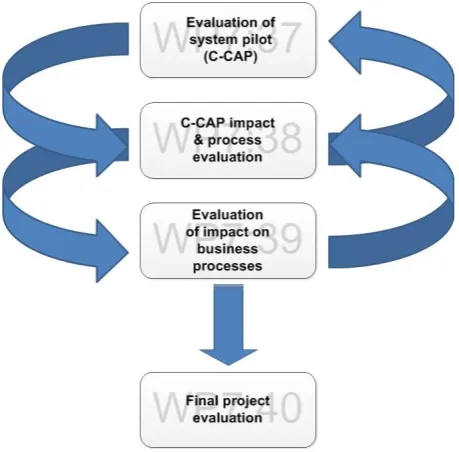
Evaluation strand WP7:39 (Evaluation of impact on business processes) [4] analysed the business process techniques used by PiP, their efficacy and the impact of process changes on the curriculum approval process. A variety of evaluation techniques were used to facilitate comparative analysis,
thus enabling an impact assessment of the extent of changes between the “new state” (i.e. using
[image:6.595.183.413.448.674.2]C-CAP) and the “previous state”. Stage 6 of Kettinger et al.’s [15] Stage-Activity (S-A) Framework was used to direct aspects of this strand of evaluation.
Figure 1: Overview diagram of PiP's evaluation strands; note the recursive relationship between WP7:38 and WP7:39.
Creator: George Macgregor
Creator: George Macgregor
2. Methodology
2.1 Aims
The PiP Evaluation Plan details the wider objectives of the project evaluation [13]. This strand of the PiP evaluation aims to better understand the impact of C-CAP within specific stakeholder groups. It seeks to understand the extent to which C-CAP is considered to support curriculum design and, more specifically, the approval process. As noted in section 1.2, an important aspect of this evaluative strand is to complete the qualitative data collection considered by Kettinger et al. [15] as integral to the S6A1 framework. The following broad research objectives therefore influenced the qualitative data sought for this evaluative strand:
The extent to which C-CAP effected change within institutional processes
Eliciting and capturing data and evidence of the nature of change, efficiencies, outcomes,
attitudes, etc.
The nature of identified changes across stakeholder groups (e.g. patterns, discords,
synergies, etc.)
The aspects of C-CAP stakeholders consider has the greatest potential for institutional
change and which have effected greatest change in the curriculum design and approval roles normally assigned to specific stakeholder groups
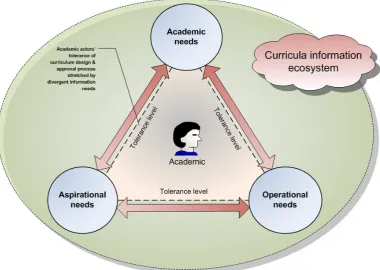
The extent to which the “three orbs model” – described in a recent PiP blog post [18] and the
outcome of conclusions drawn from user acceptance testing conducted in strand WP7:37 [5] – accurately models curriculum design and approval reality.
It was also a requirement of this evaluation that additional qualitative data be gathered to validate specific findings from WP7:39, thus better understanding the nature of the business process improvements and changes effected by C-CAP. Additional qualitative data was therefore sought on the following aspects of WP7:39 for validation purposes:
Qualitative benchmarking: A comparative qualitative benchmarking process was used in
WP7:39 to establish whether five principal process and document workflow issues identified as part of the PiP baselining exercise [19] in the “previous state” had been addressed in the “new state” [4].
Pareto analysis: Pareto analysis and charting was used in WP7:39 to identify and prioritise the most common problems under the “previous state” [4]. This problem data was then used
to assist in assessing the potential impact of C-CAP on approval processes (“new state”).
Some of the issues highlighted by the Pareto data were not addressed satisfactorily in the “new state” and a conclusion of WP7:39 was therefore that the qualitative components of S6A1 should seek to identify “potential system support functionality” [4].
Further triangulation of aspects of WP7:37 (User acceptance testing of C-CAP) [5] was an underlying objective, e.g. gathering general comment on perceptions of the C-CAP system and how it support disparate staff roles.
2.2 Faculty piloting of C-CAP
To provide a suitable basis for the evaluation of the above noted objectives, C-CAP was piloted within the Humanities & Social Sciences (HaSS) faculty for three months starting from mid-March 2012.
Creator: George Macgregor
Note that C-CAP was also piloted, albeit in a more informal capacity, within the Strathclyde Business School (SBS) and the Faculty of Science; however, piloting in these faculties was limited to “dummy” proposals as neither faculty had the administrative capacity to participate during the timescale required.
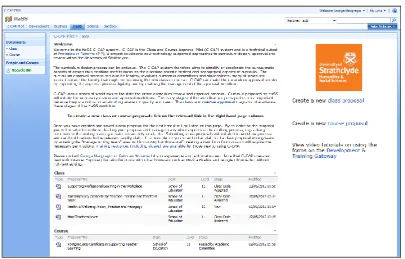
[image:9.595.96.502.198.457.2]A HaSS specific implementation of C-CAP was created (Figure 2). Discussions with the HaSS Academic Quality Team identified two academics who intended to design new curricula and that were willing to participate in piloting. Their involvement generated one post-graduate course and four classes that were each used as the focus for piloting.
Figure 2: HaSS implementation of C-CAP. Screen dump of HaSS C-CAP home page, including status list of current / recent curriculum proposals.
Piloting involved participation from members of the following stakeholder groups:
Academics: Academic staff responsible for designing and – if approved - delivering the
curricula proposed.
Faculty Academic Quality Team: Staff within the Faculty responsible for managing Faculty
level curriculum approval processes and academic quality assurance.
Academic Quality Working Group: A working group of academics from within the Faculty
responsible for reviewing and providing feedback on proposed new classes and/or courses. The Academic Quality Working Group provides an initial level of academic scrutiny prior to consideration by the Faculty Academic Committee.
Faculty Academic Committee: Academic Committee is the mechanism by which proposed
curricula (specifically courses) are scrutinised, reviewed and formally approved (or not) by senior members of the Faculty. Successful approval at Academic Committee essentially concludes Faculty level approval processes, after which a number of University processes are initiated.
Student Lifecycle: Student Lifecycle is located within the Student Experience and
Creator: George Macgregor
Ordinances and Regulations: Ordinances and Regulations and its Committee is responsible
for ensuring newly proposed curricula comply with the various statutes, ordinances and regulations, and the other rules and procedures of the University. Representatives from Ordinances and Regulations act on behalf of – and report to – Senate as appropriate on all matters pertaining to regulations.
The class approval process was modelled and piloted in its entirety using C-CAP. All classes that were designed, approved and piloted with C-CAP therefore followed the process through to its conclusion. The course approval process was modelled and piloted up to Senate approval (the final process step). All curricula were successfully approved. Final Senate approval was omitted from the course piloting because suitable procedures for communicating curriculum information to Senate have yet to be established. The senior membership of the Senate is such that organising such procedures and their participation would have delayed piloting unnecessarily. It should however be noted that this is simply an administrative issue rather a technical one. Further detail on the nature of the curriculum approval process, including process flow diagrams and rich diagrams, can be found in the WP7:39 evaluation strand report [4].
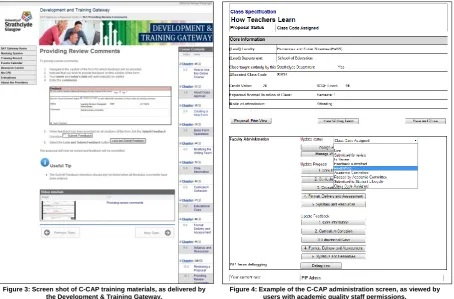
[image:10.595.74.529.398.697.2]Prior to piloting all relevant stakeholders received one-to-one C-CAP orientation sessions, each tailored specifically to their role within the curriculum design and approval process. Dedicated training materials were also created to support stakeholders. These materials included written tutorials and demonstration videos (e.g. Figure 3) [20]. Training materials were delivered using the University of Strathclyde’s Development & Training Gateway. It is anticipated that these materials will in future form an important training resource for the embedding C-CAP. Occasional phone support was also provided to stakeholders when required.
Figure 3: Screen shot of C-CAP training materials, as delivered by the Development & Training Gateway.
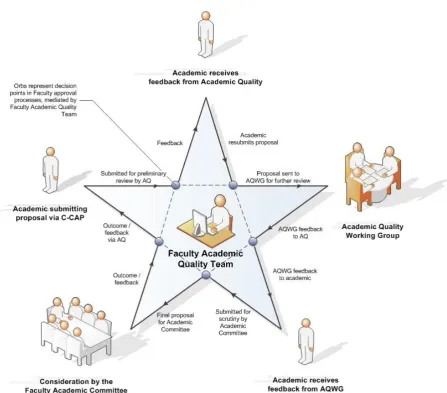
Figure 4: Example of the C-CAP administration screen, as viewed by users with academic quality staff permissions.
Creator: George Macgregor
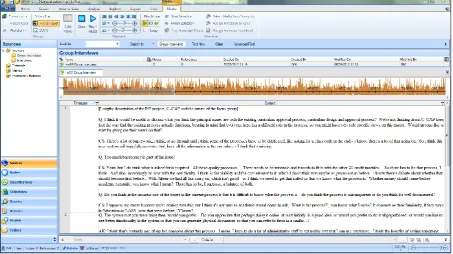
proposals for academic review, etc. Administering this functionality exposes quality staff to an extra layer of C-CAP system complexity (Figure 4). The back-end administration of the curriculum approval process via C-CAP is therefore mediated at a faculty level by academic quality staff and is best understood, not through process diagrams, but by a star-shaped interpretation of faculty level approval processes, as illustrated in Figure 5. Figure 5 models the approval process within the HaSS Faculty. Academic quality staff govern or mediate key decision points during the approval process and for this reason can also be considered as important agents of change. Their centrality to the approval process and their influence on curriculum design (via academics) is such that they are the stakeholders above all others who interact with C-CAP the most, are the most exposed to its functionality and benefits, and are therefore best placed to advocate its wider adoption.
[image:11.595.74.522.260.653.2]Owing to the extra technical burden assumed by the Academic Quality Team in piloting C-CAP, on-going email and phone support was provided throughout the piloting period for Team members, in addition to dedicated orientation sessions.
Figure 5: Star-shaped interpretation of HaSS Faculty level approval processes (for course approval), with the Faculty Academic Quality Team at the centre of administrating and managing the curriculum approval process.
2.3 Evaluation approach and methods
Creator: George Macgregor
Group interview
As well as fulfilling the stated evaluation aims, recall that an important aspect of this evaluative strand
is to conclude the qualitative data collection considered by Kettinger et al. [15] as vital to the S6A1 framework. Qualitative data capture from stakeholders was achieved via the group interview method. The group interview technique was used instead of the focus group approach, owing to its success within organisational research contexts and its directed nature [21]. The weaknesses of such group method data collection techniques are well understood in the research methods literature [22], and the systems research literature more specifically [23]. The use of the group interview approach for this phase of the evaluation was nevertheless considered appropriate, not least because it is an important component of the S6A1 Framework; but because the organisational nature of this evaluative strand and its objectives necessitated a suitable data collection technique. Group method approaches are also considered one of the most appropriate techniques in organisational contexts [24].
[image:12.595.73.527.484.738.2]Theorists and researchers within the domains of organisational theory and psychology note the importance of the “group method” for exploring and understanding institutional processes. For example, Steyaert and Bouwen [24] introduce a series of data collection techniques based on “natural” and “created” group contexts and delineate selection rules to aid the researcher in deploying the most appropriate technique based on research objectives. Using a case study approach, Sobreperez [23] also describes the unique properties and advantages of the group technique within information systems and IT research. Some scholars within the social sciences have proposed a typology of group method approaches such is their diversity [24]. In practice these typologies have been difficult for researchers to apply since the attributes of each approach often overlap and their respective flexibility renders redundant any attempt to classify them [25]. In general, group interviews, as opposed to focus groups, are considered most suitable when the phenomenon being studied requires the exploration and description of ideas. Group interviews are similar to focus groups but differ in their management and focus. In the group interview method the facilitator performs an active role in directing and structuring group discussions. By contrast, focus groups are more conducive to the generation of new ideas or concepts, with the facilitator assuming a more passive role, and often involves a group of homogeneous strangers (e.g. marketing or policy focus groups) [25].
Creator: George Macgregor
A group interview pertaining to the piloting of C-CAP in HaSS was conducted with stakeholders after the above noted curricula had been approved and all subsequent processes had concluded (e.g. assignation of class/course codes, passage through Ordinance & Regulations, etc.). Group interview participants were drawn from the stakeholder groups involved in the piloting. Five participated in the group interview session. To support the direction and structure necessary for a group interview (rather than a focus group), a series of slides were used to direct participant discussion at the group interview (Appendix A). The content of these slides aligned with the evaluation objectives stated in section 2.1 and ensured relevant evaluation objectives were achieved. Slides pertaining to Most Significant Change were also included and are discussed in more detail below. The group interview was facilitated and managed according to best practice guidance provided by Steyaert and Bouwen [21].
Three stakeholder members were unable to attend the group interview and were instead interviewed individually. These interviews were conducted in their University office and followed the same essential format as the group interviews, including use of the slides to structure and direct participant discussion. A total of eight stakeholder members therefore participated in this aspect of the evaluation.
Both the group interview and individual interviews were sound recorded. Audio data were uploaded
to QSR NVivo 9 for audio transcription, coding and further data analysis (Figure X) †. A “conventional”
content analysis approach was adopted [26] and established coding and analysis methodologies were adhered to [27], [28].
Most Significant Change
An adapted form of the Most Significant Change (MSC) approach was deployed to assist in the identification of changes across stakeholder groups, as well as those aspects of C-CAP that have effected greatest change in the curriculum design and approval roles normally assigned to specific stakeholder groups. MSC is a participatory qualitative approach based on stories pertaining to the changes participants have experienced during and/or as a result of a particular project or initiative, rather than “abstract” pre-defined data indicators or metrics [29]. Qualitative research theorists and cognitive scientists have long reported the value of “story collecting” methods to understand complex research phenomena or systems, e.g. organisations and communities [30]. The MSC technique [29] can be classified as a story based method in which the changes participants have experienced in relation to a particular project or initiative are captured. Its popularity is manifest in its ability to capture secondary outcomes, such as those of personal significance to the participants or particular groups of participants [31], and its ability to promote dialogue through organisational or project hierarchies [30].
The MSC technique was originally developed by Dart [32], [33] as a novel approach to the monitoring and evaluation of complex rural development and international aid programmes [29], [31], [33], [34]. Such projects can be difficult to monitor or evaluate with conventional techniques, owing to their diffuse nature and multifarious outcomes. MSC - and specially adapted versions of the technique - has since found wide deployment within other communities of practice for similar reasons [31], [35– 39] and is used often as a supplementary evaluation technique. Dart and Davies [29] note the most valuable aspect of MSC to be that data (i.e. stories) are based on “concrete outcomes rather than abstract indicators”, thus enabling researchers and relevant stakeholders to make sense of complex project outcomes or changes. WP7:37 and WP7:39 have uncovered numerous “abstract indicators” and the use of MSC for this strand is therefore an appropriate complementary technique to ensure
†
Creator: George Macgregor
“concrete outcomes” are identified, thereby better informing the overall evaluation. Choy and Lidstone [31] summarise some further benefits of MSC:
It offers genuine input from the participants’ perspective;
Its participatory nature often yields data on true impact and outcomes;
It frequently draws out details of unexpected changes reflecting distinct individual and/or
organisational values;
It is not threatening to participants, e.g. “does not have a right or wrong answer and
recognises two sets of opposing outcomes: expected/unexpected; and agreed/disputed meanings” [31];
It “de-formalises” evaluation. Participants are encouraged to express what is most valuable to
them and/or most important within their socio-cultural contexts, and;
Participants are best qualified to comment (or share stories) on the most significant changes
within their context. They are the “cultural insiders” with knowledge and understanding about the dynamic and multifaceted contexts of their environment(s).
When deployed as Dart and Davies [34] originally intended, the MSC approach involves the collecting of stories from stakeholders. These stories are collected over a pre-defined temporal period and focus on various “domains of change” (i.e. domains within which change should be expected). Stakeholders may be asked to produce several stories, depending on the length of the temporal
period. Evaluators review all the stories when this collection period ends and select the “most
significant” stories, thereafter these “winning stories” are circulated amongst “key influentials” to demonstrate project impact [32].
MSC has been adapted to better suit disparate areas of study [31], [35], [36]. In this instance the
principal difference was the replacement of a hierarchical context with a process context. No project
or organisational hierarchy existed in this instance, through which stories might percolate up and
down and receive feedback – a typical MSC characteristic; rather it was a business process context
involving numerous stakeholders. Stories were therefore not exposed to the same level of hierarchal scrutiny as there was no hierarchy through which they could traverse. This was considered an appropriate adaptation of the MSC approach since only a small number of stories were to be collected and the project context was not as defuse as those described by Dart and Davies [29].
MSC stories were collected from stakeholder participants towards the end of the C-CAP piloting period, with the curriculum design and approval process constituting the “domain of change”. Participants were asked to document what they felt their most significant story was. To aid participants in documenting and structuring their MSC stories, a story template was created based on
Davies and Dart’s [34] story report format (Appendix B). The story template was circulated among all
participants two weeks prior to the interviews via email. Participants were asked to complete the story template ahead of the interviews. The email also contained instructions describing the background of the MSC approach and the nature of the stories normally associated with MSC. Since the piloting period was relatively brief (two months), only one story was requested from each participant. Collected stories were then evaluated and the most significant selected for description in this present evaluation.
It was anticipated that not all participants would find the time to complete the MSC story template prior to the interviews. A further round of MSC was therefore administered at the group interview (see
slides at Appendix A). In this instance interview participants were provided with a paper copy of the
Creator: George Macgregor
3. Findings and discussion
3.1 Coding framework
Analysis of the interview data produced a coding framework (Appendix C). This framework highlights
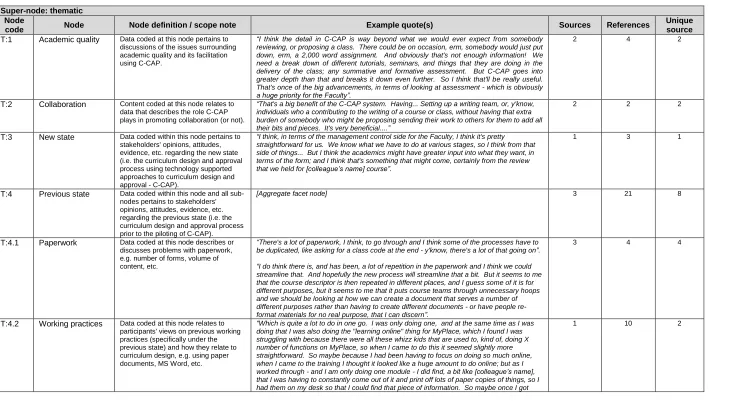
the principal themes discussed by participants and details all sub-nodes, node definitions and indicative supporting quote(s). Node codes are included to indicate hierarchical level. Columns for data references are also provided using the following definitions:
Sources: Sources refers to the number of individual data sources within which data has been
coded at the associated node. In this instance there are three: one group interview source, and; two individual interview sources.
References: References is a count of the number of selections within the source(s) that have
been coded at a particular node.
Unique sources: A unique source refers to the number of unique participants whose data has
been associated with a particular node. Polyvocality is intrinsic to the richness associated with qualitative data [40]. Since one source within the dataset constituted a group interview and contained several unique participants, an additional level of polyvocality existed in the data which required further discrimination of participants (i.e. unique sources). Unique sources were listed and generated in NVivo using separate nodes (for each group participant) and by manually reviewing the group interview transcript and attributing them to specific participants.
For example, Transparency (T:5.3 – Appendix C) has 3 sources, 18 references and 6 unique sources.
[image:15.595.72.530.473.666.2]This means that there exists 3 sources (a mixture of individual and group interview data) within which 18 references to the node T:5.3 have been made. However, a unique source figure of 6 indicates that separate participants (i.e. unique sources) generated data that was coded at this node.
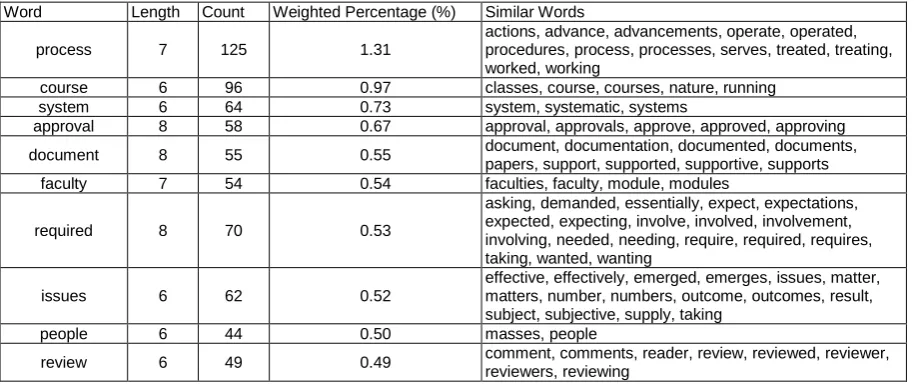
Table 1: General word frequency query, including synonyms. Top ten only.
Word Length Count Weighted Percentage (%) Similar Words
process 7 125 1.31
actions, advance, advancements, operate, operated, procedures, process, processes, serves, treated, treating, worked, working
course 6 96 0.97 classes, course, courses, nature, running
system 6 64 0.73 system, systematic, systems
approval 8 58 0.67 approval, approvals, approve, approved, approving
document 8 55 0.55 document, documentation, documented, documents,
papers, support, supported, supportive, supports
faculty 7 54 0.54 faculties, faculty, module, modules
required 8 70 0.53
asking, demanded, essentially, expect, expectations, expected, expecting, involve, involved, involvement, involving, needed, needing, require, required, requires, taking, wanted, wanting
issues 6 62 0.52
effective, effectively, emerged, emerges, issues, matter, matters, number, numbers, outcome, outcomes, result, subject, subjective, supply, taking
people 6 44 0.50 masses, people
review 6 49 0.49 comment, comments, reader, review, reviewed, reviewer, reviewers, reviewing
Creator: George Macgregor
restrict ourselves to further discussion of those nodes of substantive value. Note that discussion of the codes generally follows the structure of the interviews rather than the framework itself (see
Appendix A for interview structure).
The result of a general word frequency query (with synonyms) is provided in Table 1 and diagrammed as a cloud in Figure 7. Whilst these word frequencies say little about the intellectual content of the
interviews, they summarise their discursive content as “keywords” that relate to the curriculum
approval process and the use of systems to help solve the issues therein.
Figure 7: General word frequency query on interview data sources, including synonyms, diagrammed as a cloud.
3.2 Curriculum design and approval under the previous and new state
Previous state: perceptions
Analysis of the data exposed participants’ overall perception of the curriculum approval process under the previous state (Previous state [T:4]). Prior to this strand there was no opportunity to gather extensive qualitative interview data of the previous state, any discussion of the new state required a frame of reference for participants. Discussion of these issues was considered important in order to provide participants with an opportunity to reflect on the issues that impacted upon the curriculum design and approval process in the previous state. Since the activities participants perform in the approval process varies according to their role type (e.g. academic, academic quality, academic committee, etc.), a number of “significant issues” were cited by participants. Many of these issues demonstrated considerable overlap between process role types and included the following:
Meeting the deadlines of Senate and the difficulties associated with creating associated
“drafting timelines” for academic staff (Process bottlenecks [T:6.4]). For example:
In terms of the Faculty it's more... meeting the deadlines for certain meetings that have to approve the actual classes or courses themselves. So it's actually the timeline between when someone approaches saying they want to design a new class or a new course, creating a timeline for them to then go through that process and meeting the deadlines for approval, so that classes or courses can be introduced. So the turnaround can vary in terms of when someone approaches to start writing a new class or course, getting that reviewed and then the feedback then recorded and sent back to the proposer, and then the feedback put into place for overall approval. So it's really the timeline is the most important thing for the Faculty. (Participant #5)
Volume of paperwork and its duplication at various stages in the approval process
Creator: George Macgregor
There's a lot of paperwork, I think, to go through and I think some of the processes have to be duplicated, like asking for a class code at the end - y'know, there's a lot of that going on. (Participant #1)
Absence of process transparency and a lack of clarity about the process expectations and
curriculum information requirements (Transparency [T:5.3]). Participant #3 described the
“piecemeal” nature of the process:
Did you find it quite piecemeal? I found that I knew bits about it but didn't understand the whole process and that's why, when it came to doing it for the first time, it was like, phoning round lots of people trying to work out what all these different bit and pieces were... (Participant #3)
It is interesting to note that the above issues correspond to some of those reported as part of the PiP baselining exercise [19]. They also received further treatment in recent evaluation activity [4]. Their significance in relation to the new state will be discussed in subsequent sections.
New state: perceptions, impact, change effected
C-CAP system perceptions were generally positive (System perceptions [T:10]), triangulating previous
findings from user acceptance testing [5]. The simplicity of the drafting process in C-CAP was highlighted by a number of participants as particularly appealing. Those participants from the Academic Quality Team also noted the system’s potential to minimise common process misunderstandings. Participant #1 stressed the system’s simplicity and its ability to clarify expectations:
I think from a Faculty perspective we would get fewer queries from staff about certain aspects of curriculum design than we would, y'know, from the old system. I think a lot of the time they [academics] would come back and say, "I'm not exactly sure what this means...". Whereas the C-CAP system, I think, sets out... It's simplistic - they know exactly what's required of them. So I think that's very useful for them. (Participant #1)
The potential for C-CAP to contribute towards a clarification of design expectations was associated with process transparency, which was also considered to have improved under the new state
(Transparency [T:5.3]). Issues surrounding a lack of process visibility or transparency were reported
as having been resolved in earlier evaluation activity [4] and its qualitative verification in this instance is therefore positive. Transparency was considered to have improved because C-CAP not only supported curriculum design by providing greater prescription in terms of the information expected in curriculum designs but also because it made transparent the various approval process milestones. Some minor system related limitations of C-CAP were identified by academic participants with regards to this area (System logic [T:10.1]); these will be addressed in due course via the PiP incremental systems development methodology [14], [41].
Academic Committee participants were similarly pleased about the improvement in transparency, particularly with respect to the delivery and capture of review feedback; but expressed concerns about some Faculty reviewing procedures, some of which remain mysterious and would therefore benefit
from greater transparency (Review of curricula [T:9]). Under the previous state it was often unclear to
Academic Committee whether appropriate discussion and analysis had taken place within relevant subject based teams, such that the proposal of a new class or course was both justified and properly supported by the relevant subject team. Central to this concern was the suspicion by Academic Committee that many classes and courses were being proposed based on the sometimes forceful will of a single individual rather than the collective will of subject groupings or departments. This concern is described in more detail by Participant #4:
Creator: George Macgregor
proposals over the last year or so, there isn't a very strong sense about whose work you are actually reading, whether it's essentially the work of one person... You're saying curriculum design and approval, and these are separate things - so, I think, the approval process should make it clear how the design occurred. In other words, whose involvement... It's not always been clear what kind of process goes on at the subject level; where the redesign of a course or the design of a new class emerges from. And I think it would help the Faculty to know that there was a robust local system going on between large groups of colleagues or individuals who are then referring to committees within their subject. So a bit more of an indication of how what we're reading actually emerged from the subject grouping itself. (Participant #4)
In the new state C-CAP’s reviewing functionality enables the capture of all feedback delivered to writing teams by members of the Academic Quality Team and members of the Academic Quality Working Group during review [42], [43] (see Figure 5 for process). This aids Academic Committee scrutiny and demonstrates that any academic quality issues have been addressed by writing teams; however, it does not necessarily ensure that there has been departmental or subject group discussion pertaining to the rationale behind the submission of new curricula proposals or the degree to which any new proposal is supported by the wider department or subject group. Participant #4 continued [providing an example of how this aspect of the approval process is opaque]:
Sometimes you get that from the rationale... "As a subject group we've been discussing X, Y and Z for a number of years and we have collectively come to the view that we need this particular class..." You are then reassured. But sometimes you don't get that sense at all. You know that it is a real interest of this particular person, who has put forward a proposal because they are going to be teaching it. You don't really get some sense of how it contributes to the welfare of the overall process. […] Just a small historical bit on how this proposal was developed. Who developed it? What level of support does it have at the subject level? (Participant #4)
Whilst this issue is one that Academic Committee feels has plagued the previous state, it remains something which has been only marginally addressed in the new state, partly because this aspect of the approval process was not one that was identified as needing improvement. The forms served by C-CAP are more prescriptive and elicit greater detail on the rationale behind the proposal. The reviewing functionality and the “audit trail” of feedback delivered to writing teams also aids the transparency of review; but resolving the above noted issue may be one that necessitates new Faculty level procedures to ensure appropriate backing for new curriculum proposals (e.g. support from “X” number of subject group or departmental colleagues). Such a procedure could be facilitated in a future implementation of C-CAP (e.g. the names of supporting academics could be added to a separate section of the proposal, thus enabling Academic Committee to pursue supporting academics for further clarification, if required) but could not be imposed by C-CAP.
The ability to resolve version conflicts and improve the reliability of academic quality review were
identified as system features that could significantly aid the efficacy of the approval process (Version
control [6.5]). Linked to the benefits of version control (discussed in further detail later) was the collaborative drafting potential of C-CAP (Collaboration [T:2]). Offering an example of the benefits, Participant #5 stated:
That's a big benefit of the C-CAP system. Having... Setting up a writing team, or, y'know, individuals who a contributing to the writing of a course or class, without having that extra burden of somebody who might be proposing sending their work to others for them to add all their bits and pieces. It's very beneficial.... (Participant #5)
However, a preference for adhering to MS Word as the basis for the curriculum design and approval process was also expressed by academic participants. This perspective, articulated by two academic participants, appears to have strong links to previous working practices and their comfort with
Creator: George Macgregor
Call me a Luddite but I like having documents […] If I think about how I would be working on that kind of documentation; if it had just been Word documents - I would have had my various bits and pieces up on the screen and I would be going between them. [With C-CAP] you had to save and then come out, and then go back into the main menu and then find your way back through. And I didn't even have a good sense in my head of how it looked. (Participant #2)
The preference among academic participants for using MS Word was not merely theoretical but was also observed during C-CAP piloting. C-CAP enables the upload of attachments at specific sections of the class and course forms. Depending on the context, these attachments may contain detailed financial forecasts (which are difficult to model in an online system when faculties use different costing models) or additional academic information not included in the form (e.g. a statement of support from an industry representative that corroborates the academic or business need for a new class or course to be approved). Piloting of C-CAP revealed unexpected system use behaviour whereby certain sections of course and class proposals were left incomplete; instead, the requested curriculum information was contained in a number of separate MS Word attachments, uploaded at various sections of the proposal. The consequence of such system behaviour for the other approval processes C-CAP supports is catastrophic. Important curriculum information or data cannot be captured in a structured manner, thereby compromising subsequent information extraction or reuse and subverting the underlying process. Further discussion of this scenario is therefore warranted.
The habitual use of common MS Office applications to complete everyday work tasks is such that their use in completing new or emerging tasks is often expected. The issues surrounding collaborative working with single-user applications (such as MS Word) has been extensively reviewed in the literature, particularly by researchers focusing on their use within business and organisational contexts, e.g. [44–47]. For example, Adler et al. [45] summarise the problems intrinsic to collaborative working with single user applications, highlighting a lack of collaborative transparency (e.g. understanding the activities of others to avoid neglecting or duplicating work) and version control as particular issues. In their case study of implementing a participatory protocol design system within the health sector, Weng et al. [44] note the inefficient and “error prone” use of MS Word and email in the collaborative design of ethics protocols. Some of these issues were raised in PiP as a result of the baselining exercise [19] and evaluation activity conducted as part of WP7:39 [4] has noted the potential for C-CAP to resolve these particular issues. Weng et al. [44] also explore the change management and “change explanation” issues that arise from persuading users in large organisations to embrace new systems of collaborative working. Whilst better integration of single-user applications is now offered by document management and sharing platforms (e.g. MS SharePoint), the information and data contained within these uploaded documents often lacks structure and therefore evades most types of extraction or computation.
Such a preference for MS Word was highlighted by a minority of the user acceptance testing participants in WP7:37, some of whom perceived the use of any online approval system as supporting the administrative functions of the approval process rather than the design process [5]. In one case an academic participant expressed their intention to actively resist C-CAP were it to be implemented in their faculty such was their attachment to MS Word and the perceived freedom this granted them within the curriculum design and approval process. The attitude that C-CAP is designed simply to aid bureaucratic processes at the expense of academics was also expressed by academic participants
during the interviews, for example (Working practices [T:4.2] AND System perceptions [T:10.1]):
I felt frustrated by the fact that I was doing this just to make another part of the process easier… (Participant #2)
Creator: George Macgregor
people-orientated, system-orientated and interaction perspectives [53]. The people-orientated theory suggests that system resistance is provoked by certain internal factors peculiar to the groups or individuals exposed to the system. For example, citing a number of researchers, Jiang et al. [56] note a body of research that appears to support the view that user characteristics (e.g. age, gender, etc.) can influence the acceptance of new systems or technology, as well as the differing backgrounds, values and belief systems held by users. The system-orientated perspective assumes that resistance is created externally by the system or its design and, again, research has noted that resistance increases when users are presented with technically deficient systems [44], [53], [56]. Heuristic evaluation work [14] and further user acceptance testing of C-CAP [5] by PiP was partly to address subsequent user resistance issues [57]. The interaction perspective, however, is almost relativist in its assumptions and attributes the cause of resistance to be within a complex web of factors germane to people and systems and the way in which they both interact. Fundamental to this view is that systems assume different social and political meanings and their consequences are interpreted differently depending on the user’s role or position [56]. Markus [53] provides common indicative examples of the interaction perspective in practice, such as:
Systems that are resisted on the basis that they centralise control over data within
organisations that otherwise exemplify decentralised structures.
Systems that alter the power balance within organisations such that it is resisted by those
who lose power.
Resistance that arises from the interaction between the technical design of a system and the
environmental or social circumstances in which it is used.
The attachment some academics appear to have for the continuation of an MS Word/email based system is clearly an issue that should not be overstated; it has emerged as an issue for only a minority of academic participants throughout the entire PiP evaluation programme. It is nevertheless a significant minority and appears to be borne out by the interaction perspective of system resistance, in which the system is perceived to benefit administrators at the expense of academic freedom. This view appears to be corroborated by anecdotal observations of academic quality processes at a number of faculties whereby it was not uncommon for incomplete or substandard curriculum designs to be submitted for faculty consideration. Designs often followed no particular template, omitted key information (e.g. number of student contact hours, resource implications, constructive alignment, etc.), and were left for academic quality teams to “sanitise”. Due process was also occasionally subverted at the behest of senior academics.
The design process under the previous state therefore afforded some academics significant freedom in the curriculum design process, and this freedom no longer exists in the new state. C-CAP seeks to standardise curriculum designs and centralise data. It also renders process subversion more difficult; although, as noted above, not impossible. Yet, the perceptions of some participants clearly relate more to people-orientated theories of system resistance; a comfort with familiar working practices with single-user applications (e.g. “If it had just been Word documents, I would have had my various bits and pieces up on the screen”), personal attachment to physical documents (e.g. “Call me a Luddite but I like having documents”) or a lack of training or IT literacy (e.g. “I'd like to be able to lift stuff out so that when I create course materials I can easily lift bits and pieces out”). Interestingly, when academic participants were asked which features they would like to see incorporated into C-CAP, it was a spell checker that was cited as more important than the ability to facilitate the process through MS Word.
An important emerging theme from the interviews related to process control (Process control [T:5.1]).
Creator: George Macgregor
was therefore welcomed as a better mechanism for controlling, monitoring, structuring and minimising errors in the process. Participant #5 said:
I think the new system will give the Faculty and the Faculty Team greater control and better monitoring of the system. At the moment there are one or two individuals who are dealing with the current system and trying to monitor that, with a high volume of new classes being proposed.... Sometimes there are errors that occur in the current system that I don't think will then appear in C-CAP. I think there will be greater monitoring and control and structure to the process. (Participant #5)
The increased control given to the Academic Quality Team – something that is reflected in the “star shaped” interpretation of the approval process provided in Figure 5 – was not identified explicitly by academic participants as a source of system resistance, as per the interaction perspective above;
their annoyance appears to be directed more at those processes that occur after faculty level
approval. Perhaps as a result, academics instead perceived C-CAP to provide higher levels of control too and, in some circumstances, found it to be empowering. This also appears to be intimately connected to the underlying transparency made possible through improved process visibility,
something that was confirmed by data querying (Process control [T:5.1] AND Transparency [T:5.3]).
Participant #3 said [offering an example of how a lack of control has impacted them in the past]:
The biggest change for me is in the past it's usually been the course directors that have quickly fired a module to me saying, "We need to review the course, could you quickly do a new module?" And I've sent stuff in [to Academic Quality and Academic Committee] and they've adapted it or changed it. I haven't seen how that looks and very often, a year later, they've said, "You're running this course!" And when I look at it, they've put the wrong assessment, y'know.... Just small things like that. So, with this, the change for me is that I feel I do have, whatever level I'm in, I can see it, I can go online, I'm part of the team and if I'm not happy and I want to change something I have more control over it. (Participant #3)
Pareto analyses undertaken in the previous strand of evaluation identified a number of “causes”
associated with approval process failures [4]. Whilst many of these “causes” were found to have been resolved by C-CAP, there were others that were problematic to resolve and a recommendation was that interview participants should be consulted to identify potential solutions [4]. Several of the causes existed in areas of the process that C-CAP either had limited influence over or could not control. For example, C-CAP is unable to influence the staff workload constraints that may cause reviewers to delay or abandon the feedback they intend to deliver to writing teams. This was
nevertheless highlighted as a topic for discussion during the interviews (Appendix A). The use of
C-CAP notifications to better support the timely delivery of review feedback was considered not only as a potential solution to the aforementioned “cause”, but was cited strongly by Academic Quality Team members as a feature they would most like to see incorporated into C-CAP in future because it would
improve control over the process (Process control [T:5.1] AND System perceptions [T:10.1]).
Participant #5 explained the reasons why:
I think it's just very difficult to control external factors like that. […] Sometimes a reviewer of a class can get lost in amongst all the other things they are doing and the role they play within reviewing classes on behalf of the Faculty. Things like reminders, notification, and so on, would be a useful tool that could be used, just to prompt them and make them aware that it needs to be done. We generally give the reviewer a, sort of, generic timeline of two weeks to say "is it possible for you". That's just a sort of bog standard turnaround time; but obviously as you get closer to various meetings throughout the year, you have to then pull that timeline in and instead say, "can you turn this around in a week?". And sometimes it's shorter than that... A couple of days. I think it's when you give them a longer timescale; the review can disappear in amongst their other work responsibilities. Reminder notifications would be a good tool to use. (Participant #5)
Creator: George Macgregor
forthcoming (e.g. by emailing the reviewer, contacting them by phone, etc.); however, such intervention normally occurred far too late in the approval timeline since Team members were generally only motivated to pursue reviewers when it became clear they were late in delivering their feedback or had failed to adhere to the agreed reviewing schedule. Reminder notifications are therefore sought in this instance to pre-empt delays by ensuring reviewers are reminded of their obligations. An additional reason pertains to the equitable distribution of peer review responsibility
across the Faculty. Referring to the previous round of curriculum approvals (Review of curricula
[T:9]), a member of the Academic Quality Team (Participant #1) noted how quality reviewing was increasingly the responsibility of a small number of academic staff:
Our last Academic Committee had something like 57 class proposals going to it. Now unfortunately, [academic’s name] ended up with the bulk of them because other people just didn't respond and he was having to ask to get these through quickly... (Participant #1)
The failure of particular reviewers to complete feedback on time, or to ignore or abandon reviewing because they have failed to prioritise it, has created an untenable situation within the Faculty whereby large numbers of proposals end up being reviewed by a small number of academics. Not only does this scenario unfairly penalise conscientious academics, it raises questions about the academic quality review process since only a minority ever engage with the reviewing that underpins it.
3.3 New state impact: validating qualitative benchmarking analysis
Recall that is was a requirement of this evaluation that additional qualitative data be gathered to validate specific findings from WP7:39, thus better understanding the nature of the business process improvements and changes effected by C-CAP. A qualitative benchmarking approach was used in WP7:39 to establish whether the five principal process and document workflow issues identified in an earlier phase of the PiP project [19] had been addressed as a result of C-CAP implementation. In essence, qualitative benchmarking was intended to assess whether issues prevalent in the “previous state” had been addressed in the “new state” (i.e. C-CAP). A summary of the qualitative benchmarking results from WP7:39 are provided in Table 2.
Process bottlenecks
Qualitative benchmarking found that C-CAP demonstrated an automational, disintermediating,
tracking and intellectual [58] impact on the curriculum approval process, manifesting itself in a variety
of process efficiencies. These efficiencies were consistent with well understood models of IT-supported process innovation [58] and contributed towards an amelioration but not a resolution of the process bottlenecks prevalent under the previous state (Table 2). An inability to effect change in the scheduling of key meeting dates (e.g. academic committee meetings, Senate, Ordinances and Regulations, etc.) meant that despite the process efficiencies only a “partial resolution” of this issue was possible. A number of factors contributed to PiP’s inability to resolve process bottlenecks entirely [4], including a lack of project authority to radically redesign approval procedures. This analysis was reflected in the interview data.
Interview data suggested that the timing of these “crunch” meetings remained a significant issue
confronting the approval process and it was one that neither PiP nor C-CAP could address (Process
bottlenecks [T:6.4]). The scheduling of meetings was discussed by all participants as a problem, with
some also suggesting that it could only be resolved by radically altering long established University practices. For example:
Creator: George Macgregor
[image:23.595.66.528.139.530.2]which these things had to be completed, and there was an on-going process of class and curriculum approval, then it could be treated more or less as routine business by the faculty. (Participant #4)
Table 2: Summary table of qualitative benchmarking, as originally reported in the strand report for WP7:39 [4]. Includes principal baselining findings [19] (“previous state”) against C-CAP implementation and resolutions (“new state”) and characterises the process innovation achieved
using Davenport’s IT process innovation categories [58].
P r e v i o u s s t a t e N e w s t a t e
# Baselining
issue
Baselining issue summary definition
Status of issue under
C-CAP
C-CAP summary description
Impact: Davenport’s IT process innovation
category
1 Process
bottlenecks
Scheduling of meeting dates of key committees resulting in late decisions; primary stakeholders (e.g. library, timetabling, disability services, etc.) informed too late to sufficiently discharge
function. Partially
resolved
PiP (and ergo C-CAP) unable to change meeting schedules; although C-CAP piloting has facilitated discussion of this by key
stakeholders. Nevertheless, C-CAP enables quicker processing of curriculum proposals prior to crucial decision making milestones and ensures communication of curriculum information to primary stakeholders. ‘Automational’ and ‘disintermediating’ impacts also improve process efficiency. Automational Disintermediating Tracking Intellectual 2 Poor feedback looping
Poor feedback mechanisms throughout process resulting in inadequate change tracking and poor communication of feedback/changes to key stakeholders, including academics.
Resolved
Improved feedback mechanisms throughout the process as facilitated by C-CAP; feedback communicated to key members of academic quality / faculty and members of the writing team. Automational Disintermediating 3 Absence of version control
No version control or unique identifiers in operation resulting in administrative and review issues; lack of standardisation between curriculum design forms.
Resolved
Version control and unique identifiers imposed facilitating ‘tracking’ impact. Curriculum design forms for both
class and course standardised. Tracking
4
Absence of central repository
No central repository of approved curricula to function as “single point of truth”. Creates issues for reviewers / faculty and periodic review.
Resolved
Since C-CAP provides the focus for the entire curriculum design and approval process, it functions as the single point of truth from which the status of proposals can be monitored and approved curricula revisited or amended. Intellectual Tracking Analytical 5 Form size and lack of
guidance
Forms considered “daunting and onerous” and obstacle to pedagogical improvement. Lack of guidance associated with curriculum design process resulting in confusion about approval expectations both at academic and review level.
Partially resolved†
Curriculum approval forms have been rationalised and “show and hide” approach to interface design enhances accessibility. Guidance on curriculum design and University policies embedded within C-CAP guidance areas.
N/A
But there was also a suggestion by some participants that it was also an issue to which they were resigned and attempting to alter the “mysterious” mechanics of the University’s upper echelons was futile (Process bottlenecks [T:6.4]):
Are we not all guided by Senate back the way - Senate and Court? If they have to approve them then that's what we have to work to! (Participant #1)
There are bottlenecks because there are deadlines that are required to be met, in terms of University processes. I'm not sure there is an awful lot that can be done in relation to that. (Participant #6)
The current approval process mandates that curricula be “approved” by Senate. As process analysis conducted throughout the lifetime of PiP has discovered, process reality aligns with this stated process insofar has curricula are “approved” by Senate; however, it is worth noting that Senate do not scrutinise curriculum proposals that have already been successfully approved by Ordinances and Regulation (O&R) and ergo by faculties. In effect, new curricula that have successfully passed
†
Creator: George Macgregor
Faculty and O&R scrutiny are deemed by Senate to be approved and their discussion at Senate is limited to acknowledging their approval.
Poor feedback looping and version control
Issues pertaining to poor feedback looping and version control were found by the qualitative benchmarking analysis to have been resolved [4]. Although these issues were addressed separately in the aforementioned benchmarking analysis, interview participants often connected the two. The findings and discussion of these issues have therefore been conflated.
C-CAP demonstrated improved feedback mechanisms throughout the curriculum approval process. Central management of the approval process and its workflow by faculty academic quality staff enables reviewers at various stages of the process to deliver directed feedback. The feedback mechanisms available in C-CAP broadly emulate the “review comment” functionality available in MS Word, with details of the feedback recorded (e.g. author details, date of feedback delivery, etc.) and remaining visible throughout the approval process so that their implementation can be verified during subsequent review [43], [59]. Since the approval process is governed by workflows and is to a certain extent automational [58], feedback is always communicated to members of the writing team and academic quality / faculty staff. Although all participants recognised C-CAP was an improvement on the previous state, the feedback functionality now available was most valued by those responsible for
academic quality, each of whom have responsibility for coordinating the review process (Poor
feedback looping [T:6.5]). Participant #5 provided indicative comments and noted the simplicity of the
process for reviewers:
When the proposal goes to a reviewer, it's pretty much they can look at the form and then incorporate their feedback straight into that form, rather than having to complete a separate form, as it currently is in the process at the moment. So they can basically read what is written by the proposer and then underneath they can incorporate their feedback straight into the section underneath, and I think that's a lot easier for the person who is reviewing that class or course. (Participant #5)
An interesting and additional insight was the importance of improved feedback mechanisms in supporting academic quality. Something which was corroborated by further data interogation (Academic quality [T:1] AND Version control [T:6.5]). For example, another participant involved in academic quality highlighted the chronic information management problems that arose in the previous state – including the associated version control problems highlighted in WP7:39 [4] - and how it often compromised quality assurance processes:
I mean, I think from our point of view, what we would like - which is what we tried to do with class proposals and scrutiny - was to have at least two people looking at each class proposal and then putting... But in a practical sense it just didn't work out because if they sent something back with track changes and then somebody else hadn't... How then do you....? That [feedback] superseded that.... It was just getting into a mess and reviewing ended up being just one person, really. And I don't think quality wise that's very good, y'know? (Participant #1)
![Table 2: Summary table of qualitative benchmarking, as originally reported in the strand report for WP7:39 [4]](https://thumb-us.123doks.com/thumbv2/123dok_us/1676762.121106/23.595.66.528.139.530/table-summary-qualitative-benchmarking-originally-reported-strand-report.webp)