City, University of London Institutional Repository
Citation
:
Zhang, Yun (2012). Pattern recognition techniques applied to rust classification in steel structures. (Unpublished Masters thesis, City University London)This is the unspecified version of the paper.
This version of the publication may differ from the final published
version.
Permanent repository link: http://openaccess.city.ac.uk/3007/
Link to published version
:
Copyright and reuse:
City Research Online aims to make research
outputs of City, University of London available to a wider audience.
Copyright and Moral Rights remain with the author(s) and/or copyright
holders. URLs from City Research Online may be freely distributed and
linked to.
City Research Online: http://openaccess.city.ac.uk/ [email protected]
PATTERN RECOGNITION TECHNIQUES APPLIED TO RUST
CLASSIFICATION IN STEEL SURFACES
Yun Zhang
Master of Philosophy
City University
Department of Computing
CONTENTS
CONTENTS ... II
LIST OF FIGURES ... IV
LIST OF TABLES ... VII
ACKNOWLEDGMENTS ... IX
ABSTRACT ... XI
ABBREVIATIONS AND TERMS ... XII
CHAPTER 1 - INTRODUCTION AND OVERVIEW ... 13
1.1INDUSTRY BACKGROUND ... 13
1.1.1 Steel Surface Preparation Definition ... 13
1.1.2 Steel Surface Preparation Standards ... 14
1.1.3 Procedure for Visual Assessment of Steel Substrates ... 16
1.1.4 Steel Surface Preparation Methods ... 17
1.2PROBLEM STATEMENT ... 19
1.2.1 Disadvantages of Visual Assessment of Steel Substrates ... 19
1.2.2 The Hazards of Steel Surface Preparation ... 20
1.2.3 Conclusions ... 21
1.3PREVIOUS RESEARCH ... 22
1.3.1 Material Surface Classification ... 22
1.3.2 Steel Surface Classification ... 23
1.4OBJECTIVES ... 25
1.5OUTLINE OF THE THESIS ... 26
CHAPTER 2 - LITERATURE REVIEW ... 27
2.1INTRODUCTION OF PATTERN RECOGNITION ... 28
2.2STATISTICAL PATTERN RECOGNITION METHODS ... 35
2.2.1 Discriminant Analysis ... 35
2.2.2 K-Nearest Neighbour (KNN) classifiers ... 41
2.3ARTIFICIAL NEURAL NETWORKS ... 44
2.3.1 ADALINE Neural Networks ... 44
2.3.2 Multilayer Feed-forward Neural Networks ... 45
2.3.3 Learning and Vector Quantization (LVQ) networks ... 55
2.4TEXTURE ANALYSIS ... 57
CHAPTER 3 - VISUAL LIBRARY AND CLASSIFICATION APPROACHES . 68 3.1INTRODUCTION ... 68
3.2VISUAL LIBRARY ... 69
3.2.1 Visual Library images requirements ... 69
3.2.2 Visual Library Optimization ... 70
3.2.3 Size Optimization Process ... 70
3.3VISUAL LIBRARY AUTOMATION DATA SUPPORT SYSTEM ... 72
3.4MODELS FOR DATA REPRESENTING ... 74
3.5CLASSIFICATION APPROACHES ... 80
3.5.1 Software Packages ... 80
3.5.2 General Classification Approaches ... 81
3.5.3 Artificial Neural Network Classification Approaches ... 82
3.5.4 The Statistic Classification Approaches ... 83
3.5.5 The Overall Structure of the Classification System ... 85
CHAPTER 4 - RESULTS OF CLASSIFICATION EXPERIMENTS ... 87
4.1INTRODUCTION ... 87
4.2VISION EVALUATION ... 87
4.3THE RESULTS OF ARTIFICIAL NEURAL NETWORKS ... 88
4.3.1 ADALINE neural network ... 88
4.3.2 Learning and Vector Quantization (LVQ) Neural Network ... 91
4.3.3 Back-Propagation with Momentum and Adaptive Learning Rate ... 97
4.4THE RESULTS OF STATISTICAL PATTERN RECOGNITION METHODS ... 108
4.4.1 Discriminant Analysis ... 108
4.4.2 K-Nearest Neighbour Methods (KNN) ... 116
4.5CONCLUSIONS ... 124
CHAPTER 5 - CONCLUSIONS ... 129
LIST OF FIGURES
Number Page
Figure 1.1 Evaluation process for a protective coating system [Pietsch, Kaiser 02] 14
Figure 1.2 International standard of rust grades A, B, C and D ... 16
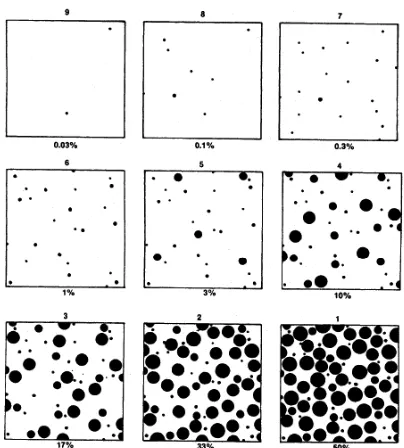
Figure 1.3 Diagrams representing rust grades and the correspond area percentage 16 Figure 1.4 Mechanical cleaning method [Momber 03] ... 18
Figure 1.5 The working environment to apply the hydro-blasting preparation method ... 19
Figure 1.6 Previous Research - System structure to classify six classes [Ünsalan 95] 24 Figure 1.7 Previous Research - System structure of the binary classification [Ünsalan 95] ... 24
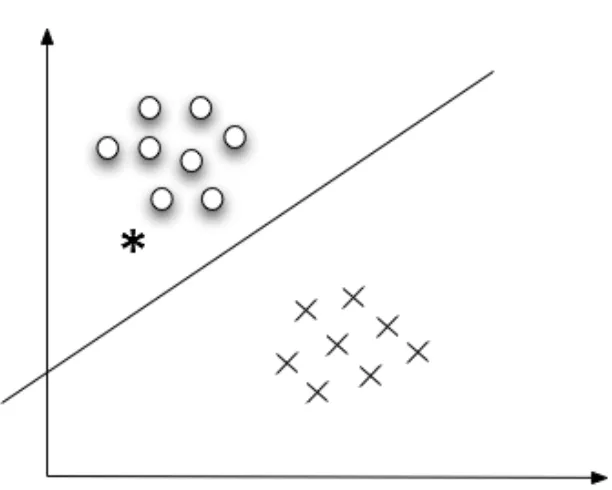
Figure 1.8 Previous Research - Classification result for GLCM [Ünsalan 95] 24 Figure 2.1 Example of image regions corresponding to (a) class A and (b) class B. 31 Figure 2.2 Plot of the mean value versus the standard deviation for a number of different images originating from class A (o) and class B (+) ... 31
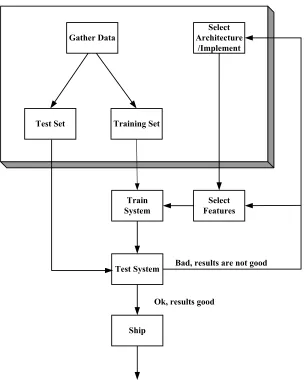
Figure 2.3 The basic stages involved in the design of a classification system . 33 Figure 2.4 The flow chart of the process of designing a learning machine for pattern recognition ... 35
Figure 2.5 Multiple-input Neuron ... 48
Figure 2.6 Trajectory with and without Momentum ... 52
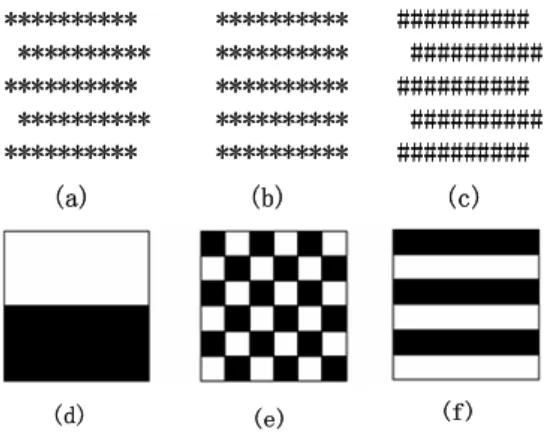
Figure 2.7 Artificial Texture ... 58
Figure 2.8 - Source Image and Co-occurrence Matrix of the source image ... 62
Figure 3.1 Image size optimization ... 70
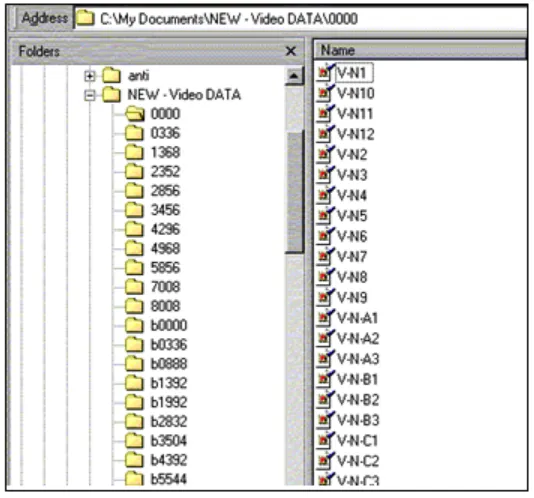
Figure 3.2 The structures in Video Library ... 71
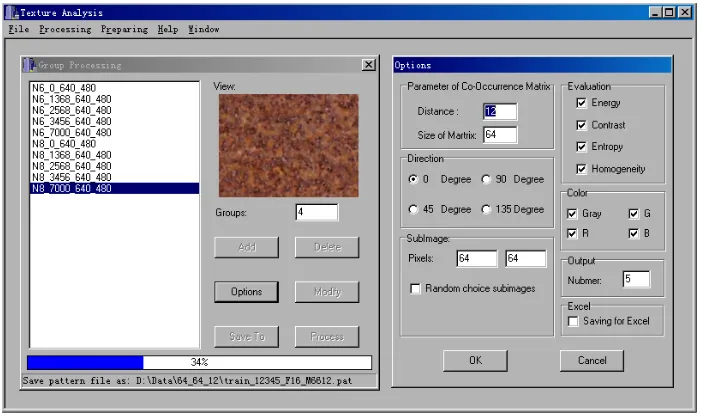
Figure 3.3 Visual library optimization user interface ... 74
Figure 3.4 Feature extraction user interface ... 74
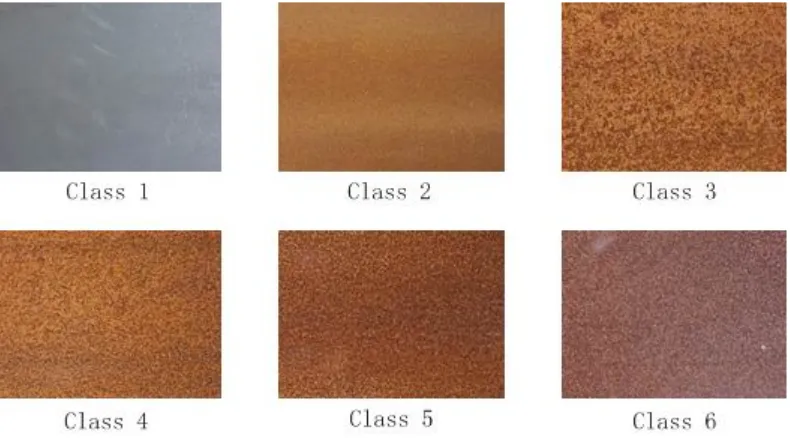
Figure 3.5 One set of rust images which contains six classes ... 76
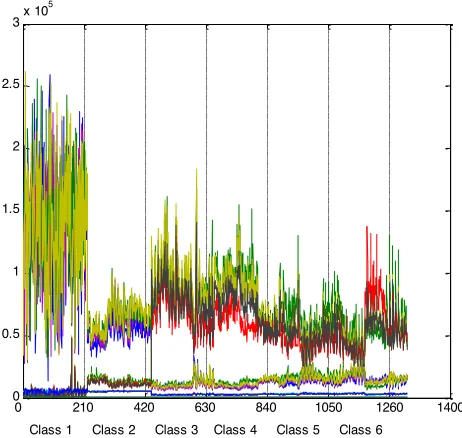
Figure 3.6 Combinations of different feature sets ... 77
Figure 3.8 Co-Occurrence matrices of the six classes represented in all colour channels
- Colour Channel View ... 79
Figure 3.9 Co-Occurrence matrices of the six classes represented in all colour channels - 3D view ... 80
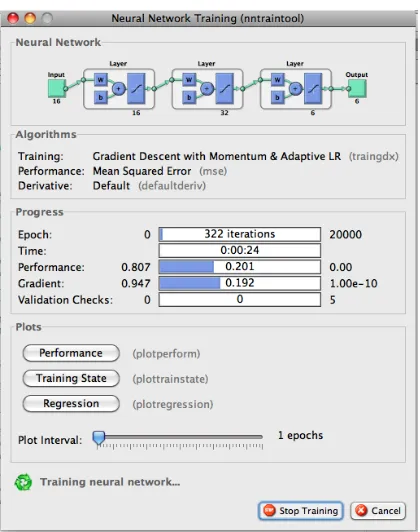
Figure 3.10 The training progress of a neural network which is used to classify six classes ... 83
Figure 3.11 The discriminant analysis ... 84
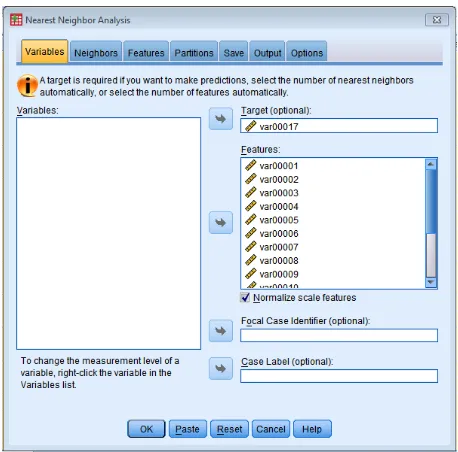
Figure 3.12 Nearest neighbour analysis ... 84
Figure 3.13 Overall structure of the classification system structure ... 86
Figure 4.1 Training performance and error histogram: the binary classification of the class one ... 97
Figure 4.2 Training performance and error histogram: the binary classification of the class two ... 98
Figure 4.3 Training performance and error histogram: the binary classification of the class three ... 99
Figure 4.4 Training performance and error histogram: the binary classification of the class four ... 100
Figure 4.5 Training performance and error histogram: the binary classification of the class five ... 101
Figure 4.6 Training performance and error histogram: the binary classification of the class six ... 102
Figure 4.7 Training performance and error histogram: the classification of three classes ... 103
Figure 4.8 Training performance and error histogram: the classification of four classes ... 104
Figure 4.9 Training performance and error histogram: the classification of five classes ... 105
Figure 4.10 Training performance and error histogram: the classification of six classes ... 106
Figure 4.11 Canonical discriminate functions of three classes ... 111
Figure 4.12 Canonical discriminate functions of four classes ... 112
Figure 4.13 Canonical discriminate functions of five classes ... 113
Figure 4.15 KNN feature space – classification of three classes ... 119
Figure 4.16 KNN feature space – classification of four classes ... 120
Figure 4.17 KNN feature space – classification of five classes ... 121
LIST OF TABLES
Number Page
Table 4.1 ADALINE - Evaluate results: the binary classification of the class one 89
Table 4.2 ADALINE - Evaluate results: the binary classification of the class two 89
Table 4.3 ADALINE - Evaluate results: the binary classification of the class three 89
Table 4.4 ADALINE - Evaluate results: the binary classification of the class four 90
Table 4.5 ADALINE - Evaluate results: the binary classification of the class five 90
Table 4.6 ADALINE - Evaluate results: the binary classification of the class six 91
Table 4.7 LVQ - Evaluate results: the binary classification of the class one ... 92
Table 4.8 LVQ - Evaluate results: the binary classification of the class two ... 92
Table 4.9 LVQ - Evaluate results: the binary classification of the class three . 92 Table 4.10 LVQ - Evaluate results: the binary classification of the class four 93 Table 4.11 LVQ - Evaluate results: the binary classification of the class five . 93 Table 4.12 LVQ - Evaluate results: the binary classification of the class six .. 94
Table 4.13 LVQ - Evaluate results: the classification of three classes ... 94
Table 4.14 LVQ - Evaluate results: the classification of four classes ... 95
Table 4.15 LVQ - Evaluate results: the classification of five classes ... 96
Table 4.16 LVQ - Evaluate results: the classification of six classes ... 96
Table 4.17 BP - Evaluate results: the binary classification of the class one .... 98
Table 4.18 BP - Evaluate results: the binary classification of the class two .... 99
Table 4.19 BP - Evaluate results: the binary classification of the class three .. 99
Table 4.20 BP - Evaluate results: the binary classification of the class four 100 Table 4.21 BP - Evaluate results: the binary classification of the class five . 101 Table 4.22 BP Evaluate results: the binary classification of the class six ... 102
Table 4.23 BP - Evaluate results: the classification of three classes ... 103
Table 4.24 BP - Evaluate results: the classification of four classes ... 104
Table 4.25 BP - Evaluate results: the classification of five classes ... 105
Table 4.26 BP - Evaluate results: the classification of six classes ... 107
Table 4.28 Discriminant analysis cross-validated result: Binary classification of the
class two ... 108
Table 4.29 Discriminant analysis cross-validated result: Binary classification of the class three ... 109
Table 4.30 Discriminant analysis cross-validated result: Binary classification of the class four ... 109
Table 4.31 Discriminant analysis cross-validated result: Binary classification of the class five ... 110
Table 4.32 Discriminant analysis cross-validated result: Binary classification of the class six ... 110
Table 4.33 Discriminant analysis cross-validated result: Classification of three classes ... 111
Table 4.34 Discriminant analysis cross-validated result: Classification of four classes ... 112
Table 4.35 Discriminant analysis cross-validated result: Classification of five classes ... 114
Table 4.36 Discriminant analysis cross-validated result: Classification of six classes 115 Table 4.37 KNN result: Binary classification of the class one ... 116
Table 4.38 KNN result: Binary classification of the class two ... 116
Table 4.39 KNN result: Binary classification of the class three ... 117
Table 4.40 KNN result: Binary classification of the class four ... 117
Table 4.41 KNN result: Binary classification of the class five ... 118
Table 4.42 KNN result: Binary classification of the class six ... 118
Table 4.43 KNN result: Classification of three classes ... 119
Table 4.44 KNN result: Classification of four classes ... 121
Table 4.45 KNN result: Classification of five classes ... 122
Table 4.46 KNN result: Classification of six classes ... 123
Table 4.47 The performances of the BP trained by different feature sets ... 126
ACKNOWLEDGMENTS
I would like to thank my wife for her help, an extraordinary patience, encourage and
support during the research that led to completion of this thesis.
I am most grateful to my supervisors Dr. Andrew Tuson, Dr. Peter Smith and Dr. Geoff
Dowling for their support, advice and attention to details. This thesis would not exist
without their help.
Thanks to for the Automated Inspection and Maintenance of Steel Structures (AIMS)
project team who supports me the entire steel surface visual library.
I thank all at the Department of Computing for providing a friendly environment to
work in.
Also thanks to all the other people, not mentioned here, who have supported and helped
University Librarian is allowed to copy the thesis in whole or in part without further
reference to the author. This permission covers only single copies made for study
ABSTRACT
The life and performance of steel structure depends directly upon the steel surface
preparation. The restoration of steel structure such as steel bridges, ships and storage
tanks is due mainly to the use of manual surface inspection methods accompanied by
surface preparation technologies. It requires a long project duration, high costs and
hazardous practices for both worker and environment to complete surface restoration.
The developments of surface preparation technologies make it essential to develop
technologies that allows patch restore of corrode steel structure in practice.
This thesis addresses the problem of classification of rust steel surfaces. Various Pattern
recognition methods are studied for classifying less subjective steel surfaces from a
time corrosion perspective. Our primary contribution is: with appropriate features from
the steel surfaces, artificial neural network pattern recognition methods have the
abilities to classify the less subjective rust steel surfaces reliably and be suitable for
automation. The results provide important information about the classification methods
for rust steel surface analysis.
ABBREVIATIONS AND TERMS
ADALINE Adaptive Linear Neuron network
ALC Adaptive Lineal Combiner
BP Back-Propagation network
ER Electrical Resistance
GLCM Gray Level Co-occurrence Matrices
KNN K-Nearest Neighbour method
LMS Least Mean Squares algorithm
LPR Linear Polarization techniques
LVQ Learning Vector Quantization
NDT Non Destructive Testing
MANOVA Multivariate analysis of variance
Chapter 1
- Introduction and Overview
1.1 Industry Background
Steel is the most commonly used metal material in the modern life. The reason to
choose steel among all metals is the strength and ease of production of steel.
However, steel corrode in many media including most outdoor atmospheres. The
serious consequences of the steel corrosion process have become a problem of
worldwide significance [Roberge 06]. Protective coatings are probably the most
widely used products for steel corrosion control. They are used to provide long-term
protection of steel structure under a broad range of corrosive condition, extending
from atmospheric exposure to the most demanding condition.
1.1.1 Steel Surface Preparation Definition
The life of a coating of steel structure depends as much on the degree of surface
preparation as on the subsequent coating system. Surface preparation is defined in IS0
12944-4 as ‘any method of preparing a surface for coating’. It is an important part of
any steel corrosion protection strategy [Momber 03].
The primary functions of steel surface preparation are to clean the steel surface of
material that will induce premature failure of the coating system and provide a surface
The ISO 8502 states that the performance of protective coatings of paint and related
products applied to steel is significantly affected by the state of the steel surface
immediately prior to painting. The principal factors that are known to influence the
performance are:
• The presence of rust and mill scale;
• The presence of surface contaminants, including salts, dust, oil and greases;
• The surface profile, which includes primary, roughness and waviness profiles.
The major factors for the selection of a corrosion protection system [Pietsch, Kaiser 02]
are shown in the Figure 1.1.
Evaluation Construction
material
Surface preparation
degree
Category of
corrosivity Lifetime Binder primer Binder top coat Local demands Selection of binder
Protective coating system
Figure 1.1 Evaluation process for a protective coating system [Pietsch, Kaiser 02]
1.1.2 Steel Surface Preparation Standards
extended the Swedish SIS 0559900, transformed into ISO 8501-1:1988 international
standard on rust. It defines rust grades and preparation grades of uncoated steel
substrates and steel substrates after overall removal of pervious coatings
The rust grades of uncoated steel surface are classified as A, B, C and D from
minimum to maximum by a human expert. The descriptions about them are shown
below and the images of rust grades show in the Figure 1.2.
• Rust grade A: Steel surface largely covered with adhering mill scale but litter,
if any, rust – This would correspond to a hot-rolled steel surface newly made.
• Rust grade B: Steel surface which has begun to rust and from which the mill
scale has begun to flake – This would correspond to a hot-rolled steel surface
exposed to wind and weather without protection into a moderately corrosive
atmosphere, for two or three months.
• Rust grade C: Steel surface on which the mill scale has rusted away or from
which it can be scraped, but with slight pitting visible under normal vision –
This would correspond to a steel surface exposed to wind and weather without
protection, into a moderately corrosive atmosphere, for about a year.
• Rust grade D: Steel surface on which the mill scale has rusted away and on
which general pitting is visible under normal vision – This would correspond
to a steel surface that was exposed to wind and weather, without protection,
Figure 1.2 International standard of rust grades A, B, C and D
The Figure 1.3 shows a series of 1.5 inch squares with black dots representing various
area percentages. These diagrams are not proposed to reproduce the appearance of
actual rust patterns but simply to serve as a guide for judging the percentage of
surface covered by rust or rust blisters.
Figure 1.3 Diagrams representing rust grades and the correspond area percentage
1.1.3 Procedure for Visual Assessment of Steel Substrates
commonly used to assess the steel substrates. This procedure requires either in good
diffuse daylight or in equivalent artificial illumination to examine the steel surface
and compare it with each of the photographs of the standard rust grades, using normal
vision. Place the appropriate photograph close to, and in the plane of, the steel surface
to be assessed. For rust grades, record the assessment as the worst grade that is
evident.
1.1.4 Steel Surface Preparation Methods
Definition and subdivision of steel preparation methods are listed in ISO 12944-4
(1998). Basically, the following three principal surface preparation methods can be
distinguished:
• Water, solvent and chemical cleaning that includes water cleaning, steam
cleaning, emulsion cleaning etc.
• Mechanical cleaning method that includes hand-held tool cleaning, power-tool
cleaning, blast cleaning and water blast cleaning.
• Flame cleaning
Mechanical Cleaning methods
Hand-held tool
cleaning Power-tool cleaning Blast-cleaning
Water blast-cleaning (Hydro-blasting)
Figure 1.4 Mechanical cleaning method [Momber 03]
The hydro-blasting method is the most effective mechanical cleaning method by far.
Hydro-blasting is a technique for cleaning surfaces, which relies entirely on the
energy of water striking a surface to achieve its cleaning effect. The tool of any
hydro-blasting application is a high-speed water jet. Although the speed of the jet is
its fundamental physical property, the pressure generated by the pump unit that
produces the jet is the most important evaluation parameter in practice. Water jet
applications can be distinguished according to the level of the applied operational
pressure as follows [Momber 03]:
a) Pressure cleaning: the use of pressurised water, with or without the addition of
other liquids or solid particles, to remove unwanted matter from various
surfaces, and where the pump pressure is below 340 bar.
b) High-pressure water cleaning: the use of high-pressure water, with or without
from various surface, and where the pump pressure is between 340 and 2000
bar.
c) Ultra high-pressure water cleaning: the use of pressurised water, with or
without the addition of other liquids or solid particles, to remove unwanted
matter from various surfaces, and where the pump pressure exceeds 2000 bar.
The Figure 1.5 shows a typical working environment to apply hydro blasting method.
Figure 1.5 The working environment to apply the hydro-blasting preparation method
1.2 Problem Statement
1.2.1 Disadvantages of Visual Assessment of Steel Substrates
Firstly, the human inspection is commonly used to assess the steel substrates (see
section 1.1.3). The human experts normally assess rust conditions by surveying a steel
used in this evaluation process are often subjective in nature and are based on the
experiences of the evaluator. Currently, photographic standards are used for
classification of the level of corrosion of coated steel surfaces, as well as, to assess the
levels of cleanliness achieved by the established surface preparation methods. The
visual standard may difficult to use due to differing appearances of steel, hue and
lighting effects. Because of this, the possibility exists that an error may enter the
evaluation process that, due to the length of the maintenance cycle, could result in the
collapse of the structure before it can be repaired.
Secondly, destructive testing methods have to be applied to support coating condition
in some cases.
Final, Only spot inspection is practical.
1.2.2 The Hazards of Steel Surface Preparation
As the most common and effective method (see section 1.1.4), the blasting cleaning
operation is an activity with significant inherent hazards. If work task are approached
inappropriately, significant risks with the potential of serious injury, including fatality
are possible. The ISO 12944-4 stats the following for surface preparation in general:
‘All relevant health and safety regulations shall be observed.’ Hydro blasting has a
of danger to hydro-blasting operations include the following:
• Reactive forces generated by the exiting water jets.
• Cutting capability of the high-speed jets;
• Hose movements (especially during switch-on of the pump).
• Working in areas of electric devices;
• Uncontrolled escape of pressurised water.
• Damaged parts being under pressure.
• Dust and aerosol formation.
• Sound emitted from equipment and water jet.
• Impact from rebounding debris from the jet impact point.
1.2.3 Conclusions
To overcome the problems listed in section 1.2.1 and 1.2.2, it is essential to develop a
robotic system to automatically perform the inspection and cleaning operation. The
key design criterion for a robotic system is the rust detection and measurement
method. Currently, several methods for rust detection and measurement have been
research. There methods fall into two categories; they are non-direct (non-intrusive)
and direct (intrusive) techniques. Direct techniques such as Corrosion Coupons,
Electrical Resistance (ER) and the Linear-polarization techniques (LPR) are small
large scale and non-contacting method, the visual inspection method seems to be
more suitable for the robotic system.
1.3 Previous Research
1.3.1 Material Surface Classification
There are some relative researches related with material surface classification have
been done. Some typical researches are listed below:
• Reniers [[Reniers 08] has present a method to be sued to detect convex ridges
on voxel surface extracted from 3D scans.
• Lepistö [Lepistö 03] has introduced a rock texture classification method,
which is based upon textural and spectral features of the rock and the textural
features are calculated from the co-occurrence matrix. Two types of rock
textures are tested, and the experimental results show that the proposed
features are able to classify rock textures.
• Sharma [Sharma 00] has worked on Meastex images (A number of image sets
which contain examples of artificial and natural textures. Each image has a
size of 512×512 pixels and is distributed in raw PGM format) to evaluate the
textures methods for image analysis, in which four group images of asphalt,
concrete, grass and rock are tested.
• Bruno [Bruno 99] has applied the different statistical and spectral method to
• Don and Fu [Don 84] have inspected metal surface by the roughness of the
surface.
1.3.2 Steel Surface Classification
The fundamental research of steel surface classification has been done by Ünsalan and
Ercil [Ünsalan 95, Ünsalan 98 and Ünsalan 99]. They have considered the problem
of studying pattern recognition techniques for analysing textured surface and applied
the results to the classification of steel surface. In their research, various texture
analysis methods had been applied to extract features from steel surfaces. All the
features were optimized by feature selection and extraction algorithms and then fed
into a classifier.
They have used a K-Nearest Neighbour classifier (KNN) to classify six different steel
surface types (grades A, B, C of both rust grades and sandblasted forms, see section
1.1.2), and a Combining classifier for the binary classification. The system structures
are given in Figure 1.6 and Figure 1.7. Figure 1.8 shows the classification results for
Figure 1.6 Previous Research - System structure to classify six classes [Ünsalan 95]
Figure 1.7 Previous Research - System structure of the binary classification [Ünsalan
95]
Figure 1.8 Previous Research - Classification result for GLCM [Ünsalan 95]
from GLCM (Gray Level Co-occurrence Matrices Method) and MRF (Markov
Random Fields Method) can be used by a KNN classifier to discriminate the six types
(uncoated and prepared rust grades A, B and C) of steel surface with very high
accuracy.
1.4 Objectives
The previous research has made some results, but there are still some areas need to be
researched further:
• The statistical pattern recognition method (KNN classifier) is the only
approach applied in the previous research to classify six types of steel surface.
Two kind of artificial neural networks, Kohonen’s learning vector quantization
(LVQ) and ADALINE have only been applied to make the binary decision.
The artificial neural networks have been commonly used in pattern recognition
as a natural pattern classifier and cluster. The artificial neural network can
approximate every classification function as closely as required in theory. A
question has been raised is “can an artificial neural network solve the same
problem of non-destructive steel surface classification or even perform
• All previous researches are focused on the uncoated and prepared rust grade A,
B and C. Is there any possibility to discriminate the continuous and less
subjective rust grades
In this thesis, the problem of classification of steel surfaces is considered. This
research therefore will focus on the above two problems to use artificial neural
network and statistical pattern recognition techniques to classify continuous and less
subjective grades of rust rather than simply A to C grades.
1.5 Outline of the Thesis
Chapter 2 provides an overview of texture analysis methods and pattern recognition
methods which have been applied for this research.
Chapter 3 explains how to obtain features from the steel surface. A visual library
which contains 500 pictures representing rust between 0 to 8000 hours has been
adopted. Six different steel surface types are selected form this visual library and the
Co-occurrence Matrices method is applied as the feature extraction algorithms. The
classification approaches are also provided in this chapter. Various artificial neural
network and statistic pattern recognition methods are examined.
Chapter 2
- Literature Review
This chapter explains some key concepts for pattern recognition techniques as well as
and texture analysis methods
This research will implement some of the pattern recognition techniques and texture
analysis methods in order to solve the rust image classification problem.
Texture analysis is one possible method to detect features in images. As a well-know
statistical method it measures second-order texture characteristics of an image, the
Co-occurrence matrix method is introduced as the main method for feature extraction.
There are three major approaches to design a pattern recognition system. However,
we only focus on two approaches – statistical pattern recognition and artificial neural
network pattern recognition.
This chapter also explains various pattern recognition methods practised within this
research along with their advantages and disadvantages, which are:
1) The Discriminant analysis and K-Nearest Neighbour analysis are introduced
2) ADALINE neural network, LVQ (learning and vector quantization) network
and Multilayer feed-forward neural network are introduced as artificial pattern
recognition methods.
2.1 Introduction of Pattern Recognition
The definition of pattern is - “A pattern is essentially an arrangement or an ordering in
which some organization of underlying structure can be said to exist” [Pandya 96].
Pattern recognition is the scientific discipline that has a goal to classify objects into a
number of categories or classes. These objects can be images or signal waveforms or
any type of measurements that need to be classified by different applications.
Pattern recognition has a long history, but it was mostly the output of theoretical
research in the area of statistics before the 1960s. However, the demands for
practical applications of pattern recognition are increased by the advent of computers,
and pattern recognition becomes an important field of computer science and electrical
engineering that studies the operation and design of systems to recognize patterns in
data. Important tasks that have been tackled are image analysis, character recognition,
speech analysis, man and machine diagnostics, person identification and industrial
inspection etc. Pattern recognition also is an integral part in most machine intelligence
systems which built for decision making. Pattern recognition is very important in the
obtain descriptions of what is imaged [Theodoridis 06].
There are two paradigms for pattern recognition, classification and cluster analysis.
Classification pattern recognition is also called supervised pattern recognition – there
is a predefined set of classes of patterns and the tasks are to classify a future pattern as
one of these classes. The classifier is designed by exploiting this a priori known
information. In cluster analysis (also known as unsupervised pattern recognition),
the aim is to seek groups of patterns, where a pattern needs to be assigned to a so far
unknown class of patterns.
Pattern recognition aims to map input feature space to the output class space, and is
concerned with making decision from complex patterns of information [Ripley 96]
such that:
a) Each input vector is mapped to one and only one class. This is to say each
sample vector in the input space will be assigned to one class only.
b) Many input vectors map to one class. The classification algorithm categorizes
the input space.
c) The class space is constructed by the information that extracted from the
algorithms are the constructions of the class space. Each classifier has its own
characteristic rules to construct the class space.
d) All the vectors from the input space that have not been used in training are
also mapped to one class in the output class space. This is the generalization
principle of the classification algorithm. The performances of the classifiers
are measured by their correct classification rates of test sample set [Ünsalan
98].
To give an example for the classification: Figure 2.1 shows two images, each having a
distinct region inside it. To distinct these two regions, the measurable quantities need
to be identified. Figure 2.2 shows a plot of the mean value of the intensity in each
Figure 2.1 Example of image regions corresponding to (a) class A and (b) class B.
Figure 2.2 Plot of the mean value versus the standard deviation for a number of
[image:32.595.140.446.415.660.2]Each point corresponds to a different image from the available database. It shows that
class A patterns tend to spread in a different area from class B patterns. The straight
line seems to separate the two classes. If a new image which is not identified to
neither class is provided, we can measure the mean intensity and standard deviation in
the region of interest of the new image and plot the corresponding point. This is
shown by the asterisk (*) in Figure 2.2. Then it is more reasonable to assume that the
unknown pattern is more likely to belong to class A than class B. The mean value and
the standard deviation in this case, are known as features. In the more general case l
features xi i=1,2,...,l , are used and they form the feature vector
Where T denotes transposition and each of the feature vectors identifies uniquely a
single pattern (object).
The straight line in Figure 2.2 is called the decision line, and it establishes the
classifier whose role is to divide the feature space into regions that correspond to
either class A or class B.
Figure 2.3 shows the different stages followed for the design of a classification system.
These stages are interrelated, and depending on the results, one may go back to
Sensor generationFeature selectionFeature Classifier design evaluationSystem Patterns
Figure 2.3 The basic stages involved in the design of a classification system
The major approaches to design a pattern recognition system are:
• Statistical pattern recognition.
• Syntactic or structural pattern recognition.
• Artificial neural network (ANN) pattern recognition.
In statistical pattern recognition, the problem of pattern classification is described as a
statistical decision problem and it learns all information from examples. Statistical
pattern recognition is a mature theories and a number of commercial recognition
systems have been designed.
In structural pattern recognition, the properties of information about the class are used
to structure the problem. In syntactic pattern recognition, the information is provided
by the grammar of a formal language. The patterns are represented in a hierarchical
In artificial neural network pattern recognition, neural networks are implemented as a
class of mathematical algorithms and provide solutions to a number of specific
problems. Artificial neural network techniques are strongly related to corresponding
statistical method. More details about artificial neural network will be introduced
later.
Figure 2.4 shows the steps involved in the design of a typical pattern recognition
Gather Data
Select Architecture
/Implement
Test Set Training Set
Train System
Select Features
Test System
Ship
Bad, results are not good
[image:36.595.141.445.69.451.2]Ok, results good
Figure 2.4 The flow chart of the process of designing a learning machine for pattern
recognition
2.2 Statistical pattern recognition methods
2.2.1 Discriminant Analysis
There are many different ways to represent pattern classifiers. One of the most useful
is in term of a set of discriminant functions. Theory behind the discriminant function
A discriminant is a multivariate test to detect relationships between several dependent
variables. It is applied to determine which features discriminate between a numbers of
groups. A discriminant function is a linear combination of dependent variables and
can be described as a set of multiple regression equations. The standard expression of
multiple regression is shown below.
i n nX X
X β β ε
β β
γ = 0 + 1 1+ 2 2+...+ +
Where, γ is the outcome variable, βm(m∈[1,n])is the coefficient of mthpredictor.
i
ε is the difference between the predicted and the observed value of γ for the ith
subject.
The β values in the discriminant function are weights which describe the
contribution of each dependent variable to the variate and are obtained from the
eigenvectors of the product of the model sum of squares and cross-product (SSCP)
matrix (H) and the inverse of residual SSCP matrix (E-1). Matrix H contains the model
sums of squares for each dependent variable and the model cross-product between the
two dependent variables. Similarly, matrix E-1 contains the residual sums of squares
for each dependent variable and the residual cross-product between the two dependent
variables [Field 00].
Before giving an introduction to the product of the model SSCP matrix (H) and the
a) Model Sum of Squares (SSM): shows how much of the total variation can be
explained by the fact that different data points come from different groups, it
is obtained by SSM =
∑
ni(xi−xgrand)2
.
Where xi is the mean of each group. xgrand is the grand mean and ni is the
number of scores of each group.
b) Residual Sum of Squares (SSR): shows how much of the variation cannot be
explained, =
∑
( − )2i i
R x x
SS .
Where xi is each score in a group and xi is the mean of the group from
which xi came.
c) Cross-product (CP): The difference between the scores and the mean in one
group multiplied by the difference between the scores and the mean in the
other groups. Two cross-products should be calculated, they are:
The model cross-product (CPM) – show how the relationship between the
dependent variable is influenced by experimental manipulation:
[
]
∑
− −= ( group(group1) grand(group1))...( group(groupm) grand(groupm))
M n x X x X
CP
where xgroup(groupm) is the mean of each group, Xgrand(groupm) is the grand
The residual cross-product (CPR) – show how the relationship between the
dependent variables is affected by individual differences.
CPR =
∑
(xi(group1) −Xgroup(group1))...(xi(groupm) −Xgroup(groupm))where ( )
m group i
x is each score in group m, Xgroup(groupm) is the group mean.
Now, the definitions of the model SSCP matrix (H) and the residual SSCP matrix (E)
can be defined as:
⎥ ⎥ ⎥ ⎥ ⎥ ⎦ ⎤ ⎢ ⎢ ⎢ ⎢ ⎢ ⎣ ⎡ = ) ( ) ( ) ( ... ... ... ... ... ... ... 2 1 m group M M M M group M M M M group M SS CP CP CP SS CP CP CP SS H
H represents both the unsystematic variation that exists for each dependent variable
and the co-dependence between the dependent variables that is duo to chance factor
alone. ⎥ ⎥ ⎥ ⎥ ⎥ ⎦ ⎤ ⎢ ⎢ ⎢ ⎢ ⎢ ⎣ ⎡ = ) ( ) ( ) ( ... ... ... ... ... ... ... 2 1 m group R R R R group R R R R group R SS CP CP CP SS CP CP CP SS E
and the co-dependence between the dependent variables that is due to the model.
The product of HE-1 represents the ratio of systematic variance to the unsystematic
variance in the model.
It will have one regression equation for each group to calculate the discriminate score,
and then “the final step is to assess how large these values are compared to what we
would expect by chance alone” [Field 00]. There are four ways for us to access the
values.
• Pillai-Bartlett Trace (V), the sum of the proportion of explained variance on the
discriminant function: V = λi
1+λi
i=1 s
∑
.• Hotelling’s T2, the sum of the eigenvalues for each variate:
∑
= = s i i T 1 λ
• Wilks’s Lambda(Λ), the product of the unexplained variance on each of the
variates:
∏
= + = Λ s
i 11 i 1
λ
• Roy’s Largest Root, the eigenvalue for the first variate: largest root = λlargest
where, λi (i=1,2...s) is the eigenvalue for each of the discriminant variates, and s
is the number of variates.
section 2.4.1.2 and section 3.4) and the dependent variables are the predictors (rust
classes in this research). Discriminant analysis usually used to predict membership in
naturally occurring groups. It answers the question: can a combination of variables be
used to predict group membership? Usually, several variables are included in a study
to see which ones contribute to the discrimination between groups.
Discriminant function analysis is broken into a two-step process:
1) Testing significance of a set of discriminant function. This step is
computationally identical to MANOVA. There is a matrix of total variances
and covariances; likewise, there is a matrix of pooled within-group variances
in covariances. The two matrices are compared via multivariate tests in order
to determine whether or not there are any significant differences (with regard
to all variable) between groups. One first performs the multivariate test, and, if
statistically significant, proceeds to see which of the variable have
significantly different means across the groups.
2) Classification. Once group means are found to be statistically significant,
classification of variables is undertaken. Discriminant analysis automatically
determines some optimal combination of variables so that the first function
provides the most overall discrimination between groups; the second provides
orthogonal, that is, their contributions to the discrimination between groups
will not overlap. The first function picks up the most variation; the second
function picks up the greatest part of the unexplained variation, etc.
Computationally, a canonical correlation analysis is performed that will
determine the successive functions and canonical roots. Classification is then
possible from the canonical function. Subjects are classified in the groups in
which they had the highest classification scores. The maximum number of
discriminant functions will be equal to the degrees for freedom, or the number
of variables in the analysis, whichever is smaller.
2.2.2 K-Nearest Neighbour (KNN) classifiers
K nearest neighbour, KNN is a non-parametric discriminant technique very useful for
classification purpose [Ďurčeková 09], which does not need any assumption to the
destitution of errors. The intuition underlying Nearest Neighbour Classification is
very straightforward, examples are classified based on the class of their nearest
neighbours. The main variant of KNN is based the majority vote rule, which means
that K neighbour objects, nearest to the classification object, are search and then the
classification of the given object is made according to which class the neighbour
object are predominantly classified. It is often useful to take more than one neighbour
into account where k nearest neighbours is used in determining the class
K nearest neighbour algorithm is very simple; it works based on minimum distance
from the query instance to the training samples to determine the K nearest neighbours.
In Parzen Windows Approach bin size s taken constant, sample size is assumed
variable to improve approximation of likelihood probability distribution function
(PDF). The approximation for the likelihood PDF can be improved by taking constant
sample size and variable bin size also. It is called K nearest neighbour estimator.
Variable bin size can be given as dk(X).
The estimated PDF becomes:
f(X)= 1 n×dk(x)
x−Xi dk(x) ⎛ ⎝
⎜ ⎞⎠⎟
i=1 n
∑
The kernel function is taken as:
K(u)= 1/2 if u<1 0 otherwise ⎧
⎨ ⎩
In KNN classifier, the volume of the bin is taken variable, while the number of
samples in the bin is taken as constant. The discriminant function KNN classifier
becomes form the above estimated probability distribution function:
gi(x)= ki
where k is the neighbourhood size taken and ki is the number of samples belonging to
class i in the k neighbourhood.
There is a special case of KNN such that the neighbourhood size is taken as one. This
classifier is called Nearest Neighbour classifier. It simply assigns the test sample to
the class having a training sample closest to it.
As explained above, the KNN classification has two stages; the first stage is the
determination of nearest neighbours and the second is the determination of the class
using those neighbours.
KNN should be considered in seeking a solution to any classification problem as it
very easy to understand and implement. Some advantages of KNN are as follows
[Cunningham 07]:
• KNN is easy to implement and debug.
• KNN can be very effective if an analysis of the neighbor is useful as
explanation.
• There are some noise reduction techniques that work only for k-NN that can
These advantages of KNN, particularly those that derive from its interpretability,
should not be underestimated. However, some significant disadvantages are as
follows:
• Because all the work is done at run-time, k-NN can have poor run-time
performance if the training set is large.
• KNN is very sensitive to irrelevant or redundant features because all features
contribute to the similarity and thus to the classification. This can be
ameliorated by careful feature selection or feature weighting.
• On very difficult classification tasks, KNN may be outperformed by more
exotic techniques such as Support Vector Machines or Neural Networks.
2.3 Artificial Neural Networks
2.3.1 ADALINE Neural Networks
Widorw and Hoff introduced the ADALINE (Adaptive Linear Neuron) network and a
learning rule which is called Least Mean Squares (LMS) algorithm in 1960. The
ADALINE network is very similar to the perceptron, except that its transfer function
is linear, but the LMS algorithm is more powerful than the perceptron learning rule.
The perceptron rule is guaranteed to converge to a solution that correctly categorizes
the training patterns, but the network can be very sensitive to noise, since the patterns
mean square error, and tries to move the decision boundaries as far from the training
patterns as possible.
The structure of the ADALINE network includes an element which is denominated
Adaptive Lineal Combiner (ALC) that obtains a linear response which can be applied
to other element of bipolar commutation. So if the output of the ALC is positive, the
response of the ADALINE network is + 1, if ALC is negative, then the result of the
ADALINE network is – 1. The linear output that the ALC generates is given by:
The binary answer corresponding to the ADALINE network is:
ADALINE can be used to classify objects into two categories. However, it can do so
only if the objects are linearly separable [Hagan 95].
2.3.2 Multilayer Feed-forward Neural Networks
a century. Artificial neural networks are based on the neural structure of the human
brain. The first artificial neural network (Perceptron) was designed by F. Rosenblatt at
1957 [Yuan 99], which was the first time that the theoretical research was transferred
into a practical experiment. Unfortunately, the basic perceptron network is only able
to solve a limited class of problems (which was proved by Minsky and Papert [MiPa
69]), the researches therefore, were led to concentrate on the mathematical or
computer science aspect of pattern-formatted information processing [Pandya 96], for
example, statistical pattern recognition and classification of patterns with syntactic
structure. However, during the 1980s, the problems of lack of new ideas and powerful
computers with which to experiment were overcome. Since then the research of
artificial neural network has been greatly improved and brought us that much closer to
the goal of creating human-like behaviour systems [Pandya 96].
A neural network is a parallel, distributed information processing structure consisting of
processing elements. Each processing element has many collateral connections to other
processing elements – inputs and outputs. The actual output depends on the current
value of the input signals and transfer function of this element [Hecht-Nielsen 90]. A
neural network resembles the brain in two respects [Haykin 94]:
• Knowledge is obtained by the network through a learning process.
• Interneuron connection strengths (synaptic weight) are used to store the
The procedure to perform the learning process is called a learning algorithm [Haykin
94]. Actually, the traditional methods for the design of neural networks are the
modification of synaptic weights.
The artificial neural networks have some important characteristics [Masters 93]:
(1) Distribution storing and fault-tolerance: Information is not stored in any one
place. Instead, it is stored in the whole network. Every part of a network does not
store a single piece of information exactly, but stores combinations of many items
of information. The network is equipotential for information storing. For neural
networks we use an associative method to retrieve the information which we
originally stored in net. The advantage is that if some of the information is missing
(e.g. error or lost), the system still can work properly.
(2) Parallel processing: The structure of ANN is parallel, and every unit does similar
processing at the same time. By adopting this approach, artificial neural networks
have a very high speed, and they are much quicker than a normal serial computer.
(3) Adaptiveness: A neural network is able to self-adapt as per the requirement in a
continually changing environment by powerful learning algorithms and
(4) Nonlinear Processing: The ability to deal with nonlinear relationships and
noise-immunity, make artificial neural networks a good candidate for difficult
classification and prediction problems. Figure 2.5 shows a general model of a
multiple-input neuron.
Figure 2.5 Multiple-input Neuron
Where,
p
1,p
2,...,p
R are individual inputs;w
1,1,w
1,2,..,w
1,R are correspondingweights of
p
1,p
2,...,p
R; b is a bias andf() is the transfer function. The neuronAlthough there are many different neural networks for classification, clustering, and
modelling, the most popular and versatile form of neural network classifiers is by far
the multilayer perceptron (MLP) network trained by back propagation. “It has been
shown that multilayer perceptron networks with a single hidden layer and a nonlinear
activation function are universal classifiers. That is, such networks can approximate
decision boundaries of arbitrary complexity.” [Pandya 96].
A multilayer feed-forward network is structured by a set of neurons, which are arranged
into two or more layers. The basic structure of a multilayer feed-forward network is
made of three layers – input layer, output layer and one hidden layer.
2.3.2.1 Back-propagation algorithm
Back-propagation is a specific technique for implementing gradient descent in weight
space for a multilayer feed-forward network [Haykin 94]. The learning in
back-propagation has been separated to two distinct phases – the forward phase and the
backward phase. In the forward phase, all input signals propagate through the whole
network, layer by layer, to calculate the actual outputs. In the backward phase, the
network compares the actual outputs with expected outputs to generate error signals,
which are then propagated in the backward direction through whole network, and the
weights of the network are updated by minimising the sum of squared error. Those two
The back-propagation algorithm has appeared as the most popular algorithm for the
supervised training of multilayer perceptrons, and has two distinct properties:
• It is simple to compute locally.
• It performs stochastic gradient descent in weight space.
With all the algorithms that spring from the gradient descent methods, the convergence
speed of the back-propagation scheme depends on the value of the learning constant.
The value of the learning constant must be sufficiently small to guarantee convergence
but not too small, because the convergence speed becomes very slow.
The cost function minimization for a multilayer perceptron is a nonlinear minimization
task. Thus, the existence of local minimal in the corresponding cost function surface is
an expected reality. Hence, the back-propagation algorithm runs the risk of being
trapped in a local minimum. If the local minimum is deep enough, this may still be a
good solution. However, in cases in which this is not true, getting stuck in such
minimum is an undesirable situation and the algorithm should b reinitialised from a
To overcome some of the drawbacks of back-propagation (gradient descent), There are
many ways for improving the algorithm. The major variations of back-propagation are
heuristic modifications, which arise out of a study of the distinctive performance of the
standard back-propagation algorithm. Some heuristic modifications of
back-propagations are discussed with next two sections (see section 2.3.2.2 and
2.3.2.3).
2.3.2.2 Back-Propagation with momentum
This is a modification that intends to smooth out the oscillations in the trajectory to
improve a convergence. A low-pass filter is applied to do this. When the momentum
filter is added to the parameter changes, the following equations for the momentum
modification to back-propagation are obtained [Hagan 95].
Δ
W
m(k)=γΔW
m(k−1)−(1−γ)αs
m(am−1)TΔ
b
m(k)=γΔ
b
m(k−1)−(1−γ)αs
mWhere, m=o,1,...M−1, Mis the number of layers in the network; Δ
W
is weightchange matrix; a is output; Δ
b
is bias matrix; α is learning rate; γ momentumcoefficient and
S
m is sensitivity.momentum by using same learning rate. The momentum tends to make the trajectory
continue in the same direction and to accelerate convergence when the trajectory is
moving in a consistent direction.
Figure 2.6 Trajectory with and without Momentum
2.3.2.3 Variable learning rate
Convergence will be speed up if the learning rate is increased on flat surfaces and
then decreased when the slope increases. There are several heuristics need to be
followed [Haykin 94]:
• Every adjustable network parameter of the cost function should have its own
individual learning rate parameter.
• Every learning rate parameter should be allowed to vary from one iteration to
• When the derivative of the cost function with respect to a synaptic weight has
the same algebraic sign for several consecutive iterations of the algorithm, the
learning rate parameter for that particular weight should be increased.
• When the algebraic sign of the derivative of the cost function with respect to a
particular synaptic weight alternates for several consecutive iterations of the
algorithm, the learning rate parameter for that weight should be decreased.
There are many different approaches for varying the learning rate. A very
straightforward batching procedure is introduced, where the learning rate is varied
based on the performance of the algorithm. The rules of the variable learning rate
back-propagation algorithm are:
a) If the squared error (over the entire training set) increases by more than some
set percentage ξ (typically one to five percent) a weight update is discarded
after the weight update, the learning rate is multiplied by some factor
0<ρ<1, and the momentum coefficient γ is set to zero if it is used.
b) If the squared error decreases after a weight update, then the weight update is
accepted and the learning rate is multiplied by some factor η>1. If γ has
c) If the squared error increases by less than ξ, then the weight update is
accepted and the learning rate is remain same. If γ has been previously set to
zero, it is reset to its original value.
2.3.2.4 Designing feed-forward network architectures
The difficult problem to design a feed-forward network is to choose the size of the
network. For multiple-layer feed-forward networks, the number of hidden can mean
the difference between success and failure. While there are no hard and fast rules for
defining the network parameters, the following three guidelines should be followed
[Masters 93]:
• Use one hidden layer.
• Use very few hidden neurons
• Train until you can’t stand it anymore.
It has been proved that there is no theoretical reason ever to use more than two hidden
layers. It has also been see that for the vast majority of practical problem, there is no
reason to use more than one hidden layer.
Beside the associated computational complexity problems, there is a major reason
why the size of the network should be kept as small as possible. This is imposed by
refers to the capability of the multilayer neural network to classify correctly feature
vector that were not presented to it during the training phase.
2.3.3 Learning and Vector Quantization (LVQ) networks
The learning vector quantization network is a hybrid network and it can be used in
both of unsupervised and supervised learning extension of the Kohonen network
methods to form classifications. In the LVQ network neurons in the first layer are
assigned to a class, each class is then assigned to one neuron in the second layer. The
number of neurons in the first layer will always be at least as large as the number of
neurons in the second layer. The LVQ algorithm may be expressed in the following
steps [Pandya 96].
As with the competitive network, each neuron in the first layer of the LVQ networks
learns a prototype vector, which allows it to classify a region of the input space.
However, instead of calculating the proximity of the input and weight vector by using
the inner product, the LVQ network will calculate the distance directly. On advantage
of calculating the distance directly is that the vector need not be normalized.
Step1. Initialization:
Initialize the weight vectors. The weight vectors may be initialized randomly and
Step2. For each vector x(p) in the training set follow steps 2a and 2b.
Step 2a. Find the winning neuron k such that:
i(x(p))=k, where W k−x
(p) <
Wj−x
(p)
j=1,2,...,n
Step 2b. Update the weight wk as follows:
Wknew= Wk
old +η(
x(p)−Wkold) if T=Cj
Wkold −η(x(p)−Wkold) if T≠Cj
⎧ ⎨ ⎪ ⎩
⎪
Where Cj is the correct class of feature j, T is the decision made at time t and η is
the learning rate.
Step 3. Adjust the learning rate:
The learning rate is reduced as a function of iteration.
Step 4. Check for termination:
Exit if termination conditions are met. Otherwise go to step 2.
The LVQ network described above works well for many problems, but it does suffer
from a couple of limitations:
First, as with competitive layers, occasionally a hidden neuron in an LVQ network
Secondly, depending on how the initial weight vectors are arranged, a neuron’s
weight vector may have to travel through a region of a class that it does not represent.
2.4 Texture Analysis
Texture analysis and classification are common tasks in pattern recognition. The main
aim of texture analysis is texture recognition and texture-based shape analysis. The
aim of texture description is to derive some measurements that can be used to classify
a particular texture [Nixon 02]. Texture refers to properties which represent the
surface or structure of an object [Sonka 98], it could be defined as a structure
composed of a large number of more or less ordered similar elements or patterns
without one of these drawing special attention [VanGool 85]. “The notion of texture
appears to depend upon three ingredients: (i) some local ‘order’ is repeated over a
region which is large in comparison to the order’s size, (ii) the order consists in the
nonrandom arrangement of elementary parts, and (iii) the parts are roughly uniform
entities having approximately the same dimensions everywhere within the textured
region.” [Hawkins 69]. Texture comprises texture primitives (also called texels) and is
highly dependent on the number considered (the texture scale). “A Texture primitive
is a contiguous set of pixels with some tonal and/or regional properties, and can be
depicted by its average intensity, maximum or minimum intensity size, shape, etc.”