High technology firms in Canada’s description of their competitive
advantage – a cross case analysis of a sample of SMEs
Sherry Price
Associate Professor, Okanagan College, University of British
Columbia, Canada
and
Ronel Erwee
Professor and Director Australian Graduate School of Management,
University of Southern Queensland, Australia
[email protected]
ABSTRACT
This exploratory research compares how high technology firms define competitive advantage and use performance management strategies to gain a competitive advantage. The eight high technology firms selected for a larger research study are located in the Okanagan Valley region of British Columbia Canada and each was pre-qualified as a small or medium-sized enterprise – two with 10 to 19 employees, four with 20 to 49, and two with 50 to 200. For this research, eight high technology case studies were constructed from interviews with the firms’ managers. This paper presents the cross-case analysis of the results of one of the research issues regarding the definition of competitive advantage in the SMEs. The results indicate that all firms view superior technology and customer service as their common differentiating qualities; nevertheless, human capital was endorsed as either a competitive advantage or an integral component. Regardless, performance management has potential for greater role in the crafting and executing of strategy than these firms employ.
High technology firms in Canada’s description of their competitive
advantage – a cross case analysis of a sample of SMEs
ABSTRACT
This exploratory research compares how high technology firms define competitive advantage and use performance management strategies to gain a competitive advantage. The eight high technology firms selected for a larger research study are located in the Okanagan Valley region of British Columbia Canada and each was pre-qualified as a small or medium-sized enterprise – two with 10 to 19 employees, four with 20 to 49, and two with 50 to 200. For this research, eight high technology case studies were constructed from interviews with the firms’ managers. This paper presents the cross-case analysis of the results of one of the research issues regarding the definition of competitive advantage in the SMEs. The results indicate that all firms view superior technology and customer service as their common differentiating qualities; nevertheless, human capital was endorsed as either a competitive advantage or an integral component. Regardless, performance management has potential for greater role in the crafting and executing of strategy than these firms employ.
INTRODUCTION
Many view the high technology sector in British Columbia (BC) as the future engine of economic growth (Hallin n.d.). Nevertheless, this sector is small relative to other jurisdictions in the United States (US) and Canada. In comparison to neighbouring US states of Washington and Oregon, BC’s sector is underdeveloped (Schrier 2005; Schrier, Hallin & Ni 2005). As well, in most size and performance measures, it positions behind the Canadian provinces of Quebec, Ontario, and Alberta (Schrier, Hallin & Ni 2005). Nevertheless, BC’s high technology sector has expanded rapidly over the last decade, and, in 2003, it recorded the greatest improvement among all provinces in Gross Domestic Product (GDP) growth, revenues, and employment (Schrier 2005).
by these firms revealed that 58 percent had five or fewer employees and 32.1 percent had between six and twenty employees. Six firms (7.4%) stated twenty-one to fifty employees and another two (2.5%) indicated over fifty (High tech study 2003, p.7). The majority of these firms are in software development, multimedia, or communication technologies (Calibre Strategic Services 2001).
The research design in a doctoral dissertation is exploratory in that it aimed at clarifying and defining the use of performance management strategies for gaining a competitive advantage in Canadian SMEs in the Okanagan Valley. A working definition of PM is developed as an ongoing process for the doctoral dissertation on a range of research issues (Das & ed. Templer 2003), in Canadian SMEs which:
Integrates with business strategy development and execution,
Develops individual and team performance,
Focuses on training and development needs of employees,
Includes a formal performance appraisal component,
Emphasises line management accountability for its success, and
Merges with the HR and reward management systems.
COMPETITIVE ADVANTAGE
Although the potential benefits of a performance management strategy appear to be obvious for high technology firms seeking a competitive advantage through their people, readily available research within this sector was limited. Further, a recent shift of human resource functions from specialists to line managers, plus the absence of human resource expertise in many growing firms, supported the need to examine processes aimed at gaining a competitive advantage through people. In this paper one research issue in a larger doctoral dissertation in Canadian SMEs is investigated
According to the working definition, PM is strategic by nature. Porter (1985) defines strategy as a set of internally based activities that distinguishes a firm from its competition. Furthermore, Boxall and Purcell (2003) identify two strategic challenges facing firms – remaining viable and achieving a competitive advantage. Capable people solve the problem of viability (Boxall and Purcell 2003), but a competitive advantage depends on the uniqueness of a firm’s product features, mode of delivery, or after-sales service (Das & ed. Templer 2003). To attain a competitive advantage, firms make choices about the type of competitive advantage (low cost or differentiation) and the scope of this advantage (broad or narrow) (Porter 1985). The following segment builds from demonstrating the strategic nature of PM to verifying its potential for offering a competitive advantage. It continues with evidence of improved business and employee performance opportunities from implementing PM processes and, at the same time, highlights the role of human capital. The segment concludes with the prospect of changing management challenges to competitive opportunities.
enough; organisations must be able to execute them effectively too (Pfeffer 1996). PM processes facilitate business strategy execution (Mohrman & Mohrman 1995; Das & ed. Templer 2003) because they identify and measure expected results, assign accountability for behaviour, and direct performance improvement (Schneier, Shaw & Beattie 1991; Stewart et al. 2003). Further, they are strategic, integrating systems that have the ability to influence current and future performance as well as the culture of organizations (Millett 1998; Das & ed. Templer 2003). PM is one of the most critical processes that managers execute to improve productivity and facilitate movement towards the accomplishment of organisational goals (Stewart et al. 2003). For example, performance reviews offer the employer and employees an opportunity to see the big picture and to reinforce strategic thinking (Joyner. 2001). This strategic focus of PM instigates its potential for building competitive advantages.
Competitive advantages with performance management. Prior literature suggests four areas where PM has the potential to create the differences required for achieving a competitive advantage. To begin, when PM integrates with the development and execution of business strategy, it has the ability to renew an organization as changes take place (Boxall 1996, cited in ‘Meshing business and people strategies’ 1998). A competitive advantage results when the implemented strategy is value-added and it is sustainable when competitors are unable to duplicate its benefits (Wright, McMahan & McWilliams 1994). Secondly, the process encourages managers and employees to be open to new ideas, seek and listen to feedback, and learn to request help when goals are not being achieved (Moravec 1996). Together managers and employees create a learning environment. Thirdly, a customised approach to PM (Henry & Bradley 1997; Armstrong & Baron 1998) has the potential for developing capabilities, collaboration and teamwork, all of which are sources for building competitive differences (Boxall 1996, cited in ‘Meshing…’ 1998). These advantages highlight the value of human capital in building a competitive advantage. Finally, when PM is a line management strategy and integrated with high quality HR and reward management systems, it aids in the development of human resources and productive employee behaviours (Stewart et al. 2003).
they demonstrate opportunities for a competitive advantage from human capital management.
Employee contributions resulting from performance management. Since senior executives are urging for excellence in performance (‘Best Practices in Performance Appraisals’ 2000), one of the challenges of managing is to develop flexible and responsive systems that support employees in their personal growth and contribution to results (Millett 1998; Stewart et al. 2003). For years managers have struggled with people-related issues on a daily basis (Egan 1995) and, at the same time, have been required to adapt to new coaching, leading, and strategic roles (Heneman & Thomas 1997; Stewart et al. 2003). PM assists with these roles because, it is not only collaborative, but it is development-oriented; it involves the entire performance improvement process and encourages team members to learn, grow, and develop through continual interaction (Egan 1995). The most effective practices not only involve management in the design and implementation stages but also emphasise coaching and feedback (Baliga 1995). Greater employee involvement is also associated with effective PM processes because employees who are committed to a particular program are most likely to make significant contributions to its success (Stewart et al. 2003). If the day-to-day dynamics of performance improvement is positive, employees can take a lead in the appraisal process (Egan 1995; Radcliff 2002).
Changing management challenges to competitive opportunities. Prior literature identifies several opportunities where PM processes address the challenges faced by managers. To begin, PM processes have acted as a lever for modifications to the employer-employee relationship and individual and team accomplishments (Moravec 1996; Das & ed. Templer 2003). Secondly, PM has been a powerful tool when downsizing and shifting to a more rigorous performance culture (Schneier, Shaw & Beattie 1991). PM systems facilitate the values and culture that a company has around performance (Das & ed. Templer 2003). Finally, from an attraction and retention perspective, early research indicates that firms with PM processes produce better results with fewer people (McDonald & Smith 1995). Allegedly, management challenges have the potential for becoming competitive opportunities with the implementation of PM strategies.
In summary, the literature review isolates opportunities for building competitive advantages with the implementation of strategic PM. Nevertheless, there is a lack of clarity regarding the type of competitive advantage and competitive scope (Porter 1985) being pursued by growing SMEs in the high technology sector. In addition, the role of human capital in attaining these competitive advantages is unclear. To determine whether strategic PM offers the prospect of a competitive advantage for these high technology firms in the Okanagan Valley region and how human capital influences the firms’ outcomes, greater insight into their competitive advantages is necessary. Hence, one research issue (RI) that is selected for this paper from a larger study on how Canadian high technology SMEs use performance management strategies to gain a competitive advantage, is :
METHOD
A qualitative research design requires the definition of the unit of analysis, plus decisions about the sample size and sampling strategies. For this investigation, the unit of analysis was the high technology firm with twenty or more employees and located in the Okanagan Valley region. The collection of data, however, was at the managerial level – executives, line managers, and HR managers or designates. A number of criteria formed the decision making for case acceptance or rejection in this study namely a) geographical proximity – each firm was located in Okanagan Valley region, b) firm size (20 or more employees) since line managers implement PM processes, c) given the research questions, selection considered whether the case was typical or representative of growing high technology firms (Miles & Huberman 1994), d) maximing the learning necessary for understanding PM processes and their potential for creating a competitive advantage (Miles & Huberman 1994; Stake 1995), e) willingness of firms and motivations of their managers to contribute to the study and f) the first researcher’s resources of time and finances were limiting constraints.
Given the decision criteria and the sampling parameters, there were eight high technology firms selected from the Okanagan Valley region. Within each firm, two to four executive or line managers were qualified from a variety of positions and, where available, the selections included an HR manager or designate to represent the HR function. The types of firms that met the criteria were from high technology manufacturing, software, and internet marketing. Table 1 provides details of the pre-qualified case study sample accepted for this research.
Table 1 Pre-qualified high technology case sample
Case Type Size Managerial role
1 Software 20 to 49 employees 1 executive 3 line managers
1 part-time human resource manager
2 Internet marketing 20 to 49 employees 1 executive 3 line managers
1 human resource designate
3 Software 20 to 49 employees 1 executive 3 line managers
1 human resource designate 4 Manufacturing 10 to 19 employees 2 executives 2 line managers
5 Manufacturing 50 plus employees 1 executive 3 line managers
1 human resource manager 6 Software 50 plus employees 2 line managers 1 human resource manager
7 Software 10 to 19 employees 1 executive 1 line manager
8 Software 20 to 49 employees 2 executives 2 line managers
An interview protocol was developed in conjunction with the second author to clarify any theoretical assumptions and to enrich the meaning and reality of the research. The protocol contains the following seven-stage interview investigation: thematising, designing, interviewing, transcribing, analysing, verifying and reporting (Kvale 1996). To begin, a protocol plan detailed the general procedures adhered to for each case study – the initial pilot case study and seven subsequent research cases. A telephone call to the owner or general manager was the first contact with each high technology firm; at this time, arrangements for an initial field visit included confirmation of a suitable time and location. Before commencing the interview, the first researcher re-introduced each participant to the purpose for the study and apprised them of ethical issues. In addition, a brief firm survey captured other relevant and confirming information for this study. A case study database warehouses the collected evidence from interviewees and other sources of information (Yin 1994). Data reduction occurred throughout data preparation, individual firm analysis, and cross-case analyses; it demanded critical choices such as which data to code, which information to eliminate, and which patterns to select (Miles & Huberman 1994).
Cross-case analysis: Once each single-case was analysed thoroughly, cross-case techniques commenced the analysis of PM processes and behaviours for patterns and themes in common. The aim of multiple case analyses is to distinguish the processes and outcomes across many cases and to expand the understanding of similarities and differences across cases. Further, multi-comparisons highlight the particular conditions and generic processes required for explaining how situations are related (Miles & Huberman 1994).
In this study, the strategy employed for cross-case analysis was a mixed one, which combined variable-oriented and case-oriented analyses (Miles & Huberman 1994). The variable-oriented strategy compared each of the firm cases with the variables identified in the strategic PM conceptual framework, whereas, the case-oriented strategy focused on patterns that were specific, concrete, and historically-grounded, as well as common to more than one of the eight cases. The latter necessitated the synthesis of interpretations across the cases. Each firm’s background survey permitted the comparison of similar as well as dissimilar structural, employee, and other contextual firm factors. As well, the in-depth single-case findings supported extensive cross-case analyses for each research issue under investigation. All of this comparative data offered excellent opportunities for extensive use of tables and figures for analyses purposes.
Since each case was previously analysed in depth, the information was readily available for the creation of meta-matrices or stacked case-level charts (Miles & Huberman 1994). The next step was to reduce the amount of data by using the common categories, displays, and reporting formats from each single case. That is, partitioning and clustering the single-case data refined, summarised, and reduced the information. Both within-category sorting and across-category clustering resulted in focused and integrative findings. Finally, the similarities and differences associated with firm size, firm growth, and other contextual data developed a clearer understanding of the use of PM strategies for gaining a competitive advantage.
on the data reduction and display components necessitated continual verification and testing of the data and their meaning (Miles & Huberman 1994).
RESULTS
The previous section examined the understanding of PM processes by the eight high technology firms in the Okanagan Valley region. The purpose of this section is to determine how these firms define competitive advantage. The findings are based on participants’ responses to questions 7 and 11 in the interview protocol and section 6 of the case studies. The determination of the firms’ definition of competitive advantage is organised under three segments: types and scope, role of human capital, and contribution by performance management.
Types and scope of competitive advantage
Two generic parameters define a firm’s competitive advantage: basic type and scope. How each firm defines competitive advantage, then, is explained by its desired competitive advantage and the interviewees’ description of the parameters.
Cross-case analysis – Comparison of competitive advantages
To determine how closely the high technology cases define competitive advantage, it is important to compare their generic competitive strategies – type of advantage and scope of competition. An analysis of these two parameters suggests similarities among the cases. The strongest similarity is their differentiation strategies. The main difference is the breadth of their market segments. A full comparison of the parameters, based on the individual findings above, is outlined in figure 1.
Figure 1 Comparison of generic competitive strategies
(Source: Adapted from Porter 1985, new introduction in 1998, figure 1-3, p.12)
Narrow Target Broad
Differentiation Low Cost
COMPETITIVE SCOPE Cases 1, 5, 6, 7 & 8
STRATEGIC ADVANTAGE
Figure 1 reveals that the basis for differentiation varies among the cases – three cases report a broad differentiated strategic advantage and five a narrow differentiated one. Within these markets, the individual case findings above and the case studies indicate a number of similarities and differences among them. In seven of the eight cases, interview participants attribute their competitive advantages to superior technology. The eighth case views the depth and breadth of its research, as its competitive advantage.
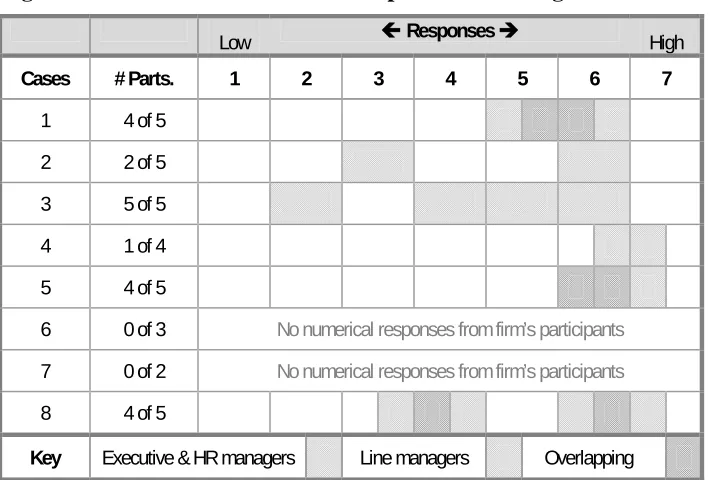
In all cases, either customer-centric cultures or attending to customer service needs are central to the firms’ competitive postures. The latter is an interesting finding because the dominance needed for a competitive advantage is frequently associated with a firm’s ability to leverage a valuable capability or distinctive competence (Thompson, Strickland & Gamble 2005, p.326). Nevertheless, when participants were asked ‘How would you summarise the distinctiveness of your firm’s competitive advantage?’, the responses were mixed and all participants in all cases found the question difficult to answer. Many participants qualified their responses or did not answer, as indicated in figure 2; the requested numerical response was from a low of 1 to a high of 7.
Figure 2 Distinctiveness of firms’ competitive advantages
Low Í Responses Î High Cases # Parts. 1 2 3 4 5 6 7
1 4 of 5
2 2 of 5
3 5 of 5
4 1 of 4
5 4 of 5
6 0 of 3 No numerical responses from firm’s participants
7 0 of 2 No numerical responses from firm’s participants
8 4 of 5
Key Executive & HR managers Line managers Overlapping
(Source: Price 2005 )
The responses illustrated in figure 2 are more often a reflection of the number of respondents not necessarily differing responses. Nonetheless, cases 1 and 5, each of which have HR managers, report more similar responses among the respondents than others cases with four or five respondents. One HR manager separated the rating into two – competing for staff versus competing for clients. Otherwise, across the cases, there are no trends suggesting common traits among the executive and HR or line manager groupings. Other executives and line managers included ‘people’ in their verbal, as opposed to numerical, responses.
Most participants across the firms qualified their descriptions of competitive advantage as external or internal and, from an internal perspective, referenced the importance of people. As such, the following case studies disclose the role of human capital in building their competitive advantages. For this study, human capital is defined as ‘the sum of employees’ knowledge, skills, experience, and commitment invested in the organization’ (Belcourt & McBey 2004, p.23) and represents an internal focus.
Cross-case analysis – Human capital role in building competitive advantages
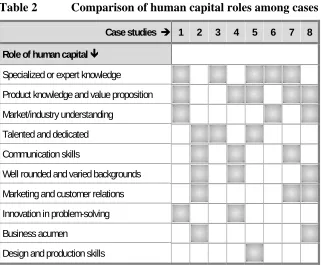
To understand better the role of human capital in building a competitive advantage, it is essential to understand the importance of people and their knowledge to the business requirements of the firm. An initial comparison indicates that 100 percent of the cases acknowledge human capital as either a competitive advantage or an integral component of it. The case descriptions vary from employees being the biggest competitive advantage to human capital being vital to customer service leadership to intellectual capital being the reason for the business. A full comparison of the roles of human capital among the cases is outlined in table 2.
Table 2 Comparison of human capital roles among cases
Case studies Î 1 2 3 4 5 6 7 8
Role of human capital Ð
Specialized or expert knowledge
Product knowledge and value proposition
Market/industry understanding Talented and dedicated
Communication skills
Well rounded and varied backgrounds
Marketing and customer relations
Innovation in problem-solving
Business acumen
Design and production skills
(Source: Price 2005)
Table 2 reinforces the importance of human capital to the high technology sector. In addition to the tangible skills that are often case specific, a variety of intangible skills are identified, such as communication, customer relations, innovation, and general business insight. Employees’ product and industry knowledge are important in the cases as well. This emphasis on human capital is aimed clearly at supporting and sustaining the cases’ competitive advantages. As a result, the case studies identify a number of methods for preserving their human capital pools.
[image:10.595.91.414.324.589.2]and four describe the importance of quality recruitment. The final similarity is a climate of product quality; four cases overtly refer to firm policies or employee commitment. The other methods described in the cases for supporting human capital pools are more individualistic – employee recognition, training and education investment, employee working conditions, knowledge management, and delegation.
Table 3 Methods of support used to preserve human capital pools
Case studies Î 1 2 3 4 5 6 7 8
Methods of support Ð
Promotes a customer-oriented culture
Attends to retention issues
Emphasises a product quality culture
Recruits talented employees
Recognises employee dedication
Invests in training and needed tools
Advances pleasant working conditions
Manages a shared knowledge base
Delegates responsibility and authority
Positions employee/team knowledge
(Source: Price 2005)
Contribution of performance management for building a competitive advantage
Another dimension to the definition of a competitive advantage is the involvement of PM processes. Whether formal or informal, PM processes are a strong indication of a firm’s strategy implementation capability. In turn, a firm’s strategy aimed at providing a product or service distinctive from that of rivals is a powerful opportunity for building a competitive advantage and likely a sustainable one.
Cross-case analysis – Comparison of performance management contributions to competitive advantages
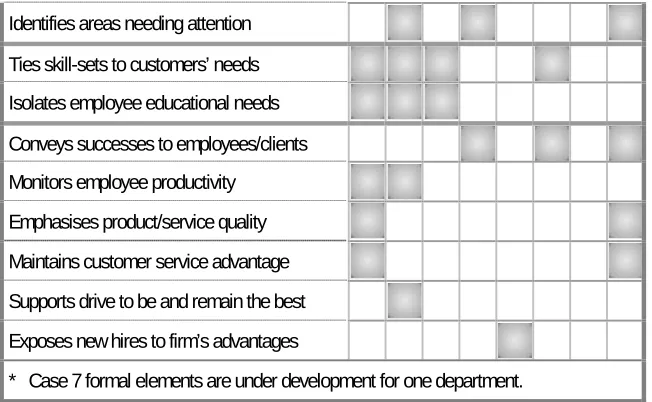
[image:11.595.87.420.158.425.2]The following cross-case analysis provides insight into the contributions of PM processes towards gaining competitive advantages. A full comparison of the cases’ PM contributions, based on the individual findings above, is outlined in table 4.
Table 4 Contribution of performance management to gaining a competitive advantage
Case studies Î 1 2 3 4 5 6 7 8
Performance management contribution Ð
Measures business/customer results
Communicates competitive advantage*
Identifies areas needing attention
Ties skill-sets to customers’ needs Isolates employee educational needs
Conveys successes to employees/clients Monitors employee productivity
Emphasises product/service quality
Maintains customer service advantage Supports drive to be and remain the best
Exposes new hires to firm’s advantages
* Case 7 formal elements are under development for one department.
[image:12.595.88.414.71.272.2](Source: price 2005)
Table 4 illustrates the importance of PM processes for tracking business or customer results and, in many cases, communicating their identified competitive advantages. Three-quarters of the cases highlight the significance of PM for encouraging feedback, focusing on solutions, and recognizing areas needing improvement. Again, the findings indicate a role for PM for training and development but with the added advantage of aligning employees’ skills with customers’ needs. Otherwise, the reported contributions of PM processes for gaining competitive advantages are unique and appear to vary by need – communicating to employees and customers, increasing employee productivity, increasing product or service quality, enhancing customer service, driving ‘to be the best’, and orienting new hires.
[image:12.595.91.443.567.759.2]To measure the degree to which the cases’ PM processes assisted with building their competitive advantages, participants were asked ‘How successful has your firm been in gaining a competitive advantage from performance management strategies?’ The requested response was from a low of 1 to a high of 7. Again, the responses were mixed and most participants were reluctant to answer the question numerically, as indicated in figure 3.
Figure 3 Success in gaining competitive advantages from performance management strategies
Unsuccessful Í Responses Î Very successful
Cases
No. of firm
participants 1 2 3 4 5 6 7
1 2 of 5
2 5 of 5
3 1 of 5
4 1 of 4
5 4 of 5
6 0 of 3 No numerical responses from firm’s participants
8 4 of 5
Key Executive & HR managers Line managers Both
(Source: Price 2005)
The only numerical trend evident in figure 3 is that, in cases 2, 5 and 8, the ratings of line managers suggest more optimism than those of executive and HR managers. Otherwise, the figure illustrates that many participants are reluctant to respond numerically to this question. Nevertheless, several managers from cases 1, 3, 4, 6 and 7 volunteered that their PM programs were too new and have not yet been validated. Others managers offered descriptions that ranged from ‘it does not have a big impact’ to ‘it will be very successful.’ Frequently, the latter comments were followed by anticipated ratings of 6 to 7 in future.
DISCUSSION
Types and scope of competitive advantage
An analysis of the competitive advantages communicated in the eight case studies discloses common differentiation strategic advantages, but differences in their target markets – three report broad markets and five narrow ones. Initially, the case participants from seven cases attribute their firms’ competitive advantages to superior technology; the eighth credits its competitive advantage to research. In all cases, customer-centric cultures or attention to customer service needs are central to their competitiveness. There are no trends suggesting common perspectives within management groupings – executive and HR versus line management.
Porter (1985) defines competitive advantage as growing out of the value a firm creates for its buyers. In addition, he classifies three generic strategies: cost leadership, differentiation, and focus. All participants in the eight case studies communicated their firms’ differentiation strategies and identified their target markets, whether broad or focused. Competencies, according to Porter (1995) are part of buyer value, but functions such as training and compensation are classified as support activities, which are potentially sources of competitive advantage. Participants from the large cases (5 and 6) clearly attribute service advantages to the knowledge resident in their human capital pools. Both primary and support activities provide the bridge between strategy formulation and implementation (Porter 1995).
It can be concluded that the eight case studies are fully familiar with the nature and scope of their competitive advantages, whether product or service oriented. Further, these competitive advantages are realised through customer-centric and service-oriented cultures. Not only is the knowledge resident in human capital overtly recognised by the two large firms, but also their PM processes are customised to reinforce the importance of this knowledge base. At this point, given the apparent lack of attention to strategic business planning, the role of PM processes (a support activity) in gaining competitive advantages is unclear.
Human capital role in competitive advantage
communication, customer relations, innovation in problem-solving, and general business acumen. Expert or specialized, product, and industry knowledge are important as well. In all eight cases, the emphasis on human capital is aimed at supporting and sustaining their competitive advantages.
A review of relevant literature clearly champions opportunities for building a competitive advantage with human capital. For example, Schuler (1990, cited in Flood, Gannon & Paauwe 1996) proposes that superior human resources create a strategic competitive advantage because they affect business profitability, survival, competitiveness, adaptability, and flexibility. A resource-based view (RBV) of strategy places its emphasis on management’s knowledge and experience and workplace culture to explain differences in competitive performance (Boxall & Percell 2003). According to Hall (1993, cited in Boxall & Percell 2003), CEOs rate the quality of employee knowledge as one of their two most strategic assets. Similarly, the eight case studies identify and support a human capital focus in implementing their competitive strategies.
The case studies identify various methods for preserving their human capital pool which is further evidence for its importance. The tactics most commonly implemented to support human capital include: promoting a customer-oriented culture, focusing on retention, recruiting qualified employees, and nurturing a climate of product quality. Otherwise, supporting actions are more individualistic or customised – employee recognition, training investment, working conditions, knowledge management, and delegation.
A number of prior studies document human capital resources as the experience, judgment, and intelligence of both managers and employees (Wright, McMahan & McWilliams 1994). Similarly, the RBV focuses on leadership quality and workplace culture for generating improved levels of performance (Boxall & Percell 2003). Generally, the tactical plans communicated in the case studies are directed towards building the firms’ human capital resources. Case 6, however, is clearly in-line with the RBV in its PM emphasis on leadership development.
In summary, the eight high technology case studies regard human capital as vital to their competitive advantages. Although the firms’ human capital roles are articulated and directed towards their competitive advantages, most of the supporting actions are tactical as opposed to strategic in nature. Nevertheless, the firms employ a number of universal and unique actions and the unique ones appear to be customized to meet each firm’s needs. Finally, with the exception of Case 6, the firms appear to place more emphasis on employee knowledge and capabilities and less on the quality of leadership.
Contribution of performance management in building a competitive advantage
increasing employee productivity, improving product/service quality, enhancing customer service, driving to be the best, and orienting new hires. When asked to express numerically the success from PM strategies for gaining competitive advantages, most participants were reluctant to respond. Verbally managers volunteered that their PM programs were too new and had not yet been validated.
The literature review identifies a number of PM contributions. For example, it has the potential to influence organizations strategically (Millett 1998; Perkins 1997) and the capability to heighten change (Millett 1998; Moravec 1996). As a strategic process, it also has the potential for building those differences necessary for a competitive advantage (Boxall 1996, cited in ‘Meshing…’ 1998). In addition, the process encourages openness to new ideas, listening for feedback, and requesting assistance when goals are not achieved (Moravec 1996). The more common and unique PM contributions communicated across the cases are a testimony to openness, listening, and supporting behaviour. Further, their custom components have potential for building competitive differences. Nevertheless, the strategic capability of these PM processes seems to be weak in these high technology firms in the Okanagan Valley region.
Prior research regarding the quantitative success of PM strategies for gaining a competitive advantage is unknown. That is, the studies proposing a competitive advantage from PM processes are often descriptive and qualified with words, such as potential or have the ability to or appear to (Schneier, Shaw & Beattie 1991; Sadler 1995). Similarly, case participants had difficulty quantifying the successfulness of their firm’s PM strategy for gaining a competitive advantage.
In conclusion, all eight high technology firms have implemented a number of key performance tracking and feedback mechanisms that are needs based and solutions-oriented. In support of their competitive advantages, the firms’ have incorporated a number of unique PM features to reinforce their quality and service initiatives. Yet, the firms’ PM processes do not appear to be influencing or implementing strategies nor fully maximising the opportunities for gaining a competitive advantage.
Conclusions about description of competitive advantage
The evidence supports that high technology firms in the Okanagan Valley region have a good understanding of the definition of competitive advantage. Within each firm, participants communicate similar responses regarding strategic advantages and competitive scope. Both superior technology and customer service are proposed as the common differentiating qualities. At times, human capital is endorsed as a competitive advantage or, more often, as an integral component. Although the firms employ a number of tactics for preserving and enhancing their human capital pool, the strategic potential of this resource appears to be weak. With the exception of one case study, an apparent omission is attention to leadership development.
reinforce these cultural expectations and to affect the changes that accompany business growth. None of the firms are capitalising fully on the cultural and change elements inherent in PM processes. Nonetheless, most of the firms have implemented a number of performance initiatives and their participating managers recognise that PM processes offer more opportunities.
REFERENCES
Baliga, W 1995, 'Want higher profits? Try managing job performance', Journal of Accountancy, vol. 179, issue 4, 4/5p, viewed 19 June 2000, EBSCOhost File: Academic Search Elite, item: AN9504203219.
Benchmark Research 1999, 'An assessment of issues and opportunities facing the business community within the Central Okanagan', Market Research Report, prepared by for Economic Development Commission (EDC) and Regional District of Central Okanagan (RDCO).
Belcourt, M & McBey, KJ 2004, Strategic human resources planning, 2nd Cdn edn, Thomson Nelson, Toronto.
Boxall, P & Purcell, J 2003, Strategy and human resource management, Palgrave MacMillan, New York.
Boxall 1996 cited in ‘Meshing business and people strategies i: resource-based strategy’, 1998, The Antidote, iss. 18, viewed 24 September 2001, MCB Emerald database.
'Best practices in performance appraisals' 2000, HR Focus, vol. 00, iss. 2, p. 8, viewed 4 May 2000, EBSCOhost database Business Source Elite, item: AN2795209.
Calibre Strategic Services 2001, Okanagan high tech study, prepared for Economic Development Commission (EDC), Regional District of Central Okanagan (RDNO), Science and Technology Council of the Okanagan, and Okanagan High Tech Council.
Das, H & Templer, A (ed.) 2003, Performance management, Prentice Hall, Toronto.
Economic profile: Regional District of Central Okanagan (Economic profile) 2004, contracted by Economic Development Commission (EDC).
Hallin, L n.d., A guide to the BC economy and labour market, BC Stats, viewed 21 September 2005, <http://www.guidetobceconomy.org/chap6/chap6-4.html>.
Joyner, J 2001, ‘Performance reviews: a blueprint for growth’, Computing Canada, vol. 27, no. 14, p. 24, viewed 30 May 2002, CBCA Fulltext.
Henry, C & Bradley, P 1997, 'Missed a motivator?', People Management, vol. 3, no. 10, 5p, viewed 1 August 2000, EBSCOhost database Academic Search Elite, item: AN9709301306.
High tech study: and benchmark comparisons to May 2001 study (High tech study...) 2003, contracted by Economic Development Commission (EDC) of the Central Okanagan and Okanagan Science & Technology Council (OSTEC).
Kvale, S 1996, InterViews: an introduction to qualitative research interviewing, Sage, Thousand Oaks.
McDonald, D & Smith A 1995, 'A proven connection: performance management and business results', Compensation & Benefits Review, vol. 27, iss. 1, 6p, viewed 19 June 2000, EBSCOhost File: Academic Search Elite, item: AN9502270385.
Miles, MB & Huberman, AM 1994, Qualitative data analysis: an expanded sourcebook, 2nd edn, Sage, Thousand Oaks.
Millett, B 1998, 'Performance management: a strategic human resource function', in K Parry & D Smith (eds.), Human Resource Management: Contemporary Challenges and Future Directions, pp. 95-114, USQ Press, Toowoomba.
Moravec, M 1996, 'Bringing performance management out of the stone age' Management Review, vol. 85, no. 2, 5p, viewed 1 August 2000, EBSCOhost database Academic Search Elite, item: AN9602065217.
Mohrman, AM & Mohrman SA 1995, ' Performance management is running the business', Compensation & Benefits Review, vol. 27, no. 4, p. x, viewed 19 June 2000, EBSCOhost database Academic Search Elite, item: AN9508257615.
Parker, RO & Brown, TE 2000, 'People practices and shareholder value' Ivey Business Journal, vol. 64, no. 3, pp. 20-6.
Perkins, S 1997, 'Choose the best model for peak performance', People Management, vol. 3, iss. 2, 2p, viewed 1 August 2000, EBSCOhost database Academic Search Elite, item: AN9710064730.
Porter, ME 1985 (new intro. 1998), Competitive advantage: creating and sustaining superior performance, Free Press, New York.
Price, S 2005, ‘Performance Management Strategies: A Competitive Advantage for High Technology Firms: A Study in the Okanagan Valley Region of British Columbia, Canada’. Unpublished DBA dissertation presented for external examination, University of Southern Queensland, Australia.
Radcliff, DL 2002, 'A new paradigm of feedback', Executive Excellence, vol. 19, iss. 4, p. 4, viewed 27 May 2002, ABI/Inform Global Full Text database.
Schrier, D 2005, ‘High technology’s rebound’, BC Stats: Business Indicators, 25 May, issue 05-05, viewed 24 September 2005, <http://www.bcstats.gov.bc.ca>.
Schrier, D, Hallin, L & Ni, A 2005, Profile of the British Columbia high technology sector 2004 edition, BC Stats & Leading Edge British Columbia, April, viewed 14 August 2005, <www.bcstats.gov.bc.ca>.
Schrier, D, Ni, A & Hallin, L 2003, Profile of the British Columbia high technology sector 2003 edition, BC Stats & Ministry of Competition, Science and Enterprise, December, viewed 8 June 2004, <www.bcstats.gov.bc.ca>.
Schneier, C., Shaw, D & Beattie, R 1991, 'Performance measurement and management: a tool for strategy execution', Human Resource Management, vol. 30, no. 3, pp. 279-300.
Schuler 1990 cited in Flood, PC, Gannon, MJ & Paauwe, J 1996, Managing without traditional methods, Addison Wesley Publishing Company, Sydney, pp. 97-102 & 190-201.
Stewart, EB, Belcourt, M, Bohlander, G, Snell, S & Sherman, A, 2003, Essentials of managing human resources, 2nd Cdn edn, Nelson, Scarborough.
Stake, RE 1995, The art of case study research, Sage, Thousand Oaks.
Thompson, AA, Strickland, AJ & Gamble, JE 2005, Crafting and executing strategy: text and readings, 14th edn, McGraw-Hill Irwin, USA.
Yin, RK 1994, Case study research: design and methods, 2nd edn, Sage, Thousand Oaks.