Online Teaching
and Learning in
Higher Education:
A Case Study
03/11
© Commonwealth of Australia 2003 ISBN 0 642 77353 X
ISBN 0 642 77354 8 (Electronic version)
This work is copyright. It may be reproduced in whole or in part for study or training purposes subject to the inclusion of an acknowledgment of the source and no commercial usage or sale. Reproduction for purposes other than those indicated above, requires the prior written permission from the Commonwealth available from the Department of Communications, Information Technology and the Arts. Requests and inquiries concerning reproduction and rights should be addressed to Commonwealth Copyright Administration, GPO Box 2154, Canberra ACT 2601 or email
This report is funded under the Evaluations and Investigations Programme of the Department of Education, Science and Training.
Foreword
Many educational and training organisations in Australia and overseas have tended to see ‘flexible delivery’ as a panacea for the problems facing education in the late 1990s. There are many explanations given for its recent rise to prominence in educational and training contexts. Some say it is a response to mass education and the need to cater for more diverse student groups; others argue it is a response to industry needs for ‘on-the-job training’ or champion its value in promoting ‘lifelong learning’, while others link it to emerging educational theories concerning teaching and learning, particularly those who support constructivist approaches.
This report is about the introduction of online education in higher education. Specifically, it is a case study of one University’s approach to offering postgraduate courses totally online—the University of Southern Queensland. As such, caution is needed in extrapolating the findings from this study to other educational settings; nonetheless, the authors believe that the experiences of staff at USQ will have relevance to all institutions that have either begun to offer programs online or are contemplating doing so.
Contents
Acknowledgments ... xi
Executive summary ... xiii
1. Setting the Scene ... 1
1.1 Background ... 1
1.2 Changing nature of higher education: general perspectives ... 2
1.3 Online teaching and learning: the specific context ... 4
1.3.1 The ‘Case’ of USQ—Emergence of Online Education... 5
1.4 The study—a summary ... 9
2. The research project... 11
2.1 Background ... 11
2.2 The qualitative and quantitative paradigms ... 11
2.3 The case study method... 12
2.3.1 Case study and theory ... 12
2.4 Data-collection techniques ... 13
2.5 Conduct of the study ... 13
2.5.1 Selecting the online courses ... 13
2.5.2 Selecting the participants ... 14
2.5.3 Role of the research team ... 14
2.6 Limitations of the study ... 14
2.7 Summary ... 15
3. Major issues and dilemmas in online education... 17
3.1 Introduction... 17
3.2 Data-collection techniques used... 17
3.3 The staff questionnaire ... 18
3.3.1 Online teaching... 19
3.3.2 Online learning ... 24
3.3.3 Managing/administering the online setting ... 26
3.3.4 Designing online teaching/learning courses... 30
3.4 The student questionnaire... 31
3.4.1 Online teaching... 32
3.4.2 Online learning ... 33
3.4.3 Managing/administering online teaching and learning ... 36
3.5 Summary of critical issues ...38
3.5.1 The online teacher ... 39
3.5.2 The online learner... 39
3.5.3 Managing/administering online teaching and learning... 40
3.5.4 Designing online programs ... 41
3.6 Identifying anomalies...41
3.6.1 Curriculum design... 41
3.6.2 Curriculum implementation... 41
3.6.3 Teacher and learner roles ... 42
4. Quantitative analysis of Blackboard course statistics: teacher-learner engagement... 43
4.1 Introduction ...43
4.2 Course description ...43
4.2.1 Course elements ... 45
4.3 Student engagement...46
4.3.1 A macro analysis of the course elements ... 46
4.3.2 Student communicative and content engagement... 48
4.4 Teacher engagement...50
4.4.1 A macro analysis of the course elements ... 50
4.4.2 Teacher communicative and administrative engagement ... 52
4.5 Asynchronous communication: a significant reference point ...55
4.5.1 Discussion participation and grade performance... 56
4.6 Summary...60
4.7 Identifying anomalies...61
4.7.1 Treatment of content ... 61
4.7.2 Managing interaction ... 61
4.7.3 Variable interaction ... 62
4.7.4 The globalisation of cultural norms... 62
5. Designing online courses... 63
5.1 Introduction ...63
5.2 Design elements for online learning and teaching ...63
5.2.1 Learning management system ... 65
5.3 Interactive communication through written text: issues for design ...68
5.3.1 The proliferation of written text ... 69
5.3.2 Addressing the proliferation of written communication text in course design ... 71
5.3.3 Dilemmas of the ‘body-less’ realm of written communication online ... 75
5.3.4 Addressing the ‘body-less’ realm of written text online in course design... 77
5.3.5 The nature of the online written text communication ... 78
5.3.7 The construction of social identities through written text ... 81
5.3.8 Addressing the issue of social identities that limit participation... 82
5.3.9 Summary... 83
5.4 Pedagogy as the key to design ... 84
5.4.1 Design with pedagogy at its centre... 84
5.4.2 What drives the design: technology or pedagogy? ... 84
5.4.3 Design for interactivity and collaboration... 86
5.4.4 Summary... 94
5.5 Conclusion... 94
6. Online teaching and learning: emerging principles and procedures... 96
6.1 Introduction... 96
6.2 The online teaching-learning environment: re-creating the classroom? ... 97
6.2.1 The role of interaction in early ‘generations’ of distance education ... 97
6.2.2 The role of interaction in ‘totally online’ distance education courses ... 99
6.3 The learning community: a central exemplar ... 100
6.3.1 Conceptualising the learning community... 100
6.3.2 An emerging concept of the learning community at USQ... 102
6.4 A communities of practice perspective ... 105
6.4.1 Situatedness ... 106
6.4.2 Commonality... 107
6.4.3 Interdependency ... 108
6.4.4 Infrastructure ... 109
6.5 Conclusion... 111
7. The management and administration of online teaching and learning... 113
7.1 Introduction... 113
7.2 Administrative paradigms and learner-centredness... 114
7.2.1 Administrative barriers to successful implementation of online education... 115
7.3 The Faculty of Education’s response to the call for flexibility ... 116
7.3.1 WWW—what you want... 117
7.3.2 WWW—where you want it ... 117
7.3.3 WWW—when you want it ... 120
7.4 Coping with flexibility ... 123
7.4.1 24-hour x 7-day interactivity—Dr Jeckyl or Mr Hyde? ... 123
7.4.2 Assessment ... 130
7.4.3 Entry, enrolment, progression, and assignment extensions... 131
7.4.4 Tapping external subject expertise... 133
7.4.5 Use of teaching assistants ... 134
7.4.7 Instructional design ... 137
7.4.8 Commercial viability—the dilemma of scaling online education ... 143
7.5 Changing teacher roles ...146
7.6 Conclusion ...147
8. Summary and conclusions: the beginnings of a pedagogical framework for online education in higher education ... 149
8.1 Summary 149 8.1.1 The theoretical framework... 149
8.1.2 Research design... 149
8.1.3 Major issues and dilemmas in online education ... 150
8.1.4 Identifying anomalies... 151
8.1.5 Design of online courses... 151
8.1.6 Online teaching and learning ... 152
8.1.7 Managing and administering online courses... 152
8.2 Conclusion: the beginnings of a pedagogical framework? ...153
8.2.1 A ‘pedagogical framework for networked learning design’... 154
8.3 Online delivery and higher education...159
Theoretical Appendix ... 161
Appendix A Data collection instruments... 169
Appendix B Course elements... 197
Appendix C Data collected ... 199
Appendix D Raw data collected... 211
Tables and figures
Tables
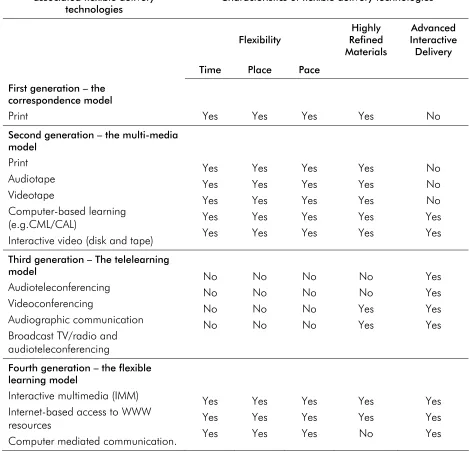
Table 1.1 Flexible delivery technologies—a conceptual framework ... 3
Table 2.1 Research design ... 15
Table 3.1 Staff responses to questionnaire: major themes and categories... 18
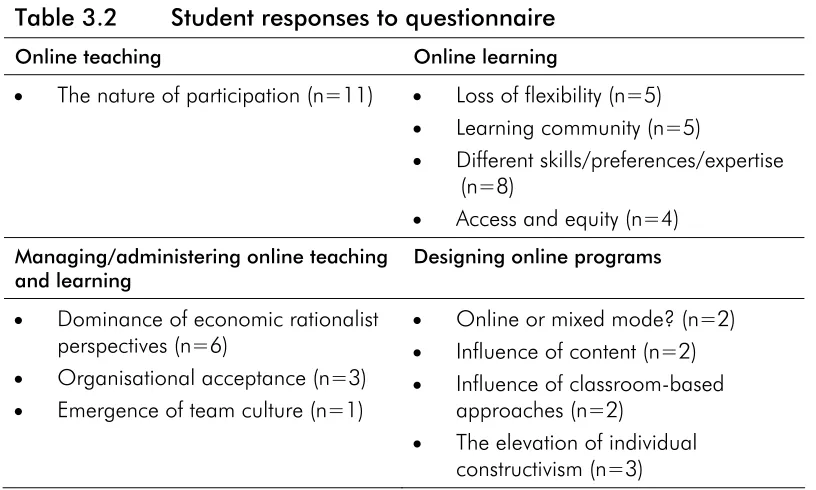
Table 3.2 Student responses to questionnaire ... 32
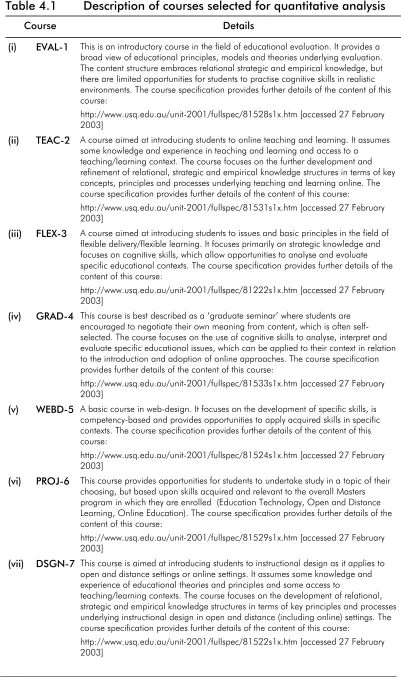
Table 4.1 Description of courses selected for quantitative analysis ... 44
Table 4.2 Student communicative/content engagement: number and mean hits for selected course elements ... 48
Table 4.3 Teacher communication/administrative engagement ... 52
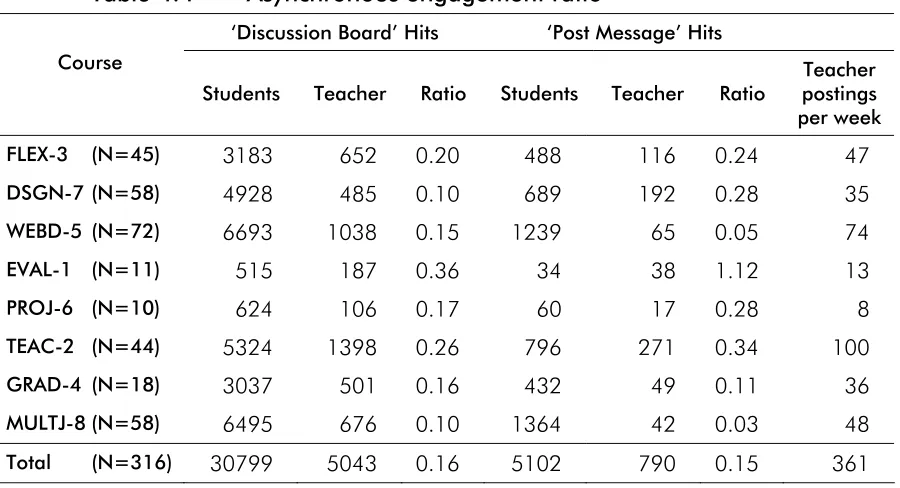
Table 4.4 Asynchronous engagement ratio ... 54
Table 4.5 Communication and content interaction for students in all courses... 55
Table 4.6 Overview of participation and performance ... 57
Table 4.7 Overview of participation and performance (gender) ... 58
Table 4.8 Overview of participation and performance (country of origin)... 59
Table 6.1 Selected principles for e-learning ... 106
Table 7.1 The changing mindset required for online education... 116
Table 8.1 Research design ... 150
Table B1 Key map for staff/student course elements ... 197
Table C1 Teacher engagement with all elements of the learning management system for each course... 200
Table C2 Student engagement with all elements of the learning management system for EVAL-1... 201
Table C3 Student engagement with all elements of the learning management system for TEAC-2... 202
Table C4 Student engagement with all elements of the learning management system for FLEX-3 ... 203
Table C5 Student engagement with all elements of the learning management system for GRAD-4... 204
Table C6 Student engagement with all elements of the learning management system for WEBD-5... 205
Table C7 Student engagement with all elements of the learning management system for PROJ-6 ... 207
Table C8 Student engagement with all elements of the learning management system for DESGN-7... 207
Figures
Figure 4.1 Course students: user accesses by day of week ...47
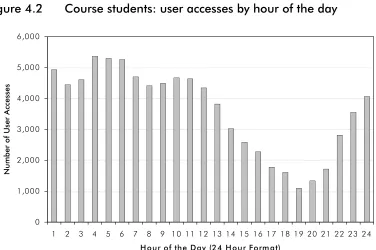
Figure 4.2 Course students: user accesses by hour of the day ...47
Figure 4.3 Course lecturers: user accesses by day of week...51
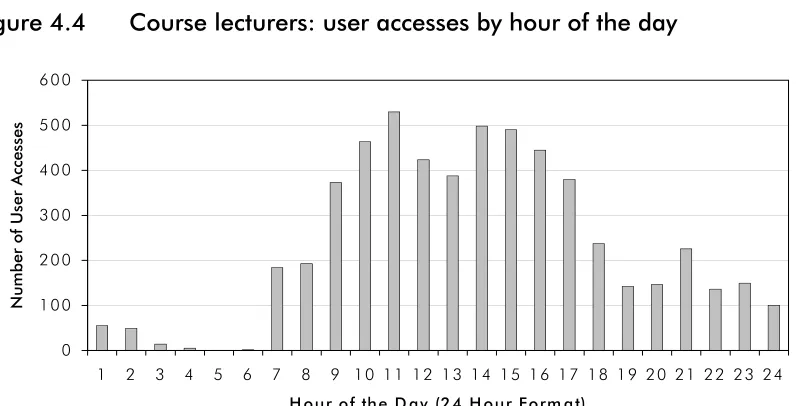
Figure 4.4 Course lecturers: user accesses by hour of the day...51
Figure 6.1 Print-based model...98
Figure 6.2 Telelearning model ...98
Figure 6.3 Online model of human interaction...101
Acknowledgments
Research Team
Glen Postle (Project Director) Andrew Sturman
Francis Mangubhai Peter Cronk Ann Carmichael Jacquie McDonald Shirley Reushle Lesley Richardson Bruce Vickery
University of Southern Queensland
Contributors to case study
Online lecturers in the Department of Further Education & Training, Faculty of Education, USQ
Selected online lecturers in Faculties other than Education
Staff of USQ involved in the introduction of online education at USQ Senior administrators at USQ
Students in selected online courses in the Department of Further Education & Training
Contributors to data interpretation
Other contributors
Lesley Richardson
Staff of Interactive Multimedia Section, DEC, USQ The EIP Advisory team led by Ann Maloney Robyn Davies
Executive summary
The purpose of the study
This study involved an investigation of the practice of online teaching and learning in the Faculty of Education at the University of Southern Queensland. It examined this context at a particular point in USQ’s history, namely at a stage where it is grappling with the emergence of online education. The purposes of the study were to assess the applicability of online education for higher education institutions, to document the issues with which teachers have to come to terms in the online environment, and to determine whether there might be a ‘pedagogical framework’ that is unique for online education in higher education. The study is unique in that it draws upon quantitative statistics concerning the number and types of
interactions that staff and students have with the online platform as well as qualitative data designed to elaborate upon those interactions. It should be cautioned, however, that the study focused on only one institution, only one discipline area (although views from other Faculties were collected and have been reported in this report) and only on postgraduate students.
The theoretical framework
The general theoretical framework that guided this project centres on how change occurs in organisational settings. This involved a focus on more general literature concerning the implementation of innovations as well as use of a specific
theoretical approach to the issue of changing teaching/learning paradigms, developed by Imershein (1976). The Imershein theoretical framework, which is described in the Theoretical Appendix, was used to determine whether a ‘paradigm shift’ had occurred at USQ as a result of the move from on-campus and print-based distance education to online education.
Research design
The research method employed in this research is case study. One university’s approach to online education and, in particular the approach taken in one Faculty of that university, is the focus of the case study. Eight courses delivered totally online were selected for detailed analysis. The rationale for their selection, other than being totally online, was that they had different purposes (graduate seminars, projects, and the like) and they reflected a range of different content structures— from theoretically based courses to skills-based courses emphasising core skills needed to work in an online environment.
A number of data-gathering techniques were used in the study:
• Document analysis/literature review/historical account.
• Questionnaire sent to staff and students requesting them to respond to an ‘issues paper’ prepared by the authors.
• Questionnaires sent to experienced, ‘totally online’ practitioners in the Faculty of Education, USQ.
• Questionnaires sent to other online practitioners/administrators across the university.
• Interviews with senior administrators.
Staff and student responses: major issues and dilemmas
in online education
The responses to the questionnaires sent to staff and students suggested that the introduction of online education had produced anomalous conditions, that is, a violation of their expectations surrounding teaching and learning. These related to three major areas: curriculum design, curriculum implementation, and teacher and learner roles.
Staff and students expressed concern that pedagogical imperatives might be taking second place to commercial interests. They also raised the issue of whether a text-based approach to both content and communication was the only way to approach online education.
When online education began at USQ with its communicative emphasis, it was seen as a potentially powerful tool to overcome some of the perceived weaknesses of traditional print-based distance education. Staff acknowledged the power of the tool, but have become aware that it has brought with it issues that have to be resolved; the quantity of interaction that online education generates, at least in some quarters, has imposed demands and possibly unreal expectations on staff and to some extent students. The interactive focus of USQOnline has caused concerns about the commercial viability of this type of operation. Unlike face-to-face delivery, USQ, or individual sections of the University, are not at this point in time imposing constraints on the way lecturers approach delivery; there are no set times for ‘lectures’ and ‘tutorials’ and no set student-staff interview times—it is a 24hour x 7day delivery mode.
It was acknowledged that online education provided a powerful pedagogical tool— its communicative capabilities—but this same tool had increased demands and expectations on staff and students that focused on the appropriate role of the teacher and learner in the online environment. Students have questioned whether their flexibility is being violated by ‘forced’ communications and a predominance of text and staff were unsure if the quantity of interaction was sustainable. The issue touched on appropriate levels of ‘teacher control’ in any teaching setting.
Analysis of the course statistics
It was suggested that ‘content-heavy’ courses may not be appropriate for the online environment if communication is viewed as a crucial component of the pedagogy. It was also suggested that, because there was no obvious relationship between content heavy courses and other types of courses with regard to final student grade, and as students had an ambivalent reaction to the advantages and disadvantages of print-based material, it might be the case that content heavy courses are more suited to independent learners.
The data indicated that students and staff working in the online environment operated outside of traditional temporal norms. The 9 to 5 day, Monday to Friday was replaced with a 24 hour day Monday to Sunday. The pattern of interaction between staff and students revealed a common trend; interaction was very high at the beginning of the semester and up to mid-semester and then tapered off. While asynchronous communication was heavily utilised in the courses, usage was variable for students and teachers. Some students seized the opportunity for interaction with staff and their fellow students while others did not. There were the beginnings of informal protocols emerging that controlled the extent of interaction that a lecturer was prepared to manage.
Levels of communicative engagement for gender and different cultural groups were similar, indicating that the relative anonymity and the asynchronous nature of online education might remove barriers to participation.
Design of online courses
A consistent response from the staff in the research, not just those from the Faculty of Education, concerned a lack of flexibility in the learning management system (Blackboard) that is used to frame USQ online courses. It should be noted that this inflexibility might not lie in the platform’s inherent capabilities, but in how those capabilities have been adapted for use by USQ in conjunction with its
commercial partner. What this response appeared to demonstrate was that there was a clear intent on the part of lecturers to let pedagogy drive the technology, but to some extent they were unable to do so because of the constraints in which they worked.
The Faculty of Education online courses were deliberately structured with a focus on the communication capabilities of online education, operating in a text-based manner. The predominance of text created its own set of issues; it would be fair to say that these were being addressed in an individualistic way, but it would also be true to say that the issues had not been resolved and certainly strategies had not emerged that might form the basis of a shared understanding of the way forward. There had been spasmodic progress made with concepts such as visual grammar, vicarious learning, intelligent tutoring, reflective writing, and communication conventions and protocols.
The analyses also uncovered themes that require further research. For example, the effect of what has been referred to as the ‘body-less realm’ of written
communication online deserves study, in particular a lack of paralinguistic cues in the online environment.
were dealing with these issues in an individualistic manner, but a shared approach had again not yet emerged.
Similarly, it could not be claimed that a common view on what comprises effective online pedagogy had emerged; there was, however, agreement about a range of pedagogical strategies that were considered effective in achieving a range of learning outcomes.
Online teaching and learning
Online teachers in the Faculty of Education at USQ were in ‘change mode’; they were not trying to re-interpret teaching and learning around traditional structures, principles and practices.
The physical space defined by a classroom has, in an online environment, been replaced by a ‘virtual’ space defined by a ‘learning management system’. Teachers had developed considerable insights into how to use the ‘Discussion Board’ to their advantage and had made progress in establishing learning communities as a
fundamental element of their online teaching and learning experience.
Teachers had become managers of learning and they seemed comfortable with the notion that they had to combine this role with another one that defined them as learning partners.
In order to benchmark the progress that USQ teachers had made towards the adoption of different teaching/learning principles and practices, a paper by Hung & Chen (2001) was used as a framework. It was demonstrated that a lot of what teachers were doing could be linked to specific components of each of the
principles in the framework. Progress had been made in getting the best out of the online environment; nevertheless, many of the difficulties that teachers continued to raise focused on ‘teaching skills and information’. With regard to what Hung and Chen considered were more substantial questions relating to ‘facilitating structures’, the USQ experience was perceived to be somewhat lacking.
Managing and administering online courses
One of the most important issues that emerged from the analyses was a
fundamental paradox. Staff accepted that the move to online delivery had brought with it a need for differing levels of expertise that suggested the need for a team culture, but they expressed concern over losing control of what they perceived to be their roles and even their rights.
There was one element of online education that was accepted as crucial—its
interactive capabilities that are available through email, discussion, chat and the like. It was here, however, where a second paradox emerged. This interactive capability was viewed as a powerful pedagogical tool, but staff had not yet come to terms with the demands that were being placed on them through the 24 hour a day x 7 day a week capabilities of online education.
almost universal support but, coupled with the interactivity demands that online education had created, flexibility (however defined) was emerging as a problematic issue. In other words, the person culture was emerging and could take precedence over the team culture.
It was clear that the Department of Further Education and Training had not embraced a totally new paradigm with shared assumptions about how that
paradigm operated, but there were indications that changes had occurred that were supported by staff.
The beginnings of a pedagogical framework?
One of the clearest findings to emerge from the study is that there does not exist at this time a shared pedagogical framework for online education. There was a belief amongst some that an online pedagogy supported by appropriate online
instructional design existed, at least partly distinct from face-to-face or traditional distance education, but what it was has not been articulated. It remains, to those who believed that such a pedagogy exists, the ‘holy grail’, an elusive, but cherished prize that might solve the dilemmas and contradictions of online education. While online teachers in the Faculty were adopting some components of each of the principles in the framework that Hung & Chen (2001) considered appropriate for online education, they had not made the radical transformation from traditional approaches to teaching for online education.
However, we are not suggesting that the Hung and Chen framework is that elusive ‘holy grail’ referred to above that once achieved might solve all the problems associated with online teaching and online course design. In fact, we are not even convinced that the search for such a grail is constructive; it might well be that the challenge for online teachers lies not at the conceptual level of a pedagogical framework, but at the procedural level that deals with strategies and tactics that enable online teachers to cope with the new learning environment in which they are placed. This becomes even more critical if the hope of university administrators is to use online delivery to attract a global and extensive student market, especially given what we had to say in Chapter 5 about the communicative demands that the USQ approach to online education entails.
Recommendations and conclusions
At no point in this study have our respondents suggested that online education is inappropriate for higher education. While there are doubtless some discipline restrictions that limit the extent to which a totally online delivery mode can apply at this point in time, the interactive capabilities of online education and its capacity to make use of extensive and current resources, especially in comparison with
traditional print-based distance education, provides educational experiences that we would suggest are ideally suited to higher education.
We make no claims about the relative merits of online teaching and learning
compared with face-to-face teaching; rather, we hold the view that ‘good teaching is good teaching’. We hold that the main difference between the different delivery modes lies in the strategies and tactics available to achieve good teaching. Among the strategies that Faculty of Education staff have used to further their pedagogical aspirations and to ‘manage’ their new environment are:
• The use of concept maps.
• The creation of different forums to meet different needs (student lounge, technical support, sharing information).
• The use of what Jonassen (1998) refers to as cognitive tools, for example, problem/task representation tools (such as graphic organisers), static and dynamic knowledge modelling tools (such as databases and spreadsheets), performance support tools (such as spreadsheet templates or notetaking) and information gathering tools (for example, Webliographies or electronic library resources such as Ebscohost).
• The use of ‘Group Pages’ to assist in collaborative learning tasks, for example, problem solving and project management.
Similarly, the following represent some of the more specifics tactics used:
• Placing challenging questions into discussion forums to stimulate debate about key concepts in the course.
• The use of what has been called ‘reflections’ in order to situate learning.
• The distribution of regular and brief online evaluation forms to gauge learner responses to aspects of the course.
• Netiquette and interaction guidelines.
• Protocols for synchronous chat.
• Copying discussion items or threads from one semester’s offerings into another where that item or thread appeared to be successful in generating productive interaction (a move into Fifth Generation Technology).
• Developing pre-structured responses to assessment items that might assist in reducing workload when providing feedback to student (a move into Fifth Generation Technology).
Despite the strategies and tactics used by online lecturers, the experience at USQ has revealed the resource intensity of a highly interactive approach to online education. Whether this model is economically sustainable without tighter
1.
Setting the Scene
Glen Postle and Andrew Sturman
1.1
Background
Many educational and training organisations in Australia and overseas have tended to see ‘flexible delivery’ as a panacea for the problems facing education in the late 1990s. Interpretations of flexible delivery are mixed and varied with proponents referring to it as distance education, open learning, resource-based learning,
‘technology-enhanced’ learning and more recently ‘networked learning’ (Steeples & Jones 2002). There are many explanations given for its recent rise to prominence in educational and training contexts. Some say it is a response to mass education and the need to cater for more diverse student groups, particularly those who, because of situation and circumstance, are labelled as isolated. Others argue it is a response to industry needs for ‘on-the-job training’ while others champion its value in promoting ‘lifelong learning’. Still others link it to emerging educational theories concerning teaching and learning particularly those that support constructivist approaches (Jonassen et al. 1995). There are others who declare that the emergence of technologies determines the effects that its application has in educational
contexts. Those who profess to work in the field of networked learning argue that ‘technological determinism’ has set the agenda for online teaching and learning (Bates 1999b; Spender 2000). In some sense, all of these issues have had some influence on the emergence of flexible delivery initiatives at all levels of education, particularly in tertiary contexts such as universities, technical and further education institutions and industry training.
The investigators regard ‘flexible delivery’ as a term that has been adopted to describe teaching-learning approaches that have ‘arrived’ to address the
shortcomings of face-to-face education in dealing with the pressures and influences associated with the provision of ‘lifelong learning’ and ‘access and equity’ in higher education settings. As such, it has become closely linked to existing open and distance education structures, systems and approaches. It has also been linked closely with recent developments in technology, particularly the digital revolution. However, to this point in time the emphasis has tended to focus on the delivery of education, that is, identifying mechanisms and systems that can provide students with whatthey want, when they want it and wherethey want it. The provision of these delivery systems has been a welcome addition to the educational arena particularly for those who have had difficulty accessing education or for those who want greater flexibility in the way education has traditionally been offered. The
‘technologies’ that currently exist to ‘deliver’ education have improved that delivery immeasurably. However, the use of these technologies has not been accompanied by a commensurate understanding of knowledge of teaching and learning in contexts where technology is being used.
learning in higher education. Proponents of flexible delivery base their arguments on the adequacy of existing models of teaching and learning to provide educational opportunities for more diverse student groups. Opponents of flexible delivery argue that there is no substitute for ‘placed-based’ education which places learners in direct contact with the ‘craft working practices’ of individual academics (Mason & Kaye 1990).
This study is based on an investigation of these alternative views, but is restricted to an analysis of flexible delivery defined by teaching and learning that is undertaken totally online. The focus for such an investigation will be based upon tracing the emergence of such online approaches as a viable alternative in higher education. To do this, the study traces the adoption of these approaches by one university in regional Australia, namely the University of Southern Queensland (USQ).
1.2
Changing nature of higher education: general
perspectives
There is little doubt that few, if any, universities in Australia have escaped the influences and pressures on higher education unleashed in the Dawkins era and pursued by successive federal governments. Influences of particular relevance for this study and largely responsible for significant change in the ‘culture’ of higher education are:
• the growing legitimacy of flexible pathways for university entry;
• the expansion of teaching strategies available particularly through flexible delivery initiatives; and
• the shrinking financial support from government and increasing trends towards ‘user pays’.
In just over two decades, beginning in the Labor Government’s Whitlam era, there has been a substantial increase in numbers of students accessing university
education and a substantial change in the student profile of those entering
universities. Supported by such changes as those contained in A Fair Chance for All (DEET 1990), a government initiative to increase access, participation, retention and success in university programs for a number of targeted disadvantaged groups, universities have opened their doors to a more diverse student group. Such
widening of access has resulted from universities themselves legitimating flexible pathways for university entry.
The emergence of student diversity has placed increasing demands on the university sector to find ways to address the equity issues that arise from having to meet the educational needs of a more diverse student body. In many universities, particularly the ‘newer ones’, this focus has positioned equity as a central and strategic concern for teaching and learning within the institutions. Such strategic concerns in some institutions have resulted in the adoption of teaching-learning models such as those based on distance education.
Table 1.1 Flexible delivery technologies—a conceptual framework Models of distance education and
associated flexible delivery
technologies Characteristics of flexible delivery technologies
Flexibility Refined Highly Materials
Advanced Interactive
Delivery Time Place Pace
First generation – the correspondence model
Print Yes Yes Yes Yes No
Second generation – the multi-media model Print Audiotape Videotape Computer-based learning (e.g.CML/CAL)
Interactive video (disk and tape)
Yes Yes Yes Yes Yes Yes Yes Yes Yes Yes Yes Yes Yes Yes Yes Yes Yes Yes Yes Yes No No No Yes Yes
Third generation – The telelearning model
Audioteleconferencing Videoconferencing
Audiographic communication Broadcast TV/radio and audioteleconferencing No No No No No No No No No No No No No No Yes Yes Yes Yes Yes Yes
Fourth generation – the flexible learning model
Interactive multimedia (IMM) Internet-based access to WWW resources
Computer mediated communication.
Yes Yes Yes Yes Yes Yes Yes Yes Yes Yes Yes No Yes Yes Yes
… with the growing number of non-traditional students on and off campus and the parallel developments in learning theory … learner centred approaches to education [have increased]. For the most part these continue to be confined to the non-traditional institutions and programs for adults and distance learners. Hall (1996, p. 31)
These developments in flexible delivery have been accompanied by shrinking government financial support for higher education. This has led to unsubstantiated claims such as those that argue that the emergence of flexible delivery initiatives is a budgetary driven response by university administrators. However, these arguments tend to lack any quantitative cost-benefit analysis to support such conclusions. The general absence of studies based on quantitative assessments makes it difficult to argue conclusively one way or the other and unfortunately hinders the further development of flexible delivery initiatives in higher education.
1.3
Online teaching and learning: the specific context
The quote by Hall (1996) mentioned earlier provides support for the claim that many of the ‘non-traditional institutions’ (the newer universities) have made most of the running in providing leadership in flexible delivery in university teaching and learning.
Since commencing its involvement in distance education in 1977, and following successful efforts in establishing niche markets, USQ’s major strength has become the development and delivery of distance education programs at both
undergraduate and graduate levels. USQ currently enrols over 21,000 students with more than two-thirds of these students studying in accredited degree programs offered by distance education. Prior to 1996, the university’s distance education degree programs were delivered almost exclusively via print using audio-visual, CMC and teletutorial support. Since 1996, the university has moved increasingly to online delivery for its graduate programs. However, at this point USQ does not aspire to be an open university. It is a dual-mode institution.
There is a sense in which USQ’s pedagogical tradition was built upon an evolving ‘rejection of the classical tradition of passing on knowledge in the form of
unchangeable ideas’, and the acceptance of ‘the active engagement of the learner in the formation of their ideas’ (Laurillard 1993, p. 15). The University attempts to ‘situate knowledge’ in real world activity. There has been more than a token recognition given to the criticism that teaching and learning based upon the
classical tradition of imparting decontextualised knowledge is inappropriate. In this sense, many of the issues arising from the explosion of knowledge and the
information technology revolution, as well as the changing student population, have been more easily understood by USQ than by traditional universities.
The move from more traditional distance education to flexible delivery models has done nothing to damage the reputation of the University of Southern Queensland. A jury of international higher education experts has judged the University the best university in the world for its global initiatives and expertise in providing flexible learning opportunities to the world. The Executive Committee of the International Council for Open and Distance Learning (ICDE), based in Oslo Norway, awarded its top two Prizes of Excellence for 1999 to The University of Southern
recognised by the United Nations as the global non-governmental organisation responsible for the field of open and distance learning, and is affiliated with the United Nations through UNESCO.
1.3.1
The ‘Case’ of USQ—Emergence of Online Education
In order to explain USQ’s transition from ‘face-to-face’ teaching-learning to its more recent adoption of flexible delivery initiatives, a theoretical framework developed by Imershein (1976) has been used (see Theoretical Appendix). The framework provides the investigators with a way to “tell the USQ story”. During the initial phase of USQ’s history, it was involved solely in face-to-face teaching and learning. This has been defined as the Place-Based Education Model. Using Paulsen’s (1995) framework, aspects of the dominant teaching-learning approaches at this point in time may be described thus:
Techniques Typicalactivities
One alone Library research/reading and writing tasks One-to-one Counselling/pastoral care One-to-many Lectures (face-to-face)
Many-to-many Tutorials/seminars/forums (face-to-face)
The typical roles of those involved in teaching-learning tasks and procedures were essentially framed in a ‘person culture’. This meant that individuals, particularly academics, were left much to their own devices as far as preparing and presenting teaching materials were concerned. As long as timetables provided rooms and times for teaching and learning pursuits, academics were not required to work closely with other people. However, an administrative rationale was instrumental in establishing rules and systems for length of courses, numbers of lectures and tutorials and assessment times. Time was very much a controlling variable. It is also possible to indicate that at this point in time in USQ’s history, the main role of academics was to prepare undergraduates for a range of professions.
During the mid 1970s, there emerged a number of significantpressuresand influences, which resulted in the institution’s adoption of what appeared to be at the time quite different teaching-learning models and approaches. For example, during the 1970s, the expansion of higher education, initiated in the 1960s with the Martin Committee and continued with the work of the Karmel Committee under the Whitlam Labor Government, began to take hold.
In 1975, there were 148,000 students enrolled in 19 universities and college enrolments were up to 125,000. By 1985, this had increased to 175,000 students in universities and 192,000 in colleges—a total of 367,000 in the sector—this
increase in ‘non-traditional’ students, particularly students from rural and isolated areas and those from low socio-economic backgrounds. In addition to this growth in student numbers, equity had been advanced in several areas of education during the 1970s and 1980s. For example, apart from school-level initiatives such as the Disadvantaged Schools Program, the National Policy for the Education of Girls in Australian Schools and the National Aboriginal and Torres Strait Islander
Education Policy, the early part of the Hawke Labor Government saw several initiatives aimed at promoting educational equity considerations in the higher education sector. These included the Higher Education Equity Program (HEEP); a program of growth in funded places that favoured institutions likely to attract under-represented groups, and moves to encourage young people to stay on in the education system.
Accompanying changes in the numbers and profiles of students accessing higher education, developments in educational technologies provided the foundation for tertiary education providers to offer innovative teaching-learning opportunities for such a potentially diverse student body. Taylor’s (1996b) first, second and third generation models of distance education provide insights into the range and function of such technologies.
USQ responded to these pressures and influences by adopting distance education as a major education platform. This second phase of development in teaching and learning at USQ has been labelled the Mixed Mode Model. USQ academics were required to provide ‘face-to-face’ teaching on campus as well as design and deliver a range of distance education materials. Using Paulsen’s framework again, typical teaching-learning tasks during this period can be described in the following manner:
Techniques Typicalactivities
One alone Accessing information through books of readings, print-based study materials, library research.
One-to-one Counselling/pastoral care on campus; Outreach programs (e.g., telephone, Regional Liaison Officers)
One-to-many Lectures—print-based, audio and video presentations as well as face-to-face
Many-to-many Tutorials—telephone, audiographic as well as face-to-face
While this phase no doubt brought about changes to teaching-learning within the institution, they were more changes of emphasis than of kind. The teaching-learning activities associated with distance education were designed to ‘fit into’ existing structures. The ‘lecture’ and ‘tutorial’ were still dominant features, in fact the writers of the distance education materials were required to detail the
lecture/tutorial elements of courses of study through common requirements detailed in a document known then as ‘Unit Specifications’ and now referred to as ‘Course Specifications’. Perhaps the most noticeable effect the introduction of distance education had on the academic community was the more visible design of teaching-learning materials, a factor which elevated the status of teaching and learning within the institution.
The next significant chapter in the history of USQ’s development of teaching and learning began with the government White Paper Higher Education: A Policy Statement (Dawkins 1988). This statement guided the dismantling of the binary system of universities and colleges and the development of the Unified National System of higher education. Equity was stated as a central pillar of this new national system. It saw increased levels of education for more people as the starting point of a
restructured economy and viewed equity in terms of the fulfilment of the potential available to society and to its contribution to creating a more diverse and dynamic skilled workforce.
In 1990, the Department of Employment, Education and Training, in consultation with the higher education sector, developed the policy statement A Fair Chance for All: Higher Education That’s Within Everyone’s Reach (DEET 1990). It placed the goals of equity in measurable terms by stating that:
The overall objective for equity in higher education is to ensure that Australians from all groups in society have the opportunity to participate successfully in higher education. This will be achieved by changing the balance of the student
population to reflect more closely the composition of society as a whole. DEET (1990, p. 2)
Much had changed in the higher education environment since the introduction of the national framework for educational equity in 1990. The sector had grown very significantly and had become more entrepreneurial and competitive, particularly with regard to expansion in fee-paying postgraduate programs. More specifically:
• enrolments in the sector grew considerably—485,000 to 604,000 from 1990 to 1995;
• significant growth occurred in postgraduate areas—from 47,000 EFTSUs to 74,000 EFTSUs from 1990–1995;
• very dramatic growth occurred in fee-paying postgraduate programs, following increasing deregulation in the early 1990s and greater pressure for universities to raise non-government sources of revenue;
• international education developed rapidly—from 18,000 in 1988 to over 52,000 in 1995;
• increasing pressure for a user-pays environment in conjunction with a trend to increased non-government sources of funding and a declining level of
government funding per student placed pressure on the system to broaden fee-paying arrangements and to alter the nature of student income support. Such considerations came to fruition under the federal coalition government in 1995;
• governments placed increasing pressure on the higher education sector to adapt to the challenges created by the need for universities to support economic development and workplace reform, to become increasingly
entrepreneurial, increasingly efficient in their operations and hence to become increasingly competitive; and
• the Internet emerged from its military beginnings and impacted upon
education. ‘Higher education became the focus of intense pressure to expand and to provide students with the skills that are presumed to be required for the development of a networked society and a knowledge-based economy’ (Trilling & Hood 2001, cited in Steeples & Jones 2002, p. 3).
All universities have been forced to respond to these pressures and nowhere has this been more evident than in the core business of the sector—the provision of teaching and learning opportunities. In order to present itself as a ‘university of the new millennium’, USQ responded to the challenges inherent in the various
pressures and influences that are changing the way higher education is offered. This is epitomised in the following statement taken from the Vice Chancellor’s Home Page:
The University believes that flexible delivery is about giving people WHAT they want, WHERE they want it, WHEN they want it, IN their style, IN their place, IN their time. We are REGIONAL, FLEXIBLE and
INTERNATIONAL.
http://www.usq.edu.au/vc/UniView/view.htm [accessed 8 February, 2003]
This has resulted in a third phase of teaching and learning at USQ, labelled Flexible Delivery Model,of which the ‘totally online’ approach is a central feature. Using Paulsen’s framework, some tentative teaching-learning tasks can be identified. However, it is much less clear than the first two phases since the institution is still in the process of generating what ‘totally online’ might mean and how this might relate to previous models of teaching-learning. Nevertheless, it can be tentatively described as follows:
Techniques Typicalactivities
One alone Researching information—online databases, online journals, webliographies
One-to-one Mentoring, counselling—email One-to-many Lectures, symposiums—bulletin board, listserv
Many-to-many Tutorials—computer-mediated communication Note: This approach has not been designed to ‘take over’ or ‘replace’ existing approaches.
The change of roles of those involved in teaching-learning tasks and procedures is significant. However, it must be remembered that the Flexible Delivery Model is still in its early stages of implementation and many of the roles of those involved in teaching-learning tasks and procedures have placed the participants in an uncertain world, somewhere between the ‘person culture’ of the face-to-face model and the ‘team culture’ of the flexible delivery model. Whereas the teacher operating in a ‘person culture’ is a free agent within some limits, the teacher in a ‘team culture’ must accept that there are many involved in both the design and delivery of teaching-learning via the web.
As well as this, there is a need for the administrative rationale to play a more supportive role to the educational rationale encapsulated in the Vice Chancellor’s words of ‘giving people what they want, where they want it, when they want it…’. Policies and procedures that are based on rigid systems and guidelines, however well intentioned, will not support a flexible delivery model.
1.4
The study—a summary
This study involves an investigation of the practice of online teaching and learning in a specific context. It involves observing this context at a particular point in USQ’s history, namely at a stage where it is grappling with the emergence of online education. Whether such activity will result in the articulation of a new or
challenging paradigm for teaching and learning in higher education is for the study to resolve.
In order to address this issue, the study involved an investigation of the way the Faculty of Education at the University of Southern Queensland had responded to adopting totally online approaches at the postgraduate level. Eight courses,
2.
The research project
Andrew Sturman, Lesley Richardson and Glen Postle
2.1
Background
Like many researchers, McMillan (1992) has made the distinction between two traditions or approaches in educational research—quantitative and qualitative. Within those paradigms, there exist a number of different research methods and within the methods there are a variety of potential techniques for collecting information. This study is placed within the qualitative tradition, using a single-site case study method and employing a range of data collection techniques appropriate to that method.
This chapter explains the approach and the method used to conduct this study. It then describes the particular techniques that are used in its conduct.
2.2
The qualitative and quantitative paradigms
Two traditions of research have developed within education, each with its own terminology, methods and techniques. Different researchers have used different names to distinguish between these two traditions of research. Sometimes the distinction is made between quantitative and qualitative traditions in research, sometimes between humanistic and scientific traditions, and sometimes between positivist and phenomenological traditions. In essence, these are all different ways of discussing the same distinction. The quantitative tradition includes methods such as ex post facto research, survey research, experimental and quasi-experimental research, while the qualitative tradition includes methods such as case study, ethnography, historical and action research.
This study investigates the impact of the introduction of totally online approaches at USQ. Consequently, because of the complexity of the relationships and their potential interdependencies, it was considered more appropriate to conduct a study predominantly in the qualitative paradigm. Similarly, because the study is being conducted in a single institution focusing on a single issue, case study methodology was considered the appropriate method within the qualitative paradigm. Case study is an eclectic method that allows a range of data-collection techniques to be
2.3
The case study method
A case study is defined by Wiersma (1991, p. 422) as ‘a study characterised by an investigation of a single individual, group, event or culture’. Sturman (1994, p. 640) notes ‘while the techniques used in the investigation may be varied, and may include both qualitative and quantitative approaches, the distinguishing feature of case study is the belief that human systems develop a characteristic wholeness or integrity and are not simply a loose collection of traits’. He comments that it follows that an in-depth study of the interdependencies of parts and emergent patterns is needed to understand the case, to explain why things happen and possibly to generalise from that case to other situations.
Stake (1988) comments that what is special about the case study is that it ‘focuses on a bounded system, whether a single actor, a single classroom, a single institution, or a single enterprise—usually under natural conditions—so as to understand it in its own habitat’ (p. 256). Case study works on a conceptual structure, building an understanding and drawing conclusions. ‘What the researcher looks for are the systematic connections among the observable behaviours, speculations, causes, and treatments’ (p. 255). Yin (1989) identifies the case study’s unique strength as its ability to deal with a full variety of evidence and as a specific strategy has a distinct advantage when ‘a “how” or “why” question is being asked about a contemporary set of events, over which the investigator has little or no control’ (p. 20).
While case study has certain fundamental defining characteristics, Stenhouse (1985) referred to four styles of work within case-study methodology:
• Ethnographic case study involving single in-depth studies and usually employing the techniques of participant observation and interview.
• Evaluative case study involving the evaluation of programs where more often than not condensed fieldwork is considered appropriate rather than lengthy ethnographic techniques.
• Educational case study designed to enhance the understanding of educational action.
• Action-research case study designed to contribute towards the development of a case under study.
This study can be defined as educational case study although there are elements of evaluative case study in the purposes of this project.
2.3.1
Case study and theory
Glaser and Strauss (1968) suggested that case study leant itself ideally to ‘grounding theory’, that is, theory grounded in the data collected in contrast to theory
acknowledge that researchers enter settings with theories or hypotheses, but they saw these only as a ‘general sociological perspective’.
The use in this study of change theory and of the Imershein framework specifically was designed to meet this need, that is, it was designed to provide a broad
framework that did not impose relevancies (see Theoretical Appendix). The
Imershein framework is attractive in the USQ context because the driving force for the implementation of online education has been a relatively small number of people and it is their view of what online education entails that the study describes. The framework also provides a way to investigate relationships between the way members of the academic community engage in particular activities and the knowledge they bring to bear on these activities.
2.4
Data-collection techniques
The degree to which case study research can be structured or unstructured is often ignored in methodological discussion. Louis (1982) indicates the dimensions of variation in multi-site/multi-method studies. Louis suggests that to understand the variety possible, it is necessary to examine the nature of the design and practice at three points in the study: during data collection; during data-base formulation; and during the actual data analysis.
In effect what Louis is saying is that there is no clear and obvious set of steps that distinguishes case study and that the data collection techniques used are quite varied, ranging from techniques usually perceived to be qualitative (such as
interview and observation) to those usually perceived to be more quantitative (such as questionnaires).
The techniques used in this study were:
• data mining (from the course statistics in the Blackboard software used to frame the online courses);
• questionnaires; and
• interviews.
2.5
Conduct of the study
2.5.1
Selecting the online courses
2.5.2
Selecting the participants
• An initial issues paper was sent to 20 USQ staff comprising a sample of academics that taught online courses, were instructional designers involved in online courses, or other personnel at USQ who had some involvement in the introduction of online education (for example, the USQ librarian, staff in student administration and staff in Faculty administration).
• The same issues paper was sent to a sample of students enrolled in totally online courses (n=25). These students were in some ways atypical in that most of them had experienced more than one online course where the content dealt with issues associated with online education. They were also postgraduate students who were presumably more experienced with different types of learning.
• A questionnaire was sent to all experienced Faculty of Education teachers of online courses as well as some experienced in the design of online materials who had some online teaching experience (n=17). For the purpose of this study, experienced was defined as having taught online for at least two years and/or having developed fully online courses.
• A questionnaire was sent to staff outside the Faculty of Education who were involved in online education, but not necessarily totally online (n=15).
• Interviews were held with the senior academic administrators of the University (n=11).
2.5.3
Role of the research team
The team comprised members of the Department of Further Education and Training in the Faculty of Education, the USQ Distance Education Centre and the USQ Office of Preparatory and Academic Support. All but one member of the team has or is currently teaching online in the Faculty of Education. Five members of the team have also had instructional design duties directly related to online education. In addition, three members of the team have had extensive
administrative involvement in the operation of online education and the
development of online programs. Most members of the team have developed at least one online course.
While every effort has been made in this study to remain impartial and to
acknowledge both the merits and potential problems of online education, the team has been committed to and heavily involved in its implementation for some years.
2.6
Limitations of the study
As with all case study research, care is needed in generalising from the results of cases even though ‘naturalistic generalisation’ (Stake 1980), that is, a process whereby the reader assesses the extent to which a particular case might be extrapolated to other situations as opposed to the researcher making those extrapolations, is a legitimate aspect of the method.
involved in this delivery for some time, might be different from findings that emerged in a different context.
More specifically, the quantitative element of this study has particular weaknesses associated with it. The study team has, as indicated earlier, made use of the course statistics that form part of the Blackboard software. These statistics provide ‘hits’ that measure the engagement of participants with particular course elements (for example, discussion board, study materials). What the statistics are unable to provide are the meanings behind such engagement. For example, the statistics will indicate whether a participant has posted a message from the discussion board but, other than that, they say little about participants’ activity in that board. Similar limitations apply to hits on other course elements.
In addition, because the statistics tell us little about student motivation and
behaviour, they cannot take account of students who choose to access the material through downloading it (and then interacting with it outside the platform) and they cannot take account of the e-mail correspondence between course participants that takes place outside the course environment. An attempt has been made to address some of these issues through some of the data-collection techniques described earlier.
2.7
Summary
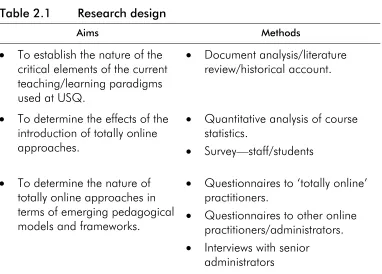
[image:33.595.128.510.425.699.2]Table 21 below provides an overview of the research design.
Table 2.1 Research design
Aims Methods
• To establish the nature of the critical elements of the current teaching/learning paradigms used at USQ.
• Document analysis/literature review/historical account.
• To determine the effects of the introduction of totally online approaches.
• Quantitative analysis of course statistics.
• Survey—staff/students
• To determine the nature of totally online approaches in terms of emerging pedagogical models and frameworks.
• Questionnaires to ‘totally online’ practitioners.
• Questionnaires to other online practitioners/administrators.
3.
Major issues and dilemmas in
online education
Glen Postle and Andrew Sturman
3.1
Introduction
The overall theoretical framework for the study is based upon Imershein‘s explanation of the nature of organisational change (see Theoretical Appendix). Imershein claims that it is only when ‘anomalous conditions’ are evident that members of an organisation will contemplate change and it is only then that they will want to do something to address such anomalies. When ‘things are not as they should be’, members of the organisation are more likely to suggest ways in which such anomalies might be addressed and this has the potential to be expressed as a shared understanding of the way ahead.
To address these theoretical propositions, various approaches were employed for the different phases of the study. The first phase is based upon the use of
qualitative data-collection techniques in order to gain an understanding of the meaning given to the changes to teaching/learning at the institutional level by staff and students. The purposes of this chapter are, therefore, (a) to identify issues and dilemmas (anomalous conditions) facing those who are involved in online teaching and learning in higher education within the Faculty of Education at the University of Southern Queensland and (b) to postulate explanations for such
issues/dilemmas that will be explored in more detail in later chapters. This section of the study details the way that totally online approaches have been ‘received’ by the staff in the Faculty of Education who have been responsible for the design and delivery of the postgraduate programs that are offered totally online.
3.2
Data-collection techniques used
3.3
The staff questionnaire
The questionnaire (Appendix A1) was distributed electronically to ‘20’ staff members. Of those, ‘8’ were teaching online courses or courses with an online component, ‘8’ were involved in University administration that impacted on online education and the remainder were people whose role was affected by online delivery or who contributed in some way to that delivery. Fifteen questionnaires were returned.
While this questionnaire focussed on the confirmation or otherwise of a number of specific issues identified by the investigators, there was the capacity to raise other issues. The responses are grouped around four themes—online learning, online teaching, managing/administering online teaching and learning, and designing online teaching and learning programs. An initial overview of the responses
suggested that these four themes captured the essence of the issues that were raised by staff and, therefore, represented a coherent way to present the data. Appendix D contains all staff responses to the questionnaire.
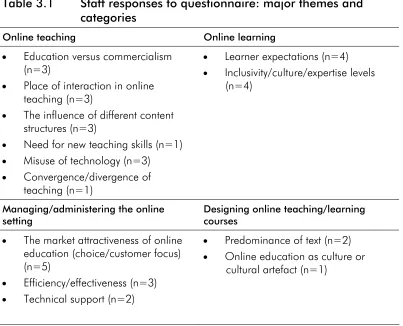
[image:36.595.111.514.405.731.2]Table 3.1 documents the major issues that were raised by staff within these four overriding categories. The number in the brackets beside each sub-category indicates the number of times that this issue was raised in the responses.
Table 3.1 Staff responses to questionnaire: major themes and categories
Online teaching Online learning • Education versus commercialism
(n=3)
• Place of interaction in online teaching (n=3)
• The influence of different content structures (n=3)
• Need for new teaching skills (n=1) • Misuse of technology (n=3) • Convergence/divergence of
teaching (n=1)
• Learner expectations (n=4) • Inclusivity/culture/expertise levels
(n=4)
Managing/administering the online
setting Designing online teaching/learning courses • The market attractiveness of online
education (choice/customer focus) (n=5)
• Efficiency/effectiveness (n=3) • Technical support (n=2)
• Predominance of text (n=2) • Online education as culture or
3.3.1
Online teaching
Staff responses in the category of online teaching ranged across a variety of issues that related to pedagogical practices over which teachers had some control and to matters that impacted on their life, but were beyond their influence.
Education versus commercialism
In his presentation to the 2001 Conference, Online Learning in a Borderless Market, Professor Roy Webb drew attention to the view expressed by the Labour Party, in its Knowledge Nation policy statement, that online education is a relatively cheap way to improve access to higher education. He went on to say:
If ‘half HECS’ translates into half the funding universities now receive per student, and I realise that such a result does not necessarily follow, participating universities will experience declining average funding across their total HECS enrolments. This might not represent a problem if the widespread assumption that delivery costs are lower for online delivery than for other modes of delivery is in fact correct. One way of achieving lower costs would be to abandon the teaching-research nexus and recruit teaching-only staff to handle online teaching and, of course, allocate higher effective teaching loads to these staff than to other staff.
Webb (2001, pp. 3–4)
Chipman (2001, p. 12) has argued from overseas experience that delivery is more expensive in the online mode and, to maintain small interactive learning groups, might require the ‘globalisation of academic labour’.
Respondents to the questionnaire (3) feared that pedagogical imperatives might be taken off the agenda if commercial interests took control. They suggested that attempts to capture market share would see teaching assume a relatively minor place in the delivery of online education. For example:
To reduce costs, education will be modularised and useable packets of data and processes will become available as ‘information objects’ that can be used across disciplines. The debate about pedagogy might get left behind as private industry rejoins the process. Private organisations are already offering higher education online with accreditation through registered training organisations and commercial areas of universities.
Skilbeck (2001, p. 61) has also drawn attention to the fact that technology has aided the modularisation of knowledge and has questioned its implications:
Place of interaction in online teaching
The totally online approach allows teachers not only to provide the access and flexibility that is the hallmark of traditional distance education, but to enhance interaction particularly between teacher and student and between students.
Interaction between learners, wherever they may be, is now technically but a ‘click’ away. This type of interaction is predominantly text based, but it has been argued that the growth and development of text-based communication, particularly asynchronous communication, is ideally suited to higher education:
…the asynchronous and precise nature of this means of communication is consistent with higher order thinking and cognitive development … and in higher education writing is crucial to thinking about complex issues in a meaningful manner.
Garrison (1997, p. 5)
However, where does this place totally online approaches in relation to ‘place-based’ approaches? Are there differences or are any differences more superficial than real? Is the adoption of totally online approaches just a reinterpretation of principles underlying ‘place-based’ education, replacing face-to-face communication with text-based communication or does it imply the adoption of new teaching-learning models?
Respondents agreed that the adoption of online approaches provided a number of advantages over traditional distance education, one of the most significant being the increased opportunities for interaction between teacher and student, and between students. While this interaction was available both synchronously and
asynchronously, some respondents suggested that the potential of synchronous communication was far from being realised. The point being made here, however, was not simply related to different types of text-based communication, but included multimedia such as video and audios:
To increase the delivery of more than just text/images requires a synchronous teaching environment. Limitations of the synchronous environment are –
• all participants must have a minimum computing environment; • time coordination issues;
• the lack of the ability to capture sessions for future perusal without the use of specialist equipment;
• security—the need to introduce new applications;
• the inclusion of ‘experts’ from outside the campus environment is difficult as the systems tend to be geared to employed staff or currently enrolled students.
Clearly this respondent is arguing from a position, which supports ‘real-time’ interaction similar to what occurs in face-to-face situations, but this fails to acknowledge that asynchronous computer mediated communication is seen by many as having an important role to play in online teaching in higher education. For example, Garrison (1997, p. 5) highlighted:
Other comments pointed to the importance of different types of interactions, in particular learner/teacher interaction and learner/learner interaction:
In my experience with processing online student administration questions (USQ Online Support Centre) and liaising w