Agents, Simulated Users and Humans
An Analysis of Performance and Behaviour
David Maxwell
School of Computing Science University of Glasgow
Glasgow, Scotland
[email protected]
Leif Azzopardi
Department of Computer & Information Sciences University of Strathclyde
Glasgow, Scotland
[email protected]
ABSTRACT
Most of the current models that are used to simulate users inInteractive Information Retrieval (IIR) lack realism and agency. Such models generally make decisions in a stochastic manner, without recourse to the actual information encoun-tered or the underlying information need. In this paper, we develop a more sophisticated model of the user that in-cludes theircognitive statewithin the simulation. The cog-nitive state maintains data about what the simulated user knows, has done and has seen, along with representations of what it considers attractive and relevant. Decisions to inspect or judge are then made based upon the simulated user’s current state, rather than stochastically. In the con-text of ad-hoc topic retrieval, we evaluate the quality of the simulated users and agents by comparing their behaviour and performance against 48 human subjects under the same conditions, topics, time constraints, costs and search engine. Our findings show that while na¨ıve configurations of simu-lated users and agents substantially outperform our human subjects, their search behaviour is notably di↵erent from ac-tual searchers. However, more sophisticated search agents can be tuned to act more like actual searchers providing greater realism. This innovation advances the state of the art in simulation, from simulated users towardsautonomous agents. It provides a much needed step forward enabling the creation of more realistic simulations, while also moti-vating the development of more advanced cognitive agents and tools to help support and augment human searchers. Future work will focus not only on the pragmatics of tun-ing and traintun-ing such agents for topic retrieval, but will also look at developing agents for other tasks and contexts such as collaborative search and slow search.
Categories and Subject Descriptors
H.3.3 [Information Storage and Retrieval]: Information Search and Retrieval: Search Process; H.3.4 [Information Storage and Retrieval]: Systems and Software: Perfor-mance Evaluation
Permission to make digital or hard copies of all or part of this work for personal or classroom use is granted without fee provided that copies are not made or distributed for profit or commercial advantage and that copies bear this notice and the full citation on the first page. Copyrights for components of this work owned by others than the author(s) must be honored. Abstracting with credit is permitted. To copy otherwise, or republish, to post on servers or to redistribute to lists, requires prior specific permission and/or a fee. Request permissions from [email protected].
CIKM ’16, October 24 - 28, 2016, Indianapolis, IN, USA
© 2016 Copyright held by the owner/author(s). Publication rights licensed to ACM. ISBN 978-1-4503-4073-1/16/10. . . $15.00
DOI:http://dx.doi.org/10.1145/2983323.2983805
1. INTRODUCTION
Interactive Information Retrieval (IIR)is a complex, non-trivial process where a searcher undertakes a variety of dif-ferent actions over a search session [29]. Motivated by an information need arising from a task, the searcher, in an Anomalous State of Knowledge (ASK)[11], aims to find rel-evant material that would help satisfy said information need, and thus complete their task. During the search process, besides the mechanical actions of querying, examining snip-pets and assessing documents for relevance (for example), the searcher’s cognitive state also changes as they interact with the information that they encounter [10, 12, 28, 30, 46]. Their initial cognitive state and background knowledge, along with any state changes that occur during the search task, all a↵ect the searcher’s behaviour and subsequent in-teractions. Searchers learn more about the topic, identify new concepts and salient terms, firm up their understand-ing and notion of relevance, and perhaps may even change their notion of relevance as they read. For example, Eick-ho↵et al. [23] presented an analysis of query reformulations, showing that the majority of new search terms were acquired from snippets and documents examined. Other studies have shown that the attractiveness of a snippet a↵ects whether a searcher is likely to click on them [25, 64], whereas their prior knowledge of the domain a↵ects the queries issued, and their subsequent interactions [63]. In contrast, when considering the current state of the art in terms of user models used for IIR simulations, such models: (i) are highly abstracted; (ii) generallyignore the cognitive state of searchers (i.e. ig-nore the information encountered); and(iii)typically make decisions based upon the roll of a dice (i.e. stochastically).
The focus of this work is to incorporate a representation of cognitive state into user models in order to create simulated search agents, rather than employing stochastic, simulated users. As such, this work revisits the idea of building
semi-autonomous search and autonomous agents that attracted
much research attention twenty years ago, and is once again regaining popularity. Our goal here however is to develop more credible and realistic simulations of users and their be-haviours, examining how well search agents (with cognitive state) behave and perform when compared to the existing simulated users1 and human searchers. The main
contribu-tions of this work are threefold: we(i) propose a new user model for simulation that maintains a representation of the user’s cognitive state; (ii) develop search agents that are autonomous in nature; and(iii)perform an empirical com-parison between simulated users, search agents and humans.
2. RELATED WORK
In the period ranging from the mid 1990s to early 2000s, there was significant interest in developing software agents that assist searchers in finding relevant information [22]. Most of the agents developed during this period were semi-autonomous, meaning that they would assist the searcher in a collaborative fashion. This was in contrast to agents that operated in a fully autonomous state, thus working independently of the searcher [43]. For example, one of the first agents proposed was Letizia [42]. Letizia would track the behaviour of a searcher interacting with a Web browser via a plugin and work in the background, predicting what other Web pages would be of interest to the searcher based upon his/her interactions. Other examples of similar agents (orbots) includeCiteSeer [13]2,The Info Agent[21],
Newsweeder[39],The Remembrance Agent[55],SoftBot[24], WebWatcher [2] andWebhound[40]. These agents would in essence either actively monitor the inputs and interactions of the searcher, or simply examine source(s) of prior knowl-edge. From these two approaches, the agents would then attempt to infer the searcher’s intent and information needs. Several of these agents would then issue queries to multiple sources (e.g. CiteSeer [13] would issue queries to multiple academic publication databases) in an attempt to try and identify and suggest additional relevant material.
Today, general purpose Web search engines amass large volumes of interaction data, and are thus able to infer in-tent and relevance reasonably well [33]. Many techniques pioneered by the agents listed above have been subsumed and incorporated into these search engines. We posit that this is why the development of such agents has not contin-ued. However, with task completion engines [7] and Artifi-cial Intelligence (AI)agents such asApple’sSiri,Microsoft’s CortanaandFacebook’sMnow being actively developed, we are entering into a new phase ofInformation Retrieval (IR) research and a resurgence of agents that assist users in com-pleting higher order tasks [29]. In this work however, we take a di↵erent approach. We develop an autonomous sim-ulated agent through the process of building a richer and more complex model of the searcher (and their behaviours) for the purposes of IIR simulation and evaluation.
2.1 Simulation in IR and IIR
Simulation has been used in many di↵erent ways in IR. For example, approaches include simulated work tasks and tracks [14, 61], simulated and synthetic data collections [3, 5, 34, 58], and simulated interaction [6, 16, 19, 41, 62]. How-ever, simulation has been used largely for evaluation and exploration to (i) determine how well an IR system per-forms, or to (ii) determine how the performance changes under di↵erent conditions and behaviours [4, 8, 9].
There has also been a growing interest with the simulation of interaction, and in particular how to model searcher be-haviour [6, 19]. This is for a variety of reasons. Firstly, sim-ulation provides a cost e↵ective means of evaluation which is reliable, repeatable and therefore reproducible. Secondly, most, if not all evaluation measures either implicitly or ex-plicitly encode some form of user model (typically a stop-ping model) in order to make measurements. Simulation also provides a means in which to explore di↵erent searcher
2CiteSeer [13] is the precursor to the modern day search engine
CiteSeerX, available athttp://citeseerx.ist.psu.edu.
STOP Formulate
Query
Click Link
Judge Document Relevance
Read Document Scan
Snippet
i ii iii
iv v
vi
Figure 1: A stochastic model of user interaction where actions are based upon probabilities (see [9]).
behaviours, methods and techniques to better understand how searchers do, could, or are likely to behave. However, if simulations are not properly grounded, motivated and vali-dated, the findings from such simulations can be considered questionable. Thus, there is a pertinent need to ensure that the models developed are credible abstractions of the search process, and that they are seeded with data based on actual human interaction data [6]3.
Simulation has been used to examine a range of factors within the IIR process, usually independently, such as: query formulation and suggestions [3, 5, 9, 17, 34, 36, 60]; brows-ing behaviours [17, 18, 26, 54, 57]; relevance feedback [27, 31, 35, 36, 56]; the influence of costs and time [4, 8]; stop-ping strategies and stopstop-ping models [16, 17, 49, 50, 59]; and performance over sessions [44, 45].
To undertake the aforementioned simulated studies, either (i)the simulated component itself is considered in isolation (e.g. evaluating the performance of individual query gener-ation techniques [5, 34]), or(ii) a simulation of the entire search process is performed. Here, a simulated user is in-stantiated and undertakes a series of interactions, typically based upon a predefined search process until they reach a certain level of gain, reach a time limit, or meet some other stopping condition [9, 49, 50, 53, 59]. We focus on improv-ing the latter: entire session simulation. As a consideration, the model proposed by Baskaya et al. [9] encodes the search process as a state transition diagram where the relationship between a series of actions (searcher states) - such as for-mulating a query and assessing a document - is considered, along with the transition probabilities between them (see Figure 1). The model considers six actions: (i) the appli-cation of query (re)formulation strategies;(ii)snippet scan-ning and assessment; (iii) snippet clicking; (iv) document reading; (v) document assessment; and (vi) session stop-ping. A similar yet alternative representation of the search process is provided by theComplex Searcher Model (CSM), defined by Maxwell et al. [49, 50]. The CSM is based upon the user model proposed by Thomas et al. [59]. Here, the search process is modelled as sequence of interactions using a flow diagram, and includes a number of decision points such as deciding the attractiveness of snippets (should I click?) and relevancy of documents(is this document relevant?).
However, the aforementioned models are essentially func-tional and mechanical in nature, focusing mainly on the procedural aspects of searching, such as issuing a query, inspecting a snippet, and examining a document. While these models have provided advancements in IIR simula-tion, they abstract away the cognitive state of the user. For
3
[image:2.595.308.541.86.184.2]Select Query
Attractive?
Examine Snippet
Click Document Assess Document
Mark Document
Continue on SERP? Stop
Session?
Relevant?
Issue Query View SERP Examine Topic Generate Queries
Out of Queries
No, abandon SERP
State State
State State
State
No
Yes No
Yes Yes
No Yes
State
For , refer to Figure 3
[image:3.595.58.542.84.255.2]State
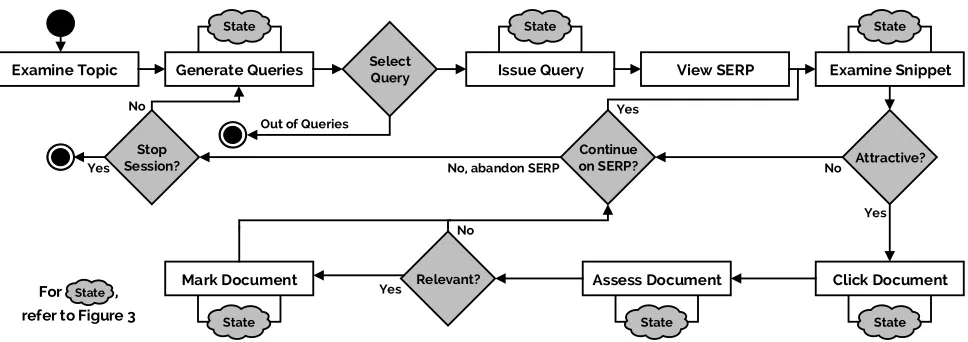
Figure 2: A model of the search process typically used in simulations. Here it has been augmented to show that various interactions invoke changes in the user’s state - denoted by the State subprocess clouds.
example, a user’s knowledge about the topic is not consid-ered, and their decisions are made stochastically based upon whether the document (snippet) is relevant or not [9, 49, 50]. This inherently limits the applicability and generalisability of the models because relevance judgements are required. Furthermore, numerous trials are required to form an aver-age, which substantially increases the cost and time to run such (Monte-Carlostyle) simulations. An alternative frame-work proposed by Carterette et al. [16] seeks to simulate the interaction of users with the search engine and search re-sult lists for the purposes of evaluation (through adynamic test collection). While not explicitly stated, the model be-hind the simulation follows a similar process as described above. The simulation is instantiated using probabilistic models that are constructed based upon training data from actual searchers, and considers querying, stopping and how long simulated users spend on documents (dwell times). To determine whether a link is clicked or not, a classifier is then trained to determine the attractiveness of a snippet, rather than the purely stochastic approach used in previous studies (e.g. [9, 49, 50]). In this paper, we draw upon these past works, combining and extending these models and frame-works, to develop more realistic simulated users, ones with cognitive state and agency, i.e. search agents.
3. EXTENDED USER MODEL
The starting point for our new simulation model is the CSM used by Maxwell et al. [50], which is in turn an amal-gamation of previously proposed models [9, 16, 49, 59]. How-ever, this extended model includes a number of additional and augmented steps. As shown in Figure 2, the process is as follows: the user first examines the topic, and then gen-erates a series of candidate queries. The user then selects a query to issue to the underlying search engine. When
the Search Engine Results Page (SERP) is returned, the
user examines a snippet and decides whether it is attractive enough to click. If this is the case, the user clicks and as-sesses the document. If they consider the document relevant, the document is marked as such, with the user then decid-ing whether to continue examindecid-ing that SERP, or abandon. If they abandon, they then need to decide whether to stop searching altogether. If not, they consider what new queries they can issue. If they run out of queries, the search session also ends. At each point in the process, we denote a
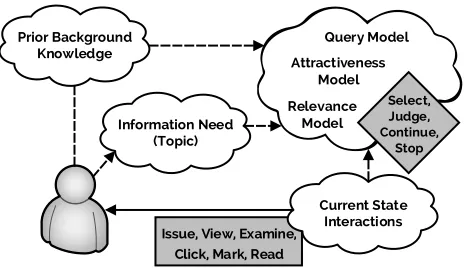
possi-ble cognitive state change with subflows to the grey clouds labelled‘State’ as illustrated in Figure 2. The model rep-resenting the user’s cognitive state, which we shall refer to as theUser State Model (USM), is shown in Figure 3. The USM consists of several parts/representations: prior back-ground knowledge; the information need; lists of previous interactions (current state interactions) and a series of mod-els used for generating queries (query model); deciding on the attractiveness of a snippet (attractiveness model); and relevance of a document (relevance model).
Issue, View, Examine, Click, Mark, Read Prior Background
Knowledge
Information Need (Topic)
Current State Interactions
Select, Judge, Continue,
Stop Attractiveness
Model Query Model
[image:4.595.53.285.86.220.2]Relevance Model
Figure 3: A model of the user’s cognitive state, where the prior knowledge, the information need and the user’s interactions a↵ect their understand-ing of what is attractive (snippets), relevant (doc-uments), and what queries to pose. These mod-els influence the decisions made during the search process (grey diamond) while the actions performed (grey box) update the user’s state.
4. EXPERIMENTAL METHOD
The focus of our experiments is to explore the behaviour and performance of simulated users and search agents. These simulations are compared against human searchers because we are trying to replicate human performance and behaviour for evaluation purposes. In developing our simulations, we are careful to design and build simulated users and agents that are grounded, such that they are instantiated based upon actual data and past findings.
4.1 Corpus, Topics and System
For this study, we used theTREC AQUAINT test col-lection along with two topics from the 2005 Robust Track, №. 347(wildlife extinction)and№. 435(curbing population growth). The collection was indexed using theWhoosh IR toolkit4, where stopwords5 were removed and Porter
stem-ming applied. The retrieval model used was PL2 (c = 10.0) [1]. An IIR simulation toolkit was developed to encode the CSM and USM, and is freely available for download so that experiments can be replicated6.
4.2 Human Subjects
We recruited 48 undergraduate students at the University of Glasgow to undertake two ad-hoc topic retrieval search tasks, using a standard search interface. The details of this user study are described and reported by Maxwell and Azzopardi [47]. Subjects of the study were given a total of 20 minutes (1200 seconds) to complete each search task, us-ing the aforementioned system and setup. For each search task, the TREC topic and title descriptions were given, with both providing details on what constituted as a relevant doc-ument. Subjects were asked to find as many relevant docu-ments as they could within the time limit, with the highest degree ofaccuracy. Participants of the study were compen-sated with£10, and were further incentivised with a
perfor-4
Whoosh is available athttps://pypi.python.org/pypi/Whoosh.
5
For indexing purposes, Fox’s classical stopword list was used. Refer tohttps://git.io/vT3Sofor the complete list.
6
An in-depth explanation of the SimIIR toolkit is provided by Maxwell and Azzopardi [48], with code athttps://git.io/vZ5mH.
mance based bonus if they were in the top 25% (12 out of the 48 subjects were given bonuses).
The performance of each searcher was measured in terms of the F1 score, which provides a weighted harmonic mean
of each searcher’s precision and recall:
F1= 2· p·r
p+r. (1)
In this equation,p andr denote precision and recall re-spectively. The accuracy (or precision) of a searcher was calculated as the total number of TREC relevant documents marked, divided by the total number of documents marked. A searcher’s recall was calculated as the total number of TREC relevant documents marked, divided by the total number of TREC relevant documents for a given topic.
There were a number of reasons why the F1score was
em-ployed. One, to stop people‘gaming’ the bonus system. If precision and recall alone were used, subjects may have been tempted to mark everything relevant to obtain high recall, or very few to obtain high precision. The F1 score ensures
that searchers would have tried to find as many documents as possible, with the greatest level of accuracy. Second, and more intuitively, is that when searching, people often iden-tify a high number of potentially relevant documents, but later only use a subset of those documents [15]. Third, since subjects were tasked with finding a set of relevant docu-ments, a set-based measure was more appropriate (rather than say MAP or other ranked based measures). In addition to precision, recall and F1, we also measured - and report
- the total number of TREC relevant documents identified, and the correspondingCumulative Gain (CG)[32].
In terms of behavioural data, we recorded a variety of interactions. These included the queries issued, the snip-pets hovered over and clicked (considered attractive), and any documents assessed and marked relevant. The time taken to perform each of these di↵erent interactions was also recorded. From this data, we could ascertain the number of queries issued, the number of snippets examined, and the number of documents viewed and marked. When coupled with TREC relevance assessments, we could then determine how many TREC relevant documents were marked, and the associated probabilities (refer to Table 1) of clicking an at-tractive snippet, or marking a relevant document.
4.3 Simulated Subjects
Using the CSM and USM, we are able to generate a va-riety of di↵erent simulated users/agents of varying sophis-tication. To instantiate a simulated user/agent, we need to define the following components: (i) interaction times/costs - how long it takes to perform each action; a (ii) querying strategy - how queries are generated, ranked and selected; a (iii) continuation strategy- how many snippets are examined before moving onto the next query; a(iv) snippet attractive-ness decision maker - to decide on whether the document should be examined or not; a(v) document relevance deci-sion maker - to decide on whether the document should be marked or not; and any(iv) prior/background knowledge -what the simulated user/agent knowsa priori.
interac-Table 1: Mean interaction probabilities over the 48 human subjects. Individual interaction probabilities were used for stochastic simulated users.
Probability Value
P(C|Rs)(Clicking an attractive snippet) 0.36
P(C|Ns)(Clicking an unattractive snippet) 0.21
P(M|Rd)(Marking a relevant document) 0.71
P(M|Nd)(Marking a non-relevant document) 0.53
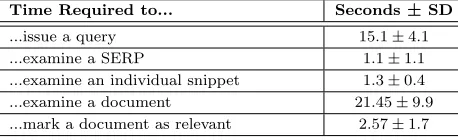
Table 2: Mean interaction times (in seconds), ± standard deviations (SD) over the 48 human sub-jects that were used in this study.
Time Required to... Seconds±SD
...issue a query 15.1±4.1 ...examine a SERP 1.1±1.1 ...examine an individual snippet 1.3±0.4 ...examine a document 21.45±9.9 ...mark a document as relevant 2.57±1.7
tion times were used. Consequently, 48 corresponding simu-lated users/agents were instantiated, allowing us to directly compare the performance of each human subject against his/her simulated user/agent counterpart, under the same time costs and constraints.
Querying Strategy In the CSM shown in Figure 2, the querying process consists of two parts: (i)generating a list of queries; and then(ii)selecting a query. Keskustalo et al. [37] identified from a user study a series ofidealised, prototypi-cal querying strategies. In this work, we have selected the querying strategy that was labelled by Keskustalo et al. as
QS3, that produces three term queries7. InQS3, twopivot
termsare selected, and queries are generated by adding an-other term. This generates queries of three terms in length. The intuition here is that the searcher starts o↵with an idea of the topic, and explores variations in that space.
Queries for each topic examined were generated by taking the title and description to create aMaximum Likelihood Es-timate (MLE)language model, such thatp(t|✓T). We took
all two word combinations of the title terms, and selected the pair with the highest joint probability to act as the two pivot terms. A list of three term candidate queries,q, was then constructed by appending every other term from the topic to the pivot terms. We also considered an extended ap-proach toQS3, entitledQS3+. Here, we considered a series of possible pivots that were generated by sliding a window of two terms across the topic. This was then extended with a third term. Once generated, the queries were then ranked. To rank, we calculated the normalised log likelihood [51]:
p(Q|✓T)/
1 n(Q)
X
t
p(t|Q) logp(t|✓T) p(t|✓C)
(2)
wheren(Q) is the query length,p(t|Q) is the probability of the term in the query,p(t|✓T) is the probability of the term
in the topic model, andp(t|✓C) is the probability of the term
in the background model. The query with the highest score that had not been previously issued was then selected.
Continuation StrategyThe decision of when to stop ex-amining a ranked list is based upon the continuation
strat-7
Note that our human subjects issued queries of 3.4 terms in length on average, soQS3generates queries of comparable length.
egy. We used three previously examined strategies, the first of which is the standard baseline used in simulations and many evaluation measures. This is a fixed depth strategy, named SS1 by Maxwell et al. [49, 50]. Under SS1, the simulated user will stop examining snippets/documents af-ter examiningx1 snippets regardless of their (ir)relevance.
We also employ two other strategies which were based upon thefrustration point [20] anddisgust[38] rules. The first of these is based on the total number of non-relevant snippets observed, such that the simulated user will stop examining a ranked list after observingx2 non-relevant snippets. The
other strategy is based upon observing a contiguous number of non-relevant snippets, such that the simulated user will stop examining the list after observingx3non-relevant
snip-pets in a row. These latter strategies are called SS2 and
SS3 respectively in [49, 50]. Maxwell et al. compared ac-tual search stopping data against the three aforementioned strategies, and showed thatSS1 with x1 = 13, SS2 with
x2= 9, andSS3 withx3= 5 provided a good
approxima-tion of actual search behaviour over a similar set of search tasks, and on the same collection. Consequently, we employ these values to ground our simulations.
Attractiveness/Relevance Decision Making For sim-ulations involving stochastic decision making regarding the attractiveness of snippets (i.e. the probability of clicking on a snippet) and the relevance of a document (i.e. the probability of marking a document relevant), we again used the interaction data from the human subjects, coupled with TREC relevance judgements, to determine interaction prob-abilities. Table 1 presents the average probabilities of click-ing snippets and markclick-ing documents. In our experiments, we used individual interaction probabilities - not the average - for each of the simulated users to ensure a fair comparison against the actual searchers. For search agents, we employed a language modelling framework to make such decisions, the details of which are provided in Section 4.3.2.
Prior Background Knowledge We assume that simu-lated users have some idea of the distribution of terms. This knowledge is used when ranking/selecting queries, and in some decision making components. For this, we used data fromTREC123(AP88-89andWSJ87-92) so that it is inde-pendent of the corpus that the simulated users/agents were searching. For the search agents (detailed in Section 4.3.2), we also utilisedword2vec [52] to build semantic representa-tions used by decision making components, which were also derived from the AP88-89 and WSJ87-92 collections.
Unless stated otherwise, these times, querying strategies and continuation strategies were used by the simulated users and agents. Next, we outline simulated users that do not consider a user’s state. These simulated users represent the current state of the art. We then discuss how we created and instantiated a series of search agents.
4.3.1 Naïve and Stochastic Simulated Users
For our baselines, we operationalised a series of simple and standard simulated users. The first two simulated users were based upon a‘TREC style’ interaction model.
[image:5.595.52.284.124.186.2] [image:5.595.53.282.232.302.2]How-ever, since the user only has 1200 seconds, the simulation ends before they reach that depth.
Similar to the TREC user defined above, the stochas-tic TREC useroperates in much the same way. However, the attractiveness and relevancy of snippets and documents respectively is based upon individual human subject inter-action probabilities, with the averages presented in Table 1. The user still only issues a single query, but this setup in-troduces some variation into its actions.
Our final baseline simulated user is referred to as the stochastic user. This user represents the state of the art in simulation, and a number of researchers have employed similar variants in their work [8, 9, 16, 17, 49, 50, 60]. This simulated user bases decisions upon interaction probabilities for attractiveness and relevancy, and is therefore stochastic in nature. For these users, simulations were run 10 times with the mean values for measures reported over those runs.
4.3.2 Autonomous Search Agents
We developed and explored a variety of search agents based upon: (i) the amount of prior knowledge possessed; (ii) the attractiveness and relevance decision making com-ponents; and(iii)whether or not these models are updated over the course of the session. In this paper, we will use a language modelling framework to represent the user’s state and how they make decisions. While other representations of knowledge can be used, we leave this - and exploring other mechanisms for decision making - for future work.
Prior KnowledgeAside from using the term distribution p(t|✓C) as background knowledge, we considered for some
of our agents incorporating topical background knowledge built through word associations (word2vec) [52]. When an agent reads through the topic, it is primed to expect cer-tain other terms or concepts. By using word2vec, we can to a certain extent simulate this in order to create language models that are less sparse (see below). The topical back-ground knowledge was built using the resources by Zuccon et al. [65]. We used the ap8889andwsj8792 vectors that were generated using skipgrams with 200 dimensions and a window of 5. These values were shown to perform well in [65]. For each term in the topic, we calculated the word to word associations using the cosine similarity function, and took the top 100 word associations and scores. The scores for each term were then summed up, and then normalised to produce a probability distributionp(t|✓B). For the topic
wildlife extinction, the top ten words were for example mur-relet,porpoise,species,habitat,migratory,birds, wa-terfowls,raptors,effortsandinitiatives.
Attractiveness and Relevance Models To decide if a snippet is attractive enough(should this snippet be clicked?), or a document is relevant enough to mark (is this docu-ment relevant to the topic?), we constructed language mod-els for attractiveness p(t|✓A) and relevance p(t|✓R)
respec-tively. The snippet or document observed by the agent was then scored using this model within the normalised log like-lihood method [51], where the normalisation was based upon the length of the observed text:
O(S|✓A) = 1
n(S)
X
t
p(t|S) logp(tp(t|✓A)
|✓C) (3)
where n(S) is the length of the snippet, p(t|S) the proba-bility of the term in the snippet (maximum likelihood esti-mate), andp(t|✓A) is defined by:
p(t|✓A) =
⇥wT
z p(t|✓T)+ wI
z p(t|✓AS)+ wB
z p(t|✓B)
⇤
+(1 A)p(t|✓C)
wherep(t|✓T) is the probability of a term appearing in the
topic, andp(t|✓AS) is the probability of a term in the set of
snippets considered attractive. The weightingswT,wI and
wBdenote how much emphasis is placed upon the topic,
in-teraction and background semantic knowledge respectively. z is a normalising constant. If O(S|✓A) > µA, then the
snippetSwas considered attractive. We computed the doc-ument relevance scores in a similar fashion, and again used a thresholdO(S|✓R)> µRto decide whether the document
was considered relevant. For the purposes of this work, we explored a range of thresholds forµAandµR. Intuitively, if
theµvalues are negative, the agent would then be more lib-eral in accepting the snippet/document. If they are positive, then the agent will be more conservative. For the relevance decision making component, we follow the same process and compute O(D|✓R), using the following language model for
document relevance: p(t|✓R) =
⇥wT
z p(t|✓T)+ wI
z p(t|✓RD)+ wB
z p(t|✓B)
⇤
+(1 R)p(t|✓C)
where p(t|✓RD) is the probability of term given the set of
relevant documents marked relevant during the course of the session.
Updating StateAs suggested in the CSM, the USM is up-dated at various points during the search process ifwI>0.
For theSnippet Attractiveness Model(p(t|✓A)) and the
Doc-ument Relevance Model (p(t|✓R)), the models are updated
before a decision is made based upon snippets/documents that have been examined and considered attractive/relevant respectively. The language modelsp(t|✓AS) andp(t|✓RD) are
calculated by counting the number of times each term ap-pears in this observed text, and then normalised to obtain the maximum likelihood estimate.
Agent SetupAltogether, we can create an agent that up-dates its state and makes decisions based upon probabilistic language models. While there are many possible combina-tions of weightings, we consider the simplest in this work as a starting point (wherewT = 1,wI= 1 andwB= 1). Given
this agent configuration, we then explored di↵erent thresh-olds for snippet attractiveness and document relevance, as well as di↵erent smoothing values, where we first set the
A = R = [0.1, . . . ,0.9] andµA = µR = [ 0.4, . . .0.4] in
0.1 increments - providing a range of strategies from liberal to strict [57]. We then fixed A = 0.8 andµA to each of
the threshold settings, and explored the range of RandµR
settings. This was repeated for each of the querying and continuation strategies detailed above.
Table 3: Values over all 48 real-world subjects (± standard deviations for the reported mean values) along with the median, worst, second best and best searchers with regards to their F1score. Other behavioural and
performance measures are also reported (detailed in Section 5), with the mean over the two topics examined presented. Mean interaction times (in seconds) per query (T/Q) and document (T/Doc) are also shown.
#Q #Snip #Doc #M #R CG P. F1 T/Q T/Doc
Mediansearcher 20.5 112.5 27.5 12.5 6.0 10.0 0.43 0.07 8.4 19.2
Mean(over 48 searchers) 11.3 105.6 29.8 17.9 7.5 12.6 0.43 0.08 15.1 21.5
±Standard Deviation (±5.6) (±55.8) (±12.0) (±9.1) (±4.5) (±7.6) (±0.11) (±0.04) (±4.1) (±9.9)
Worstsearcher 10.5 36.0 14.5 8.0 2.0 3.5 0.30 0.02 18.1 45.6
Second bestsearcher 9.5 222.0 63.0 37.0 16.0 27.0 0.46 0.16 9.9 9.7
Bestsearcher 10.5 150.5 57.5 51.5 26.0 42.0 0.51 0.25 8.4 5.8
To ensure that our comparison between search agents and simulated users was fair, we used two-fold cross validation to train our simulated agents, and reported the behaviour and performance of the test sets. To select the parameters A, R,µA, andµR, we found the combination that resulted in
the lowest Mean Squared Error (MSE)for each of the dif-ferent performance and behaviour measures used, given the parameter values noted above. This was so we could com-pare search agents - that for example issued a similar number of queries and clicked on a similar number of snippets - to the real-world subjects, and discuss the di↵erences.
5. RESULTS
Tables in this section report: the number of queries is-sued (#Q); the number of snippets examined (#S); and the number of documents viewed (#D), as well as the num-ber marked (#M). We also include in the results tables a series of performance measures, including: the number of documents marked that were TREC relevant (#R); the CG; precisionP.); and the F1score (F1).
Table 3 presents a summary of the behaviours of the 48 real-world subjects (over both topics). Also included in the table is the time spent per query and per document (in sec-onds, T/Q and T/D respectively). We report the best, second best, median and worst searchers (in terms of their F1 scores), along with the mean over all 48 searchers. This
shows that within our user population, there is quite a large variation in terms of behaviour and performance. Of note is that the speed of processing has a major impact upon a user’s final performance. We can see from the best and second best searchers that they spent less time on docu-ments and as a result examined substantial more that the average searcher. This translated into F1 and CG scores of
F1 = 0.25, CG = 42.0 and F1 = 0.16, CG = 27.0
respec-tively. This is in stark contrast to the other searchers, who on average obtained F1scores of 0.07 0.08 and CG scores
of 10.0 12.6. Behavioural and performance values for the TREC, TREC stochastic and stochastic users are presented in Table 4. Values reported are averaged over the two top-ics examined, examining the mean over the 48 simulated searchers per experimental configuration.
The TREC user obtainsCG = 30.0, andF1 = 0.32 for
the title only query (TT) which was significantly more than the actual searchers over both measures. Using the other querying strategies, the TREC user also obtains significantly higher CG and F1scores. We can see thatQS3+produces
a better initial query, resulting in the highest CG of 35.4, F1= 0.36 andP= 0.41, whileQS3results performs slightly
worse at CG= 18.0, F1 = 0.22 andP = 0.19. These
re-sults show that a very simple search strategy can result in very high performance. Indeed, under querying strategies
TT and QS3+, every human subject is outperformed in terms of their F1scores (the best real-world subject
obtain-ingF1= 0.25, compared toTT atF1= 0.32 andQS3+at
F1= 0.36), withQS3 outperforming all but one of our
hu-man subjects. In essence, starting (or sticking) with a good query leads to excellent performance. Of course, the search behaviour exhibited by the TREC simulated users is quite di↵erent from the behaviours of actual searchers. None of the behavioural or performance measures were similar (as illustrated by a complete lack of daggers†in Table 4).
Turning our attention to the stochastic TREC user, (denotedsTRECin Table 4), we see that because the sim-ulated user does not examine every document encountered, then they have more time to examine snippets, and thus ex-amine more snippets during their search sessions. Coupled with the interaction probabilities, this translated into some-what lower performance: CG (5.6-11.6), precision (0.14-0.30) and F1 scores (0.11-0.18). Interestingly, introducing
stochastic behaviour leads to performance which is more in line with the worst searcher, and at best close to the me-dian searcher. Again, all the behavioural and performance measures of the stochastic TREC users were significantly di↵erent to the real-world subjects, except in terms of the number TREC relevant documents (#R) and the CG for two of the querying strategies (QS3+andTT).
Next, we examined thestochastic user. Recall that in this setup of simulation, users will issue a number of queries - not just one - and it represents the type of simulation un-dertaken in many recent studies. Table 4 also presents the behaviour and performance of these simulated users for the two querying strategies and the three continuation strate-gies, averaged over all runs and all simulated users. Ex-hibited behaviour of the stochastic user broadly resembles that of human searchers. First, precision is in the region of 0.17-0.28, and the CG ranges from 8.7 12.6. This impacts upon how well they searched (F1 = 0.13 0.18). While
the stochastic users do behave more like human searchers, they do perform markedly better than the median and mean searchers in terms of the F1scores, comparingF1= 0.07 and
F1= 0.08 againstF1= 0.13-0.18. Depending upon the
0.2 0.4 0.6 0.8 λA=λR 0
5 10
Mean Queries
Mean Queries
0.2 0.4 0
5 10
Mean Queries
Mean Queries
0.2 0.4 0.6 0.8
λ A=λR 50
100 150
Mean Snippets
Mean Snippets
0.2 0.4 0.6 0.8
λ R 50
100 150
Mean Snippets
Mean Snippets
0.2 0.4 0.6 0.8
λ A=λR 20
30 40 50 60 70
Mean Docs Examined
Mean Documents Examined
0.2 0.4 0.6 0.8
λ R 20
30 40 50 60 70
Mean Docs Examined
Mean Documents Examined
0.2 0.4 0.6 0.8
λ A=λR 0
0.1 0.2 0.3 0.4
Mean F1
Mean F1
0.2 0.4 0.6 0.8
λ R 0
0.1 0.2 0.3 0.4
Mean F1
Mean F1
0.6 0.8 λR
µ=-0.40 µ=-0.20 µ=0.00
µ=0.20 µ=0.40 sTREC
TREC Stochastic RW Mean
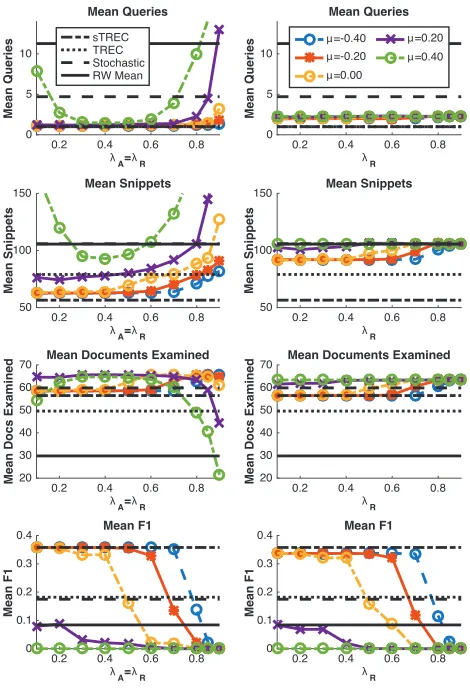
Figure 4: Plots, exploring the and µ space for QS3+ andSS3. Left: A = R andµA =µR, right: A = 0.8 and µA = 0.2. Top to bottom: the mean number of queries, the mean number of snippets and documents examined, and the mean F1score. Plots
are averaged over the two topics undertaken.
Since oursearch agentscan be configured in a number of di↵erent ways, we first explore the influence of the di↵erent parameters on their performance and behaviour. To show how the decision threshold interacts with the smoothing pa-rameter, we have plotted in Figure 4 the mean number of queries, mean snippets and documents examined, and mean F1 for di↵erent thresholds and smoothing parameters. For
the plots on the left, we setµA=µR, and varied it between
0.4 (liberal) and 0.4 (strict), and also set A= R, setting
it between 0.1 to 0.9. For the plots on the right, we fixed µA= 0.2 and A= 0.8, and then variedµRand R.
From the plots in Figure 4, we can see that the perfor-mance of very liberal agents tends to be very high (across most of the smoothing parameter space). This is because the agent considers most snippets attractive, clicks on them, and then considers the subsequent document as relevant. As a consequence, very liberal agents tend to only issue one query, and so tend to be more akin to the TREC simulated users. As the smoothing threshold is increased, we see that performance drops even for more liberal searchers. This cor-responds with an increase in the number of queries issued, and an increase in the number of snippets examined. This is because as the smoothing threshold is increased, the
scor-Table 4: Results of our baseline runs, including the TREC, Stochastic TREC (sTREC) and Stochastic users. TT denotes where the TREC title query was issued. Results are averaged over the two topics run.
#Q #S #D #M #R CG P. F1
TREC SS1
@1k
QS3+ 1.0 56.5 56.5 56.5 22.3 35.4 0.41 0.36
QS3 1.0 56.5 56.5 56.5 10.0 18.0 0.19 0.22
TT 1.0 56.5 56.5 56.5 18.1 30.0 0.32 0.32
sTRE
C
SS1
@1k
QS3+ 1.0 79.0 49.6 25.5 7.3
† 11.6† 0.30 0.18
QS3 1.0 73.9 52.7 25.1 3.1 5.6 0.14 0.11
TT 1.0 77.4 50.2 25.4 6.2† 10.2† 0.26 0.17
St
o
c
ha
stic
SS1
QS3+ 8.0 99.3† 55.4 26.5 5.6† 9.1† 0.24 0.16
QS3 10.4† 129.2† 46.6 23.3 5.4 9.6 0.25 0.16
SS2
QS3+ 3.8 106.0
† 58.3 28.1 6.4† 10.7† 0.26 0.17
QS3 4.0 124.4† 56.8 27.7 6.2† 10.9† 0.23 0.16
SS3
QS3+ 1.8 102.4
† 60.5 29.6 7.7† 12.6† 0.28 0.18
[image:8.595.51.286.86.431.2]QS3 1.5 99.6† 60.3 28.5 4.9 8.7 0.17 0.13
Table 5: Results of comparison runs for each mea-sure with the parameter configurations of A, R,
µA andµR yielding the lowest MSE over the given continuation strategy (SS) for the given measures (rows). Also included is the lowest MSE based on combining all behavioural measures (ALL).
Ag. SS #Q #S #D #M #R CG P. F1
Q 1 10.7† 133.9† 49.5 19.5 5.6 9.0 0.17 0.12
S 1 10.2† 125.1† 47.0 46.4 13.8 21.9 0.32 0.27
D 1 15.2† 191.2 36.2 35.5 10.1 14.8 0.31 0.23
M 2 7.5† 137.8† 52.0 19.2† 4.6 8.2 0.12 0.11
ALL 1 10.5† 130.8† 48.9 27.8 6.6 11.0 0.20 0.16
ing function becomes more negative and thus the decision threshold is not met as often. We can see that depend-ing upon how the agents are configured, they can exhibit behaviour and performance ranging from TREC simulated users to actual searchers. Similar plots were observed for
QS3 and the other stopping strategiesSS1 andSS2. In order to fairly compare the search agents with the other simulated searchers and actual searchers, we selected the parameters by using two-fold cross validation (as explained in Section 4.4). For each of the di↵erent behavioural mea-sures, the parameters that provided the closest fit to the actual searchers on the training sets were taken and used on the corresponding test sets. This resulted in a series of parameter configurations that gave the closest fit with re-spect to number of queries, number of snippets, number of documents, etc., which we shall refer to as Agents (Ag.) Q,
S,D,M andALLrespectively. Table 5 reports the perfor-mance and behaviour given the parameters for the test sets. We also include a row labelled ALLwhere the MSE over all behavioural measures was computed in order to find the settings that provided the closest overall match. The param-eter space that yielded the closest fits were in the region of
A⇡0.8,µA⇡= 0.2 and R⇡= 0.5 0.8 andµR=0.0-0.2.
[image:8.595.307.540.133.313.2] [image:8.595.308.541.387.475.2]indi-cates when there was no significant di↵erence between the agents and actual searchers. From Table 5, we can see that in terms of behaviours, the closest fits were when the stop-ping strategy wasSS1(except for the number marked when it was SS2). In terms of behaviour, the agents that were closest to actual searchers were when they were configured based upon the number of marked documents and withSS2, i.e. AgentM. In this case, they posed a similar number of queries, examined a similar number of snippets, and marked a similar number of documents as relevant - but examined more documents in total. However, the precision and CG of the agents were lower than the actual searchers. However, we can see that other configurations based upon behaviour can lead to substantially higher performance (i.e. AgentsS
andD in Table 5), and exhibit similar querying and snip-pet behaviour. Indeed, these agents outperformed every one of their real counterparts in terms of CG, precision and F1
scores. AgentALLprovides a good fit in terms of the num-ber of queries and snippets, but still outperforms the actual searchers - but not to the same extent as AgentsS andD. These results are very encouraging as they suggest that we can configure the search agents based upon behaviours -without recourse to relevance judgements - and obtain inter-action data that is similar to actual searchers. Here, we have only examined a subset of the possible space, and it is very likely that in order to better replicate actual searchers, the continuation strategy, smoothing parameters and decision thresholds would all have to be tailored to each individual.
6. DISCUSSION AND FUTURE WORK
In this paper, we have proposed an extension to the model commonly used to describe the search process for the pur-poses of simulation, and further augmented it with a rep-resentation of the user’s cognitive state. The addition of the USM enables the creation of autonomous search agents rather than na¨ıve or stochastic simulated users. The addi-tion of these components has required the combinaaddi-tion and integration of a wide variety of di↵erent technologies and innovations within IR. This in turn has increased the com-plexity of developing simulated agents, but arguably creates simulated users which are more credible and realistic.While it was not possible to fully explore the full range of configurations in this paper, we examined how the be-haviour and performance of an agent changes, and how it could be configured to exhibit behaviours similar to human searchers. Further work is required to automatically select and tune parameters for the decision making components and continuation strategies, as well as balancing the inter-play between the di↵erent components. Now that the mod-els and infrastructure exist, it is possible to proceed in this direction. Nonetheless, our findings are promising and show that it is possible to create more realistic simulations and simulate interaction without recourse to relevance. We also observed that na¨ıve simulated TREC-style users behaved quite di↵erently to human searchers, but obtained very high performance. Meanwhile, the simulated stochastic users -representing the previous state of the art - consistently per-formed poorly when compared to human searchers, but ex-hibited similar behaviours. With the development of au-tonomous search agents, a range of behaviours and perfor-mances can be configured to emulate humans, providing a more suitable and flexible alternative for the simulation and evaluation of IR systems.
To conclude, this work has advanced the state of the art - moving from stochastic simulated users to autonomous search agents. This was achieved by extending the CSM and introducing the USM to provide cognitive state and en-able agency. These innovations open up a number of new research avenues that require further exploration, including: (i)how we best represent and update the searcher’s cogni-tive state; (ii) what kind of framework should be used to make decisions (in this paper, we have used a probabilistic language modelling framework, but many others could be used); (iii) how we can best estimate or explore the range parameters to create di↵erent kinds of agents (i.e. agents like humans, and agents that perform or behave di↵erently but more e↵ectively, etc.); (iv) what we can learn from search agents about search systems (i.e. in terms of evaluation); (v) what areas we can apply and use such search agents (i.e. collaborative search, slow search, exploratory search, etc.); (vi) how searchers can e↵ectively interact with such search agents; and (vii) how we can compare and evalu-ate the search performance and behaviours of agents and humans. Of course, other challenges exist, including the development of such agents for di↵erent tasks (novelty and diverse search tasks, etc.), contexts (work, leisure, casual, etc.) and environments (web, academic, enterprise, etc).
AcknowledgmentsWe wish to thank the anonymous reviewers for their insightful feedback. The lead author is funded by the UK Government through the EPSRC, grant number1367507.
References
[1] G. Amati and C.J. Van Rijsbergen. Probabilistic models of information retrieval based on measuring the divergence from randomness.ACM TOIS, 20(4):357–389, 2002. [2] R. Armstrong, D. Freitag, T. Joachims, and T. Mitchell.
Webwatcher: A learning apprentice for the world wide web. InProc. AAAI Spring Symp. on Info. Gathering from Heterogeneous, Distributed Environments, pages 6–12, 1995.
[3] L. Azzopardi. Query side evaluation: An empirical analysis of e↵ectiveness and e↵ort. InProceedings of the 32ndACM SIGIR, pages 556–563, 2009.
[4] L. Azzopardi. The economics in interactive information retrieval. InProc. 34thACM SIGIR, pages 15–24, 2011.
[5] L. Azzopardi, M. de Rijke, and K. Balog. Building simulated queries for known-item topics: An analysis using six european languages. InProc. 30thACM SIGIR, pages
455–462, 2007.
[6] L. Azzopardi, K. J¨arvelin, J. Kamps, and M.D. Smucker. Report on the sigir 2010 workshop on the simulation of interaction. SIGIR Forum, 44(2):35–47, 2011.
[7] K. Balog. Task-completion engines: A vision with a plan. InProc. 1stSCST, 2015.
[8] F. Baskaya, H. Keskustalo, and K. J¨arvelin. Time drives interaction: Simulating sessions in diverse searching environments. InProc. 35thACM SIGIR, pages 105–114,
2012.
[9] F. Baskaya, H. Keskustalo, and K. J¨arvelin. Modeling behavioral factors in interactive information retrieval. In
Proc. 22nd ACM CIKM, pages 2297–2302, 2013.
[10] M.J. Bates. The design of browsing and berrypicking techniques for the online search interface.Online Information Review, 13(5):407–424, 1989.
[11] N.J. Belkin. Anomalous states of knowledge as a basis for IR.Canadian J. of Info. Sci., (5):133–143, 1980. [12] N.J. Belkin. The cognitive viewpoint in information
science.J. Inf. Sci., 16(1):11–15, 1990.
[14] P. Borlund. The iir evaluation model: a framework for evaluation of iir systems. Info. research, 8(3), 2003. [15] G. Buchanan and F. Loizides. Investigating document
triage on paper and electronic media. InProc. 11thECDL,
pages 416–427, 2007.
[16] B. Carterette, E. Kanoulas, and E. Yilmaz. Simulating simple user behavior for system e↵ectiveness evaluation. In
Proc. 20thACM CIKM, pages 611–620, 2011.
[17] B. Carterette, A. Bah, and M. Zengin. Dynamic test collections for retrieval evaluation. InProc. 5thACM ICTIR, pages 91–100, 2015.
[18] A. Chuklin, I. Markov, and M. de Rijke.Click Models for Web Search. SLoICRS. 2015.
[19] C.L.A. Clarke, L. Freund, M.D. Smucker, and E. Yilmaz. Report on the sigir 2013 mube workshop.SIGIR Forum, 47 (2):84–95, 2013.
[20] W.S. Cooper. On selecting a measure of retrieval
e↵ectiveness part ii. implementation of the philosophy.J. of the American Soc. for Info. Sci., 24(6):413–424, 1973. [21] D. D’Aloisi, V. Giannini, and F.U. Bordoni. The info agent:
an interface for supporting users in intelligent retrieval. In
In Proc. ERCIM Workshop, pages 143–155, 1995. [22] P. Edwards, C.L. Green, P.C. Lockier, and T.C. Lukins.
Exploiting learning technologies for world wide web agents. InIn IEEE Intelligent WWW Agents, pages 3–1, 1997. [23] C. Eickho↵, S. Dungs, and V. Tran. An eye-tracking study
of query reformulation. InProc. 38thACM SIGIR, pages
13–22, 2015.
[24] O. Etzioni and D. Weld. A softbot-based interface to the internet.Commun. ACM, 37(7):72–76, 1994.
[25] W-T Fu and P. Pirolli. Snif-act: A cognitive model of user navigation on the world wide web. Human Computer Interaction, 22(4):355–412, 2007.
[26] F. Guo, C. Liu, A. Kannan, T. Minka, M. Taylor, Y. Wang, and C. Faloutsos. Click chain model in web search. In
Proc. 18thWWW, pages 11–20, 2009.
[27] D. Harman. Relevance feedback revisited. InProc. 15th ACM SIGIR, pages 1–10, New York, NY, USA, 1992. ACM. [28] P. Ingwersen. Information Retrieval Interaction. 1992. [29] P. Ingwersen and K. J¨arvelin. The Turn: Integration of
Information Seeking and Retrieval in Context. 2005. [30] B.J. Jansen and S.Y. Rieh. The seventeen theoretical
constructs of information searching and information retrieval.JASIST, 61(8):1517–1534, 2010.
[31] K. J¨arvelin. Interactive relevance feedback with graded relevance and sentence extraction: Simulated user experiments. InProc. 18thACM CIKM, pages 2053–2056,
2009.
[32] K. J¨arvelin and J. Kek¨al¨ainen. Cumulative gain-based evaluation of IR techniques.TOIS, 20(4):422–446, 2002. [33] T. Joachims. Optimizing search engines using clickthrough
data. InProc. 8thACM SIGKDD, pages 133–142, 2002.
[34] C. Jordan, C. Watters, and Q. Gao. Using controlled query generation to evaluate blind relevance feedback algorithms. InProc. 6thACM/IEEE-CS JCDL, pages 286–295, 2006.
[35] H. Keskustalo, K. J¨arvelin, and A. Pirkola. The e↵ects of relevance feedback quality and quantity in interactive relevance feedback: A simulation based on user modeling. InAdv. in IR, volume 3936 ofLNCS, pages 191–204. 2006. [36] H. Keskustalo, K. J¨arvelin, and A. Pirkola. Evaluating the
e↵ectiveness of relevance feedback based on a user simulation model: E↵ects of a user scenario on cumulated gain value. Information Retrieval, 11(3):209–228, 2008. [37] H. Keskustalo, K. J¨arvelin, A. Pirkola, T. Sharma, and
M. Lykke. Test collection-based ir evaluation needs extension toward sessions — a case of extremely short queries. InProc. 5thAIRS, pages 63–74, 2009.
[38] D.H. Kraft and T. Lee. Stopping rules and their e↵ect on expected search length. IPM, 15(1):47 – 58, 1979. [39] K. Lang. Newsweeder: Learning to filter netnews. InProc.
12thIntl. Machine Learning Conference, 1995.
[40] Y. Lashkari. The webhound personalized document filtering system. Technical report, 1995.
[41] A. Leuski. Relevance and reinforcement in interactive browsing. InProc. 9thACM CIKM, pages 119–126, 2000.
[42] H. Lieberman. Letizia: An agent that assists web browsing. InProc. 14thIJCAI, pages 924–929, 1995.
[43] H. Lieberman. Autonomous interface agents. InProc. 15th SIGCHI, pages 67–74, 1997.
[44] J. Luo, S. Zhang, and H. Yang. Win-win search:
Dual-agent stochastic game in session search. InProc. 37th ACM SIGIR, pages 587–596, 2014.
[45] J. Luo, S. Zhang, X. Dong, and H Yang.Proc. 37thECIR,
chapter Designing States, Actions, and Rewards for Using POMDP in Session Search, pages 526–537. 2015. [46] G. Marchionini. Information-seeking strategies of novices
using a full-text electronic encyclopedia. J. Am. Soc. Inf. Sci., 40(1):54–66, 1989.
[47] D. Maxwell and L. Azzopardi. Stuck in traffic: How temporal delays a↵ect search behaviour. InProc. 5thIIiX,
pages 155–164, 2014.
[48] D. Maxwell and L. Azzopardi. Simulating interactive information retrieval. InProc. 39thACM SIGIR, pages
1141–1144, 2016.
[49] D. Maxwell, L. Azzopardi, K. J¨arvelin, and H. Keskustalo. An initial investigation into fixed and adaptive stopping strategies. InProc. 38thACM SIGIR, pages 903–906, 2015.
[50] D. Maxwell, L. Azzopardi, K. J¨arvelin, and H. Keskustalo. Searching and stopping: An analysis of stopping rules and strategies. InProc. 24thACM CIKM, pages 313–322, 2015.
[51] E. Meij, W. Weerkamp, and M. de Rijke. A query model based on normalized log-likelihood. InProc. 18thACM CIKM, pages 1903–1906, 2009.
[52] T. Mikolov, K. Chen, G. Corrado, and J. Dean. Efficient estimation of word representations in vector space. 2013. [53] A. Mo↵at, P. Thomas, and F. Scholer. Users versus models:
What observation tells us about e↵ectiveness metrics. In
Proc. 22nd ACM CIKM, pages 659–668, 2013.
[54] T. P¨a¨akk¨onen, K. J¨arvelin, J. Kek¨al¨ainen, H. Keskustalo, F. Baskaya, D. Maxwell, and L. Azzopardi. Exploring behavioral dimensions in session e↵ectiveness. InProc. 6th CLEF, pages 178–189, 2015.
[55] B.J. Rhodes and T. Starner. Remembrance agent: A continuously running automated information retrieval system. InProc. 1stPAAM, pages 487–495, 1996.
[56] I. Ruthven. Re-examining the potential e↵ectiveness of interactive query expansion. InProc. 26thACM SIGIR,
pages 213–220, 2003.
[57] M.D. Smucker. An analysis of user strategies for examining and processing ranked lists of documents. InProc. of 5th HCIR, 2011.
[58] J. Tague, M. Nelson, and H. Wu. Problems in the simulation of bibliographic retrieval systems. InProc. 3rd ACM SIGIR, pages 236–255, 1980.
[59] P. Thomas, A. Mo↵at, P. Bailey, and F. Scholer. Modeling decision points in user search behavior. InProc. 5thIIiX,
pages 239–242, 2014.
[60] S. Verberne, M. Sappelli, K. J¨arvelin, and W. Kraaij. User simulations for interactive search: Evaluating personalized query suggestion. InAdv. in IR, volume 9022 ofLNCS. 2015.
[61] E. Voorhees and D. Harman. TREC: Experiment and Evaluation in Information Retrieval. The MIT press, 2005. [62] R.W. White, J.M. Jose, C.J. van Rijsbergen, and
I. Ruthven. A simulated study of implicit feedback models. InAdv. in IR, volume 2997 ofLNCS, pages 311–326. 2004. [63] R.W. White, S.T. Dumais, and J. Teevan. Characterizing
the influence of domain expertise on web search behavior. InProc 2ndACM WSDM, pages 132–141, 2009.
[64] W. Wu, D. Kelly, and A. Sud. Using information scent and need for cognition to understand online search behavior. In
Proc 37thACM SIGIR, pages 557–566, 2014.
[65] G. Zuccon, B. Koopman, P. Bruza, and L. Azzopardi. Integrating and evaluating neural word embeddings in information retrieval. InProc. 20thADCS, pages 12:1–12:8,
![Figure 1:A stochastic model of user interactionwhere actions are based upon probabilities (see [9]).](https://thumb-us.123doks.com/thumbv2/123dok_us/1541987.106741/2.595.308.541.86.184/figure-stochastic-model-user-interactionwhere-actions-based-probabilities.webp)