City, University of London Institutional Repository
Citation
:
Lopez Jorge, M. (2016). Imagery and the composition of music: an insight into an original compositional method inspired by mental imagery. (Unpublished Doctoral thesis, Trinity Laban Conservatoire of Music and Dance)This is the accepted version of the paper.
This version of the publication may differ from the final published
version.
Permanent repository link: http://openaccess.city.ac.uk/18157/
Link to published version
:
Copyright and reuse:
City Research Online aims to make research
outputs of City, University of London available to a wider audience.
Copyright and Moral Rights remain with the author(s) and/or copyright
holders. URLs from City Research Online may be freely distributed and
linked to.
1
IMAGERY AND THE COMPOSITION OF
MUSIC
An insight into an original compositional method
inspired by mental imagery
Volume I
MANUEL LÓPEZ JORGE
Submitted for the degree of PhD in Creative Practice (Music) to: City University, Northampton Square, London EC1V 0HB.
Research conducted at Trinity Laban Conservatoire of Music and Dance, Laban Building, Creekside, London SE8 3DZ.
3
TABLE OF CONTENTS
Index of figures (5) Index of tables (7) Acknowledgments (8) Declaration (9)
Abstract (13) Introduction (15)
Chapter I: Mental imagery in my compositional process: Meaning, perception and analysis (25)
1.1 Mental imagery and musical meaning (25)
1.1.1 A definition of mental imagery affecting my compositions (27)
1.1.2 The evolution of my compositional process in relation to mental imagery (28)
1.1.3 In search of a theoretical background (29)
1.2 Other accounts of virtual dynamics (30)
1.2.1 Spectromorphology (30)
1.2.2 Vitality affects (32)
1.2.3 The Embodied Theory of Meaning (34)
1.3 Mental imagery in music perception (36)
1.3.1 The ecological theory of perception (36)
1.3.1.1The ecological theory of perception applied to music (37)
1.3.2 Musical affordances (38)
1.3.3 A missing step: The virtual representation (40) 1.3.3.1The virtual representation of music (42) 1.3.3.2Mirror neurons (44)
1.3.4 Motor imagery (45)
1.3.4.1Motor imagery in relation to my compositional process (48)
4
1.5 Mental imagery in music history and analysis (52)
1.5.1 An interrogation of existing literature (52)
1.5.2 Document or event: A debate in music historiography (56) 1.5.2.1Philosophical context (57)
1.5.2.2Epistemologies in the field of Art (58)
1.5.2.3The ‘scientific’ epistemology: Techno-essentialism (60)
1.5.2.4Dahlhaus and dialectics (62)
1.5.3 Implications in music analysis: a performative analysis (64)
1.6 Conclusion (68)
Chapter II: Outcomes: A set of compositions inspired by mental imagery (71) 2.1Approaching mental imagery in my compositional process (71)
2.1.1 A theoretical background supporting mental imagery (73) 2.1.1.1The Musical Landscape Metaphor (74)
2.2Sound for image on screen: Similarities and differences (75) 2.3A set of compositions inspired by mental imagery (78)
2.3.1 Jakobsland (80)
2.3.2 Natureza e arquitectura (90)
2.3.3 Encuentro caballeresco (98)
2.3.4 Far (105)
2.4Conclusion: A personal and original model for music composition (115)
5
INDEX OF FIGURES
Chapter II:
FIG. 1: The opening of Piano Sonata no.1 “Formas e simetrías” (73)
FIG. 2: Bars 32 & 33 showing abrupt contrast in mood (83)
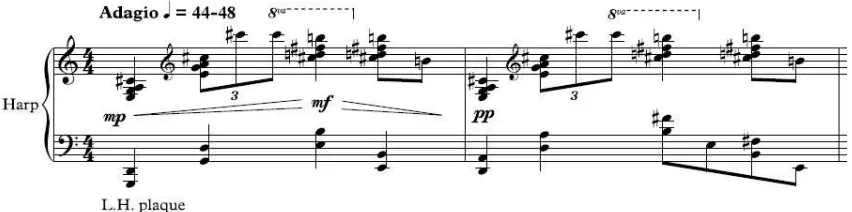
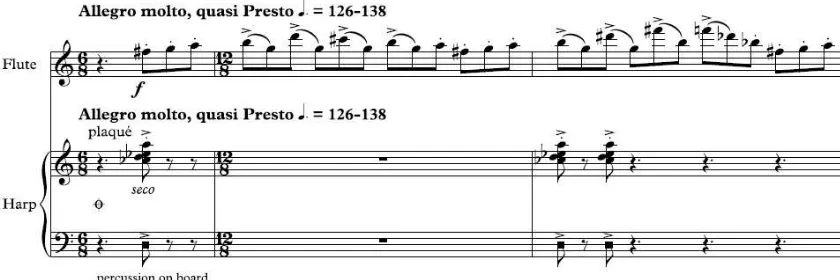
FIG. 3: The opening of Section B, harp solo, bars 88 & 89 (85)
FIG. 4: Three melodies played by the flute in subsection b2, bars 100-103 (85-86)
FIG. 5: The melodic theme presented by the flute in bar 109 (87)
FIG. 6: The beginning of the dance-like subsection in bar 170 (89)
FIG. 7: Detail showing the harmonic process in bar 4 (93)
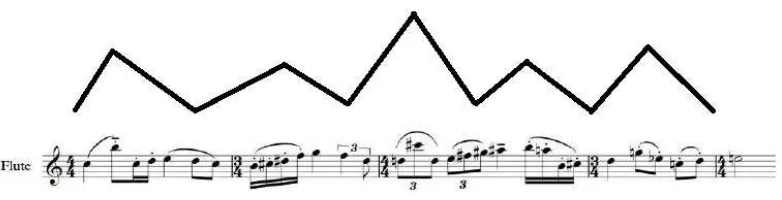
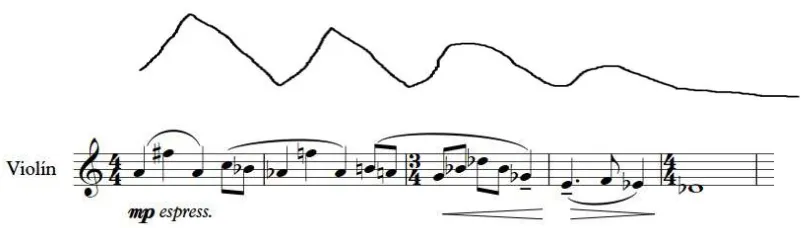
FIG. 8: The melodic theme presented by the violin in bar 33 plus its imaginary
shape (94)
FIG. 9: The recapitulation of the main melodic theme, bars 93-94 (95)
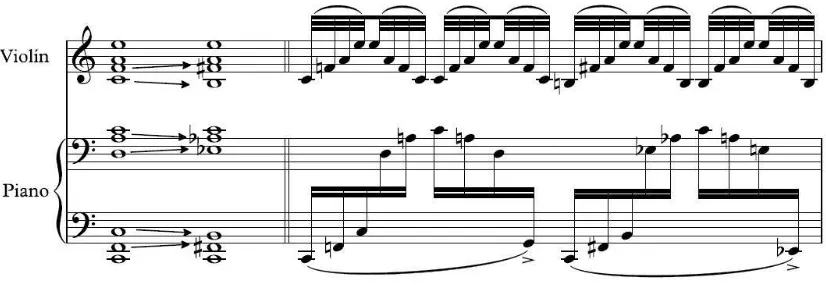
FIG. 10: Transformed materials in the Coda, bars 121-124 (98)
FIG. 11: Don Belianís, verse 1 (above) and verses 10-11 (below) (102)
FIG. 12: The accompaniment from the clarinet and piano, bars 27-30 (103)
FIG. 13: Solisdán, verses 1 & 3 (104-105)
FIG. 14: Flutes 1 & 2, bars 10-11 (108)
FIG. 15: The undulated melody in the cor anglais (bars 57-59) and the piercing
melody in the oboes (bars 76-78) (109)
FIG. 16: The theme exposed by the second violins in bars 47-48, appoggiaturas
circled (110)
FIG. 17: The transformation of the melodic theme, bars 47-48 & 118-119 (111)
FIG. 18: The melody in the first violin (bars 151-160) and its relationship with
6
FIG. 19: The reiterative melody exposed by the oboes in bars 215-216 (114)
7
INDEX OF TABLES
Chapter II:
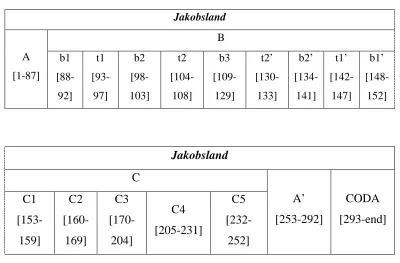
Table 1: Structure of Jakobsland (81)
Table 2: Structure of Natureza e arquitectura (92)
8
Acknowledgments
9
Declaration
11
This thesis is dedicated to my parents,
my brothers Javier and Luis,
13
Abstract
This thesis presents a body of eight original musical compositions inspired by the phenomenology of mental imagery, together with a written commentary which describes in depth the compositional process undertaken whilst composing them, defines the concept ‘mental imagery’ as applied to this process, and sets the concept within a broad theoretical framework which addresses cognitive sciences, the philosophy of meaning and perception, and music historiography. The study codifies a new and original methodology for music composition based on the author’s personal account of mental imagery and its influence or permeation into his practice as a composer.
The written commentary is structured in two chapters. Chapter One begins with a detailed description of the author’s notion of mental imagery, which arose as a natural outcome of his subjective compositional practice. Mental imagery is then compared with ideas, concepts and arguments that address extrinsic elements in music and cross-modal categories in perception. The concept of ‘mental imagery’ proposed by the author, and therefore the whole compositional process described, is discussed through the lens of the ecological theory of perception and the virtual representation of music, which places mental imagery squarely within contemporary accounts in the field of cognitive sciences and the philosophy of perception. A discussion on the topic of musical meaning follows, addressing arguments that define meaning as a multiform, interdisciplinary concept. Chapter One ends with an insight into music analysis research from the second half of the 20th century, leading to the statement that mental imagery might have been neglected by some music theorists in the recent past. It is argued that this is due to a prevailing epistemological framework that gave priority to formal and technical features of musical material. Chapter Two of this written commentary undertakes a deep and detailed analysis of four of the compositions presented. This analysis gives mental imagery a central role in the descriptive discourse, being sensitive to all the arguments discussed in Chapter One. The analytical style resonates with other accounts such as ‘performative analysis’ by Nicholas Cook (2002) and ‘analog mode of discourse’ by John Rahn (1979), and borrows key terms from ‘vitality affects’ by Daniel Stern (1985).
15
Introduction
Some years ago, my dual activity as composer and pianist encountered a happy coincidence. At the same time as studying Beethoven’s piano sonata in C Major op.53 I was composing my very first piano sonata (later named Piano Sonata no.1
“Formas e simetrías”, and included in this thesis). While composing my work
and performing Beethoven’s sonata, I noticed that my perceptual experiences regarding both works included extra-musical elements such as: spatial recreations; imagined body gestures and movements; visual representations of structure or feelings of light intensity and colour. Stimulated by this body of extra-musical sensory perceptions, I decided to deepen my research into their characteristics, a process of self-analysis sometimes referred to as ‘auto-phenomenology’1, which led to the set-up of a project: the composition of a set of pieces inspired and driven by the perceptual experiences mentioned above. This work would codify some new methodologies for composition (based on these perceptual elements) that would arise from my personal processing of these sensorial perceptions as catalysers of musical outputs. These methods, bound into a proposal for a new, original approach to music composition, are described in Chapter Two of this study. During the five-year period between the composition of Piano Sonata no.1 and Far (the last piece presented), my musical language experienced an evolution from a formalist, methodical approach (mostly in structure and harmony) to a more heuristic approach. The study of mental imagery helped me to develop my palette of compositional resources, therefore being able to undertake a much freer and improvisational attitude towards my compositional practice, letting myself be
1 Eduard Marbach uses the term ‘auto-phenomenological reflection’ in order to refer to a process
16
permeated by mental imagery and being confident that the musical outcomes aroused from this permeation would be aesthetically interesting.
As a starting point, clarification is needed of the quality and nature of the perceptual experiences that motivated and made this study move forward, a type of quality that we capture in the word ‘phenomenology’2. I feel it necessary to state from the outset that language and linguistic expression is both an aid and an unavoidable barrier to the full explanation of these perceptions, as some of their qualities are non-conceptual (such as emotions, feelings, sensations, and so forth). The term ‘mental imagery’ is used in order to refer to all the extra-musical perceptions described in the first paragraph. Further, imagery is in fact a sum of
images; hence the term image is a key concept in this thesis and lies at the heart of
most of the arguments and descriptions that will follow. But it is vital at the outset to understand that an image, as understood here, is not restricted to visual elements alone (Damasio 1999). Moreover, images, as defined here, are not static but dynamic, and do not denote an existing physical object but are phenomena that are solely mentally produced. An image features a set of multi-sensorial elements (visual, kinaesthetic, tactile, olfactory, aural, proprioceptive, etc.) and suffused with emotions by an imagined spectator. The spectator is imagined to be placed into the image and can be considered as a self-projection of the composer (in this case, myself). Each image interpenetrates the previous one and the next, thereby creating a perceptual scenic experience subjectively in motion. In simple terms, mental imagery encompasses a set of imaginary situations into which an individual would perceive images, movement, sounds (among other stimuli) and would also feel emotions and different affective states as a result of this stimulus.
2
17
As can be drawn from the previous description, mental imagery encompasses stimuli pertaining to different sensory modalities, among them being visual, motoric, tactile and emotional sensations. This cross-modal nature of the concept is resonant with the idea of ‘vitality affects’ proposed by Daniel Stern (1985). With this concept, Stern refers to dynamic qualities shared by events pertaining to different sensory modalities, therefore providing a qualitative connection between them. An example of this may be the description of a sound mass as swelling and the description of a shade of colour as swelling. Both events happen in two different sensory modalities (aural and visual) but share the same dynamic quality (to swell). Further, the dynamic qualities of mental imagery affecting my compositions resonate with a descriptive method proposed by the electroacoustic composer Roger Smalley, named ‘spectromorphology’, intended to serve as a tool to describe electroacoustic compositions. Spectromorphology is a descriptive tool based solely on aural perception, and refers to the temporal dynamics and the ideational motion of sounds. Broadly speaking, spectromorphology addresses mental imagery when describing music which is already composed, while in my compositional process I use mental imagery before and during the composition and hence influencing its outcome.
18
research conducted into the field of cognitive science is merely to provide a theoretical background for the claim that mental imagery really does hold this significant role. Theories of music affordance which account for the possibility of music inducing/catalysing the listener to perceive mental imagery are brought to the fore (Reybrouck 2005; López Cano 2006; Clarke 2005, et al). These theories are subsequently rooted in the ‘Ecological Theory of Perception’ formulated by James Gibson (Gibson 1966 and 1979).
19
Charles Nussbaum’s theories regarding musical ‘representation’ (Nussbaum 2007). Musical representation would seem to cover the step between physiological perception (reception of stimuli) and making sense of these stimuli (the subsequent creation of musical meaning). Nussbaum, using arguments derived from the work of Roger Shepard (1981), considers that this precise step is missing in Gibson’s ecological theories, and consequently proposes
representation as the missing step that catalyses the formation of musical
meaning. Representation would therefore be a musical affordance arising between reception of stimuli and the creation of meaning. The interrogation of existing literature in the fields of theory of perception, philosophy of meaning and philosophy of perception refined my own account of mental imagery, bringing more elements into it, such as a more detailed account of virtual motion (which in the end refined and shaped my proposed metaphorical connection between virtual motion and musical rhythm).
In my own experience, as a composer who makes conscious use of imagery during the compositional process, imagery has played a central role in the way I explain my musical works to others. Moreover, in the specific situation of explaining my music to performers during a rehearsal, most of the descriptions delivered appeared to be metaphorical connections between the music and imaginary scenarios, movements and feelings. Therefore, it was felt necessary to add programme notes in order to inform the performers, especially in those cases where I am not able to be present during rehearsal.
20
this research: (1) there was a general tendency during the mid-20th century onwards to analyse music on the basis of predominantly formal aspects (such as harmonic/pitch organisation, structure, use of rhythm/meter, etc.) and (2), from the late 20th century onwards there was a gradual tendency towards a more varied account of musical elements in analysis, which includes non-formal aspects (such as metaphors referring to imaginary movement, colour or landscape).
21
candidate for progress is characterised by an overreliance on measurable and quantifiable elements of the musical material as the only elements that can be analysed and discussed. Moreover, he affirms that this epistemology has led to the idea that those composers who derive musical innovation from formal and intra-musical aspects were somehow more advanced than those whose innovations relied on non-formalist and non-quantifiable aspects of musical technique.
Carl Dahlhaus has proposed a dialectical dichotomy3 between the ‘documental’ side of music and the (opposed) ‘evental’ nature of it (Dahlhaus 1983). He claims that both the musical score, which he calls the ‘fixed letter’, and the aesthetic presence of a musical work, are two permeable sides of the musical process that are interpenetrating, and are therefore sharing a dialectical relationship. Dahlhaus has also claimed that a view which prioritises only technical process would be an incomplete account of the musical progression, which succumbs to the aforementioned ‘techno-essentialist’ epistemology.
Finally, I suggest that all of the previous considerations may have strong implications for the practice of music analysis. These implications of course therefore affect my own analytical methodologies, which will be the subject matter of the second chapter of this thesis. Other authors in the recent past have already addressed alternative modes of analytical discourse that depart from the purely formalist hegemony. John Rahn, for instance, has argued for an ‘analog’ mode of discourse, as opposed to its ‘digital’ opposite, arguing that the latter can only consider intra-musical relationships, while the former would also account for other forms of meaning, and which may be extrapolated to other works (Rahn
3
22
1979). Both modes of discourse are the basis for his differentiation between ‘theory of experience’ and a ‘theory of piece’.
Rahn describes his ‘theory of experience’ as a description of a listener’s perception of the musical work, a kind of diary of the musical journey, which would be much more personal in flavour than a ‘theory of piece’, the latter being an objective account of its technical resources. Nicholas Cook has also proposed a more ‘performative’ mode of musical analysis (Cook 2002), a form of discourse that might be similar to Rahn’s ‘theory of experience’. Cook claims that an analysis which undertakes a metaphorical construction of the musical experience, as a sort of ‘narrative fiction’, would reveal aspects of the musical process as an ‘event’, which is read by performers or listeners. Further, Cook argues that this ‘performative’ analysis would have more arguable value, due to its greater ability to affect the musical process. As has been pointed out before, arguments by Dahlhaus and Cook, together with theories of meaning (from Johnson, et al) and perception (Gibson, et al), affect my own analytical discourse, and hence an analysis arises which is reminiscent of both Cook’s ‘performative analysis’ and Rahn’s ‘theory of experience’. Moreover, vitality affects, as described by Daniel Stern and coined in terms such as ‘frantic’, ‘angular’ or ‘bursting’, are widely used in the analysis of my compositions, a procedure that enhances the cross-modal nature of the feelings and sensations present both in mental imagery and my own music.
23
are strictly my own, and may not be identical or even similar for other listeners or performers of my music. Due to the limit of space, only four compositions are analysed and discussed. The choice has been made according to the chronological date of composition and instrumentation, looking for variety in all cases. Hence, the four compositions analysed are: Natureza e arquitectura (2012), Jakobsland (2013), Encuentro caballeresco (2015) and Far (2014-2015). The style of analysis used is reminiscent to Cook’s ‘performative analysis’ and Rahn’s ‘analog mode of discourse’. It addresses the metaphoric connections between mental imagery and music aroused during the compositional process and develops an explanation of the works based on perceptual experience. Extra-musical categories derived from Stern’s ‘vitality affects’ (e.g. ‘stumbling’ or ‘grounded’) are introduced in the text referring to dynamic qualities shared by both imagery and music. Mental imagery affecting my compositions is multisensorial and features dynamic and motoric sensations that, according to Stern, may be shared between different sensory modalities. The theory of vitality affects by Stern supports the use of this type of terminology throughout the analysis, and moreover the aforementioned terminology stresses the cross-modal, shared qualities between mental imagery and my compositions, providing a bridge from this study to the field of rehearsal pragmatics.
24
artistic inspiration or processes. The ideas and points exposed through this thesis may induce fresh, innovative points of view for performers, who might find in the body of metaphorical connections described a broad set of innovative resources, based on mental imagery, ready to be used in order to enrich their interpretation of scores.'Metaphorical connections' means a series of linguistic figures that link the music with concepts or descriptions which, by their very nature, cannot be possibly linked in a literal way4. A claim is made for the inclusion of mental imagery in the process of music analysis, arguing that imagery might have been neglected in the second half of 20th century by music historians. A proposal is sketched for a possible revisionist account of the relevant analytical texts based on the notion of mental imagery as a fundamental part of the musical process, a proposal that is rooted in the substantial arguments drawn from theory (Gibson, Reybrouck, Nussbaum, Johnson, et al). This study aims to describe in detail my compositional process, inspired by mental imagery, and disseminate this compositional model to other musicians (composers, performers, theorists, etc.). By reading this thesis, music practitioners in different musical disciplines may find new, unexplored and alternative points of view that could lead to a richer account of their own practice.
4
25
I. Mental imagery in my compositional process:
Meaning, perception and analysis
May we not say that the basic ingredient of music is not so much sound as movement?
Roger Sessions
1.1 MENTAL IMAGERY AND MUSICAL MEANING
The central idea that catalysed this research study and its practical outcomes emerged when working on the composition of the first movement of my Piano
Sonata no.1 “Formas e simetrías”, at the beginning of 2010 (for the score of this
26
The creative event described here, which I noticed while composing the first movement of Piano Sonata no.1 “Formas e simetrías” and studying both Beethoven’s and Haydn’s piano sonatas, prompted me to reflect deeply as a composer, leading to a more detailed and sophisticated analysis of how mental imagery was affecting my compositional process. From this reflective and analytical process, I discovered that many diverse imaginary stimuli were clearly influencing the initial planning and further musical unfolding of the first movement of Piano Sonata no.1. These stimuli pertained to various different sensory modalities, including the visual, tactile, proprioceptive, kinaesthetic and aural, therefore building a set of multisensorial imaginary stimuli. In addition, I noticed that emotional states and moods were an inherent quality pertaining to the set of multisensorial stimuli described above. Imagined emotions such as joy or nostalgia were playing a fundamental role, providing additional qualities to the imaginary stimuli. The inclusion of moods and emotions into the process opened a new scenario: since moods and emotions need a living being in order to exist, I came to the conclusion that an imaginary individual was being mentally projected by me into the scene, someone who would receive all the imaginary multisensorial stimuli described before, as well as experience all the emotions and moods imagined. Further, this imaginary individual may be considered a projection of me in the virtual scenario, a framework which resembles the Musical Landscape Metaphor described by Mark Johnson (2007) and discussed in subchapter 2.1.1.1 (page 71)5.
5 However, the Musical Landscape Metaphor would be seen here from the perspective of the
27
1.1.1 A definition of mental imagery affecting my compositions
Building upon the explanations and considerations given in the previous paragraph, the set of imaginary stimuli, moods and emotions is a complex, multisensorial and multidisciplinary entity. For simplicity’s sake, I will encompass all these imaginary feelings into one concept: mental imagery. Mental imagery affecting my compositional process is therefore a set of ‘images’ which are mentally produced. Each image is a dynamic aggregate of sensory-motor perceptions that include visual, aural, tactile, proprioceptive and kinaesthetic feelings (among other things). Each image is also concerned with the dynamic qualities of the moods of an imaginary individual while he/she perceives the aforementioned aggregate of sensory-motor perceptions. Each image, which is dynamic rather than static, interpenetrates the previous one and the next, thereby creating a perceptual scenic experience subjectively in motion6.
Mental imagery, as described before, has been consciously used during the compositional process of the eight works presented as the practical outcome of this PhD thesis. Before and during the creative process of each piece, I let myself be permeated with mental imagery, a mechanism of absorption and internalization that fell into the materialization of sonic entities influenced by it. As mentioned, mental imagery affected the compositional process before writing the first shape/note/sketch (it affected pre-compositional planning) and during the compositional process (it influenced details from the piece or even motivated changes in the initial planning). When approaching the composition of each of the
6
28
eight works presented, a sketch or plan was designed first. This sketch or plan stood as an initial proposal for the general shape of the piece, outlining its structure and direction. Mental imagery influenced this initial plan by mapping a succession of moods, emotions and sets of stimuli pertaining to different sensory modalities. Thus, each section from the initial plan was furnished from the outset with a framework of emotions/moods/stimuli developed from mental imagery. During the compositional process, mental imagery also influenced the creative outcome by affecting more detailed decisions. Especially important were imagined kinaesthetic stimuli, which affected rhythmic and metric behaviours in the pieces, and also visual stimuli such as brightness or darkness, which affected textures and harmonies.
1.1.2 The evolution of my compositional process in relation to mental imagery
It is necessary to clarify that the influence of mental imagery in the compositional process was not systematised at any stage of this research; hence there has never been a fixed relationship between qualities from mental imagery and musical features. In fact, the relationship came more through a heuristic approach, letting myself be permeated by the qualities of mental imagery and then conveying a musical outcome by ‘finding’ the musical decisions that most satisfied my demands at each stage. However, a certain degree of rigidity, especially in regard to intervallic/harmonic choices and planned musical form, was present when composing some of the earlier works presented. In pieces like Piano Sonata no.1
“Formas e simetrías” and Sendeiros imaxinarios (especially its first movement,
Claroscuro) a palette of intervals and chords were metaphorically associated with
29
perfect fourth, and hence chords built by superposition of any of these intervals, were metaphorically linked with brightness. On the other hand, intervals such as major and minor thirds were connected with imaginary darkness, as well as chords obtained by superposition of any of these thirds. Needless to say that these relationships were far more complex and subtle, but a deep and detailed analysis of them would require an excessively long subchapter that would fall outside the aim of this study. The slight rigidity propitiated by the associations described above was abandoned during the composition of Jakobsland (see Volume II, page 69), when a much more intuitive and heuristic approach to harmony was taken.
1.1.3 In search of a theoretical background
30
Following the conclusions drawn from the aforementioned research in the fields of the philosophy of meaning, cognitive science, the philosophy of perception and psychology of perception, a second research question arose: has the phenomenology of mental imagery been slightly neglected by music theorists and historians in the recent past? This research question led to further study in the field of music historiography and music analysis, and also led to an interrogation of texts from the second half of the 20th century about music history and analysis. All the theories previously referred to, which address different fields of knowledge, are raised and discussed in this chapter, providing background and support for my original and personal compositional process which is influenced by mental imagery. The following subchapter will discuss the ecological theory of perception, how it can be applied to a musical context, and how mental imagery might be addressed as part of the process of music perception in light of this theory. However, first I will acknowledge the similarities found between the process of involving mental imagery described above and a descriptive method proposed by the electroacoustic composer Roger Smalley.
1.2 OTHER ACCOUNTS OF VIRTUAL DYNAMICS
1.2.1 Spectromorphology
31
theory or method, but a descriptive tool based on aural perception” (Smalley 1997, p.107). The term describes the listening experience of electronic music, and refers to the interaction between sound spectra and their temporal dynamics.
Smalley makes a clear separation between intrinsic and extrinsic features of music, the former being sound events themselves, together with related formal processes and relations in a work, and the latter being any associations with extra-musical content that a listener may experience when listening. In the following quote, Smalley (1997, p.110) makes a claim for the importance of these extrinsic features:
“…a piece of music is not a closed, autonomous artefact: it does not refer only to itself but relies on relating to a range of experiences outside the context of the work. Music is a cultural construct, and an extrinsic foundation in culture is necessary so that the intrinsic can have meaning. The intrinsic and extrinsic are interactive.”
32
exclusively or even primarily sonic phenomena: sonic motion can suggest real or imagined motions of shapes in free space” (Smalley 1997, p.110).
When comparing spectromorphology with my concept of mental imagery, several connections can be found. Both concepts refer to extrinsic elements of music that show a multisensorial nature. Further, Smalley refers explicitly to concepts such as motion, shape, space, colour or growth: these are visual and motoric ideas that are also featured in the mental imagery that affects my compositions. The most important difference between Smalley’s spectromorphology and my concept of mental imagery lies in the direction of the process: Smalley proposes a descriptive tool in which connections with imagined visual/motoric perceptions arise after the aural perception of music. Mental imagery affecting my work arises before the music, permeating myself as a composer and hence influencing the outcome of the creative process.
The dynamic qualities used by Smalley in order to describe the ‘extrinsic’ features of electroacoustic music share similarities with the dynamic qualities acknowledged by the psychiatrist Daniel Stern when describing perceptual mechanisms in infants. These dynamic qualities, named ‘vitality affects’, are described and put in relation to mental imagery in what follows.
1.2.2 Vitality affects
33
named ‘vitality affects’, which he defines as “qualities [of experience] that do not fit into our existing lexicon or taxonomy of affects [but that] are better captured by dynamic, kinetic terms such as ‘surging’, ‘fading away’, ‘fleeting’, ‘explosive’, ‘crescendo’, ‘decrescendo’, ‘bursting’, ‘drawn out’, and so on” (Stern 1985, p.54). With vitality affects, Stern refers to dynamic qualities that may apply to phenomena occurring in different sensory modalities but however share a similar dynamic nature. An example of this could be the ‘attenuating’ quality of sound, light or motion, which is felt in different sensorial channels but shares the same dynamic contour. Stern mentions that vitality affects refer to qualities that don´t fit into our existing lexicon of affects, an argument that may reveal that language is a barrier to the full explanation of certain qualities pertaining to mental imagery. This point is of crucial importance for the subject matter of Chapter Two, in which some of my compositions will be analysed and discussed in depth. Terms inspired by Stern’s vitality affects, such as ‘angularity’, ‘bustling’ or ‘frantic’ will be used in order to describe qualities in the music that are connected with qualities from mental imagery. As an example, the part of the baritone in Solisdán’s sonnet from Encuentro caballeresco (see Volume II, page 146) is described using the term ‘rush of sound’, a term which is described by Stern as a ‘vitality affect’.
34
the connections between mental imagery and music. So far we have addressed the concept of ‘vitality affects’ and how Mark Johnson brings the concept into his account of musical meaning. The following section is a step forward on this topic, where the ‘Embodied Theory of Meaning’ by Mark Johnson will be discussed.
1.2.3 The Embodied Theory of Meaning
The philosopher Mark Johnson (2007, p.9) states that, “meaning traffics in patterns, images, qualities, feelings, and eventually concepts and propositions.” This assertion appears in the context of his proposal for an ‘embodied’ theory of meaning, in which meaning arises from the interaction of the individual’s body with the environment and with the association of this interaction with past, present and possible future experiences7. As Johnson states, conceptual content is just one part of meaning, which is not limited by conceptual/propositional content8. Thus, to transpose this back into a musical context, even when a composer focuses on a particular form of meaning, the nature of the message that the listener will receive may be constructed by a sum of elements of quite a different nature, among them being the mental imagery we have discussed.
Following arguments by Johnson and Nöe, meaning would naturally arise from perceptual experiences rooted in the past and from our expectation regarding future perceptual experiences. In a related vein, Christopher Small (1998) refers to the relational quality of musical meaning when defining his concept of ‘musicking’, arguing that musical meaning derives from the relationships between
7
The importance of experience in perception is also accounted by Alva Nöe, who states that the ability of perception comes partly from the accumulation of experiences that one appreciates as relevant (Nöe 2013).
8 Nöe refers to the non-conceptual side of perceptual experience, claiming that perception is not
35
all the forces involved in the act of creating music (composer, performer, listener, score, culture, society, etc.)9.
Theories of meaning by Johnson and Nöe, if applied to musical meaning, might point to the fact that music moves listeners through a set of multisensorial, interdisciplinary stimuli, rooted in our experience and our capacities as individuals, which reach our perception through a variety of channels (sensory apparatus, imagery, memories, etc.). Since composers, performers and listeners share these same typologies of perception, it might be argued that this set of multisensorial stimuli happen for each, either as a conscious or unconscious process when perceiving music. For example, the opening of Claroscuro (see Volume II, page 40) was inspired by a feeling of expectant stillness together with a sense of progressively increasing brightness. A listener or performer, when listening/playing this piece, would therefore have another multisensorial experience which may be completely different from the one sensed by me when composing.
The conscious use of mental imagery when composing Piano Sonata no.1
“Formas e simetrías” prompted an interest in the field of cognitive sciences. The
ecological theory of perception, discussed in the following subchapter, will be addressed as a theoretical framework that explains what the role of mental imagery is in the whole process of how we perceive music.
9
36
1.3 MENTAL IMAGERY IN MUSIC PERCEPTION
1.3.1 The ecological theory of perception
Formulated originally by James Gibson (Gibson 1966; 1979), the theory differs from cognitivist’s theories in the symbiotic relationship proposed between environment and individual. Gibson claims that the environment is not a passive entity that contains an amount of chaotically organised stimuli, but a dynamic and changeable body of structured information that individuals perceive by adapting their sensorial system to the environmental characteristics (a process referred as ‘tuning’ by Gibson)10.
Gibson coined a new term to name a central concept in the ecological theory of perception, and this concept is ‘affordance’ (Gibson 1966). Affordances refer to “what things furnish, for good or ill. What they afford the observer, after all, depends on their properties” (Gibson 1966, p.285). With the word affordance we isolate what perceived realities offer to the one who perceives them, what
possibilities they give to an individual. As an example, for a human being the
perception of a tree can afford protection from the rain, or act as a structure for climbing, or for eating, in the case of those trees that bear fruit. But for a bird, the perception of the same tree also affords a living environment. What makes the concept of ‘affordance’ a key aspect of the ecological theory of perception is the fact that it encapsulates the symbiotic relationship between environment and individual. Gibson (1979, p.122) states this clearly: affordances are “something that refers to both the environment and the animal in a way that no existing term
10 Eric Clarke argues that the tuning of the individual with the environment is not, however, some
37
does. It implies the complementarity of the animal and the environment”. After all, affordances depend on both the nature of reality and the nature of the perceiver11.
1.3.1.1 The ecological theory of perception applied to music
There is a large body of work done in the field of music philosophy about the question of how music conveys meaning and what the nature of musical meaning is12. London refers to this, and points out three ways in which music can be meaningful: it can have representational, linguistic and expressive meaning (London 2000). The question of meaning attribution is made all the more curious due to the fact that, at a basic ontological level, what we call ‘music’ is nothing more than a series of vibrations or non-vibrations within the medium of air that our auditory system perceives and our brain processes. But this belittles the important issue, which is what really moves people when listening, or how we construct such rich meanings when listening to music. The ecological theory of perception can provide a path for understanding how listeners attribute meaning from something as simple as sound and silence.
In a musical context, the perception of sound may induce listeners into the performance of a varied number of actions, which do not have to be exclusively physical. These actions can vary from body movement (dance, foot-tapping, etc.) to the formation of mental imagery or just to the fact of focussing more attention
11 This argument is also defended by Clarke (2005, p.44): “the ecological position rests on the
premise that perceptual specification is a reciprocal relationship between the invariants of the environment and the particular capacities of the perceiver”.
12
38
on a particular instrument or timbre13. Since these actions are the product of encountering sonic information from the environment and also depend on the abilities and capacities of the listener, they are ‘musical affordances’, a concept discussed in the following section.
1.3.2 Musical affordances
In order to bring the concept of ‘affordance’ into a musical context, it is important to clarify the exact nature of it. Rubén López Cano (2006, p.3), for example, states that affordances “are the performances offered by the objects, the stock of actions we are able to do within the environment. By means of the affordances meaningful relationships arise from the environment.” As López Cano points out, affordances show the relationship between perceiver and perceptual information, but in the case of music they work as a starting point to construct meaning from that relationship. The action or actions that any music induces in a listener, which are necessarily its musical affordances, are the first step for a listener in an ongoing process of meaning attribution that begins with the ontological reality of music (the physical vibrations of sound). Therefore, affordances in music occupy a central role in the process of creation of musical meaning, which at the end is what produces affects and emotional states in listeners.
Clarke, as well as the musicologist Luke Windsor, has adopted an approach that considers musical affordance as a huge, almost infinite, concept. In Clarke’s own words: “music affords dancing, worship, co-ordinated working, persuasion, emotional catharsis, marching, foot-tapping, and a myriad other activities of a
13 Clarke (2005) argues that sometimes these possible actions induced by music can be interrupted
39
perfectly tangible kind” (Clarke 2005, p.38)14. On the contrary, Reybrouck has adopted a much more restricted view of musical affordances, focusing more on the role of the body in musical-cognition processes. He lists just five possible affordances of music (Reybrouck 2005):
1. The sound producing actions proper15; 2. The effects of these actions;
3. The possibility of imagining the sonorous unfolding as a kind of movement through time;
4. The mental simulation of this movement in terms of bodily-based image schemata;
5. The movements which can be possibly induced by the sounds.
I would like to place more attention on the third and fourth affordances. Reybrouck considers the possibility of imagining the flow of sound as a movement through time in terms of ‘bodily-based image schemata’. And this particular affordance leads us directly into the field of mental musical imagery, our central topic.
Following the same line of argument as Reybrouck, López Cano proposes a typology of musical affordances that is divided into two large categories: ‘Manifest motor activity’ affordances, and ‘Covered motor activity’ affordances. For the former, López Cano (2006, p.5) proposes the definition “all visible external movements that each segment of music allows us to execute along with it
14 Clarke includes interpretation and musical criticism as examples of musical affordances, as
interpretation, interpretative writing and speaking can also be considered forms of action (Clarke 2005, p.204).
15 This might be arguable. From the point of view of musical performance, it is argued that the
40
while we listen”. The latter arise when “music permits us to exercise non-visible corporal activities” (López Cano 2006, p.6). These affordances, as López Cano explains, can be divided into several subgroups depending on what exactly the individual imagines while listening to music. An important claim I want to make at this point is to suggest that both Reybrouck’s ‘mental simulation of movement’ and Cano’s ‘covered motor activity’ refer to very similar music affordances, which are in fact related to the importance of the formation of mental imagery in the process of music perception. Affordances of the music related to virtual movement are useful for describing potential meaningful interpretations of some sections of the compositions presented. For example, the folkloric dance from Section C of Jakobsland (see Volume II, page 88) may induce listeners to form a mental simulation of dance-like movements.
1.3.3 A missing step: The virtual representation
So far we have discussed how music is perceived by the listener from the perspective of the ecological theory of perception, and on this basis an explanation was given on the nature of what particular musical affordances are and how these affordances can be best understood. But there is still a step in between the perception of music and the nature of potential listener action (music affordance) that has not been covered yet. This step is core to understanding the question of how musical meaning might arise, which is a question of research that has been much discussed in the literature16. In order to cover this missing stage between the perception of auditory input and a listener’s action I will focus my efforts in the subsequent section on explaining how music works as a
16
41
representational art, or more precisely how the listener produces a virtual internal representation of music in his/her mind and how this leads to afforded actions17.
Roger Shepard explains how he feels there is something missing in Gibson’s theory, specifically in relation to visual perception. In his words: “To say that there is sufficient information in the proximal stimulus and even to point to some of the higher-order variables in which the information resides is not to describe the mechanism that extracts the information and uses it to control appropriate behaviour or additional cognitive processing” (Shepard 1981, p.285). It seems that Shepard is missing the step, discussed previously, between process(es) of perception and consequent process(es) of action.
In order to fill the gap between perception and action, Charles Nussbaum (2007) introduces a new concept into the process, which has a symbolic nature: the ‘virtual representation’. Symbols, and among them surrogates17, are informational vehicles which have the capacity to reduce uncertainty, but they are also much more than that. They are more complex than signals18 and require sophisticated modes of perception in order to extract the information they contain. Symbols therefore ‘represent’ the structure of perceived reality. Bringing this back once again into the field of music, a virtual representation of a piece of music would be
17 Gibson rejected the idea that we make virtual internal representations of the environment when
perceiving it. However, he did take into account the possibility of the existence of external representations (virtual, not real) of this same reality (Gibson 1979). He named these external representations ‘surrogates’, virtual associations whose structural configuration refers directly to the structure of the environment and helps the perceiver to reach a deeper understanding of this reality and its potential meanings. Gibson considered absolute music as a surrogate, which is revealing in itself: it implies that although Gibson clearly rejected the notion of internal representations and hesitated about the existence of musical meaning in absolute music, he did consider the existence of structural information in the music of being capable of being encoded in a virtual representation.
18 A signal is a source of information about an event or environment that does not contain
42
thus a symbol, as it has enough complexity to carry information about the structure of the musical material.
1.3.3.1 The virtual representation of music
In line with the previous arguments of Nussbaum, I might venture to propose that a virtual representation (a three-dimensional mapping of the structure of music) would be created in the listener’s mind from the stimuli (sonic vibrations) that are perceived through his/her sensorial system. The virtual representation would work as the additional step between perception and action, missed by Shepard (1981)19.
Note that this does not imply that Gibson’s ecological theory of perception is rendered invalid; moreover, it works as a further explanation of how an individual processes information from an already structured environment. Hence, considering the arguments maintained by Gibson, Shepard and Nussbaum, the scenario of an individual receiving sonorous stimuli and then producing a virtual representation of the sonorous unfolding that would serve as a vehicle of structural information and contribute to the processing of meaning might be accepted.
After matching the theories of virtual representation with the ecological theory of perception by placing representations in between the perception and processing of structural information, it is perhaps worthwhile and useful to go a bit further and discuss what kind of sensorial information the representation supplies to the perceiver. If we refer to the perception of music, a listener creates a virtual
19 Shepard argues that, in the case of rich and unambiguous perceptual events Gibson’s theories
43
representation of it in his/her brain that supplies structural information in the form of temporal, spatial and motoric perceptions20.
Lerdahl and Jackendoff’s ‘generative theory’ of music (Lerdahl & Jackendoff 1985) refers to the flow of movement in sonic material. Their theory can be compared to generative linguistic theory that divides a sentence into several smaller entities organised in a tree-form structure (syntaxes). Following this methodology, for Lerdahl and Jackendoff the musical surface can be subdivided into smaller structures that work as part of a whole unit in a similar tree-form hierarchy. They proposed, as both Nussbaum and Shepard have, that the listener receives the structural information that is contained in the musical surface by accessing internal representations. In parallel, Nussbaum focuses on the comparison between generative linguistics and generative music structures, particularly on the parallel relationship that exists between the time-span structure of music and the intonation pattern of language (prosody). Following this, Nussbaum argues that speech patterns are closely related to motoric patterns that involve gestures of the whole body, and finally links this argument with the generative theory of music by Lerdahl and Jackendoff:
“Prosodic speech patterns, it is clear, are closely allied with gesture, behavior patterns that involve principally the hands but also the whole body. As a matter of fact, the trees that Lerdahl and Jackendoff use to represent both the time-span and prolongation reductions are (…) organised in the manner of motor control hierarchies and task-level action plans.” (Nussbaum 2007, pp.40-41)
20 Spatial, temporal and motoric terms have ubiquitously been used in order to describe musical
44
Nussbaum’s reflections are of great importance for our purposes, because they suggest that it is possible to hypothesise a common origin for language and music. As the prosodic patterns of language are closely related to motoric gestures of the whole body, this would allow us to think that music is also rooted in inner sensations of a motoric nature. These arguments resonate with feelings of movement and kinaesthetic sensations that are part of mental imagery affecting my compositional process (as defined at the beginning of this chapter, page 24). Imaginary movements and imaginary kinaesthetic perceptions derived from corporeal movements influenced some of the compositional choices in the pieces presented with this study, especially in terms of rhythmic behaviour. A good example of this relationship can be seen at the beginning of Natureza e
arquitectura and subsection b3 from Section B of Jakobsland (see pages 87 and
77 for an analysis of both pieces).
The point made by Nussbaum provides a theoretical background for kinaesthetic perceptions furnishing mental imagery and in the end affecting my compositional process. Research in the field of neuroscience has also contributed to the study of these imaginary kinaesthetic perceptions via the theory of mirror neurons, which is discussed below.
1.3.3.2 Mirror neurons
45
the individual (Stamenov & Gallese 2002; Gallese 2008; Rizzolati & Sinigaglia 2008; Churchland 2011). Nussbaum and Clarke have utilised these new discoveries in the field of neurology in order to complete their theories regarding motoric perceptions that are obtained from virtual representations of the environment. The idea of mirror neurons gives us a solid neurological background to the theory of motoric perceptions obtained from the virtual representations of music.
1.3.4 Motor imagery
Recall that the ecological theory of perception led us directly to the concept of ‘affordance’, and more precisely to the concept of ‘musical affordance’, which refers to any action whatsoever that music is able to induce in its listeners. The theories of virtual representation proposed by Nussbaum, Shepard and others work as a step in between perception and information processing: a listener perceives sonic events through the sensory systems and then produces a virtual representation of the music which supplies him/her with complex information. Therefore, the fact of creating a virtual representation of music is an action induced in the listener by the music, and is hence a musical affordance. I shall now provide a bit more detail on this subject, discussing musical representation through the lens of the theories of affordance proposed by Rubén López Cano and Mark Reybrouck that were discussed earlier.
46
space. The perception of musical events may induce in the listener a similar action of imagining his/her body projected into a kind of virtual reality. In this virtual space the projected body performs movements induced by music. López Cano (2006, p.7) states:
“Music is movement; acceleration, retention, precipitation, statics, ascending and descending fragments, etc. On occasions music permits us to experience sensations of corporal movement that we do not effectuate in reality but that we project onto it. […] Through it we move in imaginary spaces. We move in ways that would be physically impossible.”
It is easy to see that the topic of mental imagery covers a huge field that includes every single imaginary situation, picture, space or sensorial event that we can derive from musical listening. But what is described above is a very particular kind of mental imagery called ‘motor imagery’, ‘motor simulation’ or ‘ideomotor simulation’.
47
what matters here is the mental simulation of a sonic unfolding through time. He argues for the existence of listening strategies based on a motor encoding of the temporal articulation of the sounds, thereby suggesting that listening involves motor preparation without actual motor output21. Music is often described as just sound and silence, or as vibrations of the air that reach our auditory system. But music also affords to be perceived as a movement through time, and not only from a metaphorical point of view but also from an actual embodied point of view. Nussbaum also addresses the existence of motor imagery in music perception, stating that it comes as a consequence of the development of virtual representations. Moreover, Nussbaum links motor imagery with the theory of mirror neurons, and uses both points to complete his whole theory of music perception:
“The internal representations employed in recovering the musical structure from the musical surface specify motor hierarchies and action plans, which, in turn, put the listener’s body into off-line motor states that specify virtual
movements through a virtual terrain or a scenario possessing certain
features” (Nussbaum 2007, p.47, italics added).
This might well account for the link between motor imagery and some of the features characterizing my definition of mental imagery affecting my compositional process, which is given at the beginning of the chapter (see page 24). During the composition of the works here presented, I let myself be permeated by mental imagery featuring a set of multisensorial stimuli and also moods and emotions felt by an imaginary spectator. This scenario is clearly
21 Reybrouck (2001, p.129) uses the term ‘enactive listening’ to describe a process of listening that
48
connected with the ‘corporal extension’ affordance proposed by López Cano, the idea of motor imagery taken from Mahoney and Avener (1977), mental simulation affordance proposed by Reybrouck and the motor hierarchies included in Nussbaum’s representational theories.
1.3.4.1 Motor imagery in relation to my compositional process
49
This study was motivated in the first place by a personal artistic circumstance: the conscious use of mental imagery before and during my compositional activity. These mental images have special characteristics, which are defined and discussed at the beginning of this chapter (page 24). The research carried out in the field of cognitive science and the philosophy of perception, derived from the artistic event described above, led to the location of several theories and arguments that appeared to resonate with the nature of mental imagery affecting my compositions. Furthermore, the theories of perception brought in during this chapter stand as general theories that apply to every human subject, since we all share similar mechanisms of perception and communication. Following this, I would venture to claim that mental imagery (not my own and subjective imagery, but mental imagery in general and for every individual) has always been used by composers, past and present. This claim leads us into the following subchapter, in which the presence of mental imagery in music history and analysis from the recent past will be analysed and discussed. However, before carrying out this excursion into historiography, I would like to point out some empirical evidence for the use of mental images or patterns in music perception, including those provided by experiments led by the music psychologist John Sloboda.
1.4 EMPIRICAL EVIDENCE: THE EXPERIMENTS OF JOHN SLOBODA
50
51
Steedman (1977). However, he prefers to see the conclusions as: “pointers to aspects of memory and representation for which, as yet, no well-developed theory exists” (Sloboda 2005, p.90) rather than empirical evidence to reinforce these existing theories.
Sloboda also relates musical ability in a general way with the capacity to create mental representations of the structure of music. He states that general musical ability cannot be measured by, for example, accuracy of performance, as either a composer or a music theorist, who may be poor performers, may well be very capable musicians in another sense. Therefore, when trying to find a common attribute that accomplished musicians of different fields share, he states that: “much contemporary research on music supports the notion that there is indeed such a common attribute, which is the ability to make sense of musical sequences, through the mental operations that are performed on sounds (whether real or imagined)” (Sloboda 2005, pp.301-302). Musical ability therefore correlates strongly with the capacity for producing virtual representations of the music and then deducing a logical and meaningful order/structure from this representation22. For Sloboda (2005, p.302), “This kind of finding suggests that people generally store something more abstract than the actual words or notes.” In the case of music, I would like to further suggest that this ‘more abstract’ element might well be the ability to form mental imagery.
22 This idea is supported by other empirical studies, such as those by Sloboda and Parker (1985)
52
1.5 MENTAL IMAGERY IN MUSIC HISTORY AND ANALYSIS
Both Nussbaum’s theories and Sloboda’s experiments on virtual representation, discussed in the previous section, suggest that mental imagery plays a key role in any act of music perception, from listening to composing. If musical ability is, as Sloboda claims, directly linked with the capacity for producing and processing virtual representations of the music, then it would be surprising if composers were not using any imagery or representational frameworks whilst creating. This idea leads to the hypothesis that imagery may have been unjustly neglected by music historians in terms of accounts in the literature of composers’ work. I will here focus only on the literature from the second half of the 20th century in investigating this claim.
1.5.1 An interrogation of existing literature
53
formalist aspects of the compositional process, as can be seen for example in the following fragment: “The presence of thematic statements and restatements, along with strong contrasts of mood and tempo, provide a basis for defining the structure as the diversification of a unity” (Whittall 1977, p.21). What follows this fragment (placed at the beginning of the analysis) is basically an explanation of Sibelius’ use of orchestration, form, tonality, and so forth. But surprisingly, Whittall’s methodology is substantially different in his 2003 text. In this book he undertakes a deep analysis of Sibelius’ Tapiola (1925), where he describes the work as an attempt of “interaction between those ‘impersonal, elemental natural processes’ and human awareness of them – even if that ‘awareness’ involves resistance as well as acceptance”(Whittall 2003, p.11). Later on, Whittall refers to bars 356 and 569 of Sibelius’ work as “embodying troubled humanity’s terror and despair in face of the god’s ‘self-disclosure’ – a sense of the human contemplating an intimidating form of otherness” (Whittall 2003, p.11). It is possible to notice from these fragments that Whittall made a much wider use of metaphoric images in order to describe Sibelius’ music in his later 2003 book.
54
keyboard works by Debussy, or the Six Little Piano Pieces by Schoenberg in which the atonal answer is admitted, Scriabin’s forcing of the emotion and lack of economy are evident” (Yates 1968, p.141). It might be argued that this statement is based on a partial approach to analysis as it takes into account not even the whole compositional process of Scriabin but a small part of it (his use of tonal harmony). And further, Scriabin is well known to have been innovative regarding the use of extra-musical material in order to prioritise compositional decisions, particularly the influence of colours as can be seen in his last symphony
Prometeus: The Poem of Fire23.
It is not only texts written in the 1960s-70s that are highly formalist in content. Elliott Antokoletz’s text from 1992 is, also, dominated by a formalist approach to music analysis. The chapter devoted to the music of Béla Bartók deals with the composer’s compositional process and its evolution during his life. Passages such as the following show how the author prioritises Bartók’s use of harmony: “Bartok’s freer tonality (largely achieved by sudden major-minor mixtures) and almost continuously dissonant texture (based on pervasive use of appoggiaturas and sevenths) may be primarily associated with the more daring harmonic fabric of Strauss’ works” (Antokoletz 1992, p.107). However, there is no mention of the highly innovative use of rhythm that Bartók developed, or the fact that this rhythmic language affords being imagined in terms of popular Hungarian dance. Further to this, the subchapter devoted to Leoš Janáček adopts a similar approach,
as Antokoletz places Janáček’s works squarely in terms of their harmonic
language, and its contemporaneous influences. The analysis of Benjamin Britten’s
War Requiem is also highly formalist in its approach, as the following fragment
23 This symphony includes an instrument named clavier à lumières, designed specifically for this