Phare Ex Post Evaluation. Phase 1, Multi-Beneficiary Programmes: Statistics
Statistics Multi-Beneficiary
Programmes
Programmes covered:
ZZ-9911
ZZ-0027
ZZ-0109
2002/000-602
2003/005-623
28 December 2006
The views expressed are those of the MWH Consortium and do not necessarily reflect those of the European Commission.
This report has been prepared as a result of an independent evaluation by the MWH Consortium contracted under the Phare programme.
EUROPEAN COMMISSION
TABLE OF CONTENTS
GLOSSARY OF ACRONYMS
PREFACE
EXECUTIVE SUMMARY
MAIN REPORT
1. INTRODUCTION ...1
1.1 Objectives of the Evaluation ...1
1.2 Background and Context...1
1.3 Evaluation Questions ...2
2. PERFORMANCE OF PHARE ASSISTANCE...4
2.1 The statistics MBPs were relevant and well-designed ...4
2.2 Some serious delays but generally efficiently managed ...6
2.3 Good statistical support to key EU macro-economic policies. ...8
2.4 Wider objectives largely achieved with high standards of statistical reporting ...10
2.5 Sustainability remains a problem...11
3. THEMATIC/ CROSS-CUTTING FINDINGS...14
3.1 Performance of NSOs significantly improved ...14
3.2 The administrative capacity of NSOs has been strengthened by Phare. ...15
3.3 The MBP approach was effective and essential...15
4. CONCLUSIONS AND LESSONS LEARNED ...17
4.1 Conclusions...17
4.2 Recommendations...18
4.3 Lessons Learned ...19
ANNEXES...20
Annex 1. Terms of Reference...21
Annex 2. Evaluation Questions, Criteria and Indicators ...26
Annex 3. Background to the Statistics MBPs ...28
Annex 4. Statistical Series and EU Policies ...30
Annex 5. Pilot Projects in 2002 and 2003 Statistics MBPs...31
Annex 6. Timelines of main activities and contractors ...32
Annex 7. Table of the contractors per project ...33
Annex 8. Interim Evaluation Report with details of action taken by Eurostat ...34
Annex 9. List of interviews ...37
GLOSSARY OF ACRONYMS
BR Business Register
CC Candidate Country
CDB Compliance Database
CMR Country Monitoring Report/ Comprehensive Monitoring Report DAS Data Availability Study
EC European Commission
ESA 95 European System of Accounts 95 ESS European Statistical System
Eurostat Statistical Office of the European Community
GA Global Assessment
GDP Gross Domestic Product
GNI Gross National Income
GVA Gross Value Added
HICP Harmonised Indices of Consumer Prices
M€ Million Euro
MBP Multi-Beneficiary Programme
MGSC Management Group for Statistical Co-operation
MS Member State(s)
NSO National Statistical Office
PGSC Policy Group for Statistical Co-operation PC ProdCom
PP Pilot Project
SBS Structural Business Statistics
SDDS Special Data Dissemination Standard SILC Statistics on Income and Living Conditions
STS Short-term statistics
T Tourism statistics
SIRE Système Européen d'Informations Infra-Régionales
TA Technical Assistance funded from the MBP Grants
ToR Terms of Reference
TU Technical Unit (Eurostat)
PREFACE
The purpose of this evaluation is to assess the contribution of the statistics multi-beneficiary programme to improvements in the performance of National Statistics Offices in the candidate countries relating to the production and dissemination of statistics in key areas (comparable with EU standards), and transfer of know-how and integration into the European Statistical System and its planning structures.
This Ex Post Evaluation Report has been prepared by the MWH Consortium between September and November 20051 and reflects the situation where four of the Phare statistics multi-beneficiary programmes under review have ended and the fifth is approaching completion. It examines the performance of the programmes in addressing the objectives stated in the formal programming documents, provides a general assessment of the programmes and draws conclusions and lessons learned from them.
The evaluation is based on an analysis of documents provided at the start, during and on completion of the programmes, and on the results of interviews with beneficiaries, contractors, users and Eurostat personnel. Following a sample approach this evaluation has its geographical focus on four new member states (Estonia, Poland, Hungary and Slovakia) and Bulgaria and Romania.
EXECUTIVE SUMMARY
Statistics Multi-Beneficiary Programme
Scope and Objectives
The purpose of this evaluation is to assess the contribution of the statistics multi-beneficiary programmes (MBPs) to improvements in the performance of National Statistics Offices (NSOs) in the candidate countries (CCs) relating to the production and dissemination of statistics in key areas (comparable with EU standards), and transfer of know-how and integration into the European Statistical System (ESS) and its planning structures. Following a sample approach, this evaluation has a geographical focus on four new member states (Estonia, Poland, Hungary and Slovakia) and the two remaining candidate countries (Bulgaria and Romania).
The objectives of the statistics multi-beneficiary programmes were: (i) to strengthen the institutions of the NSOs and their co-ordinating role in the statistics systems of the candidate countries; (ii) to support the development of sustainable capacity of the national statistical offices to meet the needs of their customers for data which is accurate, reliable, timely and compliant with the acquis; (iii) to improve the quality of statistical information and provide policy makers and the international community with data of the highest reliability; (iv) to improve the production, collection and dissemination of high quality statistics comparable with Community methods in key areas related to the new acquis, and (v) to improve the ability of candidate counties to programme their activities in relation to the integration into the European Statistical System.
The statistics multi-beneficiary programmes were financed through five successive annual allocations between 1999 and 2003, totalling M€ 51.4. Following the accession of eight new member states in 2004, assistance has continued for Bulgaria and Romania with allocations in 2004 and 2005. The 2005 programme also included Croatia and Turkey.
Key evaluation findings
The statistics multi-beneficiary programmes were well designed; they were consistent with the pre-accession strategy and the content took account of the views of stakeholders. The activities were targeted at key areas of importance for policy, and the general design has been developed for the statistics programmes funded from the 2004 and 2005 Transition Facility. The combination of pilot projects, supported by Eurostat and technical assistance, and multi-sectoral activities has been particularly effective.
Alleged irregularities within Eurostat led to some disruption of the 2002 and 2003 programmes, and led to some overlaps in the planning of the 2003 activities. Some of the adverse consequences were mitigated by extra efforts by Eurostat and accession beneficiary country NSO experts. The requirement for external technical assistance is reducing with the development of local capacity, which has internalised many functions previously carried out by consultants. This effect on the market for external assistance has not been assessed.
The management for the beneficiary countries consists of annual meetings of the Management Group for Statistical Cooperation, which includes representatives from the international departments of all CCs, Western Balkans and member state NSOs.
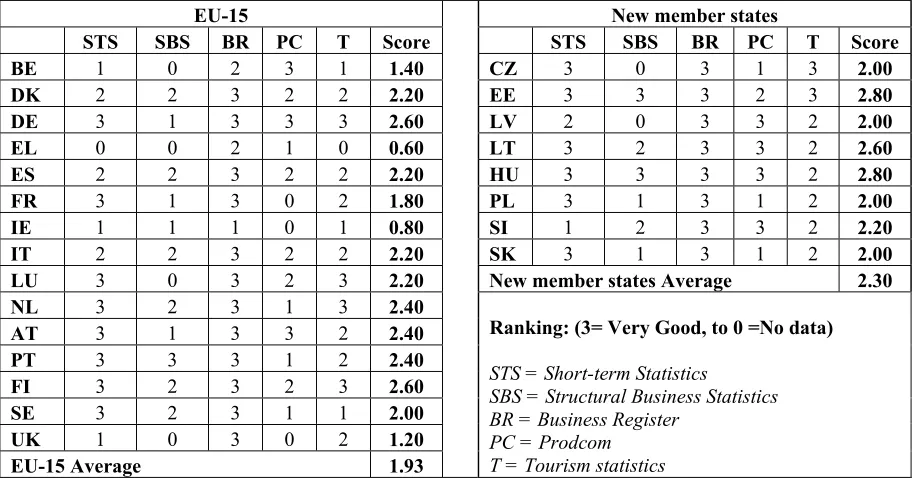
The 2002 and 2003 statistics multi-beneficiary programmes have built on the success of previous assistance, leading to progress which is particularly apparent in statistical support to key EU macro-economic policies. Transfer of know-how has continued with a particularly close and productive relationship between Eurostat and NSOs. By 2004, standards of compliance with acquis requirements were on average higher than member states although the complexity of the Compliance Database makes it difficult to make comparisons between countries.
Sustainability remains a problem especially with the loss of experienced personnel in some national statistical offices. However, institutional memory is likely to be sustainable through agreed information systems and documented and adopted procedures. External financial assistance has played a key part in underpinning statistical development and the sustainability of progress. This has been recognised through further assistance from the Transition Facility.
Main conclusions
The multi-beneficiary programme approach has been invaluable for uniform progress towards the integration of accession countries’ statistical organisations into the European Statistical System. Eurostat’s key role has secured complementarity and coherence between the assistance through multi-beneficiary programmes and national Phare assistance.
The successful implementation and the achievements of the statistics multi-beneficiary programmes fully justifies the continuation of the concept for Romania and Bulgaria, and for Croatia and Turkey, which will face a significant challenge adjusting to the acquis
requirements. The multi-beneficiary programme approach has proved to be a secure and relatively low risk method for making progress.
The multi-beneficiary programme approach has proved to be essential for the rapid and efficient building of capacity and for the establishment of networks of professionals and links with Eurostat. The flexibility of the approach has meant that the needs of national statistical offices have been addressed during implementation. New member states will continue to face serious financial constraints in development of methodologies and it is likely that they will need financial assistance to support their national budget allocation to maintain the progress they have made.
Recommendations
A number of recommendations for active programmes and lessons learned for the future have been identified. These lessons could also have application to the Transition Facility funding for new member states, which continues elements of the multi-beneficiary approach.
particular direct provision of management and technical expertise from Eurostat where this is feasible and the use of direct grants to the national statistics offices.
Recommendation 2: The overall progress monitoring system should be revised in order to yield readily accessible management information. There is a need for a formal annual review of the performance of each beneficiary even if this cannot be expressed in a compliance percentage.
Lessons learned
Lesson 1: The multi-beneficiary approach is essential for development of a common statistical framework. Given that the objective is the development of a system of comparable statistics, and related to international norms, the assistance has to be managed on a multi-beneficiary basis, or at least by a strong co-ordination mechanism which would deliver the same control.
Lesson 2: The combination of the pilot projects and technical assistance has proved to be an effective method of delivering the multi-beneficiary approach. The strength of the approach lies in the selection of important statistical series (including national accounts, poverty measures, and regional statistics), co-ordination of the work of the participants, arranging intensive inputs by experts, and close contact with the relevant Eurostat Technical Unit.
MAIN REPORT
1. INTRODUCTION
1.1 Objectives of the Evaluation
1. The purpose of this evaluation is to assess the success of the statistics multi-beneficiary programmes (MBPs) to improvements in the performance of National Statistics Offices (NSOs) in the candidate countries (CCs) relating to the production and dissemination of statistics in key areas (comparable with EU standards), and transfer of know-how and integration into the European Statistical System (ESS) and its planning structures.
2. The results of this evaluation of the Statistics MBPS provide a sample contribution to a consolidated evaluation of Phare multi-beneficiary programmes. In turn, this will form part of a consolidated ex post evaluation of the Phare programme.
1.2 Background and Context
3. The objectives of the Statistics MBPS were to provide assistance in the following areas: • Strengthening National Statistical Offices (NSOs) and their co-ordinating role in the
statistics system of the country;
• Supporting the development of sustainable capacity at NSOs to meet the needs of their customers for data which is accurate, reliable, timely and compliant with the acquis;
• Improving the quality of statistical information and to provide policy-makers and the international community with data of the highest reliability.
4. Two immediate objectives were also specified in each of the five programmes:
• Improving the production, collection and dissemination of high quality statistics comparable with Community methods in key areas related to the acquis;
• Improving the ability of CCs to programme their activities in relation to their integration into the European Statistical System (ESS).
5. The Statistics MBPS have been planned and implemented by Eurostat and comprise programmes ZZ-9911, ZZ-0027, ZZ-0109, 2002/000-602 and 2003/005-623. These have three main topics:
• Pilot or sectoral projects (PPs) focusing on a particular statistical series and supported by exchanges, discussions and consultations between the NSOs and Eurostat and international experts, to raise the standard of performance of NSOs to the level specified in the acquis. • Multi-sectoral activities: technical assistance (TA) activities financed by a national grant
negotiated annually between Eurostat and individual CCs on the basis of a joint view of problems facing the NSOs. This included a wide range of activities, including traineeships in Eurostat or EU-15 NSOs, study visits, consultancy services, formal training, participation in Eurostat Working Groups, and data collection projects.
• Programme secretariat and monitoring activities which include the maintenance of a compliance database, management of global assessments, dissemination of programme information and support to management meetings of CC NSOs (only present in ZZ-9911 and ZZ-0109).2
6. In total M€ 51.4 million was allocated to the five programmes between 1999 and 2003. Of this, M€ 29.6 million was allocated to PPs and M€ 21.8 million to multi-sectoral activities (TA). Further background information is available at Annex 3.
7. The performance and results of Statistics assistance under 9911 0027 and ZZ-0109 were independently evaluated by the EMS Consortium in 20033. The key findings of the report were as follows:
• Improvements were visible in the increased availability of information, and positive changes were observed in CC NSOs;
• The programme was highly efficient due to a good implementation structure supported by experienced contractors, effective communications between all stakeholders and dedicated staff at the NSOs;
• Due to proper identification of needs, the programme was relevant and tools have been developed to address gaps between performance and the acquis. There was good co-ordination between the MBPS and other related programmes;
• The wider objective of the MBPS was being achieved;
• While lack of resources in some CC NSOs was a threat, the outputs of the MBPS were sustainable by virtue of the degree of integration of the NSOs into the ESS.
8. The report recommended improvements in the indicators of achievement, content and formatting of reports on the progress of projects, and of the programme in general, so as to identify objectives clearly, and to measure progress towards them.4
1.3 Evaluation Questions
9. This evaluation focuses mainly on the outputs produced by the Statistics MBPS, such as methodologies, statistical products and organisational strengthening through know-how transfer activities. It assesses the impact and sustainability of these outputs and the effectiveness and efficiency of the contribution of the Statistics MBPS to the performance of the NSOs in beneficiary countries, taking into account EU standards as benchmarks where relevant.
10. Evaluation questions were established in the Terms of Reference (ToR)5 for this evaluation, and were divided into performance evaluation questions and thematic/ cross-cutting
3 See Monitoring and Interim Evaluation of the European Union Pre Accession Instrument Phare: Statistics Multi-Beneficiary Programmes ZZ-9911, ZZ-0027, ZZ-0109.
4 This ex post evaluation generally endorses the findings of the Interim Evaluation Report subject to some reservations,
questions. The ToR also include the methodology for this evaluation, whilst the evaluation indicators are shown in Annex 2.
2. PERFORMANCE OF PHARE ASSISTANCE
11. This Chapter examines the overall performance of the 1999-2003 Phare Statistics MBPS, with special focus on the 2002-2003 MBPS, which were not covered by the EMS Consortium in 2003. It considers needs assessment and design, inputs, results, impact and sustainability. This review is set against the evaluation questions specified in Annex 1 and the indicators given in Annex 2.
2.1 The statistics MBPs were relevant and well-designed
12. The Statistics MBPs are consistent with the pre-accession strategy. The Phare programme has supported changes to the statistical services of the central and eastern European countries since 1991, when very substantial development was required to bring these countries into line with best international and EU practice. They are intended to give effect in the statistical area to changes in concepts, methodologies and coverage of statistics. Despite significant achievements, a good deal of work remained to be done at the time of the Luxembourg Council in 1997 when Phare was given an explicit pre-accession focus. Assimilation to the statistics acquis continues to be an exacting challenge because of its size (350 regulations) and its growth (about 15% per annum). Attainment of the standards of the
acquis posed significant technical problems for the former centrally planned economies.
13. The Interim Evaluation reported positively on the relevance and design of the 1999 to 2001 MBPs (ZZ-9911, ZZ-0027 and ZZ-109) and the close dialogue established between Eurostat and the NSOs has continued to ensure accurate alignment of needs and activities. The choices of activity - workshops, TA, PPs - were well-adapted to the needs of the CCs. Overall, the incorporation of results from earlier MBPs, and close monitoring of NSOs development and pre-accession negotiations has ensured continuing relevance and additionality.
14. The Phare programmes which are the main focus of this evaluation are governed by the 2000-2002 strategy6 (ZZ-0109 and 2002/000-602) and by the 2003-2006 strategy7 (2003/005-623). These strategies were drawn up on the basis of the long-established and detailed collaboration with the CC NSOs, and they have provided an accurate assessment of needs for defining the central objective of this period - bringing the CCs up the standard of the acquis in the statistical area. The 2003-2006 strategy also recognised the special needs of Bulgaria and Romania vis á vis those CCs which were to become member states in 2004. The design of the Statistics MBPs is fully consistent with these strategies; building on developments in the previous programmes. The 2002 and 2003 Statistics MBPs are targeted at assisting the NSOs to improve the flow of reliable and relevant data to key policy makers at national and EU level, and to enhance the quality of statistics.
15. The content of the 2002 and 2003 programmes took account of the views of stakeholders. During this period, a Policy Group for Statistical Co-operation (PGSC) consisting of the directors of the NSOs of the CCs and Eurostat, met once a year to make policy decisions. The Management Group for Statistical Co-operation (MGSC), comprising the heads of international relations of the NSOs, was established to deal with detailed management issues.
6 A Strategy for Compliance in Statistics in Candidate Countries 2000-2002, European Commission.
Box 1: Pilot Project - Gross National Income Inventories
Under the acquis, member states have to compile their estimates of national income (GNI) under ESA95 standards. The GNI contributes to:
• National and EU macro-economic policies
• EU regional policies
• The calculation of the ‘own resources’ contribution to the EU budget.
GNI Inventories are catalogues of procedures and methodologies used by each country to compile national income. The Inventories were compiled by means of a 400 page questionnaire and required a considerable effort by the CC NSOs, and the Eurostat and contractors’ experts.
16. The close collaboration between Eurostat (especially between its Technical Units (TUs)) and their opposite numbers in the NSOs has made an important contribution to relevance. This relationship is probably closer than in most other EU-supported programmes since Eurostat is itself a direct recipient of the results. Outside specific interventions, Eurostat experts are in constant contact with NSOs to resolve technical problems and ensure a common approach. Within the specific areas of intervention, in the PPs and TA activities, the relationship is more intricate and Eurostat experts are involved with most Statistics MBP activities. By formal and informal means, Eurostat is fully aware of the problems, concerns and needs of the NSOs and, through various routes, NSOs have the opportunity to express their priorities to Eurostat.
17. In the case of the TA activities, NSOs have the opportunity to discuss the detailed content with Eurostat on a bilateral basis, and have considerable autonomy to draw down the TA resources provided, in both the form and timing to suit their needs.
18. The components of the Statistics
MBPs were well designed. Two
components of the Statistics MBPs: PPs and TA, constituted a mutually supporting structure. The PPs concentrated on specific statistical series using a group approach (i.e. all or several CC NSOs). The PP component allowed Eurostat, in consultation with the CCs, to determine priorities in line with their perception of weaknesses in the CCs and the demands of the acquis. The various elements in the TA component have been used by each CC according to its own perception of needs, in consultation with Eurostat.
19. The activities have been targeted at key areas of importance for policy. Most PPs8 addressed statistical indicators that are essential for the support of key polices, notably macro-economic statistics, statistics on labour market conditions, social conditions, agricultural indicators, and environmental and regional statistics. The MBPs also show a high degree of continuity with successful past actions, which has been a strength of successive interventions.
20. Formal monitoring of PPs is carried out by Eurostat on the basis of contractors’ periodic reports and mission reports by contractors’ experts. In the case of grant contracts, mission reports are filed by participants. For TA activities, disbursements can now be cleared with Eurostat ex post (previously clearance was required in advance), and interim and final financial reports are required from the NSOs. However, in terms of operations, informal monitoring is intensive and effective because the TUs are in continuous contact with contractors and CCs, and are fully aware of the progress of the PPs and the performance of contractors.
21. The general design of the statistics MBPs has been adapted for the Statistics Programmes funded from the 2004 and 2005 Transition Facility for the benefit of the ten new member states, and in the MBPs 2004 and 2005 for Bulgaria and Romania. The two programmes are similar, to each other, and to the preceding MBPs in structure and types of activities. One important change in both is that a higher proportion of the funding will be
Box 2: Building a picture of job vacancies
The objective of this pilot project was to support the collection of harmonised job vacancy data in the 10 Phare beneficiary countries. As a result:
• Six beneficiary countries carried out pilot surveys;
• Three countries launched actions to improve their own sources (either existing surveys or administrative registers);
• Five countries launched regular surveys which are sent to Eurostat;
• Data for Q1 and Q2 2005 are available at Eurostat for 8 countries;
• Five countries send methodological notes on Special Data Dissemination Standard format;
• A methodology for job vacancy survey was produced.
channelled through the NSOs, and less through contractors than before. Also, in the Transition Facility there will be an increased number of small projects, which can be tailored to small sub-groups of NMS, depending on need. This will replace the general support for statistical activities in the earlier MBPs. The size of the tenders has also been reduced to encourage a better offer from contractors. These changes are helpful adaptations in accordance with the growth of capacity of the beneficiaries and the emergence of differential needs.
2.2 Some serious delays but generally efficiently managed
22. In the Interim Evaluations of the 1999-2001 Statistics MBPs, efficiency was evaluated as high. Overall co-ordination was enhanced by having a Eurostat unit in charge of its administration. At the same time, outsourcing the administrative tasks of the PPs to contractors reduced the administrative burden on Eurostat, freeing it to concentrate on technical matters. Decentralisation of disbursement for TA activities to the NSOs had had a similar effect. The evaluation found that contractors were experienced in the work, and grouping PPs into related areas (macro-economics, social statistics, etc.) and awarding contracts in lots built on this experience and proved an efficient means of harnessing external resources.
23. Alleged irregularities within Eurostat led to some disruption of the 2002 and 2003 MBPs. In the first half of 2003, allegations were made about irregularities in the contracting process and in the management of bank
accounts. This led to a slowing down in the decision-making as inquiries were conducted by the Commission Services. Heightened concern by the remaining personnel to avoid errors in contracts and payments contributed to delays. As a consequence, contracts for the PPs in the 2002 MBP were not signed until April 2004, although tendering had closed in mid-2003. This led to a condensed implementation period for the 2002 MBP, which only concluded in August 2005. This late implementation meant that objectives focusing on pre- accession, which had been an important element of the 2002 Programme, became irrelevant, as the contracts were signed one month before the
accession of most CCs on 1 May 2004. In some areas, approval was not given for revising work programmes to take account of the delayed implementation, with the consequence that contractors’ work was disrupted leading to extra costs for them in some areas, and loss of output in others.
25. The problems in respect of the award of PP contracts were paralleled by delays in activities financed by the grant contracts. This meant that funding came too late for some of the planned work for 2004.
26. Some of the consequences were mitigated by extra efforts by Eurostat and NSO experts, and by Eurostat permitting some flexibility in the drawing down of grant finance. In autumn 2005, at the start of implementation of the 2004 MBP, it appears that most of these problems are working themselves out of the system and previous levels of efficiency may be attainable. Nevertheless, the appropriateness of the arrangements for acquiring external resources needs to be monitored, given the reduced role of contractors, the smaller number of countries in the statistics MBP, and the cost of the contracting process.9 Nevertheless, is it clear that through non-delivery of consultancy, delays and compression of activities, there was a significant loss of efficiency in this period.
27. The programmes are generally efficiently managed at the micro level. The particular difficulties of 2003 apart, the administration of the Statistics MBPs has been efficient at the level of the individual PP and the national grant contracts. As noted in the Interim Evaluations, the contractors employed during this period are experienced in working for Eurostat and have competent experts for the technical work with the NSOs. Communications between the experts and Eurostat and the NSOs are good, and the work of the PPs has usually proceeded smoothly.
28. Decentralisation of disbursement processes has been a positive experience. An important change in the administration of PPs has been the transfer of financial and managerial responsibility from the contractor to the CCs. Until the 2000 MPB, the contractor was responsible for the fees and costs of his own experts, the travel and per diem costs of CC personnel when attending working groups, and costs of the NSO for the implementation of projects, including e.g. survey costs.10 Since then, the responsibility has been transferred to NSOs and, in the 2003 MBP, contractors’ responsibilities were reduced by the transfer of the cost of CC experts to the direct grant component of the programme, and the transfer of the management of the disbursement to the NSOs. Under the 2003 MBP, contractors are now responsible only for their own costs, while all other costs are handled by the NSOs with the support of the grant contract. This arrangement needs careful management of the timing, - funds are now needed from two sources (CCs and the contractors) for activities under the same PP. On the other hand, it has encouraged the development of administration capacity in CCs, since the disbursal of funds must conform to EU standards. It has removed one of three parties to each transaction, and relieved contractors of a purely administrative task. It has also eased the entry of new contractors by reducing the nominal size of the contracts and the associated financial qualifications of potential tenderers.
29. The administration of the TA financed by the grant contract has usually worked efficiently. The Grant Agreements are detailed, but permission from Eurostat for the drawing down of finance for the budgeted items has been given speedily. Also, it is possible to amend the budget (while respecting the overall limit) via an addendum. Furthermore, since the 2003 MBP, Eurostat permission for disbursements from the agreed budget for the approved activities can be granted ex post which helps to speed up implementation and flexibility.
9 Total manpower employed by the three contractors in the 2002 MBP amounted to about 8 man-years. This compares with a
total complement of 800 in Eurostat.
10 This was done in the form of a sub-contract, i.e. the delivery of survey results and reports against the payment of a lump
30. There is no overarching management body for the Statistics MBPs in Eurostat. The management of individual PPs is essentially a matter for the relevant Eurostat TUs. The formal and informal links described above ensure that activities are closely monitored since, for reasons already explained, Eurostat is the principal ‘consumer’ of Statistics MBP outputs. Eurostat Unit E4 - Statistical Co-operation with European and Mediterranean Countries - is responsible for the overall management of TA activities but, as emphasised above, CCs have a high degree of autonomy in this area. Knowledge and expertise of the TUs does ensure that the PPs are chosen to fill important needs of both the NSOs and Eurostat, but this arrangement may not be optimal for ensuring that all desirable projects are included. For that, a supervisory entity with horizontal responsibility for the Statistics MBPs would be needed. The high-level co-ordination structures which have been established (the MGSC and PGSC) have responsibilities which are too broad to focus on the detailed problems of NSOs and the acquis. There is a risk that the real needs of remaining CCs may be neglected given the greatly increased ratio of member states to CCs in the future (EU-15:10 CCs in the five statistics MBPs compared to EU-25:4 CCs under the 2005 Statistics MBP).
2.3 Good statistical support to key EU macro-economic policies.
31. The 2002 and 2003 Statistics MBPs have built on the success of previous assistance. The programmes have followed the format refined in 1999-2001 and generally have had similar success. The concepts and methodologies used by the NSOs have been improved and there has been substantial progress towards the acquis. The negotiating chapter on Statistics in the accession programme was closed in 2000 and there were no requests for derogations. Good progress in statistics in all CCs was noted in the Commission’s 2003 Comprehensive Monitoring Reports (CMRs).
32. Progress has been particularly apparent in statistical areas supporting key EU policies. These statistical ‘areas’ underpin important policies at EU level such as the management of the EU macro-economy by the European Central Bank, the framing of regional policies, and the management of the Common Agricultural Policy. Amongst the most important areas of achievement has been in the macro-economics field, including the adoption of the European System of Accounts 95 (ESA 95) methodology, and a successful project to develop a harmonised approach to Purchasing Power Parities, essential for comparisons of economic performance of member states. In the preparation of quarterly estimates of Gross National Product (GNP), there has been transition from Gross Domestic Product (GDP) to Gross National Income (GNI) and regional statistics, which depend importantly on macro-economic aggregates. There was progress in the compilation of quarterly national accounts, the transition from Gross Domestic Product (GDP) to Gross National Income (GNI) was properly calculated and documented and regional statistics were developed. In the social area, there was progress on the development of measures of conditions in the labour market (e.g. Labour Force Survey and Job Vacancies Survey). Also of significance was the introduction of Statistics on Incomes and Living Conditions (SILC), which provides cross-sectional components, and tests a number of variables, e.g. gross income. This will benefit from the application of sampling methods still unfamiliar to some NSOs.11 There were also improvements in a number of agricultural and environmental statistical series, such as agriculture accounts and prices, and environmental indicators.
33. Transfer of know-how has continued. The close relationships between the CC NSOs and Eurostat and the involvement of independent experts provided by contractors have been essential in improving methodologies and concepts, and providing the necessary encouragement and training to enable NSO personnel to attain high standards. These means of transfer have been complemented by the TA activities, which include traineeships, attendance at Working Groups, and specifically targeted formal training.
34. The ESS is being created on the basis of a common ‘statistical culture’ promoted by the programmes and an important output has been the reinforcement of informal professional networks. Traineeships, whether in Eurostat or in MS, have been particularly important in creating relationships among professional statisticians which is an essential element of the ESS. This has also been reinforced by attendance at Working Groups and PP meetings and seminars.
35. Within the individual CCs, important relationships have also been built between the NSOs and organisations that are either suppliers or users of statistics, or those that function in both capacities. For example, ministries of finance and central banks supply public finance and monetary statistics while being important users of macro-economic data. Research and academic organisations are also often involved in formal and informal consultations with NSOs about methodological questions, besides being important users of NSO outputs.
Table 1.- Ranking of business statistics - CCs are more compliant on average than member states
Source: Business Statistics Directors Meeting, Eurostat, June 2005.
2.4 Wider objectives largely achieved with high standards of statistical reporting
37. The wider objectives of the Statistics MBPs are to ensure that relevant series of reliable statistics are available to users: national and EU policy agents, academic, business, trades unions, and other civil society organisations, to enable them to make informed decisions about economic and social policies. Since 1997, one of the most important policies is the progress of preparation of the CCs towards EU membership.
38. The MBPs have been instrumental in raising standards of CCs to the level required for entry. In general, the standard of statistics produced by CCs are approaching the standard attained by existing member states. In some cases, they have been exceeded, but Bulgaria and Romania have some way to go. No country is in perfect alignment with everything in the
acquis, given the evolution in acquis requirements and in the economic and social processes which have to be quantified. Nevertheless, even for the poorer performing countries, the MBPs have produced new and more accurate tools for framing national economic and social policies in CCs.
39. At the EU level, the outputs of the CC NSOs can now be incorporated with data from the older member states into reliable EU-wide indices, for example: for unemployment, economic growth, external trade, inflation and other key measures of economic and social conditions.
40. This generally positive picture is confirmed by the CMRs in the period leading up to accession in 2004. In the 2003 CMRs, it was reported that the new member states had met the commitments arising from the accession negotiations and were expected to be in a position to implement the acquis as from accession.12 Bulgaria and Romania were considered to be making progress but there were a number of issues outstanding. Some of these, such as IT equipment and software, fall outside the scope of the Statistics MBPs, but others such as
12 There was no strong criticism of the CCs in the CMRs. The CMRs rely on information supplied by Eurostat, which should
know if candidate countries are up to standard and which has every incentive to report failures. Eurostat experts did not report significant and widespread failures and neither were there reports of this from users.
EU-15 New member states
STS SBS BR PC T Score STS SBS BR PC T Score
BE 1 0 2 3 1 1.40 CZ 3 0 3 1 3 2.00
DK 2 2 3 2 2 2.20 EE 3 3 3 2 3 2.80
DE 3 1 3 3 3 2.60 LV 2 0 3 3 2 2.00
EL 0 0 2 1 0 0.60 LT 3 2 3 3 2 2.60
ES 2 2 3 2 2 2.20 HU 3 3 3 3 2 2.80
FR 3 1 3 0 2 1.80 PL 3 1 3 1 2 2.00
IE 1 1 1 0 1 0.80 SI 1 2 3 3 2 2.20
IT 2 2 3 2 2 2.20 SK 3 1 3 1 2 2.00
LU 3 0 3 2 3 2.20 New member states Average 2.30
NL 3 2 3 1 3 2.40
AT 3 1 3 3 2 2.40
PT 3 3 3 1 2 2.40
FI 3 2 3 2 3 2.60
SE 3 2 3 1 1 2.00
UK 1 0 3 0 2 1.20
EU-15 Average 1.93
Ranking: (3= Very Good, to 0 =No data)
STS = Short-term Statistics
SBS = Structural Business Statistics BR = Business Register
Box 3: Slovak Social Statistics
The Slovak Republic currently has the basic framework of surveys needed to monitor poverty and social exclusion; to evaluate the impact of economic reforms; and to deliver evidence based policymaking. As currently administered, however, the information collected from these surveys will not provide as complete information that is needed to monitor poverty and social exclusion in the Slovak Republic. The problems with the household data can be broken down into five categories, listed below. Not all of the surveys currently implemented in the Slovak Republic
suffer from problems in each category, but all have some problems.
• Questionnaire Design: complicated and difficult to fill in
• Sample Design: possible bias in selection of samples
• Field Work: insufficient training and supervision of field workers
• Response Rate: very low in some surveys
• Comparability Over Time: changes in samples or questionnaires prevent comparability over time.
Extract from ‘Quest for Equitable Growth in Slovak R bli ’ b Th W ld B k M 2005
timeliness and methodology are within the scope of MBP interventions. Overall, these two countries were forecast to meet the acquis at their planned accession in 2007.
41. The quantity and quality of statistical information has improved in the respective fields of interest, according to interviews with users in ministries of finance, central banks, other ministries and research institutes confirm. However, users are conscious of ongoing deficiencies in areas such as national accounts, the social sector and regional statistics. Some of these concerns fall within the acquis, but some, such as micro regional statistics are currently excluded. One example of a problem area was provided by a recent World Bank report on Slovakia (see Box 3). This indicates that in the area of social statistics there are some problems with reliability of data arising from methodological defects. However, the standards applied by the World Bank differ from the EU requirements, and the 2003 CMR for Slovakia does not highlight social statistics as a problem area.
2.5 Sustainability remains a problem
42. The sustainability of results obtained by the MBPs depends on a variety of factors, including the stability of employment within NSOs, the extent to which knowledge and experience during the MBPs has been institutionalised, and the prospects for future funding. The Interim Evaluation considered that using the MBPs, the NSOs had achieved a high degree of sustainability in respect of the stock of experience and knowledge acquired by the experts. The network of professional relationships developed between CC and member state experts through Eurostat Working Groups was also a contribution towards sustainability. In respect of financial sustainability, however, the Interim Evaluation was less confident because of limited resources in CCs and relatively heavy demands imposed by the acquis.
44. Institutional memory is likely to be sustainable in information systems and procedures. In terms of institutionalisation of knowledge and experience, the situation is positive. It is possible that not enough is currently done to disseminate the experience of the MBPs from those directly involved to others through in-house training, but the importance of this can be over-estimated. Statistical administration is highly formalised. The procedures for compiling a given statistical series are set out in computer programmes and in procedures which are systematically documented. The codification of procedures is a major part of the process of the PPs. To a large extent, the permanent records of the projects can survive the departure of key personnel, leaving a manageable training problem for their successors.
45. There could be a financial threat to sustainability in a few countries. The third aspect of sustainability is the ability of the CCs to continue to finance their statistical programmes without supportive financing from Phare and the Transition Facility. Even though the new member states receive funding from Eurostat in the same way as the old member states, and even though the member states are legally required to provide a lot of data to Eurostat in accordance with the acquis, there are a few cases where there could be a risk to the proper national funding of statistical programmes.
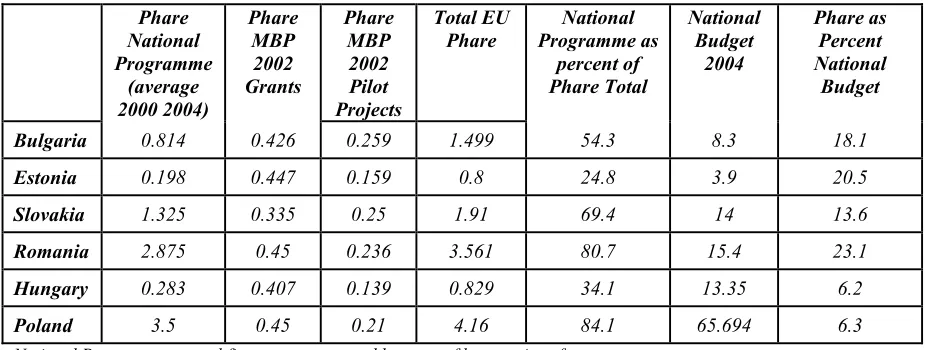
46. Table 2 shows Phare contributions to NSOs under the national programmes and the statistics MBPs.13 The table shows considerable variation in the relative importance of the national programme and the MBPs in the sample of countries, and also in the relationship between total Phare and national outlays on NSOs. The large variations in the relative importance of the national programmes is attributable to the ‘lumpy’ nature of the national programme outlays – itself a consequence of the infrastructural character of the national programme investments in the individual countries. Most NSOs are significantly dependent on Phare and the sudden disappearance of this support would pose problems.
47. It is possible for NSOs to mitigate the problems by imposing some of the burden of statistical collection on line ministries (health, industry, etc), by selling services, general productivity improvement and by receiving financial support from the Commission in the same way as the EU-15. However, such measures take time to implement, especially for entities which have to struggle to absorb the acquis and which are operating in economies with a lower level of development than the member states. Also, in these circumstances, it is not advisable to restrict the circulation of statistics because the development of statistics has an acknowledged role in fostering democratic debate.
48. The impacts of the statistical element of the Phare national programmes and those of the statistics MBPs are distinct. The statistical elements of the national programmes have concentrated on investments in infrastructure, equipment and general training for the NSOs – in accordance with the particular needs of the individual CCs. The focus of the statistics MBPs are mainly on the implementation of the acquis in specific priority areas. The investments in infrastructure constitute a pre-condition for the sustained improvement of the NSOs but the pilot projects and grant activities of the MBPs are essential for the implementation of specific topics of the acquis.
13 The multi country element of the pilot projects is excluded because of the impossibility of assigning outlays to individual
Table 2.- NSO Receipts from Phare and National Budget in selected CCs
Phare
National Programme
(average 2000 2004)
Phare MBP
2002 Grants
Phare MBP 2002 Pilot Projects
Total EU
Phare Programme as National percent of Phare Total
National Budget
2004
Phare as Percent National
Budget
Bulgaria 0.814 0.426 0.259 1.499 54.3 8.3 18.1
Estonia 0.198 0.447 0.159 0.8 24.8 3.9 20.5
Slovakia 1.325 0.335 0.25 1.91 69.4 14 13.6
Romania 2.875 0.45 0.236 3.561 80.7 15.4 23.1
Hungary 0.283 0.407 0.139 0.829 34.1 13.35 6.2
Poland 3.5 0.45 0.21 4.16 84.1 65.694 6.3
National Programme annual figures are averaged because of large swings from year to year.
Box 4: Survey of Income and Living Conditions The SILC is a complex survey that requires samples to be followed for a period of years in order to yield time series data. This is in contrast to most surveys of standards of living, which rely on a series of ‘snapshots’ of socio-economic strata using different samples each time. The informational yield from a SILC is potentially very large but it requires several years before significant results are obtained and, in the meantime, it is difficult to keep track of the sampling units. However, with the aid of the Pilot Project, the difficulties in designing and implementing this survey were surmounted. Without the Pilot Project it is unlikely that CC NSOs, with limited resources and no experience of this type of sampling, would have been able to deliver reliable results.
3. THEMATIC/ CROSS-CUTTING FINDINGS
49. Having examined overall performance of the Statistics MBPs in Chapter 2, Chapter 3 reviews progress made with the support of Phare towards three key thematic areas of the pre-accession strategy:
• Phare’s contribution to the improved performance of NSOs,
• Strengthening administrative capacity of NSOs to apply the acquis, and • The effectiveness and efficiency of the MBPs as a delivery mechanism.
50. Good statistical data underpins the success of many EU policies and actions. The Phare contribution through Eurostat has made a significant contribution to the performance of CC NSOs. At the time of accession in May 2004, eight beneficiaries had NSOs providing statistical services as competently as existing member states. A key aspect of the rapid changes was the financial support from the Phare programme which allowed Eurostat to take and maintain this initiative. NSOs’ administrative capacity has increased, primarily through Phare national programmes, but an important professional and networking contribution has been made through the MBPs. Joint involvement in PPs with national ministries and agencies has increased the understanding of the need for quality statistical systems and data. The MBP approach has been essential for the rapid assimilation of national data into the ESS; the availability of Phare funding has provided leverage for Eurostat to determine the most efficient way forward and to pursue this through a well-designed MBPs.
3.1 Performance of NSOs significantly improved
51. The components of the Statistics MBPs focused on improving performance of the NSOs, in both delivering specific statistical series and in general statistical performance. The PPs have enabled the NSOs to improve their concepts and methodologies in high priority areas and also helped them to put them into practice through test surveys in the field.
52. Examples of this process in practice are the Statistics on Income and Living Conditions (SILC) (see Box 4) and the Quality in
Regional Statistics project which uses data from national accounts (Gross Valued Added - GVA) and population census data to yield regional GVA per capita. This work is of particular importance because of the light it throws on regional disparities, which are an essential element in the design of regional policies. The impact of the PPs on performance was complemented and augmented by the TA under the grant component which provided a range of tools (training, consultancy and participation in Eurostat Working Groups) from which NSOs could choose depending on their perception of their weaknesses.
needs (with expert guidance) has been a useful monitor of NSO performance. Networking between NSOs (member states and accession countries) and their professional staff has been a feature of the assistance, and provides the basis for continuing co-operation in EU statistical developments. Meeting NSO needs through participation in Pilot Projects, with TA support, has been very successful in improving the performance of NSOs.
3.2 The administrative capacity of NSOs has been strengthened by Phare.
54. The administrative capacity of NSOs has been improved through experience of working in the MBPs. Although Phare national programmes have played the leading part in expanding the administrative capacities of NSOs, in the form of IT equipment, software, networks, libraries and related training, there has been a limited direct contribution of the MBPs to building local administrative capacity. A number of specific actions have had a positive effect on capacity of the NSOs to implement the acquis. Participation in the PPs, and direct involvement in the management of the work of independent experts within the context of the EU contracting framework, has raised NSOs’ capacity to administer large-scale and complex statistical exercises, in compliance with EU standards. It has also improved their understanding of the efficient use of consultants to achieve contract objectives.
55. Traineeships have provided participants with experience of working in the administration at Eurostat or in member states NSOs. Trainees usually are assigned to a particular division of statistics, and get experience of statistical administration. They also build relationships which enhance the capacity and outreach of the NSOs to which they return. Activities financed by the grants have included several useful contributions to administrative capacity building. Training and participation in Eurostat Working Groups, participation in the work of Eurostat has helped improve all aspects of management at the NSOs.
56. The supervised transfer of financial management functions from the Pilot Project contractors to the NSOs, and the increase in autonomy in the management of their grant has significantly increased NSO experience of working within the Eurostat budgetary process and administrative system.
57. There are no significant administrative and judicial issues remaining in the statistics area. As regards horizontal administrative and judicial capacity issues, all NSOs have adopted legislation consistent with EU principles concerning independence, transparency, access and confidentiality. In the statistics area, the acquis is not generally transposed by Directives but is directly applicable through regulations, although the design and use of data sources is left to the competence of the country, and there is some implementation outside the acquis through ‘gentlemen’s agreements’ within the administration. Administrative and judicial capacity issues do not appear to arise in the statistics field.
3.3 The MBP approach was effective and essential
statistics of uneven quality, under different timescales, and of limited comparability. Under the Statistics MBPs, the choice of Pilot Projects was (and is) largely determined by Eurostat, although the views of the CCs are sought. The projects are implemented in a common decision-making process, in which, with the aid of independent and Eurostat experts, the CCs collectively adopt the concepts and methodologies prescribed by the acquis and importantly, the type of support is decided following a joint assessment of need.
59. Through Eurostat’s method of working, particularly the use of PPs, the multi-beneficiary approach also gives rise to significant benefits in terms of creating professional relationships, exchange of experience, and information dissemination.
60. For the grant financed TA, the degree of discretion given to NSOs is much greater than for PPs, and the multi-beneficiary aspect is less significant, but disbursement of the grant funds by Eurostat follows consultation with individual CCs. Many of the activities deliver benefits which are appropriate to capacity development in NSOs (e.g. traineeships), but where activities are related to the development of the acquis (e.g. data collection activities), Eurostat has ensured that they contribute to a common implementation of acquis requirements.
61. Eurostat’s influence has secured the complementarity and coherence of MBPs and national Phare assistance. Eurostat maintains considerable influence over the selection of activities for funding from the national programmes and this is has been an important contribution to the effectiveness of the MBPs.
62. The alternative approach of providing assistance only through ten national programmes would not be practical in the case of the PPs and the grant financed TA. Theoretically, the grant activities could be assigned to Phare national programmes, especially those activities which have general benefits, but there would be significant costs in trying to ensure that grant activities specifically related to PPs were delivered on time and in a complementary manner. There is no possibility that the PPs could be delivered through national programmes.
63. In addition to the benefits of co-ordination, the multi-beneficiary approach gives rise to demonstrable economies in terms of programme preparation, management and implementation.
4. CONCLUSIONS AND LESSONS LEARNED
4.1 Conclusions
64. The overall performance of Phare MBPs has been successful in supporting the development of statistics required by the acquis and NSO capacity. The design of the Statistics MBPs has reflected the pre-accession strategy and taken into account the views and needs of the NSOs. Although the activities have been targeted at key areas of importance for policy, Eurostat operates without a top-level management body to balance resources against needs. Efficiency has historically been good but contracting activities under the 2002 and 2003 MBPs were severely delayed following an investigation into alleged fraud by the Commission Services. Decentralisation of the disbursement process has led to more direct control over contracts and to the development of local capacity.14 The MBPs have been instrumental in raising statistical standards to the level required for accession. Although sustainability is to some extent guaranteed by the adoption of statistical systems, the continuation of external financial support may be required in the medium term.
65. The Statistics MBP approach has proven to be durable and effective in achieving its immediate and wider objectives, despite problems affecting the contracting process of the 2002 and 2003 MBPs. New statistical series have been introduced to CC NSOs, standards have been raised and adapted to EU and international use, survey techniques have been improved and new concepts, in keeping with the needs of market oriented economy and a democratic society, have been introduced. A wide range of domestic and international users have benefited from this development, including organisations like the Central Banks and ministries, who as well as being providers are important users of statistics. Joint working on statistical series has allowed them to share in the wider benefits of the Statistics MBPs. Others in the academic sector and the media now have new tools with which to exercise their professions of informing the public and contributing to public debate.
66. The overriding test of the success of the MBPs has been that the statistics chapters of the Accession Programme for the eight new member states were closed in 2000 without derogations and the CCs duly entered the EU in 2004. In the case of Bulgaria and Romania, it was judged that their statistical chapters were in line to attain entry standards by the projected date of entry in January 2007.
67. The MBP approach has been proved to be essential for the efficient building of the ESS. It has helped build lateral networks of professionals across the NSOs as well as vertical ones with Eurostat TUs. But its key importance was ensuring that the priority needs for the statistical developments for the acquis were identified and that CC NSOs adopted standardised approaches which would guarantee reliable and comparable statistics at national and EU level. At the same time, flexibility in the use of the MBP approach has also met NSOs’ perceptions of their own needs. In addition, the grant financed activities, although administered by Eurostat, has provided significant resources in a flexible manner with an important degree of initiative assigned to the NSOs.
68. The gains made by the CCs in improving their statistical standards are likely to prove durable in that much of the output of the MBPs is fixed in documented systems and
14 In this context ‘decentralisation’ refers to the transfer of responsibility for programme expenditures from Eurostat and/or the
procedures, and in most countries personnel turnover problems are manageable. The main challenge to sustained improvements is likely to be financing further developments in statistical methodology, to meet the forecast growth in EU statistical requirements. This is important because in the past, forecasts of financial support for the MBPs have underestimated the impact of development. A sudden withdrawal of external assistance at the current state of development of beneficiary NSOs could undermine the substantial achievements to date.
4.2 Recommendations
69. Most of the participants in the Statistical MBPs became member states in May 2004 and the two remaining CCs (Bulgaria and Romania) were joined by Croatia and Turkey as beneficiaries of the MBPs. Adapting this group’s statistical systems to the acquis will be a considerable challenge for Eurostat’s management. It is also possible that other western Balkan countries may also become involved at some point in the future, and consequently, the Statistics MBP is likely to be a continuing programme with a significant role in the future. A number of recommendations for active programmes and lessons learned for the future have been identified. These lessons could also have application to the Transition Facility funding for the new member states, which continues elements of the MBP approach.
Recommendation 1: The role of external consultants in the management and implementation of pilot projects should be reviewed and alternative means of acquiring the necessary resources should be considered.
70. Although the volume of assistance given by external contracts is relatively small (especially now that the role of contractors is reduced to the supply of expertise), and although Eurostat does not have the necessary human resources to take over the work done by the contractors in the various MBP projects, nonetheless, alternatives to the present arrangements should be explored, in particular direct provision of management and technical expertise from Eurostat where this is feasible and the use of direct grants to the NSOs.15
Recommendation 2: The overall progress monitoring system should be revised so as to yield readily accessible management information.
71. There is a need for a formal annual review of the performance of each beneficiary even if this cannot be expressed in a compliance percentage. Monitoring was provided by independent consultants during some of the earlier MBPs, but these have now ceased. The updating of the Compliance Database is not entirely coherent, which makes it difficult to make comparisons between countries. It is difficult to form a judgement of the status of a particular country from the Compliance Database because of its size (about 120 pages per country) and the absence of a succinct measure of the status of each series although this might be possible for experienced statisticians. However, to make this assessment easier the annual country Global Assessments could be restored for CCs. This would provide a more unambiguous and externally compiled basis for the CMRs.
15 See: Study, feasibility and cost effectiveness assessment of the externalisation of the implementation of TAIEX. Technopolis.
4.3 Lessons Learned
Lesson 1: The multi-beneficiary approach is essential for development of a common statistical framework.
72. Given that the objective is the development of a system of comparable statistics, and related to international norms, the assistance has to be managed on a multi-beneficiary basis, or at least by a strong co-ordination mechanism which would deliver the same control.
Lesson 2: The combination of the pilot projects and technical assistance has proved to be an effective method of delivering the MBP approach.
73. The strength of the Statistical MBPs lies in the selection of important statistical series (e.g. national accounts, poverty measures, regional statistics), co-ordination of the work of the participants, arranging intensive inputs by experts and close contact with the relevant Eurostat TU. Elements of the TA budgets are used in flexible way, with close involvement by the CC, to support the work done under the Pilot Projects.
Lesson 3: The ranges of attainment by beneficiaries in various statistical areas imply that the concept that all countries should participate in all activities should be reviewed.
[
Annex 1. Terms of Reference
[These terms of reference were approved 26 August 2005, and have not been updated to take account of changes in the time line, which have occurred in the meantime.]
OBJECTIVES
The purpose of this evaluation is to assess the contribution of the Statistics Multi-Beneficiary Programme (Statistics MBP) to improvements in the performance of National Statistics Offices (NSO) in the candidate countries (CC) relating to the production and dissemination of statistics in key areas (comparable with EU standards), transfer of know-how and integration into the European Statistical System (ESS) and its planning structures.
The results of the evaluation of Statistical MBP will provide a sample contribution to a consolidated evaluation of Phare multi-beneficiary programmes. In turn this will form part of a consolidated ex-post evaluation of the Phare programme.
BACKGROUND AND CONTEXT
Since 1997, the objectives of statistical co-operation programmes have reflected the need to a) assist the CC in adopting the statistical acquis and b) in producing good quality statistics to support the accession process. The Statistics MBPs have therefore focussed on:
• Strengthening CC NSO ability to meet their customers needs and;
• Improving the provision of good quality statistics to policy and decision-makers in the context of pre-accession.
During the period covered by the present evaluation (1996-2003) this assistance was provided by five MBPs (ZZ-9716, ZZ-9813, ZZ-9911, ZZ-0027 AND ZZ-0109) with a total value of 47 M€. Programmes 2002/000-602 and 2003/005-623, totalling 21 M€, have also been completed (2002 Programme) or are under implementation (2003 Programme) and will be included in the evaluation. Phare assistance was also provided under national programmes. This evaluation as part of a sample of MBPs will not be an in-depth study and will comprise a desk study of previous evaluations for the programmes 1996-2001 (based on the available reports) with the focus being on the later 2002-2003 programmes.
The Statistics MBP was the subject of an Interim Evaluation (IE) during 200316. The evaluation concluded that the 1999, 2000 and 2001 programmes were achieving their immediate objectives of institution building for the provision of appropriate statistics in general and in the pre-accession context in particular. Furthermore, the programme had facilitated the setting up of a network of statistics professionals, at the individual level and between institutions, which was essential for the production of comparable statistics. Issues arising in the IE report were:
• Difficulties in the implementation of large-scale sectoral projects with a data collection component;
• Absence of a monitoring document within EUROSTAT giving an overview of all the running projects;
16 See Interim Evaluation Report ZZ/STA/03.072, issued on 29 October 2003, covering Programmes ZZ-9911, ZZ-0027 and
• Constraints imposed by the limited number of good experts in highly specialised topics; • The poor quality of some of the data collected;
• Weak institutional memory and limited financial means in a number of CC NSO.
EVALUATION QUESTIONS
This evaluation will focus mainly on the outputs produced by the Statistics MBP, such as methodologies, statistical products and organisational strengthening through know-how transfer activities. It will assess the impact and sustainability of these outputs and the effectiveness and efficiency of the MBP contribution to the performance of NSO in beneficiary countries, taking into account EU standards as benchmarks where relevant.
The evaluation questions and related judgmental criteria for this exercise will be divided into: • Performance evaluation questions;
• Thematic/cross-cutting questions.
Performance evaluation questions
Needs assessment and design
The evaluation will start with an assessment of the relevance and design of the programmes. In particular, attention will be paid to the strategy and the involvement of the stakeholders in the design (ownership). To meet decision-making needs, the evaluation will focus on reviewing the design of 2004-2005 allocations.
The extent to which inputs / activities have produced outputs
The evaluation will assess the efficiency of the assistance delivered through funding of pilot projects, know-how transfer activities, the training of NSO officials and integration of NSO into the ESS with the focus on the 2002 and 2003 allocations.
The extent to which outputs have produced intended results
The intended results (as set out in the project fiches) are:
a)Production of statistics in certain key areas conforming with EU standards for statistics, including the publication and dissemination of these statistics;
b) Transfer of know-how concerning all EU requirements in statistics, and increase the breadth of coverage of EUROSTAT regular databases. This requires close monitoring of the development of the expanding EU statistical system and;
c)Increased level of integration into the ESS and its planning structures17.
In this regard the evaluation will assess the extent to which outputs have produced intended results with the focus on the 2002 and 2003 allocations.