This is a repository copy of
Some comments on the identification of species in worked
antler
.
White Rose Research Online URL for this paper:
http://eprints.whiterose.ac.uk/108828/
Version: Published Version
Book Section:
Ashby, Steve orcid.org/0000-0003-1420-2108 (2013) Some comments on the identification
of species in worked antler. In: Choyke, Alice and O'Connor, Sonia, (eds.) From These
Bare Bones: Raw materials and the study of worked osseous materials. Oxbow Books ,
Oxford , pp. 208-222.
[email protected] https://eprints.whiterose.ac.uk/
Reuse
Items deposited in White Rose Research Online are protected by copyright, with all rights reserved unless indicated otherwise. They may be downloaded and/or printed for private study, or other acts as permitted by national copyright laws. The publisher or other rights holders may allow further reproduction and re-use of the full text version. This is indicated by the licence information on the White Rose Research Online record for the item.
Takedown
If you consider content in White Rose Research Online to be in breach of UK law, please notify us by
his pdf of your paper in From hese Bare Bones belongs to the
publishers Oxbow Books and it is their copyright.
From These Bare Bones
Raw materials and the study of worked osseous objects
edited by
Alice Choyke and Sonia O’Connor
Proceedings of the Raw Materials session at the 11th ICAZ Conference, Paris, 2010
ISBN 978-1-78297-211-2
©
Oxbow Books 2013
www.oxbowbooks.com
Contributors ... vii Preface ... xi
Jean-Denis Vigne, Christine Lefèvre and Marylène Patou-Mathis
Introduction to the volume ...xiii
Alice M. Choyke and Sonia O’Connor
Keynote Paper
1. Hidden Agendas: Ancient Raw Material Choice for Worked Osseous Objects in Central Europe and Beyond ... 1
Alice M. Choyke
Raw Material Selection and Curation within Tool Types
2. Osseous Retouchers from the Final Mousterian and Uluzzian Levels at the Fumane Cave (Verona, Italy):
Preliminary Results ...14
Camille Jéquier, Matteo Romandini and Marco Peresani
3. Raw Material used in the Manufacture of Osseous Artefacts during the Portuguese Upper Palaeolithic ...21
Marina Almeida Évora
4. he Identiication of Perishable Technologies through Usewear on Osseous Tools: Wear Patterns on Historic
and Contemporary Tools as a Standard for Identifying Raw Materials Worked in the Late Upper Palaeolithic ...28
Elisabeth A. Stone
5. Bone Material and Design Choices in Southern Patagonia ...36
Vivian Scheinsohn
6. Changed into Tools. Camelid Bones from the Southern Calchaquíes Valleys
(Formative Period, North-western Argentina) ...50
Andrés D. Izeta, Roxana Cattáneo, M. Cristina Scattolin and Leticia I. Cortés
7. Osseous Raw Materials in the Vinča culture ...59
Selena Vitezović
8. Seals, Seal Hunting and Worked Seal Bones in the Estonian Coastal Region in the Neolithic and Bronze Age ...73
Heidi Luik
9. Specialization or Re-utilization? Study of the Selection Documented in a Bone-Working Refuse
Assemblage from Roman Baetulo (Badalona, Spain) ...88
Lídia Colominas
Social Aspects of Raw Material Selection
10. he Materiality of Production: Exploring Variability and Choice in the Production of Palaeolithic Portable
Art made in Antler and Bone ...98
Rebecca Farbstein
11. Evidence of Bone Technology on the Santa Fe Pampa Lagoons. he Laguna El Doce Site
(Santa Fe Province, Argentina) ...109
Jimena Cornaglia Fernández and Natacha Buc
12. Beyond Stones: Bone as Raw Material for Tools in the Central Plateau of Santa Cruz,
Argentinean Patagonia ...116
Laura Miotti and Laura Marchionni
13. he Meaning of “Smoothing” Implements from the Levantine PPNB seen from the Basta Perspective ...127
Cornelia Becker
14. Tubular Bone Artefacts in Burial Context at Ajvide, Gotland c. 2500 cal BC. Are hey Musical Instruments? ...140
Kristiina Manermaa and Riitta Rainio
15. Strict Rules – Loose Rules: Raw Material Preferences at the Late Neolithic Site of Aszód, Central Hungary ...154
Zsuzsanna Tóth
16. More than Fun and Games? An Experimental Study of Worked Bone Astragali
from Two Middle Bronze Age Hungarian Sites...166
Jacqueline Meier
17. Economic and Social Context of Bone Tool Use, Formative Bolivia ...174
Katherine M. Moore
New Methods of Materials Identification
18. Exotic Materials Used in the Construction of Iron Age Sword Handles from South Cave, UK ...188
Sonia O’Connor
19. An Introduction to ZooMS (Zooarchaeology by Mass Spectromtry) for Taxonomic Identiication
of Worked and Raw Materials ...201
Oliver W. Hounslow, Joanna P. Simpson, Lauren Whalley and Matthew J. Collins
20. Some Comments on the Identiication of Cervid Species in Worked Antler ...208
Chapter 20
Some Comments on the Identiication of Cervid Species
in Worked Antler
Steven P. Ashby
Introduction
his article emerges from exploratory work undertaken in the course of the author’s doctoral research at the University of York. It began in an attempt to address a long-standing question in Scottish archaeology: that of pre-Viking Age contact between northern Scotland and Scandinavia (see Barrett 2003; Myhre 1993). A key piece of evidence relates to the identiication of certain combs of ‘pre-Viking’ form as being made from reindeer antler (Rangifer tarandus): a species alien to the British Isles since early prehistory (Clutton-Brock and MacGregor 1988). his issue has been investigated at length elsewhere (Weber 1992, 1993, 1994;
Ballin Smith 1995; Ashby 2006, 2009), but given that the means by which antler may be identiied to species are not well known, the present paper provides an opportunity to introduce the issue of identiication in a little further detail.
Initial work in this ield (Weber 1992, 1993, 1994; Ballin Smith 1995) stated that it was possible to conidently identify the antler in combs to species level (i.e. Cervus elaphus vs
Rangifer tarandus). his research was dependent on the identiications of an experienced zooarchaeologist, Rolf Lie, curator of the zoological museum at the University of Bergen. Unfortunately, detailed accounts of Dr Lie’s identiication criteria have not been published, and this has led to some
“…Variation in antler construction combines in the least reliable manner all the efects of sexual, developmental and individual variation that can be imagined” (Webb 2000: 62)
Research into objects of worked antler is characterised by a certain inconsistency of approach to raw material identiication, particularly regarding identiication to species level. Some workers routinely record species, while others do not, and it is apparent that a number of diagnostic criteria have been used, albeit often implicitly. his paper makes no claim to resolve this situation, but in outlining some of the potentials and many confounds of various microscopic and macroscopic techniques, the author hopes to inspire cautious enquiry into raw material exploitation, and to encourage further research into the introduced phenomena. Recently developed biomolecular approaches have the potential to transform the way we think about this material, but at present we are still reliant on sampling techniques that may not always be appropriate for application to the material in question. hey may, however, provide an excellent complement to zooarchaeological approaches.
Keywords
20. Some Comments on the Identiication of Cervid Species in Worked Antler 209
scepticism amongst archaeologists of Atlantic Scotland (see Graham-Campbell and Batey 1998, 23; Smith 2000, 185). he key information we have is as follows:
“… the combs show very clearly the spongy structure characteristic of reindeer antler. In this spongy part the pores are larger; elsewhere the bones are very solid with nearly invisible pores. he antler of red deer has at its base a spongy part similar to that of the bones; elsewhere it looks very solid and heavier than reindeer antler. Elk antler has for the most no spongy parts; it is very hard and has a glassy look.” (Lie 1993)
his is a useful start, but clearly further empirical work is needed. Independent of the work published by Weber, a number of specialists have published short statements on identiication methods (see Ambrosiani 1981, 102–109; Carlé et al. 1976; Ilkjaer 1993, 316–319; Stephan 1994). Most notably, Dr Lyuba Smirnova (2005, 9–15), a Russian archaeologist studying worked bone and antler from medieval Novgorod, recently devised a macroscopic system for the recognition of red deer (Cervus elaphus), reindeer (Rangifer tarandus), and European elk (Alces alces) antler. his proved efective in the recognition both of waste products and of inished combs (Smirnova 2002). However, while Ambrosiani, Smirnova et al. outlined their identiication criteria in some detail, these methods have yet to be subjected to independent investigation. One objective of the present author’s doctoral research was to critically consider these approaches and to build upon the insights they provided, in order to develop a new, systematic protocol for the identiication of worked antler to species, and to ofer some suggestions for further work. his paper provides some relections on these issues.
he experience with antler fragments and manufacturing waste that Smirnova gathered in the course of her original Ph.D research (Smirnova 1997) helped lay the groundwork for the identiication of antler to species in simple and composite combs; a task she undertook as part of a second thesis (Smirnova 2002, subsequently published as Smirnova 2005). Smirnova was kind enough to demonstrate her approach, some elements of which have been adapted and incorporated into the methods discussed below (embellished with observations from the author’s personal collection and the reference material at the British Museum (Natural History)). It should be noted that the following material does not contain the indings of controlled investigations or quantitative analyses. Rather, it provides a number of observations which may prove useful as rules-of-thumb, or as starting points (null hypotheses?) for iner-grained zoological analyses.
Gross and surface morphology
It is now appropriate to briely highlight the basic diferences in gross antler morphology between the three cervid species at the centre of this paper. Such information is invaluable in the
study of craft debitage, semi-manufactures, and other waste material, as well as a prerequisite for the study of inished objects. In what follows, the key morphological characteristics of red deer (C. elaphus), reindeer (R. tarandus) and elk (A. alces) antler are outlined (Fig. 20.1).
he antlers of the red deer (C. elaphus) are highly variable, but can be deined briely by the presence of a few characteristics, most notably a marked branching and lack of palmation. However, in rare cases, C. elaphus may also develop palmation in the crown. In the British Isles this trait is generally, though not exclusively, related to interbreeding with Sika (Cervus nippon), a cervid that was recently introduced to Britain (for a detailed discussion see Lowe and Gardiner 1975).
Continental red deer antlers may reach 120 cm in length, and have up to 20 points, but in Scotland 90 cm and 14 points would be considered good development (Krzyskowska 1990, 60). he beam has a much greater radius than that of reindeer (R. tarandus), but fragments could be confused with elk (A. alces) where evidence of tines or palmation is not preserved. However, the pedicle, consisting entirely of compact bone, is much longer in red deer than in elk, and the shape of the bony coronet is oval, whereas in elk it is roughly circular (Smirnova pers. comm.), with a ‘beaded’ surface texture.
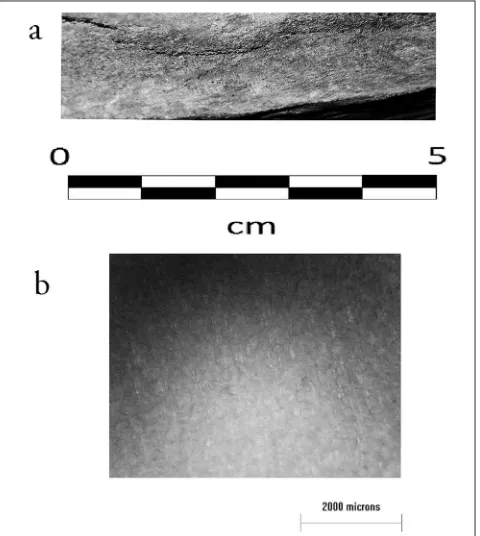
he surface of red deer antler is usually very rough, and marked by deep channels, though there is some variability between (and even within) the antlers of Cervus individuals. For instance, upper tines are often smoother than the main beam, perhaps due to brushing (rubbing against vegetation in order to accelerate the shedding of velvet) (Krzyskowska 1990, 60). Nonetheless, where present, the rough outer surface is diagnostic (seeFig. 20.2). Unfortunately, it is usually removed prior to the manufacture of objects (see MacGregor 1985, 58), but may occasionally be preserved even in worked artefacts.
[image:7.612.314.549.562.684.2]he antlers of A. alces lack a brow tine, and tend to have a large round burr (see Fig. 20.1). Most notably, they are large and heavily palmated, reaching up to 2m in span (Hufman 2003). hough less palmated examples are known (see Saether and Haagenrud 1985, 985), they are nonetheless distinctive
Steven P. Ashby
210
in form, size, and weight. he surface of elk antler features broad guttering, but this can be diferentiated from red deer antler, principally by means of scale (Fig. 20.2).
Reindeer (R. tarandus) antlers are quite distinctive (Fig. 20.1). hey are markedly asymmetrical, relatively thin in cross-section, and have a characteristic rough, outer surface (which is grey in fresh material). he males also bear distinctive ‘snow shovels’ for brow tines. Also of note is the fact that
R. tarandus pedicles may be less than 5mm long (Lie et al. 2003, 335). he antlers of male and female reindeer are easily distinguished, bull antler being much more elaborate and massive than cow antler. Nonetheless, there is variation within sexes, and it is possible that a rack from a young male may be confused with that of a mature female. More importantly, however, the antlers of reindeer as a whole are suiciently distinctive so that they are very unlikely to be mistaken for those of another species. he natural outer surface of reindeer antler is somewhat less rough than that of red deer or elk. It lacks the distinctive channelling, although isolated grooves are occasionally present (Fig. 20.2).
Macrostructure and small-scale variation
In objects, the task of isolating consistently preserved distinctive features is obviously more diicult. Occasionally, it is impossible to categorically diferentiate elk and red deer, but Smirnova claims that in her experience it is always possible to identify reindeer antler, providing that a variety of criteria are investigated in combination (see Smirnova 2002, 19). Polish, texture, dimensions and compact structure can be valuable clues, but none of these properties are suiciently diagnostic to be used as anything more than supporting criteria.
Identiication of the raw materials used in highly worked objects such as dress pins and composite combs can prove challenging, as in many cases all traces of porous material and surface texture have been systematically removed as part of the manufacturing process. However, in the less closely-worked areas of artefacts, one may occasionally discern small zones
of visible macrostructure, and these often prove valuable in material characterisation and identiication. On single-sided composite combs, for example, inspection of the back surface (the surface running along the upper edge of the comb at approximately 90o to the front face of the connecting plate) is
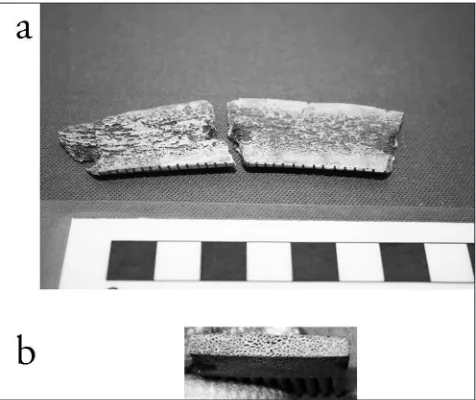
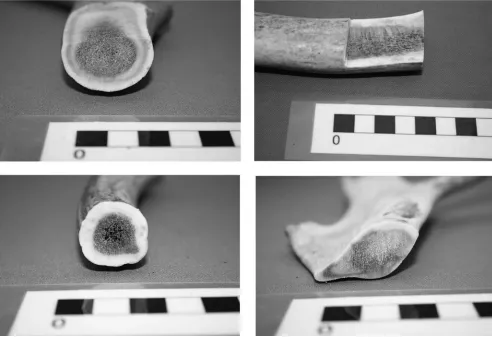
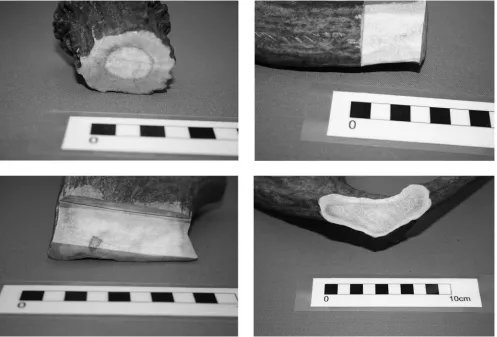
[image:8.612.68.558.76.203.2]frequently instructive. his area may render visible the rough interior surfaces of the toothplates clamped between connecting plates. Breakages also facilitate identiication, as they often reveal the cross-sections of connecting plates in which distinctive features of internal macrostructure may be visible (Fig. 20.3). In particular, one may observe the distinctive characteristics of (1) outer areas of compact antler; (2) porous core, composed of cancellous tissue; and (3) the margin between these two zones.
Figure 20.2 Surface texture of (a) Cervus elaphus, (b) Rangifer tarandus, (c) Alces alces (photographs: S. Ashby).
[image:8.612.321.559.253.453.2]20. Some Comments on the Identiication of Cervid Species in Worked Antler 211
Compact antler
Both Ambrosiani (1981, 103) and Smirnova (2005, 11) have suggested that the compact material that makes up the outer portion of an antler contains certain diagnostic features. Smirnova has suggested that there are species-diagnostic diferences in the degree of ‘organisation’ of blood vessels in the compacta which has implications for the roughness of the texture. Similarly, Ambrosiani points out that elk antler preserves the ‘black thread’ traces of blood vessels in its compacta, which is itself less ‘regular’ than that seen in red deer antler. However, this author found it diicult to characterise either modern or archaeological material in this way, and no diagnostic characteristics could be identiied under low magniication (up to 10×). To a certain degree the compact structure of red deer antler does seem more regular and organised than that of reindeer, but this is not easily quantiied, and the degree of overlap is so marked that any attempt to delineate a ixed watershed between the two species would be something of an arbitrary contrivance. Moreover, the compact structure of elk was very diicult to observe (even at a magniication of 10×, with a movable light source). All in all, I found that the structure of compact tissue in modern antler could not be readily used as a means of species diferentiation. It is possible that diagenetic staining would render identiication more straightforward, and future investigations involving quantitative image analysis might facilitate more precise characterisation of the antler compacta of diferent species, but at the present time, there appears no justiication for the application of this methodology in isolation.
Porous core and ‘transition zone’
A number of researchers (e.g. Ambrosiani 1981; Smirnova 2005) have noted distinctive features of the porous core and its margin with outer compact antler in red deer, reindeer, and elk. Notwithstanding the fact that these phenomena are not easily quantiied, they ofer potential as diagnostic criteria that could be recorded on a qualitative basis, providing that the protocols of recording were suiciently rigorous, and undertaken with the use of a reference collection. hey thus merit further investigation herein.
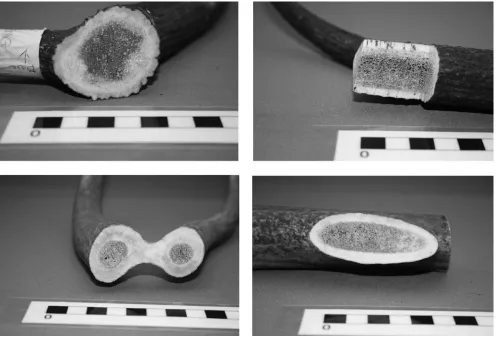
To summarise, the porous core of elk antler is very distinctive, containing ine, elongated pores that are often only clearly visible with the aid of a microscope. In material previously seen by the author, palmated areas evidenced a distinctive spongy core, in which the porosity was clearly visible, but nonetheless markedly iner than that typical for red deer (Fig. 20.4a). No attempt at quantiication was made; this is perhaps an area that would merit further investigation. In the material examined in the present study (which was relatively small in size, and not well-palmated), the core was very inely porous throughout, such that individual pores were not easily identiiable with the naked eye (Fig. 20.4b). Indeed, in the distal areas such as the
tines of A. alces antler, the core areas themselves were invisible without magniication. his is no doubt the phenomenon to which Penniman (1952, 37) refers when he notes that “elk seems to be closer-grained than reindeer”.
Red deer and reindeer antler are relatively easily distinguished from elk, as the pores are much rounder in Cervus and Rangifer
[image:9.612.312.552.245.513.2]than in Alces. Reindeer antlercore is typically very ine, but the primary diference between Cervus and Rangifer lies in the gradation to compacta. In reindeer this is extremely gentle and difuse with a semi-porous zone (no doubt Lie’s ‘spongy structure’), while the boundary is much more discrete in red deer (Smirnova 2002) (Fig. 20.5).
Figure 20.4 Core structure in Alces alces: a) open, spongy structure visible in palmated areas; early medieval material from Birka, Sweden; b) iner structure in relatively unpalmated modern material (photographs: S. Ashby, (a) courtesy Statens Historiska Museet).
[image:9.612.313.549.591.694.2]Steven P. Ashby
212
hese criteria have been shown to be useful in the study of antler waste and artefacts (Smirnova 1997, 2002); they were, after all, developed in order to be of use in the analysis of archaeological material. One might hope that the application of such criteria to other corpora should prove possible; given that the techniques appear to have been efective as aids in the study of highly worked objects such as composite combs, one may suppose that they might be easily applied to a wide range of other objects (such as handles, pegs, vessels, toggles, buckleplates and strap-ends), if not to very highly-worked pieces such as decorative pins. Nonetheless, Smirnova’s criteria are grounded in personal experience rather than empirical testing. More importantly, given that these techniques were developed through the study of, and in preparation for, the recording of material from Novgorod, it may be that the particular preservation quality of the material from this corpus lends itself to ine-grained analysis. hus, we should consider whether Smirnova’s criteria (or her application of conidence qualiiers) may require modiication in order to account for diferences in preservation at other sites. In particular, it is important to consider the possibility of distinctive macrostructures being generated (or inluenced) by factors other than species. In the following, I review existing literature on the relationship between antler growth and a number of variables: individual maturity; sex, environment, and phase of antlerogenesis. I then ofer some preliminary thoughts on the potential of these (and other) variables to confound attempts to identify species on macrostructural grounds.
Existing work on the process of antler growth
he key factors likely to afect antler growth and development are discussed below. hese factors are inter-related, rather than being truly independent variables. For example, the relationship between environment and nutrition must be a close (but complex) one, and it may also be that diferent sexes respond to malnutrition in diferent ways (see for instance Clutton-Brock 1989, 2; Horwitz and Smith 1990).
Individual confounds
Many physical attributes of deer vary considerably between individual animals (Mitchell et al. 1977, 41). For example, the age of the animal from which antler was taken may have an inluence. Age is related to overall morphology, as antler size and complexity increase until a peak is reached (at around 9–11 years in C. elaphus), before the beginning of a slow decline known as ‘going back’ (see Mitchell et al. 1977, 39, table 8). Clearly then, we must consider the possibility that age also afects internal structure.
Related to this is the developmental stage of the antler itself. As antler grows afresh each year, its gross morphology goes
through a period of change (see MacEwen 1920; Chapman 1975, 135–141). hus, antler taken from deer via hunting may vary in its properties depending upon the point in the antler cycle at which the animal was slaughtered. In practice, it could be argued that this is unlikely to present a major problem, as in Western Europe at least, most archaeological deposits of manufacturing waste consist very largely of shed antler, and therefore represent a roughly uniform state of annual development. However, given the ambiguity as to the proportion of original waste build up that these deposits represent, it is worth considering this variable more closely. It is also notable that waste deposits from medieval Novgorod, Russia, are dominated by antler from butchered animals (Smirnova 1997, 139), and one might expect a similar phenomenon to prevail in medieval Norway, where reindeer hunting is evidenced both historically and archaeologically (chiefly in the form of extensive trapping systems and associated activity sites) (see Indrelid and Huftammer 2011; Jordhøy 2008).
In most species of deer, only males normally bear antlers. However, in reindeer these structures are present in both males (bulls), and females (cows). he reason for this is unclear (although see Li et al. 2003), but it nonetheless represents another component of morphological – and possibly structural – variation that must be accounted for. Hormonal cycles afect bone growth in many taxa (e.g. Horwitz and Smith 1990), and hormones clearly have an important role in antlerogenesis (Harrison Matthews 1971, 376–377; Chapman 1975; Goss 1995). hus, in female reindeer it is possible that pregnancy and lactation may have an efect on antler formation, though a search of the zoological literature uncovered few studies of such phenomena. Penniman (1952, 35–36) does consider such inluences to be important in the formation of antler, but his evidence is rather anecdotal. Nonetheless, it is a variable that must be borne in mind when considering any diferences between the antlers of individual female reindeer.
20. Some Comments on the Identiication of Cervid Species in Worked Antler 213
as opposed to domestic stock (e.g. Hambleton and Rowley-Conwy 1997; papers in Jackson and hacker 1997), and although there are ethnohistoric allusions to the herding of ‘tame’ reindeer (Ross 1940, 20–21), I have yet to ind explicit historical references to castration, while Odner (1985, 5) claims that the ‘subsistence pattern of reindeer-herding belongs to the Post-Reformation Period’(see Storli 1993, and associated comments).
Disease and trauma can also afect antler morphology. Apart from direct damage to the antlers and pedicles themselves (MacEwen 1920, 23–26), abnormality occasionally seems to be related to genital damage or under-development. he swept-back morphology of cromie antlers (ibid., 27–31), and the soft, unmineralised overgrowths that characterise perruque heads (Page 1971, 39; Luxmoore 1980, 59–60) may form in this way. Furthermore, parasites such as liver luke may afect antlerogenesis. Corkscrew antlers are often thought to be related to such endoparasitic infestation (Luxmoore 1980, 60), though some studies have refuted this, and it has been suggested that they are the result of a ‘hereditary disturbance in calcium metabolism’ (see Chapman 1975, 151). All in all, it seems that the subject is not well understood, and while some pathological malformation may be identiiable, less clear cut cases might be relatively common and not recognised as abnormal (cf. King and Ulijaszek 1999, 175–176; Eveleth and Tanner 1990, 191–192).
Population-level confounds
here is also a great deal of variation at the inter-population level. Comparative studies of populations across the globe have demonstrated that there is much variation in antler size and gross morphology within Cervus elaphus; notably there is a north-west to south-east increase in both body and antler size across Europe. While some of this variation may be genotypic, it seems likely that at least some component of antler development is environmentally linked (Mitchell et al. 1977, 2–3; Luxmoore 1980, 61; Clutton-Brock 1989, 13, 71). Indeed, environment has been demonstrated to have an efect on the growth and development of antler (Asleson et al. 1997; Schmidt et al. 2001), and it is notable that many of the relatively small red deer of Britain live in areas of atypical habitat. In Scotland they tend to occupy exposed, highland areas with poor soils, and young animals removed and reared away from this environment have been seen to reach greater sizes (Mitchell et al. 1977, 5, 9; Clutton-Brock 1989, 2). Moreover, Scottish red deer populations from woodland and park habitats have been reported to grow larger antlers than those that occupy the hills (Whitehead 1964; Mitchell et al. 1977, 41; Clutton-Brock 1989, 59).
It may be that nutrition has a very marked impact on antler formation (see, for example, Azorit et al. 2002; Kruuk et al.
2002), particularly as antlers have a low growth priority relative to other elements of a deer’s body (Clutton-Brock 1989, 62;
see also Chapman 1975, 141–145). However, the relationship between nutrition and antlerogenesis is not well understood. Asleson et al. (1997) found that protein restriction had no consistent efect on the number of points, degree of spread, main beam length or circumference in their sample population of white-tailed deer (Odocoileus virginianus). However, it is likely that other nutritional components, such as calcium and phosphorous, are important in antler growth (Chapman 1975, 141; Mitchell et al. 1977, 9; see also Goss 1995; Asleson et al. 1996; Kierdorf et al. 2000).
It has been suggested that red deer stags with extremely well-developed antlers and supernumary points may owe such morphology to a high plane of nutrition (see for example Chapman 1975, 152; Whitehead 1964, 62). Controlled experimental work has shown that an increase in nutritional plane at a formative period may lead to accelerated and ampliied antler growth (Arman 1971, cited in Mitchell et al. 1977, 44; Clutton-Brock 1989, 59, 62). Contrary to popular sporting belief (see, for example, Luxmoore 1980, 60), it has also been postulated that the reason for the hummel’s lack of antlers is not genetic, but relates to poor nutrition in the early stages of life, and a consequent failure to grow pedicles (Clutton-Brock 1989, 62; Lincoln and Fletcher 1984). Chapman (1975, 132) has also noted that harsh environmental conditions may lead to delayed pedicle formation.
Nutrition is thus clearly important, but reaching a consensus is diicult, as much of the evidence is anecdotal, while laboratory experiments do not always adequately account for the efects of weather and outside activity (Mitchell et al. 1977, 10). his is a problem, as while climate clearly afects the availability and quality of food in an area (see Clutton-Brock 1989, 79–83, 135–136), it may also have a more direct efect on deer development. Temperature and weather conditions impact metabolism, as well as activity and shelter-seeking behaviour, which in turn have implications for energy consumption and heat stress (Mitchell et al. 1977, 16–17; see also Clutton-Brock 1989, 59, 89–91). Population density and competition for resources may also conceivably be important (Mitchell et al. 1977, 19, 45; Schmidt et al. 2001; Clutton-Brock et al. 1984; but see Clutton-Brock 1989, 113; Azorit
et al. 2002). he efect of such phenomena on an animal’s condition and performance, and in particular how stress might impact antler growth, are relatively poorly understood.
Exposure to sunlight may be an important factor, as photoperiod is known to be an important consideration in the hormonal and behavioural cycles of deer (Goss 1969; Chapman 1975, 148; Mitchell et al. 1977, 3). Indeed, this factor is bound up with that of nutrition, as the deer’s food intake seems to luctuate seasonally (Mitchell et al. 1977, 9; Luxmoore 1980, 20–26; see also Muir and Sykes 1988). Indeed, it may be that inter-population diferences in nutrition are lost beneath this seasonal imprint.
Steven P. Ashby
214
captivity and in the wild, in various countries, most notably in the Lake District of northern England (Lowe and Gardiner 1975) and the Scottish highlands (McNally 1969; Clutton-Brock 1989, 173–175). Indeed, some have raised concerns as to the long-term genetic purity of Scottish stock as a whole (Clutton-Brock 1989, 177). However, it is diicult to assess the level of interbreeding, given the inadequate documentation of introductions and translocations, and the lack of understanding of the consequences of hybridisation in deer (Mitchell et al. 1977, 2; see also Whitehead 1964, 371–395).
A number of other variables may be considered to be of interest, although their inluence is arguably marginal. For instance, it might be claimed that shed antler and antler from butchered individuals progress through a variety of taphonomic pathways, perhaps relating to the period during which they are exposed to the elements, or to the closing of blood vessels (recall that Ambrosiani [1981, igs 54–57] noted that blood vessels were still visible in elk antler years after shedding). However, it seems unlikely that such inluences would have a signiicant efect on internal structure, and, given the constraints placed on this research by its origin as a component of a much wider doctoral research project, they are not explored in depth here. Moreover, in what follows, it has only been possible to consider in detail some of the questions discussed above, although it is hoped that this represents a useful irst research step.
Characterising antler
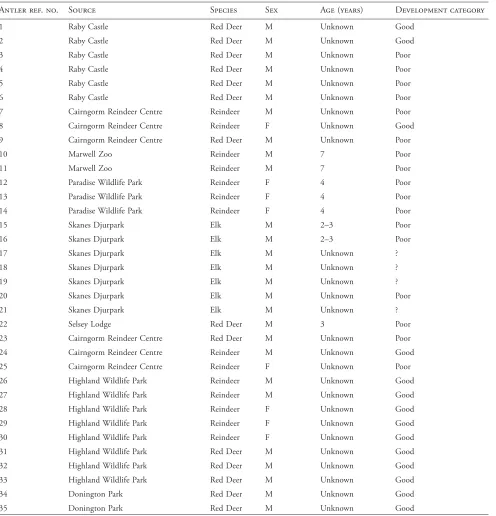
In order to test the techniques deined by Smirnova, and to identify any further useful criteria, or problems, a small qualitative investigation was undertaken of the macrostructural variation in the three species of interest. A collection of modern antler was subjected to microscopic and ‘by eye’ analysis (see Tables 20.1 and 20.2). In the context of this study, it was not possible to control for the factors of age, pathology, or environment to any realistic extent given the nature of the materials available and the ethical constraints of modern zoological research. Nonetheless, some level of control was achieved, and the results are of some interest, while further veriication of the techniques of identiication has been established through blind test replications (detailed in Ashby 2009). In what follows, the key characteristics of C. elaphus,
R. tarandus, and A. alces antler are described, with particular attention paid to the degree to which identifying criteria may be characterised as diagnostic. he discussion incorporates reference to both published literature and the author’s own investigations. Table 20.2 summarises the observed impact of each variable upon phenomena that ofer potential for use in identiication, and the following text treats the same issues in a more discursive manner.
Morphological position
The first influence upon macrostructure relates to the possibility of variation within a single antler, based on morphological position. With this in mind, a like-for-like analysis of material was undertaken. hus, the form, dimensions, and macrostructural phenomena of material taken from the burrs of C. elaphus antler were compared with their expression in basal and upper beam sections, with tine bases and tips, and with palmated areas. he same procedure was applied to samples of reindeer and elk antler.
In all three species, one may discern some inilling at the burr, causing a somewhat difuse core-compacta boundary (this appears to have been previously noted by Rolf Lie; see above). However, elsewhere in the antler, the boundary between core and compacta is consistent, and though the quantity of useable compacta diminishes as the beam as a whole thins, the ratio of core to compacta thickness does not appear to change signiicantly in areas other than the tine tips (Figs 20.6–20.8).
Age/Size
Comparison of burrs from old and young animals of each species (and then for basal beams, upper beams, tine bases and tips, and palmated areas) allowed the investigation of patterning according to size/maturity. Unfortunately, it was not feasible to attribute individual age on the basis of antler size or morphology; given the complexity of life-long antler development, such estimates are known to be simplistic and problematic. However, by dividing the sample into broad categories (in accordance with evidence for a clear bimodality in size distribution, based on antlers for which total length was known; see Ashby 2006, appendix 3), and calibrating this with a number of antlers from animals of known age and shed at a known date, it was possible to categorise the material according to ‘development classes’.
In red deer, no consistent macrostructural diferences are apparent between poorly and well developed antlers. In the sample examined, there was no macrostructural diference between the two groups; such phenomena are simply present on diferent scales. he very coarse porosity visible in the cores of some large, well-developed antlers is not present in more poorly developed specimens, but the fundamental structure is identical. Moreover, the discrete boundary between core and compacta is a constant.
Antler ref. no. Source Species Sex Age (years) Development category
1 Raby Castle Red Deer M Unknown Good
2 Raby Castle Red Deer M Unknown Good
3 Raby Castle Red Deer M Unknown Poor
4 Raby Castle Red Deer M Unknown Poor
5 Raby Castle Red Deer M Unknown Poor
6 Raby Castle Red Deer M Unknown Poor
7 Cairngorm Reindeer Centre Reindeer M Unknown Poor
8 Cairngorm Reindeer Centre Reindeer F Unknown Good
9 Cairngorm Reindeer Centre Red Deer M Unknown Poor
10 Marwell Zoo Reindeer M 7 Poor
11 Marwell Zoo Reindeer M 7 Poor
12 Paradise Wildlife Park Reindeer F 4 Poor
13 Paradise Wildlife Park Reindeer F 4 Poor
14 Paradise Wildlife Park Reindeer F 4 Poor
15 Skanes Djurpark Elk M 2–3 Poor
16 Skanes Djurpark Elk M 2–3 Poor
17 Skanes Djurpark Elk M Unknown ?
18 Skanes Djurpark Elk M Unknown ?
19 Skanes Djurpark Elk M Unknown ?
20 Skanes Djurpark Elk M Unknown Poor
21 Skanes Djurpark Elk M Unknown ?
22 Selsey Lodge Red Deer M 3 Poor
23 Cairngorm Reindeer Centre Red Deer M Unknown Poor
24 Cairngorm Reindeer Centre Reindeer M Unknown Good
25 Cairngorm Reindeer Centre Reindeer F Unknown Poor
26 Highland Wildlife Park Reindeer M Unknown Good
27 Highland Wildlife Park Reindeer M Unknown Good
28 Highland Wildlife Park Reindeer F Unknown Good
29 Highland Wildlife Park Reindeer F Unknown Good
30 Highland Wildlife Park Reindeer F Unknown Good
31 Highland Wildlife Park Red Deer M Unknown Good
32 Highland Wildlife Park Red Deer M Unknown Good
33 Highland Wildlife Park Red Deer M Unknown Good
34 Donington Park Red Deer M Unknown Good
[image:13.612.59.555.64.580.2]35 Donington Park Red Deer M Unknown Good
Table 20.1 Modern antler used in investigation.
Table 20.2 Summary of results.
Variable Visible effect upon compacta-core transition Other perceived effects
Morphological Position Inilling at burr Dimensions
Age None Dimensions, morphological complexity, compacta mottling
Sex None Dimensions, complexity
Environment None Dimensions, complexity
[image:13.612.59.546.645.733.2]Steven P. Ashby
216
of young antlers are distinctive (notably a darker mottling in the compacta), structure and relative proportions show no consistent diferences.
In elk, antler exhibits a dark ring around the edge of the core area, probably relating to the extent of blood vessels. A limited sample meant that it was impossible to test the degree to which this was subject to age-related variation, but supericial phenomena such as these are anyway of limited utility to the archaeologist, and macrostructural phenomena are of greater interest. As it stands, there is no reason to suspect that age has any major efect on core structure, but further work is necessary before it may be accepted without reservation as a criterion of identiication.
Sex
Females grow antlers only in reindeer. Reindeer cow antler is, in the main, smaller, and less strongly built than bull antler. It has a smaller cross section, and is frequently both much shorter in length and less complex in morphology than the antler of mature males. However, like-for-like investigation of burrs, basal beams, upper beams, tine bases and tips, and
palmated areas for this species show that ratios of core to compacta thickness are similar in male and female examples, while the transition from porous core to compacta seems to be difuse in both.
Environment
[image:14.612.65.561.367.704.2]To note the efect of variations in environmental conditions such as climate, nutrition and population pressure, and genetic inluences such as isolation, interbreeding and hybridisation, antler material was next compared according to its provenance. Comparison of material from individual sources failed to demonstrate the existence of consistent patterns relating to particular parks. Consideration within a wider frame of reference made it clear that in this sample Scottish examples tended to be relatively large and well-developed in terms of gross morphology. his may simply result from the sampling strategy of the collectors from whom material was acquired, though it is more likely an artefact of diferences in habitat and mode of captivity. Notwithstanding any insecurity regarding the root of this disparity in gross morphology and overall development, it is signiicant that this is not echoed in internal macrostructure.
20. Some Comments on the Identiication of Cervid Species in Worked Antler 217
Concerning reindeer, the English sample size was small, but examples from Scotland nonetheless seem much more complex in terms of gross morphology than those in southern England. his may relate to environmental factors, as it is generally acknowledged that the area in which the animals can roam in the highlands of Scotland is greater than the restricted parkland available to English populations. Once again, however, internal macrostructure is identical in English and Scottish material.
hus, there is no evidence of geographical variation in the macrostructure of British red deer or reindeer antler. Furthermore, no signiicant structural diferences were noted between British and Swedish-sourced reindeer antler. his is of course only a preliminary, qualitative investigation, and sample sizes are small with little control, but there is little evidence to suggest that geographical provenance has any important bearing on internal macrostructure in the antler of these species. Detailed investigation of this phenomenon in elk antler material was not possible in these investigations, but would beneit from research.
It is also important to assess the impact of hormonal or pathological inluences upon antler growth. here is an extensive literature on this (see also below), and, given the ethical implications of undertaking such work today, it is neither
possible nor desirable to further pursue this avenue through controlled investigation. In the sample used in the present study, no signiicant malformation, pathology, or symptoms of hormonal disturbance were noted, but it is of course possible that any such insult could impact upon macrostructural phenomena.
Antlerogenesis
[image:15.612.54.546.367.704.2]It is conceivable that antler macrostructure is not immutable, and that it is subject to seasonal variation, just as antler morphology develops through the year. In shed antler, this does not cause a problem, as all such material represents the material completion of the annual cycle of antler growth. However, antler from butchered animals may be taken from the deer at any point in its period of development, such that the ‘age at death’ of a given antler may introduce a confound to any attempt to identify it to species. he single example of butchered antler in the collection (red deer no. 23, date of kill unknown) displayed a very distinctive surface texture, with a deep surface colour and a marked, consistent surface channelling. More important, though, is the fact that the internal macrostructure seemed identical to that
Steven P. Ashby
218
of shed antler. Obviously, it is impossible to categorically state that macrostructure does not develop or change during antlerogenesis; such a statement would necessarily be based on controlled analysis of antler representing known stages of development. Such investigation more properly lies within the remit of zoology and biology, rather than archaeology, and there is a wide literature on the relationship between antlerogenesis and various environmental and other constraints (e.g.Asleson et al. 1996, 1997; Azorit et al. 2002; Kierdorf
et al. 2000, 1995; Lincoln and Fletcher 1984; MacEwen 1920; Smith 1998). Nonetheless, nothing in the present investigations (limited as they are) or existing literature suggests that species-level distinction on macrostructural grounds would be seriously undermined by antlerogenic confounds.
Discussion
In sum, it seems that our basic identiication criteria stand up at least to this base-level analysis. Characterisation of surface texture provides a reliable manner of diferentiating species,
as red deer, reindeer, and elk textures are diagnostic. However, such features are not frequently preserved in artefacts, and other criteria must often be utilised.
[image:16.612.64.561.76.413.2]Diagnostic features within the structure of antler compacta could not be conidently identiied, casting doubt on the suggestion that the structure of compact tissue in modern antler may be easily used as a criterion for species distinction, at least in the context of currently available methods and materials. Conversely, the nature of the porous core seems reliable as a distinguishing criterion. For example, the ine porosity of elk antler core material is distinctive, and the apparent absence of visible porosity in the tines of elk antler is particularly diagnostic (see Smirnova 2005, 11). However, diferentiation between the cores of red deer and reindeer is more diicult, as no consistently observable characteristics are apparent (although, as above, quantiication via image analysis may ultimately prove valuable). hus, the presence of a semi-porous transition zone in reindeer and its absence in red deer show the greatest potential at present. Problems with this criterion include the possibility of confusion between the semi-porous zone in reindeer and the core itself in distal
20. Some Comments on the Identiication of Cervid Species in Worked Antler 219
areas of elk antler, such as the tines. If the preserved areas of core and core-compacta margin are suiciently large, the two species may be distinguished. However, if only vestiges are preserved in artefacts and the morphology of the core itself is not visible, then there is potential for uncertainty.
Given that the presence or absence of a ‘transition’ zone is a matter of degree rather than one of absolutes, there is of course the possibility of occasional inaccurate identiication, and for this reason identiication should be restricted to material in which macrostructural phenomena are both very well preserved and clearly visible. Furthermore, any identiication made solely on the basis of this criterion should be qualiied by the term ‘probable’. With these caveats in mind, it may be instructive to discuss the limits of certainty in a little more detail. On relection, the misidentiication of red deer antler as reindeer is conceivable, as the cut of an antler object may render small areas of marginal core material visually similar to the semi-porous transition zone characteristic of reindeer. In contrast, where the core-compacta margin is clearly discrete, one can have some conidence that the material in question is red deer antler (or, depending on scale, elk). Supericially then, the mistaking of red deer for reindeer seems a more likely problem than the converse.
Palmate areas of elk antler have a coarser porosity than that present in the tines, and one which – when only present in small quantities – could be mistaken for the peripheral areas of red deer or reindeer core. Where worked fragments of such palmated material are the subject of study, identiication must be one of probability rather than one of absolutes. hus, a small reference collection is essential in diferentiating species, and one must always err on the side of caution. Identiications should be qualified with terms such as ‘probably’, and supporting criteria should be used where possible (e.g. size of component, surface texture, compacta structure etc.).
Another diiculty is created by the fact that near the burr of all species, resorption from the pedicle may take place, resulting in a sort of secondary inilling. Should this be seen in red deer antler, it may be mistaken for the semi-porous zone in reindeer. Again, this should only occur if suicient morphology is not preserved, as the phenomena may be obscured in small fragments, or in those that have been cut obliquely across the edge of the core area. However, consistent recurrence of semi-porosity in many objects would, on the basis of probability, suggest the use of reindeer antler, as the resorption phenomena occur only at the antler base and pedicle.
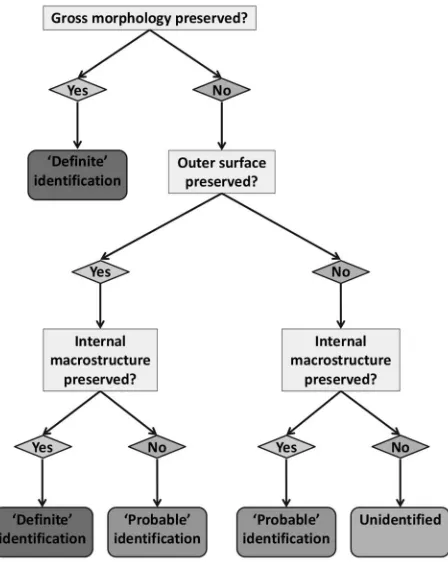
hus, all in all, a tripartite system of identiication seems appropriate (Fig. 20.9). Where the gross external morphology or outer surface texture of the antler are preserved, a deinite
species identiication may be provided. Where surface texture is not present, but core or transition zone macrostructure is well-preserved and visible, a probable identiication should be made. Criteria such as component size, compacta structure, texture and colour may be used to support such assertions, but are insuicient criteria for identiication in their own
right. hus, where gross morphology, surface texture, or core-compacta macrostructure are not preserved, an indeterminate
assignation should be made. In many cases, a characterisation of a material as indeterminate antler (rather than bone) is all
that may be achieved, and in many cases even this is not possible (see O’Connor 1987, 1999).
Conclusions
On the basis of a qualitative assessment of modern material, it has been suggested here that the zooarchaeological basis for the species-level identiication of antler is fundamentally sound, subject to a number of important caveats. In the absence of any large-scale study of the impact of these potential confounds, the most powerful measures of the validity of this methodology come in the form of blind-testing of modern material (Ashby 2009, 18–20), and in the calibration of these methods using biomolecular (proteomic or genetic) techniques (see von Holstein et al. in prep; see Postscript).Nonetheless,
[image:17.612.319.543.80.361.2]it is argued here that the application of these identiication criteria are justiied in the characterisation of large or well preserved fragments. In smaller, more highly-worked, or taphonomically degraded pieces, these base-level methods may be of utility, but are best exploited as part of an initial,
Steven P. Ashby
220
evaluative assessment undertaken in advance of more rigorous characterisation procedures, such as those that exploit genetic or biomolecular technologies.
Postscript: next generation approaches
Ultimately, it is of course desirable to move beyond ‘probable’ identifications. Recent developments in biomolecular archaeology now allow some measure of certainty in their identiications, and sampling methods are now minimally destructive, so for the irst time such techniques constitute a viable alternative to macroscopic identiication.
To provide a little detail, the development of a peptide mass ingerprinting method known as ZooMS (Zooarchaeology by Mass Spectrometry) constitutes a signiicant breakthrough in rapid, minimally destructive, high-throughput analysis of organic materials (Buckley et al. 2009). his method facilitates species-level identiication of any material containing collagen (the principal protein in bone and antler). Collagen is extracted by demineralisation, trypsinated, fractionated, and analysed by time-of-light mass spectrometry, and the resultant ingerprint may then be compared to a reference library of previously analysed species. In this way, combs that might not be readily identiied on macroscopic grounds can nonetheless be precisely characterised. he rapid rate of throughput possible, together with the small size of samples required (1 mg) means that large numbers of specimens might be analysed, while the technique’s use of collagen (which is extremely robust) means that analyses are rarely seriously inhibited or undermined by taphonomic constraints.
A recent application of this approach in the analysis of samples from Scottish Iron Age, Viking-Age and medieval comb teeth yielded promising results (von Holstein et al. 2014), and showed the technique to have a higher success rate than either genetic (aDNA) analysis or the macroscopic approach outlined above. However, such analyses, no matter how minimallydestructive, may not be applicable in all cases, and, given their relative efectiveness at diferent scales, it is likely that it is in a judicious combination of these techniques that the most efective way forward will be found.
Acknowledgements
his paper relates the indings of research undertaken as part of a project funded by the AHRC. he paper has beneitted from the thoughts and encouragement of James Barrett, Alice Choyke, Matthew Collins, Sonia O’Connor, Terry O’Connor, Julian D Richards and Isabella von Holstein. hanks also to Rob Symmonds, for stimulating discussion on the potential relationship between photoperiod, nutrition, and antler growth. For providing antler material, I gratefully acknowledge the help of the staf of the following institutions: Cairngorm
Reindeer Centre, Highland Wildlife Park, Marwell Zoological Park, Paradise Wildlife Park, Raby Castle Deer Park, Selsey Lodge Deerpark, and Skanes Djurpark. Particular thanks are due to Michael Ashby, who prepared the samples for these investigations, and to Lyuba Smirnova, whose input and advice was invaluable in the early stages of this research, and who, had the author been able to contact her, would certainly have improved this paper through further useful comments and contributions. All errors remain the author’s own.
Bibliography
Ambrosiani, K. (1981) Viking Age Combs, Comb Making and Comb Makers in the Light of Finds from Birka and Ribe. Stockholm, Stockholm Studies in Archaeology 2.
Ashby, S. P. (2006) Time, Trade and Identity: bone and antler combs in Northern Britain c. AD 700–1400. Unpublished PhD thesis, Department of Archaeology, University of York.
Ashby, S. P. (2009) Combs, contact and chronology: reconsidering hair combs in Early-Historic and Viking-Age Atlantic Scotland. Medieval Archaeology 53, 1–34.
Asleson, M. A., Hellgren, E. C. and Varner, L. W. (1996) Nitrogen requirements for antler growth and maintenance in white-tailed deer. Journal of Wildlife Management 60 (4), 744–752.
Asleson, M. A., Hellgren, E. C. and Varner, L. W. (1997) Efects of seasonal protein restriction on antlerogenesis and body mass in adult male white-tailed deer. Journal of Wildlife Management 61 (4), 1098–1107. Azorit, C., Analla, M., Carrasco, R. and Munoz-Cobo, J. (2002) Inluence
of age and environment on antler traits in Spanish red deer (Cervus elaphus hispanicus). Zeitschrift Fur Jagdwissenschaft 48 (3), 137–144. Ballin Smith, B. (1995) Reindeer antler combs at Howe: contact between late Iron Age Orkney and Norway. Universitetets Oldsaksamlings Årbok 1993/94, 207–211.
Barrett, J. H. (2003) Culture contact in Viking Age Scotland. In J. H. Barrett (ed.), Contact, Continuity, and Collapse: the Norse colonization of the North Atlantic, 74–111. Turnhout, Brepols.
Bubenik, G. A. (1990) Neuroendocrine regulation of the antler cycle. In G. A. Bubenik and A. B. Bubenik (eds), Horns, Pronghorns, and Antlers, 265–297. New York, Springer-Verlag.
Buckley, M., Collins, M., homas-Oates, J. and Wilson, J. C. (2009) Species identiication by analysis of bone collagen using J. matrix-assisted laser desorption/ionisation time-of-light mass spectrometry. Rapid Communications in Mass Spectrometry 23 (23), 3843–3854. Carlé, P., Sigurdh, D. and Ambrosiani, K. (1976) Preliminary Results
of Proton-Induced X-Ray Analysis of Archaeologic Antler Findings. Stockholm, Annual Reports from Research Institute of Physics. Chapman, D. I. (1975) Antlers – bones of contention. Mammal Review
5 (4), 121–172.
Clutton-Brock, T. H. (1989) Red Deer in the Highlands. Oxford, BSP Professional Books.
Clutton-Brock, J. and MacGregor, A. (1988) An end to medieval reindeer in Scotland. Proceedings of the Society of Antiquaries of Scotland 118, 23–35. Clutton-Brock, T. H., Guinness, F. E. and Albon, S. D. (1984) Individuals
and populations: the efects of social behaviour on population dynamics in deer. Proceedings of the Royal Society of Edinburgh (B) 82, 275–290.
20. Some Comments on the Identiication of Cervid Species in Worked Antler 221
Goss, R. J. (1969) Photoperiodic control of antler cycles in deer.1: phase shift and frequency changes. Journal of Experimental Zoology 170, 311–324.
Goss, R. J. (1995) Future directions in antler research. Anatomical Record 241 (3), 291–302.
Graham-Campbell, J. and Batey, C. E. (1998) Vikings in Scotland: an archaeological survey. Edinburgh, Edinburgh University Press. Hambleton, E. and Rowley-Conwy, P. (1997) he Medieval reindeer
economy at Gæccevaj’njar’ga 244B in the Varanger Fjord, North Norway. Norwegian Archaeological Review 30 (1), 55–70.
Harrison Matthews, L. (1971) he Life of Mammals. London, Weidenfeld and Nicolson.
Horwitz, L. K. and Smith, P. (1990) A radiographic study of the extent of variation in cortical bone thickness in Soay sheep. Journal of Archaeological Science 17, 655–664.
Hufman, B. (2003) Ultimate Ungulate Fact Sheets. Retrieved 24th July 2003, from http://www.ultimateungulate.com/Artiodactyla/ Alces_alces.html.
Ilkjaer, J. (1993) Illerup Ådal: 3. Die Gurtel – Bestandteile und Zubehor, Textband, Jysk Archaeologisk Selskab, Jutland Archaeological Science Publications 25 (3). Aarhus, Moesgård Museum, Aarhus Universitet. Indrelid, S. and Hufthammer, A. K. (2011) Medieval mass trapping of
reindeer at the Hardangervidda mountain plateau, South Norway.
Quaternary International 238 (1–2), 44–54.
Jackson, L. J. and hacker, P. T. (eds) (1997) Caribou and Reindeer Hunters of the Northern Hemisphere. Aldershot, Ashgate Publishing (Worldwide Archaeology Series).
Jordhøy, P. (2008) Ancient wild reindeer pitfall trapping systems as indicators for former migration patterns and habitat use in the Dovre region, southern Norway. Rangifer 28 (1), 79–87.
Kierdorf, U., Kierdorf, H.and Boyde, A. (2000) Structure and mineralisation density of antler and pedicle bone in red deer (Cervus elaphus L.) exposed to diferent levels of environmental luoride: a quantitative backscattered electron imaging study. Journal of Anatomy
196, 71–83.
Kierdorf, U., Kierdorf, H. and Knuth, S. (1995) Efects of castration on antler growth in fallow deer (Dama dama L.). Journal of Experimental Zoology 273, 33–43.
King, S. E. and Ulijaszek, S. J. (1999) Invisible insults during growth and development: contemporary theories and past populations. In R. D. Hoppa and C. M. Fitzgerald (eds), Human Growth in the Past: studies from bones and teeth, 161–182. Cambridge, Cambridge University Press.
Kruuk, L. E. B., Slate, J., Pemberton, J. M., Brotherstone, S., Guiness, F. and Clutton-Brock, T. (2002) Antler size in red deer: heritability and selection but no evolution. Evolution 56 (8), 1683–1695. Krzyszkowska, O. (1990) Ivory and Related Materials: an illustrated
guide London, Institute of Classical Studies(Classical Handbook 3, Bulletin Supplement 59).
Lie, R. (1993) Appendix. In B. Weber (ed.), Norwegian Reindeer Antler Export to Orkney, Universitetets Oldsaksamlings Årbok 1991/1992,
161–174.
Lie, C., Clark, D. E. and Suttie, J. M. (2003) Deer pedicle height, tissue interactions and antler evolution. Deer 12 (6), 333–338.
Lincoln, G. and Fletcher, T. (1984) History of a hummel part VII. Nature vs. nurture. Deer 6, 127–131.
Lowe, V. P. W. and Gardiner, A. S. (1975) Hybridisation between red deer (Cervus elaphus) and sika deer (Cervus nippon) with particular reference to stocks in N.W. England. Journal of the Zoological Society of London 177, 553–566.
Luxmoore, E. (1980) Deer Stalking. Newton Abbot, David and Charles.
MacEwen, W. (1920) he Growth and Shedding of the Antler of the Deer: the histological phenomena and their relation to the growth of bone. Glasgow, Maclehose, Jackson and Co.
MacGregor, A. (1985) Bone, Antler, Ivory and Horn: the technology of skeletal materials since the Roman period. London, Croom Helm. McNally, L. (1969) A probable red deer/sika hybrid. Deer 1, 287–288. Mitchell, B., Staines, B. W. and Welch, D. (1977) Ecology of Red Deer: a research review relevant to their management in Scotland. Cambridge, Institute of Terrestrial Ecology.
Muir, P. D. and Sykes, A. R. (1988) Efect of winter nutrition on antler development in red deer (Cervus elaphus) – a ield study. New Zealand Journal of Agricultural Research 31 (2), 145–150.
Myhre, B. (1993) he beginning of the Viking Age – some current archaeological problems. In A. Faulkes and R. Perkins (eds), Viking Revaluations, 182–204. London, Viking Society for Northern Research. O’Connor, S. (1987) he identiication of osseous and keratinaceous
materials at York. In K. Starling and D. Watkinson (eds), Archaeological Bone, Antler and Ivory, 9–21. London, United Kingdom Institute for Conservation(Occasional Paper 5).
O’Connor, S. (1999) he preservation, identiication and conservation of the inds. In A. MacGregor, A. J. Mainman and N. S. H. Rogers (eds), he Craft, Industry and Everyday Life: bone antler, ivory and horn from Anglo-Scandinavian and Medieval York, 1898–1901. York, Council for British Archaeology/Archaeology of York 17/2. Odner, K. (1985) Saamis (Lapps), Finns and Scandinavians in history and
prehistory. Ethnic origins and ethnic processes in Fenno-Scandinavia.
Norwegian Archaeological Review 18 (1–2), 1–13.
Page, F. J. T. (ed.) (1971) Field Guide to British Deer. Oxford, Blackwell. Penniman, T. K. (1952) Pictures of Ivory and Other Animal Teeth, Bone
and Antler. Oxford, Pitt-Rivers Museum (Occasional Papers on Technology 5).
Ross, A. S. C. (1940) he Terinnas and Beormas of Ohthere, Leeds School of English Language Texts and Monograph 7. Kendal, Titus Wilson. Saether, B.-E. and Haagenrund, H. (1985) Geographical variation in
the antlers of Norwegian moose in relation to age and size, Journal of Wildlife Management 49, 983–986.
Schmidt, K. T., Stien, A., Albon, S. D. and Guinness, F. E. (2001) Antler length of yearling red deer is determined by population density, weather and early life history. Oecologia 127, 191–197.
Smirnova, L. (1997) Antler, bone and ivory working in Nerevsky and Lyudin ends of Medieval Novgorod: evidence from waste analysis. In G. De Boe and F. Verhaeghe (eds), Material Culture in Medieval Europe: papers of the ‘Medieval Europe Brugge 1997’ conference, 137–146. IAP Rapporten 07.
Smirnova, L. (2002) Comb-making in Medieval Novgorod (950–1450): an industry in transition. Unpublished PhD hesis, University of Bournemouth.
Smirnova, L. (2005) Comb-Making in Medieval Novgorod (950–1450). An industry in transition. Oxford, Archaeopress (British Archaeological Report S1369).
Smith, A. N. (2000) Material culture and North Sea contacts in the ifth to seventh centuries AD. In J. C. Henderson (ed.), he Prehistory and Early History of Atlantic Europe, 181–188. Oxford, Archaeopress (British Archaeological Report S861).
Smith, B. L. (1998) Antler size and winter mortality of elk: efects of environment, birth year, and parasites. Journal of Mammalogy 79 (3), 1038–1044.
Stephan, E. (1994) Die Materielbestimmung der “Bein” schnallen aus Bopingen, Pfullingen und Gruibingen. In D. Quast (ed.),
Steven P. Ashby
222
Storli, I. (1993) Reply to comments on Sami Viking Age pastoralism – or “he Fur Trade Paradigm” reconsidered. Norwegian Archaeological Review 26 (1), 41–48.
Took, R. (2004) Running with Reindeer: encounters in Russian Lapland. London, John Murray.
Von Holstein, I. C. C., Ashby, S. P., van Doorn, N. L., Sachs, S. M., Buckley, M., Meiri, M., Barnes, I., Brundle, A. and Collins, M. J. (2014) Searching for Scandinavians in pre-Viking Scotland: molecular inger printing of Early Medieval combs. Journal of Archaeological Sciences 41, 1–6. http://dx.doi.org/10.1016/j.jas.2013.07.026 Webb, S. D. (2000) Evolutionary history of New World cervidae. In E.
S. Vrba and G. B. Schaller (eds), Antelopes, Deer, and Relatives: fossil record, behavioural ecology, systematics, and conservation, 38–64. New Haven and London, Yale University Press.
Weber, B. (1992) Norwegian exports in Orkney and Shetland during the Viking and Middle Ages. In R. A. Hall, R. Hodges and H. Clarke (eds), Medieval Europe 1992, Preprinted Papers Volume 5: exchange and trade, 159–167. York, Medieval Europe 1992.
Weber, B. (1993) Norwegian reindeer antler export to Orkney. Universitetets Oldsaksamlings Årbok 1991/1992, 161–174.
Weber, B. (1994) Iron Age combs: analyses of raw material. In B. Ambrosiani and H. Clarke (eds), he Twelfth Viking Congress: developments around the Baltic and the North Sea in the Viking Age, 190–193. Stockholm, he Birka Project.