promoting access to White Rose research papers
Universities of Leeds, Sheffield and York
http://eprints.whiterose.ac.uk/
This is an author produced version of a paper published in Photochemistry and
Photobiology.
White Rose Research Online URL for this paper:
http://eprints.whiterose.ac.uk/77727/
Paper:
Gilkeson, CA and Noakes, CJ (2013) Application of CFD Simulation to Predicting
Upper-Room UVGI Effectiveness. Photochemistry and Photobiology, 89 (4). 799 - 810 (12).
Application of CFD Simulation to Predicting Upper-Room UVGI
Effectiveness
Carl A Gilkeson, Catherine J Noakes*,
Pathogen Control Engineering Institute, School of Civil Engineering, University of Leeds,
Leeds LS2 9JT, UK
*Corresponding author e-mail: [email protected](Dr Catherine Noakes)
ABSTRACT
This paper outlines the potential for Computational Fluid Dynamics (CFD) simulation to be
used to predict upper-room ultraviolet germicidal irradiation (UVGI) effectiveness to aid
system design and the development of future guidance. A numerical study of two
wall-mounted UVGI lamps in a mechanically-ventilated test chamber is used to assess the influence
of modelling parameters on prediction of dose distribution and microorganism inactivation.
Irradiance fields for both UVGI fixtures are obtained via radiometry and implemented in the
model. A series of sensitivity studies consider the importance of UVGI field accuracy and
computational grid and turbulence model selection. Results show that 2D irradiance fields are
sufficient for calculating dose and inactivation whereas a 1D field is inadequate for modelling
purposes. Further parametric studies consider the effects of ventilation parameters, UVGI lamp
configuration and microorganism susceptibility. These demonstrate the feasibility of
modelling the interaction of the airflow and UV field in a room to quantify the dose
distribution. Microorganism inactivation can also be accomplished by employing passive
scalars and species transport models, however further validation data is necessary before this
INTRODUCTION
The effectiveness of an upper-room ultraviolet germicidal irradiation (UVGI) device as an
infection control measure depends on the airflow patterns within a room and their ability to
transport airborne pathogens through a sufficiently intense upper-room ultraviolet-C (UVC)
irradiance field to significantly reduce the percentage of microorganisms present within the
room. This process depends on a range of physical and biological factors including the
susceptibility of microorganisms to UVC under different environmental conditions, the
intensity of the UV field (which in turn depends on the number of fittings used, their location
and design characteristics), the ventilation rate and airflow patterns within the room and the
location of infectious sources and susceptible occupants. A well-planned installation may
potentially be ineffective if the airflow is such that infectious airborne particles are not carried
through the UV-C field. In a practical setting the application of ceiling mounted mixing fans is
generally recommended to minimise the chances of this occurring (1). However, this strategy
is not applied in all environments, and the fact remains that the combined effect of air
movement and UV field intensity determines the UV dose received by airborne pathogens and
hence the inactivation potential of the device.
Laboratory based studies have clearly demonstrated that the susceptibility of a
microorganism to UVC irradiation depends upon the species and strain of the microorganism
present and the environmental conditions during exposure. Despite uncertainties over the
impact of humidity and repair mechanisms, studies have demonstrated that many
microorganisms exhibit first-order decay that enables the rate of inactivation, dC/dt, to be defined in terms of a susceptibility constant, Z (m2/J) (note that in some studies the susceptibility constant for single-pass experiments is denoted byk), the UV irradiance field,E
(W/m2) and the exposure time,t(s):
ZEt dt
dC
(1)
This behaviour has been demonstrated for a range of airborne microorganisms under
bench-scale test conditions (2-4). The approach is relatively straightforward and quantification
of biological parameters, environmental conditions and the airflow characteristics is feasible.
difficult. From an experimental perspective, a small number of studies (1,5,6) have quantified
the inactivation of airborne microorganism species released in a room in the presence of one or
more upper-room UVGI devices under different temperature and humidity conditions. In the
majority, the upper-room field generated by the UVGI devices is also measured or quantified
in some way. While these studies clearly show that upper-room UVGI can be effective, they
cannot explain the detail of the disinfection mechanism as there is typically little or no
knowledge of the room airflow pattern. Even in cases where a mixing fan is present, the actual
disinfection process will depend on the specific path that a microorganism takes through the
UV field. As such it is currently difficult to translate the results from controlled room-scale
laboratory experiments and make predictions about the effectiveness of upper-room UVGI
devices in real scenarios. Understanding the UV-airflow interaction is critical for optimising
the future design and application of upper-room UVGI.
Mathematical Modelling Approaches
Modelling and simulation of upper-room UVGI systems offers a means of exploring the
interaction between airflow patterns and passive UV devices as well as the potential impact of
design parameters.
Zone-mixing models consider the movement of bulk airflow within a room by
representing it in terms of two or more zones. Typically, the upper zone contains a UV field
and a mass-balance approach is used to approximate contaminant transfer between zones and
the first-order decay model (Equation (1)) is applied to simulate contaminant removal. Several
authors have developed such models which account for transient effects (7), near occupant
zones (8,9), the relationship with ventilation flows (10,11) and the evaluation of susceptibility
data (12). Whilst these models are useful for approximating global behaviour they are
insufficiently detailed to account for subtleties in airflow behaviour and the spatial distribution
of the UV irradiance fields.
Computational Fluid Dynamics (CFD) simulations account for the inherent
three-dimensionality of a real indoor airflows. This approach is widely adopted in the assessment of
contaminant transport and turbulent kinetic energy equations (The Navier-Stokes equations) in
a discrete number cells (grid) defined across the space (room) of interest. This permits analysis
of the distribution of parameters such as air velocity, pressure, temperature and contaminant
distribution in a given environment for a given set of conditions. Studies focusing on
upper-room UVGI have applied both particle-tracking (15-17) and passive scalar transport methods
(2,9,18,19) in an attempt to simulate pathogen inactivation. Other studies have focused solely
on the UV dose delivered to the room air, again using a passive scalar tracer (20,21) which is
analogous to age of air methods. While these studies show CFD has potential for evaluating
UVGI systems, there remain uncertainties surrounding the specification of irradiance fields,
the influence of parameters such as turbulence, the numerical accuracy of such models and the
integration of a biological process with a physical system.
Scope
This paper considers the current state-of-the-art in CFD modelling of upper-room UVGI and
explores some of the current limitations. A study of two wall-mounted lamps in a
mechanically-ventilated test chamber is used to illustrate modelling approaches and to
consider how sensitive the model output is on the input and solution parameters. The results
are used to recommend how CFD may currently be applied to upper-room UVGI and what the
future research needs are in this particular area.
MATERIALS AND METHODS
Developing a CFD model of an upper-room UV system requires the specification of a number
of parameters including the room geometry, the 3-D UV irradiation field generated by the
lamp(s), airflow parameters and, potentially, biological characteristics of microorganisms. The
following sections outline the considerations in model development and the specific approach
Airflow Model
Room geometry
The present study considers airflow simulation in a 32 m3aerobiology test chamber, similar in
size to a single-bed hospital room (Figure 1). Mechanical ventilation is supplied at a rate
between 3 and 12 air changes per hour (ACH) through a single wall mounted inlet and is
extracted through a diagonally opposite single outlet. Two regimes are considered: (i) in-high,
out-low (subsequently referenced as “high-low”) and (ii) in-low, out-high (subsequently
referred to as “low-high”).
In the upper region two UVGI fixtures are wall-mounted at a distance of 0.5 m from
the ceiling with a small one (Lumalier WM136, 36W output, Lumalier Corporation, Memphis
Tennessee) positioned centrally on the small wall adjacent to the inlets and a larger fixture
(Lumalier WM236, 72W output, Lumalier Corporation, Memphis Tennessee)
[image:6.595.109.499.386.610.2]centrally-mounted opposite the inlets, see Figure 1.
Figure 1.Illustration of the aerobiology chamber with in-high, out-low ventilation regime
Grid structure
The density and type of cells used to define the computational grid is an important factor in
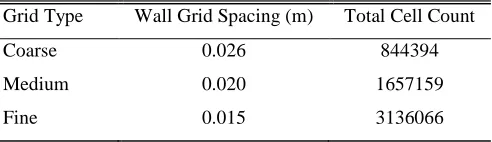
obtaining reliable and physical airflow patterns. Three fully-hexahedral grids were produced
with hanging-node cell refinement using ANSYS Workbench, version 13.0.0 SP2 (22) with
the properties shown in Table. 1. These grids were used to conduct a grid independence study
to select the most appropriate grid density (13,14) with the correct balance between solution
[image:7.595.164.410.287.358.2]accuracy and efficient computation.
Table. 1: Grid properties.
Grid Type Wall Grid Spacing (m) Total Cell Count
Coarse 0.026 844394
Medium 0.020 1657159
Fine 0.015 3136066
Boundary conditions
Flow boundary conditions must be specified on inlets and outlets, and in some cases it is
necessary to specify conditions such as temperature distributions on walls and other surfaces.
In the simulations presented here, inlet flow boundary conditions were determined through
physical experiments (23) using a balometer (TSI Airflow PH721, 42 to 4250 m3/h ±3%, TSI
Incorporated, Shoreview, Minnesota, USA) to measure total volumetric flow rate and a
low-range anemometer (Testo 435 and comfort level probe, 0 to 5 m/s ±0.03 m/s, Testo Ltd.,
Alton, Hampshire, UK at 66 points to measure the velocity profile). The measured velocity
profiles and air inlet angles were used to define velocity inlet type boundary conditions in the
CFD model together with the turbulence intensity, TI=5%, and the hydraulic diameter,DH = 0.315 m. The outflow conditions are modeled using pressure outlet type boundary conditions
with a local static pressure of -10 Pa. All wall boundaries are assumed adiabatic, as there were
no substantial heat gains in the chamber.
Turbulence models
The characteristics of the computed flow field depend critically on the way in which
Reynolds Averaged Navier-Stokes (RANS) turbulence models which account for common
features of airflow patterns such as recirculation regions and wall-bounded (entrained) flows
(13,14). These features are particularly important in the upper region of the chamber
considered in the present study. Although more advanced methods exist for simulating
turbulence such as Large Eddy Simulation (LES) and Direct Numerical Simulation (DNS), the
vast computational requirements are prohibitive for a parametric study of this nature.
The mixing effect induced by turbulence is known to potentially reduce the effectiveness
of in-duct UV air applications by reducing the effective residence time (24), but this parameter
has not been assessed in detail for upper-room UV scenarios. Further studies have also shown
that the choice of turbulence model for simulating disinfection rates in water applications has a
marked effect on flow structure (17,25), however, to the authors knowledge there are no
equivalent studies for room-scale air disinfection. Thus four commonly-used turbulence
models are considered in the present study, namely:
1. Standardk-ε (SKE) (26)
2. RNG k-ε (RNG) (27)
3. Standardk-ω(SKO) (28)
4. Reynolds Stress Model (RSM) (29,30)
The first three are referred to as two-equation models because they encompass two
transport equations, one for the turbulent kinetic energy,k, and a second one for the dissipation of this energy within the flow,ε(noteω =ε /k). In contrast the RSM employs a total of seven
transport equations including six stress tensors which are solved in addition to those forkand ε. The main difference between the RSM and the two-equation models is that the RSM
accounts for anisotropy in the turbulence field whereas the others assume isotropic turbulence.
What this implies is that only the RSM is capable of simulating elongated turbulent eddies
(vortex stretching) which are physical characteristics and typical of indoor airflow patterns
UV models
UV-field definition:A UV irradiance field is readily defined with a CFD model as a static 3-D
scalar field that is independent of the airflow. However, this definition relies on appropriate
field data for the specific device concerned. Modelling approaches are feasible for some
devices, applying lighting laws (32-37) or radiation models (19). However, creating such
models for upper-room devices is not straightforward due to the louvered design and resulting
complexity of the irradiance field.
Empirical data taken from physical measurements (e.g. radiometry or actinometry (1))
is another feasible approach to creating a field model. Noakeset al(9) applied a low resolution fit to limited measurements leading to cos and cos2 relationships which define the field distribution. Sung and Kato (21) adopted the same approach with a limited number of field
measurements. In both these studies assumptions about the field were made with considerably
less than the 1000+ readings taken in full goniometry studies and neither study considered
room-surface reflectance, although it has been suggested it is likely to have minimal impact on
the results (21). Taking these factors into consideration for the present study, a decision was
taken to directly use radiometry measurements within the CFD model and to explore the
impact of field accuracy on model results.
An experimental rig was designed so that readings could be made in the horizontal plane
passing directly through the centre of the UV fixtures. A radiometer (UV SENS and UV LOG,
sglux, SolGel Technologies GmbH, Berlin, Germany) calibrated within the previous year and
with a reading accuracy of 0.5% was mounted to a measurement arm which pivots about a
point directly above the centre of the UV fixture and can be positioned at any pre-determined
horizontal angle within the UV band (Figure 2). In all cases the radiometer always faces the
centre of the fixture thus ensuring that line-of-sight irradiance measurements are taken. A
series of docking holes along the length of the measurement arm permitted radiometry
Figure 2.Illustration of the radiometry measurement apparatus.
Preliminary data highlighted substantial variability in measured UV output with
differences in peak intensity of up to 40% depending on the brand and age of UV lamps
present. Whilst this aspect is beyond the scope of this study, these observations underline the
potential variability of irradiance fields depending on the type of lamps used. For consistency,
both UV fixtures were fitted with brand new lamps (Philips TUV PL-L, 36W, 12W UVC)
which were used for approximately 10 hours prior to the experiments. Although this time is
relatively short, results for both fixtures are comparable and close monitoring of the output
before and after measurements showed consistent readings in contrast to the aforementioned
variability in output for older bulbs. Before each fixture was analysed it was turned on and left
for two hours until the UV output had stabilised. Three sets of measurements were taken (per
fixture) in the horizontal plane which coincides with the centre of the UV band (subsequently
referred to as the central horizontal plane).
Due to symmetry, readings for the large fixture (Lumlier WM236) were only taken in
one half of the room for the following range of angles:θ= 0º, 10º, 20º, 35º, 50º, 65º and 75º.
Measurements taken beyond θ= 75º yielded no UV output because a shadow was cast by the
side wall of the fixture. For the small fixture (Lumalier WM136) the range of necessary
contains only one lamp which has a ceramic end cap at its base creating a non-uniform UV
output and a field skewed slightly towards one side of the room. Consequently the range of
measurement angles considered for the small fixture is: θ= 0º, ±10º, ±20º, ±35º, ±50º, ±65º
and ±67.5º. Due to constraints on the size of the chamber the measurement arm was limited to
1.9 m for angles between ±50º and ±75º and 3.2 m for angles in the range of 0º to ±35º.
Depending on the specific measurement angle, up to 40 measurements were taken along the
length of the arm. With the first measurement (perθ) taken immediately in front of the fixture
(i.e. touching the grilles) the inter-point spacing increases from 0.02 m to 0.20 m at the far end
of the arm. This clustering of readings in the immediate vicinity of the grilles is necessary to
capture the high gradients in the intensity levels. Altogether each set of in-plane measurements
yielded a total of 239 readings for the large fixture and 392 readings for the small one.
Despite the relatively narrow band height of 0.080 m (dictated by the height of the
grilles), the variation in intensity in the vertical direction in addition to the in-plane readings
has been shown to be equally important (21). A carriage controlled by a finely threaded rod
enabled vertical placement giving a total of 21 uniformly-spaced measurement locations, each
0.005 m apart. This device was deployed throughout the room so that the variation of field
intensity in the vertical direction could also be characterised in locations of interest.
Implementation of the measured fields in the CFD model is described in the results section.
UV Dose modelling
UV dose, D (J/m2), is defined as the product of the field, E (W/m2) and the duration of exposure, t (s). In the context of room airflow passing through a spatially varying field the dose has a cumulative effect along a particular air pathway. As such, dose can be evaluated
through a particle tracking approach using an algorithm to sum the dose along the trajectory or
applied as a passive scalar tracer, through defining the rate of change of dose as a sink term
(20). Either approach can be applied to the room air as a whole (20) to optimise general
coverage or the air from a particular source such as an infectious patient (18) where the source
location is known. The present study applies a passive scalar approach (20) where the dose
distribution, D, depends on the irradiance field (E (x,y,z)) and the velocity vector field, U
0 UD E (2)
Microorganism Inactivation models
Models simulating microorganism inactivation require several assumptions to be made
including the susceptibility characteristics of the pathogen, the location of the source and, in
the case of particle tracking methods, assumptions about the size and mass of particles. In
many scenarios a source location can be assumed; simulations that compare to experimental
studies generally have a well defined source location (20) while in assessment of hospital ward
type spaces it is often reasonable to assume the location of an infectious patient (18).
Similarly, data on size and mass of particles can be approximated from knowledge of
respiratory droplet sizes. All air disinfection studies to date have simulated microorganism
susceptibility using the first-order decay assumption, applying equation 1 as a removal term in
the numerical model. As such results rely on the selection of an appropriate susceptibility
constant,Z, typically derived from single-pass experiments.
Simulations conducted here use a similar approach to previous scalar tracers studies,
however a gas phase (N2O) species model rather than a passive tracer is applied. This is more
realistic for comparison with ventilation tracer gas studies (36) and overcomes technical
difficulties with implementing the inactivation source terms within the Fluent CFD software.
Microorganism inactivation (equation 1) is coupled to the species transport equation, namely:
S S Y S
U Y t
Y
(3)
whereρis the species density (Kg/m3),Yis the species concentration,t is the time (s) ΓSis the species diffusion coefficient and SS represents the species sink term (i.e. removal of microorganism due to interaction with the UV field). In all simulations where inactivation is
considered, the source is located at the geometric centre of the room (Figure 1) and defined by
a constant source value over a volume of 0.00375 m3. In all the results, inactivation is
Simulation set-up
Simulations were conducted using Fluent, version 13.0 (22). In all cases ventilation flows are
assumed constant and simulations conducted as steady state. An isothermal approach was
adopted because the temperature increases due to the presence of the UV lamps were minimal
under the influence of mechanical ventilation and there were no other heat sources present in
the room. Double precision real number representation was employed to minimise round-off
error in the computations and second-order discretisation of all equations (i.e. pressure,
momentum, species and turbulence) ensured they were solved with an acceptable level of
accuracy (13). Solutions were considered to be converged when the residual levels (a measure
of the error in the solutions) showed no signs of changing. Typically this occurred in
2000-15000 iterations depending on the grid density and turbulence model used.
RESULTS
UV field Characteristics
Radiometry measurements in the horizontal plane
Figure 3 shows the measured irradiance field emanating from the large UV fixture as a
function of distance (r)and angle (θ)in a horizontal plane at the centre of the UV band.
The field strength peaks at a value of 4.103 ±0.034 W/m2 along the 10º line of
measurements and approximately 0.4 m from the center of the lamps (0.2 m from the fixture
grilles). Although this peak might be expected to occur along the 0º line (i.e. perpendicular to the
center of the grilles) there is a space between the two lamps in the fixture which explains the slight
dip in intensity compared to the 10º line. As the angle within the measurement plane increases
beyond 10º, the intensity gradually reduces until it dramatically weakens for the two largest
angles. The distinct dip in intensity along the 65º line can be explained by a small shadow cast by
Figure 3.Radiometry measurements taken in the central horizontal plane for the large UV fixture. Error bars determined from the standard deviation of three measurement sets.
As expected, the UV intensity produced by the small UV fixture (Figure 4) is weaker both
in terms of the observed peak intensity (3.728 ±0.033 W/m2) and its projection into the room. The
aforementioned skewing of the field is particularly evident for larger angles (e.g. 67.5° compared
to -67.5°) although this characteristic is less noticeable for smaller angles where the output is
uniform. Again pronounced dips in the intensity are seen near to the device for a number of
measurement lines which is due to the small shadows produced by the grille posts. The error bars
are greatest for measurements close to the grilles which may be due to interference from the grille
plates; significantly reduced error bars are associated with measurements taken further away from
the grilles.
0.0 0.5 1.0 1.5 2.0 2.5 3.0
0.0 0.5 1.0 1.5 2.0 2.5 3.0 3.5 4.0 4.5
0 degrees 10 degrees 20 degrees 35 degrees 50 degrees 65 degrees 75 degrees
E
(W
/m
2 )
Figure 4.Radiometry measurements taken from the central horizontal plane for the small fixture for (a) positive and (b) negative angles. Error bars determined from the standard deviation of three measurement sets.
0.0 0.5 1.0 1.5 2.0 2.5 3.0
0.0 0.5 1.0 1.5 2.0 2.5 3.0 3.5 4.0 4.5
0.0 0.5 1.0 1.5 2.0 2.5 3.0
Radiometry measurements in the vertical direction
Figure 5 shows how the UV field varies with height, h, and the distance away from each device,r, along the 0° measurement line.
Figure 5.Three-dimensional plots showing the extent of UV beam spreading as a function of the horizontal and vertical distance within the UV band for (a) the large device and (b) the smaller
The UV band height increases from 0.05 m near the grilles up to 0.10 m at a distance of 2.15
m from each fixture. For the large fixture, the vertical distribution develops from an initial
square and narrow band to a Gaussian form which reduces in peak intensity with increasing
distance from the grilles. The small fixture exhibits asymmetry in the near-grille profiles
which is attributable to misaligned grilles and minor shadows affecting the intensity; this
illustrates one of the subtleties of real-world UV field characteristics and how the practical
implementation of perfectly parallel grille plates cannot be guaranteed. The observed skewness
in the vertical profile becomes less pronounced further away from the fixture as the influence
from the grilles diminishes. The field produced by both fixtures exhibits beam-spreading
which, in the case of the large fixture, results in a small but measurable region of UV output
beyond the extent of the grilles. Although not presented here, the vertical field distribution was
also assessed for measurement angles of 35° and 50°; the results followed the same trend as
those shown in Figure 8, but with a corresponding reduction in peak intensity observed.
Irradiance field curve fitting and implementation within the CFD model
Implementing experimental irradiance measurements within the CFD model requires
translation of the data into a form which matches the CFD grid. Each cell can only contain a
discrete value for irradiance, therefore interpolation is required to map the experimental
readings onto this grid structure. The programming language Gri, version 2.12.23 (37) was
used as a curve-fitting tool utilising Barnes interpolation (38). The resulting function
represented the field well and was within 0.5% of measured values across the majority of both
fields. Minor differences were apparent in the central horizontal plane with peak values
underestimated by 6.1% and 12.4% for the large and smaller fixtures respectively. This was
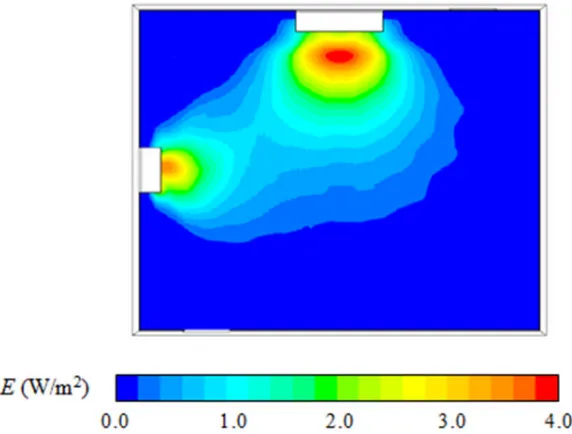
considered acceptable as peak values only occur in a small region of the room. Figure 6 shows
the irradiance field implemented in the CFD software, in the central horizontal plane with both
devices active using the curve-fitting methodology described above.
Field distribution in the vertical direction was interpolated from the data using two
approaches; a 3D field approximated by 5 sub-bands corresponding to the CFD grid (Figure
7(a)) and a 2D field with constant intensity in the vertical direction (Figure 7(b)). A third, 1D
for comparison. Whilst the peak intensity increases with the number dimensions, all three
fields gave the same overall output. The volume-averaged field intensity throughout the UV
region (band comprising height of fixture) is 0.05467 W/m2 for the smaller fixture and
[image:18.595.159.445.217.434.2]0.15972 W/m2for the larger one.
Figure 6.Contour plot of the irradiance field produced by both fixtures in the aerobiology chamber.
Figure 7.Contour plots of a section of the vertical plane intersecting the center of the large
[image:18.595.136.465.501.693.2]Model Parameter Sensitivities
Grid and turbulence sensitivity
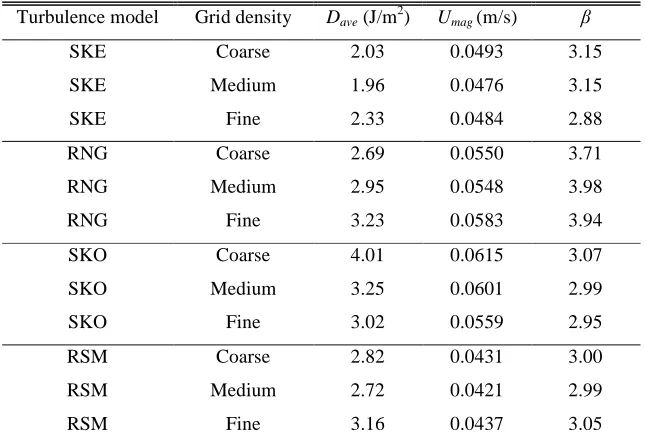
Simulations with the high-in ventilation regime at 6ACH and the 2D UV field were run on
three grids (Table 1) in conjunction with the four turbulence models; the standard k-ε model
(SKE), RNG k-ε (RNG), Standard k-ω (SKO), and the Reynolds Stress Model (RSM). For
each of these grid-turbulence model combinations, three parameters were evaluated, the
volume-averaged dose within the room, Dave (J/m2), the volume-averaged velocity magnitude in the UV zone,Umag(m/s), and a dimensionless mixing factor,β, which is given by:
inlet uv
Q U A
2 int
(4)
[image:19.595.105.428.420.641.2]where: Auv(m2) is the area of the interface separating the UV zone and the main room volume immediately below it,Uint(m/s) is the mean absolute vertical velocity at the interface andQinlet (m3/s ) is the room supply flow rate (10).
Table. 2: Influence of grid and turbulence model on dose and flow parameters
Turbulence model Grid density Dave(J/m2) Umag(m/s) β
SKE Coarse 2.03 0.0493 3.15
SKE Medium 1.96 0.0476 3.15
SKE Fine 2.33 0.0484 2.88
RNG Coarse 2.69 0.0550 3.71
RNG Medium 2.95 0.0548 3.98
RNG Fine 3.23 0.0583 3.94
SKO Coarse 4.01 0.0615 3.07
SKO Medium 3.25 0.0601 2.99
SKO Fine 3.02 0.0559 2.95
RSM Coarse 2.82 0.0431 3.00
RSM Medium 2.72 0.0421 2.99
RSM Fine 3.16 0.0437 3.05
Table 2 shows variation with grid density for all turbulence models tested, however the
parameters are of a similar magnitude across all the simulations. The errors between the
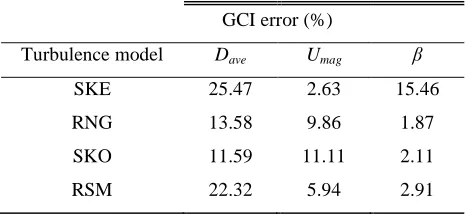
Table 3 summarises the GCI errors for the three parameters showing variability in
performance of the turbulence models both in terms of the UV-related quantity (Dave) and airflow parameters (Umagandβ). Taking the results from Tables 2 and 3 into consideration, the logical choice of grid to be used in all subsequent simulations is the fine one which contains
[image:20.595.154.387.285.392.2]3.14 million cells i.e. ~0.1 million cells/m3.
Table. 3: Discretization errors determined from the Grid Convergence Index (39) for various
solution parameters.
GCI error (%)
Turbulence model Dave Umag β
SKE 25.47 2.63 15.46
RNG 13.58 9.86 1.87
SKO 11.59 11.11 2.11
RSM 22.32 5.94 2.91
The influence of turbulence model on airflow structure and hence dose is shown in
Figures 8 and 9. Contour plots of dose (Figure 8) show similar results for the SKE and RSM
models (Figures 8(a) and (d)), while the RNG model (Figure 8(b)) predicts a more pronounced
region of high dose in front of the large UV fixture (D > 30 J/m2). This model predicts the highest room-average dose and mixing factor suggesting the turbulence model leads to a
higher predicted level of mixing. The SKO model exhibits a dose contour plot which is the
Figure 8.Contour plots of the dose,D, in the central horizontal plane for (a) SKE, (b) RNG, (c) SKO and (d) RSM turbulence models. The ventilation rate is 6ACH, both UV fixtures are
active and the flow regime is in-high, out-low.
Figure 9 compares airflow pathlines (not particle tracks) originating at the centre of the
room. With the exception of the SKO case, all of the flow patterns are initially directed
towards the inlet before mixing throughout the room. The pathlines produced by both of the
k-ε models (SKE and RNG) exhibit the most uniform spreading in the space (Figures 9(a) and
(b)), however these diffusion-dominated flow fields are strongly influenced by the diffusive
nature ofk-ε-type turbulence models. The observed pathlines for the RSM model (Figure 9(d))
clearly show a mixture of large and small-scale turbulent structures in addition to elongated
eddies (vortex stretching) near to the inlet. These flow patterns can be expected for this
turbulence (14,31). The pathlines produced by the SKO model reveals the most unusual flow
pattern of all the turbulence models tested with noticeably less flow dispersal present. This can
be explained by the fact that the simulations of the airflow using this particular model
exhibited numerical noise, even after convergence had been attained and this undoubtedly
[image:22.595.113.491.216.574.2]affected the result.
Figure 9.Pathlines released from the center of the room and colored by the dose,D, for (a)
SKE, (b) RNG, (c) SKO and (d) RSM turbulence models. The ventilation rate is 6ACH, both UV fixtures are active and the flow regime is in-high, out-low.
All subsequent simulations are conducted using the RSM model as it has an acceptable
degree of accuracy, the most physically-correct flow structure and has recently been shown to
UV Field Sensitivity
Simulations of the high-in flow regime for a ventilation rate of 6ACH were conducted for
three UV fixture combinations: (i) both active, (ii) large fixture only and (iii) small fixture
only. Figure 10 presents the influence of the field models on room average dose (Dave)
received by the incoming air for all three fixture combinations and predicted inactivation for
an airborne microorganism released at the centre of the room for case with both fixtures active
only. In the latter case, simulations were conducted for microorganism susceptibilities ranging
from z = 0.01 to z = 1.50 (m2/J). As the field resolution reduces simulations increasingly
over-estimate dose for all three lamp configurations (Figure 10(a)). The 2D field is a good
approximation, only over-predicting dose by 11-12%. However the 1D field is clearly a poor
representation, over-estimating dose by 37-53%. This behavior is also apparent in the resulting
prediction of microorganism inactivation (Figure 10(b)); the 1D field again over-predicts,
while the difference between the 2D and 3D fields is almost indistinguishable. In order to
highlight the variability of dose, error bars are determined from the standard deviation of Dave measured at 529 evenly distributed points throughout the room (Figure 10(a)). Although the
[image:23.595.91.539.469.637.2]mean values of Davevary significantly depending on the type of UV field used, the variability is proportionately very similar in each case.
Figure 10. Influence of field model on (a) room averaged dose,Davefor three lamp
combinations and (b) predicted inactivation for both fixtures operating together, as a function of microorganism susceptibility,z
Both devices Large device Small device 0 1 2 3 4 5 6
Z(m2/J)
Da
ve
(J
/m
2 )
3D field 2D field 1D field
0.0 0.3 0.6 0.9 1.2 1.5
0 20 40 60 80 I (% )
3D field 2D field 1D field
Impact of Surface Reflections
Surface reflection is known to be important for “in-duct” UVGI systems and studies have dealt
with reflections by assuming that irradiance levels measured on surfaces essentially become
sources which reflect the UV energy back into the space of interest (40). Such methods are
very difficult to implement in conjunction with experimentally measured values (as used in
this study) and may be an unnecessary complication. To evaluate the significance of
reflections for upper-room application, the central horizontal plane measurements for both UV
fixtures were analyzed to determine field intensity along imaginary boundaries. These
represented extremities of different sized rooms from (1.0 m x 1.0 m) to (3.0 m x 3.0 m). Table
4 compares the average perimeter irradiance, Eper (W/m2) to the plane-average irradiance,
Eave,using the relative irradiance,RE:
ave per E
E E
[image:24.595.111.480.431.555.2]R (5)
Table. 4: The effect of perimeter size on absolute and relative irradiance measurements.
Eper(W/m2) RE
Room plan area (m2) Large fixture Small fixture Large fixture Small fixture
1.0 1.225 0.393 0.785 0.478
1.5 0.487 0.100 0.469 0.211
2.0 0.205 0.009 0.299 0.034
2.5 0.068 0.004 0.143 0.025
3.0 0.019 0.002 0.058 0.019
The irradiance measured along the 1.0 m perimeter for both fixtures is similar in
magnitude to the to the average value, however, this can be considered an unrealistically-small
room as can the 1.5 m and 2.0 m perimeters; these cases are merely shown for illustrative
purposes. As the perimeter increases to 3.0 m which is representative of a small room (e.g.
single-bed hospital ward), the realtive intensity drops to 5.8% and 1.9% for the large and small
fixtures respectively. In absolute terms, the perimeter-average irradiance of 0.019 W/m2for the
region (0.002 W/m2(1)). This is a small reading considering the fact that the measurements are
taken in the centre of the UV band where the output is greatest. An implication of this result is
that surface reflections produced by the upper-room UV fixtures considered in this study are
only significant in very small rooms; in larger spaces the substantial drop in intensity far away
from the fixture leads to practically insignificant reflections.
UV-Airflow Interaction
A parametric study was carried out using the 2D field model with RSM turbulence and no
reflections to explore the influence of ventilation rate, ventilation regime and device operation
on both predicted dose and inactivation. Results consider both room averaged effects and
spatial distributions.
Predicted Dose
Figure 11 shows how room averaged dose reduces with ventilation rate due to the lower
residence time of the air in the room. However both the magnitude and the extent of reduction
depend on the UV fixtures and the ventilation regime. A markedly higher dose is predicted
with the low level ventilation supply, with values up to a third higher for the same fixture
configuration. This result is consistent with earlier studies which show that upper room UVGI
[image:25.595.184.427.500.673.2]is most effective in rooms with ventilation rates of 6 ACH or lower (6).
Figure 11. influence of room ventilation rate and regime on the room average dose received by
the air entering the room.
0 3 6 9 12 15
0 3 6 9 12
Da
v
e
(J
/m
2 )
In-low: both fixtures In-low: large fixture In-low: small fixture In-high: both fixtures In-high: large fixture In-high: small fixture
Figure 12 considers the variation in dose by zone at 6 ACH, with volume averaged
dose also calculated for the upper-zone of the room (region containing the devices and above)
and lower-zone (below the devices, “occupied” zone) as well as the room average value.
Results show the increase in dose is seen across both zones, and also indicates that for all
fixtures and both flow regimes, the room averaged dose is a good indication of the average in
the occupied (lower) zone. Figures 13 and 14 consider variability in the dose on a horizontal
plane at a height of 1.5 m (equivalent to an occupant breathing zone). It can be seen that in
both cases, while the small device results in a lower dose, the spatial distribution is more
clustered and the average dose on the plane is representative. The large device and both
devices operating together result in more variance across the plane, particularly with the
low-high ventilation regime. For example, Figure 13(c) shows that while the plane average dose is
3.34 J/m2, the dose varies from below 1 J/m2 to almost 10 J/m2, indicating areas of low and
[image:26.595.129.535.420.569.2]high coverage.
Figure 12. Average dose calculated for whole room, upper region of the room only and lower
region of the room only (a) low-high and (b) high-low ventilation regime
Results in Figures 11-13 should be treated with some caution; they are specific to the
particular room and should not be interpreted as one ventilation approach is better than
another. However, they do indicate that airflow pattern can have a significant impact on device
effectiveness, both in terms of overall effect and spatial coverage.
Both devices Large device Small device
0 1 2 3 4 5 6 7 (a) (b) D (J /m 2 ) Room average Upper zone Lower zone
Both devices Large device Small device
Figure 13. Dose histograms at 6ACH with ventilation regime low-high (a) both fixtures, (c) large and (e) small; high-low regime (b) both fixtures, (b) large and (f) small. (5305 samples taken from
breathing plane i.e. y = 1.5 m)
Inactivation
Figure 14 considers predicted microorganism inactivation with ventilation parameters, UV
fixture and microorganism susceptibility. Room average inactivation follows dose
predictions; inactivation is higher with increase in the UV field intensity and with a low-high
ventilation regime for this particular room (Figure 14(a)). As ventilation rate increases,
relative inactivation drops due to the greater influence of dilution (Figure 14(b)). As with
dose, consideration of the spatial distribution is also important for real applications. Figure 15
0 2 4 6 8 10
0 10 20 30 40 (e) (f) (c) (d) F re q u en cy (% ) F re q u en cy (% )
Dmean=3.34 J/m2 Dmean=2.29 J/m2
D(J/m2)
D(J/m2
)
Dmean=4.80 J/m2 Dmean=3.18 J/m2
F re q u en cy (% )
D(J/m2) D(J/m2)
D(J/m2)
D(J/m2)
F re q u en cy (% ) F re q u en cy (% ) F re q u en cy (% ) F re q u en cy (% ) F re q u en cy (% )
0 2 4 6 8 10
0 10 20 30 40 (a) (b)
0 2 4 6 8 10
0 10 20 30 40 F re q u en cy (% )
0 2 4 6 8 10
0 10 20 30 40
0 2 4 6 8 10
0 10 20 30 40
Dmean=1.47 J/m2
Dmean=0.90 J/m2
0 2 4 6 8 10
indicates how the local flow rate influences the relative microorganism concentration across
the room and that in neither case the UV is able to influence the concentration close to the
[image:28.595.92.517.183.328.2]source.
Figure 14. Influence of ventilation and UV device parameters on predicted inactivation (a)
influence of microorganism susceptibility, (b) influence of ventilation rate.
Figure 15. Contour plots showing predicted microorganism distribution in the breathing
plane (y = 1.5 m) with ventilation rate of 6 ACH and both fixtures active for (a) low-high and (d) high-low flow regimes.
0.0 0.3 0.6 0.9 1.2 1.5
0 20 40 60 80 100
I
(%
)
In-low: both fixtures In-high: both fixtures In-low: large fixture In-high: large fixture In-low: small fixture In-high: small fixture
Z(m2/J)
0 3 6 9 12 15
0 20 40 60 80 100
(a) (b)
Z= 0.2 (m2/J)
Ventilation rate (ACH)
I
(%
)
In-low: both fixtures In-high: both fixtures In-low: large fixture In-high: large fixture In-low: small fixture In-high: small fixture
[image:28.595.126.484.377.539.2]DISCUSSION
Simulation Accuracy
The CFD results presented in the investigation highlighted the sensitivity of the grid density,
turbulence model selection, UV field and considered surface reflectance. Results show a fine
grid yields more consistent and accurate results both in terms of airflow and UV-specific
parameters and that the RSM turbulence model produces the most physically correct flow
field. However, provided a reasonable degree of care is exercised in developing the geometry,
the grid and turbulence parameters have a relatively small influence on the results. The UV
field definition on the other hand is a much more significant factor in ensuring good results
from simulations. A uniform field assumption is insufficient to give accurate results, leading
to an over-prediction of both dose and inactivation. Results were also compared to previous
studies implementing an empirical 3-D field derived from limited measurements (9,20). While
this approach gives better insight into the spatial variability, the model also over-predicted
dose and inactivation as the vertical UV distribution is assumed uniform based on the peak
horizontal plane data. The 2D and 3D fields used in this study indicate that a 2D field is
sufficient for making predictions. However it should be noted that in creating this field the
uniform intensity across the vertical band was only 57% of the central horizontal plane
measurements, thus ensuring that the overall output of the two fields was the same rather than
over-predicting the total output using the peak values. Had similar factors been used in
Noakes et al (9) it is likely that predictions would have been much closer. Field sensitivity results also suggest that full goniometry is not necessary for modelling purposes. As the 2D
and 3D fields give such close predictions, it suggests that a smaller data set is adequate to
represent the field and that for louvered devices with collimated beams only central plane
readings are required providing a suitable reduction factor is used to translate the readings to a
2-D field.
While the results for the uniform (1D) field are an over prediction, this finding does
highlight the fact that implementing as uniform a field as possible actually leads to greater
effectiveness and concurs with the current NIOSH recommendation for the application of
None of the simulations presented here incorporated surface reflections, as an
evaluation of the relative irradiance indicated the effects are minimal for most practical sized
rooms. Including reflections is not straightforward as it requires further models treating the
incident radiation on walls as a new source. In terms of disinfection potential, the
computational effort outweighs the minimal influence on the field, and results without
reflection will always err on the conservative side. However it should be noted that reflections
may not be insignificant in terms of occupant UV exposure in the lower zone.
Validity and Uncertainty
CFD simulations can be used to predict two key attributes of interest, dose and inactivation.
Providing the airflow and UV field can be modeled with sufficient accuracy (and it is feasible
to validate both without significant challenge) then predictions of dose can be considered
reliable; dose is calculated from a straightforward interaction between the two parameters.
However there is a question as to what does the dose mean? The results in Figures 11-13
highlight that dose depends on fixtures, ventilation rates and ventilation regimes and simply
calculating an average dose does not give insight into the variability of dose within the room.
Dose is a cumulative effect following flow paths and therefore depends on the origin of the
air. In a single pass system (i.e. in-duct UV) the origin is clear; air entering the duct has a zero
dose and dose accumulates as it passes over UV lamps. In a room scenario this is not so clear.
Results presented here consider the dose received by the air entering the room; at the supply
air grille the initial dose is zero and dose accumulates as the air passes through the room and
interacts with the UV field. This is a feasible method where the location of an infectious
source is unknown and the aim is to maximize coverage (20). However if an infectious source
is located in the lower part of the room, their exhaled air will also have a zero dose, as it will
not have yet interacted with the UV field.
Predictions of inactivation are less certain as assumptions must be made regarding the
microorganism. The first uncertainty lies in the location of the infectious source. Unlike dose,
where the room air as a whole can be considered, inactivation models require specifying the
microorganism; while the assumption that the pathogens are truly airborne and behave like a
passive tracer or gas phase is the most straightforward approach, real bioaerosols have mass
and momentum which will influence their behavior. Finally, all simulation studies to date,
including this one, have simulated microorganism susceptibility as exhibiting first-order
decay, applying equation 1 as a removal term in the numerical model. As such, models rely on
the selection of an appropriate susceptibility constant typically derived from single-pass
experiments. There is an assumption that this applies under room scale conditions, however
the incomplete inactivation and multiple airborne microorganism passes between UV and
non-UV zones in an upper-room system mean that repair mechanisms may need to be
considered. Beggset al(12) conducted an experimental study in an incompletely mixed room and suggested effective microorganism susceptibility to upper-room UV may be up to an
order of magnitude less than in single-pass testing, most probably due to the reactivation.
However Xu et al(6) also conducted experiments in a fully mixed room and showed only a small reduction in the calculated susceptibility constant in a room scale scenario. Although
these two findings are in broad agreement, and support the need for good air mixing, further
validation data is required before inactivation models can be used with confidence in
predictive studies.
Current and Future Application of CFD
Role in research and guidance
CFD simulation clearly has a substantial role to play in current and future upper-room UV
research studies. By coupling CFD models with experimental data it already offers an insight
into the disinfection mechanisms, and with sufficient future data will enable validation of the
inactivation models and hence prediction. Chamber based research studies have well-defined
and generally steady state airflows, which can be modelled with confidence using CFD,
allowing the study to focus on UV parameters. While field based studies will have more
transient and complex airflows (see below), CFD simulation could be used to both aid design
of such studies and interpret the results. CFD simulation also has clear potential to assist with
defining appropriate guidance. NIOSH currently recommend a plane-average UV irradiance
However, as shown here, the same device can yield quite different dose and inactivation
results depending on room and ventilation parameters. In addition, such guidance cannot be
easily applied for UV devices that have a diverging beam designed for high ceiling spaces. It
is likely that with suitable field data, CFD simulation can be used to determine appropriate
guidance for other types of fixtures.
Real World Application
Application of CFD simulation to real environments is a greater challenge. While
airflows in isothermal, mechanically ventilated rooms are generally easy to define, the
movement of people and heat gains in real spaces reduces the certainty of the model
predictions. Naturally ventilated spaces are more challenging still as the ventilation flow
patterns will change with weather conditions (41,42). In this situation a single steady-state
model is not likely to be reliable and it will be necessary to conduct transient simulations or,
as a minimum, simulations for a range of cases in order to understand the sensitivity of the
flow and interaction with UV field.
As suggested by previous researchers (21) infection control in healthcare settings
which utilise UVGI systems is not straightforward and needs guidelines to be developed for
effective use and installation. In terms of ventilation, higher flow rates and hence smaller
residence times are required to ensure the efficient removal of microorganisms. However, for
UVGI to be effective, a larger residence time is required to deliver a sufficient dose to induce
a satisfactory level of microorganism inactivation. Striking the correct balance between
infection control measures is one of the most challenging aspects of hospital ward design and
this is likely to be the case for the foreseeable future. Despite this, CFD modelling already
offers a means of better understanding airflow patterns in rooms and insight into (a) the best
location for upper-room UV devices (through simulating dose) and (b) whether the room
would benefit from additional mixing. One of the major strengths of CFD modelling is that
the room-wide dose distribution can be predicted, whereas this simply cannot be done
experimentally. Although predicting the effectiveness of UV systems in terms of
useful insight into the range of performance that could be expected under different
susceptibility assumptions.
ACKNOWLEDGMENTS
: The authors would like to acknowledge the support of the UK Engineering and Physical Sciences Research Council (EPSRC) who funded this CFDstudy.
REFERENCES
1. NIOSH (2009), Environmental Control for Tuberculosis: Basic Upper-Room Ultraviolet Germicidal Irradiation Guidelines for Healthcare Settings. Centers for Disease Control and Prevention, National Institute for Occupational Safety and
Health.
2. Noakes, C.J., L.A. Fletcher, C.B. Beggs, P.A. Sleigh, and K.G. Kerr. (2004a)
Development of a numerical Model to Simulate the Biological Inactivation of
Airborne Microorganisms in the Presence of Ultraviolet Light. Journal of Aerosol Science.35, 489-507.
3. Peccia, J, H.M. Werth, S.L. Miller and M.T. Hernandez. (2001) Effects of relative
humidity on the ultraviolet induced inactivation of airborne bacteria.Aerosol Science and Technology.35, 728-740.
4. Peccia, J and M.T. Hernandez. (2001) Photoreactivation in airborne Mycobacterium
parafortuitum.Applied Environmental Microbiology.67, 4225-4232.
5. Miller, S.L. M.T. Hernandez, K.P. Fennelly, J.W. Martyny, J. Macher, E. Kujundzic,
et al. (2002) Efficacy of ultraviolet irradiation in controlling the spread of tuberculosis. NIOSH final report, Contract 200–97–2602; NTIS publication PB2003-103816. Cincinnati, OH: US Department of Health and Human Services, Centers for
Disease Control and Prevention.
6. Xu, P. J., J. Peccia, P. Fabian, J.W. Martyny, K.P. Fennelly, M. Hernandez and S.L.
Miller. (2003) Efficacy of ultraviolet germicidal irradiation of upper-room air in
inactivating airborne bacterial spores and mycobacteria in full-scale studies.
7. Riley, R.L. and S. Permutt. (1971) Room air disinfection by ultraviolet irradiation of
upper air.Archives of Environmental Health.22, 208-219.
8. Nicas, M. and S.L. Miller. (1999) A multi-zone model evaluation of the efficacy of
upper-room air ultraviolet germicidal irradiation. Applied Occupational and Environmental Hygiene.14, 317 – 328.
9. Noakes, C.J., C.B. Beggs and P.A. Sleigh. (2004c) Modelling the Performance of
Upper Room Ultraviolet Germicidal Irradiation Devices in Ventilated Rooms:
Comparison of Analytical and CFD Methods.Indoor Built Environment.13, 477-488. 10. Beggs, C.B. and P.A. Sleigh. (2002) A quantitative method for evaluating the
germicidal effect of upper room UV fields. Journal of Aerosol Science. 33, 1681-1699.
11. Noakes, C.J., C.B. Beggs and P.A. Sleigh. (2004) Effect of Room Mixing and Ventilation Strategy on the Performance of Upper Room Ultraviolet Germicidal Irradiation Systems. ASHRAE IAQ Conference, Tampa, Florida, 15-17th March. 12. Beggs, C.B., C.J. Noakes, P.A. Sleigh, L.A. Fletcher and K.G. Kerr. (2006)
Methodology for determining the susceptibility of airborne microorganisms to
irradiation by an upper-room UVGI system.Journal of Aerosol Science.37, 885-902. 13. Sorensen, D.N. and P.V. Nielsen. (2003) Quality Control of Computational Fluid
Dynamics in Indoor Environments.Indoor Air.13, 2-17.
14. Li, Y. and P.V. Nielsen. (2011) CFD and ventilation research. Indoor Air. 21(6), 422-453.
15. Memarzadeh, F, Z. Jiang, and W. Xu. (2004)Analysis of efficacy of UVGI inactivation of airborne organisms using Eulerian and Lagrangian approaches. ASHRAE IAQ Conference, Tampa, Florida, 15-17th March.
16. Alani A, I.E. Barton, M.J. Seymour, L.C. Wrobel. (2011) Application of Lagrangian
particle transport model to tuberculosis TB bacteria UV dosing in a ventilated
isolation room.International Journal of Environmental Health Research.11, 219-228. 17. Wols, B.A., W.S.J. Uittewaal, J.A.M.H. Hofman, L.C. Rietveld and J.C. van Dijk.
(2010) The Weaknesses of a k-ε model compared to a large-eddy simulation for the
18. Sung, M. and S. Kato. (2011) Estimating the germicidal effect of upper-room UVGI
system on exhaled air of patients based on ventilation efficiency. Building and Environment.46,2326-2332.
19. Li, C., C.B. Deng and C.N. Kim. (2010) Simulations to Determine the Disinfection
Efficiency of Supplementary UV Light Devices in a Ventilated Hospital Isolation
Room.Indoor Built Environment.19(1), 48-56.
20. Noakes, C.J., P.A. Sleigh, L.A. Fletcher and C.B. Beggs. (2006) Use of CFD
Modelling to Optimise the Design of Upper-Room UVGI Disinfection Systems for
Ventilated Rooms.Indoor and Built Environment.15(4), 347-356.
21. Sung, M. and S. Kato. (2010) Method to Evaluate UV Dose of Upper-Room UVGI
System Using the Concept of Ventilation Efficiency. Building and Environment. 45,
1626-1631.
22. ANSYS (2012) Ansys Inc. http://ansys.com/products/fluid-dynamics
23. King, M.F., M.A. Camargo-Valero, C.J. Noakes and P.A. Sleigh. (2011) CFD validation of controlled bioaerosol release for simulating droplet transmission of live pathogens. Indoor Air 2011, Austin, Texas, 4-10thJune.
24. Chang, D. and C. Young. (2007). Effect of Turbulence on Ultraviolet Germicidal
25. Liu, D., C. Wu, K. Linden and J. Ducoste. (2007) Numerical simulation of UV
disinfection reactors: Evaluation of alternative turbulence models. Applied Mathematical Modelling.31, 1753-1769.
26. Launder, B.E. and D.B. Spalding. (1974) The Numerical Computation of Turbulent
Flows.Computer Methods in Applied Mechanics and Engineering.3, 269-289.
27. Yakhot, V., S.A. Orszag, S. Thangam, T.B. Gatski and C.G. Speziale. (1992)
Development of Turbulence Models for Shear Flows by a Double Expansion
Technique.Physics of Fluids A.4(7), 1510-1520.
28. Wilcox, D.C, 1998, Turbulence modelling for CFD,La Canada, CA: DCW Industries Inc, 173-174.
29. Launder, B.E., G.J. Reece and W. Rodi. (1975) Progress in the Development of a
Reynolds-Stress Turbulence Closure.Journal of Fluid Mechanics.68(3), 537-566. 30. Launder, B.E. (1989) Second-Moment Closure: Present... and Future?, International
Journal of Heat and Fluid Flow.10(4), 282-300.
31. Schalin, A. and P.V. Neilsen. (2004) Impact of Turbulence Anisotropy Near Walls in
Room Air Flow.Indoor Air,14, 159-168.
32. Dumyahn, T. and M. First. (1999) Characterization of ultraviolet upper room air
disinfection devices. American Industrial Hygiene Association Journal. J. 60, 219-227.
33. Rudnick, S.N. (2001) Predicting the ultraviolet radiation distribution in a room with
multilouvered germicidal fixtures. American Industrial Hygiene Association Journal.
62, 434-445.
34. Kowalski, W.J., W.P. Bahnfleth, D.L. Withham, B.F. Severin, and T.S. Whittam.
(2000) Mathematical Modeling of UVGI for Air Disinfection. Quantitative Microbiology.2, 249-270.
35. Kowalski, W.J., W.P. Bahnfleth and R.G. Mistrick. (2005) A Specular Model for
UVGI Air Disinfection Systems.IUVA News.7(1), 19-26.
36. Noakes C.J., L.A. Fletcher, P.A. Sleigh, W.B. Booth, B. Beato-Arribas and N.
37. Gri (2012) gri.sourceforge.net/index.php
38. Barnes, S.L. (1964) A Technique for Maximizing Details in Numerical Weather Map
Analysis.Journal of Applied Meteorology.3, 396-409.
39. Roache, P.J. (1994) Perspective: A Method for Uniform Reporting of Grid Refinement
Studies,Journal of Fluids Engineering.116, 405-413.
40. Kowalski, W.J. (2009) Ultraviolet Germicidal Irradiation Handbook: UVGI for Air and Surface Disinfection. Springer-Verlag, Berlin, Heidelberg. ISBN: 978-3-642-01998-2.
41. Escombe, A.R., C.C. Oeser, R.H. Gilman, M. Navincopa, E. Ticona, W. Pan, C.
Martinez, J. Chacaltana, R. Rodrigues, D.A.J. Moore, J.S. Friedland and C.A. Evans.
(2007). Natural ventilation for the prevention of airborne contagion, Plos Medicine.
4(2), 309-317.
42. Camargo-Valero, M.A., C.A. Gilkeson, C.J. Noakes and P.A.Sleigh. (2010). An Experimental Study of Natural Ventilation Characteristics and Pathogen Transport in Open and Partitioned Hospital Wards. Proceedings of the 9th UK Conference on Wind Engineering, Bristol, UK, 75-78. ISBN: 978-1-4461-8958-0.
FIGURE CAPTIONS
Figure 1.Illustration of the aerobiology chamber with in-high, out-low ventilation regime
depicted.
Figure 2.Illustration of the radiometry measurement apparatus.
Figure 3.Radiometry measurements taken in the central horizontal plane for the large UV
fixture. Error bars determined from the standard deviation of three measurement sets.
Figure 4.Radiometry measurements taken from the central horizontal plane for the small fixture
for (a) positive and (b) negative angles. Error bars determined from the standard deviation of three
measurement sets.
horizontal and vertical distance within the UV band for (a) the large device and (b) the smaller
one. Measurements taken at the intersection of grid lines.
Figure 6.Contour plot of the irradiance field produced by both fixtures in the aerobiology
chamber.
Figure 7.Contour plots of a section of the vertical plane intersecting the center of the large
fixture illustrating (a) 3D, (b) 2D and (c) 1D fields respectively.
Figure 8.Contour plots of the dose,D, in the central horizontal plane for (a) SKE, (b) RNG, (c) SKO and (d) RSM turbulence models. The ventilation rate is 6ACH, both UV fixtures are
active and the flow regime is in-high, out-low.
Figure 9.Airflow pathlines released from the center of the room and colored by the dose,D, for (a) SKE, (b) RNG, (c) SKO and (d) RSM turbulence models. The ventilation rate is 6ACH,
both UV fixtures are active and the flow regime is in-high, out-low.
Figure 10. Influence of field model on (a) room averaged dose,Davefor three lamp
combinations and (b) predicted inactivation for both fixtures operating together, as a function
of microorganism susceptibility,z. Note that the error bars in (a) are determined from the standard deviation ofDavemeasured at 529 points which are evenly spread throughout the room.
Figure 11. influence of room ventilation rate and regime on the room average dose received by
the air entering the room.
Figure 12. Average dose calculated for whole room, upper region of the room only and lower
region of the room only (a) low-high and (b) high-low ventilation regime. Error bars determined
from the standard deviation ofDavetaken from evenly distributed points throughout the applicable portion of the room.
Figure 13. Dose histograms at 6ACH with ventilation regime low-high (a) both fixtures, (c)
large and (e) small; high-low regime (b) both fixtures, (b) large and (f) small. (5305 samples taken
throughout the entirety of the breathing plane i.e. y = 1.5 m).
Figure 14. Influence of ventilation and UV device parameters on predicted inactivation (a)
Figure 15. Contour plots showing predicted microorganism distribution in the breathing
plane (y = 1.5 m) with ventilation rate of 6 ACH and both fixtures active for (a) low-high and