Contents lists available atScienceDirect
Energy Policy
journal homepage:www.elsevier.com/locate/enpol
Carbon pricing and deep decarbonisation
Endre Tvinnereim
a,⁎, Michael Mehling
baUni Research Rokkan Centre, P. O. Box 7810, 5020 Bergen, Norway
bCenter for Energy and Environmental Policy Research, Massachusetts Institute of Technology, 77 Massachusetts Ave., Cambridge, MA 02139, United States
A R T I C L E I N F O
Keywords:
Global warming Climate change Emissions Carbon prices Mitigation
A B S T R A C T
Experts frequently point to carbon pricing as the most cost-effective tool for reducing greenhouse gas emissions. Empirical studies show that carbon pricing can successfully incentivise incremental emissions reductions. But meeting temperature targets within defined timelines as agreed under the Paris Agreement requires more than incremental improvements: it requires achieving net zero emissions within a few decades. To date, there is little evidence that carbon pricing has produced deep emission reductions, even at high prices. While much steeper carbon prices may deliver greater abatement, political economy constraints render their feasibility doubtful. An approach with multiple instruments, including technology mandates and targeted support for innovation, is indispensable to avoid path dependencies and lock-in of long-lived, high-carbon assets. We argue that carbon pricing serves several important purposes in such an instrument mix, but also that the global commitment to deep decarbonisation requires acknowledging the vital role of instruments other than carbon pricing.
1. Introduction
Carbon pricing is recommended by experts as the most cost-effective tool for reducing greenhouse gas (GHG) emissions (e.g.Stiglitz et al., 2017, see alsoMehling and Tvinnereim, 2018). This is almost certainly true for reductions at the margin, but averting dangerous climate change requires more than incremental abatement of emissions. Mod-elling efforts have pointed to the importance of reaching net zero emissions as soon as possible during this century to avoid the most dangerous effects of global warming (van Vuuren et al., 2011). Parties to the Paris Agreement have therefore committed to deep dec-arbonisation: collectively, these countries have agreed to the objective of keeping global warming well below 2 °C above pre-industrial levels, and of achieving net zero emissions during the second half of the cen-tury.
Deep decarbonisation requires wholesale transformation of the economy, and we argue that instruments geared toward cost reductions at the margin cannot be expected to achieve such structural change on their own. Nonetheless, carbon pricing is currently being advanced in multiple venues as the single most important policy instrument to ad-dress climate change, dominating political debates and benefitting from substantial public resources for stakeholder outreach, public diplomacy and capacity building. A recent article, for instance, argues that“among all instruments carbon pricing deserves the most serious attention from researchers, politicians, and citizens” (Baranzini et al., 2017). Our concern is that such an exclusive focus on carbon pricing could hold
back the study and deployment of other necessary mitigation policies, and may ironically contribute to stranded assets and higher costs to both emitters and society at large.
In this Policy Perspective, we start by reviewing the empirical track record of how carbon pricing has contributed to reduce emissions (Section 2). We then point out its limitations, notably incurred by the geophysical limits of the atmosphere combined with political economy constraints on price levels and coverage (Section 3). Based on these observations, we argue that carbon pricing has shown potential to halt the increase in emissions (inflow), but that we cannot rely on it to stabilize absolute concentration levels (stock). We go on to discuss policy interactions, including what can go wrong when carbon prices are implemented sub-optimally (Section 4). Finally, we conclude on the proper place of carbon pricing in a wider global warming mitigation portfolio, arguing that prices work best on existing capital stock while technology mandates and innovation policies should dominate thefield of new investment.
2. Incremental mitigation: a positive track record
As a concept, carbon pricing can have different meanings: it can denote a climate change mitigation tool, an input in energy-economy-climate models, and a theoretical construct to represent the social cost of global warming. Here, we focus on thefirst dimension, its role as an instrument of climate policy, which has been defined by the World Bank as “initiatives that put an explicit price on greenhouse gas
https://doi.org/10.1016/j.enpol.2018.06.020
Received 1 November 2017; Received in revised form 9 May 2018; Accepted 15 June 2018
⁎Corresponding author.
E-mail addresses:[email protected](E. Tvinnereim),[email protected](M. Mehling).
emissions, i.e., a price expressed as a value per ton of carbon dioxide equivalent (tCO2e)”(World Bank, 2017a, p. 20). In practical terms, an explicit price on greenhouse gas emissions can be implemented by a
fixed payment obligation in the form of a carbon tax, charge, or levy, or alternatively through a limit on aggregate emissions where a market for tradable emission permits–often referred to as a cap-and-trade system –reveals the price.
Economic theory commonly casts climate change as one or several market failures that each need to be addressed using a dedicated policy instrument (Goulder and Parry, 2008). One such market failure–the unpriced externality of climate damages–can be addressed with the introduction of the foregoing carbon pricing policies.
Evidence from existing carbon taxes, for instance, confirms their ability to lower emissions relative to a business-as-usual scenario. Sterner (2007)has noted that global emissions from transport would have been much higher if Europe and Japan had not had high fuel tax levels, which are functionally similar to a carbon tax. Bruvoll and Larsen (2004) argue that the relatively high Norwegian carbon tax implemented in 1991 contributed to reducing emissions per unit of GDP over the period 1990–1999.Andersson (2017)analyses the case of the Swedish carbon tax, also implemented in 1991, comparing actual transport sector emissions to business-as-usual emissions. The coun-terfactual emission trajectory derives from a“synthetic Sweden”based on data from OECD countries that did not introduce significant carbon taxes. These modelling exercises suggest that emissions are 11% lower in an average year due to the combination of a carbon tax and a value added tax on transport fuel, compared to the counterfactual. Andersson argues that the persistence and credibility of carbon taxes influences vehicle purchase decisions, thus producing a greater long-term effect on emissions than oil price fluctuations. Lin and Li (2011) find some emission reductions from carbon taxes infive North European coun-tries, but note that exemptions reduce the effectiveness of these taxes. Computable general equilibrium modelling and econometric diff erence-in-difference studies of the carbon tax introduced in British Columbia in 2008 suggest that it resulted in a 5–15% decline in fossil fuel use by 2012 (Murray and Rivers, 2015).
Likewise, carbon pricing through cap-and-trade systems has proven to be effective in mitigating emissions (Schmalensee and Stavins, 2017). Mandated emission trajectories result in absolute emission reductions over time. Under the European Union emissions trading system (EU ETS), a cap-and-trade system that has been in place since 2005 and currently covers 31 countries, available evidence suggests that emis-sions across all regulated sectors declined by around 3% during thefirst
five years of operation, relative to estimated business-as-usual emis-sions (Martin et al., 2016: 143). A cap-and-trade system for the elec-tricity sector introduced by a group of states in the U.S. Northeast and Mid-Atlantic in 2009, the Regional Greenhouse Gas Initiative (RGGI), has also contributed to emissions abatement, although a majority of emission reductions stem from investments in energy efficiency and renewable energyfinanced through auctioning revenue (Hibbard et al., 2018). Overall, emission reductions under cap-and-trade systems have tended to occur at lower prices than initially expected, demonstrating the potential cost-effectiveness of pricing mechanisms (Tvinnereim, 2014).
3. Deep decarbonisation: a mixed track record
3.1. Relative, absolute and deep emission reductions
Based on the empirical works reviewed so far, carbon prices have clearly demonstrated a potential to reduce emissions relative to busi-ness-as-usual trajectories. At the same time, several studies acknowl-edge that total emissions under carbon taxes have grown, not declined, in the relevant countries and sectors over the studied periods. Cap-and-trade systems have seen absolute emission reductions, but changes have been marginal rather than deep.
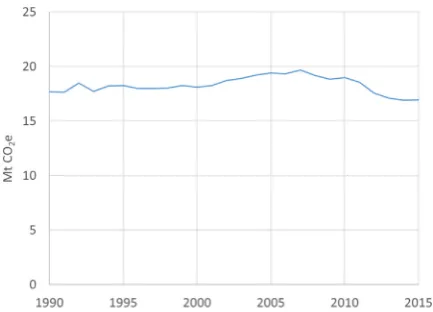
The Swedish example, which has already been mentioned, is useful. Sweden has one of the highest carbon prices in the world–arguably the highest–at US$140 per tonne of CO2(World Bank, 2017b). This makes it an important case study for carbon pricing: if anything, the Swedish experience should underscore the mitigation potential of a price on carbon. And yet, emissions in covered sectors have only decreased in-crementally and not consistent with a deep decarbonisation pathway. Specifically, Sweden's road transportation emissions declined only four percent from 1990–the year before the carbon tax was introduced–to 2015, seeFig. 1.
But how high is the Swedish carbon price compared to the projected abatement cost of averting serious climate change, as indicated by cli-mate models? In its latest assessment report, the Intergovernmental Panel on Climate Change (IPCC) presented an overview of idealised energy-economy-climate models consistent with the strictest con-centration target of 430–480 ppm CO2e by 2100 (IPCC, 2014: Fig. 6.21(a), p. 450). Among the 34 scenarios presented, the lower-quartile carbon price was US$37 and the upper-lower-quartile price US$67 per tonne of CO2in 2020. The corresponding range for 2050 was US $127-US$305 per tonne. These prices are based on marginal abatement costs under given emission trajectories, and are thus not directly com-parable with actual carbon taxes; the scenarios also typically do not assume early mitigation from transportation (IPCC, 2014, p. 480). Nevertheless, a carbon pricing policy at or exceeding the projected abatement cost should spur sufficient mitigation to remain on a re-duction pathway broadly consistent with the foregoing climate target. As this comparison illustrates, carbon prices within modelled, high-ambition mitigation cost ranges already exist, but their abatement ef-fect in the real world may diverge from the abatement levels projected by modelling efforts.
3.2. Geophysical limits
As seen above, carbon prices can spur incremental emission re-ductions or cause emissions to decline relative to counterfactual levels. So far, however, the empirical track record does not document deep emission reductions resulting from carbon pricing on its own.
[image:2.595.323.540.54.210.2]Why does this matter? Incremental abatement or emission reduc-tions relative to a counterfactual baseline are a good start, but are not good enough when the goal is to eliminate virtually all emissions in the short to medium term. Deep decarbonisation within a rigid timeline is an urgent imperative, according to the literature on“carbon budgets”, which posits that humanity only has a finite amount of greenhouse gases left to emit in order to achieve the 2 °C target (Meinshausen et al., 2009). Because of the long-lived nature of greenhouse gases in the at-mosphere, stabilisation of their concentrations in the atmosphere (the Fig. 1.Swedish emissions, UNFCCC category 1.A.3.b Road Transportation, 1990–2015.
stock) requires net emissions (inflow minus outflow) to decline to zero. Thus, unlike earlier problems such as acid rain, the challenge is not simply to reduce annual emissions below certain dangerous thresholds, but rather to decarbonise the economy and eventually phase out all emissions. To achieve the temperature goals set out in the Paris Agreement, therefore, climate policy cannot limit itself to reducing emissions incrementally; emissions have to cease entirely. That, in turn, requires a systemic transformation of the economy rather than gradual optimisation of emitting technologies. Policies influencing abatement decisions at the margin may altogether prove unsuited to the scale of climate change risks, risks that are “far outside the familiar policy questions and standard, largely marginal, techniques commonly used” (Stern, 2014: 398).
3.3. Political economy constraints
Given the geophysical limits on acceptable emissions (essentially zero), why not introduce carbon prices at levels that are high enough to meet this long-term, zero target? After all, most carbon taxes and emission allowance prices around the world are lower than the stipu-lated mitigation costs summarised by the IPCC (2014)and the stipu-lated social cost of carbon used by theOECD (2016)and several na-tional governments (see e.g. for the United States:Nordhaus, 2017).
While the net zero emissions target called for by climate science might potentially be met by means of radically higher carbon prices, there are reasons to be cautious about excessive reliance on such a strategy. First, as shown above, there is no empirical precedent for deep emission reductions spurred by carbon pricing, even where prices are high, as in the example of Sweden. Second, experience has shown that carbon pricing faces considerable political economy constraints (Jenkins and Karplus, 2016). Typically, carbon prices make the cost of compliance visible and impose this cost disproportionately on a limited group of articulate and politically influential emitters, while spreading out the benefit–the incremental mitigation of climate change–among many diffuse and poorly organised constituents. This makes carbon pricing a textbook example of a policy susceptible to regulatory capture and the general failure of collective action in the common interest (Olson, 1965; Stigler, 1971).
Research has therefore suggested that instruments other than carbon pricing are better able to build coalitions of support (Meckling et al., 2015), and opinion surveys have confirmed that they are also more popular with the public (Krosnick and MacInnis, 2013). Due to such increased support, these policies achieve greater policy durability and can ultimately even expand the political space for higher carbon prices (Wagner et al., 2015). Ultimately, this argues the case for a se-quential approach, in which carbon pricing does not play a pioneering role, but rather follows as a complementary policy (Pahle et al., 2017).
4. From marginal reductions to deep decarbonisation
We have so far discussed the empirical record of carbon pricing as a global warming mitigation tool and discussed the limitations imposed on its performance in the real world by geophysics and political economy. This article does not argue against using carbon pricing as a mitigation instrument, but rather to caution against placing too much faith in a theoretically compelling policy instrument. In this section, we discuss shortfalls of carbon pricing when price levels are set too low, or when pricing operates in isolation from other necessary policy instru-ments such as support for innovation. We also highlight solutions identified in the literature and in practice.
4.1. Carbon lock-in
Carbon prices have to date not been sufficient to avoid investment in long-lived, emitting capital stock. To return to the Swedish transport example above, emissions from vehicle use are only one dimension of
the decarbonisation challenge. Another is investment in carbon-emit-ting assets such as cars, and the path dependencies that follow. New gasoline and diesel vehicle registrations in Sweden have grown in re-cent years (Trafikanalys, 2017), showing that even a carbon price well above the range suggested by experts for the year 2030 (Stiglitz et al., 2017) has been insufficient to meaningfully curb new investment in a carbon-emitting technology. That, in turn, incurs carbon lock-in throughout the normal economic life of the technology (Seto et al., 2016), which, in the case of road vehicles, can be a decade or more. This experience suggests that, in the absence of additional policy levers, carbon pricing may not only fail to deliver deep emission reductions in the short term, but it may also fail to set in motion the necessary steps to achieve decarbonisation in the medium and long term. There is little evidence, for instance, that carbon pricing has been able to spur in-vestment in the innovation ecosystems and new infrastructures, such as charging stations, that would be needed for a transition to electric ve-hicles.
For stationary assets in the energy sector, turnover rates are even longer, exacerbating the challenge of carbon lock-in. Experience with the EU ETS bears this out. The price signal generated by the EU ETS has been insufficient to stimulate a lasting switch from high- to low-carbon fuels for electricity generation (European Commission, 2015). Fur-thermore, the failure of emissions trading on its own to spur meaningful innovation has been documented in the cases of both the EU ETS (Calel and Dechezleprêtre, 2016) and US SO2and NOxmarkets (Taylor, 2012). Price volatility, coupled with uncertainty about the future evolution and ambition of the carbon market, have contributed to investment decisions that are incompatible with a deep decarbonisation pathway (Acworth et al., 2017).
Some of these effects can be addressed through improved policy design, such as price management features. But as the tedious nego-tiations on EU ETS reform have shown, attempts to strengthen carbon pricing policies are politically difficult and take time–time which we may lack:Pfeiffer et al. (2016)have suggested that no net emitting electricity infrastructure can be added after 2017 if the 2 °C threshold is to be met. So far, however, the EU ETS has been unable to prevent continued investment in thermal generation assets across Europe (ENTSOE, 2017), where several new coal-fired power plants are cur-rently in various planning, permitting and construction stages (Shearer et al., 2017).
4.2. Phasing in innovation, phasing out obsolete technologies
Notwithstanding their known shortcomings from a static cost-ef-fectiveness perspective (Fischer and Newell, 2008), policies other than carbon pricing have recently garnered renewed attention in the litera-ture.Acemoglu et al. (2012), for instance, recommend a balance be-tween moderate carbon taxes and innovation subsidies. In recent modelling work, the view is strengthening that a uniform and suffi -ciently high carbon price is out of reach, and that additional,“ second-best”instruments are needed (Labandeira and Linares, 2011).Bertram et al. (2015) argue that such policy portfolios can have fewer dis-tributional effects and smaller efficiency losses relative to the“optimal” universal carbon price. Similarly,Jenkins (2014) favours a multi-in-strument approach including incentives for technological development, notably through creative use of carbon pricing revenues. The sub-stantial effects of strategic revenue recycling relative to the behavioural effect of the carbon price itself have been borne out in practice with the U.S. Regional Greenhouse Gas Initiative (Hibbard et al., 2018), and are also key to fostering enduring public support (Amdur et al., 2014; Kotchen et al., 2017).
some of these instruments have rightly invited criticism for their eco-nomic cost, their environmental effectiveness has been widely docu-mented. For example, where carbon pricing has operated alongside direct regulation, empirical studies have generally ascribed a greater abatement effect to the latter (Gloaguen and Alberola, 2013; Rhodes and Jaccard, 2013).
More study is therefore needed into the performance of these in-struments relative to carbon pricing as policy tools for deep dec-arbonisation, and into policy designs that can address known economic inefficiencies. Empirical insights from actual operation, rather than theoretical assumptions, should inform such research and improve our understanding of alternative pathways to a zero-carbon economy.
The recent surge in technology phase-out mandates may, in part, be a reaction to the inability of carbon pricing to prevent new investment in emitting technologies. Despite effective carbon rates on transport fuels that are often in excess of $100/tonne CO2 equivalent (OECD, 2016), several countries, including China, India, France, the United Kingdom, and Norway, have recently proposed future bans on new vehicle sales for cars with internal combustion engines. In doing so, these countries ensure that all new capital stock in the transport sector will have zero direct emissions within a given time. Likewise, a number of countries are introducing policies to limit or phase out coal use in electricity generation (Powering Past Coal Alliance, 2017), including the United Kingdom, which already has one of the highest carbon prices for electricity generators due to its domestic carbonfloor price. But as that example also shows, hasty or uncoordinated action can result in undesirable spillover effects and higher cost, in this case when a uni-lateral phase-out displaces emission allowances that become available for continued emissions in other parts of Europe.
By acknowledging the role of these complementary instruments, we are not arguing against carbon prices as such. Nor do we contend that carbon price signals have failed to influence current emission levels. What we are suggesting, instead, is that the empirical record casts doubt on the ability of even very high carbon prices to achieve dec-arbonisation anywhere near the levels required under politically agreed targets.
5. Conclusion
Based on the foregoing considerations, we may need to altogether rethink the appropriate role of carbon pricing in a dynamic process of decarbonisation: instead of spearheading innovation and systemic transformation, it may be most useful where it can incentivise marginal optimisation in specific contexts, such as fuel switching in the elec-tricity sector (Grubb, 2014). It can provide revenue for other measures and serve as a backstop policy to incentivise abatement in areas that more targeted instruments are unable to reach, a role it has been, for instance, expressly assigned in California (Legislative Analyst's Office, 2017). Over time, as targeted policies increase tolerance and support for higher carbon prices, it may eventually unleash more of its potential as a cost-effective tool of climate mitigation. Finally, the presence of a price on carbon emissions can send an omnibus signal that policy ma-kers are serious about tackling global warming, and that long-term investments need to be made with expectations of future carbon con-straints in mind.
Our call for re-assessing the primacy of carbon pricing has im-plications for future research, research communication, and policy. First, researchers should exert caution when stating that carbon taxes are the “optimal” or “ideal” climate change mitigation policy while referring to other instruments as“second-best”or“auxiliary.”Instead, greater acknowledgment is owed to the evidence that deep dec-arbonisation may not be attained through carbon pricing alone, and that regulations,financial incentives, and public and private investment therefore play important roles on the path towards the global 1.5 °C and 2 °C targets. Policies to improve access to capital for low-carbon in-vestment are of particular relevance, not least because a high cost of
capital can significantly undermine the effectiveness of carbon pricing (Hirth and Steckel, 2016). Preventing carbon lock-in through long-lived capital assets may necessitate additional interventions, such as tech-nology phase-outs (Geels et al., 2017), yet research into the design, effects and interactions of such policies has lagged far behind the study of carbon pricing itself. As a result, policymakers may lack the in-formation needed to apply these instruments in a way that avoids un-necessary cost and other detrimental effects.
Similar changes are needed in the communication of research. For instance, while the integrated assessment models (IAMs) widely used to guide policy decisions do in fact distinguish between explicit carbon prices (paid to the government in the form of carbon taxes, or revealed in markets for emission allowances) and implicit carbon prices (abatement costs per ton), this distinction needs to be communicated more effectively. Likewise, the use of a (theoretical) global carbon price in models needs to be discussed in strict separation from the policy option of introducing a global, uniform carbon tax or emissions trading system.
Finally, policymakers need to be made aware of the limits to carbon pricing. For all its potentially beneficial effects, a price on carbon does not guarantee that emitting activities will cease within committed timelines of deep decarbonisation. Most importantly, where pricing cannot ensure prevention of sunk costs in carbon-intensive capital stock, policymakers should not ignore the potential need for additional measures just because these may undermine their carbon pricing sys-tems. The aggregate losses from stranded assets will probably be a more serious economic problem in the future than the potential inefficiencies arising from complementary policies. All this suggests that a price on carbon is useful, but far from sufficient to achieve deep decarbonisa-tion.
Acknowledgments
We acknowledge funding from the Research Council of Norway, grants no. 261603 and 268056. We are grateful to Dallas Burtraw, Emil Dimantchev, Valerie Karplus and Clayton Munnings for suggestions and comments.
References
Acemoglu, D., Aghion, P., Bursztyn, L., Hemous, D., 2012. The environment and directed Technical change. Am. Econ. Rev. 102 (1), 131–166.
Acworth, W., Ackva, J., Burtraw, D., Edenhofer, O., Fuss, S., Flachsland, C., Haug, C., Koch, N., Kornek, U., Knopf, B., Montes de Oca, M., 2017. Emissions Trading and the Role of A Long Run Carbon Price Signal: Achieving Cost Effective Emission Reductions under an Emissions Trading System. International Carbon Action Partnership (ICAP), Berlin, Germany.
Amdur, D., Rabe, B.G., Borick, C.P., 2014. Public views on a carbon tax depend on the proposed use of revenue. Issues Energy Environ. Policy 13, 1–9.
Andersson, J., 2017. Cars, Carbon Taxes and CO2Emissions. Grantham Research Institute on Climate Change and the Environment, London, United Kingdom.
Baranzini, A., van den Bergh, J.C.J.M., Carattini, S., Howarth, R.B., Padilla, E., Roca, J., 2017. Carbon pricing in climate policy: seven reasons, complementary instruments, and political economy considerations. WIREs Clim. Change 8 (e462), 1–17.
Bertram, C., Luderer, G., Pietzcker, R.C., Schmid, E., Kriegler, E., Edenhofer, O., 2015. Complementing carbon prices with technology policies to keep climate targets within reach. Nat. Clim. Change 5, 235–239.
Bruvoll, A., Larsen, B.M., 2004. Greenhouse gas emissions in Norway: do carbon taxes work? Energy Policy 32 (4), 493–505.
Calel, R., Dechezleprêtre, A., 2016. Environmental policy and directed technological change: evidence from the European carbon market. Rev. Econ. Stat. 98 (1), 173–191.
European Commission, 2015. Study on the Impacts on Low Carbon Actions and Investments of the Installations Falling Under the EU Emissions Trading System (EU ETS), (accessed 10.5.2018), (〈https://ec.europa.eu/clima/sites/clima/files/ets/ allowances/docs/report_low_carbon_actions20150623_en.pdf〉).
European Network of Transmission System Operators for Electricity (ENTSOE), 2017. Yearly Statistics and Adequacy Retrospect 2015. ENTSOE, Brussels, Belgium.
Fischer, C., Newell, R.G., 2008. Environmental and technology policies for climate mi-tigation. J. Environ. Econ. Manag. 55 (2), 142–162.
Geels, F.W., Sovacool, B.K., Schwanen, T., Sorrell, S., 2017. Sociotechnical transitions for deep decarbonization. Science 357 (6357), 1242–1244.
over the Phases 1 and 2 of the EUETS: an Econometric Analysis. CDC Climat Research, Paris, France.
Goulder, L.H., Parry, I.W.H., 2008. Instrument choice in environmental policy. Rev. Environ. Econ. Policy 2 (2), 152–174.
Grubb, M., 2014. Planetary Economics: energy, Climate Change and the Three Domains of Sustainable Development. Routledge, Abingdon, United Kingdom.
Hibbard, P.J., Tierney, S.F., Darling, P.G., Cullinan, S., 2018. The Economic Impacts of the Regional Greenhouse Gas Initiative on Nine Northeast and Mid-Atlantic States: review of RGGI's Third Three-Year Compliance Period (2015–2017). Analysis Group, Boston, MA.
Hirth, L., Steckel, J.C., 2016. The role of capital costs in decarbonizing the electricity sector. Environ. Res. Lett. 11 (11), 114010.
Intergovernmental Panel on Climate Change (IPCC), 2014. Climate Change 2014: Mitigation of Climate Change. Cambridge University Press, Cambridge, United Kingdom.
Jenkins, J.D., 2014. Political economy constraints on carbon pricing policies: what Are the implications for economic efficiency, environmental efficacy, and climate policy design? Energy Policy 69, 467–477.
Jenkins, J.D., Karplus, V.J., 2016. Carbon Pricing Under Binding Political Constraints. UNU-WIDER, Helsinki, Finland.
Kotchen, M.J., Turk, Z.M., Leiserowitz, A.A., 2017. Public willingness to pay for a US carbon tax and preferences for spending the revenue. Environ. Res. Lett. 12 (9), 094012.
Krosnick, J.A., MacInnis, B., 2013. Does the American public support legislation to reduce greenhouse gas emissions? Daedalus 142 (1), 26–39.
Labandeira, X., Linares, P., 2011. Second-best Instruments for energy and climate policy. In: Galarraga, I., González-Eguino, M., Markandya, A. (Eds.), Handbook of Sustainable Energy. Edward Elgar, Cheltenham, United Kingdom.
Legislative Analyst’s Office (LAO), 2017. The 2017-18 Budget: Cap-and-Trade, (Accessed 15 March 2018), (〈http://www.lao.ca.gov/Publications/Report/3553〉).
Martin, R., Muûls, M., Wagner, U.J., 2016. The impact of the European union emissions trading scheme on regulatedfirms: what Is the evidence after ten years? Rev. Environ. Econ. Policy 10 (1), 129–148.
Meckling, J., Kelsey, N., Biber, E., Zysman, J., 2015. Winning coalitions for climate policy: green industrial policy builds support for carbon regulation. Science 349 (6253), 1170–1171.
Mehling, M., Tvinnereim, E., 2018. Carbon pricing and the 1.5° C target: near-term decarbonisation and the importance of an instrument mix. Carbon and Climate Law Review 12 (1), 50–61.
Meinshausen, M., Meinshausen, N., Hare, W., Raper, S.C.B., Frieler, K., Knutti, R., Frame, D.J., Allen, M.R., 2009mM. Greenhouse-gas emission targets for limiting global warming to 2 °C. Nature 458 (7242), 1158–1162.
Murray, B.C., Rivers, N., 2015. British Columbia's revenue-neutral carbon tax: a review of the latest‘grand experiment’in environmental policy. Energy Policy 86, 674–683.
Nordhaus, W.D., 2017. Revisiting the social cost of carbon. Proc. Natl. Acad. Sci. 114 (7), 1518–1523.
Organisation for Economic Co-operation and Development (OECD), 2016. Effective Carbon Rates: pricing CO2through Taxes and Emissions Trading Systems. OECD, Paris, France.
Olson, M.L., 1965. The Logic of Collective Action: public Goods and the Theory of Groups. Harvard University Press, Cambridge, MA.
Pahle, M., Burtraw, D., Flachsland, C., Kelsey, N., Biber, E., Meckling, J., Edenhofer, O., Zysman, J., 2017. What Stands in the Way Becomes the Way: Sequencing in Climate Policy to Ratchet Up Stringency Over Time. Resources for the Future,
Washington, DC.
Pfeiffer, A., Millar, R., Hepburn, C., Beinhocker, E., 2016. The‘2 °C capital stock’for electricity generation: committed cumulative carbon emissions from the electricity generation sector and the transition to a green economy. Appl. Energy 179, 1395–1408.
Powering Past Coal Alliance, 2017. Declaration, (Accessed 15 April 2017), (〈https:// www.gov.uk/government/uploads/system/uploads/attachment_data/file/660041/ powering-past-coal-alliance.pdf〉).
Rhodes, E., Jaccard, M., 2013. A tale of two climate policies: political economy of British Columbia's carbon tax and clean electricity standard. Can. Public Policy 39, S37–S51.
Schmalensee, R.L., Stavins, R.N., 2017. Lessons learned from three decades of experience with cap-and-trade. Rev. Environ. Econ. Policy 11 (1), 59–79.
Seto, K.C., Davis, S.J., Mitchell, R.B., Stokes, E.C., Unruh, G., Ürge-Vorsatz, D., 2016. Carbon lock-In: types, causes, and policy implications. Annu. Rev. Environ. Resour. 41 (1), 425–452.
Shearer, C., Ghio, N., Myllyvirta, L., Yu, A., Nace, T., 2017. Boom and Bust 2017: Tracking the Global Coal Plant Pipeline. CoalSwarm, Sierra Club and Greenpeace, San Francisco, CA.
Stern, N., 2014. Ethics, equity and the economics of climate change paper 1: Science and philosophy. Economics and Philosophy 30 (3), 397–444.
Sterner, T., 2007. Fuel taxes: an important instrument for climate policy. Energy Policy 35, 3194–3202.
Stigler, G.J., 1971. The theory of economic regulation. Bell J. Econ. Manag. Sci. 2 (1), 3–21.
Stiglitz, J.E., Stern, N., Duan, M., Edenhofer, O., Giraud, G., Heal, G., Lèbre la Rovere, E., Morris, A., Moyer, E., Pangestu, M., Shukla, P.R., Sokona, Y., Winkler, H., 2017. Report of the High-Level Commission on Carbon Prices. World Bank, Washington, DC.
Taylor, M.R., 2012. Innovation under Cap-and-Trade programs. Proc. Natl. Acad. Sci. USA 109 (13), 4804–4809.
Trafikanalys, 2017. Fordon 2016, (Accessed 15 March 2018), (〈http://www.trafa.se/ globalassets/statistik/vagtrafik/fordon/2016/fordon_2016_blad.pdf〉).
Tvinnereim, E., 2014. The bears are right: Why cap-and-trade yields greater emission reductions than expected, and what that means for climate policy. Clim. Change 127, 447–461.
van Vuuren, D.P., Stehfest, E., den Elzen, M.G.J., Kram, T., van Vliet, J., Deetman, S., Isaac, M., Goldewijk, K.K., Hof, A., Mendoza Beltran, A., Oostenrijk, R., van Ruijven, B., 2011. RCP2.6: exploring the possibility to keep global mean temperature increase Below 2°C. Clim. Change 109, 95–116.
Wagner, G., Kåberger, T., Olai, S., Oppenheimer, M., Rittenhouse, K., Sterner, T., 2015. Energy policy: push renewables to spur carbon pricing. Nature 525 (7567), 27–29.
World Bank, 2017a. Carbon Pricing Watch 2017. World Bank, Washington, DC.